It’s a commonplace to say there are two Washingtons. But D.C. isn’t special in that regard. There are two of most Southern cities, so I gather. The difference is, in Washington, the white people — at least, the white people who run things — tend to come from someplace else. Among them, it has always been fashionable to think of Washington as a kind of hardship posting.
This colonial mentality produces two kinds of fiction. There is what’s generally known as the Washington novel, about said white people. And then there’s what you might call the D.C. novel, about everybody else.
Most so-called Washington novels are short on local history or geography. As a rule, the children of officialdom are taught to pretend the city isn’t there. They love it, of course, the way a monkey in the zoo loves its wire-and-carpeting mom — because it’s there. But it’s a doubtful, embarrassed kind of love.
Henry Adams, a Bostonian who started visiting Washington in 1850, when he was 12, records this feeling in his autobiography, “The Education of Henry Adams” (1907). He can’t explain why he loves this place the grown-ups despise: “The May sunshine and shadow had something to do with it; the thickness of foliage and the heavy smells had more; the sense of atmosphere, almost new, had perhaps as much again; and the brooding indolence of a warm climate and a negro population hung in the atmosphere heavier than the catalpas.”
I remember the first time I read this sentence — I was 15, it was summer, the catalpas were stinking — because even though I grew up in the District, and so had my father before me, I’d never read or heard anyone mention that the city had any physical charm to speak of, only that it was hot.
Adams grew up to write — anonymously — what is still the great Washington novel, “Democracy” (1880). The heroine, a young society widow named Madeleine Lee, falls under the spell of a powerful Illinois senator with a shady past. If you’re going to read one novel about improper campaign contributions, read “Democracy.” Readers who know Adams through “Education” and his histories won’t recognize him here. “Democracy” is what might have happened if his friend Henry James could have survived an Inaugural Ball, or if Isabel Archer read the paper. In fact, Madeleine and Isabel share a biographical source in Adams’ wife, Clover. (Many readers suspected her of writing the book.)
Washington novels haven’t changed much since the second Grant administration. They all promise the same thing: to show us how influence really works. There has never been a Washington novel of ideas. These are books about careers, money and sex — usually in that order.
Sometimes sex comes second, of course. Take, for example, Gore Vidal’s “Washington, D.C.” (1967), a multigenerational orgy of depravity set during the 1940s and ’50s in “the estates that ringed the city, the Italianate palaces on Massachusetts Avenue, the small restored houses in the Georgetown slums which had lately become fashionable,” a world Vidal knows from growing up there.
“Washington, D.C.” traces the rise of the handsome, amoral Clay Overbury, who is destined to be the first media president. (JFK’s name is never mentioned.) As Overbury casually claws his way to the top, other thinly veiled public figures betray their wives and husbands, pimp their daughters, sleep with their siblings and sell out their best friends. Vidal’s Washington is camp on the level of the Capitol Dome or the Washington Monument at cherry blossom time — grand, absurd and disarmingly alive.
There are only a few degrees of separation between these characters and those of every other Washington novel, including “Democracy.” (In fact, one of Vidal’s characters claims Adams for a family friend.) As a rule, novels about the rest of white Washington don’t overlap this way. They tend to the microscopic. So there are Georgetown novels (Larry McMurtry’s 1982 “Cadillac Jack,” William Peter Blatty’s 1971 “The Exorcist”), Dupont Circle novels (Andrew Holleran’s 2006 “Grief,” Paul Kafka’s 2001 “Dupont Circle”), Cleveland Park novels, etc. Even the Nowheresville of Friendship Heights has “Chilly Scenes of Winter” (1976) — Ann Beattie’s irresistible first novel — which is probably more than it deserves.
Then there are the linked story collections of Edward P. Jones, “Lost in the City” (1992) and “All Aunt Hagar’s Children” (2006), which stretch across a large swath of black Washington, from downtown Northeast and Southwest to Anacostia (neighborhoods gentrified or gentrifying out of existence). As far as I know, nobody has written such deep or serious short stories about growing up black in the District — about growing up in D.C., period.
The city does have at least one great coming-of-age novel, however. “The Man Who Loved Children” (1940), by Christina Stead, gave the world Sam Pollit, his wife, Henny, and their four children — one of the most convincingly crazy families in American fiction. By day Sam is a minor bureaucrat, a member of the seersuckered hordes employed by Roosevelt’s New Deal. After hours, he’s a baby-talking tyrant obsessed with eugenics and dreams of a new world order — which will begin at home, with his kids as its future rulers. This is the Sam Pollit we get to know through the eyes of his awkward teenage daughter, Louie, who’s starting to see him for the monster he is.
“The Man Who Loved Children” may be Washington’s one forgotten classic — a status slightly complicated by the fact that Stead grew up in New South Wales (and never even tried to master the local dialect: her characters talk pure Australian). And yet she nails the place, nails everything she describes. A breeze is “still brittle, not fully leaved,” a summer memory fixes on “hot, washed windows of dressmakers and the tasseled curtains of a club, the dormant steps of little night bars.”
One generation of writers after another rediscovers “The Man Who Loved Children,” from Robert Lowell and Randall Jarrell to Jonathan Franzen. If it never stays discovered, it’s only because Louie’s childhood is so ridiculously miserable and true to life.
Although he too is overlooked and underrated, crime writer George Pelecanos has the advantage of being fun to read. I save him for last because he’s the one novelist I know who has made it his business to chronicle the city as a whole. Over the course of 12 books, and as many murder investigations (most recently “The Night Gardener”), Pelecanos has traced the history of D.C. since World War II, when the papers first christened the city “Murder Capital.”
Pelecanos takes the convention of the salt-and-pepper detectives seriously — he gets at what it’s really like, and why it’s really complicated, for blacks and whites to share each other’s space in the District. And his books chart the disappearance of this shared space — to white flight, poverty, black flight and gentrification. Pelecanos writes with fetishistic attention to real-life details, as if he expected lunch counters, record shops and nightclubs to be rebuilt from his descriptions. Sometimes the main point of an interrogation seems to be getting his reader inside a favorite local bar — back when it was still good. Sometimes his characters launch into earnest mini-lectures on the crack epidemic of the ’80s, or a history of hardcore or go-go — the way a Balzac character will launch into an outline of paper manufacture when he’s supposed to be proposing marriage — but this should only recommend Pelecanos to visitors who want to see beyond the Capitol and the Mall, who want to notice more than the heat.
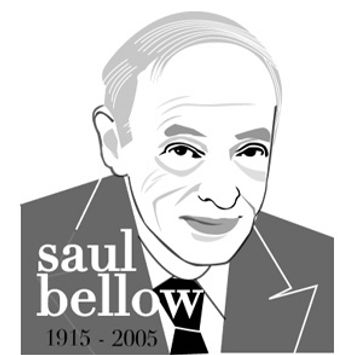
Born in a Jewish slum in Montreal, raised from the age of 9 in Chicago, Saul Bellow is widely considered the greatest postwar American novelist, and he has won the biggest prizes, including the Nobel. Asked in his later years what part of his life he regretted, he told an interviewer, “I gave a lot of time to women and if I had my time again I don’t think I would do it that way … I married several times with my ends in view and I didn’t reckon on the ends of the wives. Then I found myself being carried out of my depth.”
I quote this because it is so Bellow, it could have come out of a Bellow novel. (In fact it did — Bellow is quoting almost verbatim from “More Die of Heartbreak.”) That combination of self-knowledge and fake innocence is the hallmark of his heroes, all recognizable versions of himself: overeducated bulls stumbling through the china shops of love, marriage, fatherhood, celebrity, bohemia and academe. On the way they ruminate thickly on the eternal verities and the crimes of the 20th century, following each erection like a signal from some transcendental daemon. They are boring, infuriating monsters of self-absorption and have flattered several generations of like-minded introspective men (including the members of the Nobel Committee), but they have nothing to do with Bellow’s greatness.
Bellow’s chief glory is that his characters have wandered off the page and into the world, in Bellow’s case, en masse. Not wandered — burst. They seem to fragment with life: eyes like this, nape like that, insteps reminiscent of something else, a nose “originally fine but distorted by restless movement.” Even Bellow’s best-dressed characters give an impression of skewed wigs and ill-fitting suits. They run around generating plots, on the slenderest of motives, with impersonal, centrifugal intensity. Think of the Beastie Boys in the “Sabotage” video; think of early Almódovar or John Waters, or even late Warhol: These are Bellow’s cinematic equivalents. Bellow’s women, short or tall, are marvelous, larger-than-life wet dreams: earthy, intelligent, put together or falling apart, in either case spilling out of their clothes, at the mercy of their own sexuality. The men (all but the heroes) are full of scams. That’s what exports: this panorama of appetites not quite in check.
Bellow’s major novels fall into several categories. There’s the apprentice work: “Dangling Man,” a “Notes From the Underground” rewritten for wartime bohemians (with the memorably bad last line “Long live regimentation”), and “The Victim,” Bellow’s first lasting work, the uncanny tale of a struggling, upwardly mobile Jew hounded by a ruined member of the Establishment.
Then come the three longer novels on which Bellow’s reputation rests. A picaresque overlaid with pseudo-Emersonian solemnity, “The Adventures of Augie March” follows its hero’s rise from Chicago urchin, during the Depression, to footloose European playboy after the war. Here Bellow busts out that weird prose of his, not yet under control (“There’s the burning of an atom. Wild northern forests can go like so many punk sticks. Where’s the competitor fire kindling, and what will its strength be? And another thing is that while for the sake of another vigor is lacking, for the sake of the taste of egg in one’s mouth there’s all-out effort, and that’s how love is lavished,” etc.). He refines this slangy translationese in “Henderson the Rain King” — a modern-day “Rasselas” set in an MGM-style Africa — and “Herzog,” which follows the romantic entanglements of a cuckolded Romantic scholar at work on his magnum opus. None of these novels has aged gracefully, although Bellow’s prose itself seems grander with each passing year, grander and more irrecoverable in its quickness of perception, its marriage of brain, nerve and sensibility. It is the sound of the golden age of Jewish-American fiction. Bellow’s later two Big Novels, “Humboldt’s Gift” (a wonderfully screwy fictionalization of Bellow’s troubled friendship with poet Delmore Schwartz) and “More Die of Heartbreak” (about the romantic travails of a hapless botanist) are his funniest and most fun, but none approaches the passion of “The Victim” or Bellow’s masterpieces: “Seize the Day” and “Mr. Sammler’s Planet.”
You can’t read “Seize the Day” without awe and regret; Bellow has never stretched half so far as he did in this tiny slice of life. Having failed as a movie actor, salesman and husband, Tommy Wilhelm — the only vulnerable (or inarticulate) hero Bellow has ever managed to write — finds himself, in his mid-40s, living in the same hotel as his father on the Upper West Side, broke, popping sedatives, confiding in a shady old neighbor who persuades him to invest his last few hundred dollars in the stock market. Alone among Bellow heroes, who spend most of their time dodging love, Tommy yearns for connection — with his dead mother, with his father, with a new wife, with his kids in Connecticut. Tommy makes Bellow’s existential questers look like a bunch of jerks.
So, in his own way, does Arthur Sammler, hero of Bellow’s most perverse novel, “Mr. Sammler’s Planet.” An elderly, widowed survivor of the Nazis — and before the war, a member of the Bloomsbury circle — Sammler is (as everyone in the book keeps pointing out) a remnant of sanity and culture in a world gone mad: again the Upper West Side, this time in the late 1960s. Bellow subjects Sammler to various barbarities: Invited to lecture at Columbia on “the British Scene in the Thirties,” he’s jeered off the stage (“‘Why do you listen to this effete old shit? What has he got to tell you? His balls are dry. He’s dead. He can’t come’”); his younger relatives burden him their empty sexual intrigues and shrink-sponsored brattiness; in the novel’s greatest scene, a handsome black pickpocket corners Sammler and reveals his big dick.
Here, as in “The Victim,” Bellow’s precursor is Kafka: Every minor character acts out the desires and terrors of the guilty hero, who keeps insisting that these specters have nothing to do with him. Some readers have charged the book with racism, which is understandable (Sammler dismisses the sexual revolution as a quest for “niggerhood”) but misses the point. “Mr. Sammler’s Planet” is about blackness as fantasy, whiteness as the badge of the solipsist. Solipsism, of course, is the general condition and limitation of Bellow’s novels. And while we suffer that limitation less gladly than readers did at midcentury, Bellow bodies forth our lunacy and lack of connection as nobody else has done.
Continue Reading
Close
Thousands of readers have already fallen under the unlikely spell of Thomas Lynch, an essayist, poet and funeral director in Milford, Mich. Although he has plenty to say about the undertaking business that he and his brother inherited from their father, one of the many pleasant surprises of reading Lynch’s essays is how quickly, in his company, we get used to the sight of dead bodies, how soon they become the least interesting part of his job.
Despite a suspicion (“widespread among the women I’ve dated, local Rotarians, and friends of my children”) that any undertaker spends his days acting out our own morbid fascination with the dead, Lynch looks on the sight of death with absolute, stoical uninterest. “Being dead,” as he explained in the title essay of his first collection of essays, “The Undertaking,”
is one — the worst, the last — but only one in a series of calamities that afflicts our own and several other species. The list may include, but is not limited to, gingivitis, bowel obstruction, contested divorce, tax audit, spiritual vexation, cash flow problems, political upheaval, and on and on and on some more. There is no shortage of misery. And I am no more attracted to the dead than the dentist is to your bad gums.After a few pages, neither are we, and it comes as no surprise to us that, embalmings and funerals aside, Lynch has an interesting life and writes just as well on any number of other subjects, including friends and relatives in Michigan and Ireland, the alcoholism and Catholicism that run in his blood and the practice of writing poetry. (Lynch is also the author of several collections of verse.)
As an essayist, Lynch is eclectic and freewheeling. He’ll eulogize a sexton or sketch an eccentric poet friend in a witty, sentimental, hyperbolic style that Charles Lamb would approve of; he’ll slip secretly into blank verse or ballad meter when the mood is on him or, just as easily, into Strunk-and-White plain style or Irish-American slang or the locutions of the Bible. St. Paul is one of his touchstones. So is Kurt Cobain. Lynch is literary and measured without prissiness. He’ll curse when he wants to. When he feels like it, he’ll even rhyme. (On sex and death: “Both are horizontal mysteries. Both make you think you should have spent more time on your knees.”)
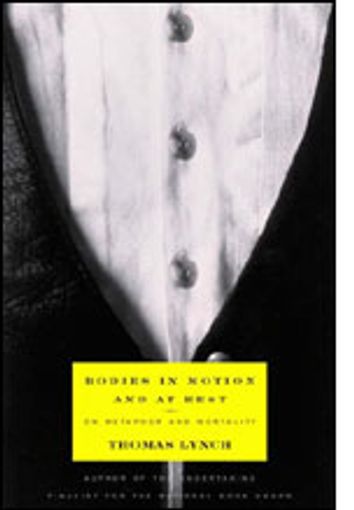
This resourcefulness sets Lynch apart from the run of contemporary essayists, makes him sound at once less antiquarian and more in line with the living traditions of the form. But perhaps what distinguishes him most of all, among writers today, is his mastery of the lost art of the veer: In his new collection, “Bodies in Motion and at Rest,” he’ll shift, without clearing his throat, from the loneliness of hotel rooms to Adam’s fall, or from the reasons he hates a cat to the breakup of his first marriage. At a moment when the magazine piece reigns supreme, with its specious hinges, its emphasis on polish and closure and word count, it is a pleasure to read someone who writes with faith in his own sense of direction and whose faith is grounded in having lived a thoughtful life. You return to his essays, in part, because they’re so deeply, believably roundabout.
Since the publication of “The Undertaking,” Lynch has become, very justly, a writer in high demand, and his work appears in places as unlikely — for an expansive writer — as Newsweek and the New York Times Magazine. Now and then, in “Bodies in Motion,” this new promiscuity shows. A few of the essays seem thin and made-to-order. Lynch has always flirted with folksiness; sometimes in this collection he goes all the way and slips into cracker-barrel arguments, castigating both sides of the abortion debate, for instance, with the apergu that “the reproductive life of the species is not a woman’s issue. It is a human one. It requires the voices of human beings. And the language it deserves is intimate.”
This kind of writing (you can imagine Don Williams setting it to music) goes with the photo on the dust jacket of Lynch in a black homburg and bow tie and retro specs, the embodiment of small-town virtue circa 1900. A book review may not be the place to attack a publicity photo, but when I hear the good gray homilist of that picture permit himself one more hopeful, agnostic wrap-up to an essay full of rigor, or remind me that “our hearts beat in iambs and trochees night and day,” or gaze at the constellations and feel stirrings of thanksgiving, it makes me want to declare a moratorium on words like “miraculous” and “mysterious” (in reference to medically normal births), “lovely” (in reference to wives and girlfriends, especially in the act of love), “wonder” (as a noun) and “wonderment” in any connection whatsoever. God gave us the search-and-replace function for a reason, I want to say: so we’d stop making love to lovely women and wondering at the wonderment of it all.
But this impulse is rare. There are essays in “Bodies in Motion” as good as the essays in “The Undertaking,” and that’s as much as I can say for any recent essay collection I know. I’ve already mentioned my favorite, “Y2Kat,” which begins and ends by affirming Lynch’s resolve to put his 22-year-old cat to sleep; in between, Lynch sketches one of the wisest, funniest anatomies of a divorce I have ever read. An essay like this makes me want to retract every complaint I just made about his pious shtick: A little bromide here or there seems a small price to pay for the moral sense that guides him at his best.
It’s a relief — it’s enlightening — to hear a writer so sane consider the problem of divorce (the “garden variety, amicably upmarket, suburban no-fault procedure common to my generation and our times”) as a moral problem, to face up to the specific damage that his divorce does to his children. Lynch walks us toward his atonement by way of his progress as a writer: In the years after his divorce, he wrote two bitter poems — one about his ex-wife, one about the cat — that are revealed, in the course of the essay, as steppingstones toward the good humor and partial forgiveness of the essay itself. A masterpiece of tone, “Y2Kat” is partly about the effort to find a tone, to balance the self-absorption of the writing life and the private dramas of romance and addiction and rejection against the everyday responsibilities of raising kids — and taking care of the nasty old cat his ex-wife left behind.
It’s hard to make the writing process sound interesting, but when Lynch describes different ways of working, he is also showing us different ways of thinking about and packaging the world. In his case, there is something hard-won and decent about the essay’s hereditary freedom to make loose associations between disparate things, to mix and match cats and kids and wives, lovers and poems and kids, to joke around, to spill its guts, to waver, to veer. Lynch’s essays achieve a humility and transparency that his poems do not. You feel that there is a man wrapped up in them. If the personal essay, as a form, seems especially vital today, if it seems more congruent than other literary forms to everyday life — and if capturing the everyday life that we find in essays seems more worthwhile than ever before, a challenge befitting a genuine hero of consciousness — Thomas Lynch is one of the first we have to thank.
Continue Reading
Close
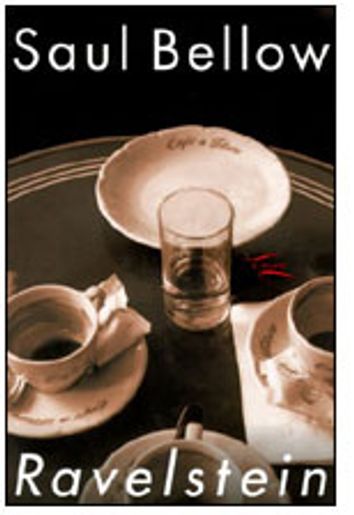
“Ravelstein” is a memoir masquerading as a novel masquerading as a memoir, a roman ` clef stuffed with more literary chitchat and self-congratulation than gossip, a tendentious, intermittently brilliant portrait of an actual friendship in certain ways as strange, if not always as interesting, as fiction.
The plot is, by Saul Bellow’s standards, simple and didactic: Ravelstein, a right-wing scholar known for his commentaries on Jean Jacques Rousseau, urges his colleague Chick, a famous elderly novelist, to divorce his cold, unfaithful wife, Vela. After Vela beats Chick to the punch, the novelist marries one of Ravelstein’s favorite graduate students, Rosamund, who “had studied love — Rousseauean romantic love and Platonic Eros as well, with Ravelstein — but knew far more about it than either her teacher or husband.” She proves the depth of her love, and earns her place in the story, by nursing Chick back to health after he nearly dies from eating a poisonous fish on their honeymoon.
In the meantime, Chick has persuaded Ravelstein to publish a popular version of his theories — a tirade against American higher education, political correctness and rock ‘n’ roll and an exhortation to take up the proper business of the soul: among other things, “to seek its missing half” in another person, to achieve a “love that bears it out even to the edge of doom.” The book becomes the sleeper hit of the decade, raising Ravelstein out of obscurity and making him rich. Soon afterward, he is diagnosed with HIV. On his deathbed he enjoins Chick to write the story of their life together.
These events mirror several widely known events and circumstances of Bellow’s later years: the May-December romance that redeemed his views of marriage; the bad fish that almost killed him; and his friendship with the late Allan Bloom, his colleague at the University of Chicago and the author of “The Closing of the American Mind.” For long stretches of the novel, Bellow relies on the reflected glory of his and Bloom’s real-life fame to lend the novel light and heat — a risky strategy at best. Hanging out at Chick’s country house, Ravelstein says things like, “Can you explain what Nature does for you — a Jewish city type? You’re not a Transcendentalist update,” and Chick answers, “No. That’s not my line.” If you don’t really care whether Bellow thinks of himself as a “Transcendentalist update,” and if you don’t buy his repeated suggestion that the two men have formed a kind of miniature Bloomsbury group, spreading enlightenment into the innermost corridors of power (a former student in the Defense Department feeds Ravelstein news of the Gulf War hours ahead of CNN), then this kind of mutual navel gazing — and there’s a lot of it — will probably leave you cold.
But like “Humboldt’s Gift,” Bellow’s fictionalized portrait of poet Delmore Schwartz, “Ravelstein” is saved by the overwhelming presence of its title character. He is a quintessential Bellow creation: a tough-talking Midwestern Jewish dandy from the wrong side of the tracks, a deeply eccentric scholar who revels in his appetites for luxury, books, gossip, basketball, Marlboros, baroque music and (as a self-proclaimed “invert”) men. And Ravelstein embodies a quintessentially Bellovian fate. Bellow has always been fascinated with the permeability of high and low culture: His poets write hit screenplays, his Chicago cops hobnob with famous intellectuals, his hit men know their way around Savile Row. Cultural mobility acts in his novels, in the way that social mobility often acts for the Victorians, as the prime mover of coincidence. It opens secret doors, orchestrates weird meetings and reunions and, not least, plucks the Jew out of the margins and places him at the center of American life.
Seen in this light, the unlikely success of “The Closing of the American Mind” and the brief sway it exerted, from such unlikely quarters, over the imagination of the country at large are the fulfillment of a prophecy as old as “The Adventures of Augie March,” the 1953 picaresque novel in which Bellow’s working-class intellectuals first took on the big questions of American life as they shouldered their way out of the ghetto. This imitation of art by life is hardly lost on the novelist. One comes away from “Ravelstein” with the sense that if Bloom had not existed, Bellow would have invented him — and that the result might have been a better novel, less bloated by the vanity of the frustrated political and academic macher, less concerned with impressing upon the reader Bellow’s importance and the importance of the company he keeps.
When Ravelstein dies, “Ravelstein” falls apart. Rosamund, the ostensible center of the love story, beggars Bellow’s powers of description. Chick praises her, at length, for being pretty and poised and for loving him — but that’s it. Alone among Bellow’s women (who are among the most formidable sex objects in 20th century American fiction), she never comes alive. Vela, however much Bellow trashes her, is sexier because she’s trouble, the way real people are. Rosamund serves his purposes too neatly. Ravelstein, following Plato’s Aristophanes, claims that we fall truly in love when we recognize the missing half of our soul in another person, but Rosamund inspires no such recognition. She’s too convenient; she’s no more than what Chick, and Bellow, need her to be.
Without strong characters, Bellow is never half as interesting as he and his fans think he is. In his fiction and his nonfiction, too, he has always been too vain to write convincingly about himself. When he wastes the last third of “Ravelstein” on the symptoms of Chick’s illness and the miraculousness of his love-induced recovery, he sounds old and stale. But neither this waste nor the “suffisance” (Bellow’s word: “self-importance and self-gratification”) that pollutes the book from start to finish quite overshadows its grandeur.
What saves Bellow in “Ravelstein,” and has saved him a hundred times in his other books, is his susceptibility to those characters who, like Ravelstein, draw him outside himself — a susceptibility that has nothing to do with compassion or convenience and everything to do with the way a man lights his cigarette or a woman buttons her dress, a helplessness before the intuition that human beings exist and have heavy, fascinating bodies and brains of their own. At one point Ravelstein tells Chick “that all kinds of creatures imposed on me and wasted my time,” and Chick replies, “In art you become familiar with due process. You can’t simply write people off or send them to hell.” That is Bellow the artist, Bellow the democrat — not Bellow the culture snob or the venerable Nobel laureate. That is the Bellow who brings Ravelstein, and “Ravelstein,” to life.
Continue Reading
Close
Early in “Shakespeare: The Invention of the Human,” Harold Bloom dismisses “The Merry Wives of Windsor” as a “throwaway, with an impostor pretending to be Sir John Falstaff. Falstaff without titanic wit and metamorphic intelligence is not Falstaff … and ‘The Merry Wives of Windsor’ is a scabrous exercise in sadomasochism, immensely popular forever on precisely that basis.” Like many of Bloom’s pronouncements, this one has a certain confessional pathos. The “Boom-Boom” Bloom who has played to the culture warriors’ peanut gallery with his Billboard-style greatest hits of the Western Canon, and who’s padded his books with slapstick attacks on the “School of Resentment,” is not the real Bloom — the Bloom who taught us how to read Wordsworth, Emerson, Dickinson, Whitman, Stevens, Bishop and Ashbery — any more than the fat knight in the laundry basket is the mentor of Prince Hal.
The real Bloom, the indispensable Bloom, is everywhere in “Shakespeare” — and he’s all too easy to miss. Reviewing the book recently in The New Yorker, Anthony Lane wrote, “If it’s practical criticism you’re after, forget it: this stuff is about as practical, and as dazzling, as a unicorn.” Dazzling, maybe. But if this collection of short studies (one on every play) isn’t practical criticism — an aid to students, teachers, playgoers, readers-in-bed, anyone who wants an aesthetically plausible account of the plays or a model for detecting personae on the page — then I don’t know what is. In fact, “Shakespeare” is probably the first generally useful book that Bloom has ever written, more helpful to the nonacademic than even the old college standbys by A.C. Bradley or Harold Goddard. It’s most helpful of all, perhaps, to theater directors, who are (I suspect) Bloom’s secret ideal audience.
Not that Bloom prescribes productions, ` la Jan Kott or the orthodox engagis who have dominated American Shakespeare performances in recent decades. Bloom’s readings of the plays simply do more for a director — admit more complexity, key motives to a higher pitch — than anybody else’s. They are models of originality where originality is needed most. Between readings, Bloom likes to assert, in various formulations, that Shakespeare “invented the human.” Several early readers (Lane among them) have mistaken this claim for an argument. It is nothing of the kind. It’s an attitude — indebted (like much else in Bloom’s later criticism) to Oscar Wilde, who noted that art doesn’t imitate life; life imitates Shakespeare, as best it can. After years of hearing and reading Bloom’s variations on this theme, I’m not sure that he’s made it any clearer or more intellectually respectable than Oscar wanted it to be. That said, Bloom has put his Wildean attitude to excellent use. Insisting that Shakespeare invented us (whatever that may mean), Bloom dodges the tiresome search for the plays’ “relevance” that has dumbed Shakespeare down to make him an ill-informed commentator on the politics of our day.
We are living, oddly enough, though a golden age of Shakespearean criticism. Last year Helen Vendler published what should become the definitive edition of the sonnets; now Bloom has given us the crowning achievement of his career, a book that should appeal, in its particulars, to Bloomians and non-Bloomians alike. If any piece of literary criticism can have a practical effect — on our stage and imaginations — this is the one.
Continue Reading
Close