Louise Witt

FCC commissioner Michael Copps vs. “Big Media”

FCC chairman Kevin Martin wants to relax rules on how many media outlets one company can own in one market. Democratic commissioner Copps wants to rally the public to stop media consolidation.

  • more
    • All Share Services

FCC commissioner Michael Copps vs.

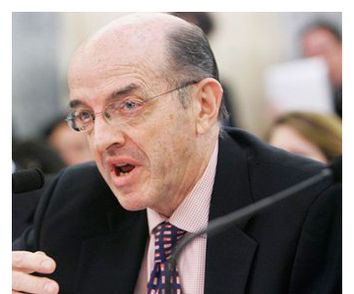
Michael Copps doesn’t want to be called a crusader. But as one of the two Democrats on the five-member Federal Communications Commission, he’s not shy about sounding biblical. He says he’s “blowing a loud trumpet” for a “call to battle” to stop the FCC from giving big media a generous Christmas present.

Copps is trying to defeat FCC chairman Kevin J. Martin’s last-minute proposal to loosen media ownership rules, which will be voted on by Dec. 18. As it stands now, a company can’t own both a daily newspaper and a broadcast outlet — a radio or TV station — in the same market without a waiver. In an Op-Ed piece in the New York Times on Nov. 13, Martin wrote that media companies in the 20 largest markets should be allowed to own both in the same market to bolster journalism. “If we don’t act to improve the health of the … industry,” he wrote, “we will see newspapers wither and die … and have fewer outlets for the expression of independent thinking and diversity of viewpoints.”

The public, however, won’t have much time to express its own diverse viewpoints on Martin’s proposed rules. He unveiled his plan in the Times four days after the FCC’s sixth, and last, hearing of the year on media ownership. The public has only until Dec. 11 to comment on the new rules, with the FCC voting on them within the following week. The push for a quick decision prompted Sens. Byron Dorgan, D-N.D., and Trent Lott, R-Miss., to introduce bipartisan-sponsored legislation to halt the FCC’s “fast march” toward easing media ownership rules. Why the rush? Last time the FCC proposed a relaxation of the rules in 2003, public outcry killed the plan. Copps thinks Martin wants to push them through now when voters — and politicians — are distracted by holiday hoopla and before the first presidential primaries and caucuses. Once everyone sobers up in January, Copps says, the issue will become a ” hot potato.” Copps, 67, was chief of staff to former Democratic Sen. Fritz Hollings of South Carolina and was an assistant secretary of commerce in the Clinton administration. He was sworn in as an FCC commissioner in 2001. Salon recently spoke with him by phone:

In his Op-Ed in the Times, FCC chairman Kevin Martin wrote that the loosening of the ban on cross ownership of newspaper and TV stations was “relatively minor.” You have characterized these new rules as the “camel’s nose in the tent.” What do you mean by that?

Number one, it’s not the modest proposal that he would have us believe, because I find it is riven with loopholes. For example, he says that it is only going to affect the top 20 markets. That, by the way, is 42 or 43 percent of all of our households. But point in fact, there is a major loophole that would allow companies in smaller markets, just about any market, to apply for a similar exception on the basis of meeting a few loose criteria. So what you could wind up with is newspaper-broadcast cross-ownership in many, many more markets.

And number two, I said it was the camel’s nose in the tent because I think that if they get away with this one proposal with newspaper-broadcast cross-ownership, they’ll come back for changes in more of the rules, like allowing more duopolies or triopolies like the ones [FCC] chairman [Michael] Powell proposed back in 2003. You might remember that his scheme, which he actually succeeded in getting through the FCC, though it was later reversed by Congress and the courts, would have allowed in some of the larger markets a company to own up to three television stations, eight radio stations, a newspaper — which is already a monopoly in most cities — a cable system, and even an Internet provider. I just fail to understand how that kind of control over our media enhances democracy or works to the benefit of the American people.

What do you think could be the effect of these rules on the political system?

It’s bad for the political system whether you’re a liberal, a conservative or a moderate, when the number of voices and diversity is diminished in our country. That’s bad for our civic dialogue, if a few companies have too much control. We’ve witnessed a tremendous amount of consolidation already. This consolidation involves not just owning the various channels of distribution, stations and the channels, but also vertical concentration, so they control the production and the content. If you have a lock on the content and a lock on the distribution, that’s a recipe, and it always has been, for a monopoly or at least an oligopoly. That’s what we have in our media.

Our Communications Act is premised on the idea that we should have more localism in our programming, that we should have more diversity of content, diversity of voices, and that includes diversity of ownership and competition. We’re going in exactly the wrong way. And I might point out, I’ve been pretty adamant that we should not vote until we do something about minority ownership and localism.

Before we vote to loosen old rules, governing media ownership, we should take proposals that have been pending for so long on how we can increase minority ownership of our media properties. We live in a country that is one-third minority right now in the United States of America. People of color own 3.26 percent of all full-power commercial television stations, so is it any wonder then that their issues are not given the kind of coverage that they may like to have? Is it any wonder that they’re so characterized that when you see a news story about an African-American it’s often about crime? Or when you see a news story about a Latino, it’s about jumping over a fence to get into the United States? What about the many million more stories that have to do with the contributions that these groups make to the country and what’s going on in their communities? And what are their issues? And this applies to women when it comes to ownership too. Diversity of voices depends on ownership. If you don’t have diversity of ownership, you’re not going to have diversity of voices. So it’s important to the future of our country. Our future is our diversity. That’s our strength. That’s our opportunity going forward. Why should we have a media that doesn’t reflect that?

What do you mean by “localism”?

I mean that that in the face of consolidation too much of the programming comes from the networks or comes from afar. The owners, instead of being members of the community, are often people who live hundreds or thousands of miles away. Too many stations aren’t even inhabited by human beings. They’re run by computers or by mechanical means. That’s why nobody’s there. Localism means that you go out and talk to people locally about the kinds of issues and programming that they want. We don’t do that anymore.

Martin wants a ruling by Dec. 18. Why do you think he wants it so soon?

Well, the rush is on. I can’t speak for him or his motivations, but people have said that this could be a really politically hot potato if decided next year during the campaign season. Three million Americans contacted the FCC and the Congress in 2003, when [former FCC chairman Michael Powell wanted to loosen ownership rules]. And 99.9 percent were against what Powell was doing. There is a realization that this is a grass-roots issue and that it does spark some volatility. Some folks are at least implying that they want to get this out of the way before then. Do it in mid-December, and maybe Congress is going home and maybe we’ll be wrapping our holiday gifts and not paying attention to it.

Who would be the beneficiaries if these new rules take effect?

I think there would be lots of them. Most of the major newspaper chains would be looking to buy some of these very profitable broadcast outlets. Although you have to be careful that you don’t fall too easily to the newspaper [companies'] claim that they’re essentially a hemorrhaging industry. I think Merrill Lynch put the average return on newspapers at 17 or 18 percent. I wish I had some investments that were making 17 or 18 percent. In addition to outright transactions, there will be all kinds of swaps. I’ll give you my station here for your station there, and then I’ll have a newspaper-broadcast cross-ownership. All of that is going to drive out a lot of smaller stations from the news business. They’ll figure, “How can I compete now if they have the newspaper and television station in town? I might as well get out of this business.” Oddly enough, not oddly, but interesting, a lot of those tier-four and below stations will be the ones that are going to be allowed to be sold. If women and minorities are lucky enough to own stations, that’s where they are. So we’re encouraging the buyouts of those stations too. We could wind up with a real loss of diversity.

What about Rupert Murdoch’s News Corporation? You expressed reservations about its purchase of Dow Jones, which owns the Wall Street Journal.

I’m so disappointed in that. This is a major transaction involving a company that owns 35 television stations, studios, and so many other different things. And now they’re going to take over Dow Jones and the Wall Street Journal in New York City, where they already own a couple of television stations and the New York Post. The Federal Communications Commission says we don’t have any jurisdiction to look at that, so we’re not even going to examine that. I think that’s irresponsible. They based that on some kind of precedent from the 1980s, when the commission decided in a very different media environment that USA Today was a national newspaper and not a local newspaper. I think, number one, our public interest obligations give us ample room to look at that merger. But number two, and even more importantly, we ignored the local impact that that merger has in New York City. That’s squarely in our jurisdiction. I don’t think anyone should be able to get away with denying that. There are hundreds of thousands of issues of the Wall Street Journal that get circulated in New York City every day. Don’t tell me that doesn’t have some effect on control in New York, loss of diversity and all the rest.

Do you think that the Bush administration has made it a priority to put these changes into effect before the end of his presidency?

Clearly it’s a priority for Chairman Martin to get these adopted as early as he can. Now I must say, they might have gone even further if the political environment hadn’t changed a year ago in Washington. If we had less congressional oversight than we’re getting right now, I suspect the forces of consolidation would probably have asked for more.

Do you see yourself as being on a crusade?

That [word] is invested with religious overtones. My No. 1 priority issue at the FCC has been the media environment. I find abhorrent what some of the effects of consolidation have been upon our culture, our entertainment and our civic dialogue. I think it’s important for our country to change that.

When I go around and talk to people, I say, people in this audience may have a lot of different issues that they think are the most important issue confronting America. Maybe it’s the war in Iraq, or maybe it’s, how do we create high-paying jobs? or how do we insure our 40 million people who don’t have healthcare? how do we educate our kids? how do we pry open the doors of equal opportunity further? If those are your priorities, that’s fine.

But then I say, your No. 2 issue has to be this media issue, because all those other issues you care about that I just mentioned are funneled and filtered through big media, if they’re lucky enough to get in that funnel at all. They’re lucky to even be covered by big media. Then they’re covered with the slant of a few particular companies. And it’s not so much a political slant as it is a commercial slant. It’s a commercial bias of all this that I think is the problem, selling products to a particular demographic.

So you’re not a crusader, but at a conference in New York earlier this month, you said you were sounding a “call to battle” and “blowing a loud trumpet.”

You’ve got to do that if the media is not giving you coverage. You’ve got to rely on using your bully pulpit. There are a lot of good groups that are working on this issue. The Internet is a marvelous tool for getting this story out. And the folks on the Internet side are beginning to see that their new media is beginning to be compromised by consolidation too. A lot of content is being bought up by people who have too much control over distribution, so I think Internet outlets are getting worried about their future. This is a not a debate about yesterday’s media or about something passing into history. This is about new media as much as it is about old media. If you’re interested in the future of the Internet, you ought to be mightily involved in this issue over media consolidation.

Do you think there are any specific issues that will not get sufficient coverage because of media consolidation?

Issue No. 1 would be media consolidation [itself]. I can’t tell you how many different cities I go into where there is a strongly consolidated environment and you read so little about media consolidation. A few years ago, I went to Phoenix, Ariz., to attend a hearing [on media consolidation]. Someone else was holding the hearing [not the FCC]. It was in the middle of the afternoon. I would guess 300 people showed up for it, but it had not been very much discussed in the local media, as you can imagine. Yet all these people showed up. I talked to some of them in the audience and asked, “How did you find out about this hearing?” And one of them said, “I heard it on the BBC.” I thought that was pretty revealing with one company controlling so much of the media market. Maybe that company wasn’t so keen on covering this consolidation issue. But the BBC thought it was newsworthy enough to broadcast about it. I’ve seen that in many other places.

I visited the editor of the editorial page of a major newspaper in this country not too many weeks ago, and we got talking about this issue. I think the person in his heart was on my side of the issue, but he said they can’t cover that issue. And I said, “Oh, why not?” He said, “The publisher wouldn’t let us do that. It would be against the interest of the company. I have a lot of freedom to cover what I want issue-wise on my editorial page, but I’m not going there.” It wasn’t almost chilling; it was downright chilling.

Why won’t the FCC hold hearings on Martin’s proposal?

I had asked originally for a dozen hearings or so, and he committed to six. And this was the sixth one. Interestingly enough, it sounds confusing, because we did have a hearing a couple days before in Washington on localism, because [former FCC] Chairman Powell had kind of promised that there would be six hearings on localism also. There was one of those outstanding, so they wanted to get that done too, so they could say localism hearings are done and the media ownership hearings are done. They had the localism hearing at the end of October in Washington, D.C., on relatively short notice, and then just a few days later we all packed up and had another hearing in Seattle. To me that just said we’re just checking the boxes; we’re in a hurry to hold these hearings.

What did we learn from Chairman Powell’s attempt to allow greater media consolidation in 2003?

That citizen action in this country can still work. A lot of people think, “Oh, with so many large impersonal forces, I’m not even a cog in the wheel, so how does my voice count?” But the fact that 3 million people found out about that and contacted the FCC, which led to congressional action … and to people taking it to court, [which] sent those rules back to the FCC, was a victory. We’re back to starting all over, but at least we kept those rules from going into effect. Recent history shows that citizen action still works even in the 21st century. History shows that we go through these cycles of consolidation and reaction.

Do you think the public response now will be similar to what we saw in 2003?

I think it’s building. Some of the candidates in the presidential election already are talking about this issue. I think that if the media did a better job of explaining that this is queued up right now — if [Martin] really insists on going ahead with this vote on Dec. 18 — that would spark a grass-roots movement. And in the final analysis, if we are going to move toward airwaves of, by and for the people, and a good stewardship of the airwaves, it’ll be because of a grass-roots effort. That’s what worked in 2003. A lot of congressmen and senators went home and went to town meetings, and people would ask them about media consolidation. They had never seen that before. It made a difference. I think that had something to do with the fact that the Senate voted so quickly to overturn and reverse what Chairman Powell was attempting to do. That’s what we need now. We need to send messages to the FCC and to the White House. You asked how involved is the White House in this. I don’t know 100 percent the answer to that, but [those in the White House] should know clearly that this is an issue of importance to many people.

Do you think Chairman Martin underestimated the Senate’s concern about further media consolidation?

Again, you’d have to speak to him. He seems determined to do this. If I were sitting where he is and I got this kind of bipartisan pushback, where you hear not only from Byron Dorgan on the Democratic side, but Trent Lott on the Republican side, when you hear not only Bill Nelson on the Democratic side, but Olympia Snowe on the Republican side, I’d really be a little bit cautious myself. I’d be fearful of running into a buzz saw with Congress and running into a buzz saw with the American people.

A nation of scared sheep

Why don't Americans care that Bush may have lied to them about Iraq? The answer lies deep in our reptilian brains.

  • more
    • All Share Services

A nation of scared sheep

The deep, almost spiritual conflict between honesty and lying is ingrained in our national psyche. Who doesn’t remember as a schoolchild hearing the tale about George Washington father’s discovering the young boy next to a felled cherry tree? When asked who had cut the tree, George is said to have replied, “I can’t tell a lie, Pa; you know I can’t tell a lie. I did cut it with my hatchet.” As it turns out, that story was a lie concocted by an early 19th century biographer to embellish Washington’s rather staid character.

But the story illustrates Americans’ paradoxical approach to lies. Certainly most humans hold complicated and deep-seated views on deceit and candor; Americans, however, seem to have an especially bipolar one. At times, they assume a puritanical, absolutist stance on telling falsehoods: It is always bad. Other times, they’re far more lenient: It’s acceptable. This conflict is evident today when we look at how Americans have reacted to the fact that the Bush administration hyped, and perhaps in part fabricated, its case for invading Iraq, and that it grossly distorted who would benefit from its massive tax cuts. Americans put a premium on honesty and forthrightness, but they appear willing to forgive Bush’s exaggerations and hype and the convoluted excuses his administration has offered in the aftermath of war. At one point — in response to those who questioned the administration’s assertions about Saddam Hussein’s weapons of mass destruction — Bush accused his critics of indulging in “revisionist history.”

It’s ironic that this is the very same populace that a few years ago was glued to its TV sets as Congress impeached then-President Bill Clinton for fibbing about his sexual dalliances with White House intern Monica Lewinsky. Clinton was vilified, even though his lie was one many men caught in a similar position wouldn’t have thought twice about committing. (In fact, some of his most vituperative opponents, including Newt Gingrich, hid their own sexual affairs.) Eventually, Americans wearied of the drawn-out impeachment process, and the Senate acquitted Clinton. Still, many Americans thought — and still think — that his lie undermined the integrity of the presidency. A more recent example is Martha Stewart. Many Americans believe Stewart should be punished for allegedly lying about the sale of roughly $240,000 in ImClone stock.

Why is it that Americans have given Bush a pass on his misleading and trumped-up evidence about Saddam’s weapons of mass destruction, when they pilloried Clinton and Stewart for far less devastating transgressions? The answer may be simple: It’s human nature. We’re hard-wired to forgive some lies — and liars — more than others.

“People don’t focus as much on the sin as on the sinner,” says Robert P. Lawry, a professor of law and the director of the Center for Professional Ethics at the Case Western Reserve University School of Law, in Cleveland. “Bush’s popularity explains the shrugging of the shoulders. An awful lot of people seem to have a visceral, negative reaction to Martha Stewart; they don’t like her. They like Bush, so they forgive him. It has nothing to do with the lie. Going to war is much more problematic a lie than one that nets you a small gain, relatively speaking, in the stock market. People are not paying attention to the implications and importance of the lie.”

Lawry surmises people base their likes and dislikes on fairly superficial assessments: They see Martha as an uppity bitch and George W. as a regular guy. Yet, there are deeper, more complicated reasons why Americans are forgiving Bush — and it has nothing to do with his magnetic personality and far more with the times we live in.

We’re scared.

Since 9/11, Americans have been living in a state of fear and anxiety comparable to the Cold War in the ’50s and early ’60s, or to the World War II era. The attacks on the World Trade Center and the Pentagon took more than 3,000 lives, making it the deadliest foreign attack on the U.S. since Pearl Harbor. Experts who study deceit in all of its forms and degrees contend that it therefore makes perfect sense that Americans are willing to accept and forgive, though not necessarily believe, Bush’s statements, even if those were intentionally or otherwise misleading. Humans are more or less genetically programmed to accept falsehoods that comfort them during periods of extreme stress. Call it the fear factor: Being able to rally around a strong leader — and the flag — is reassuring to many Americans.

“An audience is softened up to believe information when they feel threatened or when they are aroused by anger or fear,” says Carolyn Keating, a professor of psychology at Colgate University in Hamilton, N.Y. “Two things happen when we are under threat: We focus on peripheral, superficial clues and we don’t follow complex logic — only what we feel.”

Consider the now famous suggestion made by President Bush in his January State of the Union address that Iraq had tried to buy “significant quantities” of uranium from an unnamed African country, widely assumed to be Niger, for use in nuclear weapons. In the days before the war started, the documents on which the allegation was based were debunked as forgeries by United Nations weapons inspectors. Top administration officials insisted as recently as last month that they were not aware of the forgeries at the time of Bush’s speech. But then, on Sunday, former ambassador Joseph C. Wilson IV wrote in the New York Times that the CIA sent him to Niger in 2002 to assess the validity of the alleged uranium sale. Wilson wrote that he’d quickly determined the reports were false and that his findings were forwarded to Vice President Dick Cheney.

Finally, on Monday, the White House admitted the president relied on inaccurate, incomplete information for that crucial passage of his State of the Union address.

It is among the clearest evidence to date that the administration ignored critical information that didn’t support its war cause and that it thereby misled the American people. But what Americans feel right now, according to psychologists and other experts, is that they want to support Bush whether he’s right or wrong.

Of course, it remains possible that the administration received bad information from the intelligence agencies. And, too, the belief that Iraq possessed weapons of mass destruction or the materials and means to produce them extended far beyond the White House to many Western intelligence agencies and to past and current members of the United Nations weapons inspections team.

Or perhaps Americans were less concerned about WMD than about other justifications for war. Saddam was well known as a megalomaniacal dictator who gassed his own people, assassinated and tortured his political opponents, and waged war against neighboring Iran and Kuwait. Influential Times columnist Thomas Friedman summed up this the-ends-justify-the-means argument in an April piece: “Whether you were for or against this war, whether you preferred that the war be done with the United Nations’ approval or without it, you have to feel good that right has triumphed over wrong. America did the right thing here.”

Friedman’s reasoning might go a long way to explaining why, despite grumblings from a few Democrats, there hasn’t been public outrage over the fact that the United States’ preemptive attack on another country may have been based on errant or manipulated intelligence. In mid-June, a Wall Street Journal/NBC News poll found that almost a third of the respondents didn’t expect the United States to find WMD in Iraq. However, a poll in September 2002 showed that a large majority of Americans supported the Iraq war because they believed administration contentions that Saddam’s regime had biological or chemical weapons, was developing nuclear weapons, and had harbored terrorists. At the time, Americans thought the war was justified because of Saddam’s threatening weapon arsenal.

More than two months after U.S. Marines took control of Baghdad, no WMD have been located. Sure, a couple of tractor-trailers, stripped bare by looters, have been found, but even the State Department’s intelligence division isn’t sure those are the same mobile bioweapon factories that Secretary of State Colin Powell warned of when he spoke before the United Nations in February. The Iraqi nuclear arsenal? Parts of equipment that could be used to enrich uranium were found buried in a scientist’s garden. The International Atomic Energy Agency says that the few pieces don’t show that Saddam had resumed his nuclear weapons program.

That may be why Americans are willing to overlook Bush’s statements about the WMD and instead accept that the war was necessary to topple a murderous, tyrannical dictator. “There’s an odd sense that maybe they [the Bush administration officials] lied to us, but we still did the right thing, so it doesn’t matter,” says Evelin Sullivan, the author of “The Concise Book of Lying” and a lecturer at Stanford University.

It’s not as though Americans don’t take lying seriously. They do. According to a Gallup poll conducted in early June and released on June 24, a majority didn’t think the federal government unfairly targeted Martha Stewart for allegedly selling ImClone stock on an inside tip. Her crime? Fibbing. Federal prosecutors charged Stewart with lying about her actions to federal investigators and her shareholders — not insider trading. Only 35 percent of Americans believe Stewart is being unfairly singled out because she is a successful woman. Most didn’t buy Stewart’s lawyers’ arguments — presented on her Web site — that the Department of Justice is attempting to divert attention away from Enron and WorldCom.

For those who may not be up on the Enron saga, Ken Lay, the former CEO of the energy company and a Bush political supporter, hasn’t been indicted for his role in the financial scandal even though he publicly assured investors, employees and the press that his company was healthy only months before it was forced to file for Chapter 11 bankruptcy protection in December 2001.

And Americans’ contradictory views on deceit have nothing to with the implications or relevance of the false statements in question. Hundreds of American and British soldiers have been killed in Operation Iraqi Freedom, along with several thousand Iraqi civilians and soldiers. More are being killed each week. An untold number have been either injured or maimed. And U.S. involvement in that country is not over. Establishing order and rebuilding the infrastructure during the occupation will cost billions of dollars and more American lives. The consequences of Stewart’s mendacity, in comparison, seem, inconsequential.

Why, then, does Bush get a pass? The answer is that humans are hard-wired to believe their leaders, especially during times of anxiety and fear. Psychological studies show people are apt to identify with those who make them feel more powerful, says Keating, who studies charisma and leadership. In that sense, we’re less likely to criticize a leader if it would make us feel worse about ourselves at a time when we already feel vulnerable. If you doubt Americans feel insecure, consider the duct tape fiasco earlier this year, when the new Department of Homeland Security advised citizens to stock tape and plastic sheeting to seal their homes in case of biological or chemical attacks.

In her studies, Keating found that people tended to describe themselves in positive terms after seeing images of Bush. Shortly after he took office in 2001, she showed participants in an experiment computer screens that flashed subliminal pictures of him. Later, she showed them screens that flashed subliminal pictures of an anonymous New Jersey pig farmer. Even though the participants weren’t conscious of seeing either portrait, they were more apt to describe themselves in positive terms — powerful, compassionate, and strong –after seeing Bush’s face. This was even truer a couple of months after the al-Qaida attacks and the U.S. invasion of Afghanistan.

After the September strikes, Bush took an aggressive stance against terrorists. At one point, he even invoked a line reminiscent of the Old West, saying the United States wanted Osama bin Laden “dead or alive.” Bush also said that the largely Christian U.S. would wage a “crusade” against the Muslim terrorists. After the attacks, numerous news articles and TV commentaries extolled Bush’s newfound leadership abilities. So it wasn’t surprising to Keating that test participants thought of themselves in more positive terms after 9/11. Bush was being presented as a virile leader. “In the face of a threat,” she says, “we are particularly susceptible to falling under the influence of powerful leaders.”

When we’re stressed, we also block out more complex thoughts and instead focus on easily assimilated information. It’s as though our cognitive reasoning abilities fall asleep and our emotions take over. “Studies show that during those times they are more likely to process information that they have received on a very superficial level,” Keating says. Not only are we more apt to support our leaders, then, but we’re also not really discerning what we’re being told.

The best evidence that the public doesn’t make rational judgments during troubled periods is its acceptance of the administration’s implication of a link between al-Qaida and Saddam. Though Bush administration officials never provided concrete evidence Saddam was behind the 9/11, they mentioned the two in the same breath often enough for most Americans to believe that there was a legitimate connection. It’s almost as though it was a subliminal message — and if it was, it worked. In a February CNN-Time poll, 76 percent of those surveyed felt Saddam provided aid to al-Qaida and 72 percent thought he was “personally involved” in the September attacks. This misconception served to bolster Bush’s contention that Saddam was an immediate threat to the United States. At the end of June, a U.N. group charged with monitoring al-Qaida reported that so far it hadn’t found evidence connecting the terrorist group to Saddam’s regime.

The tactic of creating a menace to rally the populace around a cause isn’t new. “This is the oldest trick in the book for politicians,” Keating says, “even if they don’t know how it works.”

When Gustave Gilbert, a psychologist who interviewed the Nuremberg prisoners, talked to Hermann Goering, the former leader of the Third Reich’s Luftwaffe, Goering volunteered that it was relatively easy to persuade a populace to go to war. As quoted in Gilbert’s book “Nuremberg Diary,” Goering said: “It is the leaders of the country who determine the policy and it is always a simple matter to drag the people along, whether it is a democracy, or a fascist dictatorship, or a parliament, or a communist dictatorship.”

Gilbert disagreed with Goering’s analysis. “There is one difference,” he answered. “In a democracy the people have some say in the matter through their elected representatives, and in the United States only Congress can declare wars.” But Goering held his ground: “Voice or no voice, the people can always be brought to the bidding of the leaders. That is easy. All you have to do is tell them they are being attacked, and denounce the pacifists for lack of patriotism and exposing the country to danger. It works the same in any country.”

Which may explain why Americans overwhelmingly supported the Iraq war, even though most of the rest of the world was willing to let the U.N. inspectors ferret out any weapons of mass destruction. But now that the war is over and our fear is, presumably, eased, why do we still believe Bush? Once again, it’s our human nature.

Homo sapiens are built to obstinately hold on to their beliefs, even in the face of conflicting evidence. Which means Americans who believed Saddam was behind the 9/11 attacks and posed a threat to the world with his WMD will sift through all the information being presented to them and choose to heed only that which confirms their preexisting point of view. They will chose to believe administration speculations that Saddam may have moved his deadly arsenal to Syria before the war or perhaps hid it in obscure places around the country. (That may indeed be the case, but, so far, there’s no evidence to support those theories.) This is consistent with dissonance theory, says Douglas Raybeck, a professor of anthropology at Hamilton College in upstate New York.

“If we supported the war initially, then we are invested in that decision,” Raybeck says. “If you encounter information showing that the reasons for the war were not well founded, or were exaggerated, you have two choices: the war was indeed worthwhile, or we were took. We either acted wisely or were damned fools.” And few, understandably, want to think of themselves as fools.

A similar, if less glaring, example of denial took place over the Vietnam War. Americans were loath to condemn the U.S. military involvement in Vietnam, even after it become known that President Lyndon Johnson had trumped up the Gulf of Tonkin incident in 1964. As it turned out, the “unprovoked attack” on a U.S. destroyer on a “routine patrol” was a lie the Johnson administration used to ramp up military involvement in that Southeast Asian conflict. The war didn’t end until almost a decade and 50,000 American deaths later. Of course, the administration advanced many other Cold War arguments for the war, but nonetheless the episode shows that facts cannot always dissuade people from their original beliefs.

As the world becomes more complex and frightening, cognitive dissonance becomes even more prevalent, Raybeck says. People filter out more and more information in order to hold on to their beliefs. “Dissonance theory appears part of general human psychology,” he says, “but cultures, such as our own, that place a premium on individuality, are particularly subject to its influence.”

This trend in the United States toward less thoughtful and less objective reasoning will be hard to reverse — with ominous consequences for our democracy. Human behavior reinforces habits. Once people adjust their behavior to accommodate subtle deception or blatant lying from their leaders, it will be difficult for them to become more discerning or skeptical in the future, Raybeck says. It’s similar to when someone’s finger hurts when he bends it. If he avoids moving his finger, eventually the muscle will atrophy and he may lose all movement. Just as the body makes adjustments, so does the mind. Which may also explain why Americans didn’t seem to care that the Bush administration lied, or at the very least egregiously distorted the truth, when it declared that the new $350 billion tax cuts would benefit all.

“To the extent that American people abandon a critical and observant stance toward those in power,” Raybeck says, “it is more difficult to reverse this trend, especially since those in power will, or can, use their leverage to inhibit a change. One can anticipate more sound bites and 30-second political ads designed to associate the power holder with important symbols, but not a substantive treatment of issues.”

Sullivan, author of “The Concise Book of Lying,” believes the media may play a large role in determining which lies Americans care about and which ones they don’t. Perhaps, she surmises, we’re more concerned with Stewart’s coverup because that is the story presented to us day after day in newspapers, magazines and TV shows. Conversely, she says, we may not be as concerned about Bush’s prevarication, because the media hasn’t played it up. “I find that alarming,” Sullivan says. “If you package something right, you can get away with anything … If this administration has figured that out, then they can do anything. That strikes me as sinister.”

The British press, in fact, is giving Prime Minister Tony Blair a much harder time about the coalition’s assertion that Saddam had WMD.

Michael Wolff, in his column in the June 30 issue of New York magazine, theorizes that the media may even have aided the administration in its packaging of the war. When coalition forces were in Iraq, U.S. media giants were gunning for relaxed FCC rules, so they had an incentive to give the Bush administration glowing, heroic coverage of the Iraq war.

Maybe the bigger question for American democracy is: Did the Bush administration intentionally use our evolutionary weakness against us? Did it use orange alerts, duct tape and scary tales of WMDs to create an atmosphere in which Americans would be so frightened and feel so vulnerable that they would believe almost anything they were told and ignore all conflicting evidence?

Perhaps, though, our inbred desire for truth and honesty will eventually prevail. If history is any indication, our denial may weaken as evidence and more evidence surfaces that the Bush administration may not have been as truthful with us as we once thought. It took the White House tapes to bring down Nixon after Watergate. Unfortunately, it took thousands and thousands of Americans lives before the United States left Vietnam.

A Fox News opinion poll conducted on June 30 and July 1 shows that 60 percent of the respondents approved of how Bush is handling Iraq, and 30 percent disapproved. That’s a sharp decline from the time of Baghdad’s fall, when 75 percent approved and 19 percent disapproved.

But Americans, like all other humans, are susceptible to fooling themselves. “We are highly self-deceptive as a species,” Keating says. “Self-deception allows you to get behind the wheel of a car after an accident, or live at the foot of an active volcano. That’s how human beings deal with stress that they can’t control.”

Continue Reading Close

The never ending war over slavery

A new exhibit at the Museum of the Confederacy tells of slaves who supported slavery. But if former Gov. Doug Wilder's dream comes true, the nation's first slavery museum will tell a different -- and harsher -- story.

  • more
    • All Share Services

The never ending war over slavery

Squeezed between Jefferson Davis’ neoclassical Confederate White House and the Medical College of Virginia is a modern 1970s-era building. It is largely plain but for the banners that flank the entrance: the city flag of Richmond, Va., the state flag of Virginia, three Confederate nation flags and the quintessential Confederate flag, the Southern Cross. This is the Museum of the Confederacy, and it is the last banner, in particular, that marks the site as a flashpoint in American culture.

For years, the museum has been trying to find a comfortable position on the Civil War, one that principally would be inoffensive, one that acknowledged a shortsightedness in the South’s position without alienating the hard-core partisans of the Old South who have regarded the museum and Davis’ home as shrines to good days gone by. But in recent months there’s been a shift. A new administration planted the Southern Cross out front, and this month the museum opened a new exhibit that is already arousing volatile passions.

It’s a complex exhibit and one that does not gloss over the existence of slavery. But its underlying narrative on that disgraced institution is simple: Yes, many slaves opposed slavery and fled North at the first chance, but other slaves, whose voices have been lost to history, did not. They included “some black Confederates, and not just slave laborers, but men who actually through their own free will supported the Confederate cause,” says John Coski, the museum’s historian.

It is the kind of observation certain to leave many people incredulous. Among them is former Gov. Doug Wilder, a Democrat who at 71 is old enough to be the grandson of slaves. When Wilder hears such sentiments — and they are not entirely rare in modern Richmond, the capital of the Old South — it reinforces his conviction that Virginia, and the entire nation, need a museum of American slavery to fully comprehend the institution’s complexities.

“Let me tell you something,” he says in a low, steady voice. “When Grant was coming toward Richmond, they [the slaves] were told that the Northerners were going to kill them all — masters and everyone else. My grandfather became so frightened that he hid in a silo and almost suffocated to death. He was rescued by Northern troops. My point is that for them to put that on display now is counterproductive and it will hurt any reconciliation … That’s why it’s so necessary for the slavery museum to exist. To tell it as it is, unbiased.”

Wilder’s idea, somewhere between a dream and a firm plan at this point, is to help resolve the still open wounds of slavery by confronting them head-on and at a $200 million National Slavery Museum on the banks of the Rappahannock River in Fredericksburg, Va. Sitting in his office at the Virginia Commonwealth University in Richmond, where he’s a professor of public policy, Wilder talks about how he believes such a museum will do more than preserve the artifacts of the slave trade. It will show the grim facts of how slavery shaped the nation — and how it haunts the American dream.

“The slavery museum, in brief, should be able to cause people to reassess their attitudes about human beings, particularly about human beings of color,” Wilder says. “If it does not, then perhaps nothing will.”

One hundred and 40 years after President Abraham Lincoln signed the Emancipation Proclamation, the United States, and the South in particular, still struggle with slavery’s vestiges. Late last year, Mississippi Republican Trent Lott was forced to step down from his post as Senate majority leader after making remarks perceived as wistful for the days of racial segregation. Georgia’s new governor, Republican Sonny Perdue, was tripped up this spring by his 2002 campaign promise to bring back the state’s former flag, which from 1956 until 2001 incorporated the Confederate battle emblem. In the end, Perdue reached a compromise with state legislators and agreed to let voters decide next year whether to keep the current flag or adopt a new one based on the Confederate “Stars and Bars” with the added motto In God We Trust. And last month, there were heated protests in Richmond over placing a statue of Lincoln and Lincoln’s son Tad at Richmond’s historic Tredegar Iron Works, where cannons for the Confederate Army were forged.

All these incidents tell a part of the same troubling story: The Civil War has long been over, but even now slavery remains a ghost that time alone has not banished from the American conscience.

Wilder recognizes some Americans may not want to unearth slavery’s past. The sad truth is that the United States, to a large extent, was built by slave labor and its history as a nation was shaped by slavery. A convincing case can be made that, if not for slavery, the U.S. might not be the world power it is today. In that sense, slavery has indisputably shaped and influenced every American’s life. Yet, because it affronts our sense of our country’s idealistic precepts that “all men are created equal,” and because it creates in both blacks and whites a deep sense of shame, we’re reluctant to talk about it, let alone build a museum that commemorates the enslavement of other human beings.

Wilder envisions his National Slavery Museum examining, as he puts it, “the roots and fruits” of the slave culture, from its beginnings in the late 15th century off the African coast through modern times. It will show the history of the African slave trade, where tribes sold other tribes to European traders, but also educate visitors about the slaves’ lives: their origins, their languages, their religions, their customs, as well as their contributions to American life. Wilder sees the museum as an educational center, complete with an auditorium, lecture halls, research offices, a library, exhibition space, a repository for artifacts and documents, a full-scale reproduction of a slave ship, and a bookstore. He envisions millions of tourists to Virginia and Washington making the detour to Fredericksburg.

However harmless Wilder’s effort seems in the early 21st century, it is sure to provoke renewed controversy over the Civil War — and slavery’s legacy — in a place where the dominant culture views the past through a lens of romance and denial. There’s no dispute that slavery is a part of the history of the North and the South. But slavery cannot be discussed without delving into the antebellum South’s role in perpetuating and expanding it westward, and the Confederacy’s stalwart defense of it.

For some Southerners, especially the Sons of Confederate Veterans, whose modest membership of 35,000 belies its formidable political clout, that’s simply not acceptable.

“If Douglas Wilder plans on telling the whole story of slavery, then it’ll be good,” says Bragdon “Brag” Bowling, commander of the Virginia division of the Sons of Confederate Veterans. “If not, it’ll be more of the same: trying to demonize Southerners and leaving out Northern shipping merchants and the blacks who turned over other tribes to the Dutch and the English slaver traders. I’m concerned that the Southerner will be the bad guy in this and it was a whole lot more than that.”

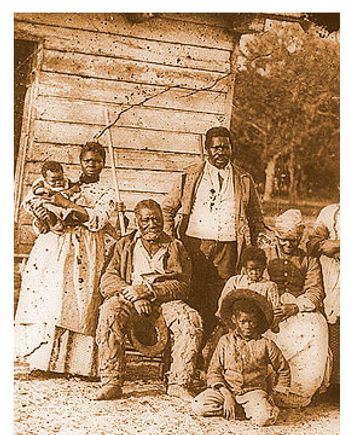
In some respects, it is remarkable that the United States doesn’t have a museum dedicated to slavery, an institution that endured close to 250 years in this country. The first African slaves arrived in Jamestown, Va., in 1619, a year before the pilgrims landed at Plymouth. By the time of the Civil War in 1861, there were roughly 31.4 million Americans and 4.4 million of them, or 14 percent, were African-Americans. Of those, 4 million were slaves in the South. Almost one-third of all Southern families owned slaves.

The first national African-American memorial was proposed in 1915, 52 years after Lincoln signed the Emancipation Proclamation freeing the slaves. A group of aging black Civil War veterans pushed for a “Negro Memorial” to commemorate African-American contributions. In 1929, Congress authorized a museum to be built in the capital. Intended to be a neo-classical edifice, similar to the U.S. Supreme Court, the memorial was never to be. That same year the stock market crashed, ushering in the Great Depression, so plans were scuttled. By the time World War II ended, the museum had been forgotten, and more than half a century would pass before Congress seriously considered it again.

In January, Rep. Cliff Stearns, R-Fla., reintroduced a bill to build a slavery memorial in Washington. It has since been referred to the House Committee on Resources. Slavery, says Wilder, is “the untold history of America.” But while he waits to build his museum, slavery’s story in the United States is already being told — in a way that he and many other Americans would hardly recognize.

The Museum of the Confederacy was founded in 1890 by a group of Richmond society ladies who wanted to preserve Confederate President Jefferson Davis’ house as well as enshrine Confederate artifacts and records. The Sons of Confederate Veterans group was founded six years later, and today sees as its mission “the vindication of the Cause for which we fought.” The group’s Web site proclaims Confederate soldiers fought for “the preservation of liberty and freedom” and “personified the best qualities of America.”

When Col. J.A. Barton Campbell, a retired Army Reserve colonel and a member of the Sons of the Confederate Veterans, became the museum’s director in February 2002, one of his first acts was to place the Confederate battle emblem alongside the other flags in front of the museum. He also cut the staff by 20 percent, and soon afterward former museum employees were quoted anonymously in the Richmond Times-Dispatch saying they feared flying the rebel flag was a sign that the museum would begin to embrace a more pro-Southern stance on the War Between the States.

If true, it will mark a dramatic change. Over the last four decades, the Museum of the Confederacy has tried to transform itself from a memorial to the Confederacy to a more mainstream museum of Confederate history. It hasn’t been an easy, or entirely successful, evolution. Even in the late 1980s, at the same time Wilder was running for governor, the museum still told the story of slavery from a distinctly Confederate point of view. At the entrance of the main exhibit, a plaque explained that some Southerners referred to the Civil War as the War of Northern Aggression, a conflict between the Jeffersonian, agrarian ideals of the South and the industrial interests of the North. What scant discussion there was of slavery and its role in Southern life was presented in the best possible light.

One display showed a worn cat-o’-nine-tails with the explanation that although some slave owners whipped their slaves with such devices, most were kind. Displaying that one slave whip outraged unreconstructed Southerners and, of course, the Sons of Confederate Veterans. The rest of the world may be anti-Confederate, they contend, but their museum should provide an untarnished image of the proud and honorable Confederacy. And slavery, especially when slaves are being beaten, ruins that portrayal.

The Sons of the Confederate Veterans were up in arms again a few years later, in 1991, when the museum, with a grant from the National Endowment for the Humanities, presented a vast show on slavery, “Before Freedom Came,” with artifacts and documents from roughly 90 private and public collections. By examining slavery, critics thought the museum had — once again — betrayed its Confederate heritage. That’s why they welcomed Campbell’s decision to fly the Confederate battle flag: Maybe the museum was finally getting back to its roots.

“If the museum can’t present a good presentation of the Confederate States of the America, who can?” Bowling asks. “That’s what they’re there for.”

On a bright day earlier this year, posters for the upcoming Civil War movie, “Gods and Generals” hung near the museum’s entrance. The movie, starring Robert Duvall as Gen. Robert E. Lee and featuring a cameo appearance by Ted Turner as a rebel soldier, depicts the early years of the Civil War — from the Southern perspective. Indeed, “Gods and Generals” used 7,500 Civil War re-enactors, who supplied their own period uniforms and weapons, for the battle scenes. In a review, the New York Times said the three-and-a-half-hour movie “goes out of its way to follow the example of ‘Gone With the Wind’ in sanitizing the South’s treatment of African Americans. Its one-sided vision shows freed and about-to-be-freed slaves cleaving to their benign white masters and loyally serving the Confederate Army.”

With such a wistful vision of the Civil War and slavery, “Gods and Generals” could fit unobtrusively into the museum’s current presentations. The museum’s main exhibit is called “The Confederate Years: The Southern Military in the Civil War,” and it doesn’t shirk from discussing slavery’s role in the South’s war effort. But the perspective is decidedly Confederate: Even the brief overview of the reasons for the South’s secession from the Union, at the beginning exhibit, presents the Civil War as more of a disagreement over states’ rights than as an ideological difference over the institution of owning human beings.

“Lincoln’s Republican Party,” it says, “opposed the expansion of slavery and the enforcement of the Constitutional requirement to return slaves to their owners.” And that, it goes on to say, was “an act hostile to the South’s interests.”

Step around the corner and the exhibit goes on to give a fairly rousing justification for why Southerners eagerly donned gray uniforms, drawing parallels with the revolutionary American colonists taking up arms against the British. “Confederate soldiers were fighting a ‘Second American Revolution’ for the rights and liberties that their forefathers had won in the first American Revolution,” says one placard. “Among these rights was the right to own slaves, a right sanctioned by the Constitution and by custom — even though the vast majority of the Confederate soldiers did not own slaves.”

The exhibit also talks about how the Confederate military enlisted African-Americans to build fortifications and serve the army. While it mentions that many Southern states and the Confederate government forced blacks — slave and free — into the military, it also highlights African-Americans who were loyal to the Confederacy. It talks about free blacks in the South forming militias to aid the Confederate cause. (Their offer was refused.) And it looks at slaves who stood by their masters. One such faithful slave was Marlboro Jones, owned by Capt. Randal F. Jones. Under his portrait, a description tells how Jones brought his master home to Savannah after he was mortally wounded on the battlefield. A visitor is left with the impression that African-Americans weren’t all that dissatisfied with slavery. The museum’s newest exhibit, “The Confederate Nation,” will probably not discourage that perception.

Coski, the museum’s historian, is proud that the new show does not depict slavery in stereotypical terms. “African-Americans would be loath to admit that any slave would be loyal to the Confederates,” he says. “And the Sons of the Confederate Veterans and activists would swear up and down that the absence of any slave rebellion shows that slaves were fundamentally loyal to the South.”

The truth, Coski says, lies somewhere in the middle. Though there were no slave uprisings in the South during the Civil War, he points out that about 500,000 African-Americans out of a total of 4 million fled north of the Mason-Dixon line, representing the largest migration in U.S. history. Obviously, he says, that debunks the Confederate myth that content slaves supported the Confederacy. “Hundreds of thousands didn’t act as loyal to the homeland,” Coski says. “They took the first opportunity to go to the North.”

On the other hand, the exhibit will display artifacts and documents showing some African-Americans, slaves and freemen, did indeed back the Confederacy. “It would be illogical and downright patronizing to think that 4 million African-Americans all reacted and behaved in the same way to something like the Civil War,” Coski says. “We will also have artifacts that speak to the stereotypical slaves that buried the silver or protected the master and mistress from the Union Army.”

Wilder himself wouldn’t recognize the need for a slavery museum until 1992, when, as Virginia’s governor — and the first elected black governor in U.S. history — he led a state trade mission to Africa and visited Goree Island, off the coast of Senegal in West Africa. Goree was a central trading post for the early slave trade. Untold millions of Africans passed through island’s so-called Door of No Return. While no hard numbers exist, it’s estimated that traders shipped between 10 million and 28 million Africans overseas. Packed tight in ships with little food and water, more than 2 million of them are thought to have died during the crossing known as the Middle Passage on their way to the Americas and the Caribbean. Wilder’s trip to Goree carried great symbolic significance and a deep personal resonance. After leaving the dark, oppressive museum angry and dejected, he was determined to have America confront its own slave past.

Today, the benign depictions of slavery and “happy slaves” like the one at the Museum of the Confederacy reaffirm his belief that a museum solely devoted to slavery must be built in this country. True, slavery has been abolished in the United States for almost 138 years (slaves in Texas finally heard they were free on June 19, 1865), but it had flourished for nearly 250 years before that. It fueled the U.S. economy and shaped its political discourse. It was the single greatest affront to the ideals articulated at the nation’s founding, and it remains a source of profound conflict and alienation in a racially mixed society. Few people, he insists, understand the degree to which slavery and its aftermath still cast a shadow over American culture.

And yet, where African nations such as Senegal and Ghana, and even the small Caribbean island, Curaçao, have slave museums, the United States does not. This country has a national museum on the Washington Mall to commemorate the Holocaust, a profound global tragedy, but one that occurred in Europe.

To Wilder, it’s striking that it seems easier for Americans to confront the shameful history of Nazi-sponsored genocide. “None of it ever happened here, none of it,” he says. “To the extent that Jews were persecuted here, they were persecuted along with African-Americans. There was anti-Semitism, anti-black, anti-Catholic, anti-anything in terms of people who weren’t the true bloods. I want to show that there aren’t any true bloods in America. I don’t want to talk about what was good and what was bad and who was right and who was wrong. I want to lay out the facts, so you can tell the story for yourself.”

Wilder hasn’t been the only one to contemplate a museum devoted to slavery themes. The National Underground Railroad Freedom Center in Cincinnati, set to open in 2004, will tell the story of roughly 100,000 slaves who escaped from the South in the 1800s, aided by abolitionists who spirited them from one safe house to another, until they were in the North.

And for almost a year, a presidential commission has been looking into building a National Museum of African American History and Culture in Washington. President George W. Bush signed legislation in December 2001 to appropriate $2 million for a commission to study the idea. After a series of town meetings around the country, the panel delivered a 122-page report to Congress on April 1, calling for a museum to be built next to the reflecting pool in front of the Capitol. Inevitably, slavery would be a major theme for that museum, says George McDonald, the commission’s director and its liaison with Department of the Interior’s National Parks Service.

“Slavery was the American Holocaust,” McDonald says. “That’s just my own opinion and it needs to be shown in that light. It will show the comprehensive human tragedy. From the Middle Passage where Africans were brought over here on top of each other to when they came here to be branded. We will deal with the whole. But we will deal with slavery in the true form. It won’t be sugarcoated.”

McDonald would like to get initial funding of $45 million for the museum in the 2004 federal budget. The total cost is expected to reach $400 million. With half that amount expected to come from a federal government already contending with the unknown costs of rebuilding Iraq as well as with soaring budget deficits, the project faces long odds in the near term. Yet, Claudine Brown, co-chair of the commission, insists that budget constraints shouldn’t deter federal officials. Congress “has exercised its will to create several other museums in the nation’s capital, whether there were wars, or pestilence, or seven-year locusts,” she says. “There is no viable reason why this museum should not be authorized. I think we have waited much too long.”

Wilder, meanwhile, staunchly believes that the country needs a museum dedicated to slavery — and only slavery. “Slavery is just so big,” Wilder says. “It’s too big to be compartmentalized. It’s the untold story of America: slavery. If you know where it’s been told, tell me.”

It’s been more than a decade since Wilder first proposed building a museum and it’ll be another four years before he expects to have it completed in 2007. One reason it has taken him so long to get his museum off the ground is that he’s been extremely careful in choosing the site. It had to be in Virginia. This is where slavery began in 1619, in Jamestown; it’s where Thomas Jefferson lived, he who owned slaves and yet penned the words “all men are created equal” in the Declaration of Independence; where Wilder’s ancestors were kept as slaves; where major, and bloody, battles of the Civil War were fought; where capital of the Confederacy was located; and where Lee surrendered to Gen. Ulysses S. Grant at Appomattox on April 9, 1865. Virginia marks slavery’s beginning in this country and its end.

After returning from his Africa trip in 1992, Wilder spent the next 10 years searching for a suitable location here. Before he started raising money from corporations and individuals, recruiting curators and museum experts, and collecting artifacts and records from private owners and other institutions, Wilder wanted land. As a seasoned politician who never lost an election in almost a quarter of a century, he saw securing the property as a way to retain control over the museum’s creation and therefore, a way to ensure its eventual success. Worried that internal squabbling would derail the project, Wilder wanted to limit the number of people involved early on.

“One of the things I’ve tried to do is keep things tight, so we don’t have political infighting,” he explains. “That comes, trust me, that comes with growth of anything … You have to understand the infighting. There’s so much of it. God have mercy. Who’s going to run this? Why should they run that?”

Jamestown was Wilder’s first choice. But after five years negotiating with the land’s owners, a fundamentalist Christian Pentecostal church, he gave up. (Church leaders were dead set against any tobacco or alcohol on the property, even at receptions and parties.) After his search in Richmond led down a few other dead ends, Larry Silver, a commercial developer and a longtime friend, offered him land in Fredericksburg, about 50 miles from Washington and 50 miles from Richmond. As soon as Wilder saw Silver’s parcel, he knew it was the right spot.

Almost 39 acres, the undeveloped wooded site is on a bluff overlooking the Rappahannock River near I-95. Last year, Silver deeded the landwith an estimated value of $20 million to $30 million — to the National Slavery Museum. When completed, the museum will be part of Silver’s larger 2,400-acre development, Celebrate Virginia, which will encompass stores, corporate offices and three golf courses.

Some local critics have questioned the propriety of placing a museum so near commercial property, but Wilder dismisses those concerns. There is enough land to separate it from the stores and offices, he says. Now, with the land secured, Wilder is turning his attention to planning and building the museum. He estimates it will cost $200 million to complete, but he expects it to be built in stages, as funds are available. So far, the National Slavery Museum has $1 million from Fredericksburg and another $1 million from the state. By year’s end, Wilder wants the board to have a plan in place to raise funds from corporate and individual donors.

That campaign may be a challenge, especially in the current economy. But he and others are optimistic. From planning to its opening in 1993, it took 15 years for the Holocaust Museum to be built. Congress authorized the Smithsonian Institution’s National Museum for the American Indian in 1989. That museum’s new building on the Capitol Mall won’t open until September 2004 — again, 15 years later.

In Cincinnati, the Underground Railroad Freedom Center formed in 1994 and began fundraising in the fall of 1999. It has received $91 million in pledges toward its $110 million goal, and expects to open in 2004. Sixty percent of the funds came from individual and corporate donors. Given that the center was able to raise its funding in a relatively small amount of time, Ernest Britton, the center’s spokesman, says Wilder may be able to raise the funds necessary to open a portion of his slavery museum within four years.

“Absolutely, it’s possible,” Britton says. “It’s going to be based on the contacts and the relationships that they are able to establish with donors around the country and how concrete their plans are. People want to see something concrete. We didn’t have artifacts, but we had a schematic and conceptual plan.”

Though he doesn’t have much capital, Wilder has already attracted a distinguished architect for the project: Chien Chung Pei, founder of Pei Partnership Architects in New York City and son of the legendary architect I.M. Pei. At his father’s firm, the younger Pei was the designer in charge of the glass pyramid entrance at the Louvre in Paris and the East Wing of the National Gallery in Washington. He has already shown Wilder preliminary renderings for a slavery museum: a modern structure with a glass gallery at the center with rectangular buildings on the sides and elongated terraces. (Wilder rejected another architect’s design that would have had two glass towers — one with gray panes and the other with dark blue — linked together with large symbolic chains.)

“The [slavery] museum is important for this country,” says Pei, who contacted Wilder after reading about his project. “Slavery is a story which should be told, but it’s important that it be told in the right way, told in a way that helps unite our country more so than to divide it. When you hear statements coming out of people like Trent Lott, you realize some people aren’t living in the 20th century, let alone the 21st. There is a deep-seated misunderstanding about a lot of things having to do with race. I think this museum, by educating people, can overcome a lot of misunderstanding and a lot of ignorance. Maybe I’m being too generous, but I think that ignorance plays a big role in that. But I’m just an architect.”

Wilder isn’t discouraged that after 10 years of his quest to build a slavery museum, he has neither committed donors nor a trove of slave artifacts, records and documents. With a scant $2 million and 4o acres of land in hand, he is confident that some portion of the National Slavery Museum will open to the public in four years — in time for the 400-year anniversary of the settlement of Virginia.

“We’re going to build the museum,” he says matter-of-factly. “Nothing is going to stop us.” Wilder firmly believes that if the United States doesn’t confront its history, in its entirety, then it will never live up to its potential. “This is what [Martin Luther] King was saying: America should live up to its precepts,” he says. “The more we learn about slavery, the more we learn that we haven’t lived up to our creed, the more we learn that we fostered a situation that divides and separates, that we have sanctioned a system that discriminates against human beings, that declassifies human beings … The story here is that America was founded on precepts which were never fulfilled. Opportunity, or recognition of these precepts, is ours if we take advantage of it. If we don’t, something obviously will happen to the fabric of our society. Rather than become closer, it’ll unravel. And no one wants that.”

Continue Reading Close

The end of civilization

The sacking of Iraq's museums is like a "lobotomy" of an entire culture, say art experts. And they warned the Pentagon repeatedly of this potential catastrophe months before the war.

  • more
    • All Share Services

The end of civilization

On Jan. 24 at the Pentagon, a small group of accomplished archaeologists and art curators met with Joseph Collins, who reports directly to Deputy Defense Secretary Paul Wolfowitz, and four other Pentagon officials to talk about how the U.S. military could protect Iraq’s cultural and archaeological sites from damage and destruction during the impending war in that country. McGuire Gibson, a professor at the Oriental Institute at the University of Chicago, gave the officials a list of 5,000 cultural and archaeological sites. First on the list: the National Museum of Iraq in Baghdad.

Gibson recalls he talked to the group about the importance of safeguarding the museum from bomb damage — and from looting after the military conflict ended. “I pointed to the museum’s location on a map of Baghdad and said: ‘It’s right here,’” he recalled in an interview. “I asked them to make assurances that they’d make efforts to prevent looting and they said they would. I thought we had assurances, but they didn’t pan out.”

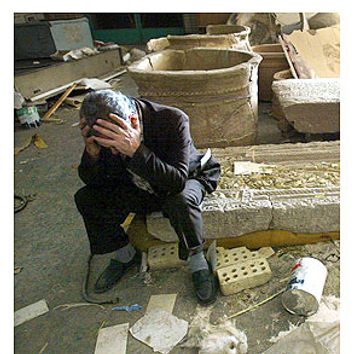
On April 10, a day after Saddam Hussein’s regime collapsed and Baghdad was in the hands of U.S. military forces, the National Museum of Iraq was ransacked. In a matter of hours, thousands of Iraqis, some thought to be working for art dealers, clambered into the museum that had been closed to the public for years. After two days of looting, almost all of the museum’s 170,000 artifacts were either stolen or damaged. Ancient vases were smashed. Statues were beheaded. In the museum’s collection were items from Ur and Uruk, the first city-states, settled around 4000 B.C., including art, jewelry and clay tablets containing cuneiform, considered to be the first examples of writing. The museum also housed giant alabaster and limestone carvings taken from palaces of ancient kings.

“It’s catastrophic,” says Gibson, who is also head of the American Association for Research in Baghdad, a consortium of about 30 U.S. museums and universities. “It’s a lot like a lobotomy. The deep memory of an entire culture, a culture that has continued for thousands of years, has been removed. There was 5,000 years of written records, even Egyptian records don’t go back that far. It’s an incredible crime.”

In the aftermath of a looting spree that stripped museums in Baghdad and Mosul, left the National Library a smoldering ruin and turned thousands of ancient Qurans at the Ministry for Religious Affairs to ashes, archaeologists and museum curators from around the world are racing today to assess the damage and, where possible, to recover what has not been destroyed. The United Nations Educational, Scientific and Cultural Organization (UNESCO) has called an emergency meeting Thursday in Paris to review the disaster. Even the U.S. government has pledged an aggressive effort to help recover Iraq’s stolen historical treasures.

Gibson, who will attend the UNESCO meeting, and other experts in archaeology and ancient art are hardly mollified by that pledge. In a series of interviews with Salon, they offered a detailed account of warnings given to U.S. war planners beginning last fall, and continuing up to the days before the war — warnings which were all but ignored.

“It’s extraordinary,” says Joan Aruz, curator in charge of the Department of Ancient Near Eastern Art at the Metropolitan Museum of Art. “It’s of the utmost significance, not only for the cultural heritage of Iraq, but also for the rest of the world. The museum contained the greatest work of art created in the first cities. The loss is just outstanding. I haven’t gotten over the shock.”

Aruz, who’s in charge of the Met’s upcoming exhibition about ancient Iraq, says one of her favorite pieces in the museum’s collection is a figure of a man with a beard referred to as “The Priest King.” Another is a carved face of a sensitive-looking young woman. The combined value of the artifacts could be in the billions of dollars.

Some archaeological and art experts think that the sack of Baghdad may be a result of Secretary of Defense Donald Rumsfeld’s decision not commit more ground forces. Instead, he opted for a “rolling start” invasion where troops would be deployed to Iraq as needed. Other generals, including Gen. Eric K. Shinseki, the Army’s chief of staff, criticized Rumsfeld’s decision. One unnamed general even called it a “war on the cheap.”

The U.S. and Britain deployed almost 300,000 troops to the Persian Gulf region. In contrast, during the Operation Desert Storm in 1991, allied forces numbered closer to 500,000. “Now, we’re seeing the consequences of that decision,” says Scott Silliman, who was the senior attorney for the U.S. Air Force’s Tactical Air Command during the first Gulf War. Silliman worked with archaeologists at that time to make sure the Air Force took precautions not to destroy or harm Iraq’s cultural and ancient sites.

Coalition forces are trying to restore civil order in Baghdad, a city of 4.5 million, and the looting has almost ended. However, the pandemonium and destruction that occurred have cost the Bush administration credibility and trust in Iraq and across the Arab world. Silliman, who’s now a law professor at Duke University and executive director of the Center for Law, Ethics and National Security, says the coalition forces may have violated the Fourth Geneva Convention, which calls for an occupying force to protect cultural property. Even if the coalition forces didn’t intentionally breach the Geneva Conventions, he says, “the effect [of the looting] will be more in world opinion, than in legal sanctions.”

After the first reports of looting at Iraq’s museums — and the first questions were raised about the failure of U.S. forces to intervene — Rumsfeld’s initial comments signaled that the U.S. didn’t think that protection of antiquities and art was a priority. At a news conference last Friday, he blamed press coverage for inflating the problem. “The images you are seeing on television you are seeing over and over and over,” he said, “and it’s the same picture of some person walking out of some building with a vase, and you see it 20 times, and you think, ‘My goodness, were there that many vases? Is it possible that there were that many vases in the whole country?’”

That outraged archaeologists, historians and others around the world. The Archaeological Institute of America, a Boston-based group with 9,000 members in the U.S. and Canada, had contacted government agencies as far as back as January about the danger of looting of Iraqs cultural sites. Institute President Jane Waldbaum said she was outraged first by the unchecked looting, and then by Rumsfeld’s response. “Donald Rumsfeld in his speech basically shrugged and said, ‘Boys will be boys. What’s a little looting?’” she said. “Freedom is messy, but freedom doesn’t mean you have the freedom to commit crimes. This loss is almost immeasurable.”

In the past few days, the U.S. Central Command in Qatar has tried softening Rumsfeld’s off-the-cuff remarks. “I don’t think anyone anticipated the riches of Iraq would be looted by the Iraqi people,” Brig. Gen. Vincent Brooks said Tuesday. In fact, however, the Pentagon, the State Department and the White House had been warned repeatedly, for months.

On Oct. 15, Ashton Hawkins, president of the American Council for Cultural Policy, a not-for-profit group formed to promote issues relating to art collecting, sent a letter to Rumsfeld, Secretary of State Colin Powell and National Security Advisor Condoleezza Rice asking what steps the government and the military were taking to secure Iraq’s antiquities. Copies of the letter were also sent to various officials in the National Security Council, the Central Intelligence Agency and other agencies.

Hawkins, a former general counsel at New York’s Metropolitan Museum of Art, received no response.

Then in November, Hawkins and Maxwell L. Anderson, president of the American Association of Museum Art Directors and director of the Whitney Museum of American Art in New York, wrote an Op-Ed for the Washington Post. In the piece published Nov. 29, they reiterated the points made in the earlier letter and said that the U.S. government and the military should prepare plans to protect Iraq’s cultural and archaeological sites.

“In the event of hostilities,” they wrote, “we urge that steps be taken to protect Iraq’s heritage, in which we have a shared interest. Our military and civilian leaderships should be aware of the location of Iraq’s most significant cultural and religious sites and monuments. To this end, we urge the administration to consider the creation now (and not later) of a planning mechanism specifically charged with ensuring that Iraq’s material culture is protected.

“At the conclusion of hostilities, should they occur, the United States and its coalition partners will become heirs to responsibilities that include, in addition to the welfare of Iraq’s people, the task of protecting Iraq’s holy cities and ancient sites. Measures should be taken to ensure absolute respect for the integrity of Iraq’s sites and monuments, and to prevent looting of any kind. In addition the coalition should encourage a new Iraqi civil administration to move quickly to establish security for its own monuments, sites and museums and support the reconstitution of Iraq’s antiquities service.

“We should not allow our primary objectives in this region to overshadow our cultural responsibilities. Ultimately we may well be judged by how we behave toward Iraq’s patrimony in the course of any military action and occupation we may undertake.”

Again, no response from the White House, the Pentagon or the State Department. Finally, Collins, the deputy assistant secretary of defense for special operations/low intensity conflict, contacted Hawkins in the first week of January and said he’d like to meet with him and whoever else he thought would be helpful in coming up with a plan to protect Iraq’s archaeological heritage. Originally scheduled for mid-January, the meeting was postponed until Jan. 24. Those present at the meeting included Hawkins, Anderson, Gibson, Arthur Houghton, vice president of the American Council for Cultural Policy and a former curator at the Getty Museum in Los Angeles, and, on the government’s side, Collins and four other Pentagon officials.

The meeting was informal. Collins did not return calls seeking comment, but others who attended remember him saying that the Pentagon wanted to expand its list of archaeological sites. The Defense Department had a list of 150 sites compiled during the 1991 Gulf War. Gibson said he could provide the Pentagon with thousands and thousands of other sites worth protecting. The question was raised about what would be done to make sure that coalition forces protect and safeguard property. Collins reassured the group that he would issue an order making sure that the troops knew how to behave.

Everyone left the meeting satisfied that the Pentagon recognized the importance of safeguarding and protecting Iraq’s sites. In subsequent communications with the Pentagon, Gibson stressed that after Saddam’s regime collapsed, the coalition would have to quickly deploy Special Forces troops to secure cultural and archaeological sites to prevent them from being ransacked and damaged by looters. “I really hoped that the U.S. military would take the National Museum of Iraq and protect it,” he says. “I was naive. I guess we were talking too far down the line of command.”

Waldbaum, with the Archaeological Institute of America, says her group hadnt been invited to attend the meeting. But in January, she said, her group sent letters to officials at the State Department, the Defense Department, the White House and the Pentagon. They received no response.

In mid-March, just days before Anglo-American forces entered Baghdad, an expanded group met with Ryan Crocker, deputy assistant secretary of the Bureau of Near Eastern Affairs. Bonnie Burnham, president of the World Monuments Fund, a private, nonprofit architectural and art preservation organization in New York joined this meeting, according to others who attended. The fund designated two sites in Iraq for protection: the Nineveh and Nimrud Palaces near Mosul, portions of which are more than 2,700 years old, and the Arbil Citadel, built 8,000 years ago.

Crocker did not return calls seeking comment, but according to others at the meeting, he pledged that the State Department would set up a working group to focus on protecting Iraq’s cultural and archaeological sites. He asked the people at the meeting to provide names of Iraqis who could participate in the working group once the coalition forces had secured Iraq.

On March 21, after Anglo-American forces were in southern Iraq, Waldbaum’s institute was joined by other archaeologists and organizations worldwide in signing a letter to the Defense Department urging all governments involved in the war to protect Iraqs monuments, museums and archaeological sites. Again, no response.

On April 9, as coalition forces were entering Baghdad, the institute sent another letter, this time either by fax, e-mail or FedEx, to dozens of government officials, including Powell, Rumsfeld, Rice, President George W. Bush and even British Prime Minister Tony Blair. The next day, Waldbaum said, she received an e-mail from Maj. Christopher Varhola, stationed in Kuwait with the Armys cultural affairs office. The reply was sent in the early hours of April 10, the day the ransacking of the museum and other institutions began:

“We are very concerned with looting and pilfering,” Varhola wrote. “This is of course complicated by the economic situation in Iraq over the past ten years and the presence of sophisticated smuggling operations and organizations. I have worked to stress the importance of this to the ground commanders. Based on the recent episode in Najaf, I am cautiously optimistic that this has sunk in….

“We have Civil Affairs teams on the ground in Baghdad and are awaiting their initial assessments. The general intent is that we secure the sites initially and then transition to civil control under the Office for Reconstruction and Humanitarian Affairs (ORHA). I have forwarded your message to Ambassador John Limbert in ORHA. He is the designate to assist the Iraqi Ministry of Culture in the preservation of sites and artifacts. We had a lengthy meeting yesterday and he shares your concerns. He is working closely with the U.S. Army to implement protection measures.”

The Army’s intentions and concerns, as articulated by Varhola, came to nothing. Chaos ruled the day.

Archaeologists and art curators think that some of the looting was organized by a conspiracy of antiquity dealers and smugglers. Proof of that is that the heavy metal doors on the storage room at the National Museum of Iraq weren’t broken down, indicating that it was opened with a key. Also, the card catalog listing the thousands and thousands of items in the museum was destroyed. There is a duplicate somewhere, but the destruction of the one of the catalogs shows that there was an effort to cover up what was going on. In fact, there have been reports that artifacts that were in the museum have already shown up in antiquity markets in Teheran and Paris.

“In warfare, there are priorities,” Gibson says. “There are not enough troops necessary to do everything that needed to be done. But we have a responsibility under various rules in warfare to preserve the cultural patrimony of a country.”

As worldwide outrage grew over the plundering of Iraq’s great cultural and archaeological sites, the U.S. responded. On Monday, Powell made a statement that anyone caught dealing or possessing stolen antiquities may be prosecuted under Iraqi law and the United States National Stolen Property Act. He also said that Central Command issued orders to all troops in Iraq to protect museums and antiquities throughout the country.

Powell said U.S. radio broadcasts are encouraging Iraqis to return any items taken. The Office of Reconstruction and Humanitarian Affairs will help Iraqis and international experts in their efforts to restore artifacts and the catalogs of antiquities that were damaged by looters. Powell also said the U.S. is working through Interpol to help locate stolen items and return them to Iraq before they make it into international crime channels. And he said the U.S. has been in touch with the UNESCO to form a plan to safeguard Iraq’s antiquities.

Some of the antiquities stolen will probably be stashed away in private collections for years and years. And many of the pieces that were damaged are beyond repair. Archaeological groups and art curators want to prevent the stolen artifacts from leaving the country. Once they’re in other countries, it will be that much harder to retrieve them. To encourage Iraqis to return stolen art and artifacts, they are pushing for the U.S. government to set up an amnesty program and a reward system.

That’s the model favored by Stuart E. Eizenstat, former deputy treasury secretary and a member of the Presidential Advisory Commission on Holocaust Assets in the United States. “The money would be well spent in winning the goodwill of the Iraqi people,” he said in an interview. It’s important that as much of the art and antiquities be recovered before they are transported out of Iraq. “Once it’s out of the country, it would pass through multiple hands. What I found out [when working to recover art stolen by the Nazis] was that the art world is a secretive world. As a dealer, you rely on information from your immediate sellers and you don’t ask questions.”

Waldbaum, with the Archaeological Institute of America, says she’s talking to different groups and individuals about setting up a Web site that could be a repository for images and descriptions of all the artifacts that were in the museum. That way if they make it to the market, dealers and museum curators will be better able to determine if they were stolen from the Iraqi National Museum. But this will take much time.

Meanwhile, some of the looted artifacts inevitably will find their way through discreet channels to buyers. Among those, experts fear, many will never be recovered.

This story has been corrected since it was first published.

Continue Reading Close

Death trap

Iraqis tell their American relatives of the daily horror of being caught between Saddam's death squads and the ferocious firepower of the U.S. military.

  • more
    • All Share Services

Death trap

After a prayer meeting Friday at the Al-Khoei Islamic Center, a blocky gray building with a stubby minaret overlooking an expressway in Queens, N.Y., Sheikh Fadhel Al-Sahlani offered a visitor a piece of sticky sweet baklava before sitting down in his wood-paneled office lined with religious books. These days Al-Sahlani, a soft-spoken man with graceful manners, finds himself an unlikely pundit on the latest war in Iraq. For those willing to listen, Al-Sahlani has a sobering analysis on Operation Iraqi Freedom: The Iraqi people are Saddam’s terrified hostages and America’s unwilling enemies.

Al-Sahlani, imam of the Al-Khoei mosque since 1989, knows this because he grew up in Basra and has family and friends who still live in the Shiite-dominated southern city of 1.3 million. Over the years, the 50-year-old religious leader has heard how Saddam has gradually tightened his stranglehold over the populace, so no one dares rise up against him. That’s why he isn’t surprised civilians haven’t rebelled and embraced American and British troops as their liberators. They can’t.

Piecing together the situation in Basra from Arab news reports and dispatches from Iraqis, Al-Sahlani says conditions in the city are more dire than the lack of drinking water and electricity, and far darker than Americans were led to believe. The Saddam Fedayeen, an elite paramilitary force, and the Republican Guard have Basra’s residents under house arrest. Each family is given one identification card. If anyone is caught in the streets without it after curfew, he or she is shot. The Fedayeen also forces men, some as young as 15 or 16, to join their ranks. If new recruits refuse to fight, they’re shot. And if they do fight, they risk death at the hands of Anglo-American forces.

“Saddam doesn’t care about the Iraqis — maybe he’s even glad when there are more causalities, so he can blame them on the coalition forces. And the coalition forces aren’t intentionally trying to kill civilians, but when they fight the Fedayeen, who are between houses, mosques and schools, they will be hurt,” Al-Sahlani says. “The Iraqi civilians are between the two fires.”

A similar sentiment is heard over and over wherever Iraqi expatriates gather, and with allied troops now moving against the capital city of Baghdad, and transcontinental communications difficult or impossible, it is more acute than ever. In a series of interviews, Iraqi Americans who live in New York paint a disturbing picture of their family and friends at home: They are trapped between a Stalinist dictator willing to sacrifice his own people as he fights for his life and the Bush administration’s unprecedented military might. The risks are enormous, and the future completely unknown.

“They are frustrated both ways: with the government and with the Americans,” says Saad Al-Khafagi, who accompanied a delegation of religious leaders who visited Baghdad on a peace mission in the days before the first bombs fell. “They are in the middle.”

After the end of the Gulf War in 1991, an estimated 4 million Iraqis left the country; 50,000 of them came to the United States and most of them found their way to Detroit, according to a recent New York Times article. A little more than 1,200 settled in New York, but there could be more, says Louis Abdellatif Cristillo, project coordinator for the Muslims in New York City Project, sponsored by the Middle East Institute at Columbia University. As nationalities go, “Iraqi” is a modern construct, he says, and many Iraqis choose to identify themselves through their ethnicity: Chaldean, Assyrian, Armenian, Turkmen or Kurdish. “Iraqis have integrated pretty well in the U.S. economy,” Cristillo says. “They’re working in offices and have white-collar jobs.”

Though many Iraqis in this country left their homeland because of political and religious persecution, they still have strong ties and affection for Iraq and close relations with families and friends who are among the 24 million people still living there. Often bonds have been maintained through telephone calls, but in the first days of war, those calls were both reassuring and deeply frustrating. Words were warm and heartfelt, but somehow mundane. Iraqi Americans told their relatives to be safe. Stay inside. Stay away from windows. Store enough food and water. Iraqis at home reassured their American relatives that they will take precautions. Inshallah — God willing — they’ll see each other after war.

As for the deeper questions of repression, bombs and liberation — questions of life and death — there was remarkably little in those conversations. There were variations on a familiar story: Those who have suffered so much under Saddam were braced for even more hardship. But after living in a violently repressive authoritarian state for more than 30 years, Iraqis fear saying anything about politics, much less speaking out against Saddam, especially on the phone. Sometimes Iraqis try to express their thoughts in code or metaphors, but it’s difficult for loved ones on this side of the Atlantic to decipher them. Everyone is forced to read between the lines.

Now that phone service has been disrupted, Iraqi Americans watch TV and read the newspaper for stories of their loved ones. And like them, other Americans are left to read between the lines of the disaster unfolding in ancient Mesopotamia. Do the Iraqis want the U.S. and the British to overthrow Saddam? Will civilian deaths turn Iraqis against the allied forces? Will other Arabs fight alongside the Iraqis? The human component of the story is squeezed between reports on military actions. We may not know the human story until the war is over. In the meantime, we can get a glimpse into the minds of ordinary Iraqis through their conversations with their American relatives.

Jennifer Ridha

Jennifer Ridha, a 26-year-old lawyer, has never visited her Iraqi relatives. Her father moved to the United States in the 1960s after receiving a scholarship to study engineering at the University of Illinois. Her mother moved here later to marry him. Their families knew each other in Karbala, a town Americans may now recognize because it’s on the allied forces’ northern route to Baghdad. While Jennifer was born in Ohio, most of her parents’ families have stayed in Iraq. Her father, in fact, has never been back.

There was a brief time between the Iran-Iraq War in the early 1980s and the Kuwaiti invasion when travel was possible. But after the Gulf War, it was too much of a hassle. With no-fly zones around Baghdad, Ridha’s mother had to fly to Amman, Jordan, and then drive 16 hours through the desert to the city. “It was a tedious and uncertain trip to take,” she says.

Over the years, the family has stayed in touch by phone. Before the bombing began, Ridha spoke to two of her mother’s sisters who live in Baghdad. Nawal, a gynecologist, lives with her husband and children in a house in a fairly affluent neighborhood. Iqbal, an engineering professor, and her family live in an apartment building. Nawal decided Iqbal’s family would be safer in the house during the bombing, so everyone moved in with her.

Ridha asked her Aunt Nawal about the preparations she made to survive the impending siege. Nawal’s husband, who owns a pharmaceutical company, bought a generator in case electricity is disrupted, but he complained that it wouldn’t provide much power. Ridha’s uncle also had helped neighbors dig a well. The aunts, Ridha says, were in better spirits than she. Nawal sounded as though their hardships would soon be over. “My aunt said, ‘I can’t wait to see you and your mother again.’”

Iqbal told her a story from the Quran about Ibrahim, or Abraham, as he is known in the Old Testament, being surrounded by fire and how God saved him by transforming the flames into water. But Ridha couldn’t tell what her aunt was trying to convey. Was Saddam the conflagration? Or did the flames represent the U.S. troops?

Ridha also talked to her father’s mother, who lives in a suburb outside of Baghdad with her other son and his family. Ridha’s grandmother cried. “She’s getting old,” Ridha says. “She says she’s had a good life, but she worries about her sons and daughters and grandkids. She’s more worried about them than she is herself. She said, ‘You know what we really want is peace.’ But she couldn’t articulate more than that without getting in trouble. I don’t know if she meant, we want peace and we don’t want war, or we want peace and we don’t want Saddam.”

Since the war started, Ridha hasn’t been able to get through to her aunts in Baghdad or her grandmother. She’s called dozens and dozens of times, but no one answered. But one of her cousins who lives in Amsterdam did reach a next-door neighbor. When her cousin spoke to Nawal, she told her that they could hear bomb explosions from their home. Her 3-year-old grandson asked her about the loud noise, but she decided to tell him that it was the TV. She didn’t want her grandson to know that the U.S. “‘with the strongest military in the world was dropping bombs on his family and his city. I don’t think any 3-year-old has to know that.’”

Ridha is against the war. She wishes the U.S. and the British had tried to settle the matter through the United Nations, through diplomacy and pressure. She believes her family and the other Iraqis are paying the price, sometimes with their lives, for something beyond their control. “They talk about politics profusely among themselves,” she says. “But ultimately it is politics that happen to them, not the politics they pick. It’s almost as though politics are discussed in the abstract, almost as a completely independent bystander would talk about another country’s politics.”

No one is taking the Iraqis into consideration, she says — not Bush, not Saddam, not the other Arab leaders. Ridha is especially disappointed to read that Arab radicals want to go to Iraq as suicide bombers to fight the American and British infidels. She fears that will only prolong the war and cost even more Iraqi lives. “Saddam is a tyrant and a dictator,” she says. “It’s trite, but it’s true. And no one knows it better than the Iraqi people. Their interests have to be salient here and they’re not. It’s so frustrating. Sometimes I feel like screaming.”

Saad Al-Khafagi

Saddam Hussein was rising through the ranks of the Baath party in 1975, still four years from seizing control; Al-Khafagi, then 23, left the country that same year to study and to escape the Baathist crackdown on political dissidents. Al-Khafagi’s family stayed in Iraq. Two brothers would later die in the Iran-Iraq War. Two now live in Samara, near Nasiriya. Another, Sammy, lives in Baghdad. Sammy and his wife, their four grown children and two young grandchildren live in the same house in a neighborhood called Jihad not far from the city’s center.

During the Gulf War, Al-Khafagi’s father took his family to a home in the desert to escape the bombing. But their father is dead and Sammy, now 58, doesn’t have enough money to take his family there.

In New York, Al-Khafagi helps Iraqi immigrants get the proper documents for their green cards; he also heads the Iraqi-American Antiwar Coalition. In early March, he accompanied a delegation of American Muslim and Christian religious leaders to Iraq. The group visited schools, hospitals, mosques and churches in Baghdad. They asked for a meeting with Saddam, but he didn’t have time. They did, however, meet Deputy Prime Minister Tariq Aziz. Nothing came of it.

Before he left, he visited Sammy and his family. Sammy told his brother that he wouldn’t want to leave Baghdad even if he could. He wants to stay and defend his country — not Saddam’s rule, but his country. To prepare for the battle in Baghdad, Sammy dug a well in his backyard for water and bought enough canned food, sugar and flour to last his family two months.

“They are frustrated both ways: with the government and with the Americans,” Al-Khafagi says. “They are in the middle.”

Saad Al-Khafagi left Iraq on March 11, eight days before the start of war. It was a bittersweet return to New York. “I feel guilty to be here, knowing that they are going to be bombed,” he says, looking off in the distance. “You know what is coming. You know the capabilities of the United States Army. But, on the other hand, I have my children here, I have three boys, and my job.”

Al-Khafagi spoke out against the war at a recent peace convocation at Riverside Church in Manhattan. He wrote a speech on a legal pad for his presentation before 2,400 gathered at the church to commemorate Martin Luther King’s famous speech linking civil rights with the peace movement during the Vietnam War. There was so much he wanted to say. He wanted to talk about a clipping from the New York Post that quoted an American soldier, 28-year-old Sgt. Mike Brady, saying that all Iraqis should be killed. “What we should do is go in there and kill every last soul,” Brady said in the Post report. “If they realize that we are going to kill them like that, they’ll be like ‘OK, OK, we surrender.’”

But Al-Khafagi never delivered that speech. After dozens of speakers and several musical performances that lasted four and a half hours, he decided that he should leave the audience with a simple message: Stop the war and save the lives of Iraqis and the lives of his young nieces and nephews in Baghdad. “They hope you to say no to war, not just be marches and rallies, but with actions,” he said. “We need actions. If we are going to stop the war, we need to stop it now.”

Al-Khafagi is now working for a cease-fire. He’s trying to meet with U.S. congressmen, Iraqi diplomats and U.N. officials to negotiate a plan calling for the exchange of prisoners, the withdrawal of U.S. and British troops from Iraq, the U.N. presence to work out a more free and democratic Iraqi government and the lifting of sanctions. “It’s the only thing that makes sense to save Iraqi lives and American and British lives,” he says. “It’ll save Iraq from major destruction and from being divided into pieces.”

The brothers have not spoken since since two days before the war began.

Haeder Muhammed

Haeder Muhammed is 32, and dates are important to him. He has lived in the United States since 1997 — Nov. 17, 1997 to be exact. He emigrated from Syria where he lived after fleeing Iraq on April 17, 1992. He had to leave his homeland because he refused to participate in the military’s invasion of Kuwait in the summer of 1990. He spent a year and eight months in hiding before escaping to Syria. “I have a history of resisting in me,” he says. “Before the war, I decided I wasn’t going to serve Saddam Hussein. I knew the army serves Saddam Hussein and not the country.”

Muhammed is in charge of transportation at the Al-Khoei Islamic Center, which includes a school with several hundred students, but he’d like to go back to school to become a teacher. He’s married, but he doesn’t have any children, not yet anyway. He has his green card and hopes to become a U.S. citizen soon.

Muhammed has mistrusted Saddam since 1981. That’s the year his oldest brother, then 31, was shot in the Iran-Iraq War and left paralyzed from the waist down. And that’s the same year his second-oldest brother, then 18, was executed after he deserted his regiment on the front lines, saying he didn’t want to kill anyone. A few years later, his third brother was jailed for five years — for no apparent reason.

Muhammed also has eight sisters in Iraq. He hasn’t been able to talk to his four sisters who live outside of Baghdad since the war started because they don’t have phone service. But he was able to get through to his 34-year-old sister, Zanab, who lives in a neighborhood on the eastern end of Baghdad, a week ago. The siblings didn’t talk about much. They can’t.

“I just asked how they were. Told them to be careful, please. Told them to stay in a room with fewer windows and make sure they have enough food and water. That’s what I talk to them about. That’s what we can talk about. We can’t touch on other things, because it’s dangerous.”

Muhammed says Zanab told her brother she had stocked rice and beans and other foodstuffs that don’t need refrigeration and can keep for a long time. He doesn’t think Zanab is frightened about the approaching battle of Baghdad as much as she is resigned to it. During the Gulf War, he says, the U.S. dropped thousands of bombs on the city in 42 days of bombing. So, she’s familiar with the sound of cruise missiles flying through the air and the blast and concussion of explosions. But, he says, it’s different this time because U.S. troops will enter the city.

“This time it’ll be harder,” he says. “I’m not sure why. That’s what I feel. There are troops coming, so Saddam has recruited the people to be ready. They’re really nervous. They don’t know how to receive the coalition forces. What will Saddam do to the people? He might do anything. He might hurt them first because they are not army. The people are not ready for anything. They are not prepared.”

Muhammed doesn’t talk to his sister about the Fedayeen, or Martyrs of Saddam. They can’t talk of such things. But he says he has heard that there are more Fedayeen in Baghdad than there are in southern Iraq. “Saddam is more prepared to fight the civilians than he is to fight the Americans. If there is an uprising, he’s very ready to kill anybody and everybody, if necessary. He’s much more ready to face any uprising than he is to fight American troops.”

“They are between a rock and a hard place,” he says. “If they fight Americans, they will be killed. If they don’t, Saddam will kill them. What do you call that situation?”

Fadhel Al-Sahlani

Al-Sahlani left Iraq in 1978. He was 25 and had recently finished studying Shi’itism in Najaf. He decided to leave his country because the Baath party was pressuring Shiite religious leaders to show support for the government. “I don’t believe in it, so I couldn’t do that,” he says. He went to Egypt to get his master’s in Islamic studies at the University of Cairo. Then he went to Kuwait, Pakistan, England, Lebanon and then Syria. In 1989, the late Ayatulla Ul-Uzma, the marja of the Shiite sect, appointed Al-Sahlani imam of the mosque in Queens and he’s been here ever since. The marja’s position in the Shiite sect is similar to the Pope’s in the Roman Catholic Church.

His family is still in Iraq: his mother, two brothers, three sisters and several nieces and nephews. His tribe is also there, the Al-Sahlani tribe in Nasiriya. When he called his brother Kamal last Tuesday, most of his family was in Basra. His mother moved from Najaf to Basra in the last several weeks to be with her family. Kamal told Al-Sahlani about not having any water, but he didn’t say a word about the Fedayeen and the Republican Guard patrolling Basra’s streets. He couldn’t.

Al-Sahlani says Saddam has been preparing for more than a decade to suppress any thought of insurrection among the Shiites in southern Iraq. After the Gulf War in 1991, the Shiites in the south and the Kurds in the north rebelled, overtaking 14 of the country’s 18 provinces. The first President Bush had encouraged opposition groups to rebel, but once they did, the U.S. abandoned them, and Saddam crushed their revolt. Thousands were killed and Saddam retained control of the country. But he learned a vital lesson: Never let Iraqi dissidents gather enough force to be a threat.

Since then, Sheikh Al-Sahlani says, Saddam has concentrated on stamping out any opposition, especially in Basra, the revolt’s epicenter. Saddam’s Baath party extended its reach and influence in the city. If someone wanted a good job, or wanted to attend a sought-after university, he or she would have to join the Baath party. And no one knows who is a Baathist, but they suspect everyone.

“Saddam controls the country in a very strange way,” Al-Sahlani says. “Sometimes it reaches a level when a brother can’t trust his brother. He will feel that he may be working with the government as a spy in the intelligence forces. By losing that trust even between family members and neighbors, there is no way a movement can rise up against him.”

Al-Sahlani has spoken out against Saddam for years and it hasn’t gone unnoticed. Saddam’s intelligence forces call his family in Iraq and tell them to warn him to stop. His relatives then call Al-Sahlani and ask him to be less strident, to be more careful. But he never stopped. Sure, he fears Saddam’s regime may harm his family, but he believes someone has to condemn the government. “Yes, I’m afraid, but somebody has to sacrifice,” he says. “Somebody has to say the truth.”

Ultimately, it may be the Iraqis, and the American and British who make the sacrifice to topple Saddam. The sheik doesn’t want war, but he hopes that this bloodshed may finally rid Iraq of Saddam. “Nobody wants the war, nobody likes war,” he says. “I share that with the peace movement. But as a last solution to remove this cancer from the Iraq body, it is justified. Saddam cannot be removed without this war. Not only Saddam, but also his system. For the last 30 years there have been three wars and millions and millions of people have been killed and still he hasn’t been evicted. When will it end?”

Continue Reading Close

Scud Stud lobs a missile at Bush

During the Gulf War, NBC reporter Arthur Kent was famed for his boyish good looks. Today, liberated from the network, he's free to say that Bush is out of control.

  • more
    • All Share Services

Scud Stud lobs a missile at Bush

Arthur Kent is pessimistic. A few weeks ago, Kent, an independent documentary filmmaker and journalist based in London, thought another war with Iraq could be avoided and a negotiated settlement could be reached with Saddam Hussein. Not anymore. He fears “dark forces” will unleash a conflict that will kill and maim thousands of innocent civilians, give rise to virulent anti-Americanism and anti-Westernism and plunge the world into strife for years to come.

This isn’t idle speculation. Kent first reported on Afghanistan in 1980, soon after Soviet forces invaded the country to subdue mujahedin guerillas. A decade later, NBC News sent him to Dharan, Saudi Arabia, to cover the impending war with Iraq. That’s where Kent became an instant celebrity when, in January 1991, he reported live on an Iraqi Scud missile attack. With his dashing good looks, as well as his stylish Italian leather jacket, the media dubbed him the “Scud Stud.” After the Gulf War, Kent continued to report on the Middle East and Afghanistan. In June 2001, three months before Sept. 11, PBS aired his film on the Taliban’s brutal rule, “Captives of the Warlords.” A few weeks ago, his show on the History Channel, “History Undercover,” interviewed U.N. weapon inspectors about Saddam’s arsenal.

So, who are these “dark forces?” Our leaders. Kent harbors no love for Saddam Hussein. He considers him a tyrant who has starved his people for the past 12 years while buying even more weapons. But the 49-year-old journalist fears that the Bush administration’s heavy-handed foreign policy toward Iraq will have devastating and long-lasting repercussions. “These people appear to be doctrinaire political fundamentalists,” he told Salon during a recent interview in New York. “I think the Bush administration proceeds at its own peril.”

In the city for a few days to film shows for the History Channel, Kent strode into the lobby of the midtown Omni Berkshire Place for our interview looking precisely the part of a broadcast TV journalist: navy blazer, a light blue shirt open at the collar and pale gray trousers. Even in the middle of a long winter, he had a slight tan. Only a few gray hairs at his temples hint at how much time has passed since he became the Scud Stud. To have some privacy and quiet, Kent suggests we talk at a corner table in an empty dining room. We barely sit down before he launches into his criticisms of Bush’s foreign policies. Clearly, he’s agitated about the imminent war.

Kent is a bit of an oddity. In a media world obsessed with packaging stories for mass consumption and high ratings, he has an almost Frank Capra-esque vision of journalism, one where the reporter pursues the truth with single-minded devotion. He grew up in a family of journalists in Alberta, Canada. His father was a columnist for the local paper, the Calgary Herald, and his brother was a TV reporter. From his father, Kent learned journalism was a noble crusade, an effort to present facts in such a way as to either stir readers to action or encourage them to think about issues. In his 1997 book, “Risk and Redemption: Surviving the Network News Wars,” Kent says coverage of the Gulf War “galvanized my faith in the very special public service our profession can and should deliver.”

Yet his earnestness almost derailed his career.

NBC News executives loved the fact that Kent, with his unruly dark hair and blue-gray eyes, had turned into the Satellite Dish, Arthur of Arabia, the Scud Stud. He was barraged with fan mail, love letters, marriage proposals and invitations for postwar rendezvous complete with topless pictures. Not surprisingly, his reports on Operation Desert Storm boosted the Nightly News’ ratings among women.

But NBC bosses were less thrilled about his tenacity in following controversial stories, such as the Pentagon’s tight control of media coverage during the Gulf War. When fighting began, Kent and most other reporters were hundreds of miles from the front line in Kuwait. (CNN, then an upstart cable network, hadn’t evacuated its camera crew and reporters from Baghdad, so they were able to broadcast the U.S. attack on the ancient city.)

When Kent confronted military officials about censorship, he incurred his bosses’ wrath. In his book, he says that Steve Friedman, then the executive producer of Nightly News, warned him, “I think we should stop whining about this censorship thing.”

After the war, NBC capitalized on Kent’s popularity and considered grooming him to replace Tom Brokaw. But Kent’s star was already fading. By summer 1991, NBC, owned by General Electric Co., was cutting international coverage. Kent survived. In early 1992, he was asked to join a new newsmagazine, “Dateline NBC.” Kent was an awkward fit; he believed the show was more interested in entertainment than hard news. While his contract to move back to the “Nightly News” was being renegotiated, NBC ordered him to report on the war in Bosnia. Kent refused to go until his contract dispute was settled. NBC fired him. In fall 1992, Kent filed a $25 million breach of contract suit against the network.

The break with NBC turned out to be a lucky one. A year and a half later, NBC settled. With the money, Kent founded his own film company in London, Fast Forward Films. Since then, he’s won awards for several of his documentaries, including “A View of Bosnia” (1993), “Return to Afghanistan” (1995) and “A Wedding in Basra” (1998) and the more recent “Captives of the Warlords.” Kent now has the freedom to pursue stories he thinks warrant coverage. Besides running his own film company, he writes for the London Observer, the Canadian newsweekly Macleans, and he hosts “History Undercover.”

With this independence, Kent can speak his mind. And he did, at length.

Last week when we were setting up this interview, you were optimistic that war on Iraq could be postponed, giving the inspectors more time to assess Saddam Hussein’s weapons. Today, your outlook is bleaker. Why?

Most of us have been hoping that somehow this looming catastrophe would not go forward at this pace. Everybody wants to deal with Saddam Hussein, even France and Russia, who are complaining about losing their oil rights in Iraq. They don’t enjoy dealing with Saddam Hussein’s regime. He’s an unreliable tyrant. Almost all governments want to see a regime change in Baghdad, but there are ways of doing it and there are ways of doing it.

The war plan as devised by the Bush administration, pouring in hundreds of thousands of troops, a massive air force and navy, and directing intense firepower on Iraq, as a nation, and the Iraqis, as a people, will result in bloodshed and destruction. Even if Saddam and his inner circle are removed, the consequences in terms of anti-Western and anti-American feeling in the region will outweigh the benefits. We could be looking at a regional war that will rage for years.

Do you see this war evolving into a larger conflict?

Handled improperly, we’re almost certainly seeing the commencement of a broad regional war in and around Iraq. Many learned statesmen and leaders have warned that this campaign against terrorism, and the Bush administration’s approach to Iraq, Iran and North Korea, could trigger a war of generations, a very long-lasting, ugly war that shifts its focus from region to region and from nation to nation. Some will be low-intensity conflicts, some will be terrorism and counter-terrorism conflicts, and some will be wars, as we’re seeing now with the deployment of vast armies in the desert.

Won’t superior American forces quickly overwhelm the Iraqis?

You can’t move and employ these kinds of weapons in a peaceful way. Last week, I interviewed the field commander of one of Britain’s legendary armored corps in the first Gulf War and he said, ‘This is not a good idea. When you employ military power on this scale, you kill a lot of people.’

One thousand two hundred-odd cluster munitions were used in Afghanistan, 60 times what were used in the first Gulf War. These cluster munitions kill a lot of people, and they leave a lot of unexploded bomblets and submunitions around that kill people for years. The war in Iraq is going to be a very intense, violent campaign.

Will the U.S. and its allies face much resistance from the Iraqi people?

After Saddam Hussein, the United States, Britain and other Western countries are large hate objects in the minds of most Iraqis. Look at 12 years of sanctions, 12 years of the people starving, while Saddam Hussein cheats the system and builds his weapons. We’ve known about it. Our governments have done nothing. It’s naive in the extreme to expect the people of Iraq will welcome American troops the way the people of Afghanistan welcomed Western forces after the Taliban’s collapse. Western countries have been directly damaging the Iraqis for more than a decade. We will not be seen as white knights who have come to rid them of their evil dictator, as I’m afraid the policy makers in Washington would have us believe.

Why do you think the Bush administration is reluctant to give the U.N. inspectors more time?

Too many advisors, too many policy makers within Bush administration appear, by the substance and the inflexibility of the policy collectively, to be doctrinaire political fundamentalists. They have a very fixed, inflexible political and social mentality, and a very limited knowledge of how complex the world is and how great a role nuance and inconsistencies play in the world’s different regions. They have a lack of sensitivity to cultural, religious, social, economic disparities around the world. In other words, you have very determined, stubborn and simple-minded people pursuing policies in spite of international resistance, objections by America’s closest traditional allies, and the great discomfort of a good portion of the American public. I think the Bush administration proceeds at its own peril.

Look at what is happening across town at the United Nations. Russia and France taking a very stiff line against the Bush administration. They want weapons inspectors to have perhaps months, years. They want containment of Saddam Hussein, not war. They have their own interests in doing so, but largely they have an immense groundswell of public opinion behind them. Even among the Bush administration’s allies–Spain, Italy, Great Britain–between two-thirds to 80% of the public is against war with Iraq. Countries, like Canada, are saying, let’s have a solution that comes half way between what France and Russia are saying, let’s compromise, let’s give them another deadline: maybe the end of March, maybe the end of April. Still, the Bush administration says, no.

The U.N. pulled its inspectors out of Iraq in 1998, fearing U.S. military strikes. At that time, Saddam banned further inspections until the U.N. set up a timetable to lift sanctions. What’s happened in the past five years to change U.S. policy?

We’ve known Saddam Hussein’s character for decades. Mr. Rumsfeld, in particular, worked with and supported Saddam Hussein during the Iran-Iraq war as a member of the Reagan administration. Saddam Hussein was an ally. We’ve known what Saddam has been up to since the Gulf War. He takes our economic sanctions, distorts them, redirects their worst impact on his own domestic enemies, cheats the embargo, and enriches himself to invest in his weapons program. The West has known this for years. Why suddenly do we have the right to announce, no, the deadline’s today: It’s disarmament, or war, and the deaths of thousands of people?

It’s rash amateurism, a doctrinaire, hard, right-wing attitude on the part of the Bush administration and its advisors. There are other explanations of ulterior motives related to the exploitation of oil resources, or the redrawing of the political map.

Why are Bush administration’s policies amateurish?

I’m still trying to shake from my mind the disbelief that a modern American administration can be as clumsy, as brusque and as crude as this one. Think back to Sept. 12, 2001: Kids in Paris were wearing American flags out of solidarity with the American people. Countries were lining up, tripping over one another, to come and touch the hem of the cloak of power in Washington D.C. The Bush administration had allies and support and emotional empathy from people around the world. It’s gone. Where has it gone? It hasn’t disappeared by Osama bin Laden or Saddam Hussein pouring a potion over people. It’s gone because the administration has so offended the sensibilities of peace-loving, democracy-loving people that they simply have to take to the streets, or demand of their leaders to tell the Bush administration to stop and to think.

I don’t want to see a “coalition of the willing.” We need a coalition of the thinking. We need countries and leaders to get together and think. The campaign against terror is a battle of ideas. We have better ideas; we have better societies. You outthink terrorists and you outmaneuver them, economically, socially, politically, diplomatically, as well as militarily. We have got to get into the Muslim world and the Third World in a nonviolent fashion and outperform the al-Qaidas and Saddam Husseins of the world with the promise of a better tomorrow for those people, as well as our own. Otherwise, we lose.

Americans should ask themselves: Whose agenda, besides the Bush administration’s, is served by a rush to war? The answer is Osama bin Laden’s and those of the people like him. They don’t care about the Iraqi people, or Saddam Hussein, but they are confident a deployment of raw, American military power in the Middle East will create more anti-American sentiment, which will help them. If you’re falling into your enemy’s trap, what’s the hurry? Why aren’t there smarter solutions? As journalists, these are the questions that we should be prompting the public to ask. Instead, I see coverage about the inevitability of war and the deployment.

Why isn’t the media taking a closer look at Bush’s foreign policy and its ramifications?

We get news overseas mainly in reaction to what the White House or the Pentagon has said that day. Foreign correspondents and people in different countries appear as bit players and hecklers of the official Washington line. The administration is not in the business of telling American people all the information. It and the Pentagon are in the business of narrow-casting, of public relations, of releasing information that they gauge will produce the desired effect. Which is support for the Bush administration policy. It’s a sales job. It’s like being on a used car lot.

News organizations are more reliant on the Bush administration official line than ever. That’s a dangerous thing when you have an administration more determined than ever to go to war quickly, and with more overwhelming military force than we’ve ever seen before.

Did the conservative complaint that the media is liberal-biased make it less willing to criticize the government, especially a Republican one?

It’s normal when journalists question, or write a critical story, to hear this noise. We shouldn’t listen to it. We are the true guardians of the public good. That’s what we should be thinking. The bad news for American television journalism, in particular, is the concentration of ownership by major corporations more interested in revenue and ratings than they are in news divisions having appropriate editorial control and keeping entertainment values out of the news. That has been disastrous. You find a broadcast news establishment that is simply incapable of serving the American public in emergencies, as it really should. The answer is clear: American journalists have to take greater control of editorial content.

Could better coverage of Afghanistan have helped avert the Sept. 11 attacks?

Yes, in part. But we have to remember that Sept. 11 was the culmination of more than a decade of activity on the part of fanatics and loose cannons, like Osama bin Laden and the Taliban regime in Afghanistan. It is true that Western countries, and the United States in particular, were not well enough informed about what was happening in Afghanistan, Pakistan, the Indian subcontinent and the Middle East. Until we improve the quality and the quantity of reporting from those regions, we’re going to run the same risks.

Afghanistan’s President Hamid Karzai recently spoke before Congress about the need for the U.S. to focus on rebuilding his country. What does that portend for a U.S. occupation of Iraq?

Hamid Karzai is the captive president of Afghanistan. It’s very sad. He’s a wonderful person; a good leader and he could be a great leader. He could reconstruct that country, but he doesn’t have the security forces he requires. Recently he came to Washington and openly asked for it and was told, no: We’re going to Iraq. That’s bad news for the American people.

The recklessness of this situation in Afghanistan is revealed by the fact that last year the world’s great powers got together in Tokyo and voted $4.5 billion of aid to rebuild the country. In the last few weeks, the Bush administration was waving $6 billion in cash in front of Turkey just to allow the U.S. Army to get through to attack Iraq. Now where are the scales? Where is that money coming from in the first place? Do the American people understand how deep a hole that’s going to put in their pockets in the future? It reveals a lack of planning on the Bush administration’s part. There is no plan for a post-Saddam Iraq. It’s still being cobbled together. That’s a huge problem. What we may see over the coming weeks is the tragic situation of a rather swift, violent and bloody war, followed by an immense question mark.

After Sept. 11, the Bush administration basically told Americans not to question our foreign policies. What’s the danger of that mentality?

Every American has the right to demand a cost-effective foreign policy. Americans saw more of their tax dollars invested in Afghanistan in the 1980s than in any other CIA covert activity. Yet, where was America’s influence in the ’90s when the Taliban came along? It was gone, because the Bush Senior administration squandered gains of the defeat of the Soviet invasion and occupation of Afghanistan. The administration turned away at exactly the wrong time, just as the Bush Junior administration is turning away now, ignoring what’s going on.

The capture of Khalid Shaikh Mohammed in Pakistan last week is a triumph, but it’s evidence as well that if we had put significant enough manpower and resources on the ground in Afghanistan and Pakistan a year ago, all the al-Qaida leadership would now be located, or behind bars, or eliminated. Instead, the president and the administration allowed the focus to shift to Iraq. The war against terrorism in Afghanistan is far from won: It’s looking very shaky indeed.

Warlordism is rampant and anti-Americanism is rampant in Afghanistan and in Pakistan. One year after collapse of the Taliban, the fundamentalists, the zealots, the religious parties, responsible for creating the Taliban in the first place, won the balance of power in Pakistan’s parliament. They control the governorships of the border provinces, where Osama bin Laden, presumably, and many of his lieutenants are holing up, as was the case with Khalid Shaikh Mohammed.

About 4,000 civilian Afghans were killed during the U.S. campaign. Why weren’t those figures more widely reported?

The most reliable assessment I think has been made by a University of New Hampshire study, which tracked all reports of civilian deaths. Something like over 3,600 Afghan men, women and children have been killed thus far. And every innocent killed is a gain for Osama bin Laden; it makes his work easier. He’s able to say, see, there they are, the rich Western countries, the greedy, self-centered, crass, heartless Western countries killing our people and not even keeping count.

Journalists should it point out. We quite properly keep accurate counts of the victims of the Sept. 11 attacks. But it’s quite improper, and wrong, that the Pentagon and the U.S. administration have not been forced to support international efforts to ascertain the exact number of civilian dead and wounded in Afghanistan. Sweeping those deaths under the carpet and calling those deaths collateral damage is not good enough. It’s not good enough morally and ethically, but more important, from a purely self-centered point of view, it’s not good for the American people. That blows back in future terrorist animosity and public animosity in the Arab, Muslim and Third World against the United States.

You criticized the Pentagon’s control of media coverage of the Gulf War. Do you think its “embedding” program will let reporters give a more accurate picture of this war?

It’s important for American journalists to accompany American forces. The men and women in uniform deserve it. And the public deserves an independent eye. Having said that, all news organizations have a duty to deploy journalists on the other side, if possible, and be free of U.S. military control. In the final analysis, I’m afraid past experience indicates that the Pentagon will try to ensure journalists are deployed, moved around and allowed to operate only in a way that tells its side of the story.

What are you going to do if there is war?

I’m going to be covering this side of the story: the United States government, the United Nations and the allies. What they are doing. What positions and roles they take in the coming weeks. I’m going to be writing and doing projects for the History Channel. And yes, I’ll be doing a number of documentary and television commentaries throughout the war, if there is a war, as need arises. I have to say if I had my fondest wishes come true, there would not be a war.

Do you regret being remembered as the Scud Stud?

No. We were of the middle of a very tense, difficult situation. We were trying to cover a war. We were being kept 200 miles from the front. Suddenly, we had a story falling, literally falling, on our heads, and I was able to report it in real time by satellite. There was an unusual response and we treated it as something of a laugh. It didn’t change my reporting, except to the degree that my masters at NBC News put me on the air more often where I was able to talk about issues like censorship and command and control within coalition warfare. So, the benefits were huge to me as a journalist.

It’s enabled me to win my independence as a journalist and keep doing it. Remember, I’m from a journalistic family who were always the first people to remind me who I was and who I am and to never let something affect my reporting, except to make me more determined to keep going and keep speaking independently.

Continue Reading Close

Page 1 of 2 in Louise Witt