Mark Anthony Neal

Stop policing black actresses

This year's nominees are the latest African-American actors to face a backlash for their roles. It needs to end

  • more
    • All Share Services

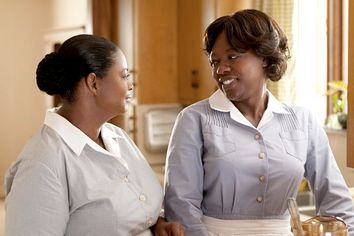
Stop policing black actressesOctavia Spencer and Viola Davis in "The Help"

Months after its release, and perhaps in spite of the Academy Award nominations and Golden Globe awards garnered by two of its actresses, “The Help” continues to court controversy.  Such was the case recently when Viola Davis and Octavia Spencer visited the set of “The Tavis Smiley Show,” and the host raised long-standing questions about why the actresses accepted roles that he felt diminished their humanity and that of other African-Americans. Smiley admitted disappointment that Davis and Spencer were being feted for playing the same role — as domestics — that earned Hattie McDaniel the first Oscar for an African-American for her role as “Mammy” in the film “Gone With the Wind” 73 years ago. Underlying Smiley’s gentle admonishment of Davis and Spencer is the simple question: Has so little changed that African-Americans are still tethered to the same stereotypical roles that defined their presence in mainstream American media nearly a century ago?

It is nearly impossible not to recall McDaniel in light of the success of “The Help.” Indeed, the pairing of Davis and Spencer evokes the similar pairing of McDaniel and Butterfly McQueen, whose comic turn as Prissy in “Gone With the Wind” was equally deserving of a nomination in 1939.  And indeed, McDaniel and McQueen faced those same criticisms about the roles they took, as did their industry contemporary Lincoln Perry (aka Stepin Fetchit) and Bert Williams, whose success came in the early part of the 20th century. Though Perry and Williams are now celebrated for their comic genius, such latitude has rarely  been given to black actresses like McDaniel, Spencer or recent nominees such as Gabourey Sidibe and Mo’Nique (who won for best supporting actress in 2010), who are criticized in some black circles as much for the roles they portray as they are for their body types, which seem to conjure, in the minds of many, the worst stereotypes of black domestics and so-called welfare queens.

Given the realities of racist imagery that continues to circulate in American society, whether as thoughtless tweets about professional basketball player Jeremy Lin or cartoons that compare the first black president to apes, it is not surprising that there is a desire among some blacks to police representations. This is old and dirty business, which led McDaniels in her day to make her oft-cited claim that she would rather play a maid in the movies than be one in real life; the kind of business that led the Hollywood Branch of the NAACP to establish the Image Awards in the late 1960s to more directly regulate the production and reproduction of blackness. Of course, the organization never fails to find itself in the quandary of having to mute its own proclivity to criticize black images that don’t adhere to some sanitized and respectable notion of how “Colored People” are supposed to look and act, especially when those images are produced by blacks themselves (see Tyler Perry) or if some of those “Colored People” are up for Academy Awards, as was the case 27 years ago when they shifted their criticism of “The Color Purple.” “The Help,” by the way, won several awards at the recent NAACP Image Awards.

For far too many people invested in the gatekeeping of all things black, Barack Obama’s “Dreams From My Father” is really a “Dream of Sidney,” the dashing, cinematically daring, Afro-Caribbean man, who in the late 1950s not only exemplified the best of his profession (regardless of race), but became the template for the right way to act and be black on-screen.  Poitier, of course, continually wrestled with his characters, trying not to be some cardboard cutout of the naturally integrated and un-offensive black man (an image that our current president often chooses not to wrestle with), as witnessed by the roles he took on that we don’t so much celebrate: “The Lost Man” (1969), where he portrays an Army veteran turned radical; “The Organization” (1971), the third in his trilogy of Virgil Tibbs films that began with “In the Heat of the Night” (1967); or as post-civil rights gangster Manny Durrell in “A Piece of the Action” (1978), opposite Bill Cosby.

Ultimately for many black artists the “politics of respectability” is simply tiring and defeating; Poiter’s retreat from acting in the late 1970s was as much about the lack of quality scripts as it was a rejection of having to always represent the race. It was the same trap faced by Poiter’s once and future heir-apparent Denzel Washington. With seminal black heroic figures such as Steven Biko, Malcolm X, Rubin Carter and high school football coach Herman Boone in his rearview, Washington has sought to play less than respectable characters in his movies.  When pressed about those choices and his responsibilities after the release of “American Gangster,” in which he portrayed legendary Harlem drug lord Frank Lucas, he told Men’s Vogue, ”It’s not about the black experience. It’s more specific and selfish than that. It’s what I feel like doing, not what I feel like people need.”  Though some have griped about Washington’s late career choices — including Smiley — he is allowed to be seen simply as a black artist, who brings depth to whatever role he plays.

Such courtesies are rarely extended to black actresses, who as an extension of the roles that black women often play in black communities, are expected to carry the “blood-stained banner” for the uplift of the race, even at the expense of their artistry.  This was the point that Davis made as she responded to Smiley’s concerns with the assertion that such critiques are “absolutely destroying the black artist. The black artist cannot live in a place – in a revisionist place – the black artist can only tell the truth about humanity and humanity is messy, people are messy.”

Yet, I can’t help thinking what Hattie McDaniel, who died in 1952, would say about all of this. I imagine that McDaniel might be surprised at the number of black women who have been honored since 1939, and perhaps would take great pride in the ability of Davis and Spencer to elevate the humanity of those women who actually work as domestics — as McDaniel did many years ago.  I imagine she’d be surprised by all the attention surrounding the portrayal of black women domestics of the 1960s, sensing a freedom to speak back — a spirit of resistance, that she couldn’t experience on- or off-screen in 1939. Finally, I imagine she’d just be happy that Davis and Spencer are allowed to celebrate their accomplishments among their White peers, unlike McDaniel and her escort, who were forced to sit alone because of segregated seating arrangements.

It’s all relative and it’s about time we trust black artists to make choices for the sake of their art and not tired ideals about how “negro-folk” are supposed to act.

Who gets to use the N word?

Author Jabari Asim talks about the history of the loaded term, when its use is valid and why Don Imus' firing was justified.

  • more
    • All Share Services

Who gets to use the N word?

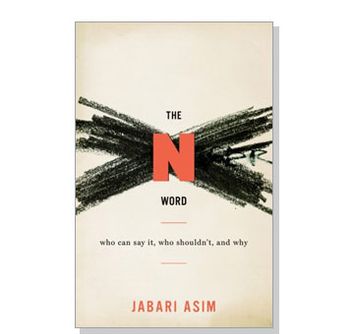
When faced with increasing criticism for his “nappy-headed hos” commentary, Don Imus deftly flipped the conversation, suggesting that he found inspiration from the world of hip-hop. The conversation quickly and disingenuously turned into a debate about the role of hip-hop in spreading sexist and vulgar language, as if scripted by the folks at CBS Radio and NBC. Central to this discussion was the sense that a double standard exists where black male rappers are permitted to call women “bitches” and “hos” and are subject to little scrutiny while old white men like Imus face a public crucifixion for what some deem a bad joke. Author and longtime Washington Post Book World editor Jabari Asim had heard all of these arguments before in relation to the use of the word “nigger” in American popular culture. In his new book, “The N Word: Who Can Say It, Who Shouldn’t, and Why,” he places the focus squarely on American society and the undercurrents of white supremacy in our culture. Conceived long before the Imus story broke, “The N Word” provides a needed perspective on the controversy. Asim spoke to Salon about the use of the word, from “Uncle Tom’s Cabin” to N.W.A. to Imus, and set some boundaries for who can say it — and where.

One of the things I thought about while reading “The N-Word” was Ralph Ellison. In his review of Leroi Jones’ [Amiri Baraka] now classic “Blues People,” Ellison quipped that the “tremendous burden of sociology that Jones would place upon the body of music is enough to give even the blues the blues.” In that same vein, the amount of historical research and literary history that you present throughout “The N-Word” fundamentally demystifies the word.

I had my preconceived notions about the word, but I tried for them to not be a guiding influence. I wanted to be as open-minded as I could honestly be. I wanted to look into it and see where it led me. Let me just wander around in the culture, and I’m a greedy consumer of culture. Bakari Kitwana said to me that I’m obviously a bibliophile, and that’s the one area where I had some confidence, so naturally I leaned on that — a lot more than I could lean on music.

What was the conversation like with your publishers about the title of the book? Was the title your idea?

That was the working title from the beginning. I thought that was a marketable title because everybody knows what the N-word is. Where we went around the bend a little bit was on the subtitle, which was originally “race, metaphor and memory,” because I kept thinking of the N-word as a metaphor for these various ideas involving citizenship and black inferiority, in particular. Later, my editor and I agreed on “a short history of racism” because ultimately the book is about white supremacy. Then the marketing people said that it wouldn’t work, so they came up with the current subtitle. I didn’t like it at all, but they said it was the difference of having the book displayed with the cover out front as opposed to just the spine. What it leads to, as the marketing people well knew it would, is that I’ve done about 50 radio interviews.

One of the things that is refreshing about the book is your knowledge of literary history. You employ all of these examples of the N-word’s use in literature, and given the role that literature played in America’s development, you could make the point that the stuff that we see circulating in popular culture today is really not much different from the literary narratives circulating 200 years ago. How is the conversation different now than the one that surrounded “Uncle Tom’s Cabin,” given who had access to literacy then? How does the access that we all have to popular culture now impact our sense of content that we might deem racist?

The message hardly changes at all. I have a section in the book where I talk about those early “niggerologists” of the 19th century, who lectured at Harvard and these prestigious scientific academies but immediately spawned less-educated imitators who handed out pamphlets instead of texts. And this is what the working class was exposed to. So I argue that “niggerologists” spoke down from the educated classes and at the same time rose up from the uneducated classes. At the same time, in the early American literature, those writers were really motivated to establish an American identity because they had a complex about Europe’s cultural influence and Europe’s rich history — they had the same motivation of those early scientists. I thought it was significant that all of these attempts — legislative, academic, literary — all of these attempts to establish an American identity revolved around and depended upon the degradation of black people.

Were you conflicted at all when the conversation inevitably had to go to hip-hop? I mean, I imagine that there were all kinds of pressures around you as you turned in the manuscript to make it sexier, and sexier at this moment includes an indictment of hip-hop. But you dealt with hip-hop as it presented itself in a logical way. I thought it was interesting that you could take a so-called conscious rapper like Mos Def and so-called gangsta rappers like N.W.A. and acknowledge that there was a very real consciousness, especially in the case of N.W.A., behind how they employed the N-word.

I didn’t set out to do that. I’ve never had strong emotions about hip-hop, one way or the other. I’ve never been a hip-hop head, though members of my generation are. I never felt that it spoke to me in particular or told my story. I thought that quite a bit of the criticism of hip-hop — and I say this as an outsider and a resolute non-expert — is superficial, in that it comes from people who perhaps have never sat down to listen to a hip-hop recording. Criticism, if it’s gonna serve any constructive purpose, must be deeply informed. So I had to listen to all that N.W.A. and I had to read those lyrics. And so as I listened to it. There were songs that confirmed what I had heard about these guys — this is some awful stuff. And then there were other songs that seem to meet all the criteria. My hastily assembled yardstick for the use of the N-word is that I think art is sacred and you just don’t respond to it the way you respond to other things. Secondly, if the use of the N-word advances our understanding of the culture in some way, then to me it is valid. N.W.A.’s lyrics easily meet that criteria. People talk about hip-hop spreading the N-word through the culture, but I take pains to point out that popular culture has always spread the N-word. There is serious precedent — in the 1920s and 1930s, you went into a white middle-class home and the N-word was everywhere. It was on the shelves, it was in the cookbooks, the sheet music on the piano, the toys children played with. Let’s not talk about hip-hop introducing this word in some new and unprecedented fashion. The only difference is that hip-hop exists during a period of high technology and spreads these things a lot faster. But let’s not pretend that hip-hop has somehow confused white people regarding the use of the word. I think that’s a very disingenuous argument.

Toward the end of the book you mention that you are ultimately concerned with the use of the word in the “public square.” Do the contours of that public square change, particularly when we talk about public airwaves? Does it make a difference to you what that public square looks like at 3 in the afternoon versus 11 at night? Do you give artists and commentators some leeway, based on those different contours?

There are obviously different ramifications with regards to FCC regulations and those amorphous broadcast standards, which networks seldom use, but immediately make Don Imus’ firing justifiable. I think that for stuff that is broadcast, the consumer has a choice. So you broadcast this into my home and I find it offensive, I can change the channel. I can turn you off. If we’re sitting on the train and you’re using that kind of language, I don’t have any options. I’m exposed to it against my will. It is not quite an analogous situation. And in the public square, I think that’s where expectations of courtesy and civility should play a greater role.

Continue Reading Close