Mark Athitakis

Watergate: The novel

Thomas Mallon's latest book reimagines how power and manipulation played into the famed Nixon scandal

This article appears courtesy of The Barnes & Noble Review.

How terrible and insincere was Richard Nixon’s smile? In his new novel, “Watergate,” Thomas Mallon glories in counting the ways. It is a thing that “clicked into place.” It is a “rictus.” It is “mirthless” and “mechanical.” It is “automatic and false.” And it is, in the end, an apt metaphor for the mood of calculation that swarms around this story. The Watergate scandal was defined by a clown car’s worth of poorly executed efforts to cover up a mess. Every attempt by the president to mimic a person capable of happiness just clarifies how poor that execution was.

Barnes & Noble ReviewAmong the various pleasures of Mallon’s eighth novel is that kind of allegorical thinking. It’s an essential trait for a book like this, because dwelling on the actual facts is tedious: They’re well known, much parsed, and at times punishingly dull, even for political wonks. Mallon mostly sticks to the record but avoids rehashing old dramas: He clears little room for the flashpoints of the scandal that forced Nixon’s resignation in 1974. There is no scene describing the botched break-in of the Democratic National Committee headquarters, no visit to the Washington Post offices where Woodward and Bernstein doggedly pursued the story, not a single scene featuring Mark “Deep Throat” Felt, the FBI associate director/Post informant, or G. Gordon Liddy, the “mustachioed nutcase” who coordinated the break-in.

Removing all that removes a lot of action. But what’s left is an observant and interior — almost claustrophobic — study of power, and (here’s Mallon’s chief concern) how men and women manipulate it differently. The men, including presidential aide Fred LaRue, “plumber” Howard Hunt, and Nixon himself, tend to stew privately about where they stand. LaRue neatly summarizes the “algebra that governed the room”: “Magruder hated Liddy. Mardian hated Magruder. Ehrlichman hated Mitchell. Mitchell hated Colson.”

The women, who know where they stand in relation to federal power — entirely outside of it — strive to gain leverage from oblique angles. Hunt’s wife, Dorothy, tries blackmail. Nixon’s secretary, Rose Mary Woods, is heartbroken over her beloved boss’s troubles, but she does have access to his Oval Office tapes — so easy for a klutz to erase five, ten, eighteen and a half minutes. Pat Nixon pursues an ongoing flirtation with a philanthropist, wholly a product of Mallon’s imagination, and their romance is so chaste (“kerchiefs and dark glasses; the afternoon meetings in movie theaters”) that her transgression is sweetly forgivable amid her husband’s titanic moral rot. Sitting in imperious judgment is Alice Roosevelt Longworth, Teddy’s daughter, in her late eighties as the scandal transpires. At once the novel’s comic relief, voice of reason, and moral core, she has the clearest vision of anybody of the players, particularly Nixon: “This misanthrope in a flesh-presser’s profession, able to succeed from cunning and a talent for denying reality at close range.” If a clear vision of political dysfunction mattered, Mallon suggests, Longworth would have been in office herself.

In his fine 2007 novel about State Department homophobia in the 1950s, “Fellow Travelers,” Mallon summed up a furtive gay relationship with a line that also perfectly encapsulated D.C.’s political culture: Everybody involved was living in “an electrified cage of who had what on whom.” “Watergate” is Mallon’s thickest, most densely researched expression of how those claims of ownership operate, though as electrified cages go, it could use a little more zap at times. Mallon’s effort to avoid the clichéd, portentous moments makes for plenty of low-boil scenes of men quietly fuming in rooms. Even the more potentially dramatic moments are muted: Dorothy Hunt died in a plane crash in 1972, and Mallon dispatches her elegantly (“an explosion of blue and orange flames that fused her locket forever shut”) but with brutal speed.

If that makes the final third of “Watergate” a bit plodding — another batch of drinks, another tense conversation, another scene of Tricky Dick sadly putting on a “Victory at Sea” record, alone — it resolves beautifully. LaRue spends much of the novel worrying about an incident involving his father’s death, and what at first seems to be a bit of character seasoning proves to be an essential piece of the Watergate puzzle. That detail fits perfectly with Mallon’s smirking attitude about the scandal as a whole — that it was as much a product of men’s deeply personal anxieties as any broader political concerns. “Watergate” is a product of thorough research, but it works as fiction to the extent that Mallon takes its clot of operatives and politicians less seriously than they took themselves. He cares more about gossip than impeachment proceedings, making him a kindred spirit to Longworth, who famously owned a throw pillow reading, “If you can’t say something good about someone, sit right here by me.” Have a seat; Mallon has a story about Richard Nixon he’d like to share with you.

Reinventing Mrs. Nixon

A new work of fiction rewrites the life of the first lady through a creative mix of short stories and essays

This article appears courtesy of The Barnes & Noble Review.

What happened here? In this unruly book, her 18th, Ann Beattie fictionalizes former first lady Patricia Nixon, investigates the process of fictionalizing the lives of real people, and — at its most meta — fictionalizes the process of investigating fictionalization. Beattie doesn’t say if “Mrs. Nixon” was always intended to be a mix of short stories interspersed with essays on the craft of fiction, or if this book is a salvage job on a failed novel. All she’ll say of its genesis is that Mrs. Nixon chose her and that she was helpless to respond: “I am very happy to find myself paired with Mrs. Nixon, a person I would have done anything to avoid,” she writes, as if she just happened to be seated next to her at a dinner party.

Barnes & Noble Review
Or on a roller coaster. The pleasure of”Mrs. Nixon” — and regardless of its provenance it’s a fun, risky, thoughtful book, all the better for being so openly jumbled — is watching Beattie move in many directions to give depth to a public figure who actively repelled such scrutiny. Publicly, Pat Nixon was often a function of her husband: She was the woman who outwardly held it together during Watergate and who wore the “respectable Republican cloth coat” in the 1952 Checkers speech. Beattie looks for the details that upend that received wisdom: Nixon was also an aspiring actress, a first lady eager to escape the White House and stroll D.C. sidewalks unnoticed, a stroke survivor, and a wife who urged her husband to destroy the tapes.

These are minimal scraps to work with, but Beattie knows from minimalism. Her fine brief fictional sketches suggest a woman whose emotional acuity grew over time, albeit with painful slowness. In “Approximately Twenty Milk Shakes,” Beattie imagines Nixon fattening up her husband for the cameras during the 1960 televised debates with John F. Kennedy, and she’s untouched by notions of self-actualization. (“A man doesn’t mind a chocolate milk shake, let me tell you!”) In “Mrs. Nixon on Short Stories,” Beattie figures Nixon would care little for contemporary fiction: “Stories are meant to transport us, but we should never let ourselves be overwhelmed with a writer’s sad view of life and think we can’t do anything to change our own lives.”

But toward the book’s end, a melancholy kind of self-awareness shadows her. In one scene set during the Nixons’ retirement years, Dick finds a stray dog and wants to keep it, batting away her attempts to reason with him; their dialogue runs on diverging train tracks. Later, her isolation deepens: “She was exhausted, and there was no beach outside, so she only rested her hands on top of the covers. It weighed on you and exhausted you. The strokes contributed, but really the problem was loneliness.”

There’s a lingering sense that Beattie couldn’t find quite enough within Pat Nixon to generate a full cycle of short stories or a novel. But if a full-blown fiction was too difficult for her, Beattie’s discussion of the difficulty of fictionalizing a life is no less fascinating for that. In “My Meeting With Mrs. Nixon,” she recalls spotting her as a child in a D.C. department store, then confesses she made up the experience to explore how authors can steer readers’ emotions.

Beattie revisits a dozen or so of her favorite stories and plays — “The Glass Menagerie,” J.D. Salinger’s “Uncle Wiggly in Connecticut,” and James Joyce’s “The Dead” among them — to discuss dialogue and character, and scrutinizes books like Nixon’s 1962 memoir, “Six Crises,” to show how flattened Pat Nixon’s persona was in prose. Studying Richard’s high-flown oratory about “cathedrals of the spirit,” Beattie can’t help but consult Raymond Carver’s “Cathedral” and find Tricky Dick lacking; Carver cared for the resonances of the word “cathedral,” while Nixon couldn’t have cared less: “It just sounded good, and he was a man who liked formality and for things to be substantial.”

To the extent that “Mrs. Nixon” has a thesis, that’s it: Political rhetoric is divorced from the emotion and intellect that good fiction can provide. That disconnection is particularly unfortunate in Pat Nixon’s case because it doomed her to be a cipher, a victim of bad writing as much as conservative confinement. The book isn’t so programmatic that it explicitly makes that point, though. “Is what you’ve been reading fiction or nonfiction?” Beattie asks. “Or is it my memoir, which appears — like certain weeds, I can’t resist saying — only in the cracks?” Yes, yes and yes. It’s all of them, exposing in three genres how a care for words can obscure and reveal.

Continue Reading Close

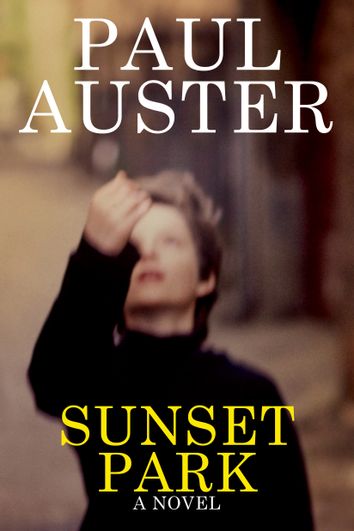
Paul Auster’s unexpectedly searing new novel

The literary icon's "Sunset Park" is a somber, poignant look at abandoned homes and disrupted families

"Sunset Park" by Paul Auster

Paul Auster’s first book, the 1982 memoir “The Invention of Solitude,” opens with a grim portrait of his late father’s empty house. Losing his father revived his old frustrations over how distant they had become, and he sensed a spectral chill in the home he’d come to clear out. “There is nothing more terrible, I learned, than having to face the objects of a dead man,” he wrote. “When that life ends, the things change, even though they remain the same. They are there and yet not there: tangible ghosts, condemned to survive in a world they no longer belong to.”

Barnes & Noble ReviewThe opening pages of “Sunset Park,” Auster’s unexpectedly searing new novel about abandoned homes and broken families, eerily echo that scene. Miles Heller is a young man who’s spent years aimlessly wandering the country and flaying himself over his possible role in the death of his half-brother. We first meet him in Florida “trashing out” abandoned foreclosed homes for quick resale, and like Auster in his first book, Miles documents his visits as a way of coming to terms with the sadness he witnesses. He wants to show that the “ghosts of people he will never see and never know are still present in the discarded things strewn about their empty houses.”

The connection between “The Invention of Solitude” and “Sunset Park” — Auster’s personal past and fictional present — isn’t limited to renderings of an empty armchair or a broken dish or two. Miles, like Auster, was a promising baseball player who eventually gave up the sport, and the novel is filled with ghoulish baseball arcana about players whose careers were cut tragically short. (Among the members of this creepy hall of fame is Herb Score, a pitcher for the Cleveland Indians in the 1950s whose career never recovered after a line drive smashed his face.) Miles, like Auster, has worked odd jobs, and they both fixate on a lack of love received from their fathers. One character works part-time at the PEN American Center, a nonprofit where Auster once served on the board of trustees.

It’s not unusual for Auster to litter his novels with personal details, of course. But “Sunset Park” isn’t another self-referential puzzle: Its power derives from how intensely its characters look into themselves and their pasts — worriedly, regretfully — in a manner that evokes the heartfelt, introspective tone of Auster’s memoirs. In “Solitude,” “Hand to Mouth” and “The Red Notebook” he addressed matters of maturity and family with a directness that rarely emerges in his fiction, where he’s done his moral workouts in the context of steely po-mo eccentricities: the noirish riffing of “The New York Trilogy,” the dog’s-eye view of “Timbuktu,” the absurdist “Travels in the Scriptorium,” the stories-within-stories of “Oracle Night” and last year’s “Invisible.” “Sunset Park” isn’t autobiographical so much as it’s born of the same confessional spirit Auster has brought to his nonfiction.

Still, he does need some of his old tools to get “Sunset Park’s” motor to kick. While in Florida, Miles falls for a 17-year-old girl named Pilar, whom he meets in unlikely circumstances: They’re both reading the same edition of “The Great Gatsby” at the same park. His love is pure, but Pilar’s jailbait status troubles the relationship. When Miles can’t loot enough things on the job to satisfy Pilar’s family, he needs to disappear for six months, until Pilar turns 18. “One call to the cops, and you’re toast, my friend,” Pilar’s sister tells him, a bit of faux-noir the novel will soon abandon.

Miles’ refuge is the Brooklyn neighborhood of Sunset Park, where his idealistic friend Bing Nathan has established a squat he shares with two other friends. Miles lapses into prison-speak to describe his life apart from Pilar, considering himself one of the “Sunset Park Four.” Because he’s now in the vicinity of parents he’s spent years avoiding, he feels imprisoned further still. For the reader, though, it’s clear there are worse fellow inmates to have. Bing runs a junk shop with the metaphorically pointed name of the Hospital of Broken Things. Ellen is a bright artist fixated on sexual themes. Alice, the member of this ad hoc family who winds up with the most significance for Miles, is a graduate student studying post-World War II crime novels and films, particularly “The Best Years of Our Lives,” William Wyler’s 1946 melodrama about U.S. soldiers adjusting to life back home after the war — a film that plays into her thesis that they lived in a time when “American life had to be reinvented.”

Auster uses the film to underscore how complicated the definition of “happy family” is; nearly everybody in the novel registers a different opinion about it. His mother, a famous actress, “choked up at the end and cried”; Miles’ father, the owner of a small but prestigious publishing house, thinks it’s “propaganda” machined to argue that “everything will work out, because this is America, and in America everything always works out”; Ellen sees tragedy down the road for its characters; Miles, forever pragmatic, politely gives it a B-plus. The divergent opinions subtly underscore how much emotional distance needs to be bridged, though the entrapment theme is sometimes noisily obvious: Miles’ mother is rehearsing Samuel Beckett’s “Happy Days,” a play in which she portrays a woman buried in a mound of earth. But Auster writes with affectless sincerity when Miles’ father imagines himself becoming a “Can Man,” a homeless person who emerges whenever he wants to escape his existence, much as his son did.

A younger Auster might’ve lit this scenario in neon, played up its strangeness. But “Sunset Park’s” prodigal-son tale is somberly poignant, a study of how deeply the urge to connect runs. (The book’s final section has the embracing title “All,” with a chapter dedicated to each major character.) The characteristic literary references, sexual transgressions and peculiar coincidences remain. But it’s the father-son story at the core that prevails and intensifies, culminating in an ending as powerful and open to interpretation as Wyler’s film. We can go home again, Auster wants us to know. But how brutally difficult it can be to face that threshold and walk in.

Continue Reading Close

Like “Wild Kingdom,” with hot tubs

Forget the small talk, the easy gags, the relationships. Contestants on "ElimiDATE" -- the best dating show on TV -- just want to get it on.

A “great pooper.” That’s what he said he was looking for in a woman. A great pooper.

Oh, and a nice rack too. Punched his fist while he said it, too, for emphasis, because that’s the kind of guy he is. That’s also the kind of guy “ElimiDATE,” which airs in syndication, likes: buff, suffused with a confidence bordering on arrogance, not necessarily bright and on the hunt for a mate. Over the course of a half-hour, he’d be introduced to four women, shedding them off one by one. And, at the end, he’d eventually settle for that Perfect Match. No, wait: not a perfect match. Just somebody who was fun enough to hang with for an evening.

It took a few decades of lousy dating shows, but somebody’s finally got it right.

Thanks to the recent spate of reality television, the dating game show is enjoying something of a renaissance. (What’s more real and universal than falling in love?) There’s no question that the genre was due for a tuneup: It’s hard to imagine now, but people once enjoyed shows like “The Dating Game” and “Love Connection,” where people just sat around and talked about dating. But even though we now get more visuals with our voyeuristic spying on romance, the latest shows still border on the comically, unwatchably awful. On the networks, we’ve gotten high-concept series like “Bachelorettes in Alaska,” “Temptation Island” and “The Bachelor,” where groups of undifferentiated folks struggle to Find the Right One for week upon angst-ridden week. Over on the UHF end, there’s the syndication soup of “Rendez-View,” “Blind Date,” “Third Wheel” and “Shipmates,” all of them sick with chatty hosts and bad jokes popping up on-screen. The producers know that two strangers aren’t interesting enough left by themselves; subjecting every sip of chardonnay and comment about an ex-boyfriend to dreary, mocking analysis makes things even duller.

The root of the problem with all those shows is an ironic one: They emphasize all the big questions of True Love and Finding Mr. (or Miss) Right, and the One. Admirable a sentiment as that is, it makes for dull viewing. Love is thought about, talked about, felt, but it’s not truly a visual thing. And TV dies without pictures.

On the face of it, the noisy, sex-soaked “ElimiDATE” doesn’t look like much of a revolution in dating shows — we’ve seen couples in bars and on dance floors before. Yet the pleasure of “ElimiDATE” — and admittedly it’s a guilty one — is that it gleefully throws True Love and the One off the table. It offers no hosts, no chirpy ongoing analyses, no presumption of true love or even romance. It’s “gamed,” to be sure — most episodes are alcohol-fueled, its producers are spending a fortune on Jacuzzi rentals, and its preferred dating candidates are image-obsessed gym clones. But there’s wisdom in that, too. “ElimiDATE” smartly presumes that we don’t care about the end result of the date — we just want to see the process.

If that sounds a bit familiar too, you’re right. You’ve probably already seen the show that “ElimiDATE” models itself after. Not “The Dating Game,” not “Survivor.” No: Without apology, “ElimiDATE” takes its cue from a pioneer in television history: “Mutual of Omaha’s Wild Kingdom.” True love’s nice, sure. But, for our human specimens here in the jungle, a nice pooper will do.

- – - – - – - – - – - -

“I make people think,” says Viji, a young physiologist from Vancouver who’s competing for the attention of Ian. She’s young, smart, confident, attractive — in other words, pure dating-show gold, even back when Chuck Woolery was running the joint. But things are different in the dating world “ElimiDATE” conjures up. Ian works at “one of the hottest restaurants in the city” and what he really wants is a woman who is “energetic” and “likes great sex.” So by the time Viji and two other women hit the exotic clothing store — where she refuses to dress up like a virgin or a schoolgirl like the others — she’s gone. “Viji is frigid, snarky and annoying,” as one of her competitors puts it.

That’s hardly fair to Viji as a whole person, but the “whole person” doesn’t mean much on “ElimiDATE.” A typical episode starts with drinks, goes out dancing, then winds up making out in the hot tub. Maybe your idea of a get-to-know-you first date probably doesn’t involve body shots at 3 in the afternoon. But your idea of a first date probably makes for lousy television, too. That’s not to say the show doesn’t offer a few insights into the human animal. Watch enough episodes and you’ll notice that in the dating world the show contrives, people tend to fall into four types.

1) The Dullard. Well-meaning and good intentioned, he or she simply doesn’t move fast enough. Sits on the sidelines, nurses his or her drink, asks probing questions like, “What do you look for in a person?” which the contestants seem coached to rebuff (“I’d like to hear what you look for”). Gone first, usually with some comment like, “I just didn’t feel that click.”

2) The Instigator. The polar opposite of the Dullard, he or she moves too fast, drinks a little too much, and picks fights with the others. On “ElimiDATE,” this (with remarkable regularity) usually means a woman accusing another woman of having implants. On a recent episode, this played out with one woman trying to strip off another’s half-shirt on the dance floor. Drunken catfighting ensued. Usually gone second.

3) The Willing Target. Can’t resist responding to the salvos of the Instigator, usually with embarrassing results. On one of the rare episodes where four men vied for one woman (if nothing else, “ElimiDATE” knows its male, Maxim-reading audience), unemployed Clay keeps riding bartender Eddie for bringing flowers to the occasion. Eddie’s retort is simple-minded and childish — “What do you expect from somebody named Clay?” But Clay’s gone: “I thought it was cute that Eddie brought flowers,” the bachelorette says.

4) The Cunning and Bright Creature of Sensuality, Charm and Wit. Like the Dullard, steps back a little bit, but plays well with others, and tends to avoid knock-down squabbling, preferring instead to slyly position him or herself next to, as “Wild Kingdom” would put it, the potential mate.

Your mileage may vary as to whether any of this resembles your romantic life. But if you subscribe to the idea that you’d like your mate/lover/spouse to be a wise, observant and sensual soul, and that sexual attraction is important if not essential, then “ElimiDATE” actually hews to a sense of reality that other shows don’t match. Like every other dating show, critics have been quick to call it humiliating and depressing to watch. But “ElimiDATE” never falls victim to the most humiliating and depressing problem with other dating shows: Watching two people who truly aren’t enjoying each other’s company stick it out for a night because, well, they agreed to be on a TV show. “ElimiDATE” subscribes to the notion that there’s a right person out there; it just rejects the idea that it’ll happen on the first date.

- – - – - – - – - – - -

Cynical? Sure. On “ElimiDATE,” nobody believes they’ll be finding the right one — or if they do, they’re gone quick — but everybody figures that if they have a good time and see interesting things, it’s worth it. Just as with television. When “Blind Date” episodes turn boozy or crass, one person usually bemoans the horrible thing that just happened to him or her. But because “ElimiDATE” is boozy and crass right from the start, everybody knows what the game is, and nobody’s particularly shocked. As the show itself subtly admits, what’s happening isn’t a date at all: “Three get the ax, one gets the date” is the opening tag line. “ElimiDATE” is a pre-date experience.

When the show debuted last season, most television critics wrote it off as a cheap imitation of “Chains of Love,” a network (well, UPN) show where a man was fettered to four women over the course of a few days, shedding off suitors. But getting rid of the chains meant getting rid of the goofy high-concepts that plague reality shows of all stripes; reality producers tend to fear that human beings, left to their own devices, are boring, so we get hosts and “immunity challenges.” “ElimiDATE,” to its credit, has no such fears. (A high-concept “deluxe” version of the show, set in exotic locales, was canceled quickly; low-budget dating shows just don’t work on prime time, and we have the Travel Channel for exotic locales.)

Explaining the show’s concept to Entertainment Weekly last year, producer Alex Duda explained that the show’s charm is its hostless-ness. “You really get to hear how they feel about their competition, and what their strategies might be,” she said. “So it’s kind of like that Rashomon thing, right?”

Well, closer to “Yojimbo,” if we’re throwing around Kurosawa references; we’re the impassive smirking samurai on the rooftop, watching two tribes battling each other in the public square, and we hardly care how they interpret the fight. What we do care about is how human beings struggle to balance their sexual and thinking selves, and “ElimiDATE” does it bluntly yet beautifully. Joyously and persistently, it blurs the line between sex and love. Which makes it closer to true reality than television shows — or their viewers — usually admit.

At least for now. It appears we won’t have its unvarnished pleasures for long. A notice on the show’s official Web site suggests things are changing: “‘ElimiDATE’ is looking for firemen, policemen, men in uniform, cheerleaders, flight attendants, twins and siblings to cast in upcoming shows!”

Oh well. It was fun — and in its own way, sincere — while it lasted.

Continue Reading Close

Grown Up All Wrong

Mark Athitakis reviews 'Grown Up All Wrong: 75 Great Rock And Pop Artists From Vaudeville To Techno' by Robert Christgau

There are a few jobs with worse ethics than rock criticism — lobbying for tobacco companies, maybe, or clubbing baby seals — but writing about pop music is still an ugly business. Granted, it’s evolved since the ’70s (when record label honchos would rent prostitutes for rock-mag scribes in return for a good review), but only into subtler forms of whoring: writers who won’t pen a negative piece for fear of losing their steady stream of free (and eminently sell-able) CDs, publicists who won’t let you talk to that Big-Time, Just-Out-of-Rehab Rock Star unless they approve your softball questions. In a perfect world, though, music journalists are the knowledgeable intermediaries between a money-grubbing industry and a cash-strapped consumer.

Robert Christgau has earned his title as the dean of rock journalism by being honest — a critic who criticizes, go figure. As the longtime senior editor and pop music columnist for the Village Voice, his essential monthly Consumer Guide celebrates the brilliant and excoriates the mundane. A first-person eyewitness to rock’s rise to glory, Christgau pens hundred-word mini-essays that leap sublimely from rock to rap to punk to soul to world music. Diving deeper into his favorite artists, the lengthy essays compiled for “Grown Up All Wrong” — culled mostly from Voice columns — reveal a depth of understanding about the workings of pop music, both as art and commercial proposition.

The breadth of the book’s rock and pop obsessions comes off as authoritative, and because Christgau prizes what the music means over what it sounds like or how well it sells, nearly every essay is readable, regardless of how well you know the artist. His lengthy 1981 essay on John Lennon (co-written with John Piccarella) is essential for its precise account of how Lennon’s music sprung from his personal identity crisis (and vice versa). In prose that’s both offhandedly colloquial and rigorously academic, Christgau sheds new light on his subjects, whether he’s defending Neil Young’s sketchy ’80s records, scrutinizing the questionable history lessons of KRS-One or making the foreignness of South Africa’s Mahlathini and the Czech Republic’s Pulnoc seem less strange.

Christgau’s pieces date back to the early ’70s, and in many cases he’s done little or nothing to bring a particular artist’s story up to date. Often, that’s an asset: His 1976 piece on Stevie Wonder wrestles with the artist’s worth at his “Songs in the Key of Life” peak, giving the piece an edge that would be dulled by confronting his recent recordings. If good journalism is about capturing the moment, the good music journalist knows that the perfect moment isn’t always 1998. Occasionally, though, he loves too deeply to convince: His fact-filled appreciation of the New York Dolls, his acknowledged all-time favorite band, is more doting than critical.

But would that we had more rock critics who doted — who wrote not because they fell victim to the record industry’s hype machine, but out of love. For $29.95 you can get “Grown Up All Wrong,” or a few years’ worth of some music magazine filled with interviews with Big Time Just-Out-of-Rehab Rock Stars drooling over softball questions. The cash-strapped consumer has an easy choice.

Continue Reading Close

The Robyn Hitchcock hour

The Robyn Hitchcock Hour: Jonathan Demme's mesmerizing documentary 'Storefront Hitchcock' brings an unlikely pop singer to the silver screen.

Jonathan Demme’s “Storefront Hitchcock” is so compelling a concert film that it’s easy to forget the chances he took in making it. For one, making a concert film is a risky enterprise in itself — somewhere on the trip from stage to celluloid, the music’s power is dulled. Though Demme’s 1984 concert film of the Talking Heads, “Stop Making Sense,” succeeded by capturing a world-class rock act in its ebullient prime, Robyn Hitchcock isn’t a world-class rock act — his demeanor is too modest for that, and his songs too lyrically gnarled for mass consumption. Arguably he’s not even in his prime, either — he’s just completed a new album as well as a novel, “Jewels for Sophia,” but his 1980 album with the Soft Boys, “Underwater Moonlight,” remains one of his most consistent and enjoyable works, an album that sharpened to a punk-rock point all the Syd Barrett obsessions he’d fostered. And he’s certainly not ebullient: His songs are filled with gallows humor and psychedelic meditations on insects and the human condition.

But Hitchcock’s offhand attitude is part of what makes “Storefront Hitchcock” so enjoyable. In the spare setting of a New York City storefront, armed only with his guitar, he erases the overwrought feel of most of his work. The songs simply flow out of him, from the brittle and melodic Egyptians oldie “Glass Hotel” to the booming political folk of “1974.” The understated charm of his songs, combined with his natural ability to make you laugh (“If it weren’t for our rib cages,” he says during one of his many lengthy extemporaneous asides, “it’d just be spleens a-go-go!”), make you root for him.

Demme approached Hitchcock about the idea for a film after seeing one of his concerts during the 1996 “Moss Elixer” tour. Originally he planned to shoot just one video; one video turned into several videos before Demme decided to make an entire film. Hitchcock was performing at the time with violinist Deni Bonet and guitarist Tim Keegan, whose performances in the movie — and on the soundtrack CD — offer a graceful melodic counterpoint to Hitchcock’s guitar work. “Effectively what you have is a portable show,” says Hitchcock in an interview. “You project it at them, and you’re at a Robyn Hitchcock show, or a kind of Robyn Hitchcock show. But it’s neither the sterile confines of a phone log, nor the rock club with the smoke and the sweat. [Demme] really got the best of both worlds.”

Hitchcock was insistent on not making the performances for the film a greatest-hits affair. He does have a few of those — hits, that is: Soft Boys favorites like “I Wanna Destroy You” and “Rock ‘n’ Roll Toilet,” bona-fide chart-climbers like “Balloon Man” and “So You Think You’re in Love,” an out-of-character foray into jangle-pop that was far and away from his brainy Barrettisms. But the song selection instead focuses on “Moss Elixer”-era tunes, a few Egyptians concessions, a batch of songs written exclusively for the performance and a Jimi Hendrix cover, “The Wind Cries Mary” (which appears on the CD but not in the film). “For me, it’s a risumi of my work. It basically shows people what I do. If you plug Robyn Hitchcock in, that’s what he does. It’s not crawling with horrible oldies; it doesn’t have the dead-wife song or the balloon-man song or the obligatory Soft Boys encore, the crowd-pleasing things.”

Instead, what listeners get to hear (and see) on “Storefront Hitchcock” is Hitchcock’s musical ideas distilled in a way they’ve rarely been before. The stripped down, off-the-cuff feel is the music’s greatest asset, and the performance features Hitchcock at his jauntiest: “Let’s Go Thundering,” buoyed by Bonet’s searing violin, the giggling romantic tangle of “I Something You” (where he blurts “In the twilight of this world, you are my Dutch-Australia-Hungarian-Jewish girl”) or the nearly irritating yipping of “The Yip! Song.” But then there’s that dark edge again: In the film, he introduces that last song by saying, “This is the most upbeat song I’ve ever written. It’s about death from cancer.” And elsewhere: “I don’t know what kind of church you like to imagine, but I like to imagine a church full of carcasses.”

Not the most obvious way to beat a path to celluloid glory, but like the man says, “With a name like Hitchcock, I’m never going to become a director.” Meditating on his minor commercial successes, he sensibly notes that “they come and go, those points. People have a sort of morbid obsession with fame and success: ‘You are going to be famous, aren’t you?’ as if somebody’s asking their child if they’re going to wear a coat when they go out in the cold. ‘You make sure you’re going to be famous!’ As if there was no point in doing this unless my name were in lights and playing to millions of people.

“I ended up from one extreme to the other as a songwriter,” he says. “I do songs which are dark, and I do songs which are piously dreary.” Bless his heart, Hitchcock’s probably the only songwriter this side of Marilyn Manson who figures “dark” and “dreary” to be extremes. Lest one think that the restful, nearly upbeat feel of “Storefront Hitchcock” represents a newfound hope, there’s his apocalyptic comments to contend with: “We’re very close to leaving the planet, maybe in the next 100 years. There’ll be golf on the moon, and theme parks and the inevitable strip malls. If we went into space now, we’d do nothing but pollute it. Space isn’t going to be full of Quakers. It’s going to be full of the meanest Glaxo dudes you can find.” But at least he sounds like he’s ready to round up a few Quakers to fend off the tyranny of pharmaceutical conglomerates. Or at least whip up a song about it; it’s Hitchcock’s chosen role to make the end of the world sound like a pretty hilarious concept. It might not make him famous — but it did, after all, land him on the silver screen.

Continue Reading Close

Page 1 of 8 in Mark Athitakis

www.salon.com/writer/mark_athitakis/index.html