Mark Bowden

Bore no more

Suddenly, Gore seems to be pulling off the impossible: Running both for and against the presidency.

  • more
    • All Share Services

Bore no more

On the third day of the Democratic National Convention last week, Hadassah Lieberman walked out to the Staples Center podium to a sustained, thunderous ovation. The Democrats, with more than twice as many delegates as the Republicans had in Philadelphia, give better ovations, the kind that literally vibrate inside of you. Spread in all directions beneath Hadassah, reaching literally to the rafters, was a waving sea of fresh blue placards sporting her name. It was a heady moment, a degree of personal affirmation that few of us will ever enjoy, and the slender, blond-haired wife of the Democrats’ vice presidential nominee appeared appropriately stunned. She stepped back, and when the show of adulation eased slightly, disarmingly exclaimed, “Wow!”

One attends events like these in hopes of glimpsing spontaneity, a moment or two of unscripted reality outside the tidy TV frame. Real politics, the smoke-filled room days of yore, have long since been banished from these quadrennial spectacles, but the candidates, their families, toadies and advisors are all there on display, so there’s always a chance you might stumble onto something revealing. Hadassah’s “Wow” was a small thing, but it seemed genuine enough. Why wouldn’t she recoil momentarily in amazement? It’s a cinch that as the wife of Joseph Lieberman, a U.S. senator from Connecticut, she has stood before a goodly number of excited crowds, but nothing like this. This was political enthusiasm turned up a surprising notch … except, from where I sat in the hall, about 150 feet behind and to her left, I could read the opening lines of Hadassah’s prepared speech on the big teleprompter facing her across the crowded hall. The first word of her prepared remarks, printed right there in giant letters on the screen, was, “Wow!”

If an event is scripted, can it still be real? This one was no different than a scene in a movie, planned, written and (certainly in Hadassah’s case) rehearsed. When Al Gore planted that earthy, open-mouthed kiss on Tipper as he stepped on stage the next evening, practically knocking her over backwards, we can only assume that was calculated, too. After all, we have charged poor Al with the Zen-like challenge of striving not to strive, of being clever enough not to appear too bright, of being morally upright enough to counter the scandalous libido of his former ticket mate without seeming too “stiff.”

The kiss was clearly calculated, yet by all accounts they are an especially close, loving couple. No doubt Hadassah found the ovation stirring, just as she and her speechwriter anticipated it, so maybe “Wow!” would have slipped from her lips even if her speechwriter hadn’t put it there for her. She did actually say “Wow!” twice, so maybe one of them was genuine. We will never know.

I suspect this degree of choreography is behind what most Americans find distasteful about politics. I’m willing to accept that the scripts at both conventions, the Republican show in Philadelphia and this one in Los Angeles, were designed to reveal the truth, or parts of it, but anything that manipulative hardly inspires trust. When there is no trace of anything genuine in a campaign, the public rightly grows wary. If the script called in advance for an expression of surprise or of supposedly spontaneous affection, even if there is something real behind it, how are we to know?

I have to report that the “realest” moment of the whole blatherfest for me was something I saw on screen. In a stroke of surprising originality (perhaps born of desperation) the Gore campaign invited film director Spike Jonze to make a short documentary film. Gore had evidently liked Jonze’s delightfully bizarre “Being John Malkovich,” and chose to offer him an opportunity to film the Gore family at their vacation home in North Carolina and various other places earlier this summer. It continued a tradition that began during the first Clinton/Gore campaign, when filmmakers trailed them for months making the fascinating documentary “The War Room.” In Gore’s case, the idea wasn’t to capture the mechanics of the campaign, but the flesh-and-blood Al Gore. As Al noted in the film, the vice president is the cardboard cutout on stage behind the president at official functions, so what makes him think he’s qualified to be president? In contrast to the slick, somewhat smarmy video shot at George W. Bush’s ranch by an ad agency and shown at the GOP Convention (think of a standard 30-second TV commercial drawn out over 10 minutes), Jonze shot a stylistically raw slice of life. It did more in 10 minutes to break down Gore’s famous “stiffness” than an army of campaign consultants have been able to do. We see the candidate at the dinner table being made fun of, lovingly, by his grown children, giving a tour of the family’s photo gallery (which reflects Tipper’s evident wit), playing with his baby grandson and, in one scene, displaying a marvelous deadpan as he jokingly complains about his wife’s habit of going barefoot.

“It’s ruining my image,” he says, looking hilariously doleful.

“That’s my job,” says the chipper Tipper.

This was all by design, too, of course, but it worked. The warmth and normality of the Gore family at ease cannot have been faked, and the courage to allow an offbeat filmmaker like Jonze the freedom to record it shows a confidence surprising in a candidate trailing in the polls at the time and for whom one slip of the tongue between now and November could relegate him forever to footnote status, the gray land inhabited by vice presidents who never assume the highest office.

Gore took a big step at this convention and, looking back over the whole messy pageant, I’m impressed. He has closed the gap in the polls between himself and George W. Bush, and unveiled a new populist liberal image that both suits him and well positions him for the final months of the campaign. In the days since the convention ended, Fighting Al, whose campaign seemed moribund a week ago, now seems to be the candidate of purpose and energy. During the first three days of the convention, most pundits I heard and read were proclaiming it a disaster. Clinton won’t get off the stage, they said, and what was that Kennedy day all about? But taken as a whole, the Gore convention managed to shoo the president gracefully off center stage while laying claim to the legacy of his very popular policies; it introduced Gore as a devoted father and sexually grounded husband (that’s what that sloppy kiss was all about); and it reinvented him as a by-gosh fighting Tennessee populist more in the image of his father than Bill Clinton.

This was the smartest move of all. Somebody in the Gore camp realized that the moderate, centrist path charted so effectively by Clinton contributed to his image as a man who stood for nothing, who moved according to favorable political winds. Bush played on this at his convention, selling himself as the candidate of principle who didn’t need polls to tell him the right thing to do. By returning to the Democrats’ more liberal roots (that’s what Kennedy day was all about), Gore contrasted his policy differences with W., while defining himself more clearly to voters. He lambasted the status quo like somebody who didn’t have anything to do with it: The verb “to fight” appears 22 times in his speech.

But that was Al’s challenge precisely. He is charged with running both for and against the Clinton presidency at the same time. And damned if he hasn’t pulled it off.

Jonze’s film countered the most telling criticism Bush leveled during the GOP convention. In his acceptance speech, the Texas governor said he wouldn’t be borrowing any clothes in an effort to win the White House. It was a reference to the great gear-shifting in Al’s primary campaign after Bill Bradley mounted an unexpectedly strong challenge in New Hampshire. Gore shifted his campaign headquarters from Washington to Nashville, hired himself a few new image consultants who traded in his dark blue suits for earth-toned weekend-wear. A small move, perhaps, but it spoke of something more than desperation. It suggested that Big Al was willing to do anything to get elected president. If he changed his wardrobe and hair style, if he suddenly became a champion of campaign finance reform (after breaking all records — if not a few laws — building his own campaign chest), it suggested there was no there there, that the candidate was all want and no agenda. Hidden in that accusation was a link to the thing that voters dislike most about the Clintons: their apparent willingness to swallow any indignity, reverse themselves on any issue, in order to win public office. So Gore needed to show some constancy in his character, some reality behind the cardboard cutout, and how better than to invite the world right into his living room, to see him with his feet up, without TV makeup, with no script, the butt of his offspring’s affectionate ridicule?

All of which effectively countered the Democrats’ biggest problem, which is Slick Willy’s aforementioned slick willy. To that end, I suspect the supposed writhing of the Gore camp over the long weekend before the convention, and then through the Hillary and Bill Show Monday night, were calculated to strike just the right balance. There would be no denying the president his long weekend goodbye, basking in the affection of a town he has made his own. His thin veneer of smarmy populism plays perfectly in Tinseltown, the only place in America where multimillionaires still think of themselves as “the little people.” Hollywood is also the world’s primary bastion and purveyor of liberal social values, the capital of live-and-let-live (provided you don’t try to smoke in a public place). So even though the demographics of Westwood, Hollywood and Santa Monica scream Republican, the place is as Democratic as the Kennedys’ living room. Jeffrey Katzenberg, one of the reigning moguls, recoiled when I asked him why he wasn’t a Republican. I confronted him, a short, tan, balding man in a hurry, as he was departing a fundraising luncheon he sponsored for Democratic women congressional candidates at Regency Studios in West Hollywood. Hillary had just given a short speech.

“This is one of the wealthiest neighborhoods in America, can you tell me why it is so Democratic?” I asked Katzenberg, who didn’t stop walking.

“No,” he said, and grinned that why me? grin that all celebrities have and glanced around quickly to locate studio security.

“OK, then why are you a Democrat?”

“I can’t speak for all of Hollywood, but for me, when I look around this room, I see women who have mounted campaigns for things like improving education, gun control, healthcare and for protecting a woman’s reproductive rights,” he said. “These are issues I believe in and support, and these are the people I want leading our country.”

The Clintons have learned to work this rare vein of liberal gold in the California hills.

Dan Jinks, co-producer of last year’s Oscar-winning “American Beauty,” helped host with his filmmaking partner Bruce Cohen a fundraising luncheon for Hillary several months ago, even though he had never met her before.

“She called me one day to tell me how much she and the president liked our movie,” Jinks said. He and Cohen were flattered, and perhaps a bit surprised, given that the movie depicts a man who lusts after his teenage daughter’s girlfriend (but, significantly, doesn’t cheat on his wife, who does cheat on him) and is murdered by the closeted “don’t ask-don’t tell” gay colonel who lives next door. But, hey, the president likes your movie, you don’t complain. A few weeks later, the pitch followed: Would you and Mr. Cohen consider holding a lunch for Hillary the next time she’s out your way?

Fashionably decadent Hollywood would also be the last place to hold the president’s indiscretions against him. The payoff for the movie stars, directors and producers, of course, is access to power. It is significant to note that in the past, celebrities courted power. Now it’s the other way around. The Clintons have nurtured the loyalty of their Hollywood FOBs (Friends of Bill) by inviting a steady stream of them east for state banquets and sleepovers. Whoopi Goldberg gushed that she had met “kings and queens,” and that the White House help didn’t even check her luggage for purloined silverware and souvenirs when she left. Actress Alfrie Woodard was epic in her praise, calling Clinton “a righteous brother, not in the holy way, necessarily [we wouldn't expect], but in that brother-man way, that one-with-the-people kind of way, coming from them, moving among them …” No one was more grateful for this access than John Travolta, who gave a remarkably accurate and affectionate portrayal of Clinton in “Primary Colors.” At a party hosted by primo FOB Barbra Streisand, the diva produced a pedestrian prose anthem of tribute: “Bill Clinton is our president, my president, and these have been the best eight years of our lives … What will we miss? What endeared you to us? I can only speak for myself. If I were ever in Washington and asked you for directions, you’d think about it, and you’d put me on the right path … If I were hungry, you’d sit down and eat a cheeseburger with me, and you wouldn’t hold the fries.”

The idea was to let the president hog the spotlight for a few well-earned days (with the Gore camp whining off the record), and then clear him out for the real business. I was watching on television across the street from the Staples Center Monday night when the president gave his swan song, another performance smooth enough to charm a dog off raw meat. It was preceded by that odd hallway sequence, with Clinton striding purposefully up one long hallway, turning, striding up another, turning, striding up another. The sequence, I learned later, was designed to have a long list of Clinton administration accomplishments scrolling across screen while the president hiked, the length of his entrance drawn out by the sheer magnitude of his success, but some of the networks, including the one I was watching, decided not to show the text on-screen.

There were those who complained that Clinton’s speech, while typically good, was too long and too much about him. I suspect this was more calculated leakage by the Gore camp, but I think it’s only fair that we allow presidents to assume credit for these things, because we also blame them when times are not so good. Kurt Schmoke, the former mayor of Baltimore, once told me that while most people think of the mayor as the man behind the wheel of the city bus, in reality it is more like hitching a ride on the bus’s back bumper. If it reels out of control, the best you can do is hang on and signal frantically for help — because it’s gonna go where it’s gonna go.

What you can control, at least to some extent, are images and perceptions. Which is why hosting an official party event at the Playboy Mansion was a bad idea. California Rep. Loretta Sanchez’s plans to hold a major Hispanic fundraiser at the mansion provided Fighting Al a perfect opportunity to advertise how things were going to be different now. Gore’s forces went so far as to threaten to revoke Sanchez’s invitation to speak at the convention if she didn’t back down, which she did — and then withdrew herself from the convention’s speaking agenda in a fit of pique, thereby sparing everyone 15 more minutes of forgettable rhetoric.

Hugh Hefner’s fantasyland in Westwood has recently been restored to hipness, but, for obvious reasons, hipness is one trait Gore cannot afford just now. For all its claims to licentiousness, the mansion throws rather tame parties. I made my second trip up the hill to Hef’s sculpted acres on Saturday night for a preconvention party there, and the event had a kind of manufactured feel — indeed, the mansion is a kind of convention hall, hosting parties so regularly that it maintains its own shuttle buses to move guests from the parking lot at UCLA up to its neo-Gothic grounds. There were two open bars and a band in the big tent out back that nobody was paying attention to. The crowd confined itself for the most part to the patio in back, around the second open bar, and trips into the grotto were just to tour the place, as one might inspect the Lincoln bedroom. Bill Maher and Arianna Huffington were there, Bryant Gumbel with a pretty blond, Patrick Cadell, the Democratic pollster, Christie Hefner, the cynical brains behind the operation and a horde of normal pop-eyed media types like myself. I wound up playing pool in the game room, which actually had Pac-Man among the collection of pinball and video games. Remember Pac-Man? I went looking for Pong, that most ancient of video games and by now, I would think, a real collectors’ item. I didn’t find one.

The truth is that the Playboy mansion is like a relic of a bygone era, a piece of 1950s Americana preserved, as it were, in amber. Hef was there, but not in pajamas, and not with the blond bombshell twins he has been touring with of late. Hawk-nosed Hugh looks old but well-maintained, holding forth on his philosophy of sexual freedom 20 years into the AIDS era. I’m sorry, but there is something quaint about packaging demure, air-brushed pulchritude in a world where you can watch people copulating with animals on your home computer with just a few clicks of a mouse. Just last night I was flipping channels and came across a naked man and woman having sex on a two-way swing suspended from the ceiling in the clever prime-time HBO series “Sex and the City.” One thing Playboy is not any more is risqui.

Playmates today look like Barbies with carefully groomed patches of pubic hair. Hefner’s supposed four-way relationship at the mansion sounds to me like a form of Hell, as though Satan had devised the perfect torture for Hef’s past sins — revenge of the bimbos! — condemning him to live as a parody of his youthful self, the flamboyant septuagenarian playboy of the ’60s enslaved by the demands of four — count ‘em! — live-in playmates who, I suspect, put a greater strain on his credit cards than his Viagra-assisted libido. My suspicion is that Hef was in on this mini-scandal all along. It made some great publicity for Playboy, which must struggle nowadays to be racy, and it allowed Fighting Al to flex his rectitude.

The protesters were back in about the same force as we saw in Philadelphia, and with the same painful lack of presence. As I was walking out of Staples Center one night, tired after treading water through a long day of windy rhetoric, a young woman pleaded with me, “Don’t just walk past, I’ve come all this way to talk to you.” I stopped. She was advocating an end to the death penalty. I told her I completely agreed with her and marched off to dinner. Maybe it’s just me, but it seems to me these traveling bands of protesters are acting out some script that no longer has any relevance. Once again, they joined forces for so many causes that any message they hoped to convey was completely lost. In a world where opinions are repressed, where one cannot publish opposing views or advocate for radical change, street protests are a way of sending a message that cannot be transmitted any other way. In our world, I’m afraid they have become just a nuisance.

Tuesday was Kennedy day. It turns out that John F. Kennedy and his siblings had enough children to fight off all the ravages of drugs, murder, rape and that black cloud of tragedy that seems their unique inheritance. Four Kennedys spoke: Robert F. Kennedy Jr., now an environmental lawyer; Kathleen Kennedy Townsend, the lieutenant governor of Maryland; Caroline Kennedy Schlossberg; and, of course, Uncle Teddy, who seems to have lost his oratorical power. There were more Kennedys in the wings, Maria Shriver and Rhode Island Rep. Patrick Kennedy (said to be the real comer of the brood). Caroline emerged on stage to the show tune “Camelot,” and looked fragile and stiff enough to break under the weight of so much affection. She hurried through a sweet little speech, thanking the nation for caring so much while her eyes seemed to be screaming Please leave us alone! Joseph Lieberman gave a very relaxed, agreeable speech the following night. As the first Jewish candidate for such high office in the country’s history, he could consider his job pretty much over the day Fighting Al asked him to join the ticket. A man of impeccable morals and dignity, he is a dose of anti-Clinton whose sometimes heretical independence in the Senate — supporting school voucher experiments, for instance, and advocating reforms of affirmative action — are to be devoutly overlooked in the interests of winning the White House. I talked to a group of public school teachers in the hall, those most institutionally opposed to school vouchers, and they had already forgiven him. Barbara Kerr, a first-grade teacher at Woodcrest Elementary School in Southern California, said she didn’t like Lieberman’s position on the voucher issue, but felt he wouldn’t dare continue to advocate such a thing while on the ticket with Al Gore.

“He won’t support it anymore,” said Kerr confidently. “I think he’s gonna be just fine. I’m a teacher and I believe I could teach him in about a minute and a half why vouchers are a bad idea.”

For all the high-blown rhetoric of the political convention, Kerr seems to have grasped the essential fact that parties are essentially cynical constructs. They are alliances of interests to acquire power. Ralph Nader complains that the Republicans and Democrats are really the same, that they both represent established shades of corporate power with different positions on abortion. I think he’s wrong. One look around the multicolored skin tones inside the Staples Center, at the enormous broad back of bearded Iowa delegate Wilbur Wilson, a giant in a black, sleeveless United Steelworkers Association of America T-shirt, and there’s no mistaking it for the GOP convention. The parties represent two different power alliances. They ignore issues that lack a broad consensus following, such as abandoning a fruitless war against drugs in favor of educational efforts and medical treatment for addicts, or doing away with the death penalty, because such issues hurt them more than help them on election day. But they align themselves very differently around some of the biggest issues of the day.

Fighting Al’s biggest success Thursday night was to clearly illuminate those differences. He would not “waste” the budget surplus by giving it back to taxpayers (an average windfall, he argued, of 62 cents a week), and would instead use it to shore up Social Security. He left little doubt that he would fight harder than Bush to protect the environment, a woman’s reproductive rights and to expand healthcare. He promised to make a campaign finance reform bill the first one he would send to Congress. There are real divisions in the country over these issues, and Gore staked out his side of the field very cleanly.

He also laid claim to being a candidate of more substance than Bush. Just as he was serving in Vietnam when the future Republican candidate was flying jets for the Texas Air National Guard, he was making decisions in the White House when W. was making personnel moves for the Texas Rangers baseball club.

If Al Gore wins this thing, I will always remember his entrance Thursday night. The Secret Service had cleared an aisle on the packed Staples Center floor, and at the appointed moment instead of walking out from backstage, Fighting Al emerged from the crowd, the very picture of a man of the people. He strutted up the aisle slapping five with both hands, stopping to pat the heads of children. As he passed me he seemed about ready to bust with patriotic pride and humble appreciation for so much plain unsolicited goodwill. The hall rocked to the rafters with cheers, with a great stirred unanimity of purpose, and I thought, damned if he hasn’t pulled it off!

It may be theater, but it’s great theater. Now I’m waiting for the debates.

Gore’s stiff competition

Republicans have zeroed in on the one thing the Democrats cannot defend: Clinton's slick willy.

  • more
    • All Share Services

There was a moment on the second night of the great carnival of hooey held here last week, as I sat about two stories up in the shadows of the First Union Center looking out across the exuberant throng of delegates as former President George Bush stood basking in a great tide of partisan affection, when I experienced a moment of pure historical synchronicity.

The picture was familiar from old prints, black-and-white newsreels and TV broadcasts: one man standing before a crowded hall of cheering people, many waving flags and wearing funny hats. At intervals in the crowd there were placards with the names of states listed vertically. In that moment, I might as well have been watching another Republican National Convention a century ago in this very city when Teddy Roosevelt strode into Exposition Hall wearing his “acceptance hat,” or have been a reporter in Chicago 52 years later when another war hero, Dwight D. Eisenhower, rose to receive his own ovation. George Bush’s standing O was part of a continuum stretching backward and forward in time, a ritual that connects us to the whole sweep of American history and reassures us of its continuance. And in that moment I felt cheated. If I had been a reporter at those earlier conventions I would have had a real story to cover, real news to break, floor fights, backroom deals, delegate swapping and defections, appalling acts of betrayal, Turkish mazes of subterfuge … the whole pageant of hardball national politics to plunder. Instead, born too late, I was trapped in the world’s most lavish, prolonged infomercial.

Even that synchronicity I felt was, of course, by design. I would feel it again with even more intensity two nights later when Bush II, George W., stepped out onto the stage to his own thunderous ovation, a thing so loud, long and heartfelt that it seemed it might simply rend the vault of the arena, split the sky and lift the anointed one from his spotlighted foothold on center stage straight to the ever-loving lap of the Christian (no, make that ecumenical) God Almighty. I felt the connection because it was what I was supposed to feel. Everything at the convention is by design. It is stagecraft preserved and perfected by people who know how to produce desired emotions and to make desired connections, just as surely as Steven Spielberg knows how to make you scream or cry on cue.

Where politics is concerned, we are blessed to live in boring times, and where there is no passion, there must be artifice. W.’s convention took the ritual of the national convention to a new level. It was salesmanship of the highest order, and it was attempting something particularly hard. It was trying at once to remake (in four days) the party of privilege into the party of diversity, while nominating for president the patrician son of a patrician president — And, lo! a Yalie shall lead us to the multicultural promised land!

No detail was overlooked. To give you an idea of how carefully scripted it was, how thoroughly thought-through (and socially inclusive): There was this little plot of grass off one of the vast parking lots outside the arena roped off and designated as the place for guide dogs (for the blind) to poop. All this masterful orchestration was designed to help us look past W.’s rather thin risumi, to forget the often harsh truths of modern Republicanism, and to see instead a Rainbow Coalition of corporate decency with lovable W. himself, with his playful wink and crooked smile, firmly in the current of historical inevitability.

The Republicans, tired of getting beaten up by Bill Clinton, have turned the tables, have dropped their more divisive social priorities (or at least have agreed to soft-pedal them), expropriated the Democrats’ “We Are the World” rhetoric and at least some of their issues (education, Social Security reform) and have nominated a charming, moderate, Southern governor who can beat up on the Washington establishment and promise a fresh start.

And why are we going to vote for W.? Because his mother says he’s a good boy, that’s why. And because unlike Al Gore, that stiffy, W. is a real fella, a bit of a reformed party animal who sowed some wild oats before he was tamed by good women — first his mother, the most popular white-haired woman in the world, and then his wife, by all accounts and appearances a paragon of conventional middle American (Midland, Texas) womanhood. In one of the best lines of his superb acceptance speech, W. said, “I know grace because I’ve seen it, I know peace because I’ve felt it, and I know forgiveness because I’ve needed it.”

We are asked to vote for W. as a way of redeeming ourselves from the goofiness of our own youth, from the guiding hedonism of our age, captured by the old hippie mantra “If it feels good, do it” — not to mention, at least not directly, that popular overage flower child in the White House. If W. could straighten up, settle down (after Laura threatened to leave him and take their twin girls) and give up boozing and partying and who knows what all else, to embrace what conservatives like to call “core values,” then we can, too.

W. asks us to rise to the standard set by Tom Brokaw’s “Greatest Generation,” the folks who helped win WWII, then built the suburbs, the interstate highway system and the hole in the ozone layer, just as he is living up to the standards of his father, the WWII fighter pilot whose dignified service in the White House was interrupted by the first baby boomer president. It helps that the vast majority of baby boomers already have, living in their suburban homes, nurturing their retirement accounts, sending their oldest children off to college (as W. and Laura are) and paying whopping sums in taxes to Uncle Sam. We are asked to finally accept, as W. has, the fact that we’re all grown up — and accept our tax cut as reward.

Coming up for air after a week of total immersion in this production, swimming upstream through what H.L. Mencken once called the “Niagra of bilge,” it certainly looks to me like W. is the man of the moment. Next week I’ll be holding my nose and diving into the Dem-fest in Los Angeles, into the ring cycle of the real pros out in Hollywood, no less, so remember to check this space. I might just surface believing the 21st century demands Al Gore. But I doubt it. The Republicans have zeroed in on the one thing the Democrats cannot defend, their kryptonite … that is, Bill Clinton’s dick.

There’s no nicer way to put it, which is the point. Content as I am with our national prosperity, in agreement for the most part with the current administration’s liberal social agenda, a believer in abortion rights (although appalled by abortion), the election keeps coming back to Slick Willy’s slick willy. Yes, I wish Ken Starr and the rabid right-wing Clinton haters behind him had never brought it up. Yes, the whole Monica Lewinsky scandal was trivial in the greater scheme of things, and Clinton is not the first commander in chief to discover the aphrodisiac of power. Yes, Republicans certainly share a large measure of blame for the poisonous partisanship in Washington, and had no business pushing the matter to impeachment … but what in God’s name could Clinton have been thinking, playing sexual games in the White House with a ditzy, love-struck intern? What the Republicans realize is that no matter how high the president’s favorability ratings, and no matter how angry people are at Starr and the GOP for their mad impeachment effort, America remains appalled by Clinton’s behavior … both the scandal and his classic mealy-mouthed self-defense, which produced that one line for which Clinton is doomed to be best remembered: “That depends on what your definition of the word ‘is’ is.” Not exactly Lincolnesque. And Gore will pay the price.

The enduring vision of Bill Clinton’s dick was behind Gore’s decision Monday to name Connecticut Sen. Joseph Lieberman as his running mate. Lieberman, something of a moral gadfly, was the first Democrat to publicly slam the president for his behavior in the Lewinsky episode, back when Hillary was blaming the whole thing on a right-wing conspiracy. But it’s not going to be enough. If Gore had stepped out in those early days and chastised the president himself, that would be one thing. He who stands beside a giant is doomed to look like a dwarf. Give Gore points for loyalty, and a strong turnout of Jewish voters, but that will be small compensation home in Tennessee come January.

The smell of pending victory was behind the buoyant optimism at the FUC (an unfortunate acronym, but not without a certain Maileresque aptness). It stands with Philly’s other sports arenas in the middle of nowhere, at the basement of South Philadelphia surrounded by acres of macadam, bordered to the north by the old Spectrum and Veterans Stadium, to the south by the Navy Yard, to the west by a smelly oil refinery and a vast auto junkyard, to the east by Interstate 95 and the Delaware River. It’s a perfect location for security, because a few high, temporary fences were enough to keep all but the invited almost a half mile away. Inside the fence were byzantine levels of further security, each with its own long, rectangular, color-coded pass. Access to the press seats in the FUC were purple; to the floor, yellow. Green passes allowed technicians access to the works behind stage, gray passes for telephone workers, blue for security. There were 19 categories of media credentials, and 14 for nonmedia, and to make matters worse, new passes were issued for each session, so the yellow floor pass for Monday morning’s session was obsolete by Monday evening.

Passing through the outer perimeter of security required the low-prestige, red, limited-access pass, which also granted admission to the bustling international media village camped outside the FUC itself. This consisted primarily of four interconnected, blue-carpeted, air-conditioned media tents, which were the size of airplane hangars, and a trailer park for the more equipment-laden TV operations. CNN had a complex of trailers just to house its catering needs, which says something about how far that cable network has risen in the world (and started me wondering about job openings). The spaces between these trailers and tents were roped together by tangles of fiber-optic and power cables as thick in places as Dennis Hastert’s waist, like the exposed entrails of some emerging colossus. Inside the tents the various news operations were partitioned off with flimsy curtains, so you could peer through at the portable newsrooms of the New York Times, the Los Angeles Times, Knight-Ridder, Hearst, Gannett and the other big boys, each of whom imported not just dozens of reporters, but editors, researchers, technicians and clerks to tend their temporary computer installations.

Much was made at this convention about the cutback in coverage by the major broadcast TV networks — ABC relegated its convention coverage the first night to a peek during halftime of Monday Night Football (a preseason game, yet!) and CBS actually cut away from vice presidential candidate Dick Cheney during his acceptance speech Wednesday night to resume its normal inane weeknight schedule. Where CBS once had eight reporters roving the convention floor with sci-fi headsets, only gray-haired Ed Bradley roamed the aisles during this one, looking glumly forlorn. Pundits ascribed this erosion in broadcast TV attention to the diminished drama of the event. What was once rough-and-tumble politics in prime time was now more akin to a coronation ceremony, sans any real royalty. But the truth is that with cable channels like C-SPAN and MSNBC, and with the collection of streaming Internet channels, this convention was arguably the most thoroughly covered political event in history.

Everybody’s favorite place in the media village was the carnival tent, the west end of tent 4, which housed the stage sets for cable TV stations, Internet alley and rows of radio booths, where there was a steady parade of celebrities to feed the insatiable maw of new media. Carl Bernstein was there, looking like an elder statesman, pasty, chubby and wrinkled, but still ready to pounce. There was funereally dapper Sen. Orrin Hatch, with his tiny well-groomed head perched atop his high-collared shirt like one of those African tribesmen who stretch their necks, and a pale, rotund Jerry Falwell, taking the decline of his Moral Majority’s influence with hearty good cheer — “Now is the time for us to keep our mouths shut,” he said, biding his time. There was Ollie North, leaning into his radio mike with the intensity of an infantryman storming a pillbox, like he was about to take a gap-toothed bite out of it. Sam Donaldson came over to do an interview, and sat perched on a stool under the bright lights, his perfect hair seemingly glued in place, looking like nothing so much as an smooth airbrushed Robert Grossman caricature of Sam Donaldson.

There was Ralph Nader, the Green Party candidate, cadaverous and grouchy, announcing that he’d come “[b]ecause you have to see it to believe it … so grotesque is the carnival taking place here.” The Republicans’ most prominent nonperson, Newt Gingrich himself, came strolling down the alley between the media tents like he’d stepped right out of a Thomas Nast cartoon, his round frame and thick shock of white hair so familiar that the convention’s volunteer workforce kept stopping him and asking for autographs, or to pose for pictures. In another country, Gingrich would by now have been taken off someplace and shot, but this is America, where after your image has been airbrushed out of the official party photo you become a high-paid commentator for a TV network — in Gingrich’s case, Fox.

The very symbol of slash-and-burn Republicanism W. wants America to forget, Gingrich is cheerfully unapologetic about his short-lived revolution. We had a long talk about it, and when I suggested that the wheel of fortune had turned quickly for him (five years ago he was Time’s man of the year; today he is a private citizen, banished from the official ranks of his own party), Gingrich corrected me in that am-I-the-only-one-bright-enough-to-see-this? rhetorical style of his: “It didn’t happen fast,” he said. “My becoming speaker was part of a 20-year plan,” whereupon he summarized for me his steadfast climb to power, which he says he conceived of from the beginning as a military-style campaign — “Politics is, of course, war.”

In his case, as Gingrich sees it, the brilliance of his “Contract With America” campaign spread him and his troops so thin that they failed to adequately plot out the moves and countermoves needed to sustain their momentum, and events (i.e. Bill Clinton) outflanked them. Realizing that his army was now mired in a losing defensive position, Gingrich wisely chose to retreat from the field. He is now embarked on his next 20-year campaign, which involves absorbing a lot of information about new technology and trends, writing books, teaching courses on the Internet and positioning himself for the next wave of political inevitability. Gingrich claims to have been talking about W. themes like diversity and education years ago, but I must have missed that part of his old agenda.

Gingrich thinks big. You ask him a question about the international space station and he talks to you about the failure of China’s Ming Dynasty to take advantage of its overwhelming sea power. He reminded me of a pudgy kid I knew in college who was so determined to impress with the breadth of his knowledge that I once encouraged him to wear a beanie with an asterisk on top — “because you’re a walking footnote.” Don’t count out General Gingrich. There are second, third and fourth acts now in American life.

On Tuesday night the Republicans squirmed through another prime-time address by Colin Powell, who has achieved such unique status in American life that the Republicans are obliged to listen to him even though they don’t like what he has to say. Twelve hours after Powell urged the party to listen to the voices of all African-American leaders, no matter their political stripe, as though to fulfill the GOP’s worst fears, the Rev. Al Sharpton marched into the carnival tent, an impeccable gray suit draped over his ponderous belly and the rust-tinted waves of his helmet hair reaching to his shoulders, halted, and then watched wordlessly as the inevitable knot of cameramen and reporters arranged itself around him like iron filings to a magnet.

“I’m an equal opportunity activist,” he announced. “Inclusion is not choreography, inclusion is real power sharing. Anyone can put minorities on stage; the question is whether the Republican Party is ready to put them at the table.” By the look of him, before inviting the Rev. Al to the table they had best prepare a heroic spread. Sharpton was last seen jovially squaring off before radio mikes against Falwell, two men of God who won’t be gliding through the eye of a needle anytime soon.

I say give the Republicans credit. The big parties get this one shot every four years to project their identity to the nation, and the GOP has suffered the consequences of having been on the wrong side of the civil rights movement now for long enough. Somebody who matters (the party says it was W. himself) realized that the core values of the movement led by Martin Luther King Jr. have long been embraced by mainstream Americans. Those still holding out against ethnic and racial integration in this country are living in trailers and recruiting from state penitentiaries. So it was high time Republicans tried to work themselves out of that hole. The effort may have been a bit extreme, but, then, wasn’t it a prominent Republican who once said, “Extremism in the defense of liberty is not vice”?

“Are you looking for a black delegate to interview, honey?” asked Nora Reese, an orange-haired woman in a bright red dress festooned with buttons and ribbons from Warner Robbins, Ga., on Monday afternoon, the Republicans’ day of diversity. “All you reporters are looking for black folk today, and I think there’s not enough of us to go around!”

Indeed, only 4 percent of the delegates were African-Americans. Inside of one 10-minute period last week there were two African-Americans, a Latina singer and a rabbi on stage. About the time the Philadelphia Boys Choir opened with an African chant Wednesday it felt like enough already. But only a hopeless C-SPAN addict was seeing as much of the convention as I was, and I suppose the strategy was to guarantee that anyone in America who tuned into the convention, no matter how briefly, had a better-than-average chance of seeing a Republican of color at center stage.

The truth is that Republicans do have something valid to offer African-Americans. Condoleezza Rice, W.’s wunderkind foreign policy advisor and former member of the elder Bush’s National Security Council, not to mention Russian scholar, concert pianist and expert figure skater, put it succinctly when she said she had chosen to be a Republican because it was a party that “sees me as an individual, not as part of a group.” It is high time that a black person not be regarded as a race traitor for believing that welfare is destroying African-American families or that vouchers might give urban black families an alternative to sending their children to failed public schools. It is patronizing to view African-Americans as a predictable left-wing, Democratic voting bloc, and as the ranks of America’s black middle and upper classes continue to grow, so will diversity of political opinion. I surveyed the locker room of the Philadelphia Eagles on Election Day 1992 and provoked a bit of a scuffle between black players who were loyal to their Southern Democratic roots and those who, with their million-dollar bonus money, found the elder Bush’s “read my lips, no new taxes” promise irresistible. The socio-political landscape was evolving right before my eyes. The fact that the Republicans are moving to take advantage of it is just smart politics, and certainly in keeping with the basic principle of “liberty and justice for all.”

Contrast that with the colorful band of inept hooligans who gathered in Philadelphia to enact that now sacred adjunct to the ritual of our national political conventions, street protests. This traveling crew, straight from window-busting in Seattle, can now add to its list of accomplishments having been thoroughly outwitted by the Philadelphia Police Department, which until last week was most recently famous for whaling the bejesus out of a handcuffed perpetrator under the watchful eye of a TV news camera, and for having systematically falsified crime statistic reports to the FBI for decades — thereby claiming imaginary status as the American city with the fewest incidents of violent crime.

There wasn’t a whisper of violent crime in Center City last week, as every member of the department was placed on duty, along with help from the state police and the feds. The cops were ready for trouble, but not in the old head-busting tradition. The protesters had issued invitations. By inviting reporters to their strategy sessions and working out details of their clever arrest-evading tactics on the Internet, the activists assured that everyone was well-apprised of their intentions. They actually made the Philadelphia police look good.

My vote for hero of the week is John “Ten-Speed” Timoney, the pug-faced Philadelphia police commissioner, newly imported from New York, where he was a favorite with the literary crowd in part because of his devotion to James Joyce (although this may speak more of Celtic loyalty than literary inclination). It wasn’t so many years ago that another Philadelphia police commissioner made national headlines by appearing at a street demonstration straight from some official function dressed in a tuxedo with a nightstick thrust theatrically in his cummerbund. Frank Rizzo went on to become mayor, a path conceivably open to Timoney now, after thoroughly disarming the polite majority of protesters by speeding from trouble spot to trouble spot on a bicycle, wearing short pants, a polo shirt and a (safety first!) helmet. Even the image gurus on W.’s payroll could not have invented a more friendly but industrious way of presenting the police effort.

When a few hundred protesters assembled on Broad Street on Monday for an unauthorized protest march through the center of the city, daring the fuzz to respond in the old-fashioned, truncheon swinging way, Ten-Speed showed up and politely cleared a path for them. And when the hardcore made their move to disrupt traffic Tuesday, Timoney’s troops moved in with calm assurance, steering rush-hour traffic around the blocked intersection while systematically picking off the ring leaders of the event and escorting them into waiting vans — as if this sort of thing happened once a week. One protester was heard to shout, “This is what a police state looks like!” an inanity I will kindly chalk up to youth and inexperience overseas.

The cops were so well prepared that they even had special hacksaws to cut through the piping and chains protesters used to link their hands and make it hard to arrest them one at a time. Good detective work led the police to a warehouse where protesters were manufacturing props for their street theater, and, more importantly, to some of the intellectual masterminds (I use the term facetiously) of this farce. One jailed, the protest leaders came up with the self-defeating strategy of refusing to leave jail until every case was processed, thereby assuring that the bulk of them would remain confined until the last GOP delegate had flown home, fulfilling Timoney’s fondest wishes.

The commissioner’s exploits grew to the status of legend when he plowed his bicycle into an anarchist demonstrator who was doing his bit against The Machine and Global Capitalism and all that by trashing the vehicle of one Reginald Case, a maintenance worker who had spent his day repairing an air conditioner in a high rise. Inspecting his damaged Toyota Camry, Case complained, “I didn’t do nothing to nobody.” I don’t know, but are anarchists supposed to make sense? I spent some time in Somalia in 1997, a country with no government, and encourage anarchists longing for the experience to check it out. Don’t carry with you anything of value.

Breaking up the vandals, Timoney ended up in the middle of a brawl and was left with enough scrapes and bruises to abandon his bicycle, and endear him to lovers of law and order everywhere. The Camry trashers were among 285 arrested that day, effectively clearing the streets of trouble for the remainder of the convention. By the end of the week Ten-Speed’s department had even won approval from the local American Civil Liberties Union legal director, Stephan Presser, someone more accustomed to suing cops than praising them.

“It’s probably smart tactics,” said Presser, speaking of the way Timoney targeted ringleaders of the protests for arrest. “And it probably succeeded, if you look at the speed at which the city resumed to normalcy. I don’t see that there’s a constitutional question here. It just makes good sense on the part of the department.”

It might be wise to cool the mandatory street protests at political conventions altogether, at least until some cause comes along that’s big enough to make them effective. Taking to the streets has only one basic purpose: to advertise a message and rally people behind it. A march is a show of force and mass conviction. Our history shows that when enough people rally it can touch the national conscience and effect real change.

So many groups banded together to protest in Philadelphia last week that any message (other than a kind of adolescent rage) got lost. There were marchers for animal rights, abortion rights, welfare rights, gay and lesbian rights and economic rights; there were anarchists, opponents of world trade policies, environmental activists and death penalty abolitionists (many of whom confuse their abhorrence for execution, which I share, with admiration for one Mumia Abu-Jamal, a convicted cop-killer, which I don’t). Any of these groups would have accomplished more by simply handing out leaflets at the entrances to the FUC complex. By joining forces they may have fleshed out their number slightly (at most they numbered maybe 5,000), but at the price of reducing their message to a Babel-like muddle.

I marched against the Vietnam War back in the early 1970s, at a time when a huge number of Americans were sharply opposed to continuing that war, and when the cause drew hundreds of thousands of people into the streets at a time. Any protest march that can’t deliver more than a few hundred people for a given cause ought to be embarrassed enough to stay home and continue spreading the word on the Internet. The mostly civil proceedings of the Shadow Convention, hosted by Arianna Huffington across town at the University of Pennsylvania, was at least as effective at challenging the status quo.

I say “mostly civil” because fighting Sen. John McCain was booed at the Shadow Convention, the audience disappointed by his decision to temporarily drop his heretofore passionate insistence on campaign finance reform. There was little talk about the issue last week, probably because everyone was too busy eating, drinking and lining their pockets with gifts from lobbyists — so much money was floating around that two Philadelphia Inquirer reporters stumbled across a $5,000 check made out to the campaign chest of Rep. John McHugh, of upstate New York. Other than one oblique reference in McCain’s speech to the need to “reform our institutions,” the straight-talker from Arizona ate crow big time before a nationwide audience. Meanwhile, the party was busy stuffing its coffers at lavish affairs all over Philadelphia sponsored by monied interests buying access and favor. There were an estimated 1,000 events hosted by lobbying interests. The Union Pacific railroad laid a half-mile-long track and rolled in 30 vintage cars, quaint portable troughs, wherein they wined and dined politicians and delegates night and day throughout the convention. One fundraising luncheon alone raised $10 million in soft money for W.

The same sort of thing will be going on in Los Angeles next week (Union Pacific will have its rolling troughs out there as well). For all the high-minded rhetoric spent deploring this state of affairs, I doubt anyone will change it soon. For all of the hand-wringing we do in this country over money’s effect on politics, the truth is that money will always be close to power. Money is the distilled reward for innovation, hard work and, in this day and age, shrewd investing (like, say, buying an interest in a baseball team for $660,000 and selling it a few years later for $33 million), and those who have it will always be working to protect their interests.

In the old days liberals equated money with evil because the wealthy were assumed to have earned their spoils on the backs of honest, ill-paid labor, and used their influence to buy politicians who kept the workers in chains. Some of that was true, and some big-time corporations still shamelessly exploit labor overseas, but it hardly defines the essence of American capitalism today. Bill Gates didn’t make his billions by lashing programmers to their desks in basement sweatshops. We have every reason to insist that our political leaders operate on some principle besides quid pro quo, but it is unlikely we will ever eliminate money’s influence altogether. It takes money to deliver a message and mount an effective campaign; there is no better proof than the marginality of Nader’s effort. Despite the pervasiveness of soft money, it is just fashionable cynicism to rank the Republicans and Democrats with plutocrats of the ages because they aggressively court donations.

To do otherwise would be suicide. In the Oliver Stonian worldview, W. and Al Gore are just front men for the silent cabal of ruthless, wealthy power brokers who secretly rule America and the world. If you believe it you do belong in the streets, preferably armed.

I don’t. If our country was split by one great issue, as it was when Abe Lincoln won election 140 years ago, it would be easier to see how power in America turns on the will of the majority. Today, thankfully, the division on most important issues is small. Both candidates want to save Social Security, although they have different plans for doing so guaranteed to put most voters to sleep. W. probably wants to spend more money building up the American military than Gore does, but even that’s an issue that no longer cuts down strict liberal/conservative lines, since nowadays it is generally the liberals who want to dispatch American troops around the world on missions of great complexity and subtlety, and the conservatives who think we ought to use military force more sparingly, but with violent authority. W. wants to spend gazillions more on a missile defense system that doesn’t work and will make the world a more dangerous place, and he wants to cut taxes and shore up Social Security. Gore will have his own set of favorite boondoggles. There are plenty of issues that divide them, but in the end the one that will decide the election is Bill Clinton’s dick.

W. managed to iron the impish smirk off his face for nearly an hour Thursday night as he delivered the speech of his life. It is essential that he do so, because he knows the election is fundamentally about dignity. We were assured again and again that the Texas governor was brought up right. His brother Jeb, the governor of Florida, casting his state’s delegation vote for W., introduced himself as, “The only delegate in this chamber who has had his mouth washed out by the most popular woman in America, been spanked by the president of the United States and been given a wedgie by the future president of the United States.” There, in a normal Rockwellian snapshot, was the picture of W. the convention was selling: a well-raised boy with the devilish gleam in his eye.

After a cunningly well-produced short film that showed him driving around his ranch in Texas and chatting happily with Laura on the patio, portraying him as quite simply the best guy in the whole world, lovable Dubya emerged in person at the center of an elaborate stage that took up the whole north end of the hall, equipped with three giant screens and designed to look like the world’s largest home entertainment system. The FUC exploded into the kind of transcendent ovation that can only come from a sense of shared victorious destiny. W. invoked the founding fathers, Benjamin Franklin and Thomas Jefferson, and then leavened the presumption with humor: “And, of course, George Washington — or, as his friends knew him …”George W.’” He saluted his father, his mother, his wife — who had assured us moments before on-screen how “loyal” W. is — and the entire WWII generation, and then sadly assessed the great national error in judgment that unseated the old man.

He spoke mournfully of Clinton in words that Milton might have used to describe Lucifer himself: “So much talent. So much charm. Such great skill. But, in the end, to what end?” What W. promised was a restoration of character and dignity to our national life, nothing short of the kind of president played by Martin Sheen in “The West Wing,” a president we can be as proud of as George and Barbara are of their boy. And as the ritual balloons ruptured their constraints, raining great blobs of red, white and blue in slow motion through a shower of confetti and even a mini fireworks display, as the band fired up a victory song, W. all but rose right there from the stage in Philadelphia into the pantheon of the great presidents who managed to serve their entire terms without their penis making it into the headlines.

We could ask for more, but we certainly deserve no less.

Continue Reading Close

Far-out

The author of "Black Hawk Down" picks five great books about the U.S. space program.

  • more
    • All Share Services

Far-out

In an effort to get past the recent memory of multiple failed robotic explorers, I’ve chosen the five best books I have read about the U.S. space program.

The Heavens and the Earth by Walt McDougal
The definitive, surprising and highly readable history of the U.S. space program. Forget visionary rhetoric about humans’ need to explore the next frontier: McDougal demonstrates how NASA’s moon missions grew directly from Hitler’s V-2 rocket project at Pennemunde and were all about the classic military necessity of controlling the high ground — in this case the really high ground.

The Right Stuff by Tom Wolfe
This would also make my list of the five funniest books of the 20th century. Herein Wolfe unveils the uncensored cultural history of the original seven astronauts, a delicious slice of midcentury Americana and a wicked dissection of the military cult of the fighter-jock. It is inspired Wolfian prose before he sold out and went fictional, filled with hilarious anecdotes (i.e., Alan Shepard reluctantly peeing in his spacesuit atop his Redstone rocket while waiting out an excruciating launch delay) and a textbook example of how stories we think have been told to death (and nothing has been more widely covered and written about than the first seven astronauts) have not been told at all until a great reporter visits the scene.

Of a Fire on the Moon by Norman Mailer
If you can get past the first 100 pages of strut, a demonstration of writerly ego not for the faint of heart, this book blossoms into a brilliant account of Apollo 11′s successful mission to the moon — the most impressive stunt in human history — and contains some of the finest writing ever about engineering. (Mailer was trained as an engineer.) The book captures the real daring and drama so scrupulously edited out by NASA’s ever placid, “nominal” exterior, making it clear that landing men on the moon was never the safe, predictable outcome we were assured it was, and that Norman Mailer is at his best by far when he’s writing about someone else.

Man on the Moon by Andrew Chaikin
This book tells the stories of all 12 men who walked on the moon. While the rest of America turned on, tuned in and dropped out, NASA was pulling off the most dazzling feats of exploration in history. Exhaustively reported and written with confidence and great clarity, Chaikin’s book captures both the technological and the human dramas of these forgotten space flights. The Tom Hanks-produced movie series based on this book was pretty damn good, too. In its own way, the book documents a period of frightening disillusionment, when Americans seemed incapable of taking pride in achievements that will be remembered long after almost everything else about the 20th century has been forgotten.

Dragonfly by Bryan Burrough
A remarkable story about the near catastrophe aboard Mir, the Russian space station, which, compared with the craft built with NASA’s compulsion for sterile perfection, orbits like some mad Cossack scientist’s gimcrack treehouse. A scary, thrilling story of a disaster narrowly averted and wonderful portrait of the culture clash that resulted when bureaucrats got the warm and fuzzy notion of merging the U.S. and Russian space programs. Jerry Bruckheimer’s blockbuster “Armageddon” owes an unacknowledged debt to Burrough in its depiction of the rumpled, chain-smoking cosmonaut who saves the day with his genius for homespun high-tech improvisation. Burrough’s book captures the terrifying hostility of space, its crushing emptiness and unrelenting cold, and explains the current technological cul de sac (if not dead end) of NASA’s excellent adventure.

Continue Reading Close

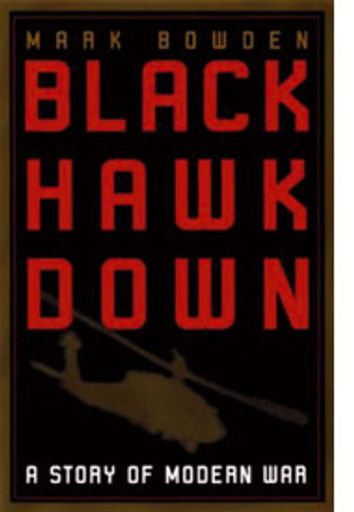
Black Hawk Down: A Story of Modern War

Black Hawk Down: A Story of Modern War

  • more
    • All Share Services

Black Hawk Down: A Story of Modern War

So the convoy now made a U-turn. They had just driven through a vicious ambush in front of the target house and were now turning around to drive right back through it. Men in the vehicles behind could not understand. It was insane! They seemed to be trying to get killed.

Things had deteriorated so badly that up in the C2 bird Harrell was considering just releasing the prisoners, their prize, the supposed point of this mission and of all this carnage. He instructed the Delta units on foot now closing in on the first crash site:

As soon as we get you linked up with the Uniform element throw all the precious cargo. We’re going to try and get force down to the second crash site.

The voices from various helicopters now trying to steer poor McKnight recorded the frustration of his fruitless twists and turns.

Uniform Six Four, this is Romeo Six Four. Next right. Next right! Alleyway! Alleyway!

– They just missed their turn.

– Take the next available right, Uniform.

– Be advised they are coming under heavy fire.

– Uniform Six Four, this is Romeo Six Four.

– God damn it, stop! God damn it, stop!

– Right turn! Right turn! You’re taking fire! Hurry up!

In this terrible confusion the men on the convoy saw strange things. They passed an old woman carrying two plastic grocery bags, walking along calmly through the barrage. As the convoy approached, she set both bags down gently, stuck fingers in her ears, and kept on walking. Minutes later, heading in the opposite direction, they saw the same woman. She had the bags again. She set them down, stuck fingers in her ears, and walked away as she had before.

At every intersection now Somalis just lined up, on both sides of the street, and fired at every vehicle that came across. Since they had men on both sides of the street, any rounds that missed the vehicle as it flashed past would certainly have hit the men on the other side of the road. Sergeant Eversmann, who had found some better cover for himself in the back end of his Humvee, watched with amazement. What a strategy! He felt these people must have no regard for even their own lives! They just did not care!

The city was shredding them block by block. No place was safe. The air was alive with hurtling chunks of hot metal. They heard the awful slap of bullets into flesh and heard the screams and saw the insides of men’s bodies spill out and watched the gray blank pallor rise in the faces of their friends, and the best of the men fought back despair. They were America’s elite fighters and they were going to die here, outnumbered by this determined rabble. Their future was setting with this sun on this day and in this place.

Schilling felt disbelief, and now some guilt. He had steered the convoy the wrong way for at least part of this calamity. Stunned by the confusion, he struggled to convince himself this was all really happening. Over and over he muttered, “We’re going to keep driving around until we’re all fucking dead.”

Continue Reading Close