Mark Holcomb

Marvel’s forgotten heroes

Spidey's the celeb of the year. Blade and the X-Men are huge, with Daredevil, Iron Man and the Hulk waiting in the wings. When will Hollywood show some love for Marvel's venerable Fantastic Four?

  • more
    • All Share Services

Marvel's forgotten heroes

In the month since its domestic release, Columbia Pictures’ “Spider-Man” has racked up the kind of box-office numbers industry insiders only dream about. As of the end of May it had already become the sixth highest-grossing film of all time in the United States, and promises to perform similar miracles when it opens in Western Europe, Australia and New Zealand in early June. Stateside, the film has broken nearly every record imaginable, including biggest opening weekend, biggest single day and fastest to $100 million, a level it attained in just three days of release. Not bad for a comic book title that just turned 40.

It’s hard to believe that there are that many ticket-buying Spidey fans, but the figures don’t lie. Accordingly, just about every Marvel Comics superhero ever to have his or her own title is slated for the megabudget Hollywood treatment over the next few years.

Fox has a sequel to its popular “X-Men” movie and a screen version of “Daredevil” (with Ben Affleck as the supersensitive blind hero) in the works for 2003, while Universal is currently priming audiences for “The Hulk” with a theatrical trailer 13 months in advance of the film’s scheduled release date. New Line, meanwhile, has announced a third “Blade” installment and a celluloid interpretation of “Iron Man” for 2004, and even second-string crime fighters like “The Punisher,” “Iron Fist” and “Ghost Rider” (a fetish-wear-clad biker with a flaming skull for a head) are set to kick multiplex ass before the decade is over.

The ability to rake in the kind of money “Spider-Man” has means more than just rampant copycatting, however. Everyone from Jonah Goldberg at the National Review to cartoonist Gary Panter in the New York Times Magazine to seemingly the entire staff of the Guardian, Britain’s left-leaning daily, has weighed in on the cultural gravity of Peter Parker and his angsty, acrobatic alter ego, and there’s undoubtedly more hand-wringing and hosannas to come. The French, after all, haven’t had their turn yet.

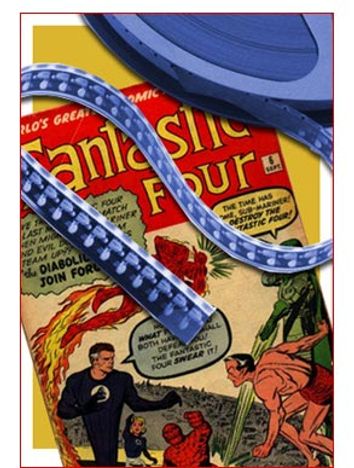
But what about the Fantastic Four, who paved the way for Spider-Man’s successful mix of heroism and neurosis and beat him to his 40th birthday by almost a full year? Whither the critical canoodling over Marvel’s original band of superfreaks?

Timing is everything, of course, and the absence of big-screen sanctification of the Four helped put their pivotal anniversary beneath the pop-culture punditry radar. Yet the reluctance to give the title its due — to say nothing of the blockbuster treatment — is downright curious. As it stands, Fox may or may not be developing a “Fantastic Four” movie that may or may not be a comedy, and the risible, no-budget 1994 indie version produced by B-movie mogul Roger Corman was shelved long before the hyperdriven CGI thrills of “Spider-Man” magnified its shortcomings. What accounts for this skittishness and indifference?

It could be something in the nature and dynamics of the team. In most respects, the Fantastic Four aren’t that different from other comic book characters. For one thing, they’re patently immune to the ravages of time: As of the latest issue, brainy aeronautical engineer Reed Richards, his increasingly pulchritudinous wife, Susan, her kid brother Johnny Storm and their grumpy friend Ben Grimm show none of the usual signs of encroaching middle age. Even the trademark gray at Reed’s temples hasn’t risen a centimeter in the years since the group first returned from their landmark joyride in space, miraculously and ambivalently endowed with superhuman abilities.

To fans and attentive observers, those powers — courtesy of pesky cosmic rays and naive sci-fi wish fulfillment — have become as totemic as the monikers that came with them. As the hyperflexible Mr. Fantastic, Reed has the ability to stretch his limbs to absurd proportions, while Sue can fade to transparency as the Invisible Woman (talk about male wish fulfillment) and Johnny, the Human Torch, enjoys the gifts of combustibility and flight. Ben, in a less appealing transformation, swelled into a rocklike, orange-tinted, ultrastrong “Thing,” an unfortunate condition that, despite occasional relapses into human form, seems more or less permanent.

Thinghood notwithstanding, these aren’t necessarily undesirable traits to possess; if nothing else, imagine the possibilities open to Mr. and Mrs. Fantastic in the boudoir. Unlike the stiff-upper-lipped superfolk over at rival publisher DC, however, with whom former Marvel editor and series co-creator Stan Lee hoped to compete financially, the newly Fantastic Four took their metamorphoses in something less than stride.

Like Spider-Man after them, it was this all-too-human reaction to catastrophic change, echoed through the years in a multitude of personal crises — including nasty power struggles and romantic infidelities — that originally set the Fantastic Four apart from DC’s venerable has-beens like Superman and Batman. It’s also what put Marvel on the map.

Yet in their way, the Four were always as doomed to ossified iconhood as their Depression-era precursors. For all their timelessness they were just as much of their time, and as such were not all that different from the whiny, narcissistic suburban baby boomers to whom they were initially meant to appeal. Despite the group’s hip Manhattan digs, in fact, the Storm siblings are from Long Island and Reed hails from some fictional California backwater called Central City; Ben is the group’s only genuine Gothamite. In a cultural climate that vilifies middle-class boomer suburbanites in vehicles like “American Beauty” and “In the Bedroom,” who has the patience for anxiety-wracked middle-aged characters, regardless of how radiation-enhanced they may be?

Probably not real-world middle-class boomer suburbanites, who are as likely to identify with DC’s supergeezers as their parents once were. And why not? Superman and Batman — one the emblem of a generation of hardworking immigrants, the other a stylized symbol of an endearingly eccentric elite — were created when the heroic burden of being American wasn’t debated on anything like a wide scale. The myriad sociopolitical nightmares that helped spawn Supes and the Dark Knight were dutifully, conveniently repressed until the two heroes were pulp relics, somewhere around the time Reed Richards finished his doctoral program at Columbia, no doubt. As the Fantastic Four’s original fans wage their own battle with middle age, having a truly invincible icon or two along for the scuffle doesn’t seem like such a bad idea.

The Fantastic Four themselves are too uncomfortably familiar to be the baby-boom generation’s midlife-crisis companions. Irreversibly bound to each other by traits they didn’t choose, can’t control and don’t fully comprehend, they resemble nothing so much as a souped-up dysfunctional family — which, cliché and all, is precisely what they are. Novelist and kindred belly-acher Rick Moody tapped into this aspect of the title in his 1994 novel “The Ice Storm,” in which he made stinging, fanciful comparisons between the members of the depressive superteam and a 1970s suburban family morally adrift in Connecticut. (Screenwriter James Schamus toned down the Fantastic Four allusions in his 1997 screen adaptation, but it’s worth noting that the film featured future Peter Parker Tobey Maguire in a leading role and was directed by Ang Lee, who is helming the upcoming Hulk film. Why does the Marvel Universe suddenly seem so small?)

As Moody recognized, the only sound option when ensnared in such a filial nightmare is to escape. But Marvel was understandably hesitant to alter the basic setup of the Fantastic Four, least of all by allowing its members to break away for good and rediscover their humanity. The minute their abnormalities — the very things that oppress them but which also make them “fantastic” (not to mention profitable) — recede, they’re rendered redundant and unimportant. They become, in a word, normal. For comics fans hovering near 50, that feeling may hit a little too close to home.

Even if Marvel was agreeable to realistic temporal and emotional changes in its characters’ lives (which in many ways were granted to Spider-Man by the film), middle-aged readers would probably welcome their erstwhile heroes’ waning powers as much as they relish their own. This is doubly true of ’60s kids, who came to equate the Four’s double-edged weirdness with their own generational disaffection.

Despite radical influences from the decade of their inception, however, the Fantastic Four were restricted to a resolutely bourgeois framework, and their powers worked just as well as grotesque metaphors for the previous era’s bankrupt ideals. Consequently, although the FF’s dubious talents served them well in their careers, they also tended to make their home lives punishingly repressed. Haphazard stabs at normalcy were made: The Richardses had a child and even hideous Ben found a girlfriend. But little Franklin was summarily rushed into the care of a witch and sensitive, redheaded Alicia — who eventually ran off with Johnny Storm — was conveniently blind and, one presumes, more than a little kinky. Try as they might, these perpetual sad sacks remained more fallen heroes than superheroes: Marvel’s grotesque lesser gods to DC’s dully supreme beings.

Like Hollywood in the wake of “Spider-Man,” Marvel cashed in on the chord such freakishness struck with the Four’s readers by creating a whole new pantheon of twisted deities. By doing so, they unwittingly sowed the seeds of the genre’s insignificance. Spidey represented — and clearly still represents — the young-adult contingent, but even though he was as burdened with his powers as the FF, he came off as more whiny than genuinely wretched. (Kudos to director Sam Raimi, screenwriter David Koepp and Maguire for excising this trait from their incarnation.)

For bona fide misery there was Thor, a disabled doctor who somehow channeled the Norse god of thunder (does anyone need to be reminded of what that’s like?), and Iron Man, a walking rust bucket with no visible means of waste elimination. The Hulk, the Angel and Daredevil are pretty much self-explanatory.

This phenomenon culminated with the X-Men, of which the Angel was a founding member. Not especially popular during their initial run, this gaggle of mutants — a spade at last being called a spade — nevertheless gained a following and eventually inaugurated the current spate of Marvel-based blockbusters. In print, however, they were one collection of misfits too many, and their uneven exploits codified the whole troubled-superhero category until it became routine, repetitious and tediously self-mocking; ’70s title “Howard the Duck,” which spawned a universally derided George Lucas film of the same name, was a prime offender.

In any event, by then DC had breathed new, tortured life into war horses like Green Lantern and the Flash and had even generated a few intriguingly freakish gods of their own. What else to call a “hero” named Deadman? The inevitable result is that the Fantastic Four ceased to stand out. Lost in the glut, their built-in obsolescence was hastened and they became as firmly (though perhaps not as deeply) encased in nostalgic amber as Superman or Batman, dead men in their own right.

It’s no help that the social conditions that informed the title and the freak-power that briefly encouraged it haven’t survived into the new millennium. Weirdness as a badge of rebellion or affinity has either become so absorbed into mainstream culture (how else to explain the popularity of the decidedly Marvelesque Ozzy Osbourne and his brood?) or confusingly varied (browse the titles in any comics shop for proof) as to be irrelevant. Nowadays, everyone’s either a superfreak or pretends to be one.

Spidey, apparently, appeals to the oddball in everyone. By failing to reflect the compromised hopes of his original fans or remind new ones of where they might be headed, “Spider-Man” neatly sidesteps the queasy existential baggage inherent all along in “The Fantastic Four.” Little wonder that Raimi’s film has received such a glowing reception, while Reed, Sue, Johnny and Ben plod along as always, courted by Hollywood only as potential parody material or for substandard drive-in fare, their significance — and their birthdays — utterly forgotten.

This story has been corrected since it was first published.

“The Outer Limits”

"We control the vertical. We control the horizontal." The creepiest series in TV history combined existential inquiry with a memorable monster menagerie.

  • more
    • All Share Services

Not many television series consistently challenge their viewers, let alone risk alienating them by issuing ominous threats seconds into the broadcast. Yet by prefacing each of its episodes with the blithely unsettling incantation “There is nothing wrong with your television set,” ABC-TV’s early ’60s sci-fi sucker punch, “The Outer Limits,” did both.

This provocative opening statement, delivered in the gently metallic tones of the Control Voice (the show’s omniscient, disembodied “host”), was only a harbinger of the aesthetic bravado and existential dread to come. For an hour each week between September 1963 and January 1965, “The Outer Limits” confronted audiences with edgy inquiries into the human predicament supercharged with expressionistic visuals, eye-popping (and frequently pop-eyed) monsters and resolutely adult themes. Its vivid mix of art and spectacle, humanism and pessimism and science and superstition was genuinely groundbreaking, and over the years it has proven both deceptively influential and virtually impossible to duplicate.

The series’ pedigree was filled with the sort of disregard for convention its content implied. Independent producer and Wellesian whiz kid Leslie Stevens, who created the show as a forum for his oddball notions about science and technology, was variously a Broadway playwright, screenwriter, film director and New Age mystic. Stevens’ dilettantish stamina resulted in so many projects before, during and after “The Outer Limits” — including a film spoken entirely in Esperanto and a handbook for something called “electronic-social transformation” — that he gave the term “line producer” a new meaning.

Charged with crafting his sci-fi anthology series for ABC, Stevens directed a pilot for “The Outer Limits” in late 1962 using a handpicked team of maverick artists, technicians and craftsmen, including composer Dominic Frontiere and future Oscar-winning cinematographer Conrad Hall (whose later credits range from “Cool Hand Luke” to “American Beauty.”) The film, shot from Stevens’ screenplay “Please Stand By” and later broadcast as “The Galaxy Being,” introduced many of the elements that were to become earmarks of the show: a flawed outsider hero, a menacing but ultimately benevolent extraterrestrial who brings out the best and/or worst in the humans with whom it comes in contact, and a poignant, ambivalent finale.

Once ABC bought the pilot, Stevens turned over the day-to-day production duties and much of the writing to iconoclastic screenwriter and erstwhile tunesmith Joseph Stefano. Best known for transforming Robert Bloch’s pedestrian pulp novel “Psycho” into a jubilantly perverse Freudian fever-dream for Alfred Hitchcock in 1960, Stefano — who was anything but a science-fiction buff — promptly molded the show’s format to his own moody ends. (Stevens continued to run interference with the network and wrote and directed three more episodes.)

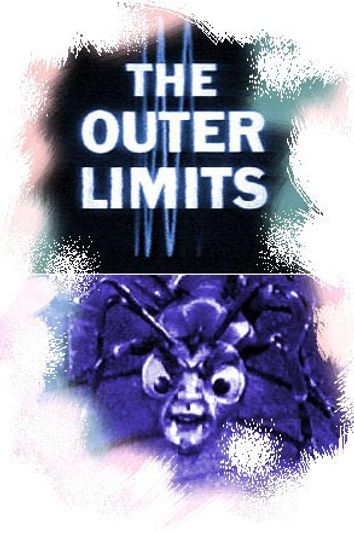
With a free-flowing id and the assistance of old-school, no-nonsense directors like Gerd Oswald and Byron Haskin, Stefano established “The Outer Limits’” uneasy tone and celebratedly gothic atmosphere in the stellar episodes he wrote. Among these were “Don’t Open Till Doomsday,” a deliciously unctuous take on frustrated desire featuring a belligerent phallo-vaginal blob, coitus interruptus on a cosmic scale and several Stefano-penned songs; “The Bellero Shield,” a spin on “Macbeth” with a shimmering space creature as inadvertent Player King; “The Invisibles,” in which crablike aliens botch a takeover of the human race by commandeering its most marginalized members; and “Nightmare,” a prescient look at the internal and external bonds that disintegrate during wartime. Some of his other efforts, such as “A Feasibility Study,” “The Mice” and “The Zanti Misfits” (which features the series’ best-remembered monsters, a race of fist-sized ants with leering human faces), were less cohesive but no less distinctive.

Stefano was by no means the only “Outer Limits” writer, but his stamp is on every episode he produced. Standout entries like Anthony Lawrence’s tender slice of time-travel fatalism, “The Man Who Was Never Born” (the negation in the title is wrenchingly literal by hour’s end), and Meyer Dolinsky’s troubling “The Architects of Fear,” in which a group of misguided government scientists turn one of their own into a shambling, would-be space monster in order to establish world peace, are less overtly symbolic and psychoanalytic than Stefano’s stories, but each trades in the same murky ethical dilemmas and nightmarish motifs that characterized his involvement in the show. Even such lesser works as William Bast’s turgid galactic soap opera “Moonstone” and future “Chinatown” screenwriter Robert Towne’s woefully underfunded “The Chameleon” benefited from his guidance. If Leslie Stevens can be said to have fathered the series, then Joe Stefano lovingly reared it.

The heady synthesis of Stefano’s dark vision and Stevens’ ethereal ambition made “The Outer Limits” a far richer experience than the other science-fiction and fantasy series of the era. While justifiably adored, shows like Rod Serling’s jazzy, pedagogical masterwork “The Twilight Zone” and Gene Roddenberry’s insta-kitsch classic, “Star Trek,” persist largely because they never stray far from the rationalism that drives most American entertainment. Their human characters are fallible, impulsive creatures uniquely adept at screwing up, but every emotion, relationship and deeply held conviction they display remains in place at the end of virtually every episode. However comforting this may have been, it tended to refute the everyday experience of the viewing audience.

“The Outer Limits” wouldn’t, or couldn’t, cater to such needs. Stevens and Stefano had something much less conciliatory in mind for their show, and thus set it squarely in a universe ruled by labyrinthine pressures and transient pleasures, where meaning and morality were in constant flux and human beings fought desperately — sometimes heroically — to keep pace. This starkly recognizable yet distinctly off-kilter milieu made “The Outer Limits” television’s most unabashedly modernist work.

The most successful and memorable device used to throw “Outer Limits” viewers off balance, of course, was its monsters. For better or worse, the creatures that figured in many episodes remain the show’s most enduring association, well beyond any of the series’ ethical or artistic innovations.

It was more or less planned that way from the beginning. In the canons for “The Outer Limits” — a set of guidelines written for prospective screenwriters at the behest of ABC — Stefano specified that each episode include what he called a “bear” to “induce wonder or tolerable terror or even merely conversation and argument.” In the best episodes, however, the bears were more than simple story requirements meant to attract sponsors or frighten preadolescents: They served as surrealistic, symbolic manifestations of key story points — when, that is, they weren’t the key points themselves. Grotesque, beautiful or both, the monsters were the longing, befuddlement and temporal joy of human experience made distorted flesh, and their shocking and occasionally extraneous presence was as essential to the series as Stevens and Stefano’s radical ethos.

To accomplish this, the bears fell into several distinct but far from absolute categories, including horrifically altered humans who reveal just how monstrous humanity can be (the hydrocephalic Übermensch of “The Sixth Finger,” a refined aesthete with a radiation-wracked visage in “The Man Who Was Never Born” and a bulb-eyed megalomaniac known as “The Mutant”); shapeless, antagonistic blobs who, although thoroughly unappealing themselves, somehow manage to expose our deepest appetites (the aforementioned psychosexual lump from “Don’t Open Till Doomsday” and a featureless, gelatinous whatsit that appeared in both “The Mice” and “The Guests”); belligerent, imperialistic alien species who know an easy mark when they see one — or so they think (a race of leprous, immobile super-intellectuals in “A Feasibility Study,” smug, smirking Cyclopes intent on writing the human race’s “O.B.I.T.” and a pair of murderous rocks — yes, rocks — in “Corpus Earthling”); and, finally, benevolent alien rogues whose gentle curiosity or misguided compassion throw the notion of “humanity” into ambiguous relief (ethereal, luminescent pacifists in “The Galaxy Being” and “The Bellero Shield,” and insectoid/avian waking nightmares in, respectively, “The Children of Spider County” and “Second Chance”).

Such high-minded purpose may seem beyond the reach of actors in rubber monster suits, but it’s worth considering that had the “Outer Limits” pantheon of twisted demons and saints carried on in the usual ghoulish fashion, all bloodlust and lurking, they most likely wouldn’t be as indelibly etched as they are in the species memory of television viewers.

If the “Outer Limits” bonanza of shocks and symbolism sounds too good to last, it was. Halfway through the first season, network brass became jittery over the show’s disappointing ratings and unprecedented material and began pressuring Stevens and Stefano to tailor the series to more conventional tastes (read: “Lost in Space”). Already faced with steadily shrinking budgets, they left the series rather than submit to a bastardization of its original conception. They had completed a meager, albeit unforgettable, 32 episodes.

Under replacement producer Ben Brady, ABC’s then vice-president of programming and a longtime producer of the popular “Perry Mason” series, the show became all but unrecognizable. Brady had little experience with or interest in the fantastic, and his handling of “The Outer Limits” was predictably catastrophic. Gone were Frontiere’s mournful, pensive symphonic score and Hall’s dynamic lighting and camerawork, to say nothing of Stefano’s thematic preoccupations. In their place were wailing theremins straight out of ’50s sci-fi movies, washed-out static master shots, and an addlepated “man mustn’t meddle in God’s handiwork” philosophy.

There were a few gems buried in the second season, including novelist and short-story writer Harlan Ellison’s spare, apocalyptic chase-through-time thriller “Demon With a Glass Hand” (one of the series’ finest hours), and Robert C. Dennis’ wonderfully ambiguous “The Duplicate Man,” a near-perfect throwback to the high standards of the Stevens-Stefano era that features a morally drained biologist who sends a clone to do his dirty work. But it was largely TV as usual, moderately retooled for sci-fi purposes — Brady even managed to sneak in a Mason-esque courtroom drama called “I, Robot” that’s impossible to sit through with a straight face. After just 17 more episodes, the show ground to a sloppy, indifferent halt.

It was an unfortunate end for a series that had broken new ground so early and so memorably. But while it was nowhere near as long-lived as “The Twilight Zone” or as much of a fan fave as “Star Trek,” “The Outer Limits” has nonetheless maintained a small, fiercely dedicated following since its cancellation. It has been in near-steady syndication (it currently haunts the wee hours of the Sci-Fi Channel’s lineup), and even spawned an “update” on Showtime in the mid ’90s (although the less said about that bland, misbegotten hack job the better). Most intriguing of all, its echoes can be detected in such disparate cinematic works as each of the four Alien movies, both Terminators, and arguably the paranoiac oeuvres of David Lynch and Kiyoshi Kurosawa.

Even more than these films, though, the series’ use of pulp accoutrements as portals into complex intellectual and moral territory was its undeniable trump card. If, as Pauline Kael once wrote, pulp “can take a stronger hold on people’s imaginations than art, because it doesn’t affect the conscious imagination, the way a great novel does,” the genius of “The Outer Limits” was in its ability to do, and to be, both.

Continue Reading Close