Mark Schone

Who’s to blame for the housing crash?

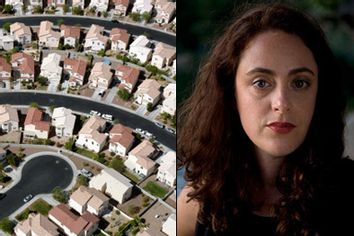
Alyssa Katz, author of "Our Lot," discusses the good intentions and mass delusion that led to the real estate boom

Alyssa Katz

To read “Our Lot: How Real Estate Came to Own Us” is to relive, in painful, anecdotal detail, the real estate bust that brought our economy low. Through Alyssa Katz, a journalism professor at New York University and the former editor of the magazine City Limits, we remeet the exploited homeowners and the naive investors, and we cringe again at the blundering politicians and opportunistic lenders.

But “Our Lot” is also a reminder that our memories are short, and that the same mix of hope, greed, good intentions and bad policy has been inflating and popping real estate bubbles since the days of LBJ. Behind it all is a conviction shared by nearly all Americans, be they Democrats or Republicans, Wall Streeters or the ARMed and desperate masses, that home ownership is a good thing — good for the neighborhood, the country and the average citizen holding the deed and the debt. “Our Lot’s” long view is perhaps most unnerving for the doubt it casts on that timeworn belief. Salon interviewed Katz by phone.

Isn’t homeownership actually good for you? I thought it was the panacea for almost all social ills, it drove the crime rate down, educational achievement up, and so on.

Yes, well, homeownership is only as good as the amount of home you actually own, and I think the big problem in the last generation or so is that Americans have turned to more and more and more debt to reach for the American dream.

There’s a lot of great examples out there — the Nehemiah homes that transformed East New York in Brooklyn from a really devastated and dangerous place to someplace that’s still really poor and has a high crime rate but has an opportunity to really grow and have a stable bunch of families really invested in building a home there. So all that’s great. Certainly there’s a lot of evidence that homeowners do tend to stay in one place for longer, their kids perform better in school. They tended to be more involved in local politics, community affairs, and block cleanups. The problem is, it’s very hard to separate out the effects of homeownership itself from the fact that people who have a certain economic or social standing are more likely statistically to be homeowners in the first place.

Does this mean that we shouldn’t actively encourage homeownership, using government money or government policy?

I think there’s nothing wrong with using government money, policy, pressure, all those tools to make homeownership more of a possibility than it would otherwise be in the marketplace, simply because the market left to its own devices discriminates aggressively. It rewards people who already have wealth, who have already had a leg up economically, and it’s great to give other people the opportunity as well.

The problem is that homeownership is the only housing policy that this country has ever shown any commitment to. Renters are treated miserably.

And that’s one big distinction you see between the U.S. and European countries that also had very loosely regulated mortgage-security markets and have had problems there. I think one reason you’re not seeing mass foreclosures on quite the scale that you had in the U.S. is that for large proportions of the population in many European countries, including the Netherlands, Germany, France, Switzerland, renting is supported through government policies that, for instance, protect tenants so that they don’t have to worry about getting kicked out at the end of the year.

Whereas in the U.S., homeownership was always the only option. And anyone who can afford to, or thought they could afford to, would choose that option. So that’s really the problem here.

Whose fault is the mess that we’re in now? And how far back do we need to go to start tracing the blame?

I think the message of my book, unfortunately, is that it’s to some degree everybody’s fault, including, I should say, liberal activists, with whom I’m extremely sympathetic, and think were right.

But what we really had was a collision of ideologies over this question of: How do we make it possible for everyone to be a homeowner? How do we eradicate this horrible legacy of discrimination, which had left the homeownership rate for whites much, much higher than that for blacks and Latinos? There was real work that needed to be done there. So I think we really have to go back to the 1970s, when we started to see pretty aggressive policy measures on the part of the federal government to try to level the playing field.

You talk about another real estate bubble in the early ’70s, when everybody who wanted one could get a mortgage. The wreckage that was left behind looks totally familiar.

Yes. Rather infamously, the federal housing administration, which is the government agency that insures mortgages — it’s what built Levittown and all those 1950s suburbs after the war — discriminated very aggressively, on the basis of what was thought to be sound statistical evidence, that the insurance fund would only be safe if it were to insure suburban and overwhelmingly white areas.

So what happened in ’67 and ’68 was that federal housing officials reversed that entirely. They proclaimed, initially just in the riot areas and then more broadly across cities, that FHA, the Federal Housing Administration, would now be open everywhere! And in fact, as I note in the book, the only circumstances under which HUD did not insure mortgages is if the house is literally falling down.

Real estate agents and loan brokers descended on inner cities, trying to find borrowers who would be unlikely to pay their mortgages back, because the real-estate speculator would get paid in full by the federal government, and paid more quickly and more generously, because of forgone interest that they would get compensated for. The sooner that borrower went into foreclosure the more generously that entrepreneur would get paid.

When was that mess cleaned up?

About ’73, ’74. There were tens if not hundreds of thousands of abandoned houses all over the country as a result of the FHA debacle, and it got a lot of attention at the time and was almost forgotten to history after that.

And then we have the Reagan presidency and — correct me if I’m wrong — but that’s when the securities market for mortgages really blossoms, right?

Absolutely. Mortgage-backed securities had existed since about 1970. They existed in the ’20s too, and that was part of why the Depression happened — they had been made illegal after that. But they came back as a government product in 1970. As I recount in the book, Lewis Ranieri of Salomon Brothers, which was trading in government-backed securities, thought, “Couldn’t we just do this ourselves? Why do we need to have Freddie Mac or Fannie Mae in the middle, why don’t we create these securities?”

In order to do that, they needed to rewrite all those laws that had been passed following the crash in 1929 and thereafter, which was as much a housing and real estate bubble crash as it was a stock market crash. 

What did that do to the housing market?

It took a while for all the pieces to come into place. But once the tax laws changed in 1986 to allow the Wall Street mortgage-backed securities market to just explode, what you saw was the invention of subprime lending. Suddenly Wall Street banks were able to do their own thing, but they had to find their own niches. Fannie Mae and Freddie Mac already had what were known as plain vanilla loans: You want a 30-year fixed-rate mortgage, you’ve got great credit, you live in the suburbs.

So the Wall Street banks started looking for niches at the bottom and at the top of the food chain: at the top, what were known as jumbo loans, loans that Fannie Mae and Freddie Mac were not allowed to buy, and then they created subprime. They created a loan product with high interest rates, high fees, adjustable interest rates, all these new features that would enable them to make money lending to people who never before would have qualified for a mortgage.

And then when Bill Clinton became president he did not shut that down?

That’s right. To the Clinton administration’s credit, his Federal Trade Commission, among other agencies, and the other banking regulators, did pretty aggressively go after some of the worst offenders, who would not just be putting out subprime loans but really engaging in predatory lending, setting up borrowers with loans they knew they could not pay.

But you had two, or three, or — one could keep counting — things that the Clinton administration did that really enabled the bubble. And I think it was with the best of intentions at the time, but a lot of sort of willful naiveté about what the consequences would be.

Number one, what it did was really just encourage homeownership very aggressively. This became a central theme of Clinton’s campaign for reelection in 1996, how almost every American can and should own their home. This was something that Clinton promoted out of a sense of his own political survival. You had Newt Gingrich and his Congress trying to eliminate HUD entirely. Homeownership was this apple pie issue that could help justify the agency’s existence.

Homeownership also became a way that Clinton pushed for a hotter economy. And what would happen as well, of course, is that he had Alan Greenspan as head of the Federal Reserve, willfully ignoring pleas that came as early as the early ’90s from consumer advocates who started to see the damage being wrought by predatory lending. They were hearing from Congress in ’93 legislation that passed that was supposed to stop predatory lending but couldn’t because of the way the industry was growing and metastasizing too fast.

That law, the Homeowner or Equity Protection Act (or HOEPA), asked the Federal Reserve to set guidelines. Congress said to the Federal Reserve, “We want you to regulate the subprime industry, you’re the only entity that can do this.” And the Federal Reserve never acted on it. Once consumer advocates tried to go to court to fight predatory lenders through lawsuits, judges — often Republican-appointed judges — would say, “You know, I’d love to rule in favor of you, but the Federal Reserve was supposed to help define this question of law that’s central to your case, and they never did, so we really can’t rule that this was a violation of HOEPA.”

So that was really the problem in the ’90s: that Alan Greenspan and his absolutist free-market approach to the mortgage markets, and the financial markets more broadly, completely defined everything that went on.

You also had community organizers and activists pushing Bill Clinton or pushing the Democratic Party to make housing more available, right?

The calamity that came to happen was enabled by this explosive growth that sucked all the customers from the government-sponsored market into the private one where they just became sitting ducks for every toxic product imaginable. Remember that the loans that went bad were people who had bought their homes, often with the help of the government programs, then refinancing with a subprime loan or with an adjustable rate loan.

There are clearly two competing narratives. You have the right-wing critique that blames the homeowners and you have the other side largely placing the blame on Wall Street. What responsibility do homeowners actually bear for the state we’re in now?

I think homeowners bear a lot of responsibility for their own wishful thinking. What you have is essentially a mass social mania. And it was infectious — you have a homeowner seeing their neighbor moving up to a bigger, better house because their broker is offering them a loan. Yes, the interest rate will adjust, but they can refinance in two years when it does. People wanted to believe. I traveled across the country for this book and interviewed many many, many homeowners and people who sold them mortgages and homes. And Americans’ capacity in general for delusional thinking, wishful thinking, fantastic thinking really just flourished.

This isn’t to say every homeowner was in this position. There was no shortage of horrifically exploitative practices, lenders who preyed and continued to prey on people’s financial desperation. This is all happening at a time when real wages are stagnant or declining, where people’s other expenses are going up. Trying to maintain a good standard of living and finding what seems like an easy way to do it. So it just became the new normal.

The book has a great number of anecdotal illustrations about the development of the market and the damage wrought. Let’s talk about a specific case: a homeowner named Charity Stewart.

Charity Stewart had bought a house for about $100,000 in 2004 because it was cheaper than renting. She was a single mom, single grandmother, and was 33 years old when she bought the home. She said she was driving around a neighborhood, saw a sign, said there was no money down — actually I think it was $500 down. She was able to get into that home for less, she told me, than it would be to put down a rent deposit.

When you rent a place, often a landlord will want to check out your finances, make sure they can get paid every month. Well, her lender, which was Argent Mortgage, now defunct, a spinoff from Ameriquest Mortgage, they asked for financial documentation — and she was allowed to count income that really shouldn’t have been counted. You know, her mom was on SSI and didn’t live with her but they added her mom’s income to her household income. So she ended up qualifying for a mortgage at a high interest rate that was much higher than she could pay for.

But it wasn’t only that that really struck me about Charity’s story because that has, I think, become very ordinary in the past couple of years. It was also that Charity had really no idea of what was involved in homeownership and no one had bothered to tell her. And so when the house, as often happens with these older city homes that were getting sold to first-time home-buyers, had some problems — it had a leak. And she didn’t know what to do. She had always lived as a tenant and could call the super or the landlord. And she actually tried to call Ameriquest when the leak started to get it fixed — she didn’t know what else to do and nobody told her. So by the time I came, which was about a year later, this leak had turned into this waterfall down the side of her living room and she stopped making mortgage payments, sort of in protest of her house falling apart. And she went into foreclosure that week that I visited her. 

What about the story of Lehigh Acres?

Lehigh Acres is an area near Fort Myers in Florida, and Fort Myers/Cape Coral is one of the hottest foreclosure hot spots in the country. The area became a Mecca for speculators. Lehigh Acres and Cape Coral were created by infomercial kingpins of the 1950s, these product pitchmen who had spent time during the winter in Florida and saw an opportunity to sell real estate the way they had sold rat killer and cosmetics on their TV shows. They decided to start selling land on the installment plan. So what you had in these areas in Florida, and still have, are just tens of thousands of these little housing lots in the middle of swamp that were created to sell on TV.

There were these organized investor schemes, these seminars that would go on road shows all over the country, encouraging middle-class Americans to make it in real estate — to be like Donald Trump. Buyers would have to put almost no money down, because they were getting set up with these construction loans. The idea was that they would get tenants in the homes and the tenants would eventually qualify for a subprime loan and owners could sell to them — but of course this isn’t how it worked out. These homes never ended up getting sold for the most part.

What I found was entire towns — I visited a town in Pennsylvania just outside Philly — where you’d have nine or 10 families from this one town and another six from down the road, and more from the next town over, all of them had gone to a seminar at a hotel in King of Prussia and seen how they could make this 14 percent return on Florida real estate. And these families just lost everything. They were really hoping only to send their children to college and to just get that leg up and this was how they hoped to get it. And so we talk about real estate investors and speculators and there’s often this stereotype of someone in that show “Flip This House” who sits in his SUV and is on his cellphone all day. But a lot of these investors were in fact ordinary middle-class Americans who had never invested in real estate before.

Is there anybody in this whole saga who stands out as both well intentioned and well informed, who was prescient about what was going to happen and said, “Stop”?

Oh gosh, quite a few along the way. So many consumer advocates, community organizers, folks in Washington, they’ve been working on this stuff for years and never drank the Kool-Aid. They were fighting discrimination but also really knew when the policies and the industry were going too far and called them on it, too. The kind of conscience and hero in my book is a now-deceased activist named Gail Cincotta, who is really central to all these progressive policy changes to help fight discrimination in mortgage lending, get the Community Reinvestment Act passed, urge more lending to credit-worthy and qualified low- and moderate-income people. She would go and testify in Congress year after year about how these programs were going and she would just call them out on it constantly and say, What are you doing? These loans are not helping people, they’re proving really harmful and you have a responsibility to do something. But by that point, this monster had already taken on a life of its own.

Is there anybody in Congress whom we should listen to, who has the right prescription or has been consistently right in the past?

For better and for worse –I think almost entirely for the better — we have Barney Frank. He is a favorite whipping boy on the right; for the believers it’s all the Community Reinvestment Act’s fault, it’s all Freddie Mac and Fannie Mae’s fault, and he is their prime evidence of that. He had an ex-boyfriend who worked for Fannie Mae and that’s part of the conspiracy theory behind this. That’s all baloney as far as what drives his policy decisions, what he’s trying to do. Frank, I think, is somebody who cares deeply about housing and about having a sane and functional mortgage market and he’s trying to do the best he can within what’s really possible in Congress right now.

I think part of the problem is that the Obama administration has been trying to play a very evenhanded role in setting the agenda going forward. So, for instance, Frank has been trying to push legislation that would outright bar a lot of predatory lending practices, but it was just a non-starter, certainly in the Senate. It passed the House thanks to the efforts of Frank and others, but in the Senate, Chris Dodd particularly, and others there are just really refusing to confront these issues head-on. So we’re sort of left now with the Obama administration’s new plan to overhaul the financial industry and its proposal for a new consumer financial products safety commission to carry that load going forward.

Has what the Obama administration has done to date about housing and lending helped or hurt?

Neither, which I guess is to its credit. I mean, it is trying to — not that successfully — keep the banking industry afloat while also keeping homeowners afloat. And the problem is you’ve got a zero-sum game.

So have we hit bottom yet?

Ask Jim Cramer [laughs], he says we’ve hit bottom. I’m not Jim Cramer.

Should I invest in real estate now?

Actually, that’s a really great question. There’s a lot of really great buys around the country right now because a lot of players who, in the past, did have money to throw around in real estate, are staying on the sidelines. So what you have in fact are sort of private equity funds  coming in, I guess you could call them vulture funds, they’re just coming in and buying up whatever they can. And prices for foreclosures — you can pick up places, especially in cities, for very very little money right now. And what you see is actually some kind of half-crazy or half-enterprising young people investors, entrepreneurs, some with good intentions and some that just want to make a buck, coming and buying up stuff cheap and fixing it up. There’s both good and bad coming out of that right now.

Sounds like the beginning of the next bubble, right?

[laughs] Well, the bubble’s only going to inflate if we choose to put air into it again. And if you look at what the Obama administration is putting out there, as far as what they want to see happening going forward, it puts a lot of very almost excessively thoughtful constraints on how that market will work. They’ve called for all these Ph.D.s to roam around and study exactly who will run into trouble if they have a pre-payment penalty or an adjustable rate and then regulate the product accordingly. It’s very, very, very wonky. That’s no guarantee that it’ll work. So I remain kind of admiring of the effort to craft this plan, but very skeptical that it will actually work as advertised.

“I’ve spent the last five days crying in Argentina”

Gov. Sanford admits his affair -- and we have just the musical accompaniment

During Mark Sanford’s strange, addled press conference Wednesday, he explained his sudden disappearance from South Carolina by admitting he hadn’t been hiking the Appalachian Trail after all but had instead been much further South visiting with a “special friend,” i.e., cheating on his wife. In fact, he made reference to having “spent the last five days crying in Argentina.” Was the wayward Governor really unaware that he had lapsed into showtunes? Did he mean to quote Evita? Because he had every right — the overlap between his own emotional turmoil and that of the imagined Mrs. Peron is uncanny. Just read the lyrics to “Don’t Cry for Me, Argentina”: “I had to change/I chose freedom/Running around, trying everything new.” Better yet, pay homage as Broadway diva Patti Lupone sings them, below. (But first, listen to the inimitable Charlotte Greenwood “Sing to Your Senorita,” from the musical “Down Argentine Way”!)


Obama’s 100-day report card

Bloggers, activists, economists and writers grade the president's performance so far. Featuring Sen. Russ Feingold, Dan Savage, Markos, Michael Pollan, Gloria Feldt and many others.

It has been 100 days since Barack Obama became the 44th president of the United States. The 100th day of a presidency is traditionally a time for taking stock of what the new occupant of the White House has achieved — especially when the nation confronts a crisis, as in 1933 and 2009, or when there has been true ideological regime change — again, as in 1933 and 2009. Salon asked 21 writers, politicians, activists and economists for their assessment of the Obama presidency so far. The state of the president’s report card is (mostly) strong. He earns a high GPA, though there are critics both left and right ready to give him failing grades in a few crucial areas.

DIGBY, political blogger

On the economy, I give the administration a B, if only because of the extreme difficulty and urgency of the problems they face. They deserve credit for the quick passage of the stimulus, although as Obama himself admitted, their negotiating skills were less than perfect. Unfortunately, it appears the administration still fails to see the necessity for systemic reform of the financial system, and that could derail everything.

On foreign policy and national security they would get an A+ for Obama’s successful outreach to other nations and commitment to changing America’s global image. They get an incomplete on the promise to withdraw from Iraq and close Guantánamo. Releasing the OLC memos is laudable, but the president’s ruling out prosecutions and threatening to block inquiries, which are not subject to presidential authority, clouds his moral authority here and around the world. They get an F for expanding the Bush state secrets arguments.

Overall, I am most impressed with their recognition that post-partisanship is useful in name only, as is exemplified by their willingness to play hardball on healthcare. However, I continue to be concerned about their rumored willingness to entertain the idea of “entitlement” reform as some sort of compromise.

GROVER NORQUIST, president of Americans for Tax Reform

Economy: D. Spending too much money is not left-wing, it is stupid. Borrowing a dollar and spending it now does not create wealth or jobs or income. Killing the school choice program for lower-income children in Washington, D.C., was simply mean. His kids can wave at the plebes when they travel to prep school in style.

Foreign policy/national security: Incomplete. The Iraq occupation continues apace. Now we are going to do in Afghanistan what Bush couldn’t do in Iraq. Bad ideas moved north and into the mountains don’t become smarter. Obama’s tone in dealing with Europe and the rest of the world is refreshing after eight years of Rome hectoring the provinces. Still, the apology tour was a tad much. Hairshirts are things you don yourself, not place on your predecessor.

Overall: Glad to see by his Cabinet picks he isn’t all that concerned about rich people paying lots of taxes. Also, nice to live in a country whose government doesn’t torture people.

RUSS FEINGOLD, U.S. senator from Wisconsin

When President Obama took his oath of office, it came with enormous challenges, including an economy in peril and wars in two countries. I supported the president’s economic stimulus package because it was obvious that the crisis required bold action, and I give the president high marks for that. On foreign policy, however, it’s more of a mixed bag. I am pleased the president has finally put a plan in place to end our involvement in the war in Iraq, although not as quickly or definitively as I would like. But I have serious concerns about the administration’s Afghanistan plan, and how it will affect Pakistan.

One area where I have closely observed the Obama administration is its efforts to restore the rule of law, which was so damaged under the Bush administration. Today, I unveiled a report evaluating the administration’s record so far. The president earned several A’s, particularly in the area of detention and interrogation policy. The area where I am most concerned, and where the administration earned a D in my report, has to do with the administration invoking the state secrets privilege as the Bush administration did before it.

The Obama administration has made a clear break with the recklessness of the Bush administration, and the swift actions that President Obama took in his first days in office were a triumph for the rule of law. But as evidenced by the report, the job of fixing the damage done to our Constitution during the previous administration is far from finished and must continue to be a priority.

KIERAN SUCKLING, executive director of the Center for Biological Diversity 

Foreign policy/national security: A-. Obama has made great strides in restoring America’s credibility as respectful, coalition-oriented member of the international community. Reengaging on international solutions to global warming is a big step forward, but his commitment to withdrawal from Iraq and rescinding Bush policies on surveillance and enemy combatants has been poorly messaged and inconsistently executed.

Economy: B. Allocating significant portions of the stimulus package to development of clean, low-carbon energy technologies and infrastructure development show a strong commitment to keep a forward-looking agenda rather than falling back to quick fixes. Playing hardball with Detroit is similarly forward-looking. He has stumbled though, in presenting a confident, unified message.

Environment: C. Obama’s appointments have been all over the map, which will make the development of a consistent environmental stand very difficult. Decisions to strike Utah oil leases, slow oil shale permitting, and rescind Bush Endangered Species Act regulations are positive, but issuing corporate fuel efficiency standards below those proposed by Bush, failing (so far) to rescind Bush policies preventing the protection of polar bears from global warming, stripping federal protection for wolves, and reversing himself on mountain top removal and guns in national parks are disappointing.

JONATHAN ALTER, Newsweek editor and columnist, author of “The Defining Moment: FDR’s Hundred Days and the Triumph of Hope”

Economy: A-
Foreign policy/national security: A-
Overall: A-

Obama deserves an A- in all three areas, but the grade should come with an asterisk denoting “incomplete for the term.” On the economy, Obama has moved quickly to invest more than $2 trillion into the country, through a stimulus package that required congressional approval (no easy thing) and aggressive leadership from the Treasury Department that could be done unilaterally. Such investment was essential to keep a deep recession from becoming a depression. He acted where other presidents might have muddled through.

More specifically, he has matched his emphasis on short-term problems like foreclosures and the ailing auto industry with a focus on longer-term economic challenges like controlling the cost of healthcare and transitioning to a green economy. Fiscal discipline is important but a lesser priority amid a recession, as he recognizes. He could have done more for small business and likely will. We don’t know yet if the specifics of the bank rescue plan will work. Probably not.

On foreign policy, Obama effectively began job one, which is to restore America’s prestige in the world. This is essential, because all of the major global problems nowadays require cooperation. Before getting it, Obama needed to “reset” relations, which he has now done. He was also lucky that the one crisis of his first 100 days — piracy — was resolved successfully. He shouldn’t have bowed to the king of Saudi Arabia, but he has otherwise performed flawlessly on the international stage.

The reason he doesn’t get the full A is that in both areas we don’t know yet how things will turn out. But so far he has developed the vision and the communications and management skills required for top-flight presidential leadership.

MICHAEL LIND, Whitehead senior fellow at the New America Foundation

Economy: B
Foreign policy/national security: A

In his first 100 days, Barack Obama has been a transitional president, not a transformational president. The transition from the failed policies of the conservative era to a new, yet-to-be-defined progressive era has been most rapid in the area of foreign policy, where the president deserves an A for drawing down U.S. forces in Iraq to focus on Afghanistan, changing America’s tone toward Iran, calling for nuclear disarmament and allowing the public to learn some of the details of the Bush administration’s un-American torture policy. His timely stimulus program, which funded promising ideas from evidence-based medicine to Build America bonds, compensates for his administration’s too-timid approach toward the Wall Street mess and wins his economic policies a B.

Most important of all, President Obama not only has maintained his personal popularity but also has helped to rehabilitate progressivism while marginalizing the increasingly eccentric Republican minority. At this stage in their presidencies, Abraham Lincoln was still a Henry Clay Whig and Franklin Roosevelt a Woodrow Wilson progressive. Obama is still a Clinton neoliberal, but over time the pressure of events may make him a transformational Obama progressive.

JOHN JUDIS, senior editor at the New Republic

Overall: A-. My one great misgiving about Barack Obama’s presidency does not have to do with him but with the circumstances in which he finds myself. The current downturn is the worst since the Great Depression and is going to require a delicate balancing act at home (where even loyal Democrats are going to wince at the amount of money the government will eventually have to spend) and abroad (where imbalances threaten the dollar and interest rates at which we borrow the money to spend).

I don’t have any brilliant alternatives to Obama’s policies in Iraq and Afghanistan, but I fear Iraq will blow up after we leave and that we’ll never be able to leave Afghanistan on terms we are happy with. So my question after 100 days is not whether Obama is doing a good job, but whether any mortal president could extricate us from the mess we are in. He has had a sure hand (except maybe on banking), and has pointed us in the right direction. You can’t ask any more, but it may not be enough.

THOMAS SCHALLER, author and associate professor of political science at the University of Maryland, Baltimore County

Economy: A-
Foreign Policy/National Security: B-
Overall: A

Not since FDR have we seen anything in terms of an expansion in the size and roles of the U.S. government — and the (re-)regulatory side to prevent future economic calamities is yet to come. Though the stimulus could backfire on Obama by being big enough to hamstring the Treasury yet too small to solve our economic woes, and despite the fact that bailouts for or public ownership of companies like AIG and Citibank rightly worry populists from both the left and right, overall Obama would get a B+ for managing the damaged economy he inherited. Because he dared to wrap all the education, healthcare and environmental investments liberals have long wanted into the budget and label them, somewhat deceptively, as just another part of the credit, bailout and regulatory economic recovery program, well, let’s bump him to an A- for sheer fiscal audacity.

On the foreign policy and war fronts, ramping down Iraq in favor of more troops in Afghanistan is not just the right thing to do, but fulfills a oft-repeated 2008 campaign pledge. And the Iraq visit was a nice gesture, though gestures were mostly what Obama brought back from the G-20 summit. Despite the refreshing humility and new attitude he demonstrated (and expected in return from allies) while in London, the slow-footing on Guantánamo and soft-pedaling on torture back home are markdowns. So, on the international side of the ledger he gets a B-.

As for party and electoral politics, and presidential optics generally, other than the Special Olympics bowling gaffe and his continued fantasies about the Bulls or White Sox winning anything this year, he gets a solid A for proving he’s both capable of managing the White House and bolstering the DNC, which tripled its fundraising totals in the 2009 first quarter compared to the same period in 2005. (Plus, he correctly picked my beloved Tar Heels to win the NCAA tourney.)

ANGELA GLOVER BLACKWELL, author and chief executive officer of PolicyLink

Economy: B+
Foreign policy/national security: A-
Overall: A-

The $787 billion stimulus package was an enormous step forward in strengthening the social safety net and building a foundation for real, sustainable economic growth in all our communities.

However, I would like to see a greater focus on communities that have been hit “first and worst” by this crisis — low-income communities and communities of color. By empowering mayors and community groups to take control of their own recovery — rather than centralizing power in the hands of governors — the recovery could truly harness the ideas, talents and innovations of all our people.

These vulnerable communities must be considered in every recovery discussion. They have, for instance, suffered disproportionately from foreclosure, disinvestment and lack of access to banking services, yet they have been totally absent from the conversations about the trillions of dollars that have flowed to the banking industry. Attention must be paid.

Though I lead a domestic policy organization, I know our national security depends on Americans feeling they have a voice in their government and other nations feeling they are being seen and heard by a fair, engaged America. Barack Obama’s commitment to listening and bringing all sides to the table has enhanced our security both here and abroad.

The Obama administration should be commended for their commitment to soliciting and pursuing smart, innovative, proven and equitable public policies. But there is still more he can do to help lead a equitable economic recovery. The White House seems ready to move this nation in a truly inclusive direction … now what they need is the full support of Congress.

MARCY WHEELER, political blogger

Obama gets a B overall from me — but that’s really just the average of A’s and C’s. In foreign policy, his A for engaging with the world and ending torture averages with a D for continued attempts to hide criminal behavior behind state secrets and the pabulum of “looking forward.” So overall foreign policy and national security he gets a B-.

In domestic policy, his A for funding schools and light rail averages with a C for letting Wall Street flunkies continue to protect Wall Street in the bailout. So overall domestic policy he gets a B.

The brightest area overall is in environmental policy, where his Environmental Protection Agency and Department of the Interior have reversed the horrible policies of the Bush administration. Plus, Michelle started an organic garden!

My biggest concern is the way Obama has empowered conservative Democrats like Evan Bayh who now threaten to block or water down important legislative efforts of Obama’s, like mortgage cramdown and a public health insurance option in healthcare.

DAN SAVAGE, sex columnist and editorial director of Seattle’s the Stranger alternative weekly

Before parceling out my grades, Mr. President, a confession: I’m a deeply partisan Democrat. I found your efforts to make nice with the Republican minority — to get all bipartisan on their asses — absolutely infuriating. I wanted to scream when you visited Capitol Hill like a supplicant to beg the remnants of the GOP to support your economic stimulus package; and if you were going to bury the hatchet with Joe Lieberman, Mr. President, I strongly felt you should’ve buried it in the back of Joe’s head.

But… you was right, and I was wrong. Americans give you credit for reaching across the aisle; your popularity shot up. Which is why you’re the preznent and I’m the sex-advice columnist. All of us bloggers and commenters and pundits have consistently misread or underestimated your political instincts. So maybe you should be issuing grades to all us and not the other way around.

That said:

On the economy I’d give you… an extension. We can’t know right now if your economic policies are working; we won’t know for a while. So it’s a little soon to be grade your efforts to revive the economy. Personally, though, I’d like to see you nationalize the banks and get it over with. Also, I’d like free checking.

On foreign policy, an A-. Top marks for hugging Venezuelan President Hugo Chavez, for reaching out to the Iranians, for bringing a touch of sanity to the Cuba mess, and for reminding the country what a world leader looks like at the G-20 summit. But you gets a big, fat minus for refusing to embrace reality and end the war on drugs. Wanna do something to end drug violence in Mexico? Decriminalize pot possession, cultivation and sales. It’s not a joke, Mr. President, and you of all people — an admitted past drug user — should be able to see that. (One arrest for possession in your youth and you wouldn’t be sitting where you are now, your potential would’ve been squandered, and it would’ve been the country’s great, if unknown, loss. But who knows how many other Barack Obamas there are out there right now sitting in prison or saddled with criminal records that prevent them from getting student loans?)

Finally, if I may, a grade on gay issues: D-fucking-minus. Great rhetoric during the campaign — if you’d gotten your tongue any further up Melissa Etheridge’s butt during that gay debate you would’ve been French-kissing her — and while we had to endure the bigot preacher on inauguration day, and we alone among Democratic constituencies didn’t get a shout-out, gay issues were prominently featured on the new White House Web site — and under “civil rights,” not under “gay rights.” Nice touch, very thoughtful, thank you for that. But your defense secretary has been walking back your promise to end Don’t Ask, Don’t Tell; you haven’t moved to repeal the Defense of Marriage Act; the HIV travel ban is still in effect. Point these things out and your supporters scream that in the grand scheme of things gay issues are unimportant! Trivial distractions! Agreed: Gay issues are trivial distractions when compared to the economy, war, etc. But that could just as easily be an argument for moving on our issues. If gay issues are distractions, moving on them is quickest way to end the distraction once and for all. We can’t be distracted by an issue that’s been resolved, now can we? And if not now, when? Next year? Nope, midterms. 2011? Nope, that’s the beginning of your reelection campaign, right?

PAUL MASLIN, Democratic pollster

Overall: A-. Americans elected Barack Obama as much for his cool as his promise of change, and so far he is delivering both quite nicely. The confidence the public is showing in him, the fact that the national mood, if not yet the economy, has ticked up substantially, and how unremarkable his historic ascendancy to the nation’s highest office now seems are all testament to his leadership prowess.

Economy: B. And the reason to withhold a higher grade is that this assessment is more tentative than all attempts to grade the NFL draft — on both, we won’t really know for another three or four years, will we? Obama has taken a couple of significant calculated risks — that he can expand his agenda beyond simply the economy and include a healthy set of policies from healthcare to energy; and that the banks do not yet need a major overhaul/takeover/RTC-like solution. The second may prove more dangerous than the first.

Foreign policy/national security: B+ Joe Biden said they would test him, and on everything from the Taliban to a North Korean missile launch, Chavez’s book to pirates in the Indian Ocean, the veep was right. All we can yet say is that he is filling the shoes of commander in chief quite nicely, and on his way to restoring the world’s respect for America. The tougher tests loom ahead.

ROBERT REICH, professor of public policy at the University of California at Berkeley and secretary of labor during the Clinton administration

I give the 10-year budget plan an A. The budget is a remarkable vision of what America can and should become. It includes universal health insurance and environmental protections against climate change. It also features some redistribution from rich to poor and lower-middle, which seems appropriate given that the income gap is wider than it’s been since the 1920s. The budget would merit an A+ if its economic projections weren’t far too rosy. Still, a fine job.

I give the stimulus package a solid B. It’s good as far as it goes. But it doesn’t go nearly far enough. To be sure, $787 billion over two years is a lot of stimulus. But the U.S. economy is operating at about a trillion and a half dollars below its capacity this year alone. And considering that the states are cutting services and increasing taxes to the tune of $350 billion over this year and next, the shortfall is even greater.

I give the bank bailouts an F, at least so far. The bailouts are failing. So far American taxpayers have shoveled out almost $600 billion. Yet the banks are lending less money than they did five months ago. Bank executives are still taking home princely sums, their toxic assets and nonperforming loans are growing, and the banks are still cooking their books. And now the Treasury is talking about converting taxpayer dollars into bank equity, which exposes taxpayers to even greater losses. This is a provisional grade, though. The administration can improve it if it adopts more sensible policies for the banks in the future.

MICHAEL POLLAN, author of “In Defense of Food” and “The Omnivore’s Dilemma”

That there is anything to report about food and farming in the first 100 days is striking in itself, considering how many pressing issues Obama has on his plate. But the president and, perhaps even more, the first lady have said and done some very encouraging things in this area, though there has been one notable misstep.

Tom Vilsack has sounded a welcome new note at the Department of Agriculture, where he has appointed a proven reformer — Kathleen Merrigan — as his deputy, and emphasized his commitment to sustainability, local food systems (including urban agriculture); putting nutrition at the heart of the department’s nutrition programs (not as obvious as it might sound), and enlisting farmers in the fight against climate change. He has been meeting with the kinds of activists and farmers who in past administrations stood on the steps of the USDA holding protest signs.

The misstep was a half-hearted effort to trim crop subsidies, by limiting direct payments to farmers grossing more than $500,000 a year and redirecting those funds to childhood nutrition programs. This was framed as a contest between “rich farmers” and “hungry children.” If so, the hungry children promptly lost. The unfortunate framing united all farmers against reform, especially since even some of the smallest commodity farmers gross a half million a year — this is capital-intensive agriculture after all. The plan was quietly dropped after the old guard on the House and Senate agriculture committees dismissed it as a non-starter. Obama will have to develop much smarter proposals to reform subsidies, ones that divide the farm bloc rather than unify it.

Perhaps the most encouraging action so far has come from the East Wing, where Michelle Obama has been speaking out about the importance of real, fresh food, home cooking and gardening. By planting an organic garden on the White House lawn, she launched a thousand victory gardens (vegetables seed is suddenly in short supply), gave conniptions to the pesticide industry (which wrote urging her to use some of their “crop protection products” whether she needed them or not), and at a stroke raised the profile and prestige of real food in America.

RICH GALEN, former press secretary to Dan Quayle and Newt Gingrich

The Economy: B. If anyone knew what to do about the economy, we’d be doing it. I suspect the “keep throwing things against the wall to see what sticks” approach is the best anyone’s got. The reason this is not a higher grade is because of the non-economic-stimulus packages he and his allies in the Congress keep throwing into the mix.

Foreign affairs/national security: C- and sinking. Using national security and foreign policy as a domestic political lever, Obama is making the same mistake as the Bushies. The recent flap over the torture memos will have a much more damaging effect on Nancy Pelosi than on George W. He came away empty handed from our NATO allies on Afghanistan. The North Koreans lit off their missile while everyone was hugging and mugging for the cameras; Hugo Chavez is still making deals with Iran, Russia and China; and now the swine flu. The flu isn’t Obama’s responsibility, but that’s the kind of thing which piles up when things aren’t going well.

General presidency: B. He’s still on his honeymoon — George W. had about the same numbers at this stage in his first year — so good news is good news. Check back with me in the fall!

MARKOS MOULITSAS, blogger and founder of DailyKos

Economy: B
Foreign policy/national security: A-
Overall: A-

Obama has given us an overtly progressive presidency, of the sort progressives mostly hoped for and conservatives feared (hence their epic meltdown and silly talk of “secession” and whatnot). What’s more, the administration is showing the capacity for quick learning — such as abandoning the hopeless and destructive quest for “bipartisanship” after Republicans voted en masse against both his stimulus and budget bills. The administration now acts like it won the stunning mandate that it did, and Republicans are being treated like the mostly powerless fringe Southern regional party it has become.

Where the administration has run into most problems, however, is in holding those responsible for today’s problem accountable. Whether it’s coddling the CEO and executives who engineered our current economic woes, or his desire to give a pass to Bush administration officials who made America a torturing nation in the futile hope of finding evidence — real or otherwise — to justify their invasion of Iraq.

But ultimately, one has to look no further than current opinion polling to see that Obama’s first 100 days have been a success. People don’t just love him (outside that Southern GOP fringe), but the nation’s right-track, wrong-track numbers are at levels unseen since the first couple of years of the Bush administration. Given the GOP’s impotence, there’s little reason for Obama to slow down.

ROBERT BOROSAGE, president of the Institute for America’s Future

Is the grading on a curve? If so, then surely Barack Obama’s first 100 days receive an A- (with A reserved for FDR). Compared to the first days of Reagan, Daddy Bush, Clinton and Junior, Obama is exemplary. A straight scale is tougher because so much is incomplete. On the economy, the bold if inadequate recovery plan and the transformational budget were praiseworthy; the bank bailout avoids failure only because of effort. B on average. On foreign policy, a new direction, withdrawal from Iraq, embrace of allies, gestures on Cuba and the gag rule, engagement in Middle East and Iran, sense about global recovery, and the reset with Russia and nuclear disarmament all to the good. The commitment to Afghanistan most fraught. Again the latter brings down the average.

Elegant and eloquent, composed and intelligent, Obama scores off the top for presidential presence. He makes us proud of ourselves. He represents us with dignity and grace. In comparison with other leaders or congressional Republicans, he is the adult in the room. On these vital leadership qualities, he is the top of the class.

NOAM SCHEIBER, senior editor at the New Republic

I have quibbles with certain details of the stimulus package — for example, I consider the real price tag to be closer to $700 billion rather than the $787 billion headline number, since alternative minimum tax relief ate up about $70 billion but would have happened even if there were no stimulus bill. Having said that, the stimulus was a major legislative achievement; there’s little doubt in my mind we’d be much worse off without it. On top of which, the White House managed to spend heavily on investments that will pay long-term dividends — high-speed rail, broadband access, research on the effectiveness of medical treatments — so we’re not just burying money and asking people to dig it up. And speaking of healthcare, I’m very, very encouraged that the administration and congressional Dems are willing to use reconciliation (i.e., the budget measure allows passage with only 51 votes) to win on healthcare if it comes to that.

On the banks, I was initially concerned about the Geithner plan to purchase toxic assets by way of a partnership with private investors, mostly because I thought seizing the most troubled banks — the Citigroups and Bank of Americas — would be quicker, less painful, and cheaper in the long run. But, as time has gone on, I’ve been persuaded that the logistical and political complications of nationalization are massive. The AIG bonus fiasco convinced me Congress would be forced (by political circumstances) to second-guess every major decision a nationalized bank made, which is a terrible way to run a business. I now think the Geithner plan was worth trying even if it doesn’t end up solving the problem, if for no other reason than to demonstrate that we’ve exhausted the alternatives.

I’m pleased with the early efforts to engage Iran, thought Obama acquitted himself nicely at the G-20 summit and demonstrated that his global popularity is a bona fide foreign policy tool. I think beefing up our presence in Afghanistan is worth a shot, but I’m also encouraged by Obama’s pronouncement that it won’t be “an open-ended commitment.” (We’ll have to see how scrupulously he sticks to that — walking away from sunk costs is much easier said than done.) Still, with rising Sunni-Shia tension in Iraq, and the jihadis getting closer to Islamabad every day, one doesn’t sleep too easy. And it’s tough to point to any real tangible successes so far, unreasonable as that expectation is.

GREGORY SMITH, New York City doorman, Obama supporter

Overall: A-. Let me hasten to say I’m no expert, not even close. However, having fully immersed myself over the past 21 months and to a large extent my whole family in the singular pursuit of electing Sen. Obama our president, I must admit I feel a bit flattered that you are soliciting my opinion on President Obama’s first 100 days. I’ll jump to the chase. In my humble opinion, President Obama has not only expertly addressed the many concerns all Americans have, he has shown the wisdom these problems require to solve. But more importantly, he has kept his word. On the campaign trail he talked about our need to be more fiscally responsible. He was right then, and his approach to remedying the economy will take time as this colossal mess was not his making and he/we will certainly need more than 100 days to fix it, but I like his reasonable approach and for that I give him an A.

Foreign policy/national security: An A. I simply feel safer, here and abroad!! With his first trip to Europe and more recently his trip to the Americas. What stood out for me was, the undeniable fact that the world is indeed looking to America for leadership, and they see him as able and a capable leader. Not as one bulling orders, but rather, listening to the concerns of all. If we are to get ourselves out of this mess we’re presently in, and I’m certain we will, it will require help from both friends and adversaries, who now appear to recognize that we’re all in this together. President Obama on the campaign trail said it best, “America is the last best hope for us all.” If she fails, we all fail.

GLORIA FELDT, women’s rights activist and author

Economy: Content: C, Conduct: A
Foreign policy/national security: Content: A, Conduct: A
Overall: Content: B, Conduct A

Remember in elementary school we got grades for both content and conduct? Obama’s first 100 days need a similar grading system: what he substantively accomplished and the way he accomplished it.

He hasn’t turned things around, but he’s made us feel lots better. Geithner and Summers were uninspired appointments. His stimulus mimics FDR’s roads and bridges approach, which doesn’t fit today’s information (and less gendered) economy. Sadly, he’s missing his moment to lower healthcare costs 25 percent by failing to bite the single-payer, everybody-in-the-pool bullet.

The world sighs with relief that the U.S. has a culturally competent president who can string a cogent sentence together and chooses handshakes over Cheney-esque snarling. Plus, Hillary Clinton in the bargain. Woot!

Extra credit: Reversing the global gag rule; liberating stem cell science from ideology, Ledbetter Fair Pay Act; Council on Women and Girls, multitasking, smiling.

Demerit: Failing to push the Prevention First Act when 90 percent of Americans support access to birth control.

JOSEPH ROMM, senior fellow at the Center for American Progress, where he oversees ClimateProgress.org.

Overall: A+. Future historians will inevitably judge all 21st-century presidents as failures if they don’t spare the nation the worst impacts of global warming and peak oil.

In that sense, what team Obama has accomplished in its first 100 days is nothing less than an unprecedented reversal of decades of unsustainable national policy forced down the throat of the American public by conservatives:

  1. Obama jump-started the transition to a green economy with the stimulus — the biggest clean energy funding in U.S. history. He achieved huge increases for energy efficiency, renewable energy, plug-in hybrid electric vehicles, batteries, mass transit and high-speed rail.
  2. The Obama EPA declared carbon pollution a serious danger to Americans’ health and welfare, requiring regulation. This regulatory breakthrough opens the door to blocking most new dirty coal plants and boosting the fuel efficiency of new vehicles.
  3. Obama has begun the process of pushing comprehensive energy legislation that will make global warming polluters pay and create millions of sustainable green jobs.

Obama has a serious chance to remake the country through his positive vision. If he achieves even half of what he has set out to, he will likely be remembered as “the green FDR.”

Continue Reading Close

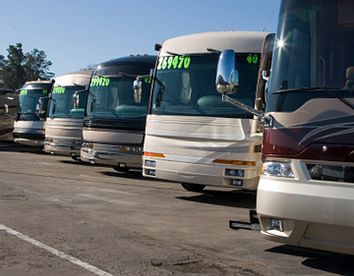
The RV’s last roundup

Big-name brands are dying and even Winnebago is under the weather. Can the recreational vehicle survive the recession?

Several decades ago, when my grandparents retired, they hit the road. They circled the United States in a ginormous beige RV, always tending toward warmer climes, staying away from their home in Denver for months at a time. My grandmother would visit libraries and long-lost relatives to do genealogical research, trying (and failing) to find something exceptional in being a woman named Smith from Kentucky, while my grandfather adjusted the rabbit ears on a tiny TV to pick up the nearest broadcast of “Gilligan’s Island.” There was a lot going on in that show, he told me, that wasn’t always apparent the first few times you watched an episode.

What Grandma and Pop Pop really enjoyed about the RV, I think, was the companionship. There was a circuit, and they would meet up with their newfound RV friends in places like Arizona and unfold the folding chairs and talk. They even once joined a multi-land-yacht armada that sailed down the Pan-American Highway to Panama.

But if they were still alive and chatting with their RV friends around a campfire somewhere, their conversation would probably be taking a mournful turn. The RV industry is in dire trouble, and the whole RV subculture can feel it. Earlier this month, a survey conducted by the RVtravel.com newsletter determined that two-thirds of the 1,500 motor-home owners who responded think that fewer than half of America’s RV manufacturers will still be in business come January 2010.

Why so pessimistic? Perhaps because 18 percent of respondents to a February survey said that the makers of their own RV models had already gone out of business. In the past two years, at least a half-dozen RV manufacturers have ceased to be. In March alone, three different big-name RV brands went Chapter 11 — Fleetwood, Monaco and Country Coach. And on Thursday, the industry leader, Winnebago, announced an operating loss of $35 million for the first six months of fiscal 2009. The RV lifestyle goes on, but the RV business, starved by $4-a-gallon gas last year, is now reeling from the recession and a serious credit drought. An industry that has always been characterized by peaks and valleys, ultrasensitive to economic change, has entered the Valley of Death.

Since there have been gasoline-powered passenger vehicles, they have been modified so that their owners could sleep inside them. There really wasn’t an RV industry, however, till the 1960s. The industry’s iconic brand, Winnebago, was founded in 1958, but Winnebago did not manufacture its first true motor home, those things that look like miniature, parti-colored tour buses, till 1966. The Winnebago brand name was, for a long time, interchangeable with the genre. I can remember, in the early 1970s, my dad renting a 20-foot box with a big brown W on the side and a hokey Native American name and driving our family to the Smoky Mountains, our real, non-bobble-headed Chihuahua standing on the dash. (I can also remember that the box ate oceans of gas, but that the gas was so cheap I could have paid for it out of my allowance.)

Though there were down cycles in the industry, notably in 1979 and 1980 and 1989 to 1991, by the late 1990s there were as many as 9 million RVs from a myriad of manufacturers on the road. The RV had tapped into the seemingly contradictory American desire for comfort and freedom, and the accompanying American expectation that the gas needed to buy that mobility would always flow like water. The most current estimate for the number of RVs on the road is more than 8 million, camping at any of 16,000 RV parks, or simply squatting in the parking lots of friendly Wal-Marts.

Nowadays the typical RV includes such amenities as Wi-Fi, refrigerator, shower and microwave, and may even have a push-button slide-out feature that allows the living room to expand to 8 feet in width when the vehicle is parked. The typical RV owner moves up in category from something simple like a tow-behind pop-up trailer to the fully enclosed mobile palace with all mod cons.

The demographics of the typical RV owner, however, are a little fuzzier. Some hard facts are available. We know how old they are and how much money they make. The average age of an owner is around 49, and the average income is variously estimated to be $56,000 and $68,000. Ownership also seems to be concentrated in that income range, and to fall off above and below it. But who are these individuals? They tend to be empty nesters or retirees; about 60 percent of the owners of the more expensive, full-amenity motor homes are retired. So-called full-timers live on the road because they can, tethered to neither offspring nor occupation.

My grandparents fell within the fat part of the bell curve of the gray-haired, middle-class, wanderlusting RV owner. My grandfather had worked his way up through Mountain Bell to a vice-president’s position. My grandmother worked at the local art museum. They were adventurous types, having sailed the ocean in a freighter, visiting Angola “before it went socialist,” seeing the world when time and income permitted. Then, in their 70s, in their motor home, they went and saw America.

They may, however, have been a tad more affluent than the average RV snowbird. I wonder if the motor home didn’t also once represent an attainable dream for people of more modest means. Given the annual income figures, it would seem as if the RV population contains a lot of hobbyists and a lot of retirees who have little margin for fiscal error, who are uniquely sensitive to a wobbly economy, or combustible 401Ks and downsized pensions, or expensive gas.

For whatever reason, the RV industry began to decline before the weakness of the larger economy became obvious. RV sales increased every year this decade until 2006. After the peak year of 2006, however, when nearly 400,000 RVs were manufactured and shipped, the market began to tremble. Shipments of new units slipped slightly in 2007. And then the market collapsed. Shipments dropped 33 percent from 2007 to 2008, the year gas hit record prices. Projections for 2009 estimate that shipments will plunge another 45 percent, all the way down to 130,100 units. That would mean a return to the sales levels of 1980. Now, two years into the industry’s downturn, the long trail is already littered with RV dead: Rest in peace, Trail Wagons, Sunline Coach, National RV, Alfa Leisure, Ameri-Camp, Travel Supreme, Teton Homes, Weekend Warrior, Western RV, West Coast Leisure Homes.

The industry’s immediate problems are tied to the recession. The weak economy makes would-be RV owners skittish about buying. But RVs have also experienced a uniquely painful credit crunch, which makes loans hard to come by for those dreamers still willing to make the leap. Lenders are balking at doling out cash for a six-figure discretionary purchase. RVs are not cheap. Winnebago’s 11-model 2009 line includes five models with base prices over $100,000; the 39-foot Vectra starts at $302,000.  Analysts say the RV credit crunch may not ease for another 12 to 18 months. Meanwhile, the industry is suffering permanent damage; even those companies that remain are mass-producing pink slips. The industry has already shed 280,000 jobs, more than half its workforce, since mid-2007. In Elkhart, Ind., where more than 60 percent of all RV units are built, and one out of every four jobs is RV-related, unemployment is 18.3 percent.

RV manufacturers have placed some hopes in the economic stimulus package, which includes credit-easing provisions and tax breaks intended to goose RV sales. Longer-term, they have faith in the sheer statistical weight of baby boomers; the oldest post-World War II babies will turn 65 in 2010, and après them the deluge.

But in the short term, some shoppers are scared to buy RVs simply because they don’t know if the manufacturers will be around to honor service and parts warranties. And in the future, there is no reason to believe gas will stay as cheap as it is today, unless the economy is so bad that demand stays low. Either fork in the road promises hardship for the RV industry. RV blogger Jim Twamley, who predicted the recent deaths of Monaco, Fleetwood and Country Coach, has serious doubts that any RV manufacturers will last much longer. “I’m not sure anyone is going to survive,” Twamley told Salon. “Thor Industries has a good balance sheet. Forest River might survive, because they are backed by Warren Buffet. And I guess Winnebago. If anyone survives, it will be those three. But I won’t be surprised if no one does.”

What would get the motor home off life support? The answer may lie in doing what Detroit did not do until too late in the game. Downsize. Deep-six the land yachts. Build lighter, smaller vehicles that do not cost so much to buy or to maintain. Mark Polk, an RV expert who owns RV Education 101, a company that produces DIY RV books and videos, told Salon the industry is already thinking smaller. “The manufacturers,” said Polk, “will be trying to trim some of the cost off, and trying to get their vehicles into a range where the $40,000 a year earner will be comfortable with an RV payment.” Twamley says the new products will also be more environmentally friendly, incorporating some of the lightweight, composite materials used to build aircraft, and relying more on solar energy. “I think they [the new products] will be leaner and greener. The carbon footprint will be smaller.”

And even the pessimistic Twamley thinks the RV concept, if not any particular RV manufacturer, is eternal. “Americans love to RV. It is an American institution. It is firmly established and I am positive it will continue. It’s just that the industry will have to create new products to meet the new market demands.”


Continue Reading Close

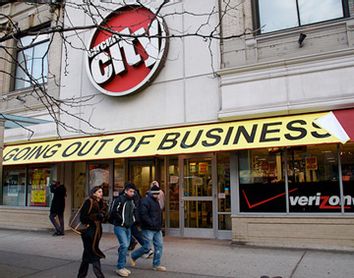
A New York state of bankruptcy

Fortunoff is no more, and the suburbs and the outer boroughs mourn.

Jewelry businesses have been especially hard hit by the recession. Zales is closing stores by the hundreds, and Whitehall has declared Chapter 11. But Fortunoff was more than a blingerie, it was the place to begin a life, to buy a wedding ring or a bridal gift or outfit a starter home.  When it died, a piece of old-school white ethnic New York went with it.

Born in Brooklyn in 1922, the regional chain moved, in body and spirit, to the Long Island suburbs, just like the upwardly mobile strivers who bought their jewelry, furniture and housewares there. There was a store on 57th Street and Fifth Avenue in Manhattan, which proclaimed a different sort of aspiration, the desire to rub shoulders with Tiffany’s and the Plaza Hotel, but the store in Westbury, on Long Island, was the flagship and the mother ship. It anchored its own dowdy minimall, called the Mall at the Source, built around it in the 1990s. But the bridge-and-tunnel icon could not survive the tug of Target in one direction and more effete yup-scale retailers in the other, and is now in liquidation.

As with the demise of many 87-year-olds from Long Island, the death of Fortunoff was sad, but not unexpected. In February 2008, the owners who had bought the chain from the Fortunoff family filed for bankruptcy. Lord & Taylor’s rescued the brand and its 19 stores in New York, New Jersey, Connecticut and Pennsylvania, but the second Chapter 11 filing came a year later. On Feb. 12, the company laid off 300 of its 1,800 headquarters staff in Westbury. Liquidators purchased nearly $100 million in inventory not long thereafter, and a chainwide clearance sale began the last week of February.

Clearance shoppers of a certain age interviewed by Long Island’s Newsday newspaper, tribune of all that is 516, evinced great nostalgia for the chain. William Friedrich of Queens, 69, was shopping for miniature trains. His wife was shopping for bridal gifts. “Now we’ll have to go to Target,” said Friedrich. Amalia Kanaras of Long Island, 68, had been shopping at Fortunoff for 40 years. She purchased a pearl necklace. Rosemarie Godfrey, also 68, also of Long Island, and a former Fortunoff employee, said, “I came to mourn.”

Continue Reading Close

The unnatural death of Mervyn’s

Did this West Coast discount retailer really have to die? (And is it really dead?)

Did Mervyn’s die, or was it murdered?

In 1949 Mervin Morris opened a department store in the unglamorous California town of San Lorenzo. He built Mervyn’s into a West Coast institution, where generations of lower-middle-class families bought work pants and school clothes, before selling it to Dayton Hudson for $300 million in 1977. And now that Mervyn’s has ceased to be, the 88-year-old Morris says the private-equity firms who wound up owning the chain looted it for cash — “raped” it, in his words — and left it to die.

Mervyn’s, which at its peak had spread from the Bay Area across the country and totaled 300 stores in 16 states, was the kind of retailer more likely to be found in a strip mall than a galleria, more East Bay than Marin or Palo Alto. Morris was proud of his loyal blue-collar clientele, and claimed to have been the first retailer to offer revolving credit.

But after he sold out in 1977, he began to feel that Dayton Hudson, the precursor to Target, was neglecting his stores. Mervyn’s expanded, and then contracted back to the West Coast. In 2003, Kohl’s entered the California market, a director competitor in the bargain clothing business.

Target sold out to Cerberus Capital Management and Sun Capital Partners for $1.25 billion in 2004, and the private equity firms quickly proved more interested in Mervyn’s real estate than its retail business. They made a healthy profit by selling the real estate and then leasing the buildings back to Mervyn’s.

Mervyn’s was hit hard by the recession, which arrived early and in full force in California. Anecdotally, there were signs that Latino customers, who had become an important constituency, were not spending on work clothes at the chain because the construction business had faltered. Mervyn’s had shrunk to 149 stores by the time it declared bankruptcy in July 2008. It held liquidation sales through the Christmas holidays. There were still 18,000 workers at Mervyn’s when it went under; many of them did not receive severance, were stiffed on vacation pay, which has been withheld by the bankruptcy court, and are having trouble collecting on their 401Ks.

Store brands like High Sierra, Hillard and Hanson were snapped up at a bankruptcy sale. But the name of the store may live on. More than three decades after their father left the business, Mervyn’s three sons have bought back the trademark and the customer list. They plan to relaunch the chain as an online store. “I think there will be a Mervyn’s name on the horizon somewhere there,” says Mervin Morris, “just how and when and what the magnitude will be I am not sure. That is going to depend on my boys.” Kohl’s, meanwhile, has sucked up 31 of the old Mervyn’s locations in California.

Continue Reading Close

Page 1 of 7 in Mark Schone