As a young bride I worked as a social worker in a metropolitan ghetto. Stretched to the limits because of insufficient staffing, most of us were serving, as best we could, caseloads that far exceeded reasonable limits. I had 100 families on Aid to Families With Dependent Children (AFDC) as well as another 50 men (mostly alcoholics) who today would be called, simply, “homeless.” At that time they collected what was called General Public Assistance.
My AFDC clients were mostly single mothers of color. A handful had husbands at home who were unable to work for one reason or another, but, mostly, they were women raising children alone.
It was frustrating work; my clients either couldn’t or wouldn’t help themselves, and most of them knew little or cared nothing about birth control. When I tried to educate them I was eventually called into the main office of my state’s welfare department. One Irish-Catholic supervisor informed me that the “Catholic taxpayers of the state” were not paying my salary for me to disseminate “birth control information which they [didn't] believe in.”
One of my clients stood out in my mind, however, because she was the only one of all these women who ever discussed the possibility of an abortion with me.
Her name was Juanita, and she was a dignified black woman raising three children after her husband left her for a younger woman from Canada. Her youngest child, an infant boy, was 14 years younger than his next youngest sibling, a girl named Lina. Young Lina was, apparently, so upset when the baby came that she began to act out and had become a troublesome runaway by the time Juanita became my client. The mother had to make almost daily trips to the neighborhood school because of Lina’s truancy or discipline problems in the classroom when she did bother to show up.
The baby, Charles, was the product of a brief affair Juanita had had several years after her husband left her. She was mortified to tell me that story. She seemed embarrassed to have given in to the loneliness and frustration most women would have felt in her position. Ironically, Juanita had used birth control, but the method had failed, as sometimes happens.
The father of the baby had, predictably, disappeared, and now Juanita’s meager budget was stretched beyond the federal poverty level, so she applied for AFDC benefits for the first time in her life. This was another source of shame for her, though she endured it with grace.
Her oldest child, Rosaria, made Juanita proud. She was a high school sophomore on a full scholarship at a local Catholic girls’ school. She was a straight-A student and clearly headed for great things in her life. Unfortunately for Juanita, however, Charles’ birth had also signaled an end to her relationship with Rosaria, and the girl had refused to speak to her mother since the pregnancy had been announced to the children.
Juanita said her daughter actually screamed at her, begging her to “get rid” of the baby she felt would ruin their lives. Lina never talked to her mother about terminating the pregnancy, but she did often express her wish that Charles had never been born.
Juanita had evaluated the possibility of an illegal abortion in those days, but rejected it as impossible. She had the baby, she said, not because of any moral objections to abortion but, frankly, because at that lonely time in her life she thought the comfort of a son she had never had would be good for all of them. She added that she had no money to pay for an abortion, or any way to arrange for the care of her other children while she went out-of-state for the surgery or healed at home from it. Besides, she would have been even more ashamed to tell anyone of her situation.
Instead of being a comfort, the birth of that child had put her on welfare and turned her two daughters against her.
Juanita forged ahead, nonetheless. She never looked back and she never complained about the choice she had made. I admired her for her conviction.
Eventually I moved on to other career challenges, but I never forgot Juanita and several other women I had met through AFDC. Many of them had lessons to teach me that would be invaluable to my work and my worldview in the future.
Almost two decades after I had last seen Juanita, I received a call one day from a high-ranking medical director of a federal program calling me as the director of Planned Parenthood. The person on the line was named “Dr. Rosaria Rogers,” the same name given to that young and bright eldest daughter who built a wall of silence around Juanita. I took the call and spoke with this colleague about the business at hand. At the end of the conversation, I excused myself but said I couldn’t help wondering if she knew an old “friend” of mine named Juanita Rogers from the city where I once lived.
There was a long silence and then the answer, “That was my mother. She died two years ago, I’m told.”
The phrasing told me everything. They had never reconciled.
I said my goodbyes, hung up the phone and my thoughts raced to that strong lady so determined to have and raise the child she thought would make her life better. I wondered if that had been the case. At the very least, Juanita had had one child and lost another — maybe two.
I never did know what happened to Lina, but the last time I read about her in the local paper she was being arrested in a city crack house on prostitution charges.
I never knew Charles.
Mary Ann Sorrentino is a columnist for the Keene (N.H.) Sentinel, the Providence Phoenix and other newspapers. She was an Associated Press Award-winning radio talk host for 13 years and the executive director of Planned Parenthood of Rhode Island from 1977 to 1987.
Faisal Shahzad, the 30-year-old Pakistani-American charged with attempting to blow up a carload of explosives in Times Square, is the latest of many 9/11-II hopefuls. He left a trail of clues about his intentions, many missed by those charged with keeping America safe and secure.
He bought the car with cash, spent five months in Pakistan (probably for terrorist training) and reentered the States without inquiry. Headlines naively ponder whether he is part of an “international plot.” This is like wondering if the oil spill in the Gulf is related to offshore drilling. Shahzad is — formally or informally — tied to millions who hate America for what they see as military aggression and religious bigotry. They want to destroy the U.S., city by city, bridge by bridge, tunnel by tunnel. And they will do whatever it takes: kill our children, destroy our physical, economic and technological infrastructure, poison our food/water supplies — anything.
And there’s only so much we can do about it. Essentially, we are now where Israel has been for decades. And even in Israel, with the aggressive anti-terror steps it has taken, school buses regularly blow up, bridges explode, and party guests are killed by car bombers. Israelis accept this reality and embrace life shielded by constant vigilance. America can learn from this.
Still, Israel is a tiny country, with fewer airports and a more homogeneous population. We have far more vulnerabilities for terrorists to exploit. Realistically, our response probably can’t be as effective as Israel’s. Just remember:
- On Jan. 4, an unidentified and unauthorized man was seen returning from a secure area at Newark Liberty Airport into the public area. All passengers in the secure area were rescreened. Delays of flights lasted more than six hours. The man who caused the alarm disappeared.
- On April 8, LAX flights were delayed when a man selected for secondary screening grabbed his bag and vanished into the terminal.
- On Christmas Day, Umar Farouk Abdulmutallab boarded a plane he intended to destroy after his father warned U.S. officials, and after paying $2,800 cash for airfare. He never made the no-fly list.
- On Jan. 7, New York Post reporter Lorena Mongelli, testing metal detectors that failed to recognize a passenger’s 14-inch titanium hip replacement, took an 8-inch rod of titanium (used in knives, guns and brass knuckles) through security at Terminal 7 at JFK — twice!
More chilling is the alarm sounded in February by CIA chief Leon Panetta, who told the Senate Intelligence Committee that another terrorist attack on U.S. soil is inevitable. Sen. Dianne Feinstein, D-Calif., asked if the next attack might come within six months: Panetta and the other intelligence officials with him agreed with Director of National Intelligence Dennis Blair, who called such a timeframe “certain.”
America needs to face this reality. No agency or individual can permanently halt the boundless opportunities for successful attacks that today’s technology provides. Experts say we were fortunate to thwart several close calls, but every gambler knows luck doesn’t last forever.
Our vulnerabilities, like our enemies, take many forms. Radicalized Muslims, enraged by a perceived American disrespect for Islam, by U.S. foreign policy, and by wars and occupations in their homelands, are now most likely to blow up our dreams. But they are not alone: They have the support (and sometimes sympathy) of those who hate the U.S. for other reasons.
In 2009, Pew researchers counted 1.57 billion Muslims in 200 countries — 23 percent of the world’s population, mainly in the Middle East, North Africa and Asia, a short 10- to 15-hour flight from New York or Los Angeles. If only a tiny fraction of them become radicalized against the United States, it could spell serious trouble.
Americans, so many of them focused on being a “Christian” country and wrapped in their flag, are often blind to their country’s image in the world. Enormous foreign debt threatens to destroy our economy and sovereignty; the World Health Organization ranks the U.S. healthcare system at 37th in the world — behind Saudi Arabia (26th), Morocco (29th) and even Colombia (22nd) — and security in U.S. airports is worse than in Israel, Canada or India. Still, Americans speak of U.S. “superiority” and reject that their country could be flawed and hated.
But today’s playing field has been leveled by technology, and no amount of patriotism will restore U.S. invulnerability. It’s gone forever, if it ever existed. America’s survival depends on its willingness to accept the world as it is now, reject xenophobia and develop foreign policies that rein in extremists worldwide while returning the U.S. to a position of global respect, rather than disdain.
Mary Ann Sorrentino, author of “Abortion: The A-Word,” writes for Salon each Friday. Her e-mail is thatmaryann@yahoo.com.
Continue Reading
Close
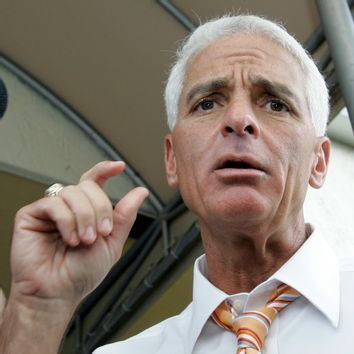
Once the fair-haired boy of the Republican Party, Charlie Crist is suddenly running as an independent in Florida’s U.S. Senate race. Crist’s decision was based on recent polls showing that a break with Republicans offered him his only shot at victory. But he’s still in an almost impossible position, without any major GOP backing and with Democrats likely to shy away from him for fear of hurting their own candidate, Kendrick Meek.
Dick Cheney recently turned off the life support on Crist’s campaign by endorsing Marco Rubio, the conservative Cuban-American (and Jeb Bush protégé) who — at least until Thursday — was Crist’s GOP primary opponent. Rudy Giuliani joined the pile-on. Only former presidential standard bearer John McCain — falling fast in polls for his own Senate race in Arizona — stayed on Crist’s sinking ship. And now even McCain has rejected Crist, saying he only supports Republicans.
One wonders why Crist ever became a Republican in the first place. He’s always been more flexible, less shrill and more compromising than most in the GOP. Crist opposes offshore drilling, has expanded Florida’s health coverage for the poor, and was the first Florida governor to accept an invitation to the Florida NAACP’s annual meeting — some even called him “Florida’s first black governor.” With Barack Obama running strong at the start of his presidency, Crist threw caution to the wind and literally embraced the Democratic president. (Crist also praised and accepted huge amounts of Obama’s stimulus money for his financially devastated Florida.)
But the governor is no liberal. He supports abortion restrictions, encourages easy access to guns, and opposes any changes to the “Don’t ask, don’t tell” regulation for gays in the military. And he opposed gay marriage (although he has said that Republicans should focus their energy on other issues).
The endless speculation that Crist himself might be gay may be another reason he never really settled into a lofty perch in the GOP. The rumors have been around for years and have only grown louder as Crist’s presence on the political stage has increased, with last year’s release of “Outrage,” a documentary film that explored the Crist chatter in detail, further stoking speculation.
Crist’s camp has ignored these matters, as has most of the mainstream media. So a cloud lingers and raises questions — not about Crist’s orientation but about his “honesty,” or that of any candidate suspected of living a double life. Maybe he is gay, and maybe he isn’t. If he is, this might be a good moment for him to look around and realize how much the world has changed since he entered politics.
Polls show most voters, appropriately, care little about a candidate’s sexuality. Like me, they support the full participation of qualified gay and lesbian citizens in government — or in any field they choose. Most voters also support gays serving openly in the military, and a growing number support marriage equality. Many are also saddened by the closeted lives gay individuals often feel they must lead.
Of course, there is far less support for gay rights in the narrow world of Republican politics — Charlie Crist’s world, at least until this week. So now that he’s running outside of the Republican tent, might he try to clear up the rumors that continue to dog him and maybe even clarify his position on gay rights issues?
Members of Congress like Barney Frank, D-Mass., Jared Polis, D-Colo., and Tammy Baldwin, D-Wis., have proven that openly gay candidates can be elected. At the more competitive statewide level, there’s never been an openly gay candidate elected to the U.S. Senate (although there’s certainly been plenty of suspicion about some senators, like Larry Craig). Meanwhile, serially unfaithful spouses and fathers like Bill Clinton and Rudy Giuliani routinely advance to “statesman” status despite their libertine ways.
In an ideal world, of course, both parties’ tents would be large enough to welcome those stuck in the closet, or those who have humanly stumbled on the heterosexual road of marital fidelity — both as party members and elected leaders. (In Europe, for example, the sexual issues that paralyze many U.S. politicians and military leaders are considered irrelevant.)
Otherwise, we’ll just have to wait for America’s political system to mature enough to accept the reality of consensual sex between adults of any gender. Then, the painful dilemma forced on worthy candidates might simply go away.
Mary Ann Sorrentino, author of “Abortion: The A-Word,” writes for Salon each Friday. Her e-mail is thatmaryann@yahoo.com.
Continue Reading
Close
We now know that the sex abuse crimes involving Catholic clergy first reported in large numbers in the United States may have been committed in equally high numbers in Europe. Amazingly, in these two relatively sophisticated places, parents, nuns, teachers and both religious and civil authorities – Catholic and non-Catholic — were willing to be blind to the often obvious occasion of sin. And they ignored the Catholic laity in the pews, preferring instead to make deals with Rome, or at least to respect its jurisdiction.
More disturbing, though, is that Catholic leaders continue to trivialize the growing scandal of sexual abuse in Africa and Asia. What started as a hurricane of sex scandals in the First World may well become a tsunami of charges from the Third World.
The rumblings from India and (especially) Africa, where the Catholic Church is seeing its greatest growth, are growing louder. The news from these places exacerbates our shock and concern: The sexual abuse of children by clergy is now coupled with widespread reports of rapes of nuns — young women recruited from India’s and Africa’s poorest families.
Sex crimes against women by Catholic clergy may give more credence to ongoing arguments against the celibate priesthood. Daniel Maguire, a now-married former priest and a professor of religious ethics at Marquette University, has wisely observed that “enforced celibacy that is not job-related is such an invitation to pathology.”
In Africa, however, where Catholic priests often have open heterosexual contact, the church’s ranks are hefty with converts only a few generations removed from the illiterate, poor, uneducated innocents that missionaries first discovered living in tribal communities. Totally unaware of concepts like gender equity or criminal punishment for sexual assault, many of those locals came to a church that offered food, medical care and education in exchange for religious conversion. If there were crimes also committed around them, congregants paid for their survival with their silence.
The crisis of religious abuse in Africa and India was brought to Rome’s attention in 1998 when a four-page paper titled “The Problem of the Sexual Abuse of African Religious in Africa and Rome” was presented by Sister Marie McDonald, mother superior of the Missionaries of Our Lady of Africa. A March 2001 National Catholic Reporter article detailed McDonald’s claims, which included accounts of sexual abuse by priests and bishops.
McDonald quoted a vicar general in one African diocese who talked “quite openly” in Rome in 1996 about celibacy in Africa, saying, “Celibacy in the African context means a priest does not get married, but does not mean he does not have children.”
The AIDS pandemic in Africa and India is said to have made nuns “safer” sex partners and, also for that reason, targets of priests seeking sex. (Some nuns also reported sexual abuse by mothers superior.) The women, culturally brainwashed not to challenge men or female figures of authority, felt they had no choice, and the priests took further advantage by arguing that Catholic rules for priests required them to have sex “only with virgins.”
More allegations came from Sister Jesme, an ex-nun from the Indian state of Kerala, who told of sexual abuse and forced homosexual relationships in a 2009 autobiography. But when the book was released, a spokesman for the Syro-Malabar order of the Catholic Church in India dismissed it as a “book of trivialities.”
“It’s her experiences,” he said, “but these are things that might creep into a society of communal living.” He added that the church would not be shocked by the allegations, concluding, “The church knows about these things.”
All of these public allegations fell on deaf ears. Neither Rome nor the world cared to demand justice for the nuns also sexually victimized by Catholic clergy. Like news stories of wives in burqas being stoned to death in Islamic strongholds, tales of nuns raped by priests and bishops did not even merit a sound bite on the evening news and were soon forgotten.
But now the world is on the verge of hearing more about suspected or known rapist priests in these parts of the world, where isolated and unsuspecting women may have been criminally assaulted and threatened into silence. When that happens, the usual disgusting pedophilia stories will be joined by tales of crimes against women, too long underreported, unreported and just ignored.
For more than 100 years, until just over two decades ago, the infamous Magdalene Laundries in Irish convents held young women in indentured servitude, often to be sexually abused by priests and religious superiors. Those who died from illness or while giving birth disappeared into the convent graveyard. Their stories only came to light at the end of the 20th century, when courageous former residents came forward and mass graves were discovered on former convent grounds. The Irish government was complicit in the Magdalene scandals, and cases are still pending in Dublin for recognition of and compensation for the wrongs suffered by so many young girls and women.
The outcry over the Magdalene scandal, however, could pale against the deafening wail about to be let loose in Africa and India, when all of these victims raise their voices against a church that has taken sinful and criminal advantage of innocence far beyond Boston, Dublin and Munich.
When that other shoe falls, the world can wonder once more how Rome kept everyone silent for centuries and why fate has chosen this moment for the truthful floodgates of pent-up suffering to spill open?
Mary Ann Sorrentino, author of “Abortion: The A-Word,” writes for Salon each Friday. Her email is thatmaryann@yahoo.com.
Continue Reading
Close
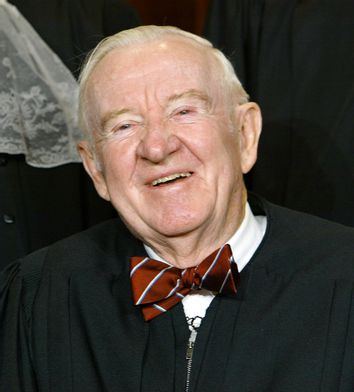
Retiring Supreme Court Justice John Paul Stevens will leave a legacy proving that even a Republican can advocate for the rights of people over major institutions — private and public — threatening to swallow them up.
Brought to the federal circuit bench by Richard Nixon, Stevens was nominated to the Supreme Court by President Gerald Ford and confirmed in 1975. Now 89 and having evolved into what many on the right see as the most liberal member of the high court, Stevens — a one-time Republican who no longer declares a party preference — is stepping down. This gives President Obama a chance to hold back the conservative Roberts-Scalia-Thomas-Alito phalanx.
Americans stand in awe of Supreme Court justices. Until relatively recently, justices kept an appropriately circumspect distance from public interaction, lest they compromise their judicial integrity. The downside of this distance is that justices accustomed to getting hate mail seldom get words of encouragement and gratitude from citizens who appreciate their wisdom.
In 1983, a decade after he authored the Roe v. Wade decision that made abortion legally available nationally, Justice Harry Blackmun agreed to be interviewed for a cover story in the New York Times Magazine. In that historic departure from judicial silence, Blackmun spoke poignantly of the Roe backlash. He described letters calling him the “Butcher of Dachau” and worse. He pondered retirement.
As the executive director of Planned Parenthood in Rhode Island at that time, I replied to Justice Blackmun with a handwritten note on my office letterhead apologizing that those of us who saw him as a hero had apparently neglected to tell him so. I urged him “not to even think about retirement until the current [Reagan] administration has faded into political oblivion.”
He responded within a day, saying how much it had meant to him to hear from someone on the front lines of the abortion issue. He concluded by writing, “I am in your debt.” That framed letter still hangs on my bedroom wall, a reminder of how important it is for even isolated justices to hear from the people on whose behalf they interpret the law.
John Paul Stevens has been described as a justice whose opinions could be “idiosyncratic.” Once supportive of the death penalty, in later years he wrote eloquently against it. About the concept of trying children under age 16 for capital crimes Stevens wrote:
… that the ‘cruel and unusual punishments’ prohibition of the Eighth Amendment … prohibits the execution of a person who was under 16 years of age at the time of his or her offense. In determining whether the categorical Eighth Amendment prohibition applies, this Court must be guided by the ‘evolving standards of decency’ that mark the progress of a maturing society.
How reassuring that even in the chaos surrounding America today — with wars raging, corruption and scandal in government rampant, the economy crashing, and terrorist threats forever in the shadows — we could still be a nation guided by “standards of decency” in a society progressing toward maturity.
A World War II veteran, Stevens often used war and patriotism as metaphors. One of his more conservative opinions — on flag burning — stated:
The ideas of liberty and equality have been an irresistible force in motivating leaders like Patrick Henry, Susan B. Anthony, and Abraham Lincoln, schoolteachers like Nathan Hale and Booker T. Washington, the Philippine Scouts who fought at Bataan, and the soldiers who scaled the bluff at Omaha Beach. If those ideas are worth fighting for — and our history demonstrates that they are — it cannot be true that the flag that uniquely symbolizes their power is not itself worthy of protection from unnecessary desecration.
Yet Stevens could also be visionary, as in his majority opinion striking down the Communications Decency Act and establishing clearly that the Internet is protected by the First Amendment. He could also abandon diplomacy when enraged, as he did in his dissent in Bush v. Gore, which called a halt to the Florida recount. “Although we may never know with complete certainty the identity of the winner of this year’s presidential election,” he wrote, “the identity of the loser is perfectly clear … It is the nation’s confidence in the judge as the impartial guardian of the rule of law.”
Perhaps Stevens’ greatest gift was his preserving the value of people’s humanity against powerful yet heartless institutions. He did this best last January, when the court gave corporate entities the ability to sponsor political broadcasts. Stevens concluded thoughtfully:
… corporations have no consciences, no beliefs, no feelings, no thoughts, no desires. Corporations help structure and facilitate the activities of human beings, to be sure, and their ‘personhood’ often serves as a useful legal fiction. But they are not themselves members of ‘We the People’ by whom and for whom our Constitution was established.
Americans will miss Stevens, who will no longer be there to speak for so many of us. My guess is he has no idea how much we appreciate that humanity and would be moved to know how we shall miss it. You may do like I did with Justice Blackmun and tell him so at:
Justice John Paul Stevens
Supreme Court of the United States
One First Street N.E.
Washington, DC 20543
Mary Ann Sorrentino, author of “Abortion: The A-Word,” writes for Salon each Friday. Her email is thatmaryann@yahoo.com
Continue Reading
Close
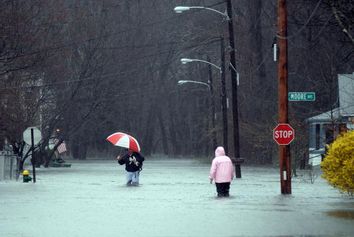
Many of you never heard of Cranston, R.I., until the major networks started highlighting it this week as floodwaters drowned the Providence suburb and, eventually, became the statewide nightmare Rhode Island had feared for centuries.
You’ve seen the images of homes submerged and homeowners desperately clutching whatever belongings they chose to salvage as they are evacuated in boats. You’ve heard interview after interview — the weeping, the desperation and, in a few cases, the resignation tainted with attempts at humor.
Nothing about this flood is funny. Rhode Island was already competing for first place in the contest for U.S. state most severely decimated by the recession. With double-digit unemployment, thousands of empty new homes unsold or unfinished, foreclosure signs lining every street and a state deficit unlikely to be righted in two future generations, we were already a mess.
Now, raw sewage floods our streams and rivers since treatment plants were felled by the floodwaters, and TV images of things like gas stations and auto body shops completely covered by river waters raise questions about the quality of our life-giving water supply for years to come.
At the same time, the large ethnic communities that make up the 1 million residents of this the smallest state in the union refuse to let even this historic flood dampen their holidays. Last Monday night, as the Pawtuxet River rose to a record level, Passover Seders went forward with their usual determination. This year, however, the question, “Why is this night different from all other nights?” may have generated several new answers.
Now, on the eve of Good Friday, the Eastern European community, much of which is based in flood-ravaged West Warwick, is busy dyeing and painting its traditional elaborate and beautifully intricate Easter eggs.
In Providence’s Fox Point section, and beyond it to East Providence, the children of original Portuguese immigrants and whalers still live and still prepare Easter sweet breads — complete with hard-boiled eggs peeking out from the latticed, glazed loaf tops.
Italian Americans across the state, including those in my own town — the Cranston of CNN fame — are baking traditional ricotta pies with rice or wheat (called pastiere) as I write this. Like mail carriers, unstoppable by “neither rain, nor snow nor gloom of night,” Italian homemakers are undeterred by the flood of the century. The feast must go forward and, dammit, it will.
This hopeful determination to survive and go forward, even to celebrate in the midst of disaster, is the real message of the Passover-Easter season. The heavens send humankind a devastating plague of waters and the people respond with a commitment to gather together in prayer, hope and recognition of the rebirth of spring, despite extraordinary challenges.
If there aren’t any “atheists in foxholes,” as the old saying goes, there probably aren’t many atheists is Rhode Island this holiday season either. All week long, as the waters raged, the words “Thank God!” seem to be have been uttered more than any others.
Continue Reading
Close