Masha Hamilton

Obama’s Afghan headache

An epidemic of kidnapping adds to the downward spiral of violence the president-elect's team will soon confront in Afghanistan.

  • more
    • All Share Services

Obama's Afghan headache

Businessman Farzad Kadri holds his body tight like a wrestler, and his suspicious squint makes him seem older than his 28 years. Ever since his brother was kidnapped, shot in both legs and then released after the family paid a hefty ransom, Kadri is on edge, constantly varying his schedule, curtailing his nightlife. “These days, people are being grabbed left and right in Kabul,” he said. “I have to watch out.”

Abtullah Danishwar, raised in Los Angeles, returned this summer to the city where he was born 29 years ago. Full of dreams and idealism, he intended to stay a couple of years, find a wife, and help in Kabul’s reconstruction efforts. But he’s already escaped one kidnapping attempt and is unconvinced his luck will hold. “I’m so scared,” he said. “I don’t think I can stay.”

Welcome to the new Afghanistan. Seven years into the American-led war against the Taliban, security in the country is at an all-time low, with violence and kidnappings by fundamentalist fighters and criminals moving into the streets of the once relatively safe capital city. President Hamid Karzai, who has been called “the Mayor of Kabul,” in reference to the ungovernable nature of this sprawling, tribal country, is now hardly even that.

As President-elect Obama prepares to shift more of the U.S. military effort from Iraq to Afghanistan, this increased violence and lawlessness will be a major test for his foreign policy team in a season of unparalleled challenges. Adding to the chaos in the country is growing unrest among a populace enraged by civilian casualties from U.S. and NATO bombings. Kai Eide, the U.N. special envoy to Afghanistan, recently said that poorly executed military operations were threatening stability in the country. The U.S. Army brigade scheduled to arrive in Afghanistan in January, the first phase of an anticipated increase of 20,000 troops, will deploy near Kabul, which military commanders consider to be vulnerable for the first time.

I spent late October and early November in the Afghan capital, where fear of violence from fundamentalists and criminals alike has soared in the last two months, along with accompanying charges of pervasive corruption within the government. Perhaps nothing makes this downward spiral clearer than the recent spate of kidnappings — a sign of the government’s inability to protect its people in the most basic ways.

The nabbing of foreigners is often unpublicized so as not to interfere with rescue efforts; journalists on the ground, for example, knew the day a Canadian journalist was kidnapped in Kabul, but agreed to a news blackout until she was released nearly four weeks later on Nov. 7.

In the case of Afghans, many simply don’t trust the underpaid and undertrained police enough to report the crime. All this makes precise figures hard to come by. But privately, officials indicate a recent surge, and in November, the Interior Ministry announced the creation of an anti-kidnapping police unit.

Kidnappers come either from the ranks of the Taliban, who target their ideological enemies, or from criminal gangs looking for victims with deep pockets or, sometimes, children to sell into prostitution or use as labor. The lines blur when criminal gangs sell their hostages to the Taliban, Kabul’s police chief said in late November. The Taliban, who are closing in on the capital, already control much of southern Afghanistan, creating a sort of free zone to hold kidnap victims with impunity.

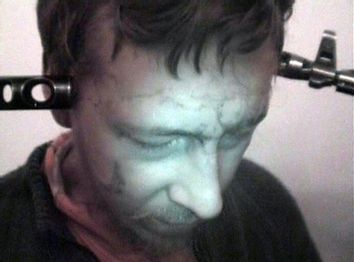
Foreigners, who once felt relatively safe within the borders of this city, are taking sometimes-prohibitive security measures even within Kabul. A French aid worker was kidnapped in central Kabul on Nov. 3 by unidentified kidnappers, and a chilling video released Nov. 26 showed him with a rifle pointed at each temple. “It’s a nightmare here, it’s really a nightmare,” he said, begging for ransom to secure his release. He was freed on Dec. 3.

For Afghans, most of whom lack the funds to hire bodyguards, the situation has become even more dire. Their anxiety is focused on the criminal element. At the home of an Afghan family whose father works at a Western embassy, his sons spoke of their growing fear since a boy from their neighborhood was kidnapped and killed a few weeks earlier. Farid, 16, rarely goes out at night. His 11-year-old brother, Ahmed Sa’id, is too scared to run errands alone at the market for his mother, even before dark. Ahmed Sa’id has begged his father to be more careful on the way to and from work.

Kadri, the businessman, was transformed from an optimist in 2002 into a suspicious cynic today: a man who will not get in a car with anyone he doesn’t know well, who won’t walk even a block, who virtually never goes to restaurants or parties, who shows up at work at 9 a.m. one day and noon the next in order to vary his schedule.

His approach to life changed after his 23-year-old brother Mustafa was kidnapped one morning as he left his home on foot, headed to Kabul University where he was scheduled to take an exam. Men waiting in a nearby alleyway hit him in the back of his head with the butt of a gun, gagged him, and drove him away. Kadri and his family didn’t know anything was wrong until that evening, when Mustafa didn’t return home. They tried to call him on his cellphone: no answer. They checked with Mustafa’s friends and, coming up empty, began to search local hospitals.

The next day, yet another call Kadri made to Mustafa’s cellphone was answered by one of the kidnappers. “Your brother is with us,” the male voice confirmed. “We don’t need to hurt him; we just want money.”

“We don’t have money,” Kadri answered.

“Then why do you drive around in such a fancy car?” the kidnapper snapped. “Get the money somehow.”

The kidnappers asked for $100,000, an enormous sum in this country where the average per capita annual income is under $1,000. Every evening for 28 days, Kadri and his family negotiated with the kidnappers. The call usually came in around 6 p.m. The family kept the discussions private: Like many Kabul residents, they thought informing police would not help, and might hurt, their efforts to secure Mustafa’s release. Finally, the captors put Mustafa on the phone directly.

“I’m close to death; I can’t take much more of this,” he said. “I don’t care how much they are asking for, just get them the money.”

Kadri declined to say how much the family raised, but it was enough to satisfy the kidnappers, who instructed Kadri’s father to set out with the cash and his fully charged cellphone, and they would instruct him where to go. “They were wearing ski masks and carrying guns,” Kadri said. “They promised to release my brother four hours later. When they called, they told us where he was, and that they shot him in both legs before they let him go. They told us, ‘Go get him quickly before someone else kidnaps him.’”

In the days that followed, Mustafa revealed the conditions under which he’d been held: in a cubed box, about 3.5 feet by 3.5 feet in size. He could neither lie down nor stand. “He pissed and shat and ate in that box,” Kadri said, his facing growing hard. “Ate what little he was given — food and water were very scarce.”

Since his release, Mustafa doesn’t leave the house often. “The experience also definitely aged my parents,” Kadri said. “We’re all jittery.”

American-raised Danishwar found potential kidnappers apparently have even infiltrated Kabul Bank, the largest commercial bank in Afghanistan. When he went there to open an account, they asked him a number of unusual questions: his father’s address, place of employment and annual income. “It seemed weird since it was my account, but I stupidly answered all the questions. I didn’t want to seem rude,” Danishwar said.

A day later, he got a phone call from someone who said he was a Kabul Bank employee, that Danishwar had won a prize and the employee wanted to drop it off at his home. “I said I’ll pick it up from the bank branch, but he said, no, it’s too large.” By now fully suspicious, Danishwar refused to give his address. He remains worried, however, that the kidnappers will track him down somehow. “There must be a policy change,” Danishwar said. “Until authorities begin to capture and prosecute kidnappers, this won’t stop. It’s just too lucrative.”

Unlike Kadri and Danishwar, Raisa did report her son’s kidnapping to the police, but she felt they didn’t take her seriously. In her barren home in an impoverished neighborhood, Raisa’s eyes shined with tears as she described her oldest son, 12-year-old Hamid, a sixth-grader who — like many poor Afghan children — was his family’s main breadwinner until kidnappers seeking child laborers grabbed him a month ago. He called her once on a stolen cellphone, weeping and begging to be rescued. “Either they think he just ran away, or I don’t have enough money to get their attention,” said Raisa, who, like many impoverished Afghans, goes by one name only. “He’s a good boy, respectful, always trying to help his family. Now he needs my help, but if the police won’t listen, how can I save him?”

Afghanistan is still home to three competing forms of governing — tribal law, Islamic law and democratic law. With crime rates high and the government and police viewed as largely ineffectual, many Afghans are unconvinced that democratic law is working; a growing number speak longingly of the relatively crime-free Taliban era. In the southern areas the Taliban do currently control, the government has lacked the strength to push them back, which has also resulted in a loss of confidence in Karzai’s leadership.

This is the complex Afghanistan that Obama inherits. From Karzai down, Afghans have urged the president-elect to use additional military force judiciously. Years of poorly targeted bombings continue to inflame the population. According to a recent Human Rights Watch report, 116 Afghan civilians were killed in 13 airstrikes in 2006, 321 were killed in 22 strikes in 2007, and more than 119 were killed by aerial bombing in the first seven months of this year. These numbers are considered conservative, given the difficulty of reaching rural areas to tally casualties.

Western and Afghan officials also say they hope that Obama will not limit his involvement to flexing military muscle, but will exert pressure on Karzai to root out government corruption, crack down on crime and, at the same time, do what he can to accelerate the country’s economic redevelopment and give critical support to education — all of it a tall order.

“It is going to take a creative ‘Team Obama’ to accomplish what needs to be done here, like the team he’s assembled to deal with the U.S. economic crisis,” said one Western aid director who has lived in Kabul for the last several years. “It won’t be easy. But I think it’s our last chance to prevent a full-scale slide into chaos.”

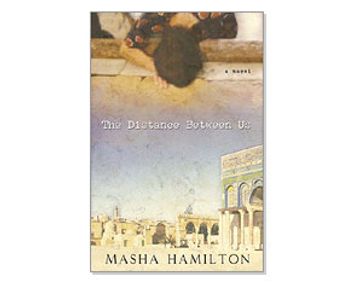
“The Distance Between Us”

Caddie has covered the Middle East for years -- but this trip into the Lebanese desert with a driver who never speaks is starting to feel ominous.

  • more
    • All Share Services

“Anyone who has watched people crowding around the scene of an accident on the highway realizes that the lust of the eye is real. Anyone who has watched the faces of people at a fire knows it is real. Seeing sometimes absorbs us utterly; it is as though the human being becomes one great eye. The eye is lustful because it requires the novel, the unusual, the spectacular. It cannot satiate itself on the familiar, the routine, the everyday.”

– J. Glenn Gray, “The Warriors”

The whole of heaven is off-balance as they rumble out of the city: clouds one moment, darting sunlight the next. A dust shroud swirling around the Land Rover prevents Caddie from seeing where they are going or where they’ve been. Far behind them, a mosque wails its hellfire summons to those who believe. It’s noon, then, and men of conviction are submitting their foreheads to the ground in a graceful wave, while she barrels forward into the formless, blind middle of a day.

The Land Rover rattles like a crate of scrap metal. Her shoulders ache, she’s inhaling cupfuls of powdered dirt, and they have at least another ninety minutes to go. But those are only irritants. Her real worry is the driver, a complete unknown. Rob and the hotel concierge rounded him up when the regular chauffeur, the one Rob assured her was “the best in Beirut,” didn’t show. A driver is their lifeline in dusty, uncharted territory. This guy, well — she catches her breath as he swerves sharply and clips a roadside bush, aiming directly for half a dozen desert larks. The birds scatter and arc overhead, their fury sharp enough to be heard above the thrash of the engine.

“Christ,” Caddie mumbles. In the rearview mirror, the driver gives her a squinty glare. Cobwebs form at the outer corners of his eyes, and dried grime thick enough to scrape off with a fingernail is caked behind his right ear. “Who the hell is he?” Caddie mutters to Marcus, next to her in the backseat. “Should we really be–?”

“Cautious Caddie,” Marcus says. “He’s okay. Rob wouldn’t use him otherwise.” He leans over Caddie to address Rob, who’s on her left. “Right-o, Rob?”

“He’s fine. Told you. Checked him out.” Rob is focused on adjusting his tape recorder’s input level. With his scruffy hair and taut energy, he looks like a street tough instead of a network radio reporter. Here, that aura serves him well.

“See?” Marcus says to Caddie. “Anyway, what’s our choice? Sit on our bums all day?”

She smiles at him saying “bums” in his refined British accent. Something in him — his inflection maybe, or his humor, or his experience in the field — unknots her, and relieves her of the responsibility of having to control everything. Anyway, he’s right. This story is too hot to pass: a Q-and-A with Musaf Yaladi, fiery-eyed, Princeton-educated thug-darling of the West, in his south Lebanon hideout. The elusive Yaladi is a Lebanese crime king, dabbler in terrorism and chief distributor for weapons, bogus American one-hundred-dollar bills and the raw materials for heroin produced in the Bekaa Valley. With a couple punchy quotes from him, the piece will write itself. She’ll be the only print reporter to have it. Page One for sure.

They’ll be fine, just fine. Caddie would prefer fewer variables, but she’s done her usual checking, narrowed the risks to a pinpoint. She’s confirmed that they aren’t traveling through disputed territory, that Yaladi knows they are coming, that he wants to do the interview. The only drawback is that she doesn’t know this particular minefield very well. With Israel, the West Bank or Gaza, it would be different. She’s worked that territory for more than four years now, she and Marcus, and those back roads are carved in her mind.

Marcus fingers the leather band on his left wrist, a gift from an Arab mother he once photographed and managed to — connect with, he would say. Caddie would say charm. He stretches his arms, the muscled forearms tapering to delicate wrists, then widening to broad hands, and smiles sideways at her in a way that excludes Rob, the driver, all of Lebanon. She imagines licking lemonade from his lips, its sour taste undercut with tangy sweetness. She rotates her shoulders to loosen them.

In the front passenger seat, Sven pats the video camera on his lap and chats to the driver in sunny, Swedish-accented Arabic. Long-limbed, he seems as comfortable as he would in his own living room. He’s the most easygoing and polite of journalists, with an uncommon ability to nap anywhere on short notice. Caddie often runs into Rob and Sven on the same story. Privately she’s nicknamed them Yin and Yang.

They pull up short before a barrier of razor wire and man-sized chunks of concrete spray-painted black with Arabic graffiti. A Yaladi roadblock. She didn’t expect it this soon. The driver cuts the engine and the air grows defiantly still. The dust finally gives up and sinks.

A slouching man with a knife tucked into his belt separates himself from a concrete slab, sticks out a hand to collect their press cards, and then, self-important on squat legs, strides into a hut. A second roadside militiaman, baby face and pear belly, plants himself next to their Land Rover, machine gun cradled in his arms.

Caddie brushes the dust from her hair. She wishes again that she were more familiar with this route from Beirut to the south. They are probably twenty miles from the border with Israel, twenty miles from the Mediterranean Sea. The land is scraped and stingy, abandoned even by animals and insects, left to these imprudent men with their weapons.

“One-two-’twas brillig and the slithy toves…” Rob intones into his microphone.

“You’re going to drain the battery before we get there,” Sven says.

“Something’s wrong with the goddamned pinch roller,” Rob says. “If I don’t get the interview on tape, I might as well have slept in, saved myself this cowboy ride.” Incessant worrying over the equipment, Caddie knows, is part of his routine. She has habits of her own. During interviews, she often makes up a ridiculous question or two that she would never actually ask, then imagines her subject’s response. It’s oddly soothing.

“You worry too much,” Marcus says. “If the pitch is off, it’s so slight no one will notice.”

“Hey, bud, I don’t worry enough,” Rob says. “Otherwise I wouldn’t be in the middle of fucking East Jesus letting some monkey point his gun at me.”

Their guard has begun shifting gently from foot to foot, swinging his weapon as if in time to music. Watching him, Caddie almost hears her ballet teacher’s shrill military voice: “One, two, on your toes, lift your head.” She’d been, what? Eight, maybe nine years old, and remarkably clumsy, all clashing elbows and difficult knees. “Again, from the top. Let’s plié…” She pictures this bulky militiaman, with his unexpected Santa Claus face, wearing a pink tutu. As he sways next to the hunks of ruined concrete, she is struck by a single, distinct wave she can identify only as elation.

How could she ever explain to someone back home what it is to cover a conflict? At least one like this that crisscrosses through the region, its front line changing daily, so that she can find herself unexpectedly in it at a moment’s notice. Everyone with a television set observes the violence and horror. But, sitting on their couches, can they imagine the delight of unexpected absurdities? The rush of ecstasy, even, when the exotic intersects with the familiar? Or the way that seeing all this, up close, elevates a common life?

“I have an idea for dinner tonight,” Marcus says near her ear.

“I’m filing tonight,” Caddie says. “And you’d better be sending a couple pictures.”

“That’ll take half an hour. As for you, what? A couple quotes from the drug lord, a little local color from his hideout. You could almost write it now.” Marcus shifts in his seat and pulls a crumpled receipt from his back pocket. “Here.”

“I’ve got paper, thanks.”

“How about your phone number, then?” he jokes, pseudo-husky, leaning in again to smell her cheek. She laughs, shoving him off. He winks, and the color of his eyes makes her think of olives resting in martinis.

Okay, so she’s partial to his blond good looks, his humor, and his consummate skill with a camera. She likes that he’s drawn to her face without makeup and her constantly disheveled short hair. But they aren’t a couple; spare her that conventionality. They are colleagues. Plus lovers, when the mood strikes. Both of them journalists who find the story irresistible and plan to live in it a long time. Discussions about relationships soon bore her. Too much dependency invariably backfires, in her experience.

Usually she thinks Marcus agrees. There are, of course, those other times. Like in the hotel bar last night. She’d been talking about how she didn’t want to sign another yearlong lease on her apartment, and he’d said she’d become afraid to commit to anything, too hooked on the ephemeral news story to ever be satisfied with the solidity of real life. His tone was surprisingly wistful. She refused, though, to give him a serious response. They were in a bar, after all, with colleagues. Screw you, she’d countered, laughing. News stories are real life. And they were — a form of it, anyway, the way bottled perfume was a form of odor. Besides, I’m just talking about a lease. She could tell he wanted to say more, but he took another slug of beer, letting it drop.

The mustachioed militiaman who collected their cards strides out of the hut, shaking his head as though he’s uncovered a plot. He motions. Their driver — what’s his name? Hussein? Mohammed? — glances back without meeting anyone’s eyes. Grains of sweat darken his temples and bead above his lips. He slides from the jeep, taking the keys with him, as if these journalists were inmates, plotting to drive off and leave him behind in the vacuous Lebanese landscape. Christ.

The gunman speaks to the driver in a dull slur that Caddie can’t make out. Their guard is still swaying, his AK-47 balanced delicately in his arms and pointed in their direction. The crickets grow loud, unusual for midday.

The driver shuffles back and passes out press cards. Three.

“Excuse me,” Marcus says. “Where’s mine?”

The driver shrugs.

“Brilliant.” Marcus swings out of the jeep, the two Nikons around his neck bouncing.

Their pear-belly guard stiffens, aiming his gun at Marcus’s chest. Caddie reaches from the Land Rover to try to grab Marcus’s arm, but he’s too far away.

“Okay, okay.” Marcus raises his hands. “I need my card back. Card. Back. Comprenez?”

The guard holds his gun steady.

“Tell him, Catherine.” He’s still grinning, still outwardly confident that this adventure is manageable, no more threatening than a Ferris wheel ride. But Caddie knows he drops her nickname only at serious moments.

“My colleague, please, must have his press identification,” Caddie says in Arabic, addressing both militiamen, trying for a there-must-be-a-small-mistake smile. “Then we will depart, thank you.”

The mustachioed militiaman speaks shotgun-fast to the driver — to Caddie it sounds like “these beans should be fried again in Syria” — and the driver listens without expression. Caddie’s Arabic isn’t bad, but now she wishes, deeply, for a better grasp of local colloquialisms.

Another man emerges from the hut. Shirtless, skinny and muscular, he appears younger than the others. His face is creased in irritation. His hair sticks up in tufts as though he’s been unwillingly roused from bed. Carrying no weapon, he walks with shoulders high, hands alert, fingers slightly extended. Caddie’s tongue suddenly tastes metallic.

“You still here?” The shirtless man speaks in English.

“I need my identification card.” Marcus enunciates as if to a child. “What a fashla,” he says to Caddie in an aside, using the Arabic for “mess-up.”

The young tough squints. “What you want?” he asks in English, in a tone that convinces Caddie the best answer would be “nothing.”

Marcus chuckles. “This guy speaks pretty good caveman.”

Caddie speaks sharply, quietly. “Shit, Marcus. Shut. Up.”

Yes, this sleepy-eyed militiaman is a fool, made silly by the handful of power he holds over a hut and two armed men. But Marcus, it’s clear, has a case of Superman Disorder, the disease that worms its way into journalists, fooling them into believing they’re so seasoned, their instincts so developed, that every risk is manageable. That even the clouds and the dirt will back off in their presence. That a little cockiness will simply give them Godspeed. She’s avoided that pit of overconfidence. So has Marcus, until now. She shoots him a pointed look. He seems to need reminding that this is not a disciplined army. These are thugs led by a man who smuggles and kidnaps and kills. They let mood swings, and a very personal interpretation of Allah’s will, dictate when and where they fire their guns.

“C’mon, Marcus. Let’s get out of here,” she says.

“I don’t go without my card.” Marcus takes a step forward and speaks in one long breath. “We’re more than happy to scoot, you bloody bloke, but first, it would be brilliant if you could go peek under your pillow and see if you can find a little card, one with my face on it.” He finishes with an ersatz smile.

The shirtless boy fighter surely can’t understand much of Marcus’s racetrack sentences or clipped accent. But he leans forward attentively as if examining vermin, then pushes closer to their Land Rover, bringing with him the scent of barbecued onions. He glances in Caddie’s direction, then grips Sven’s arm. “Go,” he says in English, shoving Sven and motioning at their driver. “Go!” The word comes out guttural.

“Bit testy, aren’t you?” Marcus remains jaunty, but he’s finally edging back toward the jeep.

“Still, I think it’s a good suggestion,” Sven says, sounding strained.

The baby-faced guard, gratingly calm, lets off a shot into the dirt that produces a pregnant swell of dust. He levels his gun and jerks it to motion their driver forward. The driver shifts into gear. Caddie grabs Marcus’s arm and tugs him back into the vehicle as the driver punches the gas pedal.

“My card,” cries Marcus mock-meekly, raising his arms in an empty-handed gesture. Having lost, he’s clearly decided to treat this as good fun. “Why my card?”

“Why my wife?” Rob speaks over the engine noise. “Life is arbitrary.”

“Why do we always end up talking about your divorce?” Sven asks over his shoulder.

“Right,” Rob says. “Who cares? Let’s just get the interview. We’ve got to be almost there. When we get back, Marcus, you can tell the press office your card went through the wash.”

“What wash?” says Marcus. “Who’s holding out on me? Is anybody using anything besides the sink?”

He’s too jovial, considering this nonsense could have caused them to be detained for hours — or worse. Caddie jabs him. “You won’t even need the damn card in a couple days.”

“Right you are. A whole month in New York.” Marcus, oblivious to the edge in her tone, is gratingly cheerful. “I’m overdue. So cheers-ciao-salaam,” he says, running the words together.

She twists slightly away from him, reminded now that irritating as his reckless behavior was, it doesn’t bother her nearly as much as the fact that he has more or less spontaneously booked this flight to the U.S. He insisted he needed a break, had to get out, even yesterday was too late. She argued for days to get him to postpone it long enough to make this foray into Lebanon. Once they are done here, he’s taking off. She only hopes that he doesn’t miss any huge stories — major flare-ups of violence or government collapses. Nobody based in the Middle East takes photos as good as Marcus’s.

Caddie glances behind them and her chest finally loosens: the roadblock is out of sight; surely the worst of the day is history. They pass a couple buildings still showing the kiss of battles — gapes and scars where walls should be. Then a patch of trees with leaves implausibly green against the fresh sky. Mt. Hermon rises in the distance, a landmark she knows, and the region becomes rocky again.

Their driver slows as they pass a woman in a long, loose dress and a headscarf who totes a toddler straddled on one shoulder, a basket on her head. She looks middle-aged, though she’s probably in her twenties, eroded by having borne a child each year since age sixteen. Caddie has interviewed women like her. She lives in a one-room hut with a husband who shows more fondness for his gun than his family. Every day she scorches her fingertips making pita, and every night she rubs sore calves with callused hands. When she speaks, the wind carries away her words. When she needs help, she leans against a tree. She rarely knows surprise.

Their driver has courtesy enough, at least, to spare the woman the discomfort of being covered in dust. As they crawl past, she acknowledges them with the smallest of nods. Her toddler, frightened by the noisy vehicle and its load of strangers, lunges forward, blocking his mother’s sight. She wipes his fingers from her eyes with her free hand in a gesture that seems to rebuke and soothe at once, and the intimacy of that movement sets off a longing within Caddie, irritating but not unfamiliar.

“Stop,” Caddie calls out in Arabic. “Back up. Please.”

The driver slows, shifting his face toward Sven for direction. He’s been paid to cart them where they want to go and, inshallah, he’ll do it. But Caddie knows what he’s thinking: taking orders from a woman, no one told him about that. It appeals as much as walking barefoot on glass shards.

Caddie stares hard and Sven remains silent. The driver blows frustration out his mouth, then brakes and shifts to reverse, halting his vehicle alongside the mother.

“Caddie,” Rob says. “What the–?”

Caddie turns her head away; she knows what he’s going to say and doesn’t want to hear it: that the criminal they will interview is as mercurial as he is dangerous and makes enemies with the ease that most people drink water. That there are warrants on his head in Syria, Israel and the United States and he’s always on the move to avoid detection. That if they are late, even a little, he will not wait.

This won’t cost them but a minute. Sven could move to the back and squeeze in next to them, leaving the front seat for the woman. Caddie herself will hold the child on her lap. A lift of a few miles might save this woman hours of walking.

She rises to make the offer.

But the mother’s chin is raised in sharp rebuff, and Caddie recognizes — a moment too late — what she already knew. The woman would never climb into this car. She would be called a whore, and possibly beaten, if a brother or husband or even a neighbor saw her in a car loaded with foreign men, and with Caddie, who is not an ally, who is only an outsider, a stranger and transient. Who has no place pretending otherwise.

Even worse, she’s just shed her journalistic detachment. The moment reeks of sentimentality, no greater sin among reporters.

With the Land Rover out of gear, the driver revs the engine. She feels Rob’s stare.

The mother moves past, eyes averted. The toddler stares over his mother’s shoulder, then ducks to hide himself. No one in the vehicle moves. No one speaks. Finally their driver turns to Caddie, his expression empty, his contempt strong enough to emit a sour scent.

She tightens her left hand into a fist, searching for a question she might ask this driver, one that could allow her to smirk. What would you put on a vanity plate for this bullet-dodger? 2-TUF-2-SPIT, she imagines him answering. That brings a smile that she hopes looks mysteriously smug to the driver, and to Rob.

Then she nods, a gesture intended to display confidence. She sits as he faces forward to lean into the gas pedal. The Land Rover jumps, leaving the woman in the trail of dust the driver had avoided the first time.

Rob speaks first. “Where the hell did that come from, Caddie?”

“This damned pressure-cooker,” Marcus says. “Woman, you need a break too.”

“As if we all don’t,” Sven says.

“Sunday brunch in the Village,” Marcus goes on. “Mimosas and eggs Benedict and a stack of frivolous glossy magazines. We’ll go windsurfing off Long Island. You can browse all the bookshops on the Upper West Side. And buy fresh bagels every day.”

For a moment, she does miss New York. She misses blending in, not having to concentrate on the language. And street signs — God, how she misses street signs right now on this dusty, no-name road.

Marcus smiles. “I see it in your eyes. You’re ready. So come out with me, away from this madness.”

“The paper wants me here,” she says.

“Tell them how dead it is; then they won’t. Point out that everyone in your country is preoccupied by the election right now. About the Middle East, no one gives.”

Caddie shakes her head. “It’s never dead here, Marcus. And didn’t you see all those farm-fed American boys in the Intercon bar last night? They didn’t make the trip to get laid. Spooks, for sure.”

“She’s got a point,” says Rob.

“CIA — so what?” Marcus grimaces in mock despair. “All that means is no photo ops for sure. C’mon, Caddie.”

Caddie shakes her head. “If I need a break, I’ll take a couple days off in Jerusalem.”

“Why?” he says. “Why do you have to stay?” When she doesn’t answer, he exhales in loud frustration. “Okay, then,” he says. “But not me. That’s the joy of being a freelancer.” He puts his hands behind his head as though leaning back in an easy chair. “Poof. I’m gone.”

The driver slows again to about five miles an hour. Except for scrawny gray bushes hugging the roadside, the area seems forsaken. “Enough delays,” Rob calls, bouncing his right leg. “Let’s get the show rolling.”

“Don’t worry.” Sven half-turns in his seat. “We must be almost there. Isn’t that right?” he asks the driver in loud Arabic. “We are there?”

Their driver doesn’t answer — in fact, Caddie realizes she’s never heard him speak. She has no idea what his voice sounds like, and that suddenly registers as odd.

Before she can ask another question and wait him out until he’s forced to reply, she catches sight of a bush up ahead to the right, jerking in a way it shouldn’t. The air hisses and loses pressure like a deflating balloon. “Hold it,” Caddie says, but she doubts anyone hears because right then a passing shrub rises and makes an inexplicable ping. “Hey — ” Marcus exclaims, and he half-stands, faces her and raises his hands as though to block her from the bush. Then he leans on her, shoving her down, and Caddie is dimly aware of a crack and grayish smoke as she hears Sven in the front yelling, “Gas, hit the gas you idiot, go, go, go for Christ’s sake!” It occurs to her that their situation must be serious for cordial Sven to call someone an idiot, and Rob sinks to his knees on the floor of the jeep, pulling her toward him, saying, “Oh Jesus oh fuck oh Jesus,” so she’s sandwiched between the two of them, Rob and Marcus, and she’s aware of a peppery scent, and then, at last, she feels the jeep plunge forward and she tastes the dust that has settled on the leather seats but she sees nothing since her head is near her knees and Marcus is slumped over, protecting her, and the air becomes too dense to breathe, as though she’s underwater, and they seem to be turning because she falls to her left in slow motion and she realizes she should definitely be afraid right now, very afraid, yet she feels separate from it, in it but apart, like she’s that dirt caked behind the driver’s ear, and they spin to their right and Marcus, who is still covering her body with his own — God, he’s heavy — half falls off and at that same moment she feels something sticky like tree sap on her cheek and she touches it and it’s blood. “I guess I’ve been hit,” she says, shifting her body toward Marcus, keeping her voice light because she’s already been flighty today about the woman and her toddler so hysteria now is impermissible, and then she knows, she knows right away and without any doubt. The blood is his and he’s gone.

- – - – - – - – - – - -

Copyright © 2004 Masha Hamilton

Continue Reading Close