Matt Steinglass

The negotiator

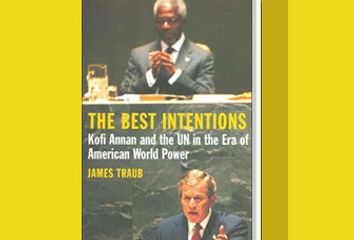
James Traub's examination of Kofi Annan reveals a patient and wily leader who managed to outwit John Bolton and elevate the United Nations.

When I landed in Togo in mid-2000, I shared a ride with a young Congolese woman who had just arrived to work on a poverty alleviation initiative at the United Nations Development Program. When I left Togo two and a half years later, the program had still not managed to spend any of its allocated $2 million on poverty alleviation projects, but the young lady had managed to embark on an affair with a son of the country’s brutal dictator. The UNDP office in Togo was divided between lackadaisical, corrupt staff and dedicated, energetic ones; the country representative, a brilliant and sincere woman, directed promising programs toward the more proactive staff, while carefully placating the sluggards. The office was, in other words, like much of the U.N.: Making it work demanded someone of enormous diplomatic talent and patience. Someone like Kofi Annan.

James Traub’s inside account of several years in the life of the retiring U.N. secretary-general is a chronicle of diplomatic talent and patience, and it makes for a fascinating, if sometimes exasperating, read. In Traub’s telling, Annan, a sympathetic but meek hero, is repeatedly abused by powerful agents posing as benefactors or suitors, escaping only to be again beset by disaster. It’s a picaresque adventure in the mold of “Candide” or “Great Expectations,” as the title, “Best Intentions,” suggests; though “A Series of Unfortunate Events” might have been equally apt. The book works, not just as a portrait of Annan but as one of the U.N. itself, in part because Annan personally encapsulates many characteristics of that inspiring but maddening organization.

Annan is a quiet man, tolerant to a fault, committed to the highest ideals of humanitarianism, but resigned to the constrictions of his office. He is a wily politician, but his caution sometimes shades into paralysis. Where Annan and the U.N. can act, it is because the United States and other member nations demand it; where he fails, it is because the members don’t demand it, or they disagree among themselves. The great powers take credit for the actions, and blame the failures on Annan and the U.N. It demands a particular kind of character to serve as the world’s scapegoat for two consecutive five-year terms, and the book poses the question of whether the U.N. has a future, or whether the Bush administration’s repeated warnings of its impending irrelevance are, in part self-fulfillingly, correct.

Traub takes a minimally optimistic view: The U.N., though diminished in stature, is not irrelevant. But some readers may come away from the book more sanguine than the author himself about the U.N.’s chances. The organization’s existential crisis in early 2003, when its bitter divisions in the face of U.S. demands for an authorization to invade Iraq seemed to portend collapse, looks far better in retrospect, as that invasion has been revealed as a colossal error. And U.N. involvement on a variety of fronts over the past several months, including North Korea, Darfur, Congo and global warming, suggests that while the organization may often be ineffective, it remains indispensable.

As Traub recounts, this is hardly the first time the U.N. has faced a crisis of relevance. It has never lived up to its founders’ vision of a proactive international security organization. The Cold War froze the Security Council, and the first few secretary-generals were inoffensive creatures. The exception, the maverick Dag Hammarskjöld, pushed through an aggressive 1960 U.N. peacekeeping mission in the Congo that, while arguably successful, was so bloody that it scared the U.N.’s member states away from such ventures for a generation. Hammarskjöld, killed in a plane crash during the fighting, was succeeded by ineffectual figureheads.

Meanwhile, decolonization transformed the General Assembly into a body dominated by the Third World, especially the non-aligned “G77″ countries. The G.A. was thus frequently at odds with the Security Council and its mainly European and American permanent members. And the U.N. gave birth to a series of agencies — the U.N. Development Program, the U.N. Population Fund, the U.N. Educational, Scientific and Cultural Organization, etc. — that attempted to accomplish humanitarian and development goals while being yanked this way and that by the political demands of the member countries. Poor countries treated U.N. agency staff positions as sinecures for their elites. Rich countries, especially the U.S., threatened to withhold funding unless the agencies adhered to their ideological agenda.

The end of the Cold War ushered in a new optimism. With Russia and China now amenable to cooperation with the West, the Security Council seemed capable of fulfilling its original mandate of forceful intervention. Such hopes were dashed by the disastrous U.N. peacekeeping experiences in Somalia, Bosnia and Rwanda. The failure in Somalia was blamed on excessive adventurism; those in Bosnia and Rwanda, on excessive timidity. Liberal internationalists in Europe and America were furious with U.N. headquarters for refusing, in Rwanda and Bosnia, to authorize their blue-helmeted peacekeepers to use force to protect civilians. But third-world governments opposed any non-consensual interventions as a violation of sovereignty. With the Dayton Accords, the Clinton administration turned decisively toward humanitarian intervention, and against Secretary-General Boutros Boutros-Ghali, a Francophone Egyptian who had vetoed airstrikes in Bosnia. When his first term expired, the U.S. maneuvered Boutros-Ghali out in favor of the less prickly Annan, the Anglophone head of the U.N.’s peacekeeping operation, whom it expected would be more amenable to American wishes.

Traub thinks the Americans were unprepared for what they got. Annan turned out to be a quiet but methodical advocate for the U.N. with an unexpected kind of star power. When he was elevated to secretary-general, the far-right isolationist wing of the Republican Party was reaching the apogee of its opposition to the U.N., complete with myths about “black helicopters.” In concert with Clinton administration U.N. ambassador Richard Holbrooke, Annan reached out to then-Sen. Jesse Helms, who had been leading an effort to slash the U.S.’s contribution to the U.N. if it failed to undertake a range of practical and ideological changes. Annan and Holbrooke ultimately won Helms over, and neutralized the anti-U.N. faction in Congress — for a while.

Meanwhile, Annan was pushing the U.N. toward a rethinking of its doctrine on intervention. Here, he found himself caught between the interests of the powerful Euro-American bloc, which wanted U.N. approval for its interventions in places like Kosovo, and the G77, which considered sovereignty rights absolute. Annan carefully edged toward a stance supporting human rights over sovereignty rights, tipping his hand with his September 1999 opening speech to the General Assembly. At the time, third-world nations roundly denounced Annan’s speech. But by 2005 every U.N. member endorsed the so-called Responsibility to Protect: the principle that the international community had a duty to protect people against their own murderous governments. Traub cites U.N. official John Ruggie’s characterization of Annan as a “norm entrepreneur,” gradually shifting the terms of global debate, not through direct confrontation, but by subtly reshaping the moral landscape.

Annan pursued the same strategy in the field of development with the “Millennium Goals,” which emerged from the 2000 Millennium Summit of world leaders. The summit won, among other things, commitments from the world’s wealthy nations to increase foreign aid to 0.7 percent of their countries’ GDPs, while slashing poor countries’ foreign debt. And poor countries committed to meeting concrete development goals of their own by 2010, an incentive for their governments to improve fields like education and health or face public embarrassment. But the fact that, six years on, most of these goals are nowhere near being met points out the weakness of Annan’s norm entrepreneurship: Such norms can quickly come to resemble so much hot air if there is no real political will behind them.

For those who take a sour view of Annan, his willingness to embrace hot air and his aversion to conflict are his defining characteristics. That view took hold among hawkish Americans in early 1998, when Annan flew to Baghdad for frantic negotiations with Saddam Hussein to avert a looming war over Saddam’s restrictions on U.N. arms-control inspectors. (Annan won an agreement, but Saddam soon reneged, and the Desert Fox bombing campaign ensued.) Annan was similarly unable to act forcefully enough to punish his son Kojo when it emerged that he had lied about his employment with a Swiss firm that benefited from the corrupt U.N.-administered oil-for-food program in Iraq. Annan has a notorious inability to fire people; his closest officials have been with him for decades, and when he was pushed to fire one of his deputy secretary-generals, he ended up promoting her instead.

Traub’s book really kicks into gear in the aftermath of the Security Council’s confrontation over the invasion of Iraq. Angry American conservatives push investigations into the Oil-for-Food program in order to depict the U.N. as collaborating with Saddam’s regime. Annan is driven into a depressed funk as the investigation of his son Kojo tars him personally. His attempt to get the U.N. involved in post-invasion Iraq leads to the bombing deaths of dozens of U.N. staff, some of them personal friends. Headquarters staff are bitter at Annan for allowing the U.S. to yank the U.N.’s chain; the U.S., his former patron, now sees him as part of the U.N. problem. But Annan gradually hauls himself, and the organization, out of this funk, establishing a panel to hash out a deep program of comprehensive reform. He pushes long-standing senior staff members aside in favor of a new reformist cadre, appointing the dynamic head of UNDP, the British Mark Malloch Brown, as his new No. 2. (This in turn leads some staffers to accuse Annan of abetting an Anglo-American putsch.)

It is in this sequence that the great merits of Annan’s slow, inclusive but relentless mode of persuasion become apparent. The driving force behind the U.N. reforms is American, and to some extent European, anger at the organization’s corruption and listlessness. But the only internal U.N. constituency for reform comes from a number of countries that want to win permanent seats on an expanded Security Council, for reasons of prestige — Germany, Japan, India, Brazil and a coalition of African countries. Annan deftly insists that these countries advance the broader reform program as the price for continued work on Security Council expansion. Over a period of months, he nudges the reform package through working groups that water it down into a set of proposals with broad, if unenthusiastic, assent. At each step along the way, Annan uses sympathetic contacts in the U.S. State Department to ensure that the proposals are acceptable to Condoleezza Rice. The target is to approve the reforms at the World Leaders Summit, the follow-up to 2000′s Millennium Summit, in September 2005.

And then, in the summer of 2005, the new U.S. ambassador John Bolton descends upon U.N. Headquarters, more or less like a bat out of hell. Many Americans of an internationalist bent were dismayed at the Bush administration’s choice of the combatively unilateralist Bolton, who had famously stated in the early ’90s that if 10 stories were lopped off of the U.N. Headquarters building, no one would notice. But after his failed confirmation hearings and recess appointment, Bolton dropped out of the headlines. It was a poor choice, many felt, but how much damage could one guy do?

Traub provides the answer: Bolton was a disaster, not just for the U.N., but for the U.S. Arriving after the reform document had been largely agreed upon, in discussions involving over a hundred member countries, Bolton suddenly announced he wanted more than 140 changes in the final document. He wanted all references to the International Criminal Court deleted. He wanted references to wealthy countries’ Millennium Goals commitments of increased foreign aid taken out.

Annan and the reform party in the U.N., who had been carefully clearing the document’s language with the U.S. State Department, were shocked. Bolton seemed to have a different agenda than Rice. What did the U.S. actually want? Did it even know? In any case, the effect of Bolton’s new demands was the opposite of what he intended: They opened the door for obstructionist third-world dictatorships to introduce their own objections. Countries like Cuba, Algeria and China were unhappy with U.S.-driven efforts to reform the U.N.’s Human Rights Council. They had gone along with the reform drive rather than be seen to torpedo much-needed changes, including Security Council expansion. But now that the U.S. could be blamed for the reforms’ failure, all bets were off. Bolton’s incompetent diplomacy had succeeded in holding the U.N. reform process hostage to Fidel Castro.

Traub’s depiction of Annan’s battle of wills with Bolton, as the September 2005 deadline draws near, is nothing short of thrilling. It’s like watching a practiced cowboy break a mustang. By the time Annan has Bolton tied down so he can whisper gently in his ear, the U.N. reform package has suffered considerable damage. But a package is passed, and the momentum for further reform is kept alive.

Liberals and other internationalists will enjoy watching Annan redeem himself, and the U.N., with a victory over the arch-neoconservative Bolton. It’s the satisfying ending to Traub’s version of “Great Expectations,” with Annan at last defeating his selfish American benefactors, who raised him up and then tried to control him. But the dirty secret, for internationalists who have experience with the U.N., is that we know Bolton was partly right. A large proportion of the U.N.’s staff is occupied in doing nothing of any value, and the U.N. as an institution has very little power except where its member nations want it to. The U.N.’s own top staff recognize this. Traub quotes Deputy Secretary-General Mark Malloch Brown: “The fact is, I do think what a lot of people do here is basically crap. Being in this position, I’ve discovered how bad things really are.”

The flip side of such criticisms, however, is that nothing can be accomplished in a multilateral institution like the U.N. with threats and ultimatums. Moving the U.N. does require the occasional dose of Boltonesque straight talk, but what it requires much more is a very un-Boltonesque willingness to engage in agonizing negotiations, to pay people compliments they don’t deserve, to embrace hot air. In the aftermath of Bolton’s resignation in early December, some of his opponents magnanimously praised him as a sincere man. The genius of “Best Intentions” is to show how Annan’s willingness to skirt or stretch the truth, in order to advance the U.N.’s principles of humanitarianism and global cooperation, represents a different and, in this case, more powerful kind of sincerity.

Destination: The Netherlands

Delve into Lowlands literature and discover there's much more to this prosperous nation than wooden clogs, tulips and -- of course -- weed.

For a country that was once the global capital of the publishing industry, it’s extraordinary how little the Netherlands has influenced world literature. Most of the canonical writers of Dutch fiction are unknown outside Holland; many are untranslated. From a traveler’s point of view, this is wonderful. Nothing could be more tedious than arriving in a new country with a suitcase full of preconceptions about its culture, drawn from world-famous novels already reduced to clichi by generations of English-language critics.

That said, some of the books any visitor to the Netherlands ought to read are familiar enough to the English-speaking world. Chronologically, one would have to begin with “In Praise of Folly,” by the humanist clergyman Erasmus of Rotterdam (1466?-1539). The book is a tongue-in-cheek twist on the classical genre of the encomium, in this case delivered by Erasmus’ invented muse Folly (“Moriae”), in praise of herself. Folly’s routine starts off lightly enough, as she congratulates humanity for embracing her so thoroughly. But soon the irony turns darker and harder to pin down. Folly insults people by calling them “wise,” and praises them by calling them “fools.” The reader becomes unsure which lines are backhanded compliments, and which are openhanded slaps. Gradually, Folly’s speech turns into a sort of 16th-century “Colbert Report”: a blistering condemnation of the hypocrisy, bloodthirstiness, stupidity and corruption of contemporary lay rulers and the Catholic Church, all delivered in the guise of “praise” from one of the world’s first unreliable narrators.

Erasmus wrote “In Praise of Folly” in 1509, when the Netherlands didn’t yet exist as such. But he hailed from Gouda and Rotterdam, and in the book, he gives Folly a couple of sly, “complimentary” lines that attest to the author’s sense of nationality:

“Close to [the Brabanters] as neighbors, and also in their way of life, are my Hollanders — for why shouldn’t I call them mine? They’re my devoted followers”

Nothing could be more Dutch than this wry mix of self-mockery and pride.

So what exactly are the Netherlands? For a guide to the country’s birth and Golden Age, it’s hard to do better than Simon Schama’s “The Embarrassment of Riches.” Schama’s book is stuffed with plates of the great works of Dutch art of the 16th and 17th centuries, bringing visual life both to the grand historical dramas of the Eighty Years’ War and to the domestic and aesthetic culture of the period. The book’s title refers to a conflict Schama contends is central to the Dutch situation, that between the country’s prosperity and its frugal Calvinist morality. Schama thinks the Dutch are caught in a perpetual bind between the pursuit and disavowal of riches, a constant anxiety that the wealth that testifies to the country’s diligence and moral probity is itself a harbinger of immorality and disaster.

Such thematic oppositions breathe new and surprising life into the masterpieces of Dutch art and architecture. In his opening chapter, “Moral Geography,” Schama introduces the “drowning room,” a punishment supposedly employed in a reformist 17th-century Amsterdam prison that aimed to instill the work ethic by forcing prisoners to pump water out of an enclosure before it covered their heads. This metaphorical elision of crime, laziness and drowning (in a country dependent on vigilant communal dike maintenance to keep out the sea) leads Schama to the recurrent Dutch concern with the word “overvloed,” used both to refer to the floods that follow dike breaks, and also to the wealth that flooded the country in the era of its mercantile dominance. This in turn brings in masterpieces depicting floods, by Brueghel and others; the invocation of God’s drowning of Pharaoh and his soldiers in patriotic Dutch literature; the related drama of the deliberate flooding of Leiden, which routed the Spanish siege of 1598; and so forth. The book’s great accomplishment is to defamiliarize the gorgeous kitsch of classic Dutch culture, and to situate it in a context of historical upheaval, commercial revolution and moral anxiety.

Holland owes its world-beating cuteness to the glorious 17th century, with its brick houses and storybook canals. But so much of the country’s 17th century is preserved, in part, because the 18th and 19th centuries were much poorer. For a sense of the narrowness of Dutch life on the verge of the modern age, the traveler would do well to read one of the novels of Louis Couperus, such as “Langs Lijnen van Gelijdelijkheid” (1900), published in English as “Inevitable.”

Couperus’ subject was the constriction and self-righteousness of Dutch social life. In “Inevitable,” Couperus follows Cornelie de Retz van Loo, a young woman from The Hague’s snooty upper class, who takes the then extraordinary step of divorcing her cold diplomat husband, and is repaid with social exclusion. Cornelie flees to Italy, scandalizing society by moving in with a free-thinking Dutch painter. They are happy but desperately poor, and gradually, irresistibly, Cornelie drifts back to her miserable ex-husband. The opposition between Cornelie’s dreams of Southern passion and the dull conformism that strangles them is one you’re likely to encounter repeatedly in Holland; think about it if you find yourself in conversation with a pale Amsterdammer who wants to tell you about his spiritually enlightening trip to India.

World War II was an epochal event in Dutch history. One of the first signals of what would follow was the idiosyncratic 1947 novel “De Avonden” (“The Evenings”), by the young Gerard Reve. Reve, who died this year, was gay and intensely funny, and he would become one of the most original of the provocateurs who reinvented Dutch culture in the 1960s and ’70s.

“The Evenings” is a book about the absurdity of late adolescent boredom. Twenty-three-year-old Frits lives with his parents, enduring a tedious daily routine of arguments over control of the radio dial and the whereabouts of the key to the coal cellar. He escapes on excursions with an odd clique of friends — to the movies and the dance hall, or for evenings in their chilly, half-decorated flats. Frits entertains the gang with viciously inappropriate comments in a high, ironic style. (Is a friend’s infant son, whose head keeps nodding, just going through a phase? “‘Let us hope so,’ said Frits, lighting another cigarette off of Viktor’s. ‘But it is quite possible that the child is crazy.’”)

In some ways, “The Evenings” is a Dutch “Catcher in the Rye.” But it’s underscored by an unspoken darkness, partly emanating from the war, partly from forbidden sexuality. In one feverish late-night conversation, Frits teases his petty-criminal friend Maurits into revealing his fantasy of tying another boy to a table, naked, and torturing him to death. The book paints Dutch society in the late ’40s as a mute pressure cooker of repressed grief and desire. (Amazingly, “The Evenings” has never been translated into English. Try the movie version, “De Avonden” [1989].)

In the ’60s, the top of the Dutch pressure cooker blew off. For a taste of how that felt, one might try “Turkish Delight” (“Turks Fruit”) by Jan Wolkers, who, like Reve, is among the “big four” of postwar Dutch writers. (The other two are W.F. Hermans and Harry Mulisch.) “Turkish Delight” features plenty of promiscuity and bohemian revelry. And, confirming Schama’s point about Dutch moral anxiety, it ultimately chalks up the escapades of its wild heroine to a fatal brain tumor. The book has been translated, but may be hard to find; but, again, you can always watch the 1973 movie, often voted the best Dutch film of all time, which features lots of nudity and a young Rutger Hauer.

Another way to capture those years would be to turn to 1992′s “The Discovery of Heaven,” by another of the big four, Harry Mulisch. Mulisch, the child of a Jewish mother, was protected during the war by his Christian banker father, and went on to become a key figure in the swinging, Castro-sympathizing ’60s left. In “The Discovery of Heaven,” Mulisch reuses his own biography for one of the characters, the astronomer Max.

The plot hinges on the intense friendship between Max and Onno Quist, the polymath child of a former prime minister. Both become involved with the beautiful Ada, a cellist first seduced by Max before she marries Onno. (Fun fact: Ada’s parents’ used-book store, where Max sweeps her off her feet, is called “In Praise of Folly.”) On a visit to revolutionary Cuba, both men sleep with Ada, and she becomes pregnant with a son by one or the other — a child who may or may not be some kind of messiah. The book leaps ahead to the ’80s, sketching Dutch society at the moment of its greatest self-satisfaction: a time when the Dutch thought they had solved the full range of modern social problems, from drug use to sexual openness to religious and cultural pluralism to the balance between capitalism and socialism.

Since the late 1990s, the left-wing consensus that governed Dutch society from the ’70s on has begun to disintegrate. The rock upon which it has foundered is the Dutch Muslim population, immigrants from Morocco and Turkey and their children, who are now 1 million of Holland’s 16 million inhabitants. For a guide to the Netherlands in the current moment of transformation, there is no better book than Ian Buruma’s recent “Murder in Amsterdam: The Death of Theo van Gogh and the Limits of Tolerance.”

Van Gogh was a hilariously tasteless television and film director, who collaborated with the feminist Muslim activist Ayaan Hirsi Ali in 2004 to produce a film about Muslim women’s abuse at the hands of Muslim men. A Dutch Muslim extremist murdered him on an Amsterdam street soon thereafter. Buruma takes an insightful and even-handed approach to the twin phenomena of Muslim violence and Dutch Islamophobia, showing how the hysteria of the clash between Islam and “enlightenment values” is just one part of a generally hysterical, throw-the-bums-out mood that has seized Dutch society in recent years. The book is a must read to understand the tensions that are reshaping the Dutch social landscape today.

Obviously, there are a number of subjects that don’t fit into this compilation. For instance, anyone who visits the Netherlands ought to read something about Dutch graphic or urban design. One suggestion: David Winner’s “Brilliant Orange,” a terribly clever 2001 book that relates the genius of Dutch soccer to the genius of Dutch spatial efficiency — thereby taking care of two crucial Dutch subjects that we haven’t yet covered.

But one can’t read everything. In any case, this is an interesting time to visit the Netherlands. On the one hand, the country’s peculiar and much-admired social and political character remains very much in evidence. On the other hand, it is being transformed by immigrant communities, Muslim, Caribbean and African, and many of the political bargains that have shaped the country’s image abroad are being renegotiated. It’s often difficult, in today’s Holland, to understand quite what you’re looking at. Which makes it all the more important to get a passing familiarity with the country’s background literature before one goes, and get a little further than the clichis. It really isn’t all about bicycles, canals and smoking first-rate Dutch weed.

That said, bicycles, canals and smoking first-rate Dutch weed are an enormous lot of fun, too.

Continue Reading Close

“Murder in Amsterdam”

Ian Buruma's riveting account of the killing of Dutch filmmaker Theo van Gogh by a Muslim extremist shows how a clash between European Enlightenment values and Muslim fundamentalism is ripping Dutch society apart.

Like many Dutch people, my wife found the news that the filmmaker Theo van Gogh had been murdered by a Muslim extremist shocking, in two senses of the word: shocking-tragic, and shocking-weird. She had worked with van Gogh, as producer of one of his television series in 1998, “Het Is Hier Verschrikkelijk Gezellig” (“It’s Terribly Nice Here”). The show revolved around van Gogh insulting and humiliating people engaged in recreational activities he considered contemptible: executives playing paintball, couples flying off for “exotic weddings,” swingers’ clubs. (Today, we would call it “reality TV,” but that term didn’t exist yet; it was coined in 1999, also in the Netherlands, when a Dutch studio called Endemol came out with the original version of “Big Brother.”) Van Gogh’s public persona was that of a fat, abusive, witty, politically incorrect buffoon, equal parts Johnny Knoxville and Michael Moore, the self-proclaimed “dorpsgek” (“village idiot”) of the Netherlands. That such a character should become a victim of international jihad seemed an absurd joke or category error, as though the 9/11 terrorists had tried to blow up the town of South Park.

“It’s Terribly Nice Here” found van Gogh at a low ebb in his career. His shtick had begun to seem less repellently funny than just plain repellent. My wife’s strongest visual memory of the director was of him passed out on the couch in the editing room, a beached whale in mismatched socks. But in subsequent years, van Gogh reestablished himself by taking on more serious projects, and turning his ridicule toward a new target: Islam. Starting in about 2000, anti-Muslim sentiments, once taboo in self-consciously tolerant Holland, were voiced with increasing openness and conviction. Van Gogh jumped on the bandwagon, saying a number of things that would probably have ended an American entertainer’s career, notably his use of the epithet “goatfuckers.”

At the same time, he made some intelligent and well-received Islam-related films, including a miniseries called “Najib and Julia,” a Moroccan-Dutch Romeo and Juliet story. In 2004, the Somali-born women’s rights activist Ayaan Hirsi Ali, then a Dutch M.P., enlisted van Gogh to direct her short TV film “Submission,” which pictured a woman in a see-through hijab with Quranic verses projected on her skin, telling the stories of Muslim women abused by their husbands. Muslim viewers were predictably outraged. On Nov. 2, 2004, a Dutch-born 26-year-old named Mohammed Bouyeri followed van Gogh on his bicycle and shot and stabbed him to death on an Amsterdam street in broad daylight, staking a note to his body that vowed that Hirsi Ali would meet the same fate. Bouyeri was caught at the scene by police, and ultimately sentenced to life in prison.

Ian Buruma’s “Murder in Amsterdam: The Death of Theo van Gogh and the Limits of Tolerance” places van Gogh’s murder at the fulcrum of Dutch politics and society at the turn of the 21st century. A better book about the contemporary Netherlands has not been written. Like van Gogh, Buruma grew up well off in The Hague of the 1960s and ’70s, and he brings to his portrait the deep understanding one can only have for those from one’s native town and class. But Buruma has lived outside Holland since 1975, and has written extensively on the Far East and, more recently, the worldwide clash between political Islam and the secular West. These two perspectives, particular and global, interweave throughout “Murder in Amsterdam,” in the classic fashion of the murder story as social investigation — one thinks of “In Cold Blood,” or the Dylan song “Who Killed Davey Moore?” As in the song, a lot of people turn out to bear some responsibility for van Gogh’s death, and few of them are willing to own up to it.

The book opens with an account of van Gogh’s slaying, and of the feverish months afterward, when tensions between Holland’s white and immigrant communities made Buruma feel the country had come “unhinged.” Buruma then begins laying out the back story. Mohammed Bouyeri is the son of one of the hundreds of thousands of Moroccans who, along with Turks, were allowed into the Netherlands in the ’60s and ’70s to perform unskilled jobs. Their children have had difficulty assimilating; Moroccan boys especially have high rates of criminality. The left-wing multiculturalist consensus in Dutch politics from the ’70s to the ’90s tended to brand any discussion of such problems as racist. But by the late ’90s, that consensus was falling apart, and many Dutch on both the left and the right began to phrase the problem as one of upholding European Enlightenment values — religious and sexual tolerance, equality for women — against Muslim fundamentalism. “The Enlightenment, in other words,” Buruma writes, “has become the name for a new conservative order, and its enemies are the aliens, whose values we can’t share.”

Buruma turns next to the figure who best exemplified this trend, Pim Fortuyn. He is the first of a series of incredible characters: a bespoke-suited, flamboyantly gay university professor in a chauffeured Bentley who used the anti-Muslim card to upend the Dutch political landscape in two short years, becoming a favorite for prime minister before himself being assassinated, in 2002, by an environmental extremist. Fortuyn used his homosexuality as armor for his anti-immigrant conservatism: It is because we Dutch believe in equality for gays and women, he would say, that we cannot put up with the fundamentalism of these “kut-marokkanen” (“cunt-Moroccans”). The fact that equality for gays and women had only been accepted in Holland itself 30 years earlier went unmentioned.

Buruma concentrates on Fortuyn’s inauthenticity, his self-willed makeover from second-rate sociologist to outrageous conservative rock star. Part of what Fortuyn represented was a rebellion against the gray uniformity of the Netherlands’ famously dull politics, long dominated by the “pillar” model, in which the country’s different religious communities split up the national pie in reasonable negotiations. The pillar model began to disintegrate from the ’60s on, but in the ’90s was succeeded by an equally dull and reasonable right-left “purple” coalition. The Dutch are simultaneously proud and resentful of their plodding moderation, and at key moments, as with Fortuyn, the resentment bursts to the surface. Ironically, the politician who claimed to be defending Dutch values from an alien threat was himself behaving in ways that were profoundly, and calculatedly, un-Dutch.

One of Fortuyn’s biggest fans was van Gogh, a foulmouthed iconoclast from a very respectable, if not quite elite, family. Yes, they are those van Goghs: The painter’s brother Theo was the filmmaker’s great-grandfather. More interesting yet are van Gogh’s father, a retired intelligence agent with staunch middle-left politics, and his late uncle, a hero of the anti-Nazi resistance executed in the last days of World War II.

Buruma uses this family history as an occasion to trace how the war continues to structure the Dutch moral imagination, distinguishing whose ancestors were “right” (anti-racist, resisters) and whose were “wrong” (racist, collaborators). The war reinforced a self-righteous, self-pitying strain in Dutch nationalism, a vision of the country as the resistant victim of fanatical foreigners (Catholic Spain in the 16th century, Nazi Germany in the 20th), which does not entirely square with the modern record. The Dutch under Nazi rule were mostly resentful but obedient; a larger percentage of Jews were exterminated in Holland than in any European country but Poland.

Van Gogh himself rebelled against such pieties. In the ’80s, he got into a public feud with a Dutch Jewish writer after accusing him of capitalizing on Holocaust nostalgia. (Specifically, he said the writer wrapped his penis in barbed wire and shouted “Auschwitz!” when he came.) The content of such declarations is less important than the eagerness to give offense. Van Gogh was part of an Amsterdam cultural scene that delighted in such stunts, and that traced its roots to the white-jeaned “Provos” of the ’60s, whose absurdist provocations touched off the transformation of Holland from one of the most conservative and religious societies in Europe to one of its most secular and progressive. At the same time, as Buruma shows, there was something puritanical in van Gogh’s hostility to social conventions, something of Holland’s famous Calvinist rectitude, harking back to the country’s origins in a literal wave of iconoclasm, the smashing of Catholic icons in the cathedrals of Flanders in the 1560s.

For all van Gogh’s outrageousness, he never would have gotten himself killed had it not been for Ayaan Hirsi Ali. Ali is another stranger-than-fiction character: a brilliant and stunningly beautiful Somali from a prominent political family who fled to Holland to escape a forced marriage, learned perfect Dutch, joined the left-wing Labor Party to advocate for abused Muslim women immigrants, and by 2002 was a Member of Parliament and rising star in the conservative free-market Liberal Party. She represents precisely the kind of refugee Holland prides itself on accepting, one seeking freedom because of her beliefs.

But Hirsi Ali’s hostility toward Islam has also proven extremely useful to the right-wing politicians who have promoted her. This has largely destroyed her credibility among the Muslim women she says she is trying to help. And gradually, her confrontational style has begun to grate on the very Dutch voters who once backed her. The death of van Gogh produced an outpouring of anti-Muslim sentiment in Holland, but it also produced a slow backlash against Hirsi Ali. This spring she was effectively pushed out of the country: The minister of immigration, “Iron Rita” Verdonk, briefly revoked her citizenship after a television program reported that she had lied on her application for refugee status — a fact she had been open about for years. Hirsi Ali has now given up her seat in Parliament and emigrated to the United States. (In a postscript, Buruma notes, “My country feels smaller without her.”)

Finally, there is Mohammed Bouyeri, perhaps the least original of the characters in the drama, if ultimately the most important. Bouyeri fits the profile of lone gunmen the world over: an intelligent young man whose efforts to “make it” in mainstream society met with reversals, and who gradually gave up, retreating into violent ideology and fantasy. Bouyeri did well in high school and tried several university programs, but found nothing to hold his interest. He got involved in organizing for a local Muslim community youth center, but had a funding application rejected. Then he fell in with a group of kids who liked to download videos of Middle Eastern terrorists sawing the heads off of infidels.

Buruma does a solid job of conveying the background of young men like Bouyeri, their inability to respect their immigrant parents, and the familiar group dynamics that lead those who assimilate successfully to be labeled collaborators. He has a long section on the gender-based oppression of Moroccan and Turkish women and girls in the Netherlands, which he balances with profiles of Moroccan-Dutch and Turkish-Dutch youth who are doing well in Dutch society, and with others who try to bridge the gap, like the Amsterdam city alderman Ahmed Aboutaleb.

But his most interesting contribution here is to provide a more comprehensible vision of Bouyeri. Van Gogh’s murderer has been widely quoted as having viciously told his victim’s mother, at his trial, “I don’t feel your pain.” In Buruma’s account, this seems to have been a wrongful twist of Bouyeri’s words: “He spoke slowly, in halting sentences, in an accent that was mostly Amsterdam with a Moroccan-Dutch lilt. First he addressed Theo van Gogh’s mother, Anneke. He could not ‘feel her pain,’ he said, for he didnt know what it was like ‘to lose a child born through such pain and so many tears.’ Because he was not a woman, and because she was an infidel.”

If Buruma’s version is correct, Bouyeri was acknowledging Anneke’s pain, not denying it. His words have the tortuous self-justifying logic of anyone convicted of a heinous crime. Bouyeri comes across as all too understandable a character, far from the merciless butcher depicted in the press.

Most of all, he comes across as Dutch. Dutch is Bouyeri’s first language. Aside from one summer in his parents’ native village in Morocco, where he was lonely and out of place, he has spent his entire life in the Netherlands. His ludicrous political fantasies and spectacular crime, his refusal to speak throughout his trial, and his strange and pathetic statement at its end, are strongly reminiscent of Marinus van der Lubbe, the hapless oddball Dutch Communist convicted of setting the Reichstag fire in 1933 — a figure who has gone down in Dutch history as a sort of tragicomic hero.

For as much as the Netherlands has a culture of reasonableness, tolerance, compromise and conformist Calvinist morality, it also has a long tradition of freaks, people unable to conform, who launch quixotic rebellions against society’s strictures. Vincent van Gogh found himself unable to fit in; his great-grandnephew Theo did too.

This tension is in fact what van Gogh was getting at in the TV series my wife produced, “Het Is Hier Verschrikkelijk Gezellig.” “Verschrikkelijk” translates fairly well as “terribly”: As in English, it can be used idiomatically to mean “very,” but the root “schrik” means shock or terror. The word “gezellig” is one of those untranslatable ones that are supposed to express the essence of a culture. The Dutch often translate it as “cozy,” but it is closer to a communal kind of “fun,” “nice,” or “sociable,” and might best be expressed by a Franz Hals painting of a bunch of people enjoying a good time in a cheery bar. The root “gezel” means “fellow” or “mate,” as in “gezelschap,” a society or group of companions. There is a strong imperative to be “gezellig” in Dutch society, and van Gogh’s pun on “verschrikkelijk” is a version of one of the most common Dutch cultural self-critiques, of how “terrible” this “coziness” can be. Inside the pun lurks a basic opposition between “gezel” and “schrik,” between fitting in, being a nice fellow, and terror.

And so we come back to van Gogh’s assassin. Mohammed Bouyeri does not have much in common with his victim, but he, and the tens of thousands of young Dutch Muslim men like him, do share both van Gogh’s inability to accommodate to “normal” Dutch society, and his inability to live anywhere else. They may be influenced by rural Moroccan norms of gender roles and honor; they may not feel Dutch; they may declare war on their own country in a suicidal fit of machismo. But there is nowhere else for them to go. As Buruma says, the risk of Muslim violence will continue “as long as young men and women feel that death is their only way home.” Holland, like the rest of Europe, is stuck with its prodigal sons, and it is up to Holland to figure out how to make them feel they belong. Proclaiming one’s right as an heir of the Enlightenment to call them “goatfuckers” was probably not a good place to start.

Continue Reading Close

Destination: Togo

The wild character of this tiny West African nation is captured in a brilliant roman

Togo is the Zembla of West Africa: If it did not exist, it would have been invented by the author of an absurdist experimental novel, prompting generations of unwary readers to leaf through their atlases in search of the place. Indeed, some of Togo’s own residents may occasionally be tempted to leaf through their atlases, to assure themselves of their own existence. How is one to account for this finger of a country tucked in between Ghana and Benin, its population of 5 million people speaking 40-odd different languages? A country that owes its existence to the off chance of having been the tiniest of Germany’s short-lived African colonies, inherited by France after World War I, which absentmindedly failed to consolidate it into its other colonies? Where, until February of 2005, a general who had first seized power in 1967 still reigned, Mobutu-like, over a tribalized kleptocracy, propped up by French money and military advisors, referred to by his countrymen in hushed whispers as “le vieux.” Is this place for real?

In fact, Togo does exist; but that didnt stop the great Ivorian novelist Ahmadou Kourouma from inventing it. Kouroumas brilliant 1998 roman à clef, “Waiting for the Vote of the Wild Animals,” is a folk-absurdist chronicle of the life of Koyaga, a champion wrestler from a northern hill tribe (as Togo’s longtime dictator Eyadéma was) who is recruited into the French army, fights in Vietnam (as Kourouma did), and winds up commanding a clique of disgruntled ex-officers in his country’s first coup. He then gradually descends into the familiar dictatorial narrative of gold-plated extravagance and familial intrigue. Koyaga is tutored in the fine arts of torture, repression and opulent state dinners by a panoply of African greats, including Ivory Coast’s Houphouët-Boigny, Guineas Sékou Touré, Congo’s Mobutu, and the Central African Republic’s Bokassa. (They appear in clever guises: “The Man whose Totem is the Crocodile,” “The Man whose Totem is the Leopard,” and so on.)

The novel follows Koyaga’s history through the Cold War years of Western-sponsored corruption, and into the ’90s, when the old wrestler finds himself lost in a new world of IMF-mandated structural adjustment programs and exiles returning from Europe demanding transparency and decentralization. But its real genius is stylistic: The narrator, Bingo, is Koyaga’s griot, a praise-singing storyteller who recites the leader’s history over the course of a six-day, five-night banquet. The language, thick with African idiom and oral tradition, throws the postcolonial political narrative into high relief, like Woody Guthrie reciting the life and times of Richard Nixon.

For a more realistic introduction to Togo, there’s the book beloved of every Peace Corps volunteer: “The Village of Waiting” (1988), by George Packer. Packer is best known today for his superb reporting on the Iraq war for the New Yorker, which culminated in the 2005 book “The Assassins’ Gate.” He was a Peace Corps volunteer in Togo in 1982-83. Stationed as an English teacher in a sluggish village of the Ewe ethnicity called Laviéma (whose name, according to legend, meant “wait a little longer”), Packer found his modest optimism deteriorating into a profound alienation and cynicism over the course of 18 months. His intense friendships with his host family, with the village chief, and with his students were laced with mistrust and incomprehension. Confronted by their poverty, he felt responsible; confronted by their manipulation and dishonesty, he felt simultaneously abused and sympathetic. Ultimately, wracked by hypochondria and anxiety, he quit before his two-year Peace Corps term was up. “The Village of Waiting” is one of the most wrenchingly honest books ever written by a white person about Africa, a bracing antidote to romantic authenticity myths and exotic horror stories alike. Isak Dinesen, Packer notes, wrote of waking in the Kenyan highlands and thinking, “Here I am, where I ought to be.” He himself woke up sweating, hungry, “mildly at ease, or mildly anxious. But never where I ought to be.”

Tété-Michel Kpomassie didn’t feel Togo was where he ought to be, either, though he grew up in a typical family of the Mina ethnicity in the 1940s and ’50s, herding goats and picking coconuts on a coastal plantation. When a priestess of the local python god demanded that he be apprenticed to her, he fled the country, setting out for a far land he had become obsessed with since discovering a book about it in a missionary bookshop: Greenland. It took him eight years to work his way up through West Africa and Europe, but he made it, and spent two years living among the Inuit, driving a dog sled and hunting seal in a kayak. “An African in Greenland,” his 1981 account of those years, is one of the more original volumes of amateur anthropology ever written, as well as a ripping good travel yarn. And it’s a curious meditation on Africa, Europe, the Arctic, and the tenuous and arbitrary ways in which different cultures regard each other as “savage.”

No bibliography of Togo would be complete without a guide to some aspect of vodun, the animist religion that thrives from southeastern Ghana to southern Benin, and the ancestor of Haitian voodoo. Judy Rosenthal’s 1998 “Possession, Ecstasy, and Law in Ewe Voodoo” focuses on two of the more colorful and fast-growing sects, gorovodun and Tchamba vodun, both of which are tied up in fascinating ways with cultural exchange between Togo’s Christian/vodun south and its Muslim north, and with the history of slavery. Rosenthal lived for long stretches in an impoverished fishing village called Dogbeda, and intimately shared the lives of the vodun priestesses, or “horses.” She recounts their jealous rivalries, their ever-changing family arrangements, and the splendidly chaotic festivals at which they are possessed and transformed by spirits of varying personalities and sexes. Imagine the early-’90s voguing documentary “Paris Is Burning” recast in a dirt-poor African fishing community, with a certain amount of animal sacrifice thrown in. If that sounds appealing, you will enjoy your time in Togo.

Continue Reading Close

Wole Soyinka: Exit, pursued by a bear

The Nigerian Nobel laureate's weird memoir recalls a life of protest, exile -- and farcical political interventions.

In 1987, the late Allan Bloom, a University of Chicago professor, published one of the defining texts in the neoconservative culture wars of the past several decades, “The Closing of the American Mind.” The book was an extended harrumph directed at Bloom’s students, whom he accused of embracing a lazy and unexamined cultural and moral relativism. Bloom wrote that his students were unable to respond cogently to the classic problems posed by the relativism they propounded — for example, the question of what they would do if, while serving as a British colonial officer in India, they had to decide whether to allow a prominent man’s widow to commit suttee, i.e. to be burned to death along with her husband’s corpse.

The year before, the Nobel Prize in literature had been awarded to Nigerian playwright Wole Soyinka, and it’s no coincidence, in a tenor-of-the-times sort of way, that he was the author of the scenario Bloom was referring to, or rather of its greatest artistic representation. In Soyinka’s 1975 play, “Death and the King’s Horseman,” the king (or “Oba”) of the Yoruba city of Oyo has died, and his horseman, Elesin Oba, is expected to follow him into the afterlife by committing ritual suicide. The colonial British administrator, Pilkings, bars the ceremony, which he considers barbaric. The result is a tragedy of unintended consequences.

One might suppose the author of such a text to be a bit of a moral relativist himself, someone prone to excusing the misdeeds of African regimes by appealing to non-Western cultural mores. Nothing could be further from the truth. Soyinka has been a relentless human rights and political activist since the dawn of the Nigerian republic. When he wrote “Death and the King’s Horseman,” he had already served two years in prison for opposing the brutal policies of one Nigerian military dictatorship and was in self-imposed exile from another; he was busy denouncing yet a third when he received the Nobel Prize.

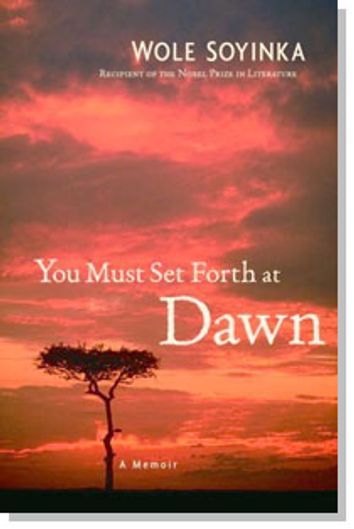
A lot has happened since the late 1980s. The post-colonial left has decided that some cultural traditions are less morally relative than others: Nigerian picturesque ritual suicides, perhaps yes; Nigerian genital mutilation of girls, perhaps no. Bloom’s University of Chicago neoconservatives, having seized the wheel of American foreign policy and steered it into Iraq, have found that a culture-neglecting moral absolutism can indeed lead to tragedies of unintended consequences. In Nigeria, as the oppressive military dictatorship of Ibrahim Babangida gave way first to the obscenely sadistic one of Sani Abacha, and finally to a problematic democracy under Olusegun Obasanjo, Soyinka has remained steadfast in opposition, hewing to a relentless moral absolutism of his own. Now he has come out with a new memoir, “You Must Set Forth at Dawn,” sketching his attempts to reconcile culture and politics, Africanness and internationalism, over the past 50 years. Unfortunately, the sketch is rather aimless and superficial, and Soyinka doesn’t take on the most important issues his autobiography raises.

“You Must Set Forth at Dawn” makes a convincing case for Soyinka’s central place in Nigerian history. Nigeria is a huge country; no one is sure just how big, but population estimates run between 120 million and 150 million. (A government census in March was hampered by ethnic separatists in the southeast who threw acid in census workers’ faces and hacked at them with machetes, and by large numbers of urban residents who decamped to their ancestral villages to be counted so that village chieftains could bulk up their purported populations and get bigger government subsidies.) But the reader of “You Must Set Forth at Dawn” could be forgiven for thinking that the country is about the size of a large high school. Soyinka appears to have had a personal relationship with virtually every significant political and cultural figure the country has produced over the past 40 years. Current President Obasanjo; Bola Ige, an attorney general who was assassinated in 2001; the governor of Lagos (Nigeria’s largest city), Bola Tinubu; ex-dictators Babangida and Abacha; Afrobeat great Fela Kuti; writers Chinua Achebe, Amos Tutuola and Ken Saro-Wiwa; and artists, businessmen, human rights activists — Soyinka has known them all.

And he hasn’t just known them. He has known them from back in the day, through complex and interrelated emotional twists and turns. Their relationships, as he presents them, have been the stuff of Nigerian history. Soyinka’s dramatic sense has often been called Shakespearean, and “You Must Set Forth at Dawn” tries to cast Nigerian history as one of the Bard’s histories might: a tale enacted by a limited cast of characters, thick with dramatic confrontations, daring escapades, great friendships, bloody treachery, metaphysical themes and portentous soliloquies, somewhere between “Henry IV” and “Macbeth.”

Yet ultimately, the memoir recalls the histories less than it does the comedies. Soyinka’s political courage and dedication are beyond dispute. But, as described here, many of his political endeavors carry a hint of the ridiculous. After some of the more striking episodes, one half expects to see him (like that other political exile, Angelo in “A Winter’s Tale”) exiting, pursued by a bear.

Consider: November 1965. Soyinka charges into the broadcasting booth of the state radio station in Ibadan, armed with a gun, to compel the engineer to remove the tape of Western State Prime Minister Akintola’s electoral victory speech and substitute his own tape denouncing voting fraud. He is tried for armed robbery, and acquitted on a technicality.

Autumn 1967. The Nigerian-Biafran civil war. The young officer commanding the Nigerian army in the Western Zone, none other than future President Obasanjo, is home in his bedroom. He hears a telephone ringing in his closet. He was unaware that there was a telephone in his closet. He finds it, and picks up the receiver. On the other end — Wole Soyinka! The playwright bears a message of peace from secessionist Biafran Gen. Victor Banjo and wants to arrange a secret rendezvous.

Summer 1992. Soyinka meets the newly released Nelson Mandela at a dinner in Paris hosted by François Mitterrand. He becomes convinced that he and Nigeria can host a summit between Mandela and South African Zulu leader Mangosuthu Buthelezi to end the bloodshed between the African National Congress and the Inkatha Freedom Party. (The two groups’ young street soldiers were beating, shooting and “necklacing” one another — placing flaming, gasoline-doused tires around the victim’s neck — as they positioned themselves for power in the coming post-apartheid order. Soyinka seems to have thought it was all just a misunderstanding.) After months of shuttling about, enlisting the support of Nigerian dictator Babangida and corresponding with Buthelezi, Soyinka succeeds in getting Nadine Gordimer to present his proposal to a meeting of the ANC Executive Council. Result: “The meeting broke up in a bout of derisory laughter.”

Soyinka seems to be unaware of how these scenes play for his audience, treating them mainly in deadly earnest. For one of the world’s great dramatists, he makes a weirdly unreliable narrator. His prose style is ornate and pompous, sometimes to the point of unintelligibility. (Released from jail in 1971: “I proceeded to review the immediate actuality of our national being.”) This grandiloquence is firmly rooted in Nigerian dialect, but when paired with the inadvertent hilarity of Soyinka’s political escapades, it occasionally makes the reader wonder whether the 71-year-old is losing the plot.

The most telling of these misadventures, one with both cultural and political resonance, comes in 1978, when several academic colleagues persuade Soyinka that they have discovered a long-lost Yoruba archaeological treasure in an illicit private collection, and propose to kidnap it. The treasure is the original bronze head of the sea god Olokun, discovered by German archaeologist Leo Frobenius in a dig at the palace of Ife in the 1920s. The head had supposedly disappeared somewhere along a chain of transactions with the British government and the British Museum. Olabiyi Yai, one of Soyinka’s fellow professors at the University of Ife, says he has seen what he is sure must be the original “Ori Olokun” at a party in the house of an architect and collector in Brazil, and that the great anthropologist Pierre Verger, also at the party, confirmed in a whispered conversation that it was the real thing, and that the architect had obtained it from Verger himself.

Soyinka quickly telephones the head of state, as one does, and obtains a meeting. It happens to be Olusegun Obasanjo, then serving as military dictator. (Again, a limited cast of characters. Presumably this time the telephone was not hidden in the closet.) Soyinka and Obasanjo have a “brainstorming dinner” and come up with a plan. Within a week, Soyinka and Yai head for Brazil. Meanwhile Verger, then visiting at the University of Ife, is delayed from returning to Brazil by some conveniently invented red tape. Once in Brazil, Soyinka and Yai case the architect’s house and have themselves invited over for lunch. They ask to see the collection. Soyinka deliberately forgets his camera bag, goes back to retrieve it and quietly stuffs in the Ori Olokun. Then the two professors make a beeline for the airport.

There’s just one problem: The Ori Olokun appears to be made of clay, and covered with fake verdigris to look like copper. On expert examination at the IFAN ethnological institute in Dakar, Senegal, headed by noted goofball pan-Africanist Cheik Anta Diop, the initials “BM” are noticed stamped into the base of the neck. It seems the object in question is actually a cheap souvenir from the British Museum. Meanwhile, Verger has found out what’s going on and is livid. Soyinka calls Obasanjo, and finds that the secretary will not put his call through. He is shocked: “The nation itself, Nigeria, appeared to have tumbled into some time warp and was spinning out of control.” It does not occur to him that countries in which playwrights can phone up the president are the exception, not the rule, or that Obasanjo may be justifiably irritated that Soyinka has wasted his time and sullied the name of the Nigerian state on a fool’s errand.

Undeterred, Soyinka continues his quest. He puts a close friend’s British ex-wife to work hunting through records at the British Museum. She uncovers the less than thrilling information that the Ori Olokun was lent to a branch museum, the Burlington. Soyinka jumps on a plane to London, goes to the Burlington museum and … finds the “long-lost” Ori Olokun, on display in a glass case, correctly labeled. Apparently Pierre Verger’s whisper to Olabiyi Yai had been a joke.

Soyinka recognizes the absurdity of the episode. (He introduces it with a hilarious sequence in which, years later, while watching “Indiana Jones and the Temple of Doom” with professor Henry Louis Gates, he becomes convinced that Steven Spielberg is secretly lampooning him.) But it’s not clear that he recognizes it thoroughly enough. The effort to “recapture” the Ori Olokun fits the mold of a series of attempts by African states to regain custody of treasures held by European museums; it’s a model narrative of African cultural nationalism. As Soyinka notes, two years earlier the same issues had played out over Nigeria’s unsuccessful attempt to get the British Museum to return an ivory head of a princess of the 19th century kingdom of Benin. Of that conflict, Soyinka writes: “Condescending arguments — such as that the Nigerian nation lacked the means, will, or sense of value required to preserve its precious heritage — require no comment.” But they do require comment. A country whose most prestige-laden university professors launch an expedition to “rescue” a clay copy of a nonmissing archaeological treasure faces a certain burden of proof.

There are several ways to interpret the farcical character of Soyinka’s political interventions. One might be simply that Soyinka himself is a bit of a lunatic — an interpretation he would no doubt embrace. Another might be that in the context of Nigeria, with its intensely theatrical and verbally bombastic culture, political action tends to devolve into farce. A third might be that the comedy is simply an artifact of Soyinka’s gifts as a writer — that the playwright who announced his arrival in 1960′s “A Dance of the Forests” with two dead figures rising out of the earth, as a group of skeptics gather to make wisecracks about the “Gathering of the Nations” taking place in the village, cannot resist injecting an ironic note into even the most serious of scenes.

But a final, somewhat darker interpretation might be that it is the distance of Soyinka’s ideals from anything resembling Nigerian reality that turns his political efforts into comedy. Like Quixote, Soyinka often seems to be applying moral categories that bear little relation to the events he is describing. “Death and the King’s Horseman” may be a canonical text of cultural relativism, but it is Soyinka’s moral absolutism that drives him to continually vilify one Nigerian regime after another; and by the time his condemnations of Abacha have given way to condemnations of his old friend and enemy Obasanjo (for the third time), the reader has to wonder whether Soyinka has any realistic vision for Nigeria.

“You Must Set Forth at Dawn” does have its strengths. There’s a beautiful sequence in which Soyinka forces a terrified cabbie to drive him from Benin back into Lagos in the midst of an uprising against Abacha, dodging the popular barricades and the “Kill-and-Go” paramilitary squads, his only passport his own universally recognized face — hailed by citizens and police alike as “Prof!” The sections on his artistic and theatrical life are interesting, but sparse. Soyinka has chosen to concentrate on his political life, and it proves unsatisfying — as politics, anyway; it frequently makes for excellent theater. In the past few months, Soyinka has founded a new Nigerian political party, in collaboration with a longtime politician and former minister named Anthony Enahoro (another member of the old gang; in “Dawn,” we first meet him in 1964, fleeing out the window of a state legislative building to escape a police crackdown). It’s hard to imagine the new party wielding much power, though with luck, it may serve as an electorally marginal but ethically significant polestar, like Russia’s Yabloko or Israel’s Meretz. In any case, if “You Must Set Forth at Dawn” is any guide, a party with Wole Soyinka at the helm is guaranteed to provide years’ worth of first-rate public spectacle.

Continue Reading Close

A swiftly crumbling planet

Doomsayer Mike Davis offers a new reason to panic: Earth is turning into a giant slum.

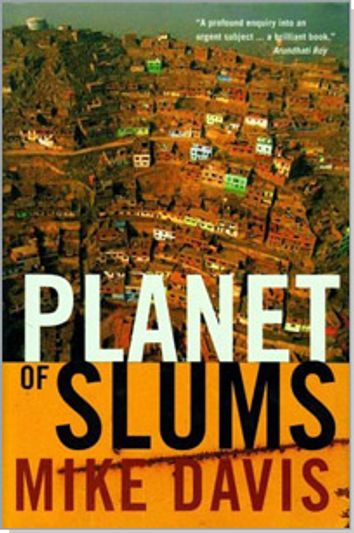
In case global warming, avian influenza, AIDS, terrorism, nuclear proliferation, Chinese nationalism, epidemic obesity and the state of the Knicks don’t have you worried enough, Mike Davis has a new reason to panic: Planet Earth is turning into a giant slum. For the first time in human history, the world’s urban population now equals its rural population, and the balance tilts further toward the cities with each passing year. The overwhelming majority of this growth is occurring in shantytowns and tenements stretching from Karachi, Pakistan, to Lima, Peru, where people live crowded together in densities that sometime dwarf those of such notorious 19th century human anthills as New York’s Mulberry Bend. As of 2005, a billion people were living in slums, and the number is rising by 25 million per year.

The proliferation of slums is an ironic rebuke to the modernist vision of the city of tomorrow, which prevailed until a few decades ago. “The cities of the future,” writes Davis, “rather than being made out of glass and steel as envisioned by earlier generations of urbanists, are instead largely constructed out of crude brick, straw, recycled plastic, cement blocks, and scrap wood.” The high modernist dream has been pronounced dead before, beginning in the 1970s, when Jane Jacobs first attacked skyscrapers and freeways in favor of the organic, variegated human-scale neighborhoods such mega-projects often bulldozed. But the slums that hold 39 percent of China’s urban population, 55 percent of India’s, and an incredible 99 percent of Ethiopia’s (according to U.N. figures) make a mockery of Jacobs’ “urban ballet.” In Davis’ words, “Instead of cities of light soaring toward heaven, much of the twenty-first-century urban world squats in squalor, surrounded by pollution, excrement, and decay.”

It’s not surprising to hear such apocalyptic rhetoric from Mike Davis, who has spent his literary career taking on one disaster after another. His classic “City of Quartz” critiqued the chaotic urban history of Los Angeles. “Late Victorian Holocausts” recounted the devastating famines afflicting British colonies in the late 1800s. And “The Monster at Our Door,” published just last fall, sounded the klaxon over avian influenza’s threat to mutate into a massive human pandemic. It is hard to dismiss Davis as a serial Chicken Little; his books are simply too well researched. For “Planet of Slums,” he has digested acres of reports by U.N. agencies, governments, academics and nongovernmental organizations, along with obscure architectural papers bearing titles like “The Incidence and Causes of Slope Failure in the Barrios of Caracas.”

Yet Davis’ relentless dourness does tend to make his conclusions less trustworthy. He has a penchant for arguing against all sides of an issue. In Chapter 3 of “Planet of Slums,” “The Treason of the State,” Davis excoriates neoliberal governments that fail to build housing for the poor — and criticizes those that do, like China and Thailand, because their high-rises are too far from poor people’s jobs, or lack the community feeling of the old slums. In Chapter 4, “Illusions of Self-Help,” the reader learns that granting squatters legal title to their land is a false solution that only enriches speculators — and that not granting squatters land titles leaves them at the mercy of gangs and police who demand payment for squatting rights. Reading Davis can be a bit like sitting down at a bar next to a guy who starts out lambasting the president and then proceeds to ridicule the opposition, leaving one with the impression that he doesn’t actually vote.

Well, one might say, what do you expect? It’s a book about slums. What’s to like? But, in fact, many urban thinkers have had positive things to say about slums. For example, Davis in several places cites papers published as part of a 2002 conference on African urban issues titled Under Siege, held in Lagos, Nigeria. I was at that conference, and the tone, while sometimes apocalyptic, was a lot more enthusiastic than one would expect from reading Davis.

The conference’s most illustrious presenter was the Dutch superstar architect Rem Koolhaas, who had just finished a four-year study of Lagos conducted with his students at the Harvard Graduate School of Design. Koolhaas is an inveterate contrarian, the kind of guy who can find humanism in a concrete access ramp, and his take on Lagos was typical. He said his initial impression of the city, driving in along the freeways that stretch over its lagoon and seeing only the indistinct forms of shanties through masses of rising smoke, was as a sort of modernist hell. Gradually, however, he realized that what he was seeing was Ebute-Metta, Lagos’ partially waterborne sawmill district, where giant rafts of logs floated down from the country’s surviving rain forests are hacked up by hundreds of small lumber companies. What at first appeared as pure negative chaos was in fact a complex, unstable and highly creative informal economy.

Koolhaas and his students came to realize that all of Lagos was like this. The book they published, “The Lagos Project,” presents dozens of examples of the city’s mash-up economy: the world’s largest markets for used electronics and auto parts; unfinished public housing taken over semi-legally, the units rebuilt in jury-rigged expansions by the residents; a never-completed butterfly highway access ramp converted into a cantilevered village by informal colonists, complete with market stalls and a church. Koolhaas coined the term “flexscape” to denote large indeterminate structures, like highway overpasses or abandoned freighters, which can be creatively reappropriated and made to serve changing local needs. He came to see the city not as a dystopian nightmare or ruin, but as a giant hive of recombinant, sometimes cannibalistic creative energy. Lagos is often termed “unlivable” by Westerners and even by its own inhabitants; but as Koolhaas pointed out, 12 million people live in this unlivable city, and somehow, on their own terms, they make it work.

Davis does acknowledge the views of such slum enthusiasts. In the 1970s, in particular, social scientists in Latin America wrote of “slums of hope,” where families staked an informal claim on open land and built a shanty in the expectation of gradually working their way up the income ladder, into the middle class. But he invokes these optimistic progressive visions of the slum in order to dismiss them. Davis argues, rather trenchantly, that the rising inequality associated with globalization and the neoliberal economic policies of the Washington Consensus have sawed through that income ladder. The very fact that slums are growing much faster than the urban population overall is proof that the “slums of hope” are mostly hoping in vain.

One of Davis’ most original observations is that the explosive growth of modern third-world cities stands the model of Europe’s Industrial Revolution on its head: It is not generally driven by economic growth. In East and parts of South Asia, the new jobs are there, but not in Latin America and certainly not in Africa, where countries have been losing industrial jobs since the 1980s even as their cities ballooned. Today’s migrants are not lured to the city by the promise of prosperity, but are driven from the countryside by ever direr poverty, population growth, environmental damage, war and the increasing global domination of high-tech agribusiness. “‘Overurbanization,’ in other words,” Davis writes, “is driven by the reproduction of poverty, not by the supply of jobs.” In the cities, they survive not by finding formal employment, which scarcely exists, but by scrabbling together an existence as petty traders, artisans or day laborers — entering the so-called informal sector, which Davis argues generally subdivides the existing economic pie into ever-smaller pieces. The starkest example is Kinshasa, a city that continues to grow even as the Congo it supposedly governs has fallen off the map of the world economy.

Davis goes on to sketch the proliferation of hysterical witchcraft accusations against Kinshasa’s unfortunate children. He then tops off his “Oliver Twist” meets “Blade Runner” vision of the global urban present with a chapter on the only U.S. government agency he thinks really “gets” the transformations underway in the Third World today: the Defense Department, whose planning for anti-insurgent guerrilla warfare in urban environments has gained fresh impetus from the conflict in Iraq. Davis sketches Baghdad as a kind of blueprint for the future of the planetary city, the world of the “war on terror” as a magnified New Los Angeles, with the police helicopters of the first world’s gated communities perpetually hovering over the permanent low-grade conflict of the Third World’s smoldering slums.

It would certainly make a great movie. And it’s a brilliant paradigm for thinking about global inequity: “Planet of Slums” is the first book I’ve read to consider globalization through the frame of the urban landscape. But again, Davis sometimes strays too far to the noir side of his cinematic imagination. In my own experience of some of the slums Davis describes, I haven’t found them as bleak as he does. He cites an Organization for Economic Co-operation and Development study hypothesizing the West African coast from Lagos to Accra, Ghana, as a single vast urban poverty zone by 2020; it’s possible, but today much of this coast still consists of tiny raffia-hut villages under palm trees, or uninhabited scrub. And Davis utterly fails to capture the organic vibrancy and thriving street life that can make slums attractive: the elbow-to-elbow throngs of Lagos’ Idumota market, where Igbo teenagers hand-spool videotape for local shot-on-video feature film studios, choking in the exhaust of thousands of tiny electric generators; the alleyways and gray tile roofs of Beijing’s packed old hutongs, where barbers trim hair on the sidewalk in front of mirrors hung from tree trunks; the sunny, grassy shantytowns of Capetown, South Africa’s Khayelitsha.

A romance of picturesque poverty? Sure. It’s easy to be charmed by Khayelitsha when you live in Tamboerskloof. But like Davis’ Bangkok residents who preferred their old slums to the new public housing projects, at least some slum dwellers enjoy aspects of their neighborhoods — many of which they themselves have created. What Davis’ book misses is any acknowledgment of positive agency on the part of the millions of people who move into slums each year. More important, it lacks any acknowledgement that some of the negative outcomes he describes from housing policy toward the poor are the result of inevitable tradeoffs. Davis scathingly depicts the miseries of slum life in one chapter and the miseries inflicted by slum clearance in the next, without ever suggesting what other choices might be possible. “Planet of Slums” is a brilliant book, but it might have benefited from a calmer analytic tone, more like the one taken by Jared Diamond in last year’s “Collapse” — an acceptance that even catastrophic social developments result from bargaining and competition between different groups with different outlooks and interests, and that perfectly bad solutions are as rare as perfect ones. It’s gratifying to see that Davis is now at work on a book about what agents of change might lead to positive improvements in the situation of the global poor. Davis is extraordinary at staring into the abyss; it’d be nice if he started telling us where the handholds are.

Continue Reading Close

Page 1 of 2 in Matt Steinglass

www.salon.com/writer/matt_steinglass/index.html