Melanie Rehak
The secret world of Emily Dickinson
A new book uncovers a far fiercer woman than we've come to expect -- with a tumultuous home life
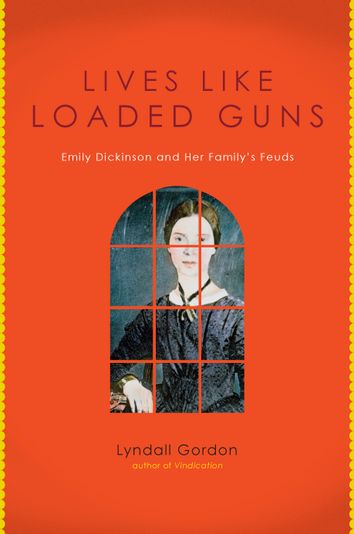
"Lives Like Loaded Guns," by Lyndall Gordon In the 120 years that have elapsed since the first publication of Emily Dickinson’s poems, no description of their effect has yet bested the exclamation of an early reader who found them to be “a shaft of light sunk instantaneously into the dark abysm.” Sly and diamond-brilliant in their capacity for revealing the human condition in the fewest words, the nearly 2,000 poems Dickinson wrote in her upstairs bedroom in Amherst, Mass., remain shocking in their incisiveness even now. Her life, in marked contrast, has always been shrouded in silence, misinformation and speculation. As one mourner recorded in her journal upon Dickinson’s death in 1886, “Rare Emily Dickinson died — went back into a little deeper mystery than that she has always lived in.”
The writer of these words was Mabel Loomis Todd, wife of a philandering, ambitious Amherst astrology professor, longtime mistress to Dickinson’s brother Austin, future Dickinson editor and, as Lyndall Gordon argues in her new book, “Lives Like Loaded Guns: Emily Dickinson and Her Family’s Feuds,” a pivotal figure in both Dickinson’s life and afterlife. She came onto the scene in 1881 with a generous sense of her own destiny and immediately swept the upright, much older Austin, long married with children, off his feet. That Austin’s son, Ned, had loved her first would prove to be just the first battle involving Mabel that eventually led Ned to describe her as “a woman who has brought nothing but a sword into the family.” There was also her struggle with Austin’s wife, Susan, a dear friend of Emily’s and the recipient of many of her poems, over his loyalties. Later, after Emily’s death and after it became clear Mabel would never wrest her lover away from his wife, there were standoffs — first with Susan and then with Emily’s sister Lavinia — for the rights, both moral and legal, to Dickinson’s poems and her reputation.
Amid all the triangulation was Emily herself, who managed — in an awesome feat of control that belies the popular image of her as a neurotic dreamer — never once to meet Mabel in spite of the fact that the lovers had their trysts in the poet’s library. Freed from the constraints of marriage, children and household duties by what Gordon posits, with a fair amount of backup, was epilepsy (rather than the broken heart usually cited as the cause for her seclusion), Dickinson “saved herself from the anarchy of her condition and put it to use.”
There is more than enough drama to go around in Gordon’s book — jealousies, deceit, the agonized shredding of wallpaper, even evidence of a ménage à trois — and she often renders it in the plush detail of a potboiler. But beneath the operatic swell is an admirable amount of new information about Dickinson’s world and the choices she made in the service of what she recognized as her magnificent gift. She was far more fierce than we’ve been led to believe, which makes perfect sense given the work she left behind. Writing to Ned at a particularly difficult moment, she closed her letter with a command no less forceful for its affection: “And ever be sure of me, Lad” — a characteristically straight shot that echoes in every one of her poems.
“Your Name Here” by John Ashbery
A great American poet delivers one of his most emotional, honest and generous collections.
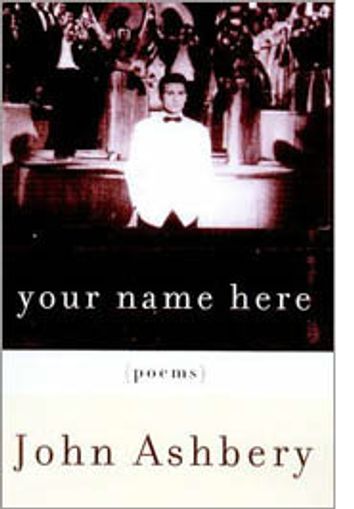
To read a poem by John Ashbery is to encounter a mysterious, occasionally frustrating collection of events and emotions that, while they don’t necessarily make any kind of linear sense, can be extraordinarily compelling. Even if a line seems illogical — and there are many such lines in Ashbery’s work — it’s integral to the poem in the same way that the random thoughts each of us has on a given day make up the fabric of our existence: Did I remember to lock the door? That woman on the subway looked like my best friend from second grade. I wonder what she’s doing. What’s it really like to be a policeman?
Continue Reading Close“George Sand: A Woman’s Life Writ Large” by Belinda Jack
A biography of the cross-dressing novelist who wrote books and took on new lovers at an equally feverish pace.
“What a brave man she was,” Ivan Turgenev once said about George Sand, “and what a good woman.” It’s a perfect characterization of a person who, while she was certainly both brave and good, also spent her life preoccupied with the ways in which men and women — and society’s notions about what each should be — both complement and harm each other. Famed for cross-dressing, the scandalous novels that made her name and innumerable love affairs, most notably with Fridiric Chopin, Sand wrote what she lived and lived what she wrote.
Continue Reading Close“Enola Gay” by Mark Levine
A forceful book of poems about our barely disguised appetite for destruction.
There is a gravity to Mark Levine’s second book, “Enola Gay,” the first of three volumes in a promising new poetry series from the University of California Press. The poems in it bear a sense of having struggled up from beneath great pressure to reach the page. It’s not that the writing seems labored; rather, the words feel as if they’ve come to be bound together gradually. In one poem, Levine refers to “a fleet of morbid dreams seeking inland passage,” which is a perfect description of the images and difficulties that fill the book. They are at once lugubrious and desolate, and they travel in numbers. The landscapes Levine visits, both physical and emotional, are drowning in the aftermath of enormous destruction; he’s there to provide the post-disaster analysis.
Continue Reading CloseFools for love
In a new book, some great poets admit their humble, schmaltzy, love-struck poetic beginnings.
Ah, love. Who among us hasn’t hung onto a few of the spoils of romance gone by — letters tied with fraying, faded ribbon, sappy records, baubles abandoned to the darkest reaches of the jewelry box? And who among us doesn’t pull these items out once in a while, perhaps on a rainy Sunday afternoon, to ponder the people we were when we received them and the inevitable disillusionment that led, later, to new loves that suited us better, or perhaps worse?
I, too, am a hoarder of such mementos, and my collection includes a small, tattered paperback that I got in fifth grade, when I really fell in love for the first time — with poetry.
Continue Reading CloseLittle girls on the big prairie
Through these classics of childhood, a kid could suffer the privations of starvation in the flashlight-lit privacy of her own imagination -- and live to cherish the memory.
A good friend of mine recently told me what I consider to be an emblematic anecdote about what it means to be a little girl who reads books.
When this friend was 9 years old, she went with her family on a fancy cruise through Scandinavia, a trip full of planned activities and dinners with lots of silver and china. There were no other children on board besides her brother, and as it happened, she was in the throes of an obsession with Laura Ingalls Wilder. In the “Little House” book my friend was reading on this cruise, Laura and her older sister Mary endure a particularly hard winter. At some point during this difficult season, each girl is given what seems to her to be a miraculous, extravagant gift: a single baked potato. As it was the late 1800s on the Great Plains, and there was snow everywhere, and the Ingalls family didn’t always have money for luxuries like salt, they ate the plain potatoes and were grateful.
Continue Reading ClosePage 1 of 3 in Melanie Rehak