Michael de Yoanna

Iraq vets on the road to recovery

Sometimes the best treatment for war wounds is a long bike ride

On the road to recovery

Last September, I was in the saddle of my bicycle somewhere in the middle of Pennsylvania. Dark green farms materialized from the mist as one hill rolled into another. Somewhere out here, United Airlines Flight 93 crashed.

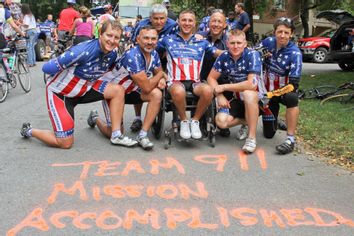
In about a day, I would be at the exact place where the plane went down, by the sides of dozens of troops who were injured in the wars in Afghanistan and Iraq. I was chronicling a solemn moment on the 10thanniversary of the 9/11 attacks for “Recovering,” the documentary film I’m directing about troops who have turned to an unlikely recreation, bicycling, to heal from wounds such as post-traumatic stress disorder and lost limbs.

But Shanksville was far away. It was raining and cold and I kept pedaling. I was wet, breathing hard, my ass hurt and heart felt like it could burst. I wanted to stop. But that was out of the question. I wasn’t going to let the other cyclists down.

I looked down at the Garmin mileage tracker on the handlebars of my road cycle. It read: “790.”

In just 121 miles, it would hit “911.” Then the champagne would flow.

In my 12 years as a journalist this moment ranks high in terms of unusual situations that I’ve been in. Here I was, supposedly reporting and the battery for the tiny HD camera attached to my bike had run out. Walkie-talkie contact with my director of photography, “Blood Diamonds” author Greg Campbell, was long lost.

Alone with my thoughts and too tired to talk or do anything constructive for the film, I kept spinning my legs. I wondered if I ought to be on the back of a motorcycle, armed with a camera and helping Greg. Or maybe I should be in a van, waving my arms and squinting at horizons, sipping a perpetual cup of lukewarm coffee and looking like a film director.

It was a moment of doubt. I wondered, “Was I still making a difference to this film?”

It was also a moment of pain with pain. I was, as cyclists say, bonking, or hitting a proverbial wall of fatigue after riding hundreds of miles, including several days with a small group of cyclists through Tropical Storm Lee. The proverbial wall became a real one: this damn hill. On any other ride, I may have quit.

But today, most of the cyclists around me were hurting just as bad. As Dexter Durante, an Army master sergeant who was blinded when a small bit of C-4 explosive detonated in his face during a training accident, told me, cycling is like a bad relationship – the kind so bad that it’s good for you, if that makes sense. “You know, she hurts so bad,” he says in his poetic way. “Yet still, she’s addictive, you know. I can’t stop loving her. I’m all into her, even when I’m climbing up them hills.”

For years I’ve reported on the toll of the wars in Iraq and Afghanistan, including here at Salon. In two investigations, reporter Mark Benjamin and I revealed that troops with severe psychological trauma had been mistreated by commanders when they returned from brutal war deployments. Some were drummed out of the Army without adequate access to benefits, like help for their PTSD, at a time when suicides were hitting record highs.

Now, I was pulling a new thread in this story that has sweeping ramifications for not just a generation of American troops, but also their communities. Troops are fighting to recover from their wounds. If there are enough of them, they may alter the stereotype that many returning veterans are hardcore substance abusers who can become violent and dangerous.

I met young privates, hard-nosed sergeants, fresh-faced officers, Navy SEALs, Army Rangers and Special Forces officers. They were all joining cycling rides  – whether they were wounded warriors or not. Neither rank nor branch of service matters. When former Army Chief of Staff George W. Casey, a retired four-star general, joined the trek in September, he told everyone to call him “George.”

Vietnam vets I met along the way were almost jealous of this – in a melancholy sort of way. More than one told me they wished there was something like this for them when they returned from war back in the 1960s and 1970s. One told me he was so inspired by the young riders that he was now, after all these years, starting to address long-lingering psychological issues, including simmering, vague anger, head-on. Everyone I met, it seemed, was having nightmares. And everyone was finding a way to talk about them.

This is what John Wordin, a former pro cyclist and executive director of the Ride2Recovery nonprofit, wanted. Hundreds of troops, clad not in camo and boots, but superhero-like Lycra and clicky shoes, all riding together, helping one another by literally lending a hand by placing their palm on the back of the rider next to them (or on the push-bar of a hand cycle or recumbent). This makes hills easier. Moreover, they could talk about their problems with people who understand.

As I pedaled for hundreds of miles last summer and fall through several East Coast states and Normandy, France, I received a few pushes myself. I returned the favor and began to push others. Somewhere in there, riders began to trust us and tell their stories on camera.

In the film, troops talk about how their post-traumatic stress disorder evolved. Wives share what they thought when their husbands lost their legs. Riders speak about the darker places in their souls. Suicide was a subject that came up.

Then we’d ride some more. Then came laughter.

Besides the obvious benefits of cardio exercise, weight loss and muscle gain, bicycling creates a “runner’s high,” a rush of endorphins and a sense of euphoric bliss. As Tony Dragovich, a doctor at the pain clinic for Fort Bragg, North Carolina, tells me, “You relieve your own pain by doing this. So it becomes a self-fulfilling pain treatment.” The activity can be so powerful, he says, that riders with severe pain have kicked their dependence on prescription pills.

For some riders, there’s a new addiction: speed. After a grueling climb comes the reward of a fast descent in which bicycles can hit speeds of up to 60 mph. My mini bike computer has told me I’ve hit speeds in the high 50s many times and I can only say that it is seriously fun and scary all at once.

There are crashes. I saw one unfold before my eyes. As a small group of riders zoomed down a hill in Pennsylvania as part of a ride to meet up with a larger contingent of riders at ground zero in New York on Sept. 10 last year, three riders tumbled on the road when a stick got caught in someone’s spokes. One rider, Dick Brock, a gray-haired man who just rides because he loves being around veterans, needed a hip replacement.

That event was on my mind as we closed in on mile 911 in the suburbs outside the Pentagon in late September. I was also thinking about Army Sgt. 1st Class Justin Minyard, a 9/11 first responder and rider who came up with the idea of the 911-mile journey to honor the victims of 9/11. He couldn’t make it because of a medical issue and not being there was something he said he’d probably regret for a long time.

When we hit 911, champagne was everywhere, all over everyone. I’ve never poured champagne over anyone for a story. This was not any old story.

Several of the soldiers and Marines I rode with now call Greg and me friends. We made friends. As one sergeant wrote to me, “For a bunch of wounded guys and gals to accept and let you into our circle may not seem like a lot but it is. We are very protective of whom we tell and how we tell it. We created a special bond that I know that I will never forget.”

That’s the kind of solidarity that I want every average American to know is out there for them if they take the time to care. There are a lot of positives to having a military where men and women voluntarily agree to serve, but the system has also led to a divide. Many families seem blissfully unaware of the challenges faced by military families, including their tragic losses.

Whether you were for or against the wars, I’m here to tell you times are changing and war is winding down. The troops are coming home in droves and many have experienced horrific moments. Soldiers and their loved ones often tell me they are somehow different than when they left, changed in a sad sort of way, like the excitement of life is gone and can’t be recaptured. They are seeking their old selves – their true selves. They are looking for the persons they were before they went into combat. I am honored that I was there to catch a glimpse of the spark returning to their eyes.

To see the trailer for the film “Recovering,” click here.


When war kills at home

"48 Hours Mystery" follows my 2009 Salon story about a troubled Iraq war vet and his tragic, controversial end

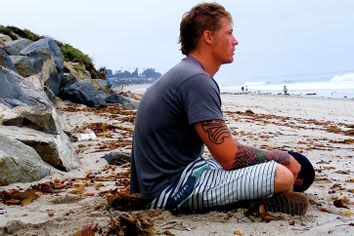
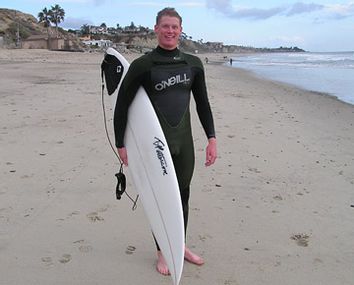
John Needham watches the waves at San Clemente State Beach. (Credit: Michael de Yoanna)

I’ll never forget the first time I saw John Wiley Needham. It was at Denver International Airport in late 2007. John, a private in the Army, was wearing camouflage clothing, toting his backpack and helmet over his shoulder. His father, Mike Needham, told me that John, a fun-loving champion surfer from Southern California, was called “Needhammer.” He was tough, built like an NFL quarterback. Yet he seemed nothing like these descriptions when I first set eyes on him, limping through the baggage claim, slouching. He avoided making eye contact with anyone.

At the time, John was part of the 2nd Battalion, 12th Infantry Regiment at Fort Carson, Colo. He had done a long, bloody combat tour in the al-Dora neighborhood in Baghdad. His medical records confirm he was suffering from post-traumatic stress disorder. He also had a brain injury. Both were the result of combat.

John received an Army Commendation Medal for saving the lives of his comrades by firing on an insurgent who had a grenade. He also got a Purple Heart for the shrapnel that entered his leg when the grenade exploded. Those honors, and others, were important to John. They were things he held onto, helping him to remember that at one point during the war, he was a hero.

John told me he felt slighted that some medals he had received were never actually pinned on him in a ceremony. He blamed it on his breakdown. He felt he became a pariah after he cracked, and certainly some of my interviews with others in his platoon confirm that. We was drinking a lot. He became reckless on missions. It was the bloodshed. He recalled one incident in which his unit killed suspected insurgents in a truck. He was sent to inspect the truck and when he opened the door, a man slid out, his brains spilling on John’s chest as women and children watched and cried, yelling at him. John thinks they were the family.

John’s father and Andrew Pogany, an ardent advocate for veterans care issues, were concerned. They worried that John was not receiving care for PTSD and a brain injury. Eventually, John was taken to psychiatric care at Walter Reed Army Medical Center. Weeks later, he was ripped away from that care. That’s when I came in, at the airport in Denver, to witness John in his epic fight for his care and write about it for Salon.  He was being sent back to Fort Carson where commanders, linked to his unit, were based. He worried he’d be harassed.

I wasn’t surprised to hear John say that a sergeant had told him “I will break your fucking face” even though the sergeant knew John had been suicidal. He called John “a pussy and a scared little kid,” John said.

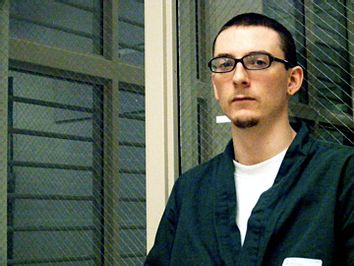
With the help of his advocates and some sympathetic Army insiders, John managed to receive an honorable discharge in July 2008, instead of being punished. Everyone thought his recovery from war would start. Weeks later, when I received a call from John’s father, Mike, I was shocked. Mike told me that his son had been accused in the beating death of a girlfriend, 19-year-old Jacqwelyn Villagomez. John was in jail in Orange County facing a murder charge.

The legacy of PTSD

There were questions about whether the Army and Veterans Affairs had let John slip through the cracks of their care system. “We couldn’t get him everything he needed psychiatrically,” Mike told me in an interview that was part of a lengthy Salon series of investigations into Army care by me and fellow reporter Mark Benjamin.

The investigations — two series that ran in 2009 — were called “Coming home: The Army’s fatal neglect.” Through interviews and stacks of medical records given to us by Fort Carson soldiers and their attorneys and families, we discerned a pattern of suicides, prescription drug overdoses and murders that might well have been prevented if the Army had better handled the predictable, well-known symptoms of common war injuries, including combat-related stress and brain injuries.

In a subsequent investigation, we uncovered a tape that had spurred an investigation at the highest levels of the Army. In it, a psychologist admitted he was pressured to not diagnose soldiers with PTSD but to instead label them with disorders that would effectively leave them with lowered or no benefits for mental health care. The Army, investigating internally and quietly, absolved itself of any wrongdoing. The U.S. Senate Armed Services Committee declined to launch a formal probe. The response to Salon’s hard work was, by and large, silence.

All things considered, John was lucky. He would at least receive benefits. Yet the Army’s disability ratings system sold him short when it came to assigning percentages gauging his level of disability on a scale of zero to 100 percent. By law, John should have received 50 percentage points for his PTSD alone. John, in his initial rating from the Army, received 20 percent for lingering back problems and a mere 10 percent for his PTSD, according to his medical records. There was nothing for his brain injury.

A higher rating might have afforded John more care as he arrived home, including immediate access to professionals. John’s father recalled his son freaking out, “naked, wimpering,” not long after arriving home in San Clemente, Calif. John needed emergency psychological assistance, and Mike said his son met a confusing, cold bureaucracy.

What all this is leading to is Jacqwelyn Villagomez. Would she have have lived if the Army, and later the VA, been more sensitive to the explosive psychological issues surrounding a troubled soldier like John?

The question cannot be answered. But I will never forget what so many soldiers, particularly infantrymen like John, have told me. Mostly young adults, still impressionable, in their late teens and early 20s, they said they were trained to be killers — good killers. They are proud of it. They have medals to show for their service and deserve to be thanked for what they’ve done. However, when the troops come home and leave the military behind, they need to learn to turn off the “kill” switch. They need to learn how not to feel naked without a gun. They need to feel like ordinary Americans again.

Some of the soldiers I’ve met who were kicked out of the Army without any benefits are experiencing some of the worst symptoms of PTSD and brain injuries that I’ve seen. They want care, and in some cases the VA won’t give it to them.

That’s a recipe for disaster.

The last interview

After the series ran in Salon, I joined forces with Denver filmmaker and Oscar-nominee Daniel Junge to make a documentary about John. For that film, I conducted extensive interviews with John at his home.

John told me he felt like a ghost. He said he could not reconcile all the violence he had seen in the past, as if he didn’t know he and others were capable of it. Wanting to go to war and getting into the middle of one are very different things, and believe John, you never want to experience the latter. Facing a long time in prison for murder, John could not conceive of his own future. He said he could only live in the present. He didn’t like to tell his story, but was making an exception for me and the film because he hoped that something could be learned from his tale.

He told me that retelling his experiences triggered his PTSD. Many soldiers have told me that. So John preferred just to surf like he did before he joined the Army. Now, thinking back on that summer in 2009, watching John sitting on his board, rolling with the swells, waiting for a good wave to ride into San Clemente State Beach, I can say I caught a glimpse of what used to be: the pre-Army John, a cocky kid-man with colorful tattoos, a heart full of poems and a wry smile. He gave me the sense that he would do just about anything for a friend in need.

Now all that’s left are facts to speculate upon — including the facts surrounding Villagomez’s death that opposing lawyers will never spin in a courtroom because John is dead.

He died last year of opiate intoxication, according to coroner’s records. The coroner was unable to determine the manner of death, leaving room for even more speculation about John. Did John commit suicide? John’s father, Mike, won’t accept that. John was at home recovering from back surgery the day he died. He was talkative, though understandably weary. Later, John was found sprawled at his bed, motionless.

Mike, who has retained an attorney, believes the VA and VA contractors were negligent. It turns out that pain medication given to John was a lethal combination. Mike says the VA refuses to discuss the case and release his son’s medical records. Losing John, Mike tells me, has devastated the entire family. Mike feels “hollow” and says it is a “challenge just to make it through every day.”

It turns out that I was the last reporter to have interviewed John. But it won’t be in the documentary as planned. CBS bought the footage to the film and will broadcast parts of the interview on “48 Hours Mystery” on Saturday night (10 p.m. EST/PST, 8 p.m. MST).

John’s story is just a piece of much larger puzzle. I’m reminded of the spate of soldier-involved slayings in recent years.

Stories like that of Kenneth Eastridge, a former Fort Carson soldier convicted along with his fellow soldiers, Louis Bressler and Bruce Bastien, in connection with the 2007 point-blank shooting of fellow soldier, Spc. Kevin Shields, in Colorado Springs, Colo. Last month, Eastridge, who is serving 10 years for accessory to murder, was denied parole.

And earlier this year, a jury convicted former Fort Carson Cpl. Robert Marko, for the 2008 murder of Judilianna Lawrence. Sheriff’s investigators told me at the time that Marko bound Lawrence to a tree, gagged her so she could not be heard, raped her and then slashed her throat.

The list goes on. My years of reporting on the other side of war — the part where soldiers return home from the conflict — have also taken a toll on me. I’ve spent many long days (and nights) speaking to soldiers and their families, hunting down records, hearing about the carnage, unearthing pictures and videos. I’m there for the post-traumatic part. Some of the emotional pain, the raw anguish of so much death, rubs off on the investigator. I may be impartial, but I’m also human. I’m prejudiced in favor of life. Life is precious.

I have found inoculation against the cynicism and callousness that I’ve seen in some of my war-weary colleagues by surrounding myself with people who absolutely relish life. The most inspiring lovers of life I’ve found are soldiers and Marines who’ve been to war and back. Many of them got into no trouble at all other than they were injured and had to figure out how to navigate their new lives.

And (what else is new?) too many have faced hassles and obstacles for no good reason when it comes to obtaining care for PTSD and brain injuries both in the Army and through the VA. These men and women are persevering as best they can. A few have shared some surprisingly angry words about America, a country they believe has failed to uphold its promises to wounded warriors. That’s discouraging to me.

Nonetheless, I’ve found deep meaning in continuing a mission that began years ago. I’ve started another documentary, and this one I’m directing. It’s an independent film about soldiers who are literally willing themselves to recover from their wounds of war — from PTSD to lost limbs. It is called “Recovering.”

The title implies no finality because I have learned that recovery from the wounds of war is an ongoing process. For those of us helping the recovering, all we must do is accept that war leaves its wounds. We must care — and really mean it. The most nefarious of all wounds, we all know, are those that nobody sees. There’s a lot of pain out there and there’s a lot of hope — hope from all quarters that troops can return and be what the rest of us truly are, beautifully flawed human beings. In other words, war really is hell, nobody is perfect and even soldiers and Marines need love — especially soldiers and Marines. Especially John Needham.

Continue Reading Close

Soldier in “Coming Home” series dies after surgery

Charged with murdering his girlfriend, John Needham's war wounds went untreated (includes slideshow)

Michael de Yoanna first met John Needham when the troubled soldier stepped off a plane near Fort Carson, Colo., in November 2007. De Yoanna didn’t know it at the time, but a year later Needham would be part of a lengthy Salon series about soldiers involved in murders or suicides as the Army neglected their psychological war wounds. Reporters de Yoanna and Mark Benjamin documented Needham’s tale as part of the “Coming Home” series, after Needham was arrested for allegedly beating his girlfriend to death in late 2008.

Now Needham is gone too. He died on Feb. 19, about 10 days after back surgery at a Veteran’s Affairs hospital in Tucson, Ariz. The circumstances surrounding Needham’s death are unclear. According to his father, Mike Needham, an older brother discovered John Needham slumped over his bed at his mother’s house in Arizona, his face blue. Efforts by his brother, and then rescuers, to revive him were unsuccessful.

Needham, a tall, blond, sturdy California surfer and house painter, was deployed to Iraq in 2006. Not long after arriving, his life turned into a blur of roadside bombs, bloodshed and confusion. He was knocked unconscious by a grenade, suffering a brain injury. Shrapnel ripped into his legs. His back eventually gave him problems. He got a Purple Heart.

The damage to Needham wasn’t just physical. He also suffered from mental wounds. In Iraq in September 2007, when the carnage he had witnessed and participated in became too much, Needham pointed a pistol at his head and pulled the trigger. It would have ended there if a friend had not leaped forward to push the gun aside. The bullet hit a wall. Needham, who had a clean bill of health when he entered the Army, was shipped home.

When de Yoanna met him briefly in the airport in Colorado, Needham seemed nervous. He’d spent several weeks receiving care at Walter Reed Army Medical Center. Back at Fort Carson in Colorado Springs, Needham complained about punishment instead of treatment for his mental issues. His commanders threatened him with charges for discharging his weapon in his suicide attempt. Superiors also harassed him for falling asleep while heavily medicated. He was called a pussy. Though he had been diagnosed with post-traumatic stress disorder, Needham was punished for showing symptoms: failing to appear in formation, insubordination to superiors, and other problems.

With the advocacy of his father and others fighting behind the scenes, the charges against Needham disappeared and in July of 2008, the Army had washed its hands of him. He received an honorable discharge and a partial disability — but his benefits didn’t provide full access to mental health treatment, a critical gap in his care.

Had he received such care, things might have been different just weeks later. In September 2008, Needham made headlines across the country after allegedly beating his girlfriend, 19-year-old aspiring model Jacqwelyn Villagomez, to death in his San Clemente, Calif., condo.

After 10 months in a maximum-security jail cell awaiting trial, Mike Needham raised the $1 million needed to bail his son out to prepare for the murder trial.

Based in Colorado, de Yoanna traveled to California last summer and spent several days with Needham — part of Salon’s ongoing effort to understand veterans struggling with the hidden wounds of war.

Needham told de Yoanna during that visit that he couldn’t provide specifics about his case, fearing any statements he made to the press might become ammunition for prosecutors. He emphasized, however, that he was “not the murderer” authorities and the press had made him out to be. Looking over the crashing waves he loved to surf, the war veteran also said he had become an outcast and wanted to leave his home and live somewhere on the California coast where nobody would know him.

So he lived in the present, often on the beach. He surfed some, hoping the ocean would restore his body, but the pain in his lower back persisted.

After a first V.A. surgery on his back in Los Angeles that did not go as planned in late November, Needham struggled with severe pain. He developed an addiction to painkillers and was hospitalized in Long Beach in the following weeks to deal with it. Then his family brought him to Tucson, hoping the V.A. hospital near his mother’s home would do better. There was another surgery a few weeks later and one more — Needham’s third – earlier this month. Each was an effort to repair Needham’s deteriorating lower back.

Though Needham had a serious infection after his last surgery and a “tumor the size of a grapefruit” on his back, according to his father, he was only cared for by a visiting nurse while staying at his mother’s home at the time he died.

Autopsy and toxicology reports are being completed; medical investigators did not return a call to Salon by deadline.

Needham’s father feels the Army and perhaps the V.A. let his son down. “He never got correct care in the Army and, in my opinion, never got correct care from the V.A. either,” Mike Needham said. “What if they helped him when he first struggled after the explosions in Iraq? Instead, they sent him into battle day after day and harassed him when he struggled. As for the V.A., I think they’re the medical authority and responsible. I question why he was on outpatient status with a tumor the size of a grapefruit on his back.”

Mike Needham plans to join with family and friends in a small private ceremony to scatter the ashes of his son at the beach where he loved to surf. “That’s our spiritual altar — the ocean.”

View a slide show

Continue Reading Close

The Army denies that combat stress causes homicide

An Army report seems to confirm a Salon investigation linking battle stress to murder. But the Army begs to differ

Maj. Gen. Mark Graham (right), Fort Carson's commander, speaks to members of the press on Wednesday. Behind him are the Army's chief of personnel, Lt. Gen. Michael Rochelle (left), and, Army Surgeon General Eric Schoomaker.

The harsh combat in Iraq, including potential war crimes that were witnessed by soldiers, contributed to a series of brutal murders by soldiers based at this Army post near Colorado Springs after they returned home, according to a hard-hitting Army study released Wednesday. Many of the findings in the study, which was announced by senior Army brass at a press conference on the post, mirror those in Salon’s Coming Home series, which identified a pattern of preventable homicides and suicides at Fort Carson among soldiers who served in Iraq with combat stress and failed to receive proper medical treatment.

According to the report, “Survey data from this investigation suggest a possible association between increasing levels of combat exposure and risk for negative behavioral outcomes.” The study also says that “combat intensity/exposure . . . may have increased the risk for violent behaviors” and that its “findings are consistent with recent research on combat exposure and subsequent behavior outcomes among Soldiers.”

Salon’s Coming Home series showed that soldiers who returned from combat duty with symptoms of stress were often ridiculed or otherwise discouraged from seeking help, were overmedicated or misdiagnosed, or chose to self-medicate with drugs and alcohol. Many had been deployed even though they were already displaying signs of combat stress. Additionally, some of the soldiers involved in violence against themselves or others had preexisting conditions that should have disqualified them from service, but were allowed into a military hard-pressed for new recruits via waivers.

The 126-page report issued by the Army Wednesday — an epidemiological study, or EPICON in military lingo — focused largely on 14 of the Army post’s soldiers allegedly involved in murders since 2005. Ordered by Fort Carson commander Maj. Gen. Mark Graham in the wake of the slayings, it is studded with statistical evidence that buttresses Salon’s investigation. The numbers point to a link between violent behavior and substance abuse, repeated deployments, exposure to combat and enlistment waivers. In addition, many of the 14 soldiers allegedly involved in murders witnessed incidents described in the report as War Crimes. Five either heard of or witnessed the “murdering/killing” of non-combatants; three, “detainee abuse;” and, two, “fabricating evidence to justify attacks or criminal acts.”

Yet the Army officials presenting the report denied that it established any cause-and-effect relationships. Eric Schoomaker, the Army’s surgeon general, waved his hands across his chest under clear blue skies during the outdoor press conference, dismissing the notion that the report proved a tie between soldier-involved killings and the horrors those soldiers experienced in the war.

“While this is probably the most intensive and in-depth investigation on the clustering of violent-on-violent crimes in the Army that we’ve ever seen or are aware of,” said Schoomaker, “it is still in many respects preliminary.”

Without causation, there is no way to establish how the murders could’ve been prevented. “We would all like to look back at the cluster of misconduct and criminal activities,” said Schoomaker, “that resulted in devastating human tragedies here in Colorado and be able to say, ‘This is the reason they happened and we know exactly what could have been done to prevent them,’ but that’s rarely the way things work when dealing with human behavior.”

Without causation, there is also limited accountability. While commanders were blamed for standing in the way of soldiers receiving mental health and substance-abuse care, Lt. Gen. Michael Rochelle, the Army’s director of personnel, said the report “was not a tool that was intended to be used to either fix accountability or to be used for any sort of disciplinary action that may follow.”

Schoomaker, Rochelle and Maj. Gen. Graham, who was also on the podium Wednesday, were able to deny cause-and-effect because of caveats in the study. The authors of the report, a 24-member team assembled the Army’s Center for Health Promotion and Preventive Medicine, issued recommendations to stop the belittling of soldiers who seek mental health care and to identify units with high exposure to combat. They stopped short, however, of positing causation, saying that “”the cross-sectional nature of the study does not allow for making causal inferences.”

Thus Schoomaker could say, truthfully, “It’s pointing the finger to levels of causation, but we don’t know direct causation yet. … I’m very reluctant to put cause and effect there. In fact, the authors [of the report] are very careful to say these are correlations … not necessarily one causing the other.”

Yet Schoomaker also seemed to place some blame on the soldiers themselves for failing to seek help. He suggested that units where the soldiers were more willing to get help were less likely to be plagued with violence. The study, he noted, analyzed two brigades at Fort Carson, the 4th and the 3rd. “What did seem to differ between the two was the willingness and ability of those soldiers within the unit where crimes were committed to seek and get effective care for emerging behavioral health problems — alcohol and drug problems — and prompt attention to misconduct.”

But Schoomaker also claimed that the experiences of the 4th and 3rd Brigades in combat were “similar.” That’s not what’s indicated in the report — the 4th Brigade, where the murder suspects were clustered, had eight times more combat deaths than the 3rd. Moreover, the report indicated that the Army itself played a role in denying care to the soldiers — half, some with suicide issues, were sent back to Iraq “early,” according to the report.

U.S. Senator Mark Udall, a Colorado Democrat, who met on Tuesday with Schoomaker, issued a statement following the release of the report, noting it raises “serious questions about whether the military is doing enough to help service members transition from battle back into civilian life.”

“This is a matter of life and death, for our service members – and civilians,” Udall stated. “We must do everything in our power to ensure that the military is providing all necessary treatment and support to protect our service members, their families, and our communities.”

That could be a long road. The report indicated that “overall staffing” for behavioral health at Fort Carson’s Evans Army Community Hospital between 2006 and 2008 was just 65 percent of authorized positions.


Continue Reading Close

Two groups call for probe following Salon expos

A veterans organization and a government watchdog group have asked the House Armed Services Committee to investigate a veterans healthcare scandal exposed by Salon.

A government watchdog group and a progressive veterans organization want a House panel to investigate a potential veterans healthcare scandal exposed by Salon in April. Citizens for Responsibility and Ethics in Washington and VoteVets.org wrote House Armed Services Committee Chairman Rep. Ike Skelton, D-Mo., Tuesday calling for him to “immediately investigate” Salon’s findings. The letter is reprinted below on Page 1 and Page 2. A spokesperson for Skelton told Salon, “Chairman Skelton will give every appropriate consideration to this letter when it is received.”

Last month, Salon published a surreptitious tape recording of a psychologist at the Army’s Fort Carson in Colorado admitting privately to a wounded soldier that he and “all clinicians up here are being pressured not to diagnose PTSD.” Instead, psychologist Douglas McNinch says on the tape, the soldier would receive another diagnosis likely to result in lower disability payments.

In a follow-up piece, Salon showed how the tape made its way to the upper reaches of the Pentagon and staff on the Senate Armed Services Committee not long after it was recorded in mid-2008. The Army Medical Command then investigated itself — failing to contact the soldier involved — and found that nobody did anything wrong.

Through a Freedom of Information Act request, Salon obtained the Army’s investigation exonerating itself, but redactions make it difficult to glean any insight into the Army’s reasoning. Try to make your way through the two blacked-out pages of “conclusions” reproduced here on Pages 3 and 4.


Continue Reading Close

“I believe that I did have PTSD”

Matthew Marino was sent back to Afghanistan for a second tour of duty after the Army diagnosed him with "anxiety disorder" instead of post-traumatic stress disorder.

Matthew Marino served five years in the Army and was deployed to fight in Afghanistan twice. He began to suffer from symptoms typical of post-traumatic stress disorder following his first tour. After returning to Fort Drum, N.Y. in late 2004, he couldn’t lose the hyper-alertness he’d developed in Afghanistan. He had thoughts of suicide, was nervous, had nightmares, couldn’t sleep, and stayed away from family and friends.

Despite his symptoms, however, the Army diagnosed the first lieutenant with anxiety disorder instead of PTSD. He was also diagnosed with depression and given antidepressants. The Army then “stop-lossed” Marino, to prevent him from leaving the Army although his time was up. He was shipped back to Afghanistan for a second tour in 2006. A diagnosis of PTSD might have kept him from being redeployed and sent back into combat; a diagnosis of anxiety disorder did not.

In two stories published this week, Salon has described how a soldier secretly taped an Army psychologist named Douglas McNinch saying that the Army was exerting pressure on him not to diagnose soldiers with post-traumatic stress disorder. According to McNinch, the Army preferred that he diagnose soldiers with anxiety disorder instead — the same diagnosis Marino received. Marino’s experience is a case study in what happens when Army medical care is influenced by the need to keep soldiers on the battlefield and the need to hold down the cost of long-term disability payments.

Marino returned to the States from his second tour in Afghanistan at the beginning of 2007 with symptoms nearly identical to those he’d experienced after his first tour. But the Army processed him out by Feb. 10, 2007 without a real medical examination. Marino recalls filling out a written questionnaire and then being discharged. “They didn’t spend any time checking me when I went out the door.”

When Marino left the Army, all he had were his anti-depression pills and a vague diagnosis from the Army. The diagnosis said, essentially, that Marino was anxious and depressed, but that neither his anxiety nor his depression were necessarily caused by the war. His condition worsened. “My wife was pushing me to go to therapy over and over again,” he said.

And he did. This time, however, Marino went to a facility in Boston run by the Department of Veterans Affairs, the government agency responsible for pay and benefits for service members after they leave the military. There, doctors diagnosed him with PTSD from the war. This means he can receive therapy tailored to help ameliorate the symptoms of combat stress. He also now receives financial benefits from the VA for his mental wounds.

There is no way of knowing for certain whether the Army misdiagnosed Marino with anxiety disorder instead of PTSD after his initial deployment in Afghanistan. His symptoms, however, suggest that that’s exactly what happened. “If you want my opinion,” says Marino, “I believe that I did have PTSD after the first tour.” Marino thinks the Army misdiagnosed him with anxiety disorder, but “I can’t say whether it was by intent or negligence that it was misdiagnosed.”

If Marino had not gone to the VA clinic in Boston and asked for help, who knows how long he would have gone on with the wrong diagnosis and without proper benefits. “There are probably plenty of people walking around with the same thing,” he said. “PTSD has caused me a lot of hardship. If I can help anyone else with my story I’m happy to do it.”


Continue Reading Close

Page 1 of 4 in Michael de Yoanna