Michael O'Donnell

“Reagan and Thatcher”: Rethinking the special relationship

A new book challenges the standard narrative about the transatlantic right-wing love-fest of the '80s

This article appears courtesy of The Barnes & Noble Review.

“Mr. President, the prime minister is on the phone.” So said the White House butler to Ronald Reagan on Oct. 25, 1983, during a briefing on the United States’ impending invasion of Grenada. Margaret Thatcher was upset that Reagan had disregarded her advice against attacking the Caribbean nation (and Commonwealth member), where Marxist rebels had staged a coup. By invading, Reagan sought to check leftist advances and perceived Soviet influence in Latin America. He excused himself and took the call in the next room. In “Reagan and Thatcher: The Difficult Relationship,” Richard Aldous describes what happened next, based on interviews with the meeting’s attendees. They heard a series of “But Margaret”s on Reagan’s end, followed by long pauses in which Thatcher presumably hectored the president just as she hectored everyone else. Reagan returned to the briefing looking sheepish and said, “Mrs. Thatcher has strong reservations about this.” Yet the invasion went ahead as planned. In fact, he could not bring himself to tell her that it had already begun.

Barnes & Noble ReviewSo went the special relationship during the 1980s, according to Aldous, a professor of British history and literature at Bard College. The great transatlantic right-wing love-fest was actually filled with spats, some of them venomous, and occasionally dishes were broken and pictures flung. Sometimes when Thatcher would call to bark at Reagan, he would hold up the phone for others to hear, saying, “Isn’t she wonderful?” He found her intellectually and personally fearless, and a useful ally when she agreed with him. When she disagreed, as she often did, he endured the browbeating but rarely changed course. He did not need to. As Thatcher knew all too well, Britain was a second-class power compared to the United States. She had to play Reagan and his divided staff skillfully in order to gain advantage for her country. Performing such delicate surgery was often too fine a task for her sledgehammer hands. In 2008 Thatcher was overheard to reminisce that “It all worked because he was more afraid of me than I was of him.”

Aldous’ splendid and sharp account of the Reagan-Thatcher relationship is agnostic on the merits of the policies that the two leaders pursued. It is also openly revisionist. The standard narrative that took hold in the final years of Reagan’s presidency was one of great personal fondness and ideological affinity. As the sun set on the 1980s, Reagan and Thatcher treated each other to lavish dinners and sentimental toasts in which mawkishness and superlatives were the order of the day. Broadly speaking, the picture of enthusiastic partnership that they presented was accurate. They had been through much together and saw eye to eye on major issues, such as privatization and the moral bankruptcy of Soviet communism. Yet Aldous contends that these surface pleasantries masked “a complex, even fractious alliance.”

“Reagan and Thatcher” is a welcome corrective to the standard thinking. Yet Aldous reveals the limits of his thesis by describing many occasions on which Thatcher and Reagan clashed fiercely in private, only to emerge in lockstep publicly. One such issue was the American military response to Libyan terrorism in 1986. Reagan sought Thatcher’s permission to launch jets from a Royal Air Force base for strikes against targets near Tripoli, and she initially resisted. But she came around soon enough and subsequently defended the action in strident terms to the British public. (François Mitterrand, by contrast, denied permission for the jets to traverse France’s airspace.) Thatcher also voiced serious reservations about Reagan’s Strategic Defense Initiative (the “Star Wars” program), which threatened to disrupt the West’s carefully calibrated policy of nuclear deterrence against the Soviet Union. Yet Britain was the first ally to sign up for SDI research, in 1985. In return for her loyalty, Thatcher won the president’s ear and his firm support when Britain’s interests aligned with those of the United States. Tony Blair was not the first prime minister to be derided as an American president’s poodle.

At times Thatcher was more like Reagan’s attack dog. Aldous recounts colorful scenes at G-7 summits in which Thatcher took on Mitterrand and Canada’s Pierre Trudeau when they tried to gang up on Reagan. She used her trademark mixture of brute force and coquettish sexuality: “Pierre, you’re being obnoxious. Stop acting like a naughty schoolboy!” (The late Christopher Hitchens swore that Thatcher once forced him to “bow lower” in the House of Lords, and then spanked him on the backside.) Some of the closeness that developed between Thatcher and Reagan seems to have arisen from protectiveness toward each other during key moments of trial. She stuck by him during the Iran-contra affair, while he dropped everything and called her after the IRA tried to assassinate her with a bomb in 1984.

Personal relationships undoubtedly matter in statecraft, but in the end countries act primarily according to their interests. Hard realism caused the biggest strain on the alliance during the Reagan-Thatcher years: the Falklands War of 1982 between Britain and Argentina. The United States, which valued its Cold War alliance with Argentina, pushed hard for a peaceful resolution to the conflict, hamstringing Thatcher and infuriating her as she ordered warships into the South Atlantic. Yet when Argentina rejected a proposed settlement, the Americans stopped playing go-between and took Britain’s side openly and without reservation. And interests can sometimes be relaxed for friends, as when Reagan directed the Justice Department to drop an antitrust investigation of British Airways as a personal favor to “Maggie” (as he called her in private). The special relationship is messy and uneven — at times, it seems little more than a fiction. Here’s hoping Aldous turns next to an account of the Bush-Blair years.

Revisiting Nixon’s Supreme Court legacy

A new book recasts the disgraced president as a moderate conservative on judicial issues

This article appears courtesy of The Barnes & Noble Review.

Richard Nixon assumed the presidency in 1969 with a rare gift in hand: a lame-duck chief justice presiding over the Supreme Court. The great progressive Earl Warren had announced his retirement in June 1968 in hopes that Lyndon Johnson could appoint his successor. But the Senate rejected Johnson’s man, Justice Abe Fortas, and soon clouded him in a fog of petty scandals. He retired from the Court in May 1969, and Warren — who had stayed on for an additional term — followed him a month later. Nixon, therefore, got to appoint two new justices in his first year as president — and he would see two more Supreme Court vacancies in 1971. Three of the four retiring justices had voted as liberals, so the appointments had the potential to transform the Court.

Barnes & Noble ReviewYet by outward appearances Nixon made a hash of the business. His first appointment, Chief Justice Warren Burger, is universally regarded as a failure both as a leader and a jurist. Nixon’s next two nominees, Southern conservatives Clement Haynsworth and Harrold Carswell, were humiliatingly rejected in the Senate. Nixon subsequently appointed Harry Blackmun, who became one of the Court’s most liberal members, and Lewis Powell, a moderate swing voter. The only Nixon appointee who was both conservative and successful was William Rehnquist, whom Nixon hoped would serve for 30 years and one day become chief justice. Ronald Reagan made that promotion in 1986, and Rehnquist served for 33 years on the Court. But during Nixon’s presidency Rehnquist was far to the right of his colleagues and often dissented alone.

In “Nixon’s Court”, political scientist Kevin McMahon offers a new interpretation of Nixon’s judicial policy — that is, his Supreme Court appointments and positions on major legal issues. McMahon contends that Nixon’s judicial goals were more limited than is generally appreciated, and that he largely fulfilled them. Unlike Reagan, Nixon did not launch a full-scale counterrevolution against the perceived excesses of the Warren Court. Instead he used judicial issues mostly for political advantage. McMahon argues that we should judge him by what he did rather than what he said, and that his actions were often moderate compared to his rhetoric. Speaking loudly and carrying a small stick: Leave it to Nixon to chart a new path to success.

McMahon establishes that Nixon’s opposition to court-ordered busing and his law-and-order platform contributed to his reelection in 1972. Whereas modern “strict constructionists” treat issues like abortion and school prayer as non-negotiable litmus tests, Nixon deployed Supreme Court politics nimbly and eschewed ideology. He harbored moderate views on civil rights but used desegregation as a wedge to break off Southerners and “ethnic” Northern Catholics from the Democratic coalition while Patrick Buchanan whispered excitedly in his ear. Nixon was an exceedingly clever politician, and “Nixon’s Court” shows that he “understood he was governing during an era that demanded ideological caution,” when riots filled the streets and third-party candidate George Wallace perpetually threatened to steal votes.

In recasting Nixon as a moderate conservative on judicial issues, McMahon makes as strong a case as the facts will allow, fairly telling the story and scrupulously acknowledging evidence that undercuts his argument. But that evidence can at times seem overwhelming. McMahon is right that Nixon was no Reagan and certainly no Wallace, and that modern commentators frequently overlook his progressive domestic accomplishments. But Nixon nevertheless made a number of strongly conservative moves that redirected the Supreme Court for generations.

In speeches, Nixon wielded Court politics like a thug with a crowbar. Pandering to the South, he complained of “regional discrimination”; pandering to working-class Northerners, he deplored Court-assisted “appeasement” of mob rule and warned darkly about the “barbaric reality” of the “city jungle.” He hammered relentlessly on the busing issue and demeaned the Court by nominating an avowed white supremacist (Carswell) to sit on it. When Leon Panetta — now the Obama administration’s defense secretary, then one of Nixon’s civil rights officials — aggressively moved to cut off federal funds to schools that defied court orders to integrate, Nixon fired him. And Nixon’s Justice Department fought integration in major cases like Alexander v. Holmes County in the South and Milliken v. Bradley in the North, even if, as McMahon points out, it did not participate in every case.

More important, Nixon launched the careers of three of the godfathers of modern legal conservatism: Rehnquist on the Court, and Robert Bork and Antonin Scalia in the Justice Department. McMahon is least persuasive when he tries to downplay the significance of the Rehnquist appointment by artificially separating Rehnquist’s tenure as associate justice (credit to Nixon) from his service as chief (credit to Reagan). McMahon says that different issues faced the country after the promotion in 1986. But race, crime, and federalism are always before the Court, and William Rehnquist made as strong a mark on those issues as any conservative justice since Brown v. Board of Education. Appointing him was one of Nixon’s most consequential decisions.

As a work of political science rather than advocacy, “Nixon’s Court” ends at description: It contends that Nixon’s judicial policy succeeded politically without saying whether the policy was good or bad. It was bad. Nixon cynically manipulated Supreme Court politics to exploit voters’ worst instincts: division, mistrust, resentment, and prejudice. He was the first president since Brown to fight integration. And he displayed a fickle willingness to use any position that hurt his opponents — even threatening at one point to nominate former segregationist Robert Byrd to the Court so the Democrats would have to reject one of their own senators. (Byrd had never practiced law.) Supreme Court politics have become a circus. For six years Richard Nixon was the ringmaster.

Continue Reading Close

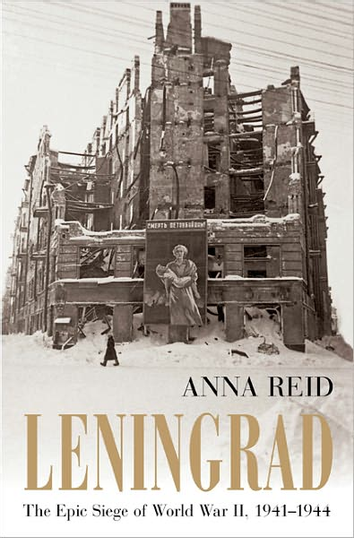
The untold tragedies of Leningrad

A new book sheds new light on the devastating suffering of civilians during the epic siege of World War II

In September 1941, as the German Wehrmacht sped east toward Leningrad, Josef Stalin struck a blow against sentimentalism in warfare. His advisers told him that the Germans were putting Russian children and elderly at the front line and ordering them to beg the Red Army to surrender the city. Soviet troops recoiled from orders to fire on their most vulnerable countrymen, but Stalin would have none of it. “No sentimentality,” he wrote in a memo to his generals. “Beat the Germans and their creatures, whoever they are. It makes no difference whether they are willing or unwilling enemies. Smash the enemy and his accomplices, sick or healthy, in the teeth.”

Barnes & Noble ReviewDuring the same month Hitler expressed a similar disgust with the scruples of his own top brass. In June 1941 he had suddenly renounced the Nazi-Soviet Non-Aggression Pact and invaded the Soviet Union, opening the eastern and decisive front of World War Two. He intended to raze Leningrad and Moscow, expel or exterminate their occupants, and establish a vast settling ground for the German people. An officer protested that killing Leningrad’s inhabitants outright would “let loose a worldwide storm of indignation, which we can’t afford politically.” Hitler unwittingly channeled Stalin by rejecting this “sentimentality.” Permitting himself the liberty of the third person as he invoked the city’s pre-revolutionary name, Hitler wrote, “The Führer is determined to erase the city of Petersburg from the face of the earth.”

Anguished comparisons between the moral depravity of Hitler and Stalin abound, but Uncle Joe occasionally gets a pass when it comes to the Soviets’ famous stand at Leningrad. That chapter in what Russians call the Great Patriotic War remains a solemn source of pride: 800,000 civilians alone starved to death during the 900-day siege, but the city held and the Germans were pushed back. Stalin and communism emerged stronger than ever.

 In her devastating book “Leningrad,” journalist Anna Reid admires the sacrifice and resilience of the Soviet people but challenges the myth — popularized by Brezhnev and inflated by Putin — of “selfless, disciplined heroes” who starved “nobly, in a sort of ecstatic trance.” Assembling a pastiche of newly discovered siege diaries, Reid tells a story of Soviet incompetence and cruelty, and establishes that mass starvation is a nightmare wherever it occurs. While Hitler was unquestionably the aggressor and deserves the most blame, Reid demonstrates that “under a different sort of government the siege’s civilian (and military) death tolls might have been far lower.”

But this book is not an academic argument: It’s a relentless chronicle of suffering. It bypasses the military and strategic aspects of the eastern front to illuminate the experience of civilians. Most of the starvation occurred during the harsh winter of 1941-42 as the Germans surrounded Leningrad and shelled it mercilessly. The Soviet government did not evacuate civilians early enough or protect food stores from the German blitz, and Stalin diverted grain and materiel to fortify Moscow. Cut off from the world, Leningraders ate whatever they could find: first their rations; then their pets; then belts, shoes, pine needles, glue, and motor oil; and eventually each other. Reid’s most remarkable diarist, Dmitri Lazarev, captures the limp tedium of a day spent starving at the office:

We sat round the stove in silence, heads bowed. We sat for hours, not moving, not talking. When there was no more firewood the stove went out. Though there was a big pile of wood in the courtyard nobody had the strength to chop it and carry it up the stairs. Instead we sat out the wait until lunch in the cold. After lunch we went home.

The most striking passages of “Leningrad” explore Russians’ ambivalence toward their government during the siege. Some bitterly welcomed any respite from Bolshevism — at least until they witnessed the Nazis exterminating Russian Jews, POWs, and civilians. Others felt a surprising surge of patriotism that hardened into resolve in the face of Nazi atrocities. Hitler’s greatest mistake was to underestimate the determination of the Russian people not to be conquered. Yet if anything could dampen their solidarity it was the Soviet purges and terror that continued during the siege. Hundreds of thousands of ethnic Germans, kulaks, intellectuals, and minorities were forcibly displaced or sent to the Gulag. Reid excerpts the diary of a soldier who tired of gnawing on horse bones and made an official complaint about ration levels. He was shot for “expressing disappointment at the food supply of the Red Army.”

“Leningrad” is a major contribution to our understanding of the human side of one of the war’s tragic episodes. Reid missteps only occasionally, as when she quotes passages from Solomon Volkov’s book “Testimony,” which purports to be the dictated memoirs of the Soviet composer Dmitri Shostakovich, whose Seventh Symphony, “Leningrad,” became a wartime anthem for the city in 1942 — but scholars have fatally undermined the authenticity of Volkov’s book. Leningrad is also a grimly relevant book as headlines tell of the famine enforced at gunpoint that currently ravages Somalia. There are no winners when hunger is used as a weapon. There are only survivors.

Continue Reading Close

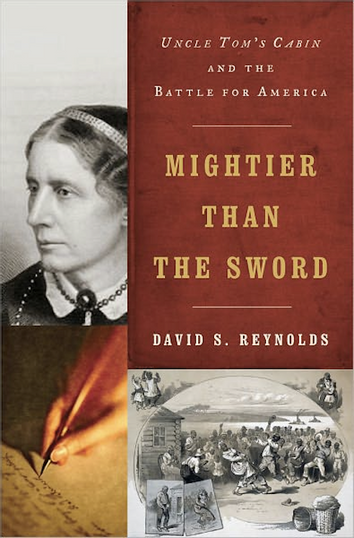
Is “Uncle Tom’s Cabin” a force for good?

A new book reassesses the controversial anti-slavery novel and explores its mixed legacy

Is “Uncle Tom’s Cabin” a force for good, or is it just a mediocre book? More than any other written work, it helped to provoke the Civil War and hasten the end of slavery. In its day (it was published in 1852) it stood as a progressive vision of race and an affirmation of blacks’ humanity. Then again, as the book’s modern critics have argued, it entrenched pernicious stereotypes of African Americans that have persisted through the years: the mammy in her bandana, the sambo dancing wildly, the impish pickaninny, and of course the meek, submissive Uncle Tom.

Barnes & Noble ReviewThe book was read by millions — and the story learned by millions more in plays and films — which spread the stereotypes far and wide. David Reynolds writes in “Mightier than the Sword,” a study of the book and its place in history, that “It is the height of irony that [Harriet Beecher] Stowe’s novel, which had long been hailed by blacks as a chief means of liberation for their race, should yield the damning epithet that was applied to sycophants who compromised integrity and ethics by kowtowing to whites.”

In such circumstances it is best to return to the source. Here, taken not quite at random, is Stowe’s introduction of the character Topsy, an African-American child:

She was one of the blackest of her race; and her round, shining eyes, glittering as glass beads, moved with quick and restless glances over everything in the room. Her mouth, half open with astonishment at the wonders of the new Mas’r's parlor, displayed a white and brilliant set of teeth. Her woolly hair was braided in sundry little tails, which stuck out in every direction. The expression of her face was an odd mixture of shrewdness and cunning… she was dressed in a single filthy, ragged garment, made of bagging… Altogether, there was something odd and goblin-like about her appearance.

One tries not to miss the forest for the trees, but this racism is ugly and hurtful and difficult for today’s reader to overlook. Passages like this — the book is full of them — remind us that “Uncle Tom’s Cabin” belongs to a moment in time, and carried a social and political utility that does not depend on its enduring appeal as art, or indeed as morals. Stowe’s racial views were like Lincoln’s: benevolent but patronizing, progressive but not radical; ideal, it seems, to appeal to a large swath of the country. Had she gone any further, “Uncle Tom’s Cabin” would have reached far fewer readers. As it is, the book infuriated the entire South.

As literature, “Uncle Tom’s Cabin” is pretty hammy, its style defined by maudlin sentimentalism. Yet as Reynolds notes, it was irresistible to nineteenth-century audiences, with “just the right blend of engaging storytelling and popular culture to make its higher-law, antislavery message palatable to many readers.” The narrative broadly follows the fates of two slaves sold by their gentle Kentucky master: Tom, who accepts his lot and, Christ-like, ends up whipped to death by a cruel Louisiana owner, and Eliza, who runs away, staying one step ahead of slave catchers as she and her family race to Canada. Although the story is exciting, the prose is sappy and melodramatic, the narrative interrupted by heavy-handed Christian proselytizing and awkward asides to the reader. One critic aptly labeled it Sunday-school fiction.

“Mightier than the Sword” is a valuable and engaging survey of the book’s genesis and legacy, from its role in antebellum culture and politics to its echoes in milestone films and novels like “The Birth of a Nation,” “Gone with the Wind,” and “Roots”. “Uncle Tom’s Cabin”‘s greatest historical impact, Reynolds contends, was to awaken northern middle-class sentiment to the horrors of slavery. Squabbling anti-slavery factions united behind its message, and southerners grimly put it down and began closing ranks. The book was everywhere. “Mightier than the Sword” contains a fascinating discussion and photograph collection of the many Uncle Tom products (“Tomitudes”) that saturated the country, including card games, engravings, jigsaw puzzles, and trinkets. Slapped onto every snuffbox, Uncle Tom was as ubiquitous as a Disney character. As it happens, Mickey Mouse played him in blackface in 1933.

Reynolds deeply admires Stowe’s novel — a little too much. He argues that her characters consistently exceed society’s limitations, and that the book “invested blacks with beauty and power to a degree that no other pre-Civil War novel began to approach.” This enthusiasm leads him to overstep, as when he insists that the Uncle Tom slur is a major distortion of Stowe’s character’s quiet strength and dignity. To Stowe, Tom’s goodness derives, disturbingly, from his “impregnable simplicity of nature, strengthened by Christian faith.” She believed that blacks are generally credulous and therefore more pious than skeptical, thinking whites. Reynolds pushes such objections to the side as cavils, to the point where he seems to be willing the glass more than half full. In truth, 160 years on, “Uncle Tom’s Cabin” deserves its mixed legacy. Thank goodness Stowe wrote it. But it’s a hard book for today’s reader to love.

Continue Reading Close

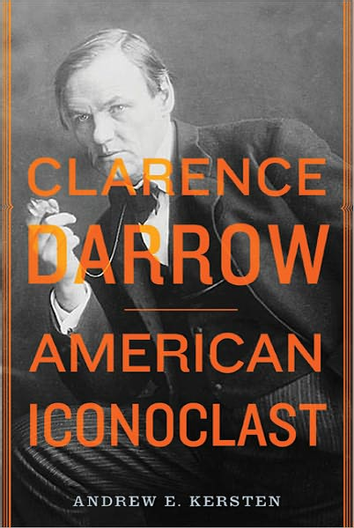
“Clarence Darrow: American Iconoclast”: The life of a maverick lawyer

A glowing new biography whitewashes the less savory aspects of the masterful but flawed attorney's career

On the first page of this biography, Andrew Kersten calls Clarence Darrow America’s greatest lawyer. That’s not quite right. The title cannot belong to a man who tried to bribe a jury, represented the mafia, and defended unrepentant murderers and terrorists for the right fee — not when there are Thurgood Marshall, Louis Brandeis, and Charles Hamilton Houston to choose from. That said, it is beyond dispute that Darrow was a master in the courtroom, particularly in cross-examination and closing argument. He married a skeptical intellectualism to the savvy of an expert huckster, resting his foot on the jury box as he quoted Tolstoy and aimed for the spittoon.

Barnes & Noble ReviewDarrow had a talent for finding his way into cases that combined great liberal principles with flashbulb publicity. He fought creationism in the Scopes monkey trial; defended labor leaders and anarchists from conspiracy charges; and represented blacks in Detroit who fired back at a lynch mob. He also served a term as a state legislator in Illinois, and made speeches and wrote books espousing a surly, progressive, but unpredictable politics. Today we might call him a lefty maverick.

Mavericks make enemies, and Darrow had plenty. The labor movement and its socialist captain, Eugene V. Debs, never forgave Darrow for directing his clients to plead guilty in the Los Angeles Times bombing case. (A pair of labor activists dynamited the editorial offices of the anti-union paper, killing 21, and Darrow led the defense.) Civil rights leaders were appalled when he defended the white murderers of a native Hawaiian who had been falsely accused of raping a white woman. And the women’s movement — which Darrow had once supported — watched him turn away during the debate and passage of the 19th Amendment, which gave women the vote. One of his most famous cases, the defense of young murderers Leopold and Loeb, was on one level a struggle against the death penalty and a retributive system of criminal punishment. Closer to the pavement, Darrow defended the two sadistic killers because their families were rich and promised to pay handsomely.

“Clarence Darrow: American Iconoclast” is, as Kersten admits, the umpteenth biography of the Old Lion. At under 300 pages it cannot compete with the comprehensive studies like Kevin Tierney’s “Darrow: A Biography.” Yet the book is a highly readable survey of Darrow’s major cases and adventures, given from the perspective of a labor historian. It has two weaknesses. The first is the author’s tendency to give his subject a free pass. For instance, Kersten leaves intact Darrow’s absurd justification for abandoning women’s suffrage: “He doubted that widening the polity would have any effect on politics for average Americans.” Second, Kersten defines Darrow’s political and social mission so broadly that it becomes meaningless: an inconsistent civil libertarian, labor man, and civil rights advocate, Darrow always sought to advance “freedom and liberty.” Under this squishy definition, every case Darrow took fits under the same enormous roof that also houses the John Birch society, birthers, and Jean-Marie Le Pen.

The attempt to label Darrow fails not only because of his unpredictability, but also because, like most lawyers, he was at bottom a hired gun, motivated less by right and wrong than by what his client required. It is for this reason that few lawyers are remembered. Then again, few of them could put on a show quite like Darrow.

Continue Reading Close

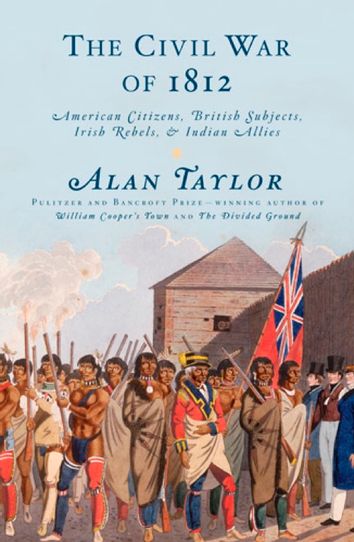
North America’s forgotten civil war

Alan Taylor presents a bold new argument about the War of 1812 and America's attempted invasion of Canada

"The Civil War of 1812" by Alan Taylor

The War of 1812 is an uncertain affair in American memory and legend. Its touchstones — the composition of “The Star-Spangled Banner” and the burning of Washington — tend to overshadow the roots and consequences of the three-year conflict. Historian Alan Taylor offers a corrective in “The Civil War of 1812,” arguing that the United States used the war to consolidate its victory in the American Revolution and become a fully sovereign nation.

Barnes & Noble ReviewScholars frequently portray the war as a draw between Britain and the United States; each side, of course, thinks that it won. But to Taylor, bragging rights are less interesting than ethnicity and allegiance: The war was a pastiche of loyalties and rivalries between Americans, Canadians, Irish, American Indians, slaves and Britons. In a bold rhetorical move, Taylor recasts a frequently overlooked conflict not merely as pivotal to the development of the United States, but as a “civil war” for the North American continent.

The war’s main cause was British disruption of American maritime commerce. The British Navy seized (or “impressed”) sailors on American-flagged ships, claiming them for service in His Majesty’s great campaign against Napoleon. Britain defined its subjects by the location of their birth — even those who, like many Irish, had become naturalized U.S. citizens. To the American government, divided politically and still unsure of itself, this act of contemptuous presumption was not merely emasculating, it was reactionary:

By seizing supposed subjects from merchant ships, the royal Navy threatened to reduce American sailors and commerce to a quasi-colonial status, for every British impressment was an act of counterrevolution. By resisting impressments and declaring war, the Americans defended their revolution.

If only the Americans had had the chops to do so! Taylor’s book chronicles a blundering military ineptitude that will color the patriotic reader’s cheek. For the first half of the war, the United States lacked able military leaders and foolishly tried to invade and seize Canada, Britain’s foothold on the continent. (Taylor limits his focus to that theater, skimming over well-chronicled battles in New Orleans and Baltimore.) Whereas the British were battle-hardened veterans of the Napoleonic wars, the Americans were weekend warriors more interested in cutting taxes than raising an army. Also, they were terrified of Indians, with whom the British cunningly allied. Taylor vividly re-creates the dread that Indian warriors, with their scalp taking, corpse mutilating, and “appalling war whoop,” inspired in the trembling American regular and militiaman. When no Indians were handy, the British impersonated them: “we yelled like Indians. I tell you those simple fellows did run.” Not only did the Americans fail to seize Canada, they lost Detroit.

Taylor argues that nationality and loyalty were fluid variables that ebbed and flowed like initiative trading hands on the battlefield. Irish republicans joined the Americans against their English oppressors, while African-Americans offered their own services to the crown, which renounced slavery. Many Canadians were erstwhile American citizens who had gone north in search of cheap land; “[w]eary of both armies, [they] longed for one side to win so that both would go away. Native American tribes helped swing early momentum to the British, but were abandoned at the Treaty of Ghent (1815), which ended hostilities by returning Canada and America to their pre-war borders. Whereas the United States failed to expand northward, it used the war’s end to split the tribes from England and to seize their land in the West. The war’s greatest American hero, future President Andrew Jackson, was a man with an ugly talent for clearing a field of native opponents.

Taylor tells this complex story with nuance and humor. Readers will grin at his infrequent but effective use of wry phrases like the U.S.’s belief that “French Canadians would welcome a liberation,” and the American officers who “partied like it was 1799.” A dense book of history requires a little cheek to stay lively, and Taylor is the rare writer who can pull this off without becoming a ham. But is he right that this was a civil war? Yes and no. It is true that the English, American and Canadian combatants shared a language and looked alike, and for that reason hated to fight each other. Then again, Taylor’s theses coexist in tension: Civil war suggests a nation tearing itself apart, yet Taylor portrays the War of 1812 as a prerequisite to full nationhood. As one British spy characterized the decentralized American republic, “Seventeen staves and no hoop will not make a barrel that will last long.” Such was the shape of the young country in 1812. By 1815, the coopering was finished and the thing stood up on its own. The United States would never again be mistaken for a British colony.

Continue Reading Close

Page 1 of 2 in Michael O'Donnell

www.salon.com/writer/michael_odonnell/index.html