Michael Scott Moore

Veering to the Reich

A slicked-up neo-Nazi party is making noise again in Germany, exploiting rising immigration fears in Europe. Are voters starting to listen?

  • more
    • All Share Services

Veering to the Reich

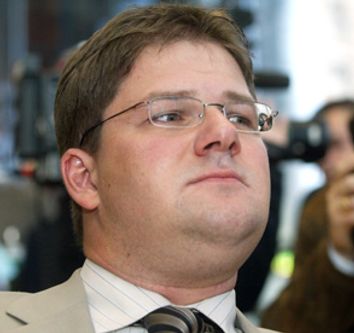
Holger Apfel is a burly, fat-cheeked 35-year-old with glasses, given to wearing brown suits. He leads a delegation of the neo-Nazi NPD (National Democratic Party of Germany) in the German state parliament of Saxony. In January, he stood up in the chamber to rage about the firebombing of Dresden. His timing was sharp: The parliament was trying to recognize the liberation of Auschwitz, but Apfel and his comrades had just caused a scandal by walking out of a minute’s silence observed for the victims; now he wondered out loud why there was no minute of silence for all the dead Germans. He filibustered about “anti-Germanism” and the “German holocaust,” and the Allied “air-gangsters” as terrorists and mass murderers, before someone turned off his microphone.

“He knew what he was doing,” says Richard Herzinger, a German political essayist and journalist who watched Apfel’s tantrum from the public gallery. “It was straight out of the playbook — using the term ‘holocaust’ in a new way, casting Germans as victims. It was somehow postmodern. And absolutely calculated.”

For the first time in more than three decades, Germany faces a national election with neo-Nazis sitting in a regional parliament. Most Germans find this embarrassing. The NPD won 12 seats in Saxony last fall — about 9 percent — and another far-right party called the DVU holds six seats in the state of Brandenburg. Few experts think even the stronger NPD can win seats in the national parliament this September, but the stirring of neo-Nazism in the countryside is a symptom of discontent not just in Germany but across Europe, where many voters feel threatened by the rise of Islamist terrorism, Turkish immigrants taking their jobs, and the idea that their culture might be losing ground to foreigners who don’t understand its traditions. Charles Kupchan, an expert on Europe at the Council on Foreign Relations, thinks the EU experiment is swinging away from enthusiasm for “Europe” and back toward old-fashioned nationalism. “The concern is not just about immigration and unemployment,” he says, “but also a dilution of European identity and community.”

The NPD is all about German identity. It represents the extreme, stumpy end of the debate over multiculturalism. It used to be a postwar party with a single idea — Germany for Germans — but now it also makes noises against the EU, American imperialism and the standing government in Berlin. It insists that Germans were victimized in World War II. It pushes a cocktail of hard-right and hard-left “revolutionary” politics that plays well in the ex-communist east; and by hammering these new points, oddly, its members sound more than ever like members of Hitler’s NSDAP.

“Germany has a legally operating Nazi party again,” says Herzinger. “The mixture of anti-Semitism, anti-Westernism and anti-capitalism resembles the Nazi movement of the 1920s. Not everyone recognizes this. In Saxony, for example, the NPD is organized on a local level; they get involved in community work. So when anti-fascists come and say, ‘But these people are Nazis,’ the locals say, ‘Well, maybe Nazis aren’t so bad.’”

Small as it is, the NPD has the question of patriotism virtually to itself. Its leaders push German pride in a society where love of country is still taboo. “When you talk about patriotism here, you get tarred with the far-right brush,” said Günther Waltz, a 40-ish man standing in a bar down the street from the NPD’s headquarters in Köpenick, a depressed eastern suburb of Berlin. “And I think young people now are sick of hearing about the past.”

Since outright Nazism is against the law in Germany, the NPD has to declare its blood pride without seeming racist. The party’s national chairman, Udo Voigt, told me, “We are not a racist party, and not an anti-Semitic party. We don’t use the motto, ‘All foreigners must go.’ That’s nonsense. But we do think all foreigners should get out of German public welfare and the public health systems.”

Voigt is a plain enough man in his early 50s, with a peppery mustache and a full head of gray hair. He looks and sounds — at first — like any brisk, assured conservative. He wears neat suits and holds a degree in political science. He’s the son of a Nazi S.A. officer (the S.A. was the predecessor to the Nazi S.S.) and has belonged to the NPD since its early days in the 1960s, when he was a teenager. He knows how to talk to the press. You hear very little official anger from him toward Turks or Vietnamese or Jews. “Sometimes we don’t shrink from saying Jews should shut up,” says Voigt. “But that’s not anti-Semitism.”

Maybe not. But he’s been known to slip. Last spring he gave a speech to a group of Young Nationalists and happened to mention Berlin’s new Holocaust memorial, without realizing that a tape from the speech would be broadcast on national TV. “For us it isn’t a Holocaust memorial,” he quipped to the youngsters, “but we’d like to thank the government for laying the foundation for the chancellery of the next German Reich.”

The NPD kicked off its national campaign in July at an open-air concert in the otherwise placid and leafy town of Gera, Thüringen, about three hours southwest of Berlin. Local police had gated off the Park der Jugend, or Young People’s Park, to let about a thousand people gather on benches, drink beer and eat bratwurst. Udo Voigt was there, too, in his shirtsleeves and tie.

It was a warm summer day, with sunlight streaming between the beeches and elms. Women and a few young families mixed in with jackboots, suspenders and an ocean of inflammatory T-shirts. (“Master Race,” “Ku Klux Klan,” obscure praise for 9/11.) Germany has hundreds of disorganized gangs, Kameradschaften, and attracting them to this “Rock für Deutschland” concert was vital to the movement. Dr. Richard Stöss, a professor of political science at Berlin’s Free University who studies the extreme right, says the NPD under Voigt “is always looking to integrate those smaller groups” as a way to swell the ranks. But the NPD wants to remain legal; so at the park entrance, banned slogans on T-shirts and improper tattoos — Iron Crosses, swastikas, references to Hitler’s S.S. — had to be censored with packing tape.

Not everyone looked like a skinhead or outlaw, though. What the NPD supporters in Gera had in common wasn’t a clothing style but a vigilant, defensive, urgent manner. About the only generalization you can make about neo-Nazis is that they’re not relaxed people.

“Some of them are very well-educated,” says Richard Herzinger. “You can almost compare the movement to the [radical-left] ’68 movement in Germany, which also wasn’t a function of material wealth — some of them just broke with reality in favor of an absolute truth. That has an incomprehensible appeal. Because then you can place yourself over other people. It’s not just a question of education.”

The first speaker was an aging man in a blazer and glasses named Frank Schwerdt, the party chairman in Thüringen. He talked about merging the factions of the far right to win parliamentary seats. Then he mentioned the shuttered storefronts in Gera, joblessness, and the fact that people were migrating from their hometowns to cities like Berlin or even to other countries, like Austria, for work. Home was an important theme. He said the NPD understood that people needed jobs “da, wo sie zuhause sind” — there, where they feel at home.

Then a “hatecore” band called Eugenik took the stage, and played masturbatory white noise for about an hour.

The festival mood in Gera is a snapshot of how the party has changed. The last time the NPD had power was in the late ’60s, when its members swept briefly into 11 western state legislatures. Back then it ran on a single plank for aging reactionaries who resented foreign soldiers on their soil — “Germany for Germans” — but now it’s a party for young people, with a platform that both resembles Hitler’s old policies and blurs their essential Nazism.

“The NPD is basically devoted to a return of the German Reich,” said Dr. Stöss, the political scientist. “Now imagine if you went to a depressed eastern state where immigration from Poland was a problem, and said, ‘We think the western parts of Poland should be annexed to Germany.’ [Something the NPD espouses.] No one would vote for you. So they couch their position in arguments about globalization … They say they want to return to a closed, nationalized German state, away from the EU, away from foreign capital, away from the United States.”

Hitler himself appropriated left-wing rhetoric about big business and banks. He called the Allies of World War I “gangsters” and “criminals.” He railed against America. He inflamed German pride as an antidote to German shame, and in the early days of his party he swelled the rolls with malcontents: “A conglomeration of pimps, murderers, homosexuals, alcoholics, and blackmailers flocked to the party as if to a natural haven,” wrote William Shirer in “The Rise and Fall of the Third Reich.” “Hitler did not care, as long as they were useful to him.” The NSDAP wanted to overturn the democracy in Berlin and replace it with a “folkish state,” based on land and blood, just like Voigt’s NPD.

The NPD’s national office is a cramped lemon-yellow row house in Köpenick, called the “Carl-Arthur Bühring Haus,” after a wealthy Holocaust denier. Bühring claimed the count of 6 million dead in the German gas chambers was a lie concocted by a former S.S. agent under American pressure during the Nuremberg trials. The NPD’s Web site shows enough self-awareness to devote a pair of pages to explaining why the current German National Party is not related to, or even like, Hitler’s NSDAP. But its defense is a technical one: It seems Hitler ran his party “dictatorially” from 1921 on, while Udo Voigt is more open-minded. The pages never address racism, the Holocaust, German borders, or Jews.

“We do want a new government in Berlin,” Voigt told me. “East Germany was a child of the Russians, and West Germany was a child of America and the Allies. That’s unacceptable to us. We want a free Germany, with no more occupation. Remember there are still American troops on German soil. Then we want a government that serves German interests — German money for German projects, and an immediate halt to aid for Israel.”

“Would Germany be democratic under the NPD?”

“Of course,” he said.

“Would Jews have a role in the government?” I asked.

“Yes, of course. Jews have contributed a lot to German culture.”

But is he telling the truth? Public anti-Semitism would be a kiss of death for the NPD; in fact the party was almost shut down in 2003 for flirting with overt Nazism. Dr. Stöss believes the party’s political platform expresses what its leaders can’t say out loud. “When they talk about globalism, they’re talking about Jewish capital,” he said. “They believe Wall Street is run by Jews. They argue that the Palestinians are the true nationalists in Israel — the Jews in other words are ‘internationalists,’ with a plot to spread their global network. Whereas the Palestinians and the NPD are ‘nationalists.’”

Most Germans hate or disregard the NPD. But the question of national identity flows under everyday politics in Germany, and warning about (not-very-numerous) outsiders is a safe way to win votes for politicians from across the ideological spectrum. The party that threatens to win parliamentary seats this fall from Berlin’s ruling elite is a new far-left outfit called simply “the Left Party,” and its leaders have also made anti-immigrant noises. Oskar Lafontaine, one of its founders, said in a speech in June, “In my opinion only people who take part in German society are German.” Angela Merkel, the conservative leader considered a strong possibility to beat Gerhard Schröder in the fall, is also popular in part because she’s against Turkish accession to the European Union.

“I have a German passport, but I’m still a foreigner,” said Aynur Aktürk, a 40-year-old woman with hay-colored hair who moved to Berlin from Turkey as a teenager and now has two German-born kids. She spoke over lunch at a Turkish street fair this summer in Berlin. “My husband and I have jobs, we’re lucky. But if we lose our jobs, I don’t know what will happen. Germany is my home now, but it could change.” She hesitated. “Germany could change again. The people aren’t happy.”

At the rally in Gera, I asked a pregnant woman pushing a stroller across the grass why she liked the NPD. Two young boys crawled at her feet. She looked like a young mother from Northern California: socks in sandals, a loose green maternity shirt, pale gentle eyes, and dirty-blond hair tied back with a scrunchie. “Because they stand for family. And for Germany. And because I won’t vote for any of the established parties,” she said with a slight smile, as if voting for Angela Merkel or Gerhard Schröder were absurd. “They put up with too much corruption.”

Her stout-bellied husband, wearing shorts and a plaid shirt, hurried up. Journalists weren’t welcome at the rally. He said, “I don’t think we should give our names. We don’t know what will happen. We don’t live in such a free country.”

This was the surprise of the afternoon, that NPD supporters at the concert believed they were free spirits, that their police-enclosed cauldron of racial pride was the only place where “true Germans” could express themselves. Freedom became a theme of Udo Voigt’s speech. He mounted the stage between black columns of concert speakers and spoke with his sleeves rolled up, like a man with work to do. “Kameraden,” he said, “democracy means rule of the people, democracy means freedom, and if you’re afraid of [banned] songs, if you’re afraid of lyrics — then what are you afraid of? You’re afraid of the people! And I say, the politicians in Berlin should be afraid …”

But as he talked about freedom, a woman with loose hippyish hair wove through the crowd with a video camera. A man followed her, holding a cardboard sign: “Andrea Röpke, anti-fascist.” She was a well-known journalist. People quit listening to Voigt and trotted over to the sign. Röpke had to keep moving. But wherever she went, the sign followed, and the flow of people around the park was like a school of hungry fish. The scene looked no different from a witch hunt.

“As for all you scribblers,” Voigt went on, “who lie about us in the press: You should write this down. We don’t want a multicultural society! We know what that brings! In Berlin we’ve learned about the first school without a single German child. Should this be the future of Germany?”

Next to me was a couple enthusiastically listening to the speech. The man was middle-aged but youthful, with prematurely gray hair and a camouflage soldier’s cap, an Army-green T-shirt, and boots. His young wife had dyed strawberry blond hair and freckles dusted with makeup.

The man looked at me. “He means you,” he said. “You should write this down.”

“Anyone who wants this to be the future of Germany,” hollered Voigt, “should vote for the established parties! Whoever doesn’t want this to be the future of Germany should send the NPD to the national parliament!”

“Write that down!” said the man.

“It’s the truth,” said his wife.

“We need, in Germany, at last, a true national politics,” said Voigt. “We have a dream — that the Federal Republic of Germany should go into the dustbin of history, as quickly as possible, just like the GDR. That’s our dream. We dream of a free and prosperous and peaceful Germany for true Germans … We have the blood of our fathers flowing in our veins and we are proud!”

The crowd cheered, and the man in the camouflage cap smiled at me as if I’d been taught some sort of lesson.

“Good speech,” said his wife.

The state of Thüringia, by the way, is about 98 percent German. The NPD does well in states with the smallest foreign populations. The party isn’t popular in semi-integrated Berlin, where an NPD march was thwarted last May by thousands of regular citizens. “But in the long run,” says Herzinger, “they have potential. They’re determined, they’re organized, and they have an influence on young voters that’s horrifying. We’re now dealing with a mini-NSDAP, comparable to the party of the 1920s. Which people back then didn’t take seriously, either.”

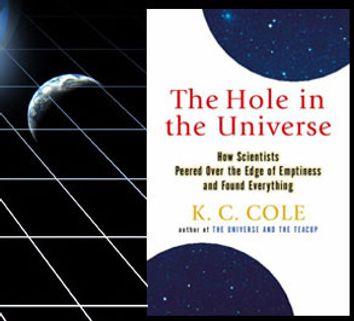
“The Hole in the Universe” by K.C. Cole

An engaging new book explores the riddles of space, from string theory to the possibility that the universe is a holographic projection.

  • more
    • All Share Services

K.C. Cole’s new book is about nothing. “Nothing is far and away the most difficult subject I have attempted to pin down on the pages of a book,” she writes in a foreword. “Grasping ‘nothing’ requires resisting the temptation to follow it wherever it leads, getting lost in the semantic thicket of Nothing puns, or simply bouncing the idea around on one’s knee, stringing together curious facts and ancient history — taking it for a pleasurable, if rather pointless, trip.”

Cole resists two out of three temptations. “The Hole in the Universe” covers current physics and cosmology in simple, energetic prose, without much knee-bouncing or idle following; but Cole indulges in such a tangled thicket of overly cute nothing puns in the first chapter that I’m tempted to say the real book starts on Page 25. Only then does she get down to explaining, clearly, why the vacuum of space is a deep modern riddle.

She starts with a brief, engaging history of zero as a mathematical idea. (The ancient Greeks avoided it; the Italian Fibonacci introduced it with the Arabic number system to Europe, in 1202, where “it was promptly denounced as ‘heathen.’”) Then she details the 19th century notion of a luminiferous ether, which Einstein discredited. “To physicists of Newton’s time and after,” Cole writes, “the ether was the necessary mode of transportation for waves of light. After all, if light was a wave — as most people at the time thought — then there had to be some medium for it to wave through.” The luminiferous ether supposedly filled the vast reaches of space like an ocean.

Einstein disposed of it, though, by proving that light acts as a particle as well as a wave. “Light didn’t need a carrier, or even space, to travel through,” writes Cole. By clarifying the nature of light (and matter), Einstein simplified a mess of contradictory theories and worked a revolution that physicists are still trying to understand. The result, ironically, is a modern version of the old ether, a vision of so-called empty space cluttered with neutrinos, dark matter, antigravity and multidimensional strings. The fact that the void of space doesn’t act like a void is the problem (Einstein predicted it wouldn’t); and modern physics has a menagerie of strange theories to explain why.

One of the strangest, of course, is superstring theory, or M-theory, which Cole explains in a brief, lucid chapter. “As described by M-theory, the entire universe arises from the harmonics of vibrating strings, membranes, and blobs in eleven dimensions.” These strings underlie particles as fundamental building blocks of the universe, meaning their “mode of vibration” determines the identity of a particle (electron, proton, etc.). My favorite part of this chapter is the segment titled “Strings of what?” I was happy to see a science writer pose this question point-blank. But then Cole quotes the Harvard string theorist Andrew Strominger: “You’re not allowed to ask that question. That’s it. It’s just the thing.” Oh.

String theory makes sense only because it solves certain insoluble problems. In the last five years it’s moved from the faddish fringes of science to a more central, respectable place, mainly because it “resolves the glaring mismatch between the laws that rule the large-scale cosmos (Einstein’s theory of gravity) and those that run the microcosmos (quantum mechanics).” No one claims to understand it fully; string theory just seems to work.

One extension of it by Stanford’s Lenny Susskind proposes to explain the universe we know as a holographic projection (via vibrating strings) from a lower, simpler dimension.

“It would mean [writes Cole] that if you want to describe the universe and everything in it — gravity, particles, planets … — the correct information you need to do that lies not on the three-dimensional ‘interior’ we take to be the real physical world. Instead, it is encoded on a lower-dimensional surface. Like a hologram, the universe is a projection of the information on this boundary into space.”

This sounds suspiciously like Hindu dogma to me, but Susskind stumbled on the theory while he was studying something else, and the mathematics have been worked out in detail by the Harvard physicist Juan Maldecena. “Most of us think it’s an absolute fact,” says Susskind.

“A Hole in the Universe” covers roughly the same territory as Stephen Hawking’s “A Brief History of Time,” with the benefit of 10 years’ additional research. Since Cole is a science columnist for the Los Angeles Times, not a physicist, her style is breezier and less exact than Hawking’s. She goes in for too many of the nothing puns and uses certain analogies that aren’t airtight, but overall the book is a strong and sometimes mind-blowing introduction to the edges of modern physics. Its real problem is the tantalizing, unfinished state of physics itself: The book leaves behind so many baffling contradictions that the most glaring void, by the end, seems to be the lack of a present-day Einstein to make it all make sense.

Continue Reading Close

“Cloning: Responsible Science or Technomadness?”

A new book shows that ethical questions about replicating humans are less consequential than the procedure's threat to our biological diversity.

  • more
    • All Share Services

“When I first heard about cloning,” wrote William Burroughs in a late essay called “Immortality,” “I thought what a fruitful concept, why one could be in a hundred places at once and experience everything the other clones did. I am amazed at the outcry against this good thing not only from Men of the Cloth but from scientists … The very thought of a clone disturbs these learned gentlemen. Like cattle on the verge of stampede they paw the ground mooing apprehensively, ‘Selfness is an essential fact of life. The thought of human non-selfness is terrifying.’”

It’s hard to say if Burroughs is being funny here, because he’s certainly full of it. Cloning cannot create armies of consciousnesses tuned in to some central brain. It also won’t undermine individuality, as his imaginary Men of the Cloth worry, by printing cheap replicas of somebody’s precious individual character. This is point No. 1 in any debate about cloning. The process just copies a genome, and poses no worse a threat to the human sense of self than does any identical twin.

From there things get complicated, though, and a new anthology of articles on the subject is meant to help navigate this weird, still-uncharted moral territory. “Cloning: Responsible Science or Technomadness?” wants to be a complete overview of the debate so far, mixing religious declarations with philosophical arguments, scientific findings and governmental decrees; the original Nature article on Dolly the sheep even shares space in these pages with a (very bad) story by Douglas Coupland.

The writers brood over the question of individuality and self in the aftermath of Dolly’s birth in 1997. So far the debate relies on language borrowed from older arguments, like the ones over abortion or slavery. Whether you’re for or against human cloning in the abstract seems to depend, right now, on whether you’re pro-life or pro-choice. And almost every philosophical writer in the book refers to Immanuel Kant, who (in the context of slavery) insisted on treating all people as “ends in themselves, not as means to an end.”

So, the philosophers ask, what would Kant think of cloning? Answers fall into categories. Some writers can’t get past the sickness of the idea of replicating a person. They insist that anyone intentionally cloned, for whatever reason (vanity, infertility, minor body-part transplants), would live under a psychological cloud. “The cloned individual will be saddled with a genotype that has already lived,” writes Leon Kass, an ethicist at the University of Chicago who leads the anti-cloning charge. “He will not be fully a surprise to the world.”

Other writers argue that a cloned person could be just as fulfilled and independent as any biological twin. Even humans conceived — or concocted — as a means toward some end could grow up to be treated as ends in themselves, and live out dignified lives. David Elliott, a philosopher at the University of Regina in Saskatchewan, gives the strongest argument out of this camp:

[Kant's] idea is not that every person is valuable in virtue of being empirically different from everyone else. Rather, dignity is grounded in the rational capacity to conform one’s will to the moral law, and there is no reason to think that this capacity would be diminished by duplication.

Moral will, in other words, belongs to a dimension of human consciousness not fully decided by genes. The argument has a whiff of religion, and one surprise in “Cloning” is that not a single church paper makes the same point with quite so much clarity or force.

The Kantian debate over means and ends has lots of other fine points, which “Cloning” covers in detail, but it isn’t really interesting for 300 pages. If a human clone became absolutely necessary, creating one seems no worse, morally, than breeding a sheep. The interesting part of the book is the argument over what might make a human clone worth so much expensive effort. The list of good reasons is short. Vanity? No. Infertility? We already have end runs around that, not to mention kids waiting for adoption. Medicine? Maybe. Some patients now dying of leukemia, say, or kidney disease might survive if a clone of their bodies were made for the sake of a bit of bone marrow or a single genetically identical kidney (unlethal to give, in both cases). But the clone would also need to be born, raised and loved — and the notion of raising a child to harvest a whole organ seems brutal.

What about improving the race? Or breeding an army of Napoleons? To start with, a genetic copy of Napoleon wouldn’t be a resurrected Napoleon, but only a twin, raised far from the time and home that made the ambitious Corsican who he was. “No one steps twice,” wrote Heraclitus, “into the same river.”

The closer we get to human cloning, generally, the less fantastic it sounds. In 1999, scientists associated with the Roslin Institute reported that the DNA of their famous charge, Dolly, was aging faster than an ordinary sheep’s, leaving her vulnerable to cancer and maybe an early death. Her genetic mom’s DNA — derived from a mature udder cell — might have an absolute age. If this proves true, and universal, the creepiest Hitlerite arguments for cloning will crumble, because DNA transfer will be revealed as the quickest way to wear out a bloodline. God, or someone, built diversity into us for a reason. From horse breeders and farmers (and dog breeders and royal families) we already know that too much genetic refinement isn’t healthy; so maybe the worst risk posed by cloning humans is not the loss of any individual “selfness” or dignity but the loss of our biological heritage, some part of our wild and vigorous past.

A problem with the current cloning debate — and this book — is the sheer amount of stuff we still don’t know. “Cloning” in some ways exaggerates the problem by leaving out recent discoveries. Nothing in the book deals, for example, with Dolly’s life as an adult. (I found a news report about her mature genes.) The anthology is a good sourcebook on a hot topic, but it’s not definitive. It simply takes a snapshot of the murky debate in what might be called the immediate post-Dolly period, which has already started to fade.

Continue Reading Close

“The Bridegroom” by Ha Jin

The National Book Award-winning author of "Waiting" is in fine form with new tales of ordinary Chinese angling for love, sex and Party favors.

  • more
    • All Share Services

Thomas Pynchon and Don DeLillo have built large reputations by describing the Kafkaesque creepiness of life in the modern U.S., with its growing corporate bureaucracies and headless electronic media, its sense of someone-else-is-in-charge. But the paranoia-inducing reality suffusing those authors’ books must be nothing compared to everyday life in China. Ha Jin’s third story collection describes how normal Chinese people pick their way through a communist-bureaucratic tangle of sex rules, food quotas, official marriage-encouragements and worse. He writes, as usual, in plain simple prose, without games or tricks, as if he believes that describing his homeland for readers in careful English has a value and importance of its own. He is, of course, absolutely right.

The characters in “The Bridegroom” live in northeastern China, in and around Muji City, where Jin’s last novel, “Waiting,” is set; but the trajectory in this collection is toward the West. The first story, “Saboteur,” is immersed in provincial corruption; it follows an instructor at Harbin University who finds himself suddenly under arrest. The last three stories show the strain of American influence after market reforms in the 1980s. By following the stories in order, a reader can almost feel China liberalizing. But Ha Jin’s characters hardly notice, because what counts as freedom in the West looks to them like a bad idea.

In “After Cowboy Chicken Came to Town,” an entrepreneur named Mr. Shapiro sets up a fast-food franchise in Muji City and instigates a series of cultural misunderstandings and misperceptions. First the business almost fails because the locals know American fried chicken is just imperialistic nonsense, “more batter than meat.” Then Mr. Shapiro tries an all-you-can-eat buffet. This concept is new in Muji City, and the restaurant fills with customers who eat “like starved wolves” and pocket pieces of chicken for their relatives. Shapiro loses money. Then a prominent local man wants to use Cowboy Chicken for his wedding feast: “He wanted something exotic for their wedding dinner.” The comedy culminates in an ill-conceived strike by the kitchen staff. The story is an amusing and maybe unintentional comment on globalization, which comes off as a laughable dream, even for Mr. Shapiro.

A less amusing story is “The Woman From New York.” The title character loses not just her job but also her reputation, her husband and her daughter for leaving Muji City to live in New York for several years:

Now she was back. She looked like a different woman, wearing a gold necklace, her lips rouged, her eyelashes blackened with ink, and even her toenails dyed red … In a way, her makeup and manners verified the hearsay that she had become the fifteenth concubine of a wealthy Chinese man in New York City.

What she actually did in New York isn’t clear. She seems to have worked in a restaurant with the hope of earning a lot of money. Maybe she wanted to improve her position in China by learning English; perhaps she planned to move her family to New York. But the dreams have collapsed, and now her husband and jealous in-laws can’t forgive her hubris. Even her daughter calls her a “bad woman” and refuses to see her.

Saying “The Woman From New York” is one of the weaker stories in the book is only a way of praising the rest. Jin’s focus wanders here more than it does, say, in the title story, which tells about a sensitive, handsome, clean-living bachelor, Huang Baowen, who surprises the narrator by proposing marriage to a homely young woman. Months after the wedding Baowen is arrested at a secret gay men’s club. Almost everyone in the story, including Baowen, displays a shocking, near-superstitious ignorance of homosexuality, and the narrator uses his modest influence to make sure the authorities give Baowen the mildest form of “lifestyle cure” — a program of electric baths:

Baowen was noiseless in the electrified water, with his eyes shut and his head resting on a black rubber pad at the end of the tub. He looked fine, rather relaxed … Then the nurse gave him more electricity. Baowen began writhing and moaning a little. Obviously he was suffering. This bath couldn’t be so soothing as he’d claimed. With a white towel Nurse Long wiped the sweat off Baowen’s face and whispered, “I’ll turn it down in a few minutes.”

Jin delivers all his stories in this modest documentary style, without surrealism or emotional heat. His everyday weirdnesses accumulate like coral. The writing is as restrained as the society he describes, where bureaucratic suppression becomes a medium, even a language. And every story here is cut like a stone. My favorite one is “Flame,” about an abortive romance between a military commisar and a nurse. The commisar sends a letter asking to see the nurse, years after she’s married another man. She turns quietly giddy, but on the big day he doesn’t show up. Instead, two soldiers arrive in a jeep, to deliver what’s either a sentimental tribute from the commissar or an ironic gesture of revenge. Jin’s characters always hope for special advantage, what you might call Party favors; and in this case the commisar has sent his old flame 60 pounds of fresh salmon and several gallons of soy oil. It’s a typical Ha Jinism, a finely wrought sublimation. In a society where certain feelings are illegal, passion as well as pettiness can be expressed though bureaucratic pull.

Continue Reading Close

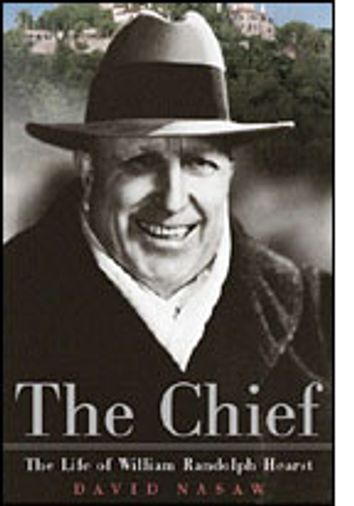
“The Chief: The Life of William Randolph Hearst” by David Nasaw

A mammoth new biography of the first media mogul, a power-hungry millionaire who horse-traded editorial policy and didn't care who knew.

  • more
    • All Share Services

In the 1880s, William Randolph Hearst began to build a network for propagating his own opinions that would eventually include newsreels, wire services, radio stations, newspapers in every major American city, magazines like Cosmopolitan and a Hollywood studio. It was the first multimedia empire, and it was visibly ruled by a single man. Hearst promoted or opposed wars, tried to make or ruin presidents and ordered his magazines to buy stories that could be turned into movies for his mistress to star in and his critics to endorse. Autocracy built and wrecked his empire. “The next generation of publishers and media moguls,” David Nasaw writes in “The Chief,” his new Hearst biography, “would learn from Hearst’s negative example to keep their politics out of their publications, so as not to offend potential readers, advertisers, or investors.” In that sense, Hearst was quaint.

Nasaw’s book draws from thousands of recently uncovered letters, interviews and private papers; it tries to avoid anecdotal information and rest on provable facts. The result is a solid, workmanlike chronicle, less colorful than the last full biography of Hearst (W.A. Swanberg’s “Citizen Hearst,” published in 1961) but not that much different in broad outline. Hearst is pretty well mapped out. The man was a blustering American extrovert with a paradoxically high, sensitive voice and welkin-blue eyes. He could be scornful of high society as well as immensely social, devoted to fine European art as well as chorus girls, smart about the world as well as ignorant of himself.

Nasaw’s most interesting thumbnail of the man, to me, is almost a throwaway. After winning a seat in Congress at the age of 39,

he held a huge fireworks display in Madison Square, as he had done so often before. This time, something went wrong … The New York Times reported the next morning, “a terrific explosion of fireworks occurred, transforming in an instant the entire east side of the park into a scene of death and carnage which a battlefield could scarcely have surpassed in its horror …”

Months later, Hearst and his entourage sailed for Europe on the Kaiser Wilhelm II. At the dock, “A process server was waiting for them — ever since the fireworks disaster in November, Hearst had been followed by them — but Carvalho [an editor] got rid of him.”

Swanberg tells that same story in denser, snappier detail; Nasaw just summarizes, but he relates the events to Hearst’s unreflectiveness and his vanity. I just wish Nasaw did this sort of thing more often. He sums up Hearst’s life and personality in a few well-argued pages near the end, but the biography overall could use a stronger narrative frame, with more summing-up moments along the way.

The bulk of the new information fattens Nasaw’s sections on Hitler, FDR and the 1937 crash of the Hearst empire. The Chief, as he was known, comes off as a boyish millionaire with a taste for overspending whose credit dried up during the Depression partly because investors couldn’t stand his politics. Hearst was always a populist: For the first three decades of his career, he threw his newspapers behind the most important American labor reforms — he led the trust-busting movement and skewered corporate control of Congress. (He was friends with George Bernard Shaw, too.)

But in the ’30s, he veered to the right, ordering his papers and newsreels to go easy on Hitler and resist Roosevelt’s New Deal. These positions ruined circulation, but he stuck by them because he hated any whiff of “foreign entanglements” or of communism. By 1940 he had rebounded by starting a patriotic Red scare that would culminate in the rise of Joe McCarthy. Hearst became an archenemy of the Left, yet he continued to consider himself a progressive until his death, in 1951. Nasaw is a historian, and he’s especially good at tracing the vagaries and shifting currents of Hearst’s demagogic liberalism.

But the Chief’s lasting legacy is the concept of the media empire: He showed what could be done with that power. The Hearst Corp. these days is richer than ever, with assets in network TV, cable channels, magazines, newspapers and the Web. But can you name the chairman? At least while Hearst was alive everyone knew he dictated and horse-traded editorial policy. But when Tim White, the publisher of Hearst’s San Francisco Examiner, admitted last month to promising easy editorial treatment to San Francisco Mayor Willie Brown in return for support on a deal to buy the San Francisco Chronicle — in what looks like a bid by the Hearst Corp. to monopolize San Francisco’s daily market — everyone acted surprised. White is on punitive, indefinite leave. This is pure, blinding, sulfurous hypocrisy. Hearst pulled that shit all the time.

Continue Reading Close

“The Many Aspects of Mobile Home Living” by Martin Clark

A wild and weirdly plotted novel by and about a circuit court judge, complete with a hunt for lost loot, a murder and a convoluted trial.

  • more
    • All Share Services

This first novel about a circuit court judge in North Carolina starts with a rollicking description of a gas station attendant who refuses to believe in the Apollo moon landing, gorillas, weather radar or whales. “I don’t have no time for foolishness,” he tells a motorist, before vanishing from the novel after Paragraph 2. The rest of the book deals with Evers Wheeling, the judge, an alcoholic slacker who suffers the same kind of blank cynicism as the service station guy, until a series of odd events leaves him with a quasi-religious faith.

Evers didn’t believe in very much at the time, and he was socked in under a long horizon of bloodless indifference as thick as paste; he had the look and air of a cur mother suckling another gang of mongrel babies, her head and side lying flush on the ground, her fur clumped in a few spots, too weary to do much more than shift her eyes and half-ass growl if someone happened by.

After that passage — in Paragraph 3 — the adventurous writing dissolves, and what starts as a promising debut turns into an uneven murder mystery.

But not a bad one. The best aspect of “Mobile Home Living” is its loping sense of humor. Too much of the book, though, relies on rusty plot devices. A woman named Ruth Esther English corners Evers one morning and offers him part of a lost inheritance in exchange for letting her brother, Artis, who’s up on a possession charge, go free. Artis holds the missing clue to a puzzle that might reveal the money’s location. Evers doesn’t need the cash and neither does Ruth Esther, so Clark spends a lot of energy explaining why Evers agrees to corrupt himself and fly with two other people on a moonshine quest for a safe-deposit box in Utah. The most interesting reason has to do with the eerily pure “albino mystery” of Ruth Esther’s tears, which Evers collects and keeps in the cap of a ketchup bottle. The tears haunt him even after his quest to Utah — which is brief — and maintain some kind of mystical significance through the rest of the novel.

Evers’ love-hate relationship with his estranged wife, Jo Miller, reveals a number of his weird, deep neuroses about women, and when she starts to win their divorce trial (after being caught in flagrante with her lover in a motel room), somebody kills her with a pistol. The subsequent investigation smears both Evers and his brother, Pascal, who lives in a mobile-home park, but a self-sacrificing act by Pascal leaves Evers with a quavering faith in Something every bit as absurd as the pure white tears in the taped-up ketchup cap.

A lot of the characters feel thin, but the trial scenes are engaging. Clark himself is a judge in Virginia, and he has the talent to show just how “yes” becomes “no” in the convolutions of a circuit court system. Such sickening legal peristalsis could drive a novel all by itself; Clark doesn’t need any treasure quest. He captures the hustling and incompetent lawyers, lying and manufactured witnesses and strong and weak personalities that steer a trial more decisively than due process. Evers the judge hides women’s magazines (Cosmopolitan, Self) in big lawbooks to read when a trial drags on; Evers the client can’t behave himself in the courtroom. Evers, in fact, can be unfathomably strange, yet his craziness makes him the clearest character in the book. When Jo Miller brazenly lies during an alimony hearing, for instance, he lapses into a hallucinatory fugue:

Her face — very suddenly — changed, came on like an electric fan on a hot day … Out of the middle of the maelstrom, Evers saw two sharp eyes appear … The spiked eyes looked right at him, and Evers hunched forward and stared back, leaned across the table on his elbows and clenched his fists. The circling mess balanced on his wife’s head didn’t leave until White [his lawyer] kicked Evers under the table and pinched his biceps. “Stop staring at her, Evers. You look menacing or crazed or something.”

Evers also likes his beer mixed with tomato juice and doesn’t think that’s strange. (“Do you want tomato juice in your beer or just beer?” he asks Ruth Esther in a liquor store.) He’s flawed but intensely likable. The trouble with “Mobile Home Living” is that no one else has been painted with so much paradoxical detail. Jo Miller is a one-dimensional bitch; Pauletta, a black lawyer, could be any black lawyer on TV. Clark wastes his time with rickety pulp-fiction conventions to make what’s ultimately a good and serious point about religion and irrationality. It would be nice to say he’s “filling up the genre” of legal fiction, letting his artificial story twists serve his theme, but no: The incessant plotting feels more like a failure of faith.

Continue Reading Close

Page 1 of 2 in Michael Scott Moore