Nan Goldberg

The journalist and the provocateur

Janet Malcolm talks about her new book on Chekhov, the perils of offending journalists and the long shadow of her libel lawsuit.

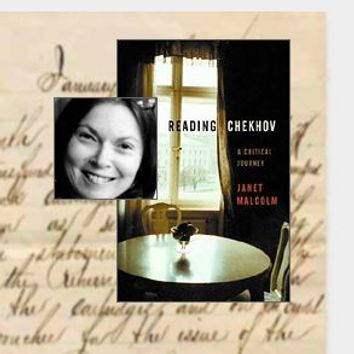
Janet Malcolm has reason to be gun-shy. A brilliant essayist whose best work has parsed the unstated contradictions inherent in psychoanalysis, journalism and the law, Malcolm endured a decade-long libel lawsuit (1984 to 1994) by psychoanalyst Jeffrey Masson, who accused her of fabricating quotes in her 1983 book about him, “In the Freud Archives” (A judge dismissed the suit, but Masson appealed and the case eventually went to a jury, which found for Malcolm.).

During the years of the lawsuit and even afterward, Malcolm was routinely represented by the press as an example of bad, unethical journalism. Masson’s accusations had found a receptive audience among some of Malcolm’s fellow journalists, perhaps because of her propensity for bluntly stating awkward truths that others prefer to leave unsaid and perhaps even unacknowledged. Pondering her own profession, for example, she famously began “The Journalist and the Murderer” (1990): “Every journalist who is not too stupid or too full of himself to notice what is going on knows that what he does is morally indefensible. He is a kind of confidence man, preying on people’s vanity, ignorance, or loneliness, gaining their trust and betraying them without remorse.”

Happily for her, Malcolm’s new book, “Reading Chekhov,” is unlikely to offend anyone. Part biography, part literary criticism, it is a typical Malcolm work in its hybrid, montagelike nature. And yet it is a departure, too: Its subject is dead, for one thing, and the book does not, like most of her work, attempt to weave together a complete narrative, with a beginning, middle and end, out of interviews, research and common sense. Rather, Malcolm says, she simply wanted to understand the power of Chekhov’s masterful stories.

Salon visited with Malcolm recently at her Manhattan apartment.

Given what you wrote in “The Journalist and the Murderer” about the journalist-subject relationship — that it’s a power relationship and the power is all in the journalist’s hands — why did you agree to be interviewed?

It’s a very good question. At the time [I wrote that book], I did not do any interviews. When the book came out and people wanted to ask me questions, I said, “Well, read the book.”

I did. That’s why I’m asking.

But time goes on … And one of the reasons I did not give interviews, of course, was not just the power in this. I’m just not very good at it. I often have no answers to the questions; I think of the answers later.

I also feel I’ve already said what I want to say in my work. So the questions are asking me to think about things that either I’ve already thought about and set down there, or if the question is a new question, I can’t just answer it right off the bat because the answer won’t be interesting.

In Chekhov’s “A Dreary Story,” the narrator at the end realizes that he lacks a ruling idea from which to make sense of his existence. In your work, on the other hand, it’s clear you center around certain problems, or a series of related problems.

Yes, we all do the same things over again, the repetition compulsion. [You don't think you're starting out] with some ruling idea, but as you go along you realize that you keep coming back to the same subject.

What Philip Roth talks about over and over again in his work is how we can’t know each other, that we keep getting it wrong: We get it wrong and we get it wrong again, and then we think about it and try again and get it wrong again. And that seems to me what you are trying to get at also: What’s true? Is it possible to know what’s true? But I’d really like to hear you describe what your work is about.

I’d love to hear you talk about it rather than me. See, you’re thinking like a critic. Writers don’t always care to write in the kind of consciousness in which criticism is conducted. They would be paralyzed, too aware of what they’re doing. I really think it’s for the critic to try to figure out what’s going on.

That’s what’s delighted me so much about this [Chekhov] book. I’ve really enjoyed figuring out what it is that makes his stories what they are. I read them over and over, and each time I read one of his stories — always, it was a new experience. I would always reach a point where my eyes would start tearing; here it would come again — extraordinary.

What drew you to Chekhov particularly?

I’d read some Chekhov, the plays and some stories, and then a few years ago Ecco Press started publishing his stories, and I started reading them and falling in love with them.

James Atlas was doing this series called “Penguin Lives,” and he called me up and asked if I would do a biography. I didn’t think I had any interest in writing a biography, so I said, “I’m sorry,” but he asked me to think about it and then he called again, and I thought, all right, I’ll do Chekhov.

Actually I think I’d already tried to do a little writing about these stories, which are so mysteriously wonderful.

How did the book end up at Random House?

There was a problem about publishing it at the time the contract said it would be published, so I withdrew the book. It’s hard for me to get to work on one thing when there’s another thing still unpublished.

But another good thing about the change was it permitted me to write more. At Random House I was permitted and encouraged to write more. I feel the book is more complete now than it would have been.

You’ve spent a lot of time thinking and writing about biographies. In this book, you wrote, “Chekhov’s privacy is safe from the biographer’s attempts upon it — as, indeed, are all privacies, even those of the most apparently open and even exhibitionistic natures. The letters and journals we leave behind and the impressions we have made on our contemporaries are the mere husk of the kernel of our essential life. When we die, the kernel is buried with us. This is the horror and pity of death and the reason for the inescapable triviality of biography.” So it’s almost like you started out feeling that you cannot write an accurate biography, that it’s not a possibility.

Well, if you notice I haven’t written a biography really, though there’s some biographical stuff in there, even while I was kind of interrogating the whole question of biography — that’s a sort of theme of mine.

Right. And yet you did attempt something like a biography anyway.

I know. That’s an inconsistency. But I was conscious of never going beyond what’s factual, never trying to imagine what he thought. I don’t think I did; I hope I didn’t — you know, that kind of reading of the mind. I tried to stay as factual as possible.

In researching this book, you spent several weeks in Russia. But the very first scene of your book — sitting with your guide in Yalta where Anna and Gurov sat in “The Lady With the Dog” — reads like kind of a farce, as if you’re sitting there not really expecting any insights and nothing is happening, and yet you’re pretending to be thrilled. And it sounded to me, reading what you wrote, that you didn’t go there expecting any revelations to occur, so I wondered why you went.

You mean you feel I kind of tipped my own hand?

It seemed to me that you were setting out to do this with a sense of irony about it.

I guess that’s true, because the great experience is the reading of the story, so what could be there in that same place? And why would you get from that place what Chekhov got from it?

And yet somehow I felt that I needed to go to Russia. I felt a very strong pull to go there, even though I’ve been skeptical of going to the places where something was written and having an experience that is equivalent. I think people who think that way may be having a self-fulfilling prophecy. But anyway, I went, reluctantly. I don’t like traveling very much. And then when I lost my suitcase, everything was awful.

But that was a great moment. You wrote: “When my suitcase was taken something else had been restored to me — feeling itself … Travel … is a low-key emotional experience, a pallid affair in comparison to ordinary life.” And that realization gave you insight into “The Lady With the Dog,” in which Anna, vacationing in Yalta, finds it “so dull here!”

Also it was journalistically so fortunate. I mean, this is why one does it — because things happen and then you can write about them.

You often comment about people in your work that they “don’t add up.” You said in “The Journalist and the Murderer” about Joe McGinniss, “Like McGinniss’ MacDonald, my McGinniss doesn’t quite add up.” You also said in “The Silent Woman,” that Anne Stephenson’s portrait of Sylvia Plath did not add up, and you said in your essay “The Trial of Alyosha” [in the collection "The Purloined Clinic"], “the Russian novelists knew in the most uncanny way how complicated we all are, how we don’t add up.” Can you talk about that?

One of the answers to that is in Chekhov, in that same story, “The Lady With the Dog” — the passage about private life, you know? That we just don’t make ourselves available:

[He had two lives: one, open, seen and known by all who cared to know, full of relative truth and of relative falsehood, exactly like the lives of his friends and acquaintances; and another life running its course in secret. And through some strange, perhaps accidental, conjunction of circumstances, everything that was essential, of interest and of value to him, everything in which he was sincere and did not deceive himself, everything that made the kernel of his life, was hidden from other people; and all that was false in him, the sheath in which he hid himself to conceal the truth -- such, for instance, as his work in the bank, his discussions at the club, his "lower race," his presence with his wife at anniversary festivities -- all that was open. And he judged of others by himself, not believing in what he saw, and always believing that every man had his real, most interesting life under the cover of secrecy and under the cover of night.]

That’s the problem of biographers, is to get to the self.

The more I think about the problem of biography, the more I think you just have to be roughly right. I mean, there’s kind of an agreement that one subject is more gentle and recessive and reticent, while another is aggressive and exhibitionistic. But what I am going through, inside myself, for instance, you’d never know.

Do we ourselves add up?

No, of course we don’t.

Given that, it’s an impossible task to portray anybody.

But I think people have an atmosphere, and you will write about me in some way that will say something about my atmosphere.

Do you think that you and what you write about were affected in some fundamental way by being sued by Jeffrey Masson?

Well, certainly “The Trial of Sheila McGough”; I probably would not have been interested in the law otherwise. That book, certainly, is very much related to my experiences in a lawsuit.

And “The Journalist and the Murderer”? I know you said in an afterword to the book that there wasn’t any connection. But that seemed, I don’t want to say disingenuous, but the connection I saw was that I imagined you sitting and taking notes and listening to Masson talk, and digging this grave for himself, making a fool of himself. And you were smiling and nodding and writing it all down, while you must have known you were going to basically eviscerate him. And that raised moral issues for you.

There are two things I want to say. One is that when I wrote “The Journalist and the Murderer,” I thought my case was over, because the judge had dismissed it. If it hadn’t been over I don’t think I would have wanted to write that book.

The other point is that the real ideology of “The Journalist and the Murderer” came out of an intervening piece. I didn’t write “The Journalist and the Murderer” right after the Masson lawsuit. I wrote a long piece about a woman named Ingrid Sichy ["A Girl of the Zeitgeist," 1986], and I interviewed her for over a year, and during those interviews we did a great deal of talking about this subject. Then I got that letter from McGinniss’ lawyer and it kind of dovetailed. But then the book was unpopular. People were angry at the first sentence, at the lead, and then by that time the Masson case was being appealed.

It was a bad confluence.

Yes, a bad confluence. [But the Sichy interviews were] where I became very conscious of it as a subject, rather than, as you were speculating, while I was interviewing Masson. That was not my view of what I was doing when I was interviewing Masson. I personally liked what I wrote. I mean, that’s the way he was; I tape-recorded him and wrote about him as he was. And sometimes people don’t like themselves the way they are. So it was a surprise to me.

Would you be surprised today?

I think I now more understand that there’s a gap between what people would like to have written about themselves and what they project themselves as.

However, when you wrote that first sentence of “The Journalist and the Murderer,” you must have known then that you were going to antagonize journalists.

I had no idea.

Really?

Absolutely none. I just thought it was a nice piece of rhetoric, and actually my husband, who is my editor, said, “You shouldn’t begin this way, you should begin with some piece of history” — something that was more conventional. And then my daughter read it and said, “Oh, what happened to that sentence? You should put it back.” So, probably, if it had been the way my husband said …

Your life would be very different.

Yes, [that sentence] would have been buried there somewhere, and nobody would have …

Maybe, but you know, you’ve done it in other places as well. You said about biographers, for example, “The biographer at work is like a professional burglar breaking into a house, rifling through certain drawers that he has good reason to think contain the jewelry and money, and triumphantly bearing his loot away. The voyeurism and busybodyism that impel writers and readers of biography alike are obscured by an apparatus of scholarship designed to give the enterprise an appearance of banklike blandness and solidity.” So, you know you’re being provocative, right? I’m not saying you’re being the slightest bit inaccurate, I’m just saying it’s probably going to offend some of the people who are going to be reading it.

I think until all this tension began with the Masson case, I was living in this kind of nice, protected environment, at the New Yorker. I knew the readers were somewhere out there, but I felt very private and I wrote for the people I knew. But after all this stuff I became more conscious of writing in a larger community, and it’s not as pleasant to write in that kind of subconsciousness than it had been.

But you didn’t tone it down?

I guess not.

What are you working on now?

I’m working on art, actually. I’m making collages. I’m going to be in a group show in January at the Lori Bookstein gallery, and I’m thrilled about it.

Is this your first show?

My first show, yes. There are 16 of my collages there. I’ve been working on them for the last few years.

Do you see any relationship between your collages and your writing?

I think so. I like to think about my work as kind of collagelike. A friend who’s a critic [Lee Seigel] is going to write the catalog for the show, and he says he thinks there’s a connection, so I’ll be interested to read what he writes.

She, the people

Anna Deavere Smith talks about empathizing with Rodney King, the LAPD and President Clinton.

Anna Deavere Smith changed American theater forever in 1991, when she opened her one-woman show, “Fires in the Mirror,” about the riots that broke out between Jews and blacks in the Crown Heights area of Brooklyn, N.Y., earlier that year. Smith interviewed hundreds of people — both well-known and unknown — who’d witnessed or participated in the riots, edited down those interviews and then performed them, using not only her subjects’ words, but their mannerisms, rhythms of voice and unique use of language, to form a human collage, embodied in one woman, depicting a neighborhood as it tore itself apart. It was both a virtuoso performance and a remarkable act of racial, cultural and personal empathy.

Since then, Smith has produced two more solo performances: “Twilight Los Angeles,” which similarly dramatized the 1992 riots that broke out in L.A. following the first Rodney King trial; and, this year, a meditation on the American presidency and the press called “House Arrest.” Both were part of a series of theater performances that Smith calls “On the Road: The Search for American Character.” Smith has just published a book, “Talk to Me: Listening Between the Lines” — partly a memoir, partly a discussion of her technique and partly a synthesis of the knowledge she’s gained over almost 30 years of talking and listening to people in all walks of life, in and out of crisis. Salon caught up with Smith by phone at her New York apartment.

You’ve often spoken of language being a window into the soul. Why language? Why not body language, or silences, or facial expressions, or how we treat our pets?

That’s several questions. First, you’re absolutely right. Why not silence? Why not expression, why not body language? And I would be very, very interested in all of those. However, as a young person I was particularly interested in the world as a verbal place, and loved to listen. I have a feeling that my mother must have read to me very, very expressively when I was a little girl, because she tells me how I would ask her to say certain parts of the story again or sing “Jesus Loves Me” again, so I think I liked the way that things sound. That’s just my nature. I had a profound, unquenchable desire to hear language.

And then I suppose as you begin to chisel down what you’re gonna do with your life, you at some point just decide, “I’m gonna follow my passion.” And on that journey, I happened by accident into an acting school and my first Shakespeare class, and I had an extraordinary experience, following an exercise that our teacher gave us, telling us to speak any 14 lines of Shakespeare over and over again “until something happened.”

The 14 lines I picked were from Queen Margaret in Shakespeare’s “Richard III” — sort of a curse, really, that Margaret was giving to Richard’s mother.

And I became so involved with the exercise that I literally saw Queen Margaret in my little room. That set me on a lifelong quest, because my imagination hadn’t been that ripe since I was a kid. I wanted to have that gift as big as I could, and if language had something to do with it, then I was gonna learn everything I could about it.

So in your case, the words were powerful enough to almost conjure up somebody …

She was conjured.

I just wanted to know about people, and at the time I was interested in social change. I was taking acting class instead of playing basketball. I wouldn’t have been very good at basketball; I’m so glad I took acting class!

And when I took that acting class, I thought, My God, look, these people are changing. And if they can change, maybe society can change. So I thought I was studying acting as an entry to social change, a metaphor to explore. And then I tripped over Shakespeare and never came back to some form of social activism.

You don’t think of what you do as a form of social activism?

Yes, to some extent, but I think I’m more interested in many sides of the story than an activist is.

I guess that’s why I see what you do as social activism: You’re always pointing out that there isn’t only one point of view, and that’s a very radical thought to most people.

I accept, I can see that it is a form of activism, but temperamentally, most of the activists I know are intensely on one side. They have to be, because they’re fighting for a cause. If you’re fighting to end police brutality, you’re not going to spend an afternoon with Daryl Gates, the police chief of Los Angeles, and enjoy it.

Did you?

I did. Not a whole afternoon, but some time.

And why do you think you can enjoy it?

Because I’m there for a different reason.

To empathize?

Yeah. And I understand that I have to do that in order to make the bigger picture; I can’t have anybody in my picture who I don’t understand. And I only know how to understand people through a certain amount of empathy.

The culture that we live in right now, especially in the last few years, has become very talky. Everybody’s always talking, everybody’s revealing stuff all the time about their personal lives. Why do you think that’s going on and why do you think we don’t, at the end of that, know each other better?

Yeah, that’s a very good question, and a lot of things came through my head as you said it. For one thing, do you know of the chef Alice Waters? She has a beautiful restaurant in Berkeley [Calif.] called Chez Panisse. And she is probably the grandmother — the grand master — of fine dining with organic food as we know it. When I interviewed her for “House Arrest,” she talked about eating. She said we have a lot of overweight people in this country because people are eating and eating and eating to be satisfied.

And so, I think, with talking too. I happened to be seeing some daytime television today, I don’t usually see it, but you’re quite right. What are these people talking about? And why are they coming in public to talk about it?

Probably it gives us an indication of an extraordinary loneliness or alienation that people have, or dissatisfaction they have, with the people closest to them. They must not believe that the people closest to them are hearing them. I mean, just imagine a time when you were a little girl, when you told your grandma or your best friend something that you didn’t want anybody to know. And it was particularly satisfying to say it to that one person and that one person only. Why doesn’t that have its magic anymore?

What do you think?

I don’t know the answer, I just think it tells us that something is awry in terms of the extent to which any of us feel we are prepared for the value of intimacy.

In a way we strip people naked when they come in public. You can’t even stand in public space without being stripped naked and disgraced. So it’s hard to have dignity. We don’t even value dignity, which makes public space a very unhealthy place that most sane people don’t even want to be in anymore.

Let’s face it, the question that I asked the president of the United States in the Oval Office — I asked him one question that kept him talking for 35 minutes nonstop — was, “Mr. President, do you feel you are being treated like a common criminal?” And this was in ’97, before Monica Lewinsky broke.

So we’re going to have a lack of talent in public space, and then we begin to fill public space with this blah-blah-blah that you’re talking about.

Do you think those two things are related?

I think they are. I think public space is so unhealthy, and many people think twice before speaking in public and certainly before giving over their lives to public service. That’s going to mean that we still want to have a space, which is filled in public, but it’s not going to be filled by greatness anymore for a while. It’ll be filled by all this penny-candy conversation rather than a big conversation or several big conversations.

And — I sort of touch on this in the book — I think another reason it could be happening is that in the ’60s, for good reason, many people began to try to dismantle the throne that the white patrician Protestant man had as Great Explainer. [People said,] “You know what, since you had the nerve to lie about Vietnam, we don’t trust you. And then there was Watergate! And not only that — you lied throughout history! You didn’t say enough about white women, and you didn’t say enough about black people, and what happened to the Native Americans? So you just move over [laughs] and let us talk for a while.”

And I think part of the reason public space is so vulnerable is that we just haven’t figured out how to occupy it properly with a bigger “We the People.”

In your book, you quote a colleague at Stanford, Marcus Feldman, saying there is no proof that knowledge will make us a better species. How do you feel about that? Do you agree with it?

We kept thinking that schools would be the watering place for this human merger that I’ve been looking for — that ignorance was the reason we’re so mean to each other. Well, we’ve got a lot of evidence of a lot of real smart people being real mean!

So it gives me pause. If you consider that there’s no proof that knowledge in and of itself, or our ability to pursue information, is going to make us less likely to be extinct, that’s pretty sobering news. Then maybe we’d like to do more with our humanness than simply collect information.

You said in your book, “What is unique about America is the extent to which it does, from time to time, pull off being a merged culture.” But it seems that what you’re after most of the time is talking to people in moments of conflict or moments of deep challenge, not in moments of feeling merged.

I do that because those highlight for us the tragedy of the unmerged and stand as an inspiration for the merge. They’re the shadow of the merger. So I represent those to understand how it went wrong, so we can understand more vividly how to make it go right.

Do you think it goes right more than it goes wrong or the other way around?

No, I think it goes wrong a lot, and not just in times of violence or catastrophe. I think it’s going wrong now. If we were to start at the kind of schools where I usually teach — Stanford, or now I’m teaching at NYU — if we talked to all those students, we would hear about the really wonderful educations they’ve had to get them there. I teach bright people usually, and talented people, but I don’t believe they were all born that way, nor do kids who live in less fortunate circumstances get born violent or drug addicts or any of the things that happen in the course of their lives.

But that’s not in our face, because to some extent we live segregated lives. I lived in San Francisco for quite a while, and it would be possible for me, in the route that I took — driving to Stanford, to my gym, to the health food store, to get coffee and the New York Times in the morning, down to my loft to work — I could go all day and not see an African-American person, and I’m African-American.

So cities are obviously and not so obviously planned to keep us from experiencing one another. I don’t have a project at the moment, but what I’m most interested in pursuing is: How do we get to We? How do we get to Us?

I went to a segregated elementary school, and the way the world is now I couldn’t have imagined when I was a girl. But we have a long way to go — to make Washington a different kind of place, for one thing. The two gentlemen running for office [today] were both bred to be president of the United States, but I don’t think a little black girl, even in 2000, is actually thinking about that. So here we are in 2000 and these two guys are very similar in terms of their lineage.

Yeah. Though there is a Jew on the ticket. That’s new.

Right. But it didn’t happen without comment.

What do you think we can do?

I think we can think differently about our time on earth. We can call for different kinds of spirituality. We can call for anything that is not about material gain, because we’ve proven that we know how to do that. We know how to get territory. We know how to get material. We know how to get power from other human beings. But in the final analysis, how much do we know about helping one another, how much do we know about caring about one another?

What would it take to make an argument about caring about one another that’s a sexy argument, that people want to pay attention to — that might be in the headlines? What kind of genius will that take? That’s my question.

Continue Reading Close

An honorable murderer?

The legendary defense attorney Alan Dershowitz talks about the justice of revenge, the success of genocide and his new ethical thriller.

Kafka, he isn’t.

But Alan Dershowitz works in, and writes about, a realm with which Franz Kafka was all too familiar.

Not that Kafka would have been comfortable in Dershowitz’s milieu — the American legal system, where the 60-year-old Brooklyn native is a celebrated defense attorney, Harvard Law professor and author of 13 books including two novels, “The Advocate’s Devil” and the newly released “Just Revenge.” But then, Dershowitz isn’t comfortable either. And that’s the point: Both writers struggle with a bewildering and dehumanizing reality in which justice may be achieved only by a “deliberate leap in the opposite direction,” in Kafka’s words, or in Dershowitz’s, by accepting “the cognitive dissonance” of defending the guilty for the sake of a higher principle.

For example, there’s the double murderer on death row whose case Dershowitz is handling right now. “Do I think the world will be a better place if he’s free from prison? Well, the world would be a better place if we didn’t have the death penalty. So I have to move the level of abstraction from a particular case up to a more general principle.

“People wonder about [why I defended] O.J. Simpson,” he adds. “They forget that the day I was called and asked to join the case, he was facing the death penalty.”

You might say that Dershowitz, defender of such notorious clients as Simpson, Claus von Bulow, Mike Tyson and Michael Milken, is almost obsessed with such “cognitive dissonance,” a rarely discussed or understood requisite for practicing law — at least defense law. And in his novels, he structures his plot and characters in such a way that the reader cannot fail to see the dilemma.

The case in “Just Revenge” involves an old man, Max Menuchen, a Lithuanian Holocaust survivor who discovers that the man who murdered his entire family, along with the rest of the Jewish population of Vilna, is living outside of Boston only a few miles from Max. The mass murderer, Marcellus Prandus, had never been charged with a crime; he had emigrated to America, married and fathered two sons, and is now a grandfather, a model citizen and a family man.

Prandus, an old man himself, has cancer, and would be dead long before the U.S. government could gather enough evidence to deport him. So Max, who survived the massacre by clawing his way out of a mass grave where he was buried under the corpses of his relatives and neighbors, takes the law into his own hands. He exacts a terrible retribution, for which he is arrested and tried for murder.

At trial, he is defended by an old friend, Abe Ringel — also the protagonist of “The Advocate’s Devil” — a man who bears a strong biographical and philosophical resemblance to Alan Dershowitz.

“Clearly, Max did it,” Dershowitz says. “He caused the death of this man, and did it willingly and knowingly.

“At the beginning of ‘Just Revenge’ I have a dialogue in which Emma [Abe's daughter] persuades Abe to stop representing guilty people — only innocent people. And along comes Max! And Max is guilty!” Dershowitz is smiling, clearly delighted by the intractable problem. “And Emma pleads with him, ‘You gotta represent Max.’ And Abe says, ‘Aha! See?’

“My job,” he continues, underscoring the point, “is to represent anybody. Sometimes they’re innocent, sometimes it’s a thug who’s guilty. Right now I’m working to save the lives of 13 Iranian Jews who were falsely accused of spying, and I’ve been spending a lot of time on that. When I define my life that way, there’s no conflict between the case and what my philosophy is.

“But a few years ago, I represented a woman who killed her husband. Six shots, and then she reloaded the gun and shot him again — 12 shots — and she was claiming it was self-defense. And I took that case, and I lost. But while I was trying that case, women all over the country wrote to me. They loved me. Even though, legally, how do you explain reloading that gun?

“So I have to remove myself from the day-to-day of one particular case. That’s hard to do psychologically, and I tried to show in ‘Advocate’s Devil’ [about an attorney who successfully defends a guilty rapist] how hard it is. It’s a little easier in this book, because Max is such a nice man, and even though what he did might be terrible, he’s a friend of the family …” Dershowitz pauses, reflects for a moment. “The theme of this book is really revenge or retribution, when the legal system doesn’t work.

“I’m ambivalent about revenge, as you can see. I think it’s sometimes appropriate. It’s not legal but it’s sometimes appropriate.

“I think if I had lived in Europe in the post-Holocaust period I would have taken revenge. This is how it should have been, in some ways; there should have been more justice, there should have been more retribution, there should have been more biblical justice — an eye for an eye.

“The idea that we allowed Nazi war criminals to come to this country and help us build our space program is abominable. I mean Werner Von Braun belonged in jail, not [venerated] as a hero. The victors — England, France, others — who didn’t seek any kind of justice were just looking at tomorrow, not worrying about yesterday. The problem is that by doing that they created Pol Pot, they created Milosevic, and they created others who have promiscuously engaged in continued genocide, because they realize genocidal killers get away with it. That’s the message of the 20th century: Genocide works. Genocidal killers get away with it.”

The lesser evil, Dershowitz believes, would have been to punish Germany after the war — “even if it meant Germany went over to the communists. It would have been better for Germany to have become communist than to reward it by rebuilding it so quickly after the war.

“I remember reading in college, in Dostoevski’s ‘The Brothers Karamazov,’ that one of the characters asks, ‘If by torturing and killing a child we could produce total happiness for the world, would it be just?’ He just throws the question out; he doesn’t give an answer. And it stuck with me for a long, long time, and in [the novel] I try to give an answer, but there’s no perfect answer.”

In 1962, when he was a law student, Dershowitz was asked to go to Israel with Telford Taylor, the chief U.S. prosecutor at Nuremberg, and help broadcast the trial of Adolf Eichmann. He didn’t do it. “I had a clerkship coming up, I was worried about my own career, and I didn’t go.

“Sometimes I think I should have done [it]. There was a chance in the ’60s to really get those sons of bitches, but they got away with it, and they died happily in the arms of their families. And since I don’t believe in the hereafter, that’s it. They’ll never have to pay a price for it. That’s one reason I had to write this book. I had this feeling of wanting a just revenge. I had to get it in fiction at least.”

Still, Dershowitz finds fiction hard to write, and “Just Revenge” was especially so. “I first thought about writing it about 20 years ago, when I discovered how many of my family were killed during the Holocaust. But I didn’t think I had the talent to put together a novel on the Holocaust. It’s daunting.

“The thing that’s so frustrating for me is, I know I can’t write like Kafka, I know I can’t write like Bellow, I know I can’t write like Roth, like Dostoevski, and I normally don’t go into an area unless I think I can do it as well as the next person. But in literature I made a clear decision. I’m gonna write small novels and try to create a new genre — the ethical thriller. Some books are plot-driven, some are character-driven. Mine is ethical-issue driven — driven by one or two great moral ethical dilemmas that have to be resolved.”

Kafka would probably have approved. He once wrote, “I think we ought to read only the kind of books that wound and stab us … We need the books that affect us like a disaster, that grieve us deeply, like the death of someone we loved more than ourselves … A book must be the axe for the frozen sea within us.”

Dershowitz uses different words, but he’s saying almost the same thing. “When I teach ethics [at Harvard], I teach 15 problems, what I call the intractable problems.” He outlines one, which happens to be one of the subplots in “The Advocate’s Devil”: What if a man is convicted of murder and sentenced to death, and another man comes into a lawyer’s office and confesses to the crime. Should the lawyer break his oath of attorney-client privilege and turn in the guilty client?

“I once taught this in a class and there was actually a shoving match, the students were so angry with each other over their views. Then I knew I had a good one. Because there’s no right answer to that.”

Continue Reading Close

“Hitler's Niece”

A novel based on historical fact tells the story of the teenager the F|hrer loved.

It sometimes happens that a gifted novelist who becomes emotionally committed to a work in progress fails to notice some fundamental flaw. “Hitler’s Niece,” by Ron Hansen, has all the markings of one of those sad cases. Hansen’s novel “Atticus,” a retelling of the prodigal son story, was one of the most beautiful books of this decade. But he has followed it up with a distinctly uninspired rendering of Adolf Hitler’s weird and ominous relationship with his young niece Geli.

The facts are these: Geli was about 16 when her mother, Hitler’s half-sister Angela Raubel, became Hitler’s housekeeper. Hitler paid for Geli’s education, took her on vacations and to the opera and soon, apparently, fell in love with her. He moved her into his own apartment and refused to be separated from her; their relationship probably became sexual. In 1931, at 23, Geli allegedly killed herself with Hitler’s gun in their Munich apartment.

You can see what a brilliant opportunity this provocative material presents: to portray Hitler from the perspective of an apolitical teenager, with a teenager’s lack of awe for her elders; to solve the mystery of Geli’s death; to give life and depth to a girl about whom history tells us almost nothing. Hansen makes Geli clever and moderately talented. She is repelled by the growing cult around her uncle; at the same time, she is seduced by his ardor and as susceptible to bribery (fine clothes, expensive lessons, elegant vacations) as any teenager might be. Within a few years she is in way over her head. She finds herself totally isolated within Hitler’s small cadre of fanatics and forced into perverse sex. (“The things he makes me do!” she wails to her mother, who responds by putting her hands over her ears.) She cannot free herself.

It’s a great story, but it presents several intrinsic problems. For one, the personalities of Hitler and his coterie are so well-known by now that it’s unlikely a teenage girl’s perceptions, even intimate ones, could add much. We see Hitler early on, bashful and flirtatious with Geli. We hear Goebbels and Goering and Himmler confess to Geli their love for the F|hrer, their fawning eagerness to obey. We observe that Eva Braun is not very bright. But we knew all this.

Second, Hansen is so careful to stick with the facts (as he stresses in an afterword) that Geli remains, to the end, less than three-dimensional. Finally, the novel climaxes with a murder instead of a suicide, and the facts do support such a possibility. But this small distinction is a major reason the novel doesn’t work. If Geli killed herself, she was driven to the act by Hitler’s entrapment and perversions. If her uncle murdered her, does that make her more of a victim? Is Hitler more evil than we thought? Hardly.

Years ago, Thomas Keneally wrote a novel based on another minor figure in the history of the Third Reich. In “Schindler’s List” Keneally used the techniques of fiction not to reinterpret the facts but to pose complex and profound questions: At what point do good deeds outweigh misdeeds? Can people stumble into heroism the way they sometimes descend into evil, with a misstep or two, a failure to consider the implications, a momentum that gathers regardless of their intent?

I suspect that Hansen, a writer who takes risks, intended something equally ambitious with “Hitler’s Niece.” Unhappily, the result is strangely bereft of insight or effect. Geli’s tragic fate was to become enmeshed in a process she could not control. Hansen’s creative process seems to have undergone a similar fate.

Continue Reading Close

“Another World”

Pat Barker's newest novel takes up a notion of Faulkner's -- that the past isn't over. It isn't even past.

It was William Faulkner who said, “The past isn’t over. It isn’t even past.” Now Pat Barker says it again in “Another World,” her first novel since her great World War I trilogy, “Regeneration.” She says it literally (“Geordie’s past isn’t over. It isn’t even the past”), without even crediting Faulkner, which is kind of cheeky. But she also demonstrates it, using her characters to drive the point home.

Nick, her protagonist, is entrapped in the past in numerous ways. In his second marriage, to Fran, he is dealing with the consequences of his and Fran’s first marriages, each of which produced one child: Fran’s son, Gareth, who lives with them and is showing signs of being seriously disturbed; and Nick’s daughter, Miranda, who as the story begins is coming to stay with them indefinitely. The house the family has just moved into soon reveals itself, through a mural uncovered while stripping wallpaper, to have been the site of another family’s tragedy and possibly of a horrific crime. Finally, Nick loves and feels responsible for his dying grandfather, Geordie, who brought him up.

“Another World” would seem to be a radical shift of focus from “Regeneration,” but there is a World War I connection: Geordie insists he is dying not of cancer but of the bayonet wound he suffered in that war. Hounded by some awful memory, he is thrown back onto the battlefield in his dreams every night. When he confesses to having killed his own brother during a battle, Nick is sure his grandfather has become delusional, and yet he can’t help wondering if it might be true.

These three main elements — Nick’s second marriage and all its complicated step-relationships; the sordid, secret history (complete with ghosts) of Nick’s new home; and the dying Geordie and his confession — all illustrate Barker’s point, but they are otherwise unconnected except through Nick. Unfortunately, that isn’t always enough. Early on, for instance, Nick decides not to divulge the story of the house’s previous occupants to his family. Eventually it fades away, a lost narrative thread that has never quite worked its way into the fabric of the plot.

Barker’s strength, as usual, is in her perfectly calibrated dialogue, as here, in a conversation Gareth initiates with Miranda:

“Are you going to be here all summer?”
“I don’t know.”
“Mum doesn’t want you here.”
“That’s all right, I don’t want to be here.”
“So why are you?”
“My mother’s ill. She’s in hospital.”
“What sort of ill?”
“Depression.”
Gareth hesitates, unaware of his ground. “You don’t go into hospital with that.”
“That’s all you know.”
“She’s mad.”
“She isn’t.”
“She’s in the bin.”
“Hospital,” Miranda repeats steadily.

Barker’s work is always interesting, and this novel is no exception. Each of the parallel stories is absorbing, and most of the characters — particularly Nick, Geordie and the children — are skillfully drawn. Still, some overriding connection seems missing, and in the end, the book is smaller than the sum of its parts.

Continue Reading Close
www.salon.com/writer/nan_goldberg/index.html