Neil Gordon

Ira Einhorn’s long, strange trip

After two decades on the run from charges in a horrific murder, the counterculture icon is home and headed for trial. But in France, he's still a human rights hero.

  • more
    • All Share Services

Ira Einhorn's long, strange trip

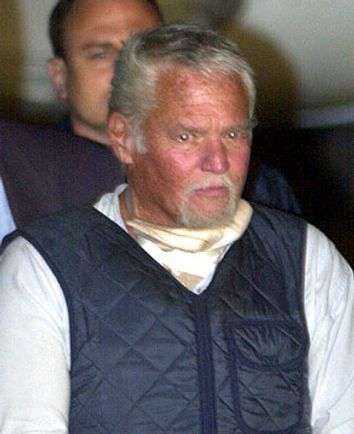
The man whom Philadelphia loves to hate greets me with a bear hug each time I make the trip to State Correctional Facility in Houtzdale, Pa., his home since his extradition from France last year to face a 25-year-old murder charge. After the months I’ve spent digesting the enormous literature devoted to him, it’s something of a surprise to find that the baby-boom Hannibal Lecter is a nervous person of 61, some 6 feet tall with a full head of white hair, trim in his orange prison-issue jumpsuit, attentive and anxious to please. But any doubt that this is Ira Einhorn, the famous ’60s icon and infamous international fugitive, is put to rest immediately by the pink scar still visible above his collar, a reminder of his last night in France, when he cut his throat in front of reporters. A chipped front tooth gives him his crooked smile, familiar from pictures. His eyes, which contain a nearly manic intensity in their shocking blue, are very hard to meet.

Part of their intensity is his well-known charisma: Einhorn is a famous leader of men and a seducer of women, casually laying claim to thousands of lovers, two or three a week for 20 years until meeting Annika Flodin, whom he would marry in 1987. Another part is that Einhorn, who convincingly claims to read a book a day, is amazingly intelligent, and he has few other visitors. Today he wants to talk about politics, physics, Buddhism, the economy, terrorism, ecology. He wants to tell me about Houellebecq, the French novelist du jour; about Jennifer Egans new novel; about Hardt and Negris popular left-wing history, “Empire,” and Naomi Kleins notoriously dense “No Logo” — unlike most American progressives, hes read and understood both.

The last thing he wants to discuss is the reason he’s in jail today, but when he does address it, it’s to deny absolutely, entirely, having killed Holly Maddux in 1977, some two years before he jumped bail and disappeared into a fugitive life that only ended last summer. “There’s no doubt that I ought to be executed for what I think,” he tells me, leaning across the table where we sit in the clean, well-appointed prison visiting room, his blue eyes holding mine hostage. “But not for what I did.”

Well, maybe. You won’t find many journalists who will agree: The coverage of Einhorn, both locally and nationally, has almost uniformly depicted him as at best as manipulative, at worst malign, and always guilty. All are plausible conclusions, given the evidence. Two separate Philadelphia juries have found him so, the first in Einhorn’s 1993 murder trial, held in absentia while he was a fugitive, the second in a civil trial which in 1999 awarded the victim’s family just shy of $1 billion in damages. In Philadelphia, hating Einhorn is a kind of blood sport. When in June 2000 the Philadelphia Daily News erected a billboard of Einhorn and invited readers to bring their rotten tomatoes to throw at it, the newspaper found takers. And when the Daily News printed handy fill-out-and-mail forms by which readers could send messages to Einhorn welcoming him home at the time of his extradition, some 300 took advantage of the opportunity, many offering shockingly obscene predictions of what awaited him in prison showers.

And there lies the central peculiarity of the Einhorn prosecution: Its very vigor, both in the press and in District Attorney Lynne Abraham’s office, very nearly set him free. His extradition pitted two equally passionate communities against each other, each fueled by identical outrage: one a moral certainty of his guilt, the other a moral horror at legal tactics the Commonwealth of Pennsylvania employed to bring him home. The latter group unites powerful, if unexpected, members: prominent Philadelphia lawyers and a community of French lawyers, activists, and members of parliament who strenuously opposed Einhorn’s extradition from France, forcing it to be ordered by then-Prime Minister Lionel Jospin himself, and for whom Ira Einhorn has the status of a human rights hero on the level of Mumia Abu-Jamal, who recently was awarded honorary citizenship of Paris. And now that he is back at home, Einhorn’s murder trial next month will put these passions on stage in a way that threatens to overshadow the death of Holly Maddux, and opens the possibility that the long, strange trip of Ira Einhorn is not yet over.

If you lived in Philadelphia in the ’60s, you know who Einhorn was. Harbinger of the new age, ambassador of acid, Earth Day organizer, environmental activist, Free University founder and professor, Einhorn was “indisputably Philadelphia’s head hippie,” as the Village Voice put it, “its number one freak.” He was at home in the hot springs at California’s proto-New Age Esalen Institute and in radical chic circles on the East Coast. It’s hard fully to appreciate his influence from today’s perspective. Newspaper photographs show him in constant motion: addressing a sea of people on Earth Day, arguing passionately with police, clowning with Yippie leader Jerry Rubin, his peace-loving long beard and gap-toothed smile the picture of the age. That doesn’t quite do him justice. Having been a stellar, nearly legendary student at the University of Pennsylvania, he also had currency in the intellectual circles of the day, and in the corporate world, where he was much prized as a “far watcher” of technological trends. In 1977 he held a fellowship at Harvard’s Kennedy School of Government.

The event that would transform Ira Einhorn went nearly unnoticed. When Holly Maddux, his delicately beautiful girlfriend of five years, disappeared in the fall of 1977, the transient college-based community around her and Einhorn paid little attention. He had been the important member of that couple, in any case, and his beautiful girlfriends were virtually interchangeable. When she failed to reappear, however, a closer scrutiny came Einhorn’s way. Slowly, during 1978, a private investigator hired by the Maddux family looked at Einhorn’s life, and as he looked, evidence came together like a charm. A downstairs neighbor told of liquid leaking from Einhorn’s apartment into their kitchen, a dark liquid with a terrible smell of putrefaction, and of hearing a “blood-curdling” scream and “several sharp thuds” around about the time of Holly’s disappearance. Presented, finally, to the police, this and other evidence won a search warrant on Ira Einhorn’s apartment. It was served on March 29, 1978, and police found Holly Maddux’s battered and partially mummified body in a trunk in the bedroom closet, packed in Styrofoam, air fresheners and newspapers.

Here now was an alternate narrative about Ira Einhorn, and it very quickly took hold, a narrative finally canonized by Stephen Levy, whose 1988 study “The Unicorn’s Secret: Murder in the Age of Aquarius,” drew on access to Einhorn’s diaries to conclude that Holly’s death was the final act in his established pattern of violent abuse of girlfriends. Einhorn’s status as a countercultural hero faded quickly: His publications were few; his activism grandstanding; his expertise followed a path steadily away from even the countercultural mainstream toward the far out — the paranormal, Uri Geller, Andre Puharich and the community of CIA mind-control conspiracy theorists, still very active today. Einhorn’s claim that Holly’s death stemmed from this activism — he insists to this day that Holly Maddux was killed by an intelligence agency, and her body planted in his bedroom, to silence his growing knowledge of the CIA’s use of the paranormal in military research — received little credence. And his generous humanism — Einhorn was consistently described by the many character witnesses at his bail hearing as a “man of love” — is mentioned much less than his priapism, his enormous sexual practice.

And any doubt as to Einhorn’s guilt was resolved for most Philadelphians by another event. With his trial scheduled for the early spring of 1981, Einhorn nearly effortlessly skipped the bail provided by his friend and supporter Barbara Bronfman and disappeared into Europe.

In 1993, 12 years after Einhorn’s flight, Philadelphia D.A. Lynne Abraham decided to bring him to trial in his absence, a rare legal procedure and the only in-absentia murder trial ever conducted in Philadelphia. Einhorn was represented by Norris Gelman, his lawyer at the time of his flight, who was obliged by the court to conduct the defense at his own expense. During a week in court, the leaking liquid, the smell of putrefaction, the scream, and other strong circumstantial evidence was put on trial. Gelman was able to demonstrate that the forensic evidence on which the prosecution hung its case was inconclusive; the prosecution was unable to prove that the putrefying liquid contained human protein, and therefore it was possible, at least in theory, that Holly’s body was planted in Einhorn’s closet. The jury nevertheless took only two hours to convict him of first degree murder and sentence him to life imprisonment. His flight from justice made their decision that much easier.

On the morning of June 13, 1997, acting on information compiled by dogged Philadelphia Police investigator Rich Debenedetto, French police stormed a converted millhouse outside Champagne Mouton, a tiny village in a rolling portion of the French countryside next to Cognac. Naked in his bed was Mr. Eugene Mallon, a resident American writer who lived quietly with his beautiful Swedish wife. It is not hard to imagine the scene: the kind summer air through the window, the early morning still, and Mr. Mallon’s rude awakening to arrest as Ira Einhorn.

At 4 o’clock in the morning, in Philadelphia, Norris Gelman was awakened by the telephone. “I got a call from Annika,” he recalls. “I remember it well. She said, ‘They stormed the house like stormtroopers!’ And I said, ‘Who are you?’ I’d never heard of her and I had no idea who she was. I said, ‘Who was taken away?’ She says, ‘Ira Einhorn.’”

Gelman is a rotund man with a youthful face and a full head of curly hair. Educated at University of Pennsylvania and versed in left-wing intellectual terms, he runs a practice that includes mobsters and murderers, the appealing mix of high principles and low crimes that defines criminal lawyers. It’s a mixture that everywhere informs Gelman’s persona, such as his frequent conversational reference to his mother and his taste for the races. Pictures of the horses he owns, as well as a wealth of other track memorabilia, some verging on kitsch, fill his office. When he remembers Einhorn back in the day, it is with admiration, as for a free-thinking, brilliant professor. Many in the Einhorn camp share this admiration, in apparent disregard of the enormous evidence that this charismatic, compelling man may have committed a horrific murder.

In a day or two, Gelman called Annika Flodin — who prefers to be addressed as Annika Einhorn — back, and the news he had for her was surprising. “I told her, ‘You tell Ira we’re going to fight like hell. We got a case here and Ira’s not coming back so fast.”

It was the in-absentia conviction won by Lynne Abraham in 1993 that, ironically, protected Einhorn under French Law. Gelman quickly realized that France would not return Einhorn; the French, like all European governments except Spain, require an in-absentia conviction to be retried when the prisoner is captured, whereas Pennsylvania law allowed Einhorn to be sentenced, in absentia, to life without recourse to a new trial.

An in-absentia trial is the “mark of the totalitarian government,” Gelman says. “To my mind it was a blatant crushing of all of his rights. Everything rang hollow. The defendant is presumed innocent. Well, of course, the defendant isn’t there, he ran away. Proof beyond a reasonable doubt? Well, proof is, he ran away. It eviscerated the right to a fair and impartial trial.” Working with Gelman and Theodore Simon, a prominent Philadelphia lawyer with significant foreign experience, Annika Einhorn retained two French lawyers: Dominique Tricaud, a Parisian, with Dominique Delthil acting as local counsel in Bordeaux, where Einhorn had by now been jailed some 100 miles from his house in Champagne Mouton.

The two Dominiques, as they came to be known, had other roles that qualified them for the case. Tricaud is Paris head of Helsinki Watch, the international human rights organization. And Delthil heads the Bordeaux office of the influential organization founded in 1898 at the time of the Dreyfus trial, the League of Human Rights.

In six months’ time, Pennsylvanians witnessed the unbelievable sight of Ira Einhorn leaving prison in Bordeaux into the arms of his waiting wife, his extradition from France having been refused on the grounds that Pennsylvania’s in-absentia conviction, with no chance of a new trial, violated French law requiring a new trial after the capture of the prisoner.

Just six days later, a new law passed in Pennsylvania. Under the law, any American fugitive caught in a country where extradition is denied on account of a previous in-absentia conviction may, when returned to the United States, be guaranteed a new trial. And this law was going, it seemed, to be applied retroactively to Einhorn. The Einhorn Law, like the in-absentia trial, had an unintended consequence in France. What had been, until then, a question of criminal law, became a human rights cause.

On the way from the Champs Elysies to Xavier de Roux’s offices in the enormous international firm Conseil Generale de Charente-Maritime, just next to the Seine on the Right Bank, you pass a huge statue of Charles de Gaulle, inscribed with the quote:

“There is a pact, twenty centuries old, between the greatness of France and the liberty of the world.”

It’s an astonishing statement to read, here, right next to the Avenues FDR and General Eisenhower, a couple of the Americans without whom Paris might well be a provincial capital of Greater Nazi Germany today. It speaks volumes about the French, not all of it good. One thing it fairly reflects, however, is the pride the French take at their jurisprudence — easily as much as they do in their wine.

Xavier de Roux is a deeply conservative politician who has served both as mayor of his provincial town and as a member in the French Parliament, a lawyer of enormous power. De Roux is a white-haired man, perhaps 60, with the attitude of nearly self-effacing politeness that, in France, signifies great authority. He sits at his ease in a corner office over the Seine, some of the most valuable office space in the world, describing why he lent his support to a left-wing community gathering around Einhorn. “As a lawyer, I believe in the presumption of innocence,” he explains. “And not only in a theoretical way, because, after having spoken to Einhorn … the horrible crime of which he’s accused does not seem to coincide with his personality. I say this so strongly because I have real difficulty — I tell you this quite frankly — in imagining Monseiur Einhorn in the skin of a murderer. Anything can happen. I don’t pretend to know the truth. But a priori — and here we are in the presumption of innocence — I believe him to be innocent.”

Pennsylvania’s Einhorn Law, as it came to be known, raised new questions for de Roux. “[It] was clearly made not for a general case,” he explains, “but clearly in order to obtain the extradition of Ira Einhorn. For any jurist in a legally constituted country, to pass a law for a specific interest and a specific case is not, let’s face it, a very good way to pass laws. And so there were quite a few French lawyers who said, ‘Well, what’s going on here?’”

It was a question that particularly bothered Dominique Delthil, whose Bordeaux office wall displays a photograph of Einhorn recoiling in fright while Delthil, nearly animal with rage, defends him from the approach of an American journalist. Now, he speaks with high indignation. “To insist, at any price, on creating a special law, when the law by its principals must be general! In legal terms, it is absolutely scandalous! I understand how the family feels, but when the state lets itself be manipulated in this way by private interest to create such scandalous laws, it shocked me. I still can’t get over it. I never would have thought that this could have existed in a democratic country.”

When, therefore, the Bordeaux court met again in February of 1998 to consider the extradition anew in the light of the Einhorn Law, there were no great worries in the Einhorn camp. As Ted Simon advised them from Philadelphia, the law was transparently unconstitutional, and could likely be overturned in the state Supreme Court, thereby voiding the terms of the extradition agreement. Nor was Simon alone in his views.

“In this country there are three branches in our government: There’s the legislative, the judicial and the executive. Now, the legislative branch has absolutely no power, under any circumstances, to pass a law that says any defendant is entitled to a new trial.” F. Emmett Fitzpatrick, a former Philadelphia district attorney, patiently describes the principle of separation of powers, all the while giving the distinct impression that patience is not his strong suit. “Whether a defendant is entitled to a new trial or not depends solely on the judicial branch … Now what happened here was, apparently the prosecution went to the Legislature and said, ‘We want a law enacted that says if we try someone in absentia, for reasons that they never really set forth, that that person can ask for a new trial.’ And so there was legislation passed that said that.” (Last winter, the Pennsylvania state Supreme Court declined to hear the issue of the Einhorn Law. While pretrial motions by Einhorn’s public defense lawyers, filed this month, called for the trial to be halted on the grounds of the Einhorn Law’s unconstitutionality, it is still far from certain who may have standing to bring this issue back to the Supreme Court.)

But whereas the Bordeaux court had been clearly willing to allow Einhorn to go free based on the in-absentia conviction, now it hesitated. To judge the constitutionality of an American law in France seemed an entirely different matter, one to be made, in France, by the executive branch, not the judicial. Unwilling, ultimately, to question internal American constitutional issues, the Bordeaux judges lifted their ban on the extradition, allowing it to enter the appeals process.

It was now that Annika Einhorn got to work.

Visiting the Einhorns’ countryside house some 200 miles southeast of Paris in the rolling hills next to Cognac is like walking into the world of Patricia Highsmith’s Tom Ripley, an American murderer who lives in bourgeois splendor just outside of Paris.

On one level, everything is normal. Annika Einhorn is a poised, pretty woman with long red hair, living alone with a black dog, Frieda, to whom she speaks in high pitched Swedish, running her house and caring for its grounds with quiet confidence. Wherever you go with her in the minuscule village of Champagne Mouton, townsfolk inquire after Monsieur Einhorn and express outrage at his treatment, and in their partisanship you feel their attachment to Mrs. Einhorn as much as their concern with her husband. Like her husband’s, her frame of reference covers the familiar ground of an ecologically conscious, politically aware, left-wing European intellectual, although in Annika’s case there is also the therapeutic and Buddhist-inspired vocabulary of the consciousness movement.

But on another level, as in Highsmith’s chilling world, there is something slightly sinister. The fact is that some 15 years ago this sensible, competent, charming woman stepped entirely out of the path of her life: abandoned not just her family and her past but her very identity to join Einhorn in a dangerous and difficult life underground, and she did this in the full knowledge that he was on the run from charges of murdering his girlfriend. Nothing visible in the house spoke of childhood or family, and an aura of rootlesness, of disconnection permeated the household.

One would expect, then, rather an impressionable person, one with, perhaps, the frailty so often ascribed to Holly Maddux. In fact, however, the picture is considerably harder to explain. Mrs. Einhorn is no jail widow. Unwilling to risk possible arrest for aiding an American fugitive, and with Einhorn’s lawyers unable to win a guarantee of immunity from prosecutor Joel Rosen, she has so far refused to testify in person at her husband’s trial. She has declined to sell the Moulin de Guitry — her single asset — in order to pay for Norris Gelman’s services, leaving her husband to public defense lawyers. Her opinions about her husband are open-eyed, neutral, and well articulated. She describes her years of marriage as a steady growth toward autonomy — precisely, in an eerie way, the growth that Holly Maddux is depicted as achieving in the year before her death. That makes it all the more shocking, the irony that on a certain level, Mrs. Einhorn is both responsible for her husband’s capture — it was the use of her real name in a French driver’s license application that led to their discovery — and, now, key to his defense.

“Honestly Neil, I cannot say that I know if Ira killed or did not kill Holly.” Talking across a bare wood table in her cozy, homespun, and eerie living room, Annika Einhorn explains what it is like to live with a suspected murderer. “What I’m saying is that the picture that has been presented of Ira as the murderer of Holly is not a picture that matches my picture of Ira, the person I lived with. He’s not even near this impression. No physical violence, no physical abuse, all these things that he’s consecutively presented with … My feeling has always been that Ira is innocent. That has been a feeling and also a feeling that I’ve analyzed analytically by exposing him to questions so that I’ve also convinced myself intellectually.”

When following the passage in Pennsylvania of the Einhorn Law, the Philadelphia D.A.’s office presented France with a new extradition request, Annika Einhorn found herself in the new role of activist — a role to which, time would show, she was well suited. Soon, in addition to her lawyers, she had enrolled a wide spectrum of the French human rights establishment: members of the French government and of the European Parliament; Socialist, Communist, and Green Party delegates; the League of Human Rights, the influential human rights group S.O.S. Racisme. And as the extradition evolved from a legal to a political issue, so did the field of attack widen and the affaire Einhorn took on an increasingly political nature.

On Dec. 1, 1999, District Attorney Lynne Abraham wrote to then Secretary of State Madeleine Albright requesting her intervention, expressing high indignation that Einhorn remained free, “cavorting in the nude” for an Esquire photographer, “free on bail, eating strawberries and blaming the CIA for Holly’s murder.” Albright complied.

In equal measure, throughout France, human rights advocates gave their support to Einhorn. Fodi Sylla, a founder of the enormously influential S.O.S. Racisme, lamented the “climate of hysteria … [the] Sacco and Vanzetti climate around Ira.” League of Human Rights president Michel Tubiana focused on the role of Lynne Abraham. “The personal conduct of the Philadelphia D.A. was absolutely mind-blowing,” he says. “This woman, if she’d had an equivalent position in France and behaved like that, she would have been fired. So already, how could we think of extraditing anyone in this context, in the middle of this hysteria?

French supporters saw the question of Einhorn’s guilt as a far lesser concern than the legal issues of his extradition. Again and again, lawyers and politicians bluntly described their lack of concern with Einhorn’s guilt or the evidence against him, turning the question instead to the disproportionate incarceration of African-Americans in U.S. prisons, to the death penalty, to the strong conviction that the American press had judged Einhorn guilty before trial, to the constant worry that a fair trial for Einhorn, given his countercultural activity in the ’60s, was impossible.

For many Americans, the French reaction was outrageous — and given the overwhelming evidence of Einhorn’s guilt, it was proof of both Einhorn’s extraordinary powers of manipulation and of anti-Americanism in France. Buffy Hall, Holly Maddux’s sister, long committed to bringing Einhorn to justice, described Annika Einhorn as “Cleopatra, Queen of Denial.” Lynne Abraham’s office, citing the pending trial, declined to be interviewed for this article. But in a published statement, Abraham made her feelings clear. “The truth is this,” she said: “He is getting away with murder, and I am incensed, offended, outraged.”

Notwithstanding the support for Einhorn, successive appeals courts in France were declining to stop the extradition, and as they did, the decision wound its way closer and closer to Prime Minister Jospins desk, a purely political decision, not unlike a presidential pardon or commutation in America. And as it did, the movement to stop Einhorns extradition steadily gained political momentum. The enormously popular and influential Jack Lang — at the time chairman of the Foreign Affairs Committee in the National Assembly, wrote to Jospin that because the Einhorn Law “could fail to be applied by American judges who thought it unconstitutional… Einhorns in absentia conviction could stand, which would be in total contradiction of the fundamental principles of French law, as well as with the European Convention of Human Rights.”

In May 2000, a petition was delivered to Jospin calling for him to block the extradition of Ira Einhorn. Among the 94 prominent signatories were 14 European deputies and 19 members of the Regional Counsel, as well as several French cabinet ministers.

In the end, in the midsummer of 2001, after over a years delay and four years since Einhorns original arrest in France, Jospin signed the extradition order. According to Noel Mamhre, a former presidential candidate for the French Green Party, Jospin resisted enormous pressure but finally gave in after President Bill Clinton personally intervened.

Claire Wacquet, a powerful lawyer whose youth and casual language belie her extremely high status — she appears before the final appeals courts in France, and her office sits just down the Seine from the Assemblie Nationale — argued the final appeal before the Conseil dEtat and the European court of Human Rights. “I explained that this law giving a new trial in reality was not constitutionally sound, either in Pennsylvania or in the U.S.A…. I argued that in the constitutional system of the U.S.A., this famous law called the Einhorn Law could very well fail to be applied.”

Wacquet shrugged and smiled. “And the Conseil dEtat said to me, Well, we dont care and we dont want to hear about it.”

“What happened here was France just caved in,” Emmett Fitzpatrick says with blunt disdain. “They said, ‘Okay, fine, thats alright, if youre going to give him a new trial, well send him back.’ That happens all the time, that people will cave in, although theyre for these general principles that they fight so hard to maintain.”

In mid-July 2001, Einhorn provided reporters with a dramatic illustration of what he thought Jospin had done to him: He slit his throat with a kitchen knife, leaving the scars that I recognized when I met him in Pennsylvania jail. On July 19th, neck swaddled with bandages, Ira Einhorn returned to America for the first time in 23 years, escorted by U.S. marshals.

“It was good to see Ira finally show terror,” said an editorial headline in the Philadelphia Daily News under a “For Holly” logo. “After 20 years Einhorns Back, ran an earlier headline. “And the Worlds a Better Place.”

Ira Einhorn’s universe is now a simple, clean construction with high windows and the peaceful air of a smoothly running workplace. The prison guards are polite and respectful and a pleasant, clean visiting room is available. During visiting hours a prisoner is always on duty to take Polaroids of inmates with their families standing in front of a screen with a couple of choices of bucolic countryside backdrops.

Einhorn drinks Dr. Peppers and eats the healthiest sandwiches available from the vending machines while talking virtually without a pause. Watching him eat — my appetite disappears the moment I enter the prison, and a heavy sense of oppression lies over me until I’ve put it well behind me on the highway back home — I try to reconcile the image of Holly Maddux’s death by battering with the eloquent idealist in front of me.

Only the blue eyes, with their peculiar intensity, bridge the gap. Watching them, again and again, I have to remind myself that the man before me is presumed innocent by law, and that, despite the overwhelming circumstantial evidence, no one but he — and, if he is innocent, Hollys actual murderer — knows the truth.

It’s not easy, sitting in Houtzdale before a man who may once have stood face to face, as forensic evidence showed that the murderer did, with Holly Maddux and beat her with enough force to fracture her skull in six places. It’s not easy at all, and I soon came to dread my visits to Houtzdale, which seemed punishments in their own right.

Certainly, for the Philadelphia D.A.’s office, for the Maddux family, and for the enormous preponderance of Philadelphians who have for decades been outraged by Einhorn’s flight, anything other than a conviction, next month, will be an outrageous miscarriage of justice.

But for Ira Einhorn and those who have lent their support to him, a perfect continuity unites his first incarnation as Philadelphia’s entry into the countercultural pantheon with his life as a human rights hero in France.

Certainly the strange legal corner into which the Ira Einhorn case has strayed seems to have no fair way out: On one hand, the guilty may go free; on the other, the Constitution may be abused. It’s a terrifying thing to witness, when the legal system offers only two injustices as a response to a tragic murder.

But does anyone remember what Gideon and Miranda, who lent their names to crucial legal protections, were actually accused of? It’s possible that the future will remember the constitutional implications of Ira Einhorn’s case more than the crime, which in itself is a terrible kind of injustice.

One afternoon in Philadelphia I asked Gelman: What of Holly Maddux’s family — neither powerful, nor rich, nor on the cutting edge of an intellectual tradition, just Americans, the people whom the Constitution is there to protect? Gelman paused before the question, clearly a key one for any criminal lawyer, and answered: “[T]he Constitution does not say that everybody who commits a crime will go to jail. It doesn’t say that. The Constitution does say that if you’re accused of a crime, you’re entitled to a lawyer and jury, proof beyond a reasonable doubt, presumption of innocence. That’s the way the Constitution is written.

“As you would expect,” he added, as if an afterthought, “having been written by revolutionaries who were accused by the Crown of various and sundry offenses.”

“The Confirmation” by Thomas Powers

The truly bizarre inner workings of the CIA are exposed in a thriller by an intelligence expert.

  • more
    • All Share Services

When a historian of Thomas Powers’ distinction turns his attention to a novel about the confirmation of a CIA director, those interested in the arcane and savage world of American intelligence and national security pay attention. Here, we think, we will see a full deployment of this strange world’s meaning without the mass-market simplicity that usually dogs books about intelligence; here, we think, we will at last see an independent and liberal observer draw back the veil of secrecy and tell us what he thinks. We hope, in short, for an experience comparable not just to John le Carri and Graham Greene but to the literate and wise explorations into the world of spies by John Banville, the Irish novelist.

Within two pages of “The Confirmation,” it’s clear that our high hopes have reason. Powers is, after all, a Pulitzer Prize-winning journalist who regularly covers intelligence matters for the New York Review of Books. From the first word of this book, one feels in the confident and capable hands of a very, very fine writer.

Which is why it comes as such a disappointment to find that this fine journalist’s massive skills equip him in no way whatsoever to write fiction.

Franklin Cabot, a veteran Cold Warrior, faces a Senate confirmation hearing of his presidential appointment as director of the CIA. It’s the culmination of a long and glorious career, and a position so close to the white heat of power that career-ending, third-degree burns are always a risk. Brad Cameron, his underling, is a young man who specializes in the search for MIAs from the U.S. intervention in Vietnam and Southeast Asia. Both Cabot and his mentor, Georgia Sen. Hawkins, are passionately interested in the search, and this, combined with the fact that he is dating Cabot’s niece, puts Brad at the beginning of a promising career.

Brad’s career is jeopardized, however, when he discovers evidence of a bona fide MIA in the ex-Soviet gulag. Unfortunately, he also discovers that Cabot, early in his career, was not only aware of the MIA’s existence but, at the behest of President Carter, appears to have ordered his existence hidden in the interests of nuclear disarmament talks. Ignoring that he is about to stop his mentor’s Senate confirmation in its tracks, Brad sets out in a rogue search through the CIA and the intelligence establishment of its close ally Israel, gradually teasing the facts of the matter out of the many corners in which they hide.

Even those who only follow the CIA in the mainstream press will recognize how realistic is Powers’ depiction of Washington and its secretive institutions of so-called national security. Indeed, like most novelists, Powers can’t begin to depict how bizarre that world actually is — no one would believe it. Equally realistic is the way in which Powers has the Senate Intelligence Committee and the New York Times vying for discovery of what promises to be a scandalous truth. Less convincing, perhaps, is a plotline in which the search for the truth is further pressured by fucked-up Gulf War vet Dean Cutter, who has been chosen by a Michigan militia to make sure that Cabot pays with his life for his government’s betrayal of the white man’s democracy. But as the confirmation hearings approach, all of these forces gather to produce a political maelstrom in the middle of which swirls something totally unexpected.

It’s an entrancing story: historically erudite, subtle and built with clear-minded expertise. But the real mystery is why it falls entirely short of real, living fiction.

Cabot, Brad and company all scrupulously fill the fictional demands of characters — they have ambitions, loves, weaknesses and hopes. But their imaginative reality is consistently secondary to their functions in the neat puzzle of the plot. Clearly Powers is less interested in the fundamental mystery of people than he is in the challenges of his story, and while every novelist knows the enormous, often insurmountable challenges of making a story work, every novelist also knows that no amount of work will ever make a half-imagined character real.

Interestingly, this artificiality of characterization has its origins in moral matters: It stems from Powers’ unexamined assumption that intelligent people can work in the CIA without ever questioning the ethics and the performance of the organization. Let’s be clear: No one, on the left or the right of the political spectrum, would ever deny that from Iran (the deposing of Mohammad Mosaddeq and the installation of the brutal, autocratic Pahlavi regime) to Chile (the assassination of Salvador Allende and the installation of the brutal Augusto Pinochet dictatorship) the CIA has repeatedly subverted the values of American democracy on every continent of the globe, and done so not only willfully but with enormous incompetence and at mind-blowing expense to the American taxpayer.

Some think the CIA a necessary evil; some, an unnecessary one. Certainly the discussions I’ve been fortunate to have with CIA operatives, some very highly placed, have always, at some point, turned to the morality of intelligence work. Invariably, my interlocutors have turned out to have devoted much thought to the issue. That the characters in “The Confirmation,” who are neither evil nor stupid, are able to exist so placidly in the highly arguable ethics and efficiency of their work leaves us baffled. Why has Powers squandered the chance to explore the fascinating moral quandaries posed by those who work in this notoriously ambiguous profession? Greene, le Carri, Patricia Highsmith, Patrick O’Brian: The exemplars of complex, challenging moral fiction that also thrills and entices are all there to learn from. As it is, Powers’ first foray into a new genre is fiction only in the sense that it is “not true.” In all other respects it sticks resolutely to the facts.

Continue Reading Close

Shanghaied in Tinseltown

John Fante was one of America's great writers, encountering equal measures of victory and defeat during a decades-long career. But did Hollywood strangle his talent, or did he do it himself?

  • more
    • All Share Services

Shanghaied in Tinseltown

Los Angeles, give me some of you! Los Angeles come to me the way I came to you, my feet over your streets, you pretty town I loved you so much, you sad flower in the sand, you pretty town.
–”Ask the Dust,” 1939

In the company of writers, when the conversation turns to the serendipity of literary fame — great writers unpublished; lousy ones celebrated — sooner or later the name John Fante will come up. Not everyone will know of him — not on the East Coast, anyway — but those who do will respond with feeling. To them, he’ll be one of the precious proofs of literary justice: a moral story illustrating all the ills of Hollywood and the immortality of talent; a rare and precious illustration that talent, no matter what the odds, will out.

As always with these stories of virtue rewarded, it’s a three-act morality play. In Fante’s case, it starts in 1930 when an impoverished young Italian-American man escapes his suffocating home in Colorado, armed only with a Jesuit high school education and the insane desire to write novels, and challenges Depression-era Los Angeles to deny him his glory. Flash forward to 1978, and Act 2: The aged hero sits in a wheelchair in his luxurious Malibu, Calif., house, having lost limb and eyesight to diabetes. Between the two scenes lies a lifetime of forgotten novels, buried by a career of soul-destroying screenwriting and a half-century of dedicated drinking and gambling, a brilliant talent wasted and forgotten. And then comes the last act.

In a throwaway line in his 1978 novel, “Women,” the iconic Charles Bukowski — the best-selling cult poet whose wild readings are the stuff of beat legends and whose epic drinking, fucking and writing were captured by Mickey Rourke in the movie “Barfly” — mentions two utterly forgotten Fante novels, published respectively in 1939 and 1938: “Ask the Dust,” and “Wait Until Spring, Bandini.” These novels, it turns out, had sustained Bukowski 25 years before when, in the depths of his half-mad drinking days, he found them in the Los Angeles public library.

The mention sparks interest, notably that of Bukowski’s publisher, America’s foremost champion of the literary avant-garde, John Martin at Black Sparrow Press — it was Martin who had discovered Bukowski in the ’60s and turned him into one of America’s bestselling poets. Martin acquires a copy of “Ask the Dust” and immediately sets about putting it back into print. And over the next 10 years, not only is Fante’s forgotten life’s work brought back to readers, but previously rejected works are published, new ones are written and hundreds of thousands of copies are sold to a cult audience in America and a mainstream one in Europe. It is a story everyone likes to hear.

Certainly it was a story that I couldn’t resist. When, in 1991, I discovered Fante, I read his life’s work one book right after the other. Here, I saw, was a writer as powerful as any in the American canon and far more subversive, more original and inventive than most. His voice ranged from gratingly raw honesty to a Thurberesque humor with the ridiculous figure of the writer himself — particularly in his role as father and homeowner — as its object. The language was astounding, always unsettling, always shocking in the beauty for which it reached again and again, the heights and depths of emotion it attained, and the risks it was prepared to take. To describe this writing as Dostoyevskian was not far-fetched; to identify it as among the finest fiction ever written in America was, for me, a certainty.

It was an unusually troubling discovery. On the one hand, I asked myself why Fante’s writing had, despite its promise, fallen so completely out of print until John Martin’s last-minute rediscovery. Why had he written so little after aiming so high? Why had an audience never found an author this talented, and what did this failure say about American literary life? Which of the Fante myths was true: the story of a true talent rewarded, or the story of how Hollywood, drinking and gambling destroyed a literary gem? Or was there another, even darker story — the tale of an artist of passion and genius who, ultimately, was not equal to his own gifts?

And so, on two separate trips to California, I collected some interviews among major figures from Fante’s life, like Joyce Fante, the writer’s elegant, articulate wife and his finest reader, who has so beautifully and intelligently taken care of the work as she once took care of the writer. I spent a long night talking with Linda and Charles Bukowski in their San Pedro, Calif., living room over endless Heinekens and bidis. I met Edward Dmytryk, who directed key Fante screenplays (“The Reluctant Saint,” “Walk on the Wild Side”); collaborator Harry Essex, most famous for “The Creature From the Black Lagoon”; and friend and co-writer Al Bezzerides, the legendary noir stylist.

They were wonderful trips. Not the least because, even from those who held Fante personally in less-than-perfect regard — “a personality like a buzzsaw,” was the way one interviewee described him — I never heard a word of anything other than joy for the recognition he was receiving. I came to know the Fante story so well that Paul Yamamoto, the estate’s literary agent, approached me about writing the authorized biography (a job I’d have taken in a flash if I’d had an academic salary to support me while I was doing it). And I became only more convinced that Fante was a great American figure who could and should and indeed must take his place in our literary canon next to James Farrell, Nathaniel West and William Saroyan.

But I never really settled my questions about success and failure in this writer’s career. And so, 10 years later, when I received “Full of Life,” Stephen Cooper’s new biography, I opened it with real eagerness, hoping at last for answers to the enigma of John Fante.

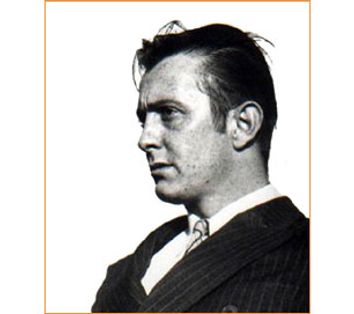
Any reader of Fante’s highly autobiographical fiction knows a lot about the manic, touchy, proud, borderline-alcoholic author, a short and handsome man whose energy, at any moment directed in numerous mutually exclusive directions, was as self-destructive as it was creative. From the early works of his tetralogy about his Depression-era fictional alter ego, Arturo Bandini, his readers know the mad desire of this young man to escape his overbearing immigrant father and the deeply oppressive Catholic Church, as well as his manic ambition to be a famous writer. And we know how that boy aged into the man of the later novels: Henry Molise, a suburban father always besieged by a houseful of kids, always lost in the march of history through World War II, the years of the Red Scare, the ’60s, and on into the failure of his health in the ’70s.

If, therefore, the enormously painstaking biographical research that Cooper — a professor at California State University, editor of Fante’s short stories and a reader whose competence in Fante predates the writer’s rediscovery — brings to Fante’s childhood and early manhood didn’t much enrich the fiction for me, I still found it irresistible. This early part of the biography brims with Cooper’s affection and admiration for his subject, and yet never obscures the fact that, his brilliance and talent notwithstanding, in many ways Fante was a pretty awful person: flighty, combative, manipulative and capable of real cruelty.

Cooper allows us to understand that it was not just the Depression, and not just the cruelty of literary destiny, but the man’s difficult character that was evident during his long period of penury and half-crazed writing in Los Angeles throughout the ’30s — the time fictionalized in the third novel of the Bandini tetralogy, considered by many to be Fante’s masterpiece, “Ask the Dust.” But despite his starvation, his mania and his constant efforts to derail his own career, Fante, like Bandini, found his way. Fueled by the encouragement from afar of H.L. Mencken, his first publisher and mentor, he placed short stories in such venues as the American Mercury, Atlantic Monthly and Scribner’s Magazine.

Equally important as his first publication was Mencken’s encouragement to Fante to enter into the sometimes-lucrative, often dreary profession of screenwriting — “the most disgusting job,” as Fante described it to Mencken, “in Christ’s kingdom.” A few years after arriving in Los Angeles, we find Fante signed with Elizabeth Nowell, agent to Thomas Wolfe and Alvah Bessie, with a novel under contract to Mr. Knopf himself, and fast on his way to becoming an established writer.

But nearly none of this early success panned out. Knopf rejected Fante’s first manuscript; Nowell dumped him. Then, in 1936, Knopf rejected Fante’s shockingly accomplished coming-of-age novel, “The Road to Los Angeles.” Vulgar, antic, challenging and unfailingly beautiful, this novel about Arturo Bandini’s insanely energized climb out of the working classes toward his art would be rejected again and again, with David Zablodowsky of Viking finally recommending that Fante abandon “this vicious little satire on adolescence.” Indeed, the book wouldn’t be published until after Fante’s death.

Throughout all this hardship, though, Cooper allows us to see that there is also a success story being told — and not the screenwriting story. In 1938, at last, came the publication of the first Bandini novel by Stackpole Sons, “Wait Until Spring, Bandini,” the volume that tells of Bandini’s impoverished childhood in Colorado, struggling under the triple weights of poverty, father and church, aching to escape. Its reception was not bad at all: Praised by James Farrell and compared to Saroyan, “Bandini” was twice selected by regional papers for best book of the year. A short year later Fante published his second novel, “Ask the Dust,” and if Stackpole’s strange legal problems — it was sued for an unauthorized publication of Hitler’s “Mein Kampf” — hurt the promotion of “Bandini,” it is nonetheless true that, another year later, Pascal Covici at Viking published Fante’s first story collection, “Dago Red,” to wide praise. It sounds, when you think of it, like a pretty promising debut.

But again and again, throughout the ’30s and ’40s, Cooper shows us Fante snatching failure from the jaws of promise. A heroic drinker and a driven gambler, consumed by dreams of fame and ever hungry for money, Fante seems determined to dive into the exploitative depths of B-movie projects rather than pursuing the critical reputation that was, literally, within his reach. Documenting this dimension of Fante’s life, Cooper is at his best, with a fine understanding of the ins and outs of the cryptic world of Hollywood deal making. And, by all accounts, Fante wrote some very fine screenplays. But his entire filmography in the end amounted to 12 titles, of which exactly three have unshared credit. His best film work, in all likelihood, was never produced.

And the 12 credits, no matter how lucrative, came at a high price. Between “Dago Red” in 1940 and “The Brotherhood of the Grape” in 1977, Fante published only a single work of fiction, and two manuscripts written during this period were rejected until after Fante’s death, including “My Dog Stupid,” his brilliant novella about an aging and compromised screenwriter. It was the time of the diagnosis of Fante’s diabetes, during which he suicidally declined to stop drinking. It was the time when, to name one example of his stormy temper, he sent his wife by taxi to the hospital to give birth to their fourth child. It is, Cooper makes clear, the key period in Fante’s life when his greatest work should have been done, and the time when his career’s back was broken.

The notable exception is “Full of Life,” a charming and hilarious short novel about early parenthood, published by Little, Brown in 1952. But this — the most commercially successful piece of fiction Fante ever published (it eventually was made into a film in 1956) — can’t help but remind us, in its very airiness, of the dark, important work he failed to do during this time: Cooper aptly captures this book as a “sanitized reverse-image of the way things were with his life as a husband and father.” Family life demands a great deal from Fante, and the lure of drinking, gambling and golf are never far off. Nonetheless, it is a time when he earned a great deal of money for doing some very nasty work — 1965, for example, finds him agreeing to do a Nabokov rip-off, “Lola,” for Roger Corman. And it is the time during which he described his narrator writing a novel, in “My Dog Stupid”:

I could feel the blow in my gut and kidneys, sheer panic, creeping up my back and riffling the hair on my scalp. It wasn’t a novel at all. It was conceived as a novel but the wretched thing was actually a detailed screen treatment, a flat, sterile one-dimensional blueprint of a movie. It had dissolves and camera angles, and even a couple of fade-outs. One chapter began: “Full Establishing Shot — Apartment House — Day.”

And still, Fante the novelist was not done. Despite it all, somehow, in 1975, he manages to pull off that miraculous act of which so many screenwriters dream: He manages to write and sell “Brotherhood of the Grape,” a novel about the death of a screenwriter’s mad, alcoholic, diabetic father. The feat did not go unappreciated: Larry McMurtry in the Washington Post offered comparisons to “King Lear” and “The Brothers Karamazov.” The superstar screenwriter Robert Towne — who had encountered “Ask the Dust” while researching “Chinatown” — optioned the book and interested Francis Ford Coppola in producing it. Was, at last, the recognition Fante had so long deserved going to come to him?

If so, it was coming too late. Having suffered from diabetes since the ’50s, John Fante lost his eyesight in 1978 and began a steady descent into the cruel last stages of this disease that would end in the amputation of both his legs. And, at last, came the rediscovery of his books, thanks to Bukowski. “Out of respect for his idol,” writes Cooper, “Bukowski had never dared approach Fante.” Fante was blind when “Ask the Dust” was republished in 1980. And still he managed to close the Bandini tetralogy by dictating “Dreams From Bunker Hill” to his wife, in 1982. He died in 1983 at 77, following which both the unpublished work and the entire life’s work were brought out again by Black Sparrow, and the Fante story came to be, as we know it today, a literary morality play quoted when the conversation turns, as it inevitably does, to the serendipity of literary life — a writer whose story, somehow, has become better known than his stories.

So what, in the end, is the meaning of the John Fante story? Is it really a story of a great writer denied his audience? Is it really a tale of talent finally triumphing?

Yes and no. Sure, great art should have an easy path in the world. But the fact is that in writing, as in music, there is more talent out there than there is room in the machinery of publishing or in the public’s attention. This being the case, the inherent difficulty of being an artist will always carry the ancillary frustrations of finding an audience. And sure, there is always luck involved. What if, for example, Bukowski had seen fit to acknowledge his debt to Fante in, say, the mid-’60s rather than the late ’70s? There would have been a good 17 years of writing time available to Fante — had he wanted to take advantage of it.

But would he have? In the end, Stephen Cooper’s fine biography makes it hard not to feel that the opportunities were always there for John Fante — many more opportunities, in fact, than he knew quite what to do with. And it’s hard not to feel that more than a story about the fickleness of audiences or publishers, the story of John Fante is of a writer who, in a key period of his life, failed to wrestle his talent to the table. He failed because of whatever it was in his mind that kept him suicidally drinking, gambling and fighting his way through his life. My night with Bukowski and his wife started at 8 p.m. in a San Pedro restaurant and ended in their living room sometime just before dawn. A portion of the night’s talk is on tape, and that part I can refer to today:

[What caught me in Fante was] when he was alone and starving and trying to be a writer in a tiny room … Starving for your art for Christ’s sake. That isn’t done much nowadays. Seems like more in centuries past, guys would starve for their art. They’d go mad for it, throw everything up to be able to create … People won’t give up their comforts, they won’t take the big risks. People want [the] name, they want fame, but they won’t lay down their blood for it, they won’t go mad for it, they don’t have the passion for it. They want the reward, but they don’t really have the inner drive to really do the thing that they want to be famous for.

Now, listening to the late poet’s flat Californian voice sounding on my stereo, I wonder about that. It’s striking that, for all Fante’s calculation and attempts to engineer a writing career, the real fiction came by itself and survived by itself, and had he, like Bukowski, never done anything but pursue his art, he would likely have been the famous writer he dreamed of becoming.

When I think of it, I can nearly get angry. I can nearly feel that, like a farmer holding land in trust for a generation, Fante held a gift bigger than himself, the ability to make some little sense of the enigma of existence, the chance to capture the country he witnessed riding freights down the West Coast in the ’30s, in California in the ’40s, in the rich sounds of his Italian parents and in the sights of their immigrant world. Artists face incredible odds — think of fellow Californian John Sanford, who has pursued his talent in the face of nearly universal rejection over nine decades, and he’s at it still.

But perhaps, in the end, none of that matters. What matters is that there are 10 volumes of Fante’s writing on my shelf, and two volumes of his letters: always in print, always there to be rediscovered, as I discovered them.

And perhaps it is not such a terrible thing to say of Fante that his readers will always close his books, not only grateful for the strange luck that allowed these books to survive, but also regretful that this angry and wonderful man never quite had what it took — call it courage; call it luck; call it faith — to follow his vast talent, like Bukowski did, all the way to the end.

Continue Reading Close