Niall Stanage

Why I’m glad Keith Olbermann is gone

The smugness, the narcissism, the never-ending parade of yes-man guests: Goodnight and good riddance!

  • more
    • All Share Services

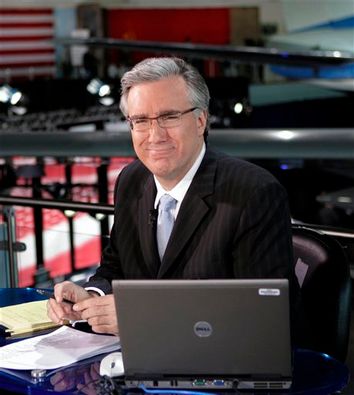
Why I'm glad Keith Olbermann is goneFILE - In this May 3, 2007 file photo, Keith Olbermann of MSNBC poses at the Ronald Reagan Library in Simi Valley, Calif. Keith Olbermann is leaving MSNBC and has announced that Friday's "Countdown" show will be his last. MSNBC issued a statement Friday, Jan. 21, 2011, that it had ended its contract with the controversial host, with no further explanation. (AP Photo/Mark J. Terrill, File)(Credit: AP)

If there was some strange parallel universe in which Keith Olbermann and I were members of Congress, I suspect we would vote together about 99 percent of the time. But when the “Countdown” host announced his abrupt departure from MSNBC on Friday night, I felt only relief.

First reactions to Olbermann’s exit have broken along lines as partisan as they were predictable. That the New York Post would respond to the news with glee and The Huffington Post with a gnashing of teeth was hardly a shock.

But back in the real world, I cannot imagine I am the only viewer who is basically simpatico with Olbermann’s worldview, but who had come to find him and his show utterly insufferable. The glibness, the pomposity, the narcissism — all these foibles had, of late, reached gut-wrenching proportions.

It was not always thus. It is easy to forget just what the media landscape looked like in the early years of Olbermann’s tenure at the helm of “Countdown.” (He had, of course, had an earlier, unsuccessful stint at MSNBC, which culminated in one of the many enmity-filled partings that have dotted his career.)

The show began in 2003, when large swathes of the journalistic profession appeared to have been cowed — not just by the Bush administration per se but by a jingoistic atmosphere that lingered too long after 9/11 and took many unwise forms.

In that environment, Olbermann was fresh, even daring. The show’s increasingly forceful liberalism through its early years made for some riveting TV moments, the best-known perhaps his 2006 takedown of then-Defense Secretary Donald Rumsfeld.

The freshness curdled soon enough.

In his farewell remarks on Friday, Olbermann proudly proclaimed that his show was “anti-establishment.” In recent years, that description was a stretch, at best.

Everything from the increasingly contrived “Worst Person in the World” segments to the host’s persona — a kind of an ersatz version of Walter Cronkite, with infinitely more “attitude” but infinitely less real authority — had settled into a rut. Predictability and self-importance were the main features.

“Countdown” had a niche — a profitable one for both the network and its host, who was rumored to have negotiated a $30 million four-year contract in 2008 — and Olbermann apparently saw little need for change.

Meanwhile, his professed commitment to the questioning of authority all-too-evidently did not extend to himself. There were myriad stories about diva-like histrionics in front of — and allegedly directed against — staff. There were instances where his sneering at co-anchors had embarrassing public results.

But, more importantly, there was a years-long procession of pundits whose only apparent purpose was to confirm the correctness and brilliance of the host’s every utterance. The spectacle was one in which purportedly respectable journalists seemed to fall over themselves to play courtier to King Smug.

By last year, criticism of this trend had become so widespread that Olbermann responded, via a promo spot for the show. The ad, which showed the host proclaiming that “I ask a lot of these questions to find out whether or not I’m wildly incorrect about something,” was unintentionally hilarious. The only “establishment” being challenged by then was the one that is charged with taking action against false advertising.

There was a bigger problem, too. Olbermann rose to prominence in large part through attacking other media figures — most notably Bill O’Reilly — for both their gloating self-regard and their rhetorical recklessness.

Olbermann’s claim to the moral high ground here was strictly relative. This is a man, after all, who once reported an allegation that Paris Hilton had been punched in the face under the tagline “A Slut and Battery.” Hilarious, no?

Later silliness — the risible condemnation of then-Senator-Elect Scott Brown as “an irresponsible, homophobic, racist, reactionary, ex-nude model, teabagging supporter of violence” — only strengthened the impression that Olbermann had morphed into a mirror image of those he so often attacked.

The blogosphere is already aflame with suggestions that Olbermann’s departure is linked to Comcast’s impending takeover of NBC. Maybe it is. Petitions for his reinstatement are growing as I type. Maybe they’ll be successful — though I doubt it.

In any case, for me at least, Olbermann’s act has long been threadbare. Goodnight and good luck, Keith — and good riddance.

Ron Reagan talks about his father’s Alzheimer’s

He tells Salon why Nancy Reagan kept the diagnosis from her husband -- and answers his brother's "sell out" charge

  • more
    • All Share Services

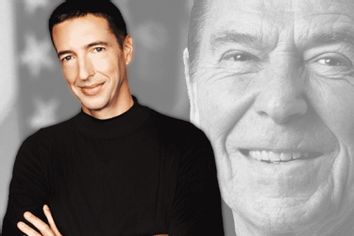
Ron Reagan talks about his father's Alzheimer'sRon Reagan, Jr.

Seven years after his death, the name of Ronald Reagan is still capable of provoking serious arguments — including within his own family.

The former president’s son, Ron Reagan, has just released “My Father at 100,” a book about his father’s life. (The younger Reagan resists calling it a memoir.) The book’s revelation that Ron now believes his father had Alzheimer’s disease while in office has already elicited a furious response from Michael Reagan, the son adopted by Ronald Reagan and his first wife, Jane Wyman.

Michael Reagan has not only denied the Alzheimer’s-while-in-office suggestion; he has accused his brother of wanting to “sell out his father to sell books” and suggested, via Twitter, that people need to “pray” for Ron. But in an interview with Salon on Tuesday, Ron Reagan showed no signs of backing down from the fight.

“He seems to be dedicated to selling more of my books,” he said about Michael. “I think he has made this a much bigger story than it would have been if he had just kept his mouth shut.”

Do the two sons talk?

“He hasn’t really spoken to anybody in my family for quite some time, so far as I know. I was quite surprised to see that tweet that he sent out about me being an embarrassment to my father and now an embarrassment to my mother. Besides being just an unfortunate thing to say, he really shimmied way out on the end of a limb there. Does he expect that my mother is going to agree with that?”

Lest the question dangle unanswered, Ron filled in the gaps:

“I just spoke with her last night, and I knew I was going to be doing interviews, and I said: You know in light of all this stuff, and Mike’s comments, I’m sure I’m going to be asked, What did you think of the book? And she said to me: ‘You tell them that I read it, I loved it, it made me cry, and I’m very proud of you.’”

Contemporary concerns about President Reagan’s age and health came most sharply into focus after his infamous first presidential debate with Walter Mondale in 1984, during which Reagan appeared uncertain and occasionally confused. His son writes that, as he watched, he “began to experience the nausea of a bad dream coming true.”

But did Ron Reagan see other signs, in private, of the beginnings of his father’s decline?

“There were moments, occasional moments,” he said. “I’m his son, so I’m hypersensitive to any kind of change. I certainly never thought to myself, ‘Oh my God, he must have Alzheimer’s.’ But there were private moments where you would just kind of think, ‘Hmm … [there was] just a little hesitation there that I’m not used to.’”

Ron believes some of the negative responses to the book are rooted in a fundamental misunderstanding about the condition that afflicts millions of Americans.

“One of the reasons why people have got their noses out of joint, is that I think people confuse Alzheimer’s, the disease, with dementia, the symptom that goes along with later-stage Alzheimer’s. I made clear in the book that I never saw any signs of dementia when he was in office.”

Ronald Reagan had a relatively short post-presidential public life. In 1994, he wrote an open letter to the American people acknowledging that he had Alzheimer’s — and almost never appeared in public thereafter. Was the public admission a difficult one for him to make?

“The disease had taken a toll by that time,” Ron replied. “To my knowledge, he didn’t spend a lot of time brooding about it or anything like that. I think he kind of let go after that, after he received his diagnosis.

“My mother didn’t tell him right away. She wisely decided: ‘If I tell him early, it’s going to lead to depression. I’ll tell him when he has to know.’ And so that’s what she did. And after that, he gave himself over to the disease and the dips and plateaus came a little bit more frequently.”

In the earlier stages of his decline, was Reagan still able to see friends or political acquaintances — anyone, basically, beyond his family?

“Up to a point,” says Ron. “But later my mother — in order to protect his privacy and his dignity and to leave people with the memory of him as he was — sort of cut off contact with friends. People would come to the house and visit with her, but he had retired to a bedroom by that time. She was not of a mind to bring people back to stare at him, or something like that.”

The experience of growing up as the child of a president is one that few Americans have had, or will ever have. Malia and Sasha Obama are significantly younger than Reagan was when he stood in their shoes (he was 22 when his father was elected in 1980), but does he have any advice for the current first daughters?

“You just have to hold on to the fact that you are yourself. You are not just somebody’s — in their case — daughter. Other people, though, are going to see you that way. Other people, for your entire life perhaps, are going to see you in those terms. You are going to have to adjust to that. Always hang on to the idea that ‘I am myself, I am not just somebody’s child.”

Continue Reading Close

Who will be the Ron Paul of 2012?

It might just be Ron Paul himself. He talks to Salon -- and it sounds like he's a little uneasy with Mitt and Sarah

  • more
    • All Share Services

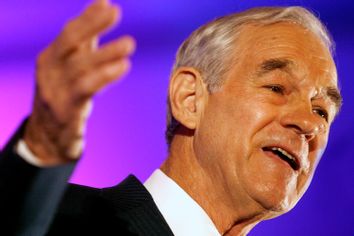
Who will be the Ron Paul of 2012?Ron Paul

“People ask me if I think about it, and I do,” Ron Paul says, talking about the possibility of making another presidential run in 2012. “I haven’t decided. It is going to be several months before I need to, or expect to, make a decision like that.”

As he mulls his options, the 75-year-old Texas congressman finds himself — not for the first time — in a peculiar situation. Last time out, in 2008, his campaign was roundly mocked by media commentators and Beltway insiders, but in the end he bested several supposedly more serious candidates, notably erstwhile New York City Mayor Rudy Giuliani and former Tennessee Senator Fred Thompson.

Admittedly, Paul was never within reach of capturing the GOP nomination — but he also proved himself to be much more than a punchline to the pundits’ jokes. He racked up ten second-place finishes (it helped that he refused to drop out even after every other aspirant had conceded to John McCain) and seventeen third-places in primary contests, and his campaign raised more than $30 million, powered by fierce grassroots enthusiasm.

Of his ’12 calculations, Paul says, “There could be some personal factors that I would take into consideration — family things. There will be the exact condition of what’s happening in the financial markets, whether I think people will continue to be interested in the Fed and whether we can excite people about ending our foreign policy.

“If I still think [my support] would be only three or four percent, that would be one thing. But I think our numbers our growing, so I’ll just have to assess it next year.”

A decision, he adds, will come “by spring.”

The political landscape, which has become markedly more hospitable to Paul’s libertarian brand of Republicanism in the last two years, probably makes the idea of another run tempting. Paul’s ultra-skeptical view of the Federal Reserve was, in 2008, cited as axiomatic evidence of his kookiness. Now, mainstream unease about the Fed appears to be building, most recently finding expression after Ben Bernanke’s decision to launch a $600 billion bond-purchase plan earlier this month. Even Mitch McConnell and John Boehner wrote to the Fed chairman to express their “deep concerns” about his move.

Paul has other winds at his back, too. The Tea Party is, to be sure, something of a ragbag grouping. But it has done much to popularize the fiscal conservatism and literalist reading of the Constitution that Paul favors. Add to this a host of more generalized concerns — from the spiraling deficit to unease over the continuing war in Afghanistan — and it is easy to see why Paul might believe that 2012 presents an ideal opportunity to improve on his 2008 showing.

The question, though, is whether he is best placed to take advantage of the moment. Even some who are sympathetic to the congressman wonder if a man who will be 77 on Election Day 2012 is really up to the rigors of a national campaign. “If I didn’t think that, I surely wouldn’t do it,” is how Paul addresses the age question. (The oldest serious non-incumbent candidate for a major party nomination in the modern era was Bob Dole, who turned 73 a few weeks before officially claiming the Republican nod in 1996.)

There is also the question of his public persona. Those 2008 achievements were certainly prodigious. But Paul can still come across as somewhat obsessive, especially about esoteric elements of monetary and fiscal policy. With his pixie-like appearance and palpable disinclination to package his message into TV soundbites, he does not exactly scream “populist appeal.”

There is, of course, an obvious heir to his mantle: his son, Rand, now the senator-elect from Kentucky. Rand has his own weaknesses — it will be a long time before his contortions over the 1964 Civil Rights Act are forgotten — but as his surprisingly polished performance in a series of debates this fall demonstrated, he’s better suited than his father to the modern age. But Rand Paul has given no indication that he’d consider a presidential bid as early as ’12. And Ron Paul scoffs when asked whether he would encourage his son down that path.

“Oh!,” he says with a flash of impatience. “I think that would be really premature for me to even volunteer anything like that. He hasn’t even been sworn-in yet.”

(Attempts by Salon to secure an interview with Rand Paul for this article were unsuccessful.)

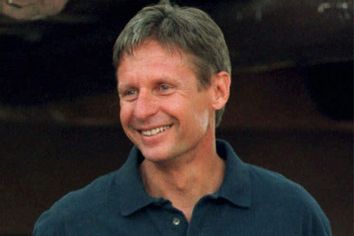
The libertarian ranks are not exactly swollen with credible national candidates, so if both Pauls decline to run, the spotlight might then fall on Gary Johnson, the former New Mexico governor who is widely assumed to be toying with a bid for the GOP nod, but he cannot explicitly confirm this because of the laws that surround the type of political committee he heads. (Johnson’s official role is as honorary chairman of the Our America Initiative, a 501 (c) (4) organization which cannot promote a current candidate for federal office.)

Johnson, who was profiled in Salon earlier this year, has in recent weeks been attracting the attention of everyone from the Daily Caller to The New Republic, and has even drawn transatlantic praise from Britain’s Spectator. As a popular two-term governor of a swing state, he can claim a measure of credibility and electability that is otherwise in rather short supply among Republicans of his ideological hue.

His admirers also include Ron Paul himself:

“We are friends and I think our views are very close together,” Paul says of Johnson. “I would think that both of us are interest in promoting our cause and not in any way attacking each other.”

Is Johnson, hypothetically, a candidate whom Paul could support if he did not run himself in 2012?

“I think, hypothetically, that is the case,” comes the cautious answer.

The admiration runs both ways. When it comes to libertarian issues, Johnson says, “I think Ron Paul has done a terrific job raising awareness in this country.”

While Johnson’s admiration for Paul appears genuine, one doesn’t have to read very deeply between the lines to see that he also harbors some misgivings about Paul’s capacity to build on his 2008 foundation. Asked whether he considers it fair that Paul got labeled as a fringe candidate in 2008, he replies: “I haven’t been labeled that way and I hope I don’t get labeled as some sort of fringe candidate. Fair or unfair, Ron Paul got labeled that way.”

Johnson also argues that there may be a subtle difference between the two men when it comes to military matters.

“Ron Paul, I think, really got labeled as a non-interventionist. And I would not apply that label to myself,” he says. “Although I believe we should be out of Iraq and Afghanistan and we should be looking at significant reductions in defense spending, I would say that we should be very vigilant as to national defense.”

Asked whether he would be more effective as an advocate for the libertarian cause than Paul, Johnson’s answer is ostensibly modest — but also meaningful:

“I’d rather not say that I am going to be more effective at it. But for somebody to go further than Ron Paul has gone, they are going to have to do just that.”

Johnson clearly believes that the libertarian constituency can be expanded in 2012. He insists that “the voice of the Republican Party is up for grabs” and asserts that the 2012 race is “absolutely wide open.”

Still, both he and Paul are willing to acknowledge that, in many way they remain out of step with their fellow Republicans. Paul dryly notes that his message “appeals to liberals and independents and libertarians and constitutionalists — but not necessarily, you know, the conventional Republican Party member.”

Johnson, asked how someone like him or Paul could compete against a candidate with the money of Mitt Romney or the celebrity of Sarah Palin, chuckles.

“Well, yeah!,” he says with exaggerated emphasis. “What your question pointed out is the impossible. How could that possibly happen?”

Johnson remains a happy warrior. Of Romney or Palin, about all he’ll say is that they are “very strong” overall as candidates and that “I think we could all sit down and agree what the weaknesses might be.”

Ron Paul, as befits a man who has spent much of his life struggling against the Republican establishment, delivers a rather more damning verdict. Asked what he would think if Romney ultimately become the nominee, Paul pauses and sighs.

“Well, it depends on whether he changes his viewpoints on some issues,” he says. “He instituted a government-mandated [healthcare] program in Massachusetts, which didn’t please me. If he wants to do the same thing nationally, that would be a problem to me.”

And how would he feel about a Sarah Palin candidacy?

Another, lengthier pause.

“I don’t think [I would feel] a lot different from many other Republicans,” he finally says, and begins to laugh.

Could he expand upon that a little.

He laughs again.

“Probably not.”

Continue Reading Close

Steny Hoyer: Dems will hold House, Pelosi will stay

The man who may replace Nancy Pelosi as the top House Democrat this week talks to Salon

  • more
    • All Share Services

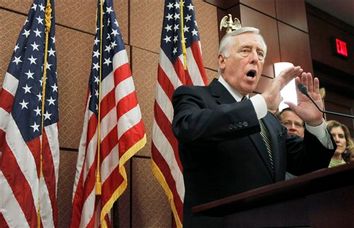
Steny Hoyer: Dems will hold House, Pelosi will stayHouse Majority Leader Steny Hoyer of Md., gestures during a news conference,on Capitol Hill in Washington, Thursday, Sept. 23, 2010, in support of the small business lending to struggling small businesses with easier credit and other incentives to expand and hire new workers. (AP Photo/Manuel Balce Ceneta)(Credit: AP)

The man who is odds-on to be the leader of House Democrats before the week is out is trying to walk a fine line.

Within Washington, it is widely expected that 71-year-old Steny Hoyer, currently the second-ranking House Democrat, will succeed Nancy Pelosi as the party’s leader if Democrats lose control of the chamber on Tuesday (although there is talk that he may face a challenge, perhaps from Connecticut’s John Larson). But during an interview with Salon on Sunday, Hoyer was adamant that Democrats would hold on to the House, and he affably refused to answer questions on his possible ascension.

“I don’t wish to get into the hypothetical,” Hoyer, now the majority leader, said. “I think the Democratic leadership will continue as it is.”

Even so, a certain degree of positioning on the Maryland congressman’s part could be detected between the lines.

In the event of a Pelosi abdication, one of the challenges that will confront Hoyer will be how to win the approval of a Democratic caucus that will almost certainly have been shorn of many centrist members who would otherwise be his natural supporters. Hoyer is clearly not running from his moderate image.

Discussing the importance of bringing a greater level of civility to politics, he said, “I like to think that is the way I conduct myself. I think if you talk to Republicans in the House of Representatives, many of them would agree that’s an accurate characterization. I think it sets a tone for working together. But it takes two to tango.”

It is equally obvious, however, that Hoyer doesn’t want to be seen as a pushover by his more liberal colleagues. His offer of bipartisan cooperation came hand-in-hand with a gloomy assessment of the sincerity of similar remarks emanating from Republicans.

“I hold out hope for bipartisan agreement and the ability to work together in a bipartisan fashion,” he said. “But experience tells me over the past two years — and frankly for years before that — that there is little inclination on the part of the Republican Party to do that. And we have some really specific examples of where the Republican Party has rejected its candidates that have done that.”

Into this category, Hoyer placed Bob Bennett, the senator from Utah who was defeated at a party convention earlier this year, and Delaware’s Mike Castle, who famously lost his party’s Senate nomination in the face of a Tea Party-inspired challenge from Christine O’Donnell.

Hoyer was scarcely any kinder about John Boehner, who is virtually certain to become House Speaker if Republicas win the chamber this week.

Asserting that Boehner “refers many times” to his work on the No Child Left Behind education law as an example of good-faith bipartisanship, Hoyer noted that the Ohio Republican reached across the aisle on that occasion only “when there was a Republican president asking him to do so.”

He continued: “You are hard-pressed, I think, to point to an example of John Boehner cooperating with a Democratic president, whether it was Bill Clinton or Barack Obama. There has not been a lot of bipartisan cooperation coming from Mr. Boehner. He says he is prepared to do that. I don’t know if he means it.”

Hoyer’s stoic insistence that the Democratic House majority would be preserved inevitably rendered many questions about how his party would act in the event of a GOP takeover out-of-bounds.

Asked about the widely reported tensions between the camps of Boehner and Eric Cantor, the GOP’s No. 2 House leader, Hoyer noted merely that “to the extent that there is not a united front among the Republican leadership, that will additionally complicate [Boehner’s] objective – if, in fact, his objective is to try to mold together some bipartisan cooperation.” But he immediately added that, “Again, I don’t think he is going to be in the majority.”

Hoyer stuck close to his party’s talking points, both in terms of the election and its possible aftermath. He bemoaned the “unbelievably large amounts of money being spent by anonymous groups” against his party’s candidates. And he asserted that “We’ve got to keep our focus on job creation. That is clearly the number one concern in the country. Whatever happens in the election, I think that needs to be Congress’s focus, and that’s what I think we will pursue.”

Earlier this summer, Hoyer excoriated comic Stephen Colbert for his testimony, delivered in his Comedy Central character, before a House subcommittee on immigration, terming it “an embarrassment.”

But asked about Saturday’s Washington rally headlined by Colbert and Jon Stewart, Hoyer was full of praise. While he noted that he had only heard second-hand reports, he said he viewed the rally as “a very positive effort by both Colbert and Stewart to bring people together.”

He added: “I think that’s what we should be doing — talking in civil terms of the real challenges confronting our country, and not in terms of confrontation and division.”

Whether Hoyer’s message of comity will resonate with liberals on Capitol Hill and beyond in the coming weeks is very much an open question.

Continue Reading Close

A Republican who wants DADT repealed now

Gary Johnson goes where few Republican presidential hopefuls dare

  • more
    • All Share Services

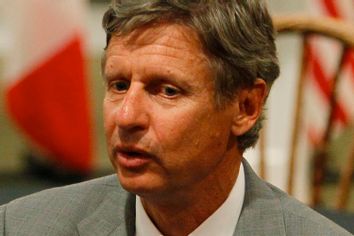
A Republican who wants DADT repealed nowFormer New Mexico Governor Gary Johnson

Former New Mexico governor Gary Johnson, whom I profiled for Salon back in May, is apparently continuing his quest to claim the libertarian Republican mantle from Ron Paul.

Late Thursday, Johnson — who has hinted at a run for the 2012 GOP nomination — released a statement on this week’s ruling by a federal judge that the military should stop enforcing Don’t Ask Don’t Tell (DADT). The statement placed him somewhat to the left of Barack Obama.

Enjoining the president — apparently with limited success — to “let that ruling stand and move on,” Johnson added: “Don’t Ask, Don’t Tell” has always been wrong and it is still wrong.”

Johnson insisted that there was no need to wait for Congress to repeal DADT. “Stop the smoke screen,” Johnson argued. “This policy is just not fair and it does not work — we need to get rid of it now.”

Although those sentiments might not sound unusual springing from the lips of, say, Rachel Maddow, they continue to place Johnson a long way from the mainstream of today’s GOP. A Republican filibuster in the Senate sank the most recent attempt to repeal DADT and, even though some Republicans insisted they acted primarily in protest Harry Reid’s procedural maneuvering, GOP leaders haven’t exactly been lining up to champion the cause of repeal.

But Johnson is used to breaking with the GOP establishment. He is, after all, in favor of abortion rights and legalizing marijuana; opposed to the wars in Afghanistan and Iraq; and an admirer of Nevada’s long-ago decision to legalize prostitution.

In Thursday’s statement, he called upon the memory of a libertarian Republican from the past to justify his position.

“As Barry Goldwater said when the policy was first put in place, a fundamental tenet of conservatism is that government should stay out of people’s private lives — and out of the impossible task of legislating morality.”

Continue Reading Close

Sorry, Dems: Last-minute Vitter challenge doesn’t add up to much

A former state Supreme Court justice jumped into the GOP primary at the last second. But it won't change much

  • more
    • All Share Services

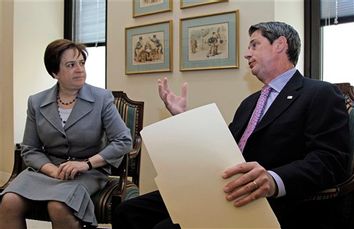
Sorry, Dems: Last-minute Vitter challenge doesn't add up to muchSupreme Court nominee Elena Kagan meets with Sen. David Vitter, R-La., Tuesday, June 8, 2010, on Capitol Hill in Washington. (AP Photo/Haraz N. Ghanbari)(Credit: AP)

The last minute decision by a former Louisiana Supreme Court justice, Chet Traylor, to challenge incumbent senator David Vitter for the Republican nomination has caused ripples of excitement this weekend, especially in Democratic circles.

That’s no surprise, since Vitter is a liberal bête noire with obvious vulnerabilities: specifically, his involvement in a 2007 prostitution scandal and, more recently, his less-than-persuasive explanations regarding Brent Furer, an aide who remained on staff for two years despite being involved in a serious domestic dispute.

But in talking up the challenge from Traylor, those who dislike Vitter may be engaging in some wishful thinking. Here’s why:

First, Traylor cannot credibly claim that the rejection of Vitter is essential for the GOP to hold the seat. As I recently wrote, Vitter remains in a very strong position against his Democratic challenger, Rep. Charlie Melancon, despite his travails.

Second, money matters. Vitter has about $5.5 million on hand. Traylor has whatever he has managed to raise since Friday night. Of course Vitter won’t want to splurge cash on the primary so recklessly as to weaken himself for the general election, but his war-chest is still an enormous advantage with the primary date (August 28) just seven weeks away.

Third, history tells a tale. Despite the recent examples of Bob Bennett in Utah and Arlen Specter in Pennsylvania, denying an incumbent senator his or her paty’s nomination is very, very difficult. It has happened only six times in the past thirty years.

Fourth, Traylor’s judicial record makes him more than a gadfly candidate, for sure — but it’s not clear how much more. The two people whom the Vitter camp had really feared were Louisiana’s Secretary of State Jay Dardenne and Family Research Council President Tony Perkins. Traylor is not widely known beyond the political cognoscenti — as evidenced by the surprise that greeted his declaration of candidacy — and will have to build a statewide vote-getting operation from scratch.

Fifth, one of the factors seized upon in the past 48 hours has been the purported capacity of Traylor, who comes from the north of the state, to “exploit the old rural-urban (or New Orleans v not New Orleans) fault lines,” as TPM’s David Kurtz put it.

While those fault-lines undoubtedly exist, it’s important not to oversimplify their nature. The heart of New Orleans may be a Democratic redoubt, but the surrounding territory — Vitter’s heartland — is just as politically crimson as the rest of the state. Vitter’s home county, Jefferson, went for John McCain over Barack Obama by a margin of more than 48,000 votes in the 2008 election. So, Vitter has plenty of ‘hometown’ Republican support to work with, even in the event of a clean geographical split in the primary.

There is, of course, a large asterisk to be placed beside all this. If further scandal hits Vitter — could it come from more revelations on the Furer matter? — all bets may be off.

If that does not happen, Traylor might still complicate Vitter’s re-election bid — but he will surely struggle to derail it.

Continue Reading Close

Page 1 of 2 in Niall Stanage