Paul J. Caffera

Republicans for Kerry?

After enduring a sustained offensive from conservatives, Republican moderates are quietly mounting a counterattack against Bush, DeLay & Co.

  • more
    • All Share Services

Republicans for Kerry?

Victor Fasciani, a 40-year-old asset manager, pays membership dues to the Republican National Committee, the only party he’s ever belonged to. He was at the 2000 Republican Convention in Philadelphia, where he was a New York delegate for John McCain. He’s no fan of John Kerry, but come November, he says, “I’m probably not voting for Bush, and I’m not voting for Ralph Nader, so that leaves me with a quandary.”

It’s a quandary afflicting many moderate Republicans, who feel alienated by their party’s rightward lurch and economic irresponsibility, and who fear that another four years of Bush will consolidate the power of the party’s most hard-line conservative elements. Even as moderate Republicans make gains in liberal states like New York and California, they’re feeling squeezed by their own party. Elements of the Republican right have declared jihad on the values party moderates hold dear, and though the White House claims to embrace all Republican factions, for most moderates there’s little doubt where its loyalties lie.

Few politicians want to admit the split, but it’s getting almost impossible to ignore. Former Bush counterterrorism chief Richard Clarke, a Republican who has served four administrations — three of them Republican — slammed Bush this week for a weak response to the threat of terrorism before the Sept. 11 attacks. Now he’s being savaged by fellow Republicans who have, in essence, accused him of working to aid the Democrats. McCain, the Arizona senator, along with Nebraska Sen. Chuck Hagel, have made headlines by openly defending Democratic presidential nominee John Kerry, a fellow Vietnam vet, against Bush campaign charges that Kerry is weak on national defense. The White House is incensed.

McCain and Hagel insist they still support Bush for reelection. The same holds for the Republican Main Street Partnership, a group of GOP moderates that includes Sen. Olympia Snowe of Maine, Gov. George Pataki of New York, and Gov. Arnold Schwarzenegger of California; all of them claim to avidly support the president’s reelection.

But there’s little doubt that behind the scenes, some moderate Republicans are rooting for the other side. If Bush wins, one aide to a moderate Republican says privately, “that would be the worst possible situation.”

That’s because some Republicans say that a Bush loss may be their last chance to take their party back. “If Bush were defeated by Kerry, it would certainly call into question the Republican leadership, people like Tom DeLay and Dennis Hastert,” says Fasciani. “That axis of the party may lose its weight and its power. The Powell and Giuliani wing of the party would certainly gain some prominence and may, during the next four years of a Kerry administration, perhaps even gain control of the party and increase the tent.” Such hopes have even led some Republicans to found a grass-roots group called Republicans for Kerry.

It’s no wonder moderates are feeling desperate. After all, a faction within their own party is fighting to purge them — and that faction includes some of the nation’s most powerful Republicans. In 1999, right-wing operative Steve Moore founded the Club for Growth, an anti-tax lobbying group that targets moderate Republicans, which it calls RINOs, “Republicans In Name Only.” Since then, the group, which funds right-wing primary challenges against centrist incumbents as well as general election campaigns, has become one of the most powerful financial engines of the right. Its Web site boasts: “We are now #1 in funds for Republican candidates outside the Republican Party itself!”

So far, the Club has failed to defeat any of the moderates it’s set its sights on. But it plans to raise $15 million for conservative candidates this year, and it’s going after one of the pillars of GOP centrism, veteran Pennsylvania Sen. Arlen Specter, by bankrolling U.S. Rep. Patrick Toomey’s primary challenge. Specter’s defeat, Moore has said, would be a “major scalp on the wall.”

The right smells victory. On March 23, the National Review ran a story titled “The Specter of Defeat — Pennsylvania polls look promising for Toomey.” Specter is still ahead, but polls show that his once commanding lead has shrunk — a recent poll by KDKA-TV Pittsburgh/WNEP-TV Scranton/Survey USA had him only nine points ahead of his challenger.

The primary contest is shaping up to be a referendum on the party’s future. According to a March 1 Wall Street Journal article, “Rep. Toomey is testing the strength of what appears to be a growing fault line in the Republican Party this year, between ideologically pure but increasingly disgruntled conservatives and established, but more moderate, figures such as Sen. Specter. The April 27 Senate primary here will see the only major intraparty fight this election year, and is being closely watched as an indication of how deep conservative sentiment is running. ‘It’s the best battle for the soul of the GOP this year,’ says Toomey consultant Keith Appell, referring to the name Grand Old Party.”

It’s hard to tell whose side the president is on. Karl Rove has reportedly repudiated the club for sowing discord in the party during the primaries, but Bush has undercut Specter on issues like overtime rules, an important one in an industrial state like Pennsylvania. “U.S. Labor Secretary Elaine Chao has denied a public request from Pennsylvania’s senior senator to delay loosening the nation’s overtime rules,” said a Jan. 21 story in the Washington Times. Several paragraphs later, it continued: “Specter, facing a re-election fight against conservative Rep. Pat Toomey, R-Pa., scheduled the hearing so the topic could get a ‘full airing.’ Besides asking Chao for the delay, Specter also asked her to remain in the hearing room for subsequent discussions.” She refused.

Even as Bush holds himself somewhat aloof, other members of the Republican leadership have actively embraced the Club for Growth. In 2002, House Majority Leader Tom DeLay, then House Majority Whip, gave $50,000 to the club through his political action committee, enraging party moderates.

More than anyone else, DeLay is a symbol of what moderates hate about the direction their party is going in, and he revels in displaying his power over his less zealous colleagues. As Nick Thompson wrote in Salon in September, DeLay has used the allocation of committee chairs to punish those who swerve even a little bit from his party line. “This is why moderate Rep. Christopher Shays, R-Conn., who generally supports DeLay, was blocked from becoming chair of the Government Reform Committee, a move even he says he knew would be a consequence of his support for campaign-finance reform,” Thompson wrote. “Rep. Marge Roukema, R-N.J., simply left Congress after DeLay boxed her out of several positions. In several primaries, DeLay has also worked against several moderate Republicans in favor of less electable conservatives, showing that the Texan would sometimes rather lose with a conservative than win with a moderate.”

It’s not surprising that some moderates are starting to feel similarly uncompromising. After all, old-fashion establishment Republicans have made a tactical alliance with fundamentalist right-wing revolutionaries like DeLay, but few want to see his vision of America realized.

Moderate Republicans are often fiscal conservatives but social liberals — in many ways, the exact opposite of this administration. They believe in balanced budgets, environmental conservation and a foreign policy that’s strong without being needlessly belligerent. They see themselves as the heirs of former President Teddy Roosevelt, the avid conservationist and trustbuster, and former Vice President Nelson Rockefeller, the philanthropist, statesman and governor of New York. The party they joined was staid and dignified. It was the other party that seemed shrill and radical.

When George Bush was elected in 2000, moderate Republicans thought he was on their side. But that illusion was dispelled in his first few months of office. “When the president was elected, everyone was looking for a breath of fresh air — Democrats and Republicans alike — for the good of the country we wanted a bipartisan effort,” Sen. Lincoln Chafee, R-R.I., tells Salon. “We were all so weary of partisan trench warfare, and now it is deeper than ever.”

“The president’s agenda has been so different from his campaign rhetoric,” Chafee says. “He is pushing an extreme agenda, from the abandonment of Kyoto, to banning access to abortions for service members overseas.”

For a while, Bush’s extremism was overshadowed by Sept. 11, and some moderates continue to support Bush because of the war on terror, despite being appalled by his domestic policies. Roger White, an associate professor of political science at Loyola University and self-described Rockefeller Republican, actually gave up his party membership four or five years ago out of disgust with the dominance of cultural conservatives like DeLay. Yet he supports Bush’s foreign policy, and says, “I don’t see the main danger as coming from cultural conservatives. I see the main danger coming from international terrorists.”

But Bush has squandered much of his post-9/11 popularity by using it as cover to pass a right-wing domestic agenda. “After 9/11, Republicans could have become the majority party for the next 50 years,” says professor Alan Wolfe, the founding director of the Boisi Center for Religion and American Public Life at Boston College. “But for whatever reason, Bush kept up the same polarizing approach. Everyone wanted to rally behind Bush. This is the biggest act of political stupidity in my lifetime.”

Moderates, says Chafee, “could have made a huge difference to the president,” had he not abandoned them and tried to “bludgeon them into compliance.” Now, those on the receiving end of that bludgeoning must decide whether they can support an administration that doesn’t support them. Leaving the party can be a wrenching act of personal redefinition, but if Bush wins another term, there may be no hope of changing things from within.

“My decision to leave the Republican Party was deeply personal and one of the most difficult decisions I have ever made,” former Republican Sen. Jim Jeffords told Salon. The Vermont independent famously quit the party in 2001, incurring the White House’s wrath and briefly handing control of the Senate to the Democrats.

“I left the Republican Party because I feared the Bush administration and the GOP-controlled Congress was moving too far to the right, and not listening to moderate Republicans such as myself,” he says. “Much of what we have seen since then has only confirmed those fears. We are in a war that we shouldn’t be in; the wealthy get tax cuts while our schools get shortchanged; the deficit grows by the day while millions of jobs are lost here at home. Meanwhile, the White House tries to placate the far right by supporting a constitutional amendment to ban gay marriage, diverting the nation’s attention from where it should be focused. We are headed on the wrong course, and it troubles me deeply.”

Despite the fervent hopes of many Democrats, it’s unlikely that waves of Republican officials and voters are likely to follow Jeffords. Most Republicans continue to back their president. The moderates are a small group within the party, and it remains to be seen whether their unhappiness with Bush is a harbinger of electoral trouble for the administration in November.

“If I am talking anecdotally to moderate Republicans, it’s very hard to find one who is going to vote for Bush, very difficult,” says John Zogby, president and CEO of the polling firm Zogby International. “On the other hand, strangely enough it’s not showing up in our polling.” In fact, Zogby’s latest polls show 87 percent of Republicans backing Bush. “I’m just watching and waiting and saying to myself maybe there’s something going on here, because I’m hearing it,” he says.

So if moderates are disenchanted, why isn’t that showing up in the polls? In part, it’s because moderate Republicans as a whole are a rapidly diminishing species in most of the country. According to Zogby, 80 percent of Republicans self-identify as conservative. Asked about the role of moderates in the party, Rick Shaftan, a conservative Republican pollster in New Jersey, says: “It’s not that many individuals you’re talking about in terms of votes.”

Moderate Republicans, he says, are traditionally “mainline protestant WASPs like [former New Jersey Gov.] Christie Whitman. There aren’t that many WASPs. I don’t know where they’re a significant share of the vote.”

Those places where old-school Republicans are concentrated, on the East Coast and in California, are largely not in play in the 2004 election. Because they carry so little electoral weight, the national party has little incentive to cater to them.

The Republican Party has been moving away from its East Coast roots since the 1960s, when there was a split in the party between its liberal establishment wing — so-called Rockefeller Republicans — and the insurgent followers of Arizona Sen. Barry Goldwater, who lost the 1964 election in a landslide, but whose conservative movement went on to take over the party.

During the 1980s, as Southern conservatives flowed into the Republican Party, coastal sophisticates were again pushed out, and in the last two decades the Southern right has continued to consolidate its power. In a 1998 essay called “The Southern Captivity of the GOP,” Weekly Standard editor Christopher Caldwell wrote of how even non-Southern conservatives were “put off to see that ‘traditional’ values are now defined by the majority party as the values of the U-Haul-renting denizens of two-year-old churches and three-year-old shopping malls.”

Even Goldwater’s widow, Susan Goldwater Levine, recently told Salon that he “hated it that the right-wing zealots took over the party.”

Perhaps unsurprisingly, right-wing populist rhetoric, with its attacks on cosmopolitans and urbanites, has alienated those who don’t like to think of themselves as Bible-thumping rubes. “I don’t like the polarization, the idea that people who don’t live on the coasts are morons who watch NASCAR and drink Budweiser all day,” says Fasciani. “It’s posturing. When it comes down to it, do they really care about Joe six-pack? I don’t buy that populist notion that they espouse.” Nor does he relate to it.

Fasciani, a native of Westchester, N.Y., is a Republican of the old school who counts Abraham Lincoln and Roosevelt among his heroes. He’s proud of the party’s tradition of environmental stewardship — it was Richard Nixon, after all, who established the Environmental Protection Agency — and the military valor shown by people like Eisenhower and McCain. The party he loves is one where strength and erudition aren’t mutually exclusive.

“Teddy Roosevelt, this man read more books than Bush could name,” says Fasciani. “He wrote 50 or a hundred books in his lifetime.” (Fasciani is being hyperbolic — Roosevelt authored a mere 36). “Then you’ve got a guy in the White House now who’s probably read one book in the last 15 years and maybe didn’t even finish it.”

But unapologetic philistinism is considered an electoral virtue in many parts of the country, and it’s practically a first principle of the contemporary right. “Every Republican candidate now has to ‘make his bones,’ to prove his good faith by declaring his unequivocal willingness to alienate the ‘elites’ of the country,” wrote Caldwell in 1998.

Bush, of course, has been superbly willing to alienate such elites — a term that, when used by the right, seems to encompass most educated people who live in coastal cities. “My values are not Mr. Bush’s,” says Susan Cosgrove, a 59-year-old lifelong Republican who owns a communications firm in Pittsburgh. “The Republican Party as I think of it — the party of Rockefeller — had a profound respect for character, and I don’t think Mr. Bush is a man of character. I think his presidency is one of cronyism and pandering to the most radical wing of the party.”

“What I see happening is a split among Republicans I know,” she says. “A lot of them are becoming as alienated as I am, and a lot of them are moving in the same direction that the president is going. It makes for interesting dinner-table discussions.”

Cosgrove isn’t ready to leave the party yet. “There’s something to be said for trying to change things from inside,” she explains. Still, she’s getting close.

“Maybe this is a lost cause. You try to change things from the inside and if you can’t, it’s time to step outside.”

Meanwhile, she plans to volunteer for Kerry in the upcoming election. “I am in ABB mode,” she says. “Anybody but Bush.”

There’s a group for people like her, though Cosgrove hadn’t heard of it. Republicans for Kerry was founded on Jan. 16 and now has about 100 members who plan to do outreach to fellow moderate Republicans during the campaign. (At least, it had 100 members until recently, when it moved to a new Web site and started its membership roster from scratch.) Among them is Peter McLaughlin, a former McCain intern in Brookfield, Conn.

A volunteer firefighter who owns a security business with 35 employees, McLaughlin has seen the administration’s failures close-up. “First responders are being underfunded at the same time that we’re promoting the importance of the war on terror,” he says. “I can tell in my town that if something happens here, we’re going to be the first ones sent and as of today we don’t have any particularly specialized equipment.”

McLaughlin’s problems with Bush are ideological as well as practical. “A conservative conserves,” he says. “Blowing out the deficit by having these ill-advised tax cuts while conducting a war is not conservative. I’m a Teddy Roosevelt conservative, which means conserving the environment. Certainly, if you look back in history that was a Republican issue, and the Bush administration is trampling all over it. I think that’s terrible for the world and for our country.”

Bush’s record has been so terrible, he says, that another term might drive him out of the party altogether.

“It would be very difficult to go through another four years of what we’ve seen in the last three-and-a-half years,” says McLaughlin. “Certainly if there were another four years beyond that, I don’t think there’s any way that I can stay in the party. But I feel like this is my home too, and I want to fight for it. I don’t want it to be taken over by this extreme group, and to feel like I have to leave my home.”

A predictable tragedy

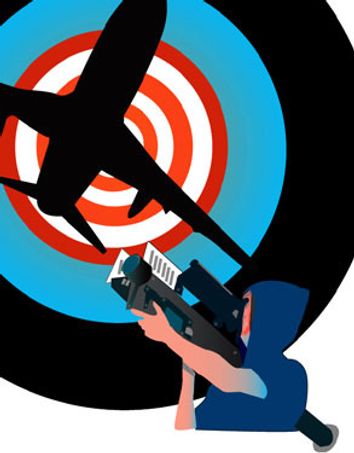
The government knows that Iraqi insurgents have a cache of shoulder-launched missiles. So why are troops still ferried in unprotected aircraft?

  • more
    • All Share Services

A predictable tragedy

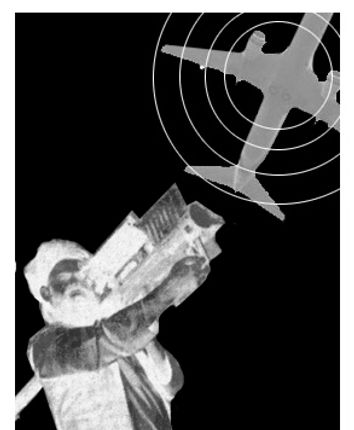
When a shoulder-launched missile was fired on Sunday from the shelter of an Iraqi date grove and blew the rear rotor off a Chinook transport helicopter, the United States suffered the single most lethal attack on its troops since the invasion of Iraq began more than six months ago. But obscured in the initial government comments and press accounts of the deadly attack was a crucial point:

The tragedy was predictable. And though it has long been known that hundreds of shoulder-fired missiles are circulating among hostile forces in Iraq and throughout the Middle East, the Bush administration and congressional leaders have done little to protect the commercial passenger jets and some military helicopters that ferry thousands of troops in and out of the war theater.

Although Chinooks used for Special Forces operations are reported to carry anti-missile technology, a U.S. Army official, speaking on condition of anonymity, told Salon that the National Guard CH-47 Chinook helicopter shot down on Sunday was unprotected. The chopper was being used to ferry at least 36 troops from Fort Carson, Colorado’s, 3rd Armored Cavalry Regiment to the main U.S. military base in Baghdad; from there, they were to proceed to Kuwait City, where they would have boarded one of two daily commercial airliners that the Pentagon has hired to bring troops home for a two-week break from the Iraqi war zone.

Sixteen troops died and 20 were seriously injured when the helicopter exploded and crashed in flames near Fallujah, a center of loyalty to fallen dictator Saddam Hussein.

Though the U.S. troops aboard the Chinook were probably thrilled to be taking a leave from the war, their entire route home would have been vulnerable. Like the downed helicopter, the commercial jets that would have flown them out of Kuwait lack expensive anti-missile technology. These airliners have been chartered to transport nearly 500 troops per day to Frankfurt, Germany, and then on to either Baltimore, Atlanta, or Dallas/Fort Worth. Similar commercial craft are used to ferry about 90 percent of the U.S. troops that go into and out of Iraq. Critics inside and outside the U.S. military have warned for months that the big, lumbering jets are obvious targets for Iraqi insurgents who are trying to kill American troops and drive the United States out of Iraq and the Middle East.

Earlier this year, the Pentagon proposed a $25 million program to begin equipping the commercial airliners used for troop transport with advanced technology to protect them from the shoulder-fired missiles. But when the Bush administration did nothing to win approval of the measure, Republican leadership in the House of Representatives slashed the request to $3 million, far short of the sum needed to expedite wartime protection of the aircraft.

“[Sunday's] tragic events in Iraq are a reminder of the reality of the threat posed by shoulder-fired missiles,” Rep. Steve Israel, D-N.Y., told Salon. “These weapons are easy to acquire, easy to use, and have now become a weapon of choice among terrorists. Secretary [Donald] Rumsfeld acknowledged as much [Sunday] morning, yet we aren’t doing enough to protect troops transported on civilian aircraft and we aren’t doing anything to protect civilians.”

In a series of stories since the Sept. 11 terrorist attacks, Salon has disclosed that the spread of the missiles has alarmed military brass, airline security experts and some elected officials. The launchers are small, light and easy to hide; al-Qaida operatives have them, security experts say, and so do other terror organizations. Late last year, suspected Qaida terrorists fired on a charter jet filled with Israeli travelers at Mombasa, Kenya, only narrowly missing the target. Over the past 20 years, over half of all combat aircraft lost in global conflicts have been shot down by shoulder-fired missiles.

The danger from shoulder fired-missiles in the Persian Gulf region is well-known. Last year, terrorists launched an attack just outside a Saudi Arabian air base, and over the summer, Saudi officials captured a large cache of shoulder-fired missiles. From time to time, U.S. military officials have turned up buried caches of missiles in occupied Iraq. Still, despite capturing many shoulder-fired missiles, Saddam acquired so many of the portable missile systems that the Iraqi resistance is still well-armed.

“The resistance has been targeting aircraft at Baghdad Airport for several months,” says Vincent Cannistraro, former chief of counter-terrorism for the CIA. “I have heard of at least 26 SAMs fired at aircraft. The routine for aircraft landing or taking off at the airport has included countermeasures against the SAMs.”

On Sunday, in the aftermath of the Chinook take-down, Defense Secretary Donald Rumsfeld was asked about the shoulder-fired missile arsenal held by the Iraqi resistance. His reply: “Enormous numbers. Enormous numbers … Oh, have to be more than hundreds. There are weapons caches all over that country. They were using schools, hospitals, mosques to hide weapons. Think of it, in Bosnia, in the last six months, they have found 40 tons of weapons in a country that we’ve occupied for six years.”

Israel, a member of the House Armed Services Committee, is one of a handful of congressional experts on the missile threat who have pressed, without success, for measures to protect military and U.S. civilian aircraft from the global proliferation of shoulder-launched missiles. But he’s baffled that President Bush hasn’t done more to protect the troops. Along with Sens. Charles Schumer, D-N.Y., and Barbara Boxer, D-Calif., Israel sponsored a bill to equip all commercial airliners in the U.S. with anti-missile systems — an effort that could cost up to $15 billion, by some estimates. Due in large part to administration opposition, that bill died on Capitol Hill.

As part of the debate surrounding the president’s request for $87 billion to fund the ongoing military operations and reconstruction in Iraq, Israel and Boxer tried — unsuccessfully — to obtain financing to protect the 300 commercial jets that the Pentagon most often uses to transport our military forces within the United States and overseas.

Top national security officials began meeting last year to assess and address the risk that shoulder-fired missiles pose to U.S. airliners and, by extension, to the U.S. economy. But to date, critics say, the federal government has done almost nothing to prepare for the possibility — some call it a probability — that terrorists will use shoulder-launched missiles against American commercial jetliners, either within or outside the United States.

When the Bush administration this year allowed the much more modest $25 million measure to protect troop-transport craft to wither, some military officials were outraged. Though Bush portrays himself as a firm ally of men and women on the front lines, the critics said, he was leaving them vulnerable. “I am appalled,” one Defense Department official told Salon earlier this year, asking to remain anonymous. “We are setting ourselves up for a fall. We are paying lip-service to force protection and instead are digging a deeper hole in which to bury our head.”

Continue Reading Close

Bush abandons troop-protection plan

A decision by the White House and a GOP-dominated Congress would leave troop-transport jets vulnerable to missile attack.

  • more
    • All Share Services

Bush abandons troop-protection plan

Even as Defense Secretary Donald Rumsfeld made headlines this week by announcing that up to 20,000 fresh troops may be called to Iraq, President Bush and members of the congressional leadership were quietly abandoning a plan to protect troop-transport airliners from missile attack by terrorists or Saddam loyalists.

The measure, first advanced by the Pentagon, would have begun an ambitious program to equip the commercial airliners that are used for troop transport with advanced technology to protect them from the shoulder-fired missiles. Confused by disarray in the administration’s plans to protect airliners from missile attack, the House of Representatives slashed the original $25 million request to $3 million. Congressional officials say the Bush administration did nothing to win approval of the full measure — despite recent missile attacks on U.S. military craft flying near the Baghdad airport.

The outcome shocked many in the Defense Department and, critics said, it clearly could leave troops vulnerable. “I am appalled,” said one Defense Department official who asked to remain anonymous. “We are setting ourselves up for a fall. We are paying lip-service to force protection and instead are digging a deeper hole in which to bury our head.”

The $25 million measure was approved by the U.S. Senate, but slashed to $3 million in the powerful House Appropriations Committee, chaired by U.S. Rep. C.W. Bill Young, a Florida Republican. The lower sum, part of the proposed $400 billion defense budget for 2004, was approved in negotiations between the two chambers and is all but certain to be in the budget sent for approval to the president.

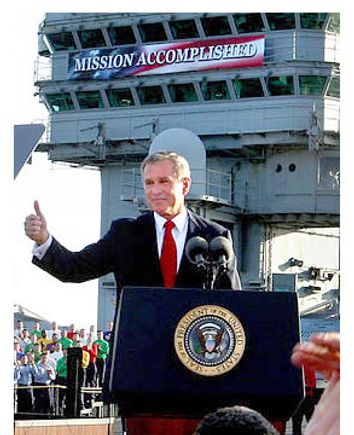
No president in recent memory has been a fiercer ally of men and women in uniform. “We will not cut corners when it comes to the defense of our great land,” Bush said last year. Even Ronald Reagan, one of the most forceful proponents of a strong military ever to inhabit the White House, never donned a flight suit and flew onto the deck of an aircraft carrier aboard a Navy plane. But this week, officials said, the Bush administration offered no support to protect the troop-transport planes.

“The administration never made the case for why it needed the money,” said John Scofield, a spokesman for the House Appropriations Committee. “It was never clear what they were going to do with the money.” An aide to a Republican senator, who asked to remain anonymous, said the full funding would have been approved if Bush had pressed for it. “If the president says that something is important, he will get the funding from this Congress,” the aide said. “All he has to do is ask.”

In a series of stories since the Sept. 11 terrorist attacks, Salon has disclosed that the proliferation of shoulder-launched missiles has alarmed airline security officials and many congressional officials. The launchers are small, light and easy to hide, and they are known to be in the hands of al-Qaida and other terrorist organizations. Late last year, suspected al-Qaida terrorists fired on a charter jet filled with Israeli travelers at Mombassa, Kenya, but the missile narrowly missed its target. Top national security officials began meeting last year to assess and address the risk, and some have suggested it would cost around $15 billion to equip 5,000 U.S. jetliners with anti-missile technology. But to date, critics say, the federal government has done almost nothing to prepare for the possibility — some call it a probability — that terrorists will use shoulder-launched missiles against American commercial jetliners, either within or outside the United States.

Contrary to the images portrayed in movies, most combat troops and other military personnel do not cram into the back of military transport planes when deploying around the world. Like the rest of us, they usually fly in commercial jets both within the United States and abroad.

Through the Civilian Reserve Aviation Fleet program, the Defense Department contracts with commercial airlines to provide jets and air crews during times of crisis. In return for participating in the program, airlines are guaranteed peacetime business with the Defense Department. The reserve aviation fleet “forms the majority of the DoD’s passenger airlift capability,” according to Navy Capt. Stephen Honda, spokesman for the Pentagon unit responsible for airlifting military personnel and equipment. By some estimates, over 90 percent of the military personnel moved by the Defense Department are transported on aircraft operated by CRAF carriers. And like every other commercial airliner in this country, these airliners are completely unprotected from the threat from shoulder-fired missiles.

But military craft flying in and out of Baghdad have been targeted at least three times since May by anti-U.S. forces with shoulder-launched missiles. All of those aircraft likely had sophisticated anti-missile countermeasures, and all of the shots missed their targets. Still, the threat of shoulder-fired missiles remains so great in Iraq that the Baghdad airport has remained closed to all but essential military and aid aircraft. That is the risk facing the planes that would ferry up to 20,000 reserves and National Guard troops to the Iraqi capital if Rumsfeld goes ahead with the call-up.

Pentagon documents show that shoulder-fired missiles are the single greatest killer of military aircraft, accounting for well over 50 percent of all combat losses in recent decades. Additionally, Pentagon documents show that these missiles have successfully hit 41 civilian aircraft and destroyed at least 30 of these. In the process, about 1,000 passengers and crew have been lost. Air Force Gen. John W. Handy, head of the U.S. Transportation Command, recently said that the danger posed by shoulder-fired missiles “is perhaps the greatest threat that we face anywhere in the world, and the proliferation of MANPADS is well documented.”

Some in Congress are deeply concerned about the elimination of funding to begin protecting the troop-transport aircraft. U.S. Rep. Steve Israel, a New York Democrat and outspoken proponent of federal spending to protect commercial jetliners, blasted the Bush administration in an interview this week for failing to take care of troop-transport planes. “Out of a $400 billion defense budget, $3 million is completely inadequate, particularly against thousands of shoulder-fired missiles in the hands of terrorists including al-Qaida,” Israel said. “We have simply got to stop shortchanging this glaring threat to American airplanes.”

According to Pentagon budget documents obtained by Salon, the missile defense program for aircraft in the military reserve program would have leapfrogged the lethargic anti-missile efforts currently gearing up at the Department of Homeland Security. In its first year, the Defense Department program would have measured the “heat signatures” of the commercial airliners used to transport troops, and then begun devising anti-missile measures to protect those planes. Measuring the heat signatures is a critical step, since shoulder-fired missiles are “heat seekers” and home in on the infrared radiation given off by aircraft. Currently, the DHS has no plans to conduct similar measurement efforts.

With $3 million, defense officials will be able to record those heat signatures, but little work on missile-jamming equipment will be possible unless money can be found elsewhere in the Pentagon budget.

Should terrorists begin targeting the troop-transport aircraft, there likely will be widespread political and economic effects. “The ability to rapidly deploy military force across the globe is a key element of American power and influence in the world and helps to create the stability and security that is the basis for investment and trade on which the prosperity of the U.S. and others depend,” says James Bodner, former undersecretary of defense in the Clinton administration.

A research study currently underway at the RAND Institute estimates that the direct cost of one plane’s being shot down – for the loss of life and the cost of the aircraft — would be $1 billion. The ripple effect of such a loss would likely be enormous, as people reassess the wisdom of traveling by air.

The military has taken a multi-pronged approach to protecting its combat jets and the Air Force’s large transport aircraft. It uses intelligence to uncover threats, conducts missions to capture shoulder-fired missiles from terrorists and other groups, and has installed sophisticated systems on its aircraft to jam attacking missiles and direct them away from the targeted aircraft. As a backup, since no electronic countermeasures system is 100 percent effective, the military also designs its aircraft to be able to withstand the detonation of a shoulder-fired missile warhead.

Shortly after the failed missile attack in Kenya last year, the administration formed an interagency task force to seek solutions to the shoulder-fired missile threat. Soon, however, that effort was being criticized for focusing on window-dressing solutions that cost little — and provide little protection. Confronted by congressional pressure, the administration pledged to put together a plan for combating terrorist missile attacks.

In March, Transportation Security Administration head Adm. James Loy seemed to call for an expedited push to address the threat. Speaking to CBS News’ “60 Minutes,” he said, “I think the right thing for us to do is to continue the methodical study process that has been undertaken by the National Security Council, not with years of study to come but with weeks of study to come.” Still, the administration failed to act. During congressional deliberations leading up to the vote to fund ongoing operations in Iraq, Congress ordered the Department of Homeland Security to come up with a plan to counter the threat from shoulder-fired missiles.

The department delivered a report in May that proposed spending $2 million this year to set up an administrative office to coordinate the anti-missile activities and up to $60 million next year. The White House, however, failed to seek any funding to implement the plan. Instead, the Department of Homeland Security began a much-hyped program that was supposed to have identified one or two promising technologies before the end of this month. Instead, the program petered out. In recent days a department official told Salon that the program “was never going to solve the problem [because] it lacked the necessary funding.” Still, despite the department’s dismal track record on this issue, the official insisted that a new Homeland Security program — funded in the first year with $60 million that the Congress appropriated after the White House failed to request any funding at all to address the threat — will begin the process of finding a solution. In early October, the Homeland Security officials will brief defense contractors on its goals and requirements for a missile countermeasures system for use on commercial airliners. But the program won’t yield significant progress before 2006.

“We’re heading out on a long, slow jog, when a faster pace is warranted,” says Israel. “I am convinced that the threat of shoulder-fired missiles to our commercial airplanes is serious enough to merit significantly more energy and resources.”

In the meantime, U.S. troops are being transported around the globe on aircraft that are unable to ward off a missile attack and have not been designed to take a missile hit. For the families of the troops about to be called up and sent to Iraq, this must be a chilling proposition.

Continue Reading Close

Terrorist threat or political hype?

Top Bush administration officials called the bust of arms dealer Hemant Lakhani last week a major blow against terrorism. Security experts are skeptical.

  • more
    • All Share Services

When British arms dealer Hemant Lakhani was arrested a week ago and charged with plotting to sell portable missiles to terrorists who would turn them against commercial jets, the Bush administration portrayed the bust as a milestone in the war on terrorism. Top administration officials went before the reporters and, in solemn tones, described the catastrophe that might’ve been if not for the alert work of U.S. intelligence and law enforcement agents. Bush himself offered a similar view when he met with reporters at his ranch in Crawford, Texas.

“The fact that we’re able to sting this guy,” the president said, “is a pretty good example of what we’re doing in order to protect the American people.”

Within days, however, a more critical view began to emerge among top national-security experts: The arrest of Lakhani and two alleged accomplices was welcome, yes, but its significance was being dramatically overstated by an administration on the defensive over its failure to capture Osama bin Laden and Saddam Hussein and its struggles in Afghanistan and Iraq. By the critics’ line of reasoning, the administration was exaggerating the significance of the Lakhani arrest just as it had the arrests last year of alleged “dirty bomber” Jose Padilla and the Lackawanna Six “sleeper cell” in New York. While officials were tipping off reporters in advance of the bust, they complained, the administration was continuing to resist substantive — and expensive — measures to protect commercial jets.

A terrorist who wants a shoulder-fired missile is not going to go to someone like Lakhani to buy one, says Vincent Cannistraro, former head of counter-terrorism for the CIA. “This was not a terrorist incident,” he told Salon. “It did not involve the penetration of a plot or terrorist cell.” He added: “This was a truly ludicrous situation … hyped in advance by a Justice Department anxious to show success.”

“This is not a huge victory in the War on Terror,” agrees Charles Peña, director of defense policy studies at the libertarian Cato Institute. “This just shows that we can sting a guy, not a bad thing, but it does not make it harder for al-Qaida or other terrorists to get these weapons.”

Ivo Daalder, a former National Security Council director for European affairs in the Clinton administration and now a senior fellow at the Brookings Institution, offers a blunt assessment of the arrest: “All hype.” Daalder praises the Bush administration’s success in toppling the Taliban in Afghanistan and killing or arresting numerous top al-Qaida leaders overseas, but he sees the administration’s domestic approach as flawed.

“The administration has made homeland security a political issue. The president consistently uses terror for political gain,” he says. “[U.S. Attorney General] John Ashcroft’s Justice Department is all about hype and not reality.”

Reports from the Department of Defense and other government agencies show that shoulder-fired missiles have hit at least 43 civil aircraft since the 1970s. Of these, 30 aircraft — 69 percent of the total — were shot down, leaving more than 900 air travelers dead. In an investigative report last year, Salon found that dozens of countries have produced hundreds of thousands of the shoulder-launched missiles, and that many of them have found their way to the black market. Jane’s Intelligence Review reported in 2001 that the missiles are already in the hands of up to 27 terrorist groups.

And it seems certain that al-Qaida is among them. A Pentagon spokesman told Salon last year that U.S. forces in Afghanistan had captured 5,592 shoulder-fired missiles during operations to destroy al-Qaida. The terrorist group is widely believed responsible for a missile attack on an Israeli passenger jet in Kenya last November — a case in which the missiles narrowly missed their target.

Lakhani, born in India but now a British citizen, was arrested last week at a hotel in Newark, N.J., and charged with offering to sell a sophisticated Russian SA-18 Igla missile to a man posing as a liaison to terrorists. Reports said that the suspect had first come onto intelligence radars last year when he began inquiring about the purchase of weapons on the Russian black market. Russian, British and American undercover agents then staged an elaborate setup, first selling an inoperative missile launcher and then busting him in Newark when he tried to sell it to a government informant posing a middleman for a Somalian terror group with ties to al-Qaida.

“Make one explosion … to shake the economy,” Lakhani allegedly told the buyer.

Obviously, analysts said, such an arrest may have saved lives, and it was a justified law enforcement effort to take a potentially dangerous group of arms traders out of commission. “”The president has made clear we are in an ongoing war against terrorism,” said Christopher Christie, U.S. attorney for the district of New Jersey, said after the arrest. “Today the good guys won a battle in that war.”

Ashcroft was even more effusive. “This investigation,” he said, “shows that all agencies of the federal government and our international allies will work together tirelessly to keep innocent people safe.”

In the 24 hours after Lakhani’s arrest, experts on terrorism and politicians from both sides of the aisle pointed out the serious threat from these deadly accurate and easily transported weapons that the military calls MANPADS, for man-portable air defense systems. But, in America, a week can be an eternity. Between the blackout of 2003 and the continuing circus surrounding the California recall election, serious discussions about how to address this long-standing and growing threat quickly fell out of sight.

But, critics say, Bush administration officials who were describing Lakhani as a major arms dealer and suggesting that he had ties to terror groups appear to have been exaggerating. And they said flatly that the arrest did little to protect the U.S. commercial aviation industry and its passengers.

For many experts and members of Congress, the Bush administration’s efforts in combating the shoulder-fired missile threat have been too little and too late; and in recent months, aviation security experts — including some military and government officials — have begun to question Bush’s commitment to solving the problem.

Among the strongest advocates of the need to move quickly to protect the nation’s airliners is U.S. Rep. Steve Israel, D-N.Y. “After the attacks on Sept. 11, we cracked down on security at airports, searched every bag, put military police at airports, and shut down vulnerable airports until we knew they could be protected,” he says. “We’ve protected our airports quickly, but when it comes to protecting our aircraft from shoulder-fired missiles, it is just taking too long.” Israel and a number of other members of Congress have been pressing the administration to protect America’s airliners since al-Qaida attacked an Israeli airliner just after takeoff from Mombasa, Kenya, using Russian-designed SA-7 missiles.

Shortly after the Mombasa attack, Israel joined Sens. Charles Schumer, D-N.Y., and Barbara Boxer, D-Calif., in calling for $10 billion to equip commercial airliners with a new and highly effective laser system that the Air Force is beginning to install on its large, slow transport planes, the ones most similar to commercial jets. Administration opposition killed that proposal, as well as a much smaller effort initially proposed by Florida Republican John Mica, chairman of the House Aviation Subcommittee. Mica’s proposal would have provided the administration with $30 million to study ways of adapting military countermeasures into less expensive models for commercial aircraft.

But leaks from the administration’s Interagency Task Force showed a preference for low-cost solutions, such as training people who live or work near airports to recognize a missile attack, regardless of whether those solutions offer any real level of protection. When pushed by Congress to take more concrete actions, the administration took two inconsistent approaches: The Department of Homeland Security decided that the solution to this threat lay in sophisticated countermeasures and the Defense Department rejected the need for countermeasures on civilian aircraft.

An aide to a key Republican House member says the administration’s failure was a function of the budget cycle, noting that the process of preparing next year’s budget began well before November’s al-Qaida attack on the Israeli airliner in Kenya. But Leon Panetta, former chief of the Office of Management and Budget and later President Clinton’s chief of staff, rejected that excuse: “That’s bull!” If addressing the shoulder-fired missile issue were truly a priority for the administration, he suggested, the White House would have sent Congress an emergency supplemental budget request — as it did to fund the war in Iraq.

“We use emergency supplementals to fund unforeseen emergencies such as wars, disasters and fighting fires,” Panetta notes. “If the administration considered [defending against shoulder-fired missiles] critical to the security of our citizens no one in Congress would question an emergency supplemental.”

Despite inattention on the part of the administration, Mica and Sen. Robert Byrd, D-W.Va., recently secured a congressional commitment for $60 million for research aimed at defeating the shoulder-fired missiles. Though the budget is not yet official, and $60 million pales in the face of the estimated $10 billion to $18 billion needed address the threat posed by shoulder-fired missiles, both men see this initial funding as secure. While a welcome development, Byrd laments the delay in moving forward to protect the nation’s travelers.

“With such agreement, I expect that the work finally will get underway,” Byrd told Salon last week. “Unfortunately, because of White House obstinance earlier this year, the work is several months behind where it should be.” Mica, the only member of Congress to hold hearings on the shoulder-fired-missile threat, told Salon that he is confident that he can move Department of Homeland Security to act “sooner rather than later.” But he stresses that he wants to make sure that “we don’t spend money on systems that won’t work.”

Adm. James Loy, chief of Bush’s Transportation Security Administration, seemed to tell CBS News’ “60 Minutes” in March that the effort to address the threat should be expedited. “I think the right thing for us to do is to continue the methodical study process that has been undertaken by the National Security Council, not with years of study to come, but with weeks of study to come.” Now, however, it looks like the first fruits of the DHS’s work will not emerge before 2006.

Until the administration’s program gets up and running, and several years of research and development yield a sufficiently inexpensive solution to the portable-missile threat, the American public must rely upon the efforts of law enforcement to protect the nation’s airliners. But even after the arrest of Lakhani, Byrd and others remain uneasy. “We cannot rely solely on law enforcement stings to protect air passengers from missile attack,” Byrd says. “We must invest in defenses to help save lives now.”

Continue Reading Close

Bush’s do-nothing plan for airline security

When it comes to protecting passenger jets from a terrorist's shoulder-launched missile, the White House is taking a bargain-basement approach.

  • more
    • All Share Services

Bush's do-nothing plan for airline security

When al-Qaida terrorists in Kenya failed in their effort to shoot down an Israeli charter jet with a shoulder-launched missile last November, airline security experts were relieved, but only briefly. Such an attack had long been expected, and though the missile missed its target that day, the experts urged that the near-miss be regarded as a wakeup call to airlines and governments worldwide.

A little more than six months later, the administration of President George W. Bush is making only a limited commitment to reduce the threat of shoulder-launched missiles, and critics both inside and outside the government say he is putting both passengers and the airline industry at risk.

The administration recently blocked two congressional measures to address the threat, including a comprehensive $9 billion plan to begin outfitting passenger jets with sophisticated anti-missile equipment. Instead, a new report by Bush’s Department of Homeland Security says the administration is proposing a timetable in which the study and planning would not be completed until 2005, and the first widespread installation of anti-missile technology would be years away, at best. Only $2 million would be spent in the next few months to assemble staff and data on the risk posed by portable missiles; up to $60 million would be allocated next year to continue the study.

But the threat posed by the lightweight portable missiles — formally known as “man-portable air defense systems” — has already been demonstrated in a decade of government research. Today, the administration’s less-than-urgent approach to airline security is provoking angry attacks in Congress.

In a letter sent Thursday to Tom Ridge, Bush’s secretary of homeland security, Sen. Robert Byrd ripped the administration for its seeming nonchalance. And the West Virginia Democrat reiterated his concerns in an interview with Salon. “When it comes to fighting in distant lands, the administration’s attitude is, Spare no expense,” he said. “But when it comes to fighting the war on American soil, the administration prefers to shop in bargain basements.”

Even within the Defense Department, officials privately acknowledge that further study is not the solution to the problem. “We know what we need to do to solve the  problem in commercial aircraft,” one official said, speaking on the condition of anonymity. “All we need is the funding to make it happen.”

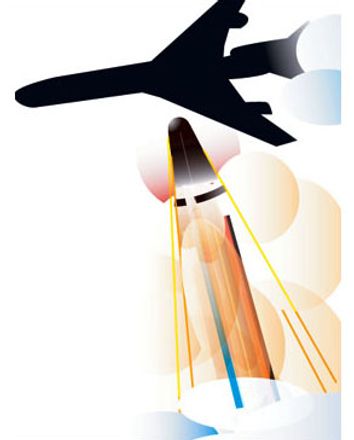
Airline security experts estimate it will cost $9 billion to $18 billion to equip the nation’s passenger fleet with “directed infrared countermeasures systems” that can deflect a missile from its course. The Department of Homeland Security report to Congress called the anti-missile systems “the most promising” technology for protecting airliners. The systems use pulses of light to jam the missiles’ guidance systems, a technology effective against the early-generation portable missiles that are most likely to be in the hands of terrorists. The most sophisticated anti-missile systems use lasers to confuse attacking missiles and are just beginning to enter service on military transport aircraft.

The cost is steep — too steep, analysts say, to be borne by U.S. airlines that are already struggling with nearly $100 billion in debt. But the cost of not making the investment could be even greater. If terrorists shot down even one commercial airliner, they could potentially paralyze traffic in the $300-billion-per-year airline industry, with shockwaves spreading throughout the U.S. economy.

In an investigative report last year, Salon detailed how the commercial jets in the United States — and the millions of passengers who fly on them — are at risk from the small, light and easily hidden missile systems. They are relatively easy to fire, and when operated properly, they can bring down a jet at altitudes as high as 10,000 feet. More advanced versions can reach aircraft traveling at over 15,000 feet.

To be sure, there are skeptics who believe that the threat of shoulder-fired missiles is overblown. Steven Brill, the former publisher of Brill’s Content and author of the new book “After: How America Confronted the September 12 Era,” derides recent congressional moves to protect airlines from them. “It’s a stupid policy initiative,” Brill told Salon on Monday. A terrorist missile attack on an airliner “could happen tomorrow,” he said, “but it is still a stupid initiative.” In Brill’s opinion, terrorists are more likely to strike at “mass transit, rail, air cargo, and office building ventilation systems.” Those, he says, are the places where the government should be spending money to avoid terrorist attacks.

But that is a minority position. Those most familiar with the danger, regardless of political stripe, agree that the missiles pose a significant, immediate threat. Rep. John Mica, a Florida Republican who chairs the House aviation subcommittee, has called the risk “sobering,” and at a Washington news conference in March, he said: “We can’t afford to not act.” A Boeing official privately described the shoulder-launched missiles as “the greatest current threat to the U.S. air transport system.” Over the past year, intelligence officials have grown increasingly concerned about the likelihood that al-Qaida has smuggled the launchers into the United States. The FBI in May 2002 issued a remarkable bulletin to local and state law enforcement agencies warning that al-Qaida possessed such missiles and would likely attempt an attack inside the United States.

On Election Day last November, the Transportation Security Administration convened a secret meeting in a secure conference room in Washington to inform a group of airline CEOs of the growing threat posed by the missiles. And just days ago, the Group of Eight industrial powers meeting in Evian, France, issued a sobering message: “We reiterate our deep concern about the threat posed to civil aviation by [the portable missiles], especially in the hands of terrorists or states that harbor them.”

Although officials often cite the SA-7, the most widely proliferated and among the least capable shoulder-fired missiles, as the one terrorists are most likely to unleash against U.S. airliners, recent reports out of the Middle East indicate that Hezbollah, a Lebanon-based terrorist group with an annual budget the CIA says exceeds $200 million, has recently acquired SA-18 missiles from Syria. These super-sophisticated Russian-made missiles are far more accurate — and potentially far more lethal — than the SA-7 missiles used in the Mombasa attack last year. Should al-Qaida obtain these new-generation missiles from Hezbollah, Syria, or another willing broker, it will significantly enhance its ability to blast American airliners out of the sky.

Officials at the Department of Homeland Security declined repeated requests for comment on the Bush administration’s airline security plan. The Air Transport Association, an industry group representing many of the commercial carriers, said yesterday that the federal government, and not the industry, should be responsible for such an overarching security concern.

“Defending against the threat of terrorist attacks has always been a fundamental government responsibility,” said association spokeswoman Diana Cronan. “The airline industry, having been made aware by appropriate government authorities of concerns with the potential use of shoulder-fired missiles, is doing everything within its power to assist the government in its decision making as to the proper response to these and all terrorist threats.”

In Congress, numerous U.S. officials have expressed alarm at the risk and have pressed for a commitment by the Bush administration to address it — but so far without success. In the weeks leading up to the vote on funding the Iraq war, a measure sponsored by Rep. Steve Israel, D-N.Y., and Sen. Barbara Boxer, D-Calif., proposed spending $9 billion to install anti-missile systems on commercial airliners; the measure failed, due largely to White House hostility. Then, the administration blocked a bipartisan plan, pushed by Mica, chair of the House aviation subcommittee, to spend $30 million in the current fiscal year to begin the process of adapting military technology to commercial airliners.

Instead, according to the Department of Homeland Security report, the Bush administration has committed to spend just $2 million in the current fiscal year, which ends September 31, mostly for creating a “special government staff office to manage the effort.” For the 2004 budget year, the administration says, “project costs are not to exceed $60 million.” But that $60 million is not actually in the budget plan provided to the Congress, and the Homeland Security report states that the administration will “not seek additional or supplemental funding for this effort.” That prompted a pointed question in Byrd’s letter last week to Ridge. “If the Administration does not plan to request additional funding for the [research],” he asked, “how will the activities in the program plan … be funded?”

According to the Office of Management and Budget, the administration has made no efforts to seek to have money shifted from one line item to another within the budget; nor has it sought new monies for anti-missile defense research. With Washington approaching the summer months, when little of substance gets done, and with the new fiscal year beginning shortly after the Congress returns to work in September, there is little evidence that the administration has firm spending plans for 2004.

And even if the $60 million does materialize, it’s not enough, critics say. “Anything under $100 million is chump change,” said one Capitol Hill source who asked to remain anonymous.

The net effect, Israel says, is that the White House is putting lives at risk. “The more we know about the threat of [portable missiles],” he said in an interview, “the more we know we need to defend against it. We were given a warning shot last year when shoulder-fired missiles missed an Israeli jet in Kenya, but we cannot count on their missing next time. I am happy that the administration has now acknowledged the threat, but they must follow through with real action … We’ve debated it. We’ve held hearings on it. We’ve researched it. We’ve studied it. We’ve analyzed it. Now it’s time to act on it.”

Boxer sounded a similar theme in an interview Friday. “We have known for a long time that there is a credible threat of attack against our commercial aircraft,” she said. “Although there is progress being made by the administration, this progress is too slow.”

Byrd and others describe the White House budget plans as a window onto Bush’s priorities. By this measure, the need to protect airliners from missile attack seems to be a back-burner issue.

Administration officials, of course, disagree. In recent months, the Department of Homeland Security has been trumpeting its efforts at surveying the areas around airports to identify the locations from which terrorists are most likely to launch a portable-missile attack. And in a letter last month to House Armed Services chairman Duncan Hunter, Defense Department general counsel William J. Haynes II seemed to back that plan in outlining his opposition to the Israel-Boxer bill. “The Department of Defense recommends exploration of other potentially effective measures such as counter-proliferation, airfield security, and improved border control,” Haynes wrote.

But experts in thwarting missile attacks, both inside and outside the government, say that approach simply won’t work. “Most of the current proposals for securing the airspace around airports are either unworkable or useless,” says Daniel Goure, a defense analyst at the nonpartisan Lexington Institute who served on Bush’s Department of Defense transition team.

One reason is that aircraft are vulnerable to even the oldest shoulder-launched missiles just before they land if they are within a long, roughly triangular swath of territory, about 4 to 6 miles wide, that extends 50 miles or more from the airport. An Air Force official recently noted that airport security measures are doomed to failure because the area around an airfield that needs to be secured in order to protect airliners ranges from 900 to 1,800 cubic miles of airspace.

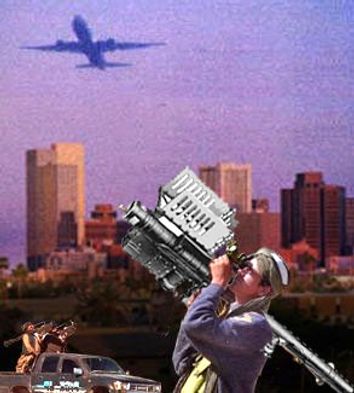
“All a terrorist has to do is hide in the back of a pickup truck, under a tarp,” said one intelligence official who asked not to be named. “When the driver of the truck spots a target aircraft and stops, all the shooter needs to do is throw off the tarp, stand and fire. It will only take a matter of seconds, and there is no way to stop that kind of attack.”

Other signals reinforce the sense that the White House does not view the situation with urgency.

After reviewing the technology available for protecting passenger jets from missile attack, the White House Office of Science and Technology Policy and the Homeland Security Council concluded that only two companies are involved in developing directional infrared countermeasures systems: Northrop Grumman, an American company that builds the Air Force’s new large aircraft laser system, and BAE, a U.K. firm working on a laser system for the Navy’s tactical aircraft. But the review failed to identify a third alternative: Israeli defense contractor Rafael also builds a laser anti-missile system, and unlike the Northrop Grumman and BAE systems, Rafael’s system has actually been tested on a commercial jet against live missiles — something the Bush administration’s plan does not envision doing until around 2005.

Rafael’s test occurred from March 9 to 13 at Israel’s southern Uvda Air Force Base and involved the very Boeing 757 that was attacked in Kenya. Using a variety of missiles, fired from several angles and distances, Rafael’s system successfully jammed every missile fired at the jet. Despite these impressive results, and the lower cost of Rafael’s system, it does not appear that this system is in the running to protect U.S. passengers.

Regardless of which system or systems might eventually receive approval from the Department of Homeland Security, none will be allowed onto airliners without the approval of the Federal Aviation Administration. Here again, the Bush administration is taking a go-slow approach. Current plans do not call for any action on FAA certification to begin until the autumn of 2004, and then the certification process is expected to take a year or more.

When asked whether the FAA could accelerate its assessment of whether anti-missile systems adversely affect such critical issues as aircraft electrical and hydraulic systems, weight balance, and flight response, an FAA spokeswoman said the agency “can do anything on an expedited basis if [it] has enough people.” But extra people means extra money, and that does not appear to be forthcoming.

After the Sept. 11 terrorist attacks, security officials were able to restore passenger confidence by federalizing security personnel and implementing more rigorous passenger- and baggage-screening procedures. But if a U.S. passenger jet is shot out of the sky with a shoulder-launched missile, there are few confidence-building security improvements that could be implemented quickly to restore confidence in the security of the civil aviation system.

Even if anti-missile systems were installed aboard every airliner, that would still only be a part of the overall solution. Jets equipped with anti-missile defense systems can be hit by what the military calls “leakers” — missiles that get through an aircraft’s defensive systems. Because of this, the U.S. military conducts “live fire” testing, in which missiles are fired at aircraft and aircraft components to obtain data on how to build aircraft able to withstand missile hits. Robert E. Ball, widely recognized as an expert in the field of aircraft survivability and the author of the world’s only textbook on the subject, notes that live-fire testing “costs very little compared to the cost of the aircraft and the value of the lives saved.”

James O’Bryon, a retired Pentagon official who for years headed up the Defense Department’s live-fire testing program, says that live-fire testing typically adds a fraction of 1 percent to the cost of aircraft, about the same as the expense that crash-testing adds to a new automobile. As an added benefit to this approach, the design modifications that allow an aircraft to survive a missile hit also provide a degree of protection against threats such as rocket-propelled grenades, high-caliber machine guns, and sniper rifles.

But this is another area where the Bush administration has been unwilling to spend money. “Until we can test commercial aircraft through live-fire testing,” one Defense Department official told Salon, “we will remain in the dark as to how the aircraft respond to a [shoulder-launched missile] attack.” It may be that for certain aircraft, relatively minor engineering modifications, such as moving or armoring hydraulic lines, will result in making airliners far less likely to be lost if hit by a missile.

Many experts inside and outside government believe that it is almost inevitable that al-Qaida or another group will try to take down a U.S. airliner with a shoulder-launched missile. Vincent Cannistraro, a former chief of counter-terrorism operations for the CIA, says that al-Qaida has a history of learning from its failures; neither the government nor the public should assume that the next group of al-Qaida operatives sent to bring down a jet will duplicate the mistakes made in Mombasa, he says.

“Time and again,” Byrd told Salon, “the Bush administration pays lip service to the nation’s great homeland security needs, yet when push comes to shove, they steadily refuse to put forth the necessary resources. Words and promises need to be backed up with the money to make those words a reality.”

Continue Reading Close

Last chance to avert catastrophe?

The U.S. government and airlines have failed to address the terrifying portable missile threat until now. Will al-Qaida's Kenya attack finally spur them into action?

  • more
    • All Share Services

Last chance to avert catastrophe?

When terrorists linked to al-Qaida fired a portable missile at an Israeli jet as it took off from Mombasa, Kenya, they rocked the aviation world. Before the attack on the Tel Aviv-bound Arkia Boeing 757, few air travelers had ever considered that their plane could be blown out of the sky by a heat-seeking shoulder-launched missile, even though nearly 1,000 air passengers have perished in such attacks. Their ignorance was not shared by American officials, who have been aware of the portable missile threat for years. Until the failed attack in Africa, however, they said nothing. The reason: The government has done almost nothing to prepare for the possibility — some experts call it a probability — that terrorists will use shoulder-launched missiles against American commercial jetliners, either within or outside the United States. Had the government and airlines responded to this threat as it was emerging, America’s air travelers would be protected by now. Instead, both government and the industry saved their money and hoped for the best. Now al-Qaida is gunning for Americans and America’s fleet of jetliners is unprotected against missiles that weigh 35 pounds and can fit in the trunk of a car.

“I think we should have been worried about this years ago,” says Dan Goure, a defense analyst at the Lexington Institute. “We’re protecting against things that are unlikely to happen again, and what you’re going to get are the new threats, such as Stinger [missiles].”

There are a multitude of methods for reducing both the susceptibility of an airliner to being hit by a shoulder-launched missile and the damage it will suffer if hit. Some of these methods are passive: They include modifying the structure of the aircraft itself by keeping flight control hydraulics and fuel systems away from locations likely to be hit; using self-sealing fuel-feed lines; hardening or shielding critical components around infrared sources such as navigation lights, air conditioner exhausts, and engines; and dispersing redundant critical components around the aircraft. Others are active: They include changes to air operations (flight approaches, altitudes, angles of descent, and so on) and the installation of active countermeasures systems to ward off an attacking missile. Air forces around the globe have used combinations of these approaches to protect their aircraft from missile attack.

In contrast to every American airline, when the portable missile threat emerged in the 1970s, Israel’s El-Al airline decided that it was worth the expense of installing infrared countermeasures, or IRCM. An ICRM system includes a missile launch detector of some type, a warning system to alert the pilot to the threat, and some method of directing the missile away from the aircraft — whether by dropping flares, or by emitting pulsing infrared sources like flashlamps or lasers, or towing an infrared decoy. Countermeasures are not 100 percent effective; advanced systems like the U.S.-made Stinger are more effective against them than older ones. (Fortunately, Stingers are far less available on the black market than older systems like the Russian-made SA-7 and SA-14.) But like a car with airbags vs. one without, one is better off with them. And El-Al remains the only airline capable of protecting its passengers from these widely distributed and easy to smuggle weapons. (The number of portable missiles not in the hands of regular armies is unknown, but is thought to be in the thousands: Hundreds of thousands have been manufactured.)

According to noted aviation security expert John Currie, American carriers failed to equip their planes with defensive devices because of the cost: “Money was the reason for inaction.” The new LAIRCM system, for example, costs about $3 million, which would add 1.5 percent to the cost of a $200 million Boeing 747-400, or 5 percent to the cost of a $60 million Boeing 737. The cost of maintaining this system is also high. For cash-strapped airlines hard hit by 9/11, such costs, multiplied by the number of planes in their fleet, are significant. On the other hand, Defense Department officials say that with a larger production run the cost would come down to $1 million each, and the maintenance costs could also be reduced with additional research funding — which has not been forthcoming. Now, in Currie’s words, airlines face “the biggest nightmare we could have ever imagined.” And the airlines’ nightmare is also the government’s: If a single commercial jetliner were shot down by a portable missile, the result could be the virtual collapse of the airline industry and a nationwide recession. For the government to pick up the tab for, say, the approximately 5,000 jetliners used would cost around $15 billion.

Just one week before the attack in Kenya, Salon reported that the government had convened a secret meeting on Nov. 5 to brief a group of airline executives on the growing threat from shoulder-launched missiles. Then came Mombasa. Days after the attack, members of Congress — after years of silence — were sounding the alarm and suddenly calling for action. In a letter to Bush administration officials, Sen. Hillary Clinton downplayed the idea of equipping aircraft with countermeasures systems and suggested that National Guard troops be stationed around airports.

Some experts in the field of aviation security endorse at least some limited version of her call for on-ground security forces. But all of them emphatically state that the best defense against the portable missile threat is installing infrared countermeasures on aircraft.

Wayne Black, an aviation safety consultant and former aide to Attorney General Janet Reno, acknowledges that implementing armed patrols in the area immediately surrounding airport runways is a prudent step, but insists, “The most effective method of countering the threat is installing countermeasures equipment aboard aircraft. We always recommend IRCM to our clients.” Black’s corporate clients have taken his advice to heart; 97 percent of them have had their aircraft equipped with infrared-countermeasures systems.

Richard Charles, an aviation expert at Georgia State University, estimates that if left to their own devices, it “would take four to five years before the airlines could install electronic countermeasures,” if they could even afford them in their current shaky financial condition. Still, Charles tells Salon, “I would not want to trade money for lives.”

As for armed security patrols, even if implemented only as a stopgap measure until all aircraft are protected by infrared countermeasures systems, the logistics are staggering. There are over 450 airports with commercial service in the United States; even conservative estimates indicate that it would take nearly 300,000 soldiers to provide even a basic level of protection for these airports. When asked about the prospects of implementing Clinton’s perimeter patrol proposal, former FBI agent and current director of the New York State Office of Public Security James Kallstrom said, “There wouldn’t be enough National Guard.” The reason so many troops would be needed is that the “perimeter” is a huge area, not just the area immediately surrounding the airport. Aircraft are vulnerable along their approach and departure routes while they are as far as 50 miles from the runway and one and a half miles on either side of that route.

And some experts say that even if such vast numbers of troops were available — which they are not as the nation prepares for a possible war in Iraq — perimeter patrols would not stop a determined terrorist. Maj. Gen. George Harrison, USAF (Ret.) says, “Ground defense is a crazy idea … people are groping desperately to find something that sounds productive.”

“As a former U.S. Air Force Commander for Air Base Ground Defense Forces Overseas,” John Curie told Salon, “I can tell you that patrols outside of the base/airport perimeter work about as well as the Border Patrol in Arizona. It is not going to work.” Like many of the other experts contacted by Salon, Currie advocates putting additional resources into intelligence to help thwart attacks before they happen. Like the others, he agrees that intelligence operations are not sufficient.

Currie believes that our vulnerability to shoulder-launched missiles will only be solved when “Congress sells the American people on the cost of infrared countermeasures. The money needs to come from the government,” he says, because the costs of such systems are high. He points out that “the airlines could not even pay baggage screeners adequately,” forcing the Transportation Security Administration to take over that job.

In the days since the unsuccessful Mombasa attack, a number of commentators have attempted to downplay the effectiveness of the Russian-designed missiles. This is a mistake. Despite the fact that the attack in Mombasa failed, of the 18 prior shoulder-fired missile attacks that have been definitively attributed to SA-7′s, 13 of these resulted in shoot-downs of the target aircraft, and the deaths of hundreds of passengers. While certainly not as technologically advanced as the American-made Stinger, the SA-7 can be deadly.

A more likely explanation for the failure at Mombasa is operator error. Although even older-generation shoulder-fired missiles are sophisticated weapons, there is a certain level of skill necessary to use one proficiently. Defense Department documents obtained by Salon detail the process for operating shoulder-launched missiles and point to any number of errors — such as failing to take into account the position of the sun or the presence of objects absorbing or reflecting the sun’s energy — that could lead even a sophisticated Stinger missile astray.

Al-Qaida has a demonstrated history of learning from its failures. Consequently, neither the government, nor the traveling public should assume that the next group of al-Qaida operatives sent to bring down a Western jet will duplicate the errors of the minions sent to attack the Arkia aircraft. When the terrorists either improve their technique or purchase more advanced missiles on the black market, the next attack may be far more costly, both in terms of lost lives and damage to the economy, than anyone dare contemplate.

Continue Reading Close

Page 1 of 2 in Paul J. Caffera