Pete Wells

“Keep Australia on Your Left” by Eric Stiller

The story of an attempt to kayak around Australia that ended -- refreshingly -- not with triumph or disaster but with honest failure.

  • more
    • All Share Services

Nonfiction
Keep Australia on Your Left: A True Story of an Attempt to Circumnavigate Australia by Kayak
By Eric Stiller
Forge, 412 pages

There comes a time in the life of every young man when he feels an overpowering urge to do something monumentally stupid. For Eric Stiller, that moment came at 32, when he decided to paddle all the way around Australia in a 17-foot kayak with someone he barely knew.

Stiller knew a lot about kayaks, not much about Australia. He worked for his father in a Manhattan shop that sold the boats to adventurers, but he had never gone off on the kind of grand expedition for which he had outfitted so many of his customers. Then Tony Brown, a 6-foot-4 model from Sydney, Australia, swaggered into the shop and announced that he was going to kayak around his native country.

Why was this a stupid idea? For one thing, Australia is bigger than it looks on the globe. The coastline, unspooled, would stretch out to 20,000 miles; cutting across many of the coves and inlets would trim the distance only to about 12,000 miles. Stiller and Brown’s small, canvas-covered kayak would be hammered by towering waves that, after journeying across thousands of miles of open sea, collide with Australia and bounce back in a hundred new directions. They would do most of their traveling in relatively quiet offshore waters. But twice a day, when they launched in the morning and sought shelter at night, they would meet with vivid and terrifying illustrations of the principle of chaos theory.

To be done safely, such an expedition calls for long, careful study of nautical charts, close questioning of sailors who know the hazards of the coast and so on. But here you run into another peculiarity of this adventure. Brown was not just a virtual novice to kayaking; he was actively opposed to buying supplies, plotting a course and similar annoying details. Before the trip, Stiller faxed him to ask him to pick up the British admiralty charts for the continent’s east coast. Brown’s answer came back: “We don’t need charts. We just keep Australia on our left.”

A great line, even if it is unlikely to be adopted as navigational protocol by the Australian navy. Brown’s “just do it” attitude, though, clashed with Stiller’s more cautious way of doing things. In fact, Brown and Stiller clashed, period. The two quarreled almost from the moment they left Sydney.

Through backaches, hemorrhoids, mosquito attacks, bad camp grub and a thousand other griefs, they bickered like a couple who can’t quite remember what they ever saw in each other.

Anyone who has ever gone on a vacation during the ragged last days of a relationship can guess the rest: Resentments cropped up faster than blisters, and soon the great adventure was no fun at all. No fun, that is, for Brown and Stiller; it’s weirdly enjoyable for the reader, or at least for me. One reason I like “Keep Australia on Your Left” is that it made me feel a lot better about never having tried to kayak around a continent. After a couple of months at sea, Brown acquired a fungal infection that attacked his fingernails until they began peeling off at the slightest touch. I don’t remember what I was doing in 1992 while the trip was taking place, but I know for a fact that I had 10 fingernails.

Stiller is not a natural writer — there’s barely a well-crafted sentence in this book — yet he vividly expresses his discomfort and unhappiness. He has a gift for misery. Of the agonies he endured while crossing the Gulf of Carpenteria, a 200-mile open-sea passage during which the men didn’t see land for more than five days, he writes: “I suddenly felt a rash running a ring around my torso and I noticed that my hands were extremely puffy and dotted with septic sores all over them and in between all of my fingers. My hands felt hot, but a splash of water gave me instant chills … Spasms fired rapidly through all my major muscle groups … I was tortured by these uncontrollable gut-wrenching contortions for hours.” Shortly after the crossing, Brown began to talk about giving up. He’d experienced enough, he said, a point that is difficult to argue with. After reaching Darwin, only a third of the way around the country, they stopped and went their separate ways.

That this is a story about failure only dawned on me about halfway through. The fact isn’t advertised on the jacket, yet it’s one of the things that make the book compelling. Adventure narratives usually end with victory or, in the mode of current books like “Into Thin Air,” disaster. “Keep Australia on Your Left” is something different: a story about a journey that collapsed beneath a steady accumulation of bad days. (Stiller’s girlfriend back in New York even dumped him midtrip, breaking the news over the phone.) If the pair had made it all the way around Australia, the tale would have had an air of inevitability. Success, seen in retrospect, always seems preordained, as does tragedy; failure is more ambiguous. Yet as any Red Sox fan can tell you, the loser’s tale has its own satisfactions. In telling his story honestly, without cheapening it by portraying it as a triumph of the spirit, Stiller is doing something as brave as kayaking in 20-foot seas, and considerably smarter.

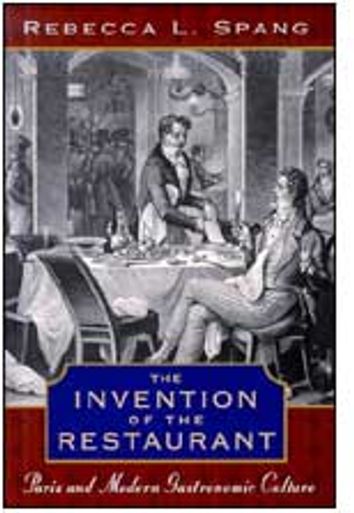
“The Invention of the Restaurant” by Rebecca L. Spang

You didn't know that it was invented, did you? A scholar unearths the unlikely origins.

  • more
    • All Share Services

The title of Rebecca L. Spang’s scholarly yet highly accessible social history, “The Invention of the Restaurant,” causes a small jolt of surprise. For people who eat out so often that boiling a pot of spaghetti at home is a special occasion, a world without restaurants is hard to imagine. We realize, at some level, that they have not always been here, but few of us could say who invented them, or when. The automobile, the telephone, yes. But the restaurant, a creation every bit as characteristic of modern life as the other two? To most of us, its author is anonymous.

According to Spang, the forgotten inventor was Mathurin Roze de Chantoiseau, a figure so perfectly emblematic of his time that he almost seems like an invention himself. The son of a landowner and merchant, Roze moved to Paris in the early 1760s and began floating a variety of schemes he believed would enrich him and his country at the same time. He published a kind of early Yellow Pages, advocated a bizarre currency that would decrease in value each time it changed hands and, in 1766, opened an establishment in Paris that claimed to serve “only those foods that either maintain or re-establish health.”


What Roze’s projects had in common was a desire to improve circulation, whether the thing circulating was banknotes or bodily fluids. “The invention of the restaurant,” Spang writes, “was but one component in Roze’s plan to fix the economy, repair commerce, and restore health to the body politic.” The earliest restaurants specialized in cuisine that seemed very progressive at the time: strong broths that, by extracting all the nutritive virtues of various meats and vegetables, offered nourishment without any of the hazards of solid food. There was no fiber to chew, no fat to digest.

By finding a scientific basis to the food they served, restaurants did their part in the Enlightenment’s grand project of improving life through the careful application of reason. They also claimed to minister to those who suffered from “weakness of chest” — a mysterious ailment afflicting people who boasted of refined artistic and intellectual sensibilities, for whom the sipping of delicate broths “served as a social marker, as a way to differentiate the sophisticated urbanite from the coarse worker capable of digesting whatever was placed before him.”

Much of this information is ignored in the standard food histories, and Spang’s excavation of it makes for interesting reading, particularly because the French Revolution and its aftermath would change restaurants almost beyond recognition, into something very like the places where we go out to eat today. By the early 19th century, bouillon sipping was falling out of fashion; in its place, restaurants offered just the kind of rich, decadent foods that would have sent the “weak of chest” into fits of asthma.

As the restaurants’ broths ceased to be their primary attraction, they came to be distinguished from inns by their secondary characteristics. One ordered at will from a menu instead of taking what the innkeeper was serving. One was charged only for what one ate rather than a flat fee. One sat at a small table, alone or with acquaintances — not with strangers at a large, boisterous table d’hote. This last innovation was perhaps the most significant: Setting restaurant customers off from one another at a little distance made it possible to watch and be watched, to eat in private and in public simultaneously. In a literal sense, it marked the birth of conspicuous consumption.

According to Spang, after the revolution the French launched on an eating binge so excessive that they felt compelled to justify their hedonism by turning food into a field for specialists. The creation of “gastronomy” transformed the restaurant from a social phenomenon into an object of aesthetic analysis — into art as distinct from life. This development led, Spang argues, to the perception of the restaurant as an intimidating temple that could be appreciated only by a priestly caste of illuminati. Spang’s ambitious goal is to reclaim restaurants from the clutches of gastronomy.

One of the many virtues of “The Invention of the Restaurant” is that it takes as its unlikely hero Roze de Chantoiseau rather than any of his more famous successors whose establishments may have offered better eating. Because restaurants were just one of Roze’s many ventures, Spang sees him as a prelapsarian figure whose very lack of expertise makes him preferable to the specialists who would later control the restaurant world. Spang might have noted, however, that restaurants have climbed down from their pedestals in the past few years, and now walk among the people. The modern American restaurant seduces its audience with movie-set design, stage lighting, celebrity chefs and themed menus. Like many other things in this country, restaurants are a branch of the entertainment industry. It’s a transformation that the entrepreneurial Roze would have appreciated.

Continue Reading Close

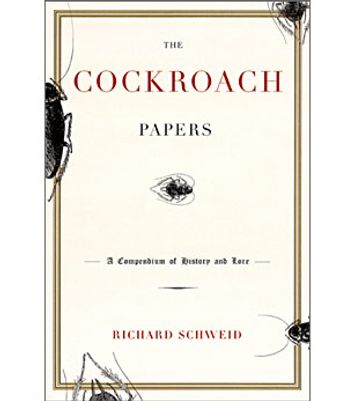
“The Cockroach Papers” by Richard Schweid

They're revolting, they're fascinating, they're brilliantly engineered and every one of those vile little bugs is different.

  • more
    • All Share Services

Before I read “The Cockroach Papers,” I had an irrational and unfounded disgust for roaches. But Richard Schweid’s book set me straight. Knowing what I now know about the digestive, reproductive, circulatory and neurological systems of these remarkably designed insects, I can say with certainty that my disgust is as rational and well-founded as it gets.

I used to think that roaches were indiscriminate eaters who would devour anything in their paths. Now I know the whole story — which is that although they prefer cinnamon buns above all other foods, they will make do with paper, bookbinding glue, wallpaper paste, leather, wool and milk that has dried around babies’ mouths. For this last delicacy they usually wait until the child is sleeping — a tactic they also use when they are hungry for human toenails, fingernails, eyelashes and skin. Of course, a dead person is even easier to feast on than a sleeping one, which is why the New York City Police Department employs a full-time entomologist to determine whether wounds seen in autopsies were caused by violence or by ravenous roaches.

I also had a vague notion that roaches carry disease. I am now quite clear on that account. Roaches have been found to carry polio, hepatitis, salmonella, streptococcus, shigella, hookworms, tapeworms, dysentery-causing amoebi, leprosy and bubonic plague. Even a squeaky-clean cockroach can make you sick (or kill you) if you happen to be allergic: Roaches are the prime culprits in the inner-city asthma epidemic that takes the lives of hundreds of children each year.

As an avatar of urban dread, the only rival to the cockroach is the Norwegian rat, and polls show that more people fear roaches. I do, too, even though I’ve faced both rats and roaches in my kitchen and a rat is by far the more formidable enemy. But rats generally travel alone. Roaches come in swarms. Killing the roach you see on the countertop does nothing to the legions of others who are hiding in the cabinets or streaming in from under the sink or waiting behind the walls. Rats are brilliant strategists, but roaches are an invisible army, and what you can’t see is always more terrifying that what you can.

Schweid explores both the reasonable and the unreasonable fears that roaches inspire. He seems to have met every scientist who studies the order Blattaria, which takes in the 10,000 or so known species of cockroach. At Vanderbilt University, he meets a researcher named Terry Page, who is trying to locate the insect’s biological clock, the part of its body that controls circadian rhythms. Looking at a roach under a microscope, Page remarks, “After you’ve done this as many times as I have you realize that each cockroach has its own individual face. Each one is slightly different.”

“So saying,” Schweid writes, “he used a single-edge razor blade and tweezers to make a slice down the middle of the roach’s forehead and peel the flaps of skin back from it,” exposing “a pearl-gray blob of brain.”

Scientists who make a living doing this sort of thing are invariably filled with respect for how cleverly cockroaches are engineered. The common domestic roach, for example, can survive without water for two weeks. It doesn’t waste a drop. “Rectal pads, located almost at the end of the animal’s excretory system, squeeze water from the mass to be excreted just before elimination,” Schweid writes. “This liquid gets recycled to places like the fat body, and the insect’s only excretion will consist of dry solids.” Whether you like “The Cockroach Papers” will depend a great deal on your tolerance for reading about things like fat bodies and rectal pads. I couldn’t put it down myself.

Not that Schweid hasn’t made some peculiar choices. He quotes extensively from works of fiction in which roaches are mentioned but doesn’t always get around to weaving them into his narrative. Even more incongruous are his long first-person accounts of his travels in the third world. He spends six pages on glue-sniffing kids who prowl the streets of Managua; there’s not a roach in sight until the last sentence, when the kids’ leader confesses that he once accidentally bit into a roach that had crawled into something he was eating.

I never thought I’d complain that a book contained material that didn’t have anything to do with cockroaches, but Schweid writes about these insects so respectfully that his digressions are surprisingly unwelcome. Fortunately, there aren’t many of them. Most of the time he gives the cockroach a long cold look and keeps looking when most of us would turn away, until a subject that seemed disgusting becomes fascinating. Now I have nothing but admiration for cockroaches. Which is why I’ve taken to sleeping in gloves and boots.

Continue Reading Close

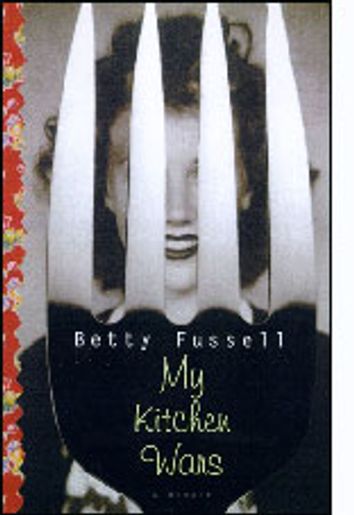
“My Kitchen Wars” by Betty Fussell

The cookbook author recounts the battles that made up her marriage.

  • more
    • All Share Services

One of the oddest recipes ever put in writing can be found in M.F.K. Fisher’s book “Serve It Forth.” It involves gently peeling tangerine sections — “do not bruise them, as you watch soldiers pour past and past the corner and over the canal towards the watched Rhine” — and placing them on newspaper atop a hot radiator. “Al comes home, you go to a long noon dinner in the brown dining-room, afterwards maybe you have a little nip of quetsch from the bottle on the armoire. Finally he goes. Of course you are sorry, but … On the radiator the sections of tangerines have grown even plumper, hot and full. You carry them to the window, pull it open, and leave them for a few minutes on the packed snow of the sill. They are ready.”

Of course, making Fisher’s tangerine sections requires an old-fashioned steam radiator. But there are other components, just as essential: the soldiers, the Rhine, the snow on the windowsill and, most of all, Al. Without Al, the recipe will fail like a cake without eggs. The point is that a recipe broken down into a neat series of ingredients and procedures can never capture the thing that makes food memorable. Fisher, in her sly, elliptical way, is telling us: You had to be there. Our meals are always tied up with the rooms where we eat them, the people we share them with.

In her new memoir, “My Kitchen Wars,” Betty Fussell, the cookbook author and food historian, recounts a lifetime’s worth of eating and cooking, showing how closely her meals were bound with her life until the meals add up to an autobiography. There is a bleak, frontier-style upbringing in the orange groves of Southern California where, as a young toddler, she breaks into the icebox and eats an entire pound of butter before she is discovered. After her mother kills herself by dipping into an open tin of rat poison, Betty falls into the hands of a dreadful stepmother whose relationship with food is best described as adversarial: She steams all meals into submission with a pressure cooker and teaches young Betty to chew a full 50 times before swallowing.

At Pomona College, Betty discovers french fries and Coke. She also meets an aspiring writer, Paul Fussell, and when they marry she finds herself with a kitchen full of wedding presents. In learning to use those toasters and percolators and blenders, she becomes a new person: the ’50s housewife.

Fussell wants to perform in the kitchen, but she is stuck with an unappreciative audience. One night she gets creative and throws some peanuts into the blender with her salad dressing. It would be years before Thai restaurants turned up across America, and Paul is not interested in being ahead of his time. “Salad dressing is one thing, peanuts are another,” he tells her.

So she saves her inventions for dinner parties, which become ever more ambitious as the clam dip and Ritz crackers of the Betty Crocker years give way to the blanquette de veau and riz ` l’Impiratrice of the Julia Child era. Fussell’s sardonic accounts of the changing fashions in the suburban dinner party are delightful bits of social history. As she and her friends fret over their ovens while their soufflis rise, or don’t, a nation outgrows its provincialism. It was a watershed moment in the way Americans thought of themselves, and Fussell gets the significance, and the silliness, just right.

What she doesn’t manage to convey is any real sense that food can bring pleasure. In her first chapter, she explains that she sees cooking and eating as brutal acts. “Hunger, like lust in action, is savage, extreme, rude, cruel.” She chases her food-as-battleground conceit through the entire book — even the chapters are given militaristic titles, like “Attack by Whisk and Cuisinart.” (Like a rodeo cowboy with more balls than brains, Fussell has a dangerous habit of getting in the saddle of a wild metaphor and holding on when she should jump to safety. Of her feverish adulterous encounters with a friend of her husband’s, she writes, “Now my body felt like one of my meals, the interstices of ears like snails, the hollow of armpits like the hollow of a pitted avocado, the smooth valleys between thigh and groin like a sauce parisienne.”)

For someone who has devoted her life to food, Fussell’s insistence on seeing it as something negative and aggressive is strange, to say the least. The war trope leads her to some unusual insights, but it also keeps her from depicting any scenes of peace. After a while you start to wonder: Why did these people keep throwing parties and going out to dinner if they weren’t enjoying it? The answer, you start to suspect, is that they did enjoy it, at least once in a while. Fussell just won’t allow herself to say so. After all, war is hell.

War, though, does seem an apt word for life with Paul Fussell. An aesthete, an Anglophile (“like some nationalist transsexual, he felt he’d been born an Englishman in an American’s body”) and an ambitious academic, Paul made verbal jabs at his wife that didn’t stop with her salad dressing. Even after he had won fame for such books as “The Great War and Modern Memory,” he seemed to resent Betty’s writing. When she lands her first book contract, he opens a bottle of champagne but then stops short. “My God,” he says, “I’d better get upstairs and get cracking.”

Writing about her marriage, Fussell never finds the tone of bemused detachment that lets her laugh at her attempts to stage eight-course dinners that would have capsized a professional kitchen. Her anger is still fresh two decades later as she exhumes private moments and thrusts them into the light. Her readers hear about the time she caught Paul naked in the library with a young man he was teaching at Princeton. We learn that her sessions with her lover usually took place outdoors and that one afternoon in Italy the two of them got up and discovered that they had been rolling in a pile of goat shit.

Opening her photo album to the page where she keeps these special Kodak moments, Fussell might say, is simple honesty. But there is honesty and there is truthfulness. A truthful account of most 30-year marriages would include ugly, degrading moments, but it would also reflect some that weren’t so bad. You know you’re finally over a lousy relationship when you can admit that once in a while you and the creep had some fun. Betty Fussell remembers her creep as someone who was creepy all the time.

Who would want to write a memoir of a lifetime of ruined meals? More to the point, who would want to read it? Fussell has tried to serve up something fresh and original, but her appetite for revenge poisons the effort. It seeps all through this memoir, leaving a taint of bitterness that won’t go away.

Continue Reading Close