Peter Brandt

Holy abuse

Five years after the last U.S. Hare Krishna boarding school closed, 79 former students are suing, claiming widespread physical and sexual abuse. Their attorney wants to take down the Krishnas gangster-style.

  • more
    • All Share Services

Holy abuse

How do you compensate an adult who, as a child, felt bones in her hands shatter while she vainly tried to shield herself from a violently abusive teacher?

Seventy-nine former students of Hare Krishna boarding schools, known as gurukulas, are seeking $400 million from the religious sect in compensation for enduring a range of physical, sexual and emotional abuse — abuse the Krishnas have acknowledged in the past. The plaintiffs’ attorney, Texas trial lawyer Windle Turley, filed suit last year in federal court using the civil Racketeer Influenced and Corrupt Organizations (RICO) statute; it is a bold gambit that, if not dismissed, could put the former students in a good position to financially ruin the Hare Krishna movement. Any day they could learn whether the suit will be knocked out of federal court. If that happens, former students will have no choice but to pursue individual abusers and criminally negligent gurukula administrators rather than the entire Krishna establishment.

“I was a three-and-a-half [year-old] girl, mother away in India,” reads one anonymous posting on a Web site for former students. “He [a teacher] took me into the boys shower room, stripped off my clothes and beat me until I was unconscious.”

The allegations are horrific. Turley describes the Krishna students’ suffering as “the most unthinkable abuse and maltreatment of little children which we have seen. It includes rape, sexual abuse, physical torture and emotional terror of children as young as 3 years of age.” According to the Turley legal complaint, there were beatings with boards, branches, clubs and poles. In some cases, children were stuffed into trash barrels for two to three days, with the lid on, as punishment for their “sins.” In a few schools, children were forced to lick up their vomit from any foul food they may have thrown up.

“It is terrible that child abuse has infected public and private schools, neighborhoods, churches, and families,” Anuttama Dasa, director of communications for the International Society for Krishna Consciousness — ISKCON — said in a press release last year. “Sadly, many children of the Hare Krishna society have also been victimized. If the events alleged in this suit did occur, we regret that they did, and we will make every effort to help address the needs of the young people named in the suit.”

Other Krishna representatives have been more direct. “There is no doubt many children did suffer while under the care of the organisation,” the director of ISKCON’s Child Protection Office, Dhira Govinda (aka David Wolfe), said in the London Independent last year.

The first U.S. gurukula, or “school of the guru,” opened in Dallas in 1971, and eventually there were as many as 11 across the country, including ones in Seattle, Los Angeles, Philadelphia and West Virginia. Several opened abroad, too. Nobody knows how many of the approximately 2,000 gurukula students were abused. As one veteran gurukula teacher put it in a 1990 interview, the abuse was “in enough schools and affected enough children and it went on for enough time.”

The U.S. has had a Hare Krishna movement since 1965, when A.C. Bhaktivedanta Swami Prabhupada brought it over from India. Theological descendants of Vaishnavism, an ancient Indian strand of Hinduism, the Krishnas attracted thousands of American followers during the height of the counterculture movement in the late ’60s. As the followers began to have children, ISKCON established the gurukulas.

E. Burke Rochford Jr., a sociology professor at Middlebury College in Vermont, has studied the Hare Krishna movement since the late ’70s, and believes ISKCON’s emphasis on celibacy inspired a devaluation of children. (Along with intoxication, meat eating, materialism and gambling, sex for purposes other than procreation was anathema to the Krishna doctrine.) Children were seen as manifestations of carnal weakness and an impediment to parents, who were urged to submit to a grueling life of proselytizing and selling spiritual books.

Devotees who failed at public work were relegated to teaching positions. Individuals with no teaching or child-care experience were entrusted with the care of 15 to 20 small children all day, every day. The circumstances invited physical and emotional abuse. It is also believed — by former students and by Dasa — that pedophiles infiltrated the gurukulas, as they do other institutions that afford easy access to children.

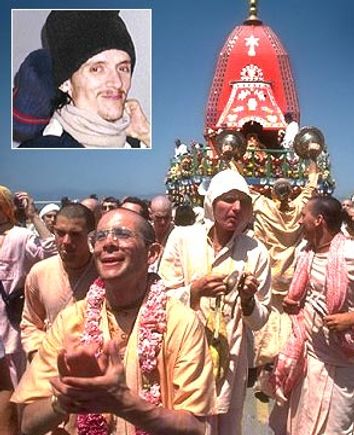
Dylan Hickey entered the Dallas gurukula at age 4 in 1974 and spent the remainder of his childhood in various Krishna boarding schools. At 31, he’s helping lead the suit against ISKCON. Hickey says he forfeited his childhood to a regimented religious lifestyle that denied him affection and permitted severe neglect and pernicious abuse. He suffered a number of serious accidents, which he attributes to neglect or incompetence on the part of gurukula teachers and supervisors, including one that rendered him a quadriplegic at age 16.

Hickey’s first injury happened at a French countryside gurukula, when he fell into a pot of boiling milk and suffered third-degree burns over most of his body. During his months of hospitalized recuperation, his mother visited once and his father, a high Krishna official, never came at all. Years later, Hickey fractured an arm leaping from a moving pickup truck, because “a teacher was chasing me and I was so scared.” A visiting Indian doctor wrapped his arm and the next day Hickey was put on a plane for Vrindavan, India. Hickery recalls there was no follow-up care: “I just ripped the cast off myself a month later.”

His final accident, a fall from a treehouse, left Hickey crippled for life. Two nearby adult devotees opted not to call an ambulance and instead rolled him onto a section of ply-board. “They knew I couldn’t move, and that there was something seriously wrong with me,” Hickey says. The devotees put him in the back of a station wagon and, “they drove me about half an hour to the hospital on my side with my neck broken without any bracing.”

Hickey says he doesn’t hate these devotees, though they’re likely responsible for much of the permanent damage done to his cervical spine. He is most embittered by the abuse and neglect he saw around him — especially at a gurukula in the land of Krishna’s childhood, Vrindavan, India. The Turley legal complaint alleges ISKCON’s two boys’ schools in India were founded in response to the legal and regulatory problems that plagued the group’s American gurukulas.

“Kids dealt with it in different ways,” Hickey says. “Some of them just gave themselves to the teacher in exchange for food and partial treatment. They became the teachers’ concubine for lack of a better word. My way of dealing with it was seething anger.”

Hickey characterizes the Vrindavan gurukula of the early ’80s as a place of widespread sexual predation, regular humiliation, violence and near total lack of healthcare. In the Vrindavan gurukula and at others, Hickey generally escaped the worst forms of overt abuse thanks to his father’s position in ISKCON.

In the ’70s and ’80s, Hickey’s father, Jagadish, oversaw the schools as ISKCON’s minister of education. During his ISKCON career he rarely spent time with his son. Jagadish left the movement in 1996, 11 years after having been named a guru. He’s a key defendant in the case, and in an interesting karmic twist, he now lives with Hickey.

Jagadish showed up at Hickey’s British Columbia home two years ago in the hopes of making amends. The living situation is surprisingly comfortable for both, according to Hickey.

“My dad is doing my attendant care, which is daily help with getting in and out of bed and dressing and things like that. It’s working out well,” Hickey says. “He’s not a follower anymore and he is not an ISKCON member, but we have been in a little bit of conflict because he still holds on to a few of the beliefs.”

As the man who oversaw ISKCON’s gurukulas, Jagadish could reasonably be expected to have some knowledge of the abuse that Krishna officials now admit occurred in the schools. Hickey believes his father and others in positions of authority in the gurukulas did know of the problem. The plaintiffs’ case depends on just such a conspiracy of suppression.

“If they say they didn’t know, then there are blocked memories,” says Hickey. “I’ve had a couple conversations with my dad where I’ll say, ‘Hey this person says they told you, what are you talking about, saying you didn’t know?’ And he’ll be like, ‘Well, I don’t remember it. They’ll have to tell me in court.’”

The last of the live-in gurukulas closed in the mid-’90s. The Krishna society estimates it now has 90,000 followers in the United States, but only about 800 actually live in one of the 45 ISKCON spiritual communities. That number is down from about 5,000 live-in devotees in the late ’70s. ISKCON says the plummeting number of full-time residents — those devotees once ubiquitous in airports — represents the trend in the movement away from monastic life and toward congregational weekend worshipping.

Former ISKCON public relations secretary Nori Muster disagrees: “They’ve been saying that for decades. I think most of the people who have left don’t want anything to do with the organization. A lot … don’t ever reveal to people they were involved with this group. It would be like saying, ‘Oh I was in the SLA’ or ‘I was in the Manson Family.’ They’re probably counting a lot of people who do not wish to be counted.”

In her 1997 book “Betrayal of the Spirit,” Muster details her decision to leave ISKCON in 1988 — a decision motivated by what she sees as a “lack of accountability between leaders and followers” and “ISKCON’s faltering honesty with the outside world.”

It may be impossible to demonstrate beyond a reasonable doubt that the ISKCON leadership was aware of the abuse and conspired to keep it from parents and the public. Turley may not have to. Civil RICO is a powerful legal dot-connecting device designed precisely to bring down criminal operations in which the powerful have attempted to shield themselves from prosecution by remaining ignorant of as much illegal conspiratorial activity as possible. Accordingly, Turley will have to demonstrate both systemic abuse and a fraudulent conspiracy by a “preponderance of evidence” (rather than “beyond a reasonable doubt”). All this could change should ISKCON’s lawyers have the civil RICO claim dismissed by the Texas federal court.

The case raises questions about the relationship between religious freedom and U.S. child protection laws. At what point does a program of spiritually motivated austerity for young children become child abuse? Is it abusive to terrify a 4-year-old by vividly evoking the threat of eternal damnation for misbehavior? If so, couldn’t millions of overzealous Christian parents be considered child abusers?

Courts have historically granted considerable leeway to parents’ who are bringing up children in a strict religious tradition. In Wisconsin vs. Yoder, the U.S. Supreme Court upheld an Amish father’s right to pull his daughter out of public school after eighth grade so she could learn to be a traditional Amish woman. Austerity is a defining, fundamental component of Krishna consciousness, a reality that could have been lost on only the most oblivious of Krishna parents — many of the complaints about compulsory, predawn religious services, poor living conditions and uncompensated labor might be dismissed on freedom-of-religion grounds. Nonetheless, Hickey doesn’t recall the daily morning ritual fondly:

“For the services we would get dumped out of our sleeping bags, and have to take a cold shower. We would walk barefoot in the middle of the winter. In Pennsylvania we walked a mile in the freezing snow with nothing but a sheet on to cover ourselves. Walking a mile at 4 in the morning in ice-cold Pennsylvania is damn tough.”

The case could provide a unique opportunity for the judiciary to review and clarify the amount of deference it will show to parents and institutions that impose harsh regimens on the children in their care. Several mainstream religious institutions are deeply concerned about the Turley lawsuit’s unprecedented application of the RICO statute, widely perceived as legal weapon against organized crime. On May 29, a phalanx of religious groups including the American Jewish Congress, the Baptist Joint Committee on Public Affairs, the Christian Legal Society and the United States Catholic Conference filed a friend-of-the-court brief on ISKCON’s behalf. The brief argues, “The court should end the efforts of the plaintiffs to transform a statute written to put the Mafia out of business into a blunt weapon capable of destroying vulnerable, unpopular religious communities.”

However, John Junker, who teaches white-collar crime law at the University of Washington’s School of Law, does not see the statute as applying only to the Mafia. “The courts have refused on a number of occasions to limit RICO,” he says. “Everybody thought that this was going to be a bill against organized crime, when in fact it has been used against white-collar crime and Croatian terrorists. The most surprising instance was when NOW [the National Organization for Women] took on the antiabortion people for their tactics and characterized that as a pattern of racketeering activity. Nowhere is it written that the pattern of racketeering has to have an economic motive.”

Of course the Krishna Society isn’t the only religion to struggle with insidious child abuse problems. In fact, Turley put himself on the map in recent years by successfully suing a Catholic diocese over a priest with a history of child molestation. The diocese settled out of court for $24 million.

Dasa wishes that Turley and his clients would pursue individual abusers rather than ISKCON and all of its assets. In recent years, the Krishnas have made efforts to atone for the past abuse. Children of Krishna Inc., a non-ISKCON affiliated outreach organization, provides educational grants, as well as career and personal counseling, to former gurukula students. The group is largely run by children of first-generation devotees. Dasa is a founding board member and a significant donor to the group.

“As an individual and a Krishna devotee, I think I am going to have to try and do whatever I can,” says Dasa. “They’re our kids. And however angry they may be, and however justified some of them may be in their anger, we have to try to assist as many as are willing to talk to us.”

Though highly critical of ISKCON in general, Muster gives a great deal of credit to Dasa for his work with Children of Krishna. “He has done a wonderful job of trying to get donations. Some of the other officials have made small contributions to Children of Krishna, but nothing like the millions that the plaintiffs are asking. Besides, Children of Krishna gives grants to all ISKCON children. A special fund should have been set up specifically to help survivors.”

Hickey and other gurukula plaintiffs have little faith in these overtures. They point out that Muralivadaka, a member of ISKCON’s board of education, recently resigned after admitting to molesting gurukula boys.

- – - – - – - – - – - -

When Hickey was released from the hospital that treated his broken neck, he was reluctant to blame Prabhupada for what he had suffered at the hands of his followers. His fear of blaspheming the Indian missionary lessened over the years because devotees, as he puts it, “treated me horribly.” He was living on Social Security, didn’t know what a bank was and had no home. His request to return to the Pennsylvania Gita Nagari farm where he had been living was denied. “I guess because I was disabled. Maybe I was a liability. I don’t know. That hurt me.”

Hickey spent the next three years hanging out with locals and people he had known in the Vrindavan gurukula.

“We would get together and get drunk and trade war stories. I pretty much drank myself into a stupor for a few years — 17, 18, 19. I just drank every night as much as I could drink.”

In 1996, with the help of fellow ex-gurukula student Maya Charnell, Hickey launched the Violations of ISKCON Children Exposed (VOICE) Web site. The site contains a lengthy catalog of abuse accounts submitted by former students and posted anonymously. The Turley lawsuit eventually grew out of the VOICE site.

These days Hickey isn’t worried about blaspheming the Krishna tradition. He considers the doctrine, as Prabhupada delivered it, deeply flawed and would like more candor from the Krishnas about the orthodox scriptural interpretations.

“I would be a lot more comfortable with it if they didn’t hide the hardcore beliefs and ideas about women from new recruits and in the press,” he says. “There’s a whole story about how women’s period is a curse, women’s brains are not as big as men’s brains, women are always meant to be controlled by men.”

Rochford agrees, to some extent. “The women issue is more or less as Nirmal [Hickey's childhood name] describes,” he says. “In fairness, ISKCON has undergone some real change with respect to women. Mostly this has been a consequence of an active women’s movement within ISKCON itself.”

Though Hickey says he’s been able to adjust his way of thinking about women and sexuality, he believes that many of his former Krishna peers still see the world through the veil of 5,000-year-old Indian scripture. One friend and former gurukula student hasn’t been able to maintain adult relationships with women, according to Hickey. “He sees prostitutes all the time. He wants to marry some bride from China or India so he can just tell her what to do and get sex, and she’ll never think,” he says. “He can’t get along with American women because they have a mind of their own.”

In the gurukulas, boys and girls were strictly segregated. Though Hickey was in both the Dallas and Seattle gurukula with Maya Charnell, his VOICE collaborator, the two never knew each other as children. Among the gurukula plaintiffs, communication between the sexes has only recently begun as a result of the lawsuit. For Hickey the communication has been very fulfilling.

“It’s almost like getting a piece of your life back,” Hickey says. “You feel like you’re getting something of what you were as a teenager back by talking to the girl that you would have talked to if you were able to.”

Hickey is now a parent, and the experience has taught him much about his gurukula experience and has reinforced his opposition to ISKCON.

“Every day I ask my daughter how her day was at school and every day I’m expecting her to tell me something horrible. But she always says, ‘Oh, it was a good day.’ I’m always surprised — it’s weird. You’d think that after 50 times of her saying it was a good day I wouldn’t expect her to say it was a bad day. It’s like I can’t believe that she’s actually having fun in school. I’ve learned that this is what’s real in the world. What we were told is that it’s all fake; parental feelings were not considered real — love in this world is an illusion and doesn’t mean anything. My child is reassurance. For me this is better than anything else you could have in this world. It is proving to me that life can be happy.”

PETA’s Ingrid Newkirk

A month after asking Timothy McVeigh to die a vegan, the president and co-founder of People for the Ethical Treatment of Animals dares you to say she cares more about animals than people.

  • more
    • All Share Services

PETA's Ingrid Newkirk

At first glance, urging the murderer of 168 innocent people to give up meat, eggs and dairy out of consideration for animals seems either insanely optimistic or crassly exploitative. For Ingrid Newkirk, co-founder and president of People for the Ethical Treatment of Animals, her group’s letter to Timothy McVeigh made perfect sense. In a nation that matter-of-factly slaughters 9 billion animals a year, Newkirk and her colleagues must maintain an incredible amount of hope.

The letter to McVeigh, penned by PETA staffer Bruce Friedrich, reads as a sincere expression of concern not just for animals but for McVeigh’s own spiritual well-being. Friedrich writes:

“I believe that your decision to go vegan would help the movement for compassion toward animals, and I am certain that if you made the choice prayerfully, it would profit your soul. As a Christian, I believe in acts of repentance, and it seems to me that you might benefit very much from such an act.”

If it sounds like PETA’s getting more ambitious, it is. In order to better pursue multinational juggernauts, PETA has opened offices in Britain, Germany, Italy and India in recent years. Fast-food chains, clothing designers and even U.S. presidential candidates know the bitterness of the long, hard P.R. winter that is a Newkirk-directed campaign. Tofu cream pies are thrown at CEOs, gruesome billboards go up near corporate headquarters and throngs of vocal protesters dog profit margins at the wave of Newkirk’s hand. McDonald’s, General Motors, Calvin Klein and, most recently, Burger King have all buckled under the strain in one way or another.

Newkirk, who served 25 years as a Maryland state law enforcement officer in addition to co-founding PETA in 1980 with Alex Pacheco, hopes the public will see past the organization’s sensational tactics. It’s the substance of the mission that still drives her after two decades: endeavoring to end what she perceives as humanity’s moral divorce from much of the animal kingdom.

Bruce [Friedrich] was quoted in an Associated Press story as saying, “I don’t know what it means for the vegan movement if Timothy McVeigh in his final days adopts a vegan diet.” Judging from the media coverage, it seems like a vegan McVeigh could go a long way toward permanently relegating vegans to the wacko column in many minds.

I’m never afraid of that. I can’t imagine why anyone would wish or hope that McVeigh continues to be violent until the very last minute. That’s mean and rotten at the core because it means people don’t really want him to change. If there’s anyone you would want to change, it would surely be someone who has demonstrated the active capacity to hurt and to kill.

I can’t imagine why anyone would root for him to have a steak — that would make him the poster boy of the hunting and fishing community. He’s very proud to say he does hunt, which puts him in the same league as all the school shooters, almost without exception. They either hunted themselves, or used their parents’ hunting guns, or were familiar with hunting. So he couldn’t be the poster boy for veganism when he’s lived his entire life being a hunter, and a meat-and-potatoes man, but it would show that there’s hope for absolutely anyone.

It also draws attention to the fact that even in the federal prison system, you can now get vegetarian meals. It will be food for thought and debate for several years to come if he does this. The federal prisoner who was executed before him took as his last meal an olive with the pit so that an olive tree, a symbol of peace, could grow out of him when he was buried. I think he was sending a message that nobody is irredeemable in a Christian context. Maybe this is the first time Timothy McVeigh has had his violence questioned in a context where he can actually start exploring what he does.

Have you had any feedback from the families of the bombing victims?

No. When Jeffrey Dahmer was eating people, we did hear from one of the victim’s family members. She herself had become a vegetarian after thinking about what the animals go through every day, and what somebody close to her had gone through for someone’s bizarre behavior and taste. Obviously everyone’s heart goes out to the families of victims — as Bruce says, “You can’t even remotely imagine what they must be going through.” But this is not disrespectful of them. If anything it’s trying to stop future violence.

Will you follow McVeigh’s advice and solicit Ted Kaczynski’s opinion on animal rights?

I think we will take that into consideration. But at the moment we would like to work with McVeigh in his final days.

What more can be done with McVeigh?

Bruce has written back to him. And we’re hoping to continue the dialogue. Because he wouldn’t be the first hunter who has been convinced that there is something wrong with what he did — hunting people or hunting other beings. He’s raising questions in his correspondence that the average person who eats meat raises: “Where do you draw the line?” Obviously McVeigh has trouble knowing where to draw it at the top, and where to draw it at the bottom, with bugs or what have you. These are typical responses of someone grappling with a new idea.

When you say drawing the line at the top, do you mean categorizing all humans as worthy of moral concern?

Yes, and I only mean that in our social context. You know, there are recent studies that show a lack of empathy can be a physical condition of the brain. Some people definitely have their brains wired in such a way that they are more able to be empathetic [than others]. And it may be that McVeigh is not capable of putting himself in the shoes of a person who is a victim, or the animal in the sights of his rifle. But something is going on there, as he acknowledges the fear and the horror of the slaughterhouse, though there is an irony in that he obviously hasn’t related that to taking the lives in Oklahoma.

Much of the media coverage of the McVeigh correspondence has accused PETA of exploiting McVeigh’s crime. Why do you think it’s acceptable to compare one human tragedy to another, like Chinese forced labor camps to Nazi concentration camps, whereas, to many, it is totally unacceptable to use the killing of innocent humans as a way of starting a conversation about the killing of innocent animals?

Historically we’ve always had the problem of looking at what we’re doing now as a society and finding it much more comforting than looking at what has happened in the past. By that I mean we now acknowledge that you can’t do horrible things to human beings. That was not always the case — look back at the Holocaust or the treatment of African-Americans in this country. We can watch specials on television and read about it and we can have discussion groups in our schools about it because it is in our past. So we can feel superior by condemning it. What is extremely hard for us to do is anything that challenges current habits.

So people who speak for animals, like us, have to find ways to make comparisons when there is uproar over a violent act. What the viewer and listenership are doing is condemning violence by being upset at what Timothy McVeigh did. So if the underlying principle is the condemnation of violence and needless slaughter and the causing of suffering, then we say, “Here actually is something that you can do to reduce that violence, pain and slaughter.”

It’s much easier for us to condemn — rightly or wrongly — things that others are doing or have done and in McVeigh’s case, I think, rightly. But it’s far more difficult and uncomfortable for us to examine what’s on our own plates or how we’re contributing to needless pain and death.

I think the Nazi war posters are extremely interesting because categories of people are accused of having no feelings, being inconsequential and outside the realm of human consideration. What we’re doing now is exactly what we condemn others for doing in the past. It’s simply that the category of victims is different. And who the victim is shouldn’t make a bean’s bit of difference if you’re fighting to stop any violence or any unnecessary suffering or any needless death.

Just in the last 10 days there have been two significant pieces in the mainstream press. The Washington Post had a front-page article exposing conditions in slaughterhouses, letting people know — perhaps for the first time for many people — that conscious cattle are having their legs cut off and are being skinned.

Another piece, in USA Today, discussed culture among animals; they have family relationships, they learn, they are feeling and thinking beings. This is no news to animal rights activists. It’s just that now scientific study after scientific study has confirmed animal culture.

The tragedy comes after all these articles come out, while we say, “Gosh, animals have culture.” We carry on slaughtering animals for nothing more than a sandwich or, in Jennifer Lopez’s case, some mink eyelashes. So we don’t use the knowledge that we’re gaining because it’s inconvenient for us. Just as we treated blacks as incapable of maternal love and so on, we continue to use animals as if they are commodities when they are actually families, cultures and individuals.

In this instance, and in past campaigns, PETA has offered plausible, well-intentioned motives: Bruce wrote the McVeigh letter after encouragement from concerned friends in Oklahoma. Some people will give you the benefit of the doubt, but a lot of intelligent people will simply see these explanations as part of a P.R. ploy. And you don’t always get to go into depth on the issues as we are doing here — do you ever worry that you’re not getting through to enough smart, influential people?

I could say yes or no. Because yes, I worry that we’re not reaching enough of any kind of people simply because it is so tough to have a very serious social issue and to be able to get it into the public’s mind in any significant way, or to reach significant numbers of people unless it is couched in something sexual, something confrontational, something provocative. We had Monica Lewinsky every day for over a year, like it or lump it. We have McVeigh probably almost every other day. It’s very, very hard to penetrate the news. And we have this enormous obligation. You mention some people tuning out because they just think our approach is cheap; if we didn’t do this, no one would hear us. If we didn’t use these natural links, and they are to us natural links, no one would hear us. So our obligation is clear.

How do you respond to people who claim PETA cares about animals at the expense of caring about humans?

I’d like them to give us one example. A group is set up to care about homeless people — it would be like accusing them of caring more about homeless people than orphans. That’s their mandate. Our mandate is to care about and make heard the voice of the largest group of victims in the history of the world, encompassing 9 billion animals killed a year just for food in this country — not counting all the animals in entertainment, the elephants chained behind circuses, the animals with electrodes in their heads in the laboratories.

Our perspective is that if anyone says that, they can’t point to a single incident in which we care more about one animal, human or other. Secondly, vegetarianism is a diet that stops people from getting heart disease, cancer and stroke. Veganism is a diet that stops children from getting ear infections and colic. Vivisection is wasting money that could go to a birth defects registry instead of to addicting monkey mothers to cocaine. There isn’t anything we do that doesn’t benefit us as human beings — we simply have to shift the marketplace to a compassionate lifestyle from a callous lifestyle.

I interviewed artist Sue Coe once and she told me that she is much less forgiving in her renditions of lab workers than she is in depictions of slaughterhouse workers because slaughterhouse workers are usually immigrants, always poorly compensated and working in a field no one aspires to work in. Do you share her attitude?

I have a hard time condemning anyone who is cruel to animals because I think that if they could feel or understand what they were doing — the way somebody who works for a humane society or an animal rights group does — they wouldn’t do it. We need to stop the activity and not focus on condemnation of the individual.

People from all walks of life and of all economic backgrounds can be kind or cruel. So it may be extra-irritating to me, personally, to have to deal with someone who has an advanced university degree who is swimming rats to death to test executive stress, and much more comfortable for me to try to explain to an underpaid slaughterhouse worker with carpal tunnel syndrome who lives in a shack that looks like South Africa, outside the Purdue plant in Salisbury, Md., that what he’s doing isn’t good for him or the animals. But really, either individual has an equal chance of being educable as to what he or she is doing to animals. And my personal feelings about their level of education don’t play into it. Very poor people refuse to do things that are ugly to animals or people in times of great crisis, even at the risk of their own lives. Similarly, well-educated people do bastardly things to people and animals.

You’ve said that you would be glad if hoof-and-mouth disease were to take hold in America. Do you think moving the mass killing of animals into the public eye as has happened in England and elsewhere would result in a sustained increase in sensitivity to the plight of animals raised to be food?

You never know. But at least there’s a shot at it. In Germany we actually gave away 43,000 vegetarian starter kits in six weeks after the hoof-and-mouth outbreak. What has happened in Germany, the U.K. and France is that people are exploring vegetarianism because of mad cow — which is very frightening — and which we have here, I have no doubt. The only reason we can say we haven’t is because we only test — I think last year it was 2,300 cows — and we killed 36 million.

So I do believe seeing cows burning on the farms will wake a few people up who otherwise will never see their screaming deaths in the slaughterhouse. And it will save the cows the very ugly transport in all weather extremes to the most frightening places on earth. Having stood on the kill floors of slaughterhouses I can assure anyone that they certainly are the most frightening places on earth for the animals who, as the Washington Post has said, are often skinned while they’re alive.

You walk an interesting line in your relationships with the captains of the meat industry — on the one hand you publicly wish for their financial ruin and on the other you are able to nudge Burger King and McDonald’s into taking small but significant steps in the way of improving the lives of animals. Is there any example you look to for guidance on how to negotiate victories with powerful interests whom you’d ultimately like to see out of business?

What I say to myself all the time is that we have our heads in the clouds looking for Utopia, but we have our feet firmly planted on the ground dealing with reality. We make no bones about the fact that we want an end to all cruelty to animals. But I think the meat industry and the leather industry and the experimenters understand, especially if we’re fighting them, that we will back off if they move society and their industry a step forward. We’re not going to stop everything overnight, so while we work for the ideal we certainly wish to provide the carrot-and-stick incentives to move along toward that goal.

Animals are going to die by the millions today in all sorts of ugly ways for all sorts of ridiculous, insupportable reasons. If one animal who is lying in a battery egg farm cage could have the extra room to stretch her wing today because of something you’ve done, I think she would choose to have that happen.

In the past 21 years PETA has outgrown its original location, the basement of your suburban D.C. home, and become a huge international nonprofit with 700,000 members. Did you ever imagine the group would become what it is today?

I’m very bad at this. I’m not a crystal-ball person. Funny enough, I don’t really take much comfort in it because I just know the enormity of the work ahead. I never thought about it then and I don’t really think about it now.

You just keep going.

Yes, every day in the Augean stables with my spoon.

Continue Reading Close

Dr. Neal Barnard

His ideas on diet and ethical medicine could prolong Dick Cheney's life (and yours), stop animal torture and improve Ted Nugent's attitude. Why isn't this man surgeon general?

  • more
    • All Share Services

Dr. Neal Barnard

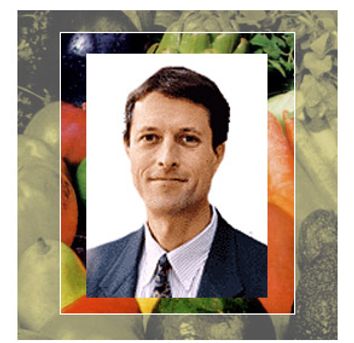
Dr. Neal Barnard founded the Physicians Committee for Responsible Medicine in 1985. The group persuasively argues the health benefits of a vegan diet, one free from eggs, meat and dairy, and advocates higher ethical standards in medical research, including the end of reliance on animals as experimental models for humans. What elevates Barnard, a psychiatrist by training, above most doctors is his ability to pitch the idea of bean water and lemon juice salad dressing with such eloquence as to make the proposition sound almost inviting.

Although the American public is not noticeably clamoring for a well-spoken proponent of veganism, Barnard has sold approximately 1.5 million copies of his books on various aspects of nutrition. His latest book, “Turn Off the Fat Genes,” looks at how emerging genetic information is redefining the long-held suspicion that genes play a role in determining body weight.

PCRM has been a persistent thorn in the side of the U.S. Department of Agriculture. It has taken the USDA to court and successfully opened up the unlawfully concealed workings of the USDA’s board selection process. Six of the 11 USDA board members have financial ties to the meat, dairy and egg industries, and PCRM maintains that these ties are more responsible for the preponderance of meat, dairy and egg products in the USDA’s nutrition recommendations than sound nutritional science.

PCRM is also reaching out to incoming medical school students. Barnard has helped them abstain from or, in many cases, entirely do away with courses that require operation on a healthy animal that will subsequently be euthanized. More than half of all medical schools, including those at Harvard, Stanford, Columbia and Yale, have dropped live-animal labs altogether, thanks in part to Barnard’s work. One resister, Colorado University, recently suffered through a homecoming football game in the baleful shadow of a circling plane towing a PCRM-sponsored banner that read “CU Medical School: Stop Killing Dogs!”

Nobody likes an overzealous vegan crusader, but Barnard is no tiresome zealot. His mission in practice, publication and advocacy has been to bring about a richer interpretation of the Hippocratic oath’s central credo: “First, do no harm.” He makes a compelling case that what’s good for human health also happens to be good for animals. If current dietary habits hold, more Americans will die from heart disease than from any other single cause, he says. Vegetarians and vegans are disproportionately spared heart troubles. It is as much in our interest not to eat animals, he insists, as it is in the animals’ not to be eaten.

You encourage the abolition of experimentation on animals for both ethical and practical reasons. But when a cure for some minor ailment is found after decades of research on thousands of animals, I think the general public considers that money and those animals’ lives — no matter how many thousands — well spent.

Let me be clear about what PCRM’s mission is. We promote preventative medicine, which mostly involves exercise and diet. There is abundant evidence that the healthiest diets are those that avoid animal products — among other changes you would want to make, like avoiding fried foods. In addition, we conduct research trials and have been active in research for a long time. Like most medical organizations, our efforts and research do have an ethical foundation. Where the participants in research are human beings, we have advocated the highest ethical standards.

We have actually sued the federal government over an experiment that involved injecting short children with a genetically engineered growth hormone, which these kids did not need. We don’t object to kids’ getting a hormone if their bodies are not making it. But these were kids with adequate growth hormone levels, and the experimenters were trying to alter their physiology through injections, and it was fraught with danger.

When the research participants are animals, it is quite apparent that society has turned a blind eye to extraordinary suffering. But society in general is starting to recognize that animals are not blocks of wood or glassware and that they have the capacity to suffer.

Over and above that, it makes your research that much better if your results don’t have to jump the gap from animal to human. When I pick up the Journal of the American Medical Association, or the other leading medical journals, I don’t see articles titled “Rat Cured.” That is not what the rank and file of American physicians want to know about. I’m not suggesting that the average physician is ready to march in the street for animals. I’m suggesting that they’re interested in what will work for their human patients.

There is no question that results from ethical research conducted on human populations are miles ahead of results from research conducted on animals. And if we aren’t recognizing that there is an ethical problem with harming animals, then something has gone wrong.

There were people in the 1700s who said that slavery was bad economics. And there were people who said, “Sure, that may be true, but there is also an ethical component — which if you don’t recognize, then there is something wrong with you.” In any other prior ethical problem, whether we’re talking about the status of women or gay people or anybody else, these same issues apply.

How did you develop the interests that would define the advocacy of your adult life?

My background is entirely different from what I do now. It’s a little odd for me to be advocating a vegetarian diet. My grandfather was a cattle rancher and my uncles and cousins still raise cattle. They’re good people, and I’m still close to them.

A year before I went to medical school, I worked as an assistant in a morgue. One day I had to prepare a cadaver for examination. This was a heart attack victim. I cut in and removed a section of ribs. Then the mortician opened the heart, and the arteries were clogged with fatty deposits. Later, I went upstairs for lunch and in the hospital cafeteria they were serving ribs. The sight of those ribs was so similar to the section of human ribs I had just handled that I just couldn’t eat them. That set me on the path to vegetarianism.

Didn’t you adopt a mouse at some point?

I had a rat. Rats are one of the most unreasonably denigrated species. When I was in college I actually did experiment on rats. The experiments were not just old-fashioned, but downright nasty B.F. Skinner behavioral experiments. It didn’t bother me at the time; I had gone hunting while I was growing up.

You hunted?

I don’t want to give the impression that I was a frequent or especially accurate hunter, but yes, my father occasionally thought it would be a wonderful idea for us to go out and disrupt the stillness of dawn.

Anyway, I ended up bringing a rat home with me. And as long as he was in the cage I didn’t think much about him — I use “him” instead of “it” because animals have gender, unlike a strawberry. But when I let him run around the apartment, I realized that these animals were a lot like dogs or any other social animal. He eventually developed a breast tumor and died a very miserable death. Seeing an animal that no one respects display all the emotions and desperation you would expect to see in that margin between life and death really made an impression on me.

Robert Smith, a Republican senator from New Hampshire, has said: “Concern for animals should not be the exclusive concern of a single political party, just as concern for the environment, human rights and national sovereignty are bipartisan issues.” In your dealings with Congress have you determined whether animal and nutrition issues are perceived as partisan issues?

I think they are entirely bipartisan. And I’m happy that whatever other seismographic changes there might be in the political landscape, I don’t think this new administration will be any less sympathetic to either health concerns or ethical issues in research.

So you have no specific worries about the Bush administration?

Not in this regard. There have been appropriate concerns raised over other aspects of this administration. One party is no better than another. When Bill Clinton was running for reelection he bought up $60 million worth of beef. And the government’s explicit and unabashed reason for this was to support U.S. farmers during a farm crisis. Where do you put $60 million worth of beef? They put it in school lunches, in federal hospitals; they threw it in prison food. This was quite out in the open and nobody ever said that children need another burger. Needless to say, it’s the last thing they need.

What do you make of Huntingdon Life Science’s close brush with bankruptcy, thanks to massive and sustained public protest in England?

I think the sooner Huntingdon Life Science and other labs like them are out of business the better off we all will be. I don’t see them as providing a service. They are getting potentially dangerous products on the market using out-of-date animal testing methods that are a hair’s breadth away from a sham and obviously extremely cruel. Frankly, I suspect you would almost have to be a psychopath to work in a place like that. If you’ve seen the undercover videotapes recovered from Huntingdon and other labs, you’ve seen people quite literally torturing animals. If the job is to take animals, restrain them and force them to inhale or digest toxic substances day after day — the Mother Teresas of the world aren’t going to take that job. And you can imagine who will.

Given the formidable institutions and industries you’re up against, is it hard to be optimistic?

It depends on what we’re talking about. Do I think that every American is going to quit smoking? No, I think that one in four is going to hold on to it for their entire lives. Do I think every American is going to adopt a healthy diet? No, certainly not. But many do. So my goal is to promote this information as vigorously as possible. And luckily everybody makes their dietary decisions one meal at a time.

We are winning ground dramatically. You only have to look at all the new health food products on the shelves to see that. Let’s face it, 10 years ago if you wanted to buy a veggie burger, you would have to find a little store with dusty shelves and someone at the cash register named Sunshine wearing a tie-dyed shirt and listening to folk music. And you wanted to kill yourself.

Nowadays, not only are health food stores huge and ripe with thousands of wonderful products, you can also find these products at regular grocery stores and in restaurants. That doesn’t mean that everyone is going to choose these healthy options, but it does demonstrate that there is a huge demand for them.

We also have celebrities joining us. You may have seen our ads with Ed Asner or Mary Lou Henner or Kevin Eubanks, the musician from “The Tonight Show.” And Keenan Ivory Wayans, he’s a vegan.

And Ted Nugent isn’t as popular as he once was.

Talk about sexual dysfunction. Even the Ted Nugents of the world — I don’t think of them as nonvegetarians, I think of them as pre-vegetarians. And once his rather public and extroverted mating ritual ends I think he’ll be able to play his guitar and also be a little bit more thoughtful about the world around him. I mean it’s embarrassing.

I was struck by a statement Indian cabinet minister Maneka Gandhi made about the treatment of cattle in India and the encroaching “McDonaldization” of the Indian diet. She thoroughly understands your position that cycling grain through animals raised to be eaten is both detrimental to human health and cruel to animals. Why do you think we lack these kinds of advocates in our national government?

I think it’s time to up your Prozac dose! The world is not so bleak as you paint it. There are many people advocating for healthy diets and they are getting results. The Dean Ornishes of the world may have been rare 20 years ago, but they are here today. This is a battle we are winning.

But there are not so many elected officials.

Oh, they’ll come along. Dick Cheney has had his fourth heart attack. Man, I’ll tell you, that is a guy who is so ripe to go vegetarian. As soon as he figures out that Dean Ornish has shown that you can reverse heart disease with a vegetarian diet, exercise and not smoking, he’ll do it.

Continue Reading Close

Ian MacKaye

After 20 years, the Fugazi frontman and co-owner of Dischord Records is still a punk and a prince.

  • more
    • All Share Services

Ian MacKaye

If you frequented the Georgetown Häagen-Dazs shop in Washington in the early ’80s you are probably familiar with Ian MacKaye’s early work. The singer, guitarist and underground entrepreneur developed his scooping arm there, alongside childhood friend Henry Rollins. MacKaye soon cut the apron strings and pursued full-time work as co-owner of Dischord Records and as a member of many legendary D.C. bands, including Teen Idles, Minor Threat, Embrace and Fugazi. Dischord turned 20 last month.

No one imagined that the then 18-year-old MacKaye and his Teen Idles band mates were launching a company, let alone one that would command the respect of critics and punks alike two decades later. It was an inauspicious launch — the $600 for the production and distribution of an eight-song 7-inch came out of the band’s cigar box — but Dischord quickly became a fully articulated expression of the politics and passion that haphazardly brought it to life. Its sphere of influence has widened exponentially over the years, but Dischord has never veered from its original course. The two cd retrospective it plans to release by early summer attests attests to this.

Today, MacKaye runs the label with former Teen Idles and Minor Threat band mate Jeff Nelson and five other employees. Dischord’s enduring success is due in large part to the popularity of Minor Threat and Fugazi. Minor Threat are among the few early-’80s American punk bands that continue to sell thousands of records both domestically and overseas. And Fugazi are responsible for the lion’s share of the more than 1 million albums Dischord has sold, despite a deliberate absence from commercial radio and MTV.

The label operates in its original location, a bungalow-style house in Arlington, Va. The house itself is woven into modern music folklore. According to legend, when Pearl Jam visited D.C. on the group’s first national tour, Eddie Vedder, unimpressed by the city’s monuments, asked his unofficial tour guides to take him to the Dischord house.

It’s hard to imagine where thousands of acts would be — Rage Against the Machine, Nirvana, the Beastie Boys, Sleater-Kinney — had Dischord never emerged on the cultural landscape in the ’80s. Unlike many independents, Dischord does not behave like a miniature major label. None of the dozens of bands that have released records with MacKaye ever did so under any contractual obligations to the label. Compact discs, vinyl and all other release formats are congruently priced with production and distribution costs. The 26-song Minor Threat discography CD is available from Dischord, for example, for $10 postage paid.

MacKaye has been criticized for being the quintessential punk rock “no” man. Most critics of this mind-set hang their hats on the blunt, anti-substance-abuse lyrics he penned as a teenage frontman for Minor Threat. The same ill-fitting Puritanism has been forced on Fugazi. Yet in Dischord’s endurance, and in Fugazi’s demonstrated preference for social action over braggadocio’s invective, MacKaye is proving he values affirmation over protestation.

Since his days as an adolescent ice-cream technician, MacKaye has lived out a simple yet revolutionary philosophy of dedication to community in art and ideology. Dischord buys advertising in fanzines that may only reach 30 people. MacKaye and his fellow Dischordites reply to all correspondence. Fugazi have more crowd-drawing power in every corner of the globe than many of today’s multinational-backed rock bands, yet the group actively seeks out small, independent concert promoters. At every opportunity, whether it’s providing healthcare coverage for Dischord employees or playing benefit concerts for local charities, MacKaye reinvests in community.

MacKaye spoke to Salon by phone recently: What makes running Dischord Records interesting after 20 years?

What’s interesting for me is just the fact that people continue to come along and reinterpret things. They continue to challenge me musically or aesthetically. Music is a language and different people who come along are each using that language to do something different, but all coming at it in a similar vein inasmuch as it’s always community based and for the most part nonprofit. Most bands don’t ever come within a mile of profit — clearly these people are not playing music to make money. So I feel really connected to that. I feel like with these bands today, while some of them were barely born when the label started, there is still a connection.

When I came across this counterculture world in 1978, it just made me so happy, because this is where I wanted to be. I’ve always felt really dedicated to the idea of continuing to support that area. When people come along with new ideas and new interpretations, I think, “Wow, it still happens.” And who knows what will happen next year.

I’m not a particularly nostalgic person. The only reason I’m interested in underscoring the fact that we’ve been around for 20 years is that, for years, people considered Dischord a novelty thing, something that didn’t really work because we weren’t taking into consideration what they consider “reality.” But I think if a label is functional and stays in profit — manages to have employees and manages to pay them reasonably well and give them healthcare after 20 years — that certainly refutes the notion that it was a joke or a novelty or due to sheer luck. It is certainly not a luck issue; it’s always been about work.

For an independent record label, you’ve had some extremely long-term employees. Is there a secret?

I don’t know how other labels work, so it’s hard for me to say. We don’t see it just as a label and our employees don’t see it as just a job. The people who work for us decide their jobs, really. Being a boss means that I get to deal with the things nobody else wants to deal with. I don’t tell people what to do. Everyone who works here also comes into it understanding the basic structure and the mission of the label.

One aspect of this label that I think has resulted in our longevity is that I hate the record business. I never wanted to have a record label per se. I wanted to put out records, and I hated the record business so much that I couldn’t stand the idea of someone else putting out the records, because I could never trust them to do it. So I don’t have any illusion that this [will always] be my livelihood. At some point I assume the label will stop and that’s fine with me. I don’t have any problem with that whatsoever. So once you don’t give a fuck anymore, it’s easy to go on and on.

I’ve always told the people who work for me that this is not the end, that this is not the last station for them. This is supposed to be an auxiliary job for them. They should be doing what their heart tells them, whether they want to make music or make art or write. Right now we have somebody who’s in law school. Some people have come and been in school while working here, and then they graduated and got the gig they were looking for, and I’m happy for them.

A lot of people are stunned that you personally answer all your mail and e-mail. This is an interview for a bigger-name magazine, yet we waited in line with all the fanzines. Is there any practical advantage to doing it this way?

There’s no advantage. We just answer our mail. People write and we respond. It’s a drag sometimes, mostly when I realize somebody’s written to me about a report that was due three months ago — I hate when that happens.

I do get overwhelmed. But when it’s time for me to go see my mom and play cards, people are just going to have to wait. For me, an opportunity to sit down and talk to someone is always going to take precedence. That’s what I’m doing this for. So if somebody comes in and they need to talk, then everybody else is going to have to wait. But on the other hand, we do answer all our mail. It was no formula; it just seemed to me in the very beginning that if somebody wrote to us, it would be nice to write them back. We’re a little bit like the Luddite people — we just do what we do. We’re not thinking about how other people do stuff, and we don’t really care how other people do stuff. This is just how we set things up and it seems to have done OK.

Do you get a lot of students contacting you for reports?

Occasionally. I’m usually happy to do it, especially for high school kids, because when I was in high school, I was notoriously bad about doing homework. I didn’t do it, and any books that were assigned I never read. I had to do a book report for an English class on “One Flew Over the Cuckoo’s Nest.” I just didn’t really get around to thinking about it. I couldn’t sum up my feelings about the book. I did read the book, or parts of it. I ended up calling Ken Kesey because I was in a pickle and needed to get this report done. So I just called up Oregon information and asked for Ken Kesey and they gave me a number, which I couldn’t believe. I called and he was not home, but his wife was, and she was so nice to me. She talked to me about some of the ideas he had, and I wrote it up and I got an A. I was pretty psyched about it, but mostly I was touched by the fact that this person would take time out to speak to me. So I just feel like I’m returning the favor.

Is the Napster phenomenon any more troubling to you as a musician and co-owner of a record label than home taping of music was in the ’80s?

Not to me. We never had any problem with home taping. Again, this is not our commerce. I don’t know much about Napster — my computer doesn’t go fast enough to fool with all that stuff. Certainly I love the idea of the application. I understand the issues a band would have if somebody were to take an unfinished tape from the studio and put it up on the Internet. That’s a drag, because it’s not something they’re ready to have released. But I don’t believe that it undermines the industry. Most people I know who use Napster listen to stuff they’ve never heard before. And then they get psyched and go out and buy the damn records. It’s more like a sampler.

The home-recorded mix tape also played a huge role in the success of underground music in the U.S. Most people who got into underground music did so at least partly because of some mix tape.

Hell, yeah. The other day I was driving with a friend of mine. I had been going through some old tapes, and I put in this tape I had come across that had the Dickies doing the “Banana Splits” theme song. And I suddenly remembered that in 1979 I was with my sister Katie and we were driving in a Volkswagen Rabbit in Connecticut. We met her friend in Greenwich and drove up to New Haven to see the Ramones play. I was a young, fresh-faced punk rocker at the time. I’d just seen my first few bands; it was still a wide-open new world to me. And her friend was a very tall European guy, a very cool-looking punk rocker. He had a tape that he played in the car and it had that Dickies “Banana Splits” song on it and it just blew my mind! As soon as I got back I started searching out all these bands, because I was so intoxicated with all this music. So that’s the one thing I really like about Napster.

Napster may go by the wayside because it may just sell out. That’s apparently what’s going on now. But people will continue to find ways to share the music that has affected them. With Napster and the sharing of music, of course, there are going to be people who exploit it. Greed has no end. But there’s a lot of good that could happen. We shouldn’t let the economic concerns of the major labels infringe on our freedom to share music. Fuck ‘em.

One good thing about the Internet in general is that it maximizes the availability of music but doesn’t eliminate the search. Having to seek out meaningful art and music is almost as important as finding it. Growing up in an isolated little town, Kurt Cobain had to go to the public library to try to find Clash cassettes.

I totally agree with you. I had this very conversation with somebody earlier this morning. He was saying that we should be more descriptive with our work, and we should tell people what the music sounds like. And I said that if you want to go to a restaurant that tells you how good their food is, they’re everywhere, but if you want to come learn what you like by trying things, then come on. That’s the point — it’s always about the journey. It’s a sense of discovery that we’re talking about here.

Does it take a shrewd entrepreneur to maintain a record label?

No. I was talking to a business guy once, an accountant, and he said, “They should invite you to come speak at Harvard Business School.” And I said, “Well, I don’t give a fuck about business.” I reject the whole notion. American business at this point is really about developing an idea, making it profitable, selling it while it’s profitable and then getting out or diversifying. It’s just about sucking everything up. My idea was: Enjoy baking, sell your bread, people like it, sell more. Keep the bakery going because you’re making good food and people are happy. Dischord really does exist as a result of hard work and the goodwill of the people.

So much of our culture is built on the idea that what one does for a living isn’t life — life happens on the weekends and after work. Do you ever get to clock out?

I think that in the last 20 years, there may have been maybe two days where I didn’t think about music or something to do with music. Part of the way the work world works is not so much creating a separation between your work and your free time, but creating the illusion of a separation between your work and your free time. Every day is the weekend for me, which means I’m always busy.

I can’t imagine working at some of the jobs people work in. On the other hand, people say to me, “Well, you live off your music.” That is just not true — I work all the time. I haven’t played a lick of music today; I haven’t even listened to music today. I’ve been working all day. I’m writing stuff, I’m on the phone, I’m in the office trying to figure out some computer problem. I work every day, and I’m happy to do it.

Continue Reading Close