Rahul K. Parikh

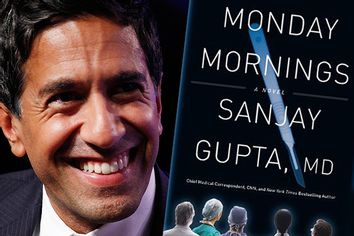
Sanjay Gupta: Doctors learn when they admit mistakes

Sanjay Gupta tells Salon why his new novel is set in once-secret "morbidity and mortality" meetings

Sanjay Gupta (Credit: AP/Mark Lennihan)

While some people think doctors see themselves as gods, oblivious to their mistakes, the behind-the-scenes reality tends to be quite different. In regular meetings called “morbidity and mortality” (or M&M, for short), doctors close the doors and candidly discuss their mistakes and try to learn from them. The meetings can be full of ruthless — and helpful — self-flagellation.

Most people don’t know they even take place. Now, “Monday Mornings,” a novel by Sanjay Gupta — CNN’s chief medical correspondent and a practicing neurosurgeon at Atlanta’s Emory University — lifts the veil on these gatherings.

While driving one of his three daughters to school last week, Gupta, 42, talked to Salon about his bestselling first novel, how doctors can do better, and the controversial ethics of being both journalist and physician.

What made you decide to leap into fiction?

It was an evolution. Originally, I wanted to write a nonfiction book about my specific experiences as a resident. I always took very diligent notes, and when I pulled them out, it really reminded me about that time. Then I learned that the whole idea that a meeting like M&M even exists was surprising to a lot of people. I had assumed that most people knew that doctors and surgeons got together regularly to discuss their mistakes. It turns out that most people didn’t know that, even ones who work in health care. This was interesting in and of itself. So I wanted to show people that this existed and that it can be one of the most indelible experiences that somebody can ever have. But to do that, it would need to be fiction, so it could be more unrestricted and have some creative power.

What’s the message of the book for doctors and their patients?

I think the biggest point was to expose people to M&M. When a mistake happens, or an unexpected outcome, oftentimes the immediate thought is “That’s a bad doctor.” They may even think “That’s a bad human being.” Most of the time that’s not true, and often doctors beat themselves up, to the point where I’ve seen some of them disengage. They no longer feel they’re up to it. They couldn’t stand the fact that someone got hurt because of something they did. So I wanted to tell a story about how people react to a mistake in medicine, and then to show the accountability that doctors hold for each other is sometimes far worse than any other punitive system. It doesn’t take the place of malpractice or administrative sanctions. This is doctors on doctors — and sometimes that has a much greater impact. It’s a pretty unique thing — the idea that you close the doors and be candid. It’s worth asking whether there’s a role for that kind of meeting in other places in our society as well.

Are we in medicine good at learning from our mistakes?

In 1999, because of the Institute of Medicine Report, people started paying more attention to medical errors. It’s not a great study, and even the way they define mistakes is different [from how others in the field] define mistakes. Still, there’s a problem, and over the past decade or so we have focused on this, and some of the things people have done have been effective at trying to curb mistakes. Yet if you look at the number, there’s hardly any evidence that mistakes have gone down.

So learning from our mistakes requires a more immediate sharing of the lessons.  There’s also the cultural change for any new thing that needs to be done. These things need to come from within the medical community as opposed to being mandated. How do you get a significant cultural change and get everyone to buy into it? One place I saw cultural change happen lightning-fast was through the M&M meetings. It was so indelible and vivid, it just became the way we did things.

During the book’s first M&M meeting, the chairman of your fictional team of surgeons, Dr. Harding Hooten, makes a statement about missing the basics in medicine. Do you think doctors in this country, because of the cushion of medical technology, have lost sight of getting the fundamental medical history and giving a complete physical?

No question. We overtreat. The irony is that we do this in part to prevent errors — and as a result we probably make more errors. As I was writing the book, I read Abraham Verghese’s essay in the New York Times. I attempted to incorporate some of that into Hooten’s dialogue.

Can we go back? Is it too late to regain that appreciation and rely on a conversation with and an exam from your physician?

It’s difficult to go back. I think we can mitigate some of the increase in the use of technology. Some of that was part of the discussions around health care reform. I also think that our tolerance for risk in medicine is different from anything else we do. I hate to be trite, but if a plane crashing every day would equal the same number of people who die each year from medical errors — we haven’t done a good job of explaining risks and benefits very well. Even informed consent is almost like a hat tip; people do it because they have to, not because they really sit down and really have a conversation about the risks.

What about the patient’s side of the equation? When you see the story of the face transplant or the former vice president getting a heart transplant, you’re left with the view that in American medicine, all things are possible. Is there a way we can communicate better what it is what we can and cannot do? 

Yes. It’s hard because people want those stories. It’s a tough balance, and we have to be very careful in our reporting to present the risks of things. I think people tend to focus on costs, but they don’t talk as much about risk.

When you were in Haiti in 2010 covering the earthquake, some people criticized you for becoming part of the story when, with cameras rolling, you began caring for patients at an abandoned medical camp. What’s your view of balancing journalistic objectivity with your commitment as a physician?

It’s a little bit artificial to say journalistic objectivity and helping people when you can are somehow at odds with one another. I’m not in way trying to demean journalistic objectivity. But whether or not you’re a physician, if you can help someone as opposed to just sitting there, I think most people from a human standpoint will do that. Anderson [Cooper] for example, was in a situation once where a boy was getting pummeled with rocks. He was right there and grabbed the kid and pulled him out. You would do it. Anybody would do it.

It’s worth pointing out that so much of the time I was in Haiti, for example, I was going to general hospitals and doing things. It wasn’t stuff for the cameras. There was just a tremendous need, as journalists get into these situations so quickly. Many times we are the first ones there before anybody else. In Haiti we were there within 12 hours of the earthquake because we have such an infrastructure built into the work that we do. In Iraq, I was embedded with Navy doctors; I was reporting on them and what was happening. And then I was asked to operate because there were no neurosurgeons there.  I took some criticism for that, and that was early on in my career, and I was a bit befuddled by it. Having trained as a doctor, why would anybody think that I wouldn’t do it? But when I came back and had lots of conversations with lots of other people in the journalism community, they raised the question of whether I can be objective. I think it was a worthy discussion to have, but as a general rule, I don’t think putting on a press badge means parting with your humanity. I’m pretty comfortable that as a journalist-physician, I am a physician first.

How do you keep a balance between your duties as a doctor and your duties as a journalist?

It’s pretty busy. I like to make rounds early, around 5 to 5:30 a.m., so I can come back and take the girls to school. I find that the car rides are the only times where you get one-on-one time and get to talk. When you have three kids, the house is active.  The medical stuff, the work, has a pretty defined schedule. Every Monday and every other Friday I operate. In total, it’s about 2.5 days a week of work. Straddling two fields, I have a view of both. I know medicine’s changed a lot. But when I wake up in the morning, when I’m in the operating room, there’s such a clear sense of purpose. It’s very hard to replicate that in anything else I do or anywhere else in society. I love that part of my life.

Why doctors can’t say no

Often it's easier to just say yes. But there are ways to say no that are better for both physician and patient

Conrad Murray (Credit: Reuters/Salon)

Doctors routinely meet with patients who make requests for specific medicines, tests and referrals to specialists. In this era of the Internet, consumer-driven healthcare and direct-to-consumer drug marketing, this is no surprise. And while an informed patient is a good thing, what may surprise you is just how hard it is for doctors to say no when a patient makes a specific request for something he or she doesn’t really need.

Right now, Dr. Conrad Murray sits in jail because he couldn’t say no to Michael Jackson when Propofol came up in conversation between them. But even doctors who aren’t tempted by an enormous monthly retainer and access to one of the world’s biggest celebrities are challenged by the word “no.”

American medicine is a business — but a weird one.  In any other sector of our economy, businesses are determined to give their customers what they want, however they want it. But in medicine, the “have it your way” mind-set doesn’t always jive. First, physicians have a duty to avoid doing harm.  The choice of a drug or test based solely on a patient’s request can undermine that.  Second, as everybody knows, we spend a big slice of our GDP on healthcare. Since the person who has control over expensive tests and the prescription pad is your doctor, there’s ever-increasing scrutiny to be responsible stewards of healthcare dollars.

All these factors come to life in the exam room. Case in point: I periodically get requests from parents to prescribe cough medicine for their child that contains codeine. Besides the codeine, the drug contains alcohol, naturally leading to a better night’s sleep for child and, hence, the exhausted parent. But there’s no evidence that this cough medicine helps the child get better any faster, and it may even be dangerous. Should I prescribe it or not? The evidence says no, but to say that can lead to a confrontation with an angry parent. Though cough medicines aren’t expensive, if it’s hard to say no to something that simple, it’s even harder when the stakes are higher — an unneeded new drug, a CT scan, a referral to America’s top cardiologist.

The phenomenon of how requests impact the patient-doctor relationship has been studied extensively by Dr. Richard Kravitz at the University of California at Davis. Kravitz’s research has shown that somewhere between 10 and 25 percent of patients bring a specific request to their doctor (the high end of that range is between a patient and his or her primary care doctor).  Here are some of his sober conclusions: Patients who do not have their requests met rate their physician lower, are less likely to adhere to their doctor’s recommendations, and use more healthcare resources than those who do get their request.

Physicians who encounter the patient with a request report those visits to be stressful and unsatisfying as well. But if you’re wondering who wins, Kravitz suggests it’s the patient, though just slightly. He and his team looked at how doctors responded to patients’ requests for an antidepressant medication. Fifty-six percent of the time, patients got the drug they wanted.

Why is it so hard for doctors to say no? To be honest, it’s often just easier to say yes. Usually, we’re behind schedule, with a waiting room full of impatient customers, and we have a desk full of phone messages to return and charts to finish. To take even a few extra minutes and open the conversation — even a confrontation — about a request is time and energy we don’t want to expend. So we put pen to paper, rip the script off the pad and hand it to them as we rush out the door.

The other thing is that nobody really teaches us how to say no.  It seems ridiculous, but neither Kravitz nor I could remember an instance during medical school or residency when we were coached about how to manage inappropriate requests from patients. Many of us probably figure out ways to parry the patient over time, but not without inflicting some damage. Back to the example of cough medicine requests for kids: I remember earlier in my career when, on a very stressful day, I walked into a room with a teenage girl and her mother.  The mother directly asked for a codeine-containing cough syrup. I knew better, and I wasn’t about to let this parent have it.  “No. Look,” I bluntly replied, “it only works because it contains alcohol.  Why don’t you just go out and give her a glass of Scotch.” It was not my best moment doctoring. I’ve taken a long and bumpy road since to get better at managing patient requests. These days, I’m more likely to explain the issue, decline the request, ofter an alternative, apologize for any inconvenience, and make sure they know they can always seek a second opinion.

Kravitz’s research, in fact, does reveal that there are ways to say no that are better for both doctor and patient.  In Kravitz’s aforementioned study where patients requested an antidepressant, he was able to categorize how doctors handled patient requests. The most successful method is for the doctor to exercise a little curiosity and delve deeper.  It’s not surprising, for example, to find out that a patient who comes in with headaches wanting an MRI had a friend or relative who died of a brain tumor, or one with a cough who wants an antibiotic who knew someone hospitalized with pneumonia. If both patient and doctor can get to the root of the request, they can, in many cases, discuss it and figure out a third way.

The second way doctors in the study managed patient requests was to try to order some tests.  While it can be a successful strategy to look for “objective data” to help reassure a patient, it isn’t always cheap or safe.  Labs and X-rays don’t cost much individually, but the volumes of them that doctors order add up fast. Unnecessary tests beget more unnecessary tests. For example, if I order blood work for a patient who I don’t really think needs it, and one of the numbers — one that has nothing to with why I ordered the test — comes back slightly off, I’m stuck having to call the patient and tell them to repeat the test, even if the child is completely fine now. All of us have had a test or radiology result we ordered just to satisfy a patient come back to bite us like this.

Kravitz and I both agreed that “patient-centered care” or “shared decision-making” are euphemisms for negotiation. And perhaps, like other professionals, we in medicine ought to focus more on negotiation tactics (Kravitz’s last paper is called “Getting to ‘No,’” a riff on the famous business book about negotiation called “Getting to ‘Yes’).  This may sound coldly corporate to the average patient who has ever wanted something from their doctor, but it’s a reality we need to address. In pediatrics, where limiting the overuse of antibiotics is a priority, it’s recommended that doctors not prescribe drugs in most cases of middle-ear infections.  Instead, since evidence suggests most ear infections get better on their own pretty quickly, we can treat a child’s pain with over-the-counter drugs like ibuprofen. But just in case things don’t get better,  we often keep an antibiotic prescription ready for the child for the parent to fill.  Doctors call it a “safety-net prescription,” but MBAs know it as a contingency — a common negotiating tactic to satisfy both parties during a negotiation.

Finally, for doctors who are still entrenched in the belief that patients shouldn’t be asking for anything, or for patients who are too timid to speak up, Kravitz has some interesting findings: In cases where the patient had a specific request but didn’t make it because they were uncomfortable, pressed for time, or because the doctor’s bedside manner didn’t afford the chance, that patient left less satisfied. Doctors, too, rated the visit where something was left unsaid as more difficult.

The lesson here is that it’s best for the doctor and the patient to get everything out in the open, and for a healthcare system that affords the right amount of access and time — especially in primary care — to make that to happen.

Continue Reading Close

Face-off with the bestselling vaccine guru

Dr. Sears' "Vaccine Book" is a nightmare for pediatricians like me. I decided to take my problems to the author

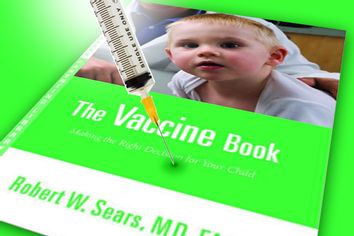
Dr. Robert Sears’ “The Vaccine Book” is slim, hugely popular with parents — and the bane of pediatricians’ existence.

Published in 2007, “The Vaccine Book” has sold nearly 180,000 copies and been an Amazon top seller in the parenting section since its debut. Its timing was perfect: For nearly a decade, a small but highly visible army of anti-vaccinationists waged an all-out war to persuade parents that vaccines cause autism — resulting not only in anxiety but also, thanks to vaccine refusal, the re-emergence of virtually extinct diseases like whooping cough and measles. Amid the polarizing debate, Sears appeared to offer a middle ground. The book’s centerpiece is “Dr. Bob’s Alternative Schedule,” a vaccine regimen for parents nervous about the traditional timetable to give kids their shots. The schedule departs radically from the one vetted by the CDC and used by physicians, spacing out vaccines over 21 visits, as opposed to the standard 13.

The book has been skewered by the medical community, most notably respected vaccine developer Dr. Paul Offit, who called it a “misrepresentation of vaccine science” that “misinforms parents trying to make the right decision for their children” in the Journal of Pediatrics. And yet, as a pediatrician myself, I have seen an increasing number of caring, reasonable parents hold it up like a bible in my practice (and that of my colleagues).

I initially dismissed the book after reading Offit (and others’) criticism, but I wanted to understand its appeal. And I wanted to hear from the author himself, who agreed to answer questions via email. In his book and his responses, I found a physician who is articulate and persuasive — but whose understanding of vaccines is deeply flawed.

Before I get to that, it’s worth understanding why Sears drew crowds to his work in the first place. The surname “Sears” is to pediatric medicine what the surname “Bush” is to politics. Sears’ father, Dr. William Sears, is a Harvard-educated and -trained pediatrician who has authored more than 30 books. You’ve probably seen Sears on TV or read his advice in parenting magazines. Three of Sears’ eight kids are physicians. (Bob Sears and his brother Jim practice with their father in affluent Capistrano Beach, California, just north of San Diego. Peter Sears practices family medicine.) And dad’s telegenic quality runs in the genes: Jim co-hosts the popular afternoon TV show “The Doctors.” Together, Sears and Sons have built a celebrity brand as “America’s Most Trusted Name in Pediatrics.” The family even boasts their own line of infant vitamins.

From early in his career, Bob Sears wanted to bring the family brand to bear on the controversial topic of childhood vaccines. It’s clear from our correspondence that Sears long had a sympathetic ear for parents concerned about vaccine safety, though he admits early in his book that he didn’t learn much about vaccines in medical school or during his residency. Instead, faced with questions from concerned parents in his private practice, he researched vaccines by reviewing package inserts and studies. Based on his diligence, Sears positions himself as an authority, promising parents “open, honest, complete and accurate information” about childhood immunizations, with the hope that they can then make their own choice.

Paul Offit isn’t convinced that Sears deserves to called a vaccine expert. “Sears has never conducted any original vaccine research or been asked to approve a biological agent,” he told me. Offit has done both on numerous occasions. Readers, however, are likely to forgive that shortcoming because Sears provides them with something more critical: a choice. “Vaccination isn’t an all-or-nothing decision,” Sears writes. At a time when patients feel anxious about the medical practice, Sears’ book gives them something they sorely want — autonomy.

But it doesn’t take long to see the fault lines in “The Vaccine Book,” making that choice a false one. Sears uses maddening circular logic in his recommendations. Take the chapter on the MMR vaccine (used against measles, mumps and rubella), where Sears implies that skipping the vaccine is OK because “measles is now extremely rare and in most cases harmless. The chance that a child will catch measles and be one of the rare fatalities is extremely low.”

But the near-zero risk of contracting measles, mumps or rubella happened thanks to vaccinations. Before introduction of the MMR in the United States in 1963, measles caused an estimated 4 million cases, with 48,000 hospitalizations and 500 deaths reported annually. Because of mass vaccination, measles were wiped out of the United States in 2000. But in 2008, a large measles outbreak occurred in San Diego, just south of where Sears practices.

I asked Sears about the outbreak, which he seemed to downplay. “Realize,” he told me, “that the measles outbreak is nothing new. Every year for the last couple of decades we have had between 50-100 cases of measles each year in the U.S., just like we did in San Diego.”

What Sears didn’t acknowledge is that Patient Zero in the San Diego outbreak was the child of vaccine refusers who contracted measles on vacation in Switzerland and brought it back home. A recent study by researchers on the role of vaccine refusal in this outbreak was staggering: 839 people were exposed, 11 additional measles cases were reported (all in unvaccinated children); one infant, too young to be vaccinated, had to be hospitalized. At a time when the state of California is in devastating financial straits, it cost San Diego serious health care dollars: $10,376 per case, for a total of $124,517 (and the hospitalized infant’s bill was nearly $15,000). Forty-eight children too young to be vaccinated were quarantined for several weeks, meaning parents had to miss work and wages at an average cost of $775 per child.

When I asked Sears about balancing patients’ needs against those of society at large, he told me he believes vaccine-averse parents usually aren’t persuaded by doctors’ appeals to community health. “Most parents are selfish — not in a negative way, but in a realistic way,” he said. I’m inclined to agree with him: That argument has rarely worked for me in the exam room with a vaccine-ambivalent parent. But we can’t just ignore public health, telling parents they make their own choice as long as they keep it to themselves.

But that’s what Sears does, making the indefensible suggestion that vaccine refusers simply hide in the herd. In advising parents who refuse the MMR, he writes, “I also warn them not to share their fears with their neighbors, because if too many people avoid the MMR, we’ll likely see the diseases increase significantly.” Does he really think parents won’t share their stories about taking their kid to the doctor with others? Sears justified this statement to me with more circular logic. “My purpose for this statement was to discourage people from spreading their own fears about the vaccine … This is very pro-vaccine,” he said. And yet, it’s the kind of advice that will make another San Diego-like outbreak inevitable.

Sears’ arguments crumble further when we turn to his alternative vaccine schedule, which remains the book’s biggest sell. He told me he wanted “balance between making sure infants get vaccines in a timely manner without making the parents feel that their babies were getting overloaded with too many shots at once.” The word “overloaded” is key, because Sears’ advice is based on avoiding ingredients used to keep vaccines safe and effective, especially aluminum, used in small quantities to help stimulate the antibody response and ensure immunity. Without it, many vaccines would be useless. It has received increased scrutiny only because anti-vaccine folks blamed it for causing autism after studies showed their first two biological scapegoats — the MMR vaccine and another preservative, thimerosal — do not.

While the notion of injecting a metal like aluminum into a baby isn’t appealing to anybody, it has gone on for almost six decades. And it’s worth putting that aluminum in context. By 6 months, according to Paul Offit, breastfed babies take some 6,700 micrograms of aluminum. Formula fed babies take almost 40,000 micrograms (116,600 micrograms if they drink soy formula). In that same period of time, the cumulative dose of aluminum from vaccines on the schedule I use to immunize kids in my office is a mere 4,575 micrograms.

Sears justifies his attack on aluminum by exploiting research that has nothing to do with vaccines. He draws on studies in two different groups of patients: premature babies NICUs and adult patients with kidney disease who received regular, prolonged amounts of aluminum in IV nutrition and in dialysis fluid. In both those cases toxic effects are well-established. But Sears’ comparison is apples-to-oranges.

What is reassuringly well-established — after six decades of experience — is an infant and child’s ability to tolerate and metabolize small doses of aluminum in vaccines. But Sears waved away a single study that showed aluminum was safe in vaccines, one which suggested no further study needed be undertaken. “Most researchers will make a conclusion on research findings, but it’s unusual to go so far as to say no one else should do research on the matter,” he writes. What he doesn’t clearly explain is that this single study is a “meta-analysis”– a “study of studies” — that draws a conclusion based on the breadth of available evidence. That one study is far more compelling compared to the several unrelated studies Sears exploits to justify his special vaccine schedule.

Sears goes further awry when he addresses the question of whether vaccines cause chronic diseases like arthritis, multiple sclerosis or diabetes. When I asked him about this, he sought to clarify a criticism by Paul Offit that accuses Sears of stating that vaccines cause chronic disease. “I discuss the MYTH (emphasis his) that vaccines are linked to ADHD and other chronic diseases.” But Sears doesn’t use the word “myth” in his book — and certainly not in capital letters — when discussing vaccines and chronic disease at all. Doing so would have helped put the issue to rest. Instead he muddles in the middle ground: “I haven’t found any solid research to support the connection [between vaccines and chronic disease]. When I reviewed numerous studies, I did find some that show a possible link between a vaccine and a chronic disease … However, I also found many studies that conclude there isn’t enough evidence to prove a link.” How is a worried parent supposed to unscramble that?

Sears sent me a list of 14 studies linking vaccines and chronic diseases. But a close examination shows he is on shaky ground. Eight of those 14 “studies” are case reports — where doctors describe what they see in a patient or group patients who, in these cases, may have had an untoward reaction to a vaccine. They are meant to raise awareness and questions and not to draw conclusions. One study was an opinion piece full of speculation. For the remaining studies that suggested links — between diabetes and immunizations, for instance — current studies have put these concerns to rest.

As if all of these shortcomings weren’t enough, “The Vaccine Book” is peppered with misleading innuendo and factual errors. “In truth, tetanus is not an infant disease,” Sears writes. In fact, neonatal tetanus is one of the most serious forms of tetanus known to us. Another error involves, again, the MMR vaccine. Paul Offit shows that Sears is wrong when, in his book, he writes that the vaccine contains protein derived from human blood. It actually contains protein made in a lab to help keep it stable. When I asked Sears about who was right (and only one of them can be) he waffled. 

“We are both right,” he wrote. “When the book was published in 2007, this ingredient was used. In 2007 the company changed the process … I didn’t find out about it in time to change the book.” Yet, three years later, Sears has left the passage unchanged and uncorrected. That’s odd given at least one other update to his book, like the one he made in 2009, to point out that the MMR vaccine is no longer available as three separate injections.

In his chapter on the Hepatitis B vaccine, Sears conducts sloppy arithmetic to punch holes in the reason we want babies vaccinated against this disease (best explained here). But perhaps the most chilling example of the way Sears misleads parents is his coy mention of children taken away from home after their parents refuse to immunize them. 

When I asked Sears about this, he began defensively. “Allow me to quote from page 218. ‘I’ve heard rumors that state child protective services take children away … I find that hard to believe.’ In my opinion, I am stating that this has not happened. That it is only rumor,” he wrote.

In his opinion? It either has or has not happened. Why didn’t Sears do more research to find out? But the passage on page 218 is not as simple as he suggests. Here it is in its unedited form. (Sears is referring to two states: Mississippi and West Virginia.)

“I’ve heard rumors that state child protective services take children away from parents if they don’t immunize. I find it hard to believe, but if you live in one of these two states and don’t want to vaccinate, it might be time to move (or hide for a really long time).”

His advice borders on something Orwellian.

It’s hard to point out just how many times Sears uses the same tactics: soft science, circular logic, reporting rumors and outright falsehoods. Paul Offit is quite convinced that Bob Sears has written nothing more than an anti-vaccine book blanketed in a soft, sympathetic and homespun style.

Sears insists otherwise. “Probably the harshest critics have come from [the anti-vaccine] crowd for not joining their side,” he told me. On the other hand, it’s worth noting that Sears has been what’s known as a “DAN! Doctor” for almost 10 years. DAN! stands for “Defeat Autism Now!,” an autism advocacy group with strong anti-vaccine views and one that “certifies” doctors to use therapies that treat autistic children as if vaccines poisoned them. And if the anti-vaccine movement hasn’t embraced Sears, it’s hard to believe otherwise when you look at this picture  of Sears arm in arm with the leader of the modern anti-vaccine movement, Andrew Wakefield, at a conference of anti-vaccine types. Recently, Sears appeared on Fox News to answer questions about vaccines, which was really just an opportunity to promote his book and vaccine schedule. Early in the interview, he referred to “my colleagues at Safe Minds,” another autism advocacy group with strong anti-vaccine prejudices. Finally, Sears himself blogs about vaccines at — well, where else but that asylum for junk science: the Huffington Post.

If there is one thing Sears gets right, it is the fact that doctors need more education about vaccine science from the get-go. Parents do feel lost in the confusion and hysteria, and they are right to demand more information and reassurance from their children’s doctors. To that end, Paul Offit has created a curriculum for medical students at the University of Pennsylvania to set the facts straight.

It’s safe to say Sears could learn something from it.

Continue Reading Close

How to get health advice online: A doctor’s guide

Physicians may debate the Web's influence, but patients must simply be savvy when they seek a medical diagnosis

A recent article in the New England Journal of Medicine by Harvard doctors Jerome Groopman and Pamela Hartzband fired up a decade-long debate about patients who use the Internet to learn about their health. Though the physicians praised the Web for fundamentally changing the doctor-patient relationship, giving more control to patients than ever before, they went on to sound the alarm. “Falsehoods are easily and rapidly propagated on the Internet,” they sternly cautioned. And for hypochondriacs, the Web is “perilous.”

Many e-patients, as they’re called, were not pleased. “Dear Dr. Hartzbrand & Dr. Groopman: The Internet is here to stay. Let’s move on,” tweeted Susannah Fox of the influential Pew Internet and American Life Project, which closely follows e-health trends. Gilles Frydman, the founder of one of the largest cancer support websites, chimed in: “I was saddened to see that [the] opinion piece shows one more time that many doctors remain uncomfortable about rebalancing the control to a more transparent system … there is no examination of the positive aspects of the growing number of informed, activated and engaged networked patients,” he wrote.

It was the old medical establishment versus a new cadre of Internet-informed e-patients, and as such, it reminded me of a spat two years ago, when Time magazine’s medical columnist Dr. Scott Haig called patients using the Internet “brainsuckers.” That essay was nothing more than a petulant rant. Groopman and Hartzband, on the other hand, raise valid concerns about the uneasy alliance of health and technology at a time when the Internet’s presence in our lives keeps growing. Don’t misunderstand: I encourage my patients to use the Web — to better understand health and medicine, and to hold doctors accountable for their decisions. But in my experience, many patients are not as savvy as Gilles Frydman and his fellow e-patients. The truth is, the Internet cuts both ways. Let’s dial down the rhetoric and get on with something more important: helping others be smarter health consumers on the Web.

Frydman is certainly right that the Internet can empower patients, in turn promoting sensible medicine. I’ll illustrate with the following story: An infant in my practice developed severe constipation. When the therapies we tried didn’t help, I began to suspect a condition called Hirschsprung’s disease, in which a child is born lacking nerves to the parts of the rectum and lower colon that help them have bowel movements. I saw them in my office for an exam. The parents had done research on the Web before they came to see me, so they knew about Hirschsprung’s disease and that it would entail a referral to a specialist and a biopsy to diagnose it. They were anxious, no doubt, but they also came prepared with questions enabling us to get their child the right care. 

Groopman and Hartzband are also right that e-patients have plenty to be cautious about. When they are not, the risks of the Internet outstrip its benefits, driving up cost, lowering quality and hurting the doctor-patient relationship. Again, a story from my own practice: I recently saw a teenager who had multiple minor complaints — a little fatigue, a string of recent colds, some sores in the mouth being treated by the dentist. Her mother pushed a piece of paper at me, asking me to order a specialized test for Lyme disease, one that I had never seen or heard of. The mother, having done Internet research and communicated with others over the Lyme disease message boards, was convinced that this was her daughter’s diagnosis, even though nothing in her history and exam suggested it. Yet she wouldn’t relent, and waved more and more printouts at me with information to support her diagnosis. I felt pressure to cave — after all, she was just asking me to sign a piece of paper. But there was more at stake here: If the test came back positive, her daughter would need at least six months of antibiotics. This would require her to have an intravenous line surgically placed into her body (putting her at risk for serious infections) and regular home visits from a nurse to administer the medication.

For an hour, I held my ground, eventually agreeing to look into the matter further before making a final decision. It didn’t take long to learn that the test she had championed basically lowers the bar for what constitutes a diagnosis of Lyme disease, so that essentially everybody who takes it has it. Yet when I explained my concerns to her, she wouldn’t have it. “There’s no such thing as a false positive Lyme test,” she insisted. Doctor or not, anybody who has taken a basic statistics class can tell you that it’s impossible for a test to be 100 percent accurate. Before I could respond, she got angry and accused me of obstructing her child’s path to health. Needless to say, we parted ways.

Experiences like that have taught me that it’s still more about people than the Internet. If you are an e-patient and you see Dr. Scott Haig, you’re going be upset because he called you a brainsucker instead of addressing your needs. On the other hand, if you’re an e-patient like the mother of that teen, you’re going to be upset because you expected your doctor to take your order like a waiter at a fancy restaurant. What patients need more of is, in Gilles Frydman’s words, “respectful discourse” with their doctors. What doctors need more of is a patient’s acceptance that, in Groopman and Hartzband’s words, “information and knowledge do not equal wisdom.”

With that in mind, we need to help the masses surf the Web wisely. The first lesson is: Don’t panic. This is, perhaps, the hardest lesson to learn; countless worriers have Googled themselves into a lather over misunderstandings. But every doctor has stories of a patient who came in expecting cancer and left with nothing more than, say, a prescription for antibiotics. A parent in my practice anxiously brought in her 3-year-old son with back pain. The night before, she looked online at the diagnostic possibilities. Many were listed, but, of course, it was the most frightening ones that stuck with her: tumor, infection, degenerative neurological disease. When I examined her son, there was nothing abnormal at all. In fact, it turns out he had been squeezing into his parents’ bed to sleep with them over the past few nights, the back pain nothing more than the result of sleeping in an awkward position. When I spoke with the boy’s mom, I wanted her to know that, like that list she had looked at on the Web, doctors always consider a wide range of possible diagnoses, but a good history and physical will quickly narrow things down, and provide some context to relieve uncertainty and anxiety. I’m betting the next time she goes online to learn about her child’s health, she will keep that in mind and perhaps shoot me an e-mail before she fights traffic and the notorious parking lot at my medical center.

It sounds mundane, but teaching Web surfers to check references that back up health claims, and to see who is sponsoring the site, could really help them separate sound advice from, say, the Huffington Post. There are also a lot of games that dubious advocacy groups play on the Web to stay visible. Google “autism” and one of the highest-ranking pages is the Autism Research Institute, which is a conglomerate of anti-vaccine groups offering “biomedical” treatments for children with the disorder, all of which cost a lot of money and none of which have been proven to work. That means it also makes a lot of sense for people to search multiple sites, and ones that aren’t hyperlinked to each other so they perpetuate a single person or group’s agenda. One terrific place to get these kinds of pointers is from the National Library of Medicine, which offers an online tutorial about smart ways to use the Internet to find health information. As for my own advice on where to go, you can start by looking at sites that minimize conflicts of interest and have reputations for developing and maintaining high-quality, accurate and up-to-date health content. The CDC, NIH and other government agencies fit that bill, as do multispecialty medical groups like the Mayo Clinic, Kaiser Permanente (full disclosure: I’m a Kaiser doc) and the Cleveland Clinic.

Finally, believe me when I tell you that as much as the Internet has helped patients become better informed of their health, it’s helping doctors do the same, and look smart as a result. A while back a colleague of mine ran over to my office asking me if I remembered McMurray’s sign. This is a maneuver one performs on the knee to check how stable it is, and whether the anterior cruciate ligament is damaged. I did not, I told him. But as I was reaching for a textbook off my shelf I stopped, spun around to face my computer, pulled up YouTube and typed in McMurray’s sign. Up popped several “how to” videos. We watched one of them, and off went my colleague to try it on his own patient, giving new meaning to the medical school adage “see one, do one, teach one.”

Continue Reading Close

Jenny McCarthy vs. Jenny McCarthy

It's gotten to the point where the autism vigilante can't even keep her own views on vaccines straight

It can be hard to sort out your own opinions. Just ask Jenny McCarthy, who can’t quite seem to keep her rhetoric about autism and vaccines straight, often in the span of one interview. 

On the concept of vaccines:

“I think vaccines are one of the greatest things ever invented.”
From Cookie, 2009

“She has backed off of her most heated rhetoric saying she is now not against all vaccines …”
From Time, 2010

On the other hand:

“Time magazine’s article on the autism debate reports that the experts are certain ‘vaccines don’t cause autism; they don’t injure children; they are the pillar of modern public health.’ I say, ‘that’s a lie and we’re sick of it.’”
From Huffington Post, 2010 (after the 2010 Time piece)

Later in the same essay:

“Almost all kids get vaccines — injected toxins — very early in life.”

On whether she is “anti-vaccine”:

“People have the misconception that we want to eliminate vaccines. Please understand that we are not an antivaccine group.”
From Time, 2009

But then, in the same interview:

“I do believe sadly it’s going to take some diseases coming back to realize that we need to change and develop vaccines that are safe. If the vaccine companies are not listening to us, it’s their f___ing fault that the diseases are coming back. They’re making a product that’s s___.”

On the false choice between infections and autism:

“If you give us a safe vaccine, we’ll use it. It shouldn’t be polio versus autism.”
From Time, 2009

But measles is OK?

“If you ask a parent of an autistic child if they want the measles or the autism, we stand in line for the f___ing measles.”
(That quote, again, is from the same 2009 Time interview)

On the tone of her rhetoric:

“For all her bravado, Mccarthy prefers to cast herself as a voice of moderation. She claims her goal is to move the debate toward what she sees as the middle…”
From Time, 2010

On the other hand, see above! But also:

“We get that [vaccines are] saving lives, but the increase is ridiculous, you guys. Look, it’s plain and simple. It’s bull (EXPLETIVE DELETED).”
From “Larry King Live,” 2008

“During appearances on ‘Oprah,’ ’20/20,’ ‘Good Morning America,’ ‘Larry King Live’ and other televsion shows, she decried what she claimed was a vast and profitable conspiracy to vaccinate children, which she said was responsible for the great upsurge in autism diagnoses… she glibly and with irate dismissal of the scientific evidence accused pediatricians of poisoning children and then witholding treatments that could save them.”
From Time, 2010

Continue Reading Close

The autism-vaccine lie that won’t die

The media trumpeted an irresponsible study, ensuring that its nasty legacy thrives

Doctor giving a child an intramuscular injection in arm, shallow DOF(Credit: Dmitry Naumov)

This week, Dr. Andrew Wakefield’s now infamous study linking the MMR vaccine to autism was finally retracted by the prestigious Lancet medical journal. The move came days after medical officials in the United Kingdom found the doctor guilty of multiple ethics violations. For doctors, this is a victory — but a bittersweet one.

As a pediatrician, I grapple daily with what Wakefield wrought: parents who are twisted in knots — to the point of tears — about whether to immunize their child. In the 12 years since the publication of Wakefield’s study, 10 of his fellow co-authors have denounced him, and an unremitting series of revelations have exposed just how corrupt his motives and methods were. Most important, multiple studies verified there is no link between the MMR (or any other) vaccine and autism. Meanwhile, infectious diseases once confined to medical history have broken out in our communities. To say the retraction is criminally overdue is an understatement.

Further, even as Wakefield’s research is expunged from the scientific record, what he spawned — a well-funded, vocal, even rabid movement — will remain. Without him, poster girl Jenny McCarthy would have been abandoned in the MTV archives instead of smugly crowing to Time magazine, “I do believe sadly it’s going to take some diseases coming back to realize that we need to change and develop vaccines that are safe. If the vaccine companies are not listening to us, it’s their f___ing fault that the diseases are coming back. They’re making a product that’s s___ .” And anti-vaccine darling David Kirby would split his time between running a P.R. firm and writing pithy articles about art and aircraft instead of turning speculation and rumor into a Kennedy-esque vaccine-autism conspiracy theory. Finally, Wakefield himself stands to be completely unaffected by both the U.K. medical community (which could revoke his license to practice there) and the Lancet’s decision. He long ago settled here in the U.S. and successfully peddles his views through his Thoughtful House autism center in Texas.

Still, while the media busily finger-wagged, blogged and tweeted about the damnation of Andrew Wakefield, I wondered whether it considered its own complicity in the whole sordid affair.

The anti-vaccine hysteria, after all, began like so many other big stories: with a press conference. That’s where Andrew Wakefield first staked his claim that the MMR vaccine caused autism, according to Paul Offit’s book, “Autism’s False Prophets.” Wakefield wasn’t flanked by doctors or hospital officials but by P.R. folks he had hired himself. “One case of [autism] is too many,” he said. “It’s a moral issue for me, and I can’t support the continued use of [the MMR vaccine] until this issue has been resolved.”

The problem, of course, is that a news conference loads a gun that the media usually pulls the trigger on: Headlines like “Ban Three-in-One Jab, Doctors Urge” started rolling off the presses. While measles made a tragic resurgence, few reporters attempted to scrutinize Wakefield or his audacious claim. (Even Salon has its own history of bad reporting on the topic, in a controversial and inaccurate 2005 piece by Robert F. Kennedy Jr.)

Former CNN reporter Gary Schwitzer is a University of Minnesota professor whose expertise is healthcare and the media, and he sees complicated issues in their intersection. “I tell my students to look for stories that are counterintuitive, because they can make good news,” he told me. But if reporters don’t care about the underlying science, and don’t have the tools to dissect and question it, “it can be very easy to get excited about hazards and scares” that lack a credible basis.

Then there’s the pressure to report something, anything to make your bosses happy. Schwitzer told me about a story he covered for CNN in the 1980s, when Utah doctors first tried to implant an artificial heart in a patient. He recalled how the doctors would have hourly news conferences updating the patient’s condition. In it, they mostly recited mundane facts, like the amount of urine the patient was producing. But Schwitzer had to get on camera almost hourly and update viewers with something, whatever it might be.

Frankly, progress in science and medicine occurs much more slowly than the news cycle can tolerate. “Science,” says Schwitzer, “is like a slow winding stream. It has ebbs and flows, and twists and changes in its path that, if you don’t follow, can fool you. But too many reporters, unfortunately, like to dip their toe in the water, run back and report about it without following that river to where it leads.”

Rather than dig for details, many reporters rely on “balance” instead. My favorite comment about this comes from, of all people, Arianna Huffington. Sometimes, she says, there simply aren’t two sides to a story. Evolution, for instance. Or global warming. And given the weight of scientific, legal and ethical evidence against anti-vaccinationists, you’d think Huffington would heed her own rhetoric. Yet there was her Web site, with stories turning Wakefield into a martyr and twisting innuendo into medical fact. And it’s not just HuffPo — CNN, in a report on Wakefield, added “balance” to its coverage by featuring Kim Stagliano, the co-founder of anti-vaccine group Age of Autism.

But it’s unfair to hold the mainstream media completely responsible for its behavior. The Lancet, one of the world’s most well-known medical publications, played an enormous role here, showing us how medical journals are at risk for their own kinds of malpractice. Offit’s “False Prophets” details how Richard Horton, then the journal’s editor in chief, seemed enamored of the notion of publishing something muckraking. As Offit writes, “By ignoring the criticisms of several reviewers, the warnings of an accompanying editorial, Wakefield’s history of holding press conferences, a British press primed for controversy, and a public distrustful of pubic health officials, Richard Horton allowed the public to question the safety of a vaccine based on flimsy, irreproducible data. The loss of the public trust that followed was entirely predictable.”

Gary Schwitzer points out that, like magazines, newspapers and the Web, medical journals have business interests as well. For example, major journals regularly publish their own news releases. “They don’t carry everything, just the sexier items.” Those items, he believes, are probably not chosen by a committee of peer reviewers, but rather by employees whose goal is to increase the visibility, prestige, advertising and reprint revenue of their publication. Also, the very fact that these releases come from a medical journal lead reporters to believe “it’s etched in stone on a mountaintop.” Reporters latch on, using the old standby “according to a study in the [fill in title of journal]” to lend credibility to their shocking story. The problem, of course, is that nobody bothers to check the credibility of the study in the first place.

Still, despite it all, there is room for a little hope between the media and medicine. The inflection point in the history of the Andrew Wakefield Affair came because one individual wouldn’t stop asking questions, raising doubts and digging deeper. His name is Brian Deer, an investigative reporter for the Times of London. It was his research and reporting that exposed Wakefield’s malfeasance. When Deer first confronted Richard Horton and the Lancet editors with what he had discovered back in 2004, even Horton — stubbornly defensive even now about his decision to publish Wakefield’s study — gasped. “The allegations made by Deer, as I saw them were devastating,” he recalled.

Deer’s reputation and hard work got a big pop-culture boost on this side of the pond as well. It was his reporting that inspired Keith Olbermann to declare Andrew Wakefield the “Worst Person in the World” on his show a year ago .

But the next day, Olbermann, like some preying mantis eating its own, turned around and anointed Brian Deer as one of the worst persons in the world for having an alleged conflict of interest in the Wakefield investigation himself. He did not, as it turns out; the allegation proved false, but not before anti-vaccine bullies at HuffPo and the Age of Autism trumpeted it on the Web. It was hard to believe Olbermann hadn’t been pressured by them. 

Bittersweet, indeed. 

Continue Reading Close

Page 1 of 6 in Rahul K. Parikh

www.salon.com/writer/rahul_k_parikh/index.html