Raymond De Felitta

After “City Island,” time for Hollywood meetings

Now that my movie is finally out on DVD, I realize the time has come to aim big -- and sell out?

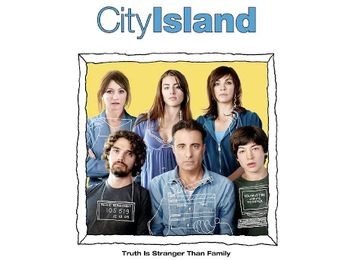
Yes, I’m back. Like a hammy vaudevillian who takes one too many encores thereby dissolving whatever goodwill the audience may have had for him, I’m still onstage. I have my reasons. Chief among them is that “City Island,” the movie that I wrote and directed that stars Andy Garcia and Julianna Margulies, is being released on Blu-ray and DVD on Aug. 24. Having blogged the entire making of the movie and then relived the whole experience in a dozen columns that I wrote for Salon at the time of our theatrical release this past spring, one little extra column to support the DVD release seems criminally modest. Anyway, they asked me to do it so here I am. For my next encore I’ll recite “Gunga Din.”

If you haven’t seen “City Island” yet, then it’s my duty to urge you to find the DVD at once on Amazon or at your local Wal-Mart. And if you saw it and enjoyed it you’ll find many new and interesting features and facts on that little disc. Extras include a charming commentary from me and Andy Garcia (at least it felt charming when we recorded it a few months ago in a studio deep in Hollywood … or was it the lunch afterward at Musso and Frank that left such a charming glow?). There is also a special featurette titled “Dinner With the Rizzos,” which features me and the cast (Andy, Julianna Margulies, Dominik Garcia-Lorido, Steven Strait) discussing the film over some pasta and wine (filmed, I might ad, at 10 one morning — and we really did eat the pasta and drink the wine). There are a handful of deleted scenes as well — a beautiful monologue featuring Andy’s character that was hard as hell to excise, but which simply didn’t fit properly into the finished film, as well as a very funny scene of him undressing in public when he’s on his way to … I’ll leave it at that.

“City Island’s” DVD window comes quite a bit later than most movies released around the same time. We opened in theaters on March 19 of this year and are still out there on a handful of screens, which puts us somewhere in the 24-week range. I don’t think I’m wrong in saying that pretty much every other movie that opened at the same time or shortly thereafter made it to DVD quite a bit sooner, which simply points to the fact that our theatrical run was a longer, healthier one than most. As I write this, the movie continues to open around the world,  recently in London to very good reviews and business. And a reader of my blog who is from Greece just wrote in to say that she was traveling to Athens to see it. Athens.

To say that I’m pleased with everything that happened with the movie is a bit reductive; I truly couldn’t have asked for more from my producers, from our audiences, or from my distributors who stood by the movie, week after week, buying expensive ads and plastering them immodestly with whatever the latest, most attractive critical huzzahs were. (Though at the end of the day, they pretty much all boil down to the same few words, applicable to most any movie in any genre that has been reasonably well reviewed: “Fantastic!”"Compelling!”"Lovely!”"Great performances!”"See it!” There isn’t much reinvention that can be — or need be — done with this odd literary subgenre.)

And so what does this all boil down to for someone like me? I can sum it up in one word: meetings. (Not the kind where we discuss how unmanageable alcohol has made our lives, the kind where we discuss how unmanageable the movie business has made our lives).

Meetings are in many ways as important an element in a life in the movie business as movies themselves. They fill up time, serve to introduce you to other similarly afflicted people, perpetuate the myth that this is a “relationships” business, and in general provide each participant with a little much-needed sociability in a business where too often the most social of events are the most forbidding and least welcoming (a little party called the Oscars springs to mind, but that’s a story for another time).

But meetings are also a barometer of where you are career-wise, an index, as it were, to your heat-rating. You don’t have to be the most popular person in town to get a few meetings, but you do need to have some sort of cool thing going on. Then again, you can be too cool for meetings — actually that should be too “hot” for meetings — unless the meeting is about a very specific project that you’ve been shortlisted on and that your agent and the studio’s business affairs people are already well down the “in talks” road on.

But I digress.

I’ve had plenty of meetings in the past, and am having plenty right now. But the meetings menu had dried up for me in the couple of years prior to “City Island.” I just wasn’t that interesting to most people in Hollywood. They either already knew me or had other things to do that day. Sometimes a meeting was set and then canceled. No problem. Only then the person-who-canceled’s office never bothered to reschedule. Yeah. Well, I grew up around the film business and learned early on to not take it personally. Do your work, be patient and believe in the future. Also use vermouth in your evening martini. It helps. But when the pendulum swings the other way — and it usually does and it currently has for me — go on a big bunch of meetings. Get it done. Meet up.

What are these meetings about?

We discuss what I’m doing and what they’re doing. At their best, these meetings become friendly bull sessions on movies and taste in all things cultural. Recently I had a great time discussing possible remakes with some very smart development execs — we were throwing around titles of mostly forgotten ’50s Cinemascope epics and figuring out how to update them. Will any of this lead to anything? Almost certainly not! But as I said, it gets you out of the house. And who knew that anyone, other than I, thought it was a good idea to remake Cecil B. DeMille’s “The Buccaneer”?

At their most shallow, though, these meetings follow a distressingly similar format: “I liked your movie,” “What are you working on next,” “Here’s what we’re looking to do,” “We’d love to see anything you’re working on.” Not that there’s anything wrong with that; it’s just that you get the distinct impression in many of these low-grade meetings that you’re sitting across from somebody whom you will never again encounter in this lifetime. Which makes you wonder which was the fun part of your day: the meeting, or the wait in the traffic — A.C. and satellite radio blaring — on the way to the meeting?

It suddenly occurred to me, while driving home from a meeting one morning, that I’ve been at this game a long time. I graduated from the AFI (American Film Institute) in 1990. Got an agent right away. Started going on meetings. That was 20 years ago. That first year of meetings was a constant state of exuberance and hubris. I was 25 and, for very little reason indeed, had been anointed the NEXT BIG THING. Why was this? Well, my AFI grad thesis short, “Bronx Cheers,” was nominated for an Academy Award. It’s a good film — not as good as it was 20 years ago, but what is? — but I think the fact that it’s a period piece (Bronx, 1940s) and that we got it all very right production-wise, led the town’s tastemakers to see me as a precocious visualist (which I am not and never was), a kind of budding pretender to the Zemeckisian-Spielbergian throne whose taste seemed both popular and pompous (a very winning combination when marketed correctly). Had I grasped this perception of me at the time, I imagine my career would have looked something like this:

Early to mid-’90s: Some Disney fare, popular box office things.

Late ’90s: Creation (or in on ground floor of) a franchisey thing. Maybe direct the first one and exec-produce the sequels.

Early to mid-2000s: Get into the TV business. Once a successful series or two is launched, I flutter between “godfathering” projects under my banner and directing whatever big-budget star-driven vehicle I choose. One every two years, I should think.

Then, at 45, a moment of clarity comes to me. I can no longer pursue the soulless endeavors that my career has forced me to focus on. I want to make a “little movie” … about a family, say, in the Bronx. No big special effects, no franchise stuff, not even any major “set piece” scenes. Just a movie about life in a middle-class family, the dreams and desires, the thwarted ambitions and the mistakes of the past, and how we are all forced to face who we are at some point in life.

That movie, of course, would have been “City Island.” And I did get to make it. I just skipped the millionaire stuff in between. But screw it. Life is long. Once, many moons ago, Alan Parker (and where the hell is he these days?) came to the AFI and did a seminar. His advice to the students was not to listen to people who say you should start by making money for studios because then “they” will let you make what you want. “If you make them money, they’ll never let you stop,” he said. “Start by making what you really want to make. Get rich later.” Apparently I was listening when he offered up this bit of wisdom and, deplorably, I have spent the last 20 years doing only what I’ve wanted to do.

So in a stunning reversal I’ve decided to finally take life in showbiz seriously (i.e., go to these meetings and keep a straight face) and try — really try — to finally get rich. Well, solvent would be nice! And perhaps find out if there’s a way for my own tastes and talents to merge (profitably I would hope) with the mandates of the mainstream. Look, there are only so many movies made a year and somebody has to direct each one of them. (Unless you’re Steven Soderbergh and you direct every other one of them.) So for my next 20 years I intend to do the very thing that conventional wisdom (not Alan Parker) would say I should have done with my first 20 years. Thus the journey we’ve taken with this film seems to have brought me to the balance point of my professional life; at 45, I have either a different life in front of me, or none at all. Which would you pick?

While you (and I) mull that difficult and ultimately unimportant question, I’d like to reflect on the handful of happiest (and strangest) things that happened as a result of “City Island” having been as well-received over the past six months as it was.

  1.  According to the New York Times, the New York City subway maps were redrawn by the Metropolitan Transit Authority for the first time in years and City Island (the actual place) was, for the first time, actually included on the maps. I take complete credit for that. Wouldn’t you? Article is here.
  2.  The majorly successful author, James Patterson, really, really liked the movie and said so to his billion or so readers on his blog. Click here to read Mr. Patterson’s movie “pick of the week.
  3.  Andy Garcia and his wonderful actress daughter Dominique Garcia-Lorida were nominated for their acting work by the 25th Annual Imagen Awards. Dominique won. I wonder what breakfast was like in that house the next morning.
  4. Variety actually mentioned the word “Oscar” in the same paragraph with “City Island.” “Do some of these titles seem like Oscar long shots? They are. But awards voters last year recognized good work in ‘offbeat’ pics as varied as ‘In the Loop’ and ‘The Messenger,’ so hope springs eternal. It’s definitely worth mentioning some smaller 2010 films that have garnered many fans, like Sony Classics’ ‘Please Give’ and ‘Mother and Child,’ Magnolia’s ‘I Am Love’ and Anchor Bay’s ‘City Island’.”

Finally, there have been a handful of e-mails I’ve received from people who saw the movie and just felt like reaching out and telling me how much they liked it. Some are people who work in the industry, and that’s quite a rare thing as we tend, for some reason, not to tell our creative brethren much of anything. But many are from people across the country who just wanted to see a movie about people, one that made them laugh and then cry, one that inspired them to go back again, this time with a friend or relative. These were the e-mails that I prized the most, for in the not-so-distant past the communication between audience member and filmmaker would or could never have happened.

So that’s where we sit with this particular movie, this “City Island” of ours. I certainly don’t plan to write as extensively about every future movie I make like I did for this one, but this time it felt, for some reason, like a case study should be made. For the kind of movie that is “City Island” might well be an endangered species, one too large to exist in the current jungle, and yet too small to appeal to the new world zoo. Perhaps the future “City Islands” will be home movies, shot by families about their own families and posted on YouTube. And perhaps they’ll be really good! We don’t know where we are in our history. As the Chinese proverb goes “Nobody knows if the world is very old or very young.” Moviemaking as we know it may be a fast-fading trend or still at the dawn of its creation. Should anyone wonder what the journey from script to screen for an independently made movie in the early 21st century was like, they can refer to the pile of material I’ve accumulated and posted over the past two and a half years. Or just go to Salon and breeze through the dozen columns I was honored to have been asked to write this past spring.

Better yet, buy the DVD and watch the movie we made. The end product really is all that counts. That and the meetings that resulted from it, of course.

Blogging “City Island”: Until we meet again!

So long, farewell, adieu and thanks -- and a trove of directorial wisdom from Robert Altman and Billy Wilder

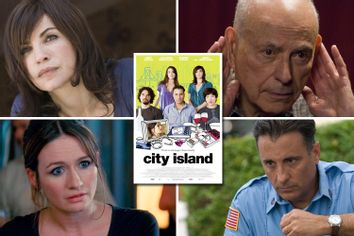
Clockwise from lower left: Emily Mortimer, Julianna Marguiles, Alan Arkin and Andy Garcia in "City Island."

This is my last Salon column. How the hell much more horn-tooting can I really do and still retain the faintest amount of self-respect? I’d like to thank Salon for generously offering me this space and the freedom to write about anything I wanted (anything “City Island”-connected, that is) at pretty much any length I chose. The audience I was able to reach and who were thus able to hear about “City Island” was, of course, tremendous. The movie has expanded weekend after weekend into more cities, and is in the process of becoming a bona fide “sleeper hit” — a movie that the industry naysayers didn’t initially see a lot of value in, but one that has outlasted many of the movies that opened alongside it and is growing stronger with every showing. (You can find updated theater listings on our Facebook page.) The audience — as always — wound up in charge. Our audiences are giving “City Island” a remarkable life that couldn’t have been anticipated.

And I very much appreciated the many comments that came in from the readers — including those of one of my most avid readers, who hates everything about me with the kind of passion that can only be love. The various misadventures that went into the creation of “City Island” are by no means unusual in filmmaking — all movies really are well-prepared accidents. Writing about the making of this film gave me perspective on the craft I’ve chosen to pursue and also made me realize how deeply committed anybody who makes a film must be just to follow it through to some sort of completion.

Whenever I’ve wrapped a film, I find it impossible to watch another movie for a while because all I see is the outside of the frame filled with the set and its complications. Unable to lose myself in the story, I can only identify with the director and the difficulty and tedium he or she must have experienced while shooting their movie. I remember turning on “Oliver” shortly after we wrapped “City Island” and watching the “Consider Yourself” number — normally a delightful cinematic treat. All I could think of was the assistant directors and what they had on their hands: Crowds! Kids! Horses! Playback! Oy. I turned it off, grateful to not be on their set in their shoes. You really do think that you might never do it again. And then a few weeks later, the pain has faded and you’re on the phone to your agent.

Such is the life of a film director.

Ever since I was quite young, I was fascinated by directors — not just by the job but by the peculiar combination of qualities that it takes to make up a personality that can actually handle (with enthusiasm) this taxing, strangely addictive profession. I early on began to identify several traits that seemed to unify most directors: they are punctual, rarely late — even the ones that go over schedule and over budget. They are always the ones that end the conversation at hand — they never stay too long at any party. They fear little socially — confidence is essential for the profession. Yet their sociability is highly selective. The charm can be turned on and off at will. Let’s say that they tend to be emotionally efficient. Charm, anger, aloofness, delicacy, friendliness, ruthlessness … these qualities are available at all times but accessed only in order to achieve the necessary result. Long ago, the New York Times Magazine ran a profile of Mike Nichols and I’ve never forgotten the cover photograph of him. He was snazzily dressed, holding a cigar and smiling. But his eyes told a different story. They clearly showed a man determined to have everything — including that particular photo session — go his way.

Maureen Lambray, in the forward to her wonderful portrait collection “The American Film Directors,” also noted that they “smoke a lot and their eyes are attracted to accidents.” I’m not sure what she means by the last comment but I like its dark implications. As for smoking, yes they did. But they’re all dead now. And I quit years ago.

Being humans who perform a superhuman — or perhaps subhuman — job, directors have advice to give. I always find directorial aphorisms amusing and instructive. So why not close out this column with a few of the choicest of these nuggets I’ve collected over the years?

“The first thing to go is the legs.” So said the late Sydney Pollack. He’s correct. By the end of week two, you’re usually sitting down — often lying down–whenever it’s convenient.

“Just tell Raymond not to work too hard.” This from Robert Altman, who told this to Peter Gallagher. Peter, who appeared in my first movie, “Café Society,” told me one day that he would be having dinner that evening with Altman — long a hero of mine. I asked Peter to ask him for any advice for me on my first movie. The above was his response. I later got to know Altman and he told me: “Listen to everyone’s suggestions and use the good ones, because you’ll get all the credit anyway.” 

From my friend Peter Bogdanovich, when asked by Tom Sizemore, who was playing Pete Rose in a Bogdanovich-directed biopic, how to make such an unlikable character acceptable and interesting: “Where’s the redemption?” asked Sizemore. P.B.’s unruffled answer: “In the close-ups.”

Henry Hathaway on compromise: “If you compromise only once a day on something and your shoot lasts 50 days, that’s 50 fucking compromises in the finished picture.” 

On the other hand my old teacher Eddie Dmytryk said: “In films, compromise is a way of life.”

When I was a student at the American Film Institute, the late Dan Petrie — a marvelous fellow and fine director — did a seminar in which somebody asked him what the most important single element in a film was: acting, script or photography? Without pause, Dan answered: “The budget!”

Then there are the words of the great Josef von Sternberg: “”Man has yet to invent a machine more complicated to build, impossible to use or unpredictable in the quality of its finished product, than the motion picture.”

James Cameron suggests: “Pick up a camera. Shoot something. No matter how small, no matter how cheesy, no matter whether your friends and your sister star in it. Put your name on it as a director. Now you’re a director. Everything after that, you’re just negotiating your budget and your fee.”

“Masterpieces are films that come to you by accident.” From Sidney Lumet.

And from Alfred Hitchcock: “The length of a film should be directly related to the endurance of the human bladder.”

Long ago I noticed that a number of films I liked to watch whenever they played on TV all were written and directed by a man who went by the professional name of Billy instead of “William” and whose last name was Wilder. He wrote with one of two partners — the lawyerly sounding Charles Brackett and a name that always sounded to me like it belonged on an antique computer — “I.A.L. Diamond.” Some of the films were funny, others were dark and brooding. But I could tell early on that they came from the same mind and this, more than anything, made me realize that filmmaking could be a personal art. So why not close with a handful of Billy Wilder quotes as my way of thanking him for having played such a large role in getting me involved with this delightful mess of a profession.

On having relationships with actresses: “I never get involved with my actress. If I have a yen, I fuck the stand-in.”

On subtlety in films: “In movies everything must be made obvious.” (The person he’s talking to:) “But Billy, what about subtleties?” “Make the subtleties obvious also.”

On female characters: “Unless she’s a whore, she’s a bore.”

On Marilyn Monroe’s chronic tardiness: “My Aunt Minnie would always be punctual and never hold up production, but who would pay to see my Aunt Minnie?”

“Now what is it which makes a scene interesting? If you see a man coming through a doorway, it means nothing. If you see him coming through a window — that is at once interesting.”

To Louis B. Mayer, after the great mogul saw Wilder’s masterpiece “Sunset Blvd.” and lambasted the director for having the temerity to have made a movie that was critical of Hollywood: “Fuck you.”

And finally the immortal: “A director must be a policeman, a midwife, a psychoanalyst, a sycophant and a bastard.”

Continue Reading Close

Blogging “City Island”: Anatomy of an indie breakout

Is our little movie just a modest success -- or a big fat Italian-American smash that will play all summer?

arrives to the premiere of the film City Island, in New York, Wednesday, March 10, 2010. (AP Photo/Stuart Ramson)(Credit: Stuart Ramson)

Another picture of mine opened at Radio City Music Hall. It opened quietly with no great beating of drums of baiting of breath … so quietly did the picture open, it failed to merit the usual second-week holdover at the Music Hall: a black mark against future business … The critics, too, were caught with their adjectives down. The Nation pontificated, “entertaining, but to claim any significance for the picture would of course be a mistake.”

The writer is Frank Capra, three-time Oscar-winning filmmaker and truly the first “star” director — his name above the title guaranteed box office business. The movie he’s talking about is “It Happened One Night,” starring Clark Gable and Claudette Colbert. Pray continue, Frank.

Then it happened. Happened all over the country — not in one night, but within a month. People found the film … funnier, much funnier than the usual. But, biggest surprise of all, they could remember in detail a good deal of what went on in the film and found that everybody else did and that it was great fun talking about this and that scene … theaters sold out for weeks and weeks. Critics went back for a second look.

Capra’s classic 1934 screwball comedy did indeed “open quietly” but by the time the next year’s Oscars rolled around, “It Happened One Night” captured all five of the top awards — best actor, best actress, best screenplay, best director and best picture — the only film to claim all five awards for the next 40 years (“One Flew Over the Cuckoo’s Nest” was next). “It Happened One Night” was the first film to have been anointed a “little movie” that had bigger, stronger legs than anyone had initially thought.

The term “sleeper hit” came into existence around this time — though for the life of me I can’t figure out the etymological origins of this phrase. (Perhaps everyone was asleep when the film opened?) One way or another, “It Happened One Night” — a seemingly modest little comedy that tenaciously hung around in theaters until it was an Oscar-winning smash — was the movie that gave birth to the phenomenon knows as “The Little Movie That Could.” Sticky phrase that — too cute by half, as the English would say. But there it is.

It’s a story that people love to hear — proof that the Davids really can beat the Goliaths: movies that are small in scale or budget and yet deliver something audiences seem hungry for — warmth, humor, a glimpse of life and love that somehow feels refreshing and unforced. Audiences make these movies hits by continuing to show up. Certainly “Little Miss Sunshine” was one of these “little movies.” (The studio even self-consciously played up the old catchphrase when Oscar time came around with a new advertisement, showing the iconic VW bus accompanied by the words: “Little Best Picture?”) The gold standard for such movies is, of course, “My Big Fat Greek Wedding” — a movie that most distributors didn’t want, that had no stars in it and that got mediocre reviews across the board … and went on to make $140 million.

Now, I’m not making any such claims for “City Island” … yet. But I do have stats. And stats can be weirdly instructive. Before delving into them, though, a brief recap of the uncertain history of the movie:

  1. Movie finished, submitted to Sundance. While waiting for an answer, we show it to a sales agent who shall remain unnamed …
  2. OK, it was Cinetic. And they pass on the movie, gently telling us that there is no way it is a theatrical film, but that if we’d like to make a nice little DVD deal they’d be happy to introduce us to their nice little DVD division …
  3. Which we pass on, awaiting word from Sundance. Alas, said word turns out to be “No.”
  4. Which makes us wonder about that DVD deal — but only for an instant. For next we show the film to the Tribeca Film Festival, whose programmers love it and schedule it for their festival in the spring where –
  5. Surprise: “City Island” becomes the festival breakout hit, winning the audience award. This should lead to many offers of distribution and in fact does lead to quite a few phone calls from distributors, all of which result in:
  6. Nothing. No offers, no sales. Except for one spunky young company that hangs around patiently waiting for us to finally realize that they truly love the movie and will get behind it. So we sell it to:
  7. Anchor Bay Films and begin the long process of figuring out how to sell and publicize the film and when to release it — which turns out to be …
  8. On March 19 of this year.

Now, when we sold the film to Anchor Bay, it was in a low-impact, open-small-see-what-we’ve-got kind of way. They would open us in two theaters — New York and L.A. — with some good print advertising and as much on-air stomping as the cast would agree to do (I was fortunate to have a cast full of supportive people). Andy Garcia pledged and delivered as many television appearances as they could book for him. And Julianna Margulies, despite her grueling television schedule with “The Good Wife,” committed to doing as much big-ticket stuff as she could fit in. Thanks to that pledge and the enormous popularity of her TV show (and her Golden Globe/Emmy wins), she wound up doing David Letterman’s show the week prior to our opening — a major score.

So what happened on opening weekend? On Friday morning it was hard to guess the direction the wind was blowing. The reviews were positive — but mixed-positive might be a more accurate assessment. Two big guns — the Los Angeles Times and New York Times — came out with “we didn’t love it but we didn’t hate it” kinds of reviews. I was in L.A., where the crowd at the Landmark seemed pretty good. In New York, my producer Lauren Versel was haunting the Angelika, where the big opening weekend attraction clearly was “Greenberg.”

You might as well know the truth: By the end of your very first Friday in theaters, your distributors will have a pretty accurate picture of what awaits your movie. Even though Saturday is traditionally a much stronger movie day, projections for the weekend can quite accurately be made without the Saturday figures, based on Friday’s performance. You can’t let this freak you out. But it will if you think about it. Eight years spent getting something made and it gets all of five (or four) showings before its fate is sealed?

Well, you opted for showbiz. That’s the story.

On Saturday morning, March 20, we got news from Anchor Bay Films: 

We’re off to a solid start.

Well, that was a relief. On Saturday the Landmark theaters were quite full — I was pacing the halls and bugging the very nice ticket-takers for looks at their seating charts. Lauren was up to the same in New York and called me from outside the theater where there was a line to buy tickets. The Angelika shows five movies at a time, so it’s impossible to know what they’re on line for. That is, unless you canvass the crowd as she did. Many were on line for “Greenberg,” which was selling out. So Lauren simply started telling people to see “City Island” instead. On Monday morning, we heard the following from Anchor Bay Films:

We had a very good opening. And we’re well-positioned for next weekend. 

First bullet dodged. Our reviews were mostly positive and the studio liked the first figures that came back. But you can never relax in this business and the key was in how well we held up the following weekend. We always knew we were a “word of mouth” movie more than anything — reviews and publicity are only going to take a movie like ours so far. So we awaited the following weekend — we were scheduled to expand to another eight cities — with some trepidation.

I won’t take you through the blow-by-blow of the next weekend — there was rain, signage issues, other movies opening, etc. But ultimately there was good news on the report that arrived after the second weekend: We were up on Saturday from the previous day. That suggested people were telling their friends, “Go see this movie I just saw.”

The trades — Variety and the Hollywood Reporter — started describing the performance of our “little movie” as “sturdy” and “impressive.” Great. But what does all this mean? Trends are what these projections are all about. And the trend we were seeing was that our movie seemed to be gaining momentum, not losing it. In addition, the “word of mouth campaign” seemed to be working.

On the fourth weekend we were open, Anchor Bay told us that we were No. 1 or No. 2 in many of our complexes, and we were adding screens.

The fact that the screens were going up was great. But more significant were the locations where the film seemed to be performing. The fact that a movie about a Bronx-based, Italian-American family was achieving No. 1 status in Denver, Houston, Atlanta and Seattle seemed to disprove one of the many myths that early on clung to our movie and made selling it difficult: that it was a movie that would only perform in New York, to New York audiences. If the movie could cross urban/cultural barriers and speak to audiences in places that know not from the San Gennaro Festival (New York’s ultimate Italian extravaganza, given every year on the streets of the Lower East Side), then it might in fact play in the so-called hinterlands, the land of the ubiquitous and much-desired “multiplex audience.”

The growing popularity of the movie and its ability to reach audiences was socked home on the following weekend, when many of our screens gained audience from the previous week.

And that morning, indieWIRE reported the following:

Anchor Bay Films’ “City Island” — starring Andy Garcia and Julianna Margulies — continued to be an under-the-radar success story. Going from 45 to 57 screens, the film grossed $259,000. That made for a 30% increase, seeing its per-theater average actually rise despite a higher screen count ($4,544 vs. $4,422 last weekend). After five weeks, “Island” has taken in $842,858, and should soon become the first $1 million grosser in young Anchor Bay Films’ history.

Result? Anchor Bay ordered up a significant increase in prints — we will be rolling out to several hundred theaters over the course of the next few weeks.

Will it work? Will people continue to attend the movie and tell their friends? Will summertime’s blockbusters come and handily displace us once and for all? Or will our “little movie” prove that it “can” by attracting audiences consistently, proving to be an antidote to high-octane summer entertainment?

Certainly the PG-13 rating that we fought hard to achieve is a big help. But not for the reasons you may think. It’s not so much a movie that chases after a youthful audience — though people under 18 can totally relate to the story of screwed-up family dynamics. The PG-13 is very much for the older crowd — the seniors who are hesitant to see movies that are rated R for fear of too much violence. That this demographic is coming out to see the movie was demonstrated by a stat showing how strong the “early-bird” showings were — the 1 p.m. shows that are usually sparsely populated. Our early shows are frequently as strong — or almost as strong — as the “after work” screenings. (Yesterday I schlepped out to the theater we’re showing at in Encino — the ‘burbiest of L.A. ‘burbs — and peeked in at the 1:20 crowd: The theater was three-quarters full. And there were plenty of walkers in the aisles. God bless the seniors … and, for that matter, the unemployed. )

So those are the stats that currently define the course “City Island” is on. As a result of those stats, more and more exhibitors are calling us and wanting to book the film. Anchor Bay Films is doing a careful job of determining where and how the film will play best so as not to burst the bubble that appears to be growing larger with each weekend.

But there’s another way to measure where the film is going, one that I never tire of. It involves seeing the film in a crowded theater and listening to the audience react. Starting with the first screening of the film last year at Tribeca, we began to see how engaged the audience was with our story. The laughs were louder than we expected, and there is a scene — I won’t say which — that always provokes applause (sometimes a lot, sometimes a little, but always some measurable amount of applause).

Something else happens that we couldn’t have planned on: Audiences become wrapped up enough in the story that they start to talk back to the screen at crucial moments. This “breaking the fourth wall” thing is always a fun part of the moviegoing experience, but is usually reserved for movies that encourage such behavior: I always enjoyed seeing the “Die Hard” movies for just that purpose — it’s the feeling of uninhibited release, of being part of a crowd that is on the same roller coaster ride. But our movie is no roller coaster ride. So why do they react so openly, so verbally, to the story’s twists and turns?

I don’t know. And in a sense I don’t want to. It’s the magical element in filmmaking that can never be defined or counted on. But I do know one thing: That transportive experience — where you, as an audience member, become so wrapped up in the movie that you forget you’re in a public place and instead commune with the movie as if you’re a part of it — is exactly what makes you tell your friends: See the film while it’s in theaters.

Look — the fate of “City Island” remains to be seen. “My Big Fat Greek wedding” took months to gradually climb to 1,000 screens … and then just sat there, attracting moviegoers with the ease of a honeycomb attracting bees. That movie is, of course, a one-of-a-kind phenomenon. On the other hand, every phenomenon is a one-of-a-kind thing … until it happens a second time. For there is truly no rule in filmmaking that is constant. Let Frank Capra have the last word on that subject:

The only rule in filmmaking is that there are no rules, and the only prediction is that all predictions are by guess and by God until the film plays in theaters. And who would have it any other way? Uncertainty is the fun of it all: the door that can’t be locked by film rajahs against adventuresome newcomers. 

Continue Reading Close

Blogging “City Island”: My movie’s a hit! Why am I up all night?

So "City Island" is a sleeper indie success. It's exciting! But I'm possessed by incurable blog fever

The poster for "City Island."

So what’s left to blog about?

We sit at the beginning of our fifth weekend. “City Island” is continuing a slow and effective rollout around the country. Our per-screen averages are extremely encouraging — the trades like using the word “sturdy” — and our reviews are for the most part excellent. Rotten Tomatoes has us at an 85 percent rating. It seems like “City Island” is, in fact, that rare thing In today’s marketplace: an indie film that is enjoying a measure of mainstream success and has done so on its own independent terms: I got to make the film I wanted to make with no interference. Once it was done we offered it up for sale and it was purchased — as is. (Ten years ago I was editing my film “Two Family House” in a post facility in downtown Manhattan while across the hall — in a room choked by the stench of Marlboro Lights — Harvey Weinstein sat furiously destroying a film he had purchased the previous year. I believe the film was called “B Monkey”; hence the moniker “Harvey Scissorhands”). Once the movie was purchased, the advertising campaign was designed and the input and comments of the filmmakers were welcomed and listened to.

And now the film has been sent off on its own — like a kid going off to sleepover camp or boarding school. You’re on your own, kid. Don’t make me look bad …

But the question remains: What’s left to blog about?

How about blogging?

Why do we do it? I’ve said before that I feel blogging is truly the freest form of writing that we have — entirely personal, about anything you wish it to be about, with no editorial supervision required or expected — and one that can actually reach an audience.

But it also comes without a paycheck. Indeed, blogging wouldn’t be blogging if remuneration were involved. It would be something else … something more professional, more polished, more journalistic. Except for one thing: Bloggers frequently outshine the “professionals” at their game.

For instance, my favorite film-history blogger, the Self-Styled Siren, is infinitely more sophisticated in her reflections on old Hollywood cinema then, say, your average film studies dude (or dudette) teaching a class at the local college campus. As for jazz history, Marc Myers’ JazzWax blog is worlds beyond anything the ubiquitous Leonard Feather or the unfortunate James Lincoln Collier ever brought to the jazz history table.

Yet they do it out of love and not as a career.

In my case, you might think the blog bit was simple self-promotion. But as I mentioned a few columns ago, Movies ‘Til Dawn began as a way to make sense of the amount of time I was losing every day searching out old film clips on YouTube. Indeed, blogging about old movies and old music was a way for me to park excess information I’d acquired over the years into a kind of viral trimbin — said material being knowledge that I was never able to put to any practical use. I don’t know what, if any, value there was to others in my early film/music history posts; the value belonged to me. The burden of stuff stuck in my brain was alleviated. And it’s nice to see your words in print as well.

Many people begin blogs with no particular aim in mind at all. And as “Julie & Julia” has demonstrated, a little blog can be a money-earning kind of thing — just catch the right publishing wave and land on the shores of Nora Ephron-ville. Then there’s the whole “Will film bloggers overtake the guys who get paid for it?” question. Answer: Let’s hope so! Will this be the death of “true film criticism,” as A.O. (“they call me Tony”) Scott bemoaned in his recent whiny New York Times piece? Probably. If the case of Variety tossing its major film critic Todd McCarthy out is any evidence (and it’s not just McCarthy — it’s the entire post that is finito), it appears that the wind has shifted in favor of the blogosphere.

Still, the fact remains that choosing to blog regularly is a mad pursuit. If being a writer means, in William Goldman’s words, “always having homework,” then starting a blog is akin to having started your own school and made yourself into its sole teacher and student; you’ve created the workload and assigned it to yourself. If you fail (i.e., don’t continue blogging) you’ve earned a very public “F.” Because if you’ve started a blog and built any sort of an audience at all, you risk true shame and embarrassment if you should choose to abandon it. These blogs sit there, you see, on the Internet for God knows how long, floating like a “dead cloud” (a post-nuclear invention of Martin Amis’ in “London Fields” — dreadful image …) Your failure to finish what you begin — a rather common trait in so many of us in life but one that still carries the sting of a childhood reprimand — is there for all to see: Witness me, says the abandoned blog, vanity project of my thwarted ego, one more display of why I’m who I am and not, say, Rupert or Redstone or some other universe master. The only thing you ever finish, screams your mother-figure from offstage, is a roll of toilet paper!

But bloggers persist and this makes other bloggers wonder about each other. I’ve noticed over the past few years of my blog-life that to meet a fellow blogger is to exchange a look that is usually shared by surgeons, cops and movie directors: You do this too? How did we choose this path? Why can’t we quit? Do you drink a lot?

You see, the blog owns you at some point. I’d love to come out and play … but I’ve got my blog.

A little while ago, in an effort to create some coherence and solidarity amongst bloggers, a chain interview for bloggers was developed and unleashed amid the ether. I was tagged by one of my faithful readers, Marianna from Greece — herself a blogger  – to participate. The idea being that, as a result, a fellow blogger will read the interview and then must make contact and ask me to interview them. Result: A true blogging circle-jerk. A Web full of bloggers interviewing other bloggers. Is this hell?

Actually it was quite fun. And since learning to participate in group activities — never a strong suit of mine as a child — is something I’m trying to get better at in middle age, I agreed wholeheartedly to participate. Below are the rules as they were sent to me:

1. Send me an e-mail or comment saying “Interview me.”

2. Then five questions will be e-mailed to you (questions I choose to ask you).

3. Answer them on your blog.

4. Do not forget to repost the rules along with your answers and offer to interview any other blogger who e-mails you or comments that they wish to be interviewed.

I went ahead and did it. And I hereby reprint my “self-interview.” It’s not bad, really, and of course I then sent the request on to another blogger. I offer you the interview and — if you’re a blogger and haven’t done this yet — the opportunity to “pass it forward.”

If you had to choose one song to be in your life’s soundtrack which one would it be and why?

Why one? I listen to music almost constantly — therefore picking one song would constitute a form of torture as it would be playing in constant rotation, driving me mad. (Apropos of this: Gore Vidal once said, “What is a long life but a nightmare of endless repetition?”) But if I were to pick a song which I considered the best, most poignant accompaniment to how I picture my own existence it would be the Art Tatum-Ben Webster recording of “All The Things You Are” by Jerome Kern and Oscar Hammerstein.

If you had to distinguish one moment, a moment you hold close to your heart, from your life so far … which one would it be?

So many come to mind of course — I’ve led a full and fortunate existence. But it would, I think, come down to any random moment I have with my son.

Why?

Because the most seemingly inconsequential moments with your kid are somehow to me the most delightful and profound ones. I’m talking about the moments where suddenly the miracle of their existence strikes you with full force — and usually they’re doing nothing specifically wonderful at that moment, beyond of course existing.

Let me add one more specific moment that I hold seriously close to my heart: Being in my old apartment in Greenwich Village one night and watching on TV as it was announced that my film “Two Family House” won the big audience prize at the Sundance Film Festival. The joy was not just in nabbing the prize; it was in not being there in person to collect it, a fact the New York Times commented upon which made me seem (and feel) deeply cool.

In the movie “S1m0ne” Al Pacino plays a producer who finds working with a digitally-made actress easier and better than working with a real-life one. Do you feel that nowadays technology and the, so called, digital age have the effect of making humans less and less needed?

No. Though I fit the classic profile of a Luddite, I am in fact enthused and enchanted with the so-called “digital age” and the various ways in which it is making precisely what I’m interested in more available and achievable. All progress comes with a cost of course — hasn’t the automobile, so necessary in our lives, completely altered and uglified the world’s landscapes? On the other hand, the car is a brilliant invention and many automobiles are even works of art. (Though none, I daresay, are being currently manufactured.) Even if we are growing more isolated as a result of our much-vaunted “interconnectivity,” humans will always be needed to use the technology that develops. Digital media — whatever purpose it may be serving — is ultimately a consumer tool, and the consumer will always be a human. And there are certain actors who I would have preferred working with a digital version of.

Is there something in your line of work that you saw and said “Oh, I wish I had done that!”? Did you admire anything to the point of healthy jealousy?

A great many things provoke the “healthy jealousy” you speak of, though I prefer to think of it as “honest envy.” When I was a kid, the fight scene in the movie “Shane” made me want to be George Stevens, the director who staged it. (Funny that I’ve never shot anything remotely resembling that — although there is a pretty funny fight scene in “The Thing About My Folks.”) Other movies that made me want to have made them: “All That Jazz,” “Sunset Blvd.,” “The Sweet Smell of Success” and “The Awful Truth.” Musically, anytime I hear Art Tatum or Oscar Peterson play the piano, it makes me want to quit everything else I’m doing and pursue that sort of excellence single-mindedly. And then there are great tennis players. I’m not one. But something about that particular sport’s champions fills me with awe and envy. Perhaps it’s because they are alone with their technique and not part of a team. They have only themselves to rely upon, which I somehow relate to. Certainly as a pianist it makes sense to me; but even in filmmaking, though it is a highly collaborative endeavor, the director is in an extremely lonely position. The final judgments are yours; they may not be what others want so you must rely on your instinct. So often on a crowded set, you feel that sense of isolation that I can only imagine a tennis player feels when staring at his or her opponent.

If you were given the opportunity to go back in time and change something from your past, would you choose to do anything differently or not? And why?

I can honestly say no to this since I’ve come to believe (just in the last few years) that everything follows a pattern that was established long ago, in some forgotten “war room” where our lives are doped out before we live them. We are merely actors — not the scriptwriters. Apropos of this, I will close by quoting a line from Steven Soderbergh’s film “Che,” a line that has had a profound impact on me:

“Live your life as if you’ve already died.”


Continue Reading Close

Blogging “City Island”: My fat-chick manifesto

Some men prefer super-size women to thin ones. Might be disturbing to you, but it's true!

Carrie Baker Reynolds and Ezra Miller in "City Island."

OK, so what’s up with my thing for fat chicks?

I’m sorry. Did I really say that? What I meant to say was: How did I get interested in exploring the cultural divide that exists between the unhappy anorexic woman and the happy obese woman?

Or: What’s up with me and the fat chicks?

First of all, if you haven’t yet seen my film “City Island” (and you may, at any of these theater locations as the movie expands out this weekend) you may not know why this question is even being asked. The reason is that a subplot involves the Rizzo family’s youngest son (the brilliant Ezra Miller) who is secretly ashamed of his adolescent yearning for the woman next door, an Internet “goddess” named Denise who is 400 pounds and a proud advocate of BBWs (“big, beautiful women for those of you new to this” as she explains on her website, Feeding Denise). Now, I wouldn’t say that the movie is about obese people any more than I would say that it’s about Italian people. But both groups are represented in the — ahem — body of the movie, and one of the most frequently asked question I get at Q&As is: “What’s with you and the fat chick stuff?” Only people don’t come out and say it quite that way. Instead they say:

“Uh … the section of the film with the … larger woman … and the boy who um … likes her … (pause, then) … um — why?”

To which I often feel like answering: “Why not?” But instead I launch into a completely sincere (but just slightly correct explanation) which goes something like this: the obese are the last openly discriminated-against group in our country. In looking for a secret that the young man can be ashamed to keep, I continually ran up against the “been there seen that” problem: What secrets do today’s youth actually keep?

But the existence of the BBW community — its members and their admirers — is still taboo. The notion that men might prefer fat women to thin ones remains disturbing and — to many — not quite believable. But it’s the truth. Witness the many “fat acceptance” Web sites, dating services and photo galleries you will find on the Internet. Indeed the prevalence of these sites and the pride expressed within them might suggest that the whole “fat people are gross” epidemic is as dead and gone as the “gay people are gay because they had a bad experience with the opposite sex” thing. (Something I was shamefully told in my long-ago youth.)

But it is not so. The obese continue to get passed over for jobs and ridiculed in public for their “defect,” which is widely presumed to be a moral failing. “Why do they weigh so much?” “Why don’t they diet?” “Aren’t they disgusted with themselves?” (Does this sound something like: “Why can’t he/she settle down with a nice girl/guy?”) And alas the answer to the question about self-disgust is often: Yes, the supersized are often filled with shame, self-hatred and self-disgust. How could they not be, given the emphasis we as a society put on being skinny?

On the other hand, there is a sizable (right?) community of obese people who are out in the world proudly proclaiming their right to look like they look. It seems to me that the “fat acceptance community” grew in tandem with the onslaught of the Internet. I think this occurred largely because for the first time the previously hidden, mostly ashamed admirers of super-sized people began to come out of the closet. Once people saw that they were not alone in finding fat people attractive, a cult developed — or a sub-cult, I suppose. Nonetheless, the members began to celebrate their bodies and their selves, giving parties and inviting people to shuck off the sad old notion that women need to be little tiny things to be attractive to men.

How I arrived at this particular secret for the boy to keep and why I inserted it into my movie is the question I’m really being asked by the puzzled ones in the audience. The answer can be found — as so many things can be found — on the Internet.

Do you remember the first wave of the Internet and the pre-Google search engine? The bizarre, hitherto-unknown freedom that came with simply typing in groups of words together and seeing what the “World Wide Web” was going to spit back at you? Much time was spent simply exploring the inner reaches of the subconscious: If I add this word and this thought to that name and this fantasy, what will appear?

Oftentimes not much. But sometimes the frontier opened up onto unexpected vistas.

In my case, it was my extreme and previously unexplored fondness for Elizabeth Taylor, circa late-1970s, that led me to search out pix of fat chicks. Liz, you may remember, had gained a great deal of weight and was the subject of nonstop ridicule from Joan Rivers — then guest hosting “The Tonight Show” more often than Johnny Carson was hosting it. (Best Joan/Liz joke I can remember: “What does Liz Taylor say to the microwave while its heating her food? ‘Hurry! Hurry!’” Second-best Liz/Joan joke: “Liz Taylor is so fat, her thighs are going condo.” Enough.) Liz, the former glam queen gone chicken-bone-choking, fat middle-aged Washington matron, was a symbol of end-of-a-Hollywood-era decadence. If Liz could look like most other women her age, what were we to believe in?

Yet I — pre-adolescent and still pre-sexual — found something lovely and comforting in the flabby, middle-aged Liz. She seemed unashamed, slightly drunk and still quite saucy. When I watched her in, say, “Cat on a Hot Tin Roof” I felt let down; why, I wondered, was she so thin? Sickness? On the other hand, “Who’s Afraid of Virginia Woolf” (the true beginning of E.T.’s zaftig period) showed me the Liz that I yearned for: slightly frowsy, not delicate, in full ownership of her outlandishly elaborate body. When she stood on the stairs — freshly dressed in her clingiest and least appropriate attire — and casts her dark gaze upon George Segal, I fully understood her allure. It wasn’t about the body. It was about pride.

A formula developed in my mind: Beauty is confidence, confidence is beauty. Liz looking at George Segal was a woman full of confidence in her soon-to-be-accomplished conquest. It was whiny, sniveling Sandy Dennis — too confident of her marriage vows and not at all owning her underwhelming physical and psychic presence — who was going to stand by, helplessly, and watch as her husband was devoured by the plus-sized dragon princess.

And it served Sandy Dennis right. Skinny-ass white bitch.

Seeking clues (and pictures, natch) to this young obsession of mine online led me to discover Dimensions Magazine, an entirely tasteful (in other words, not “Fat Chicks and Plumpers”) celebration of the large female form. And this wasn’t about Liz Taylor-sized fat chicks. This was double all that. Stories, letters and information alternated in Dimensions with photos, paintings and paeans of praise to the full-figured. Strange new concepts were introduced to me through its pages — for instance that there were groups designated as “feeders” and “feedees,” i.e., those who derived erotic satisfaction from fattening another person and those who got satisfaction from being fattened. Well, this wasn’t something that spoke to me, necessarily, but I was suddenly aware of a culture of body worship that seemed incredibly healthy — not in the conventional sense, perhaps, but in the most important sense: It was a culture that celebrated freedom from shame and delight in all things sensuous. Once again, beauty equaled confidence. And vice versa.

And then I had this screenplay to write and needed a secret for the kid to have and so I plugged in the fat-chick stuff. End of story. Except, surprise — I got to make the film. And while it’s easy to envision things from the safety of your office/home/wherever you write, turning them into a reality is sometimes more daunting then you reasonably could expect. One of the first challenges in casting “City Island” was finding the right person to play Denise, our proud BBW. I knew the type of woman it was — I just didn’t know any actresses who were that size. Why not? Because the whole notion of being a professional actress has to do with looking like the way society wants you to look. There are fat actors, of course, and they are either character stars or bit players who get a quick laugh based on their massive size.

But go and find a woman who is beautiful, proud, can act and is double the size of most people who you normally consider overweight? We tried. And we failed.

The first reason being that our casting breakdown people didn’t seem to quite comprehend the severity of our desire for fatness. When I wrote the word “obese” in my script, it somehow got translated to “overweight” to the breakdown service. As a result, we were deluged with photos of women who were, like, 170 pounds. As I poured through them in dismay, I realized that a Hollywood casting director’s idea of obese and what I was writing about were about 200 pounds apart. When I told them that I needed to see people much, MUCH larger, they answered:

“Oh. But you don’t really want to cast somebody that fat, do you?”

To which my answer became a defiant: “Fatter.”

It wasn’t easy. The women who were that size simply weren’t professional actors. My producers and I went to a “goddess” party — a wonderfully over-the-top experience — where we met and mingled with many fantastically proud, sexily got-up supersized women. They’d been told what we were doing and some acted interested in being in a movie. But in the morning, nothing much transpired. Maybe they didn’t really trust us.

And then I got a call from our casting director saying that she’d met, interviewed and pre-screened a woman who she thought might be “just who we were looking for.” She was a professionally trained theater actress from the South named Carrie Baker Reynolds. She lived in New York, found out about the role and came in and gave a great reading.

I was happy, of course, to hear about this — we were only a couple of weeks away from starting and had still had no luck casting Denise. But my first response was cautious.

“Is she just heavy? Or is she really big?” I asked.

“Really big. And very beautiful.”

Hmm. Beauty is confidence, confidence is beauty.

“Can she really act?”

“Yes. And something more …”

Which was:

“She’s actually the woman you wrote — Denise. A totally life-loving, confident, beautiful woman who’s comfortable with herself and just wants to be accepted for who she is.”

Carrie Baker Reynolds is every one of those things and more. Her love for the role and delight that I even wanted to go to this place where many have not yet ventured, created an incredibly strong and personal bond between us. One that has given her even more confidence than she already has (she really wasn’t in need of much more) but which gave me the greatest gift — that of discovering that what I thought was interesting long ago, in those early frontier days of Internet lurking, was in fact true: the fat acceptance culture is a beautiful, bountiful and entirely necessary thing.

It may still take time for others — not just the skinny but the morally undernourished as well — to fully get on board. Although most people like the Denise subplot, I’ve had a handful of uncomfortable reactions. Strangely they mostly come from women between the ages of 30 and 45 who are really, really thin. Could it be that we are spitting on their religion? Most shamefully, the New York Times — of all places — took the opportunity to snark a bit in discussing the rating of the film: the PG-13, they warned, was in part for “chubby chasing” — a term that will certainly be banished one day to the graveyard of inappropriate prejudicial remarks.

I make no claims for having contributed anything very lasting to social progress — or perhaps just a small claim. Maybe the supersized will begin to appear in movies and literature not as object lessons in what not to become or as simple comic relief, but as people who are simply that … people. Erasing prejudice is a tedious and sadly directionless pursuit. But it does seem to happen eventually.

Who knows? Maybe one day a fat chick will become president.

Continue Reading Close

Blogging “City Island”: Why I did it

I wanted to demystify the filmmaking process for Internet audiences, but financiers flipped. Who was right?

Andy Garcia in "City Island."

From the beginning of its production, “City Island” was positioned by me as a movie based in the era of information democracy. It’s a movie about ordinary (sort of) everyday people and their trials and travails. I wanted the act of making it to feel open and ordinary as well. Hence my decision to appeal to an Internet audience by demystifying the process of filmmaking. I decided to blog the behind-the-scenes making of the film, posting outtakes as well as on-set clips every day and discussing the progress of the film as it was being made.

I don’t think I’m the first person to have done this — at least I hope not. I’ve heard that Peter Jackson posted clips of “Lord of the Rings” as he was shooting. Perhaps we were the first relatively mainstream movie — in other words with a cast of actors who you’ve heard of — to have opened the doors to the set quite so thoroughly. In any event, the immediate effect was for the hits on my little blog, to double overnight. People loved seeing the filmmaking process exposed! And why not? Movies are over a century old and by now most of us have some idea of what goes into making them. Seeing the process unfold on a daily basis not only fills in the gaps of this fascinating process, it allows you to feel like part of the filmmaking family. And If you prefer to experience the finished movie itself and nothing else, you’re free not to look at the blog. Right? So, I reasoned, there was little to be lost — the clips I posted were short and mostly funny goofs. The interest that the “film diary” was provoking naturally seemed good for the movie’s profile. Who could begrudge a little advance publicity?

Still, a week or so into shooting, somebody did. I got a rather stern e-mail (and a series of worried calls from my producers) saying that one of the financing entities behind the movie had stumbled upon my blog and weren’t at all happy with what I was doing. I was told in no uncertain terms to take down the outtake clips from YouTube and not post any more “raw” footage. I was harming the potential of the film by exposing the “mistakes” we were making along the way. And, of course, piracy was a constant threat and here I was, inviting the pirates into our cozy little den.

My reaction? Fear and shame. Suddenly I was in sixth grade again.

I felt the terror of having made the authorities angry and I quickly pleaded for forgiveness. After all, this particular authority came with money behind it. And besides I was super-busy making a movie, so who had time to argue? I said I would take down the clips, cease and desist, and just go ahead and shoot our little old movie — no behind-the-scenes blogging required. I posted a short item telling readers that we would no longer be showing the outtakes, but that I would continue to share what information I could on the progress of the movie.

To my surprise we got quite a few comments — about 10, as I recall — expressing some indignation. Well, what are you gonna do? Move on.

And then I got to thinking. Maybe the financiers were right, maybe they weren’t. Why not discuss the whole issue on the blog? Perhaps my audience might chime in with their opinions. Even though conventional wisdom would say that continuing the argument in print could be construed as controversial and provocative, it would be done on my blog, not in a public newspaper. And what is a blog but literally a web-log, a diary of sorts, something that can be as personal or public, as private or demonstrative as the blogger chooses it to be. Only the blogger controls the blog. It is, truly, the freest form of writing we have yet developed. No editors, no financiers, no guidelines … but, an audience.

On our next weekend off, I sat down and banged out a blog entry called: “Information Democracy: or How I Learned to Stop Worrying and Love YouTube.” Underneath a massive still of Peter Sellers as Dr. Strangelove, I posted the following piece:

Last week I was asked by one of the production entities helping to finance my film “City Island” to stop posting clips of the dailies. Actually I wasn’t asked to do so, I was ordered to do so. Being in mid-filming and this not exactly being a priority of my day, I told them it was not a problem. So the clips came down.

But now I wonder: Why did they ask me to do this? And what message does my compliance with their request actually send? Having had a few days to think this one over, I’m gradually coming to some conclusions and am ultimately glad that this controversy — minor though it is — has reared its head. I was especially interested to see how many readers of the blog wrote in protesting the removal of the clips. This, more than anything, told me that I was on to something with the whole notion of blogging a film production and sharing the experience as well as sharing the bits of the mosaic — the “dailies” — that go into the end result.

So, in order of the above questions. First: They asked me to remove the clips because of “piracy” issues and fear that the small amounts of the film that I’m sharing could possibly appear to other buyers as “unpolished” or “unrepresentative” of what the final product will be. OK. But what is piracy? It’s taking something for free that should have a monetary value and profiting off it. So my question is: What could possibly be done with any of the dailies clips I’ve posted that would provide monetary gain? Would anybody pay cash for a 10- to 30-second clip of my film? Clearly the answer to this is no. As to how representative of the final product the dailies are, I argue that they are both completely unrepresentative while at the same time super-representative in their rawness and thus a good deal more tantalizing than, say, a slick little trailer. When I show you a piece of my dailies (and believe me I’m like all good directors — I ain’t showing nothing that I’m not proud of) I’m showing you part of the process we go through in achieving the end result. One of the reasons outtakes are so fascinating and elucidating (and I’m a big fan of DVD-extra outtakes for old movies — check out the new “My Man Godfrey” edition with some fine Carole Lombard and William Powell outtakes) is that they provide a view of the meta-film, the other movie that’s happening while the end result is achieved. Robert Altman used to insist that the cast and crew watch the dailies together at the end of the day because, he said, “the real movie is in the dailies.” (This was also Altman’s way of encouraging his actors to improvise and then feeling free to discard 90 percent of it without guilt since they’d already seen and admired their work in the dailies.) Dailies are an entirely different view of the movie that will eventually emerge. I think it’s important and not at all harmful to let people in on how the process works. That old “don’t show the magic” line feels last-century to me. By now, the bizarre and beautiful process that moviemaking is is known to many, many people. And if it’s not, I think it’s my right to share the process. What are you going to do? Pirate the process?

As to what message I’m sending by complying with the request to not show the dailies, clearly I’m agreeing that the last century and its thinking is still correct, that the world order is unchanged, that 19th- and 20th-century notions of ownership and control (as well as 19th- and 20th-century fears) are still wagging the dog. But let’s face it: Even large corporations realize that in the current world, any viral presence is a help, not a hindrance. Clips of movies on YouTube are a non-starter in terms of harming people’s copyrights. Clips are clips. Not movies. They are their to educate you on the existence of the finished product, not rob you of the opportunity to see it.

A final word about this subject for now. We live in the age of branding. If you’re an artist and haven’t found a brand for yourself, chances are you’re marching uphill on an increasingly lonely trip. Nothing I do is “brandable.” The movies that I make, and the movies that I watch, are specialty items. The music that I love — jazz — is also now considered “boutique.” (That means unpopular to large masses.) With the advent of YouTube, the cultural treasures that I’ve clung too ever since I was a kid are now available to share with others and — I hope — are being given new life because of this availability. Hence this blog — which I started in order to justify the hours I was spending on YouTube watching clips of forgotten movies and dead musicians. The glory of the information democracy is in the ability to reinterpret the very existence of this material without profit being an issue. Thus people post short brilliant clips of music or dance from old two-hour movies that are simply not movies that most people would watch in their entirety anymore. Perhaps the sum of the parts of “Down Argentine Way” no longer speaks to many people … but the parts certainly do. The numbers featuring the fabulous Nicholas Brothers deserve to stand on their own no matter the dubious value of the rest of the structure that was initially there to support them.

Similarly, I don’t know how many people will see “City Island” when it’s done. Plenty I hope. Some readers of this blog will probably seek it out and some may have, by the time of its release, moved on. But if right now people are interested in the story of how a movie is made, that part of the process should be shared should I choose to do so. And posting information about the film — production reports, call sheets, dailies — can’t, I believe, truly do any harm and probably can do some good in terms of letting people know that we’re out here, creating this particular film. I’m not sure that removing the clips was the right decision.

The response was instantaneous. I usually averaged anywhere from three to eight comments per post. The next day — even before the next day — there were 20 comments posted. Some were understanding of the financiers’ postion. Some were over the top angry at having had “their” dailies removed. (I rather liked this — it strengthened my feeling that “City Island” was a movie that belonged to “the people.”)

But most of the comments were philosophical and articulate and demonstrated a clear understanding of the reality of 21st-century communication: they seemed to say that an opportunity was being lost, one that was both helpful to the movie and positive to those who were interested in the film’s “private” life. Certainly none of the material was grossly misrepresentative of the work in progress. And how many DVD extras are we all used to seeing these days, and what are those extras usually composed of? Deleted scenes and goofy outtakes.

Further, most of the comments indicated a genuine goodwill toward our endeavor, a delight that we had invited strangers into a usually private, mysterious process and welcomed them without the normal, paranoid reserve.

It was, really, a karma thing. As I said, it always felt to me good with this particular project to project an air of brotherhood, or solidarity. We were all making this movie together.

And to their credit, the production company that objected heard the crowd, saw the writing on the wall. Suddenly, we were thrust into the last scene of Frank Capra and Robert Riskin’s “Meet John Doe” — where the people dictate policy and save the life of the man (Gary Cooper, natch) who they’ve invested their faith in, who represents their true interests. “There’s your answer,” says a scrappy little fellow to Edward Arnold. “The people!”

The company who’d objected to the clips now admitted that perhaps they’d been a little — sudden in their opinion. Perhaps they’d simply been surprised at what they’d seen and unprepared for such a bold experiment. I could put the clips back, they said. But no edited scenes (which was fine by me — I hadn’t been posting assembled footage anyway). And keep the clips short, under 30 seconds. (No problem, said I. The Internet attention span doesn’t really go beyond 30 seconds anyway). And no production stills — they need to be approved by actors. (Yes, yes, of course.) And, by the way, Raymond …

Yes?

How many hits are you getting on that blog of yours?

Close to a thousand a day.

Good. Keep it up.

Continue Reading Close

Page 1 of 3 in Raymond De Felitta

www.salon.com/writer/raymond_de_felitta/index.html