BAGHDAD (AP) — The question was disturbing: Why do you live here?
Ahmed al-Azami, a Sunni Muslim, has owned a house in Baghdad’s Shiite neighborhood of Shaab since 1999. But when Shiite residents recently began questioning why he, a Sunni, was living among them, he decided it was time to leave.
His story and similar tales by other Sunnis suggest Iraqis are again segregating themselves along sectarian lines, prompted by a political crisis pulling at the explosive Sunni-Shiite divide just weeks after the American withdrawal left Iraq to chart its own future.
The numbers so far are small and not easy to track with precision, but anecdotal accounts and a rise in business at real estate agencies in Sunni neighborhoods reveal a Sunni community contemplating the worse-case scenario and acting before it’s too late.
Baghdad and the rest of Iraq are already highly segregated places. Running from bombs, death squads and their own neighbors at the height of violence in 2006 and 2007, Sunnis and Shiites fled neighborhoods that were once mixed.
That violence and the resulting migrations slowed in 2008, but tensions are again swirling as a power struggle worsens between Shiite Prime Minister Nouri al-Maliki and Sunni politicians who have been largely sidelined since the overthrow of Saddam Hussein. And many fear increased violence could result.
“People started to question my origins. Why don’t you live in Azamiyah?” said al-Azami, referring to the Sunni-dominated enclave in northern Baghdad where he has a shop. He felt so nervous and unwelcome that he began looking for a house in Azamiyah a few weeks ago. Once he moves, he’ll either rent out or sell his Shaab house.
“I will always be a stranger to them,” he said, referring to his Shiite neighbors.
In a sign that he is not alone, rental prices in Azamiyah have risen by about $200 a month, said real estate agent Abu Abdullah al-Obeidi. Other Sunni neighborhoods of the capital like Adel and Khadra have also seen rent increases, he said.
“The people who are coming to Azamiyah to rent or buy are afraid that they will be killed during any possible sectarian war if they stay in the mixed areas,” al-Obeidi said.
Iraq’s worst political crisis in years blew up just as the last American troops were rolling across the border into Kuwait on Dec. 18. Al-Maliki’s government issued an arrest warrant for the country’s highest-ranking Sunni politician, Vice President Tariq al-Hashemi, on charges he ran a hit squad that assassinated government officials five years ago.
Al-Hashemi is staying in the semi-autonomous Kurdistan region beyond the reach of Iraqi law enforcement, and the government has televised purported confessions in which his bodyguards say he paid them to carry out the killings.
Al-Maliki is also trying to get rid of Sunni Deputy Prime Minister Saleh al-Mutlaq after he likened the prime minister to Saddam, a comparison meant to suggest he had autocratic leanings.
Al-Maliki has threatened to form a government without a key Sunni-backed party, Iraqiya, which has been boycotting parliament because its members say al-Maliki is not sharing power.
Even before the U.S. military withdrawal, sectarian tensions were rising after the arrests of hundreds of former members of Saddam’s Sunni-controlled Baath Party. For Sunnis, a purge of Baathists is seen as a shot against all Sunnis.
When Iraq’s violence was at its worst, hundreds of thousands of people fled to neighboring Jordan and Syria. Most of them were Sunnis, and more than a million remain there.
But with a crisis in Syria and tightening visa requirements for Iraqis in Syria and Jordan, Sunnis now seem to be relocating around Iraq. Some, like al-Azami, are moving from Shiite to Sunni neighborhoods, others are going from Baghdad to Sunni-dominated cities such as Fallujah or Mosul or the relatively safer Kurdish region.
This means Iraq’s sectarian map will have even more sharply drawn boundary lines. For some of those contemplating moves — most of them minority Sunnis — it is a familiar feeling.
Mohammed Abdullah moved his family to Syria in 2006 when violence was at its worst. Two years later he, his wife and two children returned, hoping to find a better Iraq. For a while it seemed better.
One recent confrontation, though, changed all that.
Abdullah, who used to drive passengers in an SUV from Baghdad to the northern city of Kirkuk, was harassed by one of his Shiite passengers. Sunni members of the Diyala provincial council had just voted to form an autonomous region, essentially trying to limit the Shiite-dominated government’s control on them. Shiite protesters blocked the streets for hours to demonstrate against the vote.
Abdullah said the passenger, a soldier in the Iraqi army, knew he was Sunni after seeing him pray during a rest stop in the Sunni fashion, with his hands clasped in front of him. When Abdullah took a detour to get around the blocked roads, the soldier started in on him.
“The army officer thought I was taking a road controlled by al-Qaida to let insurgents kidnap the passengers,” he said. “He told me that I put the lives of the passengers at risk, and he threatened me.”
Hala Abdul-Rahman’s 17-year-old son was kidnapped in 2004 by Shiite militiamen while he was walking through the Sunni neighborhood of Dora in southern Baghdad. His father found the boy’s body in a field days later.
Her family moved to Kirkuk, 180 miles (290 kilometers) north of Baghdad. The Kurdish-Arab city had its own problems since the invasion but was generally much safer than Baghdad. In 2009, thinking the bad memories were gone forever, they moved back to Dora. But with the recent tension and al-Hashemi’s arrest warrant, they took no chances. Earlier this week they moved to Chamchamal, a city in the Kurdish north.
“We lost the dearest thing parents can lose and that is our eldest son,” she said. “We are not ready to sacrifice another son because of the politicians’ ambitions.”
___
Associated Press writers Sameer N. Yacoub in Baghdad and Yahya Barzanji in Sulaimaniyah contributed to this report.
BAGHDAD (AP) — The question was disturbing: Why do you live here?
Ahmed al-Azami, a Sunni Muslim, has owned a house in Baghdad’s Shiite neighborhood of Shaab since 1999. But when Shiite residents recently began questioning why he, a Sunni, was living among them, he decided it was time to leave.
His story and similar tales by other Sunnis suggest Iraqis are again segregating themselves along sectarian lines, prompted by a political crisis pulling at the explosive Sunni-Shiite divide just weeks after the American withdrawal left Iraq to chart its own future.
The numbers so far are small and not easy to track with precision, but anecdotal accounts and a rise in business at real estate agencies in Sunni neighborhoods reveal a Sunni community contemplating the worse-case scenario and acting before it’s too late.
Baghdad and the rest of Iraq are already highly segregated places. Running from bombs, death squads and their own neighbors at the height of violence in 2006 and 2007, Sunnis and Shiites fled neighborhoods that were once mixed.
That violence and the resulting migrations slowed in 2008, but tensions are again swirling as a power struggle worsens between Shiite Prime Minister Nouri al-Maliki and Sunni politicians who have been largely sidelined since the overthrow of Saddam Hussein. And many fear increased violence could result.
“People started to question my origins. Why don’t you live in Azamiyah?” said al-Azami, referring to the Sunni-dominated enclave in northern Baghdad where he has a shop. He felt so nervous and unwelcome that he began looking for a house in Azamiyah a few weeks ago. Once he moves, he’ll either rent out or sell his Shaab house.
“I will always be a stranger to them,” he said, referring to his Shiite neighbors.
In a sign that he is not alone, rental prices in Azamiyah have risen by about $200 a month, said real estate agent Abu Abdullah al-Obeidi. Other Sunni neighborhoods of the capital like Adel and Khadra have also seen rent increases, he said.
“The people who are coming to Azamiyah to rent or buy are afraid that they will be killed during any possible sectarian war if they stay in the mixed areas,” al-Obeidi said.
Iraq’s worst political crisis in years blew up just as the last American troops were rolling across the border into Kuwait on Dec. 18. Al-Maliki’s government issued an arrest warrant for the country’s highest-ranking Sunni politician, Vice President Tariq al-Hashemi, on charges he ran a hit squad that assassinated government officials five years ago.
Al-Hashemi is staying in the semi-autonomous Kurdistan region beyond the reach of Iraqi law enforcement, and the government has televised purported confessions in which his bodyguards say he paid them to carry out the killings.
Al-Maliki is also trying to get rid of Sunni Deputy Prime Minister Saleh al-Mutlaq after he likened the prime minister to Saddam, a comparison meant to suggest he had autocratic leanings.
Al-Maliki has threatened to form a government without a key Sunni-backed party, Iraqiya, which has been boycotting parliament because its members say al-Maliki is not sharing power.
Even before the U.S. military withdrawal, sectarian tensions were rising after the arrests of hundreds of former members of Saddam’s Sunni-controlled Baath Party. For Sunnis, a purge of Baathists is seen as a shot against all Sunnis.
When Iraq’s violence was at its worst, hundreds of thousands of people fled to neighboring Jordan and Syria. Most of them were Sunnis, and more than a million remain there.
But with a crisis in Syria and tightening visa requirements for Iraqis in Syria and Jordan, Sunnis now seem to be relocating around Iraq. Some, like al-Azami, are moving from Shiite to Sunni neighborhoods, others are going from Baghdad to Sunni-dominated cities such as Fallujah or Mosul or the relatively safer Kurdish region.
This means Iraq’s sectarian map will have even more sharply drawn boundary lines. For some of those contemplating moves — most of them minority Sunnis — it is a familiar feeling.
Mohammed Abdullah moved his family to Syria in 2006 when violence was at its worst. Two years later he, his wife and two children returned, hoping to find a better Iraq. For a while it seemed better.
One recent confrontation, though, changed all that.
Abdullah, who used to drive passengers in an SUV from Baghdad to the northern city of Kirkuk, was harassed by one of his Shiite passengers. Sunni members of the Diyala provincial council had just voted to form an autonomous region, essentially trying to limit the Shiite-dominated government’s control on them. Shiite protesters blocked the streets for hours to demonstrate against the vote.
Abdullah said the passenger, a soldier in the Iraqi army, knew he was Sunni after seeing him pray during a rest stop in the Sunni fashion, with his hands clasped in front of him. When Abdullah took a detour to get around the blocked roads, the soldier started in on him.
“The army officer thought I was taking a road controlled by al-Qaida to let insurgents kidnap the passengers,” he said. “He told me that I put the lives of the passengers at risk, and he threatened me.”
Hala Abdul-Rahman’s 17-year-old son was kidnapped in 2004 by Shiite militiamen while he was walking through the Sunni neighborhood of Dora in southern Baghdad. His father found the boy’s body in a field days later.
Her family moved to Kirkuk, 180 miles (290 kilometers) north of Baghdad. The Kurdish-Arab city had its own problems since the invasion but was generally much safer than Baghdad. In 2009, thinking the bad memories were gone forever, they moved back to Dora. But with the recent tension and al-Hashemi’s arrest warrant, they took no chances. Earlier this week they moved to Chamchamal, a city in the Kurdish north.
“We lost the dearest thing parents can lose and that is our eldest son,” she said. “We are not ready to sacrifice another son because of the politicians’ ambitions.”
___
Associated Press writers Sameer N. Yacoub in Baghdad and Yahya Barzanji in Sulaimaniyah contributed to this report.
Continue Reading
Close
BAGHDAD (AP) — The head of an Iranian exile group holed up at a camp in Iraq said Wednesday that the first of the camp’s residents are ready to move to a new location picked by the Iraqi government, solving a potential crisis.
The announcement Wednesday by Maryam Rajavi, the Paris-based leader of the group, averted what could have been a bloody showdown with Iraqi authorities if the residents had refused to move.
“After receiving assurances … and as a sign of goodwill, 400 Ashraf residents are ready to go to Camp Liberty with their moveable property and vehicles at first opportunity,” read the statement. Camp Liberty is the former American military base in Baghdad that has been chosen as the group’s new home.
The agreement comes as militants this week twice tried to target the camp with rockets. No one was injured.
The Iraqi government vowed to close Camp Ashraf, home to about 3,400 Iranian exiles, by the end of this year. The exiles, members of the People’s Mujahedeen Organization of Iran, one-time allies of Saddam Hussein in a common fight against Iran, favor the overthrow of the Iranian government.
But since the ouster of Saddam they have become an irritant to an Iraqi government that is trying to establish good ties with Iran and sees the group as an affront to Iraqi sovereignty. At least 34 people were killed in April during an Iraqi government raid on the camp.
The United Nations on Sunday announced an agreement to move the residents of Camp Ashraf to a temporary location, but until Wednesday, the exiles had not said whether they would go.
Rajavi said 400 residents are ready to move first as a sign of goodwill. The statement made no mention of when the other residents would go, but the group’s residents are believed to want to stay together. If the first move is successful and safe, it’s likely the rest would be relocated soon.
“The transfer of the first group of residents is a test of the Iraqi Government’s attitude in respecting obligations as professed to the U.N. and U.S.,” Rajavi said.
At Camp Liberty, the U.N.’s refugee agency will interview the residents to determine their eligibility for refugee status, before they can eventually be resettled in third countries. Returning to Iran is ruled out because of their opposition to the regime.
Rajavi’s statement also gave rare insight into a camp that was built during the 1980s and has largely been closed off to the outside world. The group’s residents have not left the camp for years, and the little contact they have with outsiders is through the Iraqi military, visiting diplomats and aid agencies. They do have extensive communications equipment that allows them to communicate with the outside world.
The group’s leader said residents had taken a piece of land in the desert and transformed it into a “modern city with their labor and extensive cost.”
“It has a university, library, museum, hospital, power station, cemetery, mosque, parks, lake, sports and recreation facilities, and underground bomb shelters,” she said.
The group carried out a series of bombings and assassinations against Iran’s clerical regime in the 1980s and fought alongside Saddam’s forces in the Iran-Iraq war. The group says it renounced violence in 2001. U.S. soldiers disarmed them during the invasion of Iraq in 2003.
Under the agreement outlined by the U.N., the international organization will monitor the relocation process, and then a team from the U.N.’s refugee agency will be deployed at the new location to process the refugee claims. The U.S. has said that its embassy personnel will also frequently check on the camp’s residents.
Continue Reading
Close
BAGHDAD (AP) — The head of an Iranian exile group holed up at a camp in Iraq said Wednesday that the first of the camp’s residents are ready to move to a new location picked by the Iraqi government, solving a potential crisis.
The announcement Wednesday by Maryam Rajavi, the Paris-based leader of the group, averted what could have been a bloody showdown with Iraqi authorities if the residents had refused to move.
“After receiving assurances … and as a sign of goodwill, 400 Ashraf residents are ready to go to Camp Liberty with their moveable property and vehicles at first opportunity,” read the statement. Camp Liberty is the former American military base in Baghdad that has been chosen as the group’s new home.
The agreement comes as militants this week twice tried to target the camp with rockets. No one was injured.
The Iraqi government vowed to close Camp Ashraf, home to about 3,400 Iranian exiles, by the end of this year. The exiles, members of the People’s Mujahedeen Organization of Iran, one-time allies of Saddam Hussein in a common fight against Iran, favor the overthrow of the Iranian government.
But since the ouster of Saddam they have become an irritant to an Iraqi government that is trying to establish good ties with Iran and sees the group as an affront to Iraqi sovereignty. At least 34 people were killed in April during an Iraqi government raid on the camp.
The United Nations on Sunday announced an agreement to move the residents of Camp Ashraf to a temporary location, but until Wednesday, the exiles had not said whether they would go.
Rajavi said 400 residents are ready to move first as a sign of goodwill. The statement made no mention of when the other residents would go, but the group’s residents are believed to want to stay together. If the first move is successful and safe, it’s likely the rest would be relocated soon.
“The transfer of the first group of residents is a test of the Iraqi Government’s attitude in respecting obligations as professed to the U.N. and U.S.,” Rajavi said.
At Camp Liberty, the U.N.’s refugee agency will interview the residents to determine their eligibility for refugee status, before they can eventually be resettled in third countries. Returning to Iran is ruled out because of their opposition to the regime.
Rajavi’s statement also gave rare insight into a camp that was built during the 1980s and has largely been closed off to the outside world. The group’s residents have not left the camp for years, and the little contact they have with outsiders is through the Iraqi military, visiting diplomats and aid agencies. They do have extensive communications equipment that allows them to communicate with the outside world.
The group’s leader said residents had taken a piece of land in the desert and transformed it into a “modern city with their labor and extensive cost.”
“It has a university, library, museum, hospital, power station, cemetery, mosque, parks, lake, sports and recreation facilities, and underground bomb shelters,” she said.
The group carried out a series of bombings and assassinations against Iran’s clerical regime in the 1980s and fought alongside Saddam’s forces in the Iran-Iraq war. The group says it renounced violence in 2001. U.S. soldiers disarmed them during the invasion of Iraq in 2003.
Under the agreement outlined by the U.N., the international organization will monitor the relocation process, and then a team from the U.N.’s refugee agency will be deployed at the new location to process the refugee claims. The U.S. has said that its embassy personnel will also frequently check on the camp’s residents.
Continue Reading
Close
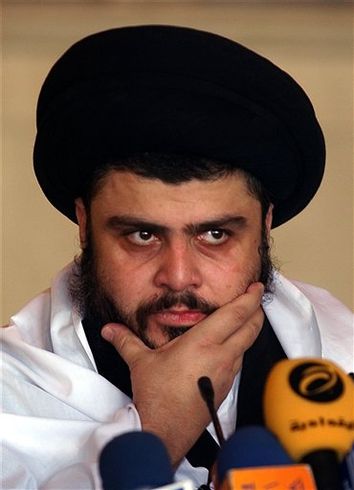
BAGHDAD (AP) — The political party loyal to radical Shiite cleric Muqtada al-Sadr called Monday for the dissolution of Iraq’s parliament and new elections in another move that could escalate the country’s growing sectarian crisis.
The anti-American Sadrist bloc is a partner in the Shiite-dominated government of Prime Minister Nouri al-Maliki. Bahaa al-Aaraji, the head of the Sadrists’ bloc in parliament, said the elections are needed because of instability in the country and problems that threaten Iraq’s sovereignty.
“The political partners cannot find solutions for the problems that threaten to divide Iraq,” he said.
Iraq plunged into a new sectarian crisis last week, just days after the last American troops withdrew at the end of a nearly nine-year war.
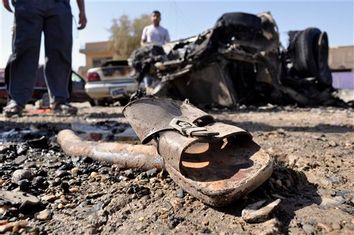
The new political crisis has been accompanied by a new wave of attacks on the Iraqi capital by suspected Sunni insurgents linked to al-Qaida. A suicide bomber set off a car bomb Monday at a checkpoint leading to the Interior Ministry, killing seven people and injuring 32, officials said. Police and hospital officials said the bomber struck during morning rush hour, hitting one of many security barriers set up around the ministry’s building.
Al-Maliki is in a political showdown with the country’s top Sunni political figure, Vice President Tariq al-Hashemi, after the government issued an arrest warrant for al-Hashemi on allegations his bodyguards ran hit squads targeting government officials.
The prime minister threatened to form a government without al-Hashemi’s Sunni-backed political party, Iraqiya, which is boycotting parliament and mulling whether to pull out of the ruling coalition.
Iraq was dominated by the minority Sunnis under Saddam Hussein until the U.S.-led war that began in 2003 ousted him. Majority Shiites have dominated the government ever since, though Americans pushed hard for the inclusion of Sunnis with a meaningful role in the current governing coalition.
Bitter sectarian rivalries played out in 2006-2007 in violence that took Iraq to the brink of civil war and the latest tensions have raised fears of a resurgence of Shiite-Sunni violence.
The political crisis taps into resentments that are still raw despite years of efforts to overcome them. The Sunnis fear the Shiite majority is squeezing them out of their already limited political role. Shiites suspect Sunnis of links to militants and of plotting to topple the Shiite leadership.
The Sadrists have played an important role in maintaining Shiite domination over government — their support last year catapulted al-Maliki back to the prime minister’s office for a second term.
For the proposal to dissolve parliament to gain traction, it would take the consent of at least 1/3 of parliament, the president and the prime minister or a simple majority of lawmakers. Al-Maliki, who only secured his position after nearly nine months of political wrangling after the last elections, would likely be loathe to go through the process again and risk an unfavorable outcome.
Al-Aaraji said the proposal first needs approval of the larger coalition between the Sadrists and al-Maliki’s alliance, the two most powerful Shiite parties.
A Shiite lawmaker loyal to al-Maliki, Kamal al-Saiedi, said the proposal should be studied.
“Forming the current government was not an easy issue, therefore going back in the direction of new elections would be more difficult,” he said.
A Sunni lawmaker with Iraqiya, the Sunni-backed bloc of the wanted vice president, said new elections would not bring security and stability. He pointed to the prolonged negotiations that were needed to agree on the government in place now, and said a new election would only bring the same people to office.
“We need to sit around the same negotiating table and that is the only path to salvation from this current crisis,” said Kamil al-Dulaimi.
Also Monday, a roadside bomb hit a passing army patrol in the Abu Ghraib area west of Baghdad, killing two soldiers and injuring two, a police officer and a doctor said.
Al-Maliki’s adviser for National Reconciliation Amer al-Khuzaie, said leaders of Asaib Ahl al-Haq, one of the top Shiite militant groups, had decided to lay down their weapons and join the political system.
Asaib Ahl al-Haq, or Band of the People of Righteousness, was a splinter group from the Mahdi Army, also headed by al-Sadr. They, along with the Mahdi Army, were two of three Shiite militant groups active in Iraq that were dedicated to fighting the U.S. military presence.
Al-Khuzaie said the group had signed an agreement in recent days renouncing violence. He said they would change their name and join the political process. He said he had been negotiating for months with the group, who said they would join the political process after the U.S. military left Iraq. All American troops departed on Dec. 18.
Officials from the group were not available to confirm the decision.
U.S. officials have warned that these Shiite militant groups could turn against the Iraqi government after the American military has gone. A key test to whether Asaib Ahl al-Haq, an Iranian-funded group, is committed to becoming a peaceful part of the political process is whether they actually turn in their weapons, especially the more powerful and sophisticated weapons they’re believed to get from Iran.
__
Associated Press writers Mazin Yahya, Sinan Salaheddin and Qassim Abdul-Zahra contributed to this report.
Continue Reading
Close
BAGHDAD (AP) — The United Nations and the Iraqi government agreed to relocate several thousand Iranian exiles living in a camp in northeastern Iraq, potentially averting a showdown with its residents. The dissidents, who have not said whether they would agree to move, reported a rocket attack on the camp.
The People’s Mujahedeen Organization of Iran, one-time allies of Saddam Hussein in a common fight against Iran, said Katyusha rockets struck near housing units inside the camp on Sunday night, but did not report any casualties.
A representative of the camp’s residents said Monday they were still waiting to see the agreement before commenting on whether they would decide to relocate or not.
“We hope that it would officially include the minimum assurances so that it would be acceptable to Ashraf residents,” said Shahin Gobadi. “Ashraf residents have repeatedly emphasized that they would in no way accept forcible relocation.”
Since Saddam’s overthrow, Iraq’s new leaders have improved relations with Iran and have sought to shut down the camp, home to 3,400 residents and located in barren terrain northeast of Baghdad about 50 miles (80 kilometers) from the Iranian border. The U.N. reported that at least 34 people were killed in a raid by Iraqi government forces in April.
The United Nations Assistance Mission for Iraq announced an agreement Sunday night that establishes a process to move the residents of Camp Ashraf to a temporary location. It did not give a timeline for the move or specify the new location.
A statement from U.S. Secretary of State Hillary Rodham Clinton said the residents would be moved to Camp Liberty, a former U.S. military base near the Baghdad International Airport.
At Camp Liberty, the U.N.’s refugee agency will interview the residents to determine their eligibility to get refugee status, before they can eventually be resettled in third countries, Clinton said.
“We are encouraged by the Iraqi government’s willingness to commit to this plan, and expect it to fulfill all its responsibilities,” she said in the statement. “To be successful, this resettlement must also have the full support of the camp’s residents, and we urge them to work with the U.N. to implement this relocation.”
The People’s Mujahedeen Organization of Iran first moved to Camp Ashraf during the regime of Saddam, who saw the group as a convenient ally against Tehran. The group is committed to the overthrow of the Iranian regime.
The group carried out a series of bombings and assassinations against Iran’s clerical regime in the 1980s and fought alongside Saddam’s forces in the Iran-Iraq war. But the group says it renounced violence in 2001. U.S. soldiers disarmed them during the invasion of Iraq in 2003.
Prime Minister Nouri al-Maliki has been determined to close down the camp by the end of December. His government considers the camp as an affront to Iraq’s sovereignty.
Last week, an Iraqi government spokesman said the government was working out a solution to the situation at Camp Ashraf with the U.N. and would allow the camp to stay open into January as residents are being relocated. At the time, representatives of the residents suggested they would be willing to move, as long as their security was provided for.
Under the agreement outlined by the U.N., the international organization will monitor the relocation process and then a team from the U.N.’s refugee agency will be deployed at the new location to process the refugee claims.
U.N. Secretary-General Ban Ki-moon “believes that the agreement “lays the foundation for a peaceful and durable solution to the situation, respecting both the sovereignty of Iraq and its international humanitarian and human rights obligations,” according to a statement released by his spokesperson.
“The Secretary-General reminds all concerned that any violence or attempt at a forcible solution would be unacceptable,” the statement said.
Officials from the U.S. Embassy in Baghdad will also visit regularly, the State Department said.
The Iraqi government will be responsible for the exiles’ safety during that time, and will have a liaison officer from the Ministry of Human Rights involved in the relocation, the U.N. said.
“I would like to highlight that the government is exclusively responsible for the safety and security of the residents both during their transfer and in the new location until they leave the country,” said Martin Kobler, Special Representative of the United Nations Secretary General for Iraq.
The Iraqi government’s vow to close Camp Ashraf had raised concerns that forcibly removing its residents would result in violence.
The People’s Mujahedeen has been branded a foreign terrorist organization by the United States, a designation now under review by the State Department. It has been removed from similar blacklists in Europe.
Continue Reading
Close