Richard B. Woodward

Richard Price’s criminal intelligence

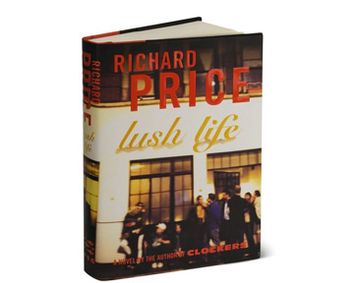
"Lush Life," Price's latest tour of down-low urban America, is an acute portrait of the Darwinian adaptations required to survive in our city jungles.

  • more
    • All Share Services

Richard Price's criminal intelligence

After years of hanging out with cops, Richard Price has developed uncanny powers of mimicry and observation when it comes to the lives of small-time criminals. Only the novelist George Pelecanos, a fellow screenwriter for “The Wire,” and their mentor, Elmore Leonard, are his rivals, and I doubt even they hear as many kinds of crazy music in American speech as Price does. Most of his books and screenplays since “Clockers” seem driven by a wish to glorify the endlessly creative ways English is pulverized and recast in the mouths of black and Latino teenagers and white law enforcement. He is as enamored of police bureaucratese (of shorthand terms like “vics” and “eye-wits”) as he is of raunchy slang. I pity his foreign-language translators.

“Lush Life,” Price’s latest tour of down-low urban America, is another astonishing performance and his most acute study so far of the Darwinian adaptations required to survive in our city jungles. His New York City cops have evolved special ears and eyes to detect criminals in their environment. Mention the word “upstate” and they won’t think of vacations in the Finger Lakes. Rather, they’re already figuring out which prison, state or federal. In their minds, a driver who signals lane changes and goes under the speed limit on the Lower East Side is begging to be pulled over by the Quality of Life Task Force. Only someone with drugs or a gun under the seat obeys all the traffic laws in this neighborhood.

You’re guilty until proven innocent in the Fifth Precinct, where everyone is some kind of sinner and the pressure from higher-ups is intense on detectives to clear messy crimes off the books, whatever the evidence.

That’s how Eric Cash, the 34-year-old bartender at Café Berkmann and a would-be screenwriter, ends up in jail as a murder suspect. He and a guy he barely knows from the restaurant are walking the guy’s drunken friend home at 4 a.m. when the trio is held up by two young armed thugs from the nearby projects. Asked to turn over their wallets, Eric’s co-worker decides to resist and is fatally shot. (The victim’s dying words to the gunman, “Not tonight, my man,” are later played up as heroic by the New York tabloids, one of several times that “Lush Life” awkwardly emulates the satiric scope of “Bonfire of the Vanities.”)

When eyewitnesses claim for various self-serving reasons that they never saw the two criminals, just the trio of white guys, Eric finds himself grilled by the two detectives assigned to the case, Matty and Yolanda. They relentlessly ask him to describe what happened that night, probing each of his sleep-deprived versions for the tiniest inconsistencies. That they can’t find a motive or the gun doesn’t matter. If you’ve ever wondered how people could confess to a crime they didn’t commit, read the agonizing but nonviolent 75-page interrogation scene in “Lush Life” and wonder no more.

The book is a first-rate police procedural. We know who pulled the trigger. The suspense comes from finding out whether he will be caught, and how, and what other casualties will ensue. Matty and Yolanda have to spend almost as much effort tending to the victim’s father, unhinged by his son’s death, as they do to running down leads on the killer.

Inner-city streets are, in Price’s view, the stage for a play that often ends as tragedy but is at its base a farce:

“Just as Big Dap said, ‘What the fuck I tell you about that shit?’ to Little Dap, who was putting the finishing touches on a laundry-marker dick in the ear of the soldier on the bus-shelter recruiting poster, the corner of Oliver and St. James became awash in the fluttering light atop the Quality of Life taxi: both Daps and everyone else automatically and forbearingly turning their eyes skyward as if posing for a religious painting.”

But Price’s mimetic gifts and wide-ranging empathies have begun to hamper him as a novelist. Perhaps he has been writing too many scripts, because “Lush Life” is more a collection of brilliantly realistic scenes than a book with moral weight or a convincing vision of the way New York functions in the Bloomberg era. The sections read as if they could just as easily have been a series of one-act plays or television episodes. Too much of the plot is rendered in vivid dialogue that could better have been narrated, streamlined or elided altogether.

What we should think about the gentrification of the Lower East Side, where Price lived in the ’70s, is never clear either. Eric, presumably the author’s stand-in, is plagued with self-loathing, no career prospects, and a fickle girlfriend who has left him to research the sex trade in the Philippines. After being brutalized by both the cops and local drug dealers, the mixologist has every reason to hate the city and escape upstate. Why he stays seems to have more to do with the author’s sentimental attachment to the place than the character’s.

Price is as much a member of the law-abiding bourgeoisie as his many readers. But you’d never know from this book that he, with an MFA from Columbia, belonged to the first wave of Lower East Side gentrifiers or “La Bohemers,” as he calls them here. When one of the few college graduates in “Lush Life” begins to speechify on gun control and poverty in the liberal tones of a New York Times editorial, the words sound so foreign and pompous to Eric’s ears as to be genuinely offensive. Price seems so fond of streetwise impudence and cynicism that middle-class hypocrisy and cant become in some ways a less forgivable crime than murder.

There isn’t a page of “Lush Life” that doesn’t offer something to smile at or savor. The book tunnels underground and brings to light a New York few of us ever see, from disintegrating Orthodox temples to Chinatown boardinghouses where men rent out boards to other tenants. A few of them keep a carp that has grown so large it can no longer turn around in its fish tank, a perfect and terrifying image of the conditions in which many New Yorkers live.

Every scabrous exchange of dialogue here has an authentic texture. But pieced together, they form a synthetic whole, much like the re-creation of the Lower East Side in Atlantic City that is the book’s unpersuasive conclusion and what passes for its unifying conceit and social statement. The only customers who might be eager to visit such a place are the yuppies for whom Price seems to harbor a barely hidden contempt.

These final pages will probably look better on the screen than they read now in a book. Price is in constant demand from Hollywood and must have asked himself at several junctures whether he was writing a novel or a screenplay. I was unsure myself until the end, when Price pulls back from his tight focus on the history and color of the neighborhood where he misspent his youth. As Eric stares out at the Atlantic Ocean and throws away his cigarette, you can already hear the mournful trumpet on the soundtrack.

coffee-table books for holiday giving — and grabbing

From photos of naked people in Los Angeles to New York living rooms, this year's crop of big books has something for everyone.

  • more
    • All Share Services

BY LEE FRIEDLANDER | D.A.P. | 272 PAGES

BUY IT FROM BARNES&NOBLE.COM

Lee Friedlander has the hungriest eye in American
photography. Over four decades he has feasted on a wild diet
of themes — the American desert, graffiti, the female nude,
trees and flowers, people and computers, the social landscape,
as well as his own deadpan self — and produced a series of
books as nourishing as any in the history of the art. His latest
work chronicles another abiding passion, for American
popular music. This copious selection of portraits — 519
images, no less — features a galaxy of jazz, blues, country,
gospel and pop stars. Seldom do Elvis Presley and Don
Cherry, Frank Sinatra and Don Watson, Dinah Washington
and Stan Kenton keep company in one photographer’s
sensibility. But they do in Friedlander’s. Many of the color
pictures were taken when he was staff photographer at
Atlantic Records in the ’50s and ’60s, and turned up on album
covers. These portraits of Ray, Aretha, Solomon Burke,
Coltrane, Mingus and Ornette will spark pangs of nostalgia in
aging hipsters. Less formal and more precious are
Friedlander’s black-and-white backstage views of, say, Jimmy
Rushing at ease, his hat on his ample stomach; and of dozens
of lesser-known sidemen at dozens of recording sessions. The
photographer’s funny retrospective interviews here with Ruth
Brown and Steve Lacy are icing on the cake. A more delicious
gift for fans of postwar American music — that’s all of us,
isn’t it? — would be hard to imagine.

Richard B. Woodward

- – - – - – - – - – - – - – - – - -

Naked Los Angeles

BY GREG FRIEDLER | NORTON | 144 PAGES

BUY IT FROM BARNES&NOBLE.COM

Have you ever wondered what ordinary people look like
without their clothes on? Of course you have, and your
imagination probably affords a rosier view of breasts and
protrusions than the photographs in Greg Friedler’s “Naked
Los Angeles,” the sequel, or successor, to Friedler’s earlier
take on “Naked New York.” In both volumes, Friedler has
posed his subjects starkly, full front, first in their clothes and
then out of them, in what his publisher calls “a kind of
anthropological survey” and Friedler himself describes as an
effort “to document and understand people.” Friedler found it
harder to photograph “the same broad spectrum of humanity”
in California as he had in New York, partly because many
Angelenos “feared for their jobs and reputations,” and partly
because “most considered their jobs temporary stopovers ‘on
their way’ to stardom.” Thus we have an “Unemployed
Surfer,” an “Imagineer,” a “Porn Stud/Novelist” and a
“Spiritual Advisor” to gaze at when we think that no one’s
looking. After a while, weirdly, the faces begin to resemble
the crotches. These pictures are not erotic in any way, but you
still feel you ought to keep them hidden under your bed.

Peter Kurth

- – - – - – - – - – - – - – - – - -

Reflections in a Looking Glass: A Centennial Celebration of Lewis Carroll

BY MORTON N. COHEN | APERTURE | 144 PAGES

BUY IT FROM BARNES&NOBLE.COM

Probably no author’s place in the literary pantheon rests on a more slender
base than Lewis Carroll’s. He is reputed to be the most quoted English writer after Shakespeare, yet his essential legacy consists of a pair of children’s books. His station in photographic history is more attenuated still. If not for his child portraits, especially of Alice Liddell, who inspired the wondrous fantasies, he would rate as just another Victorian amateur with a camera. Carroll’s interest in naked little girls is itself, of course, now highly suspect. In the current political climate, one approaches his work through a ring of fire. This generous selection, mainly from the Gernsheim Collection at the University of Texas, includes the four extant hand-colored nudes (others have vanished) as well as a wide range of other portrait material. His foremost biographer, Morton Cohen, here scrupulously assesses Carroll’s aesthetic and ethical motives, absolving him of any wrongdoing while never trying to retouch him as the picture of normalcy. Taking up photography in 1856, at the age of 24, even before Ruskin informed him that he would never cut it as a real artist, the mathematician quickly made a name for himself as a superb idealizer of childhood. Parents filed their kids into his rooms at Oxford. But he was choosy, photographing only “well-made children” who liked having their pictures taken. Solicitous of their needs and eager to converse on their level, the bachelor don often preferred their company to adults. No doubt Charles Lutwidge Dodgson (he returned unopened all letters addressed to Lewis Carroll) was deeply peculiar, for which one should say, God bless him.

– Richard B. Woodward

- – - – - – - – - – - – - – - – - -

–>Pulp Culture: The Art of Fiction Magazines

BY FRANK M. ROBINSON AND LAWRENCE DAVIDSON | COLLECTORS PRESS | 208 PAGES

BUY IT FROM BARNES&NOBLE.COM

This smile-a-page book offers a wonderfully lurid feast of the
over-the-top illustrations that appeared on the covers of the
all-fiction pulp magazines that flourished in the ’20s and ’30s.
As the authors write in their informative accompanying text,
the pulps (so called because of the cheap wood-pulp paper they
were printed on) were the dominant form of mass
entertainment in the age before TV. The pulps started in the
1890s, replacing the story papers and later the dime novels,
and disappeared by the ’50s. In their heyday, they satisfied a
naive readership’s demand for adventure, thrills and sexual
titillation with a never-ending graphic cornucopia of hideous
green hands, bosomy dames in strategically torn clothing and
jutting-jaw heroes firing gats and clutching footballs. The
pulps featured such sweat-and-glory genres as:

Adventure. The cover art ran heavily toward menacing pirates in extreme chiaroscuro, Fu Manchu-like evildoers clutching curved daggers and terrified heroes in swamps with adders perched on their groins. (Weirdest adventure cover: A giant chicken attacking a fallen airman.)

Detectives. The illustrators were drawn to depictions of bleeding men firing guns, grimacing cops firing guns, women in torn clothing in the grasp of cheap punks and cheap punks chloroforming dames.

Westerns. Lots of paintings of men in chaps firing smoking six-shooters and spunky gals defending their cabins with rifles.

Monsters. Cities and screaming citizens menaced by octupi, spiders, huge golden alligators, “red death rain” and giant green hands — the latter, the authors note, “a genre by themselves.”

Evil fiends. Here the pulp genre found its true voice. Demented doctors preparing to cut scantily clad women in half using paper-cutter-like gizmos, cleavage-popping manacled dames in black bras menaced by angry guys heating up iron stakes with blowtorches, evil dwarves lashing ur-Victoria’s Secret models and other such images predominate.

One of the more peculiarly dated pulp genres was WWI-era air wars: The public’s fascination with dueling biplanes was apparently as great as its current appetite for Jerry Springer. There are also fascinating looks at such oddities as the “Ku-Klux Klan” edition of Black Mask magazine, featuring a white-hooded figure carrying a burning cross and boasting “Stories, Articles and Letters About the Invisible Empire.” (The authors note that the magazine was “subtly supportive of the Klan.”)

“Pulp Culture” evokes the simple charm of a bygone age, when soap operas, video games, romance novels, action films or genre books weren’t around for Joe Everyman to get his kicks with — and when all-fiction magazines ruled the newsstand roost. (The sweet innocence of the sports pulps, in particular, is almost inconceivable — would you buy a magazine with a cover story called “Thrills in Yale football”?) “Pulp Culture” offers a lavishly illustrated look at a small, fun corner of American cultural history.

– Gary Kamiya

- – - – - – - – - – - – - – - – - -

New York Living Rooms

PHOTOGRAPHS BY DOMINIQUE NABOKOV, INTRODUCTION BY JAMES FENTON | THE ELEPHANT’S EYE/THE OVERLOOK PRESS | 114 PAGES

BUY IT FROM BARNES&NOBLE.COM

If nothing else, Dominique Nabokov’s photos of the living rooms of famous and mildly famous New Yorkers is an argument against white walls. In most of these shots, large-format Polaroids taken from a neutral middle distance and with no styling done by the photographer, the upward movement ends at the tops of chairs and sofas. The exceptions — a pair of narrow mirrors bookending a fireplace, tall twin bookshelves, gilded mirrors and portraits capped off by molded ceilings — are blessed bits of visual relief. Nabokov’s stated aim is to provide a documentary of how her subjects live, and she’s trusting that straightforward shots of their living room will do that. But the approach doesn’t really work. For that, we’d have to see the subjects in the rooms, actually living in them. Some rooms, like Quentin Crisp’s cheerfully dingy bedsit, do give off the personality of their owners. And while it seems natural that, say, Oscar de la Renta’s place would be rococo subdued, and Francesco Clemente’s so comfortably exotic, that really isn’t such a great revelation. “New York Living Rooms” is a sort of tasteful gossip, like “In Style” magazine for the New York Review of Books set.

– Charles Taylor

- – - – - – - – - – - – - – - – - -

Songs

BY BRUCE SPRINGSTEEN | AVON BOOKS | 306 PAGES

BUY IT FROM BARNES&NOBLE.COM

“Songs” is a Serious Undertaking, as evinced by its sepia-toned Annie Leibovitz cover portrait of an oddly weary and sad-eyed Boss. Inside are the lyrics to every song he’s recorded over the past 25 years and reprints of some of his original handwritten drafts. Most of the photos are, with a few exceptions (the beaming candids from his ragamuffin, pre-”Born to Run” days), static, posed shots. Bruce Springsteen is one of the most passionate, alive rockers of all time. Why does “Songs,” designed by longtime Springsteen associates Sandra and Harry Choron, try to turn him into a museum piece? But if you’re a fan, “Songs” has something you need — Springsteen’s chapter introductions, in which he explains what was going on in his head and his career when he made each of his 12 albums. This is as close as the guarded Springsteen has come to writing an autobiography (in book form), and while “Songs” is mainly a self-analysis of his work, he slips us a few intriguing psychological and personal insights, too. His most spine-tingly revelation comes in his intro to the chapter on “The River” (1980), in which he tells us that the narrator of the track “Stolen Car” was “the archetype for the male role in my later songs about men and women.” If you’ve overlooked this dark slip of a song, the faithless lover of “Stolen Car” is consumed with self-doubt and feels like a pretender in his own life. Now, read the self-loathing lyrics of “Brilliant Disguise” and “One Step Up” from “Tunnel of Love” (1987). Suddenly, the downsized career moves and retreat into domesticity that came after “Tunnel” swim into view as a struggle to be comfortable in his own skin. This stuff is far too vibrant and messy for the coffee table, which means, I guess, that Bruce ain’t ready for the museum yet.

– Joyce Millman

America’s Lost Treasure

BY TOMMY THOMPSON | ATLANTIC MONTHLY PRESS | 191 PAGES

BUY IT FROM BARNES&NOBLE.COM

The centerfolds in this book about the sinking and recovery of the steamship Central America show piles of gold — ingots, coins, nuggets and dust originating in California — heaped on the crumbling timbers of the ship, 8,000 feet beneath the surface of the sea. The Central America went down in 1857, off the coast of the Carolinas during a fearsome hurricane comparable to 1989′s Hugo, and the story of its recovery (also in 1989) became the basis for Gary Kinder’s bestseller “Ship of Gold in the Deep Blue Sea.” Engineer Tommy Thompson, who led the team that discovered the wreck and used a deep-sea robot called Nemo to retrieve much of its contents, offers a mostly pictorial version of the tale. It includes routine documentary illustrations of the San Francisco Gold Rush, wistful mementos of the ship’s passengers (152 survived, but 425 were lost), engravings from the sensational contemporary newspaper accounts of the disaster, astonishing pictures of intact clothing and even 130-year-old newspapers (still readable!) packed in trunks resting on the ocean floor, and of course, all that gold, 21 tons of it, providing a playground for ghostly white galatheid crabs and sea stars. (While they were at it, Thompson’s team members observed as many as 12 previously unknown species of marine life, including an octopus with a six-foot tentacle span.) The gold looks sensational cleaned up and arrayed before the camera, with many of the coins seeming freshly minted, but for the romantics among us, it’s the spookier undersea photos that really pay off: treasure playing host to fronds of coral, a ceramic dish encrusted with the whorls of an ocean worm, a heap of empty bottles gently resting in the ashlike sediment consisting of the shells of microscopic sea creatures and a mysterious photograph of a very young man, found in a sealed package with a note reading, “Good morning Sir, do you know me?” We don’t, and probably never will.

– Laura Miller

- – - – - – - – - – - – - – - – - -

Brahmaputra: Tales from the River

BY TIZIANA AND GIANNI BALDIZZONE | SHAMBHALA PUBLICATIONS | 240 PAGES

BUY IT FROM BARNES&NOBLE.COM

Travel is a seductive subject for the coffee-table book. That heavy, shiny paper stock is just made for palm trees leaning over golden sandscapes, green-layered jungle scenes and cobbled, terra-cotta European villages. While these standbys are available again this year on bookstore shelves, happily enough, this year’s travel coffee-table books present some alternative visions as well. Two of these have already been spotlighted recently in Wanderlust: Tony Wheeler’s and Richard I’Anson’s engaging and offbeat “Chasing Rickshaws” (Lonely Planet) and Chinua Achebe’s and Robert Lyons’ illuminating “Another Africa” (Anchor). Three more that have especially caught my eye are Alison Wright’s “The Spirit of Tibet” (Snow Lion), a moving portfolio of Tibetans — and Tibetan culture — in exile; and two black-and-white books — “Tahiti Tattoos,” Gian Paolo Barbieri’s sensual portraits of Polynesians (Taschen); and “Tribe,” Hibiki Kobayashi’s starkly simple and powerful album of the human race (PowerHouse Books).

But of all the coffee-table books that have crossed my desk this year, the single most impressive is “Brahmaputra: Tales from the River” (excerpted in today’s Wanderlust). This absolutely stunning book, produced by the husband-wife team of Tiziana and Gianni Baldizzone, presents an eye-opening portfolio of photographs from Tibet, India and Bangladesh, laced together by provocative, poignant tales of explorations and pilgrimages, past and present. “Brahmaputra” traces the course of the great river known variously as Tsangpo, Brahmaputra and Jamuna on its 1,850-mile journey from high in the Himalayas to the Bay of Bengal. In so doing, it illuminates the fundamental cultural and geographical similarities and idiosyncrasies of the regions through which it winds: three countries, three religions (Buddhism, Hinduism, Islam), one river. The Baldizzones bring a passionate attachment to their subject, deepened by more than a decade of travel in the area, that sweeps the reader along through epiphany and impasse. The images they create — like all great travel photographs — are not just aesthetically exquisite, they also embody a rich appreciation of the daily lives and landscapes of the countries they reveal. With the river as a dynamic and engaging guide, “Brahmaputra” brings a diverse, dramatic and little-understood piece of our planet to extraordinary life.

– Don George

- – - – - – - – - – - – - – - – - -

Invisible New York: The Hidden Infrastructure of the City

BY STANLEY GREENBERG, WITH AN INTRODUCTION BY THOMAS H. GARVER | JOHNS HOPKINS UNIVERSITY PRESS | 112 PAGES

BUY IT FROM BARNES&NOBLE.COM

When most people, including New Yorkers, think about New York, they think only of its outer parts — skyscrapers, bright lights, monuments, parks. Photographer Stanley Greenberg has here shown us what lies at the base of the amazing city, in a stunning series of 53 black-and-white photographs of water tunnels, dams, docks, catwalks, power stations, turbines, gatehouses and the massive anchorage of suspension bridges. Some of these sites are still in use; many are crumbling from lack of repair. Almost all of them are off-limits to visitors. Greenberg grew up in New York and “often wondered” what held it all together, “what was inside the bridges” or “how the water got here.” His book is a record of both the functioning and the vanishing underpinnings of the city, the flip side of picture postcards — coherent, visually magnificent and awesome in its scale. More than anything, you come away with a sense of how small you are next to the huge cooperative vision that built the metropolis. The eeriest of many forbidding shots: The former Nike missile silo at Hart Island in the Bronx, sharing space with more than 800,000 unclaimed bodies in potter’s field.

– Peter Kurth

- – - – - – - – - – - – - – - – - -

The New Way Things Work

BY DAVID MACAULAY | HOUGHTON MIFFLIN | 400 PAGES

BUY IT FROM BARNES&NOBLE.COM

“The New Way Things Work” is not so much a coffee-table book as it is an illustrated textbook: It’s Mechanics 101, but with drawings of doe-eyed mammoths instead of photographs of gears. That’s not to say that “The Way Things Work” isn’t as enjoyable as a coffee-table book — it’s just a lot more work. Written as a mock-diary of an adventurer in the age of wooly mammoths (who nevertheless possesses deep insight about modern gadgets such as the telephone and the solar cell), “The New Way Things Work” walks you through the workings of the objects around us using the simplest of explanations and diagrams. Starting with the most basic of machines (the inclined plane) and building to the most complex (robots), the new edition updates this classic with the latest technology, explaining recent innovations like flash memory, the Internet and modems. Think of it as “Everything for Dummies,” although even the simplest of explanations don’t always make the workings of complex objects easy to understand. Even the cute comparisons of bits to pumpkins, for example, doesn’t make it easier to get your mind around the infinitely huge Internet. At $35, however, it’s a bargain of an education, and you’ll never again have to wonder about the mysterious workings of your telephone. Nor, for that matter, about how to wash a wooly mammoth.

– Janelle Brown

- – - – - – - – - – - – - – - – - -

Architecture and Its Photography

BY JULIUS SHULMAN | TASCHEN | 224 PAGES

BUY IT FROM BARNES&NOBLE.COM

This is the second lavish monograph on, or by, Shulman in five years, a sign that he and the California architecture he celebrated are now the height of fashion. Along with critic Esther McCoy, Schulman helped to establish the laid-back, clean and lean, West Coast modernist aesthetic. During the ’50s and ’60s, for magazines such as Arts and Architecture and Progressive Architecture, he portrayed — and always in the best light — the latest buildings off the drafting boards, mainly private homes. The landmark Case Study House Project (1945-67), to which Charles Eames memorably contributed, was iconized by Shulman, along with the work of imigris Richard Neutra, Rudolph Schindler, the late Albert Frey and home-grown Craig Ellwood. Most architecture photographs are selling a dream of luxury and ease, as well as acquisition, and Shulman’s are no exception. He once confessed that California homes were apt to be so fresh in the ground when he arrived for a session that he traveled with foliage in his trunk, which he placed in the fore- or background to lend the buildings a lived-in air. In this book Shulman argues the case for fantasy, both in his 500 favorite images and in his candid remarks about the artifice of his craft. An eloquent propagandist for, rather than an analytic critic of, what he portrayed, he is nonetheless one of a handful of figures whose images of the modernist dream in America can still strum power chords on the utopian heartstrings.
– Richard B. Woodward

Continue Reading Close