Rob Patterson

The scruffy charms of an insecure president

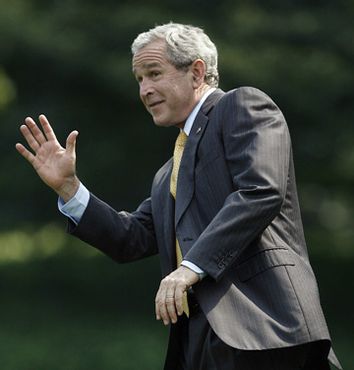
Biographer Robert Draper explains that Bush has a surprising intellect but is incapable of curiosity and owning up to mistakes.

  • more
    • All Share Services

The scruffy charms of an insecure president

Revelations from “Dead Certain,” Robert Draper’s new biography of President George W. Bush, have received marquee play since the book’s publication on Sept. 4. The disclosures have ranged from the petty — Bush, a stickler for punctuality, once locked a late Colin Powell out of a meeting — to the momentous. Among the more uncomfortable for the White House: Bush’s claim that Paul Bremer, head of Iraq’s Coalition Provisional Authority, made the disastrous decision to disband the Iraqi army without Bush’s knowledge, an assertion rapidly rebutted by Bremer.

What Draper, a writer for GQ, really does with great skill in “Dead Certain,” however, is debunk caricatures of George Bush, both positive and negative. Draper, who first spoke to Bush for GQ in 1998, did six additional interviews with Bush for the book and had access to the president’s inner circle. In place of the dimwitted boogeyman of the left and the resolute hero of the right, Draper introduces a three-dimensional man full of contradictions. His George Bush is charming, petulant, open and insecure, smart but allergic to inconvenient facts.

On Friday, Salon spoke with Draper about “Dead Certain,” his many encounters with George Bush, whether he likes the president personally, and how some former White House staffers have responded to the book’s ambiguous, often unflattering portrait.

Newsweek headlined its article about your book “A Biographer Off Message” and called you “Bush’s wayward biographer.” How do you feel about that characterization, or the sense that you somehow got access to the Bush White House and then burned your sources, including the president?

It’s a little bit silly, because it presupposes that I had some kind of handshake deal with the White House and have broken that. I did have a deal with the White House, and that is that I would write a fair-minded, nonjudgmental literary narrative of Bush’s presidency, and I think I’ve delivered that. I do think that the writer of that piece, Richard Wolffe, whom I know and admire, is right that the book has thrown the White House off message when Bush is trying to turn the page on a lot of things. That’s not my book’s intention. Its intention is to be a lasting book, and I told the president that when I was making my pitch to him — a book that was not just for and about the news cycle. But I have to say that I am grateful that it’s in the news cycle, and I’m glad that people are interested in it and talking about it, and that has the consequence of reporters asking the White House questions about it, too. That sort of comes with the territory.

In the book you write that Bush asked you, “What is the purpose of this book?” And you don’t record how you answered. What did you tell him was the purpose of the book?

I’d already given him the reply, and the reply is, “to write a first draft of the history of Bush administration — and to answer the question that someone might pose 50 years from now.” That question wouldn’t be, What does Robert Draper think about George W. Bush? It is, How did an un-ambitious Midland [Texas] oilman change the world, for better or for worse? That’s precisely the question that I told the president in August 2006, when I had this meeting with him, that I intended to answer. I thought that people would want to know. Who was this man who, before he became this pivotal character on an international landscape, was a virtually anonymous figure whom no one viewed as having leadership capabilities? How did he become a leader, and what did he do with it?

How did you get under the cone of silence of this very secretive administration? And how did you get the president to agree to talk to you?

While I was doing it, it didn’t seem terribly difficult. But it was, from time to time. But what would happen would be — it was Journalism 301 — I would interview one guy and it would go well. And he’d say, yeah, sure, you can come back. And I’d say, by the way, you mentioned so-and-so in the interview. Do you know how to get in touch with him? And then I’d drop the name of the person I [then] interviewed. And so I moved closer and closer inside the circle.

And in the multiple interviews they became more and more candid even as they were also giving up other names of people for me to talk to. In the course of this too, they all began to talk among themselves about what I was up to, and I think that came back to the president. It helped that [Bush media strategist] Mark McKinnon had put in a good word for me to a handful of people. And he’s a bike-riding companion of the president, and on a number of occasions mentioned to the president that I was doing a stand-up job and hoped that the president would speak to me.

I have to say: People have been trying to demystify how I got this access. Being a Texan I’m sure helped, but there’s a lot of Texas reporters. Being Mark McKinnon’s friend helped, but he has a lot of buds in the media. I don’t have any particular gifts as a reporter. I don’t have an interviewing technique that spellbinds people. Which is a long-winded way of saying I really don’t know how. I just kind of plodded along. I think it meant a lot to this president — it’s the sort of thing that does mean a lot to him — that I never asked it to be handed to me on a silver platter. I went about my business with the supposition he wasn’t going to talk to me.

It helps to exhibit a true interest in the topic and the people you’re talking to. I really was interested in [Office of Management and Budget Director and later White House Chief of Staff] Josh Bolten’s relationship with the president, and Deputy Chief of Staff Joe Hagen’s take on things. I did find all of this stuff interesting; there was no artifice to that. And I am the kind of person whose interest can be palpable. So perhaps I pleased a lot of these people.

And I’ll add one final thing: These guys are tight-lipped and they don’t do much talking. But people like to talk. They like to talk about what they are doing. So maybe that was some of it: Once I got in a little bit, all these people were sort of relieved to have the opportunity to share their insights and recollections.

Your book has gotten a lot of attention for revelations like Bush’s claim that he didn’t know Paul Bremer was going to disband the Iraqi army. Is there anything in the book that you feel is very important that hasn’t yet been spotlighted in the media?

I think there’s a lot of it. Speaking generally, I think that the Katrina chapter is interesting, and that the president the day before landfall went on this bike ride and was pretty worn out by it. And then they had this SVTC [secure video teleconference] in which he was pretty nonresponsive. In the wake of Katrina, he sort of pushed back on his aides who said he should take more responsibility. And saying, People not getting bottles of water, do they expect me to be the one doing that? There was sort of this petulance.

To me, one point that hasn’t been discussed much that I think is central to the president’s flaws is that his optimism — which I think is basic to him and is genuine — is offset by an unwillingness to acknowledge mistakes made. That is a point that has been made in the past. But I think what the book shows pretty vividly in the cases of Katrina and Iraq is the president has to be led very grudgingly to statements acknowledging mistakes made and accepting responsibility. And that [counselor to the president] Dan Bartlett and Josh Bolten and others had to plan very elaborately how the president would do this.

As I describe it in the book, it was the slow ratcheting down of triumphalism and the slow ratcheting up of humility … A lot of Americans and people all over the world are taught to just say, “I’m sorry I screwed up. I’ve learned from my mistakes, and I will try to do better.” For all of the other aspects of this president that I think are very emotionally honest that I witnessed, that was one aspect that is not — his difficulty to own up to his mistakes. I think in a way he’s like a baseball umpire who feels like if you call a ball a strike, you’ve got to stick to that. Otherwise people will question you. They will think that your equivocation is a sign of a lack of certainty.

Does Bush have clarity of purpose, or is he just stubborn?

I think he veers toward the one and toward the other, and at times is both. I think that the president’s chief attribute is his clarity — they say people know where he stands. His certitude can come off as steadfastness, as on Sept. 20, 2001, with his great speech. And can — as in his speeches at the end of 2005, where he said, not only can we win in Iraq, but we are winning, when evidence pointed to the contrary — come across as having a stubborn refusal to acknowledge realities. It is the lot of this presidency that they’ve chosen — and when I say “they,” I mean that the president is not the only one who buys in to that notion — to believe that if you make a call, you stick with it. There are always two camps in this White House. One that believed the way the president did. And it consisted of the president and Karl Rove and Vice President Cheney and Secretary of Defense Rumsfeld. And then the other camp that believed that it was important to own up to mistakes, and that was largely people in the communications shop as well as the chiefs of staff.

Your book reveals a great deal of disagreement within the administration. What effect do you think that internal conflict has had on this presidency?

I think conflict is inevitable in all White Houses and to some degree is healthy. And disagreement is healthy. I think that historians will be exploring less the conflict in the administration and whether the people in the West Wing disagreed with each other [than] whether the president was willing to surround himself with people who disagreed with him. I think that’s a matter that historians will spend a lot of time on.

I do think that the White House was paralyzed by dysfunctionality [early in 2006], exemplified by the quote I have of [counselor to the president] Ed Gillespie during the [Samuel] Alito hearings telling a Republican, “I feel like a shuttle diplomat going from office to office. No one’s talking to each other over here, and I’m literally having to go from one to the next conveying messages from people whose offices are 20 feet away from each other.”

In addition, the notorious division between State and Defense was exacerbated by the internecine warfare between Rumsfeld and Powell … Obviously this has notable consequences. The lack of collegiality between Powell and Rumsfeld meant that, among other things, when Deputy Secretary of State Armitage went to Iraq after the toppling of the [Saddam Hussein] statue and began to see clear evidence that we didn’t have enough troops there and that the power vacuum was being filled by insurgents, he went and told this to Powell. And Powell said, “It’s not our place to tell Rumsfeld. If his people aren’t telling him, then it’s just too bad, let’s stay out of it.” It might have made a difference if Powell had said that to Rumsfeld. Then again, maybe not, because Rumsfeld wouldn’t have listened. But that cold war between them did have consequences.

In the book you portray Bush as a voracious reader of history. Does he draw on the lessons of history — as Santayana put it, that those who cannot learn from history are doomed to repeat it?

I think that part of the problem is that it is in the eye of the beholder. What are the lessons of history? The president can make a convincing case that right now [in] Iraq the fundamental question that must be asked is, What are the consequences of failure and of desertion? Since he has been preoccupied by this question he has been handed books by Rove and by Henry Kissinger on the Algerian revolution and the Khmer Rouge. If you read those history texts, you can conclude that people will be slaughtered.

Of course you can also ask the question, So what was the solution? Should the French still be in Algeria? Bush has long said on the matter of Vietnam that the lesson to be learned is that it was a politicians’ war and waged by politicians rather than generals, and that the generals were hamstrung, and that was why we lost Vietnam. That’s the lesson he learned from Vietnam. And one can certainly make the argument that that was not the lesson to be learned, and that even if it was, that it was misapplied to Iraq. And that his deferential nature toward Rumsfeld had very injurious consequences.

You said in an interview on NPR that you didn’t believe Bush when he insisted to you that it was Rumsfeld who decided on the timing of his resignation as secretary of defense. Are there other things he said that you didn’t believe?

Yeah. On the matter of that meeting in April of 2006 in the residence of the White House, where there was a show of hands about whether or not Rumsfeld should go, the president told me he just didn’t remember the meeting. I don’t think he was lying to me, per se. But I do think he has this way of being dismissive about things. And in dismissing, he will say, “I don’t remember that.”

My sessions with the president were interesting because he would sometimes start lapsing into his talking points and go into a train of thought that I’d heard before. And he’d stop himself and say, “But you already knew that.” He seemed pretty determined to make these sessions productive from the very beginning. He became more expansive and looser as the sessions went on. But from the outset, I really appreciated the fact that Bush didn’t want to waste his time any more than mine by just speaking pabulum and not telling the truth.

I think that he was toeing a company line with the Rumsfeld matter. And after he gave it to me, I had dinner with Dan Bartlett, told Bartlett that I didn’t believe it and didn’t intend to publish it. And Bartlett said to me, “Message received.” And that led to my next interview with the president where he was a little more forthcoming.

Bush emerged as a more human figure for me after reading this book.

I saw that George Bush in 1998. And I remember describing it to people back then, and they didn’t really believe me. And even those who believed [me] in 1998 came to believe otherwise in 2001, when he started passing tax cuts and had already selected Cheney as his running mate and in all other ways was acting like a fairly retro conservative rather than a compassionate conservative. I think that his adversaries have caricatured Bush at their peril, not at his. Bush has made a living off of being, as he puts it, “misunderestimated.” And it ill serves his opponents not to concede his strong points. Not for nothing is this guy president of the United States.

And it’s amazing to me that people refuse to acknowledge that he has any gifts at all. But those who are in a room can feel it. And among them is that Bush has a very pungent personality. He has these scruffy charms about him. He doesn’t really put on airs. The guy you see is the guy he is, pretty much. Sure, he has a variety of shortcomings, and they’ve hamstrung his presidency in a variety of ways. But one thing that became meaningful to me in doing that book is that I interviewed people who have been working for Bush over the years — they love this guy. I don’t just mean that they admire him. I don’t just mean they are in awe of him. I mean they really love him and would take a bullet for him. I’ve spent a lot of time now with a lot of elected officials and the people who work for them, and you can’t always say that about them.

But beyond the fact that Bush is charming and there’s this incredible loyalty that is cultivated between him and his subordinates, he has a surprising intellect. A guy who reads Cormac McCarthy isn’t a dummy. And a guy who can listen to an economist talk about a tax scheme and just eviscerate the guy because he doesn’t seem to really understand what he is talking about and there’s a loose thread in his argument cannot be intellectually lazy. I think that what’s difficult to reconcile is this man’s brightness with his capacity for incuriosity. I think where the rubber meets the road there is that Bush, for all of his talk about him being so comfortable in his own skin, possesses insecurities like the rest of us. And Bush, due to his insecurities, really doesn’t like to be challenged.

It says a lot that this man, at the age of 61, stills feels the need to differentiate himself from his father, and there are examples of that throughout the book. And that this man, at the age of 61, having received the best education that money can buy from Yale and Harvard, still feels the need to run down the elite Ivy Leaguers. That this man, after being a very successful governor, felt like he had to select as his No. 2 guy a man who had no interest in the No. 1 spot. Clinton, for all his shortcomings, was not in any way threatened by having as his vice president a guy with clear designs on the presidency. He still found he could get a lot out of Al Gore and trust Al Gore while dealing with Gore’s ambitions. Bush couldn’t do that.

This is a guy who really possesses a lot of insecurities, and I think that’s why he evinces this sort of incuriosity. There are only certain kinds of challenges that he can deal with. What is admirable about Bush is also part of his insecurity. I think because his insecurity drives him to want to be relevant and want to do big things, he’s willing to throw the ball long. And I think that because of that, history is not going to judge this man with indifference. They are not going to judge him as Franklin Pierce. He is either going to go down in history as a disastrous flop or a really monumental president.

Do you like him?

Yeah, I like him a lot. I think he’s a real likable kind of fellow. I think he’s full of surprises. The short answer is that I do like him.

How do you think he will feel about your book?

I think he will be disappointed, not because I betrayed him, per se, but because the president has his own point of view about what’s important and what isn’t, and I have little doubt he will disagree with what I found to be the story worth telling. For all of my insistence that I wasn’t going to impose my own belief system, whatever it might be, on his narrative, journalism is a series of judgment calls. Fundamental to them [is] not only, who do you believe? but, what’s the story to tell? I think that my emphasis on certain things and de-emphasis on others will be very much at variance with his own [view].

I don’t have any idea if he started to read [my book] or intends to read it. He made a point of telling me that he hasn’t read any of the other books that have been written about him. I suspect that when the dust settles, some of those around him will say: You know, Mr. President, it really is a pretty fair and for the most part accurate rendering of who you are. And that may lead him to it.

I think that what may disappoint him … is the overall content. And that has now proved disruptive to his presidency. And I can understand and appreciate that. But as he knew all along, the book was going to be published in September of 2007. I made no secret of that. And in fact, on many occasions the president would ask me, “Now when is this book going to be published again?” before he would answer a particular question, so he was cognizant of it.

Have you heard from anybody in the Bush administration since the book has been published?

Not in the administration. I have heard from people who have left the administration in the last year — three or four or five of them — and they’ve been effusive. They all pretty much said: You nailed it. So that’s been gratifying. But inside the White House I haven’t. I expect to see some of them in the next week or two, and I’ll be curious to see what they have to say.

Kinky and Grandma battle for third

He wanted to be Texas' answer to Jesse Ventura. But as a colorful gubernatorial race wraps up, Kinky Friedman pins his hopes on the kinds of voters who don't answer polls.

  • more
    • All Share Services

Kinky and Grandma battle for third

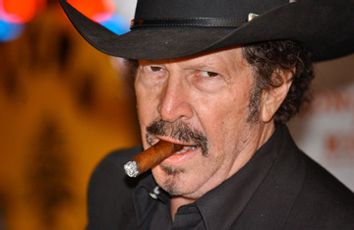
Conventional wisdom says that the brief and mostly charmed political career of Kinky Friedman, independent candidate for governor of Texas, will soon be over. His poll numbers peaked at 23 percent in mid-September and have fallen as low as 13 percent in more recent surveys, putting him a distant fourth in the state’s strange five-person gubernatorial contest. But don’t try telling that to the wisecracking man in the black cowboy hat. At least for public consumption, one of this election year’s more unlikely candidates remains confident of his chances.

“I feel pretty good about it, actually,” Friedman insisted last Tuesday, a week before Election Day. He had just arrived back in Texas from New York. While his opponents had been spending millions on ad blitzes and crisscrossing the state in the race’s final days, he had scored yet another major free media coup by taping an appearance on “Late Night with David Letterman” that would air Friday, Nov. 3, just four days before polls open.

“My chances depend totally on the turnout being as big as the early voting is, which has been record breaking,” Friedman said Tuesday. “If the turnout is that big, I’m the governor. It’s very simple. If it’s not, [incumbent Rick] Perry’s the governor. That’s it.”

Yet one is hard-pressed to find any seasoned political observers in the Lone Star State who feel that the 61-year-old writer and musician, first known for his 1970s country band the Texas Jewboys, can overtake the rest of the field. They still see Friedman as the errant court jester of Texas politics who focused national media attention on the race but only briefly seemed to be a viable candidate. A top staffer for Democratic candidate Chris Bell, who in the last few weeks has broken in the polls from the other two major challengers to lock up second place, says that internal Democratic polls show Bell as the homestretch comer. They claim he has closed within 5 points of Perry, the Republican incumbent who has never topped 40 percent in any poll.

But all along, Friedman has insisted that the race is, as he calls it, “Kinky versus apathy.” It’s not the poll numbers that matter, he says: “It’s the turnout, stupid.”

Texas Monthly rightly declared the contest “The Weirdest Governor’s Race Ever” on the cover of its July issue, which also featured a photo of Friedman, a columnist for the magazine until he declared his candidacy, in full Uncle Sam regalia. Friedman seemed to have a shot, especially since he faced a big field of weak candidates: an unpopular incumbent, an unknown Democrat, a marginal Libertarian, and a Democrat turned Republican turned independent. All he needed to win was a plurality of the vote, and stranger things had happened before. Like pro wrestler turned governor Jesse Ventura in 1998, he had become the poster boy for the burgeoning throw-the-bums-out sentiment of a particularly restive political year.

Friedman based his campaign on the Bulworthian appeal of saying what he feels and believes, polls and triangulation be damned. “A guy who will tell you what he really thinks trumps any single issue,” he insists. “That’s what Texans want, and by God, that’s what I’m going to give them.”

In spite of much initial Texas political wisdom to the contrary, the sometimes foul-mouthed, trash-talking mutant meld of Will Rogers, Lenny Bruce and Shel Silverstein managed to gather three times the needed 45,540 voter signatures to get on the ballot as an independent. And at the very least his delivery, if not his message, was resonating across the Lone Star State and even hitting home in some varied and even surprising places.

But all that was five months ago, when Kinky was a quirky outsider, before he fumbled through a televised debate, and before a closer look at the man who would be governor exposed to the public at large the politically incorrect edge to his persona that was already familiar to his long-time fans. Friedman’s own version of George Allen’s macaca outbreak seems inevitable in retrospect, and there were hints of what was to come in the earliest days of his campaign.

- – - – - – - – - – - -

“It would be nice for Texas to be No. 1 in something other than toll roads, executions, property taxes and dropouts,” Friedman tells the 60 or so folks gathered at the Read All About It Bookstore in Boerne, a small town south of Austin. It’s early summer, and the line has already become all but boilerplate in his stump.

The assembled applaud heartily. Friedman is ostensibly in the store to sign copies of his latest book, “Cowboy Logic: The Wit and Wisdom of Kinky Friedman,” but the event can’t help but become a campaign whistle stop. The crowd’s response to Friedman’s sardonic yet pointed one-liner about the state of affairs in the Lone Star State indicates that they, like Friedman, also feel that something is rotten in the proud Republic of Texas. And that he could even be the man to fix the mess.

Friedman turns his wit on the incumbent. “I’m not against Rick Perry,” he says. “Personally, we’re friends. We’ve taken a few cooking classes together. We’ve seen a few Broadway musicals together. We’ve gone on one cruise together. We’ve gone antiquing a few times together … tandem bike rides…”

The gathered chuckle knowingly at Friedman’s sly allusion to the long-circulating rumors that the governor might not be altogether heterosexual. Friedman is using the jab as humorous segue into a discussion of the gay-marriage ban, a ban he opposes and Perry supports. “The fact is that the gay-marriage ban has not affected our lives in any way,” he says. Friedman’s support for gay rights is from the left side of his á la carte menu of political positions, which also includes legalized casino gambling to pay for education (“Slots for Tots”) and support for school prayer.

The bookstore throng is open to Kinky as unvarnished teller of truths, an appeal that stretches across demographic categories. “It’s across the board,” observes Dean Barkley, Friedman’s campaign manager. “I tried to pick one up about who’s showing up at his events, and I couldn’t. It’s everyone: little old ladies, rednecks, conservative Republicans who can’t stand their party because they feel it’s abandoned them.”

An informal survey of about half of those at the event found teens, retirees, self-described Republicans, Democrats, independents, liberals, conservatives and middle-of-the-roaders. And almost every one of them shares a dismay with politicians and politics as usual.

“I love his independence, and I’m sick and tired of politicians running the state, and I like what he has to say,” says attendee John Barnett. The 63-year-old money manager “was a very Barry Goldwater Republican when there were no Republicans in the state of Texas.” He voted for Bush in 2000 and has now shifted to the left.

Richard “Kinky” Friedman was born in Chicago, grew up in Houston and Austin, and attended the University of Texas. Following a two-year postgraduate stint in the Peace Corps in Borneo, he started his band the Texas Jewboys. His debut album was “Sold American” in 1973. He became famous for songs like “Get Your Biscuits in the Oven and Your Buns in Bed,” “They Ain’t Makin’ Jews Like Jesus Anymore,” and “Ride ‘Em Jewboy.”

But by the end of the decade, Friedman’s recording career had petered out, and he was reduced to primarily being a resident weekend attraction at the Lone Star Cafe nightclub in New York’s Greenwich Village.

A few hours after the Boerne bookstore visit, as a weary yet still restless Friedman rides back to Austin on a dark Texas highway, the reporter in the back seat asks the candidate a question that finally stumps the garrulous wiseacre: What did you learn from your years living in New York City?

Friedman pauses, ponders and rolls his ever-present cigar around a bit in his mouth. “You know what? I really don’t know. That’s a good question.”

He chews on the query like his cigar for a bit. After all, Friedman spent his Big Apple days from 1979 to 1985, to borrow one of his lines, “flying on 11 different herbs and spices,” or more accurately, liquids and powder.

“I will tell you this,” he finally says, pointing with his cigar for punctuation as our drive skirts near Johnson City, the birthplace of Lyndon B. Johnson. “The Texas hill country saved my life.” And now, in return, Kinky Friedman wants to save Texas.

On returning to Texas in ’85, he moved into a trailer at Echo Hill Ranch, the children’s summer camp his family has run in the Hill Country since 1953. Drawing on the milieu of his New York years and the characters he knew there, he tapped out his first soft-boiled mystery novel, “Greenwich Killing Time,” published in 1986, which starred a wisecracking and sometimes politically incorrect amateur private eye named Kinky Friedman.

The book enjoyed good reviews and solid sales and launched a series of fictional works that now includes nearly a score of volumes. He eventually landed a back-page column in the Texas Monthly and has in recent years branched out in his books as a humorist and social commentator.

The Texas gubernatorial campaign of 2006 has in some ways been an obvious opportunity to expand the tongue-in-cheek Kinky product line. His Web site streams KinkyToons touting his candidacy, and his campaign store sells bumper stickers that say “My Governor Is a Jewish Cowboy,” “He Ain’t Kinky, He’s My Governor” and “How Hard Can It Be?” There are also posters, T-shirts, mugs, pint glasses, a campaign cookbook and even a talking Kinky Friedman action figure.

“We’re like a Willie Nelson concert. We’re selling everything we possibly can as merchandise,” says Barkley. It has even helped finance a campaign that can’t compete with the millions raised by some of the other candidates.

But he also seemed to have a chance to win. Even months later, with Election Day approaching, the other candidates still seem like the supporting cast of a comedy starring Kinky.

First, there is incumbent Gov. Rick Perry, aka “Governor Goodhair,” as dubbed by Austin-based columnist Molly Ivins. He inherited the governorship in 2000 when President-elect Bush resigned the office. He was finally elected to the post in 2002 by a little less than 21 percent of all registered Texas voters in an election with a mere 36 percent turnout. His current poll numbers are unsurprising.

Then there’s the much-married Carole Keeton McClellan Rylander Strayhorn, aka “One Tough Grandma.” She’s the mother of former White House press secretary Scott McClellan (now working on her campaign) and recently resigned Medicare director Mark McClellan.

A former schoolteacher, “Grandma” Strayhorn was the first woman to be elected mayor of Austin. Now an independent, she has switched parties as often as husbands. After being appointed to the State Board of Insurance by Gov. Mark White, a Democrat, she became a Republican before the end of her term to challenge popular Austin-area Democratic Rep. Jake Pickle. She lost. Since 1998 she has held the elective post of Texas comptroller of public accounts — in essence, state treasurer. One of her ex-husbands is a minor Kennedy assassination conspiracy theorist.

Lonely Libertarian James Werner is the forgotten man of the race. He was excluded from the sole gubernatorial debate on Oct. 6, which made him even lonelier. So, presumably, do his poll numbers, which hover around 2 percent.

Democrat Chris Bell is the straight man of the bunch. A former journalist and lawyer, he began his political career in 1997 on the Houston City Council. In November 2002, Bell was elected to Congress, but served only a single term as a result of the Tom DeLay-engineered 2003 Texas congressional redistricting, which caused him to lose his bid for reelection.

Until recently, Friedman’s fellow candidates seemed reluctant to even acknowledge him, as if to talk about the bozo on the campaign bus might also cast such suspicion on all of its riders.

Yet despite the other bozos on the bus, and despite the humor in his pitch, Friedman’s campaign is not Pat Paulsen or Joe Walsh for President. Underneath the jokes simmers a serious concern for the state by a resident whose doorbell at his Austin home chimes the melody “The Eyes of Texas.”

“I’m angry about what’s happened to Texas,” Friedman asserts. “It shouldn’t have happened. We’re just too powerful a state, we’re too strong, and we’re too rich to let this happen. And it’s a God-awful shame.”

He looks at running for governor not as a new way to do shtick, but as a logical extension of what he calls “the truth-telling” of all his endeavors. “The people are drooling for honesty, they are begging for a little bit of truth.” It was not humor but a deadly serious encounter with mortality that inspired his run. During a seaside vacation in Mexico, he was swept away from the beach by a freak wave while swimming. “I ended up spending the night trapped on a cliff with the waves rising higher and higher,” he recalls. “I thought I was going to be drowned. It was dark and I had nothing but a bathing suit and a soggy cigar … And I just thought, I want to do something more with my life if I can. And I didn’t know what.

“And then I was in Ireland doing a show, and I was having a lot of fun with the audience between the songs. And a guy comes up to me afterwards and he says, man, you’re not a musician. You’re a politician.”

His campaign manager Barkley heartily agrees. “I’ve had to do less work in managing a candidate than I have with anyone,” he notes. “I’ve never seen a guy that can read an audience as well and just talk to them.”

Part of Friedman’s playbook, however, comes from “The Minnesota Mafia,” as he calls them, of Barkley and media guru Bill Hillsman, the team behind the successful gubernatorial run of Jesse Ventura, who recently barnstormed Texas college campuses with Friedman. Yet Barkley insists that Friedman sets much of the campaign’s tone.

And he does so by adopting ideas wherever he finds them, with a special fondness for the sort of biblical allusions he’s used ever since he first emerged into the public eye more than three decades ago. In his Texas Independence Day speech last March, Friedman railed about throwing the moneychangers out of the temple — a line he had immediately jotted down in a little notebook a few weeks earlier after this reporter used it in response to his comment about purging the state house of lobbyists.

But Friedman’s charmed campaign hit road bumps early. In the Boerne bookstore, no one objected when he couched his criticism of Perry in mildly homophobic humor. Under the spotlights of the media, Friedman’s persona and his penchant for racially insensitive humor began to dim his luster.

In the early days of his campaign, Friedman answered a TV interviewer’s question about how to deal with sexual predators by saying, “Throw ‘em in prison and throw away the key, and make ‘em listen to a Negro talking to himself.” He also made waves in September by attributing Houston’s rising crimes rate to “crack heads and thugs” among the Katrina evacuees that had relocated to the city. (A statement by his campaign in response citing his 1960s picketing for integration barely seemed to register.) A Democratic blogger unearthed concert tapes from the 1970s featuring racist stage patter.

Anyone familiar with Friedman’s songs and novels already knows that he’s “an equal opportunity offender,” as he puts it, who has trafficked in politically incorrect language from the moment it helped him enter the public eye more than three decades ago. Yet that didn’t stop his opponents from upbraiding Friedman for such comments during the Oct. 6 debate.

Friedman’s response? “If you ain’t offending people, you ain’t getting anything done.” He insists that any attacks on him “will be the bull kicking the rodeo clown, and Texans will see it for what it is.”

Yet the debate diminished his stature further. In his signature black cowboy suit, he seemed a bit unnerved under the bright TV lights. He came off like his talking action figure, repeating lines that by then were already more than familiar to many Texans. According to Bruce Buchanan, a political science professor at the University of Texas, Friedman’s chances took a beating on live TV. “He lost some elevation on that occasion.”

Bell, on the other hand, raised his stature. He also seemed to think he’d found an ally in Friedman, according to Cal Jillson, a political science professor at Southern Methodist University in Dallas. “There were two occasions in that debate,” recalls Jillson, “where Friedman acknowledged Bell privately and even threw him a softball. That suggested to Bell that Kinky thought of him as the logical place for his votes if he didn’t complete the race. And I think Kinky was in fact signaling to his supporters that Bell is the more reasonable choice among these three others.”

Not long after the debate, Bell made a move that many observers had long expected, and called Friedman. He asked him to step down and throw his support in Bell’s direction. It was met with yet another Kinky anti-politician quip: “We don’t negotiate with terrorists.”

Even without Friedman’s help, according to the most recent SUSA poll, Bell has risen to 26 percent and Rick Perry is at 36 percent. Internal Democratic polls say the race is even closer and suggest Bell would be in striking distance if Friedman or Strayhorn or both dropped out of the race.

Strangely, however, it’s not the maverick gay-marriage-endorsing cowboy who’s cutting into Bell’s Democratic base. The late October SUSA poll showed that fully 48 percent of Texas voters consider themselves Republicans, compared with 34 who are Democrats. Of the self-identified Democrats, 23 percent support Grandma Strayhorn, compared to 15 percent of the Republicans. Kinky, meanwhile, pulls 16 percent of the Republicans, and only 10 percent of the Democrats. Where Friedman is hurting Bell is among liberals and independents, of whom 30 percent and 27 percent, respectively, are supporting Kinky. Of course, in Texas, only 13 percent of the electorate admits to being liberal, and only 14 percent calls itself independent.

In reality, neither Friedman nor Strayhorn is a spoiler. Even if both dropped out, Perry would still win, despite his lack of popularity. Explains UT’s Buchanan, “If this were a two-candidate race between Perry and Bell, Perry would win that by 15 to 18 points. It’s not that in a straight-up Democrat versus Republican race in Texas, Bell would stand a better chance. He wouldn’t.”

As we close in on the day of decision, Friedman and his team continue to maintain that he has a pull that isn’t registering in the likely-voter polls and if the turnout of disaffected and occasional voters is strong enough, he can still win. Online polls and radio talk shows all produce outpourings of support for Friedman that traditional pollsters don’t measure, and there is also anecdotal evidence of a continued appeal to people of varied ideological allegiances.

In coastal Brazoria County south of Houston, the daily Brazosport Facts endorsed Friedman, citing his wins “by a huge margin” in the paper’s online polls. Like the neighboring Galveston County Times, it feels that “Even if Friedman doesn’t win … a strong showing will send a message to Austin that we’re sick of the double-talk and tired of special interests having the ear of power while Joe Taxpayer gets pushed to the back of the line.”

The Daily Texan, the weekday paper at the University of Texas at Austin, the nation’s largest college, also came out for the Kinkster, stating that, “while we hate to admit it, we believe Kinky’s independence would serve the most self-described independent state in the union.” In the true-blue city of Austin, Friedman bumper stickers have been a common sight ever since he declared, and one can barely spit without hitting left-leaning Austinites who proudly declare, “I’m voting for Kinky.” And in the north Texas college town of Denton, a drinking straw poll at Beth Marie’s Old-Fashioned Ice Cream and Soda Fountain has Friedman with a significant lead over Bell, then Strayhorn, with Perry coming in last.

In the already event-filled race, Yogi Berra’s maxim still holds true: It ain’t over till it’s over. “Well, nobody knows,” Friedman ponders at a week out against the tide of the pundits, polls and newspaper endorsements. “If it works out right, we’ve got an ass kicking four years ahead of us.”

And if it doesn’t, he plans to remain a counter-politician to the very end and not play the role of the gracious loser. “I’m here to see if I can fix Texas. And I guarantee that if Perry wins, I’m retiring in a petulant snit. If Bell wins, I’m moving to France with Barbra Streisand. If Grandma wins, I’ll blow my fucking head off.”

Continue Reading Close

Earle’s last stand

He postponed retirement to prosecute Tom DeLay -- only to be hounded by the right as a crazy zealot. Does the Gary Cooper of D.A.'s have the goods to bring down the Hammer?

  • more
    • All Share Services

Earle's last stand

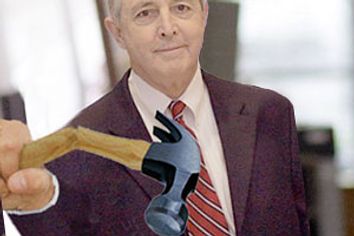
A ferocious dog barks and growls in an ominous ad that blares from TV screens in the Texas capital of Austin. “A prosecutor with an agenda can be vicious,” a barbed voice intones. The commercial assails “liberal Democrat” Ronnie Earle, the district attorney of Travis County, which includes Austin, for prosecuting powerful Texas Rep. Tom DeLay for conspiracy to violate election laws and money laundering. “Bad, Ronnie! Bad!” the voice snarls before baying: “Tell Ronnie it’s not a crime to be conservative.”

Earle, a lifelong Democrat, has earned the wrath of Republicans by spearheading a criminal investigation into DeLay. He intends to demonstrate that DeLay helped funnel illegal corporate money to Republicans running for the Texas Legislature in 2002, which helped the party gain control of the Statehouse. With the GOP in the driver’s seat, the Legislature rammed through a controversial redistricting of the state’s congressional districts, which sent more Republicans to Washington, further consolidating DeLay’s power in Congress.

In late September, DeLay was indicted by a grand jury for conspiracy and money laundering, forcing him to step down as House majority leader. (On Friday, the Washington Post revealed key new details of how Earle acquired some of his best evidence.) On Oct. 21, the pugnacious Republican known as the Hammer appeared for arraignment at an Austin courthouse. He smiled for the cameras and told reporters it was “a good day” that provided him “the opportunity to go before the court and refute these baseless charges that are the result of a political vendetta being acted out by Ronnie Earle.”

Since Earle first cast a wary eye on the Republican power play in the 2002 Texas elections, and DeLay’s role in it, he has been pounded by the Hammer. DeLay has tagged Earle a “rogue district attorney” and “unabashed partisan zealot.” He has suggested his indictment is the result of a vast left-wing conspiracy involving Earle, California Rep. and House Minority Leader Nancy Pelosi, and the Democratic Campaign Committee.

Meanwhile, a Greek chorus of Republican supporters has echoed the attacks. Pat Buchanan has said Earle belongs “behind bars,” and even former Bill Clinton campaign strategist Dick Morris has derided Earle as a “crazy” prosecutor who makes Jim Garrison — the Kennedy assassination conspiracy advocate — “look like a model of respectability.”

In the Lone Star State itself, though, longtime political observers are scratching their heads over the vicious portraits of Earle, 63, who has won eight terms — running unopposed for five of them — and served nearly 30 years as district attorney. “Ronnie Earle?” wondered liberal heroine and Austin resident Molly Ivins after the first round of right-wing invective was fired at him. “Our very own mild-mannered — well, let’s be honest, bland as toast, eternally unexciting, Mr. Understatement, Old Vanilla — Ronnie Earle?”

If Earle is any kind of canine, say folks in Austin who know him well, have worked with him for years and have even been indicted by him, it’s not a snarling attack dog but a silent pointer, poised at the scent of crime and corruption.

“Partisan considerations don’t enter into it with Ronnie,” says Republican state Rep. Terry Keel, who worked for Earle in the D.A.’s office. “I don’t think it involves political ambition or is a political vendetta,” says former Texas Attorney General Jim Mattox, a Democrat who was indicted by Earle while in office in 1985 for felony bribery. (He was acquitted at trial.) Adds Joe Turner, who represents John Colyandro, one of DeLay’s codefendants, and once worked for Earle: “I like Ronnie. He’s a good person. I don’t think he’s an evil person. And I think he truly believes that what he is doing is correct.”

Earle had planned to retire in 2004. But he couldn’t leave the hunt after sniffing out what could be the biggest game in his career, during which he has investigated and prosecuted a gallery of state political figures. “I thought that this was too important to ignore,” Earle tells Salon, referring to DeLay’s alleged role in the campaign finance violations. “My job is to see that justice is done. Justice depends on the law. The law depends on democracy. Democracy depends on fair elections. And fair elections depend on nobody having a monopoly on the microphone.”

Whether Earle can make the charges against DeLay stick, though, is another matter. Earle remains mum on the detailed evidence he will present against DeLay if and when the case makes it to trial. Attorneys for DeLay immediately filed after both indictments to have the charges dismissed. Although smart money is on Earle’s getting his day in court, Texas political insiders wonder if he has the goods on DeLay in a complex case that could be difficult to prove without a smoking gun.

“This case will go to trial,” says Keel. “But I’m telling you right now they’re not going to convict.”

“It’s Earle’s career capper,” says Lou DuBose, coauthor (with Jan Reid) of “The Hammer: God, Money, and the Rise of the Republican Congress.” “My guess is that he’s going to try to get it right.”

Earle faces a mighty foe in DeLay’s lead attorney, Dick DeGuerin, who is widely acknowledged as the best criminal attorney in the Lone Star State. DeGuerin is no stranger to controversial and high-profile cases. He served as David Koresh’s attorney during the 1993 standoff in Waco, Texas, between the feds and the Branch Davidians, and recently won an acquittal for cross-dressing millionaire Robert Durst in his Galveston murder trial. He also represented Texas Sen. Kay Bailey Hutchison, then state treasurer. Earle indicted Hutchison in 1994 for using state employees and resources for personal and political business, deleting state records to hide her activities and being abusive to her staff. Earle ultimately dropped the charges.

The fact that Earle indicted DeLay twice in one week raises questions about the validity of the first charge, albeit one with far lesser penalties than money laundering. The fact that Earle took the money-laundering charges before two grand juries has fueled speculation that the overall case is weak and that Earle was grand-jury shopping to nail it down.

DeLay v. Earle will be a royal Texas battle. To quote Robert Penn Warren from “All the King’s Men,” it’s the “old drama between power and ethics.” Time and again, Earle has spoken about ethics and morality in the conduct of public officials. So nobody expects the polite, principled Texan to budge an inch.

To those not steeped in Texas culture, Earle can seem like a walking, talking contradiction. He grew up in a Baptist church and was a high school football player, Student Council president and Eagle Scout. Yet he practices yoga and frequently quotes poets and philosophers alongside old-school Texas adages.

His tenure as a district attorney displays a similar duality between being hard-nosed about crime and taking a progressive approach to its causes. “Tough Prosecution & Smart Prevention” reads the banner on Earle’s Web site.

A strong advocate of community justice programs, Earle started the first victims-assistance program in Texas in 1979. His other initiatives include forming a Family Justice Division and a Child Protection Team and founding a Children’s Advocacy Center and Family Development Center. His office has been named one of the top 10 in the nation by the National District Attorneys Association.

On the other hand, Earle has not been hesitant to seek the death penalty for murderers. He likened the execution of serial killer Kenneth McDuff to “shooting a rabid dog.” But when DNA evidence revealed that two men prosecuted by his office for murder and serving life sentences were innocent, Earle formed a Capital Murder Review Committee to reexamine the cases that had been tried under his jurisdiction.

Earle also risked the scorn of Austin’s African-American and liberal communities when he tried 11-year-old Lacresha Murray — the youngest murder defendant in Texas history — not once but twice for negligent homicide in the death a 2-year-old child. (Both convictions were later overturned.)

The prosecutor believes the justice system should do its utmost to treat offenders fairly and rehabilitate those who repent. But if they don’t, “God help them,” he says.

Earle explains that his judicial philosophy is rooted in his youth “in the bosom of a large extended family” in Birdville, Texas, then a tiny town outside of Fort Worth. “We lived on a small ranch, but all my kinfolks were not far away and we were together a lot,” he says. “That’s where I came to appreciate the role of strong families, neighborhoods and communities.”

In the kind of family-values talk that would charm many Republicans, Earle says crime prevention begins at home. “The law just catches those few who make it through the team of mamas and daddies and aunts and uncles and teachers and preachers and neighbors and cousins and friends,” he says. “That’s what prevents crime, that’s what maintains the peace, not the law.”

His prosecution of public officials has irked those on both sides of the aisle. Because if there is one public subject that Earle can be called zealous about, it’s campaign financing.

“People talk about how money is the mother’s milk of politics. It’s also the devil’s brew — and we have to turn off the tap,” Earle explains in “The Big Buy,” a documentary film about the machinations of DeLay and his cohorts in the 2002 Texas elections, the source of the current imbroglio.

“He’s militant about the whole issue of campaign finance,” says former Texas Attorney General Mattox. “Campaign finance is destroying our democracy and Ronnie is determined to keep that from happening.” Since the late 1970s, Earle has prosecuted 15 politicians, 12 of them Democrats. The onetime Boy Scout even filed charges against himself in 1982 for not reporting campaign contributions by the required deadline, earning a $212 fine from a judge.

Those who only know Texas politics by the Bushes might be surprised to learn that until George W. was elected governor, the state was largely dominated by Democrats. In 2002, Republicans won 17 seats and took control of the Texas House of Representatives. But as a result of what DuBose calls “a lot of hubris” on the part of DeLay and his associates, Earle cast a suspicious eye on how those results were achieved.

Shortly after the election, the Texas Association of Business outlined in its house organ, the Texas Business Report, how its efforts in raising corporate donations “blew the doors off” the election and helped Republicans take the Statehouse. Bill Hammond, TAB’s director, also crowed about the role of corporate donations in the election in the Austin American-Statesman. Both accounts landed on Earle’s doorstep. He was immediately alarmed by the mention of corporate cash, which, since 1905, has been forbidden by law to be used directly in Texas elections.

Meanwhile, up in Washington, DeLay’s top fundraiser, Jim Ellis, was also bragging. “Ellis told Juliet Eilperin of the Washington Post exactly how they did it, and how he and DeLay planned this,” notes DuBose. “Ronnie Earle was the one man that they didn’t calculate on when they set about to do this. And now their defense is that it didn’t happen.”

It didn’t take long for Earle and his staff to start connecting the dots. It came to light that the political action committee founded by DeLay, Texans for a Republican Majority (TRMPAC), had received some $600,000 in corporate donations for the 2002 elections. Texas law allows corporate funds to be used only for administrative expenses. The case alleges that the corporate money was funneled to campaigns.

As Earle investigated the matter and discovered how many political insiders were involved and the extent of their activities, it was like “watching clowns climb out of a Volkswagen,” Earle told DuBose. “There are a lot more in there than I imagined.”

The first legal moves in the matter came when five unseated Texas House Democrats filed a civil suit in May 2003 against TRMPAC and Colyandro (its executive director), Bill Ceverha (its treasurer) and Ellis (who ran DeLay’s Washington-based Americans for a Republican Majority PAC and served on the TRMPAC board). In September 2004, a Travis County grand jury indicted Colyandro, Ellis and Warren Robold (a TRMPAC and ARMPAC fundraiser) on a variety of election code violations and money-laundering charges for their activities on behalf of TRMPAC. Eight corporate donors, including Sears, Cracker Barrel and Bacardi, were also indicted.

In May 2005, a judge hearing the lawsuit filed by the Democrats ruled that TRMPAC had violated Texas election laws and granted damages to the plaintiffs. On Sept. 13 of this year, Ellis and Colyandro were indicted again on first-degree felony money-laundering charges and other offenses.

Earle’s case against DeLay hinges on a $190,000 check that had been sent, with DeLay’s consent and support, from TRMPAC to the Republican National Committee in September 2002. The indictment claims that Ellis delivered the check to the RNC with a list of names of Texas House candidates and respective specified contributions to their campaigns. On Oct. 4, 2002, the RNC contributed a total of $190,000 from a state elections fund to the seven specified Republican candidates running for the Texas House.

Earle contends this was a swap of forbidden “soft money,” or corporate contributions, for “hard money,” or individual contributions. Election laws permit only hard money to be used for direct campaign expenses. The exchange of funds with the RNC is also the basis for the money-laundering charges against DeLay, which carry a maximum penalty of 99 years in prison.

The road to indicting DeLay has been a precarious one for Earle, and along the way, accusations have swirled around him like a Gulf of Mexico hurricane. His legal wrangling began in late summer of this year.

As the Washington Post reported on Nov. 11, Earle acquired what may be his most damaging evidence from DeLay himself. On Aug. 17, DeLay met secretly with Earle. He intended to head off a felony indictment and offer a plea to a misdemeanor of violating state election laws. During the meeting, DeLay admitted that in 2002 he had expressed his support for transfers of $190,000 from his Texas PAC to the Republican National Committee.

To Earle, DeLay legally incriminated himself in a conspiracy to violate election laws. Earle then insisted that DeLay enter his plea in court right away. DeLay’s attorneys said he would offer it only after Texas appellate courts had ruled on the validity of the state election law at issue. If the law was ruled invalid, then the charges, including DeLay’s plea, would be dismissed. Earle responded that it was now or never for the plea, and so the deal fell apart. The prosecutor then took his new evidence to a Travis County grand jury, where on Sept. 28 he won a felony conspiracy indictment of DeLay.

Within hours, the Post reported, Earle learned that DeLay’s lawyers might convince a court that state election laws would not legally ensnare DeLay for conspiracy. So the wily prosecutor took his evidence to another grand jury in search of a money-laundering charge against DeLay. But this time the grand jury didn’t bite.

In the meantime, DeLay’s lead lawyer, DeGuerin, accused Earle of inciting the jury foreman to discuss the case in public and of prosecutorial misconduct. He alleged that Earle had browbeaten the second grand jury to indict DeLay and reacted with anger when the jury returned a “no bill” on the charge and declined to indict DeLay. Earle insists that DeGuerin’s claims against him “have no merit,” and DeGuerin has since admitted that he doesn’t have any evidence of misconduct by the prosecutor.

Earle, however, wasn’t to be denied by the second grand jury’s “no bill.” Over the weekend of Oct. 1 and 2, DeLay gave interviews to Fox News in which he said he acknowledged, but didn’t approve of, the money transfers. He said his head fundraiser, Ellis, would check in with him “because I was interested in how things were going, and how much money they were raising.”

That was good enough for Earle, who on Oct. 3 took his case against DeLay, punctuated with the weekend Fox interviews, to a third grand jury, which returned a felony indictment for money laundering.

While DeGuerin was doing his best to body-slam the case in the courts, DeLay and his supporters continued to attack Earle, slinging anything that looked like dirt or partisanship from his past.

They charged that Earle had also violated Texas election laws by taking contributions from corporations and labor organizations for his campaigns. But in fact the corporate contributions to Earle’s campaigns were by law firms, professional corporations exempt from the Texas ban on corporate donations. Similarly, a contribution of $250 reported by Earle from the AFL-CIO was in fact from the Texas AFL-CIO State Committee on Political Education Fund, a general-purpose PAC that raises voluntary contributions from union members and is also exempt from corporate and labor-union cash restrictions.

The TV ad attacking Earle cites three chinks in his armor. First is his 1994 prosecution of Sen. Hutchison. The ad states that the judge “threw out the case.” In fact, Earle requested a pretrial hearing on the admissibility of evidence from the judge, who declined to give him a ruling. Earle then dropped the charges rather than proceed, even though his chief prosecutor remained ready to try the case. On the instruction of the judge, the jury acquitted Hutchison.

Earle’s decision spared Hutchison potential embarrassment. Accounts portray her as a demanding and abusive boss who once smacked an underling with a notebook and used staffers to work on her political campaigns, find a new home and purge the department’s computer files of possibly damning records. Chief George W. Bush advisors Karl Rove and Karen Hughes assisted Hutchison in a P.R. blitz against the D.A., dubbed “The Earle of Injustice.”

“He up and decided to drop the case, which amazed virtually all of us at the time,” says former Texas Attorney General Mattox. “They had all kinds of staff ready to testify against her — electronic evidence, written evidence, all kinds of stuff. A prosecutor with only two years of experience could have prosecuted Hutchison and convicted her.”

Veteran Austin attorney Joe Crews disagrees. “I think Ronnie ultimately determined that she might be innocent,” he says. “Yeah, he could take her to trial and he had evidence he could put on and the jury could find against him. But I think that as a prosecutor he felt that the goods he had against her were a little weak, and he wasn’t sure that she did it. But I don’t think there’s any dispute in his mind about Tom DeLay and his activities.”

The ad also accuses Earle of helping “make a movie hyping the [DeLay] case” — “The Big Buy” documentary. In it, Earle makes the provocative statement that the use of corporate funds in elections is “as insidious as terrorism.”

Mark Birnbaum, one of the filmmakers, explains that even though they had Earle’s cooperation, “we never had any more true access than anyone else in the press. We never got to see a document before anyone else. It’s absurd to think that we might have been privy to any secret grand jury testimony or anything like that.”

The ad’s third accusation is that Earle has “even exploited the DeLay case to raise money for liberal politicians.” In May 2005, Earle did give a rare fundraising talk at an event for the Texas Values in Action Coalition, a north Texas organization that seeks to “return fair-minded, honest, and progressive officeholders to all levels of Texas government.” In the 15-minute speech, Earle spoke about the integrity of public officials and the influence of corporate and big-money interests in politics, and reviewed some of his investigations of politicians, including the TRMPAC case.

But Earle only mentioned DeLay in two short sentences. “This case is not just about Tom DeLay. If it isn’t this Tom DeLay, it’ll be another one, just like one bully replaces the one before.”

Late last year, Earle began making plea agreements with the indicted corporations, offering to drop the charges in exchange for their cooperation with his investigation. Earle’s critics complain that in his settlements with the corporations, he stipulated that some of them make contributions to university programs studying the effect of corporate funds in electoral politics, which his accusers have characterized as a prosecutorial shakedown.

“It’s done all the time,” says Mattox, who made similar settlements as Texas attorney general. “It was pioneered on the national scene by the National Association of Attorneys General and I don’t think there’s anything wrong with it.”

Earle dismisses the TV ad and says he finds the media maelstrom surrounding him to be “a surreal experience. These questions will be debated in the political arena, but they will also be decided in the law and the facts,” he says.

Whether Earle’s charges against DeLay will stick has become a lively parlor game in Austin, with lawyers and scholars from all sides of the political arena tossing their opinions on the table.

A main point of debate is whether the initial charge of conspiracy to violate the election code is valid. The question is further complicated by the fact that the Texas Legislature amended the election code in 2003, the year after the offenses in question were committed, to specify that conspiracy charges can apply to election law offenses.

“I think it’s a winner for the defense,” says Turner. “I think Ronnie realized how bad it was too, and that’s why he was desperate to get the thing reindicted. You gotta ask yourself: The first grand jury heard all this evidence. Why didn’t they include money laundering when they indicted for the election code?”

Republican state Rep. Keel contends that the initial conspiracy charge to violate the election code is a stretch, since the law didn’t specify that offense until 2003. He also believes that the money-laundering charge is “a weak case.” “I think they indicted it as the backup in desperation and in haste. Money laundering has a particular meaning in criminal law: that the funds themselves were derived from criminal activities.”

George Dix, a professor of law at the University of Texas, insists that Earle’s first conspiracy charges are valid and that the legislative change to the election code is merely a clarification. “My reaction is, if push came to shove and this matter were to come up before the Court of Criminal Appeals, they would say it does apply.”

Austin attorney Crews represented the Democratic state representatives in their suit against TRMPAC. Although some contend that the civil victory doesn’t reinforce the merits of the criminal case against DeLay and others, Crews believes it does apply.

Civil cases are usually based on a standard of negligence and the damage caused by it. But the TRMPAC suit was decided on a violation of the prohibition against using corporate funds in the Texas election code. “It’s the same law for both civil and criminal,” Crews points out. “Yeah, there are different standards to be applied. But the constitutional analysis is the same in both the civil and the criminal side of the fence.”

DuBose notes that the judge who decided that case, Joe Hart, is “a conservative judge who deliberated for weeks and weeks and came to a very clear conclusion that what TRMPAC did was a violation of Texas law.”

“For the judge to find that it was a violation of the election code was the stake in the heart that opened the door. I doubt that whoever hears this case will ultimately see that issue in a way that is significantly different from Judge Joe Hart,” says Crews.

Amid the speculation, there is little indication that Earle has a smoking gun with DeLay’s fingerprints on it. He recently conceded that he has only a “facsimile” of the list that specified which candidates were to receive the $190,000 in contributions, and not the actual document. Not having the document itself could cripple a key aspect of the case.

However, Crews says that Earle is sure to have all the same evidence that he had in the TRMPAC civil trial. Coupled with other evidence that Earle has gathered since then, that’s “quite substantial and more,” he says.

One truism of conspiracies is that the greater the cast of players, the more likely the conspiracy is to unravel. And a host of figures were involved in TRMPAC’s activities during the 2002 Texas elections. Has one of them flipped and turned state’s evidence?

After the judgment in the civil suit, TRMPAC treasurer Ceverha declared bankruptcy. The move certainly raises questions about whether the former TRMPAC treasurer could end up as a potential witness against DeLay. “Apparently what this means is that Ceverha’s Republican friends, and the people who got him into this spot, have dropped him in the grease and not come to his aid to help him through this litigation process,” notes Crews.

And then there are DeLay’s indicted co-conspirators. “Ronnie’s challenge now is to tie DeLay to Jim Ellis and John Colyandro,” says DuBose. “When these guys are on the stand looking at 99 years, are they going to be in jail with a guy named Bubba for Tom DeLay?”

Observers also wonder why other participants in TRMPAC’s activities, such as TAB executive director Hammond and Texas House Speaker Tom Craddick, a close DeLay ally, have not been charged with any crimes. Does this mean they will show up at the trial as witnesses for the prosecution?

DuBose believes that one or more of the indicted corporate contributors might also provide crucial evidence. “Why would Sears want to go to jail for DeLay when he basically was running an extortion operation and shaking these people down?”

DeLay’s own public statements may come back to haunt him, especially those regarding an Oct. 2, 2002 meeting between him and Ellis, just before the $190,000 from the RNC was sent to the Texas Republican candidates. The meeting could well be a linchpin in the case. “DeGuerin, DeLay and Ellis’ attorney all have three different stories about whether or not the check came up in that conversation,” notes Jim Schermbeck, one of “The Big Buy” filmmakers.

Whatever cards Earle may have in his hand, few think that the motions to dismiss will succeed and the case won’t go to trial. “Nobody really believes that any criminal district judge is going to dismiss any of this stuff,” says Crews.

“Conspiracy and money laundering are going to be difficult to prove,” says DuBose. “But it seems to me that Ronnie has the facts and the law on his side. When you have the law, you pound them with the law. And when you have neither, you pound the table, and that’s what DeLay and these guys are doing.”

When DeLay was arraigned on Oct. 21, DeGuerin requested that Bob Perkins, the Democratic judge presiding over the case, recuse himself from trying it. Perkins referred the matter to another judge to decide, and DeLay won an early round Nov. 1 when retired district Judge W.C. Duncan booted Perkins off the case. Then Earle got a Republican presiding judge set to appoint the trial judge to step aside because of his contributions to GOP candidates. Ultimately, a retired Democratic judge from San Antonio, Pat Priest, was named to try the case by Texas Supreme Court Chief Justice Wallace Jefferson, a Republican whom Earle had tried but failed to challenge from appointing the trial judge because of what Earle claimed were Jefferson’s ties to DeLay.

DeGuerin also filed for a change of venue, as Travis County is a decidedly blue district in the red state of Texas, another motion likely to be decided in DeLay’s favor. But a recent request to move the trial to Fort Bend County, DeLay’s home turf, will no doubt be vigorously opposed by Earle.

DeLay has said he wants to see the case in court before the end of the year, no doubt to speed his way back to Congress if he’s acquitted. But every legal move pushes a possible trial date farther into the future. And Earle isn’t going anywhere. He could have ridden off into the sunset a year ago and called it a distinguished career. As he says in his laconic fashion, “It ain’t over yet.”

Continue Reading Close

New Orleans rising

Katrina has silenced the city's famous musical pulse, washing away clubs and scattering musicians. But Crescent City singers and songwriters, producers and administrators insist the sounds of the bayou will not be muted for long.

  • more
    • All Share Services

New Orleans rising

If it keeps on rainin’, levee’s goin’ to break, when the levee breaks I’ll have no place to stay
– Public Domain (also credited to Memphis Minnie, Kansas Joe McCoy and the members of Led Zeppelin), “When the Levee Breaks”

New Orleans brass-band music, exemplified in this age by such superb purveyors as the Dirty Dozen and Rebirth Brass Bands, is built upon the fundament of the funeral march. Yet there’s something in the rolling snap of the snare that all but jump-starts the living heart. And the horns, even in their funereal bleats of sorrow, recall the mighty life force of the music that crumbled Jericho’s walls.

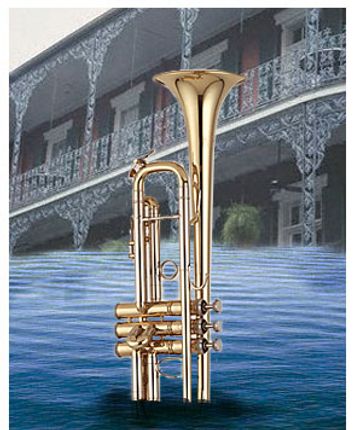
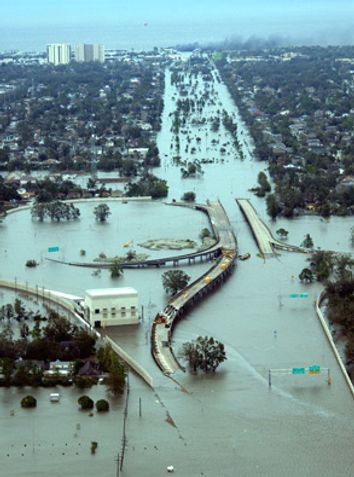
On Aug. 29, the walls that held back the seiching waters of Pontchartrain began to break in the other direction, and the most musical city in America, if not the world, was largely inundated. The flood drenched homes where creative souls lived in what more than one Crescent City musician in the last few days referred to as a “paradise.” It also flowed into and over clubs and studios, as well as the means of income for a music community that was a magnet for visitors and one of the most piquant exports in a city rich with delicacies. It washed over musical instruments and equipment as well as the music itself, both recorded and written, soaking, soiling and damaging but, thank God, not fully destroying one of America’s most vital, important and soulful cultural traditions.

The muddy waters roiled by Katrina have no doubt flooded some legendary musical locales and wiped out irreplaceable artifacts of New Orleans music. Among the hardest-hit areas were the poverty-stricken African-American neighborhoods, where the New Orleans musical traditions are all but woven into the tattered but colorful fabric of everyday life. But neither the music of Crescent City nor the people who create it — nor the spirit, soul, originality, independence and distinctive locality of that art and the musicians who create it — can be washed away, no matter what the category hurricane or depth of flood. “It’s going to take some time, but it will come back,” says Art Neville of the city’s legendary R&B band the Neville Brothers. “We’ve got to put it back because it’s so involved with the local economy and the United States.”

“The spirit did not drown,” declares New Orleans resident Allen Toussaint, the producer, songwriter and artist whose work all but defined the New Orleans R&B sound. He is confident the Big Easy will continue to bless the world with its musical magic. “In fact, I am eager to get back to rebuild it. New Orleans music for me is life itself, it’s my reason for moving in the morning when I wake up.”

The good news in the tragedy is that it appears that every significant New Orleans musician feared missing is safe and sound — something of a miracle as the death toll mounts. Then again, New Orleans music itself is a miracle. It is the place where the truest and most deeply rooted strains of indigenous American music — blues, jazz, rhythm and blues — flowed down the proverbial waters of the Mississippi, took root and sprouted into the sounds of Cajun, zydeco and swamp pop. New Orleans is Louis Armstrong, Fats Domino and Irma Thomas. It’s also the Radiators, Cowboy Mouth, and the Continental Drifters. “It’s all the musicians that made their living playing Jackson Square. And now there’s no Jackson Square to play,” notes Marc Allan, manager of the Dirty Dozen Brass Band.

The river have busted through clear down to Plaquemines, six feet of water in the streets of Evangeline.
– Randy Newman, “Louisiana 1927″

“People are scattered like the lost tribes of Israel,” says guitarist Paul Sanchez of Cowboy Mouth, who was recording in Atlanta when the storm hit the Big Easy. Many of the city’s musicians were either out of town on tour or able to leave the city for points south and southwest before the floods. Summer is the time when New Orleans musical acts tour, play festivals and escape the humidity and storm season. Because of this, some just may have also escaped the fatal waters of the flood. Still, the crisis has shown that the New Orleans musical community is truly a little village. Everyone knows everyone else, or at least who the other musicians are, regardless of age, race or musical style. As they speak about their city and its music, they all have a hunger to know how the others are faring and where they are and that their musical brethren are safe.

I, in fact, became an informational nexus for musicians. Yes, I told them, Fats Domino was said to be missing but is now reported to be rescued from his flooded house and safe at the Superdome. (After being evacuated, Domino and his family later stayed for two days with Louisiana State University quarterback JaMarcus Russell in Baton Rouge, and is now with relatives in Dallas.) A Fox News Web site story erroneously wrote that Irma Thomas was also missing, even though a simple Internet search would have revealed that she played a show in Austin, Texas, on Saturday night before the storm hit. She is now staying with relatives of her husband in Gonzales, La. Fox News also erroneously said that Toussaint was at the Superdome, too.

“Alex Chilton is missing,” announces an arriving e-mail. The legendary veteran of the Box Tops and Big Star gave his car to friends on Saturday so they could evacuate and decided to stay at his home in the Treme district and ride out the hurricane. After it passed, he called a friend to say that he was OK. Then his neighborhood flooded and he wasn’t heard from again. Friends saw a picture of people waiting to be evacuated from the French Quarter on CNN.com and thought the fellow with his hands over his face could be the notoriously press-shy Chilton. Finally, on Sunday it was confirmed that he was seen in Molly’s, a Decatur Street watering hole, on the preceding Wednesday. On Monday, friends and family finally heard from the MIA rock musician that he is fine and had been evacuated to Houston. However, in typical fashion, Chilton declined to tell the Memphis Commercial Appeal, his hometown paper, where, exactly, he is.

Two days before Katrina hit, Toussaint checked into a room on the fourth floor of the Astor Crowne Plaza Hotel on Canal Street. During his stay, Toussaint noticed that La Louisiane across the street was open, “so I walked across the street, had a soda, and played a couple of tunes on the little piano they had there.” He finally got out of town on Wednesday after “waiting for busses to arrive that never did,” when he ran into a friend who had chartered a school bus, which took him and other survivors to Baton Rouge, where he spent a night at the airport before flying to New York City, where he is now staying in a hotel.

Although there have been many reports of looting and violence from New Orleans, Toussaint stresses that “close up, in such a catastrophic event, I saw many interesting and kind deeds. I saw people who probably would have never met or spoken to each other helping out each other.”

Rebirth Brass Band trumpeter Derek Shezbie holed up in his fourth-floor apartment with enough food and water to make it through the height of the flood. When it started to recede, he waded through the water to a highway and hitchhiked to Baton Rouge. Even after his ordeal, he then united with his fellow members of Rebirth as well as players from the New Birth and Soul Rebels Brass Bands to play for New Orleans citizens on Labor Day at the Astrodome and bring them the healing power of music.

Many have family at home they have yet to hear from, such as Dirty Dozen saxophonist Roger Lewis, who as of Sunday had not gotten word about one of his daughters. “You’ve got to be strong. You can’t get weak, you’ve got to keep your strength up,” he says. Lewis isn’t concerned about whether his home is flooded. “That’s material. I’m just worrying about my daughters and aunts and uncles. Material things — you can always get that back, no big deal.”

Rocker Peter Holsapple of the Continental Drifters was on tour as utility guitarist and keyboard player with Hootie & the Blowfish, and his wife and child were able to evacuate their home in St. Bernard Parish. “My section of town is under 20 feet of water,” he says. “My house and car are completely submerged, and all my recording gear and instruments and 30 years of song notebooks and master tapes. I try to spend my time not taking inventory of the things that I’m going to lose in this, and rather count my blessings that my family is OK and friends are OK, and that we have the ability to start over again. There are so many people down there who aren’t even going to get that chance.

“My guitar tech said yesterday, and I keep repeating it like a mantra: love people, use things. I lost things, but I didn’t lose the biggest things, like my wife and family and friends.”

A relative of Tommy Malone of the Subdudes offered him an empty house in Denton, Texas, to stay in for the time being. He has been looking over satellite photos online to get some idea of the status of his home near Bayou St. John, where he left all his equipment. “Some of my stuff was downstairs. It’s probably ruined,” he says. “Most of my expensive stuff I brought at least upstairs. It just depends on how high this thing got. And whether or not looters are gonna do their trick. But considering what I’ve seen on the tube, I am shitting in high cotton.”

Toussaint believes there is at least 7 to 8 feet of water in his house in the Bayou St. John area and that his Steinway piano and equipment are ruined. He did take with him some computer discs with material he had been working on, “so all is not lost in that area,” he says. He is not certain about the fate of the tapes of some of his classic recording work.

The initial tally of what hasn’t been lost is somewhat encouraging. The New York Times reported on Sunday that the Hogan Jazz Archive at Tulane University is safe, but damage to the roof of the Old U.S. Mint in the French Quarter raised concerns about the jazz collection housed there. Venerable music venues like Preservation Hall, Tipitina’s, and Maple Leaf, as well as newer clubs like House of Blues and One Eyed Jack’s in the French Quarter, all seem to have been on high enough ground to not be flooded.

Other nightclubs probably haven’t been so lucky. The Howlin’ Wolf, Carrolton Station, and the Lion’s Den are likely casualties. The Mid-City Lanes Rock ‘N Bowl that hosts the annual Ponderosa Stomp and other shows and events may have escaped damage by being on the second floor. But the status of homes and clubs is hard to determine, as people scan aerial photos and rely on sketchy reports from those still inside the city to ascertain the condition of the places they hold dear.

The future was uncertain at press time for the 35-year-old New Orleans Jazz & Heritage Festival, which is held every year during the last two weeks of April. The Voodoo Music Festival scheduled for the Halloween weekend is currently in limbo and obviously will not be held in the ruined city.

Even at the nightclubs that aren’t damaged, the groups that play there and the people who work at them won’t be returning to action for the foreseeable future. “Who’s going to go to them? Are all the musicians going to stay in New Orleans and play them?” wonders David Hirshland, executive vice president of Bug Music in Los Angeles, which administers song publishing for scores of New Orleans musicians, and a former co-owner of the Big Easy bed and breakfast Chateau Marigny. “You name a New Orleans musician other than the top tier, and they need New Orleans and the disposable income [spent there] in order to survive. They don’t go out on the road to make money. They do those gigs six to seven nights a week to make money. That’s their bread and butter.”

“The prospects for local musicians that do rely on the city for their employment are going to be affected in a big way,” says Scott Billington, vice president of A&R at Rounder Records, who has produced dozens of albums by New Orleans and Louisiana artists. “My friend Vic Shepherd plays down at this little place called the Gazebo across from the Cafi du Monde in the French Quarter. They’re not a band that’s ever going to go on the road anywhere. But they make a living there. There’s a unique group of musicians in New Orleans who relied on the conventions, Uptown balls, and coming-out parties for work.”

Touring musicians from the Big Easy, even for all their losses, are a good bit luckier. “I don’t have a house anymore,” says Sanchez of Cowboy Mouth. “I don’t have a car anymore. But I do have shows to play, so I know I will be on the road in a tour bus with a bed to sleep in, which is more than a lot of families have in New Orleans tonight.”

He ponders damage to New Orleans beyond flooded homes and clubs and endangered livelihoods. “It doesn’t have to do with business or economics,” he says. “It has to do with sitting in my friend John Boutte’s courtyard at his little place in the French Quarter. John is a fantastic jazz singer, and people would come by to eat John’s wonderfully cooked New Orleans food and listen to him tell crazy stories in the colorful way that only he can.”

Concerns also run high for the recording studios of the Big Easy. “Ultrasonic Studio looks like it’s underwater,” notes Billington, who had three sessions booked there for the fall. “You can take the mikes and hard drives out of there, but not the beautiful grand piano and the Hammond organ.” The Neville Brothers’ camp is uncertain regarding the fate of their second-story, state-of-the art Neville Nevilleland facility.

In addition to the human toll, as well as ruined homes, clubs and studios, and lost wages, some of the Crescent City’s rich musical history has doubtlessly also been washed away by Katrina. Aaron Fuchs of the New York record label Tuff City estimates that half of the 250 or so reissued records in his catalog is music from New Orleans. After releasing recordings by better-known artists like James Booker, Professor Longhair and Eddie Bo, he had a line on scores of obscure gems on tape stored in closets and packed in suitcases.

“There’s no place that has more lost good music than that city,” Fuchs says. “There was so much music that was recorded that was deemed to be ‘too New Orleans’ when it came out. Most were four-song sessions in those days. So the two songs that were put out were the ones that sounded like the rest of the country. And the two that didn’t come out had like the rumba and all those cross-rhythms that are perfect for our modern, post-hip-hop years. I was on the verge of all kinds of findings. It’s like I had just raised the Titanic and someone came along and sank it again.”

I want to go back to the Crescent City where everything is still the same.
– Lucinda Williams, “Crescent City”

“People love New Orleans like people love Jerusalem,” observes roots rocker Shannon McNally, who has lived in New Orleans for the last four years and has temporarily relocated to Oxford, Miss. “It’s sacred. It’s holy ground.” Chris Lee of the hard rock band Supagroup fled to Memphis the day before the hurricane hit. Back home, his vintage 1965 Plymouth Barracuda has been destroyed by a falling tree. The Saint — the Garden District bar he owns with his girlfriend Sean Yseult of the band Rock City Morgue — has been looted. “All of our gear is at our drummer’s house and hopefully when we come home it won’t be floating in his house.”

On Friday, Lafeyette rocker C.C. Adcock drove into New Orleans with his houseguest Mike Napolitano, a producer and engineer who had evacuated his French Quarter home and studio with his girlfriend, singer-songwriter Ani DiFranco. Napolitano wanted to retrieve some unfinished recording projects he’d left behind on hard drives. Adcock was stunned that he’d driven so easily into the city as well as by the scant presence of the National Guard and rescue services. “There seemed to be a complete lack of organization,” he reports.

“We always knew that if one of those category storms hit New Orleans it was going to be just as bad as it is,” says Art Neville of the Neville Brothers and the Meters, who is staying with friends in Tuscaloosa, Ala.

McNally, whose new album is titled “Geronimo,” pulls the ripcord on her anger. “Anyone who has lived in New Orleans for a week can tell you that this storm was inevitable,” she fervently notes. “Anybody who says, ‘Oh, what a surprise, we never imagined in our wildest dreams that this would happen,’ should not only be fired but disappear from the face of the earth. This catastrophe has always been a when and not an if. This is not news.

“I really hope that this retarded government that we live under figures out that it is one of the most precious places in America and that they need to rebuild it,” she adds.

The national music community has stepped up to help the people of New Orleans with the various network specials and telethons that have already aired and are in the works. Grass-roots benefits by musicians and the music industry are sprouting up across the nation.

And the specific needs of Big Easy musicians will be addressed by New Orleans Musicians Relief, a charitable fund being set up by the mayor’s office. Before the end of the week, a Web site will go live (www.neworleansmusiciansrelief.net) that will allow the city’s musicians to register and indicate where they are and apply for funding. It will also feature a bulletin board listing all the benefit concerts and fundraising efforts and allow people to make contributions directly to the musicians of New Orleans.

“We want to set up something under the auspices of the mayor’s office that is the most grass-roots, plugged-in organization that is in touch with the musicians of New Orleans and will be distributing money directly to them,” says Scott Aiges, the city’s director of music business development.

As the city was setting up its relief efforts, members of the New Orleans music community were also launching independent efforts to help their own and others from the Big Easy. Producer and musician Jeff Beninato set up an account at Chase Bank to receive contributions for another New Orleans Musicians Relief Fund (Chase account #699721957). Hip-hop artist, producer and No Limit Records head Master P. created Team Rescue to help get supplies to survivors still left in New Orleans. Prevervation Music Hall has also established a relief fund for the city’s musicians.

The National Academy of Recording Arts & Sciences has already ponied up an initial $1 million for the musicians of New Orleans. And Adcock learned during an interview with the Chicago Tribune that the Windy City’s music nightclubs are planning on adopting Big Easy venues to which they will contribute their proceeds. He is also talking with Lucinda Williams about moving their New Orleans show that was scheduled for the 26th of this month to Lafayette and making it a benefit. And the Neville Brothers have cut a deal with EMI, their record label, to donate a portion of their artist royalties from the latest group album and Aaron’s upcoming Christmas release, which the label will match.

One way that music fans can help New Orleans is by attending shows by its musicians on tour. “If you’re going to tell people anything, tell them to please go out and support New Orleans musicians on the road,” says Kenny Samuels, production manager for the Radiators.

Radiators bassist Reggie Scanlan seconds the call. “For New Orleans musicians to survive, they’re going to have to be on the road for at least the near future, and people will have to come out and see them play and show some support,” adds Scanlan. “If they do that, those people will be doing their part to get New Orleans back up on its feet again.” “It’s almost our duty right now to have New Orleans musicians out on the road promoting the culture of New Orleans, especially when it’s sitting underwater,” says Allan, manager of the Dirty Dozen Brass Band.

The pressing question about New Orleans music is whether it will weather this proverbial storm and survive. “It’s going to survive, of course,” says Lewis of the Dirty Dozen. “It’s just going to be different because of what the people are going through, and that bleeds into the music. It can’t help but bleed into the music because music is a feeling. And the feelings of what we are going through now will come out in the music.”

The destruction wrought by the hurricane and flooding hit hardest in the most poverty-stricken quarters of the city where its black musical styles are as essential to life as red beans and rice. Given the extent of the devastation and the seeming neglect of the residents by the powers that be, one can’t help wondering if the core of the city’s soul has been injured beyond repair. “One of the big contradictions of New Orleans music for me has been that the soul of New Orleans music, the real hardcore roots stuff that keeps it moving forward — the second-line brass bands and the gospel music and the Mardi Gras Indians — resides in those really gruelingly poor neighborhoods,” observes Billington of Rounder Records. “And it’s amazing considering the poverty of certain areas of that city that the culture has stayed alive the way it has.” He finds the parades put on most every Sunday by the neighborhood social and pleasure clubs “one of the most life-affirming musical events that anyone can imagine. Yet it’s in the middle of these neighborhoods that people can barely inhabit.”

“Basically I want to get back in, get my house together, and get New Orleans back to what it is,” asserts Scanlan. “I was e-mailing with a friend of mine who pointed out that New Orleans really isn’t about the buildings. It’s about the people who live there. I couldn’t live anyplace else.

“I’m kind of hoping that New Orleans comes back as maybe a little smaller city but a better city,” he adds. “If we can have a lot of the major colorful things happen that define New Orleans — Mardi Gras, Jazz Fest — just to have those things happening will make people feel like they’re home again.”

Some musicians will not be returning to New Orleans for a variety of reasons that include everything from the need to get their children in schools to trepidation about living in a ruined city that might still face danger from the elements in the future. But singer-songwriter Susan Cowsill, a former member of the Continental Drifters now launching a solo career, vows that she will not forsake the city she has called home.

“I can’t cotton with all this, well, where you moving to?” Cowsill says “For some people that’s cool. I can’t relate to it. I want to go home and fix our house, fix our city, and get back to our world of beautiful music and sweet souls that inspire one another.”

This story has been corrected since it was originally published.

Continue Reading Close

Camp Casey goes to Washington

As America's most famous antiwar activist takes her crusade on the road, supporters pack up their banners and rosary beads and promise Crawford will always remember "Sheehan's stand."

  • more
    • All Share Services

Camp Casey goes to Washington

On Cindy Sheehan’s last Sunday in Crawford, Texas, the president finally came to Camp Casey II to meet and even pray with her. Not President Bush, which comes as no surprise, but TV President Jed Bartlet of “The West Wing,” Martin Sheen.

The actor and activist arrived late in the day to a cheer from at least one bystander of “Bartlet for America!” He came to say a memorial rosary with his fellow Catholic Sheehan for her son and all the other servicemen who died in Iraq. It was the highlight of a Sunday at the ground zero of the new antiwar movement that included a morning visit from the Rev. Al Sharpton for prayer services, a Jewish kaddish, two weddings, and the sharing and solidarity that have become a trademark of Sheehan’s inspiring vigil down the road from George W. Bush’s pseudo ranch in the rolling farmland of Central Texas.

On Wednesday, Sheehan decamps from Crawford and heads to Austin. She will hold a rally at City Hall to kick off her bus tour that will end in Washington at a major antiwar demonstration planned for Sept. 24. Since she first camped out alone on the side of the road on Aug. 6 at what became known as Camp Casey I, thousands of Americans have also made the pilgrimage to the town and countryside near the president’s vacation getaway to show their support. And millions have witnessed her crusade via the media.

Certainly the people who joined Sheehan at Camp Casey — an estimated peak of 1,000 on Saturday and 500 or so on Sunday — represented a vast swath of the American electorate. There were the fellow mothers and fathers of those killed in Iraq, and the activist organizations that are opposed to the war. There were military men and women, and veterans of Iraq, Vietnam and the peacetime armed services. Joan Baez and Steve Earle have performed, and on Sunday, Texas blues guitar wunderkind Carolyn Wonderland and Austin bluesman Frank Meyer won over the crowd.

And, yes, those who oppose Sheehan have also come to Crawford. But it’s clear at Camp Casey II, as well as across the rest of the nation — if current opinion polls are any indication — that Sheehan, in her simple gesture of camping on Bush’s doorstep, has united opposition to the war in Iraq as no one has done before.

“At least Cindy got the acting president of the United States,” Sheen told the cheering crowd, when he took the stage for what he said were some unprepared remarks. “I don’t need to tell you how many people are watching what’s happening here, on what can only be called sacred ground. All over the country, people are watching. And many of us who have been silent for too long have begun to get behind these women, who are being led by Cindy Sheehan.

“I am so grateful to all of you for standing with her, for vigiling,” Sheen continued in his best Bartlet style. “It is in the old Irish tradition that goes back centuries that when you had a rift with a landlord or an authority, you vigiled in front of their homes until they came out and confronted you. When I spoke with Cindy for the first time some few weeks ago, she told me she was Catholic, and that Casey was a devout Catholic and devoted to the Holy Mother. And when his remains were sent home, there were 11 rosaries found in his belongings. So I suggested we do the rosary to honor him and his fallen comrades. So that is really what this prayer service is all about.”

Sheehan was moved by the rosary service. “It was very special,” she said later. “Casey loved the church a lot. After he died, the chapel at his base started a new Knights of Columbus organization. And they named it the Casey Austin Sheehan Knights of Columbus Council, because he loved the church, he loved his community, he loved serving people. So they said he exemplified everything about what they want to stand for.” Sheehan added that she was honored that among the many supporters who have visited her in Crawford was her “dream president.” Echoing the feelings of many, she added, “He’s a lot better than the other one.”

Crawford sits in the midst of the rolling black land prairie of Central Texas, which after an unseasonably rainy August was graced with a bucolic and almost pacific greenness. At the edge of town, a small billboard with a waving George W. Bush and smiling Laura reads, “Welcome to Crawford.” A little farther in, a banner atop four large metal grain silos proclaims that this land is “Bush Country.”

Supporters of the president and the war were gathered at the four corners in the center of town following their rally on Saturday. At an encampment of red, white and blue tents with banners proclaiming, “God Bless Our Troops! … America! … President Bush!” was planted a small patch of maybe 20 white crosses bearing the names of servicemen and women who had died in Iraq. Inside the tents, Ellen Frazier of Waco, who said she was there with Operation Building Bridges, insisted, “You can’t support the troops without supporting the war.”

Down at the corner in front of the Yellow Rose, a Western store that sells everything from gifts to horse feed to guns and ammo, and of course Bush mementos, a replica of the Liberty Bell sat atop a trailer festooned with flags and stars and stripes bunting, flanked by two stone tablets — looking much like tombstones — on which was carved the Ten Commandments. In front of it, a couple wearing pins with red, white and blue ribbons spoke to a video cameraman. “Whether you agree with this war or not, [the troops] are there,” the woman told the interviewer. “Agree with it and support them.”

“As a citizen, she can do what she wants and she can protest,” Frazier said of Sheehan, then adding with a snippy tone, “But she does not have a right to be heard without our side being heard.”

“I wonder if she returned all the money that the government paid her for her son’s death,” Margaret Dunlap of Waco inquired. “She took the money, and what she is doing to this small community is not fair. It’s very disruptive.” Just like the presence of the president? “That is expected when you have some celebrity move in,” said Dunlap.

The 10-mile drive west of town to Camp Casey winds past homes with yard signs bearing slogans like “IM4W.” They continue the signatory debate between the Bush supporters and the visitors packed into vans shuttling to and from the Crawford Peace House in town and Sheehan’s encampment. Just after passing the white clapboard New Canaan Baptist Church the road gently descends to reveal the eight ivory spires of the giant tent of what on this day is not just Camp but also Church Casey.

In front of the tent by the roadside is the now famed field of hundreds of small white crosses naming serviceman killed in Iraq, some decorated with flowers and their dog tags and combat boots. They underscore the sacrifices and losses that America has suffered in the two and a half years since our nation’s armed forces invaded and occupied Iraq.

Amid the line of vehicles parked just past Camp Casey, Ron Teska from Greene County, Penn., was putting the finishing touches on a large stone marker to leave behind after Sheehan’s departure. He’d carved the words “Sheehan’s Stand” into it. “This is for Cindy’s efforts and her message,” Teska said.

A hunter green Chevy SUV waving a large American flag and displaying a sign that read “God Bless Bush. God Bless USA” rolled past a parked minivan on which was written in white shoe polish, “Hey Dubya! Meet With Cindy!” Two women stood at the entrance to Camp Casey holding signs that read: “George Bush — You Make God Cry” and “Cindy’s Son Volunteered and Died; Bush’s Son Deserted and Lied.”

“My daughter and I flew out from Seattle,” said Sue Cozza. “We came out and have been working at the Peace House for a couple of days and we finally came out here.

“My dad was hit by a fragmentation grenade in 1966 in Vietnam and war has been a part of my life since I was 11, and I’m 50 now,” Cozza added. “So war has never gone away for me, never. When I see how Bush is just killing these kids for his ego, I had to come out. Actually, I was driving my husband crazy. He said, ‘Go to Crawford. Go to Crawford.’”

One couldn’t help sensing a solemnity at Camp Casey II even if the vibe also felt a bit like a country fair, albeit one devoted to ending the war in Iraq. Sheehan’s second encampment sprouted while she went home to California to visit her stricken mother in the hospital.

Inside the tent at one end is a stage from which speeches and performances go on throughout the day. Above it hangs a banner: “Mothers Say No to War.” At the other end is a makeshift kitchen and buffet line. People gather at the chairs and tables inside to listen and discuss; others join in as volunteers to keep it all running with a surprisingly organic smoothness. Banners tout the presence of the organizations that have joined Sheehan in Crawford: Iraq Veterans Against the War (IVAW), Military Families Speak Out and Veterans for Peace.

At the far side of the tent hangs a giant portrait of the mother’s son who sparked it all. Casey Sheehan overlooks the camp that bears his name, with the stars and stripes waving behind him. “When I got back, that’s what I was faced with,” said Sheehan of Camp Casey II. “I was just overwhelmed. And then to see the big painting of Casey really affected me a lot.”

George W. Bush may not have made it to Camp Casey, but the military was there in full force. Army Reserve Spc. David Lewis, who recently returned home from serving in Tikrit, traveled from Binghamton, N.Y., to tell the story of how he joined the armed services after 9/11 because “it sort of became the least worst option.

“I was not being able to afford school. I was working part-time. I was just sort of eking by and going to school part-time. I was looking at not finishing and just getting into debt. And the Army seemed like the easy way to get out,” he explained.

Lewis believed he was joining a noble cause. “Afghanistan had happened already, they were getting Osama bin Laden. And I was like, you know what, all I’m going to do is help secure the peace. I’m going to be a force for peace in the world. Because now we are going to get Osama bin Laden and no more wars because we’re gonna …” His voice trailed off.

“And then I’m in basic training,” Lewis continued. “And we don’t have cable television in basic training. We don’t even have a newspaper. So I don’t know what the hell’s going on out there. And the drill sergeant started to make fun of us. ‘You know you’d better shape up or else you’re not going to make it in Iraq!’ I’m like, Iraq? What are you talking about? The sergeant’s reply was, ‘Yeah. You should hear the president …’

“I’ve always been against war,” Lewis insisted. “I don’t think being in the military means that I am a lover of war. It just means that I believe that this country needs to be defended. When I took that oath of office, I didn’t take the oath to kill people. I took it to defend the country from enemies foreign and domestic.” He said that he believes many of his fellow servicemen and women feel similarly but fear even discussing such notions.

Does he believe that Iraq was a threat to the United States? “It is now! I think the war on terror is a sham. I don’t know what else to say.”

Air Force veteran Carl Cook of Dallas was standing by the side of the road holding a sign that read: “Bush… You’re Fired.” “I joined to get the technical training and get a leg up in life, and it worked out,” he said. “I think everyone should do a national service. Like AmeriCorps or Peace Corps or the military. It shouldn’t necessarily be mandatory. But I think it’s appropriate.”

However, he feels the current U.S. misadventure in Iraq is not. “This is an immoral war,” he said. “It was started on false pretenses. We’re sacrificing our people unnecessarily. This is destructive to the nation.”

Vietnam veteran and Gold Star father Steve DeFord came to Crawford from Salem, Ore., to honor his son, Oregon National Guard Sgt. David Johnson, who was killed in Iraq last year on Sept. 25 at the age of 37. Johnson had already served in the Army and then joined the Guard after Sept. 11.

“He wanted to help the people of Oregon,” DeFord explained. “He was a cook by profession; he cooked at one of the larger restaurants in downtown Portland. They didn’t need cooks in Iraq because Halliburton was cooking. So he was made a machine gunner on a Humvee.

“He was in a headquarters company out of Baghdad in the Green Zone. They were escorting water to various units in the country. And there was a 500-pound United States bomb that had been dropped that didn’t detonate. So the enemy picked it up and set it next to the road and detonated it with a cellphone and C-5. It blew the Humvee up in the air and turned it totally around. And when it came back down, everybody was getting out and going, God, we’re lucky, everyone is here. Fine. And they looked up in the turret and my son had been hit in the back of the head with shrapnel.”

And it wasn’t just a matter of DeFord and his wife losing a son. “He was due to be married in three weeks. He’d been over there six months and he was due for his break. He was going to meet his fiancie in Rome and get married.”

In the late afternoon, Sheehan cradled a newborn baby in her arms underneath the painting of her late son as she watched Genevieve Van Cleve and Peter Ravella of Austin, Texas, get married. The pair had met a few years back at one of the legendary monthly “Final Friday” parties of Austin leftists hosted by columnist Molly Ivins at her South Austin home. “We were engaged since March,” explained Ravella, whose father was a career Air Force officer and whose brother is currently serving in the military. “And we’d been looking for a way to get married.”

They had visited Camp Casey II the weekend before and worked as volunteers. “After we came out here, Gen said to me: ‘You know, this would be the place to get married. This is serious, this is what we’re about, this is what we believe in.’ And suddenly everything we were thinking of doing just looked silly. And we thought, you know what, blowing a bunch of money on chicken and a keg for our friends is not interesting. We’d rather give money to Cindy and her group. This is about our family and the celebration of this love. And whether you agree or disagree with Cindy, you have to respect the courage that she has, the courage that these women have. You can’t argue with it.”

“We couldn’t have imagined anything nicer than this,” added Van Cleve.

“That was really cool, huh?” Sheehan said afterward. “Camp Casey is all about love and life. I can’t think of a better way to start your new life off, and I was really honored that they chose to do that. And there was another wedding down at Camp Casey I too.”

She has been hailed as a hero and slandered as a traitor. But Sheehan remains resolute. “I don’t think what I did was heroic,” she said. “I just think it was something I had to do. I did it for myself, really. I did it in honor of Casey and all the other ones who have been killed. I did it for the people that are in harm’s way.

“At the end of the day I have to live with myself,” she added. “And if I don’t stand up for what I think is right and for what I am against and I think is wrong, I can’t do that. I’m hoping one of these days to have grandchildren — I have three other children — and be able to look them in the eye and say, ‘Your grandma did everything she could.’”

Continue Reading Close