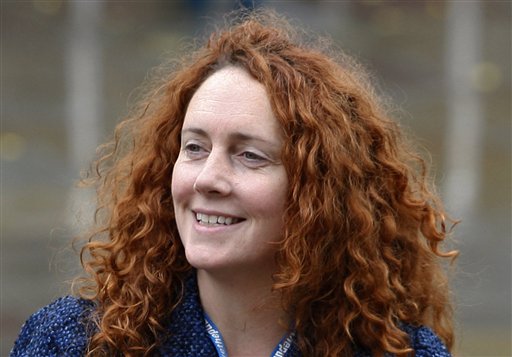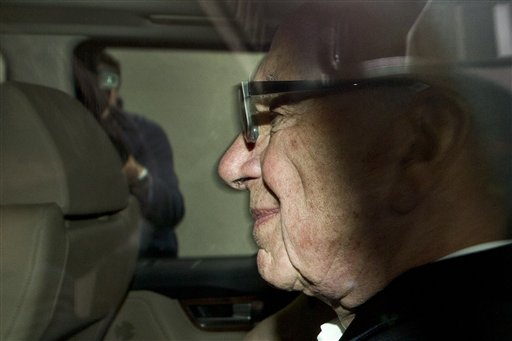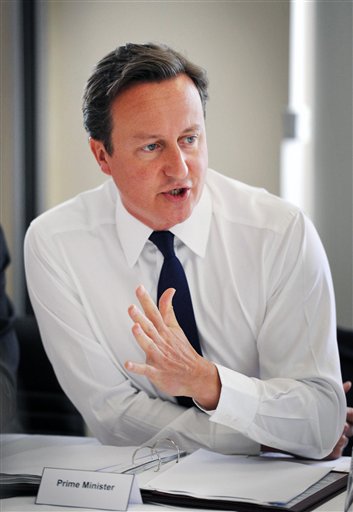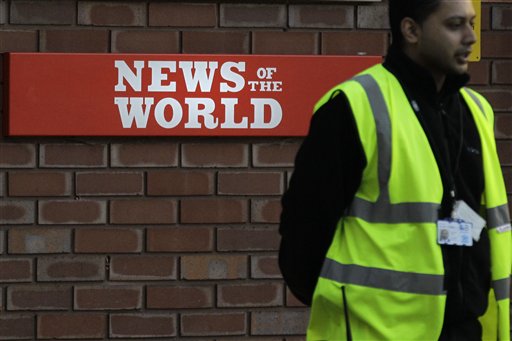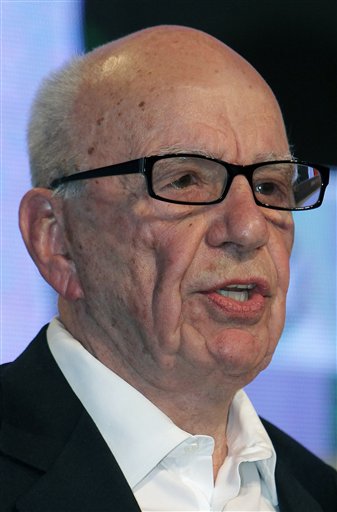
Rebekah Brooks, the loyal lieutenant of Rupert Murdoch, resigned Friday as chief executive of his embattled British newspapers, becoming the biggest casualty so far in the phone hacking scandal at a now-defunct Sunday tabloid.
Murdoch had defended Brooks in the face of demands from politicians that she step down, and had previously refused to accept her resignation. He made an abrupt switch, however, as his News Corp. company struggled to contain a U.K. crisis that is threatening his entire global media empire.
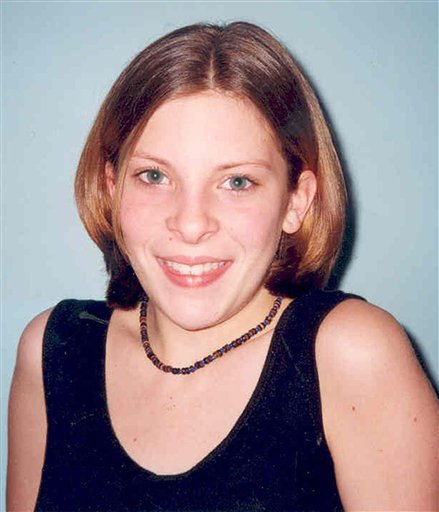
Brooks was editor of the News of the World tabloid between 2000 and 2003, including the time when the paper’s employees allegedly hacked into the telephone of 13-year-old murder victim Milly Dowler when police were searching for her. That has raised allegations of interfering in a police investigation.
That allegation last week provoked outrage far beyond previous revelations of snooping on celebrities, politicians and top athletes, and knocked billions off the value of News Corp. In quick succession, Murdoch closed the 168-year-old News of the World and abandoned his multibillion-pound attempt to take full control of the lucrative British Sky Broadcasting, while Prime Minister David Cameron appointed a judge to conduct a sweeping inquiry into criminal activity at the paper and in the British media.
Brooks said the debate over her position as CEO of News International was now too much of a distraction for parent company News Corp. and she would concentrate on refuting allegations in the scandal.
“I have believed that the right and responsible action has been to lead us through the heat of the crisis. However my desire to remain on the bridge has made me a focal point of the debate,” Brooks said in an email Friday to colleagues that was released by News International. “This is now detracting attention from all our honest endeavors to fix the problems of the past.”
Tom Mockridge, chief executive of News Corp.’s Sky Italia television unit, was appointed to succeed Brooks immediately. Mockridge began his career at a paper in New Zealand and then served as a spokesman for the Australian government before joining News Corp. in 1991.
News Corp. also announced Friday it would run advertisements in all of Britain’s national papers this week to “apologize to the nation for what has happened.”
“We will follow this up in the future with communications about the actions we have taken to address the wrongdoing that occurred,” said James Murdoch, who heads the international operations of the New York-based News Corp. and has been considered to be his father’s heir apparent.
He said News Corp. had set up an independent Management & Standards Committee to establish and enforce clear standards of operation.
That was an abrupt shift in tone from Rupert Murdoch’s comments Thursday to The Wall Street Journal — one of his own papers — saying that News Corp. management had handled the crisis “extremely well in every way possible” with just a few “minor mistakes.”
Brooks has been in charge of News International’s four British newspapers since 2007, following a four-year stint as editor of the market-leading daily tabloid, The Sun. Just a week ago, she faced 200 angry employees of News of the World who had lost their jobs when Murdoch shut down the paper amid the scandal.
The news of her resignation was greeted with relief.
“It is right that Rebekah Brooks has finally taken responsibility for the terrible events that happened on her watch, like the hacking of Milly Dowler’s phone,” said opposition Labour Party leader Ed Miliband, who had been demanding that she quit. “No one in this country should exercise power without responsibility.”
“(It is) the right decision,” said Steve Field, a spokesman for Cameron who had also called for Brooks to resign.
Brooks agreed Thursday to answer questions next week from a U.K. parliamentary committee. Rupert and James Murdoch initially resisted, but also agreed to appear after the committee raised the stakes by issuing formal summonses.
Police have arrested seven people in their investigation of phone hacking, and two others in a parallel investigation of alleged bribery of police officers for information.
Appearing before another parliamentary committee in 2003, Brooks had been asked whether News of the World or The Sun had ever paid police for information.
“We have paid the police for information in the past,” she said.
Asked if she would do it again, she said: “It depends.”
Andy Coulson, then the editor of News of the World who was arrested last week in the hacking investigation, interrupted to say: “We operate within the (press) code and within the law and if there is a clear public interest then we will.”
In an example of the cozy ties between the British press and politicians, Coulson was Cameron’s communications chief before resigning in January.
Murdoch flew into London last weekend to take charge of the response to the mushrooming phone scandal. Asked by reporters what his priority was, Murdoch gestured to Brooks and said, “This one.”
In her statement Friday, Brooks thanked the Murdochs for their support.
“Rupert’s wisdom, kindness and incisive advice has guided me throughout my career and James is an inspirational leader who has shown me great loyalty and friendship,” she said.
James Murdoch praised Brooks as “one of the outstanding editors of her generation and she can be proud of many accomplishments as an executive.”
“We support her as she takes this step to clear her name,” he said.
On Thursday, police arrested Neil Wallis, former deputy editor and then executive editor of News of the World, in the investigation of phone hacking.
In the United States, meanwhile, the Federal Bureau of Investigation opened an investigation into claims that News Corp. journalists may have sought to hack into the phones of Sept. 11 victims in its quest for sensational scoops.
The U.K. investigation of phone hacking appears still to be at an early stage. Police say they have recovered a list of 3,700 names — regarded as potential victims — but so far had been in touch with fewer than 200 people.
While largely still on the defensive, another one of Murdoch’s British papers, The Sun tabloid, scored one point Friday against former Prime Minister Gordon Brown, who had accused the paper of obtaining confidential medical files on his younger son, who has cystic fibrosis.
The Sun had vigorously rebutted the claim, saying it got its information from another parent, so far unidentified, allegedly motivated by a hope of raising awareness of the disease.
On Friday, The Guardian newspaper apologized for accepting Brown’s version of events.
“Articles in the Guardian of Tuesday 12 July incorrectly reported that the Sun newspaper had obtained information on the medical condition of Gordon Brown’s son from his medical records,” the newspaper said in its corrections column. “In fact, the information came from a different source and the Guardian apologizes for its error.”
Media titan Rupert Murdoch and his son James refused Thursday to appear in public next week before a parliamentary committee investigating phone hacking and bribery by employees of their British media empire, whose chief executive said that she would address the committee.
The chairman of the Culture, Media and Sport committee said it had issued summonses to the Murdochs but it was unclear if Rupert Murdoch could be compelled to testify because he is a U.S. citizen.
In a letter to the committee, James Murdoch, the chief of his father’s European and Asian operations, offered to appear in August.
Rupert Murdoch said he would appear before a separate inquiry initiated by Prime Minister David Cameron and led by a judge, and was willing to discuss alternative ways of providing evidence to parliament.
News International chief Rebekah Brooks, a British citizen, said that she would appear Tuesday, chairman John Whittingdale said.
He said he especially wanted to question James Murdoch.
“He has stated that parliament has been misled by people in his employment,” Whittingdale said. “We felt that to wait until August was unjustifiable.”
Meanwhile, the criminal investigation into the Murdoch empire widenened as the former deputy editor of the News of the World was arrested by detectives probing phone hacking at the defunct tabloid.
Metropolitan Police said Neil Wallis, deputy editor under Andy Coulson from 2003 to 2007, was arrested on suspicion of conspiring to intercept communications.
Police have so far arrested seven people for questioning in their investigation of phone hacking and two others in a separate investigation of alleged bribery of police officers. No one has been charged.
Coulson, Cameron’s communications director from 2007 until January this year, was arrested on July 8.
Deputy Prime Minister Nick Clegg said Murdoch had big questions to answer about the accusations of eavesdropping and police bribery at his British papers, which have forced the media titan to drop his bid to take full control of British Sky Broadcasting.
“If they have any shred of sense of responsibility or accountability for their position of power, then they should come and explain themselves before a select committee,” Clegg said in an interview with BBC radio.
Brooks was editor of News of the World in 2002 at the time of the most damaging allegation so far, that the paper hacked into the phone of teenage murder victim Milly Dowler in 2002 and may have impeded a police investigation into the 13-year-old’s disappearance.
Brooks has said she was unaware of any phone hacking at the time.
Murdoch’s hope of making BSkyB a wholly owned part of his News Corp. empire collapsed on Wednesday in the face of what Cameron called a “firestorm” that has engulfed media, police and politicians.
Cameron has appointed a judge for a wide-ranging inquiry into the News of the World scandal and wider issues of media regulation, the relationship between politicians and media and the possibility that illegal practices are more widely employed in the industry.
“It clearly goes beyond News International,” Clegg said.
“It is clearly something much more systemic,” Clegg said. “I don’t think we should allow ourselves to believe that it is just because of the Murdochs, or Rebekah Brooks, or it’s all about one commercial transaction, however significant.”
Shares in BSkyB opened higher in London on Thursday but retreated toward noon to trade down 0.6 percent at 701.5 pence ($11.30). The shares closed higher on Wednesday for the first time since they began falling sharply last week amid fresh phone hacking allegations.
Jill Lawless and Raphael Satter in London contributed to this report.
Continue Reading
Close
British Prime Minister David Cameron vowed Wednesday to look into whether 9/11 victims were targeted in Britain’s phone hacking scandal, as lawmakers were poised to demand that Rupert Murdoch give up his goal of taking over a lucrative U.K. broadcaster.
The fallout from a phone hacking and police bribery scandal at Murdoch’s U.K. newspapers roiled unabated across Britain’s political landscape Wednesday and grew near to striking its hardest blow yet at the media baron’s global empire.
“There is a firestorm, if you like, that is engulfing parts of the media, parts of the police, and indeed our political system’s ability to respond,” Cameron said in the House of Commons. He said the focus must now be on the victims, and make sure that the guilty are prosecuted.
The Daily Mirror newspaper had claimed that some journalists had approached a private investigator in the U.S. to try to access the phone data of some of the victims of 9/11. Cameron told lawmakers Wednesday that he will look into the claims.
In an about-face, Cameron has put his party’s weight behind an opposition Labour Party motion up for a vote Wednesday that declares that Murdoch’s News Corp.’s bid for full control of British Sky Broadcasting would not be in the national interest.
The motion doesn’t carry legal force, but with the three main parties in support, it looms as a powerful expression of the tide running against Murdoch’s newspapers.
Murdoch’s hope to gain control of the 61 percent of BSkyB shares that his News Corp. doesn’t yet own has already been delayed for several months while the British government’s Competition Commission reviews monopoly concerns.
The uproar also claimed another top executive his job. News International, Murdoch’s British unit, said its legal manager, Tom Crone, has left the company, but spokeswoman Daisy Dunlop declined to say if Crone had resigned or been told to leave.
But a defiant mood was evident at one News International paper, The Sun tabloid, which slapped the headline “Brown Wrong” across its front page in response to claims by former Prime Minister Gordon Brown that the paper had obtained confidential medical records of his younger son.
Outrage has grown and Murdoch’s News Corp.’s share price has fallen since a report last week that The News of the World hacked the phone of teenage murder victim Milly Dowler in 2002, followed by claims of intrusion into private records by The Sun and The Sunday Times.
Murdoch has already shut down the 168-year-old News of the World and has come to London to direct the company’s efforts to get on top of its problems.
A report Wednesday in The Wall Street Journal, which is part of News Corp., said that Murdoch has met with advisers over recent weeks to discuss possible options including the sale of the remaining British newspapers — The Sun, The Times and The Sunday Times.
The Journal, citing unidentified people familiar with the situation, said there didn’t appear to be any buyers given the poor economics of the newspaper division.
Brown accused Murdoch’s papers, including The Sun and The Sunday Times, of obtaining his confidential bank accounts, tax records and even health information about his son, Fraser, who suffers from cystic fibrosis, using fraudulent, criminal means. But, the newspaper insisted it learned of the boy’s ailment from the father of another child with the same condition, and that it contacted the Browns, who consented to the story.
“We are not aware of Mr. Brown, nor any of his colleagues to whom we spoke, making any complaint about it at the time,” The Sun said.
Its coverage included picture of Brown and Murdoch standing together, both grinning.
Murdoch’s News International responded to his accusations by asking Brown for any information that would help to investigate them.
London Mayor Boris Johnson said Wednesday that he had been informed that his telephone had been hacked, but he decided not to take legal action.
“Quite frankly, why on earth should I go through some court case in which it would have inevitably involved going over all the pathetic so-called revelations that the News of the World had dug up?” Johnson said.
“Why should I, when the police had made it clear to me when they had abundant evidence?” he added.
In Washington, Sen. Jay Rockefeller, a Democrat from West Virginia, urged an investigation into whether Murdoch’s U.K. newspapers had violated U.S. law.
If there was any hacking of phones belonging to 9/11 victims or other Americans, “the consequences will be severe,” said Rockefeller, chairman of the Senate Committee on Commerce, Science and Transportation.
The suggestion that 9/11 victims may have been were targeted surfaced Monday in the Mirror, a British competitor of The Sun. It quoted an anonymous source as saying an unidentified American investigator had rejected approaches from unidentified journalists who showed a particular interest in British victims.
Cameron promised that the claim would be investigated.
Police in the U.K. are pursuing two investigations of News International, one on phone hacking and the other on allegations that the News of the World bribed police officers for information.
Hugh Orde, president of the Association of Chief Police Officers, urged News International to come clean about any such payments.
“Let’s not play around with legal games here: If they have names, dates, times, places, payments to officers, we would like to see them so that we can lock these officers up and throw away the key,” Orde told the British Broadcasting radio.
Police officials have indicated the bribery investigations involve about half a dozen officers.
Continue Reading
Close
Former British Prime Minister Gordon Brown on Tuesday accused Rupert Murdoch’s newspapers of employing criminals to obtain confidential information about his family, his private financial affairs and the lives of ordinary people who were at “rock bottom.”
Brown’s furious denunciation of the politically powerful News International papers came a day after questions were raised about how The Sun newspaper obtained confidential information in 2006 that Brown’s infant son Fraser had cystic fibrosis.
In an interview with the British Broadcasting Corp., Brown said he and his wife Sarah were in tears after being informed by Rebekah Brooks, then the editor of The Sun and now the chief executive of News International, that the paper knew about his son’s illness.
Brown also accused The Sunday Times of employing criminals to hack into his bank and tax records.
Prime Minister David Cameron said Brown had highlighted what “looks like yet another example of an appalling invasion of privacy and the hacking of personal data,” and said he was determined that the current investigations would get to the bottom of it.
Outrage over the long-simmering allegations of wrongdoing at the Murdoch-owned News of the World exploded last week when it was claimed that employees of the newspaper hacked the phone of Milly Dowler, a 13-year-old murder victim, as police searched for her in 2002. The employees allegedly deleted some voicemail messages, giving her parents false hope that the girl was still alive and using the phone.
With breathtaking speed, the scandal has disrupted the media mogul’s plans to take over highly profitable satellite broadcaster British Sky Broadcasting and slashed billions off the value of his global conglomerate, News Corp.
“This was a culture in both The Sunday Times and in other newspapers in News International where they really exploited people — I’m not talking so much about me here now, I’m talking about people who were at rock bottom — and rock bottom was the rock upon which The Sunday Times founded their reputation, and other newspapers in News International founded their reputation, for purely commercial gain and in some cases to abuse political power,” Brown said.
“What about the person, like the family of Milly Dowler, who are in the most desperate of circumstances, the most difficult occasions in their lives, in huge grief and then they find that they are totally defenseless in this moment of greatest grief from people who are employing these ruthless tactics with links to known criminals?”
Brown did not identify anyone he believed to be a criminal employed by News International.
In a brief statement responding to Brown, News International said: “So that we can investigate these matters further, we ask that all information concerning these allegations is provided to us.”
Brown said he knew of no legitimate means by which The Sun found out about his son’s illness.
“They will have to explain themselves,” he said. “I can’t think of any way that the medical condition of a child can be put into the public arena legitimately unless the doctor makes a statement or the family makes a statement.”
A News International official, speaking on condition of anonymity, asserted that the information was obtained legitimately.
Later Tuesday, London police officers faced questions from a legislative committee about why they didn’t pursue a phone hacking investigation at the tabloid News of the World two years ago.
Before the hearing, opposition Labour Party legislators called for the resignation of John Yates, assistant commissioner of the Metropolitan Police, who decided in 2009 that there was nothing more to investigate at the paper. Yates says he relied on advice from colleagues.
Yates said News of the World and News International had not cooperated with investigators.
“In hindsight, had I known what I should have known, it was a poor decision,” he said.
Ian Blair, the head of the Metropolitan Police from 2005 to 2008, told legislators that phone hacking by newspapers “was never a major issue in my time.”
“It was a tiny fragmentary event in the events that were taking place across London at the time,” Blair said, as police were focused on the fight against terrorism.
In 2007, a reporter and a private detective working for News of the World were sent to prison for hacking the voicemail messages of royal family employees.
The scandal has also raised fresh questions about Cameron’s judgment because he hired former News of the World editor Andy Coulson as his communications chief.
Coulson, who had resigned from the newspaper in 2007 because of the hacking convictions, was arrested by police last week as part of the new investigation.
Continue Reading
Close
Prime Minister David Cameron’s former communications chief and a former royals reporter for the News of the World tabloid were arrested Friday, the latest to be swept up by Britain’s rapidly evolving media scandal over phone hacking and bribing police.
Rupert Murdoch’s media empire on Thursday shut down the 168-year-old muckraking tabloid, which has been engulfed by allegations its journalists paid police for information and hacked into the phone messages of celebrities, young murder victims and even the grieving families of dead soldiers. The revelations horrified both ordinary Britons and advertisers, who pulled their ads en masse.
London police said a 43-year-old man was arrested Friday morning on suspicion of corruption and “conspiring to intercept communications.” They did not name him but offered the information when asked about Andy Coulson, Cameron’s once-powerful aide and a former editor of News of the World.
The Press Association news agency reported that Clive Goodman, the former News of the World royal editor who served a jail term in 2007 for hacking into the phones of royal aides, was re-arrested Friday on suspicion of making illegal payoffs to police for information.
London police confirmed that a 53-year-old man had been arrested on suspicion of corruption. Detectives were searching his house south of London.
Cameron quickly distanced himself from a crisis knocking at the door of 10 Downing St., acknowledging that British politicians and the press had become too cozy and promising investigations into both the activities at the tabloid and into future media regulation.
“The truth is, we’ve all been in this together,” Cameron told reporters at a hastily arranged news conference Friday morning. “Party leaders were so keen to win the support of newspapers that we turned a blind eye to the need to sort this issue. The people in power knew things weren’t right but they didn’t do enough quickly enough.”
Coulson quit as editor of News of the World after Goodman and a private investigator were jailed in 2007 for hacking into the phones of royal aides. He maintained he knew nothing of the hacking, and was hired in 2010 as Cameron’s director of communications. Coulson resigned from his Downing Street job in January as it became clear that hacking had been far more widespread at the paper.
Opposition Labour Party leader Ed Miliband on Friday urged Cameron to apologize for “the appalling error of judgment he made in hiring Andy Coulson,” but Cameron refused and said Coulson remained a friend. Later the prime minister distanced himself.
“(Coulson) gave me assurances,” Cameron said. “He said he had resigned because of what had happened, but he didn’t know the hacking had taken place.”
“I took a conscious choice to give someone who had screwed up a second chance,” Cameron said. “He worked for me, he worked for me well, but actually he decided in the end the second chance wouldn’t work, he had to resign all over again for the first offense.”
The phone hacking scandal has not only sunk a venerable newspaper, but exposed an uncomfortably close relationship among British politicians, press and police.
Cameron acknowledged Friday that the relationship with the media had become too cozy and promised to hold investigations into activities at the News of the World tabloid and into future media regulation
Cameron said press self-regulation had failed and a new body, independent of the media and the government, was needed to properly enforce standards
The newspaper is closing down amid an expanding police investigation of phone hacking into missing girls and grieving families as well as celebrities, and the alleged press bribery of police officers for information. It comes just as media baron Rupert Murdoch is seeking U.K. government clearance for a euro12 billion ($19 billion) bid for full control of British Sky Broadcasting, a prize far more valuable than his British stable of newspapers.
Cameron signaled Friday that a decision on Murdoch’s BSkyB takeover is likely to be delayed.
“Given the events of recent days, this will take some time,” Cameron said.
Culture Secretary Jeremy Hunt said Friday the huge volume of responses to a public consultation on the takeover, said to exceed 100,000 submissions, would delay the approval process. Analysts expect the BSkyB deal approval to be delayed now until at least September.
Cameron said his friend Rebekah Brooks, a former editor of the tabloid, should have resigned as chief executive of News International, the British unit of Rupert Murdoch’s News Corp. He also said there were questions to be answered by James Murdoch, the heir-apparent to his father’s media empire.
“I want everyone to be clear: Everything that has happened is going to be investigated,” Cameron said.
He said a judge will be appointed to lead a thorough investigation of what went wrong at the News of the World, including alleged bribery of police officers, and a second inquiry to find a new way of regulating the press.
Two employees of the tabloid were sent to prison in 2007 after being convicted of hacking into royal telephones, but the police investigation of the activity at the time has been slammed as incomplete or compromised by new bribery allegations.
The prime minister referred to reports that Brooks had offered her resignation. “In this situation I would have taken it,” Cameron said.
A reporter asked whether James Murdoch was a fit and proper person to run a company, following his admission on Thursday that regretted authorizing out-of-court settlement to some hacking victims.
Murdoch’s statement “raises lots of questions that need to be answered,” Cameron said.
The scandal exploded collapsed this week after it was reported that the News of the World had hacked the mobile phone of 13-year-old murder victim Milly Dowler in 2002 while her family and police were desperately searching for her. News of the World operatives reportedly deleted some messages from the phone’s voicemail, giving the girl’s parents false hope that she was still alive.
That ignited public outrage far beyond any previous reaction to press intrusion into the lives of celebrities, which the paper had previously acknowledged and for which it paid compensation.
Dozens of companies pulled their advertising from the paper this week, fearing they would be tainted by association. James Murdoch then announced Thursday that this Sunday’s edition of the tabloid would be its last and all revenue from the final issue, which will carry no ads, would go to “good causes.”
News International, the British unit of Murdoch’s News Corp., has not said whether it will move quickly to put another paper into the Sunday market that had been dominated for decades by News of the World. According to online records, an unnamed U.K. individual on Tuesday bought up the rights to the domain name “sunonsunday.co.uk.”
Shares in BSkyB, which have fallen all week because of doubts whether the takeover will go ahead, were down more than 4 percent Friday in London trading at 779 pence ($12.40).
Shares in News Corp. rose 1.6 percent on the Nasdaq index in New York after Thursday’s announcement.
The British government on June 30 already gave its qualified approval allowing News Corp. to purchase the 61 percent of British Sky Broadcasting that it doesn’t already own, on the condition it spins off Sky News as a separate company. News Corp. made an initial offer of 700 pence per share, valuing BSkyB at 12.3 billion pounds ($19.8 billion). Analysts believe News Corp. may have to go as high as 900 pence per share to persuade shareholders to sell.
Despite the public outcry, many analysts think Britain will still sanction the takeover, since officials have already said any threats to media competition will be resolved with Sky News’ spin-off.
Danica Kirka and Raphael G. Satter contributed to this report.
Continue Reading
Close
Britain’s military veterans organization severed its ties with the News of the World on Thursday following a report that a detective employed by the tabloid newspaper had collected telephone numbers of relatives of military personnel killed in Iraq and Afghanistan.
The Royal British Legion said that it was dropping the newspaper as a partner in campaigns related to veterans’ issues and had suspended all other ties until the allegations are resolved.
The Legion said it was also reviewing its advertising in other News International papers, including The Times and The Sun.
The Legion acted after The Daily Telegraph reported that telephone numbers of relatives of dead military personnel had been found in files amassed by a detective formerly employed by the News of the World.
“We can’t with any conscience campaign alongside News of the World on behalf of armed forces families while it stands accused of preying on these same families in the lowest depths of their misery,” the Legion said.
“The hacking allegations have shocked us to the core.”
The detective, Glenn Mulcaire, served a prison sentence after being convicted in 2007 of hacking voice messages in phones of the royal family.
The Daily Telegraph did not identify the source for its report, which could not be independently verified. There was no indication whether any of those telephones had been hacked.
The News of the World issued a statement saying it would be “absolutely appalled and horrified” if there was any truth in the allegation.
Geraldine McCool, whose law firm has represented Samantha Roberts, widow of Sgt. Steven Roberts, the first British soldier killed in Iraq in 2003, said she had seen no evidence that confidential information had been obtained through hacking.
“I sincerely hope that any future revelations do not involve our clients and that full disclosure of the extent of this diabolical practice is now made,” McCool said.
The BBC reported that relatives of some soldiers say they have not been contacted by police, but that a newspaper had asked them about the possibility that their phones may have been hacked.
Police are investigating allegations that the newspaper hacked into telephones of relatives of murder victims, politicians and celebrities. It is also investigating payoffs allegedly made by the newspaper to corrupt police officers for information.
Meanwhile, the energy company Npower announced that it was pulling its advertising from the News of the World this weekend, joining other companies including Ford, Vauxhall, Mitsubishi.
Continue Reading
Close