Roland Kelts

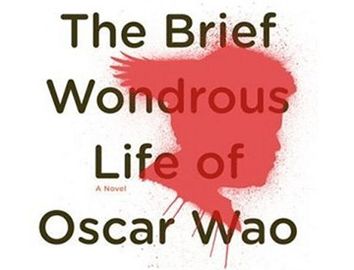
“The Brief Wondrous Life of Oscar Wao”

Junot D

  • more
    • All Share Services

As a short story writer, Junot Díaz found the magic alchemy of subject and style fast — maybe too fast. “Drown,” his debut collection, was published in 1996 to explosive acclaim. This was back in the Clinton era, halcyon days for political correctness and diversity initiatives, when globalism was not yet tethered to terror in the American mind. “Drown” issued a yawp from the Jersey barrio, a shout-out from a homeboy who hadn’t escaped and wasn’t sure he wanted to — and it soared past the gatekeepers into the pages of the New Yorker.

Eleven long years later, “Drown” has become that oxymoron, the contemporary classic, and its author a darling of MFA programs nationwide. By assaying the Dominican-American diaspora in lapel-grabbing prose, Díaz himself became something of an oxymoron: a Guggenheim Award winner who is de facto spokesperson for an entire immigrant community.

“It’s like a f—–g knife in me,” Díaz said in an interview last year of the intense pressure of producing a follow-up.

With his first novel, “The Brief Wondrous Life of Oscar Wao,” Díaz extracts that knife and lets it all out. A relentless, capacious and sometimes spastic voice guides us through a saga spanning three generations and two nations. In its dogged humor and reflexive candor, the voice of the novel’s narrator, Yunior, will immediately remind Díaz’s readers of its earlier incarnation in “Drown”: a punchy, hyperattentive adolescent looking for ways to get laid without looking lame. Now, years of wayward philandering have left Yunior longing for something authentic. The wisecracking vulnerability is still here in spades, but a remorseful tone colors everything in this novel, from the title to its final pages: “I wish I could say it worked out,” Yunior reflects while recounting bad dreams, bad sex and an increasingly listless life. “It’s not exactly what I dreamed of as a kid.”

Even as he alternates between tales of the eponymous Oscar and those of Oscar’s family — sister Lola (who also narrates briefly), mother Beli and grandfather Abelard — Yunior’s voice dominates nearly every page, and the novel finally reads most powerfully as his own coming-of-middle-age story, with its minor keys of loss, self-betrayal and regret.

Oscar’s story is set against the backdrop of the political histories of the Dominican Republic and its domineering neighbor to the north, onto whose soil he was transplanted as a young boy. Overweight, awkward, overly cerebral and uncool, he’s a classic suburban Middle American nerd who, much like Yunior, happens to be a Dominican-American nerd in New Jersey, and thus subject to additional expectations of machismo. Oscar’s obsession with “Star Trek,” fantasy games, J.R.R. Tolkien, comics and Japanese animation mark him as an archetypal “otaku” (Japanese for über-geek, before the term and the anime became cool). His use of polysyllabic words and pretentious dialogue — sitting next to an unrequited crush, Oscar feels “the heat off her body was vertiginous” — not to mention his diligent hours of writing, suggests that Díaz is rendering a kind of portrait of the artist as a young, fat Latino.

Early chapters detailing Oscar’s childhood, adolescence and traumatic college years are among the novel’s strongest, especially as Yunior further insinuates himself into the plot, taking the geek under his wing in part to get closer to his sexy older sister Lola, “who could smile open a sun,” but also out of sympathy and empathy: “In those days I had a dream of wanting to be a writer,” Yunior confides, half hoping that Oscar might be able to teach him. As the two become college roommates, Oscar begins looking more like Yunior’s nerdy doppelgänger. Where Yunior is fit (“I could bench 340 pounds), Oscar is slovenly, a hopeless trainee. Where Yunior is a cavalier Casanova on campus, Oscar “has the worst case of no Toto (pussy)-itis I’d ever seen.” Yet Yunior knows Oscar intimately, decoding his moods, gestures and utterances as if delineating a shadow self.

When Oscar posts a greeting to visitors on the door of their room, Yunior identifies it as Elvish, a language from “Lord of the Rings,” pleading to the reader in a parenthetical aside: “Please don’t ask me how I knew this.” As the two commence a short-lived exercise regimen, Yunior says: “I guess I knew more about him than I liked to admit.”

Díaz wrings considerable humor out of Yunior’s confessions to shades of uncoolness, but Oscar’s true obsession and raison d’être are far more earthbound than his sci-fi fantasies: finding transcendent love. “Dude fell in love the way the rest of us fall asleep” — and unlike most of the rest of us, Yunior adds, Oscar “would actually be heartbroken” when rejected, driven to madness by grief, loneliness and longing.

Oscar’s emotional rawness and authenticity, his willingness to die for love, exasperate and then engross Yunior, and the novel traces the strands of Oscar’s peculiar emotional DNA back through familial and national histories, in particular those of his mother, grandmother and grandfather, all three of whom suffer injustice and brutality at the hands of Rafael Leónidas Trujillo, the Dominican Republic’s iron-fisted ruler from 1930 to 1961. The plot interweaves period chapters set in Santo Domingo with those in New Jersey and New York as if hoping to diagnose Oscar’s addiction to love and Yunior’s encroaching self-loathing via personal and political histories. Accounts of betrayals, beatings, tortures and other manifold perversions of humanity darken Dominican narratives filled with beautiful and strong women seeking love, and proud men crushed by their perceived failure to navigate a ruinous social system. “Nigger please,” Díaz writes, apparently addressing us: “There were no papers, no civil rights groups, no opposition parties; there was only Trujillo.”

In the Dominican Republic, yes, but in the republic of the novelist and his hero, there is also … Tolkien. “Wao” is a smorgasbord of languages and a celebration of their diverse powers of meaning; Díaz uses Oscar’s immersion in fantasy, with its linguistic precisions and elaborately imagined details, as a means of confronting, not escaping, the suffocating absurdities of history and passion. An overactive imagination, even one as tragically self-delusional as Oscar’s will become, may be the only means of sustaining love’s power in a world gone mad with corruption and iniquity. “What more scifi than the Santa Domingo?” Díaz asks. “What more fantasy than the Antilles?”

Díaz switches seamlessly between urban slang and quasi-Victorian archness. Mock-heroic phrasings invoke Homer; obscenities glide by like grace notes; and popular culture — “This is your chance. If blue pill, continue. If red pill, return to the Matrix” — provides a lexicon that somehow seems able to tame, if not contain, the screaming banality of daily life and the madness of the past. “Homeboy dominated Santo Domingo like it was his very own private Mordor,” Díaz writes of Trujillo, and keeping a beautiful daughter from his raging lusts was “like keeping the ring from Sauron.” (Mordor, of course, being the heavily fortified, inescapable region of evil in Tolkien’s world and Sauron its evil inhabitant.)

That Díaz interweaves these references is ballsy and arresting: He’s a geek-punk, and he doesn’t care if you don’t get it. The principal languages are, of course, English and Spanish, the latter of which features in passages that are not translated, and some of which, for this gringo at least, remain so — effectively communicating the sense of permanent outsiderdom that is the province of the immigrant, the alienation from new and old.

“Wao” opens with a nod to “magic realism,” the most hackneyed tradition associated with Latin American fiction in the United States, introducing “Fuku Americanus,” or “the Curse and the Doom of the New World,” brought into being by the European colonization of Hispaniola and, more specifically, Columbus’ peregrinations circa 1492. But in Díaz’s hands, the “magic” gives way to “realism” in the first few paragraphs. The broad strokes of his global curse suddenly become very personal: “It’s perfectly fine if you don’t believe [in this],” the narrator tells us. “In fact it’s better than fine — it’s perfect. Because no matter what you believe, fuku believes in you.” Not surprisingly, fuku is eventually reconfigured as “fuck you.”

It’s a fitting translation, for “Wao” is a novel of attitude trumping all. Díaz mixes it all up, betraying both a heroic faith in his readers to sort out the inconsistencies and no small degree of authorial arrogance — even gleefully conflating narrator and author: “While I was finishing the novel, I posted the thread fuku on the DR1 forum,” he writes in the opening pages. “The talkback blew the fuck up.” Later, a brutal torture scene is compared to “one of those nightmare MLA panels: endless.”

Yunior or Díaz? Sci-fi or history? Blue pill or red? It doesn’t matter what you believe, Díaz seems to be saying. He believes in you.

Land of the rising homemaker

Martha Stewart's first overseas venture is Japan, where stylish domesticity just might trump rigid old hierarchies.

  • more
    • All Share Services

Land of the rising homemaker

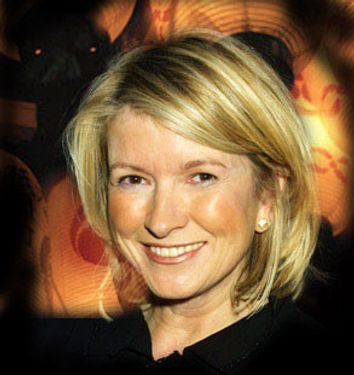
On the morning of Sept. 11, which was evening in Japan, Martha Stewart was dining out in Tokyo. As the world watched two jets raze New York’s tallest skyscrapers, Stewart surveyed the damage to her plate: grease stains. The best tempura, she observed to her Japanese hosts, disappears without a trace.

While foreign businesses have been tripping over themselves to escape Japan’s gloomy prospects — Burger King, Merrill Lynch and now Sephora have all left or begun to — the newest overseas arrival is landing with an entire fleet. In what might seem like a retail kamikaze mission, Stewart’s multifaceted marketing operation, Martha Stewart Omnimedia, is crashing the Japanese-style market.

“She has a thing for Japan, she really does,” explains Yasushi Okue, general manager of the LaLa channel, Japan’s women-oriented cable network, which started running Stewart’s syndicated show (her initial incursion) up to four times daily in October 2000. The show now has a million viewers, most of whom had never heard of Stewart before they tuned in.

“Two days after the 11th, we had a promotional event scheduled, a tea party at the Westin Hotel between Martha and her viewers,” Okue says. “We thought for sure she’d cancel, because she has a daughter in New York, you know. But she stayed. She met with everyone. She’s really devoted.”

Stewart’s devotion to her business is no surprise to Americans, of course. The parody of her corporate ice queen persona is as common as her first name in U.S. households. But here in Japan, the most common response to her name on the ad-plastered, recession-weary thoroughfares of Tokyo is a polite but urgent: “Martha who?”

The million who already watch Stewart dispensing tips on cable television are about to see the American homemaker advising them everywhere. September saw the first Martha Stewart products hitting Japanese department store shelves, together with posters of a beaming, blue-jeaned Stewart in motion, toting an enormous leafy wreath. The grand opening of “Martha Stewart Yurakucho,” Stewart’s entry into Tokyo’s chic and pricey Ginza district (Japan’s Fifth Avenue), heralded in a press release as “the world’s first specialty shop of Martha Stewart,” was held in November. And Dec. 1 marked the launch of Martha Stewart Martha, a bimonthly magazine in Japanese “full of Martha’s essence of how-to ideas which help you lead your better life.”

Stewart sells the concept of a stylish domesticity to the self-help seeking masses. The products are almost an afterthought. As Joan Didion wrote in the New Yorker, her success (like that of other celebrities who have created marketable brand-name products) is self-generating. The fact that Stewart, a part-time fashion model from New Jersey who honed her skills in an investment firm (“My seven years on Wall Street could not have been better!” she now exclaims) and then became a homemaker, has managed to create a multimedia empire built upon her name and face alone is more important than what she actually says or does. To American women, especially, harried by careers and procreative longings and suspicions about feminism, Stewart is a paradigmatic paradox: She’s 60, she traffics in mom’s work (kitchens and gardens), but she’s a billionaire with five homes and an apartment in Manhattan.

Ultimately, Stewart is an icon of America’s more abstract and conflicted twin towers: democracy and capitalism. Everyone created equal — and everyone for themselves. But in Japan, democracy is largely nominal, a diplomatic cover for some rigidly hierarchical systems and assumptions. Little surprise that to some local fashion arbiters, European models seem better attuned to contemporary Japanese tastes. One editor at a mass-market Japanese women’s magazine sours on Martha Stewart Omnimedia’s chances for success in her native land. Citing the recent failure of a Japanese version of Good Housekeeping, she finds Stewart’s über-Americana ill-timed. “Today’s Japanese are more interested in Italian styles in furniture and design,” she says. “There’s an Italian boom, partly because the aesthetic sense and the use of space are similar. American homes are unrecognizable in Japan; Japanese women simply don’t have the room to entertain guests.”

But chef Nobu Matsuhisa, who has garnered worldwide attention for his European twists on Japanese elementals, believes his pal can crack the Japanese market via Disney-like fantasy. Matsuhisa met Stewart seven years ago at a book party and has since appeared on her TV show. In September of this year, they jointly promoted their Japanese enterprises at Tokyo’s Tsukuji Fish Market, and Stewart says she was “very honored” to pen the introduction to Nobu’s just-published cookbook.

“She has a lot of interest in Japanese history, culture and food. She’s serious,” he says. “I see people in Japan looking for more American ideas right now. Japanese culture is different, of course, but people are changing little by little every year. There are a lot of new buildings going up, new condominiums. People still have savings here, and the spacious American style is more attractive to them, even if they don’t have the space.”

Stewart didn’t rise from Jersey-born model to corporate queen by misjudging public appeal. She spent her formative years at an investment firm, and her sense of the market is as finely calibrated as that of a pop star like Britney Spears. “We will offer a combination of products,” she says, “some of which are tailored to the Japanese market but retain a strong resemblance to the original merchandise.” In other words, she will attempt to incorporate the kind of transcultural adaptations that have worked so well for American stalwarts like McDonald’s and Starbucks. “Bedsheets need to fit futon sizes. If we change the product too much, the look and feel of the brand will be jeopardized.”

Japan’s zeal for consumption and its lust for designer-label pretensions are notorious worldwide. A quick survey of subways and sidewalks makes this unequivocally clear: Louis Vuitton and Prada never had it so good. But Stewart’s products twist the equation in a decidedly late 20th century American direction. Like Starbucks, she sells low-end products at midlevel prices, with the veneer of a high-end reputation. Stewart’s household items are sold through Kmart, one of the least glamorous of America’s discount chains. In Japan, she has partnered with Seiyu, a better-organized, cleaner and more respectable version of a low-end retailer.

“Our basic everyday products are affordable household necessities, so they’re somewhat immune to downturns,” Stewart says. “The kinds of products we are offering combine the high quality associated with Martha Stewart [the label] and the pricing at Kmart and Seiyu.”

Stewart’s interest in Japan was born in 1977, when she visited her ex-husband Andy Stewart’s publishing company in Tokyo. She visits Japan about twice a year now, according to LaLa’s Okue, to push her products, meet and greet LaLa viewers and take in the sites.

When I ask her about the aggressive American nature of her products, Stewart takes great pains to ensure that her designs on Japanese consumers are not ignorant — that she is not participating in an American commercial or cultural invasion.

“The Japanese sensibility toward art and design, cuisine and gardening and living will not dissipate,” she argues. “In fact, the influence of Japan on other cultures has been extraordinarily powerful, and continues to be so.” Indeed, she appeared earlier this month at New York’s Japan Society for a lecture on Japanese aesthetics. She sold out the hall with a presentation on what makes Japan truly Japan, even if Japan itself doesn’t quite know what that means anymore. And who’s to complain? Isn’t that what she’s been doing for America?

“Her products are very inexpensive — but they don’t look inexpensive,” Okue says, comparing Stewart’s potential retail appeal with that of a chain called Uniqlo. Uniqlo is a wildly successful China-based clothing company that markets shapeless American casual styles to suddenly yen-conscious Japanese, managing to undersell even the Gap with its factory-stitched image.

“Japanese consumers really care about value now,” Okue adds, “and Martha’s ideas are really simple: If you wake up five minutes earlier, you can do more with your breakfast. That kind of thing is really appealing.”

Continue Reading Close

Soaplands and love hotels

Weaving kitsch, honesty and lather, sex in Japan is as complex as the country itself.

  • more
    • All Share Services

Soaplands and love hotels

In land-deprived Japan, where physical space is always intimate, the ancient and the futuristic commingle in the streets: I pass geishas toting cell phones, kimono-clad ladies bowing to ATMs, temples with video-screen tour guides. Sex is an acknowledged urge in this land of convenience, serviced by an industry of myriad manifestations. It’s primeval meets postmodern, with no room for the puritanical.

Just after dusk (and earlier on weekends), men in lean black suits and women in latex minis people the neon arteries near Japan’s train stations. They aggressively solicit clients from packs of beery businessmen (whispering “sexy, sexy”) and enlist young women for work by grabbing them hard round the shoulder, “inviting” them for a chat.

They hand out condom packets, half-price discount tickets for services topless or nude. They tote signs displaying cartoon drawings of nymphets with enormous breasts and wayward skirts, often clothed in schoolgirl attire, listing the ages of their staff. They tell the men about well-earned pleasures and the women about easy money, filling their heads with dancing visions of Prada bags and holidays overseas.

These are “the soaplands,” Japan’s red-light districts, named for the most hygienic of erotic massages: A nude female rubs the length of her soap-lathered body over a man’s pokimon, and he comes clean.

Service reigns supreme. The air is filled with a prerecorded, chirpy female voice that greets you in the same breathy tone at the bank or the porn shop, enveloping your world in an aura of kawaii — cuteness, prettiness, harmlessness. Full-color fliers in your mailbox feature lingerie-clad or topless models posed compromisingly and demurely. A variety of options are laid out on the order-in “menu”: fellatio, 69, sadomasochism and straight sex, with prices, locations and phone numbers demarcated clearly.

To understand anything in Japan, you must know about tatemae and honne. The former indicates the embarrassment-saving rituals of the public sphere — the deferential bowing, the litany of apologies and the polite banter of mutually assured repression. The latter is loosely defined as your true feelings as an individual, mysterious sensations and impulses and desires that are reserved for private domains. In a land smaller and less habitable than California but with a population half that of the combined United States, the strict codification of public and private space is no minor concern.

Last year, for example, at the peak of the globally syndicated series about the president and his intern, I sat alongside a 50-ish Japanese linguistics professor at a sake bar in Osaka. We watched Bill Clinton’s clown-nosed face on the screen and nodded at one another.

“Why does America embarrass itself?” the professor asked me.

“Sex,” I replied. “America is confused about sex and love. We talk about it a lot.”

He nodded: “In Japan, maybe he would be fired or he would resign, but the worst thing would be this news everywhere.” He shook his head: “Here, no one would talk about it to the rest of the world.”

Sex happens and is talked about almost exclusively in the sphere of honne. On the face of it, and certainly amid the then-depressing din of White House hysteria, this lends an admirable air of dignity to the daily dance between spirit and flesh. But finding where the lines are drawn can mystify a Westerner, to whom Japan might seem at once both a pleasure dome of guilt-free perversions and a hyper-prim, overpopulated dystopia of plastics and pollutants.

The uniformly blue-suited businessmen who frustrate foreign counterparts with elaborately formal agreements that amount to elaborately polite evasions (or outright lies) sit in overstuffed subways, riffling through newspapers featuring half-naked women and manga (comic books) displaying graphic sex and violence. They appear unconcerned with the eyes of fellow commuters pressing over their shoulders and elbows.

The office ladies, secretaries and elevator-operators greet their bosses and customers in pristine white gloves and high-collared suits, their hair tied back into tight ribbons. But later that night, they don neon micro-minis and breast-clinging halter tops as they gyrate in nightclubs or rendezvous in “love hotels.” Context, in other words, is everything.

Even so, what’s tolerated with little fuss or moral hand-wringing in Japan remains striking. Hiro Fujiwara, a man in his 30s who helped produce pornographic videos before manning his parents’ noodle stand in an Osaka neighborhood, tells me that “pornography is sort of seen as a good outlet for men, a sign of a healthy man, like drinking a lot of alcohol.” His friend, Kazuyo, a woman in her mid-20s, concurs, adding that “women don’t mind so much because it means the man is normal. He watches when he is alone.”

And this is how many Japanese men live. Habitually sent away from their families for years at a time by their company heads, Japanese men often have more intimate relations with their colleagues and the hostesses/mistresses who serve them than they do with their wives or children. Amid the boom of the nation’s post-war economy, the corporation replaced the family.

“And even if they do go home,” says Kazuyo, referring to legions of distant dads, “they don’t really stay there. My father goes out after work and stays out, or he comes home late and goes to his room.” (Married Japanese traditionally sleep in separate beds.) “He doesn’t really know us. On weekends he plays golf.”

That older men lust after younger women, and sometimes girls, is news to no one. But in Japan the fetish is so entrenched that there’s a term for it: Enjo Kosai translates as “a supportive association or exchange” and means, according to 24-year-old Saeko: “He supports her lifestyle, she supports his ego.”

A newspaper survey reports that 1 in 20 high school girls are involved in Enjo Kosai, and since poll respondents in Japan tend to reply with more discretion than those in America, it is generally assumed that the results err on the conservative side.

The schoolgirl fetish is huge here, abetted by both sexes. The traditional blouse-and-skirt uniforms are purchased from graduating girls by dealers who sell them at double the cost to middle-aged men. Girls’ underpants, new and used (purportedly), are sold from vending machines tucked into streetside cul de sacs alongside sodas, cigarettes, beer and whiskey, and in one case, a few blocks from a Buddhist temple. Animated and live-action porn videos feature figures and performers in suggestive schoolgirl garb, as do magazine layouts, comic book tales and, with slightly less nudity, prime-time TV dramas.

Some actual schoolgirls hitch up their skirts to further expose their thighs and more on stairwells and escalators. Men might approach them discreetly after school or through a third party who would set up the “exchange.”

“The girls get money, sometimes gifts, you know, material stuff,” says Saeko, who spent five years in Australia and is now applying to graduate schools in California. “They might have a high school boyfriend, but a lot of them aren’t interested in high school boys. Japanese boys their age are too young or wimpy or just, like, nerds.”

She is quick to point out that Japan is a “feminine country,” an observation that reminds me of its matriarchal foundation myth. In the myth, a sun goddess named Amaterasu has to be seduced out of her cave by a bunch of ribald farmers so that the island will become fertile again. The sexy matriarch in Japan can be seen in everything from classical erotic woodblock prints to modern-day strip clubs, where men rent magnifying glasses to closely inspect the strippers’ procreative genitalia.

The goddess myth is from Shinto, the only spiritually oriented philosophy that is indigenous to Japan. Shinto concerns itself with animism — godlike spirits in all things, animate or otherwise — but doesn’t demand that one feel guilty about lust, homosexuality or masturbating in front of a computer fed by 3-D CD-ROMs — as long as one doesn’t run around talking about it.

“The Japanese approach to sex is mechanical and morbid,” says Sylvia, an Italian expat who has lived in Kyoto for three years. “Especially for the men, who have an inferiority complex. They can’t handle real women so they act like perverts.” She cites office harassment, the subway-groping epidemic that has only recently gained media attention and the proliferation of rape fantasies on video, television and in cartoons. “The women won’t say anything because of shame. Then the men go down to Thailand and act like sex maniacs.”

I mention the rumored development of touch-sensitive “sexbots” made from some kind of cyber-skin, molded to teenage proportions with implants of human hair. Said to moan on contact, they are engineered by the same Kyoto technicians who introduced the bestselling artificial pets that feed, expel waste and mimic certain human emotions in their computer-chip hearts.

Sylvia makes a vomit gesture. “Just like those love hotels — can you believe it? You pay money for a few hours of just sex. It’s so … mechanical,” she repeats.

Love hotels are Japan’s fertility chambers — gaudy temples to Eros in the post-war era of rampant overcrowding. Designed to make copulation private, discreet and desirable in a land where several generations once shared the same tiny space, love hotels have evolved into a multibillion-dollar industry that is part-kitsch, part-cool. Twenty to 50 bucks will buy a two-hour stay at “rest” rates; after 10 p.m. prices rise to $100 or $200, with an early-morning check-out.

The buildings themselves resemble castles, mansions, palaces, even cruise ships, all bathed in neon. The theme-oriented rooms (anything from S&M to tropical island) are immaculate — a far cry from the notorious fleabags of American one-night stands. Driveways are shielded behind curtains, license plates blocked by clip-on devices. The customer feeds his bills into a computerized slot and chooses a room by pressing a back-lit panel. He never sees anyone but his partner, and no one else sees him.

The woman who introduces me to Love Hotel Hill in Tokyo’s Shibuya district, a 27-year-old actress named Marico, is neither morbid nor mechanical. Like most unmarried women her age, she still lives at home. Her nights out end here.

We choose a room called “Peach” and are offered a selection of erotic videos on digital TV. We sip the cheap champagne and
check out the bath and bouncy king-size bed, playing with its lighting control panel. There’s a CD player with four speakers, a video camera, mirrors on the ceilings and walls and, of course, a massive karaoke machine. We look through the condoms and various oils and then settle into a deep Jacuzzi, gazing through the tinted window at lighted Ferris wheels along the bay, six-story Sony screens suspended in space and alluring soapland neons that blaze till dawn.

Behind its playful gaudiness, the love hotel is forthright and frank, designed by a culture that has learned to dignify space for intimacy. I feel unreasonably secure — as if this evening’s romance were meant to happen, were sane and decent and even … fun. We can watch each other shower through glass walls, we can tan together in adjacent beds. What a concept! To set aside a respectable, well-appointed and affordable space for physical affection; to lay out the gadgets without pretense or seediness. It’s kitsch and cool and honest at once. If capitalism is going to get sexy, this is one way to do it.

Continue Reading Close