Sallie Tisdale

The Beautiful Hospital

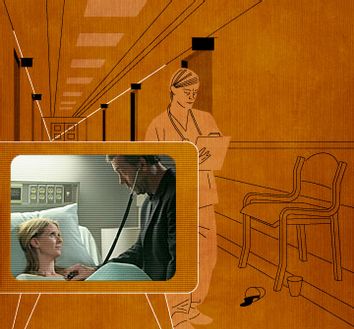
In "House," impossibly gorgeous physicians miraculously diagnose rare diseases in every episode. Where I work as a nurse, in the Ordinary Hospital, sometimes there's not even a doctor in the house.

  • more
    • All Share Services

The Beautiful Hospital

Like a lot of people who work in healthcare — I’m a nurse — I started watching “House” because of the mysterious diseases involved. Everyone loves a rare disease. And I was perversely charmed by the title character’s nastiness. House says the kind of things I sometimes want to say — mostly, to doctors. (Dr. Weber: “I know I know you.” House: “Sure you do, Dick.” Weber: “The name’s Phillip.” House: “Oh, my bad. Something to do with your face. I always think your name is Dick.”) I kept watching in spite of his flamingly litigious behavior: He calls one patient “Mrs. Nympho” and says of a Chinese woman, “Not the sharpest chopstick in the drawer, is she?” I watched for a whole season, in spite of knowing that the crude passes, Internet porn and Vicodin addiction meant that any doctor like him would be both bankrupt and imprisoned.

But I’m frustrated now. I call “House’s” world the Beautiful Hospital. There are the wide, bright hallways, miles of floor-to-ceiling glass, and the many private, luxurious patient rooms (none of which appear to belong inside the hulking brick institution seen in the bird’s-eye credits). Mostly it is a Beautiful Hospital because it is staffed almost entirely by a trio of gorgeous and impossibly brilliant physicians. No one else works at the Beautiful Hospital except a few secondary gorgeous and brilliant doctors and an ever-changing cast of extras whose only job is walking down the hallways in scrubs.

By my incomplete count, the three handsome doctors who work under House — Cameron, Chase and Foreman — all sadly lacking a sense of humor, are educated in the entire gamut of medical specialties, from brain surgery to dermatology to obstetrics. Their patients have diseases like adrenoleukodystrophy, cervical spondylosis and Miller-Fisher syndrome; a surprising number wind up getting experimental surgeries, organ transplants and drugs not on the FDA-approved list. (On “House,” the correct diagnosis always follows a lot of wrong ones and the patient’s near death at the hands of the brilliant diagnosticians.)

They are also trained as phlebotomists, bacteriologists, geneticists, nurses (all specialties), pharmacists, a three-person advanced cardiac life support team, CT technologists, radiologists, MRI technologists, hyperbaric chamber technicians, respiratory therapists, social workers, epidemiologists, substance abuse counselors, polysomnographic technologists, organ transplant coordinators, immunologists, chaplains, pathologists and private detectives. The last stems from their weekly unauthorized and wholly illegal forays into the garbage cans, dresser drawers and bathroom cabinets of their patients, a behavior I have never actually seen a doctor engage in before.

I’m surprised they don’t fix the air conditioning as well, but I guess they have to delegate something.

Last week, I worked an evening shift at the hospital. I had four patients under my care in the oncology unit where I have worked for several years. One, struggling with a tumor in his liver, merely had the problems of pain control and nausea with which I am intimately familiar. Another was a woman in her 70s dying of kidney failure. (Many of the hospital’s dying patients are transferred to our unit for their last days.) A man in his 40s had severe abdominal pain of unknown origin and was going through tests. An elderly man was slowly recovering from the severe side effects of the treatment of his renal cell cancer.

Ours is not a Beautiful Hospital. We can call it the Ordinary Hospital, at least in accommodations. Two of the patients shared a room, which meant sharing the sounds and smells of vomiting and pain. There are no walls of glass here. The rooms are small and rather cramped, and the thermostats don’t work all that well. My pager tends to go off at awkward moments. There are no private offices for conferences with family members, who sometimes weep in the hallways. We are short on impossibly good-looking and inhumanly skilled diagnosticians.

I was helping the man with the liver tumor to vomit when one of the respiratory therapists came in and told me the man with renal cancer had a fast, irregular heartbeat. I looked him over and then called the doctor, who that night was in fact a nurse practitioner. Another nurse looked up his records for me. We decided to watch him closely, and when his heart was still flailing away a half-hour later, I ordered an EKG, which was done by the same respiratory therapist who’d first noticed the problem. More phone calls, more consultation, and then I had new medication orders for the pharmacist and a long report for the next nurse.

Several of us were involved. None were doctors.

I compare “House” to “ER,” another drama I used to watch regularly. “ER” is the Ugly Hospital. There are actually nurses working there, as well as orderlies, secretaries and janitors. Some of the staff are even obese and bald and pockmarked, just like the rest of us. There is a high rate of drug abuse and suicide attempts among the staff, perhaps due to the epidemic of promiscuous partner-swapping. (The staff on “ER” have always had a disturbing tendency to be distracted by their sex lives during livesaving procedures — “Lidocaine, stat! And where did you get that hickey?”)

I was fond of the helicopter-blade amputation; I liked Kerry’s malleable limp, and George Clooney can get excited about my kid’s cold anytime. But I got tired of the whining (“I can’t believe you kissed her! Lidocaine, stat!”) and the ceaseless parade of crazy, violent, manic, weeping, infectious, tragic and critically ill people coming through the doors. Most emergency rooms don’t have quite the same traffic. Over time the janitors and secretaries have faded out and a lot of the nurses seem to have quit, and the ones left have gotten suspiciously thin and blond. And even though it is definitely the Ugly Hospital, none of the doctors is obese or pockmarked.

I fondly remember “St. Elsewhere,” one of the first television shows I ever watched regularly. It was inevitably focused on the doctors, but they were ordinary-looking people, not very charming and definitely not brilliant, and they tended to freak out if the nurses weren’t there to save their asses half the time. Some of the nurses were really bitchy, too, and a few were downright brilliant.

Too bad it all turned out to be a dream.

Last Friday night, my patient with abdominal pain kept getting worse. The X-ray technician trying to get a study of his bowel called me down from the 5th floor to the basement twice. I finally called the hospitalist — a real hospital-based doctor, kind of a Pretty Doctor but not quite a superhero — who told me to call the general surgeon, who was at that time in surgery and to whom I relayed a message by way of one of the surgical nurses. The surgeon showed up an hour later, breezily told the patient he wanted to “open him up and see what’s going on,” and left. With the help of two other nurses, I got him ready for surgery in an hour. As he was being wheeled out by the transport orderly, the Pretty Doctor appeared to say good luck.

No brilliant diagnoses. Not even a good guess.

During all this — which was not, in fact, an unusual shift; oncology patients are by definition unstable and the ones in the hospital tend to be quite sick — three other nurses were caring for their own patients, all needy in completely different ways. A fourth nurse was filling in as our aide, helping with vital signs and blood sugars. A secretary answered the phone, directed visitors, put in computer orders and managed the charts. Transporters came and went. The IV therapy nurse appeared to help with a stubborn line. The physical therapy assistants exercised with a few people. A pharmacist prepared chemotherapy and dealt with the nurses’ constant requests. A housekeeper hurried to clean the rooms left by two discharged patients, to make way for the next admission.

Meanwhile, the woman in Room 21 had sunk into unconsciousness. Her breathing was ragged and her legs swollen with fluid. I was in and out of the room frequently, turning her, checking the morphine drip, and mostly checking in with the husband, son and daughter, who kept a continual vigil by the bed. The chaplain visited for a while. Another nurse helped me position her and get her cleaned up once.

I dashed into the IV room, and the pharmacist told me a joke.

“There was this fisherman and he was up in Alaska, trolling for halibut, and here comes a wave and over he goes. Next thing he knows, he’s in heaven. Man, everything is great! There’s a big cafeteria and the buffet line has all of his favorite foods. So he’s moving along with his tray when this guy in a white coat shoves him aside and cuts in.

“‘Hey!’ the guy says. ‘Who do you think you are?’ But St. Peter comes over and says, ‘Ssh, that’s God. Sometimes he likes to pretend he’s a doctor.’”

The woman in Room 21 died at the end of my shift. No doctor had appeared. No doctor had even called.

The real message of medical shows is that brilliance goes hand in hand with emotional retardation. While this may be a debatable point, it has little to do with medicine as it is usually practiced. Most of the physicians I know are easy to work with — oncologists, by default, tend to be at ease with teamwork. They are collaborative and respectful and although a few are quite handsome, they fall short of model status. (Wilson, House’s oncologist friend, is played by Robert Sean Leonard. If only.) My biggest objection to medical shows is not that the doctors on television do their jobs brilliantly, but that they do everyone else’s jobs, too. And my objection to doctors in the real world is a little like that. I sometimes wonder just how much doctors know about what goes on over the course of a day in their patients’ difficult lives — how many people are involved, how much we need each other.

I guess a lot of people are watching “Grey’s Anatomy” now. Maybe I’m burned out, but another soap opera about surgeons just doesn’t grab my attention. You have the gorgeousness, the sexy nurse, people bursting in on critical procedures (“How could you stand me up like that?” “Lidocaine, stat!”), the pop song ending over scenes of each stunted character staring out a window — it just doesn’t seem new at all.

The medical show I really like is “Scrubs.” It’s full of chaos, anger and fear, and no particular brilliance at all. Just struggle and good intentions and richly imagined fantasies of lust and revenge. Like my world.

I still watch “House” — sometimes with a little amusement, a lot of frustration at others. Of course, we’re supposed to understand that Dr. House is a lonely, bitter man with chronic pain and intimacy issues and blah, blah, blah. At the Not-So-Ordinary Hospital, I engage in an extraordinary task with the help of a lot of extraordinary people who never get to be the central characters in television shows. “Ray Power — X-Ray Tech”? “Cases From the Central Venous Catheter Lab”? I don’t think so — not many rare diseases. “Chaplain Jones”? I can only wish.

Those are some great stories, but they aren’t going to make it into a 50-minute show.

A mother’s love

My adopted son, already the father of three, faces a future of dead-end jobs and near poverty. What do I owe him and my unexpected, fragile grandchildren?

  • more
    • All Share Services

A mother's love

It started six years ago, when my eldest son met Corina. He was 23, and living on the disability payments he receives because of profound deafness. She was just 21, with a 4-year-old daughter. They lived in subsidized housing while Corina took a few community college classes and collected welfare. Within a few months, Rafael had moved into the apartment in a small city in Oregon, an hour’s drive from our home in Portland. A few months later, they announced happily that Corina was pregnant.

Austin was born. Corina dropped out of school.

A year later, Taylor was born. They borrowed $500 from us to pay the deposit, and moved into a duplex. Rafael somehow managed to get a loan for a car. They found seasonal jobs, went back to unemployment, signed up for classes, dropped out of classes. They spent their days with the babies, in the directionless leisure of poverty.

Ups, and downs. Rafael got a job, a real job, stocking the soup shelves in a big-box grocery discount store. They moved again, into a house. Corina worked part-time at a deli; they took different shifts, shared childcare, stayed sober, kept the house clean. Then Kaylee was born, and they moved again.

There was never enough money for all the things they wanted to buy. They started charging things — clothes, televisions, bicycles. The car was repossessed. They dodged creditors; the phone was disconnected.

And in what seemed an almost inevitable way, things got physical. She threw all his clothes out the window; he slept in the car. He packed and left for a few days. When he knocked her down and kicked her, she called me and I told her to call the police. Rafael was arrested and thrown into a draconian probation agreement that prevented him from having any contact with Corina for more than a year. During that long year, she fell in love with Tyson, a mutual friend who has two small children of his own.

When Rafael was finally allowed to return, he found Tyson living there, with Corina and the children. Tyson and Corina broke up last week, though, and both the living arrangements and the partnerships are in flux. Corina is pregnant again, by Tyson.

With Austin, the first baby, I began to practice the delicate task of helping out and minding my own business at the same time. I struggled as well with guilt — that somehow I had failed as his parent, that he could do no better than this. We adopted him from Guatemala when he was 9 years old, after a painfully deprived childhood. He had no education until then, and I had hoped that he would learn to love school, and take as much as he could. I had imagined that I could heal some of his wounds. But the difficult early years, the loss of his family, the long years without attachment or security, were much stronger influences than we could be in the long run. In a way that I can witness but not control, he feels much more at home in the drifting world of the lower class than in the settled middle class where we live. He feels a biting sense of entitlement still; the belief that he is owed something, that he should not have to work so hard for his life anymore, eats away at him. He resents any implication that he is responsible for his problems.

But I could vividly see his and Corina’s bleak future of small apartments, dead-end jobs, no education, and never enough money. I knew they needed more help than I wanted to give. I told myself they were young, that people make mistakes, that we are all entitled to at least a second chance. But I saw as well their total dependence on outside help — not only help from family, but on public assistance of several kinds. They seemed not only unable to support themselves, but unable or unwilling to do much about it.

The task of children is differentiation, and that means difference — different values, different goals. The struggle of a child is partly the struggle to be seen as something other than a child, until it becomes true. The struggle of a parent is that we never stop feeling like a parent, and a little responsible for their behavior. These are complex and textured relationships; we want them to grow, we want them to stay, and they want the same impossible things.

It took me years to get to know Corina, who is shy and seemed abysmally ignorant about the world. She has been on multiple forms of government aid since her first child was born at 17, and what she knows is waiting rooms, filling out forms, going from day to day with few plans, and those plans often knocked awry.

When Corina got pregnant the second time, I took her out to lunch. I didn’t know her very well at that time, but she had told me once, in an unguarded moment, that her life was going fairly well before she met my son. At lunch, I asked if she really wanted another child, and told her I would help her terminate this pregnancy if she wanted.

I could tell she’d thought about it. But she is also adopted, and her parents are divorced, and like Rafael she dreams of a family of her own. She was weary and a little surprised at where life had taken her, but she was used to taking things as they came, without protest. Her passivity is immense.

“I don’t know, things just happen to me,” she said. Then she sighed. “I just hadn’t thought it would happen like this.” I began to realize they can’t really see a different kind of life for themselves. This is what they know, and neither of them has a lot of imagination.

When Taylor was born, I sank into a dispirited silence for days, unable to celebrate. I could meet them only through a fog of opinion and worry, full of conflict. I found myself falling in love with the babies, and fighting it, and enjoying our visits, and leaving brokenhearted. Often, I couldn’t think of anything to do or say that wasn’t somehow the wrong thing.

When I found out about Kaylee coming, I didn’t say much on the phone. I didn’t even feel surprised. But when I hung up the phone, I started to cry, and then I shouted a little — at the ceiling, at some distant god. At them.

They needed money all the time. The bills were always higher than expected. An overdue bill somehow never mentioned before went to a collection agency; the checking account somehow got overdrawn and the unstoppable fees piled up.

They fell for a “no-down-payment” commercial, and bought a used car at 30 percent interest. They had no idea what they’d signed. They hadn’t asked for help because, as Rafael reminded me, everyone was always telling them to grow up and take care of themselves.

They asked us to help pay for the car. They asked us to help buy a different car. They asked us to give them $1,000, having never paid back the $500. They asked us to buy shoes, clothes, gifts, to pay this bill or that one. Every time they asked, we went back to the beginning. Get rid of the car. Budget and plan. Pare down a life already pared down.

Finally, we bought them a used van, no payments, on the condition that Rafael get a vasectomy. The central problem of family planning is that those people least equipped to be parents are for all the same reasons least equipped to keep themselves from getting pregnant in the first place. The fact is that they both know about birth control. They tried, but not hard enough.

I took Corina shopping. (She doesn’t know how to drive.) I showed her that a bag of baby carrots costs five times as much as loose ones. She didn’t know that there were prices posted for each item, or that many things were priced by weight. She didn’t know that one kind of macaroni was twice as expensive as another. She didn’t want to buy a bag of rice, because she didn’t know how to cook it. I’ve given her recipes and offered lessons; she doesn’t want to learn.

For years, I’ve swung along an arc of love and exasperation for these decent, immature young people. I missed the kids, and wanted nothing to do with their parents. I wanted to help; I wanted to scream. They had only their parents and a weak net of welfare holding them above homelessness. They have never had any idea how lucky they are — to have a clean and spacious apartment subsidized, to have the food stamps and the aid check and the free healthcare and the WIC coupons. Instead they wished for much more, running up credit at Sears and buying a load of toys at Wal-Mart and new Nikes and a shelf full of DVDs. Corina’s solution, for months at a time, was to block incoming phone calls so the creditors can’t find them.

I worried a lot about the kids, who were slow to walk and slow to speak and spent their days in front of a television in a dark room, drinking soda. How could I not be responsible for my own child’s children? What do I owe my fragile, unexpected grandbabies? What do I owe my step-granddaughter? What do I owe Tyson’s children, or this baby to come?

What do the rest of you owe them?

Kaylee is crying, Taylor is pulling at my hand, Austin chews thoughtfully on a crayon. I pick up Kaylee, take the crayon away from Austin, ask Taylor to wait a moment. Kaylee quiets down against my shoulder. Austin stares at me, his goofy hair sticking up sideways, mouth open in a dark O. Then he reaches his arms up toward me with a soft, amiable smile. Kaylee folds into me precisely, and the scent of her fine black hair is haunting and familiar. But she is more than one too many.

“I don’t like to be alone,” Corina told me once. “It’s boring.” This is what brought them together, I think. They hate to be left to their own devices. There are no books in the apartment, no magazines. They shop at Wal-Mart and Costco, because their friends do. They want the kids to wear clothes with cartoon characters on them, because this is what the commercials show. They buy Hamburger Helper, Pepsi and frozen pizzas, because they see these things on television. Because they are easy and comforting in a hard world.

They lack imagination, seek entertainment, cultivate the familiar, even while they long for luxury. After we bought them the van so they wouldn’t have to make car payments, they sold it and bought something better, on credit. When our children are young, we imagine that they will not be like other people’s children. They will never grow up to be irresponsible or incompetent like the other children we see, who should have known better. They will not, in other words, be like we are sometimes. But they are. They grow up to be ordinary people like the rest of us, and we have to learn to love them as they are and not as we would have them be. We have to let go of all the fantasies, if we can.

I know that in some important way, the babies are not accidents, not just youthful mistakes. The same mistake made enough times is really a choice, and these bad choices drive us crazy. I suspect this is one way conservatives are made: by meeting the sticky imperfection of people, by knowing better. In hindsight, we can call ourselves wise when many of us were just lucky. Looking at other people, we can call them foolish when many are just unable. It is hard to admit that many people out there, people like Corina and Rafael, can both know better and have no idea how to do things differently.

They have stopped asking us for money, because we always say no. The phone is still disconnected, and I can’t figure out where the big-screen television and new couch came from, or how they paid for the computer. When creditors call me, asking for Rafael, I tell them he doesn’t live here anymore.

Six years later, with yet another baby on the way, things are actually looking up. Sort of. Rafael found a job, though it is 20 miles away. Corina is back in school. They still have a good apartment and the children are all in school or Head Start. The latter has been a huge help; they’ve become active and talkative children. We helped them carve pumpkins for Halloween a few weeks ago; it is the first time the children have ever had jack-o’-lanterns.

If they keep trying, if they keep their jobs, if the subsidies don’t disappear, if they don’t make any more big mistakes, they may get by. But they will never be safe. Maybe none of us really are.

I don’t know what my relationship to my son’s possibly ex-girlfriend’s baby by a different man will be. But I know the peculiar work of parents lasts forever; it never ends, but it never stays the same. I know they are just beginning to face the long consequences of family, the ones that I know well.

Continue Reading Close

On Japanese trains

Rail travel highlights the contrast between the private and the communal in the land of the well-mannered mob. An excerpt from the recently released, "Salon.com's Wanderlust: Real-Life Tales of Adventure and Romance."

  • more
    • All Share Services

Somewhere in the controlled anarchy of my weeks in Japan last fall, I found myself in a group hug, in the public arena of a crowded train station. I was traveling to several temples with a shifting crowd of Buddhist friends and acquaintances, most of them Americans with no experience in Japan and only a little conversational language.

We’d been moving from one monastery or temple to the next almost every day, bearing gifts, paying respects, attending ceremonies. We rose at 3:30 or 4 every morning, joining in temple schedules until after breakfast, and then moved on, by foot, taxi, bus and train, sometimes all in a day. Mostly, we took trains; when I wasn’t in a zendo in Japan, I seemed to be in a station. And after a few weeks in the world of Japanese trains, I felt as though movement itself was my home.

That day in Kanazawa, a busy city in Ishikawa Prefecture, we were overcome by giddy exhaustion. We had a long wait at the Kanazawa station — when we weren’t moving, we were usually waiting. We piled onto a bench in a heap, a dozen scruffy, coarse Americans out of place in the decorous quiet of Japanese business travelers, and somehow Mikio ended up in the middle. Mikio was raised in Tokyo and Osaka, but is married to an American woman and lives in the United States now.

Mikio has told me more than once that he is “not Japanese” anymore. Japanese who leave the country and live elsewhere for a time are never quite the same, he says. He often has a slightly bewildered expression on his thin face, the look of a man who thinks he’s missed an appointment. Even in Kanazawa, Mikio had that look. The American boisterousness and informality he’d gradually grown used to in his new home stood out starkly in his old one. From deep in the tangle of arms and legs, I could hear his plaintive, clipped cry: “We do not touch much!” he yelped, muffled by the bodies of his alarming friends.

Taking trains is inevitable in Japan, unavoidable — but why would you want to avoid it? The trains are a microcosm of the whole country. I have never had a romantic vision of Japan, never felt a particular urge to visit. This trip was purposeful, specific — not exactly about Japan for Japan’s sake. But day by day, living in the world of the trains, I found myself delighted. It was like stumbling into an accidental love affair with someone as different from your dreams as a person can be.

We do not touch much, Mikio said, suddenly very Japanese again. I knew in the midst of it how out of place our group hug was in that world, but I puzzled over his words. The Japanese are always together. The Japanese tolerate crowds that Americans, the most space-hungry people in the world, find impossible, but in all this swarming humanity, there is always distance, too. They are never alone and they are never completely together, either. Where there is no privacy, there are many masks.

The Japanese are always together, millions of people on a few small islands, mostly in small houses with small rooms. They crowd the sidewalks, walking rapidly from chore to chore, one demand to the next, in well-dressed, quiet, urban mobs. They travel together, lining up politely at bus stops and filling subway platforms in converging flocks.

Even at home, there is little privacy. Many houses have no central heating, and families spend winter time together in a single small space. Almost every workplace operates as a second family, with attendant obligations and society. Japanese hotels charge by the customer, not the room, and put as many people into each as possible — futons lined up on the sweet-smelling tatami mats with only a few inches between. Many public bathrooms are shared by both genders, men discreetly lined up at urinals and women silently squatting in stalls. In the public bathhouses, strangers crouch together on the tile floors to wash before climbing together into big communal tubs. Many people ride trains in standing-room-only crowds for hours every day, the crucible for all this togetherness.

To say “Japanese trains” is to say a mouthful. There are long-distance and local trains of several kinds, as well as city subways and streetcars. The national system was made private some time ago, and there are now six Japan Rail (usually called JR) companies connected throughout the country. They work together so well that the rider never knows this. From one city to another, you may move from one line to the next, from the hands of one company to the next, without a clue. Fares, rail passes and tickets are treated as though the companies were one.

Throwing yourself into the hands of the Japanese rail system is like entering a giant creature’s belly — a massive organism where everything happens quickly and by large measures. More than 100,000 people pass through the enormous and ugly Tokyo train station every day — sometimes many more, shoved into place during rush hours by white-gloved, well-groomed handlers. At such times, Mikio says in his precise English, “You are like a water molecule in water. You cannot go where you want to go.” He tells me a story of a briefcase that was carried away by closely packed bodies, floating across the car, out of reach and never falling to the floor.

In every city’s rail station, hordes of commuters appear like rivers of lemmings, pouring out of trains, across platforms and down the long flights of stairs to the next platform, the next train. They fill the passageways, heading in a single direction, then splitting apart into smaller streams — men, men, men, all in dark suits, white shirts, ties and uniformly serious expressions; flocks of women in skirted suits; small groupings of beautifully coiffed women in kimonos scooting along in tiny steps; masses of uniformed schoolchildren in pleated skirts and ironed shorts, banging heavy book bags on their thighs; even half-naked sumo wrestlers swaggering along, twice as big as their fellows and exuding an almost American self-consciousness. At any moment, you can be swept without warning against a wall by a crowd appearing from around a corner — a descending, ascending, hurrying crowd. Shoved, not by hands or bodies, but by the sheer force of the group which is suddenly moving in the other direction, with an aura so intent on its goal that it can’t be resisted.

The Japan travel guides I’ve seen say little about the trains, this central phenomenon, this complicated cultural ceremony. The most obvious and least helpful piece of advice is that foreigners should buy the “JR Pass,” which covers almost every JR train. These passes seem shockingly expensive — until you stand before a price board in Japan and start adding up individual fares. The pass must be bought before you arrive in Japan, and through a travel agent; even then, you’re given only a voucher, which must be exchanged inside Japan for the precious pass itself.

This exchange takes place with almost ritual stateliness at one of the many Travel Service Centers — small offices with counters staffed by courteous agents who shake their heads disconsolately at English. Our first day of real train travel after an initial stay at a Nagoya monastery began with this exchange. Three agents huddled over our vouchers and passports, turning pages and opening drawers and going through files for a long time, with much whispered consultation, examining our documents and stamping page after page of mysterious forms.

Finally, each of us held a pass worth hundreds of dollars, and a plastic ruler with a picture of the bullet train on it. This little gift was omiyage, small tokens often given by merchants in gratitude for your purchase. The passes are convenient in more than one way. JR fares are dauntingly complicated, depending on the destination, the type of train, type of service and whether or not you’re reserving a seat. With a pass, you need never stand in helpless incomprehension before a fare schedule as complicated as an organic chemistry reaction trying to figure out which ticket to buy and how much to pay. You still need a ticket, but you can get it at the JR office without concern over fares most of the time; it is there, too, where you can get reserved seats and ask for a smoking or nonsmoking car. (The best secret of Japanese train travel I learned last fall was about reservations. They’re good to have, but not always possible. Lots of people make reservations they don’t keep, and you can sit in a reserved car without a reservation, as long as you’re willing to get up if someone holding that seat arrives.)

Reservation or not, you need a ticket, and you must never, ever lose it. There are gates within gates, stations within stations, and you may need more than one ticket per trip and your ticket and pass may get checked several times. If you do not pay enough, you will not be able to exit the platform at your destination. The automatic gate will stay shut, sometimes beeping a warning, and it’s off to the “fare adjustment” window — sometimes a complicated machine these days — to pay more.

All of us were still befuddled by jet lag that first day and only beginning to realize what it means to be illiterate. There is a little English on basic signage in the large stations — “lavatory,” “exit.” Nothing more. One cannot solve Japanese, which has more than one written alphabet, by falling back on high school Spanish or Latin. You can only fall back on luck and trust, which are good tools for the traveler, after all.

With train atlas and maps in hand, we headed down the sidewalks of Nagoya, trailing wheeled luggage behind, into the subway, where a dozen identical schoolgirls surrounded three of the men in our group, giggling and having their pictures taken. Then it was on to the train station, and beyond.

No one had warned us about the stairs.

Japanese train stations are miniature cities, tiny worlds. The big stations cover several blocks and may be several stories high or deep. Rough-textured walkways for the blind crisscross the station floors, meeting and splitting at corners in mysterious patterns. Dozens of long concourses and intricately interwoven rail lines are all connected by stairs. Japan is a rough place for wheelchair users. Oh, there’s an elevator or two, even an escalator now and then, but far from one another. Mostly, you go up and down stairs, lots of stairs, level after level of stairs, which sometimes seemed to stretch before me late on a tiring day like the Sisyphean hills of bad dreams, hills that must be climbed again and again without end. The big stations have entire malls — stores selling groceries, clothes, shoes, books and all kinds of gifts and souvenirs, restaurants, delicatessens, bakeries, pharmacies, postal stations and banks, where travelers eat, shop, sleep, wash, make telephone calls, watch television, mail letters and wait. Everywhere one sees the gyaru, or “gals” — underfed, bleached-blond teenage girls in gigantic, awkward shoes and miniskirts, slouching and sneering at passersby.

On the trains, pretty young women in neatly pressed uniforms pace the aisles without cease, pushing carts loaded with beribboned bento boxes, ice cream, coffee, tea, whiskey and gifts; the conductor in his white gloves strolls through, solemnly punching tickets; stations are announced far ahead of time — once, twice, again and again.

In all those days, watching this chaotic harmony, I felt Japan to be a place of secrets commonly held. Japanese lives are stitched in large measure out of duty, obligation and ambition; our lives are built more on expression and entertainment. Our American identity is so dedicated to the individual — theirs, so dedicated to community. We are snakes and frogs, oil and water. Our odd group was always watched, usually with discreetly averted eyes — the attention of being pointedly ignored. Now and then we were surrounded by curious schoolchildren, or approached by a single adult. The Japanese are courteous to tourists, curious about foreigners, but they have none of the bonhomie Europeans and Americans share. They don’t chat you up. I had the same conversation over and over in Japan, with one polite stranger after another, in hotels, on subway platforms, in restaurants. How do you like Japan? they would ask. Do you know my friend So-and-So, who lives in the United States? I struggled to answer with my few limited phrases. Oh, your Japanese is so good, they would always say, in clear English.

The noise is constant. In a world of careful beauty, there is endless, disconcerting commotion. Incoming trains are signaled with chimes that sound like Swiss music boxes. Announcements are repeated relentlessly: “Please stand behind the white line,” a woman’s voice says from the speakers each time a train arrives, even if a new train comes every two minutes. The community is forever being brought together, willingly or not, by noise: sharing news, political candidates’ amplified slogans, advertisements, television shows, scattered through public spaces.

The commotion is visual as well, mostly in the form of advertisements of uncertain meaning: Here is a geisha holding a power tool, looking oddly excited; there a phone number for something called the “Human Scale Resort.” I stood outside the Nagoya station one day, stopped in my tracks by a television screen on the side of an office building — a television screen the size of a house, blaring its daily shows and commercials to the town. The trains have little luggage space — a little overhead, sometimes a small cupboard at either end of a car. It is hard for an American to leave a suitcase between train cars, out of sight, but on a Japanese train, it is truly safe there. On our first travel day out of Nagoya, one of our group left a borrowed, $900 video camera sitting on the subway platform; it was waiting in the office when one of us went looking.

One way the Japanese tolerate their lack of physical privacy is by the strange combination of rigid courtesy toward others and silent self-containment. Trains are filled, sometimes to the brim, with people reading, having quiet conversations, working and, often, sleeping, without disturbing each other — each person acting as though he or she were alone. The Japanese seem able to sleep sitting up and even squatting without moving a muscle, only rocking gently back and forth with the motion of the train. They can sleep standing up, facing a wall, forehead bowed, for hours.

The Japanese have solved the traveler’s problem of bags with a complex network of luggage service centers. If you know your schedule in advance, you can have your luggage sent from one station on to another, and carry only a small piece on the train. This was impossible for my group because we were making so many brief stops — arriving in one town by mid-afternoon and leaving for another by the early morning, and needing all of our luggage at every stop.

We formed a moving buttress of gaijin — sweaty, large, overloaded Americans moving through stations and train cars like a sneaker wave moves along a beach, sweeping small items along in its wake. (Everything in Japan is a little too small for Americans. On one bus trip out to the remote Noto Peninsula, a group of women fell into uncontrollable giggles when one of the men got stuck in the miniature toilet and had to be rescued.) On the trains, we struggled with our suitcases and packs, we sat on them, held them on our laps and apologized over and over again. The guidebooks I’ve seen usually suggest that a traveler take the express trains instead of the futsu, or local, trains. This is good advice if you’re only interested in getting to the end of the line, but there is so much to see along the way.

The Shinkansen, or bullet train, is not quite as fast as a bullet but it is fast, and more comfortable than most forms of travel. I never even saw the inside of a “green” car, the first class cars, and can only imagine how much better it could be. Bullet trains, these phallically streamlined machines, slide into the station on time to the second, white and gleaming, their aerodynamic cabs angled as sharply as a collie’s head. The trains are always on time and they are always clean. The cars have swiveling, padded seats, beverage holders and folding tables, automatically warmed toilet seats, drinking fountains, recycling bins, reader boards rotating endlessly with stock quotes and news, and what I came to think of as the beautiful bento girls on an endless loop from one end of the train to the other. The Shinkansen stops briefly wherever it stops, being more a machine of time than space — rapidly accelerating and then holding steady, swaying around curves, shooting through tunnels fast enough to pop your ears.

Local rural travel is another world. The trains rock gently through the countryside, flashing past rice paddies, gardens, farms and the back yards of isolated apartment houses and small developments where lines of laundry hang and children clamber over playground equipment, past glittering pachinko parlors in the middle of nowhere, over wide viaducts and under arching bridges, down to the sea, through feathery cedar forests and up into the spiky mountains where rough clouds play at the peaks. They click steadily through mountain tunnels and along precarious oceanside tracks, hypnotic, civilized and seemingly timeless.

To get to the famous monastery Eihei-ji, one of the leading temples of Soto Zen Buddhism, we rode a rickety single-car cogwheel train straight through the farmed countryside and up. A ceiling fan slowly rotated back and forth above us as we sat facing each other on narrow, cracked leather benches. The outside of the train car was painted with cartoon dinosaurs and penguins, chugging steadily up the mountain.

Toward the end of the trip, on the day most of the group was leaving the country, we were surprised to find our rural station crammed with people. It was a bank holiday, and the Japanese do not stay home on holidays. They travel in great crowds and the trains actually run more often rather than less. Suddenly, the neat world of waiting in line and sitting in reserved seats disappeared into a melee of polite, communal running and shoving into every available inch. People sat and stood in the aisles, on luggage racks, on the stairs. Our group was separated between several cars, and we stood with hundreds of weary, hard-vacationing Japanese for two hours through the countryside, everyone within inches of each other. There was no room to sit or squat, no space for more than one’s two feet. And in all those miles, hardly anyone spoke, and no one touched but once. The train rattled hard around a curve and the woman beside me, smiling, tilted forward on high heels, lost her balance. She fell into the waiting arms of four people, who neatly put her back on her feet without a word.

Continue Reading Close

Spy girls

The author of "The Best Thing I Ever Tasted" picks five novels about kick-ass secret-agent women.

  • more
    • All Share Services

Spy girls

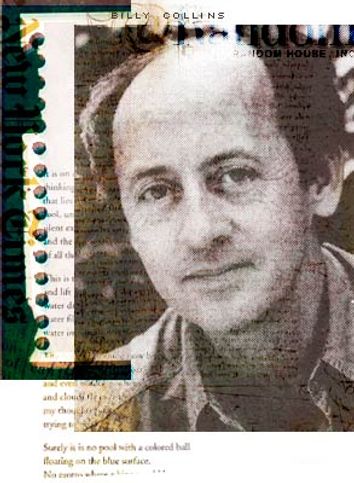
I‘m the kind of reader who doesn’t like to waste time with fluffy books. I like books that teach me something — preferably something useful and unexpected. For instance, I like to find out how to bypass electronic hotel-security systems, make a bomb out of common kitchen supplies or create a new identity complete with credit history. If this kind of lesson comes sandwiched in between scenes of cruelty, sex and secret-agent-style international high jinks, all the better. And I learn best from women. Following are five of my favorite novels about kick-ass, super-competent, coolheaded, hotblooded, semilegal girls.

Modesty Blaise by Peter O’Donnell
I collect Modesty. She is the queen of kick-ass girls, born in a comic strip and finally killed last year after appearing in three decades’ worth of stories. The Blaise series is one of the most reliably predictable suspense series I’ve ever found: the same harrowing biography of a nomadic orphan of uncertain heritage who becomes a teenage crime-syndicate leader, the same inevitable plunge into danger with her best friend Willie Garvin, the same fight against terrible odds to rid the world of a nasty person — invariably a psychotic genius planning a terrible crime against innocents. She kills more, fights more, survives more and has sex more often than James Bond. Dig her.

Vanishing Act by Thomas Perry
Jane Whitefield is a specialist in disappearances. She is lovely, smart and mysterious, part Seneca Indian, a loner of preternatural calm during danger and with a deep bag of tricks. Jane doesn’t have an office. Friends refer friends; through the grapevine come endangered children, battered women, criminals who’ve changed their minds. They come to Jane and she disappears them — new name, papers, habits, home. Since her clients get to her doorstep about 10 minutes ahead of the bad guys, this all happens on the run. In this first of a series, Jane has a satisfyingly difficult time working out the kinks with a client who seems to need her in more ways than one and turns out to be both less and more than she thought.

The Beekeeper’s Apprentice by Laurie R. King
The first and by far the best of a series of Holmesian pastiches. Mary Russell is an orphaned, acerbic, teenage girl genius who literally runs into the retired Sherlock Holmes and neatly inserts herself into his careful and lonesome world. Lots of bombs, disguises, safe rooms, chemistry, spying and lock picking and the usual cast of suspects.

The Blue Place by Nicola Griffith
Like their male counterparts, the best female secret-agent types have dark corners in their lonely psyches. Griffith, who also writes excellent science fiction, here creates Aud Torvingen, an affluent, violent, Norwegian ex-cop, cold and hot all over. She knows how to fight, kill, survive and think but learns how to love only when she meets Julia on the trail of an art thief and murderer. Wheels within wheels, great sex, tragedy and even a little woodworking.

Void Moon by Michael Connelly
Cassie Black is a reformed casino cat burglar, just out of prison and trying to go straight while she mourns her dead lover and crime partner and hides a terrible secret. Of course, she is forced back into crime for the most selfless of reasons, and the reader learns why you’re never safe in hotel rooms, you should never waste money at casino tables, how to use night-vision goggles and why criminals should never trust cellphones. Scary and fun.

Continue Reading Close

Meat is gross, but it tastes good

Desperate to find that my hunger for animal flesh was alien, I overlooked the fact that it was all too human.

  • more
    • All Share Services

Meat is gross, but it tastes good

People eat meat. As long as people have kept records of what they eat, they’ve made it clear that they will eat as much meat as they can. Meat is at the top of the planetary food chain; it is necessarily a food for the few, and the rich, but it has always been the most desired of meals.

Meat-eating is itself a solution to overpopulation, even as overpopulation largely eliminates the eating of meat. A lot of meat in the diet means a lot of animals on the land eating a lot of subsistence grains, and this equation leads directly to the starvation of agrarian people. The historian Fernand Braudel hypothesized that the success of Asian cultures was due in part to their largely vegetarian diet, which allowed populations to grow large and spread across an efficiently managed expanse of land. That these populations were largely vegetarian only because they didn’t have the grain base to support a meat diet is the other side of this suggestion.

In all this long history of meat-eating, there is a parallel history of solemn concern. People have been almost as occupied with what it meant to eat meat as with getting the meat in the first place. Eating meat is, traditionally, a matter of ceremony, sacrifice and ritual gratitude. Eating a lot of meat, as Europeans and Americans like to do, has always been seen as a dangerous act, an act fraught with the possibility of psychic and spiritual ruin.

Vegetarianism, too, has a long history, particularly among the religious. The Enlightenment was marked by a wave of Christian vegetarians who saw meat as a coarse, primitive food, representative of feudal and embattled times; they believed civilized people avoided flesh. “These were of course problems and controversies of the elite,” notes Massimo Montanari. “When exhortations for nutritional rationality and perhaps vegetarianism reached peasants or workers, the effect was grotesque if not ridiculous.”

The European Renaissance, that enlightened emergence from the Dark Ages, put an end to such silliness as praying over a dead deer. Today we prefer the casual approach. Many Americans like to think of themselves as religious, but only in ways that don’t interfere with the day’s plans. We’ve never had a coherent sense of ritual and we’ve never wanted one. The sacrifice and ceremony tribal people felt was required with meat-eating was not so much lost in the technological and industrial revolutions as it was deliberately destroyed.

This is not a fey reference to the distant past; the same concerns and suspicions are with us today, buried under nutritional campaigns and acrimonious arguments over animal rights. Underneath, we’re quite superstitious, I think, but conventional wisdom, the attitude we share publicly with each other, has always been that it’s best to march into the future and throw the past away. Only in modern times have large numbers of people been able to eat meat with regularity, and we’ve tried to do so as much as possible without noticing the thousands of years of history that hitched along. Americans have always eaten a great quantity of meat. An 1851 recipe for “bean soup” calls for six pounds of beef. American carnivorousness was simply another European habit, but Americans found they could take it to an unimagined degree because they had conquered a country unimaginably large. The hills, shores and plains were sparsely populated and filled with game of all kinds, with fish, fowl and beast. When these wild creatures were mostly eaten up, the empty expanse beckoned to herds of livestock, flocks of domestic birds, even farms of fish.

When I was a child, we ate meat three times a day; the rare times when we didn’t reflected a rather dire financial downspin I learned of only much later. One of my father’s best friends was the town butcher, and I saw him almost every day. I went with my mother so she could pick up a few chops and some hamburger and a roast for Sunday, all to be wrapped up in neat, white packages by jovial Mr. Bryan. I also went there with my father, through the back door, while he made his regular rounds of back doors around town. I would stand on the sticky, yellow sawdust powdering the wood floor, listening to the meaningless talk of adults. When one of the men in long stained aprons opened the freezer door, puffs of frosty air crossed my face and I could see the long room where the carcasses hung, swinging gently as they were brushed aside. That room, that cold breeze fragrant with blood and the steel slice of knives, defined meat for me at a very young age. I’m grateful for it; even today, I can recall that delicate perfume in a six-year-old’s nose, full of wonder and questions never asked. Even today, standing in front of a supermarket case of neatly wrapped packages of chops and steaks, I remember the halves of cattle, the hooked lines of gutted pigs, the racks of whole chickens still slowly dripping. I know what meat is, even when I don’t want to know.

I certainly feel hunger for meat at times, and wonder if there are unknown, even unknowable nutrients in flesh. Sometimes I crave it, and most especially when I’m sick, as though we can trade life for life. The act of eating meat is marked, for me, by those hours in the back room of the butcher shop. Like all children, when I suddenly made the final, vital connection between animals and meat, it tore through my life like a quake, a cataclysm, ruin — as it should. I felt a childish, terrible loss, I didn’t eat meat for a long time, and then I did again, wiser.

Well into adulthood, I tried to make myself believe that eating meat was unnatural — that any appetite I have for meat is conditioned, not innate. The way we Americans go about raising animals and making them into meat is so often inhumane that I wanted to believe our hunger was not entirely human. But all this history I’ve been reading, my ever-growing awareness that much of what I’ve wanted to reject in my culture is the deeply desired wish of billions of people — all this has made me change my mind. I’ve come to believe that the appetite for flesh is quintessentially human. Eating meat isn’t necessary, and it isn’t right, anymore than a lot of other human impulses are right — but I think of it as an impulse of the race nevertheless. My refusal to look clearly at meat, at meat-eaters, at meat hunger, was a refusal to look at something essential about people themselves.

Continue Reading Close

Blackballed

A white sports fan wrestles with basketball's racial taboos.

  • more
    • All Share Services

Blackballed

In David Shields’ new book, “Black Planet,” the narrative is deceptively simple: a diary of the Seattle Supersonics 1994-95 season. It is the diary of a middle-aged, white baby boomer, a desk-bound man with fading athletic skills and little power in a dangerous world. “Sometimes what being a fan seems to be most about is self-defeat,” he writes, wondering at his own willing surrender to the professional game. “What an agony of enthralldom we are in.” This world of the sidelined fan is a rich one, but it is only the skeleton upon which Shields hangs his real story, the dark fable he wants to tell.

Dark fable, I write, and there I am, in a world of hidden and exposed fears: “In the NBA black men rule (sort of), so we admire them (sort of); everywhere else in America we’re afraid of them.” “Black Planet” is not exactly about basketball — though if you don’t like basketball, you may find the book tough going; the details of the game fill every page. The book’s theme is something else — “white people’s reverence for, resentment toward, and colonization of black people’s bodies.”

Such terrors are vividly portrayed in American professional sports, but to discuss them is largely taboo. It is especially taboo to discuss them the way Shields does here — in unguarded, private prose, in the world of thought.

Shields doesn’t just break rules about what one should or should not say out loud. There are conventions about nonfiction, its territory of fairness and honesty and how writers discover the truth. Shields does not pretend to journalistic objectivity; his focus on race is a focus on David Shields and his own myriad selves. But he pretends to other truths that are not as easy to define.

I am breaking conventions, too — taboos about readers and book critics and our pretense of objectivity. They fall apart here, as reader and writer and reviewer collide.

The book follows the Sonics’ progress, and Shields’ diary fills with incidents, a painful racial awareness noted in each small glance between strangers, in chitchat, in how people stand. Shields is hypervigilant; nothing escapes his tainted glance. He sees unspoken racism when the team’s Sasquatch mascot shines the shoes of the black referee, in a woman’s glance at a black man jogging by, in his own habitual effort to say thank you to black bus drivers but not white ones. During one game’s halftime, a Harlem Globetrotter plays with a kid from the crowd: “The kid the Globetrotter dragged out of the stands had to be black: the hoopla of black hoops transcendence needs, first, to erase memory.”

This piling up of incident and distrust creates a picture of what happens when we begin to see everything in terms of race. In a world where everything is innately racial, all relationships become artificial — they are literally constructed from appearances, from surfaces, from image. In that world, nothing can be trusted because surfaces lie. Even skin can lie. No reaction, no feeling, no conversation can be free of the taint. Each moment, one is painfully conscious of those around him or her, and therefore, painfully self-conscious.

We are polarized creatures, aching with separation. In “Black Planet,” Shields sees polarity everywhere — not only the poles of race, but endless permutations of Us and Them, I and You, Me and Everyone Else. Race is only a visible manifestation of an existential otherness that keeps us apart.

“Black Planet” is a book about men as much as race. There are almost no women here, and when women appear, they seem destined to emasculate by virtue of their freedom from the fears men share and never discuss. Here is a tangle of erotic appetites: the hunger of white men for black men’s skills; the secret belief that black men are sexually superior to white men. It is a world of terrible insecurities. Shields thinks that white men — especially those who, like the narrator, fear the rocky shores of political correctness — love the antics of black athletes because they seem to be bad boys. White men see in the arrogance of black athletic stars their own missing self-confidence, their own lost, youthful freedom. This freedom is so ironic, represents a world so inside-out to many white men, that it is hard to contemplate.

The narrator of “Black Planet” — who both is and is not David Shields — is obsessed with Gary Payton, the Sonics’ point guard, and with his own submission to Payton. He finds himself willing to forgive and celebrate everything Payton does and says.

At one point in the season, Payton gives an autographed ball and a pair of his shoes to a 12-year-old kid with cancer. “For some reason, when Payton does things like this, it doesn’t seem saccharine or phony or PR-mad; his sentimental side slays me,” Shields writes. The difference between them, so obvious, comes down to one thing: Payton is “cool.” Shields (partly because he is not black) is not cool. “It’s a very strong, very strange, and utterly hallucinatory bond I feel with him. His emotions, what I imagine to be his emotions, move me … I’m not him. I’m really not him. I wish I were him. I love him — the phantasm of him — to death.”

Shields is a writer, and a teacher of writing and, as it happens, a stutterer. He is particularly interested in language, in how people talk and identify themselves through words. Here, he focuses on how Payton talks: “It’s almost pathological how endlessly the language flows from him; he can’t stop talking, talking to himself, whispering, singing. (A former teammate once said Payton would stop talking ‘about two months after he was dead.’)”

The black jock speech of basketball, its irrhythmic patterns with musical undertones, the trash-talking, the fluid syntax, mixed clichis and confused similes all interest him. So does the self-consciously hip slang of the white commentators trying to keep up.

Shields’ own writer’s voice is telegraphic and fragmented, very much a voice of the TV-saturated late 20th century. A typical construction: “I say I have the flu and can’t go to the Golden State game tonight, so she says okay, Miami and Washington — two more dog-games than which it would be difficult to find.” And another: “I wind up screaming so much that by the end of the game I’ve lost my voice, which Paul is slightly appalled by but which I take to be a good sign: I feel like a fan again, finally.” At times such a voice can be irritating in its imprecision and broken phrases, but Shields’ is a voice made for self-revelation. It is how a lot of us talk.

Shields-the-narrator is constantly listening to the conversations in his own head, constantly deconstructing the words we share, and this eternal self-examination forces his readers to do the same. It’s a sly trick. One cannot simply follow the narrator’s personal journey into these painful secrets and petty fears without doing the same. This is a book about the wound of self-consciousness, about the inability to erase memory, no matter how hard we try. When we pay this much attention to each word, almost everything we say comes to seem coded and subtextual. One of Shields’ gifts as a writer is this ability to delve into such buried, squirmy things and make it seem unrehearsed.

There is doubling here, tripling and more — layers of identity not only defined by race, gender, class and physical skill but between the lines of the book. These are the layers between all the lines writers write and readers read. They are the layers, disguises and ghosts that form the territory of literature itself.

Writing requires an acute observation of the inner life; part of what Shields is doing here is exposing his inner life with enough care and craft that it seems naked. How can he say that? the reader asks. How can he admit such things, such petty thoughts? But Shields is interested not just in saying what is not said, but in exploring how it feels to say it. “Black Planet” is about racial taboos; it is about how we think about taboos. It is also about how writers choose each word and order them so as to guide readers along a path they think they’ve chosen for themselves. His seemingly uncensored voice, disarmed and careless, is the result of long thought and careful choices.

Shields notes the searing power of black domination. “White people revere and resent this concentration of triumphant blackness,” he writes. “Black players, as if charged with the task of getting retribution for black people everywhere, act like the most pampered divas: I will take absolutely no shit from you; the terms will be as follows …” Yet he never confronts what seems to me to be the most interesting question of all: why black men dominate basketball. There are glib answers to this question and there are inflammatory answers, but the fact is that something is going on.

I’ve been called a racist myself simply for asking the question — why do blacks dominate certain sports? (Why do whites dominate others?) We live in strange times, exhorted to celebrate diversity and multiculturalism even as we pretend we are all the same, pretend that these differences are merely window dressing. It is a culture-wide cognitive dissonance, bluntly apparent in sports, and only rarely addressed.

There is a dissonance within the book world as well, conventions blithely broken while they are held up as sacred. One of the conventions of book criticism is to put nonfiction books in the hands of reviewers who have experience or expertise in the book’s field. I am a white woman and I don’t play basketball. Except for the fact that I live in a mixed-race family and also write nonfiction, I am not officially qualified to review this book. I am something else, though: a friend of David Shields. Breaking the convention of reviewing books by people one knows is another upheaval of identity at work here

Shields and I are writerly friends, drawn together because we have both delved into difficult and personal territory. Shields’ knowledge of himself and our culture’s shared secrets is part of his book; my knowledge of him and how writers write is part of this review. When we first met, he told me he admired my courage in writing about sex in my last book, “Talk Dirty to Me.” I responded the way I always have responded to that comment. “You don’t know what I left out,” I said. “The stuff that really scares me isn’t in there.”

Shields writes of his urge to “conflate” the personal and the political when he looks at athletes. He sees his own inability to separate his fantasy of himself from who he knows himself to be. He sees that he can’t separate those layered selves from the players he watches on the court or those images from the people they actually are.

Page by page, the reader is manipulated into a similar conflation — merging narrator with writer, reader with narrator, reality with fantasy until the boundaries blur. As a writer, I know better than to do this to other writers. But as a reader, I seek this merging, this blurred edge of imagination and possibility. Part of what we seek when we write is this, too — to become, for a time, the narrator we imagine into being. In the course of exorcising the demons we confront when we write, we make up our own rules. What is fair? What is honest? What is put in and what is left out? What is not said, can’t be said? The reader will never know. We write to answer questions, and in the writing become good and evil, petty and saintly people. We live in those bodies and those worlds for a time — we inhabit new selves who are, actually, the partial selves who already occupy us a little bit. Then we leave them behind.

I asked Shields why, in such a brave book, he didn’t confront the question of black dominance. He responded with words much like my own. That question, he said, was the one that was too scary. The taboos he broke are the ones he is willing to be seen breaking. He is a good enough writer to make a narrator who sounds artless, spontaneous — unguarded. He does this by carefully guarding each word.

David Shields and I are friends, but not close friends. I know him a little, the way we often know each other a little and guess the rest. It may sound odd to say this, but I think only a writer could have written this book. “Black Planet” couldn’t have been written by someone whose primary interest was sports, or race, or even cultural dialogue. It is the book of someone who is most interested in words and how we name things in the world. It is about loneliness and dreams, like good books always are.

Continue Reading Close

Page 1 of 3 in Sallie Tisdale