Sally Eckhoff

Crocodile tears

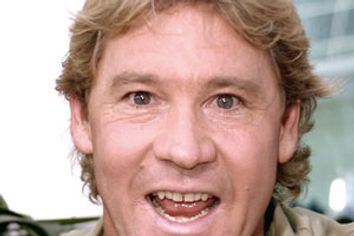
The late Steve Irwin was a great conservationist, whatever Germaine Greer says.

  • more
    • All Share Services

Crocodile tears

Wherever you were when the story broke, and whether you reacted with a smirk or with sympathy, news of the death of TV conservationist Steve Irwin quickly grew legs so long it outran every other item for days. Sure, the Crocodile Hunter’s death was anything but unimaginable, but after it hit, Irwin’s friends were in shock, and officials at the highest levels of the Australian government had tears in their eyes. Everyone knew Irwin, or felt they did: His “Crocodile Hunter” series on Animal Planet had swum steadily to popularity since airing in Australia in 1992.

The Hunter himself was snorkeling off Batt Reef in Queensland on Monday morning, engaged in shooting a documentary and feeling himself in no danger, when he floated over a stingray that shouldn’t have been startled, but was. The macabre details of his death — that the poisoned, spiny tail struck in or near his heart, and the later revelation that he pulled it out just before he died — aren’t in dispute. But what the demise of a charming showman with a somewhat challenged concept of self-preservation means to the rest of the world is very much a hot issue, and some of the backtalk has barbs that would do a stingray proud.

Three days later, the TV channels’ mourning shows no signs of letting up as the critical snarling intensifies. Among the Irwin-trashing comments heard around the world, Germaine Greer’s stands out for its lofty, literary disdain. “The animal world has finally taken its revenge on Irwin,” the famous author, feminist and “Big Brother” contestant told the Australian press, likening Irwin’s “jumping all over crocodiles” to lion taming in the circus. “I’m not saying that’s not sad. I’m saying what might be over now is this kind of exploitation of animals.” Among certain of the intelligentsia, the mumblings are similar. A blond surfer-ish conservationist-cum-cable star who mugs for the camera and waxes poetic in the presence of venomous snakes can’t be a major force for good in the worldwide roulette game that is species survival. Or can he?

On the face of it, animals Down Under, especially the scary and uncuddly ones, seem to have had an easier time of it since Irwin went on the air. He strenuously protested wildlife hunts in his home country, and his personal objections to crocodile safaris had a lot to do with the Australian government’s decision to impose a ban. Bouncy, fit and only 44 when he died, Irwin seemed made for TV. He was raised at his parents’ Reptile and Fauna Park in Queensland and lived there as an adult, expanding the facility and renaming it the Australia Zoo. What seems to be bugging his detractors is a philosophical matter more than a practical one. Crocodile wrestling, after all, is sideshow stuff. Wouldn’t he have been more effective as a cooler observer? Up close and personal does have its bad side, after all — invading animal territory, as he’s been accused of doing while shooting some of his shows, is anathema to true conservationists. And when Irwin was seen tossing snacks to a croc while holding his infant son under his arm, the fix was apparently in. His stunts were more “Jackass” than Cousteau. With guys like that around, Greer’s hope of de-sensationalizing animal documentaries had a jellyfish’s chance in hell.

There have been few serious contenders for Irwin’s heroic slot. Jeff Corwin, for all his strong-stomached persistence, comes off like a student in comparison. A more worthy confrere is Sir David Attenborough, who sweated bravely away under pancake makeup for BBC’s remarkable 10-part special “The World of Birds.” Rapturously attentive, unfailingly polite, the unsexy Attenborough greatly increased public awareness of birds and their strange habits — birds being, of course, an unsexy subject to begin with, as are crocs and the other nasties Irwin cherished. And therein lies a part of the TV conservation story not immediately apparent to Americans.

We are not, nor have we ever been, fans of the precious, or rare, or ugly in the animal world. Irwin is from a place on planet Earth whose living national treasures are hard to describe, let alone promote. Besides its disappearing wombats, which are now the subject of a heart-tugging TV campaign, Australia has a massive rodent boom to worry about, not to mention a frog plague as well as a number of horrid snakes and sharks that need attention. Nearby New Zealand has the unenviable task of suppressing the house-pet population in order to save its bizarre and mostly flightless endangered birds. (A few examples: the kea, a carnivorous parrot the color of immature compost; the kiwi, an “honorary mammal” that looks like a Shmoo from Lil’ Abner cartoons; the ponderous kakapo, resembling an owl crossed with a green parrot, which makes nests in bare dirt and communicates by booming. There are only 87 kakapos left.) Imagine the United States undertaking such a task.

We have a lot to learn from remote countries that can get viewers interested in species that are hard to sell to the public, and selling to the public is what Irwin was all about. Unfortunately, the current media blitz is short on evidence of exactly what Irwin’s impact was. No doubt this unusually experienced wrangler (he got a python for his sixth birthday) saved the lives of hundreds of animals while working in Queensland’s crocodile relocation program. That Dr. Leo Smith, an expert on venomous fishes at the American Museum of Natural History in Manhattan, allowed Irwin the accolade of being more a biologist than just a television personality is no small thing. The value of naturalists is admittedly hard to pin down in dollars, cents, and legislation. But if Irwin’s rare-animal breeding programs at the Australia Zoo are succeeding, as reports say they are, then he might be said to have aided the survival of some highly unusual creatures — canopy goannas, crested iguanas, and bilbies, for instance.

Far from being hotly debated, the fragility of our environment in the United States — as opposed to its diversity — is hardly discussed. The American public has tolerated the politicization of its vertebrate natural resources ever since the Endangered Species Act of 1973. We’re constantly chewing on public announcements such as that from the previous President Bush, portraying Mr. and Mrs. America as out of work and drowning in spotted owls. We may be the first country to create national parks, but our endangered species are a political football and a joke. We’re not interested in anything but charismatic mega-fauna, and even when we can sustain a few minutes’ interest, stewardship is widely considered to belong to movie stars with ranches in Wyoming. We can’t even get an anti-horse-slaughter bill passed in Congress even though it enjoys wholehearted support from the majority of the population. And leaving conservation issues to otherwise-engaged celebrities has weakened our focus and left us with a maddeningly vague spattering of causes to consider.

Technological advances in video have enabled a closer look at dangerous wildlife than we have ever had before, but it’s old-fashioned filmmaking that brings the message home, most recently and vividly in Werner Herzog’s portrayal of Timothy Treadwell’s death in “Grizzly Man.” Plenty of enmity gets rained down on people whose attraction to dangerous animals leads to a mauling or death. More than one Alaska Parks Department employee called Treadwell an idiot and let it go at that. But the Grizzly Man himself was another story entirely. He longed to be subsumed by his beloved bears — though perhaps not as literally as he was — and he deliberately tempted fate. Irwin was also unlike the Las Vegas tiger tamers Siegfried and Roy. Roy Horn was mauled and nearly killed by a white tiger he had anthropomorphized. Irwin was perfectly happy to let his love scenes with crocs remain unrequited. He had no illusions about the animals he adored, and he was killed not by the object(s) of his affection, but by a one-in-a-million encounter with a normally passive animal.

The Crocodile Hunter’s playground, half a world away, is a fantasy to most of us. Debate on whether he pushed his luck too far seems weighted on the “shit happens” side. The public seems especially confused about who was endangered by Irwin’s occasionally dangerous behavior. “Don’t try this at home, folks,” Irwin might have said — but invariably, people do. For every Irwin, there are hundreds of animal-world risk-takers, from professional snake-show handlers in Oklahoma and Texas to inebriated campers who fiddle with timber rattlers. Here in the Adirondacks, our manifestly intelligent wildlife expert has been snake-bit several times and will admit to nothing more than “it hurts.” Radio host Ward Stone’s job is almost impossible: to persuade the public not to chop up every endangered timber rattler that slithers across their lawns (and sometimes into their kitchens). Nobody wants to believe it matters. He’s not in anybody’s face enough, which is probably fine with him. A greater-than-usual interest in pit vipers, rabid raccoons and the like doesn’t normally go with a TV star’s personality.

Irwin found the mother lode of persuasion, and it was in his own personality. We need somebody with his charisma. Attenborough’s intellectual brilliance doesn’t play here, where we can’t defend a habitat required by anything less cuddly than a Playboy Bunny. Crocodile kissers? Bring ‘em on! Our reality isn’t ugly enough.

They shoot racehorses, don’t they?

Kentucky Derby winner Barbaro will likely have to be put down. Will the troubled sport of horseracing meet the same fate?

  • more
    • All Share Services

They shoot racehorses, don't they?

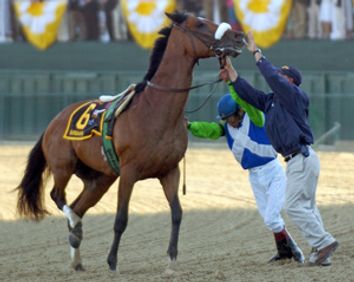
For the TV audience on Preakness day this May, it seemed like a case of “No, it can’t be.” It was weird enough that Barbaro, the wickedly fit Triple Crown hopeful, had overpowered the magnetized starting gate and blazed up the track all alone. But within seconds of the official start of the race a few minutes later, he was suddenly standing in the wake of the obliviously galloping field, holding his hind leg in the air like a dog who’d stepped on a tack. It hung oddly because the fetlock (ankle) joint was shattered. “Please don’t put him down!” spectators screamed at the attending veterinarian.

The hubbub continued after he was hauled off to surgery in New Bolton, Penn., making Barbaro the only horse in history ever to receive 20,000 get-well cards. But six weeks later, reports of his seesawing recovery have all but vanished from the news, and a second surprise visit in mid-July from his jockey, Edgar Prado, was certainly meant as a goodbye. Walk into any well-staffed barn on a Monday and you’ll be met with the same grave question: “Did they put him down yet?” The rumors in racing communities such as Saratoga Springs, the biggest summer racing meet in the U.S., proliferate. “They won’t do it on a weekend.” “The owner wants to let him go, but the insurance companies won’t let him. “They should have done it right there on the track.” “He’s in a lot of pain, that’s for sure,” is the one you hear most from people who’ve seen horses “founder,” or contract laminitis, which is the crippling disease that has afflicted Barbaro’s injured hind foot. Michael Matz, Barbaro’s trainer, says he’s not getting his hopes up; Barbaro’s vet at New Bolton, Dr. Dean Richardson, has said everything from “he looks good” to “he’s doing as well as can be expected.” Over this past weekend, the odds for his recovery were judged at 50-50. Nobody wants it to happen, but his demise is more likely than not, and New Bolton‘s expertise in putting it off shouldn’t be taken as evidence that somehow, this horse can live through a trauma that only a handful in history have ever survived.

Horses comport themselves a bit like cats and dogs, but they’re built more like rabbits. Their legs feel like nothing but cool bone wrapped in silky skin with tight, steely cables running up the back — a huge liability in an animal with a natural bent toward self-destruction. Prey animals first and foremost, horses are unable to stifle their instinct to flee when injured, and they’re maddeningly delicate. The undefeated Ruffian broke her leg in her 1975 match race with Foolish Pleasure and rebroke it days later by kicking the cast to smithereens. Fifteen years afterward, another brilliant filly, Go For Wand, went down in a Breeder’s Cup race, plunged up again, and thrashed spastically forward with her ruptured tendon pulled halfway from its sheath and her foot nearly torn off. Many in the audience reached involuntarily toward her as if they could stop her in their arms. “Their sobs and gasps built to a roaring wail,” The New York Times reported. She never made it into the ambulance. The now-defunct National Sports Daily marked her death with a one-word headline: “Tragedy.”

When Barbaro’s ordeal was moved behind closed doors of the multimillion-dollar veterinary clinic at New Bolton, racing breathed a collective sigh of relief. The industry has been waning for years, and is already plagued by management scandals as well as by competition from other forms of betting. A horse’s public death is likely to scandalize those new fans who’ve been lured into the stands by the heroic, almost-human careers of Seabiscuit, Funny Cide and Smarty Jones. It doesn’t help that trainers and riders are fond of muttering that accidents like Barbaro’s happen every day. “Every day” is a bit of an exaggeration, the statistic being estimated at one breakdown for every 2,000 starts. It’s still adequate shorthand for the crude and arbitrary way that talented animals, hard work and money get slammed into the turf. Money, of course, is seen as the corrupting force in this situation. The public teeters on the verge of pronouncing the one truth that insiders are unable or unwilling to acknowledge — that racing is cruel, that animal sports are outdated, and that the big shots and trainers don’t care because it’s all about the purse.

Dealing a death blow to racing may be on more people’s minds than usual, but the industry, at least in New York, seems to be doing a pretty good job of wounding itself. The New York Racing Association, which administers the three thoroughbred tracks in the state — Aqueduct, Belmont and Saratoga — has been nailed for tax evasion, awarding no-bid contracts, and other acts of sleazy nepotism. When the NYRA’s franchise ends later this year, what’s likely to come next sounds straight out of Las Vegas. The MGM Casino wants a piece of the action, as does Magna Entertainment, a subsidiary of an auto supply empire. Their proposals revolve around installing “year-round entertainment centers with on-season racing and off-season simulcasting.” In other words, video poker, slot machines and other forms of bloodless, mechanized gambling.

Magna already owns Pimlico and 10 other tracks outside New York, and Pimlico’s current management can’t refute the current speculation that the track will be sold and the remainder of Maryland’s racing consolidated at Laurel, or worse yet, somewhere out of state. A year ago, the rumors were thick that once the summer meet was over, Pimlico, which has been likened to a NASCAR track in the ghetto, would never reopen.

Other ideas to “save” racing are even more drastic. Some visionaries of the brave new track would seek to exploit the star power of a few very valuable horses to increase the “handle,” or money taken in from betting. A company in San Francisco has even unveiled its intention to race clones. All over the country, historic tracks are closing because people are staying home in droves, a sure sign that horses, besides being horses, are just another thing to bet on.

As our understanding of animal consciousness continues to develop, the indicators for acts of cruelty change. When an animal goes down in agony despite our efforts to save it, the degree of cruelty does indeed seem to reside in whether or not the people close by can show they care. A trainer who tries to dismiss a horse’s racetrack death by saying it’s “just business,” as someone actually told a New York Times reporter recently, is every horse lover’s worst nightmare, but not necessarily every horse’s. For that, you have to consult court records detailing the crimes of individuals who “love” their animals so much they can’t bear to part with them even when they can’t feed them. Failing that, any episode of “Animal Cops Houston” will suffice. The definition of cruelty is inseparable from our image of it, and that’s not a bad thing, even if it’s not always accurate. Only public participation can keep industries that employ animals from their lowest common denominator of exploitation.

The paradox of racing is that it is at heart a backyard sport, and it’s mostly populated by decent horses and decent people. Some wind up at Churchill Downs, and some get shipped off to dusty ovals in New York’s Finger Lakes region (called “giving them the Finger” in Saratoga). And if you hang around for long enough you’ll encounter such memorable individuals as Dixie Baghdad and the trainer who never gave up on him, Dixie being the horse who finally “broke his maiden,” or won his first race, at the overripe age of 6. No such foibles would ever be tolerated in a colt worth a cool million, let alone 10 times that. The flip side, though, is that if Barbaro were just a $25,000 “claimer,” he’d have gone out the way a talented but not overly favored horse named Kohut recently did at Belmont: breaking, falling, being quickly encircled by a portable barrier, and sent to his maker while his trainer and his 16-year-old jockey stood by and sobbed.

That’s the curse, or perhaps the privilege, of horses who don’t carry insurance policies the size of college endowments, or who can’t look forward to a long list of mares awaiting each $50,000 ejaculation. Barbaro is now caught in a struggle not of his own making, one from which he’d probably like to be released. “What they did is what they should have done,” a hot walker at Saratoga recently said, quoting the steady stream of exercise riders who pass her every morning on the way to their workouts. “But they should have put him down when that first infection set in.” That infection in his fractured leg may be better now, but the laminitis in his other hind hoof is intractable, painful and virtually inevitable. The strange territory of blood-rich tissue sandwiched between the hard sole of a horse’s foot and its pedal bones can nurture a crippling lameness in any limb that’s forced to bear weight. Unlike dogs, horses can’t recuperate lying down, or suspended from slings. Their bodies are so heavy they wouldn’t be able to breathe properly. Horses have to be moving in order to survive, and Barbaro, with a hare’s fleetness and fragility, lost that battle at Pimlico on May 20. It would take a miracle for him to be able to stand at stud, and miracles are in short supply these days.

In the midst of this painful turn of events, a case for racing’s civilizing effect is a tricky one to make. “Is life a tragedy? Is life a comedy? Is life a utilitarian task?” Jane Smiley asks in her nonfiction work “A Year at the Races,” defining racing as “a business, an art, an athletic contest, a moral and spiritual test.” This may seem to be putting too fine a point on it, when the industry itself admits that it’s done a poor job of dealing with the thousands of unwanted horses it generates every year. Plenty of “racetrack rejects” go on to have long and brilliant careers as trail horses, show jumpers and companions, but the unlucky ones wind up in the “killer buyer” trucks at auctions, and later on tables in Belgium and especially Japan. Yet Smiley’s point resonates in places where racing makes life possible, especially here in Saratoga. The “sport of kings,” and the businesses that surround it — breeding, training, feeding, stabling and entertaining the populace that comes to watch — are the mainstays of many towns and cities, and also the reason why open land in expensive communities stays open.

Without racing, Lexington, Ky., and velvety pasture-rich towns like mine would degenerate into suburban strip malls. Baltimore would certainly be the poorer for the loss of a 135-year-old bastion of cheap entertainment and tattered glory. There would be no animals there, whole or broken. A branch of agricultural history would be lost, and so would a craft-rich pursuit that at its best offers a tense, exploding vision of a very special sort of animal power. It’s far more important, Smiley writes, to go out and support an Art Deco place like Santa Anita than any flesh pit in Vegas, “because every hotel in Vegas is a fake something, and Santa Anita is a real racetrack.” Barbaro, Kohut, Dixie Baghdad and every cheap claimer that ever stepped into a starting gate are just as real, and something beautiful is born and dies every time that gate flies open.

Continue Reading Close

The horse pamperer

When the editor in chief of Simon & Schuster decides to write a book about the horsey lifestyles of the super-rich, nobody's powerful enough to stop him.

  • more
    • All Share Services

The horse pamperer

Denny Emerson, an Olympic equestrian, once said that the scariest thing about his sport was the novice warm-up ring. When you come to the newly popular discipline known as “eventing,” he’s right on the money. Rolled up in all the latest horse-world crash gear, the rider is expected to channel a snorting beast that itself is buckled up in Neoprene, Velcro, prime German strap-work and an assortment of hardware that would stop a train. You go busting out of the start box at three-minute intervals over a course of jumps built to withstand ground combat. Being that close to pushing up daisies every stride of the way feels like the purest essence of serotonin. It makes you real and alive, even when nothing is over 3 feet high.

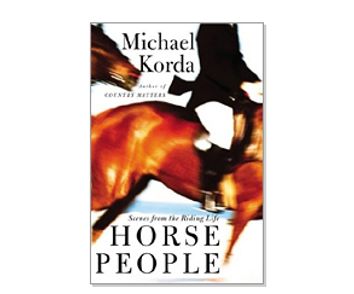
The exhilaration of riding has certainly shaken up Michael Korda, editor in chief at Simon & Schuster, who happens to be married to an “eventer.” Korda has horses on about 100 acres of prime real estate in New York’s Hudson Valley, and it follows, given his writerly output, that he’d have something to say about it. His recent “Country Matters,” about work, if you can call it work, on his farm, if you can call it a farm, takes you into that upholstered realm of the well-to-do and assures you that they are in fact aware of the outside world, even if they can’t exactly find it.

Horse books have been popular recently because of their fresh way of satisfying the human appetite for heroism in innocent forms. Laura Hillenbrand’s “Seabiscuit” was a gem of this class, and Jane Smiley, whatever you think of her portrayals of the rich and feckless, knows her ponies. (Forget Kevin Conley’s “Stud,” a New Yorker piece turned into a book that never got past its amazement at the size of Storm Cat’s dick.)

Face it, unless we’re talking about thoroughbred underdogs — a club of one this year, thanks to Funny Cide — the horse world is a non-inclusive place. Riding is fun and competition is more fun, but dressage, cross-country and stadium jumping are narcissistic endeavors that don’t exactly make the world a better place. “Eventing,” generally speaking, is a sport for the most restless kind of haves (who are often the most obnoxious.) Fox hunting, on the other hand, at least as practiced in this country, is a rich man’s way of preserving open space, and it’s far less violent than people suppose. When lunch rolls around, everybody goes home, including (almost always) the fox.

Korda’s focus is less about horse people per se than on his wife Margaret, whom he compares to the 19th century heroines of the bible of fox hunting, R.S. Surtees’ “Handley Cross.” It’s true that Margaret wins a lot, which is annoying. Her horses are unpretentious and yet somehow sparkling. (That paint gelding is the most extravagant color I’ve ever seen on a mammal.) Asking readers to admire someone with a full-time coaching staff on premises, the best farrier in the business, a box van in her stable colors and nothing else to do besides practice is more than a stretch — it’s downright silly, an undercurrent that tints this entire enterprise. Margaret may very well be as good a rider as Michael says she is, but we’ll never know unless she gets out of the novice division, where she’s been roosting for the past 10 years.

As to whether the rest of the world cares how hard it is to get good help around the barn, or what can go wrong with automatic waterers — well, that’s why vanity publication is such a problematic beast. Nobody in a position to complain is going to have the guts to tell this distinguished figure in the literary world that he needs an editor. “Horse People” is published by Rupert Murdoch’s outfit, signaling an alliance between the two, while raising questions about the way both businesses, Murdoch’s and Korda’s, are run.

Well, power — or rather, Power! — is Korda’s game, as evidenced by the mechanism that got this whole thing in motion. Not everybody can get this kind of back-cover copy, written in transports of ecstasy. (Word to Tony Hillerman: Shakespeare is the Shakespeare of the riding life, and after him, we have to go through Kipling and probably Louis L’Amour before we can get this excited.) One thing we can give Korda is that this book is factual. He’s really lived it, this life of watching other people shovel shit, and there is a measure of myth-smashing in “Horse People” that’s welcome.

Korda’s also just mad enough to have attempted to illustrate this book himself — an act rather like cutting your own hair. And he’s honest, freely admitting he doesn’t groom or tack up the horses he rides, which to the real cognoscenti is tantamount to sex without any foreplay at all. Though obviously a man of action, he’s also not too hip to admit he sometimes gets scared — a laudable trait. And in the final scene, where we find him rocketing up a hill on a grand old thoroughbred, it’s hard not to share the gleam in his eye.

Horse people, as a rule, tend to feel so neglected they go nuts over anything that praises their obsession. That’s the only way the barn rats (human variety) could ever have been persuaded to drop their pitchforks and run en masse to theaters to watch the idiotic “The Horse Whisperer” and the simply lame movie version of Laura Hillenbrand’s stunning book. They’ll probably love this, too, because it’s got everything they know in it.

Michael and Margaret Korda actually do provide horse people with a sovereign gift every year, in the form of a springtime schooling show that opens up their property to anybody who can get their entry in before the deadline. It’s the party of the season, all the horse people say — just the perfect balance of dirt-surfing and noblesse oblige to make any jaded modern’s heart beat faster. It’s better in person than it is on the page, is all I can tell you. Maybe next year, they’ll make us a pile of books and we can jump it.

Continue Reading Close

Outfoxed

Wilde called fox hunting the "unspeakable in pursuit of the uneatable." On the upside, it's got all the thrill of battle and only 25 percent of the injuries.

  • more
    • All Share Services

Outfoxed

As part-time jobs go, this is the worst-paying one I’ve had since high school, but the perks are irresistible. I exercise horses. These are hunting horses — tough but saintly types who are expected to be able to run pell-mell in a steaming herd but never dislodge their cargo, which would be unable to write checks for pricey equine upkeep with their arms in casts. My job is to keep the little monsters in line. Some of them are so battle-hardened that they’ll never behave. But even with the worst ones, I go bopping through the woods and meadows, wrestling as I go, and it was on one such run that I and a stumpy, muscle-bound bay gelding nicknamed Pork Chop nearly collided with a tawny animal the size of a motocross bike. Motionless and unperturbed, it tried to stare us down with its amber eyes. Chop, dumb as he was, didn’t flinch. “Tally fucking ho,” I whispered to the coyote.

Sporting opportunities for fox hunters having been restricted in recent years, coyotes have increasingly become the quarry du jour, and this was hunt country. The Old Chatham Foxhounds, in fact, were kenneled just over the hill in this Hudson Valley settlement: They’d hear me on my way back to the barn and start their usual small-scale riot. Far from being a dying ritual in the U.S., though, fox hunting is thriving in agrarian pockets all over the place (unlike in the United Kingdom, where it is increasingly under fire). Private owners hang onto vast tracts of land they’d otherwise sell, keeping them open to the equestrian public and frequently to hikers, too. There are foxes aplenty where I live, if you can judge from how visible they are.

Anything killed in a day’s hunting, however, is likely to be human. I’ve seen people launched, stepped on, and kicked so hard while mounted that they were knocked writhing to the ground. I’ve still never met anyone who’s been “blooded” (present at a fox’s death). The game is all about the scenting abilities of the hounds and the fox’s strategies for laying a trail. There are no guns, traps or cages; foxes aren’t released from boxes and chased, despite what most people think. There are days when it’s too dry, too wet or too windy for the trail to be sniffable. That’s supposed to be the beauty of the sport — chance and glory, scarlet coats, the trees in autumn, dead-game horses, the sound of the horn, the thrill of a run. Some of the newbies are only in it for the clothes, but that’s natural. The only time in my life I’ve ever looked presentable was on a horse.

Foxes look and act a lot like cats and are just as sly as they’re said to be. Coyotes are a different story. A fox will run in spirals in a field and then cut out over its own trail. Your coyote will jump up and run in a straight line like Secretariat going for the wire. That’s why a day of hunting in the Hudson Valley trolls between boredom and suicide, and why, when offered a sporting proposition because the boss lady was out of town and her hunt horse — my favorite student — was idle, I said yes.

Breakfast and coffee must be taken early. Once you get hunting, there are no opportunities to pee. So it’s up at 5:00, guzzle whatever you can and construct the regulation outfit, which has changed little since the 19th century and from which you must not deviate — not if you ever want to go again. On with the long underwear and thin socks (thick socks don’t fit under riding boots), then the white shirt with stand-up rat-catcher collar and the stock, a white ascot that must be knotted around the throat and secured with a three pins, only one of which may be visible, so you look like Orson Welles in “Jane Eyre.” This is hard to do before you’re awake. There are instant ones. They look cheap.

Ladies and men wear tan, buff or canary britches and tall black boots, preferably custom-made, for which the big shots particularly love to shell out a grand at Vogel in New York. (Mine are off-the-rack, but they fit.) Men get brown leather tops on their boots, ladies get black patent, while guests of both sexes wear theirs plain. Professional hunt staff of either sex, including the masters of foxhounds and the huntsman (the hound expert) sport the scarlet coats, correctly termed “pink.” Ladies wear severely tailored black Melton with a collar of contrasting color and special hunt buttons, if they’ve been awarded the privilege. Men similarly favored also wear the pink coat. Mine is black. Everyone needs white “string” gloves and a velvet-covered crash helmet replacing the traditional bowler. Ladies may carry sandwich cases. Flasks are strictly — I hate this — for men.

Last of all, you need a horse. Mine for the day was a fat palomino with the personality of a locomotive. Edam is barely controllable under the best of circumstances, but I had to prove I’d done my job and taught him something. Besides, I love him. He does this thing where he grabs my jacket in his teeth, but jokingly, like Don Rickles. Chop is his best friend, and they get onto the horse trailer like two little old ladies on a bus.

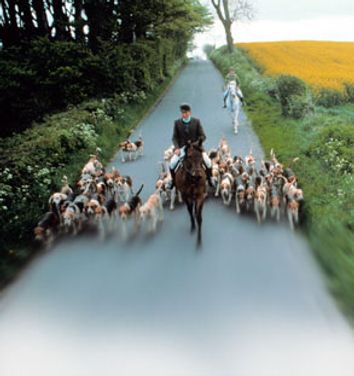
At the meet, you adjust your tack before you move off with the “field,” or group of riders, after which you must be smoothly functional and utterly silent. The huntsman, in this case a woman who rides a Harley to the kennels, gathers her hounds and pushes them ahead of us into the woods. Forty horses all crowding down the same path is a lot to work with. Clattering across the slippery road, they strike sparks with their hooves. On the other side, the field stretches out ahead, and like a roller coaster, chugs into motion. I can feel Edam’s afterburners click on. Five horses ahead of me, my riding teacher is sawing away at a towering $25,000 Irish import that’s doing grasshopper leaps with its teeth bared. With Edam revving so hard he’s throwing clods of dirt into the air, we take up off the hill at a gallop.

Running horses look sublime, but that’s not how they feel. The ground comes up at you hard. The horse flattens out its body, drops its whole carriage about eight inches and grabs the ground like a radial saw blade. Vroom — you know in every cell of your body how strong they are. But you get only a minute to contemplate this, because it’s time to cast the hounds again, and we all skid to a stop.

I hear horses crashing into low-hanging branches. “Bees!” somebody yells. I tried to figure out why nobody was running crazily away, but there wasn’t time for that. We emerged into a bumpy field divided by a split-rail fence. Other riders snaked around it; Edam bobbled up and hopped over enthusiastically, and we were off again.

Minutes later, after a fast canter through a 90-degree turn, we were all forced to wait while the field tried and sometimes failed to urge their horses over a vertical assemblage of two by fours. This was the very fence that dislodged a weekend warrior a few days before, a handsome advertising executive whose hired thoroughbred swerved, leaving him to slide to the ground with his arms around a tree. The same guy came over the hill to a check, people told me, like the Charge of the Light Brigade.

Finally Edam gets a few free yards in front of him, takes the thing like he’s in the Grand National, and then I have to pull him up with all my might because there’s a pileup ahead. The domino effect is getting extreme as horses take the fences behind us faster and faster, and slide into the waiting mob like hockey pucks into the net. This is the same scenario I was in years ago, wherein a crowded horse delivered a pile-driving kick that would surely have killed the beast behind him had it not creamed its master instead.

The man who’s leading my part of the field takes off at a canter up the road. We follow. We have to. I find a part of the verge that has grass on it and aim Edam’s feet for whatever dirt is available, pulling him out onto the pavement to dodge beer bottles, praying no cars come. I’d never ride like this on a bet, but my boss is in front of me somewhere, and behind me is somebody — I can’t turn around to see who — breathing down my neck. Back when the bible of fox hunting was written in 1849, W.S. Surtees inspired generations of cavalry officers by saying that fox hunting has “all the thrill of battle and only 25 percent of the injuries.” A cartoon in Punch magazine around the same time declared, “It’s not the ‘unting that ‘urts ‘un, it’s the ‘ammer, ‘ammer, ‘ammer on the ‘ard, ‘igh road.” Horses have an intricate assemblage of bones inside their hooves, and their tendons can be severely damaged by pounding. That’s what was troubling me, and I cursed the authority of whoever it was that led us to this callousness, along with myself for wanting, as Courtney Love would have said, to go and join this stupid club. Running a good horse on the road is like defacing art. And I was doing it.

We turned into the woods. This time, when I heard the hounds give tongue, the huntsman’s horn blew the series of choppy notes called “gone away,” and we were off on a mad dash through a lovely tunnel-like wood until, yet again, it was time to stop. So we waited for the next signal, and then waited some more. The horses shifted their feet, jingled their curb chains, tried to browse available leaves. The hounds were drawing a blank. Down a slope to my right was a tumble of mossy boulders with a rivulet of clear water dropping into a tiny pool. The breeze picked up; leaves blew from a stand of white birch. My hips ached, my toes were paralyzed from being still. Edam’s sweaty neck was almost dry. Then, wordlessly, we shuffled forward: The command was handed down that we were packing it in. A woman on a big chestnut horse pulled out a cell phone and dialed it. “This is important,” she growled, shushing us. “You want to eat, don’t you?”

Twenty minutes later, when we arrived back at where we started, the food detail had already arrived, with barley soup, giant aluminum trays of chicken and mega-bottles of picnic wine. People had removed their hats and jackets. I didn’t recognize them; I’d just spent three hours looking at the backs of their heads. Chop and Edam just wanted to get home. I wondered if the little palomino’s feet hurt. I know I could find another outfit I look good in. If only I could do that for him.

Continue Reading Close

Monster mush?

The Alaskan Iditarod is supposed to be about huskies having fun, but that's not what animal rights groups think.

  • more
    • All Share Services

Monster mush?

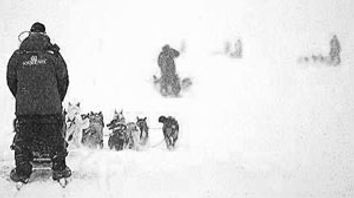
Most people think the place to be at an animal contest is at the starting gate. If you really want to know what’s going on at a sled dog race, though, you should hang around the parking lot. On March 5, in Wasilla, Alaska, the official starting point of the 1,049-mile Iditarod marathon race that Doug Swingley won last week for the third time, the local ball field was a noisy assembly line slapping together cross-country dog teams for the tremendous task ahead. Discarded booties littered the snow; handlers muscled dogs out of transport trucks; vet techs counted dogs; more than 1,000 huskies gave voice to the ceremonial tension, with helicopters adding to the din. The atmosphere at the announcer’s booth was all hope and heroism. The buzz among the mushers was something else again.

Animal rights groups couldn’t be expected to know what dog racing is all about, competitors said, and yet here they were, trying to wreck everything. They’d persuaded people on the East Coast to spam a sponsor, and that had resulted in the company’s yanking its support the day before the race. Mushers blamed the Humane Society of the United States and its even wickeder cousin, People for the Ethical Treatment of Animals. “They don’t think we should run dogs at all,” fumed one competitor. “They say we beat the teams to make them run themselves to death.”

It’s common knowledge among Alaskans that champion Rick Swenson had once lost a dog mushing through an icy stream and hadn’t been appropriately apologetic, and that Jerry Riley reputedly hit a dog with a snow hook 10 years ago. As the media got increasingly into the act, race watchers were saying, the Iditarod was going to have to withstand more public scrutiny, and the big test was sure to come up. But here in plain view at Wasilla was the material from which all the stories were made — the mushers, the dogs, the start of the trail — and everything looked great. The teams were doing their damnedest to drag their handlers off their feet, to lose the mob and run. No cues were needed at the end of the starter’s countdown, when the handlers scattered and the musher stood off the brake. They all took off like furry mercury, heads down, all business.

Swingley was grinning his head off as he left the starting line. So was three-time champ and dog-care wizard Martin Buser. DeeDee Jonrowe, sponsored by clothing retailer Eddie Bauer, mushed out to noisy cheers. Everybody was a fan. Lynda Plettner, revered for her dog sense and exuberant straight talk, high-fived everybody as she rocketed out the chute. One man sped off with a carnation in his teeth. People with the biggest sponsors had color-coordinated harnesses, parkas and even booties. Jerry Riley, who claims he started mushing “at conception,” showed up in a stretched-out sweater. Australian Neen Brown wowed the crowd with the only team of matched Siberians. The Russian entrant, Anna Bonderenko, sported huskies the color of milky tea. Some dogs wore capes to reflect the sun, all wore protective booties and all were towing a three-day supply of their own food, in case they got stormbound or lost.

Native Alaskan Mike Williams, who mushes to promote sobriety — a big issue in the bush — was kissed by his wife in her magnificent beaded parka as he departed, his sled crammed with little local kids. Three-time-winner Jeff King got his usual huge send-off. The day before, at the ceremonial start in Anchorage, he had mushed down Fourth Avenue with a noticeably pale young girl standing with him on his runners — this year’s Make-A-Wish Foundation child. King does this every year; some of his passengers have since died. One was buried in an Iditarod shirt.

All in all it’s a compelling scene: The dogs are nearly inside out with excitement, the weather’s beautiful, the place is crawling with vets, race officials stand ready to disqualify mushers for meanness and, after all the effort, the prize money is chump change compared with what athletes in some other sports normally make.

In the days to come, we all know, there’ll be variations in mushers’ talents and suitabilities to the task, and there’ll be canine infirmities that get accidentally overlooked. Tired, sore dogs will be “dropped” at checkpoints, to be fed and flown home. One might even die. Does this make the race a tragedy? The pro-mushing editorials in the Anchorage Daily News keep rolling out, the calls pour into the radio stations and the animal rights folks’ Web pages continue to blast the race.

Fans can’t keep up with the goings-on beyond the first major checkpoint: The roads all run out. They can only grab information by checking with the official Iditarod Web page, which quickly becomes habit forming, since the standings change constantly: who’s dropping dogs, who skimped on their rest periods, who got wrapped around a tree. Beyond the obviously fatiguing nature of such a marathon, it all seems like a lot of strange fun.

But the Humane Society doesn’t think so. The dogs, it says, are “raised completely outdoors in harsh northern climates in large ‘dog yards,’ where they are confined by tethers that allow them access to doghouses but which purposely prevent them from interaction with other dogs.” PETA announces on its kids page that “dogs in the Iditarod have to run an average of 120-130 miles a day nearly every day for 10-14 days in a row! At least one or two dogs die every year, sometimes over a dozen die, usually from stress pneumonia, ulcers or ‘Sudden Death Syndrome’ — which means that they just drop dead while running!”

Nobody’s suggesting that mushers can prevent accidents when they’re running so hard, but these allegations seem ridiculous. How can a dog in a dog yard be prevented from interaction with other dogs? Another thing: 120 miles a day for 10 days is longer than the entire race. The suggestion is that the mushers and their sponsors are a bunch of lying bastards who live to torture dogs and make money.

But only the Sled Dog Action Coalition Web site goes all the way. The lead item on this site is a photo of a team mushing along, with the musher in the basket with his eyes closed. One of the dogs is being dragged — and looks dead. The picture certainly appears to be unfaked. “The bond between dogs and the musher is one of abuse and exploitation,” the SDAC claims. “If a musher loved his dogs he would not force them to run 1,150 miles in 9 to 14 days.”

All the site’s info is presented as if it were evidence of crime: sleds hitting trees, mushers worried about the weather, tug lines on harnesses being short, the race’s purse money going up, dogs chasing bison. It fogs up the message of the picture, which leads a reader to wonder: Is the photo recent, and is it typical? If so, it’s all the coalition needs to dismantle the whole racing system. But that’s not happening, even though the picture implies that the nature of the Iditarod is to deny that anything brutal ever happens, for the express purpose of committing brutality. “Imagine being tethered to 15 other runners on a 50-foot gangline while pulling 400 pounds,” the SDAC quotes USA Today sports columnist Joe Saraceno as saying.

Well, no, let’s not. Being able to read dogs’ body language is something most Americans, even those who don’t know beans about training them, can do. And if you’ve ever seen a team at the starting gate, much less ridden behind one, the animals tell you one thing with their voices and movements: They love the race. They jerk you into a run before you can breathe, and it feels fantastic. Eventually, they’ll settle into a doggy trot, which they can keep up for a couple of hours provided they don’t get too thirsty or too hot. Under the right conditions, they can keep it up all day.

The fact that Iditarod mushers try to create the right conditions and to outwit the weather on a race this long tells you something about their egos, not to mention the basic Alaskan idea of how to do things. Facing down deathly discomfort is a sacred ritual here, and they’ll be damned if a bunch of creampuffs from “outside,” where they know nothing, is going to tell them how and whether to mush. The Iditarod is an exaggerated version of something Alaskans do every day that a lot of animal fans would be nuts about, if only they got the chance to try it.

The criticism the race received this year can serve as a useful heads-up on dog care. But this will work only if the accusations are honest and accurate. The current situation practically guarantees that both sides won’t be chatting with each other anytime soon, and that the curious public can get set for less, not more, news on how our canine pals up north are doing.

Meanwhile, nobody died this year, at least as far as we know. And you know, it wouldn’t kill Fido if you booted him off the living room couch and gave him something to do once in a while, too.

Continue Reading Close

“Lucky”

A memoir of rape that's just about everything you'd expect it not to be

  • more
    • All Share Services

Whether or not you’d go out of your way to read anything that might be classified as a rape memoir, give Alice Sebold your attention for her first five pages and you’re in for the whole ride. Written in a fever of unapologetic self-discipline, “Lucky” is just about everything you’d expect it not to be. There’s no expedition in search of psychic wounds, no yanking at your sleeve to get your conscience into the picture. Sebold was only a college freshman in a beat-up sweater when her horrible assault occurred, and she was a virgin. Maybe if rape was classified as a form of torture it would be simpler to map out the parameters of the damage it causes. Right now, as Patricia Weaver Francisco, author of “Telling,” has said, a lot of people think of it as a form of bad sex.

At first, “Lucky” seems to bounce you into a state of half-belief. The rape itself, narrated at the very beginning of the book, is so merciless it’s nearly impossible to absorb. The man beat her and tore at her; the shriveled object in the courtroom evidence bag was so stiff and black — like ruined leather — that it was hard to tell it was her blood-soaked underwear. Once Sebold goes back to her bookish family to repair herself, her household becomes an odd but dramatically rich place to begin to heal. The first thing her father asks her when she gets back home is whether she’d like something to eat. “That would be nice,” she says, “considering the only thing I’ve had in my mouth in the last twenty-four hours is a cracker and a cock.”

The smart but not good-looking Alice (as she sees herself, wrongly on that last count) keeps a cool head as her family wavers, as she leaves them once more to return to school, as she helps catch her assailant. And then, in a wrenching moment that comes from out of nowhere, she has to keep from losing her mind when she faces the police lineup and fingers the wrong guy. How in the world is this ever going to work out?

Sebold credits teachers, including Tess Gallagher and Geoffrey Wolff, who surely had something to do with the making of a writer who can spit out a harrowing story that’s still vibrating and flexible. Reading Sebold is like listening to Syd Straw singing about the worst thing that ever happened to her. Not that being funny doesn’t help; Sebold can do that, too. But mainly, “Lucky” derives imaginative traction from its form and style, its continually expanding view. By the end, the mysteries of individuality that it conveys seem accessible only to the reluctantly brave. The book’s acknowledgments conclude with some lovely, ardent thanks to Sebold’s vulnerable mother. Because “Lucky” makes compassion a more personal, less automatic response, this gift to her mother seems light enough to carry and to keep.

Continue Reading Close

Page 1 of 3 in Sally Eckhoff