Salon Technology staff report

Does Microsoft need a makeover?

As Judge Jackson ponders a three-way breakup, experts offer the company some PR advice.

  • more
    • All Share Services

It’s not too late to dream up a new name for Fusion 2000, the “world’s largest gathering of Microsoft business partners,” scheduled to take place in Atlanta this summer. Maybe Fission 2000?

On Wednesday, U.S. District Judge Thomas Penfield Jackson, who is presiding over the antitrust suit, hinted he had been pondering a split-up of the software giant — just not the one that the Department of Justice had suggested in its proposed remedies. “A bisection will in effect create two separate monopolies,” Jackson said, while asking the department’s lawyers why they hadn’t proposed a three-way split, dividing the company into operating system (Windows), applications (Office) and browser (Internet Explorer) divisions.

Jackson then asked the government to refine its proposal for breaking up the company and submit a fresh draft on Friday.

The judge’s orders come on the heels of two filings from Microsoft, both arguing vehemently for Jackson, who found the company guilty of violating antitrust laws, to reject the government’s break-up proposal. So far, Jackson doesn’t seem to be taking Microsoft’s suggestions to heart, but its courtroom troubles don’t seem to be slowing the company’s attempt to put a consumer-friendly spin on itself.

In recent weeks, Microsoft has run TV ads starring chairman Bill Gates talking about how he and his buddies struggled to “harness the power of the PC to improve people’s lives,” and CEO Steve Ballmer promising that the best is yet to come.”

Microsoft is also forging ahead with new products and partnerships, like those announced this week with Time Warner, Simon & Schuster and Barnes & Noble to promote its Microsoft Reader software for reading electronic books. The company even gifted 160 executives, who had come from around the world to join a “CEO Summit” led by Microsoft Chairman Bill Gates in Redmond, Wash., on Wednesday, with Hewlett-Packard Pocket PCs running Reader.

In other words, it appears to be business as usual in Redmond. This, according to Bob Lande, a law professor at the University of Baltimore, is just the kind of behavior that got Microsoft into trouble in the first place. “Don’t do that kind of thing anymore!” he advises Microsoft. “Maybe don’t sign an exclusive agreement [for your Reader software], maybe sign a nonexclusive arrangement instead, so that companies could sign a deal with another operating system, if there is ever one, or a Linux supplier.”

Microsoft, he argues, is arrogantly powering ahead with the idea that it will win on appeal. And they could well win, he says, but the aggressive business behavior “colors things — you don’t want to be doing this stuff during the appeal.”

Even in Wednesday’s proceedings, which Lande observed, Microsoft, he says, continued to weasel its way with complaints that contradict earlier trial testimony. Microsoft offered the opinion, for example, that entry to the operating system market is so difficult that Netscape could never have been able to compete, regardless of Microsoft’s tactics. During the trial, Lande points out, they said the opposite, claiming that creating a new operating system market was as easy as setting up a corner grocery store. “They should at least have a consistent story,” he says.

Bill Gates, Lande says, is still living in a dream world. “He’s been slapped in this face once with the finding of fact, and again with the conclusion of law; he’s gonna be slapped in the face a third time. His problem is that he’s in his own little world, and he has to realize that his world is not the entirety of the universe and it’s time he woke up.”

But not everyone concurs with Lande’s opinion. For others, Microsoft’s combination of hardball in the courtroom and business as usual outside the legal chambers is just what the spin doctor would order.

“Believe it or not, I think that Microsoft has done a good job in terms of its messaging,” says Bill Ryan, chairman of the high-tech public relations firm Niehaus Ryan Wong. “They always talk about ‘at the end of the day, we’re about making technology more friendly and easy to use for the consumer.’”

Julie McHenry, a principal at the public relations firm Wilson McHenry, agrees. “I know that they’re fighting a lot of other sort of distractions and that makes it really tough for them, but I think they’re doing everything they can and need to continue to do everything they can to get the product-oriented messages out to consumers so that the consumer can make informed choices.”

Richard B. McKenzie, a professor of economics and management at the University of California at Irvine and the author of “Trust on Trial: How the Microsoft Case is Reframing the Rules of Competition,” says if he were advising Microsoft on its tactics inside and out of the courtroom, he’d tell Gates and company to “hang tough … I remain skeptical that the judge is going to go with a breakup.” Even if Jackson does mete out the harshest remedy, McKenzie says Microsoft shouldn’t flinch. “I think a breakup is something [Microsoft] can get reversed. They can argue that it’s anti-competitive; that the integration of the browser and the operating system is something that the appellate court has already agreed was within its right.”

While it’s not clear that Microsoft will be able to keep marrying its technologies together, perhaps it’s not a bad idea to carry on with the “Fusion” celebration. For now, perhaps the best the company can do is come clean about what it is and where it’s headed and why anyone would want to come along for the ride.

“Brands are either needed, loved or feared,” adds Ryan. “I think that Microsoft is a needed brand and they have to act like one. They have to continue to communicate why they are needed and that … it’s OK to be needed. You don’t have to be loved. I will still suggest that they should be as aggressive as they are in this whole lawsuit — why shouldn’t you be aggressive? — be aggressive until they force you to stop being aggressive. That’s being good at business.”

Reactions to stock carnage: “The bubble has burst”

Believers in a prosperous "new economy" weigh in on the market's relentless decline.

  • more
    • All Share Services

Reactions to stock carnage:

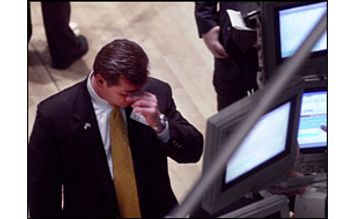
Both the Dow and the NASDAQ logged their biggest single-day losses ever on Friday. The Dow Jones industrial average declined 617.78 to 10305.77, a loss of 5.66 percent, while the NASDAQ composite index went down 355.49 points, a loss of 9.67 percent. Here are some reactions to the bloodbath:

Anthony Perkins


Chairman of Red Herring Communications and co-author of “The Internet Bubble: Inside the Overvalued World of High-Tech Stocks — And What You Need to Know to Avoid the Coming Shakeout” (Harper Business, November 1999)

Clearly, the bubble has burst. I think things will never be the same. I think a lot of the Internet companies that shouldn’t have gone public have been found out and you won’t see them go back up. What’s happened is a lot of people have lost a lot of money. I think it’s going to scar people for a long time, and they’re going to realize that it’s now back to fundamentals. It’s back to rationality.

I’m probably the only happy man in the universe, and fortunately I took my own advice. I’m not in the market. Of course, I’m not in the market anyway, as an editor. But needless to say, I’m not surprised.

The bottom line is that I think that there was this game of musical chairs almost, that was being played. I think that intuitively people knew that the market was artificially propped up, but everyone has been making so much money in the market in the last two or three years, so no one wanted the music to stop and it kind of took on a life of its own. E-tailing companies plus the Web media companies got caught recently.

The e-tailing companies were caught with people realizing that they’re never going to make the kind of profits that a Microsoft or a technology company would. As for the Web media companies: When AOL merged with Time Warner, it was kind of like the smartest guy in the Web media business, Steve Case, was saying that in order to move forward successfully I need old economy capability. So, a lot of these pure-play Internet media companies, such as TheStreet.com and iVillage, got kind of left hanging out there.

Also, the Microsoft trial was more psychologically damaging to the high-tech blue-chip market. Obviously, the market is moved by psychology. Nobody wanted the party to end. We suspended reality for so long, but psychologically people knew that it was too good.

Over 80 percent of the 350 companies that have gone public under the guise of the Internet are not showing profits. Because they don’t have profits, it’s hard to know how to value them. Amazon.com has been valued like Microsoft on steroids. The reason that Microsoft has a high valuation is that it has 37 percent to 40 percent operating profit margins, whereas a company like Amazon, which is just a distribution company, can never expect those kinds of margins. Microsoft is an intellectual property company. An Amazon is just a distributor — distribution companies typically generate 2 percent profit margins. But since they weren’t generating any profits, people didn’t know what to expect, so they thought — oh, maybe they’re going to be the next Microsoft.

Now, people are starting to understand who are the real companies and what are the real business models.

- -
- – - – - – - – - -

Peter Leyden

Co-author of The Long Boom: A Vision for the Coming Age of Prosperity

The stock market is a reflection of the economy, but it is not the economy. The fundamentals of the economy are terrific, have almost never been better. People are trigger-happy about this.

These new economy companies aren’t just taking the technology alone and making it more productive — the whole nature of work is becoming more flexible, efficient, adaptable. That’s being factored into the health of the economy.

You’ve got economic innovation, global integration — historical trends that have a lot of staying power and will be with us for a while to go. If you pull back from [this week's] situation, the fundamentals haven’t changed at all — there’s no looming war, no backlash against the current trends. The fundamentals of the macroeconomic gauges with which you measure the vigor of an economy are all very solid.

So, you say, what’s going on here with the fluctuation in the stock prices? My perspective on it is that some of these valuations were out of whack with what’s going on. The stock market going up isn’t inevitable or a given thing — even people who see the positive direction of this global economy aren’t necessarily seeing the stock market always rising. The stock market needs to be sobered up a bit — sure, some of the stocks were overvalued, there wasn’t a ton of rationality in some of these investments.

But some stocks are totally rational bets, and some market leaders are extremely valuable companies that will only get more valuable in the next 20 years as they move into a truly global integrated economy. The Ciscos and the Microsofts and the Intels — those are solid companies building the infrastructure — are totally worth their valuation given the long-term view of transitioning the global economy towards the new economy model.

I think the thing to do is calm down, take a deep breath, look at the fundamentals and giant trends moving through our area, and understand that a correction is just a chance to take a second look and catch your breath. The idea of going into a free-fall is just a panic mentality, and is clearly not warranted. Maybe it will sober up over the weekend while people catch their breath; I think the bottom will be hit here and you’ll see a bounce. A lot of people will have an opportunity to get in on stocks that have long term possibilities and the core fundamentals in place.

Tim Draper

Founder and managing director at the venture capital firm Draper, Fisher Jurvetson

It presents a buying opportunity, but I really look at this as a result of Judge Jackson sending a chill down the spine of every venture capitalist and Wall Street investor. Because that case sent a message that a company can get big but not too big because government will make life miserable. People are thinking — consciously or not — that no company will be allowed to get as big as Microsoft. The decision was criminal. Jackson does not understand what he’s done; he does not understand what he’s doing.

Also, the market’s gone down significantly because of margin calls: They get called in and investors have to sell so it spirals. So maybe this was the last of it or maybe it will be a few more days before it pops back up. But it won’t pop up to where it was.

Still, the Web is changing the world economy no matter what: Wall Street can swing up and down, but the overall trend is toward value creation. No matter how Wall Street values these companies, there is still a tremendous amount of opportunity.

One other thing is that it might be possible that this [drop] is, in effect, a sign that companies are having trouble growing beyond a certain size because they’re having trouble finding qualified workers. Companies like Hewlett-Packard may be limited in their growth because we haven’t built our work force, our farm team. We’ve got to fix education — put school vouchers in place to allow the population to become educated so they can participate in the economy — or we need to allow for more HB-1 visas, loosening immigration to let in more professionals from other countries.

- -
- – - – - – - – - -

Kevin Hassett

Resident scholar at the American Enterprise Institute, and author of “Dow 36,000″

There’s no reason to panic. Investors should keep holding, keep buying. People need to learn that making money in the stock market is hard work. You have to keep holding when everyone else is panicking. That’s how it works.

The market could go down more in the next few weeks, more in the next year, but if you hold onto stocks for longer than that — for the next five years — the market will return.

It’s all short-term bad news. The Microsoft case has inspired fear, as people begin to worry that government is going to get involved; Greenspan has implied his desire to see the market drop; and there are all the experts out there trying to scare people out of the market. I think Greenspan has been wrong about the market for four or five years, and now he wants to be proved right.

Ultimately it boils down to whether companies are making money and historically American firms steadily increase their profits. Even in the midst of more difficult times, with racial strife and war, they’ve profited. So I don’t think there’s anything to justify what we’re seeing today. Five years from now will we remember today? We might talk a little bit about it, but investors will largely forget — and move on.

Continue Reading Close

Break up? Make up? Appeal?

Microsoft watchers, company leaders and critics weigh the software giant's future in the wake of the antitrust ruling.

  • more
    • All Share Services

Break up? Make up? Appeal?

Here are reactions to Monday’s Microsoft antitrust ruling from participants and expert observers.

Stephen Manes

Biographer of Bill Gates, Forbes columnist and co-host of public television’s “Digital Duo”

Microsoft has always lived fairly close to the edges of the law, and has come out on the right side of some of the decisions, and on the wrong one in some — including where they lost the patent infringement case against Stac, and they solved the problem by buying a piece of the company. Likewise, they just settled out of court with Caldera, for an unnamed figure of money assumed to be in the nine figures.

They’ve been forced to sign consent decrees — where you swear you do nothing wrong and you promise to never do it again. Microsoft’s very first product was subject to binding arbitration. In 1977, there was a legal dispute over the very first contract the company had signed. Microsoft is not a stranger to a courtroom and the legal process.

I think Microsoft had any number of ways open to it to increase its dominance and to maintain its market power. And in a typically arrogant factor, they at minimum skirted and in the judge’s view broke the law. There are any number of ways that they could have screwed Netscape, and they picked the one that they should haven’t tried, especially since they were under a consent decree that dealt with these kinds of practices.

Microsoft has been an incredibly arrogant company with a general disregard for the truth and an extreme regard for public relations. When Microsoft calls itself innovative you don’t know whether to laugh or cry. Now they’ve been caught out in the kind of business practices that they’ve been engaging in for a long time, some of which may have been legal before they became a monopoly but aren’t once you are a monopoly.

They keep talking about freedom to innovate: Microsoft is possibly the least innovative big company around. Just about anything you care to name in Microsoft products has its roots somewhere else.

The judge got this right: Microsoft used its platform monopoly as a lever to go out of the way to stomp anyone who might threaten it. The only time it’s been great for consumers is when it’s had competition. When it had a competitor in operating systems, particularly with IBM in OS Warp, it went from Windows 3.1 to Windows 95; this was a substantial improvement. But the improvements since then have been basically nonexistent. Now that it’s wiped Netscape, it’s improved the browser minimally. Once Netscape was out of the picture, the browser improvement became minor and trivial. Once it eliminated WordPerfect with Microsoft Word, it’s made some improvements, but they’re marginal and small.

Competition is good for the consumer and it’s good for Microsoft. When there’s competition, Microsoft competes, but once it’s stopped the competition it doesn’t compete, and consumers don’t get better products.

- – - – - – - – - – - -
Morgan Chu

Co-managing partner in Irell & Manella and lead counsel for Stac Electronics in its 1994 court victory against Microsoft

I think this could have significant long-term repercussions for the entire software industry. Assuming the conclusion of the court holds up on appeal, I think that the marketplace will become more competitive with respect to applications. I think we’ll see greater innovations. I think we’ll see companies pursuing new products, new services, making research and development investments where they wouldn’t have pursued them previously because of the long shadow Microsoft has cast. And as a result you’ll spur innovation. You’ll have consumers and the market deciding what’s best, not Microsoft.

Other antitrust suits will also be able to argue that Microsoft is collaterally estopped with respect to certain conclusions. The basic rule is that if you have fairly litigated an issue and lost that issue, you — Microsoft in this case — can’t litigate the issue again. There are already pending about 100 other lawsuits, from what I’ve heard, that relate to Microsoft’s anti-competitive conduct. Some of those undoubtedly have issues that are similar to or identical to the issues here. If they’re identical — say, for example, if Microsoft tried to argue that it wasn’t a monopoly — then Microsoft could be collaterally estopped. Information from this case would stop Microsoft from arguing the same set of facts because those facts had already been decided on. It’s a broad principle taken up in all courts; the questions will be whether or not the issues are the same, or identical, instead of similar. It will be up to the judges whether they want to stay or postpone the proceedings to wait for the appeal. I suspect that they’ll proceed in their ordinary process and not raise the appeal.

- – - – - – - – - – - -
Ken Wasch

President of the Software and Information Industry Association

We think it’s a slam-dunk win for consumers — the judge has recognized that Microsoft was engaged in practices that effectively killed the Netscape Navigator browser and deprived consumers of choice. But this is not about the browser but about Microsoft’s ability to leverage its monopoly to engage in unlawful activities to preserve its monopoly, and tie its product to another product.

We think this opens the door for very strong conduct remedies or structural remedies — some form of breakup, or some divestiture of business units.

It’s amazing, watching the Gates and Ballmer press conference, the defiant stance they’ve maintained — here you have a defendant that has been found guilty, and they are showing no remorse and no interest in modifying what a judge says are illegal practices. It’s surprising.

In the settlement discussions, Microsoft offered to end price discrimination between computer manufacturers. But during the trial it said it wasn’t doing that. It also said it would separate the browser from the operating system. In the trial it said it couldn’t do that, either. It also said in settlement talks that it would supply technical information to third parties at the same time as its own developers. But in the trial it said it was already doing that. So in the last week it’s cut the legs out of its own argument!

Ultimately, strong remedies will let a thousand flowers bloom and let computer manufacturers truly differentiate their product by offering different bundles of software and access to Internet content.

Steve Ballmer

CEO of Microsoft

When people ask me about this case, I tell them three things: I tell them that the right of appeal [a cell phone goes off] and the right to a cell phone is a fundamental tenet of the American legal system, and that until the appeal is over nothing is settled. We’ve learned that from experience.

I tell them I couldn’t be more proud of this great company, its incredible employees and its breakthrough products. And I tell them I believe in this company more today than I ever have. I believe in our people, our technology and our vision. We need to stay very focused in on that.

It’s important for us to all think about what today’s ruling means and what it does not mean. The ruling does not change the challenges and opportunities before us. Windows 2000 is the foundation for a whole new generation of products and services that will make the dream of next-generation Windows services on the Internet a powerful reality. The combined power of amazing software, the Internet and wireless technologies will free our products from the desktop and servers and take them into literally every corner and walk of life. If you take a look at devices like pocket PCs, smart kitchen appliances, the My Pad that Bill had a chance to unveil last month, it’s really quite amazing.

And the boundaries of innovation are really being expanded as never before, and it’s those incredible opportunities and challenges that will shape the destiny of Microsoft and our industry.

At the same time, we do recognize that we have a special responsibility to set a positive example in our industry. We’ve spent the past 25 years thinking of ourselves as a small aggressive company playing catch-up to industry giants, even though at some point along the way we became a large company. Our success has really come from the opportunity that Microsoft and that Windows have created for consumers and for thousands and thousands of companies even while we competed with a few of those companies.

We have failed to adequately demonstrate all of that opportunity for consumers and business alike. Our intense focus on moving forward has at times been seen as threatening and our passion for being the best has been misinterpreted. We can do better. But that doesn’t mean innovating any less or delivering any less value to consumers. It does mean that the values we hold dear — opportunity for everyone, integrity, innovation, customer focus and partnership — have been called into question today. We continue to cherish those values as we always have.

In the coming weeks, I intend to speak directly to many key customers and partners to assure them that today’s ruling will not cause us to slow our efforts to provide the products and services they need to run their businesses. I had an opportunity today to talk to a wonderful software developer building on our platform, and the list and range of new things that they want to see in the basic platform was daunting. But we’re dedicated to delivering on the kind of things that folks like that want.

- – - – - – - – - – - -
Ralph Nader

Consumer advocate

The remedies are what it’s all about, and based on the findings of fact, and today’s legal findings, it seems to me that [Judge Thomas Penfield Jackson] has to order the breakup of Microsoft — at least separating the operating system business from their applications business, and also requiring Microsoft to divest itself of its browser. They need to spin it off.

That’s what would be the structural remedy. If he goes the other way and orders a behavioral remedy, saying, “You have to stop entering anti-competitive contracts and prohibitive agreements,” well, that requires year after year of monitoring. And they could never keep up with Microsoft. Unless there’s a huge federal police force watching Microsoft, they’ll evade. It’s been a defiant company for years: It defied the judge, it even misled the judge on several occasions. So to end up with “You should do this and you shouldn’t do that” is quite readily evadable by a company like Microsoft. But what they can’t evade is a breakup of the company. A breakup is the best thing to allow competition by innovative competitors, which will then benefit consumers.

The only real innovation Microsoft has shown the world is how to crush its competitors with monopolistic, anti-competitive behaviors. This is not a company that’s used to innovation — it’s the great imitator.

- – - – - – - – - – - -
Ron Chernow

Historian, author of “Titan, the Life of John D. Rockefeller, Sr.”

If you go back to the spring of 1998, we got this giant federal antitrust suit because of the breakdown of negotiations that spring — their desperate last-minute efforts to stop the case failed. A major antitrust case always suggests a failure of prior negotiations, because the federal government is reluctant to enter these cases — they are expensive and drag on for years.

Here is a case where Microsoft had shown very little willingness to compromise before — the case was a violation of a previous consent decree. It was clear that this was going to be an unusually tough and uncompromising company to deal with, consistent with its reputation in the industry for a no-holds-barred approach to the competition.

If you go back to spring and summer of 1998, it started out as a much more narrowly focused case on the bundling of the browser with the operating system; it wasn’t really a great deal more than that. But what happened, as the case proceeded, a lot of Microsoft’s enemies came out of the woodwork; the lineup of the people testifying against Microsoft got larger and more impressive and the nature of allegations became larger and more sweeping. The government had a brilliant prosecutor in David Boies, and his showmanship encouraged a lot of people to join the case. A lot of momentum built up.

They kept raising the stakes, and when the moment came for negotiation, the bar had been set very, very high; the Justice Department and many state attorneys general had a very triumphant feeling, and they felt that the power was on their side. They suddenly were demanding very major concessions and many of them wanted to go beyond conduct remedies to the structural remedies, including the breakup of the company.

I’m not sure that Gates is being blasi about this — I watched the 6 p.m. press conference and I was struck by the fact that Gates was very heavily made up. He’s usually not. Someone must have said to him, “Bill, you look pale and need to be touched up,” which suggests that he had a much stronger reaction than he was letting on. We know from various press reports that he’s been table-pounding furious, and feels this tremendous sense of injustice and of being under siege. I feel that the press conference he had was more of a studied attempt to project a self-confident and even cheerful image, even if it wasn’t entirely convincing.

I’ve said about Gates before that the essence of his commercial success has been because he is so uncompromising. The same thing that he’s been successful with in business is the same reason it’s hard for his personality to cope with an antitrust trial. His unrelenting drive and character, which are so advantageous in business — those characteristics work against you in the political sphere, which requires compromise and the ability to negotiate. When the case was filed in 1998, Microsoft had been in business for 25 years, and it was clear that Gates was a successful but relentless businessman; he would have had to reinvent himself to become a subtle negotiator. It wasn’t in his nature.

What makes these sorts of antitrust cases so fascinating, where the Standard Oil comparison is so interesting, is that they involve companies run by the founder-entrepreneur. The founder-entrepreneur sees the company as his own life writ large — Microsoft and Bill Gates are synonymous, and Standard Oil and Rockefeller are synonymous. If you accuse that company of breaking the law, you are directly attacking the very being of that personality.

It’s not about money — Gates has more money than the most monstrous egotist could want. And the history of breakups in general is that shareholders tend to profit by the breakup. Rather, this has been a very, very disorienting experience for him — somebody who was lionized by the press for many, many years, and credited with the restoration of technological supremacy by the United States, is suddenly demonized as the prince of darkness.

Personalities like Rockefeller and Gates are like religious fundamentalists — they are total belief systems, which is why they are good motivators. The company is the expression of that religion; and fundamentalists are not prone to compromise. The more you attack them the more defensive they become.

In the case of Gates, he’s spent the last 25 years trying to figure out ways to leverage the power of Windows; from his point of view he probably feels that he’s doing the same thing he always did, and why is this happening? The reason it’s happening, I think, is because legitimate forms of behavior in normal businesses are different when done by a monopoly. When you get up to 95 percent market share it gets illegal …

I was very surprised when I was doing the research for “Titan” that Rockefeller, who like Gates had a very uncompromising attitude, when the worst actually occurred and the company was broken up, there was more resignation than I would have expected. He did manage to move on with his life. Rockefeller had the advantage, which Gates doesn’t, that by the time the Supreme Court broke up Standard Oil in 1911 he was 72 years old; he was retired and devoting himself to God and golf and related pastimes, so in a way it was academic. He wasn’t really in the industry anymore.

Gates is a young enough man that I doubt that if the worst were to happen he would be interested in retirement. He could probably afford it if he watched his pennies, but I don’t think he’d do that. One possibility is if they broke up the company and he stayed with one of the pieces — Big Bill staying with one of the baby Bills — he might experience as a businessman a new lease on life, recapturing the fun of the old days when he was not Darth Vader. He’s too creative and energetic to exit the field.

- – - – - – - – - – - -
Tim O’Reilly

CEO of computer book publisher O’Reilly & Associates

My sense is that while this case has been heating up, it’s really acted as a curb on Microsoft’s aggressiveness. They’ve been a better citizen recently because they’ve been watched. And that really has benefited the industry and given it breathing room. This will give it some more; we’re seeing the cracks in Microsoft’s monopoly. I actually believe that looking forward, Microsoft is in a weaker position than ever before. Microsoft might argue that they’re not really a monopoly as a result, but I don’t think they have to have wielded their monopoly successfully to have broken the law. It’s about leveraging a monopoly. They did try and do that and the competitors they could identify, like Netscape, they did in fact put out of business.

It’s ironic, but Microsoft’s attacks on Netscape — their attempt to “cut off Netscape’s air supply” — also contributed to the success of open source. They focused their battle on Netscape because they were thinking of client-side competition. But they didn’t count on the appeal of Apache and the whole open-source platform for the Web … If Microsoft had seen open source as as much of a competitor as Netscape back in 1995, they would have ended it, either with a patent lawsuit or some other attack. Now, I think we’re going to see continued momentum toward open source. There’s a squeeze on Microsoft from two ends: the vendors who say, “We don’t have to pay these guys,” and the Web application vendors like MapQuest, eBay and Amazon. Those guys are looking to support open source, because it works for them. They don’t want to get into a market where Microsoft can essentially tax their efforts.

- – - – - – - – - – - -
William Neukom

Microsoft general counsel

If the plaintiffs read these conclusions carefully, and think it through, they will realize that the case has been narrowed appreciably … We are somewhat encouraged by aspects of this. It is not good news, certainly, but it is not unexpected.

- – - – - – - – - – - -
Eliot Spitzer

New York attorney general

The thing that strikes me about the opinion is the careful thought and analysis that Judge Jackson has put into this; he’s followed this case with tremendous care and has been creative in the way he addressed the tying issue … He’s left Microsoft in a very difficult position — the thoughtfulness of his position puts them in a bind, with a remote chance of success on appeal. They need a clean sweep in the D.C. Circuit to limit their liability, and I don’t think anyone would want to bank on this.

Microsoft right now, despite all their naysaying, is probably wishing they had resolved this last week with the attorneys from the DOJ.

Continue Reading Close