Samuel Fromartz

The end of the line

Author Charles Clover on the scourge of overfishing, disgraceful restaurants, and yes, sustainable McDonald's.

  • more
    • All Share Services

The end of the line

I first met Charles Clover, the environment editor for London’s Daily Telegraph, over a dinner of striped bass in Washington. I used to surf cast for the fish off the beaches of Long Island, N.Y., in the 1980s, a time of stringent catch limits because of the shrinking bass population. Then strong fisheries management and conservation measures led to a dramatic rebound in the fishery, now evident on our dinner plates.

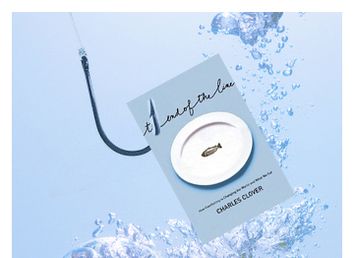
Clover has been monitoring the oceans since the late 1980s. His book, “The End of the Line: How Overfishing Is Changing the World and What We Eat,” was published in the United States last year but, sadly, was met with a deafening lack of attention. That’s a shame, because Clover presents a compendium of how precisely we are eating our way through the seas. Scientists reported last year that fish would be gone from the oceans by 2048 if this behavior goes unchecked — though Clover points out that it’s not as if the seas will be empty. In the absence of all the fish we’ve eaten, we’ll also experience a surfeit of species like jellyfish because biodiversity has been undone.

In a globe-trotting expedition, Clover takes readers to Newfoundland to visit with fisherman who no longer have cod to catch; to Africa, where massive fleets roam the seas unchecked to feed the hungry maws in Madrid, Spain, and Tokyo; to Scotland, where successful boats fish illegally, because legal species are in short supply; to Denmark, where sand eels filled with dioxin and PCBs were sent to salmon farms and are now fished out; and to the Mediterranean, where bluefin tuna are being wiped out, while sky-high prices fall due to oversupply. He also outs several high-end eateries that serve tasty morsels of “endangered species.”

While this amounts to a depressing indictment, Clover also writes about those who have gotten it right. Their efforts include marine parks in New Zealand that have led to a dramatic rebound in fish populations, and an approach to “fisheries rights” that has proved successful in places like Alaska and Iceland. He also investigates what’s in McDonald’s fish sandwich; the answer will surprise you.

“The problem with world fisheries is nobody sticks up for the fish,” Clover says. Finally, with this book, someone has.

I had no idea how bad the global health of fisheries was until I read your book. How did you get started on this subject?

I began looking at this around the end of the 1980s. When I became environmental correspondent there was a huge fuss about the North Sea and pollution and red tide. But I thought there was too much emphasis being placed on pollution and too little on the killing of organisms, because pollution didn’t kill much and fishing actually did.

I went to the Shetland Islands and a terrible thing was happening. The sand eels that live in the North Atlantic — the sand eels on which the Arctic terns that migrate thousands of miles depend — didn’t come back that year. So the Arctic terns were starving and chicks were dying. It was all heartbreaking stuff.

As it turned out, fishermen were catching the sand eels, mashing them up and turning them into feed for salmon farms. And they were doing that right under the cliffs and on the beaches where the birds were starving. The sand eel at the time was the No. 1 forage fish for the fish industry and I heard via the bird network that they caught so much in Denmark that they were feeding the fish oil to power stations to make coal burn better. So we fingered them for that. People in the House of Lords were saying, “So that’s what’s screwing up our salmon fishery!”

Then I was sitting at some global warming conference in 1990 — yes, way back in 1990 — with the British government’s chief scientist, and he said, “You think all these figures on global warming are bad, you ought to look at these figures on fisheries.”

It seemed everywhere you looked — from Africa to Antarctica — there was overfishing. And it seems like the same problems and mistakes get repeated all over.

Well it does, and it just gets worse, that’s the thing, and people don’t accept you’ve got to do something about it.

But we don’t always know it’s occurring.

When I was writing about the sand eels, the bizarre thing was that the collapse of the Newfoundland cod fishery was also under way. I read about it six months later. We’d never run any stories on Newfoundland. Even fisheries professors didn’t know about it in 1991 — and they closed the fishery in 1992.

Is that what happened with North Sea cod too? You describe the decline of that fishery over many years.

The fisheries scientists have never accepted there was a collapse of the same order in the North Sea as in Newfoundland. But if your population is depleted by more than 90 percent, is that not a collapse? Newfoundland is considered a historic collapse and in the North Sea they keep fishing.

Do you think there’s any hope that the Atlantic cod can come back?

It seems to me that if you catch as little fish as possible, there’s got to be a chance. But at the moment, the extent to which the cod fishing is going on — even though the quotas have dwindled in the Northeast — is quite staggering. The by-catch of cod in other fisheries, such as haddock and bottom fish, has been two or three times as great as the actual cod quota.

One thing you write about is the tension between preserving the fishermen’s way of life and the disappearance of the catch. In some cases, fishermen even fish illegally. Wouldn’t it seem in their interest to come up with a more sustainable approach?

It’s curious. I think it’s just two views of reality fighting each other. One reality is you’ve bought a boat and you have a mortgage so you are going to believe the guy who says there is something left in the sea, that you haven’t fished it all out. If you’ve got conflicting views on whether the scientists are correct, then you give fishermen something to believe in and they will believe it. They will believe anything other than that their work is screwing up their own livelihood. There’s nothing worse than self-interest to build self-delusion.

From a consumer’s point of view, should we be eating fish at all?

I didn’t say in my book, “Don’t eat fish.” I say, “Don’t eat certain fish, don’t eat endangered fish.” If a fish takes 20 years to double its population, that’s a long time. If it takes 30 years before it breeds, don’t touch it. But if you eat something that’s fast reproducing and not overfished, you should be all right. And there’s quite a lot of those species out there. You can eat a hell of a lot of shellfish, a huge amount of mussels and oysters, and your deep-water scallops, with a clear conscience. You can have a really nice fish stew, it’s not a problem. But why eat endangered fish? And the slow-reproducing ones are probably going to have mercury in them anyway, so it’s a win-win.

I think [cutting back on endangered fish] would be enough of a message to the fishermen of the world and the industries. God knows we’re eating a lot of them at the moment. If you go to New York, restaurants seem actively to encourage it.

Yes. You finger some restaurants in your book, including some very well-regarded ones like Nobu and BLT Fish. Did you get a chance to look at BLT Fish’s more recent menu? Had anything improved?

It was utterly disgraceful. In terms of endangered fish, there were more on that menu than I’ve seen on a lot. And the restaurant’s gotten worse since I wrote about them in the book. They’ve got Icelandic halibut, which is a quite amazing fish, and about as sustainable a halibut as you could get in terms of the way it’s caught, but it is still an endangered species in the Atlantic. New York chefs are a disgrace. They served caviar for a decade longer than they should have. They serve bluefin tuna because they’ve kidded themselves that it’s a sustainable catch, which it isn’t. They serve other things that are overfished, like red snapper.

You also uncover a hidden secret about McDonald’s Filet-O-Fish sandwich: that the fish comes from two fisheries actually certified as sustainable by the Marine Stewardship Council. In other words, McDonald’s fish sandwich is more sustainable than Nobu’s tuna sashimi. Did that surprise you?

Not really. McDonald’s is sustainable because it is a big company and needs continuity of supply, but isn’t that arguably a definition of sustainability?

Buying Alaskan pollock as McDonald’s does is not a bad practice — except that they don’t seek to advertise their MSC connection, which might mean they would have to pay for the logo. Gambling you can make your fortune before you run out of exotic fish is an individual decision and one Nobu shares with many restaurateurs from Asia.

Despite the grim realities, you do provide a few examples in the book of places where action is being taken, and measures are working to protect fish. Do you sense improvement?

Here and there. It’s actually quite instructive over here in Europe because things are much worse than in the U.S. In the U.S., fisheries science means something to people, in places like the Northeast. They’ve seen what a collapse means and they don’t want to go back, so they listen to the scientists. The industry will sit in a room and have a discussion, whereas over here [in Europe] you’ll get your legs run over [for talking about it].

Take the Mediterranean, which may be the crucible of civilization but is also the crucible of kleptomania when it comes to fishing. The only fish that come out of the Mediterranean are about 3 inches long because that’s the only size that gets through the net. It’s a disgrace out there. It’s in Europe’s backyard, and Europe goes on about how “green” it is, but when it comes to fisheries, the [European Commission] Fisheries Directorate says it’s there for the preservation of the fishing industry and fishermen of Europe. It does not conserve fish.

So, I’m not sure we’re getting anywhere, but acknowledging the problem is a very big thing.

But why has it gone right, say, in Alaska? In the U.S., we always hear how good the wild Alaskan salmon fishery is.

I think it’s like Iceland: When you’ve got nothing else, you look after it. When you’re an island surrounded by cod, if your cod goes down, you are stuffed. I think it’s pretty much the same with Alaska; they understand they have a resource they haven’t destroyed yet. They were able to act on the basis of other people’s mistakes. Sooner or later the message gets across that mistakes have been made and if you’re the last one starting out, maybe you’re going to make slightly fewer than anyone else.

You paint a stark picture of Africa, where industrial fleets ply the waters of countries that have virtually no oversight of the catch. And then it all ends up on plates in Europe and Japan.

That is one of the most depressing bits of all. I just don’t see an impetus for change coming from the countries themselves. In Senegal, there might be an intelligent movement of artisan fishermen that will chuck out the foreigners. But the other possibility is that we — the European Union — have to reform agreements. Because of EU limits, a lot of the colonialist fleet that has fished there has reflagged as African, so now there’s a huge Senegalese industrial trawler fleet. I don’t see it getting resolved. The problem is no one really understands fishery economics. If you want to invest in the fishery, you take the fishermen away for a protracted period. If you want to invest in anything else you put loads of people and money in — but with fishing it’s the opposite. It’s an extractive industry.

That’s what was interesting about the marine sanctuaries you write about in New Zealand, where fishing has been completely banned. Not only have the fish populations recovered, but they have reached a level of growth and biodiversity the scientists never imagined was possible.

If we did that with the cod we’d be caught up to our eyeballs. I don’t see why you can’t have a low-impact fishery, a buffer zone, like you do for land-based parks in Africa. It keeps everyone happy, and you keep everything protected.

Author’s note: For details about the fish mentioned in this interview, check out the Monterey Bay Aquarium’s Seafood Watch, Environmental Defense, and Fishbase.

Is this the end of organic coffee?

Thanks to a recent hush-hush USDA ruling, your clean-conscience, fair-trade, organic latte may soon be a thing of the past.

  • more
    • All Share Services

Is this the end of organic coffee?

Enjoy your organic coffee now, while it’s hot — because it may not be around for long.

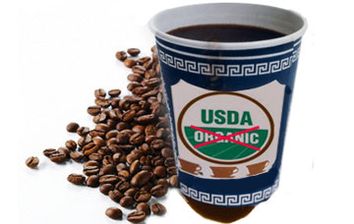
Last month, the U.S. Department of Agriculture quietly released a ruling that alarmed organic certifiers and groups who work with third-world farmers. The decision tightens organic certification requirements to such a degree that it could sharply curtail the ability of small grower co-ops to produce organic coffee — not to mention organic bananas, cocoa, sugar and even spices. Kimberly Easson, director of strategic relationships for TransFair USA, the fair trade certification group, puts it bluntly: “This ruling could wipe out the organic coffee market in the U.S.”

TransFair USA is not the only organization sounding the alarm. In the past week, I spoke with nonprofits, businesses and organic certifiers, all of whom are concerned that the USDA ruling will catastrophically raise costs for small-scale producers of organic goods and likely push them back into conventional commodity markets.

The USDA’s controversial ruling hinges on methods of organic certification — a process in which inspectors visit farms and walk through fields, review growing methods, and see what measures the farmer is taking to avoid pests and weeds. If the methods comply with regulations, the inspector then makes a recommendation to a certification agency; and if the farm is approved, it is certified for one year and granted permission to carry the organic label on its products. The USDA National Organic Program has overseen this process since 2002, when a patchwork of state organic standards were codified under a national regime.

Until now, however, there has been a special provision for “grower groups” that made certification practical for farmer cooperatives in the Third World, whose memberships can reach into the thousands. Because of the immense logistical demands of inspecting every farm in a large co-op, a compromise was reached: An organic inspector would randomly visit only a portion of the group’s farms each year, usually 20 percent. The grower groups would then self-police the remainder through a manager who made sure they followed the rules. The following year, an inspector would return and visit another 20 percent of the farms. After five years, all farms would be inspected.

But in the ruling made public this month, the National Organic Program overturned that system, saying every farm in a grower group must now be visited and inspected annually — as has been the practice in the United States — rather than only a percentage.

“[The previous system] was a mechanism for the low-resource global south to afford organic certification,” said Michael Sligh of Rural Advancement Foundation International USA. He has worked with farm groups in the global south for years and in the 1990s helped craft the U.S. organic regulations. His e-mail in box is now bulging with questions about the ruling from non-governmental organizations across the world. “We’re literally talking about hundreds of thousands of farmers who will be affected,” Sligh explained. The staggered inspection method has been crucial for, say, coffee grower unions in Ethiopia, which have upward of 80,000 members. It was used by organic tea and spice farmers in India, organic sugar co-ops in Brazil, and organic cocoa farmers in Costa Rica, who would otherwise not be able to ship certified organic products to wealthier countries in the Northern Hemisphere.

The new USDA certification ruling arose out of a case involving an unnamed Mexican grower group that failed to detect a farmer using a prohibited insecticide and prevent empty fertilizer bags being used for crop storage — both of which violate USDA organic regulations. NOP blamed the problem on inadequate internal controls of the self-policing system and decided to ban the practice everywhere. “The … use of an internal inspection system as a proxy for mandatory on-site inspections of each production unit by the certifying agent is not permitted,” the NOP stated. The agency informed organic certifiers of these revised standards in January, and in March published the ruling on its Web site.

In conversations over the past week, certifiers told me they knew of instances where the co-op inspection system had broken down, but thought that the NOP had taken an extreme stand, ending the possibility of group certification and ignoring the constraints of low-income producers. A more measured response would have been to punish the errant grower groups and then launch a public review of the certification system. “We need to have open comment on this and have a dialogue; we need to take a step back and look at the whole thing,” said Patty Vincent, coffee product and certification manager at Green Mountain Coffee Roasters, an organic and fair trade coffee company. The goal of certification should be to ensure the integrity of the organic product — so consumers know what they are buying. But Vincent and others believe that integrity can be achieved without sacrificing the economic livelihood of farmers and the viability of the product itself.

If the ruling is unchallenged, certification costs will rise precipitously for co-ops in developing countries. Lebi Perez, training coordinator for Organic Crop Improvement Association International, a U.S. certification group active in Mexico and Central and South America, explained that it currently takes about 20 to 30 days to certify a grower group. “You have to go to the community by car, bus, mule or on foot, and access is difficult during the rainy season, because a stream might swell and you can’t get across,” he said. In the best of times, inspectors visit four or five farms a day. (Perez said OCIA certifies about 300 grower groups in the region, which average about 400 members each — or more than 100,000 farmers.)

“We think it will now take up to a year to certify an entire group — that’s our calculation,” Perez explained. And because OCIA charges $150 to $270 per day of inspection, the farmers’ financial burden will increase dramatically. For small coffee and cocoa growers who earn about $2,000 a year, that burden may become too heavy; to survive, some will be forced to drop organic certification.

Indeed, the only farms likely to afford the new inspection program will be large-scale plantations. As an illustration, consider the case of one co-op of Peruvian banana farmers, for whom the USDA ruling is especially ironic: The 1,500 growers formerly worked as tenants on a single plantation, but with agrarian reforms in the 1960s each family got a plot of the landlord’s land. Had that plantation been maintained, it could have had one visit a year from an inspector. But because the property is now split among 1,500 families, inspectors will need to visit each farm on the land.

“Our cost is going to be at least double, because we’re going to rise from 40 inspection days a year to more than 100,” said Luis Monge, regional certification manager with Dole, which buys organic bananas from the Peruvian co-op. If the market does not cover the extra cost of certification, Dole has another option. Instead of reaching out to small, community-based grower groups, it could buy exclusively from larger banana plantations in Colombia, Ecuador and Honduras that can afford to pay for their own certification. “It will present an opportunity for larger farmers to get in business,” Monge agreed. “But that’s against the roots of organic agriculture, isn’t it?”

In the end, though, even the rise of plantations may not be enough to keep certified organic coffee in American mugs. The U.S. market for the brew is growing 40 percent a year, but organic coffee — unlike bananas — is impractical to farm on a large scale. It’s too labor-intensive, because the plants grow under a shade canopy on steep hills and must be harvested and weeded by hand. So farmers seeking higher income may make the switch to non-organic methods, tearing out native shade trees and relying on herbicides and pesticides to boost bean yields. Growers who can’t afford to make that jump may continue to farm organically and forgo certification, selling at the lower conventional price and hoping for the best.

Either way it’s a bitter cup. But if the USDA ruling remains unchallenged, it’s what we’ll all be drinking.

Continue Reading Close