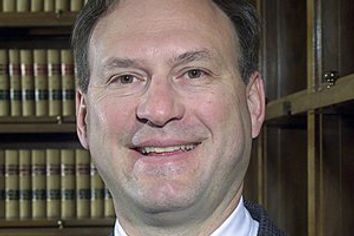
Sara Miles

A band of gold

And it's still the dream we hold, even if our marriage is -- for now, anyway -- legal.

  • more
    • All Share Services

A band of gold

I never bothered taking off the ring.

A little over four years ago, I swung by a jeweler and bought a $40 gold band, rushing to an event I’d never expected would happen — my wedding. Martha and I, who had been together for 11 years then, were married, with our daughter as witness, at San Francisco’s City Hall, in the great Valentine’s Day uprising of affirmative civil disobedience.

Along with 4,000 other couples, we received what many of us hadn’t known we were looking for: legal families, a laundry list of new rights and obligations, and the teary, cheering welcome of our fellow citizens.

Strangers kissed us and thrust carnations into our arms. A little girl, on the steps of City Hall, shyly gave my bride a handwritten note, in pink magic marker, reading “Congratulations on your marriage.” My mother was so happy she almost wept when I called her with the news. My sister yelped with joy. My brother’s voice cracked. “Oh, Sara,” he said. Then, “I guess we’re gonna have to buy you a kitchen appliance, now that you’re legal.”

But our next-door neighbor, Isabel, who was 6, looked confused when her parents ran into our backyard whooping congratulations. “I thought Sara and Martha weremarried,” she said.

Of course we were married, in any real sense of the word. We’d supported each other in sickness and health, raised a child, shared a home and a bank account, joy and disappointment and stupid arguments. We used the word “wife” to describe one another, and everyone from our employers to my church knew we were married.

But our child was technically a bastard. Our family did not legally exist. And though I could casually pick up a $20 form from the county clerk giving me the right to officiate at the marriage of our heterosexual friends, until that day at City Hall I had no idea I’d ever wear a wedding ring myself.

The law is not always an instrument of sufficient subtlety to be capable of codifying the truth, not to mention common sense. Just a few months after the San Francisco weddings, the courts pronounced all 4,000 marriages unlawful, “void from inception,” and they were annulled with a wave of the judicial hand. I fell back on Isabel’s interpretation: We were married. I had a spasm of rage at the injustice of it all, but I continued to introduce Martha as my wife — even though, in a fairly kinky turn of events, she was now, officially, also my ex-wife.

So I’m very happy about Thursday’s California Supreme Court ruling that all citizens, without exception, share the right to marry and be part of an “officially recognized and protected family.” But it’s hard to summon up too much excitement about remarrying — especially as the court decision could itself be invalidated in November. Conservatives have gathered more that a million signatures for a ballot measure that would amend the California constitution to make same-sex marriages illegal. I’m not sure I can stand to have my marriage to my wife annulled one more time.

For now, I’m just going to keep wearing the ring.

My daily bread

Raised to worship the New York Times on Sundays, I found myself going to church and praying instead. I thought a lot about God and flesh and blood -- and didn't tell my friends I was becoming a religious freak.

  • more
    • All Share Services

My daily bread

My first year at St. Gregory’s would begin, and end, with questions. Now I understand that questions are at the heart of faith, and that certainties about God can flicker on and off, no matter what you think you know. But back then, I thought “believers” were people who knew exactly what they believed and had nailed all the answers.

My first set of questions was very basic. I covertly studied the faces of people at St. Gregory’s when they took the bread, trying to guess what they were feeling, but I was too proud and too timid to ask either priests or congregants the beginner’s queries: Why do you cross yourselves? What are the candles for? How do you pray? And, more seriously: Do you really believe this stuff?

My next question was not about God or church; it was nakedly about me, and my fears. What would my friends think?

In America, I knew exactly one person who was a Christian. It turned out that my friend Mark Pritchard, an introverted writer with a tongue piercing, attended a Lutheran church with wooden pews where he sang old-fashioned hymns every Sunday. So I took some walks with Mark, trying to draw him out, but despite his orange Mohawk and wild sexual politics, he was a fairly Lutheran guy, not much given to discussing his emotions or spiritual life. “Sure, well, I believe in first principles,” Mark said to me, cautiously, when I probed him about his beliefs. He might as well have been speaking Greek. “Oh,” I said. I didn’t know anyone else who went to church.

Poor people certainly believed in God. San Francisco might be the least churchgoing city in the nation, but there were still plenty of churches within the run-down blocks around my house — the left-wing Chicano Catholic parish with its gorgeous altar to the Virgin of Guadalupe; the “Temple of the Lyre of the Valley,” an evangelical Salvadoran storefront; the black Pentecostal dive, the Santeria chapel, the cruddy white-trash Assembly of God building with its dirty curtains. Poor people said “God bless you” and crossed themselves and stood on street corners singing loud, bad hymns; they bought their little girls frothy first communion dresses; they buried their dead gangbanger brothers with incense and Scripture.

Nationally, middle-class Christians — even though many seemed to enjoy portraying themselves as a picked-on, oppressed minority, ceaselessly battling secular humanist regimes — weren’t exactly an endangered species either. People who called themselves Christians comprised 85 percent of the population. Christian rock music alone was a billion-dollar-a-year enterprise; there were more than 150 million Christian websites, and there had never been a non-Christian United States president.

But my own friends weren’t poor urban believers or smug God-talking suburbanites. My friends, at the most, read about Buddhism or practiced yoga. They tended to be cynical, hilarious, and overeducated, with years of therapy and contemporary literature behind them, and I was afraid to mention that I was slipping off to church and singing about Jesus on Sundays instead of sleeping late, cooking brunch, and reading the New York Times Book Review as I’d been raised to do. I couldn’t tell them about communion, or that I had started to read the Bible I’d bought, furtively, at a used-book store. It would be years before I’d meet Paul Fromberg — a funny, profane priest who would become my closest friend. He believed that “the craziest thing about Jesus is that church life never gets in the way of feeling close to him” and would teach me about the ironies of religion. At the time, though, I had no idea that I could be pals with anyone who described himself, unabashedly, as both “a big fag” and “Jesus’s man.”

My social circle was shocked when I first shyly broached the subject of church. An activist lawyer I knew sputtered. “Are you kidding?” he said. He launched a litany of complaints about the church that I’d come to hear over and over: It was the most reactionary force in the world, anti-Semitic, misogynist, homophobic … the Vatican … the Crusades … Jerry Falwell … child-molesting priests … Ralph Reed … I’d hated, during the 1980s, being expected to defend left movements or revolutionary parties, even when they were screwed up. I had no interest in defending another more fabulously corrupt institution. “It’s not about the church,” I said. “It’s about — ”

“Good deeds?” the lawyer asked incredulously. My desire for religion just didn’t make sense to him. He worked harder than anyone I’d ever met, spending fourteen hours a day defending Haitian refugees and Muslim political detainees and the victims of war and empire. He’d listened to prisoners at Guantánamo sob as they described Christian jailers destroying the Koran; he had represented a Nicaraguan woman raped by evangelical soldiers who sang hymns as they took turns with her on a dirt floor. Whatever faith drove him forward in his vocation, it had nothing to do with the Almighty God so readily invoked at prayer breakfasts in Washington.

But the Christianity that called to me, through the stories I read in the Bible, scattered the proud and rebuked the powerful. It was a religion in which divinity was revealed by scars on flesh. It was an upside-down world in which treasure, as the prophet said, was found in darkness; in which the hungry were filled with good things, and the rich sent out empty; in which new life was manifested through a humiliated, hungry woman and an empty, tortured man.

It was a picture that my friend Jose Suarez, who’d left his Cuban Baptist family in Texas to become a psychiatrist, had also glimpsed — but only briefly. Devout as a child, saved as a teenager at a Billy Graham rally, Jose made it through a year at a conservative Christian college before he began to feel “betrayed” by the inauthenticity of religion. “I’d go to services,” he said, “and it was all very social, unexamined, class-bound. I mean, didn’t they read the words of Jesus?”

But the hypocrisy and insincerity of church, what had driven my own parents away, was only part of it. “I was actively listening,” Jose said. “I really wanted to hear God. Ping — nothing. Ping — nothing. I couldn’t find it. I’d drive out this highway into the country at night, lie back on the hood of my car and look at the stars, and have these arguments with God. It was like: Say something, show me, give me a sign, some sort of experience. I’d watch the stars move across the sky, but I couldn’t find it inside. The container didn’t contain anymore.”

And so Jose had been wary, though curious, when I told him I was going to church: I was the first friend he’d had since high school who was anything close to a believer. It was in talking with him that I was able to articulate, for the first time, something about what prayer meant to me: what I was searching for, beyond the psychological, with all my questions about faith.

Jose and I met for lunch at a small cafe with outdoor tables one afternoon, when he was in the middle of an excruciating breakup. We sat on the patio and talked, picking at some complicated California sourdough-and-vegetable sandwiches while the fog came in.

Jose was in analysis then, and seeing a dozen patients, and serving as the medical director at a community mental health clinic, and writing scholarly papers on Freud, and doing energetic yoga for hours every morning, and generally overachieving, but he couldn’t fill every minute, and whenever he paused, the heartbreak would pour in. “Maybe I should go sit at the Zen center again,” Jose said. He was a small, handsome man with wiry hair and little glasses and perfect posture. His eyes were wet. “I’m not sleeping so well anyway; I might as well get up at five, what the hell.”

We finished lunch, and I took Jose’s hand. “Jose,” I said, “you should pray.”

As soon as I said it, I felt like an idiot — worse, like a proselytizing busybody who knows, without ambiguity, what’s right for everyone else. Jose looked genuinely surprised. Then he put on his analyst face. “Hmm,” he said. “What do you mean?”

What did I mean by prayer? I didn’t mean asking an omnipotent being to do favors; the idea of “answered prayers” was untenable for me, since millions of people prayed fervently for things they never received. I didn’t mean reciting a formula: I loved the language of some of the old prayers that were chanted at St. Gregory’s, but I didn’t think the words had magical power to change things. I didn’t mean kneeling and looking pious, or trying to make a deal with God, or even praying “for” something. What was I telling him?

“Um, well,” I said. I was embarrassed. Then I looked at Jose again, and the word tender filled my mind — tender as in sore to the touch and compassionate, at the same time. After my father had died, Jose had listened to me cry with the deepest empathy and patience, not trying to “comfort” me but just being present. As tenderly as I could, I said to him, “I really don’t know. I don’t know what I believe or who I’m talking to. Sometimes I just try to stay open, sort of. Especially when it hurts. And I try to — I know this is corny — but I try to summon up thankfulness.”

“When you told me to pray,” Jose would remember later, “it was incredibly earnest. You said prayer was like having this intense, profound longing that you just had to be with. That you put the longing in the hands of God, in a certain way. That it was important to be receptive to the unfulfilled, and not fill it or deny it.”

I had to be receptive or go crazy — because even as I kept going to church, the questions raised by the experience only multiplied. Conversion was turning out to be quite far from the greeting-card moment promised by televangelists, when Jesus steps into your life, personally saves you, and becomes your lucky charm forever. Instead, it was socially and politically awkward, as well as profoundly confusing. I wasn’t struck with any sudden conviction that I now understood the “truth.” If anything, I was just crabbier, lonelier, and more destabilized.

All that grounded me were those pieces of bread. I was feeling my way toward a theology, beginning with what I had taken in my mouth and working out from there. I couldn’t start by conceptualizing God as an abstract “Trinity” or trying to “prove” a divine existence philosophically. It was the materiality of Christianity that fascinated me, the compelling story of incarnation in its grungiest details, the promise that words and flesh were deeply, deeply connected. I reflected, for example, about [my daughter] Katie, and about what it was like to be both a mother and a mother’s child. The entire process of human reproduction was, if I considered it for a minute, about as “intolerable” as the apostles said communion was. It sounded just as weird as the claim that God was in a piece of bread you could eat. And yet it was true.

I grew inside my mother, the way Katie grew inside me. I came out of her and ate her, just as Katie ate my body, literally, to live. I became my mother in ways that still felt, sometimes, as elemental and violent as the moment when I’d been pushed out from between her legs in a great rush of blood. And it was the same with my father: He had helped make me, in ways that were wildly mysterious and absolutely powerful. Like Jesus, he had gone inside somebody else’s body and then become a part of me. The shape of my hands, the way I cleared my throat, the color of my eyes: My parents lived in me — body and soul, DNA and spirit. That was like the bread becoming God becoming me, in ways seen and unseen.

I tried to remember my own passionate spiritual feelings as a child, when I had no religion and no language to understand them. There had been one early spring afternoon, raw and chilly, when I lay by myself in the muddy backyard in my snowsuit examining a fallen log, looking and looking and looking. There were patches of snow on the wet wood and, around it, spears of onion grass just beginning to poke up, and I sat up after half an hour contemplating the log. The cloudy sky above me was so huge, and I was so small. The phrase “the whole universe” occurred to me. I must have been in third grade, and no amount of papier-mâché solar system models had prepared me for the vast, heart-beating calm I felt, or for the inarticulate desire to just stay there, suspended, looking and breathing my tiny puffs of the whole universe’s air, until I had to pee and went inside, shedding my wet mittens.

I remembered how I used to pray — there really was no other word for it — when I was six or seven. I’d been reaching for something solemn, obligatory, ritual: wanting God and not even knowing what that was. In an upstairs bedroom in my parents’ home, I’d once been taught, by a girl who went to Catholic school, the vaguely sexual language of the Hail Mary. It remained a mysterious, private poem to recite, the way I recited, as I walked home from school, lines from other poems: “The breaking waves dashed high/ On a stern and rock-bound coast.” But I had no framework to understand it as prayer, linked to the same longing I’d feel alone, at night, when I looked at the ceiling and made up words.

What would religious instruction have done for me then? What would have sustained me more as a child than my own atheist parents’ love, my father’s soft voice at bedtime as he invented stories for me, my mother’s hand on my back? What would have fed me more than cooking and eating with them, or given me more courage?

Food was a lot of what had grounded me before, shaping my family, my work, my relationships. It had meant a five-gallon plastic bucket full of broken eggs. It had meant a generously offered bowl of rice porridge in the jungle. It had meant the thin blue milk leaking from my own breasts. Now food, in the form of communion, was collecting all of those experiences in one place and adding a new layer of meaning — not on my time but on God’s.

The child I was, protected from religion by her parents, at some point had become the woman crying at the communion table. Those tears weren’t a conclusion, or a happy ending, just part of a motion toward something. It was still continuing. God didn’t work in people according to a convenient schedule, by explaining everything or tying up the loose plot lines of every story. Sometimes nothing was settled.

So I sat by myself a lot and mused about God, and my mother, and flesh and blood. I read the Bible. I prayed; I tried to stay open to the questions that flooded me. I didn’t tell anyone I was becoming a religious nut.

Excerpted from “Take This Bread: A Radical Conversion” by Sara Miles. Copyright © 2007 by Sara Miles. Reprinted by arrangement with the Random House Publishing Group, www.randomhouse.com.

Continue Reading Close

Ban on gay marriage denies justice to children

The N.Y. court says marriage is good for kids. Then why doesn't my daughter deserve the same legal protection as the children of opposite-sex parents?

  • more
    • All Share Services

Ban on gay marriage denies justice to children

There’s nothing like a judicial ruling — in this case, the extremely tortured one written last week by Judge Robert S. Smith of the New York Court of Appeals against gay marriage — to make me feel simultaneously all-powerful and helpless. On Friday, my family read the news over breakfast. I was on my way to volunteer at my church food pantry; my wife was finishing the endless paperwork for our 17-year-old daughter’s college loan, and Katie — one of the “children” in whose interest the court said it ruled — was on her way out the door to her summer job.

Who knew we could have such a grandiose impact? Just by hanging out in our kitchen, the three of us challenge what Smith called the “accepted truth for almost everyone who ever lived, in any society in which marriage existed, that there could be marriages only between participants of different sex.” By asking for the legal benefits of marriage, we threaten the already unstable institution of the heterosexual family.

Judge Smith’s decision posited two major reasons to “rationally support” the ban on gay marriage — both of them grounded in the assumption, which I share, that marriage is important to the welfare of children. After a few factually incorrect preambles (note to judge: Not all gay couples become parents through adoption or “technological marvels”; we can tell you how reproduction works later, in private) he launched his argument.

First, the judge delivered a surprising attack on the heterosexual agenda: Straight people, he said, are really bad at marriage. Opposite-sex relationships, wrote the judge, are often “casual” or temporary. (Wasn’t that what right-wing frothers used to say about queers?) Thus, wayward, irresponsible, sexually promiscuous straight people need the legal benefits of marriage as inducements (read: special prizes nobody else gets) to lure them into “solemn, long-term commitments” to each other, so that they can care responsibly for children. Were we to extend those privileges to homosexuals … well, they wouldn’t be privileges anymore, would they?

Second, the judge declared, it’s best for children to grow up with a mother and a father. Though he admitted there is no scientific evidence to support this assertion, “common sense,” he said, makes it so. (If we’re going to be commonsensical, your honor, the children of lesbian and gay families also have “living models of what both a man and a woman are like” — surprisingly, few of us raise our kids in single-sex dormitories surrounded by barbed wire. And if the point is a variety of role models, why allow single straight people to adopt?)

It’s understandable that the judge would be worried about the institution of marriage. Straight people are just not that into marriage anymore. By 2000, only 25 percent of American households consisted of a married heterosexual couple with children. Legal marriage gives heterosexuals the right to hire a cheesy ’70s cover band, read embarrassing poetry to their friends, and fight with their parents over whom to invite to a party with bad food. (It also allows couples to go broke together: Marriage is an $85 billion a year industry.) And marriage is hard to sustain: For heterosexual couples, who can divorce the minute they’re tired of their sacred vows, about half of all marriages end in divorce. Legal marriage carries many responsibilities: among them the duty of parents, unmet by 62 percent of divorced fathers, to support their children. Increasing numbers of straight people don’t bother: Over a third of all births are out of wedlock.

Judge Smith recognized these difficulties, arguing with syntactical wobbliness but undeniable fervor that the institution of heterosexual marriage needs propping up. He even suggested, counterintuitively, that “unstable relationships between people of the opposite sex present a greater danger that children will be born into or grow up in unstable homes than is the case with same-sex couples.”

But the judge’s solution — keep queers out of the mix — doesn’t work, if he really wants marriage to be about the welfare of children. First of all, as Judge Judith Kaye wrote in her dissenting opinion, “while encouraging opposite-sex couples to marry before they have children is certainly a legitimate interest of the state, the exclusion of gay men and lesbians from marriage in no way furthers this interest. There are enough marriage licenses to go around for everyone.”

Furthermore, if the courts should encourage marriages that help kids, why aren’t the courts supporting the more-likely-to-be-stable relationships of gay couples?

And finally, what do the courts have to say about the rights of the kids in lesbian and gay families? Or, to get personal about it, what about the rights of my brilliant, beautiful, adored daughter, with her two mothers and gay father? Katie’s father and I, her biological parents, were never married; her mothers were married, briefly, in the great civic uprising of February 2004 in San Francisco. (That marriage was quickly annulled by the courts, making us ex-wives living together raising a child, a category not frequently found in surveys of marriage statistics.)

All of Katie’s parents have supported her, caring for her in sickness and laughing ourselves silly over her jokes; all of us have argued with her about cleaning up her room; all of us are preparing for tears and pride as she heads off to college this fall. Our daughter, like all children, deserves what Judge Smith recognized as “an important function of marriage” — to “create more stability and permanence in the relationships that cause children to be born.” She also deserves the legal benefits and protections afforded to the kids of heterosexual parents — even unmarried heterosexual parents. (In 1968, the Supreme Court swept away many of the harsher provisions of common law governing illegitimacy, ruling on equal protection grounds.) She deserves to have Martha recognized as her mother.

And this is where I feel powerless.

It’s bad enough that the state treats me and my wife and Katie’s father as unworthy to share in full citizenship. But it’s unforgivable that our child, too, is penalized for our inability to marry. She can’t claim Martha as a family member; she can’t get insurance coverage through Martha or be treated as Martha’s child for tax, probate or healthcare matters; she has no legal relationship with the woman who’s helped raise her since she was in kindergarten and a boy made her cry. “You don’t even exist,” that boy told Katie, with Judge Smith’s impeccable logic. “You have to be married to have a baby, and your parents aren’t married, so you weren’t even born, ha ha.”

The fact is, lesbians and gays are not going to stop having kids because we can’t marry. Our children are not going to disappear.

Which brings me back to feeling powerful — seriously. As we’ve seen in South Africa and Eastern Europe and San Francisco, civil society in its richness is always greater than official codes about who is, and isn’t, a full person. Katie and a million kids like her are here, and their families will continue to thrive. At some point, the courts will catch up.

Continue Reading Close

It’s a girl!

The election of a woman to head the American Episcopal Church is a challenge to purity movements that seek to exclude gays and other "outcasts."

  • more
    • All Share Services

It's a girl!

It’s always a bit of a shock when God shows up in church. There’s not much in Scripture to suggest that God’s particularly interested in church of any kind, and Jesus, with his deliberate flouting of religious laws, had a notable impatience with the enterprise.

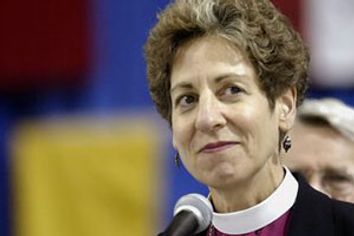
And yet, as Christians, we hope and pray that it will happen. The election of the Right Rev. Katharine Jefferts Schori, bishop of Nevada, as the presiding bishop of the Episcopal Church in the United States appears to be a hint that something’s going on beyond the usual human bickering, self-congratulation, scapegoating and piety that abound whenever church people gather. The “kingdom of God” — a phrase used by Jesus and often equated by Christians with the church — is like a weed growing in the tidy garden of human culture. It grows as it will, unbidden and frequently unwanted; its growth is always to God’s design specs, not those of tradition-bound churches.

Jefferts Schori, a former oceanographer, was considered a long shot for the position by most church experts: Although she’s a fairly mainstream liberal, her gender made it unlikely that the church would choose to be stirred up at a moment when it seemed to require smoothing over and calming down.

The Episcopal Church — the American branch of the worldwide Anglican Communion, with 77 million members — had already outraged conservatives three years ago by electing the openly gay Right Rev. Gene Robinson to head the Diocese of New Hampshire. Conservative African Anglicans joined with reactionary American Episcopalians, threatening to pull out of the Communion entirely if the enfranchisement of gay Christians was not stopped. There were name-calling, backstabbing, breakaway parishes, fights over property and thundering sermons about “abomination” and deviance. “The battle is about the authority of Scripture,” proclaimed conservative American Bishop Robert Duncan. “It’s about the basics of Christian faith … The issues have to do with sexuality and morality, but at the very heart of it is whether Scripture can be trusted.”

The struggle isn’t just about gayness, of course, but, rather, a more fundamental conflict between believers who crave certainty and those who embrace ambiguity; those who insist Scripture is inerrant and unchanging, delivered once and for all time, and those who believe the Bible is only part of God’s ongoing revelation. The struggle is also about how to define a Christian: as one who seeks to keep religion “pure” or one who welcomes outcasts. It’s hardly a conflict unique to Anglicanism or, for that matter, Christianity. As Chris Linzey, an English priest who edited a book on Anglicans and homosexuality, wrote, “The agenda of conservatives is a rolling one: today it is gays, but biblical inerrancy, interfaith worship, women bishops, remarriage after divorce will surely follow. The logic of all purity movements is to exclude.”

So the very body of Jefferts Schori, whose election was hailed by shouts of “It’s a girl!” is a direct challenge to the purity movements in the church. Three dioceses of the U.S. Episcopal Church do not believe that God has called any women to ordained ministry, and more than half of the 38 provinces in the Anglican Communion, including the Church of England, do not ordain women to the episcopate. The rector of an Episcopal church in Illinois that does not ordain women told the New York Times that the new bishop would not be welcome there. “Just like we can’t use grape juice and saltines for Communion, because it isn’t the right matter, we do not believe that the right matter is being offered here,” he said, apparently referring to Bishop Jefferts Schori’s female parts.

And yet God, according to the stories we know, tends to show up in the most unlikely places: in humiliated, unclean women, in helpless babies, speaking in ways that upset the established order and turn tradition on its head. As with Bishop Robinson, Jefferts Schori may provoke schism, and further dismembering of a denomination that has shakily held together despite differences in style, politics and theology. But she may also be a reminder that the institution of the church — of any human religion — is, finally, so much smaller than the promise it embodies.

In the Anglican Communion, that disturbing and longed-for promise is enshrined at the center of the Book of Common Prayer, in the service used to ordain a bishop. “Let the whole world see and know,” it says, “that things which were cast down are being raised up, and things which had grown old are being made new.”

Amen.

Continue Reading Close

Rome’s latest witch hunt won’t stop with gays

Under cover of the sex-abuse scandal, the Vatican is scapegoating homosexuals in order to purge all "wrong thinkers" from the American Catholic Church.

  • more
    • All Share Services

Rome's latest witch hunt won't stop with gays

For anxious Catholic seminarians, teachers and priests, the disclosure that teams of Vatican inspectors will be visiting the more than 200 U.S. seminaries to “look for evidence of homosexuality” and investigate if seminaries have “a clear process for removing faculty members who dissent from the authoritative teaching of the church” set off a storm of speculation about a new witch hunt against gay men in the priesthood.

Archbishop Edwin F. O’Brien, the Vatican’s coordinator of the investigative visits, told the National Catholic Register that “anyone who has engaged in homosexual activity, or has strong homosexual inclinations, would be best not to apply to a seminary and not to be accepted into a seminary,” and said that the Vatican would be coming out with a document clarifying its 1961 position on homosexual seminarians and clergy.

The seminary investigations, and their impact on the lives and vocations of faithful Catholics, will be profound — as will their shattering of a long-closeted church culture. If the visits become a witch hunt, says church historian and Catholic theologian Rev. Richard McBrien, “there will be gay seminarians, faculty, and already-ordained priests who will feel obliged to ‘out’ closeted gays in positions of ecclesiastical leadership who are facilitating the campaign.”

Rev. McBrien, who teaches at the University of Notre Dame, believes that an “ultra-conservative minority is driving the investigations, not knowing that some of their favorite icons in the clergy and hierarchy are themselves gay.”

“The days of the gilded clerical closet are gone,” agrees Mark Lodico, a former Catholic with a master’s in theology who now works as a psychologist in San Francisco. “We have to realize that the days of officials publicly professing horror and shock at the very thought of gay seminarians and clergy, while privately winking and smiling, are over.”

Still, the practical and existential demands of the investigation are slippery enough to frustrate the most convoluted theological mind. How will investigators ferret out those to be purged? Will the Vatican try to ban homosexual “activities,” homosexual “inclinations” or homosexual “persons”? Is desire identity? What about a seminarian who had a crush on his best friend in sixth grade? Is behavior the point? What about a totally celibate flaming queen who’s taught theology for 30 years? What, in God’s name, is a homosexual — and how many of them can dance on the head of a pin?

But, as in other culture wars where the idea of homosexuality serves to draw boundaries, this battle is not primarily about gay people or gay behavior. The real battle is about power, and the attempt by Pope Benedict XVI to reassert central authority in the face of multiple and growing challenges to Vatican control — particularly from the United States, long the source of headaches for Rome.

On that increasingly unmanageable terrain, lifelong Catholics cheerfully disobey church teachings on birth control, priests overlook church rules about divorce, the faithful openly tell pollsters that their bishops are wrong, and Catholic women — hell, even the pusillanimous John Kerry — talk back, as if faith were a matter of conscience and not of doctrine. The old purity codes don’t hold; the lines of the law are blurred, and no amount of cash from arch-conservative Catholics can keep the pews full. Openly gay seminarians, theologians and priests are only one part of a larger fear for the Vatican: that even as official doctrine is given lip service, actual practice will create a different church on the ground.

This won’t be the first time Rome has sounded an alarm about American heretics. At the beginning of the 20th century, under Pius X, the Vatican led a campaign to purge American seminaries of critical scholarship, replacing Modernists and demanding intellectual obedience to papal control. In the United States, troublesome seminary faculty were fired, and well-read, critical priests were replaced by new immigrants from Ireland and Italy — generally poorer and less educated men who were willing to be obedient and play by the rules.

“The anti-Modernist campaign set back Catholic scholarship and intellectual life some 50 years,” says Rev. McBrien. “It wasn’t until the pontificate of John XXIII (1958-63) and the Second Vatican Council (1962-65) that the atmosphere changed for the better.” More recent Vatican campaigns against liberation theologians, pro-choice Catholics, those advocating the priestly ordination of women, feminist scholars and dissenting theologians revived fear among liberal American seminarians and faculty of a new setback in Catholic intellectual life.

Still, the current seminary investigations are being presented to the faithful not as anti-intellectual reaction, nor as a power play, but as a good-faith effort to address the sexual-abuse scandal. Gay men abuse little boys, the argument goes, so getting rid of gay priests means that kids will be safe. Such linking of homosexuality with predatory pedophilia is an old and inaccurate myth, but it certainly holds political utility for a hierarchy that did its best, for decades, to cover up abuse, blame victims and attack those who sought justice. Like other political campaigns that invoke the horrors of homosexuality to rally followers behind a conservative agenda, this one has less to do with facts than with public relations.

The real connection between the sex-abuse cases and the seminary investigations is that the scandals intensified the Vatican’s existing unease about the American church — and convinced the hierarchy it was time to clamp down. The spectacle of an angry laity withholding money from the church, spilling parish secrets, publicly rebuking prominent bishops, and refusing to accept direction was profoundly upsetting to an organization that runs on order.

“It’s more than order,” says Rev. John Golenski, a gay Episcopal priest and medical ethicist in San Francisco, who spent 23 years as a Jesuit. “It’s about money. If you took away the revenue from Cologne, Munich, Amsterdam and the United States, the Vatican would close down in seven days. The whole show is funded by these places — so if they lose control of the mechanism of authority there, they lose it all. They need the levers of control to be top-down again.”

Rev. Golenski thinks the Vatican has concluded that “the clergy in the United States cannot be reformed, but must be replaced.” Rome, he adds, “is ready to purge not just homosexuals, but all wrong thinkers. It’s a risky strategy for them. But otherwise the hierarchy fears it will irrevocably lose control.”

The gamble is a big one for Pope Benedict XVI. Even if the Vatican were able to “cleanse” the American seminaries this time around — leaving only the stupid, the obedient, the terrorized, the very good liars — the risks seem great. The number of American priests has already dropped so precipitously that laypeople and “guest-worker” immigrant priests from places like Vietnam and the Philippines fill many jobs. As more American seminarians are driven out, more replacement priests will be needed. Earlier in the century, Irish and Italian priests ran parishes that shared their language and culture — but the new immigrant priests may not be able to keep middle-class, non-immigrant American churchgoers in line. And though the Vatican has, to put it mildly, a great deal of experience in suppressing dissent, the world has changed irreversibly in terms of the ability of ordinary Catholics to share information outside of official channels — and to make up their own minds.

“A lot has shifted in the culture of American parishes,” notes Rev. Golenski. “God knows, most people have figured out their clergy are gay.”

The human cost of the investigations is real: The seminarians, priests and teachers caught up in a witch hunt have much to grieve for, as do their families and parishioners. The institutional cost to the church seems great too: Although some Catholics will stay, and some conservatives will form political bonds with fundamentalist Protestants who take their side in the culture wars, many moderates will leave. Some may cross over to mainline Protestant denominations, or bland, friendly megachurches; others may just join the growing number of “recovering Catholics” with no church affiliation.

But, as the gay psychologist Mark Lodico points out, there is no going back to the days when the pope held absolute authority and gay Catholics were silent and invisible. “The gift of this investigation is that, painful as it is, it opens up the possibility of telling the whole truth,” he says. “We should thank God for that.”

Continue Reading Close