Sarah Lidgus

Digital fashion design ain’t as easy as it looks

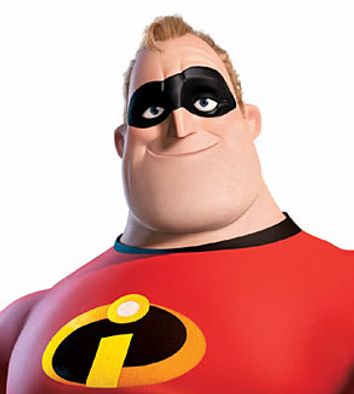
The computer-generated clothing in Pixar's "The Incredibles" required real tailors and years of programming.

  • more
    • All Share Services

Digital fashion design ain't as easy as it looks

Contrary to its Hollywood ending, the real hero of “The Incredibles” is Edna Mode, fashion designer to the superheroes. Edna faces a daunting task: outfitting the bulgiest of the bulgy, the stretchiest of the stretchy and the fastest of the fast with premium-grade supersuits that must be able to accommodate things impossible for your average jeans and T-shirt. Any reality-based fashion designer or tailor would run screaming and crying from such challenges. (Vera Wang may range from business casual to eveningwear, but will her clothes stand up, in style, to an arctic-blast-to-inferno scenario, like Edna’s creations do? Um, no.)

But who would have guessed that Pixar’s real-life computer animators face the same difficulties as Edna? To create costumes for computer-generated (CG) cartoons, you must tailor each garment and stitch every stitch to fit each actor. And when dealing with an actor who’s almost seven feet tall, with an 86-inch chest and 52-inch waist, who needs to be able to throw cars, a tailor has her work cut out. In “The Incredibles,” animated life imitates animated art. Mr. Incredible may be incredible, but he can’t even begin to understand the geometric algorithms necessary to keep his little butt clothed. Welcome to the fabulous world of animated fashion.

It seems only logical to think of animation as a two-dimensional flat surface, where what is present is always visible. For example: You may never consider the internal workings of Pepe Le Pew until a hot lady skunk saunters past, thereby causing his heart to leap out of his chest and pound with animated love. But really, this is the only time that Pepe has a heart; when the lady skunk exits stage left, the animator is no longer rendering Pepe’s guts. But in CG animation, what lies beneath the surface is another surface, another plane of animation, creating layer upon layer of supporting effects that allow artists to render holistic environments and believable characters. What is hidden beneath is a massive support system, essential to creating alien beings and foreign worlds. Whether it’s flabby old retired Bob or the hulking, toned body of Mr. Incredible, the clothing definitely made the man possible.

Creating CG clothing is a strange undertaking; it is both similar to creating real clothing and absolutely nothing like it. Costumes are created sleeve by sleeve, pant leg by pant leg, stitched together in virtual space via pattern-making computer software. This is because CG actors are more like animated puppets than flat drawings: Clothing must actually fit onto a character’s body as a pair of pants would fit onto a three-dimensional person. What animates the clothing is a cloth simulator, a program that teaches the computer how the cloth is to behave in different circumstances. Creating this simulator took years of research and experimentation by Pixar’s aptly named Cloth Team, led by programmer David Baraff.

But to simulate an outfit, you must first have an outfit to simulate. Enter Christine Waggoner, Pixar’s real-life Edna — well, without the accent or attitude.

Waggoner is one of the rare individuals who understand both algorithms and A-lines. Taught how to sew by her mom, Waggoner began creating garments at age 12 for a local theater in Connecticut in order to earn a Girl Scout badge. She stuck with it way beyond the badge, and by the time she hung up her sash and was ready for college, Waggoner had already lived a minicareer in costume design. Burned out on theater, she chose to study international relations at Brown University. In an accident of destiny, part of the major’s requirement was a computer science course. She became fascinated with computer graphics and, in a natural extension of her interests, became intrigued by the idea of computer-generated clothing.

Prior to 1998, when she was finishing up school, CG clothing was mostly the stuff of theory. But at the time, Waggoner’s soon-to-be-colleague Baraff was also interested in CG clothing and studying its simulation. Waggoner ended up working at Pixar on rendering and models for “Toy Story 2″ but always kept the realization of CG clothing as a future goal.

The T-shirt worn by the character Boo in “Monsters, Inc.” marked Pixar’s first successful venture into cloth simulation. Until that point CG cloth technology was not advanced enough to imitate the realistic interactions clothing has with a moving body. It was unable to achieve the complex folds and creases that occur when an elbow bends or legs cross. As a result, clothing appeared stuck to the body with an unnatural rigidity, creating an unconvincing effect. Boo’s T-shirt paved the way for “Finding Nemo” in 2003, and Nemo’s success allowed for the realization of the cast of “The Incredibles” and the first large-scale use of CG clothing.

Waggoner and the Cloth Team created over 140 garments for “The Incredibles” — a massive, labor-intensive process that took over three years to complete in spite of the efficiency offered by virtual tailoring. To create each piece of clothing, tailor Maria Cervantes was hired to help create the costumes. “There were often times that I wished I could go shopping for a garment,” says Waggoner. “Unfortunately, the proportions of our characters are so extreme, I would never be able to find such a garment. And of course things from the physical world cannot be imported into the computer without digitizing them or modeling them.”

Waggoner worked with Cervantes and several other artists to create individual costumes for each character in each of his or her representations: There was a fat Bob, a thin Bob, a pre-retirement Mr. Incredible and Edna’s new-and-improved Mr. Incredible. And that was really just the beginning.

“The characters were modeled in a multilayered fashion which attempts to emulate the physical world,” Waggoner explains. “They all had muscles, skin and clothing. We used this approach in an effort to create a higher level of realism: muscles sliding under skin, and cloth sliding, resting or folding over skin. Some of the characters even had undergarments. Edna had a petticoat to support her dress. Bob had briefs sewn to his shirt to keep the shirt tucked in.” (She learned that trick costuming dancers in the theater.) So was Bob as demanding as he seemed when dealing with Edna? “The actors don’t complain about their costumes, but they also cannot tell you where it’s too tight,” says Waggoner.

Despite the seeming ease of computer-aided efficiency, challenges persisted. “We must model/simulate every detail of a costume, of the world,” says Waggoner. “And this essentially boils down to mathematics and algorithms. What’s the model/function for a ruffle, a shoulder pad or a bustle? If we wanted atomic accuracy, are their computers fast enough to handle those quantities of data? Is such an approach practical or necessary?”

In the movie, illustrated through a series of tragic instances, Edna recounts the many superheroes of the past who were ultimately done in by cape-related injuries — snags being the most common danger. From Waggoner’s perspective the cape problem is real; in CG animation capes present a litany of potential problems, the most difficult of which is the dreaded tangle — in which a piece of cloth collides with itself. It’s difficult for the computer to differentiate between the “wrong” side of the fabric and the “right.”

“Yeah, Edna’s right,” Waggoner smiles. “Capes can be difficult.”

So if you aspire to cartoonish superhero proportions, where your massive muscles and barrel chest allow you to leap computer-generated buildings with single, animated bounds, you should take a lesson from Mr. Incredible: Sew your underwear to your shirt. Congratulations, mere mortal, you’re on your way to the life of super CG heroics.

Custom jeans for every butt

Levi's promises individualized denim for every fancy. But one explorer discovers that mass customization is trickier than it looks.

  • more
    • All Share Services

I waited for Karen inside the front entrance to the store, in between two walkie-talkie flanked greeters and the ostentatiously hip customization department. Hand-painted jean jackets hung from low vestibule ceilings and spiraled up alongside the staircase, ascending toward three floors of Levi’s heaven.

The jackets had been cast in a resin-resembling immobilized state, thereby rendering them more suitable for a traction patient than for casual club hopping. Each was signed and dated by the artist and available for $500. I wandered over to the uninviting table next to the greeters and was pleased at the salonesque array of pop fashion magazines. I picked up Interview and waited for mine.

Karen Burbano, former customization and vintage merchandiser for Levi Strauss & Co., is one of the main reasons rhinestones have been everywhere, from J.Lo to JCPenney. By the end of her Levi’s stay, Burbano had quietly put the jean mammoth back in the hipster realm with her nearly panoptic trend-seeking gaze. Her own intern to Puff Daddy story was quick yet deliberate, starting in the Jean Archive (which does exist and does house original 501s) and progressing into the budding vintage merchandising department. Around 1999, while on business trips overseas, she began noticing a trend toward craftsmanship and the mark of the individual in many designers’ products. A rhinestone spotting in the late ’90s led directly to the elite margins of the customization department and eventually caught mainstream-Levi’s fire.

“I was in Japan at a popular upper-end boutique called 45 RPM, and I noticed a sewing machine in their store,” says Burbano. “I knew right then that customization was going to be the way the market would go.” But despite Burbano’s convictions, Levi’s big guys weren’t too sure. “Even when I began in vintage, corporate wasn’t really behind it. They didn’t understand the market we were seeking. And the idea of customization was even more foreign. But eventually we convinced them that in order to get Levi’s back into favor with the fashionable public, it was going to have to make some changes. So they finally agreed, and we opened up the customization department here at our flagship store in August of 1999.”

Customization for a mass-market item like Levi’s? There seemed to be an inherent contradiction in the idea. I wanted to know more. Would it be like ordering a fast-food meal: No. 1 equals silk-screening and a large Coke? Or would it be more creative, more oriented to the style of the individual as per the original concept behind customization? There was only one way to find out — I had to go beyond simply interviewing the customizing mastermind. I had to get customized myself. My plan was to be subversive, to be a stowaway pirate on the flagship store’s lower deck, a gang of one with my peg leg stealthily hidden beneath my vintage Levi’s. But as I set sail through the extensively charted Levi’s waters, little did I know it would be I who was going to get pirated.

- – - – - – - – - – - -

The term “mass customization” was born in 1987 in Stanley M. Davis’ seminal book “Future Perfect.” As Davis explained, before the Industrial Revolution business was confined to a localized market, where producers of goods and providers of services generally operated within limited geographical boundaries. (This hearkens back to a time when “marketplace” actually meant a place with a market, not the cafeteria section of Marshall Field’s.) After the Industrial Revolution, mass producers began to standardize goods and services and that supply created its own homogeneous demand.

But in order to gain a competitive edge, some companies decided to splinter off from this homogeneity and attempted to lure specific types of customers through target marketing. In the auto industry, for example, General Motors’ Alfred Sloan segmented the mass market based on socio-demographic factors, focusing instead on a range of minor markets — Cadillac at the high end, followed by Buick, then Oldsmobile — in effect activating the idea of the market niche. As a subset of mass production, the market niche directed a more specialized product to a more specialized group of customers. The next phase, as Davis saw it, would shed the mass-production mentality of both the supplier and the demander and would replace it with an enlightened new-growth strategy called mass customization. Fifteen years later, Metropolis magazine highlighted it as the No. 1 design idea for the 21st century.

Since the Industrial Revolution, much of what defines American culture has rolled off assembly lines and directly into our lives with little resistance. But as mainstream society consumes more and more assembly-line culture, both things and people begin to look, sound and act the same, averaging out to some C-grade consumer mentality. In the early 1940s, when American assembly lines pumped out everything from cars and toothbrushes to tanks and missiles, philosophers Theodore Adorno and Max Horkheimer began writing about what they dubbed the “Culture Industry” created by and through mass production. In “The Dialectic of Enlightenment,” Adorno and Horkheimer argue that “under a monopoly, all mass culture is identical.” In other words, the production of culture is dictated by a few, yet consumed by all. Everything is for sale, and it is our own complacency in the system, the fact that we literally “buy into it,” that perpetuates this commodification. Culture has come to replace cars on the assembly line.

But if mass customization is dictated by a few and consumed, in theory, by one, does it somehow invert (or at least distort) this idea?

First of all, the term is inherently oxymoronic, and this is not something to be overlooked. When I slipped and said “mass customization” to Karen Burbano, there was a pause of uncertainty and then a very cautious reply, as if I had blown my undercover Levi’s investigation and they would be exposed as purveyors of the same old shit, just with more rhinestones. Levi’s claims to deal in “customization,” not “mass customization,” yet there are rules in place to maintain both a timely tailoring schedule and prevent a misrepresentation of the company. When I brought up the time I worked for Ben & Jerry’s and had to customize an S/M cake complete with a chocolate-icing whip and cake-cone handcuffs, I was told that there are limits to what Levi’s will customize. “Nothing pornographic or with questionable language,” Karen replied. “And nothing that isn’t Levi’s.”

If, as Susan Sontag suggests, a capitalist society requires a culture based on images, no image is more important to business than the image — or illusion — of choice. It invites the customer to choose from a series of predesigned modules, adding and subtracting features whose relevance has already been decided by the company. I’m guessing that this is why Nike, trend-creator extraordinaire, does not offer bedazzling rhinestones as an option in Nike I.D., its own customization venture.

In their Harvard Business Review book “Markets of One” (2000), B. Joseph Pine II and James H. Gilmore instruct businesses to “look for the ‘common uniqueness’ found in all customers in your industry.” This seems to be a rephrasing of Alfred Sloan’s high-end Cadillac niche. But let’s say I want a 2004 Mary Kay-pink El Dorado with front-end hydraulics. Sloan’s model only goes so far. Mass customization accounts for the additions and subtractions desired by the consumer by “identifying and focusing on a few areas of sacrifice (or perhaps only one) and developing modular capabilities that address those unfulfilled needs.” I need a 2004 Mary Kay-pink El Dorado with hydraulics to fulfill my unfulfilled needs, and if you do too, we may just share that special sort of common uniqueness serviced by mass customization.

So this idea of “need” is important. What is a “need” in today’s dominant postindustrial world? Is Motorola addressing my “needs” by giving me the option of a Matchbox 20 hit alerting me to my incoming call? In “Society of the Spectacle” (1967), French philosopher Guy Debord suggests that the idea of economic necessity as something that one truly needs — food, clothing, shelter — must be destroyed by the economy itself and replaced by a “ceaseless manufacture of pseudo-needs.” I would argue that the economy is entering individuality into the realm of pseudo-needs, and marketing it accordingly. Not only do I need Levi’s jeans, I need to have my Levi’s emblazoned with my personalized ensignia, a modern territorial pissing of sorts.

“We’re just recycling the ideas of the past,” says Burbano. “In the ’60s, girls would shrink their jeans in their tubs at home. This was the first instance of customization. People have always used jeans as their own personal canvas.” The personification of this idea was of course snaking up the stairwell behind her back as we talked. “We just took it to another level.”

So who determined mass customization as a deliberate and well-executed plan thought up by big business? Was its arrival inevitable as both a labor — and consumer — backlash? Debord writes that the turn toward automation in modern 20th century industry naturally results in a net job loss, therefore “new forms of employment have to be created. A happy solution presents itself in the growth of the tertiary or service sector in response to the immense strain on the supply lines of the army responsible for distributing and hyping the commodities of the moment.”

Tailoring the mass-produced product to a specific customer or customer base creates a more specialized product at the end of the line while still producing the base product on a robot-driven assembly line. This also blurs the binaries of what is a good and what is a service.

“Customizing a good automatically turns it into a service, and customizing a service automatically turns it into an experience — a memorable event that engages a customer in an inherently personal way,” state Pine and Gilmore in “Markets of One.” In this way, mass customization becomes one of the most desirable strategies for businesses in the face of the mass-produced backlash for both the growths in service-related jobs and consumer satisfaction.

But am I part of the EveryCustomer? If Horkheimer and Adorno thought in 1942 that “Everybody must behave (as if spontaneously) in accordance with his previous determined and indexed level, and choose the category of mass product turned out for his type,” does that apply to the market mutation of mass customization?

I decided to become part of the experiment, to see whether I was the chump Debord, Adorno and Horkheimer thought I would be or if I would somehow transcend the culture industry through my own subversive customization. I asked Karen if she thought I could write this paper on a pair of Levi’s, and she said that it was entirely possible with silk-screening but that it would require several individualized screens and would get pretty pricey. She suggested I use one screen and have it repeated a few times; that would cost about $80, including labor.

When I went home that night, I looked to Adorno and Horkheimer for counsel. I picked a quote from “The Dialectic of Enlightenment” that reads, “The principle of individuality was always full of contradiction,” something not blatantly pornographic or anti-Levi’s that could slither under the barbed-wire censors. The next day, just as I had set foot in the customization area, Karen called to offer me a deal: If I’d let them copy my jeans and put them on display in the customization area, she’d give me the whole thing for $30.

Imagine my sheer giddiness at the thought of having my countercustomization jeans on display for everyone to see! Maybe someone would even get “The Dialectic of Enlightenment” in rhinestones! I was handed over to James, and we discussed the specifics. It would be ready on Sunday at noon. Although I had entered Levi’s armed with a century’s worth of anti-mass-anything rhetoric, ready to blast the illusion of choice spewed forth by their fascist customization department, I was going to leave it with a pair of jeans.

I spent the next few days reveling in my cleverness, fantasizing about other ways to subvert other systems and just generally enjoying my sneaky, innovative consumerism. This all came to a dramatic halt, however, when I went to pick up the jeans. Supposed to be ready on Sunday at noon. Not ready on Sunday at all. Called Monday at noon to see if they were ready. Sent through a maze of tertiary-level employees — a self-guided tour, if you will, of Levi’s customer service.

I finally got to speak to Eddie, who told me they had just shipped my package. I was staring at my receipt, outlining all of my customization and personal information, and noticed the circle around “no” for shipping. As Eddie went to look more thoroughly for my jeans, I was treated to a little snippet of Telepopmusick’s chart-topping club hit “Breathe.”

Jenny got on the line, asked for whom I was holding, and I said, “MY GODDAMNED JEANS!” Well, not exactly, but I did explain my situation and Jenny found my jeans. I hopped on my scooter and went back downtown to pick them up, and when I triumphantly opened the bag, I was incredibly disappointed. The quote was entirely unreadable, as they had shadowed the words in black instead of the orange I had requested. The dark blue was not the light blue I asked for, and the new pocket I wanted installed to showcase the drawing of Theodore Adorno was missing. “Looks great!” smiled the woman behind the counter. “Not really,” I said, but I was late to class, so I left.

Maybe my complacency in settling for less sabotaged my own chances of escaping the cultural dead end of mass production into the shiny happy new world of mass customization. Now I would never experience the potential mass transcendentalism it had to offer me, the market of one. Or maybe the end product was what my individuality project looked like chewed up and spit out by the culture industry: a little bit of me and a whole lotta Levi’s. I guess the principle of individuality was always full of contradiction.

Continue Reading Close