Seanna Adcox

SC Makes It Harder To Get Unemployment Benefits

  • more
    • All Share Services

COLUMBIA, S.C. (AP) — South Carolina has struggled with high unemployment for years. Now state officials are making harder for unemployed people to draw benefits.

The state’s Department of Employment and Workforce will try to force people to take lower-wage jobs and make it easier for laid-off workers to be declared ineligible for benefits because of misconduct.

Department director and Maj. Gen. Abraham Turner told a state Senate committee Thursday that the policies begin immediately, but technology upgrades needed for the job-offer-acceptance plan are expected to take six months.

Turner says it’s about providing an incentive to the jobless to get busy finding a new job, and not turn down offers.

An advocate for low-income people noted questions why the unemployed are being targeted by legislators.

Once-revered S.C. lawmaker freezes to death alone

Goggins was the first black woman in the S.C. Legislature and helped transform the American education system

  • more
    • All Share Services

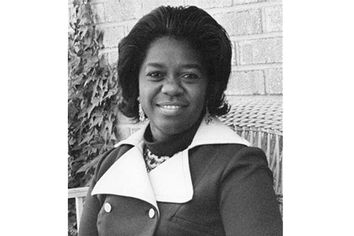
Once-revered S.C. lawmaker freezes to death aloneJuanita Goggins is seen in a 1974 file photo in Rock Hill, S.C.

When Juanita Goggins became the first black woman elected to the South Carolina Legislature in 1974, she was hailed as a trailblazer and twice visited the president at the White House.

Three decades later, she froze to death at age 75, a solitary figure living in a rented house four miles from the gleaming Statehouse dome.

Goggins, whose achievements included key legislation on school funding, kindergarten and class size, had become increasingly reclusive. She spent her final years turning down help from neighbors who knew little of her history-making past. Her body was not discovered for more than a week.

Those neighbors, as well as former colleagues and relatives, are now left wondering whether they could have done more to help.

“I’m very saddened. People like her you want to see live forever. She had quite a gift for helping others,” said state Sen. John Land, a fellow Democrat who was first elected to the House the same year as Goggins.

Goggins, the youngest of 10 children, grew up the daughter of a sharecropper in rural Anderson County, about 130 miles northwest of the capital. She was the only sibling to earn a four-year college degree. Her bachelor’s in home economics from then-all-black South Carolina State College was followed by a master’s degree.

She taught in the state’s segregated schools, married a dentist and got into politics. In 1972, she became the first black woman to represent South Carolina as a delegate to the Democratic National Convention. Two years later, she became the first black woman appointed to the U.S. Civil Rights Commission.

“I am going to Columbia to be a legislator, not just a black spot in the House chambers,” she told The Associated Press in 1974 following her victory over an incumbent white man from a district just south of Charlotte, N.C.

Voters “were weary of poor representation. They were ready to accept a person who was sincere and concerned about things. Those feelings go beyond color,” Goggins said.

She sat on the powerful House budget-writing committee and was responsible for funding sickle-cell anemia testing in county health departments.

The former teacher also helped pass the 1977 law that is still the basis for education funding in the state. Her proposals to expand kindergarten and to reduce student-teacher ratios in the primary grades were adopted after she left politics in 1980, citing health issues.

“She was not bashful or anything. She liked to talk. I used to say she could sell an Eskimo ice,” recalled Ilese Dixon, 88, of Pendleton, Goggins’ last surviving sibling. “She was just lively and smart. She thought she could fix the world.”

Her colleagues say they never learned the specifics of her illness and, since she didn’t talk about it, they didn’t press.

Several years after leaving the Legislature, Goggins divorced and then moved to Columbia in the early 1990s, renting the brick ranch house in a quiet neighborhood off North Main Street where she lived for 16 years.

Her son said she worked several years as a case manager for the state Department of Health and Environmental Control, although a spokesman said the agency had no records of her employment. At one point, she also started a nonprofit tutoring service called the Juanita W. Goggins School of Excellence.

Neighbors said she was always a private person. One neighbor said she would return her waves, but refused to let visitors in the door.

Last year, about the same time the Legislature voted to name part of a state highway after her, Goggins was mugged near her home. She changed the locks on her door and stopped taking walks, according her neighbors and landlord.

Police found Goggins’ body March 3 — two weeks after she was last seen. Her landlord contacted police after a next-door neighbor realized he had not seen her lights on in some time.

Coroner Gary Watts said she died of hypothermia, probably about Feb. 20, and said he found indications of dementia. When she died, during a cold snap, Goggins was wearing several layers of clothing, yet her heat was working at the time.

She had money to pay her bills, but the utility company said it shut off the electricity for nonpayment Feb. 23. Watts said it appeared Goggins was using Sterno to cook, but her stove was still functioning when police climbed through a window and found her.

“I miss her,” said Erskine Hunter, an 83-year-old neighbor who ensured Goggins’ lawn was mowed and hedges were trimmed. “I don’t know why I didn’t go over there and hammer on the door.”

Hunter said Goggins occasionally came to his home and visited with his granddaughter. She refused to let anyone drive her anywhere, and refused rides to and from the bus stop, so he often went to the grocery store for her. But he had not done that in several months.

State Sen. John Scott, whose realty company owns Goggins’ home, said he and his sister tried to take care of Goggins as best as they could without prying.

“We lost a great trailblazer,” said Scott, a Democrat from Columbia. “Our family’s very saddened this happened to a person who’s given so much.”

His sister who manages the property, Linda Marshall, said Goggins declined help from the county.

“She needed someone to assist her, but anyone who tried to get close, she’d block them off,” she said. “She was very fragile. This was something I always dreaded.”

Why she withdrew remains a mystery even to her son. He attributes it to her illness, which was never fully diagnosed.

“That’s something I’ve been trying to get my head around for the last 15 years,” said Horace Goggins Jr., 42, of Powder Springs, Ga.

He last saw her about six months ago. She would not let him help her either, he said.

He wants to focus on her accomplishments and the good times at his mother’s funeral Friday in Rock Hill.

“I would like for her to be remembered as a woman who cared about her community,” he said. “I want her to be remembered as a positive role model, not only for African-American girls, but also any young girl who has a want and a desire to make a change and do something positive.”

(This version CORRECTS the age of Goggins’ son to 42, not 43.)

Continue Reading Close

S.C. politician’s welfare comment called ‘immoral’

  • more
    • All Share Services

When things looked their darkest for Gov. Mark Sanford — when he was in danger of being impeached for running off to Argentina to see his mistress — his best insurance policy may well have been South Carolina’s lieutenant governor, Andre Bauer.

Lawmakers knew if they removed Sanford, they would end up with Bauer, a fiercely ambitious Republican with a reputation for reckless and immature behavior.

Now Bauer has folks shaking their heads again, after he likened government assistance to the poor to feeding stray animals.

At a town hall meeting Thursday, Bauer, who is running for governor in his own right now that Sanford is term-limited, said: “My grandmother was not a highly educated woman, but she told me as a small child to quit feeding stray animals. You know why? Because they breed! You’re facilitating the problem if you give an animal or a person ample food supply. They will reproduce, especially ones that don’t think too much further than that.”

Democrats and others railed at him.

“I am disgusted by these comments. They show an unbelievable lack of compassion toward the unemployed workers in our state who are hurting during these hard times,” said state Sen. Vincent Sheheen, a Democrat who is also running for governor. “His comments were immoral and out of line.”

South Carolina schools Superintendent Jim Rex, another Democratic candidate for governor, called Bauer’s comments “reprehensible” and said he should apologize.

Bauer said Monday that he regrets his choice of words but that government should expect welfare recipients to try to better themselves. He wants to require them to take drug tests and attend parent-teacher conferences if they have children in school.

A child of divorce who benefited from free lunches himself, Bauer insisted he wasn’t bad-mouthing people laid off from work in the recession or advocating taking food from children, but rather emphasizing the need to break the cycle of dependency.

“Do I wish I’d used a different metaphor? Of course I do,” the 40-year-old said. “I didn’t intend to offend anyone.”

Bauer has long been a love-him-or-hate-him figure in South Carolina politics. A nonstop campaigner and self-described workaholic, he was the youngest elected lieutenant governor in the country when he first won the No. 2 spot in 2002 at age 33.

Before his 2006 re-election, he shattered his heel when the single-engine plane he was piloting ran into power lines, crashed and caught fire. Bauer’s office said the maintenance company that overhauled the engine botched the job.

During the campaign, it was also disclosed that Bauer had been stopped for speeding twice, but not ticketed, even though in one instance he was going 101 mph in a 70 mph zone. He said he didn’t realize how fast he was going and never asked for preferential treatment.

Bauer twice ran on a separate ticket from Sanford and the two have never been chums. In 2006, Sanford’s now-estranged wife, Jenny, supported Bauer’s primary opponent.

Bauer almost ascended to the top office last summer, after Sanford disappeared from the state for five days to be with his mistress. But the Legislature stopped short of impeachment.

Politicians who had gubernatorial ambitions of their own, or were backing other candidates, knew that replacing Sanford with Bauer would have given the lieutenant governor a year-and-a-half tryout for the job and the benefit of running as an incumbent.

At least three other Republicans and five Democrats have said they are running for governor.

Neal Thigpen, a political scientist at Francis Marion University, said Bauer tends to speak so fast and enthusiastically (“It’s almost like a Gatling gun”) that he sometimes “gets his mouth in place quicker than his head.” Thigpen said the lieutenant governor’s latest remarks could hurt him in the general election in the fall by allowing Democrats to portray him as “insensitive and downright cruel.”

But as for the June Republican primary, “don’t count him out. The kid’s got a fanatical following,” Thigpen said. “They’re going to forgive him almost anything and stick to him like glue.”

Similarly, Winthrop University political scientist Scott Huffmon said Bauer’s words “came out as condescending and insulting,” but his overall message about government dependency and personal responsibility will appeal to his evangelical Republican base.

State GOP Chairwoman Karen Floyd, who is not taking sides in the race for the nomination, said the flap should be a lesson to everyone to “choose our words more carefully.”

Continue Reading Close