Shane M.

Tehran dispatch: Basijis for Mousavi

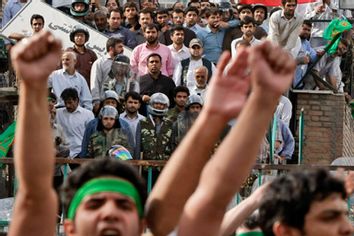
Not all Mousavi backers are secular. Many, like my friend Omid, are devout Muslims who no longer trust the regime

  • more
    • All Share Services

Tehran dispatch: Basijis for MousaviSupporters of leading opposition presidential candidate Mir Hossein Mousavi taunt members of the pro-government Basiji militia, seen in background, as the demonstration passes one of their bases, as hundreds of thousands of Mousavi supporters, who claim there was voting fraud in Friday's election, turn out to protest the result of the election at a mass rally in Azadi (Freedom) square in Tehran, Iran, Monday, June 15, 2009.

Basij madreseye eshq ast (Basij is the school of love)Basij wartime motto, attributed to former Iranian Prime Minister Mir Hossein Mousavi.

The framed portrait of the late Imam Khomeini loomed over us in the school’s office. The principal, a disabled Basij veteran of the Iran-Iraq war and campaign organizer for presidential candidate Mir Hossein Mousavi, was visibly shaken. “I thought that when the Imam died there could be nothing worse. But what has happened these past few days …” A week after the disputed Iranian presidential election, many of Omid’s friends and fellow campaign workers had already been arrested or brought in for questioning, men he had served with at the front lines during the war a quarter century earlier. They had worked together to bring in the vote for Mousavi, a campaign seen by them as nothing less than as a defense of the Revolution, a chance to prevent Khomeini’s legacy from being lost forever. Now, with the vote over and almost certainly stolen, and facing the possibility of arrest, Omid had lost hope. He no longer felt safe in the country he had once defended as a teenager. “Bad berim. Bayad az Iran berim.” ‘We have to leave Iran.”

Voices such as Omid’s are rarely heard in the coverage of Iran’s presidential election, no doubt because they do not fit the accepted storyline coming out of Tehran. According to this narrative, promoted in part by the Western media, the opposition is comprised primarily of young, well-educated urban dwellers tired of clerical authority and committed to separating religion from politics once and for all. They are in turn opposed by a regime that draws its strength from the pious rural and urban poor, highly traditional populations opposed to rapprochement with the West and resentful of the creeping modernization of the past decade, the satellite dishes and foreign culture steadily eroding Iran’s national identity. And the will of the regime is enforced on the street by basijis, the religious paramilitary volunteers who are younger versions of Omid.

Taken together, the urban sophisticates versus the religious conservatives represent for some Western commentators the full range of possibilities for the Islamic Republic. These analysts question whether the protest movement in Iran is truly popular beyond the middle- and upper-class enclaves of Tehran. As street protests against the state ebb into isolated and disjointed events, some observers are even returning to earlier claims that Mahmoud Ahmadinejad in fact won the June 12 election. Nearly two months out from the vote voices in the U.S. and Tehran are once again converging (with obviously different motivations) around the notion that the world once again did not “get” or understand the “true” Iran.

The truth is that the heart of the opposition lies with men and women like Omid. For these righteous citizens, faith was cause enough to vote for Mousavi, a man widely recognized for his piety, truthfulness and loyalty to the late Imam. These are the believers, Iranians committed to the promise of the Islamic Republic as an ethical project, a middle path of self-governance and sustainable modernity, without the material excesses and secularism found in Europe and the U.S., China and India. Highly religious and devoted to the memory of Khomeini, they voted in large numbers for Mousavi in order to regain control of their vision of Islam and postrevolutionary citizenship, now distorted by the likes of Ahmadinejad.

In the months and weeks preceding and following the elections I had the opportunity to interview many such voters. Most were former basijis, men like Omid who while still in high school had volunteered in the 1980s to fight against Saddam Hussein’s attacking armies. They now serve as principals and teachers in several of Tehran’s best private Islamic schools, institutions renowned for producing reverent graduates committed to their faith and to science. Honored war veterans and respected teachers, these individuals stand at the intersection of Iran’s past and its future. It is a future that many of them for the first time in their lives are calling into question.

In our conversations they emphasized that they saw this election and its aftermath as a struggle for authenticity, for the right to define what constitutes a Good Muslim. They felt under assault by an administration and leadership unwilling to separate petty politics from what they considered to be the sublime message of the Prophet and the Imam. As educators, the behavior of the authorities during and after the elections had put them in a bind, above all the actions of the Supreme Leader, Ali Khamenei. It was one thing for a politician like Ahmadinejad to look into the camera and lie about inflation and unemployment, but what were they to make of Khamenei’s subsequent endorsement of the president? What would they say to their students when they came back to school in the fall?

As one principal told me, he and his colleagues are trying to teach these kids to be just and to be honest. By supporting a man who clearly was neither of these, Khamenei had abdicated his responsibility. “This man can no longer be the Leader.” Another principal I spoke to was less certain how to proceed. “If our fathers chanted ‘Death to the Shah,’” he said, “it was because they saw the previous regime as being against Islam. But to hear my own son chant ‘Death to Khamenei,’ well, this is too much. I find it difficult to accept because he is protesting against a government of religion, of Islam.”

Conflicts such as these had led a good number of my interview subjects to reassess whether the Islamic Republic itself was viable any more. Above all they stressed that Islam had to be preserved. If it took changing the system, so be it. Maybe only Ayatollah Khomeini was qualified to be the Supreme Leader, sociologist Max Weber’s “charismatic leader” without subsequent peer. One teacher put it this way: “Perhaps this post [the faqih, or Supreme Leader], this responsibility, is like a ripe fruit. Delicious, sweet, pleasing to the eye, it eventually attracts flies.”

Change is this year’s theme, eagerly adopted by the crowds in Iran and the United States. Change requires that we put an end to enduring and pernicious assumptions about Iran, the notion that the religious are reflexively drawn to Ahmadinejad’s brand of politics, or that there exists an “authentic” Iran, located somewhere south of Vanak Square. If we want to understand where the social movement still unfolding in Iran may be heading, we would do well to look to the unexpected places, to pay attention to individuals like Omid. The depth of Iran’s opposition movement should be measured in their protests and cries and not just that of the nation’s youthful apostates, those unbelievers who never accepted the notion of an Islamic republic in the first place. Omid and his peers do not march because they are secular or have an interest in making Iran more like the United States. Instead, they oppose the current government on its own terms, on behalf of Islam.


Tehran dispatch: A different kind of Friday Prayers

The opposition searches for a leader, and the "Death to America" chants don't work anymore. Also: Steve Buscemi

  • more
    • All Share Services

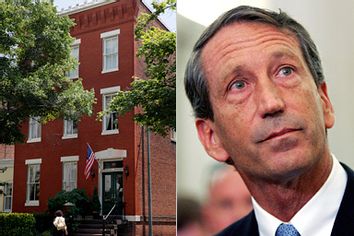
Tehran dispatch: A different kind of Friday PrayersThis photo, taken by an individual not employed by the Associated Press and obtained by the AP outside Iran, shows an opposition demonstrator kicking a tear gas cansiter during a protest in front of the Tehran University, the place of Tehran Friday prayers, Iran, Friday, July 17, 2009.

After an unseasonably cool start, summer finally comes to Tehran, but it comes on too hard. Throughout the city leaves are falling to the ground, withered and defeated by the heat. The trees of Tehran are going bare in patches, like a dog losing its fur.

At Friday Prayers, in this surging heat, former President Hashemi Rafsanjani will deliver the sermon. Rafsanjani is the chief rival of Supreme Leader Ali Khamenei and the most prominent ally of Mir Hossein Mousavi. I put on black and head to Tehran University to worship in the crowd. The plan is to go inside the old soccer stadium at noon, to “sit on the grass” as they used to say back when there was still a field there.

But by 11:30 a.m., on Enqelab (Revolution) Street near the university’s main gate, it’s clear that something out of the ordinary is going on. There are too many people. The wrong crowd is here. I’ve walked by enough Friday Prayers to know that Enqelab Street is not a place for these folks to be on a Friday morning.

Thirty years after the Revolution it’s usually the old and uninspired who come to Friday Prayers to worship.

Today is different. New people are here. Families and friends of all ages sit shoulder to shoulder on the stoops of the stores that run along Enqelab in front of the university. The line stretches at least four blocks in either direction. The new people lean into the shrinking shade of the store awnings trying to stay cool. Some hold onto ice-filled water bottles brought from home and prepared in freezers the night before.

These people are not here to clash with the police and basijis. They have not come for the entertainment or to pray. This crowd of Mousavi supporters has come to Friday Prayers because they are hoping Rafsanjani will deliver a rebuke to those in the regime who hijacked the election, and encouragement to the protesters. These people are here as moral witnesses to see if there will be righteousness. The talk nowadays is of leadership, that the people are waiting for someone to carry this thing forward to its end. But they are not going to wait and patience is running thin. In many ways society is racing ahead of Iran’s elites. Later, I will hear them chanting, “Hashemi age sookoot bashi, shoma am khaen i!” Rafsanjani, if you remain quiet, then you are a traitor also!

We’ve been told repeatedly not to come, by the authorities who deny us permission to protest peacefully, by our own families who say that there will be trouble. We are for the most part afraid but we still head out. I don’t think that many of us yet know exactly why. These protests are not fully calculated acts. Sociologist Charles Kurzman argues in his book “The Unthinkable Revolution” that ordinary people frequently defy what is known as the “free-rider problem,” the notion that social actors engaged in contentious politics will rationally seek someone other than themselves to put their lives and well-being at risk. You throw the first rock, I’ll just stand back and reap the benefits of revolution when it’s all over, thank you very much. Drawing from the 1979 Revolution, Kurzman shows that over and over again ordinary citizens with no previous history of heroism or political behavior actively seek out protest rather than waiting for the bandwagon to arrive. People, perhaps irrationally, despite the uncertainty, want to be in the first row of the movement.

The Iranian regime will keep providing the opportunities. This has become the central dilemma of the Islamic Republic. The calendar sags with opportunities for opposition — Revolutionary, Islamic and national holidays. Each one is a potential for protest, even as every holiday is part and parcel of the regime’s identity. The regime can’t rewrite the calendar. Neither side, regime or opposition, would dare to step outside of the framework of Islam and Revolution and nationalism. So for now the pattern will continue, as it has this Friday on Enqelab Street.

I decide not to go into the mosque. I am a Muslim more by default than by choice and my praying skills are decidedly not up to the task of a Friday Prayers. The day is hot and I need to get water. I make my way north up Vesal e Shirazi Street then walk along Taleqani Street, against the crowd heading toward the university. Business is brisk at the corner store in Palestine Square. Mineral water runs 300 tomans (about 30 cents) and the clerks can hardly keep up with the orders. I step back outside. In front of me a stray kitten has crawled up out of the joob, or gutter. His fur is spiky and sooty and he is in bad shape. The hapless cat meows. Unoccupied basijis gather around to offer him food and comfort.

Before I can make it back to Revolution Street, it begins. At the end of Taleqani, where it intersects with Qods Street at the east perimeter of the university, the gathering turns into a protest. It begins just like it did a week earlier for the 18th of Tir march, with the hands. Above the chanting thousands there are endless rows of green garlanded fists and fingers jabbing into the sky. The official prayer service crackles over the P.A. system hidden in the trees and telephone poles that run around the university. No one can hear the message. The shouts of the crowd are too great.

At least a dozen women have climbed to the top of one of the many public fountains set aside for wudthu, or ritual ablutions required before prayer. There they bravely clap and lead us in chants, a row of revolutionary cheerleaders. Not by accident, they have chosen the section of the street cordoned off for female worshipers, and they stand well above the sagging black cloth partition that would normally hide them from view. It is an extraordinary image. This sight of women, young and old, chadoris and hejabis standing side-by-side, even praying next to men, speaks to the possibilities of where this movement may head and the important role that both tradition and progress will play as it unfolds.

The crowd swells. We are running out of room. A tall white wall runs perpendicular to where the women are standing. It is the outside edge of a church and it closes off this section of Taleqani as the street merges into the campus grounds. Into the wall and corner we press into each other. Into this corner the chants of the crowd eddy and swirl. Half-organized and self-led, voices collide and overlap, a new slogan starts before another ends,. We are protesting in the round.

“Hashemi! Hemayat! Hemayat!” Hashemi! Help us! Help us!

“Estefa! Begoo! Estefa! Begoo! Es-te-fa! Begoo!” Resign! Say it! Resign! Say it! Re-e-sign! Say it!

“Khomeini, koojai? Mousavi tanhai!” Khomeini, where are you? Mousavi is alone!

In an ever escalating competition of appropriation, Iranians are finding new and clever ways to turn the Revolution inside out. Most compelling of all is the exquisitely subversive “Death to Russia!” and its companion “Death to China!” “Marq bar Russi-e! Marq bar Chin!” For 30 years, ever since the Revolution, Iranians have been chanting “Death to America!” with the regime’s encouragement. It has long been a convenient outlet for any domestic discontent. Somehow the protesters have collectively decided that from now on, the U.S. will be left alone, all chants against that nation must cease. “Death to Russia” has become the new “Death to America.”

The day splits into two. There is the formal ceremony inside the university and this much larger and raucous impromptu show outside. Rafsanjani has not taken the podium at Friday Prayers. The crowd outside the university gives his warmup act a brutal reception as they listen to his sermon on the speakers. Like old-school Baptist preachers, prayer leaders typically shift back and forth between an admonishing sermon and call and response expressions of faith. But this audience is not going to respond to a speaker they consider a shill for the regime. When the warmup mullah recited the regime’s talking points about the need to accept the rule of law now that the election is over, the whistling and jeering starts. But when the cleric speaks of his wish to some day sing “Allah Akbar!” with fellow Muslims at the Ka’ba in Mecca, the crowd goes wild. They respond with chants of “Allah Akbar! Allah Akbar!” — but only because they’re mimicking the nightly protests from the rooftops of Tehran.

The crowd is mocking the cleric. It’s a bad sign for the regime. The shit talking that previously took place behind closed doors, the hurled curses that once carried no further than the living room TV set, have come out in the open. The people are losing their fear.

The sun is high in the sky. The police move into action. A single row of green-clad cops with helmets and shields and batons pushes into the pack, snaking their way to the front of the crowd. The assembly parts, gives them space. The crowd starts to chant, beseeching the police to stand with the people. Unlike the basij, there is hope that these ordinary cops can be swayed. Many of the officers avoid eye contact. They seem embarrassed by all of the attention.

I am standing on the narrow green-and-white cement median that cuts Taleqani Street in two. Next to me are two young conscript cops in green khakis and baseball-style caps with their brims bent down. They are Little Leaguers, teens who barely come to my shoulder. It is as if they needed to be standing on this median to muster any authority. I lean into the one next to me and ask, gesturing toward the other police, “Will you join your friends? Are you going to have to go?” He looks away and shakes his head.

The crowd is thick now. It’s about 1 p.m., close to the official time for Muslims to pray. The observant gather in the middle of the road. Newspapers and prayer mats are laid out on Taleqani in diagonal rows positioned to face toward the ghebleh. Many of those who have come to protest have also come to pray. Prayer in a crowd this size is a blessing. It is a widely held belief that prayers delivered in a group receive a greater blessing from God than prayers made alone, no matter the speaker or the circumstance.

Still, it is clear that a lot of this crowd is secular. I can overhear people asking each other how the praying works. One of the great ironies of this past month has been that only now, with the Revolution perhaps mortally wounded, large portions of the population are for the first time formally engaging with a religion they had assiduously avoided.

While people are still kneeling and praying, tear gas floats across the scene. We cough and press our palms to our eyes. We later find out that the gas has drifted over from a clash on 16th of Azar Street, at least half a kilometer away on the other side of the Tehran University campus. After a month of practice, we know what to do. An improbable scene ensues. We light cigarettes and start puffing away, blowing the smoke into each other’s eyes. Men and women stand over prayer mats with cigarettes dangling from their finger and lips. Smoke is a crude antidote to the sting of the gas. Newspapers are set on fire and for a time much of Taleqani disappears under smoke and haze.

The incident is taken in stride. We know that it is unlikely that we will be attacked, not during prayers anyways. Our moral examples in Iran invariably run back to the Prophet and his disciples, above all the Prophet’s son-in-law and Shiite Islam’s namesake, Imam Ali. One story about Ali that every Iranian learns at an early age is that of his martyrdom during prayers. Our mothers tell us that Ali knew that his assassin stood above him, waiting to strike, but he continued to say his namaz rather than save himself. We learn from this that prayer time is sacred, not to be interrupted or broken under any circumstances. Islam gives both sides safe ground here and so we are left alone for the duration of our worship.

And then it is time for Hashemi Rafsanjani to speak. 

Rafsanjani tends to speak elliptically, allusively. It is a clerical art in Iran but few practitioners rival the former president.

There are typically three sermons, or “khotbes” in Friday Prayers. The first and second are traditionally about historical or mundane matters, how to be a good parent, the need for hygiene, so forth. Politics is normally reserved for the third khotbe. Rafsanjani today finds a way to make all three of his khotbes about the politics of the day. He gives a history lesson in three parts about the present. Every example goes forward and backwards at the same time, tying today with yesterday.

Packed together under the shade of a shuttered kiosk, we are in an inauspicious spot to listen to Rafsanjani’s speech when it finally begins at 2. The speaker system does not carry his voice well and it comes out distorted. Two teams of paired men, led by a man who bears an uncanny resemblance to Steve Buscemi, circa “The Big Lebowski,” volunteer to relay the radio feed to us. They take an earbud each and we lean in closer to Donny and the rest of his crew to hear their reports. It’s a game of telephone, in which they listen for a few seconds and blurt out a few lines and then listen again.

As performed by Donny, Rafsanjani begins with the early years of Islam, and the story of Imam Ali, the founder of the branch of Islam dominant in Iran, Shia.

Imam Ali, Rafsanjani reminds us, waited over two decades to assume leadership over the community of believers. Though the Prophet designated his son-in-law to rule the Caliphate, Ali did not wish to use force if the will of the people was that someone else should rule. Was this Rafsanjani damning Ahmadinejad with faint praise? Were we to take this as a warning to Ahmadinejad that he was playing the role of Abu Bakr, considered by Shiites to be Imam Ali’s usurper, in this scenario? Or was Rafsanjani trying out a more conciliatory gesture by making reference to Mir Hossein Mousavi’s 20-year withdrawal from politics? In other words, was he saying that like Ali, the righteous will in the end win and that his friend Mousavi and his supporters should wait?

Rafsanjani moves on to his second topic, the 1979 Revolution.

Never forget that Mehdi Bazargan (Iran’s first prime minister after the Revolution) set up his government-in-exile while Shapour Bakhtiar, the Shah-appointed prime minister, was officially still in charge. Only the support of the people made it possible for Bazargan to succeed, sealing Bakhtiar’s fate of exile and eventual assassination. Here, Rafsanjani’s reference to the current situation is unmistakable. We understood who would play the role of Bakhtiar if this stand-off continues.

Rafsanjani builds to the climax. Donny, excited by what he is hearing — Rafsanjani did not let us down! — can barely keep up.

Rafsanjani relates the story of how in the years after the Revolution Ayatollah Khomeini would repeatedly stress in public and private conversations the Prophet’s admonition that without the people, there is nothing. Rulers must always seek the approval of the public. Rafsanjani has managed to get both the Prophet and the Imam, Mohammad and Khomeini, to speak for Mousavi. The meaning is clear: if the vote is stolen, then this government has nothing. In the same way, if the people believe that the voting was corrupt, the consequence is the same. By now, the allusiveness has evaporated. Rafsanjani is speaking directly. A resolution must be found. The Islamic Republic, he says, must be both “Islamic” and “Republic”: If only Islam, then we will head into a desert and ruin (“biaboon”). If only a Republic, then corruption will seep into the body politic. Religious Values and democracy must go hand in hand.

“What now?” I ask the old men sitting with us under the kiosk. “What now?”

They do not understand my question. Weren’t you listening? Didn’t you hear what Hashemi said?

I tell them that I was listening to Rafsanjani, I had heard, and of course I am very happy, but — what now? What comes next? Where do we go, how do we get there? What is the institution that will meet Rafsanjani’s call?

The men listening to me cannot believe what I am asking. What is next? We are! We are the institution! “Aziz e man, noon e gol in ghazie ra hal nemikon e. Hazine dare.” My dear, bread and flowers won’t solve the problem. There is going to be a cost.

We part. The rally is over. Out of respect I shake hands with the old men, but I leave uncertain and unsatisfied by their answers.

On their own, the crowd pours into Taleqani Street and wheels north towards Vali Asr Square. The public address system makes a final effort. They try to take us out with style. Big Brother comes over the speakers with the old formula: “Marq bar Amrika! Marq bar Amrika!” Death to America! Death to America! Folks aren’t having it. Marching away in the opposite direction the people shout back “Marq bar Russi-e! Marq bar Russi-e!” Another try is made: “Marq bar Israel! Marq bar Israel!” Death to Israel! Death to Israel! Again, “Marq bar Russi-e!” comes the response.

Along the way, brigades of basiji stand guard. They’ve brought their toughest-looking crew out today, tall men with pointed beards and camouflage hunting vests. The basijis stare impassively back at us. Here and there they grin, disgusted by the scene.

We do not care. Straight into their faces we shout “Basiji e vaqei! Hemmat va Baqeri! Basiji e vaqei! Hemmat va Baqeri!” Hemmat and Baqeri are the real basijis! Hemmat and Baqeri are the real basijis! I don’t know who came up with this creative chant, but we all know we’re referring to two famous basiji commanders who died defending Iran from Iraq in the 1980s.

If only we had a captain, someone to lead us forward like Khomeini did, this would be over in a month. Maybe.


Continue Reading Close

And still our vote mattered

I marvel at the opportunity lost in the Iran election -- and what might yet be gained

  • more
    • All Share Services

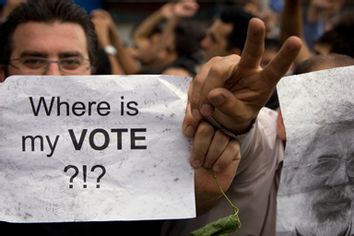
And still our vote matteredDemonstrators head towards Azadi (freedom) square during a rally in support of defeated presidential candidate Mirhossein Mousavi in western Tehran June 15, 2009.

Omid e man ba shoma javanha hast (My hope is with you, the youth). — Message by Imam Khomeini, found on the first page of Iranian elementary textbooks.

Four Saturdays ago, millions of Iranians woke up to grim news. The early election results came in, improbably bleak at first, then impossibly conclusive. Mahmoud Ahmadinejad had won and in those first hours the recriminations were turned inward. What did I tell you? What did I say? Didn’t I tell you that we shouldn’t vote?

These are days of questions in Iran, of doubt and reassessment. Had we done the right thing by participating? Had we been fooled? More than any other question, “Where is my vote?” has become the slogan of the post-election movement. A friend wants to know, Who will answer our question? Ki soal e ma ra pasoq mide? Asking where our vote is, is not enough. Democracy must also be about who gets to reply.

Officially the election is validation of the “system.” Everyone who turns out votes “yes” to the Revolution and the idea of the Islamic Republic. The larger the turnout the greater the legitimacy. What’s important is that domestic and international audiences see that Iranians showed up to vote. BBC and CNN are ushered in to register approval of the election — the same BBC and CNN now being ushered out, accused of engineering the post-election protests and unrest. No matter, the results showed that we were all winners, 40 million strong.

Of course, as voters we were not obliged to accept the state’s premise for our participation. Iranians understood the utility of the occasional vote in a bowed but familiar framework. Four years of runaway inflation, increased trade embargoes and an already devastated international reputation — with nothing of substance to show for it — was evidence enough that “change” was needed. Citizens were willing to use whatever political resources were at their disposal to make their lives just a little bit better, which in this case was their right to vote against Ahmadinejad and for Mousavi. They went to vote with the democracy they had been given. It was not perfect, but in the absence of viable alternatives and faced with the impossibility of suffering through another four years of Ahmadinejad, they took it.

That the vote was against Ahmadinejad there can be no doubt. Consider this: Over the 30-year history of the Islamic Republic of Iran, some 30 percent of the population has never voted. These are the true disbelievers, citizens who take pride in having a blank shenasname, or identity booklet. They are the friends and family members who take every opportunity to remind the rest of us, at the dinner table, caught in traffic, sitting in the park, that voting is a mistake, that you ought not participate in a system that is at its core rotten.

Except … Except this time a good half of these nonbelievers came. They came, pulled, pleaded — coaxed into voting by sons and daughters. They came this year, dramatically reversing what had been a steady decline in participation, lifting turnout to heights not seen since the early days of the Revolution. With the much ballyhooed rural vote already in the bank for the president, the only place left for Ahmadinejad to make up his reported 6 to 8 million new votes was with the apostates. Are we really to believe, as some are now insisting, that these many millions showed up to vote for the incumbent?

There’s no doubt the vote mattered. Had we not voted, had we not stood in line and suffered this fate together, then we would not have come to the square, we would not be climbing the rooftops every night to sing protests that our votes were so clumsily and needlessly taken away. The fact is that up until four Saturdays ago, Iran’s system, with all of its limitations and compromises, was not completely rotten. Our peculiar democracy permitted faith in a residual uncertainty, in the possibility that the guy who can’t possibly win, whom they won’t let win, still just might. June 12, 2009, ended that uncertainty, brought clarity.

This is the age of questions in Iran, of hope and reevaluation. One marvels at the opportunity lost in these elections and what might yet be gained. A friend, no foe of the Revolution, describes standing in line for two hours with his 10-year-old son to vote. He tells us with some difficulty how his child now cannot sleep; at night he watches television to see what will happen next. This father understands what has happened to his boy. His son wants to know, Why has this happened? How do they steal votes? They’ll fix it, right?

Who will answer his question? Will he answer it for himself?

Continue Reading Close