Shino Yuasa

Japan nuclear firm reveals plan to end crisis

TEPCO, operator of the crippled Fukushima Daiichi power station, aims to stabilize plant within nine months

  • more
    • All Share Services

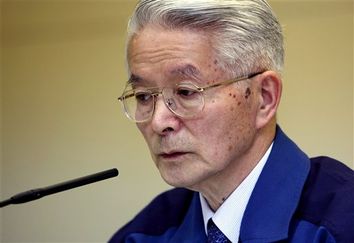
Japan nuclear firm reveals plan to end crisisTokyo Electric Power Co., (TEPCO) Chairman Tsunehisa Katsumata speaks during a news conference at the company's headquarters in Tokyo, Sunday, April 17, 2011. TEPCO, the operator of the crippled nuclear power plant leaking radiation in northern Japan, announced a plan Sunday that would bring the crisis under control within six to nine months and allow some evacuated residents to return to their homes. (AP Photo/Shuji Kajiyama)(Credit: AP)

The operator of the crippled nuclear power plant leaking radiation in northern Japan announced a plan Sunday to bring the crisis under control within six to nine months and allow some evacuated residents to return to their homes.

The roadmap for ending the crisis at the Fukushima Dai-ichi nuclear power plant, presented by Tokyo Electric Power Co. Chairman Tsunehisa Katsumata at a news conference, included plans to cover the damaged reactor buildings to contain the radiation and eventually remove the nuclear fuel.

“We sincerely apologize for causing troubles,” Katsumata said. “We are doing our utmost to prevent the crisis from further worsening.”

Frustrations have been mounting over TEPCO’s failure to resolve the nuclear crisis more than a month after a catastrophic earthquake and tsunami hit Japan on March 11, knocking out power and cooling systems at the Fukushima Dai-ichi complex.

Katsumata, who was hammered by questions over his management responsibility, told reporters he was considering stepping down because of the crisis.

“I feel very responsible,” he said.

Katsumata said he was not sure when the tens of thousands who had been forced to flee their homes because of the crisis could go back, but Trade Minister Banri Kaieda said some could return home within six to nine months.

“Of course, some people will be unable to return home, but we will keep everyone informed,” he said, adding that the government hoped TEPCO could contain the radiation sooner than the schedule announced Sunday.

The company is focusing on cooling the reactors and spent fuel pools, decontaminating water that has become radioactive, reducing the amount of radiation released into the atmosphere and soil, and lowering radiation levels in the evacuation area, he said.

During the first three months of the plan, the company hopes to steadily reduce the level of leaking radiation, Katsumata said. Three to six months after that, it hopes to get the release of radioactive materials firmly under control, achieve a cold shutdown of the reactors and temporarily cover the reactor buildings.

“I believe we will succeed in containing the crisis,” Katsumata said.

The company also outlined plans for permanently covering the buildings and closing down the reactors, but that will take years, officials said.

Kaieda, the trade minister, said he hoped to see the process quickly “shift from the first aid phase to a systematic and stable phase.”

In a show of support for a staunch American ally, U.S. Secretary of State Hillary Rodham Clinton expressed admiration and sympathy for the Japanese as she visited Tokyo on Sunday.

“We pledge our steadfast support for you and your future recovery. We are very confident that Japan will demonstrate the resilience that we have seen during this crisis in the months ahead,” Clinton told reporters after meeting with Foreign Minister Takeaki Matsumoto.

Clinton said Matsumoto told her that Japan hoped for U.S. feedback on TEPCO’s plan.

Prime Minister Naoto Kan, fighting criticism of his administration’s handling of the disaster, said in a weekend commentary in the International Herald Tribune that “Bringing the situation under control at the earliest possible date is my top priority.”

As Japan has begun planning for reconstruction and mulling how to pay for it, Kan’s political opponents have resumed calls for his resignation after refraining from criticism in the immediate aftermath of the disaster.

Thanking the international community for its support, Kan vowed to rebuild a country “highly resistant to national disasters.”

“I pledge that the Japanese government will promptly and thoroughly verify the cause of this incident, as well as share information and the lessons learned with the rest of the world to help prevent such accidents in the future,” he said in the commentary, which also appeared in the New York Times and Washington Post.

Government officials fanned out across the affected areas during the weekend seeking to explain evacuation decisions and calm nerves. Chief Cabinet Secretary Yukio Edano met Sunday with the governor of Fukushima, who has vigorously protested the predicament the nuclear crisis poses for his prefecture.

“The safety of residents is our foremost priority,” Edano said. “I told the governor that the government will do everything it can to prevent the crisis from worsening.”

Explosions, fires and other malfunctions have hindered efforts to repair the stricken plant and stem radiation leaks.

TEPCO Vice President Sakae Muto said Sunday the Unit 2 containment vessel at the plant was leaky and likely to have been damaged, but added that the spent fuel roads in the cooling pool in Unit 4 were confirmed not to have been damaged, which could have greatly complicated containment efforts.

Officials reported late Saturday that radioactivity had again risen sharply in seawater near the plant, signaling the possibility of new leaks. Workers have been spraying massive amounts of water into the overheated reactors and spent fuel storage pools. Some of that water, contaminated with radiation, has leaked into the Pacific.

Plant officials said they plugged that leak on April 5 and radiation levels in the sea initially dropped. Authorities have insisted the radioactivity will dissipate in the ocean and poses no immediate threat to sea creatures or people who might eat them. Most experts agree.

Regardless, plant workers on Saturday began dumping sandbags filled with sand and zeolite, a mineral that absorbs radioactive cesium, into the sea to combat the radiation leaks.

TEPCO said it plans to establish a system to recycle cooling water that will remove radioactivity as well as salt left behind by seawater that was earlier used as an emergency cooling measure. Salt corrodes the reactors and interferes with the cooling system.

Japan nuke plant operator to compensate evacuees

TEPCO will provide each evacuated family with $12,000, an amount seen by some as too small

  • more
    • All Share Services

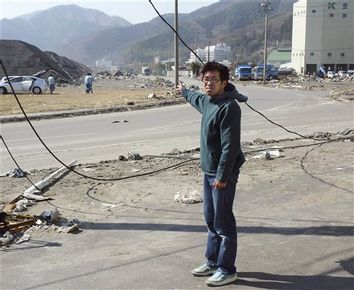
Japan nuke plant operator to compensate evacueesToya Chiba, a reporter with the Iwate Tokai newspaper, recounts his ordeal with the tsunami that swept him away at the port city of Kamaishi, northeastern Japan, on Wednesday April 13, 2011. The region was struck by a massive earthquake that spawned the tsunami on March 11, 2011. Chiba, who was shooting photos at the mouth of the Owatari River when the tsunami struck him, survived and found himself only suffering scratches and bruises after being swept away for about 30 meters (98 feet). (AP Photo/Kyodo News) JAPAN OUT, MANDATORY CREDIT, NO LICENSING IN CHINA, HONG KONG, JAPAN, SOUTH KOREA AND FRANCE(Credit: AP)

The operator of Japan’s tsunami-damaged nuclear plant said Friday it would pay an initial $12,000 for each household forced to evacuate because of leaking radiation — a handout some of the displaced slammed as too little.

Tens of thousands of residents unable to return to their homes near the nuclear plant are bereft of their livelihoods and possessions, unsure of when, if ever, they will be able to return home. Some have traveled hundreds of kilometers (miles) to Tokyo Electric Power Co.’s headquarters in Tokyo to press their demands for compensation.

“We have decided to pay provisional compensation to provide the slightest help for the people (who were affected),” TEPCO President Masataka Shimizu told a news conference.

At the government’s request, the utility will start paying out the roughly 50 billion yen ($600 million) in compensation April 28 to those forced to evacuate, with families getting 1 million yen (about $12,000) and single adults getting 750,000 yen (about $9,000), the government said.

Roughly 48,000 households living within about 19 miles (30 kilometers) of the crippled Fukushima Dai-ichi nuclear plant would be eligible for the payments, said Trade Ministry spokesman Hiroaki Wada. More compensation was expected later, he said.

“I’m not satisfied,” said Kazuko Suzuki, a 49-year-old single mother of two teenagers from the town of Futuba, adjacent to the plant. She has lived at a shelter at a high school north of Tokyo for the last month.

Her family has had to buy clothes, food, shampoo and other basics because they fled the area on government orders without taking time to pack. She has lost her job as a welfare worker, and a job prospect for her 18-year-old fell through because of the effects of the disaster.

“We’ve had to spend money on so many extra things and we don’t know how long this could go on,” she said.

Akemi Osumi, a 48-year-old mother of three also from Futuba, said the money was a “small step” but that it didn’t fairly compensate larger families. Her family is living at the same shelter but also must rent an apartment for her eldest son to go to a vocational school.

“One million yen doesn’t go very far,” she said. “I’m not convinced at just 1 million yen per family. If it was dependent on the size of the family I’d understand, but it’s not.”

TEPCO expects to pay 50 billion yen (about $600 million) in this initial round. But Shimizu said 2 trillion yen ($24 billion) was needed to resolve the continuing problems with the plant and to restart conventional power stations to make up for power shortages.

Shimizu said the utility would consider cutting the salaries for executives as well as a number of its employees.

The company is still struggling to stabilize the nuclear plant, which saw its cooling systems fail after a magnitude 9.0 earthquake on March 11 triggered a massive tsunami that wrecked emergency backup systems as well as much of the plant’s regular equipment.

Radiation leaks from the crisis have contaminated crops and left fishermen in the region unable to sell their catches, a huge blow to an area heavily dependent on fishing and farming.

The governor of Fukushima, Yuhei Sato, has vigorously criticized both TEPCO and the government for their handling of the disaster, demanding faster action.

“This is just a beginning. The accident has not ended. We will continue to ask the government and TEPCO to fully compensate evacuees.”

Nearly 140,000 people are still living in shelters after losing their homes or being advised to evacuate because of concerns about radiation.

Japanese law calls for the government to pay up to 240 billion yen ($2.9 billion ) in compensation for nuclear accidents, and apart from TEPCO’s provisional payment to evacuees, billions more are likely to be paid to fisherman, farmers and others who have suffered losses.

The law exempts the operator when the accidents are “caused by a grave natural disaster of an exceptional character, or by an insurrection.” However, it would be politically untenable for TEPCO to cite the tsunami as a rationale for not paying damages, given the complex nature of the problems that have unfolded at the plant, and questions over its preparedness, among other issues.

It is unclear whether TEPCO is likely to face lawsuits going forward. Most Japanese prefer to avoid the cost and publicity of going to the courts for redress, and the country relies heavily on nonjudicial resolution of disputes.

With the northeastern coast still a wreck, at least one poll shows public support for increasing taxes to pay for disaster recovery.

According to a random telephone poll of 1,036 people by the Yomiuri Shimbun over April 1-3, some 60 percent of respondents said they would support higher taxes for recovery efforts. The paper didn’t give a margin of error, but a poll of that size would have a margin of error of 5 percentage points.

Chief Cabinet Secretary Yukio Edano was noncommittal about such a tax when asked, but didn’t rule it out.

“The government needs to consider various measures” for funding the rebuilding, he said. “It would be up the Cabinet and parliament to make a responsible, final decision,” he said.

——

Associated Press writers Elaine Kurtenbach, Ryan Nakashima and Noriko Kitano in Tokyo contributed to this report.

Continue Reading Close

Japan: Partial meltdown in damaged reactor likely

Japanese officials say that surging radiation levels in soil and seawater are likely due to a partial meltdown

  • more
    • All Share Services

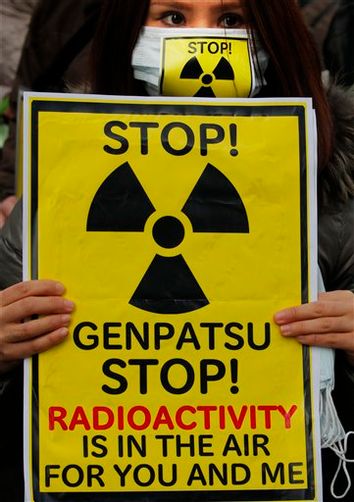
Japan: Partial meltdown in damaged reactor likelyA protester holds a placard during an antinuclear rally in Tokyo Sunday, March 27, 2011. Leaked water in Unit 2 of the Fukushima Dai-ichi plant measured 10 million times higher than usual radioactivity levels when the reactor is operating normally, Tokyo Electric Power Co. spokesman Takashi Kurita told reporters in Tokyo. "Genpatsu" on the sign means "nuclear power plant." (AP Photo/Itsuo Inouye)(Credit: AP)

Workers at Japan’s damaged nuclear plant raced to pump out contaminated water suspected of sending radioactivity levels soaring as officials warned Monday that radiation seeping from the complex was spreading to seawater and soil.

The coastal power plant, located 140 miles (220 kilometers) northeast of Tokyo, has been leaking radiation since a magnitude-9.0 quake on March 11 triggered a tsunami that engulfed the complex. The wave knocked out power to the system that cools the dangerously hot nuclear fuel rods.

The frantic effort to get temperatures down and avert a widening disaster has been slowed and complicated by fires, explosions, leaks and dangerous spikes in radiation. Two workers were burned after wading into highly radioactive water, officials said.

On Monday, workers resumed the laborious yet urgent task of pumping out the hundreds of tons of radioactive water inside several buildings at the six-unit plant. The water must be removed and safely stored before work can continue to power up the plant’s regular cooling system, nuclear safety officials said.

Contaminated water inside Unit 2 has tested at radiation levels some 100,000 times normal amounts, plant operator Tokyo Electric Power Co. said.

Workers also discovered radioactive water in the deep trenches outside three units, with the airborne radiation levels outside Unit 2 exceeding 1,000 millisieverts per hour — more than four times the amount that the government considers safe for workers, TEPCO said Monday.

The five workers in the area at the time were not hurt, spokesman Takashi Kurita said. The pits are designed as pathways to allow workers to lay out drainage pipes or electrical wires.

As officials scrambled to determine the source of the radioactive water, Chief Cabinet Secretary Yukio Edano said the contamination in Unit 2 appeared to be due to a partial meltdown of the reactor core.

A TEPCO spokesman said the presence of radioactive chemicals such as iodine and cesium point to damaged fuel rods as the source. However, pressure inside the containers holding the reactors was stable, indicating any meltdown was only partial, spokesman Kaoru Yoshida said, suggesting that the core remains largely intact.

New readings show contamination in the ocean has spread about a mile (1.6 kilometers) farther north of the nuclear site than before. Radioactive iodine-131 was discovered just offshore from Unit 5 and Unit 6 at a level 1,150 times higher than normal, Hidehiko Nishiyama, a spokesman for the Nuclear and Industrial Safety Agency, told reporters.

Japan’s nuclear watchdog, the Nuclear Safety Commission, said Monday its members — government-appointed experts who monitor the atomic industry — believe the radioactive water came from the containment vessel. It did not clearly state that the primary containment vessel, which protects the core, had been breached.

It could take weeks to clear out the radioactive water, said Gary Was, a nuclear engineering professor at the University of Michigan.

“Battling the contamination so workers can work there is going to be an ongoing problem,” he said.

Edano, the government spokesman, urged residents to stay out of the 12-mile (20-kilometer) evacuation zone around the nuclear complex, saying contaminants posed a “big” health risk. He was responding to reports that people had been sneaking back in.

Meanwhile, a strong earthquake shook the region and prompted a brief tsunami alert. The quake off the battered coast of Miyagi prefecture in the northeast was measured at magnitude 6.5, the Japan Meteorological Agency said. No damage or injuries were reported.

Scores of strong earthquakes have rattled Japan over the past two weeks, adding to the sense of unease across Japan, where the final death toll from the March 11 disasters is expected to top 18,000 and hundreds of thousands remain homeless.

Confusion at the plant has intensified fears that the nuclear crisis will last weeks, months or years amid alarms over radiation making its way into produce, raw milk and even tap water as far away as Tokyo.

TEPCO officials said Sunday that radiation in leaking water in Unit 2 was 10 million times above normal — an apparent spike that sent employees fleeing. The day ended with officials saying the huge figure had been miscalculated and was 100,000 times above normal, still very high but far better than the earlier results.

“This sort of mistake is not something that can be forgiven,” Edano said sternly Monday.

TEPCO Vice President Sakae Muto promised better readings.

“We will work hard to raise our precision in our work so as not to repeat this again,” he said at a news conference.

The crisis did not interrupt a yearly rite much loved by the Japanese: the start of the cherry blossom season.

Cherry trees typically begin blooming in the south in March, in the capital days later, and in the chilly north in April — the signal that spring has arrived.

Pink and white buds appeared at the Yasukuni Shrine in Tokyo on Monday, the country’s meteorological agency said.

Associated Press writers Tomoko A. Hosaka, Mayumi Saito, Mari Yamaguchi and Jeff Donn contributed to this report.

Continue Reading Close

Dangerous breach suspected at Fukushima

"It is possible there may be damage somewhere in the reactor," an official tells reporters

  • more
    • All Share Services

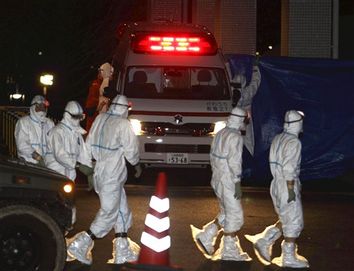
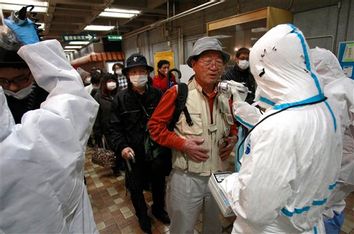
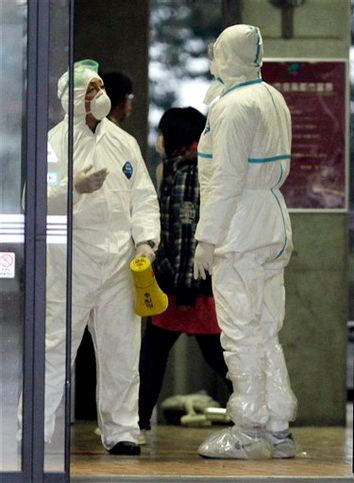
Dangerous breach suspected at FukushimaMedical workers in protective gear gather around an ambulance which arrived at a hospital in Fukushima City, Fukushima Prefecture, Japan, carrying two workers from the tsunami-damaged Fukushima Dai-ichi nuclear power plant after they stepped into contaminated water while laying electrical cables in one unit Thursday, March 24, 2011. (AP Photo/Yomiuri Shimbun, Jun Yasukawa) JAPAN OUT, MANDATORY CREDIT(Credit: AP)

A suspected breach in the reactor core at one unit of a stricken Fukushima nuclear plant could mean more serious radioactive contamination, Japanese officials said Friday, revealing what may prove a major setback in the mission to bring the leaking plant under control.

The uncertain situation halted work Friday at the Fukushima Dai-ichi nuclear complex, where dozens had been working feverishly to stop the overheated plant from leaking dangerous radiation, officials said.

Suspicions of a possible breach were raised when two workers waded into water 10,000 times more radioactive than normal and suffered skin burns when the water splashed over their protective boots, the Nuclear and Industry Safety Agency said.

However, though damage cannot be ruled out, the cause remained unclear, spokesman Hidehiko Nishiyama told reporters.

“It is possible there may be damage somewhere in the reactor,” he said, adding later that there was no data suggesting there were any cracks and that a leak in the plumbing or the vents could be to blame.

The confusion was yet another setback to the urgent task of gaining control of the Fukushima nuclear plant 140 miles (220 kilometers) northeast of Tokyo two weeks after a magnitude-9 quake triggered a tsunami that engulfed the facility and knocked out its crucial cooling system.

The plant has been releasing radiation, with elevated levels of radiation turning up in raw milk, seawater and 11 kinds of vegetables, including broccoli, cauliflower and turnips.

Tap water in several areas of Japan — including Tokyo — also tested with radiation levels considered unsafe for infants, who are particularly vulnerable to cancer-causing radioactive iodine, officials said.

The scare caused a run on bottled water in the capital, and prompted city officials to distribute bottled water to families with babies.

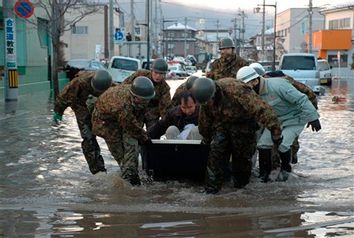
Officials are also grappling with a humanitarian crisis in the northeast, where hundreds of thousands of survivors remain camped out in schools and civic buildings two weeks after the tsunami swallowed up swaths of the coast.

Some 660,000 households do not have water and more than 209,000 do not have electricity. Damage could rise as high as $310 billion, the government said, making it the most costly natural disaster on record.

Police said the official death toll rose to over 10,000 on Friday. With the cleanup and recovery operation continuing and more than 17,400 listed as missing, the final number of dead was expected to surpass 18,000, taking into account overlapping figures.

In Fukushima, fires, explosions and spikes in radiation have hampered efforts to contain the nuclear crisis. High radiation levels have forced repeated evacuations, and more than two dozen workers have been injured, according to NISA.

Operators have been struggling to keep cool water around radioactive fuel rods in the reactor’s core after the March 11 earthquake and tsunami cut off power supply to the plant and its cooling system.

Damage could have been done to the Unit 3 core when a March 14 hydrogen explosion blew apart its outer containment building.

This reactor, perhaps the most troubled at the six-unit site, holds 170 tons of radioactive fuel in its core.

Previous radioactive emissions have come from intentional efforts to vent small amounts of steam through valves to prevent the core from bursting. However, releases from a breach could allow uncontrolled quantities of radioactive contaminants to escape into the surrounding ground or air.

Some work was suspended Friday to check radiation levels, NISA said.

——

Associated Press writer Tomoko A. Hosaka contributed to this report.

Continue Reading Close

Japan concerned about radiation in tap water

Anxiety spreads after officials report elevated radioactive iodine levels in the system

  • more
    • All Share Services

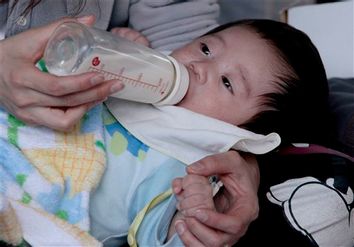
Japan concerned about radiation in tap waterA mother feeds her baby at an evacuation center in Yamagata Prefecture, northern Japan, Thursday, March 24, 2011. Hundreds of thousands remain homeless, squeezed into temporary shelters without heat, warm food or medicine and no idea what to call home after the March 11 tsunami swallowed up communities along the coast and dozens of strong aftershocks continued to shake the nation. (AP Photo/Mark Baker)(Credit: AP)

Shops across Tokyo began rationing goods — milk, toilet paper, rice and water — as a run on bottled water coupled with delivery disruptions left shelves bare Thursday nearly two weeks after the earthquake and tsunami to the north.

Anxiety over food and water remained high a day after Tokyo officials reported that the radioactive iodine in the city’s tap water measured more than twice the level considered safe for babies.

Radiation has been leaking from a nuclear plant 140 miles (220 kilometers) northeast of Tokyo since it was struck by the March 11 quake and engulfed by the ensuing tsunami. Feverish efforts to get the plant’s crucial cooling system operating have been beset by explosions, fire and radiation scares.

On Thursday, three workers at the Fukushima plant were exposed to radiactive elements, with two of them injured, while laying electrical cables in one unit, said Fumio Matsuda, a spokesman for the Nuclear and Industry Safety.

The two had injuries to their feet and were taken to a hospital for treatment, he said. They were exposed to radiation levels up to 180 millisieverts, less than the maximum amount of 250 millisieverts that the government is allowing for workers at the plant, he said.

More than two dozen people have been injured trying to bring the Fukushima Dai-ichi plant under control.

The developments highlighted the challenges Japan faces as officials scramble to avert a major nuclear crisis after a magnitude-9 quake off Sendai triggered a tsunami that killed an estimated 18,000 people and left hundreds of thousands homeless.

Radiation has seeped into raw milk, seawater and 11 kinds of vegetables, including broccoli, cauliflower and turnips, grown in areas around the plant.

The U.S. and Australia were halting imports of Japanese dairy and produce from the region; Hong Kong said it would require that Japan perform safety checks on meat, eggs and seafood, and Canada said it would upgrade controls on imports of Japanese food products.

Concerns also spread to Europe. In Iceland, officials said they measured trace amounts of radioactive iodine in the air but assured residents it was “less than a millionth” of levels found in European countries in the wake of the 1986 Chernobyl disaster.

In Tokyo, government spokesman Yukio Edano pleaded for calm. Officials urged residents to avoid panicked stockpiling, sending workers to distribute three small bottles of water each to an estimated 80,000 families with babies of 12 months or younger.

That didn’t stop Reiko Matsumoto, mother of 5-year-old Reina, from rushing to a nearby store to stock up.

“The first thought was that I need to buy bottles of water,” the Tokyo real estate agent said. “I also don’t know whether I can let her take a bath.”

New readings showed Tokyo tap water was back to safe levels Thursday but the relief was tempered by elevated levels in two neighboring prefectures of the cancer-causing element: Chiba and Saitama.

Continue Reading Close

Concern in Tokyo over radiation in tap water

Tap water in Japanese capital showing twice the recommended limit of radiation for infants

  • more
    • All Share Services

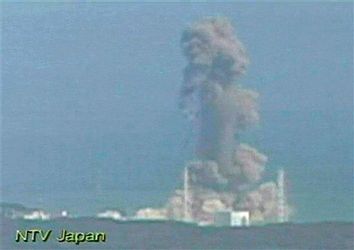
Concern in Tokyo over radiation in tap waterIn this photo from a footage of a live camera released by Tokyo Electric Power Co. (TEPCO), black smoke billows from the crippled Fukushima Dai-ichi nuclear power plant in Okumamachi, northeastern Japan,Tuesday, March 22, 2011. (AP Photo/Tokyo Electric Power Co. via Kyodo News) EDITORIAL USE ONLY(Credit: AP)

A spike in radiation levels in Tokyo tap water spurred new fears about food safety Wednesday as rising black smoke forced another evacuation of workers trying to stabilize Japan’s radiation-leaking nuclear plant.

Radiation has seeped into vegetables, raw milk, the water supply and seawater since a magnitude-9 quake and killer tsunami crippled the Fukushima Dai-ichi power plant nearly two weeks ago. Broccoli was added to a list of tainted vegetables, and U.S. officials announced a block on Japanese dairy and other produce from the region.

The crisis is emerging as the world’s most expensive natural disaster on record, likely to cost up to $309 billion, according to a new government estimate. The death toll continued to rise, with more than 9,400 bodies counted and more than 14,700 people listed as missing.

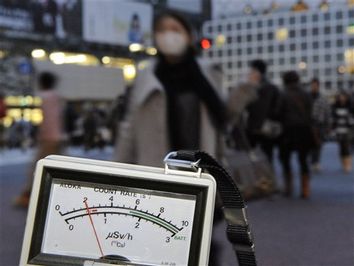
Concerns about food safety spread Wednesday to Tokyo after officials said tap water showed elevated levels: 210 becquerels per liter of iodine-131 — more than twice the recommended limit of 100 becquerels per liter for infants. The recommended limit for adults is 300 becquerels.

“It is really scary. It is like a vicious negative spiral from the nuclear disaster,” said Etsuko Nomura, a mother of two young children ages 2 and 5. “We have contaminated milk and vegetables, and now tap water in Tokyo, and I’m wondering what’s next.”

Infants are particularly vulnerable to radioactive iodine, which can cause thyroid cancer, experts say. The limits refer to sustained consumption rates, and officials urged calm, saying parents should stop giving the tap water to babies, but that it was no worry if the infants already had consumed small amounts.

They said the levels posed no immediate health risk for older children or adults.

“Even if you drink this water for one year, it will not affect people’s health,” Chief Cabinet Secretary Yukio Edano said.

Tokyo residents shouldn’t worry, said Dr. Lim Sang-moo, director of nuclear medicine at the Korea Cancer Center Hospital in Seoul.

Parents might want to be more cautious if they have a choice. “Nobody wants to drink radioactive water,” he said. But “it’s not a medical problem but a psychosocial problem: The stress that people get from the radioactivity is more dangerous than the radioactivity itself.”

Experts also say iodine-131 dissipates quickly in the air, with half of it disappearing every eight days.

Richard Wakeford, a public health radiologist at the University of Manchester in Britain, blamed the spike in radiation on a shift in winds from the nuclear plant toward Tokyo. He predicted lower levels in coming days once the wind shifts back to normal patterns.

“I imagine that bottled water is now quite popular in Tokyo,” he said.

The latest reported food data showed sharp increases in radioactivity levels in a range of vegetables. In an area about 25 miles (40 kilometers) northwest of the plant, levels for one locally grown leafy green called kukitachina measured 82 times the government’s limit for radioactive cesium and 11 times the limit for iodine.

The unsettling new development affecting Japan’s largest city, home to some 13 million in the city center and 39 million in the greater Tokyo area, came as nuclear officials struggled to stabilize the hobbled reactor 140 miles (220 kilometers) to the north.

The quake and tsunami that struck off the east coast March 11 knocked out the plant’s crucial cooling systems.

Explosions and fires followed in four of the plant’s six reactors, leaking radioactive steam into the air. Progress in cooling down the facility has been intermittent, disrupted by rises in radiation, elevated pressure in reactors and overheated storage pools.

The plant operator had restored circuitry to bring power to all six units and turned on lights at Unit 3 late Tuesday for the first time since the disaster — a significant step toward restarting the cooling system.

It had hoped to restore power to cooling pumps at the unit within days, but experts warned the work included the risk of sparking fires as electricity is restored through equipment potentially damaged in the tsunami.

Tokyo Electric Power Co. manager Teruaki Kobayashi said the pump for Unit 3 had been tested and it was working. But officials weren’t sure when they would be able to turn the power on to the pump.

In a new setback, black smoke billowed from Unit 3, prompting another evacuation of workers from the plant during the afternoon, Tokyo Electric officials said. They added that there had been no corresponding spike in radiation at the plant.

“We don’t know the reason” for the smoke, said Hidehiko Nishiyama of the Nuclear Safety Agency.

As a precaution, officials have evacuated residents living within 12 miles (20 kilometers) of the plant and advised those up to 19 miles (30 kilometers) away to stay indoors to minimize exposure.

And for the first time, Edano suggested that those downwind of the plant, even if just outside the zone, should stay indoors with the windows shut tight.

Survivors, meanwhile, buried the dead from the disaster in makeshift coffins, resorting to wrapping some bodies in blue tarps.

In Higashimatsushima, about 200 miles (320 kilometers) northeast of Tokyo, soldiers lowered bare plywood coffins into the ground, saluting each casket, as families watched from a distance. Two young girls wept inconsolably, their father hugging them tight.

“I hope their spirits will rest in peace here at this temporary place,” said mourner Katsuko Oguni, 42.

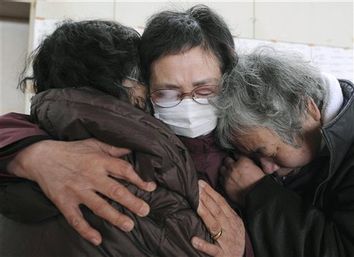
Hundreds of thousands remained homeless, squeezed into temporary shelters without heat, warm food or medicine and no idea what to call home after the colossal wave swallowed up cities and towns along the coast.

Tomoko Hosaka in Tokyo, Tim Sullivan in Higashimatsushima, Mary Clare Jalonick in Washington and Foster Klug in Seoul, South Korea, contributed to this report.

Continue Reading Close

Page 1 of 3 in Shino Yuasa