Silja J.A. Talvi

Reefer madness: Is sanity breaking out?

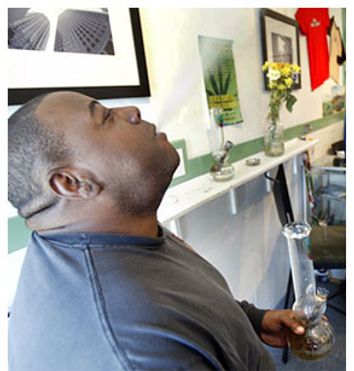
Despite the Supreme Court's ruling against medical marijuana and a scary proposed snitch law, America may finally be awakening from its decades-long stupor about recreational drugs.

  • more
    • All Share Services

Reefer madness: Is sanity breaking out?

The battle over the war on drugs heated up several degrees on Monday when the Supreme Court, in a 6-3 decision, ruled that state laws allowing the medicinal use of marijuana don’t protect patients from federal prosecution for use of a controlled substance, despite a doctor’s orders. The case, Gonzales vs. Raich, was originally filed by two California women who smoke pot for medical reasons.

Medical marijuana advocates were quick to point out that although the ruling was a disappointment, it came with a surprising acknowledgment by the justices that medical marijuana users had made “strong arguments that they will suffer irreparable harm because, despite a congressional finding to the contrary, marijuana does have valid therapeutic purposes.”

“While we’re disappointed, the validity of state medical marijuana laws was never at issue in this case,” said Rob Kampia, executive director of the Marijuana Policy Project in Washington, in a press statement. “The [state] medical marijuana laws … will continue to protect patients from arrest by state and local authorities. Because [Drug Enforcement Agency] and other federal agents make only 1 percent of our nation’s 750,000 marijuana arrests every year, patients in states with medical marijuana laws retain a high level of protection. Congress should act today to give those patients complete protection from arrest.”

“In his opinion, Justice Stevens stressed the need for medical marijuana patients to use the democratic process, putting the ball in Congress’ court,” Kampia noted. “This is especially important now because next week, the U.S. House of Representatives will vote on an amendment that would prevent the federal government from spending funds to interfere with state medical marijuana laws.”

The good news is that Kampia and other leaders of the drug-war reform movement represent an increasingly informed and politically savvy group — including several members of Congress — who have spent the past several years trying to do something about America’s draconian drug laws. As a result of the Supreme Court’s decision on Monday, they are stepping up efforts to draw attention to the Hinchey-Rohrabacher amendment, which will be considered this month as a part of an appropriations bill and, if passed, would prohibit the federal government from arresting, raiding or prosecuting patients who are abiding by state medical marijuana laws.

These reformers have also set their sights on another obviously needed legislative reform: repeal of the provision of the Higher Education Act that prohibits or delays the availability of financial aid to applicants with any drug-related misdemeanor or felony charge. The bill to repeal the provision (H.R. 1184), introduced by Rep. Barney Frank, D-Mass., this session, already has 66 cosponsors in the House. To date, the Drug Reform Coordinator Network estimates, at least 165,000 would-be students have been denied financial aid since the amendment took effect in 2000. If passed, the bill would represent the first full repeal of a federal drug law since 1970.

To Rep. Jim McDermott, D-Wash., denying students financial aid because they were busted for drug use or sales at some point in their lives looks more like a mental illness on a large scale than anything akin to an efficacious response to substance abuse. “The idea that we’re going to prohibit people from using drugs is just a falsehood; it’s just time that we stop what we’re doing and try something else,” McDermott, a nine-term veteran of Congress, told me at a Perry Fund event in Seattle last week.

As for the possibility of legalizing, regulating and even taxing certain illegal drugs, even the most forward-thinking of drug-war reformers have tended to stay away from discussing the idea in public, lest it seem too “radical.”

But on June 2, the legalization movement gained an unlikely set of supporters — specifically relating to marijuana, the most popular Schedule I drug. More than 500 leading economists, led by Nobel Prize winner Milton Friedman, called for the Bush administration to engage in “an open and honest debate about marijuana prohibition.” Their move was in response to the release of a report on the budgetary implications of marijuana prohibition by Jeffrey Miron, a visiting professor at Harvard University. According to Miron’s research, the legal regulation of cannabis would conservatively save $7.7 billion in law enforcement and criminal justice costs, while revenues for the government could range from $2.4 to $6.2 billion, depending on the type of taxation system.

Another radical leap forward in drug-policy reform came in Washington state in January 2005, when the King County Bar Association passed a resolution supporting the statewide legalization and regulation of psychoactive substances. The move followed a three-year period of intensive research into the historical, social, racial, legal, economic and fiscal considerations surrounding the drug war — both in Washington state and throughout the United States. The resulting 145-page report, “Effective Drug Control: Toward a New Legal Framework,” was hailed by a wide spectrum of mainstream organizations, including the Church Council of Greater Seattle, King County Medical Society, Washington State Psychiatric Association, Washington Society of Addiction Medicine, and Washington Academy of Family Physicians. And as a result, Democratic state Sen. Adam Kline is pushing for legislation to examine the possibility of a new legal framework for regulating illicit substances.

Other state bar associations (including those in Vermont, Oregon, Maryland and Hawaii) are beginning their own studies of revamped approaches to the drug war, according to Roger Goodman, director of the King County Bar Association’s Drug Policy Project. The reverberations of the report have been tremendous, says Goodman, although he admits that getting gung-ho prosecutors and law enforcement onboard remains the biggest hurdle.

Aside from the need for legislative reform of drug laws, substance abuse treatment, special drug courts, and needle exchange and other forms of “harm reduction,” activists point to the need for more-logical alternatives to the endless cycle of drug-related arrests and heavy-handed mandatory minimum sentences in the federal prison system. The inmate population has increased by 81 percent since 1995, and 55 percent of federal prisoners are incarcerated because of a drug offense, serving an average of three years and seven months. (For African-Americans, the average jumps dramatically to four years and nine months.)

Former prisoners with felony drug records can’t access public housing, federal assistance for education, and many other social services, to say nothing of the permanent black mark against them when it comes to finding a job or getting back the right to vote. Is it any wonder that so many federal and state prisoners end up back in jail or prison?

The ridiculously costly war on the consumption of cannabis is clearly misdirected, as detailed in a May 2005 report by the Sentencing Project. Of the nearly 700,000 marijuana arrests in 2002, a shocking 88 percent were for simple possession. (The number of marijuana arrests far exceeds the number of arrests for murder, manslaughter, forcible rape, robbery and aggravated assault combined.) And the Sentencing Project estimates that 27,000 men and women are currently locked up for a marijuana-related offense. Legalizing marijuana would be an appropriate start to a long-term vision based on rational fiscal and public health policy.

If we’re so worried about our kids’ experimentation with recreational drugs, why aren’t we pouring our resources into providing accurate information about drugs (alcohol and cigarettes being not only the most commonly used but the most obviously damaging as well) and into effective treatment programs for those who develop a destructive habit?

Unfortunately, and this is the bad news, American drug policy is still being shaped by political rhetoric rather than fiscally or medically sound strategies for keeping people healthy and out of trouble. For the latest and most egregious evidence of that, look no further than H.R. 1528, introduced this session by Rep. James Sensenbrenner, R-Wis., and named in classically Orwellian doublespeak as the Defending America’s Most Vulnerable: Safe Access to Drug Treatment and Child Protection Act of 2005.

There hasn’t been anything this scary in the already frightening reach of the American drug war in a long time. As written, this bill would create a new, three-year federal mandatory minimum for parents who witness or gain knowledge about drug activities happening around their kids and do not report what they know to the cops within 24 hours, or provide requested assistance to law enforcement in a resulting investigation, apprehension or prosecution. It would also create a 10-year mandatory minimum sentence for parents who commit a drug crime in or near the presence of their child, add a new five-year mandatory minimum sentence for anyone who sells drugs to someone who has ever been in treatment, and increase to five years the mandatory minimum for the sale of drugs within 1,000 feet of a school, library or drug treatment facility. That means just about anywhere in urban centers — and especially in the concentrated inner cities.

The bill is fundamentally aimed at subverting important Supreme Court decisions about the unconstitutionality of federal sentencing guidelines by converting those guidelines into a new framework of mandatory minimums — once again, with little or no judicial discretion possible.

Civil liberties groups like Families Against Mandatory Minimums, the ACLU, the Drug Reform Coordination Network and the Drug Policy Alliance are combining forces to raise awareness and prevent the bill from passing, but it’s too early to say if their efforts will succeed.

Enough already. The ongoing war on drugs has reached into every echelon of society, dragging medicinal-pot smokers and would-be college students into the mix. And it has made the lives of millions of citizens more miserable than they ever would have been on their own as either recreational or habitual substance users. We certainly don’t need another piece of regressive legislation to add to the damage by turning us into a nation of drug-war spies.

Vedder on Nader: The better man

Inspired by the WTO riots, the Pearl Jam frontman promotes the Green Party candidate's presidential bid at a Seattle rally.

  • more
    • All Share Services

Vedder on Nader: The better man

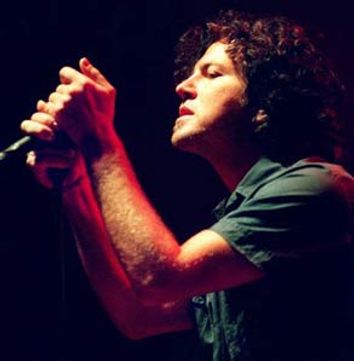
Pearl Jam frontman Eddie Vedder made an unexpected appearance at a crowded political rally here Saturday night, declaring his public support for Green Party presidential candidate Ralph Nader and performing a short, solo acoustic set for the mostly young audience.

Vedder’s decision to actively support Nader’s campaign comes as a surprise to many of Pearl Jam’s fans. In a July interview in George, Vedder and his band mates said that lending political sponsorship to a candidate was an inappropriate activity for a rock band. Vedder, in particular, worried that endorsing one candidate might alienate fans.

But judging by his appearance Saturday at the city’s Key Arena, Vedder has apparently decided that his enthusiasm for the Nader campaign’s themes of anti-corporate greed and grass-roots democracy outweighs such concerns.

In the past few weeks, Vedder’s name has begun to appear on Nader campaign fundraising material alongside the likes of Susan Sarandon, Linda Ronstadt, Willie Nelson, Jackson Browne, Bonnie Raitt and ex-Dead Kennedy and spoken-word performer Jello Biafra.

Nader 2000 announced yesterday that Vedder had been drafted by the Citizens Committee, a group of 100 leaders from different fields who support Nader and are calling for him to be included in the upcoming presidential debates with Al Gore and George W. Bush.

Still, Vedder’s willingness to step into a more prominent role in the Nader campaign clearly caught the estimated 10,000 audience members at the gathering by surprise.

“I’ve never been to one of these [rallies],” mumbled Vedder bashfully when he first appeared onstage after a rousing, witty speech by Texas populist and radio talk show host Jim Hightower. “The reason was [that] I never had anyone I could believe in before.”

The bearded Vedder, with chin-length hair framing his still-boyish face, launched into a tender version of “Soon Forget,” from Pearl Jam’s latest album, “Binaural.” He called out facetiously to find out whether Microsoft co-founder and area billionaire Paul Allen was in the audience, and then dedicated the song — about the isolation and loneliness that accompany excessive wealth — to Allen and Bill Gates. In between songs, Vedder remarked that the people he had watched pouring into the arena earlier in the evening represented a broad diversity of backgrounds and appearances, and yet all appeared to have one thing in common. “People had this certain look: They looked like people who give a shit,” he said.

Vedder picked up a guitar for a stirring acoustic performance of Steven Van Zandt’s “Patriot.”

“I ain’t no Communist, and I ain’t no socialist/I ain’t no capitalist, and I ain’t no imperialist/I ain’t no Democrat, I sure ain’t no Republican either/I only know one party, and that is freedom, I am, I am/I am a patriot, and I love my country/Because my country is all I know,” sang Vedder to an enraptured crowd.

After receiving a standing ovation, Vedder brought Nader to the stage, introducing him as “someone who represents us and not the corporate interests.”

Nader and his running mate, Winona LaDuke, have spent several weeks touring the country. Events in Minneapolis and Portland, Ore., drew 12,000 and 10,500 paying attendees, respectively, but the ticket’s support is thin and dropping nationwide.

According to recent polls, Nader’s support among voters in Washington is running at 5 percent. Besides young activists, two local unions, the Seattle local of the American Postal Workers Union and Local 174 of the International Brotherhood of Teamsters, recently announced that they had broken with their national leadership to endorse Nader.

Their numbers aren’t significant nationally, but reflect the role Nader has played in calling attention to growing income disparities in the nation, as well as to the more problematic aspects of the North American Free Trade Agreement and the World Trade Organization.

Public Citizen, a Washington, D.C., public interest group that Nader helped start, played a significant role in organizing many of the demonstrations and alternative conferences that took place during the week of the WTO summit here in late November and early December 1999. Nader himself was on hand to speak at several events and participate in the demonstrations.

The Nader rally on Saturday night was clearly tuned in to the impact that those demonstrations had on the region’s young activists. Early in the rally, large video monitors showed footage of the locally produced documentary “This Is What Democracy Looks Like,” which sets images of police using pepper spray and tear gas on WTO protesters against commentary by Spearhead’s Michael Franti and music by Rage Against the Machine.

Pearl Jam, who were in their hometown studio recording “Binaural” when these events unfolded, have previously said that they were deeply affected by the sheer size of the daily protests, which brought some 50,000 protesters to the city streets.

The group began its three-month, 40-city tour in August. Early on, Vedder and his band mates installed voter-registration tables at each venue. Pearl Jam will conclude their tour with two nights of shows at Key Arena in early November, with proceeds going to a wide array of local nonprofit organizations and activist groups.

Already, Pearl Jam have donated more than $2 million to a spectrum of national and international causes, and they have also recently established a charitable foundation that aspires to give away roughly half a million dollars to progressive causes every two years. “We’re extremely pleased by the support offered by Eddie Vedder,” said Nader 2000 spokesperson Stacy Malkan. “We really feel that his support shows that we appeal to the leadership of a younger generation who are disillusioned by the two major parties.”

Continue Reading Close

Hell no, we won't WTO

A new CD relives the night that ex-members of Nirvana, Soundgarden and the Dead Kennedys united to entertain the troops at the Battle of Seattle.

  • more
    • All Share Services

If ever a protest deserved a soundtrack, it was the tumultuous anti-WTO demonstrations in Seattle. On Dec. 1, after shutting down the city center and disrupting the trade summit, 400 weary protesters took a break from the fiery all-day demonstrations to brave the dusk-to-dawn curfew. The tired troops crammed into a popular downtown club called the Showbox to witness an unlikely USO band: singer/spoken-word performer Jello Biafra (Dead Kennedys) playing the Bob Hope role, backed by guitarist Kim Thayil (Soundgarden), bassist Krist Novoselic (Nirvana) and drummer Gina Mainwal (Sweet 75).

Calling themselves the No WTO Combo, the one-off group ripped through a blistering set of Dead Kennedys-style hardcore. “Jello just exploded,” says Novoselic, remembering the show. “Kim was bombin’ those riffs out, just shredding. Gina was rockin’.”

San Francisco indie label Alternative Tentacles released a live recording of the set this week.

Neither Novoselic nor Thayil had ever performed onstage with Biafra, one of the most enduring, notorious and politically active figures to come out of the late 1970s and early 1980s California punk scene. The idea of the No WTO Combo came about when Biafra and Novoselic, president and founder of the Joint Artists and Music Promotions Political Action Committee, were touring together as speakers on the activist-oriented Spitfire Tour. The two talked backstage and agreed that the forthcoming WTO protests needed “a music show in the middle of everything.”

The No WTO Combo used a few hours over Thanksgiving weekend to practice politically charged songs like “New Feudalism,” “Electronic Plantation” and “Full Metal Jackoff.” Then, as the week of protests unfolded, Novoselic spent each day walking around the downtown area, keeping a daily diary of events that ended up in the form of liner notes for the album.

“The thing that made the biggest impression on me was when I walked up to this one police line and they were starting to [fire] tear gas. Our eyes were burning and our throats were burning,” says Novoselic. “People were getting mad. Some people were yelling ‘fuck you’ at the cops. But there was something in particular that other people were [yelling at the] police that made an impact on me. They [were shouting], ‘This is what democracy looks like!’”

“It inspired me to the power of direct action and nonviolent protest,” Novoselic says. “To see so many people mobilized and utilizing the mechanism of democracy was inspiring. I got a real charge out of that.”

Thayil, for his part, supported the protesters, but explained that he had certain reservations about Western campaigns to improve environmental and labor standards in developing countries. “I suppose it’s only natural that we turn around and say, ‘Let’s [bring opportunities] for health and a cleaner environment to our brothers and sisters elsewhere.’ It’s a good thing to do  But it should also be kept in mind that we shouldn’t use this kind of legislation and sentiment to bully other countries and to maintain the U.S. position in its imperial dominance over the world.”

Thayil, who earned a degree in philosophy from the University of Washington around the time his group was beginning to make major waves in the Seattle grunge scene, hadn’t played a live show since Soundgarden disbanded in 1997. The amount of time he had spent away from live performance, as well as the heavy police and military presence around the Showbox, gave Thayil a generous case of pre-concert nerves. But once on stage, he says, everything fell into place.”

Novoselic echoes the sentiment. “I’ve had the feeling a few times in my life where there’s something going on that’s so exhilarating and magical. I know the whole world was watching Seattle there for a few days,” he adds. “I remember coming off that stage high as a kite. Natural adrenaline. I was high, man.”

Continue Reading Close

Beastie Boys

  • more
    • All Share Services

In 1986, three wildly energetic young Jewish punks made rap history with “Licensed to Ill,” a loud and unapologetically adolescent album that still ranks as one of the bestselling albums in the U.S. But after their funky, doped-up “Paul’s Boutique” in 1989, and the more instrumental and spiritual releases “Check Your Head” (1992) and “Ill Communication” (1994), it was hard to guess where the Beasties — MCA, Ad-rock and Mike D — were headed. Evidently, the trio was headed to the outer dimensions of Beastiedom: Back in ’86, the cover of “Licensed” featured a smashed-up airplane; in ’98, the foldout CD cover of “Nasty” displays a specially designed Beastie space station.

Positive and upbeat throughout, “Hello Nasty” is nothing if not unpredictable. On several songs (“Super Disco Breakin,” “Just a Test” and “Three MC’s and One DJ”), the Beasties return to a slower, hollering rap style that is more reminiscent of “Licensed” than of their more recent albums. In fact, old school is king on this album in many ways — “Body Movin’” is bound to become a new hit among break dancers everywhere — although the modern engineering feats (courtesy of co-producer Mario Caldato Jr.) and sampling techniques offer a much more polished sound than anything they did in the mid-’80s. Intelligent instrumentals also play a prominent role, with tracks like “Sneakin’ Out of the Hospital” and the beautiful “Song for Junior.”

Just when you think you’ve got it all figured out, the Beasties start launching musical meteors from the galaxy that they call home: “I Don’t Know” actually features one of the Beasties singing along with Cibo Matto’s Miho Hatori (doing soothing background vocals this time around); “Electrify” stretches hip-hop boundaries by weaving in classical music samples from The Firebird Suite; and “Dr. Lee, Ph.D.” features none other than legendary reggae producer Lee “Scratch” Perry singing what seems to be a strange new version of the Wailers’ brilliant but relatively obscure “Mr. Brown,” in which Perry affectionately refers to his new friends as the “Beastly Boys.” Even longtime Beastie fans will be scratching their heads for a good long while trying to figure this album out. That seems to be exactly the kind of reaction that those beastly boys wanted.

- – - – - – - – - – - – - -

BR5-49
BIG BACKYARD BEAT SHOW | ARISTA NASHVILLE
HEAR IT |–>BUY IT –>

–>BY MARK ATHITAKIS | Lacking any sort of solemn appreciation of Hank Williams, or any of the studied, moody ironies that got “No Depression” acts on college radio, all that BR5-49 have to offer is a sense of fun. Taking their cue from the upbeat twang of George Jones and Johnny Horton, the 14 songs on the Nashville quintet’s second album honor tradition without being too smart about it, gleefully stomping through “18 Wheels and a Crowbar,” swinging through “Out of Habit” or pouring real tears into “My Name is Mudd” and “Pain, Pain Go Away.”

The covers — Buck Owens’ “There Goes My Love” and Billy Joe Shaver’s “Georgia on a Fast Train” — work both as bookends and guideposts. They’re there to show just how well the band’s originals can keep up, songs that were perfected during their notorious four-hour concerts. Vocalists Chuck Mead and Gary Bennett handle the authenticity: They both ease perfectly into juke-joint twang and weary laments. But it’s the energy of the music itself, particularly Donnie Herron’s smart playing on fiddle, mandolin and guitar, that gives it a kick that’s harder than most genre exercises. No new truths reveal themselves though BR5-49′s hard-swinging fury — they’re lost in a world that Johnny Cash mapped out decades ago. But because they know that world better than most, on “Big Backyard Beat Show” they both honor history and preserve it, and have a good time all the while. Truly — no depression.

- – - – - – - – - – - – - – - -
Baaba Maal
NOMAD SOUL | PALM PICTURES
HEAR IT |–>BUY IT –>

Ernest Ranglin
IN SEARCH OF THE LOST RIDDIM | PALM PICTURES
HEAR IT | –>BUY IT –>

BY BANNING EYRE | Senegal’s Baaba Maal is one of the most talented and dynamic pop musicians anywhere, but he’s not a god. Three years of laboring with celebrated British producers, including Brian Eno, and a host of diverse collaborators has resulted in a puzzlingly flat record, “Nomad Soul.” Whether it’s Afro-Celtic stylings from producer Simon Emmerson, quirky atmospherics from Eno, preachy lyrics of Jamaica’s Luciano or pretty English-language choruses from Siniad O’Connor’s backup singers, the collaborators seem to hold Maal back, not push him forward. Track after track, Maal’s vocal is the best thing we hear, and the tepid offerings of others make the extraordinary seem strangely banal. The best tracks are “Koni,” a mostly acoustic gem, and two punchy techno-house numbers engineered and programmed by Ron Aslan (Raw Stylus). Afropop is all about experimentation, but Maal should chock this one up to experience, get back into the studio with his own musicians and pull out the jams!

Lest anyone doubt that there’s magic to be had that way, guitarist Ernest Ranglin’s “In Search of the Lost Riddim,” recorded in Dakar with help from Maal and his musicians, sparkles with the spontaneity missing on “Nomad Soul.” (These are the two debut releases from Chris Blackwell’s new label, Palm Pictures. Blackwell left Island last year and he’s been sewing harmonious links between two countries he loves, Senegal and Jamaica.) An architect of ska and reggae, Ranglin has a genius for finding common ground. His spirited, rickety jazz lines weave together ska and Senegalese rhythms with breathtaking ease. Tracks like “Pili Pili” and “Anna” find Ranglin breezing through the idiosyncratic flow of kora (21-string harp) melodies. Vocal contributions by Maal and his longtime musical companion, Mansour Seck, are radiant here. Off the wall, but totally unpretentious, this global back-porch jazz delivers the goods.

- – - – - – - – - – - – - – - -
Shirley Horn
I REMEMBER MILES | VERVE
HEAR IT |–> BUY IT –>

BY EZRA GALE | At first glance, singer and pianist Shirley Horn’s “I Remember Miles” seems like an odd tribute to the legendary trumpeter Miles Davis. Only one of the nine tunes is a Davis original, and the rest were originally Broadway show tunes that Davis recorded on his late ’50s/early ’60s albums. But the depth of this electrifying collection of ballads and of Horn’s affection for Davis are immediately apparent. Whether by design or by coincidence, she sings like he played — her phrasing is short and eloquent, her tone is lush and her embellishments never stray too far from the point. On a gorgeous version of “My Funny Valentine” and on the gently swinging “I Got Plenty O’ Nuttin’,” it sounds as though Horn is threading her way through the melody just as Davis might.

It doesn’t hurt that bassist Ron Carter and drummer Al Foster, who appear on half the tracks, were both longtime associates of Davis, and that trumpeter Roy Hargrove plays in such a Davis-inflected manner — especially when he plays the muted trumpet on “I Fall In Love Too Easily” — that it’s almost spooky. Horn’s piano playing is perfect as well. On the haunting version of “This Hotel,” she accompanies herself with beautiful results.

But it’s the 10-minute version of “My Man’s Gone Now,” recorded by Davis on 1958′s “Porgy and Bess” but played here with his electric arrangement from 1981′s “We Want Miles,” that is the album’s centerpiece. With Carter and Foster augmented by Horn’s regular rhythm section of bassist Charles Ables and drummer Steve Williams, the tune takes on an airy, expansive, almost free-floating feel, with Horn’s gorgeous vocals sailing and searching above it all. It’s a startling moment — ambitious, different and yet somehow utterly true to Gershwin’s original melody. It’s exactly as Miles would have loved it.

- – - – - – - – - – - – - – - -
Primus
RHINOPLASTY | INTERSCOPE
HEAR IT |–> BUY IT –>

BY MARK ATHITAKIS | Though little more than a fans-only ‘tween-album stopgap, “Rhinoplasty” — 50 minutes long, but priced as an EP — at least provides reassurance that |ber-bassist Les Claypool’s obsessions run a bit deeper than his band’s original works suggest. Setting aside the oblique tributes to King Crimson, Rush and Frank Zappa that mark Primus’ originals, the assembled covers take aim at the more pretentious corners of straight rock and pop: XTC’s “Scissorman,” Metallica’s “The Thing That Should Not Be,” the Police’s “Behind My Camel,” Peter Gabriel’s “The Family and the Fishing Net.” Claypool does little to expand on them, however, though the band humbly makes room on occasion for more of his slap-happy, watery bass playing.

But unlike most tech-mag cover stars, Claypool does understand the value of song structure as it relates to fretboard pyrotechnics. His take on Stanley Clarke’s “Silly Putty” has as much pure groove as it does flashy technique, and his cowpunk Jerry Reed cover is played with an admirable lack of filigree, probably because Claypool knows that country western doesn’t lend itself to funkiness. Still, the two original live tracks thrown in as bait are dull, unrestrained jam-rock and instrumental showcases, and Claypool is a bit too insistent on proving just what a freewheeling musical nutcase he is. Better proof of his talents on that end is elsewhere; there’s nothing particularly funky about fulfilling a contractual obligation.

Continue Reading Close