Simon Reynolds

The unlimited dreams of J.G. Ballard

His dark, perverse fiction is unforgettable. But the author of "Crash" and "Empire of the Sun" was also a visionary who mapped the collision of culture and technology, media and desire.

  • more
    • All Share Services

The unlimited dreams of J.G. Ballard

Earlier this week a literary colossus made his exit, after a long struggle with cancer. The ovation that accompanied J.G. Ballard’s departure was fully deserved. He was a visionary, one of the few fiction writers of our era with an imagination so singular that he was granted the suffix treatment: the attachment of an – esque or -ian to their surname, à la Kafka-esque or Dickensian.

But in death as in life, Ballard never quite got his full due as a thinker as well as a storyteller; he was a penetrating and endlessly provocative theorist about the intersections between culture and technology, media and desire. This tendency to think of him only as a fabulist is understandable to an extent, given that he never wrote a full-length book of nonfiction that condensed and focused his ideas. Instead his insights, speculations and polemical barbs are scattered across a panoply of reviews, columns, memoiristic essays, think pieces and single-topic commentaries written for or spoken to newspapers looking for the Ballardian take on some current event, issue or innovation. (Thankfully, a decent-size heap of J.G.’s wit and wisdom has been shoveled into a single spot by the esoteric San Francisco publisher RE/Search: The 2004 “JG Ballard: Quotes” is a pocket-portable collection of mind-bomb aphorisms and pithy observations. “A User’s Guide to the Millennium,” a scrappy but absorbing anthology of essays and reviews, is currently out of print.)

Of course Ballard’s ideas are also present in his novels and short stories, and arguably at their most potent there. He was drawn to science fiction as the preeminent literature of ideas of our time, the only form of fiction that could take the measure of the 20th century. At his most full-on, Ballard transformed SF into a kind of theory-fiction, his short stories and novels functioning in a manner similar to Marshall McLuhan’s “probes,” the latter’s term for speculative aphorisms as opposed to fully developed theories backed up by research and empirical data. McLuhan is an apt comparison because his primary concern — mass communications and man’s increasingly symbiotic relationship with technology and media — overlapped with one of Ballard’s key zones of obsessive investigation: the post-WW2 culture of media overload, what he called “our perverse entertainment landscape.” In a 1983 interview he characterized it as “a completely new thing, a parallel world which we inhabit,” presciently anticipating the virtual and post-geographical realm of Web culture.

Operating as a fabulist, Ballard was less tethered than even McLuhan by the restraints of academia or journalism. But even his most disturbed and hallucinatory stories generally started with reality, extrapolating from its emerging tendencies to create extreme but plausible scenarios in a near-future more often than not located just past the present’s horizon. Classic science fiction methodology, in other words. There’s an impulse among some Ballard fans, especially those who are “proper” literati themselves, to elevate Ballard and argue that his work transcends the ghetto of genre fiction. Although Ballard occasionally expressed frustration with SF’s pulpy aura, and later in his career wrote novels that fell outside its parameters, he generally was content to situate himself in the genre and loudly championed its potential. “I believe that if it were possible to scrap the whole of existing literature,” he once declared, “… all writers would find themselves inevitably producing something very close to SF … No other form of fiction has the vocabulary of ideas and images to deal with the present, let alone the future.”

The work on which Ballard’s reputation is based — his novels and short stories of the 1960s and ’70s — is either science fiction or based on speculative techniques very close to SF. The only real exception is 1970′s “The Atrocity Exhibition,” whose delirium of experimental prose has more in common with William S. Burroughs than Robert A. Heinlein. An unstructured collation of 15 micro-novels written during the late ’60s and bearing titles such as “Why I Want to Fuck Ronald Reagan,” “You: Coma: Marilyn Monroe” and ”The Assassination of John Fitzgerald Kennedy Considered as a Downhill Motor Race,” “The Atrocity Exhibition” reads like an infinitely perverse cross between “The Golden Bough” and a forensic science textbook. Ballard described his approach as gathering “the materials of an autopsy” and treating reality “almost as if it were a cadaver.” (As a young man he’d briefly studied medicine.) But his true interest wasn’t everyday life but media hyperreality. He clinically probed the grotesque (de)formations of desire created by media overload and celebrity worship, a new psychomythology in which the deities were movie stars, politicians and murderers. Doubleday was all set to publish “Atrocity” in the USA but lost its nerve and pulped the entire print run; three years later it belatedly saw American release courtesy of Grove Press under the title “Love & Napalm: Export U.S.A.”

“Crash,” the infamous 1973 novel that developed from “Atrocity’s” coldly seething matrix of obsession, is ostensibly set in the present but it feels like a form of SF — if only because its cast of auto accident survivors turned flesh-on-metal perverts are presented as a kind of erotic avant garde, heralds of a future sexuality. Ballard had become interested in the role of car crashes in Hollywood movies and the emergence of an appetite on the part of a mass audience for a voluptuous and highly stylized violence. He diagnosed this carnographic entertainment culture as a symptom of suburbanization and anomie, the loss of meaning and community in people’s lives, and a corresponding hunger for sensation. “‘Crash’ is an attempt to follow these trends off the edge of the graph paper to the point where they meet, ” he explained some years after the novel was published. As a kind of research experiment, in 1970 he presented an exhibition at a London art gallery that involved the display of wrecked automobiles, and was gratified by the extreme emotional responses of the attendees. For Ballard this was the “green light” to start writing “Crash.”

An early reader of the novel at one publisher advised: “This author is beyond psychiatric help. Do not publish!” (Ironically, Ballard was living a stable domestic existence of responsibility and respectability in Shepperton, near London Airport, bringing up his three children as a single parent — his wife having died tragically young — and squeezing in writing between escorting the kids to school and helping with their homework.) Many reviewers rejected “Crash” as pornography. It isn’t actually a titillating read (for most people, anyway), but where it does resemble porn is in its clinically graphic language and extreme repetitiveness, with certain buzz phrases (“bloody geometry,” “perverse logic”) and tableaux (angles of conjunction between genitalia and instrument binnacles, semen emptying across luminescent dials, and so forth) recurring in a manner finely balanced between the incantatory and the numbing.

“Crash” is generally considered by Ballard buffs to be the first installment of a loose trilogy of novels set in a recognizable present-day (i.e., mid-’70s) London. But “Concrete Island” (1974) and “High-Rise” (1975) could equally be seen as a reversion to the narrative-driven approach of Ballard’s first four novels, “The Wind From Nowhere,” “The Drowned World,” “The Drought” and “The Crystal World.” This tetralogy, published between 1961 and 1966, firmly belonged in the science fiction camp, and specifically the SF sub-genre of the cataclysm story, where some kind of natural or man-made environmental catastrophe causes the breakdown of society. “High-Rise” simply localizes the post-apocalyptic scenario to a more confined area, a giant apartment building in the Docklands area of East London, whose warehouses and harbors would actually be redeveloped and gentrified in the 1990s. But Ballard’s inspiration was the urban redevelopment boom of the 1960s that razed the old Victorian slums of urban Britain and replaced them with skyscrapers and gigantic housing projects linked by concrete walkways and tunnels. Built in a spirit of neo-Corbusian idealism, these massive complexes rapidly deteriorated into behaviorist social laboratories blighted by vandalism, crime and drugs. “High-Rise” takes the fraying of the social fabric several steps further than anything actually going on in ’70s Britain, hooking the reader from the opening sentence: “As he sat on his balcony eating the dog, Dr Robert Laing reflected on the unusual events that had taken place within this huge apartment building during the previous three months.”

“Concrete Island,” a slim and deceptively slight novel published the previous year, focused the cataclysm/collapse scenario down to the level of an individual. Losing control of his car, a man crashes into an area of overgrown scrubland circumscribed on all sides by highways and overpasses. Injured and unable to climb up the steep embankments, he’s forced to survive as a modern-day Crusoe surrounded by the endless streams of traffic, whose drivers steadfastly fail to see, or actively ignore, his plight.

“High-Rise” and “Concrete Island” share with the earlier, more overtly SF-oriented catastrophe novels a similar psychological narrative: the protagonist who finds himself perversely attracted to the cataclysm, feels at home in the drastically altered landscape it’s created. “The Drowned World” — easily the best of the disaster tetralogy, although I’m biased perhaps because it was my initiating dose of Ballard — takes place in what now seems like an uncomfortably possible near-future where sea levels have risen in sync with temperature. The setting is a London half-submerged by water and encroached by tropical jungle. While the surviving remnants of humanity are gradually migrating to the Arctic Circle, Ballard’s protagonist is last seen heading in the opposite direction, toward the uninhabitable Equatorial zones.

Ballard has argued that the devastated but dreamlike landscapes of these four ’60s novels are “far from being pessimistic” but are actually “stories of psychological fulfilment. The characters at last find themselves.” In a 1977 essay on the catastrophe subgenre written for an SF encyclopedia, Ballard ventured that SF was just a “minor offshoot of the cataclysmic tale” that had existed for millennia. He claimed that these fictions spoke to primal and antisocial urges, citing both the rattle smashing of the infant child and “psychiatric studies of the fantasies and dream life of the insane” that ” show that ideas of world destruction are latent in the unconscious mind.” But he also argued that doomsday novels were positive expressions. On the one hand, they involved a form of imaginative adaptation (he cited Conrad’s dictum “immerse yourself in the most destructive element — and swim!”) in preparation for the worst the 20th century had up its sleeve. On the other hand, they used the imagination to create “alternatives to reality” and thus represented a legitimately angry and subversive response to “the inflexibility of this huge reductive machine we call reality.”

Seeing them as “transformation stories rather than disaster stories” makes sense, if only because it helps to explain what the reader gets out of them — which is less to do with dread and more a kind of twisted utopianism or sublimated revolutionary impulse: a hunger to see the world turned upside down. The appetite for doomsday scenarios in fiction could also have something to do with the longing for an emptier world, a response to our overcrowded, stimuli-saturated civilization. J.G. Ballard didn’t have to daydream about cataclysm, though; as a teenager he lived through conditions of total collapse. Born in Shanghai in 1930, his childhood began in fairly idyllic quasi-colonial circumstances (Dad worked as managing director of a textile factory, they lived in a fancy house, had lots of servants). But with the outbreak of the Sino-Japanese War, Shanghai was occupied in 1937. When Japan joined with the Axis powers against the Allies,  all “enemy civilians” were herded into internment camps. Ballard’s experiences of post-invasion chaos and prison camp life lead to 1984′s best-selling and prize-winning novel “Empire of the Sun,” the book that took Ballard from culthood to the middlebrow mainstream (helped, of course, by Spielberg’s 1987 movie version, with the young Christian Bale playing the J.G. character, Jim).

For many of Ballard’s original fans, though, there was some disappointment in discovering there was a biographical source, however exotic and dramatic, for his trademark imagery of drained swimming pools, deserted roads, abandoned airfields and empty hotels. All of a sudden we had a pat psychoanalytic explanation (trauma on a young psyche, the aesthetic equivalent of abused children re-creating similar psychosexual arrangements for themselves as adults) for Ballard’s sensibility, all his talk about “the magic and poetry one feels when looking at a junkyard filled with old washing machines, or wrecked cars, or old ships rotting in some disused harbor.” It all felt somehow reductive and demystifying — which is one reason I’ve never been drawn to actually read “Empire of the Sun.”

The fans’ misgivings were lent some credence by Ballard’s post-”Empire” fiction, which seemed to lose its spark, as though confronting his childhood experiences had defused some crucial mechanism of creativity. While his novels of the late ’80s and thereafter such as “Cocaine Nights” and “Super-Cannes” have admirers, few would argue they’ve contributed a jot to his enduring cult, based solidly on the early cataclysm fiction, on “Atrocity” and the urban trilogy of “Crash”/”High-Rise”/”Concrete Island,” and above all on the distilled, magisterial economy of his short stories, which regularly appeared through the ’60s and ’70s in collections with titles like “The Terminal Beach” and “Low Flying Aircraft.” Happily, W.W. Norton will be publishing ” The Complete Stories of J. G. Ballard” this fall, a massive compendium that ran to 1,200 pages in its U.K. incarnation.

Stylistically what connects the avant-porn of Ballard’s experimental phase with the perverted adventure yarns of his cataclysm and urban-collapse novels is his inattention to traditional fiction virtues like character or dialogue. But more than plot, his books are about atmosphere, defined as a physical space colored by or charged with a psychological mood. Really the Ballard narrative is a machinery for delivering up landscapes and tableaux that linger in the reader’s mind’s eye. In the ’50s, before turning to writing, he tried his hand at painting, then gave up when he realized he had no flair for it. “I would love to have been a painter in the tradition of the surrealist painters who I admire so much,” he once confessed. In his fiction, vision reigns supreme over all the other senses, from touch (sex in “Crash” is about the arrangement of limbs and objects in compelling patterns, about geometry rather than sensuality) to sound (Ballard professed to have minimal interest in or feeling for music, although he did write a couple of very good short stories involving music of the future).

All through his career, he maintained a connection to visual artists, drawing inspiration from and befriending the British division of pop art (Richard Hamilton, Eduardo Paolozzi, et al.), whose infatuation with American advertising and pop iconography had obvious affinities with Ballard’s mass cult obsessions. But the surrealists remained his first and greatest love . He passionately defended Dalí from fashionable detractors, while the critic Chris Hall has noted the parallels between the dreamscape-like vistas that teem through his writing and Yves Tanguy’s “strange beaches,” Max Ernst’s “silent forests and swamplands, weathered scenery and gnarled post-apocalyptic detritus.” Ballard, again, could connect it to his own teenage experiences, describing “prewar and wartime Shanghai” as “a huge Surrealist landscape … There was a complete transformation of everything, complete unpredictability, while formal life went on, just as in Bunuel’s films or Delvaux’s paintings — a bizarre external landscape propelled by large psychic forces.”

A problem for anyone who wants to write about Ballard is that the author is his own best critic. You’ll come up with a perception, spot a pattern, then have the smile wiped off your face as trawling through his interviews or essay you’ll find it preempted by some remark of his own — expressed more sharply, taken further. These ideas about what he’s trying to do, or what fiction can be, are also embedded in the stories, which means that they sometimes verge on metafiction (but without being tediously postmodern — indeed, Ballard may well have been the last great literary modernist). At his height, every image is an idea and every idea is embodied as an image, sensation, mood.

Ballard’s achievement relates to the adjectivization of his name: the fact that “Ballardian” has become a glib descriptor for certain landscapes and cultural phenomena is a measure of his impact. For some of us, Ballard has imposed his way of seeing between us and reality. For this sort of hardcore fan, it was impossible not to think of J.G. within seconds of hearing about Princess Diana’s crash (for added Ballardianism, she and Dodi were harried to an early grave by the image-vampires of the paparazzi, whose wages are paid by the general public’s voyeurism). Katrina and New Orleans, too — the flooded wards, the refugees clustered on partially submerged highway overpasses, the chaos and squalor of the overcrowded dromes, seemed to come straight from his pages. Perhaps reality caught up with his imagination, outstripped it. That might have been his message all along: that truth was already becoming stranger than fiction, something he’d glimpsed in occupied China in the 1940s.

Strangely, although we live in an ever more Ballardian reality, I can’t really see a Ballardian school of writing out there, even within science fiction. Perhaps J.G. is easier to parody than to be positively influenced by. Instead, his direct impact is most evident in music, particularly late ’70s and ’80s postpunk. Ironically, the art he had the least feeling for was the one that responded most fervently and productively to his vision. Probably his most famous fanboys were Joy Division. Their final studio album, “Closer,” featured an aural abbatoir of a track titled “Atrocity Exhibition,” with Ian Curtis playing the role of freakshow barker, luring voyeurs with the chorus “this is the way, step inside” and pointing to the twisted bodies on display. The band’s debut album, “Unknown Pleasures,” pulled a Ballardian maneuver by aestheticizing the postindustrial desolation of late ’70s Manchester, finding a somber glamour in its derelict factories and baleful motorways.

Industrial groups like Joy Division’s friends Throbbing Gristle and Cabaret Voltaire venerated the two Bs: Ballard and Burroughs (the latter a major influence on J.G., who read “The Naked Lunch” in the early ’60s and drew huge impetus from Burroughs’ “severity” and unblinking, nonjudgmental gaze, a reprieve from the naturalistic and moralizing fiction that still ruled literary England). The Normal’s 1978 synth-punk classic “Warm Leatherette” was a three-minute precis of “Crash”: the catchiest couplet goes “The hand brake penetrates your thigh/ Quick — Let’s make love, before you die.” Gary Numan’s “Cars” and David Bowie’s  “Always Crashing in the Same Car” bear slightly smaller debts.

Another group of Ballard fans was the Human League. Founding member Ian Craig Marsh, later part of Heaven 17, raved to me about “The Atrocity Exhibition” and “High-Rise” (“the proles sending piles of human excrement up in the express penthouse elevators, the documentary maker who still carries his camera on his shoulder like it’s some symbolic totem, even after the lens is all smashed to fuck!”). But the Human League also made fun of the alienation chic of postpunk’s Ballard casualties in their 1980 song “Blind Youth,” singing “high-rise living’s not so bad” and “dehumanization is such a big word.” Elsewhere in ’80s mainstream pop, the Buggles, those MTV-inaugurating one-hit-wonders, loosely based “Video Killed the Radio Star” on the Ballard short “The Sound Sweep.”

During the grunge years, Ballard’s influence dipped away, but more recently it’s crept back, from Radiohead to the Klaxons (who named their Mercury Prize-winning “Myths of the Near-Future” after one of his short story collections) to numerous electronic musicians, most notably another Mercury nominee, Burial, whose debut LP was framed as a concept album about South London being flooded. And would you believe it, as I’m writing this feature, a publicist’s e-mail pings into my in box touting a new band named Empire of the Sun. Just as each new generation of angsty and imaginative youth discovers the music of bands like Joy Division for itself, it seems likely that half-lives of the Ballardian vision will keep reverberating through pop culture for a long time to come.

The egos have landed

Axl Rose and Kanye West dropped their larger-than-life albums this week. And one of them lives up to the hype.

  • more
    • All Share Services

The egos have landed

The egos have landed. Earlier this week, Guns N’ Roses’ long-awaited “Chinese Democracy” and Kanye West’s “808s & Heartbreak” were released on consecutive days, setting up a titanic struggle for the Billboard No. 1 album spot. On first glance about as distant from each other as imaginable, Axl Rose and Kanye West have a surprising amount in common. They both see themselves as arch-individualists in a pop world of industry-reared sheep.

Just how mavericky are these guys? Axl Rose made his fans and record company wait nearly two decades for the follow-up to “Use Your Illusion I” and “II,” funneling millions of man-hours and dollars into a project that always had about a million-to-one chance of not failing to live up to expectations — the “Heaven’s Gate” of hard rock. Kanye West didn’t keep anybody hanging around (he likes being in the public eye and ear), but he has defied expectations with this, his fourth album in five years: He’s a rapper, but on “808s & Heartbreak,” he sings, and instead of his usual up-tempo, uplifting hip-hop, the album largely consists of morose ballads.

Both performers intend their albums to be received as masterworks of “capital A” Art. West has paved the way for “808s” with talk of his compulsion to make “pop art” and his desire to take hip-hop to the level of the Beatles, Hendrix and Led Zeppelin. At the American Music Awards, he proclaimed, “We’re going to push this music to the point where it was like in the ’60s, in the ’70s.” On the song “Welcome to Heartbreak,” he declares, “I can’t stop having these visions,” while his MySpace page features the pompous motto “Our work is never over.”

Guns N’ Roses, of course, always aimed to enter the pantheon of classic rock, signposting their ambition with ballsy, overblown covers of songs by Bob Dylan, the Sex Pistols and Paul McCartney and attempting to top the success of “Appetite for Destruction” with the hubris and gigantism of “Use Your Illusion I” and “II.” “Chinese Democracy” and “808s & Heartbreak” are each full of rage and anguish, of the sort you’d half-think megastars would be able to pay somebody else to feel on their behalf: Axl strikes typically embattled, I-won’t-change-for-you (and certainly won’t speed up my work-rate) postures, while West’s torment emerges out of romantic pain and “It’s lonely at the top” self-pity.

Most intriguingly, the records have something else in common: a sound that draws your attention to the technological artifice of recording. The difference is that “Chinese Democracy” is the victim of its means of production, whereas “808s & Heartbreak” turns the digital denaturing of sound into a positive aesthetic. Rose strives for majesty and produces a monstrosity, while West turns damaged sound into beauty.

It would be lovely to think that the vigorously polished turd that is “Chinese Democracy” could serve as the tombstone for an entire era of mainstream rock marred by misguided production techniques pushed by the record industry and radio alike. “Chinese Democracy” takes the two hallmarks of recorded rock sound of the modern era — compression and an overreliance on the digital editing platform Pro Tools — and amps their signature defects to a hideous intensity.

Compression is not intrinsically evil. It can make records sound more exciting, and equivalents to the effect were used as far back as the ’60s. The process “simply reduces the difference between the loudest and quietest parts of a piece of music,” in the words of technical writer Paul White, creating the illusion that it’s louder. It makes songs jump out at the listener. Your most common encounter with excessive compression is probably TV commercials, which is why when the ad break comes on you’ll often find yourself reflexively lowering the volume. Over-compression in music squeezes the depth out of the sound: Noisy guitar rock in particular sounds muddy and yet flat, a plane of overbright blare that tires the ear. But “the loudness war” keeps escalating because labels need their bands’ releases to be “competitive” on the radio, where stations add further compression to compete with rival broadcasters. And there is a generational shift toward tolerating degraded sound, as more and more people listen to music primarily as MP3s, which are then heard via computer speakers and iPods.

Pro Tools, like compression, is not invariably abused, but it does encourage fruitless perfectionism, with the temptation to add and remove and tweak and restructure, which often results in a densely layered, supersaturated sound. One common Pro Tools function is “drum sound replacement”: If, say, the snare drum doesn’t punch through to your satisfaction, you can either create another one in laboratory conditions or take it from a CD of sampled drum sounds, easily replacing every snare hit in the drummer’s performance.

The result, audible on “Chinese Democracy,” is a bionic precision that forgoes any real looseness and swing (one of Guns N’ Roses’ virtues back when it was an actual band circa “Appetite for Destruction,” as opposed to Axl Rose plus a teeming ensemble of hired hands). Pro Tools makes it easy, once you’ve got a perfect take of a guitar part or backing vocal, to cut and paste that element repeatedly across the song, in the process creating a subtle monotony that may not rise to the forefront of the listener’s consciousness but is felt as a subliminal absence.

Pro Tools is just a  tool, of course, and the defects of “Chinese Democracy” ultimately come down to the humans using it, and the infinitesimal aesthetic choices they made during its unnaturally prolonged creation. Another problem is the excessive number of talents that have passed through the project: There were six guitarists, including Rose (but excluding guest players Brian May and David Navarro, both left on the cutting-room floor). “Chinese Democracy” has almost as many credits as a modern-day action movie, and there is something about its overall sound that reminds me of CGI. Like the fight scenes or exploding cities in CGI-addled movies — in which no stunt men were ever in jeopardy, no debris ever hurtled — the sound of “Chinese Democracy” is spectacular but numbing, a simulacrum of rock’s wildness and untamed energy.

Here and there, the methodology pays off. Some of the song intros are eerily ethereal in a way that suggests the more interesting record Rose might have made if he hadn’t been wedded to making a rock ‘n’ roll record. And on “Shackler’s Revenge,” space opens repeatedly for a thrilling piece of digitally sculpted techno-rock, a corkscrewing riff like rotating knives in a slaughterhouse. But the bulk of that song succumbs to overload, with squealing solos and Rose’s shrill vocals jostling to dominate the upper frequencies. “There Was a Time,” “Catcher in the Rye” and “Riad n’ the Bedouins” gesture at defiance and intensity, but the sound has no bite: It’s like being mauled to death by a toothless pitbull, a horribly drawn-out way for your ears to die. “Madagascar” features a sample from “Cool Hand Luke,” the prison boss drawling, “What we have here is failure to communicate,” a curious act of self-plagiarism, since the exact same sound bite was used on the song “Civil War” back in 1991. But the “failure to communicate” unwittingly encapsulates the album’s inability to connect. Nothing can cut through the smog of sound.

Guns N’ Roses was always a phallic band — Sunset Strip sex pistols from the name down to the “feel my serpentine” imagery of “Welcome to the Jungle.” Doors hagiographer Danny Sugerman even compared Rose to the young Jim “Death and my cock are the world” Morrison. There’s a gross tumescence to the sound of “Chinese Democracy” redolent of the 4-hour erections induced by Viagra: engorged but devoid of desire, a meaningless show of strength.

Not Viagra, but a Niagara of synthetic tears: That’s the sound of “808s & Heartbreak.” All of Kanye West’s swagger has been knocked out of him by the twin blows of his mother’s death and his breakup with fiancée Alexis Phifer. He has described the making of this record as “therapeutic for me…it’s better than suicide.” If most of the songs address his love woes with an unexpectedly abject vulnerability, there’s a different kind of self-exposure that many will find much harder to empathize with: the mewling of the self-absorbed superstar who’s found — surprise, surprise — that the glittering prizes of wealth and adulation he’s chased so hard make for a hollow-souled hell of a life.

“Welcome to Heartbreak,” the second song, is the lament of someone who conquered the world but lost his life. West half-wishes he could go back to being a regular nobody, like the friend who “shows me pictures of his kids/ and all I could show him was pictures of my cribs.” In another verse, he whines about being invited to a relative’s wedding “by the lake/ but I couldn’t figure out who I wanted to take/ Bad enough that I showed up late/ I had to leave ‘fore they even cut the cake.” Despite having too many girlfriends and too jam-packed a schedule, West’s drive for greatness — “gotta keep chasing these visions, gotta keep winning” — denies him a normal life. “Amazing,” similarly, combines fragility and doubt (“I’m exhausted, barely breathing”; “I’m a problem that’ll never be solved”) with delusions of omnipotence (“my reign is as far as your eyes can see; I’m the only thing I’m afraid of”). The navel-gazing nadir is reached in the final track, “Pinocchio Story.” West bleats about the emptiness of luxury goods and fan worship, about how “I turn on the TV and see me/ And feel nothing.” The chorus goes, “I just wanna be a real boy.”

“808s & Heartbreak” belongs to a mini-genre of “woke up this morning/ got me the superstar blues” albums, alongside Nirvana’s “In Utero” and Puff Daddy’s “Forever.” What redeems the record is its sound, whose intimate relationship with technology is emblazoned in the album’s title. The Roland 808 is hip-hop’s famous drum machine, a sound at once vintage and timeless, like the wah-wah guitar in rock. 808 bass lines (made by detuning the kick drum) are prominent in West’s album, not in their typical block-rocking mode but as a subdued pitter-patter, the pulse of a worried heart.

“Heartbreak” refers to the emotion (West has had a bad year, no doubt) and also to a sound he’s devised using studio technology, which is slathered over virtually every vocal on the album. “It’s Auto-Tune meets distortion, with a bit of delay on it,” he said in a recent interview. “And a whole bunch of fucked-up life. That’s what I call my ‘Heartbreak.’” Like Pro Tools, Auto-Tune is standard-issue technology in today’s recording studio, where it’s used to correct pitch errors, typically in vocal performances. There’s hardly a radio-targeted rock record that doesn’t feature Auto-Tune-enhanced singing: it’s particularly noticeable with emo groups, maybe because it’s disconcerting to hear that gloss of unreal perfection in the singer’s voice when the music gestures at punky rawness.

Auto-Tune can also be deliberately misused or overdone. Radiohead dabbled with the device during the experimental “Kid A/Amnesiac” sessions, discovering that if you spoke words rather than sang them, the confused machine would try to assign notes to your speech and produce an impressively avant-garde-sounding cluster of dissonant and random-seeming notes. More typically, it’s used to create a kind of cyber-melisma effect, a fluttery vocal sound simultaneously evocative of angelic purity and a lovelorn robot. The most famous early example was Cher’s “Believe” at the turn of the decade, but since then the effect has popped up regularly in R&B and dance hall records, sometimes as a momentary glisten of posthuman perfection irradiating a particular line, sometimes coating the entire vocal in the gimmicky tradition of the 1970s vocoder and talk-box. This year it resurged as a fad sound, with the R&B singer T-Pain building a career around its glutinous, glucose texture.

Jumping on a bandwagon that’s already been around the block several times doesn’t quite fit the profile of a self-styled innovator, but West has made Auto-Tune his own, both by adding extra effects like distortion that push the sound to the edge of pain and by making it the defining sound of his new album. “808s & Heartbreak” starts with five down-tempo songs in a row that could be chips off the same sonic block, starting with “Say You Will” and climaxing with his smash hit single “Love Lockdown,” whose dolorous melody is offset by an incongruously harsh clatter of drums. Because it’s not just the vocals that are interfered with: Almost the album’s entire sound palette is distorted. “Paranoid,” the first of the few fast songs on the album, sandwiches a pretty melody between a grating synth riff and gnarly drum beats; “Robocop” is woven virtually completely from abrasively lo-fi sounds; and bursts of pure noise pepper “Coldest Winter.”

Why is something that ought to hurt the ear so damn listenable? Partly it’s because the tunes are so spare in their construction. But it’s mostly because there’s a unity of form and content. These abrasive digital effects — noises that make the ear flinch, like the sudden surge of distortion on the vocal early on in “Love Lockdown” — are motivated by the desire to find new ways to communicate pain. West wants to make his music sound how he feels, which is raw, skinless, unprotected.

“808s & Heartbreak” might start to exhaust your patience toward the end, as unrelenting misery piles up with songs like “See You in My Nightmares” and “Coldest Winter.” But as a purely aural experience, it is never exhausting in the way that “Chinese Democracy” is. Rose wanted to create something of grandeur and beauty the way the classic rock gods did, but like the cosmetic surgery addict who doesn’t know when to stop having operations, he ended up with something botched and grotesque: a face that can’t transmit a recognizable emotion. Whereas West’s cold and dehumanized sounds, which could have served as a mask, instead allow us to see right through him. 

Continue Reading Close

What ever happened to Britpop?

"The Brit Box" evokes an era of pale, sensitive, eyelinered boys -- and the Anglophiles who loved them.

  • more
    • All Share Services

What ever happened to Britpop?

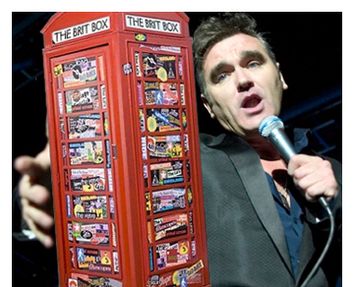
“The Brit Box: U.K. Indie, Shoegaze, and Brit-Pop Gems of the Last Millennium” (Rhino) comes cutely packaged in a tall red telephone box, the kind you’ve seen in countless old movies set in England. Of course, in the U.K., the classic public phone box — somber scarlet paint, Her Majesty’s crown insignia at the top — was long ago replaced with a sleeker, modern-looking model. Besides, everyone uses cellphones now. But the out-of-date packaging suits “The Brit Box’s” sales pitch to a T. The idea here is that Great Britain is quaint but classy. Just as Fortnum & Mason continues to offer afternoon tea long after the custom of eating scones and cucumber sandwiches died out among the populace at large, British bands can always be relied on to serve up the country’s traditional pop values — wordsmith wit, shapely tunes, English charm — just as they did back in those fab 1960s.

In America, this shtick appeals to the same sort of Anglophiles who fasten on the British accents in Masterpiece Theatre and PBS’s other imported programming (the dowdy costume dramas, lame sitcoms, and sleuth shows about crime-solving antique dealers and spinsters) as a seal of quality. Rock Anglophilia’s constituency is a younger subset of the exact same demographic (college-educated upper middle class), and it’s based around an identical syndrome: the equating of England with a superior level of refinement and literacy.

For a certain kind of American, being into pop music from the U.K. has long been a way to express a sense of being different from everybody else. The seeds of this dissident taste might germinate with hearing Depeche Mode or Morrissey on a modern rock station, then bloom through discovering college radio and being initiated in Anglo esoterica like XTC or Robyn Hitchcock, and finally blossom when the budding Anglophile starts picking up pricey import copies of British pop papers and magazines. English music weeklies like the NME have inducted American Anglophiles into a fabulous world where bands talk better (reared on the music press, they know how to give good interview) and look more stylish than their American indie equivalents. The British groups usually contain at least one or two pretty boys — pale, thin, with really good hair, and maybe even eyeliner. Anglo androgyny appeals to young women and men who prefer their pop fantasy object to be sensitive and delicate — not a buff hunk. Even U.K. frontmen who are considered macho louts in their homeland exude an aura of androgyny by association over here.

Aimed squarely at American Anglophiles, “The Brit Box” covers the years 1984 to 1999, a seemingly arbitrary time span. What actually distinguishes those 16 years as a separate period from the epoch of British guitar-based music that preceded it? Perhaps it’s simply the fact that, notwithstanding its cult following in this country, almost all of the music on this box failed commercially in America. From the early ’60s to the early ’80s, what was big in Britain was, with a precious few exceptions, equally big in America: Beatles, Stones, Kinks, Who, Cream, Sabbath, Zeppelin, Rod Stewart. The Transatlantic traffic faltered slightly circa punk, but resumed in force with the Police and the Clash, followed by the synth-wielding, MTV-friendly androgynes of the early ’80s, the so-called second British invasion led by Duran Duran. With a few exceptions like the Cure and Oasis, what this Rhino box documents is the British non-invasion.

Of course, “The Brit Box” doesn’t attempt to encompass all the music that came out of the U.K. between 1984 and 1999. Plenty of English acts enjoyed substantial success in the United States. Tellingly, though, almost all of them –from George Michael to Soul II Soul, Simply Red to Stereo MCs — were deeply steeped in black American music. Essentially, they represented the continuation of what the British Invaders of the ’60s started, the great English love affair with cutting-edge black music: back then, blues and soul; by the ’80s and ’90s, funk, disco, hip-hop, house. However much they expanded and mutated their black sources, every major group of the British ’60s was at heart a dance band, with years of playing in sweaty clubs to teenagers looking to shake their stuff. Anglophiles would probably argue that British indie rock of the ’80s and ’90s failed to find success here because of the conservatism of American radio. But maybe the failure of U.K. indie, shoegaze and Britpop comes down to these genres’ gradual divorce from black music. Fetishizing the guitar sounds of the ’60s, they forgot about its rhythmic base and impulse toward sonic hybridity.

The Smiths, who kick off “The Brit Box” with their 1984 song “How Soon Is Now,” were a critical force in the drift away from the dance floor and black influences. Morrissey’s voice sounded “pale” and “pure” in a way that was almost, but not quite, folky; Johnny Marr’s guitar harked back to Byrdsy jangle rather than Chic’s choppy funk. In 1986, the Smiths spelled out their opposition to mainstream dance-pop with their single “Panic,” whose chorus demanded “burn down the disco/ hang the blessed deejay.” For Morrissey, the DJ’s crime was lyrical vapidity and complacent hedonism: “the music that they constantly play/ says nothing to me about my life.” His interview comments of the time — he described hip-hop’s presence in the charts as “a stench,” dismissed reggae as “vile” and derided R&B’s gross caricature of sexuality — prompted some critical supporters of soul music and club culture to argue that his remarks exposed a subtle form of racism in the indie music scene. Bizarrely, this ancient controversy flared back to life last month when Morrissey, interviewed by NME, blamed the erosion of the England he knew and loved as a child in the ’60s on immigration, even using the classic nativist metaphor of a culture being swamped. During the resulting furor, Morrissey insisted (as he has before) on his opposition to racism, which he described as “silly.”

This apparent contradiction — being anti-racist but steadfastly avoiding any contact with black music culture — is integral to indie rock. Indie-rock fans, with their high quotient of college students, may actually be more likely to have progressive political opinions than regular folks. But there is a blinkered parochialism to indie rock taste whose net result ends up looking an awful lot like self-segregation. One of the dirty secrets of the U.K. music press was the fact that sales figures and market research both showed that issues featuring black artists on the cover sold poorly. The charitable interpretation of this is that the regular readership assumed that these were performers in hip-hop or R&B, genres they either had no curiosity about or actively despised.

During much of the period covered by “The Brit Box,” I worked as a writer on the weekly music paper Melody Maker, witnessing the rise of most of the bands featured herein. With a handful of exceptions — the epoch-defining Smiths and Stone Roses, the dizzyingly innovative My Bloody Valentine, the witty, charismatic Pulp — my attention was focused on other music going on during this period: rock’s experimental fringe, hip-hop, dance culture and electronic music. When it came to guitars, I found the stuff coming out of America far more appealing, on the whole — wilder-sounding, better played, often coupled with a deranged and scabrous sense of humor — as purveyed by bands like Hüsker Dü, Big Black, Sonic Youth, Dinosaur Jr, Butthole Surfers and Pixies. There was a palpable difference in quality and substance between American and British rock, audible on the basic level of rocking — something few U.K. guitar bands seemed able to pull off during the ’80s.

That’s one reason why the bands corralled on “The Brit Box” stumbled when they reached the shores of America. Time and again, U.K. bands used to playing in huge venues to fervent crowds would arrive here to face the humiliation of starting all over again at small clubs to audiences with a high proportion of skeptics. Having risen so effortlessly in their homeland, the English groups would flinch at the prospect of slogging around the United States the way American bands did, at putting in the work required to make it here.

There was another reason for Brit bands’ not making a serious bid to conquer the American market, though. In the high-turnover, hothouse atmosphere of the U.K. scene, being out of the country and out of sight means out of mind. British music fans and British music papers love the idea of the local: Fans want bands they can go and see regularly, groups they can root for and support almost like a soccer team. What the music press readership in the U.K. has always wanted is a band that resembles itself, which means it’s got to be white, male, British. The band also needs to stick to the traditional format of songs plus electric guitars, and to lyrically offer a slightly heroicized version of the fan base’s dreams and fears. If you look at what the readerships of NME and Melody Maker voted for as best band over the last 30 years, it’s pretty much a straight line running from the Jam, Joy Division and Echo and the Bunnymen, through the Smiths, Oasis and Blur, right up to today’s Franz Ferdinand and Arctic Monkeys. Not an American accent, black face or pair of ovaries in the lot of them. And apart from Oasis, not a full-blown American success story among them either.

* * * *

Open “The Brit Box” and you’ll find four discs embedded in two CD cases, each designed to look like an ashtray. (Smoking seems to be a crucial element of Britpop’s semiotics, from Oasis’ “Cigarettes and Alchohol” to Arctic Monkeys’ debut album with its cover photo of a lad smoking a “fag” down to its nub.) The phone box theme of fusty English charm resumes on the CD inserts, which depict baked beans, Licorice Allsorts, used teabags and a Beefeater Doll.

Pop Disc 1 into the CD player and it becomes apparent that, circa 1984, British indie rock averted its face from the present and looked back to the ’60s. Alongside the Smiths, the prime instigator of this drastic shift was the Jesus and Mary Chain. By the time of 1987′s “April Skies,” included on “The Brit Box,” the band had stripped away their sole claim to radicalism — that trademark wall-of-noise — to reveal classically contoured songs constructed in homage to a canon of renegade rock: the Stones, the Stooges, the Velvets, the Beach Boys.

Starting out at roughly the same time as J&MC but slower to achieve renown, Spacemen 3 engaged in a similar retreat to rock’s archives. Their “Walkin’ With Jesus” is little more than a guided tour of their record collection. The band consciously saw their music as a gesture of defiance against the ’80s: In the box set’s booklet, the band’s Jason Pierce declares, “We sat the ’80s out, really. We weren’t in tune with what was going on musically or politically at all.” Spacemen 3′s mission statement was “taking drugs to make music to take drugs to.” But on a popular level, the true revolution in late-’80s British music didn’t take the form of Detroit 1969 revivalism. It was rave culture, fueled by ecstasy and soundtracked by the machine beats of house and techno, a music movement oriented around looking-to-the-’90s futurism rather than pining-for-the-’60s nostalgia.

Some of the J&MC and Spacemen’s 3 indie fellow-travelers realized this and tried to board the rave train. The Stone Roses already had one of the few really groovy British drummers around, audible in the spring-heeled bounce of the otherwise ’60s-sounding “She Bangs the Drum” (their contribution to “The Brit Box”). But as their hometown, Manchester, became the north of England’s dance mecca, the Roses made a concerted attempt to assimilate house music’s hypno-feel in their biggest hit, “Fool’s Gold.” Happy Mondays, also from “Madchester,” started out resembling a funked-up Velvet Underground. Then they hooked up with U.K. house producers for songs like the one included here, “Step On” — but their lumpen groove generally sounded more club-footed than club-friendly. Just about the funkiest track on all four discs of “The Brit Box” is “Loaded” by Primal Scream, the group fronted and led by Jesus and Mary Chain’s original drummer, Bobby Gillespie. But that’s because it’s a remix by DJ-producer Andy Weatherall, who transformed what was originally a bluesy ballad into a house music update of “Sympathy for the Devil.”

“Swing” and “feel” are in short supply on “The Brit Box.” This is partly due to the lingering influence of punk, which treated virtuosity as something to be avoided. British rock once boasted many of the finest drummers in the world — Keith Moon, John Bonham, Charlie Watts, Ringo Starr, Ginger Baker … the list goes on. But it’s hard to imagine anyone other than die-hard fans being able to name the drummers in the vast majority of bands on “The Brit Box.” Rarely contributing anything to the music beyond marking time, the drummers mostly seem to be there because that’s what rock bands are supposed to have. Anybody in Britain who really cares about beats and has a feel for the construction of that commonplace miracle, a groove, has long since gone to work in dance music or hip-hop.

In the absence of rhythmic verve, Britpop’s saving grace is melody. Perhaps the traditions of Tin Pan Alley and the music hall have always been stronger in the United Kingdom. After all, we got rhythm secondhand, as an American import, starting with jazz. Rock ‘n’ roll and rhythm and blues impacted the U.K. so hard in the ’50s and ’60s that the result was a perfect balance between beat and song. But with some of the lesser output of ’60s England — all those Merseybeat groups like Freddie and the Dreamers, bands like Herman’s Hermits and the Hollies — you can hear a native proclivity for over-melodiousness, the musical equivalent to the national sweet tooth. You can hear the same weakness — an eager-to-please mellifluousness of tone and tune — in a lot of the Britpop on this box. That said, melodic jewels are scattered across these four discs, like The La’s “There She Goes,” or “Here’s Where the Story Ends” by the Sundays, whose singer Harriet Wheeler fused Morrissey’s plaintiveness with the enraptured grace of the Cocteau Twins’ Liz Frazer. Frazer herself appears twice on the first disc, on the Cocteaus’ slightly froufrou “Lorelei,” and then as the backing vocalist on Felt’s “Primitive Painters,” a transcendent anthem of defiant apathy.

Felt’s “defeatist attitude” was an advance glimpse of the shoegaze scene, aka “dreampop.” The term “shoegazer” originated from these bands’ withdrawn aura onstage. Guitarists, especially, seemed to spend the whole gig staring at the floor. There was a prosaic reason for this: The billowing amorphousness of shoegaze’s guitar sound relied heavily on foot-controlled pedal effects. But the shoegaze bands’ seeming inability to meet their audience’s gaze captured the essence of this neo-psychedelic genre, which involved escaping from a troubled world into a narcoleptic dream-state. The sound was pioneered by My Bloody Valentine, who just last month announced their return to activity after 15 years’ hibernation and whose legendary stature makes them something of the Pitchfork generation’s own Velvet Underground. Their string of classic EPs and two masterpiece albums dwarfed the efforts of their progeny. But the most successful shoegaze band was Ride, regular visitors to the U.K. Top 20 who prospered seemingly for their very mediocrity.

I enjoyed shoegaze quite a bit at the time, but 15 years on, listening to this stuff feels less like bliss-out and more like being lost in a listless mist. Rather than dreampop, Lush’s “For Love” resembles a song the band dreamed but could only faintly recall upon waking: bass inaudible, drums soft as snowflakes, voice partially erased, guitars like a watercolor with too much water. The anemia deepens with the sickly Chapterhouse and the perfectly formulaic Curve. Hardly forceful presences to begin with, shoegaze vocalists were further subsumed by the genre’s standard production style, which buried their voices beneath layered guitars.

With its aesthetic of surrender, shoegaze’s dream-your-life-away resignation mapped neatly onto the U.K.’s political situation. The Tories, under Thatcher and Major, pursued youth-unfriendly policies like phasing out grants to university students, and shifting the local tax burden from property owners to young renters. There’s a curious aptness, too, to the way that so many young people during the ’80s and early ’90s went into a kind of cultural exile by hiding in “the ’60s” (the music of Byrds, Velvets, et al.) just as Thatcher and her allies were steadily abolishing the gains of that decade.

Eventually the U.K. scene snapped out of the dream haze with a concerted move toward punchy tunes, clarity of production, and singers who reveled in the spotlight. First came the punk recyclers (amphetamine-gobblers These Animal Men, protest poets the Manic Street Preachers). Next up was the glam redux of Suede, massive for a couple of years and deservingly so, although “Metal Mickey,” their “Brit Box” offering, is one of their flimsier singles. All this was just preparing the way for Oasis, though. When “Live Forever” rips out the speakers halfway through Disc 3, you can see why they had such an impact: What a relief to hear a voice that snarls, that takes the tune by the scruff of its neck. Oasis understood rock as a matter of attitude and vocal timbre (Liam Gallagher’s insolence) combined with guitar sound (brother Noel’s distorted tone, gnarly enough to sound classically rock but stopping well short of shoegazey miasma). The idea of rock as a rhythmically dynamic music was simply forgotten. Oasis’ drummer never did much more than trundle unobtrusively beneath the singalong; Liam’s voice dominated the mix.

The British scene let out a massive sigh of relief: After shoegaze, Oasis had redirected indie rock back to the eternal verities of songs. Thrilling as “Live Forever” and the group’s five or six other killer tunes are, though, one shouldn’t lose sight of the Gallagher brothers as culture criminals — the guys who nearly killed for good the idea of rock as a genre that was forward-looking and experimental. (That notion made a slight recovery with Radiohead, a band who the Gallaghers, revealingly, find an almost personal affront.) Oasis paved the way for a grim phase of U.K. pop dominated by what some wag nicknamed “Dadrock” — bands like Ocean Colour Scene, Cast, Kula Shaker and Dodgy. It was Dadrock because it could be (and was) enjoyed equally by kids in their teens and their parents, who had been in their teens or 20s back in the ’60s, whence these groups derived all their ideas. But when you compare Britpop with its ’60s source, it’s striking how uninspired most of the later bands sound as musicians; how little flair or aspiration is audible on the level of the playing. Mostly what you find on Discs 3 and 4 of “The Brit Box” is sustained competence.

There are diamonds in the dung heap, of course: “Stutter,” Elastica’s homage to 1978, the year of Buzzcocks and Wire; Supergrass’ T-Rexy youth anthem “Alright”; the Roxy Music-influenced tumult of Pulp’s “Common People.” These tracks, from the prime period of Britpop (1994-96), capture the optimism and confidence of that moment when everyone in Britain knew that the Conservatives were going to get kicked out by Tony Blair’s New Labour at the next general election. Blair courted the leading Britpop bands both before and after that May 1997 victory, making the revitalized U.K. pop scene a central part of his “Cool Britannia” push to rebrand the nation as modern and vibrant. He praised Alan McGee of Creation, Oasis’ record label, as a shining example of New Labour-style entrepreneurialism, and famously invited McGee and Noel Gallagher to a reception at 10 Downing Street.

“Cool Britannia” was a replay of the ’60s “London Swings” scenario. Egos inflated by their importance in the scheme of things (and by vast quantities of cocaine), Oasis then made the bloated “Be Here Now,” whose lead single — “D’you Know What I Mean” — attempted to capture the weightiness of the historical moment with its incoherent chorus “all my people right here right now/ you know what I mean.”

There were much more interesting things going on in the U.K. during this period, which “The Brit Box” acknowledges with tracks from Saint Etienne, Stereolab and Cornershop. Saint Etienne presents a far more attractive version of pop Englishness than the rehashed Kinks/Beatles/Jam of most Britpop. In their hands, this was a national identity open to outside influences: house music from Chicago and Rimini; soft “lover’s rock” reggae; French pop of the ’60s. A similar cool, esoteric mix informed Stereolab’s music, which blended trance-inducing pulse with incongruously non-lulling lyrics. On “Wow and Flutter” (included here) singer Laetitia Sadier coos of capitalism, “it’s not imperishable, it’s not eternal/ Oh yes it will fall.” Cornershop were another politically aware bunch of smartypants, whose lineup includes two of the handful of non-white musicians on “The Brit Box,” brothers Tjinder and Avtar Singh — represented here by “Brimful of Asha,” an oblique paean to Bollywood singer Asha Bosle.

These groups are exceptions to the post-Oasis rule. As we enter the last three years of the ’90s with Disc 4, it’s like every band is competing for the attention of buskers across the land. The musical backing is just that — a mere backdrop for the voices, which are clear, soaring and prominently exposed in a mix that kicks everything else out of the spotlight. One reason for this is that for indie rock fans on both sides of the Atlantic, the raison d’être of the genre is clever lyrics. And in indie, “clever” often equates with arch turns of phrase or droll allusions to popular culture. Hence the “X Files”-referencing love song “Mulder and Scully” by Catatonia, a Welsh band whose 1998 album International Velvet (another pop culture reference) went triple platinum in the U.K. Catatonia singer Cerys Matthews was once unkindly but indelibly and accurately described as sounding like “a chicken laying an egg” by Neil Hannon of the Divine Comedy, whose own droller-than-thou “Brit Box” contribution, “Something for the Weekend,” was inspired by actress Kate Beckinsale.

Flourishes of “wit” such as these were scant compensation for Britpop’s sheer mundanity of sound as the decade’s end approached. Ash, Bluetones, Hurricane #1, Rialto, Gay Dad — there’s a reason you’ve never heard of these bands. For reasons unclear, “The Brit Box” stops short of venturing into the new millennium, when a new, spiky vigor reappeared in the form of Franz Ferdinand, the Libertines, Arctic Monkeys, Art Brut and the Klaxons. Fans of well-honed, observational wordplay didn’t need to deny themselves fully contemporary beats either, thanks to a new breed of British singer-rappers like Mike Skinner of the Streets, Lily Allen, Hot Chip and Lady Sovereign. Influenced by the rhythms and vocal stylings of ska, reggae, lover’s rock and dancehall, these performers showed how fertile and enduring the contribution of Jamaican music has been to British pop across the decades.

Racists in Britain used to chant “There Ain’t No Black in the Union Jack.” Draping themselves in this flag, Britpop artists inadvertently sealed themselves off from the invigorating stream of new ideas coming from black music in the ’80s and ’90s, a good proportion of them — genres like jungle and 2step — spawned on Britpop’s own doorstep. Cultivating their quintessential quaintness, clinging tight to a glorious and storied past, the British groups instead concentrated on appealing to patriots at home and Anglophiles abroad. But in the process they lost the world.

Continue Reading Close

Back to the future

Science fiction promised us a tomorrowland of jetpacks, Smell-O-Vision and male mammary implants. So what happened?

  • more
    • All Share Services

Back to the future

Staring out of my window in Manhattan’s East Village the other day, it struck me suddenly that the street scene below did not differ in any significant way from how it would have looked in 1967. Maybe even 1947. Oh, the design of automobiles has changed a bit, but combustion-engine-propelled ground-level vehicles are still how we get around, as opposed to flying cars or teleportation. Pedestrians trudge along sidewalks rather than swooshing along high-speed moving travelators. And even in hipster-friendly New York, most people’s clothes and hair don’t look especially outlandish. From the trusty traffic meters and sturdy blue mailboxes to the iconic yellow taxis and occasional cop on horseback, 21st century New York looks distressingly nonfuturistic. For a former science science fiction fanatic like me, this is brutally disappointing.

I’m not the only one who yearns for the future that never showed up. The frustration is widely felt and has been mounting for some time, gathering serious speed in the late ’90s when the really-ought-to-be-momentous new millennium loomed. Dates like “1999,” “2000″ and “2001″ set off special reverberations — not just for the science fiction fans among us but for plenty of regular folk too. Even now, when we should have grown blasé about living in the 21st century, the dates still have a faint futuroid tang, a poignant trace of what should have been. The obvious landmarks of tomorrow’s world never materialized: vacations to the moon, 900 miles per hour transatlantic trains hurtling through vacuum tunnels. But the absence is felt equally in the fabric of daily life, the way that the experience of cooking an egg or taking a shower hasn’t changed in our lifetime.

Nostalgia for the future, neostalgia — whatever you wanna call this peculiar unrequited feeling — is widespread enough to constitute a market. Enter Daniel H. Wilson’s “Where’s My Jetpack? A Guide to the Amazing Science Fiction Future That Never Arrived.” This paperback sometimes strikes a melancholy note: A passage on moon colonies, which the New York Times in 1969 predicted were a mere 20 years away, notes that “the centerpiece of Disney’s Tomorrowland attraction was the luxurious Moonliner spaceship. But a future that included giant glass moon domes never appeared. Tomorrowland was torn down.” Mostly, though, the book’s tone is petulant and impatient. The title itself, “Where’s My Jetpack?” makes you picture a science fiction nerd stamping his feet in a tantrum. Wilson strives to speak directly to your inner 12-year-old: hence the high-fructose corn-syrup-laced prose (“crazy-ass mad science” and, in a section on an underwater city, “sea-tastic”), the groan-inducing puns (in the chapter on lighter-than-air transport, “blimpin’ ain’t easy”), the puerile fantasy of using an invisibility suit to sneak into the women’s changing room.

A glib and flippant tone dominates “Where’s My Jetpack?” but I get the feeling a more serious book is struggling to extricate itself from Wilson’s arch and camp approach (something compounded by Richard Horne’s kitschy retrofuturist illustrations). The research is top-notch and fascinating. Some of the best material here entails a sort of archaeology of stillborn or prematurely abandoned futures. In the 1960s, for instance, concerted attempts were made to build living environments at the bottom of the ocean, in the form of the U.S. Navy’s Sealab program. But instead of aquadome cities nestling on the ocean floor and a massive exodus of pioneers emigrating to settle the briny depths, all that remains today of the dream is a solitary subaquatic hotel, the Jules Undersea Lodge, located just off Key Largo, Fla. Other science fiction staples that made a tantalizingly brief appearance decades ago but never caught on, for reasons either practical or cultural, include the jetpack (the energy required for blast-off generates dangerous levels of heat) and Smell-O-Vision. The latter idea was mooted fictionally in Aldous Huxley’s 1932 novel, “Brave New World,” in which the “feelies” stimulated one’s tactile and olfactory sense as well as sight and sound. The idea was actually attempted a couple of times in the early ’60s, but both times tanked in the marketplace.

Another classic futuristic idea made real is “cultured meat,” i.e., animal protein grown in the laboratory, where, Wilson reports, it is repeatedly stretched as a surrogate for physical exercise, in order to give it the texture of a living, active organism. This grotesque technology was memorably anticipated in Frederick Pohl and C.M. Kornbluth’s 1952 novel “The Space Merchants,” a corporate dystopia of the 21st century in which peon workers hack slices off a gigantic blob of animate but nonsentient poultry breast called Chicken Little. But in our nonfictional 21st century, the idea languishes in the laboratory thanks to consumer resistance. Our cultural biases reject cultured meat as gross, unnatural, an abomination. Indeed, popular taste is trending the opposite way, toward the organic, the uncaged, the nonprocessed.

In “Where’s My Jetpack?” Wilson frequently adopts a reassuring tone when examining a particular promised breakthrough that failed to materialize. Everything from the robot butler to 3-D television to the dinner-in-a-pill is presented as reasonably imminent (albeit likely to be way out of most folks’ price range). Coming down the pipeline real soon is the anti-sleeping pill: not a central nervous system stimulant like amphetamine, and therefore avoiding all the associated problems to do with abuse and paranoia, modafinil simply turns off the need for sleep (although you can bet that in itself this will generate side effects and mental disorders). Also on the horizon is the smart home, as imagined in another Pohl and Kornbluth novel, “Gladiator-at-Law” (1955). Disappointingly, though, rather than anticipating your moods with décor changes and keeping the fridge stocked with all your favorite delicacies, the intelligent domiciles of the near future will be extensions of the assisted-living facility: apartments kitted out with movement sensors that develop a feeling for their elderly inhabitants’ routines and send out alarm signals when, say, that regular hourly visit to the toilet isn’t made.

According to Wilson, NASA is working toward establishing a moon colony (though a rather minuscule one) within the next 13 years. Better still, the classic science fiction fantasy of the space elevator that carries us from the Earth’s surface 300 miles up to the threshold of outer space is already perfectly feasible, just prohibitively expensive. I would imagine the billion-dollar price tag for the miraculously strong cable the elevator glides up and down would pay for itself rather quickly, given that journeying into space (and as result the commercial exploitation of nonterrestrial mineral resources) would become approximately 100 times cheaper than the existing alternative, the space shuttle.

Wilson’s talk of space elevators and other grandiose inventions like solar mirrors or the fully enclosed city indicates how our expectations of the “futuristic” have undergone an insidious scaling down in recent decades. Mostly, “the future” seems to infiltrate our lives in a low-key, subtle fashion. In their own way, the miniaturization of communications technology (cellphones, BlackBerrys, etc.) and the compression of information (iPods, MP3s, YouTube, downloadable movies, etc.) are just as mind-blowing as the space stations and robots once pictured as the everyday scenery of 21st century life. Macro simply looks way more impressive than micro.

Sometimes it feels as if progress itself has actually slowed down, with the 1960s as the climax of a 20th century surge of innovation, and the decades that followed consisting of a weird mix of consolidation, stagnation and rollback. Certainly change in the first half of the 20th century seemed to manifest itself in the most dramatic and hubristic manner. It was an era of massive feats of centralized planning and public investment: huge dams; five-year plans of accelerated industrialization; gigantic state-administered projects of rural electrification, freeway construction and poverty banishment. Science fiction writers who grew up with this kind of thing (including the darker side of “public works” — the mobilization of entire populations and economies for war, the Soviet collectivization of peasant farms that resulted in massive famine, genocide) naturally imagined that change would continue to unfold in this dynamic and grandiose fashion. So they foresaw things like the emergence of cities enclosed inside giant skyscrapers and grain harvested by combines the size of small ships voyaging across vast prairies.

It’s no coincidence, too, that sci-fi’s nonfiction cousin, futurology — or future studies, as it is now more commonly known — emerged as a discipline during this era of the activist nation-state. World War II ratcheted up popular belief and trust in the exercise of judiciously applied might by centralized government, and the post-1946 world offered plenty of opportunities for benevolent state power to be flexed, from the challenges of postwar reconstruction to the development of the newly independent third-world nations that emerged out of the British Empire.

The 1950s and 1960s were characterized by future-mindedness, an ethos of foresight that attempted not just to identify probable outcomes but to steer reality toward preferred ones. It’s no coincidence that those decades were the boom years for both sci-fi and a spirit of neophilia in the culture generally — the streamlined and shiny aesthetic of modernity that embraced plastics, man-made fabrics and glistening chrome as the true materials of the New Frontier. It’s the era that produced “The Jetsons,” probably the single prime source of many of the tomorrowland clichés that haunt the collective memory — personal rocket cars parked in the front drive, food pills, videophones, robo-dogs — and that subsequently became a cue for retrofuturist camp.

Today we seem to have trouble picturing the future, except in cataclysmic terms or as the present gone worse (“Children of Men”). Our inability to generate positive and alluring images of tomorrow’s world has been accompanied by the fading prominence of futurology as a form of popular nonfiction. It carries on as an academic discipline, as research and speculation conducted by think tanks and government-funded bodies. But there are no modern equivalents of Buckminster Fuller or Alvin Toffler. The latter, probably still the most famous futurologist in the world, warned in his 1970 bestseller “Future Shock” that change was moving too fast for ordinary citizens’ nervous systems and adaptive mechanisms to cope with; 1980′s “The Third Wave” sounded a more positive note about the democratic possibilities of technology. But Toffler was just the most visible exponent of a bustling paperback subgenre of “popular thought.” I recall getting one such fat paperback for my 16th birthday, a book predicting all kinds of marvels, such as the resurgence of lighter-than-air travel, which would fill the skies with giant freight-carrying balloons and the aerial equivalent of ocean cruise liners transporting people across the seas and continents in leisurely fashion.

Some of the 1950s and 1960s anticipation and confidence in the future had worn off by the ’70s: Ecological anxieties manifested in everything from Neil Young’s “After the Goldrush” to the movie “Silent Running,” while science fiction writers like John Brunner and Harry Harrison imagined grim and gritty realistic early 21st century scenarios of overpopulation, pollution and fuel crises in novels like “Stand on Zanzibar” and “Make Room! Make Room!” (the latter adapted into the far inferior movie “Soylent Green”). But the 1970s still contained a strong current of popular futurism, reflected in the success of magazines like Omni and in the popular music of the day, the pioneering electronic sounds of Kraftwerk, Jean-Michel Jarre and Donna Summer producer Giorgio Moroder. It was a conflicted decade, though, with nostalgia gradually becoming a more dominant force (“Happy Days,” “Grease,” ’20s chic). Even science fiction itself began to regress, following the lead of “Star Wars” by abandoning the sophistication of the 1960s “New Wave” of sci-fi (with its explorations of “inner space”) and reverting to the swashbuckling space fantasies of the genre’s pulpy early days.

In the ’80s, thinking about the future in nonnegative terms seemed to become almost impossible. Yesteryear seemed more attractive: Postmodernism and retro recycling ruled popular culture, while politically the presiding spirits of the era, Margaret Thatcher and Ronald Reagan, were dedicated to restoration of an older order, to rolling back the gains of the abhorred ’60s. Futurology’s profile waned (can you name anything Toffler wrote after 1980?) and the bestsellers in the “popular thought” tended to be jeremiads and “Where did we go wrong?” investigations like Neil Postman’s “Amusing Ourselves to Death” (1985) and Allan Bloom’s “The Closing of the American Mind” (1987).

The ’90s, however, saw a slight resurgence of futurism, driven by the information technology boom, theorized by magazines like Wired and Mondo 2000, soundtracked by another wave of electronic music (the techno-tronica rave-olution). While some of the new breed of futurologists were classic gee-whiz technology types like Kevin Kelly, others were “zippies,” hippies sans any Luddite technophobia or back-to-the-land nostalgia, people like Jaron Lanier and Ray Kurzweil. All panaceas and marvels, the talk could get pretty wacky: nanotechnology, virtual reality, trans-humanism. Kurzweil preached the notion that the law of accelerating returns was propelling us at breakneck speed toward a singularity: Fueled by cross-catalyzing innovations, the exponential curve of progress will inevitably, sooner rather than later, hit vertical, resulting in a rupture in human history, most likely entailing sentient machines, the dis-incarnation of human intelligence, immortality. Basically the rapture, with technological accouterments. Some of Kurzweil’s predictions were more prosaic: By the middle of the 21st century he imagined computers becoming so intelligent they could be genuinely musical, which for him translated as being able to jam with human guitarists, Jerry Garcia/Carlos Santana-style.

After the info-tech boom’s bust and 9/11, we haven’t heard as much from these digi-prophets. All that Dow Jones-indexed mania has sagged to a sour calm. Futurology as a popular nonfiction genre has been largely reduced to short-term trend watching, cool hunting in the service of marketing people and brand makers. Take the recently published “The Next Now: Trends for the Future” by Marian Salzman and Ira Matathia. Even taking into consideration the authors’ modest ambition to look a mere five years ahead, this book’s bundle of predictions is frankly feeble. Almost without exception, everything Salzman and Matathia “prophesy” is already a highly visible and well-established trend: wikis, blogging, celebrity chefs, gastro-porn, branding, the privatization of space, overwork/sleep deprivation, the prolongation of adolescence into the ’30s and beyond, online dating, an aging population … The near future, apparently, will just consist of more of the exact same.

Then again, perhaps sociocultural and political prediction is simply a mug’s game. In the 1970s, no one would or could have imagined that the dominant form of pop music of the last two decades of the 20th century would be rhythmatized boasts and threats delivered over beats; few would have foreseen the emergence of reality TV as the most popular entertainment format. On the political front, the annals of sci-fi are littered with dystopian soothsayings that now look laughably off-base, from Anthony Burgess’ “1985,” a 1978 novel about a trade-union-dominated U.K. of the near future in which the country is brought to a standstill on a weekly basis by general strikes, to Kingsley Amis’ 1980 novel “Russian Hide-and-Seek,” a vision of Britain 50 years after its conquest by the Soviets. “Where’s My Jetpack?” shrewdly sticks to science and technology. But this relentless focus on machines, gadgets and life-enhancing innovations means that Wilson never touches on that whole other aspect of the “unrequited future” — the dismay and disbelief felt by many who came of age in the ’60s and ’70s only to witness a drastic deceleration in the rate of social and cultural progress.

Perhaps the expectations of the 1960s, that era of rampant radicalisms, were hopelessly unrealistic. Still, if you grew up, like me, reading radical feminists like Shulamith Firestone (who argued in “The Dialectic of Sex” that female liberation would come only with the invention of an artificial womb that could unshackle women from the procreative function) or New Wave of science fiction authors like Thomas M. Disch (who in his novel “334″ imagined men being able to get mammary implants and breast-feed their offspring), scanning contemporary popular culture with its supermodel competitions, desperate housewives and scantily clad pop divas is acutely disheartening. And these are about gender, just one zone of stalled progress or outright regression. Race, gay rights, drugs, socioeconomic equality, religion — on just about every front, things either are not nearly as advanced as we’d have once expected or have actually gone into reverse. Forget the goddamn jetpack: It’s the sociocultural version of the “amazing future that never arrived” that really warrants our anguish.

Continue Reading Close