Simon Winchester

Romance in Romania

After the grim plains of Georgia and Ukraine, a kiss disappears in a Rolls Royce.

  • more
    • All Share Services

It was as I was starting to climb the stairs to the bedroom that I first heard her voice. Later she told me she had been calling for quite a while, but I, what with having to go over the details of the next day’s drive to Budapest, must have been distracted. It took some time before I realized that Elena, as her name turned out to be, had been trying to attract my attention.

“Please stop!” she cried. “Just for a moment!”

She was standing behind the reception counter. When she saw that she had made contact, she put up a hand, palm out and fingers spread, and waved at me like a child, evidently relieved. Her face lit up with a thankful smile.

I have to admit I was taken with her from the start. She was very pretty, with short and glossy brown hair cut neatly to frame her face, a pert little retrousse nose, and a sprinkling of faint freckles on her cheeks. She couldn’t have been much over five feet tall, and so the massive old wooden reception desk that stood between us — and which had been built in the town’s more prosperous days, no doubt — rather blocked the rest of my view. But she seemed to be slender and trim. She wore a neat white blouse, aged but well washed, and she had twisted a bright pink cotton scarf round her neck, as if she might have been a Parisian.

Or might have wanted to be, more like. The whole effect was of a wholesome and dignified young girl from a rather poor family — but then who wasn’t poor, in those dying days of Communist Romania? — who would perhaps have liked to have gone to college or to live in another more contented country, but had had to take this hotel job instead. She was probably twenty, though the dark gypsy faces of these young Carpathian girls could be deceptive, and she might have been fifteen, or perhaps even younger.

But I am getting ahead of myself. She hadn’t even spoken; I had no idea who she was, or what she wanted. Quite probably it was something administrative — hotel receptionists having only a limited menu of official interests — and probably to do with my bill. Only it wasn’t that at all. “I am Elena,” she said. “The boys are telling you have a wonderful car outside. A Rolls Royce? Is this true?” She smiled, hopefully.

- – - – - – - – - – - -

It had been in London three months before that I had first hatched the plan. I was organizing the last of a series of six journeys around Europe for an editor who thought that we Britons knew far too little about our continental neighbors. My remit was as broad as it could be: I could go wherever in Europe I wanted, and I was to take along a photographer. The only condition was that each of the six journeys should make use of a different form of transport, something that was perhaps appropriate to the country through which I traveled.

So, during the first two months or so of the assignment, I had contrived to sail a yacht across the Baltic, I had motorcycled from Munich to Turin, had walked for half a week from Cadiz to Gibraltar, had ridden a horse through the Black Forest and taken a train from Victoria Station in London to the Hotel Victoria in Brig, Switzerland. All that remained, come September, was to drive a car the whole way across — to drive from the westernmost point of northern Europe to the continent’s most easterly extension.

I rather roughly defined this as being a trip from the cliffs that overlooked Ushant in France to the point where the continent dividing line of the River Volga has its estuary, at Astrakan, in what was still then Soviet Russia. It would be a passage of 4,000 miles or so, slicing neatly across the Iron Curtain from the Loire to the Caspian: in all ways, an admirable expedition.

At first I had supposed that my own car, a perfectly pleasant Volvo, would prove more than up to the task. But one afternoon, when I was perhaps emboldened by a long lunch with a couple of scheming Fleet Street types, I had another idea altogether: I thought I might ask Rolls Royce if they could lend a hand. Taking such transport would change a merely admirable expedition into something with dash and style. I dialed the number of the firm’s headquarters, and asked if it might be possible.

A man in public relations said he would have to think about it. He rang back 10 minutes later — in suspiciously double-quick time, I thought. I assumed it was an immediate rejection. But it was quite the opposite. The marketing people had apparently thought it was a nifty idea. He had, he said, a brand new Silver Spirit. It was in ocean blue, and it had white upholstery. It was due off the assembly line in two days’ time. It was a canceled order. The production manager had said I could borrow it for three months. I had merely to promise to try to look after it. Would a Spirit — that’s how one apparently refers to Rolls Royces, by the second name of the mark — be acceptable?

I put my hand over the mouthpiece. White upholstery? I mouthed to the photographer. White? He slapped me with a folded newspaper. Of course, he said. Of course we’ll take it, I said to the man up in Crewe. Great, he replied. Come up by train and pick the car up tomorrow. After we give you lunch.

- – - – - – - – - – - -

By the time I met little Elena, the ocean blue marvel was well on her way home. The photographer and I had swept across 6,000 flawlessly comfortable miles together in it. We had duly reached the banks of the Volga, had taken photographs showing that we had done so, had collected a rag-bag of impressions about Europe that we thought might be useful for the piece and we had turned around to retrace our passages back to France.

We had driven through the grim plains of Georgia and Ukraine, and the night before our brief encounter we had crossed the frontier between the Soviet Union and Romania — leaving the gray land of Brezhnev for what seemed, by contrast (for what did we know then?) the genial invigilation of Ceaucescu.

At the frontier it didn’t appear as though we were passing from one totalitarian state to another: It was more like escaping from prison to freedom. The Soviet border guards had taken a remarkable six hours to clear us. For a while the dignity of the Spirit had seemed in danger of serious compromise, as she was taken off to a lead-lined hut and X-rayed, to make sure we had hidden neither icons nor gold — nor escapees — in any of her secret compartments. When we passed out of the sight of barbed wire and the searchlights and the watchtowers, we breathed a deep sigh of relief. Romania by contrast was a Latin paradise, it seemed: Everyone appeared so happy, and looked so handsome.

The little town where we spent our first night was called Cimpulung-Moldevenesch — a grubby and not very attractive home to 20,000 or so souls, a place tucked untidily in a fold of the hills beside a fast-flowing river. There was only one decent hotel — the Castle, I think it was called — and it had two clean rooms and a reasonable restaurant, and that night Patrick (the photographer) and I ate rabbit pie and drank apricot brandy.

The great car was parked outside, at the back, and as seemed to have become a tradition on the journey, a small crowd gathered outside it during the evening, and — as also seemed a custom — a couple of young boys volunteered to wash it for us. It was as though people just wanted to be able to touch the car, to stroke her gleaming flanks, and to have their pictures taken alongside her.

This was early September, and the Carpathians must have been tucked into the western edge of a time zone because it stayed light long into the evening, and the dusk was a long and lazy thing. Patrick was tired, and at 10 or so, even though there was still a purple gloaming outside, he went up to bed. I was left alone, and so I hung around in the bar. I spent a while talking to an elderly doctor who had once been to England; and then, at about eleven, I decided to go up to bed as well. It was as I was about to go up that Elena called to me.

Yes, I said, it was entirely true that we have a fine motor car outside. You haven’t seen her yet? Why not have a look now? I’ll show you around. Perhaps I wouldn’t have said this had Elena been a homely sort. But she seemed so pleased, and she skipped with delight as she cleaned up her desk, and I knew that what lay ahead was going to be fun.

She raced out into the lobby, called out her goodnights to her colleagues, and half-ran down the stairs, beckoning to me as she did so. She was wearing a very short skirt, and it fluttered in the evening breeze as she tripped her way down the stairs, and more so as she ran to the car and stood, breathing hard, beside it. “My heavens!” she said, running her fingers over the cold blue metal. “This is just — so beautiful. I have never seen a car so lovely.” She looked up at me, right into my eyes, and smiled.

“What is the story? Why you have it?”

There was a magnificently fatal charm about her, and her directness. I was quite lost to her. “Get in,” I said. “Why not come for a ride?”

- – - – - – - – - – - -

It goes without saying that there is something inescapably special about riding in a Rolls Royce. The solid thunk of the closing doors. The cathedral silence before the engine fires. The cold softness of the leather beneath your thighs. The gleam of the polished walnut. I felt all this once again, and I am quite sure Elena did. I watched her from the corner of my eyes as she settled herself onto the passenger seat, tossed her hair back, straightened her skirt, made herself as respectable as the car demanded.

I started the engine, and we purred away from the hotel. Elena gave directions — I wanted to head up into the hills, away from the down-at-heel nastiness of the town. I swung the car this way and that through the narrow streets. Passersby looked at us, open-mouthed.

Steadily the houses thinned, the town fell away. Soon there were fields, and then foothills, and after five minutes or so we found ourselves climbing upwards, on a narrow road that ran up the ridge. There was a river to the right, and once we were above the valley haze, the moon shone down from a clear evening sky, and the stream flashed silver among the trees. In the distance I could see round mountain tops, capped by a dusting of early frost. Some evening stars were twinkling in the east.

The car sped quite effortlessly up the road, more than two tons of luxury and comfort being hauled up the hillside by the hushed engine. Elena was quiet too — gazing at the panorama, taking some kind of pleasure, I felt sure, in being here. She nestled down into the seat. Once I caught her stealing a glance at me. She grinned, impishly.

The gradient slackened, and then we were at the top of the pass. This was as far as we were going. I stopped the car, then turned her around so we were facing the way we had come. It was perfectly quiet. The moon was full, and down below the lights of the town pierced the valley gloom. We sat there together for a few moments. I looked at her: She seemed to be breathing hard, her small breasts rising and falling under her dress. She looked wonderful.

But then I put my foot on the accelerator, and we swept off downhill again. I turned on the sound system, and punched the stereo button. A sudden flood of music swept through the car. It was what Patrick had been playing a few hours before, the theme from “Chariots of Fire.” It was powerful, seductive, perfect for the moment, and it seemed to bear us along as we sped down towards the town. Elena reached out and clutched my hand, squeezing it hard, her fingernails digging into my palm.

And then it was all over. The road became flat, and better paved, and there were streetlights, and houses on either side. Soon there were buildings I recognized, and streets I knew from 30 minutes before, and soon I was in the square in front of the hotel, and then in the car park.

I slid the car into its place, switched off the music, doused the headlamps, turned the ignition key to off. The low roar of the engine stopped, and the car became cathedral-silent once again. I turned to Elena.

“What did you think?” I asked.

For a moment she didn’t say anything. She had her hand up to her face.

I asked again. This time, after a while, she slowly turned her head towards me. I could see why she had hesitated. She had been crying.

“What’s the matter?” I asked. It seemed mysterious, odd. Surely she should have been happy.

She shook her head. I pulled a clean handkerchief from my pocket and gave it to her. She blew her nose noisily.

“I’m so sorry, so sorry,” she said. Her voice was husky with tears, but she was recovering. She paused, then spoke again.

“I’ll tell you why,” she went on.

“This has been an unbelievable experience for me. You must forgive my bad English. I never know anything like this.”

“Romania is very poor country, you must know. The people have nothing. There is no possibility for anyone. I work here at hotel — not a good job. Little money.”

“I live three miles away, in a village. I have a bicycle. But it is not working. Bad tire, something like that. So I walk, and then take trolley. It is so crowded. I never get to sit. It is very dirty, rusty, broken down.”

“Very few people have cars. Sometimes I get ride. But usually it is the same — walk, and then trolley-bus. Is not happy.”

“Now of course I know of the Rolls Royce car. Everyone knows of the car, I think. I have seen pictures. Film stars getting out of car, that kind of thing. But I never seen one. Never. Not possible to imagine.”

“And yet — see what happens. Two men come from foreign country, and they drive such a car into my town. It is the most exciting thing to happen here for years. All the boys in the hotel tell me about it. ‘Elena, Elena, you must see it,’ they say. They know I would like it. And then I do get to see it. You are so kind. You show the car to me, and then you let me ride with you.”

“Ride in the car! Can you imagine what it feels like for me? A Romanian girl like me, riding in a Rolls Royce? It is absolutely, absolutely, the last thing I can imagine. Is so wonderful. The silence, The soft leather. The music.”

“And then where we went — the moonlight, and the river like silver, and the stars. I get to see all this, and in such a car. And with such a nice man. I see only few foreigners. It is not easy to meet them.”

“I think — how can I say? — I think this for me was like flying. Yes, like flying. So impossible to imagine, something just to dream about. And so yes — that is what I feel. I have been flying, up in the air, soaring into the sky like a bird.”

She stopped, breathless. She looked up at me with large, sad eyes. There were tears, half drying, on her cheeks. I gazed down at her.

“But why — why are you sad?” I said. “If it was so wonderful — and I’m happy it was — why this?” I dabbed her cheek with the back of my finger, wiping a tear away. I waited.

“Oh yes — why I am so sad? Easy to answer. I think you know already. You must do this many times.

“I am sad because I think — tomorrow, you and your friend will go away from here, and tomorrow night you will be in another town, and there will be some other nice moment for you. A nice dinner, or a pretty girl, or a great mountain or some good thing. You will forget me, just like that. If you ever think of me, you will say, ‘Oh, that silly girl in that town in the mountains.’ That will be all. I will just be a silly girl. A small memory. And perhaps not even a memory. ”

“But for me — for me I shall never, never forget. For all of my life I will think of this. Me and you, alone in a Rolls Royce car, under the stars and the moon. Taking me away from this town, away from my normal life.”

“That is why I am sad. You will forget. I will never.”

And she reached over to me, and she kissed me very gently on the lips. And then in one swift moment she was out of the car, running to the stairs, back to the hotel and somehow back to her home.

I wondered if I might take her there. But I couldn’t find her. All that was left of her was a damp handkerchief, a salty taste on my lips and a faint warmth on the leather seat. And that was cooling fast, and soon it was as though she had never been there, and so I went to the stairs, and climbed alone, to bed.

Trying to stay afloat

Pitcairn Island, Britain's tiny colonial outpost founded by Bounty mutineers, is desperate for economic survival.

  • more
    • All Share Services

Trying to stay afloat

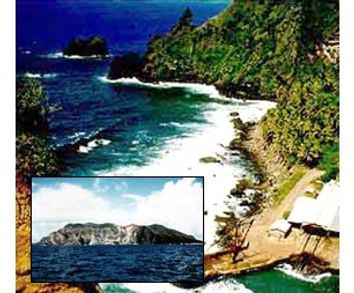
The 44 remaining inhabitants of Pitcairn Island — the tiny British colonial possession in the South Pacific, inhabited for the last two centuries by the descendants of the mutineers from the notorious HMS Bounty — are currently facing a crucial choice: Pay the full market price for the curious luxury of living lives of magnificent isolation or abandon their rocky mid-ocean home forever.

The British government, which has subsidized the minuscule possession almost as long as it’s been a colonial outpost, has in recent weeks made it clear to the islanders that it is no longer prepared to do so. At the beginning of this year, the authorities freed the basic necessities of island life — electricity and freight, mainly — from the price controls that made them affordable to an island people who have for years lived no more than a frugal subsistence.

But at the same time, Britain has also held out the vague promise that later this year it might begin work on building a tiny airstrip on the mid-oceanic outcrop. This would allow people who want to remain — and who will pay for the privilege — to have at least rudimentary contact with the outside world.

Currently it is only the occasional passing passenger liner and a thrice-annual cargo ship that deliver goods to the island. More often the passing ships that stop do so to take Pitcairners away. The ships take them to New Zealand and Australia for education, employment or, as emigrants, the chance of a better life. The population, which 50 years ago stood at more than 200, is now down to the smallest number that can properly be called a community. The remaining 44, defiant in their pride as British citizens and determined — at least until very recently — to cling to their precarious existence, have become one of the world’s more charming curiosities. They are the stuff of Trivial Pursuit questions and gawking from the few tourists who are rich or adventurous enough to make it here.

Pitcairn, first seen by Europeans in 1767, was settled in 1790 after the infamous mutiny against Capt. William Bligh — well known to fans of Charles Laughton and Marlon Brando, who starred in the two epic movies based on the story. Fletcher Christian, his eight fellow mutineers, six Tahitian men, 12 women and one child landed at Pitcairn in what is now Bounty Bay, burned the British man o’ war to the waterline and settled. They remained undiscovered for 17 years: Smoke from their cooking fires was eventually spotted by an American whaling vessel, whose skipper on his return home broadcast the news of the settlement to an incredulous and fascinated outside world.

The romance of the Pitcairners’ early story has never quite been matched by the realities of the islanders’ insufferably dreary lives. The island itself is hopelessly cut off from outside contact — it is 300 miles from the nearest inhabited atoll, it is well off the normal trans-Pacific shipping lanes, its coast is too rocky to allow many landings from most vessels able to heave-to offshore and its topography is too mountainous to allow enough agriculture for more than a few score inhabitants to live on. A century ago, with famine and privation depleting the colony’s numbers drastically, the entire population decamped to the former prison colony of Norfolk Island, midway between Australia and New Zealand. Today many of the lineal descendants of Fletcher Christian and his men continue to live there, comfortably and in some prosperity.

But at the turn of the century a determined minority of Pitcairners decided to return to their tiny island, and — with British colonial assistance — to try to eke out an existence. It is these people — most bearing the historic Bounty surnames of Christian, Young, Warren or Adams — who are at the center of today’s agonized discussions: Should they be encouraged to stay put on the island, and should the extraordinarily high cost of keeping them there be paid for by the British government? Or should the colony be closed down for good, and the people moved back to Norfolk, or elsewhere, with the tacit acceptance that some colonial anachronisms are simply too much of a luxury to afford?

Keeping Pitcairn going costs someone, somewhere, a great deal of money. Electricity costs about U.S. $1 per unit to generate. Each time a cargo ship stops, the island has to pay $3,000. Cargo costs several thousand dollars per ton to transport. A qualified nurse must be supplied to deal with medical problems that arise — and a real emergency, involving ships or perhaps helicopters, can mean unimaginable expenditure.

One young islander has to be trained (by an officer temporarily posted from London) to perform police, customs and immigration duties. A teacher has to offer the compulsory education to the half-dozen island youngsters. And once each child has reached high school age, he or she has to be shipped to New Zealand, taught and given board and lodging — all at the expense of the someone, somewhere, who pays the Pitcairn-bound taxes. And that, most certainly, is not the Pitcairn islanders, for the simple reason that they do not earn any appreciable money on which any taxes could be levied.

No one on the island works — beyond a half-dozen able-bodied men who occasionally repair the rutted mud roads or drive one of the community’s aluminum longboats out to greet passing ships. The only official island revenue comes from the sale of postage stamps; the only income for the islanders comes from the sale of carved Bounty models, sharks and T-shirts to sympathetic tourists. The former sum is barely sufficient to pay for the official running of the island; the latter allows the islanders to buy basic goods, beyond what they grow and farm.

Twice in recent years, schemes that might have proved their salvation have failed. The first came 10 years ago when an eccentric coal-mining millionaire named Smiley Ratliffe, from Frog Level, Va., offered to buy Henderson Island — part of the four-island colony, about 60 miles from Pitcairn — so that he could start a community of like-minded Virginians. For a 99-year lease, he offered the British government $5 million, a small airstrip on Henderson and a ferry that would allow Pitcairners easy access. For the first time, in other words, the islanders would have real contact with the outside world.

But the World Wildlife Fund objected, claiming that Henderson Island sported a flightless rail, a fruit-eating pigeon and a uniquely rare species of snail. The British agreed and turned down Ratliffe’s offer. To this day, the islanders smart at the memory: “So close to some kind of prosperity,” snorted Mavis Warren in an interview, “and then it all failed because of one wretched snail. What do we care about a snail, for heaven’s sake?”

The other scheme, which is still being pursued, is the drying of island-harvested fruit — mainly pineapple — and the marketing of it in New Zealand. The much-vaunted Bounty brand of Pitcairn fruit, which was supposedly grown in “the world’s cleanest air,” soon fell victim to rumors of contamination from the French nuclear testing site at Mururoa Atoll, 500 miles west, and well out of the track of the prevailing southeasterly trade winds. If that were not enough, the British government’s sudden removal of the island’s generous electricity subsidy now seems likely to doom the project altogether.

Tom Christian, the great-great-great-grandson of Fletcher Christian, and one of the most publicly determined to keep the tiny community together, said that by raising the electricity costs 150 percent, as has just been announced, “our one chance of making a go of things seems to have been condemned.”

“Now what is going to happen to us?” he asks. “If we cannot pay our way, if we cannot survive without help, and that help is taken away — what will happen to the community?”

The question is all the more pertinent now, considering the current discussions about building a 2,000-foot gravel airstrip on the eastern side of the island — a project that would be underwritten almost wholly by the British government. Soldiers, like the British Royal Engineers who built the island jetty 15 years ago, will probably construct the airfield as part of a training exercise. If built, it could provide a link with the outside for those willing to pay for the privilege of remaining on Pitcairn. There could be regular connections with Mangareva, 300 miles away in the French possession of the Gambier Group.

And it is this French connection that seems to offer — heresy though this will sound to most British imperialists — the best long-term solution for Pitcairn’s current dilemma. For if the airport were built, if connections to the Gambiers were established and if Pitcairn and its three sister islands were then to be handed over, sold or leased to the French colonial authorities, then some logic and perhaps cost-effectiveness would settle on this remote corner of the South Pacific. The French have vast territories in the region: For Paris to add four more tiny islands and a few thousand more square miles of sea to their possessions would be a trivial new responsibility.

The Pitcairn islanders, who have seen all too often in recent years the appearance of French warships and aircraft in their territorial water and airspace, have long been hostile to the idea of a French-run Pitcairn. But now that the choice is being offered to them so very bluntly — pay up or prepare to leave — the French choice may turn out to be the only one that makes sense and will permit this curious relic of mid-ocean history to survive at all.

Continue Reading Close

Paradise found

Our roving connoisseur uncovers the finest hotel on the planet -- in Patagonia.

  • more
    • All Share Services

Paradise found

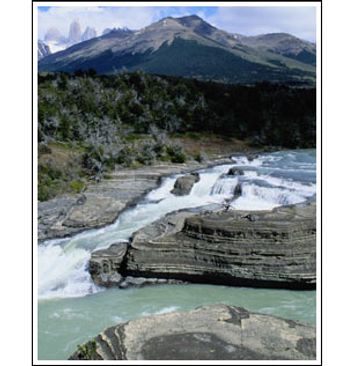
I have just been traveling in deepest, wildest Patagonia. While doing so I stumbled upon a small and simple earthly paradise, an Elysian place of beauty and happiness and peace in which I and my two companions found sublime contentment and serene enjoyment. Although I am more than happy to describe every detail of this place and how I found it, and although in the following paragraphs I will try to do justice to the place — it is a country hotel, in the valley of a river that is locally well known for its speckled brown trout — and so make it every bit as alluring for you as it has lately been for me, I will not, I am sorry to have to say, tell you its name, nor exactly where it lies.

I find in deciding to do so that I have become ensnared by the dilemma that all in this trade sooner or later confront: that what makes some places so very special is the public’s general ignorance of their existence. And so in all candor, and while it must be in wholesale conflict with whatever principles guide the odious business of travel writing, I have to declare that I simply do not want the general public, despite my warm regard for democracy and prosperity and freedom and such other excellent modern notions, to go there.

Not at all. I want Keep-Out notices posted for miles around, all suggestive finger-posts and hoardings and direction signs taken down, all telephones disconnected, a clutch of moats and ha-has dug, fences of barbed wire, chain-link and chain-mail put up and (since for unexplained reasons in Patagonia there are plenty nearby already) a few minefields strewn, to keep the unwary at bay.


Listen
to Simon Winchester talk about his Antarctic journey.

(Don’t have the RealPlayer 7? Download it for free.)


Not, however, that I want absolutely everyone to be ignorant of the place — if I wanted that, I wouldn’t be writing about it at all. But I am sure I’m not alone in thinking that the only people whom we want to turn up in those special places that we discover serendipitously, are people who are more or less — to put it bluntly — like us. The common herd may come and go as it pleases, but only our friends, or people whom we are sure we would like to be our friends, should come. The mines and the ha-has are for keeping out the herd — the rest we cordially invite, to enjoy what I and my two companions have lately found so transporting a delight.

So within the following sentences I have buried clues, a modest sufficiency of pointers that are neither too obscure nor too cryptic, from which I trust some substantial percentage who have not yet tired of this preamble may be able to work out most of the unstated elements of the story. The correct answer — the exact name of the place, which is to be found on any good map — can be e-mailed to my esteemed Salon editor,who will in turn send full details of the hotel to readers who, he and I feel sure, will by virtue of having taken the trouble to solve the little mystery be like-minded enough to go off and help keep this demi-paradise in business.

The hotel is in Patagonia, as I have mentioned. I first heard about it from a young Canadian whom I had met in the Antarctic. It was an old Scottish-built ranch, he said, set in splendid countryside; it had big old rooms and fireplaces and the best of food and wine, and there was plenty to do — fishing, riding, playing gaucho, pretending to be a Patagonian estancia-worker. He gave me directions: I was simply to drive up the main road from the docks, Route 9, until I spotted the 135-kilometer marker post. A few yards after that, just before a small bridge, there was a dirt road on the left. The estancia was half a mile down the road; it would be impossible to miss.

The day I set off north was classically Patagonian, with a huge sky of ragged clouds, a terrific westerly wind howling across the plains, the kind of temperature that zealots call bracing. The wind made controlling the car difficult at first, and each time we passed another vehicle, usually a vast mutton truck heading for the nearby frigorifico, the dust it kicked up bombarded our windshield like shrapnel — drivers in these parts go through two or three a year, and it is said that you cannot buy windshield insurance south of the 40th parallel.

Once past the outskirts of town, and past the airport and its weather-beaten warplane hangars, there was nothing — just mile upon mile of scrub, the small patches of vegetation straining wildly in the gale. The fields were bordered by endless miles of barbed wire, from which hung clumps of wool, and against which occasionally lay the skeleton of a dead animal. From time to time we passed a gaucho herding his sheep: He would be sitting casually on his horse, swathed in a woolen poncho, his guitar over his shoulder, his dogs running behind him to keep the animals in check.

Once in a while, too, there would be less familiar animals — the long-necked guanaco (a cousin to the llama, the vicuna and the alpaca, but which distinguishes itself by liking to spit, and is possessed of a deadly aim), the flightless rhea known as the nandu (which runs along the road in front of the car stepping high and flourishing its skirts like a can-can dancer), the bright Alice-in-Wonderland-pink flamingo and, soaring high above us and all-too-rarely, the Andean condor.

All of which excitement made us very nearly miss our exit at milepost 135. But we slewed the car dangerously across the gravel, rattled across the wooden sheep-barrier grid called a guardaganado and made for the grove of gnarled trees that surrounded and protected the farm and its outbuildings. We pulled up outside the main house — a large twin-gabled mansion, its sidings painted yellow, its tin roof red, its door solid, wooden, well-varnished. There was a flagpole outside on the lawn — a memorial, said a plaque, to the Scotsman Alexander Morrison Mackenzie, who had founded the estancia in 1891.

Old Mr. Mackenzie’s great-grandson, John Dick, runs the 20,000-acre farm now, with 5,000 head of sheep, a few hundred Angus cattle, a few hundred llamas. But his decision to turn the homestead into a hotel was forced upon him, he says, by the whims of politics. The entire farm had been expropriated during the 1970s, when on orders from the capital many of the larger estancias were handed over to the local campesinos.

But the caprices of Latin American politics — in this case, a coup d’etat and a nasty assassination a thousand miles away — allowed the former owners to buy it back 15 years ago. Thus it was that John Dick and his mother, Marietta, decided that in order to keep the old place standing and the farm running at a time when, for economic reasons, farms all over Patagonia were closing forever, they would have to move the family into one of the outbuildings and rent out the eight bedrooms of the old homestead to passing strangers.

And it was as passing strangers that we arrived — and stepped through the well-varnished door into a world that it seemed old Alexander Morrison Mackenzie had never left. The rooms have heavy Victorian furniture, all antimacassars and samplers and faded sepia pictures on the walls; there is an ancient Victrola that plays 1920s dance music, a Zenith radio with Hilversum and Schenectady on the dial, and from which antique music mysteriously (since there is no local radio station) also seeps. The bedrooms have huge old brass beds, English hunting scenes (slightly foxed) on the walls, baths with great brass taps and iron stains on the enamel.

In the kitchen is a wood-burning two-oven solid iron range, built in England in 1902 and shipped out at vast cost — and which baked the finest bread I have ever tasted and roasted the sweetest lamb we have ever known. In fact, it was as we were sitting later that night — it is still light in Patagonia until 11, at least — in front of a fire, drinking an old local cabernet and slicing lamb so tender it might have been made of butter, that we declared that we could recall no finer moment in any hotel, inn, hosteria, residencia, caravanserai, way-station or motel on the planet. And the slim guestbook, when we read through it, suggested much the same: that all who take the trouble to come, find the place utterly adorable and vow to come back, whatever the distance, however severe the cost.

But it was after dinner that our fate of eternal enslavement to this magic place was settled once and for all. The estancia’s gauchos had saddled up three horses — sheepskin on top of the leather, for added comfort — and had given us vague directions to the fastest, flattest plains. And so we set off, down over hills and then onto the flat where we spent an idyll riding like the wind — scaring up unwary sheep, raising flocks of ducks and pheasants into the air, splashing in the shallows of the great and (according to local lore and language) mysteriously sorrowful trout river that courses through the farm’s lowlands.

For an hour, as the sun inched its way down along the horizon, and as the stars began to shine over the immense emptiness of the property, we rode and rode, suffering happily for all that cabernet-induced indolence before the fire — until finally we turned for home, toward the little pool of light among trees where old Mr. Alexander Morrison Mackenzie, late of sheep-farming in Ayrshire and the Falkland Islands, had made his final family home.

And it is as home, more than anything, that the old estancia seems to be best remembered by those lucky enough to find it, and to stay. The beds were soft that night, the plains were soundless except for the occasional rattle of tin roof in the now-abated wind, and at breakfast the next day there was more fresh bread and eggs and milk, and smiling cooks to help with the packing. And Marietta was happily on hand to say: “No need to pay now, if you don’t wish — just send me a check when you get home. Anyone who makes it here is someone to trust, I’m sure.”

As I am equally certain. Those who have worked their way through the myriad clues above, and who then manage to find their way to one of the most pleasing little places on earth, can, I have no doubt, be trusted in all ways — to pay their bills, of course, but much more importantly, to preserve this lonely Patagonian farm as a paradise, and keep it as their own special kind of secret, too.

Continue Reading Close

Bottom's up

What happens when a fleet of millionaires descends on the innocent shores of Antarctica to celebrate the millennium?

  • more
    • All Share Services

Bottom's up

Jan. 5, 2000

ON THE MV OCEAN EXPLORER I, DECEPTION ISLAND; DEC. 31, 1999 –

The cold Antarctic air was filled with albatrosses, terns and skuas; the
seas were alive with flotillas of penguins; in the distance, it was said, a
pod of humpback whales was cutting through the waves. But the small boy on
the boat deck, 8 years old, towheaded and dressed from head to foot in
brand new designer polar wear, had evidently on his mind more pressing
concerns than the wildlife of the Southern Ocean.

“Daddy,” he inquired, blurting his question without warning into the stiff
breeze, “just what do the initials YPF stand for?”

His father, who was dressed in a similarly impeccable cocktail of primary
colored fleeces and ballistic nylon, looked down with an expression of
benign condescension.

“Surely not YPF, young man,” he replied. “You must be thinking of YPO — the
Young Presidents Organization.”

The child responded swiftly, in an exasperated tone. “I know the difference
very well,” he hissed. “The YPO is the reason that we’re here. But YPF, YPF,
they’re the letters I kept seeing in Argentina all the time — they are
written all over the place. Surely you remember?”

A light of paternal recollection suddenly snapped on. “Of course, of
course,” said the father, chastened. “YPF, I remember now. It is an Argentine
oil company. Very successful. Very big. Everywhere in the south.”

The child, clearly much relieved, nodded sagely — careless still of the
birds wheeling above his head. “That’s what I thought. So tell me, Daddy –
do I have any YPF in my portfolio?”

A number of people who up to this point had been watching one particular
albatross wheeling magnificently in the wind suddenly felt, as they said
later, compelled to listen.

“No, young man. You must remember that when we chose your portfolio last
year, we looked at YPF and decided against it. So no, you don’t have any.”

The boy’s sister, who was perhaps 9 years old and of impossible beauty
and perfect teeth, then piped up. “Well, if YPF are successful, why don’t
we reconsider? Let’s look at their numbers when we get home. It might be a
nice souvenir.”

And so it might, all hastily agreed.

This particular Young President — who had
paid without wincing $40,000 to be here, and who had been
invited to pay and come because he, like all YPO members, had by the time he
had turned 40 run a company that had at least $7 million dollars in annual
revenues — would have a formal conference with his children upon their
return to Park Avenue, or Coral Gables, or Newport Beach. At the meeting, with the broker conferenced in, no doubt, the
trio would discuss whether or not to include some thousands of shares in an
obscure but up-and-coming Patagonian fuel company in the list of holdings
that would ensure the future security of this 8-year-old’s spending
money.

Once this plan had been decided, the three trooped happily
downstairs. “The shop ought be to be open soon,” the young girl declared.
“There might be something to buy.”

It is said by the Canadian entrepreneurs who have organized this venture
that never in history have more human beings been brought to Antarctica at
any one time: Fully one thousand members, spouses and offspring are
here for the YPO’s Millennium Celebration. Were this exercise simply a
matter of number alone, it would rank among the more impressively bizarre
and daunting sights ever witnessed on this huge and lonely continent. The
scenes of hundreds upon hundreds of people walking on the beaches of Half
Moon Bay, or on the volcanic shores of Deception Island, are quite without
precedent. Yesterday, places heretofore known only to Shackelton, Scott and a cluster
of scientific researchers, places that are harsh and isolated in the best of
times, were suddenly looking as crowded as Fire Island on Labor Day
weekend. The chinstrap penguin rookeries, which usually present to the rare
visitor a scene of astonishing avian overcrowding, looked today to have
amply found their match — as numerous as the little birds were, their legions
of visitors belonged to an army of equal size and strength.

But then again, Deception Island this midsummer’s evening is perhaps not
best compared to Fire Island — it is in tone more like one of the swankier
beaches of East Hampton or Nantucket. For this YPO expedition is not just
an exercise in numbers, prodigious though they may be. It is also a venture
that involves a staggering agglomeration of great wealth and power, and the
hundreds of men and women who were picking their way today through the
mounds of penguin guano, or being dive-bombed by frantically
nest-protective terns, were proudly carrying into the deep south YPO banners
proclaiming them to be vanguard of the corps d’elite of the modern
industrial world.

There were men splashing through the hot springs of Deception who could
without second thoughts buy the entire fleet of boats that brought them all
here (including the flagship, a former American troop ship, now owned by
Greeks, crewed by Goans, registered in Panama and chartered by Canadians).

Picking their way through the shattered remains of beached ice floes were
founders of Internet companies, retired 40-year-old venture
capitalists, Indonesian owners of Coca-Cola franchises, South African steel
magnates, Venezuelan stockbrokers, a Filipino who had brought 22 members of
his family and who communicated with them around the ship by walkie-talkie,
and more trophy wives than can be found in a West Los Angeles
country club.

The one such wife who managed to misplace one of her three suitcases
somewhere in the Argentine city of Ushuaia refused point-blank to emerge
from her cabin for the first three days of the voyage — concerned
principally that her rival wives might see her lamentably low stocks of
Chanel frocks and Prada shoes. No amount of calling on the Iridium phone
could solve her problem: The lady had to resort to buying from the ship’s
selection of cruise wear, weeping noisily at the thought of what a common and
unsophisticated drab she would appear at the ship’s Grand Millennium Ball.

This dispatch has to be written a few hours before said Ball begins –
satellite communications down in these latitudes are notoriously unreliable
– and so I cannot be certain how this saga’s climactic moment will unfurl.
But I do know that at midnight, it will still be light enough to read a newspaper — the sun sets on Deception Island, but
only briefly, and barely — and there will be singing, dancing and celebrating to such
celebrities as the Chieftains, Dan Aykroyd and Art Garfunkel (who many
people here thought had died in a plane crash a couple of years
ago, prompting others less casual about the Zeitgeist to remind them gently
of the passing of John Denver).

Among those likely to be twirling on the
three dance floors is Robert F. Kennedy Jr., who is here with an enormous
retinue of family, and who has been speaking eloquently in the lecture
hall on how laws and lawyers (he being one) might help preserve our
environmental future; and somewhat more surprisingly, we will doubtless see
a spirited rumba or mamba by former South African president F. W. de Klerk, who has been
speaking also, apologizing publicly to the guests for the evils of his
country’s past, and doing so, all agree, in true millennial spirit.

There will, however, be no fireworks at midnight; nor, since it is so cold,
will there be any cause for anyone to ever go out on deck. The bands will
play below, the Krug will flow and the Iridium phones closest to the
portholes will ring, with news and greetings and word of possible businesses
to acquire and portfolios to inflate. All told it will be a warm and happy
affair, well insulated from the chill of reality, as all such celebrations
should be.

A few score feet up above, away from all the din and happy exercise, the
ice-cold Antarctic winds will be soughing against the ship’s rigging. The
albatrosses will wheel in the breezes; the terns will flutter peacefully
through the ratlines; and in the distance a flock of penguins will rise
from the water and perch themselves back up on the now quiet and empty land.

Across the other side of the lagoon a pod of whales will rise and fall
blackly in the water, unseen, untroubled.

And an iceberg will tumble mightily from the 100-yard-high footwall of a
glacier, setting in train a small tidal wave that, when it arrives, will
dash against and lift and rock the boat — in a way that no one but the
officer on lonely watch up on the bridge will either feel, or notice, or
remember.

Continue Reading Close

The Internet comes to the Outback

Simon Winchester captures a poignant, pivotal moment in the Outback,when he gives a 7-year-old boy and his lamb their first view of the Internet.

  • more
    • All Share Services

In a way, this is the story of the arrival of the next century, and another world, in the lives of a young boy named Rupert and his pet lamb, Gidgee. Not to say that their current lives are in any way wanting, or old-fashioned. It is simply that I watched them be enthralled by something they had never seen before, something that brought tomorrow home to them, like they’d never known.

Rupert is 7, and he is Australian, and he lives with his parents and two sisters and Gidgee the lamb on one of those giant cattle stations in Queensland, 1,000 square miles of bone-dry bushland that supports 10,000 cattle and a like number of merino sheep. I drove 16 hours to get there, all on dirt roads; the closest town of any significance is called Muttaburra, and it is 40 miles away. There is one shop and the man who shears the sheep, and that’s about all Muttaburra is or ever will be.

The farm is a century or so old — the homestead was a post office, carted in across the bush 40 years ago. There is no main electricity, and the water comes from an artesian well, and there is a wind pump clacking in the hot breeze. But there is, and this is the crucial point, a telephone — and thanks to a brave Australian government program for Outback farmers, it is no longer a party-line hand-crank phone (that went out five years ago) but a radio-concentrated device that gives a perfectly normal dial tone and allows Rupert’s parents to call anywhere in Australia, and indeed anywhere in the world.

On my second night staying in the homestead I asked about the phone: If it was possible to call a number in eastern Queensland I would, with any luck, be able to get my e-mail. Could I? No worries, they said — go right ahead.

And so I hooked up my laptop computer, arranged the settings so it would dial what was, more or less, a local number — even though the place it was dialing was a good 500 miles away — and within seconds heard the familiar warbling and clicking of a computer connecting to its server far away in Seattle, I think it must be, and then my previous week’s e-mail began to cascade onto the screen.

Rupert was watching all of this, fascinated. He had just come in from clearing some brush, and he was dusty and tired, and Gidgee was sitting on his lap. He asked about e-mail, what it was, where it came from. And so I said to him: If I can get e-mail, I can connect to the Internet. Do you think your Dad would mind? It’s still only a local call — I’ll be on for 10 minutes or so.

Rupert had heard of the Net, but had never seen it, and I explained a little what it was all about. I could take him, I said, anywhere in the world he wanted — I could show him pictures, movies, play him sound, of anything his little heart desired. What would he like?

He thought for a second, as I dialed up the Net, and the familiar welcome picture unrolled onto my screen. He wasn’t quite sure what was on offer, and said, as a little boy well might — can you show me a Stealth bomber?

So I found a Web page from the United States Air Force test center at Edwards Air Force Base and there, sure enough, were short film clips of the B-2 bomber doing training runs over the Mojave Desert. We watched them for a few moments, Rupert being, as you might imagine, enthralled. But then he stopped me. Can you take me, really, anywhere? I nodded. Can you, he whispered — can you take me to Mars?

I feigned a moment of doubt, knowing full well this would be as easy as pie. OK, I said, let’s give it a try. I found the Jet Propulsion Lab’s home page and within a second or two there was a button to click that would bring pictures from a satellite then on a Mars fly-by — a new picture downloaded every 10 minutes. I clicked and, presto, there was the surface of Mars, inch by inch, painting itself onto the computer screen before our very eyes.

And what eyes. I swear the little boy’s were as big as saucers as he sat there, utterly enraptured by what he was seeing. He pointed the lamb’s nose at the screen and tried to get him to look too. “See, Gidgee?” he cried. “It’s Mars!” The surface of another planet, in a lonely little living room in the middle of the Australian Outback. Tomorrow had arrived: Rupert’s life, I warrant, will never be quite the same again.

Continue Reading Close

Islands only a mother could love

Simon Winchester visits the heartbreaking Kurile Islands -- ceded to Russia, claimed by Japan and lamented by the lonely soldiers who have to live there.

  • more
    • All Share Services

Some years ago I stood on a high headland on the far northern tip of the Japanese island of Hokkaido, and through powerful binoculars — costing 100 yen a minute — I gazed across the sea to one of the strangest and most unyielding legacies of the Second World War. A couple of miles away, shimmering in the sea-haze, rose a tiny island, and on the island was a small wooden hut. A ragged flag flew over it, and a couple of men could just be seen idling by the door. They seemed to be in uniform, and they were carrying guns.

What kept me and a score of Japanese tourists all gazing through the binoculars, pumping in coin after coin, was that the flag was the tricolor of the Russian republic and the men were soldiers of the Russian army. They were standing on an island that until the very last days of the war had been indisputably Japanese territory: They were so close you felt you could shout at them. Several Japanese tried to: Get out! they cried. Go home!

Recently, I happened to see the situation in reverse. I had been traveling on a rusty Russian icebreaker, going between Kamchatka and Vladivostok, and the captain, acting on a whim, decided to stop in the southern Kuriles, because he knew I was interested, and to underline his own passionate belief that these misty, slippery, windswept and foggy rocks were as Russian as the islands in St. Petersburg’s harbor. Thus I found myself on an island called Kunashir, taking tea with the very Russians whom the Japanese gaze down at, and whom they demand should leave.

Statesmen of the far away and the long ago were responsible for this bizarre situation. When Stalin met with Roosevelt and Churchill at Yalta in 1945, the Soviet leader promised that his army would join the war against the Japanese on the condition, among many, that the Kuriles be declared Soviet territory. The Westerners innocently agreed, caring little for the Japanese fishermen and farmers who were living on what the Japanese then called their Northern Territories. So once the war was over, they were all deported back to Japan, a handful of Russian soldiers and settlers promptly moved in and the problem has festered ever since, an irritation that has kept Japan and Russia from ever formally ending their own state of war.

And yet, seeing the islands at first hand, one has to wonder at the madness of it all. The four islands that the Russians occupy are lonely, wretched ruins, settled by disconsolate people, guarded by a demoralized rag bag of boy soldiers who all want to go home, away from the eternal fogs and the bone-chilling cold.

Their capital is a bleak shantytown called Yuzhno-Kurilsk, still only half recovered from having been swamped by a tidal wave six years ago. There was no wharf; the tender that brought me in from the icebreaker had to tie up against a sunk and sagging wreck, from where — after an hour’s scrutiny of my papers by a dozen border guards — I was allowed in, up a dusty street strewn with fish-bones and sick-looking dogs. The houses were in ruins, a few whey-faced inhabitants stood queuing for bread and beer. The only sign of modernity was a white Japanese fishing boat lying in the harbor, arrested for illegal netting in these aggressively patrolled Russian waters.

I spoke to some soldiers: They had had no pay for six months, no letters from their homes in Khabarovsk and Irkutsk; they had nothing to do other than be present, to do the bidding of politicians in a Moscow that was thousands of miles and eight time zones distant. It seemed lunacy, said one. Why don’t we just let the Japanese have the islands back? They are of no use to us. At least the Japanese would put some money in, spruce up the houses, make something of the place. His officer heard him talking and bade him shut up. No Japanese, he said. Never.

But this man took me in his old jeep to a headland at the south of his island. Across a narrow strait of blue and tide-ripped water, where great red buoys marked the international boundary, rose the cliffs of Hokkaido. I looked through the soldier’s binoculars. In the distance I spotted a gleaming Japanese car climbing a winding Japanese road, heading toward a collection of modern buildings that were topped by what seemed to be a viewing stand. That’s where I had been, many years before.

Up there maybe tourists were looking down at us, at this ragged Russian soldier, this unidentified civilian, perhaps wondering what we were talking about.

I can tell them: What is Japan really like? the soldier was asking me, over and again. They say it is much more advanced than Russia. I would so like to see for myself.

But then he spat. Until this situation changes, he said, I can never go, I can never find out. Until those fools in Moscow change their minds, he said, these binoculars will have to do.

Continue Reading Close

Page 1 of 2 in Simon Winchester