Stanley Crouch
Roth’s historical sin
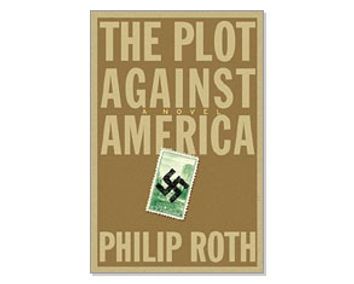
In "The Plot Against America," the great novelist imagines a 1940s America devoured by anti-Semitism -- ignoring the brutal anti-black bigotry that actually existed.
“Both men continued to swear their innocence, but McDaniels ultimately broke down, his screams sending children scurrying to their mothers’ sides. Once he’d confessed to the crime he was shot to death. Townes had his eyes gouged out with an ice pick and then was slowly roasted with the torch until he, too, agreed to confess. When he finally uttered the words the mob wanted to hear, he was doused with gasoline and set afire. Souvenir hunters would fight over severed testicles and strips of barbecued flesh.”
– David Levering Lewis, in a 2002 review, quoting Philip Dray from “The Lynching of Black America,” where the typical denouement of a double lynching in the Mississippi Delta in 1937 is described.
Great artists can commit great sins of monstrous allegiance, of bigotry, of individual cruelty, but they can commit no greater sin than taking on the mantle of Alzheimer’s when addressing major periods in American history. I say that because so much of what has become important in American life since the election of John Kennedy is about deepening the quality of national memory. We search through our files, our documents, our newspapers, our diaries and so on, to somehow know who and what we have been and when we were that repugnant or inspirational or duplicitous or confused. Or whatever. I say that because the subject of this essay is Philip Roth, who has committed a highly celebrated sin against history that would mean nothing if he were not one of our greatest writers, a pure flare of talent out of New Jersey.
Roth has been at war with stereotypes and the limits of assumed good behavior throughout his career. One could accuse him of thrilling at the idea of shocking the bourgeoisie or being responsible for forcing his public to know what happens when the girls slide out of their panties and the men climb out of their pants. He is our most prominent son of James Joyce, but he has also become one of our most adventurous writers in his last few fiction works. Roth is usually obsessed with the limits and the tears hidden by the compartmentalized aspirations of middle-class Jewish life, the rubber demands of the academy, and the disappointments of wealth and fame as experienced by a writer named Nathan Zuckerman, who critics are always sure is actually Roth himself.
Roth is a high-IQ jokester who delivers his punch lines with glass capsules of cyanide. He focuses on tales from below the belt and has always been most interesting, it seems to me, when he has moved into domains other than those in which he grew up or made a living before going on to receive his well-deserved celebration. He has been under attack from the dunderheads of the academy and those who do not have enough literary sense to understand that his politics did not come off the assembly line. Yet he has maintained his integrity by going his own way and taking the lumps that come of maintaining a singular vision. Roth is too intentionally crude for those on the right and too unforgiving of the laughing-gas ideology that those on the left assume should be taken seriously.
So what is Philip Roth’s great sin and what does it have to do with the material quoted at the beginning of this piece? Simply this: His new novel moves along as though that bestial level of social bigotry was not a highly visible fact of American life at the time that “The Plot Against America” is imagined to have taken place, between 1940 and 1942. “Boo!” some will automatically say because the book has been so vastly praised, but they would not leap so quickly into that camp if they realized just how much the novel is now part of the ongoing complaint that Ralph Ellison raised to the level of masterpiece in “Invisible Man.” Roth expects us to believe that the very deep hostility that white Southerners had toward black Americans, a hostility that had been supported by white Northerners either after the end of Reconstruction in 1877 or soon thereafter, would suddenly dissolve and transform itself into anti-Semitism because Lucky Lindy defeated Franklin Roosevelt in 1940.
This sort of simplemindedness is unacceptable from a man of Roth’s gifts. Had any such thing happened, Jews would have first seen the proverbial handwriting on the wall: They would have begun to notice how much worse things were becoming for Negroes, whose communities would almost surely have been turned into actual ghettos that walled off the black population from the white. Negroes would have needed passes to get out and would have been required to return by a certain hour. One Jewish writer friend of mine says that Roth did not want to complicate what he apparently intended as a reiteration of the old song of Jewish suffering thrust in an American key. Not a good enough reason, if true. No serious writer, in the interest of simplicity, can avoid the heat and weight of a time in the past where he chooses to put his story. Another Jewish writer of Roth’s generation recalls that there was always talk during those years of the Negro being “a buffer” between Jews and Christians, and that one could gauge the mood of the country by what was happening to them.
Perhaps the most unsettling aspect of Roth’s novel is its absurdly reductive vision. By implication, we are given to believe that even if the hysterical racism and violence toward black people had somehow magically disappeared from American life, Negro activists, writers and firebrands such as W.E.B. DuBois, Walter White, Langston Hughes, Richard Wright, Roy Wilkins, Adam Clayton Powell Jr., Thurgood Marshall and Charles Hamilton Houston — all of whom had repeatedly proved their moral courage by standing up to racism through their words or their actions, or both — would have shuffled off into silence when anti-Semitism was put into policy. This adds an even grimmer substance of insult to this ethnically self-absorbed book.
The fulsome praising of this Roth novel is also a commentary on the lack of knowledge of American history by those who consider themselves literary people in our time. How could this book pass everyone at Roth’s publisher without the unmentioned smell of burning flesh filling room after room until someone raised a question about the stench for which the novel had cut off its nose in order to avoid acknowledging? Let us be even more blunt: Would there be no protest if a great writer or dramatist or filmmaker were to find a marvelous story about Gypsies in German cities during the mid-1930s and create a work in which the Nazis became so hot at the Gypsies that their plight overshadowed an unmentioned anti-Semitism?
There may be an understandable — however unacceptable! — reason for this that goes far beyond the limitations of “The Plot Against America.” Could it be that because Condoleezza Rice, Colin Powell, the Rev. Al Sharpton, the bad sportsmanship of too many millionaire black athletes, black street-gang violence, the bullshit scholarship of the worst of black studies, and the decadent, dehumanizing minstrelsy of gangster rap have created such quiet animus in our intellectual community that it is preferable to forget the savage racial history of our nation? I raise that question because in the summer of 2001, The New-York Historical Society presented “Without Sanctuary,” a showing of lynching photographs that was the talk of the town, much as a similar show was when it was put on in Manhattan by the NAACP during the 1930s (some were so overwhelmed at the time that they fainted when faced with the unfathomable brutality of public murder). In November of 2002, David Levering Lewis assessed recent studies of lynching for the New York Review of Books. So there was plenty of fresh information about that time period, information that it is hard to believe everyone so easily forgot when reading “The Plot Against America.”
The most important movement in American fiction, regardless of style, is about moving beyond ethnic provincialism in order to summon a more real and more complex world. In “The Human Stain,” Philip Roth hit one out of the park. In this new one, he took to an old American tradition, the segregated baseball team, and became Casey at the Bat.
Living color
The critic and author of "Don't the Moon Look Lonesome" picks eight great books that get race right.
When I sat down to write my novel “Don’t the Moon Look Lonesome,” my intention was to go beyond everything else that I had read about how, from about 1960 forward, we became what we presently are as a nation. We’re closer than ever to getting race right, but we’re imposed upon by racial categories even still. My ambition was to avoid every clichi while revealing the human nuances that race, sex and class can add to a tale, rather than reducing race to something merely sociological or propagandistic. My first intention had been to write a short story about a troubled interracial couple; 546 pages later, things had either gotten out of hand or the ante had been substantially raised.
Continue Reading CloseVouchers and the GOP
The Republicans' quick fix for education reform doesn't compute. Here's why.
When it comes to education reform, all too often,
href="/news/feature/2000/05/26/cleveland/">school vouchers and
Republicans go together like soap and water, ham and eggs, dumb and
dumber. Vouchers are another example of how hard it is for the GOP to
grapple with the realities of American life across the lines of
class, sex, race and religion.
At a time when we need to reinvent our educational system, too many
Republicans grab vouchers as their quick-fix way to close the
disparities between the quality of the teaching received by kids at
the bottom and those who are in the middle or upper classes. They
disdain the messy politics of fighting with teachers’ unions or the
entrenched bureaucracies of school boards and city halls, and turn to
vouchers as a way to avoid the ugly political battles that reforming
public education for all kids would entail.
Mourning the loss of Cardinal O'Connor
America's most powerful Catholic was a tough guy, and he was wise to the ways of politics and human beings.
The funeral of Cardinal John O’Connor at St. Patrick’s Cathedral on 50th Street and Fifth Avenue in Manhattan on Monday was stuffed with the powerful and the formerly powerful, presidents and ex-presidents, governors and ex-governors, mayors and ex-mayors.
When old men such as this one die at an age like 80, they seem to take entire eras with them. Style, culture, morality, politics, bigotry, decay and revitalization shift direction and dimension at such speeds that they who believe there once upon a time was a civilization in place at their birth can conclude that everything’s over except the shouting.
Continue Reading CloseThe shame of Zimbabwe
If whites were murdering black farmers, there would be hell to pay.
One wonders how certain people are allowed to get away with things for which others would catch more than holy hell. Zimbabwe President Robert Mugabe, one of the Marxist angels whose wings are dipped in blood every so often, has recently been following a policy that calls for whites, or Euro-Africans, to either turn over their land to the government or face the inevitability of being ejected, beaten or slaughtered by roving mobs.
Mugabe considers this land reform. He has taken to these methods because he failed to get the necessary votes to make it lawful for his government to seize land and distribute it according to what those at the top deemed right.
Continue Reading CloseStop whining about the media!
On TV shows, commercials and the news, black people are doctors, lawyers and yes, gangbangers -- just like in real life.
As one who often finds himself on panels doing battle over the nature and the direction of American life, I frequently contend with moldy clichis that have the same intellectual stink as spoilage. One that I encounter over and over is that black people are maligned in an ongoing and intentional way by the media. One is ceaselessly told that the media chooses to traffic in negative images of black people, and those media images help support whatever racist attitudes others have about Negro Americans.
Continue Reading ClosePage 1 of 2 in Stanley Crouch