Stephen Amidon
Why I love Britain’s socialized healthcare system
As I learned when my newborn daughter was very sick, in U.K. hospitals, people take care of each other
Why I love Britain's socialized healthcare system My eldest daughter had a rough first week. Born after 22 hours of hard labor, her pink skin proceeded to turn an alarming shade of yellow on the second day of her life. It was a bad case of jaundice. She would need to be placed in an incubator, whose ultraviolet light would hopefully clear up the condition. If not, a transfusion would be required. My exhausted wife and I watched in numb horror as our child was encased in the clear plastic box that was to become her crib for the next seven days. What we had hoped would be a straightforward delivery had turned into a nightmare.
Because I am American, and those endless days and nights were spent in a maternity hospital in London, the week that followed has been very much on my mind as I listen to the recent attacks on the British National Health Service. It is a system that I found to be very different from the one currently being described as “evil” and “Orwellian” by politicians and commentators eager to use it as an example of the dark side of public medicine.
I was initially skeptical about the NHS. I’d grown up comfortably in suburban New Jersey; good private healthcare was always immediately available through my father’s insurance. When my English wife became pregnant soon after we settled in London, I was alarmed by the idea of having our first child born in a system I had been told was underfunded, overstressed and inefficient. After all, healthcare in the UK was free. How good could it be? Friends and relatives back in the States were spending thousands to have children. If you get what you pay for, I was about to get a whole lot of nothing.
My first glimpse of our prospective hospital was not promising. It seemed crowded, aging and apparently devoid of the gleaming, beeping equipment I associated with modern medicine. But our neo-natal class actually helped me prepare for the upcoming birth, and the scans we received afforded the same miraculous fetal glimpses we would have gotten back in New Jersey. Come delivery day, an impressive team of midwives, nurses and anesthesiologists attended my wife’s long labor, all of them respecting her request not to opt for a cesarean section. When things got sticky at the end, a senior obstetrician appeared and the monitoring equipment beeped reassuringly.
Directly following the birth, we were taken to a large ward whose 20-odd beds were separated by curtains and changing tables. It was visiting hour; the place was alive with excited relatives, shellshocked fathers and the constant susurrus of hungry new life. That first night, however, the atmosphere grew peaceful. Crying babies were attended immediately by sensibly-shod nurses so that others could sleep. But it was after my daughter began to turn the color of saffron rice that I really began to appreciate the NHS. The moment she showed distress, we were whisked off to a private room, where we were looked after by a no-nonsense pediatrician and the imposing Irish ward sister, or chief nurse, who quickly made it clear to me that my sole useful contribution to the whole process had come nine months earlier. Blood was drawn regularly from our daughter’s tiny heel; test results came back promptly. The meals were surprisingly edible. I even developed a taste for the milky tea brought to me by kind nurses. My only complaints over the following week were that the free cookies in the father’s lounge were always running out. And for some reason the ward sister kept giving me withering looks, no matter how dutifully I attended to my family’s needs.
As my blindfolded daughter slept in the incubator’s eerie violet glow, I would take occasional strolls through the ward. It was the most egalitarian place I had ever seen. The yuppie woman honking into her newfangled cell phone, the young Pakistani mother who always seemed to be surrounded by a half-dozen gift-bearing relations, the self-sufficient older woman desperate to get home to look after her other children — all of them were cared for in exactly the same manner. Whoever needed help got it. When a terrified Afghani girl arrived, rumored to be only 14 and apparently abandoned by her family, several nurses dropped what they were doing to teach her the rudiments of child care. The rest of the mothers waited patiently until they were finished. Other wards were the same. There was no private wing with champagne service. Everybody was in this together. If you were a woman and you were in labor and you were in our part of London, this is where you came. If things went wrong, skilled doctors appeared with the latest technology. Nobody asked about insurance or co-pays.
This, I learned, is what the NHS is about — common decency. It is about the shared belief that all the people who live in the United Kingdom constitute a society, and a decent society provides certain necessities for its members. Freedom from hunger is one. Police protection is another. Free healthcare from the cradle to the grave is simply one more item on this list.
I saw this decency at work countless times over the following decade, until my return to the United States. I saw it with the twice-daily home visits by community midwives for the fortnight after each of our newborn children’s release from hospital, and in the vouchers for free milk we were given for those babies. I saw it when our GP paid us a house call early one Sunday morning to treat our son’s spiking fever.
I saw it most clearly, however, in the treatment my in-laws received at the end of their lives. My wife’s father, who suffered from acute myloid dysplasia, spent his last year receiving constant care, including several sprints to the hospital for emergency transfusions, where doctors struggled heroically to keep him alive. His final week was spent in a very comfortable single hospice room whose French doors opened onto a terrace overlooking his beloved Yorkshire moors. When he died, he left us his house, and not a penny of healthcare debt. My mother-in-law, stricken by arthritis, got two artificial hips and two knees from the NHS, and received daily home visits from social workers during the last three years of her life so she would not have to go into a nursing home. Neither of these septuagenarians was working at the time. The amount of money spent on their care must have been staggering. And yet, despite shouldering this yoke of decency, the nation prospered around them. People were buying French wine and German cars and second homes. They were attending Cats and supporting Arsenal and going on holidays in the sun. Sure, people complained about the NHS. But the British complain about everything. Living without a public health system, on the other hand, was unthinkable.
On the day we were finally given the all-clear, there were no papers to sign, no bills to settle. All we had to do was remove our daughter’s blindfold and go. But I felt I had to leave something behind. So I rushed down to the local corner shop and bought several tins of cookies to give the staff who’d looked after us so well. As luck would have it, the Irish ward sister was the only one at the nurse’s station when I arrived. Before I could explain myself, she gave me a tight, approving smile.
“Wondered when you’d start chipping in,” she said, returning to her paperwork. “Just leave them in the father’s lounge.”
Ode to joy
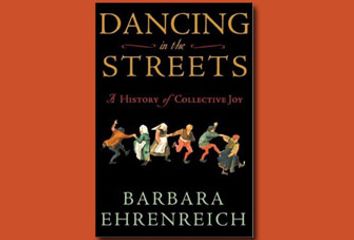
Barbara Ehrenreich turns away from pop sociology to explore the historical oppression of collective happiness in "Dancing in the Streets."
During my four years as a student at a Baptist college in North Carolina, I did not hear the authorities tell very many jokes lampooning their religion. In fact, I remember only one, told by a dean during a banquet speech. It went something like this:
Question: Why don’t Baptists make love standing up?
Answer: Because people might think they’re dancing.
It’s not a bad joke, though I did not fully appreciate its socio-historical implications until I read Barbara Ehrenreich’s lively and compelling history of collective joy, “Dancing in the Streets.” In it, she reminds us that ecstatic dancing and Christianity were implicated a lot more closely — and for much longer than the elders at the Southern Baptist Convention might care to admit. In fact, early Christianity’s roots were deeply entangled with those of the Dionysian cults that also bedeviled the Roman authorities, so much so that Ehrenreich sees evidence of significant similarity between their two wine-providing deities, Jesus and Dionysus. “Both … upheld what has been called a hedonic vision of community, based on egalitarianism and the joyous immediacy of human experience — as against the agonic reality of the cruelly unequal and warlike societies they briefly favored with their presence.”
Continue Reading CloseDangerous liaisons
"Casanova's Women" shows that the world-famous rake spread joy -- even empowerment -- among his 116 lovers, not to mention V.D., pregnancy and social disgrace.
What, then, was his secret? Was it a silver tongue that no woman could resist? Was it his outlaw reputation and his celebrated good looks? His ability to let frustrated women express their sexuality in an oppressive society? Or was he just really well hung?
Actually, Casanova’s profligacy seemed to have a lot to do with furniture, or rather a lack thereof in 18th century Europe. Time and again, the great seducer’s campaign to lift every skirt between Barcelona and Bucharest was facilitated by the fact that there simply were not enough beds to go around. Take, for example, his “conquest” of Donna Lucrezia Castelli, the Neopolitan woman Casanova seduced during the course of a long carriage trip from her hometown to Rome in 1744, as described by Judith Summers in “Casanova’s Women.”
Continue Reading Close“I didn’t like sex at all”
Martha Gellhorn was a gorgeous, brilliant foreign correspondent once married to Hemingway. But underneath her glamorous exterior, her letters reveal a woman of awe-inspiring rage.
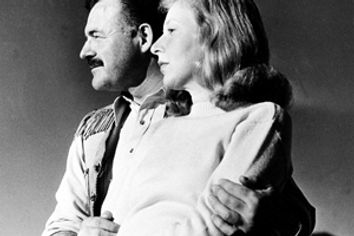
If Martha Gellhorn had not existed, George Cukor would have probably invented her. Born into an affluent St. Louis family in 1908 and educated at Bryn Mawr (where she was two years behind Katharine Hepburn), Gellhorn went on to become one of her generation’s most respected foreign correspondents, sending back dispassionate, shrewd dispatches from the Spanish Civil War, World War II and the Vietnamese conflict. Blond and beautiful, she married Ernest Hemingway and counted among her lovers legendary World War II Gen. James Gavin and billionaire Laurance Rockefeller. Her seemingly infinite list of famous friends included Eleanor Roosevelt, Leonard Bernstein, H.G. Wells and Adlai Stevenson. By her own estimate she traveled to more than 50 countries and owned houses in at least six of them. On the downside, she was by all accounts a lousy cook, though one imagines Cukor would have been able to find comic relief in that shortcoming.
Continue Reading CloseDestination: Arizona
Look beyond the sprawl and congestion of this desert state with books from Wallace Stegner, Geronimo and Barbara Kingsolver -- and an unlikely guide to the Grand Canyon.
There are just under 6 million people living in Arizona. This is about 5 and a half million too many. One need only visit polluted, overcrowded Phoenix or the development-scarred red mountains surrounding Sedona to understand that the 48th state is being overrun by a herd of Homo sapiens, many of whom are imposing the aesthetic and cultural sensibilities of an upper Midwestern suburb upon a fragile desert landscape. I got to know, love and hate Arizona while working on my 1992 novel “Thirst,” which deals with a son’s search for an alcoholic father’s secret history during an epic drought in Phoenix. Since then, the state has continued to “develop” at an alarming rate. Travelers would be advised to bring along books that will allow them to see beyond the golf courses, mini-malls and three-car garages. Properly informed, you can still catch glimpses of one of the nation’s most mysterious, beautiful and ghost-haunted regions — before it vanishes completely.
Continue Reading CloseReefer madness
Michigan's Rainbow Farm was a utopia for stoners, gays and dissenters. Then America's anti-drug insanity erupted in its ugliest form.
During those rare moments I find myself feeling uneasy about the course of the war on terror, I take consolation by looking back at America’s unconditional victories in our two previous crusades against abstractions — the war on poverty and the war on drugs. As far as poverty goes, it seems incredible now to think that there was ever a time when Americans had to worry about health insurance, affordable housing or quality education. No wonder we’re deconstructing safety nets faster than a bankrupt circus.
Continue Reading ClosePage 1 of 2 in Stephen Amidon