Steve Mollman

Will Americans go for mLife?

AT&T is pushing Japanese-style wireless services in the U.S. But until cellphones are as fun to use in New York as they are in Tokyo, a jaded market is likely to keep yawning.

  • more
    • All Share Services

Will Americans go for mLife?

“I still have Japan-envy,” admits Matthew Hart. It’s not that Hart doesn’t cherish his new cellphone, or appreciate having a real “mLife” before most Americans. It’s just that “the 3G videophones they have over there, the ones that open up with the big color screens …” He trails off wistfully. “We’re getting closer, but we’re still nowhere near Japan.”

Hart, a commercial real estate developer in Palm Beach, Fla., is a self-described gadget and cellphone junkie — he keeps 15 or so retired handsets in his closet. He’s the kind of guy who gets a kick out of using his Bluetooth-enabled cellphone as a cable-free modem for his Bluetooth-enabled PowerBook so that he can check his e-mail in a park (just for example). The type who hangs around in chat rooms explaining to innocents the difference between locked and unlocked handsets, and why you should pay more for the latter. The kind who buys a T68i handset — not officially available in the U.S. yet — off eBay because it’s slightly better than his still-new T68 (a replacement for the Nokia 8890 he got in London).

And he’s precisely the kind of guy AT&T Wireless must win over with the mMode service launched April 16 (in select US markets including Palm Beach) if it’s to have any hope with more typical U.S. cellphone users. A central feature of the company’s obscurely marketed mLife “wireless lifestyle,” mMode is an imitation of imode, the highly successful, always-on data service offered by NTT DoCoMo in Japan.

Imode users (over 32 million at last count) can buy tickets, find the nearest Starbucks, download and swap pictures, set up group get-togethers and do far too many other things to list here. Charges for whatever digital content or services they buy simply show up on their phone bill — no credit cards, no electronic wallet, no personal info, no fuss.

Ask AT&T Wireless reps about the “imode-like service” they’re rolling out and they bristle a bit: “What we’re doing is unique in the American marketplace and is not simply a transplantation of imode, slapping a different letter onto it and then just moving on from there,” says spokesperson Mark Siegel. “The content is uniquely American, the approach is uniquely American.”

But is it American enough? For many skeptics, imode-type services will never take off in the U.S, for one simple reason: the car. In Japan, the ubiquitous mass transit system is often cited as a primary reason for imode’s success. The transit system creates a lifestyle full of “microniches” of time. There’s a lot of hanging around nearby bus, subway and train stations, usually waiting for friends or for transport. Imode and its competitors have filled this otherwise empty space with well-received services and cutting-edge handsets — handsets that cellphone aficionados like Matthew Hart drool over.

For cellular operators in the U.S., desperate to boost data revenues in the face of plummeting share prices, the need to get Americans using something like imode is acute. And notwithstanding America’s car culture, if average Americans get their hands on Japan-level handsets, watch out. That, in fact, might be the best way to evaluate mMode — not necessarily as a service for users, but as a beachhead for Japanese handset manufacturers.

Japan’s domestic market is reaching saturation. The battle to get Americans to fall in love with wireless services over their cellphones has at least one very large treasure at stake: who gains the upper hand in handsets. Indeed, this spring could be looked back on as a turning point in the handset wars here and in Europe. Can Nokia be dethroned? Has Japan’s time come again?

A successful assault by Japan on the handset market is by no means assured. For one thing, mMode has a handicap that imode in Japan never had to contend with: a jaded consumer base. WAP (wireless access protocol) services — the first big push to get Americans using their cellphones for data — were over-marketed to Americans as fast on-ramps to the Internet, when in fact they were pokey, nearly useless text services displayed on ugly screens in clunky handsets.

“You can’t over-advertise something,” says Mark Berman, a Tokyo-based analyst for Credit Suisse First Boston. “If you build up expectations and then you disappoint people, it’s going to cause irreparable damage, and that’s what they did.”

It’s easy to blame WAP. But WAP is simply a specification for displaying information on handset screens as opposed to Web pages. It’s not as common-sense as the cHTML standard used by imode, but a WAP-based service has succeeded — in Japan. KDDI’s imode-like service runs over WAP. It hasn’t been a monster hit like imode, but it’s been successful nonetheless. Still, the belief that “WAP is crap” has become common wisdom in the U.S. and contributed to a resistance to the very idea of cellphones as being useful for anything other than voice. The fact that mMode is initially being rolled out over WAP certainly doesn’t bode well, then.

What does bode well for mMode is the success, so far, of the imode-like services in Europe. Offered in Holland through KPN Mobile and Germany through E-Plus since early April, those services are seeing a larger-than-usual share of revenues from data usage, according to early reports. But the parallels between the U.S. and Europe aren’t exact. The European imodes, for one thing, are following the DoCoMo recipe for cellular success more closely, using Japanese handsets and the Access browser, neither of which is yet being used with mMode. And Europe, like Japan, has a viable mass transit alternative, around which a successful cellphone data service has already emerged: SMS (short message service). According to a Gartner study, Europeans use mobile data services at least as much as the Japanese do — just in the form of text-centric SMS. But the mass-transit environment is the same, encouraging Europeans to fill microniches of time by sending messages, playing games and reading news, weather and sports.

Most Americans don’t have such an encouraging mass-transit environment, and it’s the U.S. alone, it seems, that is so peculiarly attached to the automobile.

“I think the car issue is huge,” says Neil Strother, a senior analyst at In-Stat/MDR. “That’s part of the reason it may take a while for mMode to take off. If I’m in an area where there’s much better or more widely available mass transit, then it makes sense. But I think a lot of areas in the States are going to struggle with the driving.”

Strother sees a formidable challenge in persuading Americans to change their habits. “Getting Americans to see their phones in a new way is a huge hurdle. It takes time to use phones in ways Americans aren’t used to. There’s a learning curve that has to take place. If AT&T Wireless pulls the plug on mMode in six or eight months, I’m not sure that it will have been given enough time.”

But the argument that all of America is so completely car-centric that it could never adopt imode-type phones sounds a bit off, too, says Berman: “If you’ve ever lived in New York City, you know that’s not the case. Or Boston, or Chicago. And besides, people have a lot of downtime no matter where they are.”

“There are some behavioral differences, and commuting is one,” concedes John Bucher, research analyst at Gerard Klauer Mattison. “But I don’t think that means that there’s not a market here for it.” He says a bigger obstacle might be that Americans tend to have PCs at both ends of their work commute, and they’ve grown accustomed to using them. He notes that in Japan, both PC and Internet penetration were relatively low when imode exploded.

But debates over mass transit versus car culture may miss the real point. Truth is, Americans just don’t have the right tools to go online wirelessly. If imode had been offered in Japan over the kind of inferior handsets offered in the U.S. today, it would have failed miserably. In other words: It’s the handsets, stupid.

For Americans who’ve never been to Japan and played around with an imode handset, there’s really no Stateside parallel to help them understand how enjoyable the experience can be. “I just cringe when I see handsets in America,” says analyst Berman. The best analogy may be this: Whereas Japanese handsets are fun, colorful iMacs, those sold in the U.S. are drab, grim DOS terminals. To get an idea of what using imode is like, imagine clear colorful screens, startling sound quality, and easy-to-understand, icon-based menus navigating you through services you really want to use. And imagine this: sitting alone in a cafe with a grin on your face because you’re having fun with your cellphone. In Japan, you can actually see this happening. It’s not that the Japanese are deranged gadget freaks, it’s simply that the cellphones are a kick to use. (And cute! Even grown men agree.)

“Frankly, the Japanese handsets are much better than what Nokia or Motorola make,” says Berman. And high-quality cellphones, he believes, are critical to an imode-like service succeeding in the U.S.: “It’s because they like the handsets that Americans are going to start playing. After that, the content has to latch them on. But handsets are the catalyst.”

“If Americans saw what they could do on cellphones, they’d be much more excited,” says Strother. “The handsets in Japan are exciting.”

Japan’s road to handset excellence is instructive. While other governments forced operators to bid for wireless spectrum licenses, the Japanese government decided instead not to cripple its operators with debt. Japanese operators used the savings to set up sophisticated R&D labs — which most wireless carriers can only dream about — and cooperated far more closely with handset makers than usually happens in other countries. The result: three successful wireless Web services and the world’s best handsets.

The top handset sellers in Japan, according to Bucher, are, in order, NEC, Matsushita, Sharp, Mitsubishi, and Sanyo. Outside Japan, their bleeding-edge cellphones are largely unavailable. But that’s changing, thanks in part to the spread of imode.

But if handsets in Japan are so cool, many ask, why haven’t they been sold in the U.S.?

“We have this alphabet soup of technologies live in the market,” explains Charles Golvin, senior analyst at Forrester Research. “If you wanted to sell to all the operators, up until recently you had to make a TDMA phone for AT&T Wireless, a GSM phone for VoiceStream, a CDMA phone for Verizon and Sprint — and even within that you had other twists and turns. Japanese manufacturers saw a lot of complexity in managing the different technologies, so they pulled back. Now they’re coming back to the U.S. market.”

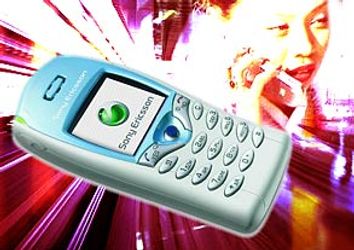
The initial handsets available for mMode don’t represent the kind of Japanese invasion we’re likely to see over the next few years. They include models from Sony Ericsson, Nokia, Motorola, and, later this year, Siemens. Cellphone junkie Hart gives his nod to the Sony Ericsson handsets: “I would say that Sony Ericsson is going to be the major player.” In America, he says, “other phones don’t even come close to theirs, especially the new ones coming out. I was a huge Nokia fan and user until the T68 came out. Since then, I think Sony Ericsson phones are bypassing Nokia’s.”

The T68 is an Ericsson phone, however, with little Sony input. As Golvin notes, Sony has barely begun to exert its influence in its joint venture with Ericsson. But later this year U.S. consumers will be offered what might be considered their first Japan-level handset: the Sony Ericsson P800, a lightweight Java PDA camera phone with an oversized, color screen and long-lasting batteries. “When the P800 comes out, it will be the best phone in the world,” says Hart.

NEC, tops in Japan, also plans to reenter the U.S. market. And Berman notes that Vodafone, with the most subscribers worldwide, now owns a majority of No. 2 Japanese cellular operator J-Phone: “So Vodafone now has Sharp as one of their major handset suppliers, not to mention Sanyo and the others. Sharp’s got very good handsets, and you’re going see those all over.” Vodafone owns 44.2 percent of Verizon Wireless, the No. 1 U.S. carrier. (AT&T is No. 3, after Cingular.)

In Europe, meanwhile, the imode services are being offered primarily or exclusively over Japanese handsets. KPN’s imode, for example, requires a special handset made by NEC or, later this year, Toshiba. Matsushita, meanwhile, is set to supply the mobile phones for the French imode service.

This is just the beginning. Berman, asked if more Japanese handsets will be reaching Americans in the next few years, answers: “Oh, absolutely. It’s going to start with imode, but the whole idea of the Japanese is that if 3G is a global standard, they’re going to jump on that and make those handsets for the rest of the world. That’s a serious threat to the traditional handset makers.”

3G, or third generation, is generally defined as fast enough for video. But before they are widely available in the U.S., there will have to be 3G networks — and that could take a while. In the areas where mMode is now in service, AT&T Wireless has set up a so-called “2.5G” GSM/GPRS network. But Strother notes that there’s still no GSM/GPRS coverage in the vast majority of America, and that’s just 2.5G, not 3G. “The future does involve Japanese handsets,” he says. “But only as the networks get faster and better here — and that’s going to take years.”

And even once the networks are in place, Japanese handset domination isn’t inevitable. “It’s a wide-open handset market, with regional and cultural differences,” says Strother. “And I don’t think the big boys are necessarily going to lose,” he adds. “Nokia and Motorola are going to be right along with them.”

Indeed, Nokia isn’t exactly running scared: it has about 37 percent of the global handset market share. Motorola comes in second at around 17 percent, and had the foresight to establish itself early in China. None of the top five handset makers in Japan are represented in the top five global list.

But change happens, and if there’s one thing that everyone who is in the know agrees on, it’s that the handsets sold in Japan are much, much better than those sold in the U.S. and Europe. And they’re leaving Japan this spring, riding the coattails of imode (at least until the bigger coattails of 3G come along). If nothing else, the traditional handset makers, like the Big Three automakers, will be forced to respond to the Japanese challenge with better products.

The upshot is simply this: Americans will — soon — finally get the kind of cool handsets that fueled Japan’s imode explosion. And if they do, they might finally disprove the theory that they’re too car-centric for cellphone-based data services.

Matthew Hart is ready to do his part. He’s already got his sights set firmly on the upcoming P800 handset, and he’s dreaming up how he’s going to use it. His killer app for his killer phone? The ability to find local movie times, pay for tickets and have the charges show up on his phone bill. “Especially in Florida, where the movie theaters are huge and there’s always a long line,” he says. “That, to me, would be a great thing to use a cellphone for.”

Question is, how many Americans will agree with him?

Digging for computer dirt

Collecting obsolete tape drives used to be an eccentric hobby. But now that corporate lawsuits can hinge on unearthing ancient digital data, stocking up on funky hardware is good business.

  • more
    • All Share Services

Remember the KayPro computer? The Osborne? The DEC MicroVax? The Vydec dedicated word processor with the 8-inch disk? Lee Tydlaska does. In fact, he not only remembers obsolete technologies, he collects them. What’s more, he actually uses them to make money.

Tydlaska calls his collection a “museum,” and that makes this 51-year-old former San Diego sheriff a curator of sorts. As sometimes happens with curators, over the years Tydlaska has begun to strangely resemble his prized collection. As he’ll be the first to admit, he’s old, he’s peculiar, he’s a bit outdated, and there are lots of younger, sharper models on the market. But he likes what he does.

Tydlaska started his museum 32 years ago, as a hobby. He says he was fascinated by the way the industry kept changing so quickly. “I was hooked on the constant state of flux, even back in the dark ages of computers,” he says. “Each technology was a good idea to start, but died a sudden death.” About 10 years after he started his museum, Tydlaska realized that his eclectic collection could be more than just fascinating and fun — it could be profitable. So he created a small business.

Today, his company, Computer Conversions, plays a small but key role in recovering electronic data — or evidence — from damaged or overwritten backup tapes. The company also does forensics work (“I have a lot of fun with divorce cases,” Tydlaska chirps) and helps people move files from old formats to newer ones, but when the client is the FBI or Deloitte & Touche, they’re usually interested in the company’s special skills with backup tapes, especially rare formats. (Tydlaska loves them all, but then what’s not to love about the DC6150 from Emerald Products or the Jumbo 120 from Colorado Memory?)

Computer Conversions is a six-person company. Only two employees are full-time, and Tydlaska dubs one part-timer “VP of Janitorial Services.” The business is run out of a five-bedroom house in El Cajon, a sleepy but pleasant suburb just east of San Diego. Tydlaska at one point had 12 employees and a high-rent office, but he decided that managing people wasn’t much fun. Besides, “All my business is primarily through the mail,” he says.

Computer Conversions has modest revenues. For most of the past five years, says Tydlaska, the company has brought in around a million dollars in revenue annually. Last year, like nearly everyone else, the company took a hit, falling to around $660,000. “The industry is tight now,” Tydlaska says. “But we are seeing some large lawsuits.”

Tydlaska may not have planned it, but his company has evolved into an important niche (or sub-niche) player in the increasingly lucrative field of “computer forensics.” Textbook definition: “the science of capturing, processing, and investigating data from computers using a methodology whereby any evidence discovered is acceptable in a court of law.” It hardly needs saying why this craft has grown in importance, but if one word sums it up, it’s “Enron-itis.”

Never mind all the paper shredding in that case; the real smoking gun will be made of ones and zeros. In a corporate world where everything is increasingly digitized, but in which equipment is also increasingly obsolete, both the industry of computer forensics and people with arcane knowledge like Lee Tydlaska are ever more important.

Tydlaska is prone to gloating about his sometimes invaluable skill. “People go into audit a company and they need to see its ‘hysterical data,’ as I like to call it — ‘hysterical’ because of the prices they pay me to see it. They say, ‘But there’s nothing wrong with the tape! If I had the equipment I could restore the data myself.’ And I say, you’re right! If you had it, you could! But you can’t buy it, and you can’t reproduce it, so it’s either worth my exorbitant fee or not. I mean, let the IRS believe you’ve got the data!”

It’s not always the big accounting firms and corporate lawyers that come to Tydlaska. Sometimes it’s just an individual who wants to transfer data from a five-and-a-quarter floppy to a three-and-a-half-inch disk. Tydlaska charges $15. (“I know it sounds silly,” he says, “but it takes all of 15 seconds to do it.”) Or Tydlaska might serve as an expert witness on data storage. (“Where else can you work two or three hours a day for a thousand dollars?”) Or he might do a little computer forensics work himself (“You never want to see me walking into an office building at 8 o’clock at night.”)

It’s Tydlaska’s arcane knowledge and vast collection of back-up tape equipment, however, that brings even other e-detectives to his door.

David Stenhouse, director of operations at Computer Forensics Inc., which specializes in the discovery of electronic evidence, is, like Tydlaska, both gumshoe and packrat: “We try to save old tape drives, old manuals, old software,” he says, “because you might have to use it. I routinely go through half-price bookstores and look for old software manuals, just in case.”

Sometimes, though, even Stenhouse is stumped by a particularly obscure tape format, which is when he turns to Tydlaska. Not that there isn’t a little professional pride involved. “We’ve only contacted Lee as the result of a rare or old tape format,” Stenhouse clarifies. “Most of the time we can do the work on tapes in our Seattle lab.”

Tydlaska says only five or six companies in the world have his level of expertise in backup tapes. “I’m No. 4 or 5,” he says. No. 1, he believes, is Gordon Stevenson, who runs Vogon International in England. “He’s a certified genius,” says Tydlaska. “I’m a very dim candle compared to him.” In the No. 2 slot he places Ontrack Data International, a publicly traded data recovery specialist headquartered in Eden Prairie, Minnesota. Ontrack has seen rapid growth in its data-collection division. Revenues went from $4,554,000 in 1999 to $8,027,000 last year. It’s now being acquired by New York-based security firm Kroll for $140 million.

Kirsten Nimsger, an Ontrack attorney who consults with corporations and law firms, says the Enron case has accelerated the awareness of computer forensics. “The whole situation involving that company definitely brought the eyes of the public onto the importance of electronic communication and electronic evidence.”

But Enron is not the only recent case that’s increased public awareness of computer evidence. Microsoft was hammered by internal e-mails suggesting it knowingly leveraged its operating system monopoly against Netscape. And e-detectives, in a blaze of publicity, searched Chandra Levy’s computer for clues to her whereabouts. Daniel Pearl’s executioners were tracked down using Hotmail headers in their not-so-anonymous ransom notes. The attorney general of New York unveiled e-mails suggesting that Merrill Lynch analysts and its investment bank are not adequately separate.

“Awareness of computer security as a whole is kind of on the upswing,” says Laura Koetzle, an analyst with Forrester Research. “As mainstream companies get more interested in computer security and realize that they don’t know very much about it, there’s more of a market for it.”

Koetzle notes that corporate information technology workers don’t generally have much computer forensics experience. “There’s a real dearth of people who know how to do this stuff, and some of the people responsible for information security at large companies are seriously underprepared for the job.”

This lack of preparation has led to greater demand for computer forensics training. “There’s definitely been a pickup of interest,” says Rob Lee, an instructor at the SANS Institute. A series of courses at SANS instructs students, from both corporate information technology departments and law enforcement, on how to make evidentiary copies of hard drives (never alter the original evidence, for starters) and wield tools like Guidance Software’s EnCase, a user-friendly program that lets them see, categorize, and search for supposedly deleted data. (Guidance offers such courses, too.)

When it comes to litigation, companies often hire computer forensics firms. But not every investigation involves a lawsuit. “The internal investigations are a big concern for organizations,” says Lee. “Most computer security incidents are still not reported to the authorities.” Companies are generally too worried about tarnishing their image in front of stockholders, partners, and customers.

Lee sees more companies becoming proactive about computer forensics: “There’s a trend saying that because we know there’s a lot of internal incidents, you could have a high success of investigating them and thus have a direct benefit as well as overall reduction of cost.”

But, says Stenhouse, “all the training in the world is not going to do you any good until you get out there on your own and do your own interpretation of the data. If you can’t interpret it, if you can’t explain how the data got to that location, or why it’s there, or what exactly it means, then you’re not doing your client any good.”

Which is why companies and corporate law firms, he says, are inclined to hire e-detectives with real-life law enforcement experience. Stenhouse, for example, worked in the Secret Service, and before that was a trooper with the Washington State Patrol. “Within the past few years, most of the people who’ve gotten into this business have been former law enforcement,” he says. “Those are the people who have been formally trained, who have the most experience in evidence preparation.”

According to Forrester’s Koetzle, demand for such experience will grow as companies become increasingly willing to come out of the closet with information-security incidents. She cites a recently published survey conducted by the Computer Security Institute and the San Francisco branch of the FBI that reports that 34 percent of survey respondents reported intrusions to law enforcement last year — up from just 16 percent in 1996.

“If companies are willing to go into a lawsuit about an information security incident, they’re going to need the services of folks who are skilled in evidence preparation,” she observes.

Market figures for the computer forensics field are hard to come by, she says, mainly because of all the secrecy involved. But if there’s a rising number of accounting scandals, corporate lawsuits and investigations by government agencies, it can only be good news for computer forensics experts.

Nimsger reasons that since the portion of communications that are created electronically is ever larger, and only a small percentage of it is printed out, the vast majority of evidence is going to exist electronically. Thus, she concludes, “every investigation and every piece of litigation in America should consider electronic evidence.”

The fact that not all investigations do — yet — suggests growth potential for the field. Old habits die hard, and there are a lot of old attorneys. The task of “educating” them about computer forensics falls to the likes of Scott Stevens, director of business development for New Technologies Inc. “You get the litigator who’s been doing things one way for 30 years and tell him, ‘Don’t worry about the documents on the floor. We’ll find five copies on the computer, and not just the final draft but all the previous ones.’ You tell him that going and getting this stuff is actually pretty straightforward, that we’ve got it down pretty much to a science. But the young partners relate much better to this.”

Once an attorney loses a case due to electronic evidence, however, he learns fast, says Stevens. “We’ve won over a lot of clients by having them on the other side first,” he chuckles.

Ignoring electronic evidence is becoming increasingly hard for lawyers to do. “People are creating exhibits at a breakneck pace,” says Nimsger. E-mail in particular is proving to be a gold mine for litigators, as in the Microsoft case. Nimsger relates a less well-known case involving the diet drug Fen-Phen.

“There was a product liability case brought by the family of a woman who died taking the drug, and the plaintiff’s attorney in that case uncovered an e-mail from somebody in the accounting office of the drug manufacturer that read, ‘Do I have to look forward to spending my waning days writing checks for fat people with some silly lung problems?’ It was first of all a horrible thing to say and to memorialize in writing, but clearly it was evidence against the manufacturer when the case was reckless indifference for human life.”

“We’ve seen e-mail that’s just fantastic stuff for the investigation,” says Stevens. “People say things in e-mail they won’t say anywhere else. It sticks around in ways that they don’t understand.”

Electronic data can be gotten rid of, certainly, but it’s not as simple as emptying the trash, which merely moves the data to unallocated portions of the hard drive. Unless that data is overwritten as the hard drive fills up, it could sit there for years. Wiping programs, also called scrubbing utilities, will overwrite deleted data with meaningless ones and zeros, but computer forensics specialists can still detect when the data was “wiped.” This could lead to problems — like a forced settlement — if a wiping program was used after the date at which a court order dictated the cessation of document destruction.

A scrubber will, however, usually put data beyond the reach of investigators.

“The human aspect of that, though,” says Stevens, “is that generally speaking the people who are doing these things — stealing trade secrets, committing crimes — are far too arrogant to think they’d ever get caught. And from a practical standpoint, they don’t have the time to scrub their machines every time they do something wrong. So these tracks stick around.”

“Part of the difficulty of getting rid of data,” says Kevin Bluml, a forensics engineer at Ontrack, “is that there’s so many places it can hide.” E-mails, for example, bounce between multiple servers and computers, all of which are regularly backed up, so any message is bound to leave a trail.

Bluml’s job is to find incriminating data, wherever it may reside. “We see everything from floppy disks to small tapes to the old-style 24-inch reel tapes you see in the movies,” he says. “Then you’ve got CDs, optical discs, PDAs … Anything that could store data, we could end up seeing.”

Occasionally a new piece of hardware comes along that initially stumps investigators. Stenhouse mentions one of the newer Thumb Drives. “There’s one that requires a thumbprint onto the Thumb Drive itself. They have a pad where you actually have to put your thumb on it when you plug it in. Well, right now if you gave me one I would have to ponder how to forensically gather the data off it.”

Lee Tydlaska has been pondering Thumb Drives, too. “In the porn area, where are they gonna store their pictures? Well, they can store them on these and not even have to have it in their computers. They’re easily destroyed and easily overlooked.”

That’s the gumshoe in him talking.

But there’s another side of him pondering the Thumb Drive, and indeed all kinds of new storage technologies: the museum curator. One day, he knows, all this newfangled stuff will be forgotten.

Just not by him.

Continue Reading Close

Land of the rising Xbox

Nintendo, Sony and Sega have made Japan king of the game console. Can Microsoft make a dent in Nippon?

  • more
    • All Share Services

Land of the rising Xbox

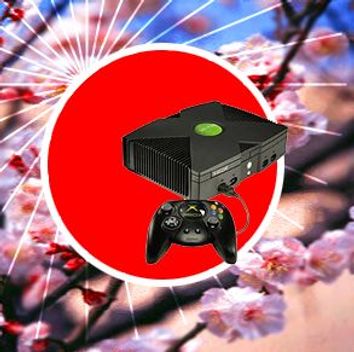
The Xbox gets a bad rap in Japan. Talk to industry watchers here and you start to draw a rather bleak picture: Japanese homes are too tiny for the oversized console. Japanese gamers stick to native brands. Japanese tastes are different — even industry titan Electronic Arts, the biggest game publisher in the United States, has a weak presence here. “In Japan, I’ve never met one single person who likes the Xbox,” says Arka Roy, a Tokyo-based developer.

Yes, in Japan, which accounts for about a third of the world market, the Xbox is definitely facing an uphill battle. But one thing needs to be kept in mind: It hasn’t been released yet. That doesn’t happen here until Feb. 22. Until the console has been available for a few months, it’s probably too soon to write it off. In a Computer Entertainment Software Association poll of visitors to the spring Tokyo Game Show, answers to “What game machines do you want to buy?” came out 39.5 percent Xbox, 39.6 PS2, and 22.2 percent GameCube. Not all the signs point downward.

Still, the task of making a big American console a hit in Japan is, undeniably, a daunting one. It falls to Hirohisa “Pat” Ohura, managing director of Microsoft’s Japan subsidiary. Ohura talked with Salon about the challenges and potential rewards facing Microsoft as it rolls out the Xbox in Japan.

One obvious problem with the Xbox compared with the PlayStation is that there just aren’t a lot of titles, either third-party or exclusive first-party. What is Microsoft’s approach to the sheer size of the PlayStation market?

Xbox is a new platform. Therefore we have zero installed base today. At launch [Feb. 22], we will have probably close to 12 to 20 titles … Currently we have about 80 companies signed to make titles for the Japanese market. Within that 80 there are about 150 titles in development. So as the hardware reaches the users and as the installed base grows, we will have enough titles for Xbox.

The biggest thing we’re trying to do with Xbox is we’re trying to give our users an experience they’ve never had with the other [console] platforms. The graphics of the Xbox are dramatically better compared to the other platforms. One good wind that is carrying us more is the TVs inside the houses are upgrading to [satellite broadcast] digital format and the resolution is getting a lot better. Therefore the people at home can realize the power of the graphics of Xbox. The other factor is sound … [With the Xbox] when you shoot a rocket you can hear it flying from left to right, or when playing a horror game you will sort of sense or hear someone creeping from behind you. So those are the new things we’re trying to have users recognize that they cannot experience with other platforms.

Also, the fact that we have a hard disk built into every machine, which is probably the biggest reason for its size. We think it is absolutely important that this happen because we have given liberty to game creators to utilize memory in a very free way. Up until now, if we were to call the creator an artist or painter, he had a certain size screen that he could paint pictures on. So let’s say he paints a family portrait on a white screen, but he says, “Oh, I forgot the dog” — well, [in the past] he had no space to do that, and he had to do the painting all over again. But with Xbox, with the unlimited memory, he can add the dog, he can add the Christmas tree, and he can add the presents …

The fact that Xbox supports broadband will also change online gaming itself. Up to now, the concept of online gaming was, people connect to the Net and they go in and they play a certain game. People may have a PC, a PS2, or a Dreamcast. And once they go to the server, they will have to play [down to] the lowest specification. They will have to play probably on the graphic card level of the PS2 or the Dreamcast — even if the PC has a better graphic card. So even if you own super hardware, once you go on the Net you aren’t able to utilize your power. Our thinking of online is we want to sort of make a dedicated world for Xbox where only Xbox users can go in. And we will utilize our technology that we have groomed in the Windows world, like our matchmaking service.

We’ll have a sort of Passport technology. When a user plays a game, the Passport ID will [remember] their high score. The server will know, say, Steve-san is very good at action games and sports but very bad at role playing. If you were to go into a matchmaker room and ask for a partner, the server will recognize your ID and try to set you up with a very identical ID. Right now a regular matchmaking system will just call anybody who is on the floor, so you will have to play sort of a kindergarten boy who is very bad at playing games. You will not have fun, and he will not have fun. But our system will enable users to have the same level and play the game.

We want to make the world like the Disneyland world. People will come in and experience the same kind of fun every time they come into the room. The experience will always be the same. And in order to do that it was very essential for us to make a dedicated Xbox-only world.

What is the possibility that, long term, the Xbox will succeed in the United States and not do as well in Japan, and you’ll have a split market for the first time in the industry, where Sony pretty much dominates in Japan and Microsoft pretty much dominates in North America?

It is for sure a fact that [Microsoft] Japan will have a harder battle to fight than the U.S. For one, the first-party development in the U.S. — the U.S. has probably over 700 or 800 people doing in-house Xbox development. The sad thing is that historically it’s very difficult for U.S. titles to be successful in Japan. So all the goodies made in the U.S. I may not be able to use. Whereas Sony and Nintendo do development here in Japan. So for me, I have a bigger enemy to fight than my U.S. counterpart.

You talk about targeting hardcore early adopters. It does seem as if they will be drawn to the Xbox because of its horsepower. But does the horsepower really matter once you get beyond that first group? What about a schoolteacher who doesn’t care about tech specs? All that horsepower … for her, it’s just going to go onto a regular TV set. Is she really going to be able to tell the difference between the gaming quality on the PS2, Xbox and GameCube?

Once we get the hardcore users, the only way for us to grow is to aim for the light users. [One way] is to bring in those who are not [currently] counted as game users with [our] vision of online … With [the growth of] online gaming, creators can make games that have not yet been made possible.

If you compare creativity of Japan and the U.S., the U.S. has always led Japan. But in the gaming world, Japan has led the U.S. — by far. We think the biggest reason that has happened is all these creative people were movie producers. They wanted to make a movie, a story. All of the top-notch gurus in the U.S. had a place to go called Hollywood. In Japan, the game industry was Hollywood. So all of the top-notch creators are in the game industry. But these people always wanted to make movies.

So let’s say Steve and I get in a big fight in this room, and we get in a big struggle, and the tea falls off [the table], and the Xbox goes on the floor, and you hit her [PR rep] by mistake and her nose is bleeding … [Imagine if that happened during an online game.] But in today’s [console] game world, since there’s no hard disk, there’s no cache [to remember user actions]. Once we go out of the room and come back, the room becomes clean. So there’s really no time flow in the story. A movie is something you can just sit and watch for two hours and have fun. But if you imagine, if you can get interactive with the movie, the fun will double, triple, or maybe quadruple. So what we think all these great creators in Japan and the U.S. may be doing, in a couple of months or a year, is utilizing the power of Xbox and making that a reality. We are hearing from a lot of the creators that with the hard disk there’s a lot of things that they can achieve with Xbox that they could not have done with the other platforms.

In the November issue of Wired, an article suggested that one of the motivations for doing the Xbox was that PC sales were declining and that was a threat to Microsoft’s future. What’s your response to that notion?

I think that PC sales declining is a temporary thing. There’s really no industry that is increasing today. A lot of people have sort of talked about all of these [new] devices coming out … you know, the cellular phone, the iMode, and that these will replace the PC. We do not think so. The more of these machines will come out, the PC’s importance will increase. And PC sales will also increase. So the decline of the PC has nothing to do with the Xbox. The Xbox project started a long, long time ago, when PC sales were very, very high. So I don’t think that is a fair comment.

This is the first time in the game industry where you’ve had Sony’s approach to third-party developers being aped by somebody equally powerful. Nintendo’s approach has been focusing on first- and second-party titles. Sony’s approach has been focusing on third-party support. Now, suddenly, there’s an equally powerful company doing the same thing with the third-party approach. Is that what you’re doing? Are you copying the Sony approach of attracting as many third-party developers as possible?

We are trying to approach all potential third-party people. We are trying to bring in as many titles as possible. However, we’re not just saying, “Make titles.” We’re also making sure that they utilize all of the differentiators of Xbox.

Making hardware like this is obviously a money-losing prospect, the hope being that it will pay off in the future. How long is Microsoft willing to lose money?

We’ve entered this business because we think we will be profitable at the end of the day.

End of the day or end of the decade?

[Laughs.] End of the project. Anyway, how serious are we? In just one year, Bill [Gates] has come twice to the Tokyo Game Show. That is how serious he is. This October when he came, actually, he came one day early. He had a meeting with Prime Minister Koizumi. And he came a day early in order to see our group, see the games, see the excitement. And he has taken a big risk: coming to Tokyo Game Show, walking around the floor — not the press stage but the user stage. That’s how serious he is. It is a big project. Microsoft has entered the home with the PC, but the PC has never entered the living room. That’s one place we’re not in. If you go into an ordinary living room, there’s the Matsushita, there’s the Panasonic, the Sony, the Sharp, the Victor, the NEC, there’s Rohm, there’s everybody else but not us.

What about this idea that, uh, people don’t want Microsoft in their living room? Do you think there’s going to be any backlash?

I don’t think so. If you go to work, there are people carrying Sony Vaios, and if you go home there’s a Sony stereo system. There’s a TV made by Sony. There’s a phone made by Sony. [The value of the] brand, I think, is what benefit does that particular device bring into their living standard.

What’s the next stage for the Xbox? A British magazine that apparently had a scoop said you guys were planning something called the HomeStation.

No, that was a hogwash article. It all depends on what the users will demand. Microsoft has never forced technology on the users. We are very lucky to have this huge installed base of Windows users and Office users, and we get feedback, and the Microsoft research group does all kinds of studies, but we have never added functionality that is not needed by the end user. We always say, Windows ME, Windows XP, whatever people thought — we need this this this this — was in the next version. Same with Xbox. We’ll ship the box, we’ll make the box online, we’ll build the server, and we’ll listen to user feedback. And then maybe users will say, “We definitely want a browser.” We’ll probably put a browser inside the box. Users will say, “Why a dedicated server? Let’s go with the Internet.” And if we think it is safe for the users to do that, we’ll probably do that. Right now we believe that people in the living room should not browse on the Internet, because graphics are still bad on the TV, and it’s not compatible to the Web, and if you want to browse through the Web, a PC is a much better device. But if the users tell us, “We want to do this,” we have all the technology to do it. We just have to ship a DVD with Internet Explorer Xbox version — little code change — and boom! we could do it. But today we believe that that is not what the user wants.

Continue Reading Close