Steven Axelrod

A bittersweet farewell to “Friday Night Lights”

After five seasons of fighting to stay on TV against all odds, the extraordinary show airs its last episode tonight

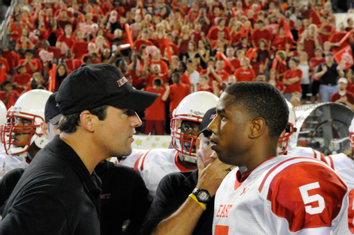
The final episode of “Friday Night Lights” airs tonight, ending a scrappy five season run. It took the DirecTV satellite network co-financing the show — in a unique deal that allowed it to air “Friday Night Lights” before NBC — to keep it on the air. So for Satellite subscribers the story of Dillon, Texas, has been concluded for months. For “Lights” fans, those concluding episodes — and the delirious reviews they garnered — have been a kind of shadow broadcast, a resonance from the void. The show has been haunted by its own ghost, these last weeks. It was kind of appropriate. This cat had only five lives, after all — not nine, and it’s lived in the shadow of its own mortality for every one of them.

It was never a hit. It always lacked the ingredients of escapism and weekly closure that make for profitable network comfort food. But that was what we loved about it. In the very first episode, golden boy quarterback Jason Street seems headed for a college scholarship and a legendary career in the NFL. He even looks a little like Tom Brady. Then Jason throws an interception and tries to tackle the other team’s free safety, as he runs it back for the touchdown. Jason makes the tackle but injures himself catastrophically. By the end of the show’s pilot we know that Jason Street has become a paraplegic. Peter Berg, the show’s creator, said somewhere that the NBC executives couldn’t quite believe this development. “He gets better, right?” They kept saying. “When does he walk again?”

“He doesn’t,” Berg told them.

And he didn’t. Instead the first three seasons of the show dramatized this extraordinary young man’s valiant efforts to come to terms with his handicap — from trying out for a professional wheelchair rugby (he didn’t make the team) to working as an assistant coach to Eric Taylor and selling cars for Buddy Garrity, his girlfriend’s father. Nothing works out for Jason until he lands a job as a sports agent late in the series. You can see how his persistence and passion could make him a success in that field. Along the way he loses the lovely Lyla Garrity to his best friend Tim Riggins, but not before Buddy explains in no uncertain terms that he won’t allow his daughter to throw her life away on a cripple.

“Friday Night Lights” was a show about a town, not just a football team, and Buddy Garrity is a perfect example of the program’s depth and humanity. He starts out as a loudmouthed overweight mover and shaker, the classic big fish in a small pond — plankton in a thimble. He’s a salesman to the core, and the biggest booster of the Dillon Panthers, lobbying for a bigger stadium and a Jumbotron … while the school can’t even seem to find chalk for the blackboards. This is an echo of the real Odessa, Texas, where Buzz Bissinger lived for a year while writing the original book-length reportage. His harsh view of a dirt-poor, football-crazed town earned him so much hatred that his cousin Peter Berg had to apologize, beg and grovel to shoot the film there. He kept his word: The movie was kinder to Odessa. The TV show left it entirely, setting its stories in a wholly fictional town that somehow seems more real than its actual counterpart, a fully realized setting, as vivid as Grover’s Corners or Winesburg, Ohio.

It’s a place where things don’t turn out well, as a rule. Buddy has an affair and gets divorced, loses his car dealership, and winds up running a local bar, trying to raise his estranged son alone. The smart people, like his daughter Lyla, get the hell out of town. Tim Riggins lives the apex of his life as a football star and then just drifts. His dream of “living large in Texas” with football star pal Jason Street falls apart before they even graduate from high school. He tries college and fails — he only got through high school because of local nerd Landry Clarke’s relentless tutoring. He winds up running a chop shop with his brother and going to jail to protect him.

In any normal TV show, when Tim came out of jail he would have changed for the better — taken some college courses, or found Jesus like Lyla did. He would have met some jailhouse mentor who would have steered him straight or given him connections for a better life on the outside. Not on “Friday Night Lights.” Riggins returns from jail bitter and angry, even more lost than he was before. If Tim finds any peace now, in the show’s closing minutes, it will be in tiny increments — reconnecting with his old girlfriend Tyra, giving up his crazy dream of working on the Alaska pipeline, coming to terms with his brother. It’s not much but it’s what we’ve come to expect from a show that never blinks as it stares down the harsh facts of real life. The moment last week when Tim, working behind the bar at Garrity’s, watched his old team-mate Smash Williams on TV score a touchdown for his college team reverberated with the whole history of their troubled friendship, and all the years we’ve spent with them in Dillon.

Matt Saracen is another good example of the subtle way “Friday Night Lights” uses the high school players to reveal the life of the town around them. Matt is in love with the Coach’s daughter, and the primary custodian for his grandmother, who is slipping into Alzheimer’s. Matt’s father is serving in Iraq and his return to town only reveals the unbridgeable gap between him and his son. Even the eventual funeral doesn’t solve or soothe anything. Matt is angry and frustrated and that’s the whole of his patrimony.

Fathers are scarce in Dillon anyway — star running back Smash Williams’ father is dead, Tim Riggins’ dad is just gone. Season three quarterback J.D. McCoy’s father Joe is an overbearing prick; season five quarterback Vince Howard’s father is a drug-dealing ex-con. The mothers carry the burden of raising their kids, from force of nature Corinna Willams to fragile Regina Howard.

The primary intact family on the show is Coach Taylor’s. Eric and his wife Tami have the best, most believable, most nuanced and realistic marriage in the history of network television. The day-to-day struggle of their relationship — Tami’s eighteen years of being a coach’s wife — feel inspiring daunting and familiar to anyone who has tried to raise a family under less than perfect conditions.

It’s a dense, teeming world, developed lovingly over half a decade, and because there’s no “hook” to the show (except high school football) it’s always been a hard sell, and not just for network advertising departments. I tried to get my ex-wife Kim to watch the show for years with no success. Even when it won a Peabody award she was unmoved. She just had no interest in football of any kind — but especially high school football. Nantucket, where we live, is almost as crazy about the sport (Go Whalers!) as Odessa, Texas, and indeed Buzz Bissinger who knows the island well, was originally planning to write his book about our town.

In desperation I gave Kim the DVD of the “Friday Night Lights” first season for Christmas one year. She never watched it. The next Christmas, after the presents were unwrapped and we were trying to digest the home-made sticky-buns, we were rummaging for something to watch and I found the still shrink-wrapped DVD in the cupboard under the television. Busted. She had no choice at that point.

Well, we watched the fist six episodes that day. Finally I had to leave. When I stopped by the next day Kim was upstairs watching season two on her computer.

Victory!

She’s mourning with the rest of us and she’ll be watching tonight along with a small dedicated group of die hard fans, as “Friday Night Lights” closes down its fragile, miraculous five-year run. Its audience over the years would have been enough to make a cable show like “Breaking Bad” into AMC’s biggest hit ever. It would have been enough to make any novel a bestseller to rival “Harry Potter” or “Gone With the Wind.” But it was on NBC, and it barely scraped by.

But the fact remains that watching this show felt like reading a novel, with a level of immersion that it takes hundred of pages of prose to achieve. This morning I’m feeling the same bittersweet dread I’ve felt so many times before, turning the last pages of books as diverse but enveloping as “The Lord of the Rings” or “The Corrections.”

I hate to leave Dillon, Texas, a fly-over fly speck I would never would have even wanted to visit in real life. Now I feel like some part of me will always be there.

Cancellation is a defeat, but this unlikely show had tremendous spirit, and admirers who fought for it, and it wound up doing much better than anyone ever predicted… just like the wrong-side-of-the-tracks Dillon Lions football team that Coach Taylor took to the state championships in this final season.

Win or lose, just getting there was a triumph, and you could say the same thing about these remarkable five seasons of “Friday Night Lights”.

Or as Coach Taylor always said, rallying his troops: Clear eyes, full hearts — can’t lose.

My childhood, in strange and happy snapshots

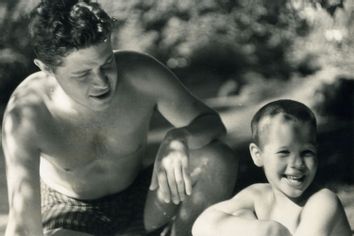
Hanging out with Jack Lemmon, watching my father work on film sets -- looking through photos, my boyhood zooms back

View the slide show

Rummaging through boxes of pictures when we moved my mother into a nursing home, I found a trove of old photographs and magazines. My whole childhood leapt out of the dusty boxes, as urgent and remote, as comforting and troubling as a voice on a forgotten tape, or the faint scent of perfume in a fur coat.

View the slide show

Why I’m still watching “American Idol” after all these years

Judges come and go, but the show stands out as one of the few authentic reality TV programs

Steven Tyler, Jennifer Lopez and Randy Jackson

 I’ve spent the better part of a decade defending “American Idol.” At first, I described it as a “guilty pleasure,” but I soon realized there was nothing to be guilty about. With the 10th season about to begin, it struck me as a good moment to explain just what has kept me watching it, all these years.

There were only six kids left in the competition when I discovered “American Idol” in the summer of 2002, toward the end of the first season. I happened on the show by chance, clicking through the channels on a sluggish Tuesday night. There wasn’t much else to watch, and the show — a charmingly modest, almost amateurish effort, by comparison with the current version — had certain obvious assets. The judges, affable insider Randy Jackson, drugged-out, effusive nutcase Paula Abdul, and brutally honest Simon Cowell, were fun to watch. I carry their voices in my head and amuse myself to this day with the tribunal’s critique of my daily life:

Randy: Yo, Dawg. How you doin? You stepped out of your comfort zone here, but It wasn’t the right subject matter for you. It got a little grammar-y at the end. So I dunno, it was just a’ight for me.

Paula: First of all I love your font! It’s just gorgeous. And your spelling is perfect as always. I don’t care what Randy syyays, I loved it. So witty and articulate! You have star quality! I love what you do. Just go on, be strong be yourself! You could win this whole competition. The post of the night! (throws a kiss)

Simon: Well. That was effusive. I’m not taking any psychotropic drugs so this will be rather more honest. Do you have a writing teacher? Fire him. I could see a screed like this in any tatty blog on the internet. It reminded me of that awful toast at your cousin’s wedding when the fat uncle refuses to shut up. If this was a thousand years ago, we’d have stoned you to death. You don’t have a chance in this competition. Sorry.

There’s a lot of what initially drew me to the show in that imaginary exchange — Randy’s stolid honesty, Simon’s snide flirtation with Paula and his ongoing merciless attack on the mediocre,  his comments always capped with the most insincere apologies ever uttered on network television; Paula’s loose cannon craziness that no one could have scripted.

Beyond the judges, the kids were talented. Kelly Clarkson won that year, but Tamyra Gray, eliminated in the round of four, was just as good, if not better. It struck me that summer, and I still feel this way, that “American Idol,” far more than “Survivor,” say, or “Undercover Boss” or “The Bachelor,” is an authentic example of reality TV: real kids, singing real songs to an audience of millions of other kids, who vote on what they like: That’s it.

My son once dismissed the show as “rigged” — I said, yeah, by the human genome. And a healthy collective dose of raging hormones. Generally speaking, the talented kids do better than the untalented ones, and the audience notices. During seasons 3 and 4, you could tell the ultimate winners — Fantasia Barrino and Carrie Underwood, respectively – after just a few weeks.

Nor was I alone in that perception; the voting was so massively skewed for Underwood that the show would have lost all suspense if the actual numbers (always top secret) had leaked out. Unlike the bizarre contrivances of other such programs — random weird contests in deserted places, a dozen women chasing one rich guy, or a boss going undercover at his own business … no one noticed the camera crew, I guess — “American Idol” has a simplicity that dates back to Ted Mack’s “Amateur Hour.” It’s not much different from the open mic night at a local club, or the high school talent shows kids have enjoyed, or sat through with gritted teeth, for generations.

This simplicity is the show’s strength. You get to meet a group of young, talented strangers and have the pleasure of matching wits, sophistication and taste with a trio of judges on the merits of their performances. That’s it — except for the suspense of seeing the final verdict  delivered by a massive, anonymous audience of shrieking kids, most of them 14-year-old girls. The video that went viral a few years ago of audience members responding to David Archuleta’s loss to the more sedate and mature David Cook gives you some idea of what the show has to deal with every week.

That audience has made some bizarre choices and some good ones, but I have never crossed over to the dark side and voted myself.

I just watch.

And what I’ve seen over the years has taught me a few things: You can be delusional about something as seemingly objective as music. The better you are, the less you need to do. And the worse you are, the more arrogant you sound. It’s interesting, this last point. You could string the sound bites together — the most atrocious singers swearing they were going to have huge careers and promising to snub Simon when they succeed; the winners all quietly humble and self-effacing. David Cook just showed up to keep his brother company. Crystal Bowersox, last year’s runner-up,  had been busking a few months before, and wouldn’t have been surprised — or even that disappointed — to be back singing in the subway again,  with her guitar case open on the platform.

Judges come and go — we’ll all miss Simon Cowell, but the heart of the show remains watching talented kids develop over the course of a season, and to see the best of them succeed. The show stays fresh because there are always new kids trying out, chasing the dream. Some are brilliant, some are mediocre; some are charming, some are annoying. But all of them are hard working and ambitious and strangely innocent in a cynical world, as is the show itself despite all its self-hype and product placement.

Every year I stumble out of the football season (that ultimate reality TV show), and ease into the gentler competition of “American Idol,” with the same spark of interest, the same renewed hope: This year I’ll discover someone extraordinary — another Jennifer Hudson, another Adam Lambert — and more often than not, it actually happens.

Will some spectacular new talent emerge this year? Like 24 million other people, of all ages and backgrounds, I’ll be tuned into this cheesy but compelling American institution, I’ll be watching and cringing, occasionally cheering, always hoping, always looking for the real thrill you get from a real talent coming into its own.

That’s reality. And that’s TV. And that combination still draws me back, no longer apologizing, 10 seasons later.

Continue Reading Close

How the Super Bowl won me over

I used to be a sports-hating snob. Then I fell for a fan and discovered football is the best reality TV there is

In 1977, the Oakland Raiders finally made it to the Super Bowl. I was living at the beach that year, temporary roommates with my best friend, Stephen Salinger, a life-long Raiders fan. He made food, invited friends in, cheered through the game and celebrated for days after the Raiders’ decisive 32-14 win against the Minnesota Vikings.

I went surfing.

He couldn’t believe it. I had to be the only man in America not watching the game. It was perverse, it was pathological. It was unpatriotic. But there was a swell running and, in a favorite phrase of mine at the time, football was just “guys jumping into piles” anyway. I thought I was “above” football, but the truth is I was a petty little snob from an Upper East Side, socialist-leaning family. (My mother voted for Adlai Stevenson. Twice.) We went to antiwar demonstrations and Pete Seeger concerts (yes, we sang along), not football games. Running photographs at half-time from Shea Stadium to the pressroom at the Daily News, years before, I had gotten a closer brush with the sport. I came away impressed by the sheer size of the players and the gladiatorial brutality of the game itself. But I wasn’t inspired to watch.

I later became friendly with one of the players on the field that day, Jets cornerback Steve Tannen. We sat in my step-brother’s living room watching another Super Bowl, and he explained what was going on. I still didn’t get it. My smug superior pose was like a suit of armor. I clanked when I walked. An actual NFL player was sitting on a couch with me, explaining the intricacies of the game, and all I could think was, “This is way too complicated for such a dumb sport.”

I might never have discovered the game at all, but around 10 years ago, something completely unexpected happened. I fell in love with a fan.

Annie and I worked together in my contracting business and we were painting a kitchen one Sunday afternoon, when she put on the radio. Not NPR as usual, but an AM station out of New York City, WFAN. The Giants were playing, and she didn’t want to miss the game. She liked listening almost as much as watching, which was convenient since the hated Patriots had knocked the Giants off the Boston television stations most Sundays.

Bob Papa and Dick Lynch called the games better than the boneheads on Fox and ABC, and she liked constructing the plays in her mind from their rapid-fire descriptions: “It’s third and 18, Collins in the shotgun. Amani Toomer split wide left, Cross to the right, Tiki Barber in the slot. Long snap from center. Collins back to pass. He has Amani Toomer up the left side line, he’s all alone … the pass is short, he comes back for the ball, makes the catch, in typical Toomer fashion, dragging both toes in-bounds. That’s a miraculous catch at the 12 yard line and — no, there’s a flag on the play. It’s coming back, folks.”

I didn’t understand most of this. It was like listening to cricket or curling. But Annie sure did. I’ll never forget her howl and rage and frustration at that moment, when it turned out that Roman Oben had forced the holding call.

“What the hell are you doing?!” she shouted at the radio. “They’re killing us with these penalties! You don’t hold there! Not there! Not now! We’re giving them the game! Why can’t they just let them play? Now watch! It’s fourth and inches and Fassel’s going for the field goal! Just give Tiki the ball! Let him run it!” But he didn’t, and the kick went wide. Another dismal day for the Giants.

But the fans were used to days like that, in the lean years before the great squad of the mid-’80s and the tough years since. And at the end of all those seasons, they’d just sigh and say, “Maybe next year…” There was always plenty of time to lick your wounds and prepare for the next season: It was a long way to September.

Eventually I learned the terminology, and more and more every Sunday I got drawn into the games. It had happened the same way for Annie, as a little girl, sitting with her dad, watching the games on television — or traveling to Yankee Stadium, and even the Yale Bowl, during those seasons when the Giants didn’t have a venue of their own. Football turned into the best way to spend time with him: It gave them an endlessly fascinating topic in common, and a perfect strategy for getting to know her otherwise difficult and remote father. A few years later I saw “Remember the Titans,” and thought I glimpsed a little of Annie in the white coach’s 10-year-old daughter, screaming at the TV. Not that much has changed. She still paces and chides and screams, “GO DEFENSE,” on those crucial goal-line stands. I don’t think Annie sat down once through the whole of Super Bowl 44, when the Giants triumphed in their rematch with the hated Patriots.

She’s had her glory moments as a fan. She submitted a song about the team — lyrics to the tune of Ora Lee — in a FAN contest, and won it. She wound up singing on the radio with Offensive Tackle Karl Nelson. Bob Papa had written “Good” on the sheet she submitted — as terse and emphatic as the call on an extra point. Some sample lyrics:

Twelve and Four

Twelve and Four

We are playoff bound

With Stephen Baker in the air

And Otis on the ground

A friend of Annie’s worked for the New Yorker, and the big day got written up as a Talk of the Town piece.

Cool.

The more I watched, the more I fell in love with the game. I gloried in the spectacular pounding the Giants gave the Vikings on the way to that other Super Bowl, in 2000 — and suffered through their humiliating loss to the Ravens, a few weeks later. We drove all the way down to Connecticut for that calamity. Annie’s whole family was morbidly in tune with the team, reading the mood on the field even before the kickoff. “They look flat,” her dad announced as the Giants ran out onto the field. It seemed nuts to me, but they were right. “It’s all about emotion,” Annie told me, and I began to sense that myself, feeling the shifts in psychic energy on the field with that crucial touchdown before the halftime, or the break in concentration when the other team called a disruptive timeout.

With the increasing popularity of so-called reality TV and the cultural ascendance of unscripted drama — from “The Amazing Race” to “American Idol,” from “Survivor” to “The Biggest Loser” — I started to realize a curious small truth: Football is our true reality TV, and our most fascinating unscripted drama. I had seen football movies like “Varsity Blues,” where the final victory was a foregone conclusion. In the actual game, anything can happen. An interception or a turnover, a miscalculated on-side kick, can turn a game upside down.

I realized that football defines itself through series of paradoxes. It represents a kind of utopian view of America, where people work together toward a common goal, a world without rancor or racism, a peaceable kingdom … where men are broken and battered in ferocious combat every week. It’s a brutal sport that rewards elegance and grace, that elevates men to unparalleled stardom through intricate self-effacing military teamwork; a bruising physical competition that relies on levels of knowledge and intuition and cerebral analysis that would give an MIT statistics professor pause. It takes place on a hundred-yard playing field, and yet any individual game can be decided by a matter of inches; it plays itself out over almost four hours but so often resolves itself in the last few seconds — that overtime field goal in the air as the clock runs down.

It draws families together, like Annie’s; and friends, like Stephen and me (we commiserate now, about the Raiders and the Giants); and cities, like New Orleans and Indianapolis, whose teams will be duking it out this Sunday in Miami. And it gives us an extraordinarily diverse cast of characters to enjoy: the old legends thinking about retirement, the kids scoring their first NFL touchdowns ever, in the autumn sunlight; the younger brother struggling in his brother’s shadow and the older brother moving closer to the title of greatest quarterback of all time, and closing in on it this weekend, beyond the glory of another ring. And the other players who’ll never get the ring — Tiki Barber, who retired too soon; or Barry Sanders, quitting because he was contractually bound to play out his career with a losing team. All the great careers ruined by traffic accidents and drug scandals, or by carrying a loaded gun in the waistband of your sweat pants and accidentally shooting yourself in the leg.

It’s a complex, fascinating world and I know I’m a part of it at last as I wait for Peyton to throw that first pass on Sunday, and wonder what happened to his little brother’s team, lying down to be trampled by the Vikings in a humiliating final game, and blow out a long breath and say, “Oh well. Maybe next year.”

I’ll be watching the Combine and the draft on the NFL channel, discussing the prospects with my family. (The Giants need help on their offensive line.) It’s not much, but I’ll take what I can get.

It’s a long way to September. 

Continue Reading Close

Robert B. Parker: Farewell to a tough-guy writer

How the crime novelist taught me to stand up for myself and taught my son about the carnal pleasures of reading

Robert B. Parker, photographed, Feb. 19, 1981 at home in Lynnfield, Massachusetts., is the creator of Spenser, a private eye with a difference in a continuing popular fiction tradition. ?Plots in the Spenser books are a way for him to manifest what he is,? says Parker. ?I?m interested in the character and the way he behaves and the way one ought to behave when one encounters the issues of one?s time.? The seventh Spenser novel, ?Early Autumn?, published in February, is to be followed by ?A Savage Place,? due in August. (AP Photo/R.W. Green)(Credit: Associated Press)

A version of this story first appeared on Steven Axelrod’s blog.

Robert B. Parker taught my son to read.

OK, that’s a slight exaggeration. He didn’t sit with Nick and sound out the vowels and work on the phonics textbooks. But he made Nick want to read and that’s more important than all the vocabulary tests and grammar lessons put together. I gave Nick “Mortal Stakes,” “Looking for Rachel Wallace” and “Early Autumn” when he was in eighth grade. Up until that moment he had never read a book for fun. Schools aren’t too big on fun, and don’t seem to understand the carnal pleasures and quiet consolations of a good book, whether you’re waiting on line for a movie (I read “Schindler’s List” waiting to see “Jurassic Park” — thanks, Steve), or waiting for your father’s funeral, which is when I burned through the Harry Potter books available at the time.

It was my dad who gave me my first Robert B. Parker Spenser novel, “Taming a Seahorse.” I had just landed at LAX after a long plane flight from New York. He handed me the novel and said, “This will take care of your jet lag.”

Dad loved Spenser’s tough, unsentimental style and his dry wit.

I remember Spenser correcting an unamused thug who had just remarked that “Everybody’s a comedian,” noting, “You haven’t said anything funny.” Threats like “I’m going to kill you” were always met with a precise and ironic “You’re going to try.” When Spenser goes back to the crippled billionaire whose family’s murder he avenged in “The Judas Goat” to ask for money so he can rescue Hawk in “A Catskill Eagle,” the old crank is amused by Spenser’s casual admission that his only interest is money and Spenser’s complete failure to suck up to him during the intervening years. Spenser never schmoozed and he never faked it. Some friend of Hawk’s once asked him, “What do you see in that big white guy?” And Hawk replied, “He does what he says he’s going to do.” For Spenser that constitutes a whole philosophy of life, but I remember thinking at the time — “That’s it? What’s the big deal?”

That was before a thousand missed appointments and a dozen fizzled partnerships, before a hundred letdowns, big and small — many of them with me at fault. Gradually, I learned the depressing, repetitive fact of life: Almost no one actually does what they say they’re going to do. I try to do it, as I try to live up to Spenser in so many ways. You could have a worse role model, though not a more exigent one. Spenser does things his own way. In “Early Autumn,” he’s hired to find a runaway boy. He tracks down the kid easily, but soon realizes that the parents are monsters and the boy, one Paul Giacomin, was right to run away. Instead of returning the spoiled, petulant little creep, Spenser takes him out to some land he owns in Maine and builds a house with him. He teaches Paul construction and fighting, the two things he knows best, and the kid turns out all right. In later books he becomes a ballet dancer and remains a true friend over the decades. Paul is just one member of the extended Spenser family.

When Spenser takes the job of protecting radical lesbian Rachel Wallace, he strong-arms some security people. They were trying to forcibly remove her from a political demonstration, and she wanted to be manhandled out of the place, to make a political point. She fires Spenser … and then gets kidnapped. Spenser finds her on his own, for no pay, out of simple remorse and obligation. Rachel Wallace continues to appear in later books, as does Patricia Utley, the high-class madam we first meet in “Ceremony.” Lawyer Rita Fiore, gangster Gino Fish, local cops Belson and Quirk are among the many other regulars in the books.

And then there’s Hawk, cool, impeccably dressed Cristal-drinking leg-breaker and equal member in Spenser’s freemasonry of American manhood. He doesn’t talk much, but he and Spenser understand each other. They are two Quixotes, cleaning the street gangs out of a Boston housing project for no money, making jokes about doubling their fees next time. Spenser is cool but Hawk is the coolest. Who can forget that scene in “A Catskill Eagle” where Hawk arm-wrestles some hulking mercenary in a bar, letting the guy press his arm to within an inch of the tabletop, stopping him there and then — when Spenser indicates that they have to go — effortlessly snapping the soldier’s arm in a 180 degree arc and slamming it onto the table.

Of course the primary member of the Spenser family is Susan Silverman, his gorgeous shrink girlfriend. I have to say I’ve never been overly fond of Susan. She thinks too much and she’s a little self-conscious. Also she eats like a bird. Driving down Santa Monica Boulevard in West Hollywood years ago I saw a bumper sticker that said “I’ll be your Susan if you’ll be my Spenser.” I pulled up next to the woman at the red light on Fairfax and rolled down my window. “You have a problem,” I said. “Susans are everywhere. But Spensers are hard to find.” She shrugged. She knew it, much better than I did. Oh well, there was always the next Spenser book.

Until today.

All we can do now is go back and reread them, along with the other great books, “All Our Yesterdays,” his Boston police epic; “Wilderness,” his thriller-writer-witnesses-a-mob-hit-and-finds-himself-living-one-of-his-own books adventure; and of course his glorious, late-career western trilogy (“Appaloosa,” “Resolution,” “Brimstone”) with Spenser and Hawk reimagined as itinerant gunmen Everett Hitch and Virgil Cole.

Parker taught me to appreciate scotch and soda, stand up to bullies and finish the extra set of sit-ups. He taught me how to make a fast meal and break into a window by chipping out the glazing. He taught me that solving a case has more to do with poking at a situation waiting for things to happen than finding clues. He made Boston appealing (even without a GPS). More than that, he made adulthood appealing, for three generations of my family — my brilliant, alcoholic father, my hesitant pre-adolescent son, and me. Someone once remarked that I was always in search of father figures. Maybe it’s true. I know I lost another one on Monday morning.

He died at his desk, writing, That’s the way any writer would want to go. The police said there was no sign of foul play. That was oddly disappointing, a brackish dousing of reality. A writer found dead at his desk in a Parker novel would spark another fascinating case for Spenser and Hawk. Susan would chime in with the psychiatric angle: an angry editor? A pathological fan? A jealous mystery writer? They would track it down, between runs along the Charles and workouts at Henry Cimoli’s regrettably gentrified gym. (It has potted plants now.)

This is real life, though — and Parker is just gone. But his people remain, caught in time, unfaded, reliving their adventures, forever.

Parker taught my son to read; I suspect he’ll be teaching my grandson, too.

Continue Reading Close
www.salon.com/writer/steven_axelrod/index.html