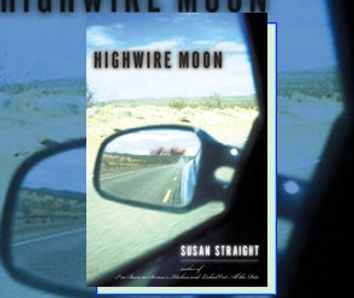
Susan Straight

My backroad memorial

My favorite memories of my brother are of him in the driver's seat, tearing down dirt roads. So on nights when I miss him more than I can bear, I just turn up the radio, roll down the windows, and speed.

  • more
    • All Share Services

My backroad memorial

About 10 times a year, I get completely airborne in my vehicle while speeding over the railroad tracks just past my daughters’ elementary school a mile from our house.

The feeling of the van leaving the asphalt and the metal rails perpendicular to the tires, the whole body suspended for a moment — and then, in my imagination gathering itself like an animal underneath me, legs curving while flying, and slamming back down on the other side — is something I cannot give up, even though I am a single mother with three girls who lives a near-saintly daily existence of work and school runs and practice and laundry.

The fact that my car is an 11-year-old green Mercury Villager van, with honor roll bumper stickers, and dents put in the body by hit-and-run idiots, doesn’t negate the fact that my car has enough power to fly up over those tracks, to fly around curves on desert highways and orange grove dirt roads.

I speed up when I see the tracks, when it’s late at night and I’m alone in the van after dropping someone off for a sleepover, or picking up something near midnight at the grocery store, when I feel so lonely for my old, sometimes-wild life and my gone brother that I have no other choice but to turn the radio to Van Halen or AC/DC and pretend he and I are still driving together and not giving a damn about safety or sanity or anything but the pounding music and blur outside our open windows.

The windows have to be open. Because that’s how it always was.

My brother, three years younger than me, was the only person in the world with my exact genetic heritage. I have half-brothers and -sisters, stepbrothers and -sisters, foster brothers and sisters. But when my brother’s thick blond hair hung to his waist, as it did for more than 10 years, even our grandmother mistook us for each other from behind.

All my best memories of my brother are in vehicles, speeding, predatory or celebratory. We were just made to drive. For the last 12 years of his life, he lived as caretaker of an orange grove. There, on 18 acres, my brother collected cars and trucks and motorcycles. He raced around with my daughters and me in a golf cart. He tied our old dishwasher and a refrigerator to junk cars named Gumby and Monkey and had demolition derbies in the vacant land near his well. When he drove alone with me in one of his trucks, taking me to see a hundred-year-old citrus grove, we clattered down washboard dirt roads and flew over ditches. Our backbones rattled and I felt an unmatchable exhilaration.

When he came down “to the city” to see us, to kill a skunk or gopher for me, or to deliver oranges to us and his other, true cash crop to others, people who waited all year for him, my brother always had a dog on the front seat, and we could hear him blocks before he arrived. Van Halen or AC/DC screaming from the cab, his tires screaming around our corner, and once he was driving down the wrong lane, hollering, “I changed my mind — I want this side now!”

He and I drove together across the country in 1983 — 24 years ago and I remember it every day — when he came to help me with the long journey home from graduate school in Massachusetts . He arrived by plane, and I didn’t know he was carrying at least a pound of homegrown. I was 22, and he was 19. I didn’t know why the three guys next door to my apartment were looped for days, until my brother and I packed up my Honda and I heard their pained laments at his departure.

We drove to Pennsylvania, stayed with a good friend, and my brother charmed everyone in her tough city by distributing a bit more smoky happiness. He had money. He bought gas. And I left my intellectual and very safe life behind, watching my brother take in the landscape without fear. We headed through West Virginia, and he rolled his own while I drove 90 down the interstate like I didn’t care about college and my fiancC) or cops, and he played Bon Jovi’s “Dead or Alive” and Jimi Hendrix’s “All Along the Watchtower.”

We rolled into Sandusky, Ohio, and then straight through to the dryland high plains of Colorado, where our father was born. We raced down miles of country dirt road through wheat fields. We met our father’s father for the first time, and spent days painting a relative’s eaves. My brother smoked at night under a huge moose head in the den, brazenly, never afraid, until we got restless and sped off one morning and went straight through Utah and Nevada, Las Vegas and then home to Southern California.

Nothing has ever felt that way to me again. Not driving with my husband, or my daughters, or alone.

- – - – - – - – - – - -

Our father loved to race cars. As a teenager, left on his own by neglectful parents, he was desperate to survive, but when he had money, he customized mufflers on old cars, adding sewer pipes and glass packs for maximum sound effect, and he street-raced. My mother and father split up when I was three and my brother was still in the womb.

He moved 30 miles away, and later, he actually worked in the pit for the Fontana Motor Speedway. I remember him reverently mentioning Richard Petty and Mario Andretti — their rhyming names like magic. My father taught me to drive, when I was 16 and visited him once a month. He had spent his life on the road, as a salesman for everything from cigarettes to hardware. He’d sold things to people along routes that took him through the deserts of California and Arizona and Nevada, and all along the freeways of Los Angeles and Riverside and San Bernardino Counties. He taught me well, knowing those asphalt trails and currents better than he knew most people. Between his house and my mother’s, we drove in his white 1970 restored Mustang down endless gray lines of road between abandoned vineyards. He taught me never to swerve for an animal, always to stay away from the right side of trucks, and to respect the speed of the car and the traffic and not drive too slowly, which would make good drivers hate me.

Now I have to drive slowly every day, as we all do in Southern California, where the constant congestion of traffic is like nothing my father ever saw. And now I have a van full of girls, my own and other girls — neighbors and basketball players and friends. Sometimes, my mother rides in the passenger seat, worrying aloud about every lane change and, always, that I am driving way too fast.

Driving fearlessly and pharmaceutically fueled, my brother wrecked eight cars in his lifetime — one of mine, one of my then-husband’s, one of our stepfather’s, and the rest all his own. He died when his truck plowed into a palm tree at the Jack in the Box near my house, in February 2003.

It was purposeful. He was fleeing police who wanted to question him about a crime his best friend had committed. He didn’t want to betray his friend. In every other accident, he had escaped without more than scratches.

When I miss him more than I can stand, there is nothing to do but drive to the desert, where I can move the van at speeds up to 85 or so, playing “Running With the Devil” while the gold sand and smoke trees stand still in the distance near the dunes, while the other cars on the freeway are only blurry shapes around me.

Everything about it is wrong. The music is bad for my hearing. The speed is foolish. Even writing about it feels dangerous, as if I’ll be paid back, and I’m afraid even as I type. I am the sole support for three children. I am a good mother and neighbor and daughter and friend and basketball team fundraiser and teacher and aunt.

It’s been embarrassing for the girls sometimes. When my youngest was in kindergarten, an especially self-righteous group of mothers would gather at the playground fence before school let out, and they’d glare and gossip when I pulled up at the curb, “Highway to Hell” blasting from the open windows.

The first time the van went into the air my girls were with me. We were late for basketball, when we played in a Sunday-morning league, and I wasn’t paying attention to the recent repairs on the railroad tracks near the school, and we hit the new bump and flew and they gasped and thought it was fun but it gave my oldest girl a headache that lasted for hours. “I’m sorry,” I told her, over and over, when we were at the gym. “I didn’t realize I was going so fast.”

But she knew I’d gotten a thrill from the feeling of flying, and she grinned. All her life, her father had been telling her stories of my wild driving.

I’m not reckless, or mean, when I’m driving all those girls to basketball games or study sessions or school shopping. I’m extremely efficient. I’m famous for my politesse on city streets.

So I will only get airborne then, when no one else is around. I will only drive really, really fast in the orange groves, or on desert stretches near Cabazon and Whitewater.

I just like to feel my car curve sharply on desert roads, to move my own body with the vehicle’s force, to get airborne and slam down and feel the tires catch and grip and scream just a little before I have to come back to earth and responsibility and the red light on the street that leads to my house, where I will sit on the porch and love my daughters and my yard and miss my brother and our youth. I just want to remember that life, that reckless freedom, that wind speed whipping my hair into my neck, that guitar and my brother’s singing.

- – - – - – - – - – - -

I hadn’t driven the groves since last spring. That’s when the white blossoms cover the trees like stars, and the heavy smell of orange blossoms fills the air for miles, and the dirt roads are my favorite place to rush past and let loud music and the perfume and my tears be my memorial to my brother.

My ex-husband lives nearer to here, and he’d told me the groves were being bulldozed for offices and warehouses, but I hadn’t known the ghost house would be gone. It was nothing but a river-rock wall and foundation, a chimney and hearth, on top of a small boulder-strewn hill overlooking miles of orange groves and facing east. My brother and I played there all of our childhoods, walked along the canals to the old foundation and imagined it was ours, that we’d rebuild it someday.

The grove was gone, and I expected that, but the whole hill had nearly disappeared. Bulldozers had demolished the wall of the river rocks, which stood in a pile nearby, and now were carving at the hill itself, striations and scrape marks on the earth, which stood like a half-eaten cupcake.

I didn’t cry.

I sped through the signs that read “Construction zone” and “No entry” and raced along the old dirt road past the bulldozers and piles of rubble, my van scraping into gullies and getting airborne over these old railroad tracks, too. My brother and I had always ridden our bikes here, and later, raced cars. One of his friends had died on his motorcycle, hitting the train that ran this crossing. I drove until I was inside my own cloud of dust, like a giant brown dandelion around me. My brother and I had seen a dead rattlesnake here once, and beehives and jackrabbits and coyotes. The van fishtailed a few times on the dirt, and I jounced up the washboard road to the edge of the Box Springs Mountains, where our childhood home was on the other side, and skidded to a stop at the dead end.

On either side of me were new office buildings, for sale or rent, empty, their walls of glass windows in those two unnaturally fluorescent shades of green and blue. It was 1:02, a Saturday morning, and the whole place was silent except for the sprinklers on the grass, which edged the burnt-tumbleweed vacant lot. My dust cloud settled around me, not magical but ordinary, like cake flour on my windshield. Then a roadrunner stepped out of the tumbleweeds and twitched his tail, again and again, and he headed for the sprinkler. My engine clicked, and he cocked his head at me, and I put my arm on the hot window frame and laid my head there and watched him. I never turned down the music: “Sympathy for the Devil.” And he raced past me as if he didn’t mind.

Flooded and forgotten

Louisiana is still devastated, and its people -- black and white, rich and poor -- feel like the rest of the country doesn't care.

  • more
    • All Share Services

Flooded and forgotten

This week about 17,000 librarians and exhibitors from around the nation gathered in New Orleans for the American Library Association annual conference. It was the first large-scale convention from a national organization to return to the city that was once a prime choice for mass gatherings that allow people to talk work all day and then party all night.

But, of course, the partying is subdued these days in New Orleans. The French Quarter is open for business, music cascading from open bar doors, the smells of spicy food mingling with shouts and laughter. The city is so grateful for this convention that welcome banners hang everywhere, saying, “We’re jazzed you’re here!” (And in many souvenir shops, newly printed T-shirts proclaim, “Librarians Do It by the Book! ALA 2006.”)

Other T-shirts serve as reminders of last year. “FEMA Evacuation Plan — Run, Bitch, Run!” And “Girls Gone Wild — Katrina and Rita” printed over two swirling hurricane images strategically placed on the chest.

And nearly a year after Katrina, many parts of the city are still utter wastelands, streets full of cars and boats and debris but completely empty of people, and even the historic shutters that once shielded windows from hurricanes are being scavenged and stolen and sold from houses where no one expects to return. It was true — unless you’ve seen it, and smelled it, you can’t truly understand.

I was there in Louisiana to speak to librarians, as my new novel is set in the state during the early 1800s. Inside the Ernest N. Morial Convention Center, once the site for some of the most shameful and frightening sights American saw on TV after Katrina, thousands of librarians discussed books and technology and testing and literature.

But to get there, as hundreds of us were stranded by bad weather in Houston, I flew to Lake Charles, La., rented a car and drove across the state in the middle of the night. On the flight, I sat next to Andrea Austin, who is a third-generation native of Lake Charles. She remembers being 2 years old during Hurricane Audrey, in 1957, and watching floodwaters approach her grandfather’s pharmacy on high ground. Many Americans, focused on the devastation of Katrina, have forgotten that Rita bashed the rest of the state with equal force. Trying to explain to me how Cameron and Calcasieu and other parishes were devastated by Rita, and now feel forgotten, Andrea, an executive for Budweiser, gave me a stark sentence. “I had 110 accounts in those parishes before Rita. Now, nearly a year later, I have one.”

Of all the restaurants, markets, liquor stores, bars and groceries she served, only one has reopened — the Hackberry Market, she said, incredulous.

Her own house was damaged, with a huge tree crushed into three bedrooms. Everyone she knows had wind or water damage. But no one can get contractors, or supplies, to repair homes or businesses, because with no stores, no schools, and no rental housing, where would contractors or low-wage workers live? Her roof was finally repaired last week.

The Lake Charles airport sustained so much damage that terminals are housed in tents, and the car rentals in trailers. Andrea Austin told me she wasn’t sure where I could get food, as many restaurants are only open two nights a week, because there are so few workers.

She was the first of many who mentioned how thousands of people still in Houston or San Antonio or Dallas may not come back. She was the first who told me she thought her state was being depopulated by way of neglect and indifference.

In New Orleans, I heard the same stories, from people of all races, ages, economic backgrounds, and temperaments. Some thought the indifference was purposeful, the neglect not benign.

Steve Alfonso, a limo driver and resident of the city since 1952 when he emigrated from Cuba as a boy, is living in a FEMA trailer in Kenner, in the yard of his damaged home. He is frustrated by his inability to repair his home, which suffered wind and water damage, though less than that of others. “Who would have thought one-eighth of an inch would make a difference?” he said. “That meant the water from my property flowed down to my neighbors.” Still, his house is unlivable, and he lost his business. “It seems like this is just an opportunity for people to rip us off.”

Another driver, who lives across the bridge in Gretna, had a tree damage his house and rental, and has been living in his kitchen since August, since his insurance company has refused so far to pay. “You wait and wait, they offer you a tiny little amount, and then they shrug and say you can file a supplemental claim and wait another six months. They’re really hoping you give up and leave.”

People showed me neighborhoods of tiny rentals, and neighborhoods of huge brick homes, all vacant and ghostly and irredeemable according to insurance companies and the federal government, which is still debating levees and elevations and which, according to so many Louisianians, is still debating whether their state and their lives are actually worth enough to care.

“We have no electricity, no water,” others told me. “They just opened a store last week in my neighborhood, and a lady was holding a bag of chips and crying. People were just walking around her and nodding, because they understood. We haven’t been able to buy food.”

That first night, walking the streets and listening to people who found out I was from California and wanted to tell their stories, as if we were in a war zone from which only I would eventually escape, I realized that they felt completely abandoned in a way I can’t imagine.

I am from a state where fault lines run everywhere — where earthquakes have destroyed cities that were then rebuilt, where wildfires obliterate communities nearly every year, where mudslides take out houses in upscale beach towns again and again. In California, people are reimbursed by insurance companies, and then they rebuild in the same places, over and over. La Conchita, buried by mud in a horrific slide in 2004, will see new homes on the same slope. Scripps Ranch and other San Diego neighborhoods erased by wildfires in 2004 have already risen from ash. The Oakland hills, devastated in 1991 by one of America’s most costly and destructive fires, are covered with houses again.

All over America, people rebuild homes that lie in tornado paths, on fault lines, near levees and rivers and dams, in forested areas prone to periodic wildfires. How can it be, these Louisianians asked me, with fury or fervent prayer or sighs of resignation, that our state and people are worth less to the country? “We don’t feel like Americans,” I heard again and again, and I was reminded of the plaintive cries to television reporters during Katrina’s floods — “I’m a citizen of America! Not a refugee!”

I tried to visualize my own modest neighborhood in Southern California still filled with debris 10 months after an earthquake, still without power or water or markets or schools or libraries. And me, with my three daughters, in a small trailer. Nearly a year? And no one to even tow away the cars, or cut up the fallen trees?

What would help? I asked. “Someone needs to oversee this, like they finally did during the evacuation,” one man told me. “Get somebody from the federal government down here to systematically figure out the insurance, the levees, the infrastructure. Because it’s already hurricane season again. But it’s like — oh, it’s only Louisiana. Do you think they’d treat California like that?”

I shook my head. Then I thought of another T-shirt hanging in a window in the French Quarter — “Make Levees, Not War.”

On my last day, the young waitress who had befriended me during breakfasts approached me hesitantly. She said, “Are you with the librarians?” I told her I was a writer. “Oh,” she said, sounding disappointed. “My sister told me the librarians might be giving out books.”

The way she said the word — books – was as if they were gold. “My daughter loves to read,” she said softly. “But we don’t have any books.”

Tonia was from the Ninth Ward, and evacuated with her mother and daughter the day of Katrina. She was eight months pregnant, ended up in Dauphin Island, Ala., until last month, when she returned with her children to live in her mother’s house in the Central Business District. She’d lost everything, and will never return to the Ninth Ward. But she’s working at a hotel, as is her sister, and her daughter still loves words.

Only two of the city’s 12 libraries are reopened. Most are listed as “devastated,” and this week, hundreds of ALA volunteers are cleaning libraries and trying to restock. But it will take months, and if no one rebuilds in Cameron Parish, or in the Ninth Ward, whose children will read our books?

I told the exhibitors at Random House about Tonia’s daughter. Her name is Natae. She is 9 years old. Random House sent a bag with 20 books for her — everything from picture books to young adult paperbacks. Tonia had told me, “She’ll read anything. Anything.” I left the books at the hotel for her, and since then, I’ve wondered about their lives, and whether they liked the books. Natae must be like my own daughter, who cannot go a day without reading.

I thought about books themselves, the pages and covers and sentences. Several years ago, writers were told that books were becoming irrelevant, dying as a source of entertainment and solace. We were told that e-books and computer reading and even books shrunk to cellphone content were the way to come. But even with no electricity, hands can hold a book, and eyes can travel. When I was a child, only books offered escape into completely different worlds from my own, in the hundred-degree California heat, with ashes falling from the fires that burned every summer in the foothills near my house. As a novelist, I still feel the same way. Holding another universe in our hands, as I pray Natae is this week, is sometimes the only way we come to know one another. I became a long-distance lover of Louisiana through books, and I went there to write because there was no place like it on earth. After this week, it’s clear to me that Louisianians wish the rest of America knew them — their unique landscape and homes and work and voices — well enough to not forget them.

Continue Reading Close

Flesh and blood

On Memorial Day and other holidays my extended family gathers to tell stories and to consume large quantities of meat. The bounty reminds us of suffering, and hunger, and the long roads that led from Oklahoma and Florida to here.

  • more
    • All Share Services

Flesh and blood

“Seriously, Mom,” my oldest daughter said. “Everything we ate had meat in it. I thought there was gonna be meat in the fruit salad.”

We were driving the two miles home from another family gathering in my father-in-law’s driveway. There had been only close family that day, which meant nearly a hundred of us — blood relatives, relations by marriage and years of friendship. This Memorial Day, there will be more than a hundred people again. My ex-husband and his brother and his cousin will buy more than a hundred pounds of meat.

For the feast that day, as always, we women brought our signature dishes, and meat was everywhere.

The men barbecued. Pork ribs like huge xylophones on the oil drum grill. When they came off the grill, a cousin cut them apart with a hatchet. Chicken, hot links, hamburgers, hot dogs. We had a fish fry, too, because cousins and friends had caught 30 trout at a local lake.

The side dishes? All my sisters-in-law and female cousins and I were responsible for our specialties. Barbecued beans with sausage, green beans with bacon and salt pork, black-eyed peas with neck bones and salt pork, collards with softened meat floating amid the tangled ribbons of green, and my dirty rice with saffron, black beans and lots of hot-pepper sausage.

There was no meat in the ambrosia or the potato salad, but my three girls were suspicious.

“Practically everyone in our family is worried about weight,” my oldest daughter said. “And look at the way we eat.”

“We have meat because no one had any in the old days,” I explained.

She knows we don’t eat like that every day. But on special occasions, meat is our means of displaying survival, and prosperity, and pride.

Our elders came here from Oklahoma and Florida and Louisiana and Mississippi, the great-uncles and cousins and neighbors who survived war and Depression and floods and farms and hate, who made it to Southern California to sit on folding chairs in the driveway and living rooms with a plate of ribs while they tell stories.

While we strip the soft meat from the rib bones, holding them aloft like gleaming instruments, we listen.

My daughters’ grandfather and their great-uncles and aunts have often told stories about how they survived on whatever they shot in the fields and woods of Oklahoma. During one Super Bowl Sunday years ago in Inglewood, when the table groaned with pigs feet and spaghetti and chicken wings, the great-uncles all talked about their least favorite of possum, raccoon, rabbit and squirrel. Someone described how the possum had to be parboiled first, before roasting, to take out the gamey taste. And squirrels — nothing but bones, someone else said. Recently when I was visiting my father-in-law, sitting on his bed while he told stories, he said, “Sometimes I wonder if there were any squirrels left after we got grown and moved to California. We shot so many squirrels the snakes started showing up everywhere.”

“Y’all didn’t eat snake?” my ex-husband teased him.

My father-in-law shook his head. “We wouldn’t eat that. Not snake.”

My own father has stories of eternal mutton from his childhood on a sheep ranch in the Rocky Mountains of Colorado, and of parasite-ridden bear meat he ate when someone went hunting, I reminded my daughters. His family migrated to the Echo Park neighborhood of Los Angeles, then to the outlying city of Upland. When I was young, his favorite place to take me was In-N-Out Burger, for a double-double. I could never get my mouth around the hamburger, with its two thick beef patties still steaming, but my father loved to sit at the cement tables near the takeout window and watch me. He’d always finish his double-double quickly, and he often said to me, “When I was a kid, we ate milk-toast for breakfast and beans for dinner.” Deprivation was the common theme for most of our ancestors, no matter where they lived.

Relatives my own age have stories of hunger, too, because of circumstance or bad marriage or alcohol. Sitting in my own driveway, our cousins and friends have talked about growing up in Texas, shooting blackbirds from the sky with slingshots and BB guns and roasting them there in the fields, of even shooting pigeons in West Riverside.

This holiday, one cousin who has known hunger handed me slabs of meat glistening with barbecue sauce. I helped pile the ribs and chicken into huge foil pans, some of which we put out for everyone, and three of which we hid in the oven.

People in the neighborhood see us gathering, and they smell free meat, he says, sometimes angrily. This time, I watched when one neighbor my age came up the driveway, all hearty smiles and welcome, and our cousin said loudly, “What you bring? Nothin’, like always?”

The smile faded, and then came back wider. The man wanted a plate of food, as he does every holiday. But our cousins are tired of giving meat to everyone, so I was instructed to follow the man inside and make his plate for him. Salads, side dishes, and one rib, one piece of chicken. No more.

“Come up here wanting meat every time, a whole plate of it,” our cousin said, loud enough. “Don’t know what all that meat costs.”

In the car, that night, my oldest daughter said, “And people were mad about that one guy, and you had to make that plate for him.”

I explained it again, but this time, I felt that she knew the reasons, and she wanted to hear them as familiar tales of comfort. She had been unnerved by our cousin’s vehement protection of the ribs. “Do you understand what the meat means to them? It meant survival. Your dad and all your uncles pay for all that meat every time.”

I think of my children and their friends, the generation of chicken nuggets. Chicken meat like sawdust with additives to glue it together. The generation of fruit snacks, molded from liquid, rather than actual apricots and plums, which we and our cousins lived for. The closest thing we had to fruit snacks were the ruby jewels of the pomegranates we stole from our favorite tree down an alley. The generation of pepperoni beef stix and popcorn chicken and thin grainy patties of whatever is truly in fast-food hamburgers.

I think of the way my girls hold the rib bones in their fingers and chew and look and listen. I watch their father’s cousins pile more on their plates. They know, we all know, what the children are ingesting with the meat.

I said to my daughter, knowing she would smell the barbecue sauce under her fingernails the whole night, “Do you understand all those stories people tell? Like Mr. G?”

Mr. G is close friends with my father-in-law; I have known him most of my life, but I was surprised when one day, he sat on my porch after working on our roof, and told me about his pig.

He was born in north Florida, and before his birth, his own father died in an accident in the pine forests where turpentine was harvested. The family was starving, and though he was the youngest, he was the most fierce. When he was 7, he took a hammer and walked to a neighboring farm, where he killed a pig and dragged it back to his mother’s house. “I was so hungry, and I was tired of waiting for me some meat,” he told me.

He has been a roofer for many years, owns three houses, drives a Navigator, and sent two children to college. But he still remembers that pig, and he told me about it for a reason.

He smelled ham in my kitchen, from the holidays, and he teased my daughters. “You eat you some ham?” he used to say to them. They were afraid of him, his red-brown face burnt from years of working in the Southern California sun, and his eyes a startling turquoise.

But he and the other elders figure our kids need to hear about the pig, and the hunger, so they’ll understand meat, and need, and why we gather in the driveways and living rooms to cook flesh and share it and sit together, alive and prosperous and watchful.

Continue Reading Close

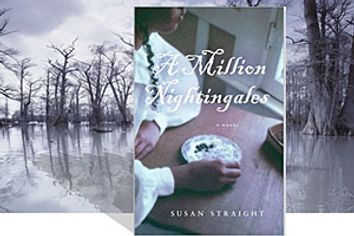
“A Million Nightingales”

In an excerpt from Susan Straight's new novel, a mixed-race slave girl tries to outwit her captors.

  • more
    • All Share Services

Even as the new Msieu spoke, not looking at us, the new slaves, but at his own hand moving over the paper as he wrote, I didn’t listen.

I don’t belong to you. My mother always said I didn’t belong to the old Msieu, and I wouldn’t belong to God until I died. I belong to her. I am hers.

“What is your name?”

We stood in the yard between the kitchen and the house. The wind had grown colder as we came further north from New Orleans and the Barataria, where he’d gone to Lafitte to buy the stolen Africans. He said we were near Opelousas now. The trees here were bare of leaves, their branches dark as though burned.

“Can you speak any French?” the new Msieu called out.

None of the Africans answered.

The new Msieu sat down at a wooden table. He took papers from his coat and spread them out. He wrote January 19, 1811.

“Athenaise is your name,” he said, toward the first African. “Sometimes they learn words on the ship,” he said, turning toward a driver on a horse, a man with a sparse red beard like ants on his cheeks. “Not this group. So expensive. I even had to buy the chains from Lafitte,” he said.

“Athenaise.” The finger stabbed the air before the first African. “Athenaise.” Then the finger moved sideways, to direct the African to shuffle slightly nearer the driver.

“Gervaise. Apollonaise. Helaise. Livaudaise.” Each time, his finger stabbed toward a face, then tore sideways through the air.

A white woman stepped outside now. Her dress was calico, fine figures not faded by too much washing. Not as fancy as the old Madame.

She swung her head slowly around to each figure in the yard, peered toward the backs of the leaving men. “I heard you say Lafitte. You went to Lafitte, the privateer?”

He said dismissively, “For the Africans. Not the girl. She was nearly given to me, south of New Orleans.”

Given to him. The old Msieu had not wanted to see my face again, after his daughter died. His child was gone. My mother’s child would disappear, too.

He pointed at me. “I don’t like African names. But certainly you are not African.”

I was half Bambara. He knew nothing. He didn’t know I could read a little.

The Madame said, “What can you do?” She sounded as if she were choosing cloth. “How old are you?”

“Fourteen, madame,” I said. The small Msieu’s pen scratched again.

If I said washing and ironing, what my mother had taught me, I would stand every day in this yard. I would smell someone else’s soap, not my mother’s, and hear someone else’s words at my ear, and I would never be able to run from the closeness of this yard.

“The field,” I said.

He had already written Creole mulatresse, 14.

His finger drew the same slanting line toward the driver. “Name?”

“Moinette,” I said.

- – - – - – - – - – - -

A blanket, a bowl and spoon made from gourd, and a cape. That was what the woman named Sophia handed me. She said, “You from south? Past New Orleans? Get cold here. Cold and ice.” She showed me how the hood lifted up, for when wind scoured the fields.

Hers was the second house on the street that ran down le quartier. Across the barnyard was the drivers’ house - Mirande and Baillo, fox-haired brothers from France. “One sleep, one ride all night keep a eye on us,” Sophia said.

Inside Sophia’s door was a front room: a fireplace, a table and three chairs. In the back room were six wooden sleeping shelves, two on each wall.

Sophia put her hands up to her face and rubbed. Her fingers disappeared in the hair at her forehead. “Why they put you here with me? So tired. I don’t have time for someone else.”

I didn’t belong to her, either, so I didn’t answer. I held my apron in my lap, my fingers on my mother’s stitches.

Two girls entered, picking splinters from their skirts.

“All that wood we carried,” the smaller one said.

Sophia said, “This Fronie. She ten. She mine.”

“Fantine,” the older girl said. “I my own.”

Sophia heated water in the fireplace and poured it into a washtub. “You wash. Moinette. Don’t want bugs in here.”

“I don’t have bugs.”

“You got something.”

I had my bundle - my apron tied around the coffee beans and clothespins my mother had handed me that morning for my work in the house, before the old Msieu’s daughter died, before he sold me. She gave me coffee beans before she knew I would disappear as if drowned, taken away by the river.

I pushed my apron to the far corner of my sleeping shelf. I didn’t know yet who stole here. When I took off my dress, sand fell like sugar around my feet.

“Yellow girl,” Fronie said. “What color your blood?”

I pushed myself down into the hot water. Then I bit at my thumb until the red dripped to my palm and held it out so they could see.

- – - – - – - – - – - -

The next week, men in pirogues brought moss. They left the boats, piled high with gray tangles meant for mattresses.

We walked from the fields. Sophia said, “They say two men argue with Msieu up there, bring all that moss to sell, but Msieu tell them cure it first and bring it back. My people too busy for moss.”

It was my turn to grind our corn. I took my other dress off the peg, rolled it with my clothespins into a bundle and tied it to me with my apron strings. I wrapped the bag of corn into my cape, turning away from Fantine.

I walked behind the privies, to the narrow ditch where they were perched. The ditch ran to the little bayou in Msieu’s woods. The smell of our leavings was strong.

At the bayou, a smaller pirogue trailed behind the larger. I got in, untied the rope, hunched myself into the moss up to my waist. It was high enough to hide me if someone saw the boat. The sun was hot red in the trees. I picked up the paddle. The pirogue slid fast down the narrow bayou.

I needed a story. Someone would see me, someone would have to take me south, and I would have to tell a story. Or pay with my own skin, with what all the men wanted, to get back to New Orleans.

The trees were lit from behind as if on fire. No one would be looking for me yet. The moss-sellers were having coffee with Msieu and Madame now.

The water pulled me of its own strength, until the sun disappeared as if it had died. The boat moved of its own accord - black air, black water, and I was invisible.

When I was this afraid, as when the old Msieu’s daughter had stopped breathing after the doctor removed the leech, when he forced me off the landing into the new Msieu’s boat, my heart hurt so badly that there must be a tear, a gash. Did the heart repair itself? Were the scars raised and shiny like those on our skins?

The boat moved for a long time, until I was afraid to keep floating in the dark, not knowing where I was headed. I saw a caved-in place in the bank, where roots dangled. I held on tight to a root, listening to evening birds in the branches. Finally my stomach beat hard with hunger. I put three dried corn kernels in my mouth, trying to cook them with my saliva. Hot liquid. I was an animal now.

Then I felt the rope. A rope was looped around my neck.

Crime against God. I couldn’t breathe. They would kill me and then punish my body.

The rope scratched my throat, pulled from behind. I tried to hold the sides of the pirogue. No one would punish my body. It wasn’t theirs. It belonged to my mother. Then God. I rolled over the side of the boat into the bayou.

The rope went slack. I worked my fingers between it and my skin. But the water pulled me, too. My eyes opened. I breathed the water through my nose. The water in my hair, like floating in Mamere’s washtub when I was small.

Wood hit me on the back. Then my hair was pulled hard, my dress, my arm wrenched. I was in a boat.

An Indian man. His fingers twisted my hair to turn me back onto my stomach, and he put a foot on my back. His eyes were black as pot bottoms. He was the same man who had brought back Athenaise. He tied my feet to a ring set in the bottom of the boat and put his rifle over his legs and began to paddle again.

After a long time, we entered a smaller bayou through a tunnel of water oaks and cypress. The pirogue stopped at a raft of cypress trunks. Beyond them was a clearing, where a man in a boat pointed a long rifle toward the sky, but stared at eight black men up to their waists in murky water, swinging axes in the cypress trees. They were lit by his torch.

The Indian whistled.

The man swung around. Reddish beard and blackened teeth when he grinned. A crushed hat, a smear of mud around his eyes like raccoon, but the fingers holding the gun were white.

“A favorable expedition, I see,” he shouted.

- – - – - – - – - – - -

I had never heard a voice like his. Rolling and slurring. He spoke English.

The white man said, “Where did you run from, dear?”

I sat on the ground in front of a low shed with four doors. An Indian woman said something in another language to the Indian man. She held a rifle of her own, and nodded toward the black men who had walked up from the swamp.

The white man said, “I don’t want to hear those guttural Indian words, Sally.”

“I didn’t run. I belong to Msieu De La Rosiere,” I said, trying to remember all the English words. I hadn’t spoken English in a long time. “He sent me to gather moss.”

“Rosiere is north by five miles or so,” the man said. “Sure there are plenty of trees close to there for moss. You see, Joseph finds people when they run. Not when they gather moss for a few hours.”

He slanted his head to study my dress, my hands. Bayou mud clung to my face and neck. “You’ve been working in the fields, dear. What else can you do?”

I didn’t answer. I waited for him to hit me or tear my dress.

“Tie her up, then, Joseph,” he said to the Indian man. “If she just ran last night, they won’t have been looking long.”

They left me chained to a ring in the first room, the wooden door propped open. The Indian woman left a dish of boiled corn near me, as if for a dog. After a time, I smelled meat. Eight men sat around the cooking fire. The tallest — his back with grin-scar on one shoulder, fleur-de-lis on his other. Athenaise.

The Indian woman came in. Her hair was straight, to her shoulders, and a faint line was tattooed from each corner of her mouth to her jaw, like a strange dripping of blue.

She brought me back toward the fire and chained me to a post. Athenaise kept his eyes on the flames, the only man not staring at me.

“Have you decided what it is you’re good for, dear?” The white man threw animal bones into the fire.

When I didn’t speak, he said, “I left Ireland with nothing, dear, just as you ran with nothing today. But now I own this little enterprise. Sally, though, isn’t the best of cooks. And as she’s my legal wife, I can’t really let her sell her other useful wares. But a bright girl like you, on the other hand, could make yourself comfortable here. You’re meant for one thing. All these men are working for money, to buy themselves freedom. We take them to New Orleans when they’ve earned it. Work for a year, and you’ll be free to go. The men can pay you. I’ll deduct it from their wages, dear.”

The Indian woman spat into the fire.

The white man’s boots were black with mud, like a second skin over the leather. He drank from a flask. I had to gamble. It would be safer to tell him a story away from the other men.

“I can tell you inside,” I said softly. He motioned to the Indian woman. She led me back into his room. He shut the door and chained me to the rings.

“Don’t think to try anything brilliant,” he said.

The smell of alcohol wafted from his skin, and the burned meat on his fingers.

“Msieu de la Rosiere bought me in New Orleans, just a while ago,” I said. “I’m a -” What was the English word?

“You’re a high yellow thing,” he said softly.

“Cadeau,” I said. “Gift. A gift for his son, when he returns from Paris.”

“A slave can’t ever be free from the master.” His voice was soft and reasonable.

“But if you work hard, you can be free here.”

Behind him, the Indian woman shook her head slightly, twice.

I said, “Take me back, and he will pay you. I wasn’t running, just gathering moss and got lost. I left my jewelry and my good dresses at Rosiere. I am not to wear them until I am given as the gift.”

He swallowed again from the flask and flicked at my dress with his walking stick. “You’d be better off here. The men will pay you. They won’t argue.”

Then he dropped the empty flask and said loudly, far too loudly for our conversation, “I’m first. And then everyone else can pay.”

He wanted the other men to hear.

He put his head down to study the opening to his trousers, and the Indian woman named Sally came up behind him and pulled a sash around his neck. She tightened it quickly, and he fell to the floor. She pulled him to the bed, and his mouth sagged open like dead fish. She slid the sash from under his throat, and he drew in a huge shuddering breath and remained unconscious.

But she backed herself into the wall near the bed and knocked against it, grunting and moving against the wood. Her face was as blank as if she were grinding corn. She screamed.

Then one man laughed outside, and one spoke in a murmur low and long, and I knew what she was doing. The men thought they heard his pleasure. They thought their turn would come tomorrow.

She unlocked the chain. Then she opened the door, holding the rifle, and motioned to the men at the dying fire. They breathed heavily and one said, “Not time for sleep yet,” but she pointed the rifle at him. They filed into the other room, and she fastened the huge padlocks on the door.

One man cursed inside, and another whispered like boiling water.

When we had walked silently, far into the cipriere on a narrow path, she took a candle from her pocket and lit it. Her eyes were so black that the small flame danced in her pupils when she leaned toward me. After what he’d said about her, maybe she would kill me herself now.

Her throat worked and she spoke awkwardly in French, not English. “No one is free,” she said. We stood near pools of dark water and huge cypress stumps, some so old their centers had collapsed into hollows. No one had been back here for a long time — the brush caught at my skirts, and she slashed at vines with her rifle.

“Jamais,” she said. Never. “Never free.” She pointed to the ground, and then held up eight fingers.

In the trembling circle of candlelight, the earth was rucked up in places. Footsteps of a giant who’d traveled in the woods. A water god.

I bent closer, and saw an edge of cloth.

Graves.

The Irish man pretended to take the men to New Orleans when they’d worked long enough, but he killed them here. Her voice was flat and harsh. “Two years of work. Then he cut with the knife.” She ran her fingernail across my throat. “No shot. No one hears. My brother hunts for new ones.”

The Indian man stepped out of the trees, and I screamed. She moved forward so quickly that the candle caught the edges of my hair, and she clapped her hand over my mouth.

“No, no,” she whispered. “No screams.”

She took her hand away. “No other woman. I know to work him.” She put her finger on her own chest.

I spat the burnt-hair taste from my mouth. “Why do you stay?”

She leaned close to me, breath of clear water, somehow sweet. He is my husband. He has papers. My uncle sold my brother for a slave, but he gave me for a wife. We cannot go. Our names are on the papers. We go to jail.”

Her brother came forward, holding a piece of cloth and a rope.

She said, “My brother take you back for gold. And I say to my husband that you ran.” She pulled my wrist up. “I want gold money. For me. For New Orleans.” When I tried to talk, she sliced the cloth into my open mouth, tying it tight behind my head. “Don’t run again. Money is you.”

- – - – - – - – - – - -

The drivers, Mirande and Baillo, left both pieces of cloth tied. I couldn’t see the doorways, but heard people gathering. No one was cooking yet. The only fire I smelled was the one behind me.

I heard the ringing ache of iron in the coals. I made myself see my mother’s fireplace.

“The old man said lightly,” Mirande murmured behind me. “Don’t hold it hard as for the African. Didn’t teach him anything.”

I heard it only as a falling away of ash. A sparkle.

Then I tasted black, saw black, felt the sear on my shoulder. Blacksmith. Molten. Red in my throat.

Sophia’s sharp fingers took my wrist. She tied a piece of salt pork on the burn, using the cloth from my mouth, wrapping it under my arm, over my shoulder. “That was my meat,” she whispered in my ear. “On your shoulder now.”

In the field, my hoe moved the earth in rows around the cane. The sweat dripped in my eyes. Salt. Sea water. Salt meat melting on my skin. Meat tied to meat.

I lay on my shelf, and blood rushed to the burn and then rushed away. So hot. A steam burn on Mamere’s forearm, from a kettle — then after a week, the whole piece of dried skin lifted off, thin and crackling.

Leather.

Underneath the burn, Mamere’s skin had been pink as a puppy tongue. I seized her arm to look. Every day, more etching appeared, new skin tinted with smoke and dirt — with the very air — until that large oval was only a bit lighter than the rest of Mamere.

I didn’t know what my skin did, at the burn. Under my shift, it dried and the skin fell off, the fleur-de-lis crumpled into flakes of my body that disappeared into the canerows.

Mamere was wrong.

I belonged to anyone who could catch me or buy me. But I would never love anyone, and no one would love me but her. I knew each night and morning, her fierce African prayers rose and drifted into the water, the rivers and bayous and the rain, and stayed damp in my hair.

Continue Reading Close

Coach

Afraid he'd blow it, my ex-husband didn't want to coach our daughter. He changed his mind -- and we all won.

  • more
    • All Share Services

Coach

When my husband and I bought our old farmhouse, only three blocks from where we’d both been born, I fell in love with the driveway. It was gravel and dirt, lined with the original cement curbs. I raked the cigarette butts and lug nuts from the gravel, and my husband lined up his tools on the curbing.

It was our first driveway. He held court there in his discarded barber chair, while his friends and brothers worked on old engines and talked continual smack. A friend bragged how he used to bring down starlings with a slingshot and cook them in the field, and a brother-in-law laughed about the door to his Pinto, stolen by Midnight Auto Supply, two friends who lifted car parts on order.

But eventually, all the men mentioned the same thing.

“When you gonna put up a hoop for your kids?” they’d say to my husband.

“When you havin’ kids?” they’d say to me.

He’d been a basketball star, a pretty big name in Riverside, where we were both born and raised. I’d met him in the ninth grade, hanging out after his summer league basketball games, where I’d wandered over from the tennis courts after practicing my backhand for the tennis team.

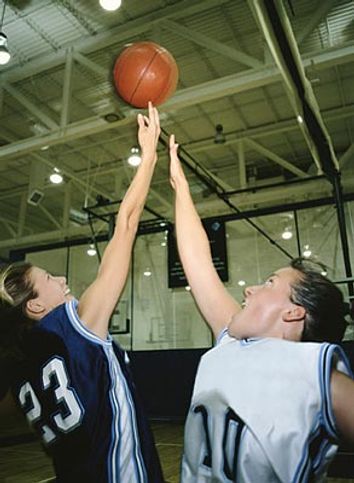
Through high school, we were a couple, and I kept the books for varsity basketball. Dwayne was 6-foot-4, 190, a good size for a power forward back in 1978. His jumper was low-trajectory, but it went in, and he had a huge wingspan for blocking shots and pulling down boards.

Our senior year, we went to the finals for Southern California, and he made second team for Riverside County. He went off to junior college in Monterey, where he was a juco All-Star. I went to USC, played only intramural sports, and became a sportswriter and editor. Dwayne moved up to a Cal State school, played for a coach he didn’t get along with, and a team that faltered into a losing season. He came home to Riverside.

We got married in 1983, and he began working as a correctional officer at a juvenile facility. I began teaching. We bought the old farmhouse, with the gravel driveway, and he put up the homemade plywood backboard and iron hoop before the first baby was born.

But we didn’t have sons. We had three daughters, we hit the hard part of life, and we got divorced. Not suddenly but steadily, the driveway became a girl place, with skates and scooters and bikes replacing my ex-husband’s engines and spare tires. But our middle child, not the tallest but the one spare and mean and small like me, turned out to be a serious ballplayer — a natural. She did have big hands, a long wingspan, and speed. By the time Delphine was 10, she’d been holding her own for two years against boys in YMCA and roughneck Park and Rec ball. She needed a new hoop.

I took down the old backboard, and cried a little in private. My neighbor put up a new one with a breakaway net, and then he poured a concrete driveway.

For the next two years, I spent hours out there guarding her while she brought the ball down the long driveway, aiming for the chalk marks where I told her she should take off for her layups. I tried to trim the nodding English roses, but their reaching thorny branches necessitated her development of a sweet head fake.

“Fifty layups!” her dad would call that summer, revving the engine of his truck after dropping the girls off. “Then put your right hand in your pocket and dribble past your mom left-handed.”

“Anytime you want to step in here,” I would holler back, as she was getting taller and faster. He’d just grin and drive away.

Almost every day, I was in the driveway chasing my daughter at top speed while she fended me off and launched her jumper. She practiced a long-range three-pointer by standing in our next door neighbor’s driveway and shooting over the block wall. But one day, I held the ball while she stood with eyes gleaming under a scrim of tears and said to me, “They don’t want me on their team cause I’m a girl.”

The boys on her teams wouldn’t pass her the ball. She was too good, and they didn’t like it. The boys on the opposing teams had taken to gashing open her lip with elbows, when the ref wasn’t looking, and when she got knocked down, one boy stomped on her hand.

She played the rest of the game with a fractured finger. She only got angrier, and better.

But that day, I knew I had only 10 seconds to decide — comfort her, or arm her.

“It’s always gonna be like this.” She turned her head so I wouldn’t see the gleam. “You have two choices. Get sad and be a victim, or get mad and kick their butts.”

She took the ball and shouldered past me for an aggressive layup, then started shooting free throws with angry precision. With my toe, I nudged the big V-shaped dent in the old curbing, the mark of a missed hammer years ago when someone tried to pound a U-joint into submission. Then she passed me the ball, but she said, “I wish Daddy would coach.”

Coaching your own child must be the most difficult and unnatural of acts. Performing surgery on your own child would be terrible, but a doctor wouldn’t do it in front of hundreds, maybe thousands, of spectators. Prosecuting your own child? Must be against the law.

At one basketball game, I remember hearing one kid ask his teammate, “What do you call Coach at home?” Everyone laughed.

For no other profession do we subsume the person so completely. We don’t call someone Professor in the same way, or Lawyer, or Teach, and we use the doctor’s last name. As adults, we usually revert to the person’s given name when we meet him at a party or a store.

This is not always true — Phil Jackson is always Phil Jackson, in a zenlike way. But most high school or college coaches are forever that. Before they are thought of as fathers, or policemen, or landscapers, they are coaches.

Remember that scene in the movie “Beetlejuice” when the dead high school football players keep congregating around the desk of Sylvia Sidney, the diminutive dead social worker. “Coach, can we get on the bus now?”

She finally screams, “I’m not your coach! He lived!”

Is it because coaches have seen all our youthful failures and weaknesses, in public, in the way no one else does? Doctors see our diseases, self-imposed and not, and lawyers see our crimes. Teachers see us for years, too, in strength and foolishness, but again, not in public, with immediate public judgment on themselves.

Alan Shapiro, a poet, has written some of the best lines about high school basketball I’ve ever read. In an essay, he says this of his high school coach: “Unlike most of the coaches I had had by then, he was too irritable to be a tyrant. He saw himself less as a Vince Lombardi ‘molder of character’ than as an undeserving and long-suffering victim of the inadequacies of the adolescent players he was stuck with  Like a despairing husband with a wife he knows he can neither change nor live without, he’d stroke his close-cropped head in exasperation, pleading with us, whining, for God’s sake, get back on defense  His dedication to coaching was a function not of an overwhelming desire to win but rather a fear of losing, of humiliation. Not to be embarrassed by us was his sole ambition.”

For Dwayne, the idea of coaching was frightening. We both remembered high school sports as heated and tribal, but not as professional or all-consuming as high school sports seem now. In fact, we each had a couple of terrible coaches — my tennis coach was a semipro who sneered at us, and routinely made me run miles on a leg with a stress-fractured femur. Dwayne had a football coach (who no longer coaches football but still coaches travel basketball) who routinely grabbed boys by the face mask and punched them, or tossed them around the locker room when they lost.

And so it was that when I called to ask him the big question, Dwayne laughed and said, “Oh, heck no. Uh-uh. No.”

Unequivocal.

“Why?” I said, not in front of our kids, but standing in the laundry room, where no one ever came looking for me because they were afraid they’d find unfolded uniforms.

He said, “Because I’d blow it. I’d lose my temper and yell at someone. Maybe not even her. I’d scare somebody. Maybe make somebody cry.”

I thought about that. This is a man who routinely intervenes in fights at the correctional facility, and has been shot by a Taser gun during an attempted escape. He does know how to holler.

But he had other hesitations. We talked about former coaches, about hollering and strategy, and we ended with why he’d quit college. “It was a business,” he said of basketball. “It wasn’t fun anymore.”

I understood that.

But that year Delphine got so good, at 12, that she was recruited for an elite Southern California travel ball team, and even watching her became too much for her father. He’d holler from the sidelines because he couldn’t help it, and after the games, he had too much to say to her, and he didn’t know how to say it in an acceptable manner.

He didn’t attend any games for two months. She remained stoic. I remained frustrated, as an all-girls league was forming, and her older sister wanted to play, too.

By then, I couldn’t even talk to Delphine after games, either. I knew how our conversations would go.

Alan Shapiro has also written eloquently about parents and basketball. He says of his father: “In his eyes, I could do no wrong, especially as an athlete. If I had a bad game  it was the coach’s fault for not utilizing my abilities, or my teammates for not playing up to my level  No matter how I played, he praised me, and the more he praised me, the more acutely I would feel the discrepancy between the player he imagined me to be and the player I knew I was  The pressure of trying to justify his excessive faith in my abilities made me resent him even as it terrified me that I might let him down.”

That was exactly what I would do to Delphine, and I knew it. I was done playing in the driveway. All I could do was wash uniforms and drive, and work on her father.

Finally, one night in the laundry room, I called him after a great travel ball game and said, “Yeah, everybody says she’s going to play college or WNBA. And it’s so sad, because when the reporters ask her how she learned to play ball, and whether or not her dad played ball, they’re going to look up in the stands and see you, but she’s going to point to the short blond woman and say, ‘No, my mom taught me.’ That’ll be embarrassing. But you’ll get over it. If she gets you tickets.”

“Fine,” he said. “I’ll do it.”

He started as an assistant coach, and then coached both Gaila and Delphine during two seasons of the all-girls league. He coached Delphine’s eighth grade team, losing the city championship in the last few minutes of the game by leaving in the second string too long, because he was loyal to their playing time. He followed the rules, and the opposing female coach ignored them. Our daughter had missed the last three-pointer, and I’d never seen her so heartbroken over any loss.

“I wanted to win it for Daddy,” she sobbed into my shoulder.

My husband’s father had come to watch his son coach in the same junior college gym where he’d played all-star games. My parents came, too. Hearing my ex-husband down on the sidelines, shouting what he’d always shouted from the stands — “Get back on D! Watch the trap! Box out!” — to girls who’d never played until this team formed, I thought about how he hadn’t come close to being what he’d been afraid of. He’d stayed honest, and kind.

When they cried, he said, “Oh, man, ain’t no need cryin’, cause we had fun.” When they apologized for fouling, he said, “You ain’t foulin’, you ain’t playin’.”

Both our daughters have come up to me in a kind of sullen wonder, at different times, and said, “You know, Daddy’s a really good coach. Everyone loves him. It’s so weird.”

I asked Delphine how she felt about it, given their long freeze-out of before, and she said impassively, “I like it when Daddy coaches me. Then it’s just about the game and the whole team, not about me.”

All business, both of them, and in their studied casual talk on the bench after games, I see her nodding and him calm.

This year, he coached high school varsity basketball for the first time, for Gaila, our eldest. In the spring, when the varsity coach cannot have contact with his team, under California Interscholastic Federation rules, until summer begins, someone else coaches. Dwayne was asked.

He has lost his name now. His name, to all our daughters’ friends and even to their parents, is Coach.

Not Coach Sims, usually. As with many men who look the part completely, he is just Coach. Whatup, Coach? Coach, can you give me a ride?

He will be that forever, to a certain generation of girls. Dwayne is 46 now. He’s 6-foot-4, 300 pounds. He looks like a linebacker, rather than a power forward. He had been afraid that his size and appearance would make girls and parents fear him, but instead, because he’s so intimidating, he rarely has to raise his voice. He just folds his arms, squints like coaches do, and says, “Let’s go.”

According to his daughters, his advice is simple and doable. For point guards, “When you pass the last defender, cross over so she can’t come behind you and poke the ball.” For posts, “Stay at the free-throw line on the inbounds and look like you’re tying your shoe, and then jump up and snatch the pass. Free layup.” For anyone, “On the fast break, follow your teammate on the layup, cause you might get a free putback.”

Not innovative, but it worked. And that’s what the team wanted, someone who didn’t scream at them and take them out for the smallest infraction. Someone who was so low-key he didn’t learn their names for a long time. “G, tell the one whose mama drive the Hummer to go in for the tall blond one,” he’d say to our oldest, who had to translate. “And tell lil Gray to go in for big T.”

Of course, he didn’t have the pressure faced by a paid coach. And his size was occasionally a disadvantage, as when he stood up to argue a call, and the short blond ref blanched and nearly fainted, and then compensated by dogging Dwayne’s team.

He never got a technical. He laughed most of the time. And his favorite advice: “Y’all know what to do. I’m just sittin’ here.”

He went 7-0 that spring, his first season. We got him the classic polo shirt, in XXXL, with no name embroidered on the chest. Just the one word.

Continue Reading Close

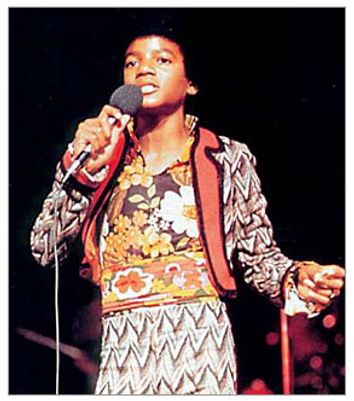
When Michael Jackson was cool

Michael was the ultimate heartthrob to my '70s high school girlfriends. But my teenage daughter sees him as only a scary freak who can't stand living with skin the color of hers.

  • more
    • All Share Services

When Michael Jackson was cool

I’m driving with my 14-year-old daughter and scanning radio stations when I hear a mellow love song. “That sounds like what we used to listen to in the ’80s,” I say. It’s the muffled electronic drums and smooth, soft R&B rhythm of the ’80s, the light floaty voice like DeBarge or Switch, but an echo of someone else.

“It’s a Michael Jackson song,” my daughter says, rolling her eyes. “He sounds like he’s choking on a peanut or something.”

She leans forward to poke the button. “Don’t change it,” I say, listening more closely. I have never heard this particular song, but the shadow of the beat takes me back — back to when Michael Jackson was the sexy yet innocent soul singer with Milky-Way skin and huge Afro who ruled the girls in my neighborhood.

This week, Jackson was cleared of allegations that he molested a boy in Los Angeles in the late 1980s — but still awaits trial in Santa Barbara on charges of molestation of a child at his Neverland ranch. But we’re listening to the Michael Jackson of my own youth, his voice spiraling into the car windows.

In my Southern California city, and all over America back then, in racially mixed working-class neighborhoods like mine, millions of young girls watched him on television as he clutched the microphone to his chest and bent over with the weight of his love for us, throwing out his brown fingers, pulling the air toward him and moaning, “I want you back!” Thousands of girls screamed and swooned the way others — white girls — did for the Beatles or the Monkees. But Michael Jackson and his brothers, as the Jackson Five, were the dreamboats of black America.

Now I look over at my daughter, my oldest, and can’t figure out how to tell her that in 1978, in these orange groves we’re passing just a few blocks outside my old neighborhood, her father and I used to park his sister’s beat-up Pinto and kiss for hours while Michael crooned from the cheap speakers in the door. “Let me show you the way to go,” Michael sang, his voice growling deep, catching with emotion. “I’ll never let you down, put your hand in mine …”

“Mom, can I change it now? I don’t want to hear this.” I glance over at my daughter’s lovely caramel face, her long black hair resting in curls on her shoulders. Her mouth has curled in more than disgust at the whispery voice.

“This song is crap,” my daughter says impatiently, “Nobody listens to anything by him.” She looks out the window. “Everybody hates him.”

For my younger daughters, 12 and 8, who never knew him as brown like them, as a singer and dancer who could captivate an audience of adults and children alike, he has always been a figure of shivery fear. Whenever we see the first ghostly shadows of his face on television news shows, someone turns the channel very quickly, sometimes even looking away until Michael Jackson is gone.

But my oldest daughter feels a more intense dislike, because she remembers when Michael Jackson looked something like her. Not his childhood or teen self; he resembled her in his early adult years, circa-”Off The Wall,” as he started to become lighter, with long wavy hair and toast-colored skin and that sparkly jacket. My daughter liked sparkly clothes then, too; she was in preschool.

We’re only a few blocks from my childhood home now, and I think about being in sixth grade, the only white girl in my dance group, as we performed on our elementary school stage to “ABC,” dancing a twirling, hip-rolling routine to imitate Michael and his brothers Tito, Jermaine, Marlon and Randy.

With his wide nose, maple-syrup skin and that huge natural, he looked like a thinner version of my boyfriend, whom I met in eighth grade and went on to marry. At school dances, all our hella-tough friends did the robot and the Moonwalk; they pop-locked to “Dancin’ Machine,” and nobody made fun of Michael Jackson. Jermaine was the cool handsome older brother, Tito the quiet one — but Michael was the one who sang to us. When Michael went solo — I was a high school senior — we listened to all his hits. He was the suave, sure voice we danced to at house parties, or while cruising. He was safe but sexy, the favorite among every black woman friend I had, the alternative to James Brown, who the guys liked better because he was rougher and more political. The guy groups like the Spinners and the O’Jays and the Stylistics were big, but if you asked my girlfriends who they wanted, it was Michael, even as he was reinventing himself with hair products and what we suspected was eyeliner. He was misunderstood, he was soft enough to understand us, he wasn’t dangerous (not yet), and he was so pretty, with those huge eyes and delicate brows and sad mouth.

If someone had told us that in 20 years he would be white as a powdered ghost, that he would be repeatedly suspected of sexual behavior with children, we would not have laughed. We would have rolled our eyes and said, “Michael? The one who begs us to come back, to give him one more chance?”

But my daughter is rolling her eyes now, with real anger over my sentimental hesitancy to change the station. Michael Jackson is still singing, his voice wavering and floating thinly from the dashboard. His nose is like a sharp weapon, I was thinking, his skin pale as bleached muslin, his hair hanging in quills about his etched cheeks. She says, “Mom! Turn it off! No one wants to hear him. He’s so desperate.”

All these years of seeing his face stare out from newspaper photos, from magazine covers, from the television screen — she, along with so many other African-American teens, considers this man not just someone who behaves inappropriately with children, but a scary presence.

But I remember when this same teenage daughter, at 2, begged to stay up late and watch the Michael Jackson special on TV. She was entranced by the precise dance moves and silver glove. That’s what he was by then, the silver glove, the pulled-up heels and spins, but he was so cool that she drew a her-sized picture of him, glove and hat and milky-tea colored cheeks and wacky joints, and taped it to our back porch door.

Whenever I try to tell that story, she says, “Don’t you ever tell anyone that I liked him or even that I listened to him sing!”

Hey, I want to tell her — he was the scarecrow in “The Wiz,” the black musical movie version of “The Wizard of Oz,” and our Dorothy, played by Diana Ross, trusted Michael Jackson’s shambling, cool-dancing character to lead her down the yellow brick road. He wore a Reese’s candy wrapper on his nose back then, as part of his costume. A brown, crinkled cup for a nose, for the scarecrow we all loved. What could he possibly fasten onto that damaged, sharpened nose now? What costume is he wearing, as himself, a man who lives a fantasy none of us understand?

He hung there on our back door for five years, dancing on the wood, until the marker-colors of his skin and clothes faded from the sun, and the true colors of his face faded from surgery and vanity and what we can only diagnose as self-hatred. That’s the unspoken reason my daughter hates him now. She says, “He hated himself so much he made himself into a white guy.” And in doing so, he erased someone who bore a resemblance to her. She says, “How sick is it to not want to look like anyone else in your family? You’re saying your parents really messed up.”

According to teens, listeners like her, his current music represents a pathetic attempt to win over people who won’t give him even two minutes; he’d be better off sticking to fans in other countries, not her and her friends, who listen to Norah Jones, Audioslave, Black-Eyed Peas, Outkast and System of a Down. My daughter and I have spent hours discussing current music, and she finds it hilarious that Justin Timberlake, as white as can be, has recreated himself as M.J., replete with glove and spins and hat. A white guy reinventing himself as a black guy who’s transformed himself into a whiter guy. And my daughter, who can check seven boxes on a racial category list due to her mixed heritage, laughs when white guys try to impress her by declaring, “I listen to Eminem.”

“Really?” she replies, coolly. “Why?”

Her current favorites: the Red Hot Chili Peppers and the Clash.

I tell her I don’t think Michael Jackson ever got to be a child himself. He was performing constantly, like many child stars who grow up to have mercilessly unhappy adult lives. I was 11 when I danced to his songs, and he was 12, already enduring long hours and road trips and endless work. Maybe that’s why he made Neverland, his ranch in Santa Barbara, into a child’s paradise. For the childhood he never had.

“But why would any kid want to go there?” she says. “Who would want to hang around with him?” If the charges are true, Neverland is a child’s nightmare. And forever, while I remember Michael Jackson’s sweet soulful voice and perfect Afro, my children will remember his face as the representation of a fearful spectre, a haunting danger clothed in sparkling military garb. We are leaving my old neighborhood now, and the song is almost over. We are cruising over an old railroad bridge and I glance at her, gold-brown arm propped on the open window, her black curls moving in the breeze, her full lips. “You used to love him, when he looked like you,” I say. “Remember that picture you drew?”

“Yeah,” she says, looking out the window, away from the fading voice on the radio.

Continue Reading Close

Page 1 of 4 in Susan Straight