Taffy Brodesser-Akner

How I met my mother

After our dramatic fights, I swore I'd be a different kind of mom than my mom. I didn't realize how similar we are

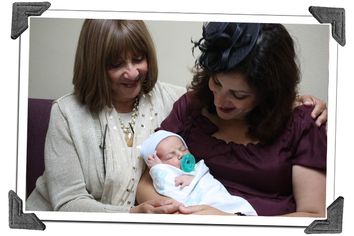
A photo of the author with her mom and son. (Credit: Reyna Zack Photography/Melissa King via Shutterstock)

I could say we didn’t get along, but that sounds benign. There are plenty of people I don’t get along with, but we’ve been able to opt out of each other’s lives. This was my mother, and though we both would have opted out if we could, we couldn’t — except for the brief year I went to live with my father, which was a mistake — and so we didn’t.

I wish I could tell you exactly why we didn’t get along. Maybe I resented my parents’ divorce, and because she screamed louder, I blamed her more. Maybe I blamed her for seeming to hate me. (I was what was called, back before all children were pathologized, a “difficult child.”) She felt mothers should be respected universally, and I felt like we should talk everything out. I wanted to be understood. She wanted me to understand that I wasn’t her friend, I was her daughter. When she hears my sister using the parenting language of today on her son – “I hear that you’re frustrated, because it’s frustrating to not be able to own a machine gun, but you just can’t have one” – she rolls her eyes and thinks back to the days when a kid who asked for something unreasonable could just be sent to his room.

As I grew older, I went from “difficult” to “rebellious.” There were accusations, door slams. We are both temperamental and quick toward theatrics, both prone toward shaking our hands at the heavens and screaming, “Why me?!”

Eventually, though, we learned to get along. We still do. When I had children, I promised our home would be calm and reasonable. We would talk everything out. We would never, ever yell.

At first, I was a different kind of mother than she was. My son was quiet and compliant — and sweet. He hugged me when I put my arms out; he never defied me, at least not until much later. My mother would visit, and I would show her how loving and not screamy I was with him. I sat on the floor with him and played with him during those visits, though I find stacking and shape-sorting excruciating. By my example, I would try to teach her how nice and easy it could have been. On our daily phone calls, I would show how I was the model of patience and how I was understanding and not reflexively impatient. I was showing her how she could have been a better mother; in truth, I was waiting for an apology.

Then my younger son was born. He is beautiful — you should see him — and he is charming. He smiled, I swear, the day he was born. He laughed when he was just 4 weeks old. Then, about two months after we brought him home, he opened up his mouth and began screaming, and he didn’t stop for something like 15 months. He has not yet slept through the night for more than a week in a row. He is old enough now to get very angry at me and throw tantrums, and for those tantrums to upend our household. He’ll grow out of them, or maybe he won’t. Maybe he’ll sit at his desk in 34 years and write an essay about what a terrible mother I was.

But that will be his essay. In my essay, I start to scream. I scream so loud that the neighbors want to know if, um, everything’s OK in there? I scream so much that my throat is raw. I give looks that are identical to the ones my mother gave — sharp and pointed — not just to the younger one, but to the older one, who has started testing my limits, too. I send the 2-year-old to his room. I try to speak the way my sister speaks, to tell them that I understand their frustration, but honestly, I don’t, and I don’t think I should have to. I tolerate no amount of disobedience or backtalk. My husband comes home to find me a frazzled mess.

I am, in short, the kind of mother my mother was.

But my mother is a different person than I realized. I first came to understand this after the delivery of my older son. It was traumatic, and I was depressed for months following it. My mother came to stay with me and tried to show me new ways of having perspective on this, but all I kept saying was that she had never had to triumph over anything this difficult. As I sat in a dark trance, rocking my baby, she told me to put him down while he slept. I wouldn’t. I was going to be a calm, peaceful — OK, completely depressed — presence for this kid in a way she never was for me.

Once again, she didn’t understand what I was going for. I wanted to be rock solid. I didn’t want my own emotional limitations to get in the way of being a parent. Not my sadness, not my temper, not anything. I wanted to be better than human. I wanted her to have been better than human.

The day before she returned home from her visit, she had been told that a lifelong heart condition had reached critical condition. I knew nothing about this. She told me about it when she returned home. She called to tell me that she was scheduled for open-heart surgery. I knew she had a heart murmur, but that sounded so — I don’t know — benign.

She told me the whole story: She’d been born with a heart condition. When she was a young child in Israel, the doctors told her she wouldn’t live very long. They didn’t let her play in gym class or ride a bike. They told her she would never have children. When she got to America as a teenager, she decided that she would live on her own terms. She bought a pack of cigarettes and didn’t tell anyone about her heart condition. No one would tell her how to live her life. She married my father, and she spent the next 10 years gestating me and my several sisters and smoking Kents, alternately.

I was stunned. I had never known my mother had such a secret. I’d never know that it was she who was the rebellious one. I started to see my mother as someone about whom I did not have the whole picture. I was starting to find common ground with my mother. We were both rebellious, it turns out, but she was truly brave.

I came to imagine a new side to my mother: The bad-ass side, the take-no-crap-from-anyone side. And here is where I should mention my mother’s looks. She is so, so beautiful. She was devastating to look at. Even with her children in tow, yelling at them in some public mall, men would turn to look and women would comment with envy on some aspect of her body or face. In her jewelry box, I found letters from old boyfriends, begging her to stay.

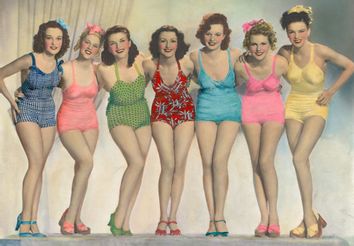
And you should see the photo albums: The white bikini, the strapless dress, the beehive hairdo with the liquid eyeliner, that trench coat. She did not know how long she would live, but she would live until then. She would live and die according to her own terms. V’ze-hoo, as she’d say in Hebrew: And that’s that.

But we have no idea who our mothers really are. They are mysteries to us, and we don’t ever have all the information. Even my kids, who will one day use their Google brain chips to read my essays — me, the oversharingest woman in the world — still won’t know my entire story.

Yet, lately — maybe because of the behavior that I’ve tried and failed to control — I’ve started to wonder if the kind of mother I had wasn’t exactly the kind of mother I needed. Because I turned out fine. I am a loving daughter, a loyal and warm wife, a doting (if screaming) mother. I am what my mother wished for. So are my three sisters. And we are sure of nothing if not that we are loved by our mother.

Could it be that every bit of tension was aimed particularly at a part of me that required it? Could it be that the screaming and the anger worked like water and sunlight and helped me grow? Could it be that her disapproval was what I needed to learn to parse what I found approvable?

Or could it be that motherhood is far more forgiving than we ever could imagine? Could it be that, later, our children will forgive us our faults because there is nothing like a mother who screams at you and suspects you and checks on you at midnight and is afraid for your future to show you how loved you are?

My older son was just a few months old when my mother’s heart surgery was scheduled. We flew back to New York on a redeye and went straight to the hospital just in time to see my sisters head into the waiting room: It was almost time to begin. I sneaked into the pre-op room, where babies were not allowed, and where she’d been given a drug to relax her as they arranged the IVs and monitors so they could be wheeled into the operating room.

“I’m sorry I made your life hard,” I told her, just in case, as two nurses carefully guided her bed out of the pre-op room and into the hall.

“You made my life a joy,” she told me. I held my son close on my hip as they wheeled her down the long hall, all the way down, until she became so tiny that I couldn’t see her at all.

Old ladies who didn’t love me

I thought a gym class with elderly women would ease my aging anxiety, but it made me miserable in new ways

“Isn’t it soon for me to be getting arthritis?” I asked my orthopedist. I assumed I had a young person’s pain: an injury, or maybe a cyst.

“No,” he said, then checked my chart again for my age. “No, not at all.”

At 36, I had been preoccupied by my age, and this didn’t help. I’d been looking at every woman’s neck to see when the accordion stretch of the chin would kick in. Could I stave it off a few more years? Had I blown it by not being skinny, so that I couldn’t later gain five pounds to smooth out my wrinkles?

But it wasn’t just about my appearance. With each passing year, I counted all the things I could no longer do: be an athlete, be a model, be a ballerina. It didn’t matter that I never aspired to these things. The things I had aspired to do, like write a novel and be a young mother, were also undone. (I am a mother, but not a young one.) The world and its opportunities were closing like a window. I felt like I was choking.

And even as I thought of this, I knew the basic existential dilemma: Thinking about age wouldn’t make me young. And worse, I would never be younger than I was now. I was fairly accomplished for my age: I’d traveled and known many interesting people. I’d been in love with the wrong guy. I’d been in love with the right guy. Everything seemed right on schedule. But I was weighed down by the truth of time, that it’s coming for all of us.

The orthopedist, who was close to my age (another bad sign: The doctors were my age now), recommended I swim until the swelling went down, then start physical therapy. I’m bored by regular swimming. And that’s what brought me to this — that bastion of aged flesh, this hotbed of liver spots and teased hair, my YMCA’s aqua aerobics class.

I knew the class was populated by old women; I had a view of them from my treadmill, where I’d exercised back when I was young and could run for my health, bounding like a deer toward a television that only played shows about the Kardashians. Beyond that TV were the old ladies, splashing and working out.  I would take water aerobics and emerge feeling young, grateful for the plump of my skin, the relative tightness of my jowls. We’d all be buoyant in the water, but only I would remain so as we dried off. The older women would love me. Bonds would be forged.

My grandmother, a Russian immigrant, had taken these kinds of classes when she had been alive. She had a whole social group around the class, women who were kind and joyful, who played Rummikub and made honey cakes for each other at the Jewish new year. I had joined her once, in Brooklyn, N.Y., for the class. The poolies, as we called her chlorinated friends, were always so interested in hearing about my life, my boyfriends, my classes. My grandmother, slick with water, gleamed with pride.

And so it would be this time. I’d remind the old ladies of their daughters. They’d pass on wisdom. I would confide that I didn’t think I could wear a miniskirt anymore, at my age. They would snort and hoot and tell me what a child I am. I’d realize how silly I’ve been. I would learn that I had plenty of time.

- – - – - – - – - -

My poolies, the ones at my gym, had necks that had long since defied definition. Massive freckled cleavage became neck became chin became face and so on. They wore bathing caps with plastic flowers and swim suits with pointy foam bra cups. Underneath, their hair was teased and thinning in shades of copper and yellow.

I wore a tankini — the illusion of the self-confidence requisite for a bikini but none of the skin reveal — and I immersed myself in the water. It was warm, and it would have been easy to mistake the high concentration of chlorine for a urine scent. I walked over to where the action was. The women were all friends. I waited shyly for someone to say hello to me, to ask me what the hell a youngster like me was doing in a place like this. No one did.

“You need a noodle,” said the instructor, a 40-something man in shorts and a T-shirt who stayed on the deck of the pool to give instructions.

I retrieved a foam noodle and was descending the ladder into the pool in silence when I heard a large woman in a red, skirted bathing suit, probably around 70, say to her friends, “The girls with the leg hair. No one shaves anymore.” There was no way she was talking about me. Right?

“I wax,” said another in a pink bathing suit, maybe mid-60s. Then to me, “You should wax.”

She was talking about me.

“Oh, I, uh, I shave my legs,” I stammered. “I’m just … I just had a baby. It’s a miracle I can get here, right?”

“Oooooh, when did you have a baby?” asked the first one, with a smile.

“He’s 14 months old,” I said.

Two others cackled.

“Yes, I just had a baby, too,” said one with a rubber swim cap with flowers, mid-60s, grabbing her stomach in her fists. Red bathing suit snorted. “She’s 47!”

I rushed as quickly as the water would let me to the back of the class. I thought of my yoga class, where people applauded when you just showed up. The class started, and we jogged for 10 minutes. By minute five, I couldn’t do it anymore. The others looked barely winded. When it was time to stop, the instructor said to me, “It gets easier with time.”

All the ladies — the next youngest to me was perhaps 55 — turned around. When they saw me, they squealed with laughter.

“Leave her alone!” said one in a black suit with a back so low that you could see folds of fat. I thought she was an ally until: “She just had a baby, don’t forget!” Then they laughed and laughed and splashed.

We did kicking and push-ups against the wall. We brought our knees to our chins while we floated on noodles. At the end of class, the instructor made an announcement.

“I’ll be out next week, but class is still going on.”

The ladies collectively cooed and oohed their suspicion. “Do you have a hot date?” asked one.

“Yeah, with his mother!” came one answer. Again, hysterics.

I tried to make eye contact with the instructor — both of us victims, after all — but he closed his eyes and took a breath. He was used to this. He hadn’t always been this meek. The poolies had brought him to this. They were old people and they were tired of being called cute by young people. They had become mean.

No one was safe here. My grandmother’s friends had seemed so much kinder, so much more, I don’t know, grandmotherly. Had it all been a show? Had it been a front for grandmothers everywhere? I had come here to seek the gratuitous validation that only grandmothers can provide, and learned it was only my grandmother who would provide it.

I missed my grandmother. I missed her kindness, her forgiveness. I missed how I looked through her eyes. I missed how her love made me feel perfect. Maybe that’s what was upsetting me: That in addition to not being a ballerina or a model, I would also never be perfect. Or maybe what was bothering me was that I was just ganged up on by a bunch of nasty septuagenarians.

I was only 25 when my grandmother died. Back then, I hadn’t known yet that I’d get old. To me, the young were born young; the middle aged stayed that way. Her death promoted my parents to old people and me to someone who worried about death. We held her hand as she died; “Oh, Ima,” my mother whispered into her hair. We didn’t mourn gracefully. We wailed for days.

I kissed her forehead as it began to turn cold. How could her body turn cold so quickly? Shouldn’t her extraordinary warmth grant her body a few more minutes of heat than the average person gets once she passes?

Now, I looked around at these women in the pool, the ones who resembled my grandmother but certainly were not her. I wondered how they found the resolve to keep going. Didn’t they know how close to the end they were? Did they ever just want to give up? Were they ever obsessed with age like I was? Maybe that struggle had grown tiresome, like caring about the sexiness of your shoe wear. I had recently bought a pair of Danskos, big clunky things that make my Size 11 feet look like Size 12 feet. I had resigned to this because it no longer felt like it mattered what my feet looked like. It felt like I was old enough to not care anymore.

Maybe there was another way to look at them. These women didn’t fall into the role I assigned them, because they were busy being their own people. They were exercising. They were keeping their bodies strong. And they knew something I didn’t: That you’re alive until you’re not.

I floated on my back for the next minute, my ears under the water so I couldn’t hear anything. I remembered a time long ago when, at a pool party, a boy told me he’d heard that I thought he looked like Tom Cruise. I dunked under water then, like now because I was embarrassed, left alone in the eerie silence with my bubbles and with my shame. I left the pool and dried off.

On Wednesday, under the cover of late afternoon, I swam laps.

Continue Reading Close

Interview With My Bully: The bully who denied it

Back in high school, Veronica made my life hell. She doesn't remember it that way. Is it possible we're both right?

Interview your own bully -- and send it to Salon. Read how here.

This article made possible by Salon Core members.

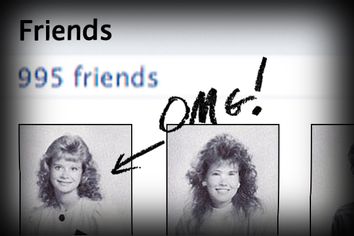
One sad autumn a couple of years ago, I wrote two pieces, similar in tone, about being absolutely friendless in middle school and high school. They were written weeks apart but published within hours of each other. That week, everyone felt bad for me.

“I’m sorry it was so hard for you,” said my friend Lisa.

“Can you believe what we survive?” my sister asked with a sigh.

There was one dissenting voice. “That’s not true,” said Veronica, when she read it. “You had plenty of friends in high school. Well, maybe not plenty. But you had me.”

Did I? Veronica may be one of my closest friends now, and we may have gone to high school together, but that’s not the same as the presumption that I had had her during that time. 

I responded with a passive aggressiveness that is uncharacteristic (aggressive aggression is more my speed). It was all the more jarring, because I said it with a laugh: “If I’d had you, I would have asked you to protect me from you.”

- – - – - – - – - – - -

The unspoken history, at least my version of it, is this: Veronica bullied me on the bus every day of high school. Then, in class, she would call out anything I said, trying to find holes in my stories, calling me annoying and a liar. It seemed like she lived to make me cry, as if it were a much-sought-after extracurricular that made your college application extra competitive.

Despite the trauma, the details are fuzzy and return to me only in flashes. On my first day of school, Veronica offered to help me with stuff I was behind on because I was a transfer. She was nice, but just a couple of months later, our relationship turned.

The locus of tension was on the school van. Because our school was in Queens and I lived in far-flung Canarsie, Brooklyn, I was the last one on to a grumpy party already in progress. According to Veronica, I wanted to sit in a certain seat. But the other people on the van didn’t want to wait for me to get to that seat, or move because of me — as I said, it’s fuzzy — and Veronica, the loudest, would yell at me. This was a betrayal to me. We were the oldest on the van as juniors. Shouldn’t seniority (juniority?) have bonded us? Instead, the younger students would swirl around the eddy of her anger at me and turn the van into the worst hour of my day.

Veronica wasn’t what you’d call popular. But she had that rare quality of genuinely not caring if she had friends — and so she did. I cared very much if I had friends — and so I didn’t. We were in all the same classes, and I would return to her throughout the day. When I sat with her for lunch, she would make fun of how much I ate. She would call me names. I was a kiss-ass. I was an idiot. I ruined everything. And–

And here is where I’m confused. It doesn’t make sense. Why was I following her around if she was bullying me? 

That’s where bullying gets a little tricky. See, there are the terrible bullies: The ones we hear about now who spur teenagers toward suicide, that meathead on “Glee” who deep down is also gay, the kind that made Ricky Vasquez pretend he brought a gun to school on “My So-Called Life.” That’s the kind of bullying that is black-and-white, of which we cannot say anything except that it’s horrible.

But bullying exists in the gray areas as well. It has become convenient to use the term to refer to all forms of high school ugliness. At some point, though, I have to ask myself: Was I the victim of bullying if I kept coming back for it? If the bus was so harrowing, why did I seek out Veronica at lunch? What the media’s conversation about bullying often doesn’t acknowledge is that it exists on a spectrum. There is a kind of bullying we opt into — and that was what happened with Veronica and me.

This has troubled me all these years, particularly because Veronica is one of my dearest friends now. Did she finally realize how much I had to offer? Did we clear up some colossal misunderstanding? Did we work things out with the aid of our completely clueless guidance counselor? 

It’s far more banal than that. About a month into senior year, my stepfather gave me his old car to take to school. He was very nice to me. He was also sick of listening to me cry about having to ride the van.

That day, when I arrived at school, Veronica took one look at my car and looped her arm in mine. “Can you drive me home?” she asked. “I can’t stand the van anymore.”

Finally: A friend. I drove Veronica home every day, and she got nicer. Eventually, the drive home turned into stopping at a diner on the way home. Then it turned into shopping. Then it turned into buying cigarettes. In the car we played music. We played Elvis Costello off a mix tape a boyfriend had made. We still think of “Veronica” as a song just for us, so much so that she chose the name as her pseudonym for this article (and would agree to speak only if I granted it). We grew closer in college and still talk fairly often for women who work and have two kids each. Ours has ended up being one of my more enduring relationships.

Every once in a while, I make light mention of the van. For instance, if Veronica says, “I hate that guy,” I might respond, “Put him on a van with you. He’ll live to regret it.”

“This again with the van,” she’d say, which I always thought was her embarrassed backpedaling. I imagined Veronica lived with a lot of shame for bullying someone who ended up being so important in her life.

I was wrong. Veronica didn’t feel any shame. And when my editor asked me if I was interested in confronting a bully from my past for this column, and I forwarded the email to Veronica, this is what I got back: 

“I don’t think I really actually bullied you, but you keep saying it so maybe it’s time for me to listen,” she wrote. “But it does make me have some questions of my own.”

And so, we made an appointment to talk on the phone. We approached it as a funny stunt for a story. When I started talking, I used a trumped-up reporter voice to lighten the mood. But Veronica wanted to talk.

When I told her my side—everything I’ve told you here—she responded, “I have a very hard time feeling like what you’re saying is real. It obviously affected you, and I’m not saying we got along. But bullied?”

Her version: I was annoying; I told lies. She understands now I was leaving out personal details that would betray a hard home life. But, she says, “I didn’t let things slide with you. I called you out on them.”

And it wasn’t just what I said, it was also how I said it. “There was a lot of drama around you,” she says. “You had a dramatic family. You had a dramatic way of telling a story. I mean, you ended up being a writer. I hated how dramatic you were. We all had drama, and some of us didn’t need to air it.”

Fine, but the way she did it. Her prosecutorial way of attacking me for holes in my anecdotes scared me. She seemed sharper than I was, and she wouldn’t let me control my own stories. When I smelled her attacks, I would hide, afraid to proceed. This, to her, proved that my stories weren’t true. 

Once, I told her my father was taking us skiing on a Friday. When he canceled, as he often did, I showed up on Friday, and I could almost feel Veronica’s satisfaction. “Some ski trip,” she’d say.

“It wouldn’t have mattered to me whether or not you went on a ski trip,” she says now. “But you were always in my face.”

 But it’s more than that, Veronica admits. As adults, we’re both keenly aware that we suffer from anxiety, and we certainly did back then. We have since sought help for these problems, on and off, throughout the years. “I didn’t like what I saw in you,” she says now. “We had the same issues, and that annoyed me. I just wanted you to go away.”

I was troubled and emotional — and I wore those qualities on the outside. She wanted them kept inside, and she didn’t want to be reminded by the likes of me that they existed. 

Still, Veronica believes she was merely responding in kind to the stimulus I provided. Had I been quieter, or faded into the background, she never would have even thought about me, she says. 

And that brings up another interesting question: Can bullying take place without intent? Veronica thinks that if she didn’t intend to bully me or intimidate me, well, then she can’t be a bully. Is she right? I maintain that it is the feeling of being bullied rather than intent. Does Veronica have a point when she says, “I can’t control how you feel. I wouldn’t have minded if you’d yelled back at me.”

At an impasse, we do the only thing we ever learned to do in that godforsaken school: look up the definition of “bullying” in the dictionary. We came up with this:

bully (n) A person who uses strength or power to harm or intimidate those who are weaker.

See?!” Veronica says to me.

“See?!” I say to Veronica.

“You were so smart,” she says. “You didn’t need me to tell you that or make you feel good.”

“But you were stronger,” I say. “You had allies.”

“So I’m not supposed to react to you like that because I had friends and you didn’t?”

My answer: “I … don’t know.”

And I don’t. I was weaker. But at what age do we expect self-control from people, restraint? Was there some part of me that drew out her ire, because it was better than being ignored? Or did I understand that underneath her cruelty was a rare bond?

I sometimes wonder whether I was wrong to make peace with Veronica when she caught sight of my car. Maybe I was just pathetic and desperate. But if I hadn’t, I would have missed out on one of the most honest and loving relationships in my life. I can start a story in the middle with her, and she will know its origins from the beginning, because she knew me so well. She didn’t handle the recognition of her own faults in me very well. For that, she is sorry. I did not handle my neediness so well. For that, I am sorry. But here is how we have changed: In this conversation, neither of us terribly invested in being right.

“I’m sorry I made things difficult for you in high school,” she emailed me after our conversation. “I’m glad we managed to stick it all out.”

It wasn’t quite a full apology, but I hadn’t asked for one, either. Then, two days later, a phone call. “I thought about it some more,” she said. “I’m sorry I bullied you.”

Still, it’s me who isn’t sure anymore that I was bullied, or if I’ve been applying a trendy word to the simple fact that I wanted her to like me, and she didn’t, and it was humiliating. 

We probably won’t talk about it like this again. I think I might retire off-the-cuff mentions of the van. Our similarities no longer inspire competition or hatred. They are how we reach for each other, a language we know. The phone rings, I see her number on the caller ID, I pick up, and it’s been so long that we are friends, I can hear my own voice in hers.

This article made possible by Salon Core members.

Continue Reading Close

Tales of a recovering blabbermouth

I've always been the person who talks too much. What I didn't realize was how much I was drowning out

I was 6 when I first began to worry that a person’s death came not at a certain age, but when you used up the words allotted to you. This thought filled me with panic, but it did nothing to deter me from a life of verbosity.

I have always known I talk too much, because people have always told me. They say, “You talk too much.” When they’re not feeling kind, they also say things like, “Don’t you ever shut up?” A boyfriend once looked over at me during a party, and just when I thought he was going to tell me he loved me, he said, “Can you just shut your mouth? Even for a minute?” We’re not together anymore.

I have sensed, as I’ve gotten older, that my loquaciousness isn’t always interpreted as bubbly or enthusiastic, as it was when I was younger. I have sensed that it has become toxic, and certainly annoying. In college, when my roommate and a few friends returned from dinner out, I asked how the evening went. My roommate said, “You wouldn’t have liked it. It was really laid back and nice.” She wasn’t being mean when she said that. I think she didn’t think of me, maybe rightfully so, as someone who could enjoy a relaxed evening.

My husband’s main complaint about me is that I won’t let him finish a sentence. I say it’s my excitement for the conversation, my interest in discourse. He says he just wants to get a word in. But this isn’t a story about marriage, or about my college roommate. This is a story about mortifying disclosures, and so I will tell you about rock bottom.

Each winter, I travel from Los Angeles to New York to meet with editors I write for during the year. Some are lingering lunches, where the editor and I find we have a lot in common or a great deal we want to work on together; some are quick “put a face to the name, no, I don’t love that idea but send me others” coffees. And sometimes, you meet an editor you really like, and who seems to like you back, but you only have time for a quick sip before that editor must return to her deadlines.

I knew my meeting with Sarah, my Salon editor, was going to be an example of the last kind of meeting. The Salon staff is lean, and the output, as you know, is copious. So when my editor gave me a coffee shop to meet at, I was 15 minutes early, found a table, and checked my email while I waited.

When she walked through the door five minutes late, looking a little harried, I waited for her to spot me. The minute she did, a big smile spread across her face. She was older than I thought she would be, and dressed a little on the uptight side, but that just goes to show how weird email-only relationships are. We get along well, this editor and I do. And so I stood up, and — what the hell, right? — I gave her a big hug. She hugged me back.

She sat down and apologized for being late. I told her it was no big deal and, to put her at ease, I told her of a horrifying time I’d shown up late for something. Then, I started talking ideas. I had an idea about Ikea, how it’s come to represent the interchangeability of our society — after all, isn’t it weird that we’re all buying disposable furniture now? As I told her an anecdote about meeting a friend at Ikea recently, she just let me talk and talk. She must really like me, I thought. Five whole minutes must have passed. Finally, I leaned in, put my hands on her hands — yes, we’re that close! — and I told her the punchline of the story: “And Sarah, I’d been waiting at the Ikea in Burbank, but the entire time, she was at the one in Carson!”

Her brow furrowed and she blinked. Uh-oh. Was I not supposed to talk about Ikea?

“My name isn’t Sarah,” she said.

My heart sank. My face flushed red. What the hell had I done?

Jeannette was her name, actually, and she was not five minutes late to see me. She was five minutes late to see a woman named Jin Wong.

Now, I don’t look like a Jin Wong, but Jeannette, who probably knew that, hadn’t had a chance to let me know that I probably wasn’t who she was looking for. I apologized profusely. The Asian woman at the next table, who kept glancing at her watch and then at the door, was grateful to finally meet her expected companion.

Five minutes later, a harried woman burst through the door. She looked around. “Taffy?” she asked.

“Is your name Sarah?” I asked, gun-shy.

“I’m sorry I’m late.”

Phew.

I would like to tell you I immediately learned the lesson about talking too much. But I didn’t. Instead, I told Sarah all about the last five minutes, even interrupting Jeannette and Jin’s now cozy meeting to introduce everyone, as if they cared. Sarah and I went on to have a meeting — we got along the way I thought we would, the way Jeannette and I didn’t seem like we were going to. All was saved.

But I couldn’t escape the implications of what had happened. I had talked so much that I didn’t realize who I was talking to. I didn’t note that she wasn’t interested, or that she was possibly confused by what I was saying. I was speaking for an audience; I was concocting the next thing I’d say. But here’s what I wasn’t doing: listening.

Since my meeting with Sarah, I’ve been uneasy. What am I missing when I won’t shut up? Why won’t I shut up? Sure, I’m avoiding uncomfortable silence. But the things I say aren’t just to defend against vast voids of silence. They’re to communicate. I’m addicted to communication. My entire life, I have been dedicated to somehow getting my point across to the people I care about, to make them understand what I mean.

I suspect it started when I was very young, and I took quite to heart the PSA-broadcast idea that bottling up feelings would make you sick. As a teenager, I’d watch “My So-Called Life” and “thirtysomething” and shout in frustration at the TV because people weren’t saying what they meant; they’d speak in innuendo. It always ended in misunderstanding and a stunted realization of desire. Life is too short, I’d shout. Say what you mean!

I considered it a great gift to those I’m close with that I did this. But maybe, along the way, I stopped understanding what was important to say, and what could be gained just by thinking before speaking. Somehow, I didn’t realize that in my attempt to make sure my friends and family knew me, really knew me, that not everything I thought or realized was important.

Listening is the new gift I give to people I know. And it’s been rewarding in more ways than you’d think. For so long, I’ve only written personal essays, but lately, I’ve been writing more reported stories about interesting things that have nothing to do with me. Because here’s the thing: When you talk only about yourself, you never learn anything new.

And so I’ve been learning a lot lately. Not just from the people who insert things in between the long monologues I give. But from everyone. I’ve realized some people need a moment to formulate what they want to say. For so long, I took that silence as my cue to jump in. But that’s not always the best use of quiet. Instead, I’m starting to understand the people around me better. I am late to learn that that is just as important as making sure they understand me.

Oh, and Ikea? I did look into that story, and I still think a piece on people buying disposable furniture is a good one. (What do you think, Sarah?)

Taffy Brodesser-Akner is a freelance writer living in Los Angeles. She will not be posting the link to this particular essay onto her Facebook page.

Continue Reading Close

I can’t believe my best friend is a Republican

I love everything about Janet -- except how she stands for all the things I find bad and wrong in the world

Janet and I would likely have never met, save for the thing that unites so many women across divides of income and age: fat. We met in a weight-loss group. There were six or seven of us in that group, but Janet and I were drawn toward each other. I liked her refusal to lie about what she’d eaten or rationalize it. She liked my tenacity and optimism. She handed me a business card that said her name, followed by “Ph.D., Housewife” and contact information. Clip art of an American flag appeared on the next line.

Beyond our weight-loss goals, we had little in common. She lives in Beverly Hills; I live in an area just beyond it where the potholes are reminiscent of Sarajevo and the government is broke. When we met, Janet was just closing up shop on reproduction, and I had just gotten married.

But for all the things we don’t have in common — and the papery, crumply things we do — our main difference is our political affiliation. Janet is a lifelong, passionate Republican. She does not pretend she is just a fiscal Republican, or just a Republican for Israel, as so many in our Jewish community are. She is a real, live, voting Republican. She likes Fox News and Rush Limbaugh. She admires Sarah Palin. She is for the defunding of NPR and Planned Parenthood. She is against “Obamacare,” and she is for parental notification of abortions. Right now on my Facebook page, I have linked to a New York Times article on how women’s rights are being violated by South Dakota’s new abortion laws. Janet has just posted on hers — I’m not kidding — video footage of her and her husband at target practice.

In the beginning, it didn’t matter. We were more concerned with our own mutual war on body fat. And we soon found on the periphery of weight loss the other things we had in common: a love of books and science, a hatred of hysterics. After I gave birth to my son, so far from my own extended family, her children became a local version of cousins: They marveled at his every new word, they imitated his walk, they donated the books they aged out of. Our husbands began to socialize. Before we knew it, our families were, well, family.

Word got out that Janet and I were spending time together.

“You know she’s a Republican, right?” whispered another member of our weight-loss group after I took her card. It was meant as, well, what, exactly? A warning?

Yes, I had known. Her daughters’ names are Liberty, Honor and Victory, the latter named at the time we invaded Iraq. (Her son’s name, inexplicably, is Bernard.) She owns a bust of Ronald Reagan and cried when he died, proving that she, perhaps alone with Nancy, had remembered that he was still alive. There is a bumper sticker on her very, very large SUV that says “REPEAL,” and I believe it refers to the healthcare bill.

Janet and I refer to each other’s political parties as “your people,” but mostly, we try to stick to the things we have in common: budgets, schools, child-rearing. Janet wore a Tea Party shirt to my last birthday party, and my birthday present to myself was to not ask about it.

But it’s hard not to talk about it at all. When you live, say, on a coast or in a very blue state, you grow accustomed to being surrounded by people who believe like you do. You get to thinking that the only people who would dare contradict you are ignoramuses. Meanwhile, I began directing all my anger toward the Republican Party at Janet. On the day that Congress voted to defund Planned Parenthood, I found myself furious at Janet, just Janet, as the face of all that was bad in the world. Feeling sad and deflated, I wandered over to her house, unable to look her in the eye, asking her why? How? To what end?

She told me she didn’t believe government had any business funding it in the first place. That this isn’t about abortion or hating women but ways the government doesn’t need to be involved. She told me Planned Parenthood was well-funded and won’t even miss the money. “Planned Parenthood will be better off without government funding and all the strings that are presumably attached,” she said. “I sometimes wonder why liberals, who are so enamored of the freedom to do any damn thing they want, even take government money when it constricts their freedoms.”

I closed my eyes and breathed through what she was saying. Janet isn’t Glenn Beck or Sarah Palin. She believes what she’s telling me, and she’s studied the issues. That might be what is so difficult: She has the same education as I have, and yet she has made different decisions, decisions that are so counter to what I believe. Decisions I find abhorrent.

And yet, I think having a Republican friend is making me a better liberal. We need friends who differ from us. It’s easy to watch Republican extremism and think, “Wow, they’re crazy.” But when someone is sitting face to face with us, when someone we admire and respect is telling us they believe differently, it is at this fine point that we find nuance, and we begin to understand exactly how we got to this point in history. We lose something critical when we surround ourselves with people who agree with us all the time. We lose out on the wisdom of seeing the other side.

When I moved to Los Angeles, the 2004 election had just finished ravaging the neighborhood. Friendships had ended over differences of opinions, a few marriages had learned what they were made of when one couldn’t abide what hadn’t been that big of a deal before 9/11. And so when I met Janet, she was on the defensive. That first dinner at her house, someone brought up her Republicanism. I looked down into my soup, sure this was something we shouldn’t talk about. I don’t remember the comment, or Janet’s reply, but I remember my husband asking why she’d be friends with all these liberals — and yes, it was only liberals at the table — if she felt so strongly. Throwing her hands up, she said, “I guess I lack the courage of my convictions.”

But it’s not that. I don’t speak for Janet, but I think there’s something deeper at play. Janet’s willingness to associate with so many liberal friends — though I know she seeks refuge in chat rooms and magazines that share her beliefs — makes her a better and more interesting person. She has her beliefs challenged constantly. She is more well-read and educated in her politics than most of the liberals I know. Too many liberals I know are lazy, they have a belief system that consists of making fun of Glenn Beck and watching “The Daily Show.” Shouldn’t their beliefs be challenged, too?

This is a democracy, after all. Isn’t it worth understanding a bit more about why approximately half the country votes differently than we do? Isn’t it important that we understand why people — good and legitimate Americans, whose votes count as much as ours — like Sarah Palin? Isn’t it crucial we figure out why any woman would want to defund Planned Parenthood, if only so we could then address the argument? Nobody benefits from sitting in a room, agreeing with everyone else.

Last year, Janet sent me a gift subscription for the National Review. Maybe it was her way of trying, like I am here, to understand how we can be so different and yet the same. Maybe it was a wish, a kind of magical thinking, that if I knew what she knew, I would think how she thinks. It didn’t work. In fact, I now often receive solicitations for causes and candidates I find objectionable. Every time I have to unsubscribe from something, tear up a brochure or tell someone on the telephone how disgusted I am with his or her mandate, I think again about how deep our differences run, mine and Janet’s, and I wonder if this is all worth it.

Then I remember the things that don’t get discussed in our debates — how she held my hand through a recent surgical procedure, rubbing it and distracting me the way a mother would, how she calms my fears about parenting, how she has been a family to me in a town where I have none. How that right-wing, gun-loving, flag-wearing, union-busting Republican still thinks, after all this time, and with so much information to the contrary, that I can lose and keep off weight.

I can’t help it. I love her.

Continue Reading Close

Our Thanksgiving of discord

After the divorce, my sisters and I spent the holiday with my dad. He badly wanted to make it right. It never was

I was 6 when my parents negotiated their custody agreement: My father would get us on weekends, but my mother wanted us for Jewish holidays. Fine, said my father. But I get them for American holidays. Fine, my mother said. I like to imagine she smirked when my father looked at a calendar and realized the only American holiday Jews really celebrate is Thanksgiving.

There were other American holidays — school vacations like Veterans Day and July 4, and, of course, my favorite, Halloween. But Halloween wasn’t long for my family, because it is really a pagan holiday that religious Jews don’t celebrate for fear of participating in idol worship. I know this because when my mother moved us out of my father’s house and to Brooklyn, N.Y., she started on what ultimately became a very fast journey toward ultra-Orthodoxy. Full-on kosher home, sending us to yeshiva, skirts instead of pants, wigs when she eventually remarried, Sabbath spent in solitude as she withdrew from nicotine over the course of 25 hours.

You can imagine how I looked forward to the weekends my sisters and I spent with my father. We would eat normal food, go to movies, go swimming. We ate cheeseburgers and French fries for every meal. Like so many divorced families, I perceived my weekends with my father as a vacation. He was not homework and doctor’s appointments and bedtimes, like my mother was. He was ice cream and TV all night and shopping trips. It was easy to prefer him for these things, for children are many things but deep is not one of them. But I eventually learned I was alone in that thinking. In the religious divide that was deepening in our family, my sisters chose Orthodoxy. Which means, they chose Mom.

Slowly, certain things changed. My sisters wouldn’t eat non-kosher meat. Then they wouldn’t go to the movies on Friday night, due to restrictions on traveling on the Sabbath. Then they asked my father to kosher his kitchen. They began to find reasons to stay with my mother for the weekend, because it was so much easier than to listen to my father’s angry, betrayed questions.

My father hoped it was a phase. I’d sit alongside him in his car, desperate to reassure him that I wasn’t going anywhere. He called me his “only true daughter,” something he still calls me, an endearment that was as lovely as it was lonely.

“Religion,” I have heard him say many times, “is what ruined my life.” He no longer had his daughters. He no longer had his weekends. He no longer had cheeseburgers in the middle of the nights or ice cream sundaes from any old ice cream store. He had, instead, Sabbath candles and challah and ceremonies he didn’t want and prayer and blessings and rigid time commitments.

But he still had Thanksgiving. Once he realized what a raw deal he got when it came to holidays, Thanksgiving became more important to him than it ever was to any Pilgrims or Native Americans. You can, of course, still do Thanksgiving as a kosher-keeping family. But you must cook your food in a kosher kitchen, which my father’s was not, and you must make sure to make substitutions in certain foods — say, no milk in your stuffing since you may not eat dairy on the same plate as meat. You also must buy a kosher turkey, which is a little harder to find and a little more expensive. My father is an excellent cook, and he tried doing this for a few years, but his heart wasn’t in it. His resentment clouded the decision-making parts of his brain, and inevitably, some screw-up would happen — “You mean you also can’t have fish with meat?” he asked, wild-eyed and crazy — and my sisters would wring their hands and look down and tell him they just couldn’t eat the things he’d prepared. It was too much of a mess.

He would sit, head in his hands, and he would whisper to me, “You would never do this. You are my only true daughter.” It is the promise all middle children secretly want — a superlative — but deep down I knew it was not because of who I was but how I wasn’t, which is not the same as being someone’s favorite at all. Still, I hated my sisters for their betrayal of him, but also for their betrayal of me. Why did they have to be different like this? Why couldn’t we just be normal, like everyone else?

I live far away now. An ironic twist of events that started out with my dating a Catholic boy has rendered me Orthodox, something that still bewilders me and my father. My family is in New York while I am in Los Angeles. After I moved five years ago, my father stopped hosting Thanksgiving. The kosher problem became too fraught, and my sisters realized they were old enough to decide they didn’t need to listen to my father rant about something he maybe should have gotten over by now. Besides, nobody has custody over us anymore, our schedules are no longer the product of a divorce agreement.

I make Thanksgiving with the same group of friends each year, all of us from New York, all of us without family here. We sit and we say that we are lucky to have each other, that we are family for each other now. But we are not family, not really. We are good friends. Family is something different; whatever feelings you have toward your own you must admit at least that. But still I’ll sit with my friends, I will tell them I’m grateful to be with them, and I will mean it. But I will miss my family, my actual family, my only true family, in New York, spread out at three different Thanksgiving tables in just one city. I will wish I was with them. I will even imagine that if I were there, this separation never would have happened.

I think back on those Thanksgivings, those fraught and tense holidays, eating a kosher turkey in a cloud of huffy resentment that is tinged with love and understanding of the unique relationship of our relations. I think of the way a room feels when it smells of sweet potatoes and the aftermath of shouting. I think of the silence you can eat dinner in. For all those things I had and hated, I long. 

Continue Reading Close

Page 1 of 2 in Taffy Brodesser-Akner

www.salon.com/writer/taffy_brodesser_akner/index.html