Terry Golway

The latest priest-scandal scapegoat

The Catholic League is smearing Maureen Dowd, a practicing Catholic, as a church-hater. As conservatives start to blame liberal Catholics for the sex-abuse crisis, one liberal Catholic fights back.

  • more
    • All Share Services

The latest priest-scandal scapegoat

One remarkable fact about the priest sex-abuse scandal is that conservative and liberal Catholics have been united in their anger and sorrow about it. So it was disturbing this week — during an already sorrowful Holy Week, the sacred seven days leading up to Christ’s resurrection on Easter — to watch some conservatives try to scapegoat liberal Catholics for the church’s current crisis.

In Tuesday’s Wall Street Journal, Penn State religious studies professor Philip Jenkins blamed the scandal at least partly on the influx of “activist, feminist and gay groups” who supposedly gained power in the church since the 1960s. Not only have those activists fomented the trouble, Jenkins claimed, but now they’re trying to take advantage of it. Encouraged by the media, which is itself profiting from “American fascination with clerical scandal” by hyping the priest sex story, Jenkins says, liberal Catholics are using the crisis to push their agenda — especially their goal of ending the tradition of an all-male, celibate priesthood.

Then on Wednesday, Catholic League president William Donohue went after New York Times columnist Maureen Dowd — a practicing Catholic who nonetheless has written critically about the church’s stonewalling in sex-abuse cases — lumping her with a cabal of “radical feminists” who have “long hated the Catholic Church.”

That’s nonsense. Speaking as an official liberal Catholic — I write for the Jesuit magazine America, and for most Catholics Jesuits are the personification of liberalism (those Berrigan troublemakers were Jesuits, you’ll recall) — I can tell you that liberal Catholics indeed want change. But so do conservatives. Both groups want Catholic leadership held accountable for its responsibility in covering up and thus worsening the priest-sex scandal — if anything, conservative Catholics have been the loudest critics of Cardinal Bernard Law of Boston and other high-ranking prelates who have covered up clerical crimes.

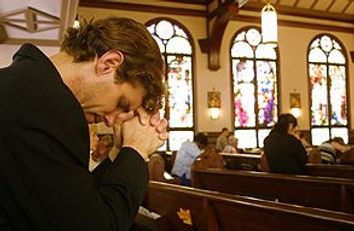
What liberal Catholics also want — which no doubt some conservatives want, too — is what was promised them in the Vatican Council II reforms of the early 1960s: A partnership of equals between clergy and laity. I’m struck by how, instead of alienating them from the church, this scandal has energized liberal Catholics, and made them more determined than ever to remain part of their parish community, to work with other Catholics, regardless of ideology, to find common ground, to right the terrible wrongs and to make the church whole again.

Of course, to many liberal Americans, the phrase “liberal Catholic” may sound like a contradiction — especially to those who prefer their stereotypes simple and hackneyed. But there are a lot of us: We are active in our parishes, we send our children to Catholic schools and we look to our clergy for spiritual guidance. We’ve resolved as best we can the disagreements we may have with the church’s pronouncements on birth control, divorce, gay rights and the role of women in the church. We prefer to focus on the church’s many progressive social teachings, our proof that Catholicism has been and can still be a powerful force for social justice, a tireless voice for the poor and disenfranchised.

It has never been easy to get people to pay attention to the Catholic bishops’ pronouncements on military spending (they think it’s too high) or foreign aid (they’d like more of it). Sex sells, even, or especially, when the topic is religion, so Americans know more about the church’s lamentable opposition to birth control, for instance, than they do about its stalwart defense of labor unions. And we share a frustration with conservative Catholics that sex scandals involving priests are more likely to get our church on the front page of newspapers than any good deed Catholics may do.

But I don’t see evidence that liberal Catholics are using the scandal to push their social agenda. Sure, some of us advocate an end to celibacy for priests — although the Rev. James Martin of the suspiciously liberal Jesuits, writing in the New York Times March 25, successfully explained why celibacy is not the issue. Martin, who is a friend of mine, pointed out that the “criminal acts of a few” do not negate the virtue and sacrifice of celibacy, any more than “spousal abuse or incest can negate the value of marriage or marital love.” (It’s also worth noting that, while reliable statistics are scarce, there is no evidence that the celibate priesthood is producing more pedophiles than clergy groups in which celibacy is not a requirement.) And while most liberal Catholics probably support ordaining women priests, this is hardly a pressing concern at the moment.

Justice for sex abuse victims, or some form of it, is the immediate priority — along with preventing these scandals in the future. “Although, as a liberal Catholic, I’ve yearned for change in the church, I don’t want this evil to be exploited,” says Pat Byrne, a member of St. Ignatius of Loyola parish in Chestnut Hill, Mass. “We need to make sure this doesn’t happen again, and that we make things right for the victims.” But Byrne insists she has no intention of leaving an institution she loves and cherishes. In the last month or so, I’ve talked to dozens of liberal Catholics who, like Byrne, are unwilling to join the ranks of the lapsed. They intend to stay, and rebuild, and to make their voices heard.

And that’s what scares people like Jenkins and Donohue. They associate such independence with “activist, feminist and gay” troublemakers. The fact is that conservative voices have joined with those of liberals in demanding change. Columnist John Leo approvingly quoted a Massachusetts woman’s contention that lay Catholics are hearing a “call to revolution.” One needn’t be an “activist” to insist that Catholic bishops stop acting like bureaucrats when they discover molesters in their midst. One needn’t be an “activist” to insist that the church’s leaders conduct themselves as servants of God, as Catholic tradition regards them. And yet, in a church whose leadership style is very much top-down, such calls for change do, in fact, constitute the makings of a revolution.

I think it is true that liberal Catholics are more willing than conservatives to challenge clerical omnipotence on matters great, like birth control, and small, like the suitability of godparents. “Having blind faith in people in power is never a good idea,” Byrne said. Byrne hopes the silver lining of the scandal will be that it leads to the creation of a new church, with a greater role for laypeople.

If liberal Catholics can be distinguished from conservatives in their reaction to the sex scandals, it is that they see it validating their vision of a church in which laypeople have a greater leadership role, the clergy is not omnipotent and where all Catholics can at least discuss their disagreement with church dogma. The Vatican Council II reforms of the early ’60s encouraged American Catholics, especially liberals, who hoped they’d usher in a new spirit of inquiry and participation in an ever-evolving church. But after the death of the Council’s champion, Pope John XXIII, that promise was never fulfilled. And after his successor, Pope Paul VI, issued his famous papal encyclical reiterating the church’s opposition to birth control in 1968, the promise of change seemed permanently broken. Mass attendance and devotion plunged in America, and tens of thousands of Catholics never returned to the fold.

Certainly liberal practicing Catholics want a discussion about the issues that have alienated their lapsed brothers and sisters. The papacy of John Paul II, especially in its twilight years, has been disappointing for liberals, who once hoped this intellectual who bravely challenged communism would lead the church in the collegial fashion that Vatican Council II promised.

But conservative critics see a dark plot behind these demands for more involvement by laity. They think it’s a slippery slope toward ending the celibate, male priesthood. The more you have lay folks making decisions and even playing on-altar roles during Mass, as many churches do, the more you seem to validate liberals’ assertion that celibate males aren’t the only ones who can play a leadership role. Of course, the growing role of laity is an acknowledgment of the reality of parish life, where there’s a pressing shortage of priests and nuns (which many experts do believe has something to do with the celibacy requirement — but that’s another story). “The laity have to take up more responsibilities and not defer to a shrinking number of ordained people,” Byrne said. “The ordained people have been taking on more and more responsibilities as their numbers decline. How long can they last?”

As recently as 150 years ago — and in an institution as old as the Catholic Church, 150 years is just yesterday — some American parishes were run by lay trustees. The pastor reported to them; indeed, the pastor was their employee. Some liberal Catholics would like to see a return to those days. Many conservative Catholics, trained to revere bishops and cardinals as lawgivers rather than merely pastors, surely would oppose such a reform.

But they agree with liberals that something has to change. And liberal Catholics are clear on one thing: They have no intention of letting others dictate those changes.

New York’s ground zero of grief

Staten Island lost 200 residents Sept. 11. Now the same community values that made its firefighters heroes help the community heal from its loss.

  • more
    • All Share Services

New York's ground zero of grief

When politicians and celebrities visit ground zero to pay tribute to the spirit of New York, they’re probably not thinking of the tree-lined streets of northern Staten Island, or the tracts of new row houses that have sprouted up around the infamous Fresh Kills landfill in the island’s southwest corner, where World Trade Center debris is being trucked. The city’s least-populated and most suburban borough is home to neither the glamour nor the power that the world associates with Manhattan. But it, along with the Rockaways, is the city’s ground zero of grief.

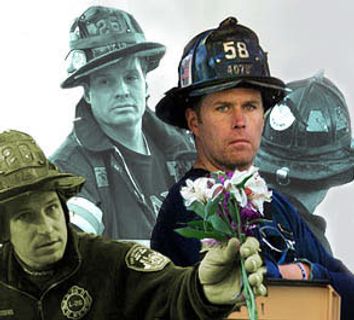
Nearly 200 Staten Island residents, in a borough of about 400,000, lost their lives Sept. 11. Of that number, 81 were firefighters. Two months after the terrorist attack, small shrines of flowers and the artwork of school-children decorate the borough’s firehouses, and firefighters still are gathering in their dress blue uniforms outside the borough’s churches, still saluting widows holding their husbands’ helmets, still eulogizing fallen brothers. To add to the horror, the remnants of Staten Island’s Rescue Company 5, decimated on Sept. 11, were sent to the Rockaways on Nov. 12 when American Airlines Flight 587 crashed, killing at least 260 people.

If, in the aftermath of the World Trade Center attacks, there is a new cultural moment known as blue-collar chic, Staten Island is its epicenter. It is the city’s whitest borough and its most Republican. It is heavily Catholic, predominantly Italian, filled with cops, firefighters and other uniformed workers. It is almost aggressively middle-class in its values and cultural interests. It is a place easily dismissed, at least before Sept. 11, as the home of big hair, clunky minivans and brawny do-it-yourselfers.

But there’s an infinitely more complex and more human narrative at work in the borough’s tidy backyards, thriving public schools and flourishing civic life. The stories of some of the borough’s lost firefighters fascinate not only because of the courage they displayed, but the stereotypes they shattered. Lieutenant Charles Margiotta, 44, one of a locally famous athletic family, was on his way home after working the 6 p.m. to 9 a.m. overnight shift when he heard about the terrorist attack Sept. 11. A graduate of Brown University, Margiotta double-majored in English and sociology and played for the school’s Ivy League championship football team in 1976. He worked for General Motors for a few years after college, but it offered him little satisfaction, so he joined the Fire Department in 1981. The morning of Sept. 11, driving home, he heard about the attacks and drove to the nearest firehouse, the headquarters of Rescue 5, and jumped aboard a rig headed for downtown Manhattan. He died there, leaving a wife and two children.

Sean Hanley, 35, had grown up hearing stories about his maternal grandfather, who died fighting a fire in Brooklyn in 1939. Undeterred, he followed in his grandfather’s footsteps five years ago, and on Sept. 11, he, like Margiotta, had finished up a night tour and was headed home when the planes struck. He drove himself to the World Trade Center, and died.

Even the Fire Department of New York can’t teach such selflessness. It springs from family, parish and community, from values that honor courage more than money, sacrifice more than ambition, family more than status. Those same values are helping the borough heal from the Sept. 11 tragedy, but even here, it will be slow going.

If we really want to understand the lives of the Charles Margiottas and Sean Hanleys of our world, we will have to put aside our media-encouraged clichés about narrow working-class life. Staten Island may send Republicans to Congress and the City Council, but the borough’s firefighters are old-fashioned union men (even those with college degrees) who haven’t forgiven their onetime union leader, Thomas von Essen, for crossing over into management to become Mayor Rudy Giuliani’s fire commissioner. The two- and three-car garages may indicate suburban individualism run riot, but many of the borough’s two-dozen-plus towns cling fiercely to their collective identities. Tottenville, in the borough’s southern tip, prides itself on its little shopping district and small-town values; St. George, just across the harbor from downtown Manhattan, is grittier, more urban and almost — almost — chic.

Staten Island can be a parochial place, like so many ethnic or blue-collar enclaves, but the flip side of parochialism is a sense of community that no city of transient careerists can match, or perhaps even comprehend. The obituaries in the local newspaper, the Staten Island Advance, chronicle not just the lives of individuals but the life and heartbreak of a vibrant community. This firefighter coached youth soccer teams; that one ran charity golf outings. One arranged his work schedule around his children; another organized an annual family reunion. Staten Island, it becomes clear, is a place where nobody bowls alone, to use sociologist Robert Putnam’s shorthand for modern anomie. It is a place where the firehouse ethic of brotherhood and fraternity rules. Before Sept. 11, that ethos was condemned as ridiculously out of date: patriarchial, clannish and parochial. Now, however, those supposed weaknesses help explain the strength of a community and a profession.

On a sunny weekend in late October, nearly 30 firefighters descended on a century-old house in the island’s West Brighton section, where the aging parents of firefighter John Santore have lived for more than 40 years. The house needs a new roof, and Santore, who lived nearby with his wife and kids, had been planning to replace it this fall. Of course, he wasn’t going to do it himself — he was counting on help from his brothers in Engine 24 and Ladder 5 in Manhattan. But on Sept. 11, weeks before he could put the roofing party into action, John Santore and seven co-workers from Ladder 5 scrambled up to the 37th floor of the World Trade Center’s north tower. They were evacuating office workers when the tower fell. His body was found in the rubble four days later.

Dennis Taaffe and John Santore both started as firefighters on July 11, 1981, and they worked together in the lower Manhattan fire station that houses Engine 24 and Ladder 5. “We planned to retire together,” Taaffe said. With just over two decades on the job, they were closing in on that magical date: Most firefighters retire after 25 years, when they’re eligible for a half-pay pension.

Taaffe and another colleague of Santore, Cosmo DiOrio, understood that their friend’s parents had lost not only a son, but a protector, a repair man, a nurse, a grocery shopper, a mechanic — and the man who would repair their roof before winter arrived. So they posted a sign on the firehouse bulletin board asking for volunteers to do the work John Santore left behind. They bought shingles and plywood, loaded ladders onto pickup trucks and got the job done.

DiOrio called this coming together “the firehouse way.” More than any other civil service job, and more than most white-collar jobs, firefighters depend on each other, not to meet a deadline, not to maximize a profit, but for simple survival. They work, eat and live together in small units of five or six, much like combat squads. Not surprisingly, then, firehouse friendships don’t end at the firehouse doors. DiOrio, for example, owns a small ski house in upstate New York with several firefigher friends.

“We do everything together,” said DiOrio’s wife, Gerri DiOrio. “Our kids all know each other. We go on vacation together. It’s a way of life. My friends are firefighters’ wives. We’re always there for each other.” She turned 40 on Sept. 13, but her husband couldn’t join her for a planned celebration. “He was at the World Trade Center site, searching for people,” she said, adding, “I didn’t expect him to be anyplace else.”

“It’s not an ordinary co-worker relationship,” said Taaffe. “This isn’t a 9 to 5 job where everybody goes his separate way at the end of a shift. At the firehouse, it’s more personal. We call each other ‘brother,’ and that’s not an accident.”

In the cultural moment since Sept. 11, it’s not even politically incorrect. The Fire Department of New York has few women — no more than 50 — in its 11,000-member force. It also remains a bastion of white ethnic Catholics, particularly the Irish. In the world that no longer exists, it seemed to matter that the survivors of most dead firefighters had names like Liam and Paddy and Bridget and Margaret Mary. Now, with nearly 350 firefighters to bury or memorialize, what matters most is their courage.

The firehouse culture of shared bonds, of astonishing bravery and of extraordinary selflessness no longer seems an anachronism. In fact, it now seems worthy of imitation. “This is one of the last jobs on earth where men rely on each other to stay alive,” said novelist Peter Quinn, whose father was a Democratic congressman and judge in the Bronx. “And it reflects something in the Catholic working-class ethic, that life is not all about fame and financial success, that doing something noble and providing for your family was more important. It’s a parochial-school worldview that in the past led people to become priests. In fact, joining the Fire Department is about as close as you can get to being in a religious order but still having a wife and kids.”

On Staten Island, a borough of old town centers and tacky strip malls, the city of unquenchable ambition and seven-figure bonuses seems much farther than the five miles that separates its northern tip from downtown Manhattan. “Staten Island,” DiOrio said, “is one of the last small-town communities. It’s a place where people know each other and help each other.” They know each other from church — usually, a Roman Catholic parish — from a fraternal organization or a Rotary Club or a PTA or a beer-league softball team.

“The nature of the community means that you have a lot more support for these firefighters and their families than you might have for some poor kid who was a junior broker at some stock trading firm,” said journalist Chris Franz, political editor of the borough’s weekly newspaper, the Staten Island Register. Ultimately, then, the firehouse way is, in fact, the Staten Island way. Which came first is an issue left for others to ponder.

About a dozen miles away from the Santore house, St. Clare’s Roman Catholic Church in the island’s Great Kills section is preparing for one last memorial mass for a parish firefighter. St. Clare’s lost 11 firefighters and 19 civilians on Sept. 11, a total of 30 parishioners leaving behind parents, children, spouses and grieving friends and families. The church is about a quarter-mile from the local firehouse, an aging brick building draped in mournful purple bunting and seemingly sagging from the weight of grief and loss. Monsignor Joseph Murphy has presided over the funerals and memorial masses. These have been, he said, the most sorrowful weeks of his life. “I’ve been a priest for 48 years, and I’ve never experienced so much personal grief,” he said. “It has been the most painful period of my life.”

The Fire Department masses and funerals have an added poignancy. Most of the firefighters were young, with young families, and many were active parishioners, rather than occasional churchgoers. As he presided over these terrible rituals, Monsignor Murphy says he has borne witness to the unwavering courage of the Fire Department of New York and its extended family. “It is a privilege to see how much these men wish to honor their brothers,” he said. “Sometimes tears come to my eyes to see the sorrow.”

To help his grief-stricken flock, Monsignor Murphy asked parishioners to help their friends and neighbors cope with their sorrow. The response, he said, was extraordinary. “Hundreds of people volunteered to provide financial assistance or other kinds of help,” he said. “We set up six support groups for different categories of people affected by Sept. 11. The response has just been remarkable.”

No doubt the opinion-makers and taste-enforcers in faraway Manhattan will soon grow weary of firefighter chic, of the travails of St. Clare’s Parish. But long after the magazine writers and camera crews have left, this borough of small towns will remember the wounds inflicted on neighbors — wounds that will never fully heal. Only those reared on irony and detachment can speak of closure. The firefighting families of Staten Island, who vacation together and pray together and grieve together, know that the pain of losing a child, a spouse, a parent never goes away. There will be no closure for the hundred-plus children Staten Island’s firefighters left behind.

But just as nobody mourned by themselves on Staten Island, nobody will be left to heal by themselves. Firefighter Taaffe, after helping to replace the roof on the house of his dead friend’s parents, said he’d be back in springtime to help with other chores. “They won’t ask for help,” he said of John Santore’s parents, “but we’ll hear about it, and we’ll be there for them.”

Continue Reading Close