Toby Young

Three cheers for Murdoch!

It's easy to bash the deplorable behavior of the NOTW. But a tabloid crackdown will likely serve only the powerful

  • more
    • All Share Services

Three cheers for Murdoch!

British journalists love nothing more than a big, fast-moving story, so we’re understandably excited about the fallout from the News of the World phone-hacking scandal. Just today, Andy Coulson, the paper’s ex-editor, was arrested, while Clive Goodman, the paper’s former royal correspondent, was rearrested. There’s talk of reams of emails being deleted at News International’s Wapping headquarters, and Rebekah Brooks, the company’s chief executive, is hanging on by her fingertips. It’s thrilling. This is what we live for.

Yet many of us are waking up to the fact that it could result in some of our cherished freedoms being curtailed. There’s no First Amendment in Britain, no constitutional guarantee of press freedom. The prime minister, David Cameron, gave a press conference this morning, in which he tried to put some distance between himself and the Murdoch empire. (Andy Coulson used to be his communications director, and he was a guest at Rebekah Brooks’ wedding.) He announced that there would be two official inquiries – one into the phone-hacking allegations and why the initial police investigation uncovered so little evidence of wrongdoing, and one into the ethics of the press. He also said the press could no longer be relied upon to regulate itself, and his government would create a new independent regulator. “It is vital that a free press can tell truth to power,” he said. “It is equally vital that those in power can tell truth to the press.”

As a colleague of mine pointed out in the Daily Telegraph, that phrase had an ominous, Orwellian ring to it. Does Cameron mean that, in future, her majesty’s government will be able to dictate to the press what truths it can and can’t tell? Almost everyone in the media accepts that some sort of privacy law in Britain is now inevitable. Our newspapers are already bound by the privacy clauses of the European Human Rights Act, but many European countries have additional privacy laws that make it much more difficult for their papers to expose the corrupt practices of senior politicians and officials. France is a particularly egregious example. I have to be careful what I say about Dominique Strauss-Kahn because he could take advantage of Britain’s draconian libel laws to bring a multimillion-pound lawsuit against me. (In the U.S., the burden of proof is on the plaintiff to demonstrate that what’s been written about him is false, whereas in the U.K. the burden of proof is on the defendant to demonstrate that what he’s written is true.) But a British equivalent of DSK would not have been able to escape the scrutiny of the British tabloids.

The creation of an “independent” regulator and the introduction of tough new privacy laws are both things the British political class has wanted to do for years, and our fear is that Cameron will take advantage of the public’s revulsion at the News of the World phone-hacking revelations to clip our wings. That could mean the end of our rambunctious, adversarial media culture.

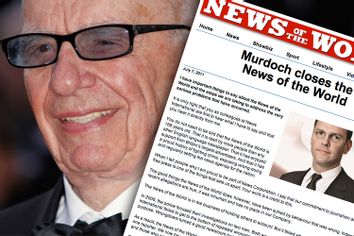
I’m one of the few British journalists who have been prepared to speak up for Rupert Murdoch and the News of the World since the scandal broke. I wrote a defense of tabloid journalism in this week’s Spectator, and I appeared on the BBC yesterday to defend Murdoch against the London editor of Vanity Fair. I’ve had a busy day today, shuttling between television and radio studios, doing my best to put the case for the ink-stained wretches of News International.

Defending Murdoch’s record in the U.K. isn’t that hard. He broke the back of the antediluvian print unions, revolutionized broadcasting and has kept the London Times afloat even though it loses tens of millions of pounds a year. He’s often accused of interfering in his papers, ordering the editors to support whichever political party has promised to do the most to further his business interests. But most editors who’ve worked for him describe him as a model boss. He’s loyal and doesn’t skimp on budgets, the two most important qualities in a newspaper proprietor.

Making the case for the News of the World, which News International has announced it’s shutting down, is more difficult. The paper’s staff have engaged in some unforgivable behavior over the years, but they’ve also been responsible for breaking some fantastic stories. The Screws, as it was called, didn’t hesitate to speak truth to power when it had the goods on somebody. One of the paper’s biggest scalps was that of Jeffrey Archer, then the vice-chairman of the Conservative Party, who ended up going to jail following the paper’s revelations that he had paid off a prostitute. More recently, it exposed members of the Pakistani cricket team for throwing matches in return for cash bribes. One of its most colorful members of staff was Mazher Mahmood, known as the “fake sheik” thanks to the fact that he disguised himself as a rich Arab in order to dupe celebrities into trying to sell him cocaine or arrange access to their powerful friends in return for cash. He counted Sarah Ferguson among his victims.

There was something almost engaging about the paper’s lack of respectability. Lots of commentators have pointed to its double standards – the cavernous gulf between the moral sentiments of the leader columns and the behavior of the journalists – but, in itself, that hypocrisy had a kind of pantomime appeal. The News of the World was part of the scenery in the music hall farce that is British public life. It’s been going for 168 years and featured in the opening section of George Orwell’s famous essay on the decline of the English murder. The paper’s reptilian hacks were the rude mechanicals of Fleet Street – stock characters in a company of players that will be diminished by their departure, even if they were unloved when they were around and occasionally behaved appallingly. I will miss the fake sheik.

Clearly, there are people who should be protected from tabloid intrusion, such as the victims of the 7/7 bombings or the families of dead soldiers (just some of the people who are alleged to have had their phones hacked by the News of the World). But how do you shield them without also shielding wrongdoers? A privacy law and an “independent” regulator wouldn’t just protect the innocent, it would also protect the guilty. Without papers like the News of the World – without Rupert Murdoch – Britain would be more like France.

I don’t want to sound too alarmist. British politicians have promised to rein in the tabloid press before, most notably after the death of Princess Di, only for everything to carry on as normal after a couple of months. But this feels like a watershed moment, a turning point in the relationship between Westminster and the Fourth Estate. If we’re not careful, the excesses of some News of the World reporters may mean that the freedoms we’ve enjoyed for centuries are about to be withdrawn.

Can the beloved William save the monarchy?

Or will the Firm's attempts to modernize rob the royal family of their magic?

  • more
    • All Share Services

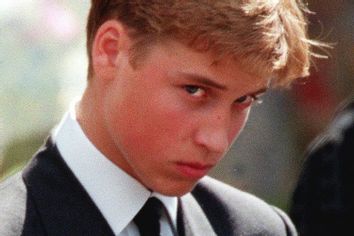
Can the beloved William save the monarchy?Prince William at the funeral of his mother, Diana, Princess of Wales.

Political journalists in Britain have been poring over the memoirs of Tony Blair and his most trusted lieutenants in recent days in an attempt to discover why the ex-prime minister hasn’t been invited to the royal wedding. This looks awfully like a snub, particularly as his two Conservative predecessors — Margaret Thatcher and John Major — are both on the list. The official explanation is that Thatcher and Major are members of the Royal Order of the Garter while Blair is not. But no one believes it of course.

The diaries of Alastair Campbell, Blair’s press secretary, may contain a clue. In the section dealing with the death of Princess Diana he notes how well the prime minister went down on the BBC News after hailing her as the “People’s Princess.” “It was a very powerful piece of communication,” he says. “The People’s Princess was easily the strongest line, and the people in the studio afterwards were clearly impressed and felt he had really caught the mood.” Campbell used to be credited with coining that line, but one of the revelations in his diaries is that Blair came up with it himself.

It’s a safe bet that the line didn’t go down well with the Firm, as the royal family likes to refer to itself. Within days, the public mood turned ugly. Why wasn’t the Union flag outside Buckingham Palace flying at half-mast? Why were the Windsors remaining in Scotland and not returning to London? The public, fueled by the tabloids, felt that their beloved princess was being disrespected by her former in-laws.

Diana had been engaged in a protracted P.R. war with the Firm in the years before her death and, seen through this prism, Blair’s description of her as the “People’s Princess” was unhelpful. In the eyes of the royal family, he had helped whip up public hostility towards them. If she was the “People’s Princess,” that must mean they were aloof and out of touch.

In his diaries, Campbell records the efforts Blair made to heal this rift, persuading the queen to come back to London ahead of the funeral, to mingle with the crowds on the day of her return and to lower the Union Jack to half-mast. These behind-the-scenes machinations are recorded in “The Queen” (2006), the Oscar-winning film in which Blair is cast as the savior of the royal family. It’s safe to assume that this, too, went down badly with the Firm. It’s clear from Campbell’s diaries that the royals and their advisers were out of their depth during the days that followed Diana’s death and, afterwards, they probably felt they’d been manipulated by a master politician. Blair’s approval ratings shot up in the wake of the funeral, while the Firm seemed badly wounded, its future shrouded in doubt.

Fast forward 14 years, and the royal family has returned to its position at the center of Britain’s national life. Over 5,000 street parties are being planned to coincide with the wedding on Friday and, according to a recent poll in the Guardian, 47 percent of Britons say they’re going to watch it on television.

The recovery of the Firm may owe something to Tony Blair’s chief bit of advice in 1997, which was that the royals needed to “modernize” if they were to retain the affection of the British people — and “modernize” they did. After Diana’s wedding to Charles in 1981, the couple left London on the Royal Train and spent their honeymoon on the Royal Yacht. The yacht has now been decommissioned and the train mothballed. Lesser royals, such as Princess Michael of Kent, have been sidelined, making the Firm appear smaller and more modest. Press attention has been focused on William and Harry, who seem much more at ease in the spotlight than their father. The Windsors today appear less anachronistic — more in step with contemporary Britain — than they did 14 years ago.

This, too, may be a reason why Blair hasn’t been invited to the wedding. The Firm has heeded the message, but shot the messenger. Among the family and its advisers there’s a great deal of debate about just how modern the royals need to be in order to ensure their survival. Refuse to change and they risk seeming reactionary and antediluvian, but if they bend with each passing fashion, there’s a danger the magic will be destroyed. The paradox at the heart of the family’s popularity is that the royals are both ordinary and extraordinary — relatable, but different. In the 19th century, the institution of monarchy redefined itself as a family rather than a single individual, and this helped account for its soaring popularity under Queen Victoria. “A family on the throne is an interesting idea, also,” wrote Walter Bagehot in “The English Constitution” (1867). “It brings down the pride of sovereignty to the level of petty life.”

But for the charm to work, the family has to be like our own and, at the same time, not like our own. Prince William’s choice of a commoner as a bride has been a big talking point in the British media, with most members of the chattering classes expressing approval. It’s held up as an example of how “modern” he is, less snobbish than his forebears. Yet this ignores the fact that Kate Middleton is firmly upper-middle class — virtually indistinguishable from the more “suitable” girls William might have chosen instead.

This is the trick the royal family must pull off — it needs to give the impression of “modernizing” while not really doing so, at least not much. It’s as if the public needs an excuse to give vent to a distinctly premodern feeling, a communion with something ancient and mysterious. As a psychoanalyst might put it, the British people need to give themselves permission before they open the floodgates of irrationality. The British political scientist Harold Laski had it right when he compared the worship of the royal family in the 1930s to religious ecstasy: “Eulogy of its habits has reached a level of intensity more comparable with the religious ecstasy of the seventeenth century, when men could still believe in the divine right of kings, than of the scientific temper of the twentieth, which has seen three great imperial houses broken, and the King of Spain transformed into a homeless wanderer.”

It is not William’s choice of bride that accounts for the public’s enthusiasm about the wedding but William himself. Since the cult of monarchy was first established, the most popular members of the family have been those nursing some sort of wound. Queen Victoria, the granddaughter of George III, had the advantage of being widowed at the age of 42 and went on to reign for another 40 years, much of the time dressed in black. George VI, as we saw in “The King’s Speech” (2010), suffered from a bad stammer, making him more popular than his polished elder brother. Similarly, Prince William has had to cope with the loss of his mother from the age of 15. The British public took him to their bosom on that fateful day in August 1997, and he has remained there ever since.

One of the questions people were asked in the Guardian poll was whether the crown should pass directly to William, bypassing Charles altogether; 46 percent said yes, compared to 40 percent who said no. Yet this would surely be a “modernization” too far. The concept of a hereditary monarchy ceases to have much meaning if the public can cherry-pick the next sovereign from among the members of the family. Nick Clegg, the deputy prime minister, has called for the rules of succession to be changed, dispensing with primogeniture. That way, William and Kate’s firstborn can become the monarch, regardless of whether it’s a boy or a girl. But that, too, is unlikely to gain much traction. It has the whiff of a meaningless political gesture. As Sathnam Sanghera, a columnist on the London Times, put it: “The poor may be excluded from the Establishment for a generation, and the under-privileged may have no way of lifting themselves out of their under-privilege for decades, but at least the unborn offspring of Britain’s most pampered couple will come into this world knowing that its sex will not prevent it becoming unelected Head of State. Thanks, Nick!”

The most common complaint against the monarchy is that it encourages the general public to accept the hierarchical nature of British society — it is the glue that holds the class system together. “The English Monarchy strengthens our government with the strength of religion,” wrote Bagehot. “It gives now a vast strength to the entire constitution, by enlisting on its behalf the credulous obedience of enormous masses.”

That seems like a good republican argument, yet as Bagehot pointed out, a society in which people transferred that mystical allegiance to elected leaders wouldn’t necessarily be preferable. The best defense of the monarchy is also the best defense of celebrity culture: The ecstatic worship of popular icons who lack political power acts as a safety valve in democratic societies, diverting irrational feelings that might become dangerous if they were attached to political figures. Better that a cult of personality should grow up around a neutered constitutional monarch like George VI than around a figure like Oswald Mosley, the 1930s leader of the British Union of Fascists. Or, as we like to say in Britain, the best argument against republicanism can be summed up in two words: President Blair.

To outsiders, our love of the royal family can seem slightly pathetic, as though we’re hankering to return to the days of Empire. But it’s important not to forget the pleasure the Firm brings to millions, particularly at moments such as this. My late father, Michael Young, was a sociologist and, along with his colleague Edward Shils, wrote an account of the queen’s coronation in 1953 for the Sociological Review. They noted that the coronation was on occasion much like the Blitz in which people normally separated by class came together in a spirit of national unity. “On this occasion one family was knit together with another in one great national family through identification with the monarchy,” they wrote. “A general warmth and congeniality permeated relations even with strangers.”

I’m intending to go down to the Mall on Friday and watch as the carriage carrying the royal bride glides past. No doubt I’ll feel slightly awkward at first — self-conscious, ironic, out of place. But I suspect that those feelings will inevitably fade and be replaced by a surge of patriotism. My father and his colleague concluded that the coronation was “a great act of national communion” in which “practically the entire society” made contact with “the sacred.” This Friday, the people of Britain will make contact with their own peculiar deity once again.

Continue Reading Close

Scorned on the Fourth of July

A British expat reflects on America's insensitivity to its British residents, taxation without representation and the wonders of the "lucky sperm club."

  • more
    • All Share Services

As a Brit living in America, this isn’t my favorite time of year. This weekend I’ll be expected to celebrate what, from my point of view, was a catastrophic military defeat. Imagine living in Vietnam and having to smile benevolently every
year as millions of Vietnamese hold a huge party to celebrate the fall of Saigon.
That’s how I feel about Independence Day.

It’s always astonished me how little sensitivity Americans display toward their
former colonial masters. Nazi Germany was, by any measure, a far more loathsome
enemy than the British Empire — yet most Americans would be hard pressed to identify what V-E Day is, let alone celebrate it. Why can’t you extend the same tact and magnanimity to Britain that you display toward
Japan? You haven’t even bothered to nominate a day to celebrate America’s Cold
War victory over Russia, yet on July 4 you crow over the defeat of our tiny
little island like Yankees fans at the conclusion of another successful World
Series.

I’m not asking you to politely refrain from mentioning the War of
Independence for fear of offending us — though that’s a courtesy you extend to
almost everyone else — but do you really have to let off fireworks? Couldn’t you
make do with a parade of some kind?

What makes July 4 a particularly galling holiday is that one of the principles
on which the War of Independence was fought was that there should be no taxation
without representation. Now, I wholeheartedly endorse that principle. It’s the
very basis of democracy. Yet it’s a principle that America has singularly failed
to uphold.

As a non-U.S. citizen earning my living in New York, I’m in exactly the
same position as the American subjects of King George III: I’m obliged to pay
taxes on pain of imprisonment, yet I’m not allowed any say in the composition of
the government. I’m forced to hand over money to a state I have no control over.
I’m taxed but I can’t vote. It’s an outrage! I ought to make my way to Boston
right this minute and start tossing tea into the harbor.

Not all my fellow countrymen feel the same way. Last year British journalist Jonathan Freedland published a book called “Bring Home the Revolution: How Britain Can Live the American Dream.” Freedland spent four years in Washington as a correspondent for the Guardian, and he concluded that
Britain needed to become much more like America. In particular, he thought Britain ought to become a republic; that is, abolish the royal family.

How anyone can spend four years in Washington — Washington! — and retain their
faith in the American political system is a mystery to me. As Roy Cohn said, it’s the world capital of cutthroats. But to recommend that Britain jettison its royals — he’s barking mad! Freedland’s got it completely arse over tit, poor fellow. It’s obvious that, far from Britain following America’s example, America needs to become much more like Britain. In particular, you need to immediately set up your own monarchy.

I mean this in all seriousness. It’s one of the reigning orthodoxies of our era
that Britain’s class system, buttressed by the monarchy, is without any redeeming
virtues. Not so. If class were the sole determinant of success in Britain that
might be true, but it isn’t. Being a member of “the lucky sperm club,” as it’s
called, can be an advantage — but it’s only one factor among many, and not a very
powerful one at that.

The crucial difference between Britain and America isn’t that one is class-bound,
the other a perfect meritocracy. Having spent four years
here, I’d say American society is every bit as stratified and hierarchical as our
own. (Has it escaped your notice that both the leading presidential candidates
are the scions of powerful patrician dynasties?) The difference is that we
acknowledge that who your parents are and where you went to school affects your
life chances, while Americans stubbornly maintain that the only determinants of
success are hard work and natural ability.

The fact that we Brits recognize the importance of luck in the equation means we
don’t take successful people all that seriously and — more importantly — we
don’t regard the unsuccessful as beneath contempt. In the United States, by contrast, where
everyone is mistakenly believed to have an equal chance, the lucky few with all
the money and power are worshipped like deities and the rest are dismissed as losers.

This, then, is my argument in a nutshell: The British monarchy ameliorates the
extreme outcomes dictated by late 20th century capitalism; it’s a constant
reminder of the key role that chance plays in shaping the outcome of our lives. After all, what could be more absurd than
making a member of the lucky sperm club the head of state? If America, too, had a
royal family, perhaps Puff Daddy wouldn’t be treated like a hero — merely a very
lucky guy — and Rudy Giuliani would be a little nicer to those whom fortune
hasn’t smiled upon lately, such as poor, British Tina Brown.

Last autumn a friend I was at Cambridge with became the executive producer of
ABC’s revamped “Fantasy Island.” (He’s the son of a well-known Hollywood actress
– shock!) I pitched him a story idea that involved a group of desiccated
British expats whose fantasy was that America had lost the War of Independence.
For one precious day, they’d be able to live in an alternative present in which
Americans still paid taxes to the British government and still doffed their caps
and tugged their forelocks whenever one of us entered the room.

Unfortunately, “Fantasy Island” was put on hiatus before this idea could bear
fruit — but it would have made a cracking episode. This Monday I intend to take
some comfort in that fantasy, as your rockets light up the sky and darken my horizon.

Continue Reading Close

Star what?

10 reasons not to see "The Phantom Menace."

  • more
    • All Share Services

A long time ago, in a galaxy far, far away, the new “Star Wars” movie didn’t suck. It was called “The Empire Strikes Back” (1980) and some critics — Pauline Kael — preferred it to the original. No such luck this time around. According to a few early reviews, “The Phantom Menace” is even worse than “Return of the Jedi” (1983). Nevertheless, industry analysts are still predicting it’ll gross more than $100 million by the end of the Memorial Day weekend and eventually overtake “Titanic” to become the highest-grossing movie of all time. It’s as if Obi-Wan Kenobi had performed a Vulcan mind trick on the entire population of the world. (Note to “Star Wars” fans: I know the correct term is “Jedi mind trick.” I deliberately got it wrong to annoy you.)

For those of you who haven’t been completely enslaved by the media-industrial complex, here are 10 reasons not to see it.

1. The episodes are in the wrong order: Part I

George Lucas is often praised as a master storyteller but what kind of storyteller begins with episodes four, five and six — sorry, Episodes IV, V and VI — then proceeds to Episodes I, II and III? Surely, on Page 1 of the storyteller’s manual, it tells you to begin at the beginning. Of course, it’s possible that the author of the storyteller’s manual started straight in on the middle section on Page 1, but only an idiot would do that.

The trouble with prequels is you know in advance how they’re going to end. I hate to ruin this for you guys, but Anakin Skywalker turns into Darth Vader and, in Episode 6 — sorry, Episode VI — he dies.

2. The light sabre

As a slightly backward 14-year-old, I was at least 10 years too old for “Star Wars” (1977) when it first came out. But I was still quite pleased when I discovered a toy light sabre in my Christmas stocking. My euphoria was short-lived. Even by poor merchandising standards, the light sabre left a lot to be desired. After inserting the batteries (which weren’t included), you had to draw the curtains and turn out all the lights before it even remotely resembled the Jedi Knight’s weapon of choice. Needless to say, the moment you engaged in any sort of duel, the light sabre crumpled like a blade of grass. Mine was broken by Boxing Day.

Who should we hold responsible for this piece of junk? Step forward, George Lucas. In 1973, following the surprise box-office success of “American Graffiti,” Lucas renegotiated his contract with 20th Century Fox, insisting that he retain both the sequel and merchandising rights to “The Star Wars,” as it was then called. The rest, as they say, is hysteria.

3. Anakin Skywalker’s hair

OK, the “Star Wars,” saga has never been strong on hair — Princess Leia looks like she’s wearing cinnamon roll ear muffs — but the young Anakin Skywalker’s locks are truly revolting. It’s one of those sissy, just-washed helmets that no self-respecting kid would tolerate for a second, even on the planet Tattooine.

4. George Lucas is a capitalist running dog

According to Peter Biskind in “Easy Riders, Raging Bulls,” a woman who worked on “Raiders of the Lost Ark” (1981) told Lucas her favorite film of his was “THX 1138″ (1971). He gave her a puzzled look and said, “But it didn’t make any money.”

Like many children of the counterculture, Lucas has become an arch-capitalist. It’s estimated that he made more than $3 billion in licensing fees from the original “Star Wars” trilogy. So far, he’s already pocketed $1 billion in tie-in rights for “The Phantom Menace” and negotiated a promotional deal between Lucasfilm and Pepsico worth $2 billion. Does each of us really need to enrich him further by paying up to $9.50 apiece to see the wretched thing?

5. No Harrison Ford

Harrison Ford was by far the best thing in the original “Star Wars” trilogy and he isn’t in “The Phantom Menace.” According to Biskind, he was one of the few people involved bold enough to stand up to the tyrannical Lucas. “George, you can type this shit,” he told the director on the set of “Star Wars,” “but you sure can’t say it.”

6. It’s not the “Special Edition”

In 1997, Lucas re-released the original “Star Wars” trilogy, adding a few minutes to each film and calling each a “Special Edition.” If we wait 20 years, perhaps he’ll authorize a “Special Edition” of “The Phantom Menace.” It would be a pity to ruin our experience of that masterpiece by seeing the current, inferior version.

(Film historians please note: “Star Wars: Episode IV: A New Hope: The Special Edition” (1997) was the first movie ever to be released with three colons in its title.)

7. George Lucas is an opportunistic hack

Here is a list of Lucas’ less-distinguished credits culled from the Internet Movie Database:

Executive producer: “The Ewok Adventure” (TV movie, 1984), “Ewoks: The Battle for Endor” (TV movie, 1985), “Droids: The Adventures of R2D2 and CP30″ (TV series, 1985), “Ewoks and Droids: Adventure Hour” (TV series, 1986), “Captain Eo” (1986), “Howard The Duck” (1986).
Writer: “More American Graffiti,” aka “Purple Haze” (1979).
Producer: “Jurassic Park 3″ (2000).

8. Jar Jar Binks

According to Sam I Am, a fan who sneaked into an exhibitors screening and posted a review on the Ain’t It Cool News Web site, the character of Jar Jar Binks is like “all the Ewoks rolled into one.” Does this mean we can look forward to “The Jar Jar Binks Adventure”?

9. The episodes are in the wrong order: Part II

Once the saga is complete and the episodes can finally be seen in their correct order, the special effects in Episodes IV, V and VI will look much less sophisticated than those in Episodes I, II and III. This will look very peculiar. In fact, it will be perfectly obvious to even the most dim-witted 4-year-old that the middle section in the saga was made before the first section.

10. George Lucas is evil

Back in the mid-1970s, Lucas was a promising young independent filmmaker who made a conscious decision to make a commercial, mainstream film. After screening “Star Wars” for the first time, Lucas described it as a cross between “Willy Wonka and the Chocolate Factory” (1971) and “The Computer Wore Tennis Shoes” (1970).

“I’m going to make five times as much money as Francis on these science-fiction toys and I won’t have to make ‘The Godfather,’” he boasted to cult filmmaker John Milius. “I’ve made what I consider the most conventional kind of movie I can possibly make.”

In short, Lucas chose the Dark Side of the Force. It wouldn’t have mattered if “Star Wars” had tanked, but its record-breaking success steered Hollywood toward the Dark Side as well: Without “Star Wars,” we wouldn’t have had “Armageddon” (1998).

“‘Star Wars’ swept all the chips off the table,” William Friedkin told Peter Biskind. “What happened with ‘Star Wars’ was like when McDonald’s got a foothold, the taste for good food just disappeared.”

George Lucas is Darth Vader. But it’s not too late to fight back. A long time ago, in a galaxy far, far away, a small rebel force managed to blow up the Death Star. Let’s start by exorcising “The Phantom Menace.”

Continue Reading Close