Uju Asika

“Sexist jerks in beads and bell-bottoms”

"Auto Focus" director Paul Schrader on the banality of sexual obsession, Crane's kinky male pal and why he had to cut out a sex scene that would have flown on "The Sopranos."

  • more
    • All Share Services

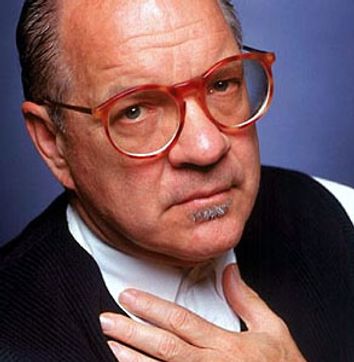
Bob Crane, the ’60s sitcom star and subject of writer-director Paul Schrader’s new movie, “Auto Focus,” often boasted that he never had to pay for sex. But Crane’s all-consuming appetite for flesh and his habit of documenting his exploits on camera would cost him his marriage, his career and, ultimately, his life. In 1978, the man best known for playing the unflappable leading character in “Hogan’s Heroes” was found in a motel room, bludgeoned to death with one of his own tripods. (No one was ever convicted in the case.)

“Auto Focus” follows Crane’s rise and demise, but it shows only a perfunctory interest in “Hogan’s Heroes,” the popular comedy about Allied troops cavorting under the noses of their hapless captors in a German POW camp (which was recently voted the fifth-worst show of all time by TV Guide). Instead, Schrader, who specializes in unflinching portraits of men whose lives are spiraling out of control, concentrates on what lies behind Crane’s slick black hair and white-picket-fence grin. Specifically, he zooms in on the actor’s dangerous liaison with John Carpenter, the video technician who was tried for Crane’s murder. (Carpenter was acquitted, although Schrader implicates him almost to the point of slapping on handcuffs.)

Schrader sets up Crane (Greg Kinnear) and Carpenter (Willem Dafoe) as a sort of Lone Ranger and Tonto of do-it-yourself pornography. Socially worlds apart (Dafoe’s ravaged features seem like a hall-of-mirrors distortion of Kinnear’s clean-cut looks), they share a similar makeup: equal parts tech geek and super-freak. Crane’s the type of guy whose play button is always switched on, yet who operates his emotions by remote control. He comes into focus only in front of a camera, while Carpenter comes fully alive only in the reflection of Crane’s gaze.

Schrader chips away at the pair’s shagadelic veneer to reveal desperately lonely men whose screwing around is clearly symptomatic of something lacking in their lives. By the movie’s bloody climax — showing brain tissue splattering on Schrader’s camera lens like the obligatory “money” shot in a hardcore porn flick — we are left as drained as Crane must have felt after yet another soulless one-night stand.

Yet “Auto Focus” is more than a chilling autopsy report or a cautionary tale about excess: It’s a fascinating, tightly wound and occasionally hilarious take on small-time celebrity, which if not quite Schrader’s best work, is easily one of his most accessible. Schrader uses Crane’s example to explore larger themes: the evolution of male sexuality through the free-love era, the sacrifice of self on the altar of personality, and the devastating effect of long-term addiction. The film is held together by compelling central performances and a strong supporting cast that includes Rita Wilson, Maria Bello and Ron Leibman.

Dafoe, who has previously appeared in Schrader’s films “Affliction” and “Light Sleeper,” as well as Martin Scorsese’s “Last Temptation of Christ” (which Schrader co-wrote), is so raw and needy as Carpenter that it’s almost unbearable to watch him. His awkward body language and are-we-having-fun-yet grimace conveys his character’s mix of vulnerability and latent rage. Kinnear, in a career-defining role, captures Crane’s emotional tics. The vaguely puzzled expression Kinnear wears in all his films works here to underline Crane’s lack of self-awareness.

Kinnear bears a passing physical resemblance to his character but actually looks more like Crane’s youngest son, Scotty, who is generating controversy (and helping sell movie tickets) through a Web site denouncing Schrader’s film as lies. On Scotty’s site, you can read the “real truth,” including “proof” — in a pop-up window — that his father had no need for penile implants, as “Auto Focus” claims. Further, Scotty maintains that there was no shame in Bob’s game and that if daddy were alive today he’d probably be running his own pay-per-view porn site.

Indeed, in the aftermath of Rob Lowe, R. Kelly and the Pam and Tommy show, Crane’s sexcapades are hardly headline news. What makes “Auto Focus” more than a big-screen peepshow is Schrader’s obvious relish for his material (even the Crane family response entertains him) and his adept handling of familiar territory. Although religion in “Auto Focus” is restricted to a brief exchange between Crane and his priest (he’s a lapsed Catholic, wouldn’t you know), it’s hard not to read a biblical subtext in this tale of temptation, transgression and reaping what you sow.

Schrader concedes that elements of his own deeply religious background creep into all his work. “You never outrun your childhood,” says the director, although he spent much of his adulthood trying to do precisely that. Raised in Grand Rapids, Mich., in a strict Calvinist community where watching films was forbidden, Schrader rebelled in his late teens, giving up a future in the clergy for a lifetime devoted to the art of motion pictures. His first love was foreign cinema, and at 22, while studying for his master’s at UCLA, he wrote what is still regarded as a seminal text on the transcendental style in film, focusing on the works of Robert Bresson, Carl Theodor Dreyer and Yasujiro Ozu.

Starting out as a critic (he was fired by one newspaper for panning “Easy Rider”) Schrader switched to fiction with “The Yakuza,” sharing a co-writing credit with his brother Leonard (“Kiss of the Spider Woman”). In the early 1970s, while living through a period of homelessness, drug abuse and suicidal despair, he wrote the script for “Taxi Driver” in 10 days. Although Scorsese, the film’s director, described it as “too much Good Friday and not enough Easter Sunday,” this blistering urban parable had a therapeutic effect on Schrader and sealed his reputation as one of Hollywood’s most important screenwriters.

Up next is “Dino,” the Dean Martin biopic that Schrader has scripted for Scorsese, and a prequel to “The Exorcist,” which will be his first studio feature as a director since “Cat People” 20 years ago. “I’m pretty excited,” he says. “It’s nice to have a safety net, a big budget and toys at my disposal.” It’s also a fitting undertaking for a storyteller drawn again and again to parables of sin and salvation, of divinity in humanity, and the devil in the flesh.

When I caught up with Schrader a couple of weeks before the release of “Auto Focus,” he was in an unexpectedly jocular mode, punctuating his comments with sly grins and wheezy chuckles. At 56, Schrader no longer writes under the influence and seems at peace with his demons. Yet, scrunched into an armchair and gripping a cup of strong black coffee, he still gives off some of the restless energy of a man taught early on in life that “this earth is not your home.” I spoke with him about Crane and Carpenter’s odd-couple relationship, sexuality and homoeroticism, his Calvinist background, and his filmmaking approach.

What attracted you to this project?

The first attraction was the relationship of Bob Crane and John Carpenter, which was something like I’d seen in Stephen Frears’ movie “Prick Up Your Ears,” about the playwright Joe Orton and his lover. I liked that dynamic. I thought it would be cool if I could do an American middle-aged heterosexual TV-star version of the relationship between Joe Orton and Kenneth Halliwell. That first drew me in. And as I got into it, I came to realize that Crane was not dissimilar from other characters I’d created. Like the “Taxi Driver” or Nick Nolte in “Affliction,” there was a disconnect between who he thought he was and what he was doing.

Does “Auto Focus” continue what you call the “lonely man in his room” theme that began with Travis Bickle?

In some ways, but when I’ve dealt with characters like this before, these existential loners, they tend to be introspective. They don’t get it, but they’re trying to figure out how to get it. The interesting thing to me about Crane was that he was not only clueless, he was clueless about being clueless. And I think his greatest flaw wasn’t sex, it was selfishness. Hence the title. I don’t think he understood or appreciated how his actions affected other people. It was just sort of blithe egoism. So the challenge then was to try to make a film about a superficial character that wasn’t a superficial film.

Crane’s obsession with sex seems almost adolescent — even the Crane and Carpenter affair: the combination of peer pressure and adulation.

Yeah, well, they needed each other. If Crane hadn’t found Carpenter, he would have found another Carpenter and vice versa. It’s hard to know who was the yin, who was the yang. Was John Carpenter the dark side of Bob Crane, or was Bob Crane the dark side of John Carpenter?

The casting is dead-on.

Greg and Willem are such different types. You know, it’s like Oscar and Felix. I mean, what could be more fun? Episode 56: Oscar and Felix make a porn film. With the Pigeon sisters! [Laughs.]

It’s interesting how the video camera is both witness and accomplice in their exploits.

Well, you know, there were all these elements going on — exhibitionism and voyeurism, being seen and being watched, and cataloging it all. Bob Crane Jr. told me that he thought his father got more off on the video aspect than he did on the sexual aspect.

That came across especially with the scene when Crane and Carpenter are masturbating to their own video. Was that in the original script?

No. I love that scene. [Mimics Crane.] “What is it about women, Carp?” You know, two great philosophers here discussing women. “Can’t live with ‘em, can’t live without ‘em.” “Truer words were never spoken.” [Laughs.] I put that in, I thought it was just a hoot. I was biting my tongue behind the camera to keep from laughing. It was my sort of Norman Rockwell tableau of American male sexuality. You take these kind of Rat Pack guys who have to trade in their narrow ties for beads and bell bottoms in order to score chicks. But of course they remain the same sexist jerks they always were. It’s a fascinating period in American male sexual identity.

Were you a fan of “Hogan’s Heroes” growing up?

Not really. I was in college when it was on and it was the last thing I was interested in. With the various cultural upheavals and changes that were happening in the ’60s, sitcoms just weren’t where I was.

You didn’t get to watch movies until you were 17 or so. What exactly is the Calvinist objection to cinema?

It happened during the ’20s, during the Jazz Age. Our church had a synodical decree outlawing what they called the worldly amusements: cinema attendance, dancing, drinking, card playing, smoking and the like. It wasn’t just one individual film either, because the movie industry was seen as corrupt; so it was all forbidden. That was just church edict. It’s gone now, that whole world is gone now, but that’s the way it was when I was growing up.

Are there advantages to being a late bloomer?

Oh, yeah. God, yes. Many advantages. I went to UCLA as a grad student and ran into all these kids who were trying to figure out who they were. I knew exactly who I was and I knew where I was headed. Also it was great growing up with such a strong ethical system and a kind of moral universe. That kind of Calvinism was very intellectual; it was very pro-educational and pro-thought. You know, they almost believed that you could think your way into heaven. When I look at my kids raised on MTV and video games, I wonder who had the better upbringing.

In your book on “Transcendental Cinema” you quoted the Dutch theologian who said, “Art and religion are parallel lines, intersecting at infinity and meeting in God.” Do you find a spiritual outlet in film?

Well, of all the arts, I think film is one of the most difficult to be used in a spiritual manner because it is so kinetic, so visceral. If you’re going to do something spiritual, it usually involves slowing life down, and it’s kind of hard to slow something down that moves at 24 frames per second.

In “Auto Focus,” the closest Crane seems to come to an epiphany is when he’s with his son, talking about the color orange.

Bobby Crane Jr. is the one who told me about that orange conversation. He overheard that from his father, and I thought, Wow, that’s pretty cool. So I put it in. Even though I’m not quite sure what it means. Something about hidden meanings in things.

Bobby Crane Jr. was a consultant on this film (and appears in a cameo). But you’ve had ongoing trouble with Scotty Crane.

The problem with Scotty began long before the film, in that he and his mother had a competing script, called “Take Off Your Clothes and Smile,” which they couldn’t get made. And I was told not to deal with them because they were litigious and they would claim that I stole their script. They felt they should have control over any film made about Bob Crane. So the first grievance was one of control, and out of that a number of other grievances have come over the years. And if you go to Scotty’s Web site, he’ll be more than happy to tell you about them. [Laughs.]

When you’re focusing on a real-life subject, how do you handle these types of concerns without compromising your story?

Well, you do have two obligations. You have an obligation to history and you have an obligation to drama, and you’ve got to find a way to serve both masters. If you have to cheat history to tell a story, you shouldn’t make that movie. And if you have to tell a boring story to be true to history, you shouldn’t make that movie. So when you achieve a situation where both drama and history are being served, the line between fact and fiction then blurs because your protagonist is a factual character who has the power of fiction.

I went into this film expecting a lot of debauchery, but it wasn’t as bad as I anticipated.

Well, I’d agreed to do an R film. I don’t think audiences want to see porn in the multiplex. When they want to see porn, they know what they want to see and they know where to get it. They don’t want to go to the multiplex and see it with their neighbors. So I think, even if I had had the freedom to be more explicit, I would have still made the same choices.

But there was a groan in the preview audience, when I saw the film, during a scene when one of the home porn shots gets blocked out.

I sort of made a mistake. I’d been watching too much HBO. [Laughs.] I thought I was making an R movie, but apparently the stuff on HBO like “Sex and the City” and “Six Feet Under” wouldn’t get an R in the theater. Theatrical is more conservative than cable. So then I had to decide whether to cut the shot out or to obscure the offending area. I decided to pixelate it for two reasons. One was that it would tell the audience this was hardcore footage and not cheesecake. Secondly, down the road it would be changed. In Europe, it wouldn’t be there, and on DVD it wouldn’t be there. But if I cut it out, it would always be gone.

Can you talk a little about the camera and lighting tricks you use to affect the film’s mood?

The idea was to go from clean lines to clutter. We degraded the image and used different cameras, from seamless dolly moves to Steadicam and finally to handheld. It’s not a genius idea, but the trick was to pull it off before the audience notices they’re watching a different movie from the one they were watching an hour ago.

Crane’s nightmare sequence on the set of “Hogan’s Heroes” marks a dramatic turning point. Hallucinatory scenes are one of your hallmarks.

Actually, that was in the original script. It was the stroke of genius in Michael Gerbosi’s script. The idea that you have a shallow character, so if he’s going to have a personal crisis, you can’t make it too agonizing. I guess it has to be like a fantasy sequence on the show.

Your films are full of ghosts, although mostly metaphorical. In “Auto Focus,” you actually have the dead man talking.

Yeah, I decided to have him narrate the movie. It allows you to move through time and capitalize things. It’s also kind of nice to hear his chipper voice trying to explain who he is. At the end, there’s a curiosity as to what happened after his death. So you can either do a crawl or he can come back on and explain it himself. Some people said to me, “You need to rewrite that ending to give it a little more perspective.” And I said, “Why?” I mean the guy was clueless his whole life, and just because he’s dead doesn’t mean he gets it. He still doesn’t get it.

Don’t you think that level of ironic detachment can distance the audience?

No, I think it’s kind of cool. I mean, he’s a fascinating guy. Slip into his loafers, swing in his shorts, and kind of walk down the road with him. I think the idea of likeability is often overvalued in terms of movie characters. I think what’s really important is that a character be fascinating and compulsively watchable.

At the same time, Crane is strangely likeable throughout.

That’s the beauty of casting Greg.

You mentioned this is a heterosexual version of “Prick Up Your Ears.” But do you think it’s possible to have same-sex characters so tangled up with each other without a homoerotic subtext?

No, no. There’s a quote by Susanna Moore, who wrote a book called “In the Cut” and “Sleeping Beauties.” Quite a good novelist. She’s a friend of mine, and after she saw the film she said to me, “You know, whenever there’s more than one penis in the room, any sexual act is a homosexual act.” It’s kind of a feminist reading, but I think it’s sort of true.

It reminded me of “The Annabel Chong Story,” about the so-called world’s biggest gang-bang. I read an interview in which Chong talked about how the majority of the men who turned up just came to watch the other men and get off on it.

Yeah, I know, I know. And so when you have a situation when these two guys are doing this off and on for 10 or 12 years, there’s something going on. So Greg said to me, “I don’t think Bob was homosexual.” And I said, “I don’t think he was, either. I think he would have been very offended.” On the other hand. they’re filming each other, looking at each other. Close-ups of Bob’s dick. And Carpenter filming it. And I say, “You know it’s not homosexual, Greg, but you tell me, what is it?” [Laughs.]

I don’t think that people are either/or anyway. I think that everybody situates themselves on a spectrum of sexuality at different points in their lives. There are heterosexual ramifications of homosexual actions, and vice versa. Life is full of that, people doing heterosexual things for homosexual reasons. So I think it’s kind of a simplistic notion that it’s possible to be either/or.

The final break-up conversation, when Carpenter’s grabbing his crotch and crying, I guess that was making the subtext more explicit.

Well, it wasn’t really meant that way. It meant, you know, great pain. It’s like pinching yourself. When you’re in really emotional pain and you just pinch yourself? That’s what he’s doing. He’s just pinching himself to suppress his agony.

I thought that it was because his identity and sexuality are so wrapped up in Crane.

I think so. But I had one person, only one, who told me he thought that John was getting off on it, and I’m like, what do you mean getting off? The guy is suffering, he’s writhing like a little bug on the end of a skewer! It’s the most painful conversation anybody ever has in their life, when somebody tells you goodbye over the phone.

Do you think Carpenter killed Crane?

Well, if I were on the jury I would probably have had to acquit him, because the evidence got so screwed up. But it’s the best fit, especially in terms of drama.

Black to the future

Director Isaac Julien talks about "BaadAsssss Cinema," his Independent Film Channel tribute to the outrageous fashions, foot-high Afros and subversive politics of '70s blaxploitation movies.

  • more
    • All Share Services

Black to the future

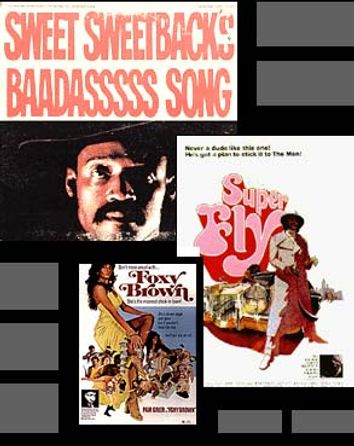
At an early screening of his groundbreaking 1971 film “Sweet Sweetback’s Baad Asssss Song,” Melvin Van Peebles sat in a theater observing an all-black audience’s reaction. Toward the end of the movie, as the eponymous antihero of the film was cornered by the “pigs,” Van Peebles recalls hearing an old black woman mutter: “Let him die, let him die.” She didn’t want Sweetback delivered into the hands of the white police. When Sweetback escaped — with the proclamation, “a BaadAsssss nigger is coming back to collect some dues!” — Van Peebles remembers a stunned silence and then the audience erupting. “Nobody could believe he had survived,” says Van Peebles.

“Sweet Sweetback” went on to become one of the most successful independent films of its time, acclaimed by some critics for its formal innovation and embraced by African-American viewers for its “damn the Man” attitude. It was a major coup for Van Peebles, who directed, produced, distributed and starred in the film when Hollywood studios refused to touch it. The success of studio-released “Shaft” that same year, starring Richard Roundtree as the original bad mutha (shut yo’ mouth), helped usher in a new wave of films targeted at blacks — eventually labeled blaxploitation flicks.

“BaadAsssss Cinema,” a documentary by British filmmaker Isaac Julien, is a tribute to the period when action heroes talked jive and grown men bowed to a sister with razorblades in her hair. The film premiered last week and airs several more times this month on the IFC cable network as part of a mini-festival featuring the seminal blaxploitation works “Shaft’s Big Score,” “Superfly” and “Foxy Brown.” (Check your local cable listings for times.)

Three decades after blaxplo icon Pam Grier first put her high-heeled foot in some sucka’s groin, Julien tracks down Grier, along with other key players like Van Peebles, for an affectionate reappraisal of the genre. Julien assembles 13 interviewees who act as jury, witnesses and defendants in the case for blaxploitation’s cultural relevance. These include actors Grier, Fred “The Hammer” Williamson and Gloria Hendry, filmmakers Quentin Tarantino, Van Peebles and Larry Cohen, cultural critics bell hooks and Elvis Mitchell and former Black Panther Afeni Shakur (mother of Tupac).

Mixing archival footage, film clips and commentary, “BaadAsssss Cinema” examines blaxploitation’s appeal for inner-city audiences: the ghetto-fabulous threads, lavish soundtracks, hyper-sexed scripts and comic book-style protagonists. Clearly blacks were hungry for on-screen representation that diverged from the bug-eyed shufflers of yesteryear or the impeccably high moral standards of Sidney Poitier’s characters. Shaft and Sweetback may have been on different ends of the social spectrum, but they both raised a middle finger at the establishment.

“BaadAsssss Cinema” describes how many of the films made political statements beyond the visceral thrills; even the story of a drug pusher named Superfly had an underlying social critique driven home by Curtis Mayfield’s score. Still, blaxploitation was a genre laden with double standards and quadruple entendres. While offering blacks their own heroes, they glamorized the violent lifestyles and sexual stereotypes many African-Americans longed to escape in real life. The films were especially problematic when it came to the treatment of women.

With hair by Angela Davis and body by Russ Meyer, Pam Grier’s characters epitomized much of the conflict and contradiction inherent in the genre. The blaxplo female fire was clearly ignited by the feminist movement, yet the films primarily exploited the actresses’ pneumatic charms. In “BaadAsssss Cinema,” Grier acknowledges that her “whup-ass sista” persona reinforced some negative stereotypes about black women and explains how she tried to rise above the material. She laughs wryly, recalling how seriously she took her roles. “I thought it was ‘Gone With the Wind,’” she says. “I was going for an Oscar.”

But there would be no gold statuettes for the blaxploitation bunch, many of whose careers bottomed out like a pair of old flares in the mid-’70s. By then, with the release of increasingly dire vehicles like “Blacula” and its sequel, “Scream Blacula Scream,” the movies had gone from sublimely ridiculous to blatantly moronic. As “Black Caesar” director Larry Cohen notes, “Most films are bad, but they abused the privilege.” Audiences lost interest, Hollywood cut off funds and a backlash led by the NAACP was in full force.

“BaadAsssss Cinema” shows clips of the Rev. Jesse Jackson in a power ‘fro and dashiki railing against the denigration of African-Americans on celluloid. The problem with the NAACP’s attack, says Samuel L. Jackson, is that they never offered any viable alternatives. Thus the death of blaxploitation left something of a black hole, with no real black cinema emerging as a force again until the mid-’90s, with the wave of boyz-in-the-hood flicks that became known, ironically enough, as “gangsploitation.” Gloria Hendry, star of “Black Belt Jones,” talks emotionally about the sense of falling into an abyss after “blaxploitation saved Hollywood and when they got through with us, they dropped us.”

Nonetheless, the BaadAsssss decade left an enduring legacy in both black and mainstream pop culture. Blaxploitation imagery lives on in everything from Snoop Doggy Dogg videos to “Austin Powers in Goldmember.” Some actors have been able to make a comeback, such as Pam Grier, whom Quentin Tarantino treated with the utmost reverence in “Jackie Brown.” Although Grier did not make it onto Halle Berry’s infamous Oscar thank-you list, Berry has been touted to play Foxy Brown in a forthcoming remake.

In “BaadAsssss Cinema,” Julien makes a persuasive argument for learning to appreciate blaxploitation on its own terms. Far from exhaustive, his documentary is more like Blaxploitation 101 for novices and casual fans, offering plenty to entertain and stimulate discussion, but little new for serious enthusiasts. “BaadAsssss Cinema” is the latest in an eclectic body of work exploring racial and sexual politics, and art from an outsider’s perspective. Julien’s best known films include “Looking for Langston,” a stylish docu-dream on Langston Hughes that famously outed the late Harlem poet, the feature “Young Soul Rebels,” set in 1980s London, and “The Long Road to Mazatlán,” a homoerotic portrait of the Wild West that was nominated for the Turner Prize, the United Kingdom’s most prestigious arts award.

Julien, who studied filmmaking in London at Central St. Martin’s School of Arts, says he shoots his movies as if he’s painting. In “BaadAsssss Cinema,” he paints from a bold palette but rightly uses the lightest touch and knows exactly when to step back from the canvas. A visiting professor of Afro-American studies at Harvard, Julien continues to be an influential force in experimental film. Salon caught up with him by telephone while he was on vacation in Aspen, Colo., to talk about black cinema and the BaadAsssss mystique.

What attracted you to making a film about blaxploitation?

There was this fantastic book, “What It Is … What It Was!” [by Gerald Martinez, Diana Martinez and Andres Chavez], which had interviews with all the different stars from that era, so that was probably what got me interested at first. Then I was teaching a course on blaxploitation at Harvard, on the invitation of Henry Louis Gates, and I realized there was no context for assessing films from this era. So this documentary in some ways was an attempt to put the fun back into film history and give recognition to what was one of the major periods in Hollywood cinema.

What would you say defines a blaxploitation film?

They’re considered B movies, but they’re really an amalgamation of different genres, including kung fu films, Westerns, horror, pulp, comedy — although on the whole their main focus is black action films of the ’70s. Of course, there’s a whole other cinema of the period, films made by people like Charles Burnett and Julie Dash, which I think could be the subject of another documentary about [black] independent films. But I wanted to focus on blaxploitation films as part of ’70s Hollywood history, films that have been pushed to the margins when they should be part of the official canon.

Why has there been such a renewed appreciation for this genre?

Blaxploitation’s long afterlife, I think, is due to the fact that it was a repressed genre and it’s only belatedly recognized as a genre within its own right. Some of the energy of the civil rights movement and the success of hip-hop culture were pivotal to its longevity. It’s been very influential, even cropping up in new films like “Undercover Brother” and “Austin Powers in Goldmember.”

I’m more interested in the darker aspects, like “The Bus Is Coming” (1971) and even some of the subtext in “Coffy.” There’s another film, “The Spook Who Sat by the Door” [in which a CIA-trained black man foments a new American Revolution]. So while they’re great fun, there’s also this serious angle, and I think that Quentin Tarantino, in “Jackie Brown,” was able to give a serious reassessment of this genre. In his hands, it matures into a sophisticated thriller with film noir touches, even though it has the same motif as blaxploitation-era movies.

You included a sequence on the “N-word” debate in “Jackie Brown.” I found it frustrating that, despite such a strong central performance by Pam Grier, so much focus went to how many times Tarantino used that word.

I think Tarantino’s such a good scriptwriter [Tarantino in "BaadAsssss Cinema": "My dialogue's not poetry, but it's close"] that he was able to capture the vernacular which some others thought was a political issue. Obviously we listen to hip-hop and hear that word, and maybe it’s flavored differently because of the music and rhythm, but as a trope of black culture it’s alive and well.

I think the debate got so heated because cinema is a visual medium and we’ve had a problematic relationship with the way we’ve been represented on screen. But basically it’s a reactive position that produces a safeguard in which black people always have to “behave” in the movies or risk coming under attack. There begins to be a clash with genre questions, because genre demands authenticity. Obviously if we didn’t deal with that question in the film, people might think we’re afraid to talk about it. But the real debate should be about the culture capital of black stars. Obviously Tarantino helped boost John Travolta’s career, but even after “Jackie Brown,” Pam Grier hasn’t had the same kind of opportunities, and we all know why that is.

What do you think of casting Halle Berry in the Foxy Brown remake? Can Berry kick butt?

[Laughter.] It could work but I hope it’s serious rather than just comedic. You have all these layers in the films, but what happens is that people always emphasize the comedic. Also, I hope it’s not just about Halle taking her clothes off.

Would you say that the civil rights activists protesting blaxploitation not only missed the political subtext of a lot of these films, but also underestimated the audience who actually got the message, not just the hype?

I think that’s absolutely the case. I think they greatly underestimated the audiences who were really quite sophisticated on many levels. Obviously there’s a tradition of campaigning groups speaking on behalf of the public, but I think this contestation was about power, and that misfired on the actors and the artists. Of course, there are issues to be dealt with around the negative images of black culture and black women, but their analysis doesn’t go far enough to touch on the complexity of these works.

For instance, a film like “Superfly” is really a comment on the failure of the civil rights movement. Here’s this character who wants to do the right thing, but he’s left with few options. The filmmakers are consciously playing with the genre of gangster movies but also providing a critique — in “Superfly” this comes through in the soundtrack by Curtis Mayfield.

I love the way you used and referred to music in the documentary. Music has been a significant part of your own work, both as soundtrack and also as subject.

Sound is very important — it’s almost everything. The way someone like Melvin Van Peebles got Earth, Wind and Fire to do the soundtrack and then released it months in advance of the premiere of “Sweet Sweetback” was ingenious. It became a very Hollywood method of promoting movies. Music is very important in relation to blaxploitation and I’m always interested in the use of music to perform social commentary. So in that sense “BaadAsssss” was perfect, for me to be able to explore a black idiom that is so much part of the cinema. It’s as big a star as the actors, if not bigger.

The documentary is open-ended but has a distinct narrative thread. Did you have a particular theme in mind when you started filming?

From reading the interviews with actors I knew I wanted to focus on the artists, who are always the ones on the firing line — everyone from Pam Grier to Halle and Denzel today, they’re the ones who feel the heat. One of the things that surprises you in making documentaries is the ways people react to what seem to be the most innocent questions. And you always have to be willing to go with things which at first may seem inconsequential but can move your film in a totally new direction.

Were there any surprises during the interviews?

I think it was Fred Williamson who really blew me away. He’s someone who’s tried to keep a certain visibility in film, yet he put himself on the line because he felt he had nothing to lose. Fred refers to Hollywood as a plantation system and says people are working on islands. Unlike the music business, there’s no unifying force and that’s one of its great failings.

Gloria Hendry’s comments on her swift ascent and even swifter fall are very affecting.

Gloria Hendry’s story is really the subject of the film. Although there were major stars, it’s really about someone like her who is still fighting to this day for recognition. Yes, under the slapstick and comedic aspect, there is a painful, moving story behind it all.

You first experienced these films as a teenager. What, if anything, have you inherited from blaxploitation as a filmmaker?

I’m one of the generation of filmmakers whose work is antithetical to blaxploitation. But one of the things I’ve learned while making documentaries is that some of the motifs live on because they have a certain power. It’s interesting, though, that there are hardly any black indie filmmakers who have worked with someone like Pam Grier, because they were, in a way, the bête noir of black independent filmmaking. But it had such a primal, pivotal effect on me as an audience member. These films weren’t connected to art in the sense of high culture, but they are art in terms of popular culture.

You seem to have moved further into art-house cinema, with video installations and such. Are you interested in doing another mainstream feature down the road?

I’d only want to make the feature I want to make. In the art world, the idea comes first, so for me it’s a good place for an appreciation of the complex nature of my subjects. I just saw “Road to Perdition” and I thought it was fantastic. Sam Mendes did a wonderful job, but very few black filmmakers have access to that kind of material, and I’m always struggling with funding issues.

There seems to be a growing overlap between Hollywood and the indie scene. Is there any such thing as independent cinema any more?

Independent cinema is a budget of $15 million with a star actor. Real indie cinema doesn’t exist anymore. Its appropriation by Hollywood has hurt the genre, because we never got to fully realize the ways in which cinema could develop outside the norm. But times shift, films change and now a lot of Hollywood mainstream films have taken on an independent approach, which I suppose is a good thing.

Much of your work explores homoeroticism and homophobia in black culture. I’ve always thought there could be a gay subtext to some blaxploitation films.

Absolutely. In fact, I’m working on a three-screen piece, a short film called “Baltimore,” which I’d describe as blaxploitation meets the art world. It’s still in development, but it does have an interesting subtext that explores questions of homoeroticism in blaxploitation. I’m looking for a famous blaxploitation actor to take the lead. Blaxploitation films are overtly camp and they do have appeal for a crossover audience. But you know so many of these aspects are repressed, and I think maybe there are several documentaries to be made on the subject.

Afena Shakur was an interesting interviewee. Why did you select her?

We thought she was a fantastic subject for the historical trajectories and all the contexts of blaxploitation: from the black power movement to modern-day hip-hop with her son Tupac, who was also an actor and who also starred in gang movies and had that duality of dark and light at play. We also thought she was interesting as an audience member in her own right, someone who watched and enjoyed blaxploitation cinema when it first broke through.

I thought her comment about how the Black Panthers only had “perceived power” but no actual power was a critique that could be applied to so many aspects of black culture, including blaxploitation.

Yes. In a sense the promise of black action films of the ’70s was that they would empower the actors and artists involved, that there would be more roles and opportunities and the doors would break open so that other genres and traditions could come through, but that never happened. In a way, it’s a promise that has yet to be guaranteed.

Continue Reading Close

Black America and the Oscars: A one-night stand?

From Internet message boards to barbershops, African-Americans are abuzz with debate over Halle, Denzel and Sidney's history-making moments. Is "Monster's Ball" a racist film or a breakthrough? Do blacks wield any real power in Hollywood? Was the Oscar "blackout" more than a whitewash?

  • more
    • All Share Services

Black America and the Oscars: A one-night stand?

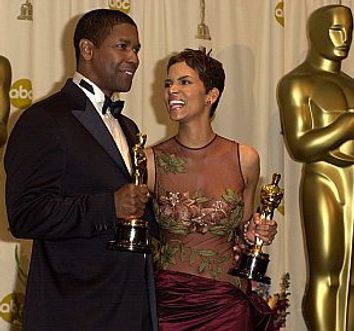
All the world’s a film set, and the major players on it are now black, if you believe the hype following Oscars 2002. The 74th Academy Awards will be remembered for Cirque du Soleil’s loops and spins, Gwyneth’s droopy twins, and, of course, historic wins, the so-called sweep by not one (gasp!) but two (choke!) African-Americans, who took Oscar home for the first time in, like, millennia.

When Halle Berry’s name rang out on Sunday night, I flung myself into the air, kicking my heels together like an extra from “The Wiz.” Then Julia Roberts read out “Denzel Washington,” and I had a total “I’m the king of the world” epiphany right there in my living room. This sense of collective victory wasn’t mine alone. Earlier, Will Smith told reporters that, if Washington won, he would go up with him because Washington “would be winning for all of us.”

In post-show interviews, Eric Benet, Berry’s husband, admitted he nearly bum-rushed the stage. Even Sidney Poitier looked like he might either bungee-jump from his balcony, or do the Roberto Benigni chair-hurdle for a group hug on the podium with Berry and Washington. News clips that night showed black people in churches, community centers and schools (including Denzel Washington’s high school drama teacher) simply losing it. “I felt elated,” says film critic Rose “Bams” Cooper, “and, in a communal sense, vindicated.”

Cooper, an editor at 3BlackChicks Film Review, admits that she thought Tom Wilkinson should have won the best actor award for “In the Bedroom,” but says it was about time Denzel got his due. “Denzel’s best work, in ‘Malcolm X,’ wasn’t rewarded,” says Cooper. “So if it was good enough for Al Pacino to win for ‘Scent of a Woman’ instead of ‘The Godfather,’ it’s good enough for Denzel Washington.”

But now that the fairy dust has settled, reviews of the night are more mixed. Some media reports are a little sniffy about the whole affair, as if Oscar’s “blackout” was political correctness pushed to an extreme. In letters to newspaper editors, and more openly, on the Internet, many white viewers seem confused, uncomfortable, even annoyed about all the fuss. Why make such a big deal over two black winners, if society’s supposed to be colorblind? And, deeewd, did Halle Berry really have to play the race card in her speech?

Meanwhile, the black community has its own misgivings. Even before the awards, African-Americans were cynical about how the night would unfold. “It’s the way it was packaged,” says Frances Turner, an attorney in Manhattan. “Whoopi hosting! Denzel! Will! Halle nominated! Sidney honored! The ushers are black! People are gonna wear black dresses! Instead of it just being about honoring actors who gave great performances that deserve Oscars.”

After decades of frosty treatment from Hollywood, many found it hard to get excited just because Oscar and black America had a one-night stand. Was the Academy’s vote based on merit alone, or a lame attempt to make us forget the 74 years we weren’t counted, even when we stood up?

“I think, overall, the Academy didn’t do much to honor black cinema,” says Esther Iverem, a film critic and editor at SeeingBlack.com. “It still managed to avoid giving a big award to a film or performance centered on the black experience. If Will Smith had won for ‘Ali,’ now that would have been historic.”

For many African-Americans, the principal issue is not whether Halle or Denzel deserved to win, but why the Academy chose to reward them for these particular roles. A quick flashback through black Oscar winners reveals a questionable pattern in the characters endorsed by Hollywood’s major league: Hattie MacDaniel as mammy (“Gone With the Wind”), Denzel as slave (“Glory”), Cuba Gooding Jr. as athlete/buffoon (“Jerry Maguire”), Whoopi Goldberg as a Miss Cleo-type mystic (“Ghost”). Now Washington gets props for playing a dirty cop and Berry’s the center of attention after her character makes the beast with two backs with the white racist executioner who killed her black husband.

“You have to wonder if this is what it takes for a black woman to be named best actress,” says Iverem. “Who was the last ‘best actress’ who did a nude sex scene?” (Actually, that would have been Paltrow and her twins again, in “Shakespeare in Love.”) Iverem continues: “Ultimately, ‘Monster’s Ball’ uses the legacy of racism in an unconvincing manner to belittle its impact, and its historical and present-day consequences.”

The “Monster’s Ball” debate is still raging. African-American bulletin boards on the Internet are filled with expressions of outrage, mostly beginning with, “I haven’t seen the film but …” According to Iverem, scores of black men are boycotting the film, which they believe insults, and even cuckolds them by placing Berry in bed with Billy Bob Thornton. On the SeeingBlack.com message boards, Miles Willis bemoans having to “watch fine black women gettin’ down with mangy, white redneck ‘billybobs’” (conveniently forgetting that Berry herself is biracial).

Willis, a radio DJ, writes: “Imagine the seething indignation that a Jewish man might feel while watching a story in which the widow of a Nazi concentration camp victim has an intimate relationship with the SS officer that shoved her husband into one of those ovens at Auschwitz!”

Stanley Tatum, a dailies producer who has worked on films such as “The Laramie Project,” “K-PAX” and “A Beautiful Mind,” has a less inflammatory but nonetheless stinging critique of how race relations play out on the big screen. “It’s amazing the vacuum black people exist in cinematically, having no options, let alone a developed character,” he says. “So the white character [in 'Monster's Ball'] can come in like Sir Galahad, giving the downtrodden Negress a lifeline: a ride to work, a place to stay and cunnilingus.” He adds, however, that Berry’s performance “rose above the material and the subject matter.”

For my part, I was beginning to cultivate an active, and very enjoyable, dislike for Berry after “X-Men” (Storm? She was more of a drizzle) and “Bulworth” (featuring Warren Beatty as “her nigga”). And who could forget the horror that was “BAPS”? Her irrelevant flasher job in “Swordfish” — for which the NAACP Image Awards saw fit to honor her — almost sealed the deal. Then I saw her multilayered performance in “Monster’s Ball,” and I was floored. Berry owned that role, body and soul. It recalled the promise she showed in some of her earliest work, such as “Jungle Fever” and “Losing Isaiah.”

In the hoo-ha over the politics of Berry’s jungle-fever role in “Monster’s Ball,” I feel people are missing the subtleties of a film that shows how racism is not innate, but transmitted like an infection. It’s easy to cry bigot, but the film constantly asks you to look beneath the surface, challenging you to reconsider Thornton’s character as a three-dimensional human being. Maybe the scenario is not completely plausible or realistic, but since when did film have to be factual to convey truth?

As for Washington, the man could read from George W. Bush’s Teleprompter and make it come alive. As Alonzo in “Training Day,” he was convincing long after the script lost credibility. And in my opinion, playing it safe in films like “The Preacher’s Wife” was more damaging to his career than showing his range by playing a bad guy. Besides, must he be so damn worthy all the time? Why should black actors be limited, not just by white casting directors and scriptwriters, but by black audiences’ narrow parameters for what constitutes the black experience?

“You know how dogmatic we can get, when it comes to the gospel of black art,” says Christopher Kess, a writer and drama student in Baltimore. “You know we’re all supposed to ‘uplift the race’ with each and every artistic endeavor we engage in.”

It speaks to how starved we are for accurate representation that we place such high expectations on our finest candidates.

“I believe that it is ultimately a good thing that Halle and Denzel won for playing roles that are part of the black experience,” says Angel Kyodo Williams, the author of “Being Black: Zen and the Art of Fearlessness and Living with Grace.” She continues, “It sits better with me than if they had won for roles that sought to present black folks in terms of white cultural norms and acceptability.”

When Hollywood gets it wrong so often, maybe we should stop looking to the big screen for versions of our story, say some critics. Perhaps it’s time we got our priorities straight and focused on more important realities. “Ultimately, we’re all overanalyzing an industry that’s too self-congratulatory and self-absorbed,” says Tatum. “I can’t believe folks were ready to protest if neither Halle or Denzel won. ‘No Justice, No Peace?’ Come on, folks! The Rampart scandal and other police-misconduct cases are still a sore spot in Los Angeles but you’re gonna ‘Burn, Hollywood, Burn’ if Denzel doesn’t get his second statue?”

Still, there’s no point pretending we don’t care. Maybe the Academy Awards are irrelevant in the grand scheme of things, but you could say the same about Super Bowl. So Tom Cruise came over all Scientology on us, and Woody Allen trotted out a few lame jokes? At least the Academy didn’t wheel out the ex-presidents to impress upon us the awesome weightiness of the occasion.

It’s impossible to overlook the fact that the Academy Awards is the biggest night for a billion-dollar industry, and the world is watching. Winners raise those trophies like dumbbells because Oscar signals power. The triple whammy of Berry, Washington and Poitier made an undeniable impact, although few black people are naïve enough to call it a revolution.

“I don’t think any of us really expect doors to be open — or stay open — for black Hollywood,” says Rose “Bams” Cooper. “They’re going to have to keep kicking them in. But maybe these wins will give their kicks added strength.”

Rev. Frank Garrett, a Baptist pastor and radio host from Austin, Texas, is one of many who think it’s ridiculous to call Oscars 2002 a “sweep.” “Not when there are no black producers, directors or technical nominees in the mix,” he says. “Oscar night was a glass-ceiling-buster before the camera, but we are still behind in the areas of real power: off-camera, where the deals are made and framed. This won’t happen until black money is underwriting the entire project.”

The general consensus is that if there are any immediate benefits, they’ll go directly to Berry and Washington. We’ll probably see them headlining together soon, if someone wants to cough up a fat chunk of change (Denzel is now part of the $20-million-per-movie club.) But wait a minute; aren’t Berry and Washington already among Hollywood’s most blessed? These are actors whose box-office appeal, for whatever reason, transcends race.

Fellow nominee Will Smith falls into the same bracket, as middle America sees him less as a strong black man than a live-action Mickey Mouse. As for Poitier, he’s always been safe to bring home to dinner. No wonder so many white folks were surprised by all the focus on race. Some might argue that throwing gold eunuchs at safe bets like Berry, Poitier and Washington is one thing, but the Academy (much like Oscar) still doesn’t have the balls to broaden its vision of the acceptable black face. But others, like Angel Kyodo Williams, have a more expansive take on the event.

“My impression was that an historic shift took place, that had more to do with the way they won than just the fact of their winning,” she says. “Halle and Denzel’s roles speak volumes to the range and diversity of who black America is, can be and what we have been able to transcend. We are neither this needy, broken, confused country gal, nor that pearly white-teeth perfect movie star. We’re neither, we’re both, and we’re everything in between. You cannot point a finger at any single model, ideal or construct and say that is what a black person is or isn’t. What is increasingly apparent is that we are limitless.”

Continue Reading Close

Of hatred and innocence

Filmmakers B.Z. Goldberg and Justine Shapiro discuss their Oscar-nominated "Promises," a wrenching and intimate portrait of the children of Jerusalem.

  • more
    • All Share Services

Of hatred and innocence

Moishe is a 10-year-old boy with a plan. When he becomes prime minister of Israel, he says, his first move will be to get rid of all the Arabs in Jerusalem. For now, he wishes they would just fly away.

One of seven children featured in the film “Promises” — a strong bet to win the Academy Award for best documentary on Sunday night — Moishe has never met a Palestinian. Still, he is convinced he can’t stand them. Speaking directly to the camera, in his husky, high-pitched voice, he tells us he comes from the West Bank settlement called Beit-El, “a place where people who hate Arabs live.”

In the Muslim quarter of Jerusalem, blond-haired, blue-eyed Mahmoud is equally antagonistic toward Israelis. His family owns a coffee shop near the Al-Aqsa mosque, and every day Mahmoud prays for the end to Israeli occupation. Although neither boy can speak the other’s language, their rhetoric is almost interchangeable.

“If the soldiers miss their aim it’s OK, because they might hit an Arab,” says Moishe breezily, while cycling past an Israeli firing range.

“The more Jews we kill, the fewer there will be,” says Mahmoud, his baby face clenched in defiance, as he proclaims support for Hamas, the radical Palestinian militia.

In news reports from the Middle East, children usually play a symbolic role: We might see pictures of a Palestinian boy dying in his father’s arms, or tiny coffins placed in Israeli graves after the latest bombing. But we rarely hear personal accounts from those growing up in the shadow of violence, where death stalks the land and innocence is often the first casualty.

“Promises” is one of a modest handful of efforts to capture a child’s-eye view of the Israeli-Palestinian conflict. Between 1997 and 2000, filmmakers B.Z. Goldberg, Justine Shapiro and Carlos Bolado traveled into and around Jerusalem, interviewing young people between the ages of 9 and 12. Goldberg, an Israeli-born American journalist; Shapiro, the Berkeley, Calif.-bred host of the U.K. travel series “Lonely Planet”; and Bolado, a film editor from Mexico (“Like Water for Chocolate,” “Amores Perros”),combined their diverse talents and perspectives for this finely crafted, deeply moving feature, which has scooped up multiple awards at festivals worldwide. (“Promises” first aired on PBS in December and is currently playing theatrical engagements in New York, Boston and Los Angeles, with other cities to follow .)

Along with Moishe and Mahmoud, “Promises” takes us into the daily lives of Sanabel, a Palestinian girl who lives in the Deheishe refugee camp and whose journalist father has spent two years without trial in an Israeli prison. Sanabel takes part in protest marches and performs traditional Palestinian dances. Faraj, also a Palestinian refugee, channels his frustration into competitive sprinting; in one especially emotional scene, the filmmakers take Faraj and his grandmother to see the land his family fled in 1948.

In Jerusalem, twins Yarko and Daniel, from a secular Jewish family, question the existence of God but still pray at the Western Wall for victory in an upcoming volleyball game. An entertaining and photogenic double act, Yarko and Daniel are more interested in school and sports than in their so-called enemies. But when they ride the school bus, their eyes dart left and right, in fear of terrorist attacks. On the other hand, Shlomo, the bookish son of an Orthodox American rabbi, says he feels safest in Jerusalem, because it is a holy city for both Jews and Muslims.

All these children are neighbors, living only minutes apart, but they live in alternate realities. There is much talk of war in “Promises,” and any of these cute kids could grow up to be instigators of violence, but the film’s underlying theme is an appeal for some kind of neutral ground. Of course, making a film that calls for peace in this region is itself a kind of political statement, a rejection of the extremist rhetoric in which both sides have engaged. In “Promises,” the message comes across more as a prayer whispered between the lines than as a pamphlet shoved into the hands of the audience.

Director-producer Goldberg appears as confidant and mediator in the film, engaging with the children in both Hebrew and Arabic. It’s a risky but ultimately rewarding move, for we warm to his presence through the way he relates to the kids. When Mahmoud spits against Jews, Goldberg reminds him that Goldberg himself is a “Jewish boy.” The camera zooms in on the boy’s hesitant expression, as he wrestles with his mixed feelings for the man he now calls his friend. “You’re not a real Jew,” Mahmoud finally insists. “You’re American.”

Goldberg’s role is also central to the film’s turning point. When he shows Yarko and Daniel a Polaroid of Faraj, the twins ask if they can meet him. Faraj is unreceptive at first, but after Sanabel’s encouragement, he invites the twins to his camp. In one of the more touching moments, we see the fiercely proud Palestinian boy in front of the mirror, slicking back his hair and wearing his best shirt, to prepare for his guests. The meeting breathes hope into the film, but it’s punctuated by a wrenching scene in which Faraj breaks down in tears because his new friends, including the filmmakers, will soon leave.

Even more painful is the film’s epilogue, shot two years later. Sadly, most of the children remain polarized. Checkpoints have prevented Yarko and Daniel from returning to Deheishe. The fire that was burning in Faraj has been dimmed. One look into his eyes tells you everything you need to know.

Particularly in light of the region’s present state of affairs, “Promises” can make for wrenching, even heartbreaking viewing. But there are surprisingly hilarious moments, largely thanks to children’s natural tendency for slapstick and unwitting humor. The funniest sequence comes one afternoon when Shlomo is walking through an Arab neighborhood of Jerusalem. As if on cue, a Palestinian boy confronts him, loudly burping in his face. Shlomo continues talking to the camera, but after a couple more eruptions, the future rabbi cannot help but respond. The scene rapidly becomes a belch-off, leaving the kids and the audience giggling. Boys will be boys, after all. It’s also a suggestive metaphor: How much of the political positioning on both sides of the Israeli-Palestinian divide can be reduced to hot air?

After a February benefit preview of “Promises” at a screening room in New York’s Tribeca neighborhood, the filmmakers talked about their ongoing relationship with the kids and described what each is doing now. Sanabel continues to dance, Shlomo is focused on his religious studies, while the twins are still glued to their volleyballs. Mahmoud is more interested in girls than revolution, and Moishe has more fun translating Harry Potter books into Hebrew than hatching plots to banish the Arabs. Interestingly, Goldberg notes that Mahmoud and Moishe enjoy the same music: Britney Spears and ‘N Sync. (Apparently, bad taste knows no boundaries.) Faraj is still despondent and dreams of emigrating to America.

A couple of days later, I sat down with B.Z. Goldberg and Justine Shapiro to discuss the kids in “Promises,” the future of the Middle East and the sometimes agonizing, shoestring-budget production process through which they made this extraordinary film.

Where did you find these wonderful kids?

Goldberg: We were looking for children who represented the major forces in the conflict, children who were articulate, who liked us and who were interested in the process of filmmaking. And whose mothers cooked good. It’s true, some of their mothers were incredible cooks, and as a starved, broke film crew, we found ourselves gravitating back to those houses.

Were any of the parents hesitant to get involved?

Goldberg: Once they saw that we were not in for a cheap, quick news interview, that we actually were having a relationship with their kids, and their kids trusted us, then the parents, by and large, were very open. Also, cameras are so prevalent in the Middle East, with film and video and news teams, they’re just part of daily life. So it was less strange to have a camera around than it would be to make a film about a family here.

Were you really surprised that Faraj, a Palestinian boy living in a refugee camp, wanted to meet Daniel and Yarko, the Israeli twins?

Goldberg: Oh my God, we were not ready for that at all. I mean, literally in the middle of an interview, he said, “I want to call them.” And that telephone conversation was edited down to a few minutes in the film, but it was close to an hour and a half long.

When Faraj started crying, and then the camera cuts to you in tears, how did you feel about that choice?

Goldberg: Carlos Bolado, our cinematographer, insisted in putting that in. I fought him because I thought it was too self-indulgent. But he convinced me that it showed something of our relationship. So it’s hard to watch, it’s something that in this culture is not particularly appreciated. A Russian guy walked up to me at the film festival in Berlin, and he looked me in the eyes and said [puts on accent], “I see your film in Rotterdam. This is best film I seen in years. I cry in your film.” I explained to him that in America, men are macho, and no American man would tell me, “I cried in your film.” That’s just not something you would show off. And he said, “Russian men very macho too. But, you cry in film, so I can tell you I cry.” So, that was a moment where I started to feel OK with it.

Why did you choose that particular age group?

Shapiro: It was really what kind of motivated us to make the film. For some reason we ended up meeting amazing kids at the beginning of our research in 1995. Moishe was the first one we met. He was 8 and a half years old and he was like this 50-year-old man, with his body language. I don’t speak Hebrew, but I was just mesmerized by this character. What was amazing about the age group is they were so candid, so uncensored. When they parroted their elders, they would say things that I don’t think their elders would have said so readily on camera. Also they weren’t teenagers yet, they weren’t cool, so they weren’t so self-conscious. And they were still at that age where, like Faraj, he changes his mind, and you just don’t see adults do that very often.

I also think it really humanized the issues, because even though you can’t believe some of the outrageous things that Moishe or Mahmoud say about the other group, at the same time you’re responding to this person who’s just a child.

Shapiro: It’s disarming to hear this stuff from kids, and the feedback we’ve gotten reflects that. People come to this issue with very strong opinions, and I think this film really opens hearts. Despite themselves, people end up reengaging with the conflict. A lot of Jews respond to the Palestinians very interestingly, like, I didn’t know Palestinians could feel. Most Israelis don’t know a Palestinian.

Goldberg: They definitely don’t know them intimately.

Visually, the film is so striking. Justine, I suppose your “Lonely Planet” experience made you focus on geography and landscape?

Shapiro: One of the most exciting discoveries I made in the process of making the film was understanding the geography and what the landscape feels like. Jerusalem is the holy city, but it’s also congested and poorly planned. So, you know, as long as we’re humanizing these characters, let’s take the veil off the city. It’s not just the Al-Aqsa mosque and the Church of the Holy Sepulchre, and the quaint cobbled roads of the Old City. It’s also this urban nightmare.

It’s amazing to see the geography, with everyone 10 minutes away from each other.

Goldberg: And they don’t know each other.

Shapiro: Yeah, when the film played at the Jerusalem Film Festival, Sanabel and Faraj were a 15-minute drive away and they couldn’t come to see it.

Goldberg: Maybe what’s even more ludicrous is that few of the people at that screening had ever been to that area [the Palestinian refugee camps], even though it’s so close. And now it’s become even more difficult, in fact impossible, to go there.

What was your biggest challenge in getting this film off the ground?

Shapiro: People were really skeptical. Here were these two Jews who’d never made a film before, coming from the liberal San Francisco Bay Area. What’s their agenda? A lot of conservative Jews thought that the film must have a pro-Palestinian agenda because we were liberals, and a lot of Palestinians thought we had no business making the film at all. But one South African woman that we met in 1996 saw our first fundraising clip and thought the film was really important. She donated probably a ninth of our budget, and told us, “You guys are going to win an Academy Award.” It’s funny, the day the nominations were announced, she was the very first person to call at 7 a.m. and congratulate us.

In terms of funding, were there times when you thought that this just wasn’t going to happen?

Goldberg: Were there times when we didn’t think that?

Shapiro: You know, it’s funny, I’m still close to all the years of struggling to make the film. We had close to 200 hours of amazing footage, but what I didn’t know was, how are we going to craft a film that will have the same qualities that make a feature film work. What’s our narrative? What will the arc to the story be? How will the characters change? We really wanted the film to work as a cinematic piece, not simply as a worthy social documentary. B.Z. and I had never made a film before. We were just really interested in the subject, and in storytelling, and in the medium of film. So we involved Carlos Bolado, because we needed to work with somebody who really understood cinema. Our intention was that a mainstream audience would respond to this film. And one of the benefits of having to fundraise, and having it be such a hard, long road, is that we ended up staying with the project probably twice as long as we anticipated. It was a gift in a way, because we ended up spending much more time with the kids.

Where was “Promises” first screened?

Goldberg: It was in Rotterdam, and I was sweating bullets. Everything was in a crunch that week. I took the wet print of the film down to L.A. for the subtitles to be done. And everything went wrong at the subtitle house that day; they had just fired their general manager, the account manager had quit, one of the simulation machines was broken. There were spelling mistakes, and I didn’t have time to proof. And I think they were working on the Spanish subtitles for “Tarzan” at the same time. I carried the print back up to San Francisco, and it was too late on Friday to go to the lab. Saturday everything was closed. Sunday, first thing in the morning we flew to Rotterdam with the print. So on Tuesday at the festival was the first time anybody had seen the finished film. I was convinced, in my heart of hearts, that the film was going to have the subtitles to “Tarzan” in Spanish. Once the subtitles seemed to be OK, I was then convinced that the audience was about to get up and leave. I was holding onto the chair for dear life.

Shapiro: We had no idea that the film would have such a great reception. We were rejected by Sundance and HBO also turned it down. There are not many venues for documentary film. We never expected it would have a theatrical distribution. I was putting up posters in Rotterdam, the festival was ending in two days and somebody came up to me and said, “Congratulations, your film’s at the top of the audience poll.” I didn’t even know there was an audience poll!

B.Z. mentioned that at first he was uncomfortable being in the film.

Shapiro: B.Z.’s role in the film is sort of tricky. You know, we were all concerned that if his role weren’t calculated, he would become a buffer between the audience and children. So the extra time helped us sort out these inherent issues, and persuade him that it would help the narrative work. B.Z. was so connected with the kids, it seemed really silly not to show that to the audience. I think having him talk to them directly also helped the kids express themselves more candidly. It’s just more natural.

Justine, you were born in South Africa. Did you grow up there?

Shapiro: We left when I was very young.

Many people compare the historical situation in South Africa, during the apartheid era, with what’s happening in the Middle East. Do you feel that, coming from that background, you had a particular sensitivity to these issues?

Shapiro: You know, although I didn’t really grow up there, my family is South African and we went back several times. I remember once we had relatives visiting us, and my mom, sister and I were in their hotel room. And my uncle was saying to my mom, “Ach, man, those bloody gorillas, what do they want, eh? They want more, those monkeys, all they do is take, take, take.” I was 10 and I remember thinking, which gorillas and monkeys? I couldn’t get it, but I knew there was something odd going on, and my mom said, “Girls, I think we’re going to go now.” She explained it to me later. We were living in Berkeley at the time, so there was a lot of consciousness about race relations. On the other hand, the first time I met Palestinians was in Hebron, prior to making the film. And I remember thinking: Gosh, I’ve always thought they were terrorists. I don’t think so anymore, having met them and got to know them. I realized that we’re all so brainwashed, especially prior to Oslo, when the Palestinian Authority and the flag wasn’t even relevant. I was thinking the other day about what happened to Vanessa Redgrave. She was practically blacklisted in Hollywood for supporting the PLO.

Goldberg: In some ways she’s still blacklisted, even though everyone is talking to the PLO now.

Shapiro: She basically sabotaged her career. And I remember at the time my relatives, and even my 15-year-old self, were like, gosh, how dare she do such a thing?

B.Z., you grew up in Israel. Was this your first time venturing into the Palestinian territories?

Goldberg: No, I had been in a lot of these areas during the intifada with news crews. But it was the first time I stayed for any length of time, talking to people and trying to understand what their lives were like.

Did you have any concerns, as a Jew, before you went or while you were there?

Goldberg: No, I didn’t. I was probably stupid. I also tried to be very honest with people about how I felt, and about my own biases.

Did you worry that, with two Jewish filmmakers trying to represent both sides, you might overcompensate for the Palestinian view, so you wouldn’t appear biased?

Shapiro: Well, three of us really made this film, and so I think when any one of us had a strong opinion or agenda, we kept each other in check. Every word of the narration was very carefully considered. And the response has actually been amazing from both the right-wing and left-wing press in Israel. It’s received nothing but favorable reviews. I mean, if you ask the [Jewish] settlers [living in the West Bank], some of them thought the film was wonderful, but many of them probably don’t like the fact that Palestinians are humanized.

Goldberg: They don’t like the fact that Palestinians are in it, period. They say the Palestinians have too much airtime.

Shapiro: But the vast majority of Israelis have responded really well. And Arab-Americans have responded well to the film as well.

When the kids speak, you hear how the conflict really comes down to these simple core beliefs that are hard to shake. Has anyone accused you of using children to oversimplify the situation?

Goldberg: We worried people would say that. In fact, I think we have escaped criticism. There have been times, especially in Israel, when people have said, oh, you did this or that wrong. And I say look, we made this film. We hung out in these areas, we met these kids and this is what we saw. And now you’re angry that we didn’t make it the way you wanted us to make it.

Shapiro: You work for five years unpaid, if you want to!

Goldberg: If you want to make your own film, great. But this is just our story. People take it so seriously because of the power of film to reach mass audiences.

Shapiro: And the importance of the subject.

Goldberg: Some people are just not going to like the film. I’ve watched, and they sit there looking for something to dislike. And when they find it, the film’s over. The criticism I’ve received in Israel has mostly been about a word here or there. You can see that the person watched the film for 20 minutes, heard a word they didn’t like and for the rest of the movie they were formulating their attack plan on me. And I feel bad, because you could have formulated your attack plan after the film. I’m really happy to sit here and be attacked, but it’s too bad you missed all these kids. Because they have, I think, a lot to teach us. So the people who criticize the film …

Shapiro: Fuck ‘em!

Goldberg: They weren’t going to like it to begin with. And there were other people, Palestinians, who tell me they came looking for a fight.

Shapiro: No wait, they say, I saw the film made by Shapiro, Goldberg — what are two Jews doing making this film?

Goldberg: This Palestinian woman who saw the film last year told me, “I came ready to tear your film apart, and I’m embarrassed that I have nothing to say. It was so moving.”

You were talking after the screening the other day about trying to stay positive, in spite of all the violence on both sides that’s going on right now.

Goldberg: I got dressed down at the first screening by a friend, who basically said, “We cannot afford to be realistic. We have to be optimistic.” Because I said, “I’m being realistic, what do you want? I’m not optimistic right now, I’m scared, I’m in pain about it.” But she sort of reminded me that I do feel, despite it all, that somehow, someway. Maybe only because it makes it easier to get up in the morning. Also, I guess I was trained to pray for peace, and to believe that peace is possible. Maybe it was an abstract idea as a kid. When I was growing up [in Israel], there was no question of what you would wish for if you saw a shooting star, or blew out your birthday candles. You wished for peace. You had no idea what it meant, but it was kind of ingrained in you. And I’ve grown to see that it’s not all that simple. It’s going to take a lot of concession, and a lot of pain, and an enormous amount of moral and spiritual courage, from both Israelis and Palestinians, in order to get to any kind of agreement that’s going to be vaguely workable for both sides.

Shapiro [to Goldberg]: So, let me ask you a question. In the film, Yarko writes at the Western Wall that his wish is to win the volleyball game. Do you think that now, considering all that’s going on, if Yarko was taken to the Wall, he’d write for volleyball, or for peace?

Goldberg: I think he’d write for volleyball.

Shapiro: Still?

Goldberg: His life is so enmeshed in volleyball. I also grew up in a really different time than Yarko. Now the violence is small-scale, one person, 20 people, five people, very targeted, it happens at certain flash points. I grew up in a period where 5,000 Israelis or 20,000 Egyptians would be killed. We were wishing for peace to end the wars. And in a way those wars have already ended. It’s bizarre, but there’s a certain kind of peace that’s come to the land already, in that there is no all-out war going on in the Middle East. And it doesn’t look like there’s going to be one in the near future. Maybe that’s a silly thing to say, because you never know what’s going to happen in Iraq, what’s going to happen with Iran, who the United States is going to bomb next, who’s going to retaliate, if Israel’s going to get involved. So I don’t know. But I also didn’t play volleyball.

What’s next for you?

Goldberg: Sleep?

Would you like to collaborate on another project?

Shapiro: You know, in a way this job has just begun because we’re learning that you have to work really hard to get people to see a documentary film. It’s expensive going to the movies, a babysitter is $10 an hour. To go to a movie for two, it’s like a $60 evening. So to convince people to see a documentary about the Middle East? That’s kind of our job right now, to encourage people to make that choice.

A good way would be to tell people about how funny this film is.

Shapiro: You see? I agree with you, because this is what I’ve heard over and over again. People say, I didn’t expect to find myself laughing in a film that’s about the Middle East conflict. And that’s just the best feeling, to hear the audience laughing. It opens them up to the crying part.

Did you expect it to be that funny?

Shapiro: B.Z. and I had a great time when we went out in 1995. It was just the two of us, doing everything on a shoestring. We had no idea of what we were getting into, and it was just such an incredibly innocent time. Every day we learned so much. And it was so complicated, and often so disheartening, that you had to deal with it with humor sometimes. The funniest people I know are people who came from really abusive families. Then when we started working with Carlos, the three of us would have to diffuse the tension with humor. And kids are funny, despite themselves. That age group, they’re just weird! We were really enjoying these kids, and we wanted the audience to enjoy them as well.

That burping contest!

Shapiro: That was amazing, you know, that was one of those things where you just know there’s a God. It’s like, there’s tape in the camera, the cameraman’s not taking a cigarette break, the battery’s charged, it was one of those incredible magic moments. But then, when you’re shooting that much footage you sort of deserve a few magic moments.

Continue Reading Close