Spring Sale: Get 1 Year, Save 58%

Fox News agrees to pay $1 million in fines for “willful and wanton violations” of human rights law

Fox News has agreed to pay $1 million in fines for a pattern of “willful and wanton violations” of New York City’s Human Rights Law — including ongoing workplace sexual harassment, discrimination and retaliation, the Daily Beast reported Tuesday.

The settlement reached last week amounts to the largest-ever financial penalty in the six-decade history of the NYC Human Rights Commission, which enforces the law.

The commission began investigating Fox News in 2016, in the wake of former anchor Gretchen Carlson’s high-profile sexual harassment suit against Fox News founder and chairman Roger Ailes, who would go on to serve as an adviser to Donald Trump’s first presidential campaign before passing away in 2017.

Labor attorney Nancy Erika Smith, who represented Carlson in the case that netted a $20 million settlement, called the agreement between Fox News and the Human Rights Commission “monumental.”

“I’m not aware of any government agency requiring an employer to stop silencing victims of discrimination, harassment and retaliation, and that’s what NDAs and arbitration do — they silence victims,” Smith said. “So bravo! Finally! The government is seeing that silencing victims protects harassers.”

Smith added that the ongoing nature of the violations undercuts claims made by current Fox News Media chief executive Suzanne Scott, an Ailes protege who has vowed to clean up the network’s’ toxic culture, as revealed amid scandals involving both her former boss and star anchor Bill O’Reilly.

“Suzanne Scott has always been instrumental since the beginning of Fox News in a culture founded on misogyny and enabling harassment, discrimination and retaliation,” Smith said. “So anybody who thought she changed it in any way is extremely naive or uninformed.”

In a statement, Fox News Media said the organization “has worked tirelessly to completely change the company culture over the last five years. Under the leadership of CEO Suzanne Scott, the network has implemented annual, mandatory in person harassment prevention training, created an entirely new reporting structure, more than tripled the size of our HR footprint, started quarterly company meetings and mentoring events, as well as implemented a zero tolerance policy regarding workplace misconduct for which we engage outside independent firms to handle investigations.”

“No other company has implemented such a comprehensive and continuous overhaul, which notably, earned Fox News Media recognition as a ‘Great Place to Work’ for the first time in its existence, a testament to the many cultural changes that Ms. Scott has instituted during her tenure as CEO.”

Read the full report here

“A whole bunch of hooey”: Obama calls out Trump for “de-legitimizing” democracy with election lies

When it comes to former President Donald Trump, Barack Obama is an outspoken critic. And when Obama spoke out during a Democratic online fundraiser on Monday, June 28, he slammed Trump for refusing to respect the United States’ peaceful transition of presidential power and continuing to push lies about the 2020 election.

The Guardian reports that Barack Obama said Trump violated a “core tenet” of democracy when he refused to accept the results of the 2020 election and acknowledge now-President Joe Biden as the winner.

Obama said, “What we saw was my successor, the former president, violate that core tenet that you count the votes and then declare a winner — and fabricate and make up a whole bunch of hooey.”

Obama’s statement, the Guardian notes, follows the publication in The Atlantic of a series of bombshell interviews with former U.S. Attorney General William Barr, who described Trump’s claims that he was the victim of widespread voter fraud in 2020 as “bullsh*t.” Barr was one of Trump’s most aggressive defenders and loyalists, but when he spoke to The Atlantic’s Jonathan D. Karl, he made it abundantly clear that Biden won the 2020 election fair and square.

In 2021, Republican-controlled state legislatures all over the U.S. have been pushing voter suppression bills. And Obama not only has a problem with the fact that the bills are designed to make it harder to vote, he also fears that some of the bills could inspire Republicans to simply reject any election results that they don’t like. Obama fears out that in Pennsylvania, for example, Republicans in the state legislature may, at some point in the future, refuse to accept votes in Democrat-dominated Philadelphia in a statewide race. Philly is dominated by Democrats and hasn’t had a Republican mayor since the early 1950s, whereas Central Pennsylvania — which Pennsylvanians jokingly refer to as “Pennsyltucky” — is much more GOP-friendly. Veteran Democratic strategist James Carville famously described Central Pennsylvania as the “Alabama” between Philly and Pittsburgh.

Obama, during that June 28 fundraiser, said, “What’s been called ‘the Big Lie’ suddenly gains momentum . . . Here’s the bottom line: If we don’t stop these kinds of efforts now, what we are going to see is more and more contested elections . . . We are going to see a further de-legitimizing of our democracy . . . (and) breakdown of the basic agreement that has held this magnificent democratic experiment together all these years.”

“Zola” director on making a stripper and sex movie that looks and feels “consensual”

Writer/director Janicza Bravo’s audacious drama, “Zola” — based on the tweets by A’Ziah King — is a helluva story and one literal hell of a movie. The film is brilliantly shot, morphing from fantasy to reality to nightmare in under 90 minutes as Zola (Taylour Paige in a starmaking performance) recounts how she “fell out” with Stefani (Riley Keough) during a weekend trip to Tampa.

The two women meet in a restaurant where Zola works, and bond over the fact that they both are pole dancers. When Stefani invites Zola to join her, her boyfriend Derrek (Nicholas Braun of “Succession”), and X (Colman Domingo) to go make some money, Zola agrees, unaware of what she is getting herself into. Suffice it to say, things get tense and intense.

Bravo magnifies all the messy drama and invites viewers to go on a wild ride with the title character. The filmmaker spoke with Salon about her kinetic new film and her worst road trip ever.

You took over directorial duties after James Franco left the project. Can you talk about that?

I feel so lucky it got to be me. When the story came out in October 2015, I wanted it then. I kind of went after it. I sent it to my reps. They wrote me there was article in “Rolling Stone,” and you approach it that way and can get her life rights. There were five bidders at that point, and I wasn’t going to compete with bidders. I can’t say I lost it because I wasn’t really part of the conversation. When it was announced that James was going to direct it, with Killer Films (Christine Vachon‘s company) producing, I wrote Killer, because they produced my first film. I said that if this ever becomes available, please think of me because I am very interested in the project. Two years later, James stepped off of it, and I spent three months auditioning for it, and here we are. 

What was it like meeting with A’Ziah aka Zola and adapting the story from her tweets?

Once I actually got the job as the director, that was the first order of business, meeting A’Ziah, the real Zola. We were texting and DMing each other a bit, and I wanted her to meet me and know that she had access to me, and I would let her in as much as she wanted to be, and I was hoping for the same. But I really wanted to be on her page, and at her pace, and make her feel comfortable because she was suddenly being thrust into a world that wasn’t hers.

We did a Facetime chat, and we talked about where we came from, and why I loved her story so much, and I mentioned the films I watched and photographs that inspired me. And then I had her, at her own pace, retell me the Twitter story. We went through the whole arc of the story and asked if there was anything she had not included that she wanted to be in the story. There were a few things. Then I had her blessing to work on it. I spent a few months drafting, writing, with Jeremy [O. Harris]. Then I did my director’s pass. So, a year or more later, I shared the draft with her, and she read it and gave her second blessing. That’s the nuts and bolts of the unsexy steps of approaching the script. 

Can you describe your visual approach to the storytelling, which has elements of fantasy, harsh reality, and downright nightmare? There is a real texture on the screen. It’s glossy and gritty. 

One of the main references — the homework I sent to everyone, from Jeremy O. Harris, to Ari Wegner, the cinematographer, to Katie Byron, the production designer to Joi McMillon, the editor — was a copy of Hieronymus Bosch’s “The Garden of Earthly Delights.” That painting is a triptych. Panel 1 is Heaven, Panel 2 is Earth, and Panel 3 is Hell. That is the arc of the film. When we are in Heaven our palette is softer, with less information, and things move at different, tempered pace, and when we enter Earth — moving from Detroit to Tampa — there is more movement and color, things get busier, and that’s our proper entry. Panel three, we meet blackness. It is when the bottom drops out, and we are in Hell. 

Can you talk about your editing strategy? The film zips along, taking viewers on the wild ride Zola endures. It also mirrors how society is fast-paced, or when time just crawls. We feel Zola’s anxiety waiting out even horrible moment of this weekend. 

This was my third time working with Joi, who edited the film. Your editor is the other writer. A’Ziah was the first writer, Jeremy and myself were the second and third writers, and Joi is the fourth and final writer. When we worked on my first feature, “Lemon,” we did a similar approach to editing, it was very emotional. I wanted the editorial landscape to mirror the protagonist’s interior. The frenetic-ness and the pressure you are feeling is a mirror into Zola’s gut.

I’m curious about the decisions you made filming the scenes of a sexual nature. Can you talk about shooting the women and men in these key scenes? 

I myself am a bit prudish, so I think some of that is my inherent prudishness. When I showed up to this text, there were a handful of things I wanted, and one of those things was that I didn’t want to see naked women. I felt there is such a large library of naked lady bodies, and I don’t need to add to that. There are going to be more films to add to this library and I don’t need to be a part of it. I also thought, given the nature of the work, which is so vulnerable, if I were to use their bodies in that way, that it might take away from some of the dignity and the integrity that I wanted to imbue into the nature of where they had found themselves. 

I wanted things to feel consensual. I talked with Ari who shot the film, and Katie the production designer, about what consent looks and feels like. In American films, sometimes nudity on screen doesn’t feel consensual. I was thinking about some Helmut Newton photographs and why they work for me. They are often so naughty and so sexual, but it feels that there is this consent between the photographer and the model, and the model feels in control of the narrative even though she is not behind the lens. I wanted to find that the women felt taken care of. In exposing the men, it wasn’t a “Ha! I get to do it!” or “I am a woman, and this is a woman’s gaze.” There was maybe some politics there, but it was really about being so much inside what the women who were being bought were seeing. 

The film’s tone is interesting. I could argue you are satirizing these characters, but I could also argue that you are celebrating them. Can you talk about what you intend or want viewers to see?

I feel pure celebration. One of the conversations I had with the actors was that I’m not interested in judgment. What you feel or what you see on the outside of these characters has no place here. We are going to show up, totally open and with generosity, and take care of who these people are because they are all based on someone. I want to approach them warmly and openly. It was like theater camp. Someone is paying us to play and explore. I love each of the four central characters so much and I inject some piece of myself into each of them.

This is a cautionary tale. What is the moral?

I’m not going to give the answer that you want hear, but I think it’s a cautionary tale about making friends with white people, actually. And I’m going to leave it at that. [Laughs]

Not that you would ever be in Zola’s situation, but what would you do if you were in her position?

What I would hope for is the access and the ability to process my trauma in the way she did, which was to retell it in that way. I’ve not found myself in that situation, but I have found myself in crunchy narratives that I didn’t exactly know how I got there or what mistakes I made that brought me to them. The power of the pen to have that, and use her voice for agency, is so sexy to me. I applaud her for using Twitter as the tool to process and exorcise that witch. It could have left her rather unraveled.

What can you say is the worst weekend or road trip you’ve ever been on? 

When I was 26, I did birthright in Israel. After my 10 days, I stayed in Israel for a few weeks and met an Israeli guy at a bar and we got on and with each other and he invited to me to seven days in Sinai. I said yes. I had this fantasy of a very sexy seven days in Sinai, and I had never really travelled in this part of this world. I got on a plane by myself, went to Egypt, and I did not wear the right clothes. I couldn’t get a cab out of the airport as a single woman. I had to be accompanied by a man. I was begging men to let me be in their car. That was a really dark experience. I convinced this family to let me get in a car with them and I rode in the flatbed of this truck lying down with my luggage. I finally make it to this hotel on the beach right on the Dead Sea, and it’s stunning. The cab driver, when he drops me off, asks when I am leaving. I get there and see this guy and I think we’re about to have this wild romance. And he decides to stop speaking to me about 5 or 10 minutes after I landed there. He is with a group of friends, and no one speaks English. So, I spend seven days just inside my own head with no one really talking to me, just waiting for the cab to come back.

“Zola” releases in theaters Wednesday, June 30.

Now Dan Crenshaw and Tom Cotton want to cancel U.S. Olympic athlete over silent protest

Rep. Dan Crenshaw of Texas and Sen. Tom Cotton of Arkansas, two firebrand Republican lawmakers who frequently rail against “cancel culture,” are now seeking to cancel soon-to-be U.S. Olympic athlete Gwen Berry after she turned away from the U.S. flag during the anthem this past week to protest systemic racism. 

The silent protest from Berry over the weekend at the 2021 U.S. Olympic trials in Eugene, Oregon, has made her a target of the online right-wing mob and conservative cable news outlets. 

“We don’t need any more activist athletes,” Crenshaw stated Monday on Fox News’ “Fox & Friends.” “She should be removed from the team. The entire point of the Olympic team is to represent the United States of America. That’s the entire point, OK?”

Berry, a Black athlete who has now qualified for the Tokyo Olympics, was not expecting the anthem to be played and said her protest was not planned in advance. She turned her back to the flag and put on a shirt that read “Activist Athlete.” 

“At this point, y’all are obsessed with me,” Berry wrote on Twitter in response to widespread right-wing criticism on Monday. 

But it wasn’t just Crenshaw who called for Berry’s removal from the U.S. Olympic team; Cotton also got in on the “cancel culture” act.

“I don’t think it’s too much when athletes are competing to wear the Stars and Stripes, to compete under the Stars and Stripes in the Olympics, for them to simply honor that flag and our anthem on the medal stand,” Cotton said Monday evening on “Fox News Primetime.” 

“If Ms. Berry is so embarrassed by America, then there’s no reason she needs to compete for our country. She should be removed from the Olympic team,” the Republican senator added. 

On Monday afternoon, Fox News reporter Peter Doocy pressed White House press secretary Jen Psaki on whether the Biden administration supported Berry’s decision to turn her back to the flag. “Does President Biden think that’s appropriate behavior for someone who hopes to represent Team USA?” Doocy asked. 

Paski said that she hadn’t spoken to the president about the specific matter, but added that Biden stands by the right to protest peacefully. 

The president is “incredibly proud to be an American and has great respect for the anthem and all that it represents, especially for our men and women serving in uniform all around the world,” Psaki responded. “He’d also say, of course, that part of that pride in our country means recognizing there are moments where we, as a country, haven’t lived up to our highest ideals,” she added. “It means respecting the right of people granted to them in the Constitution to peacefully protest.”

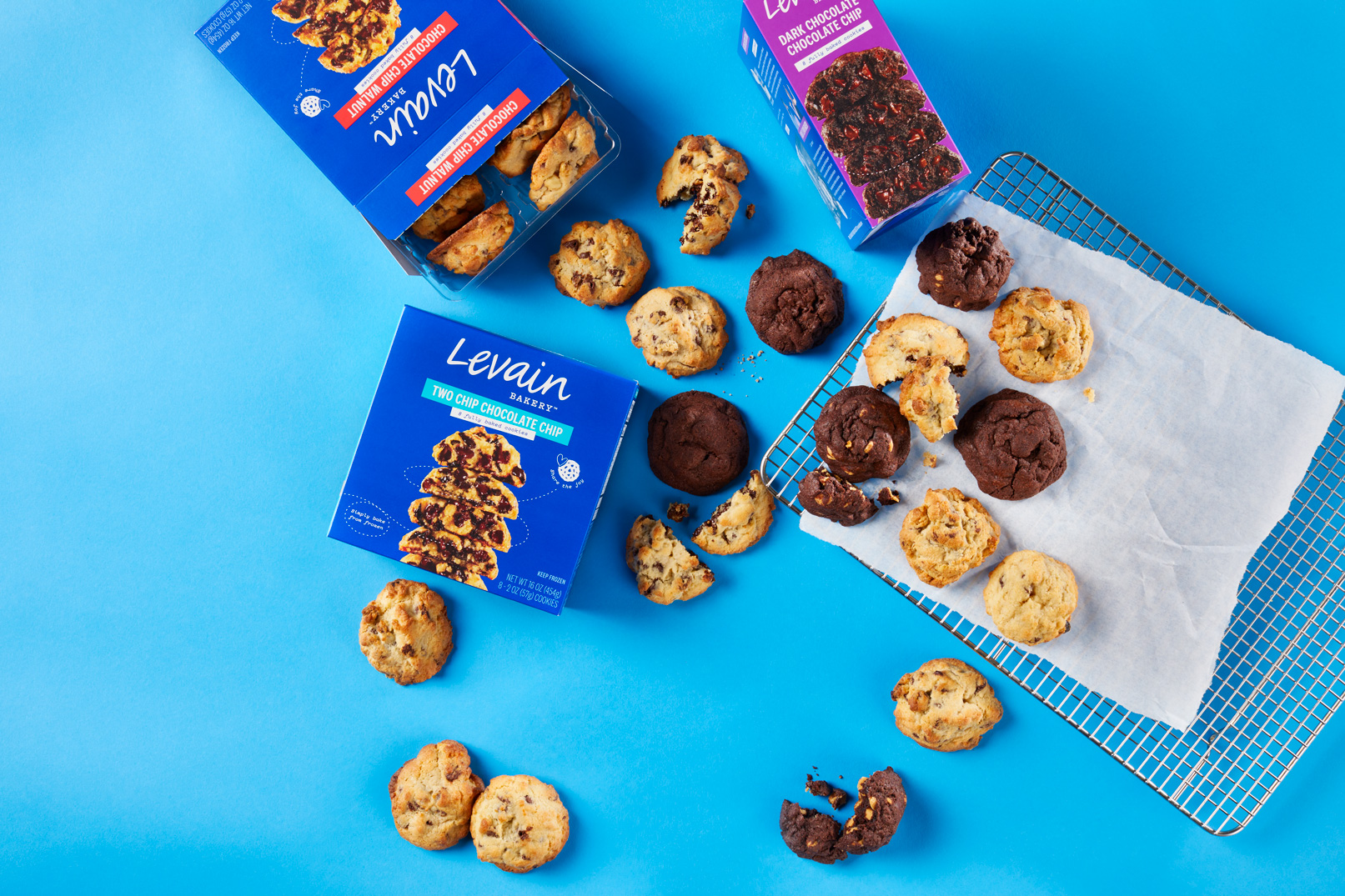
There’s no wrong way to eat a Levain Bakery cookie (this is a judgment-free cookie zone)

I have an inexplicable fondness for frozen chocolate chip cookies. It started when I was little, and Mom would bag and freeze a portion of every drop cookie batch after baking to keep for company. Instead, I’d snack on those reserved cookies straight from the freezer.

To this day, I often go for frozen cookies over the gooey, just-baked version. Maybe it’s the satisfaction of the chalky crunch of those cold chips or the more cumbersome chew of the usually soft center, I wondered aloud to Pam Weekes and Connie MacDonald, co-owners of Levain Bakery, the popular bakery on Manhattan’s Upper West Side that started selling its prebaked, frozen cookies nationwide at Whole Foods Market this spring. 

“A warm cookie is absolutely amazing, but for me I enjoy a room-temp or a cold cookie, too. It allows you to appreciate different textures,” said Weekes, assuring me this was a judgment-free cookie zone. 

RELATED: Chef Abra Berens’ summer squash epiphany: Fall in love with the season’s underappreciated produce

There might be no two people better versed in the countless ways to love a cookie than Weekes and MacDonald, whose diminutive bakery is famous for its hulking cookies with a soft middle and crispy exterior. We spent much of our conversation nerding out over different ways to eat their iconic handhelds, from grilling them to serving them ala mode like pie to sandwiching them with toasted marshmallows or ice cream. (In case you’re wondering, both say their favorite way to eat cookies is with a side of ice cream.)

Levain wasn’t always a cookie destination. MacDonald and Weekes opened the bakery 26 years ago on West 74th St. as mainly a bread bakery; they started making small batches of chocolate chip walnut cookies when the shop was slow. Then one unassuming Tuesday evening, in October 1997, as the pair worked alone in the bakery, the phone rang.

Pam and Connie
Pam and Connie (photo credit to Melissa Kirschenheiter) 

“It was [food writer and cookbook author] Amanda Hesser, who was at the time a very young, unknown writer,” MacDonald recalled. “She was calling to write about the cookies for the ‘Temptations’ column in the [The New York Times] food section. And we were like, [both chimed in at this point] ‘Wow.'”

The piece extolling Levain’s “virtual mountain of a cookie” came out the following morning. And ever since, customers have lined up out the door and down the block for Levain’s fat, gooey chocolate chip walnut, oatmeal raisin and dark chocolate chocolate chip cookies. 

As Levain ascended, Weekes and MacDonald mulled viable ways to keep growing in a positive way. 

“We thought, wouldn’t it be amazing — if people liked the cookies that much — to get them into grocery stores?” Weekes recalled. 

It would take several years and a veritable army to get there. At first, the duo experimented with a shelf-stable version, but it didn’t have the same texture as the cookies straight from the bakery. Then they remembered that whenever customers from out of state would stock up on cookies to take home and ask the best way to keep them, they would “always tell them to freeze them,” MacDonald said. As it turned out, fully baked frozen cookies also offered the closest experience to coming to the bakery. 


Overhead shot of cookies (Photo credit to Heather Winters)

“Above all, we’re trying to keep that tie to the bakery experience,” Weekes said.

If the freezer cookies take off, Levain hopes to offer other products like cake and brioche in the frozen aisle. For now, they’re getting accustomed to the surreal feeling of seeing their beloved cookies on the freezer shelf at Whole Foods Markets across America and ringing phones. 

“Friends we haven’t heard from in a little while will send us a picture in front of the freezers in the grocery store,” Weekes said. “It’s nice to have something so happy going on.”

The 2-ounce retail version is smaller than the monstrous cookie you’d get at the bakery, but I was immediately transported to that little subterranean storefront as I bit through the crisp shell to that moist center with oozing chocolate chips. Admittedly, Levain’s cookies are a bit thick to chomp into frozen, though it’s sparked my latest obsession: blasting them in the toaster oven on the highest temp just long enough for the outside to go golden, while the middle remains blessedly frozen. (Remember, this is a judgment-free cookie zone.) 

On that note, behold some of Weekes’ and MacDonald’s favorite ways to eat (and heat) their freezer-aisle cookies:

Ice cream sandwiches

Heat up your cookies. Using a tablespoon, scoop your favorite ice cream flavor atop a cookie, then gently place the other cookie on top of the ice cream to create your sandwich. (Pro tip: If you’re making ice cream sandwiches for a crowd, spread the ice cream on a parchment-lined sheet tray, freeze it and use a 2 1/2-inch cookie or biscuit cutter to create ice cream “pucks” that are easily placed between cookies.  

Mini cookies ala mode 

Heat up your cookies, and slice them in half. Hand your friends a bowl and a selection of ice creams and sorbet, plus a variety of toppings — dulce de leche, chocolate syrup, dark chocolate shavings, cocoa nibs, salty caramel — and let them go to town. A few pairings from Weekes’ and MacDonald:

  • Dark Chocolate Chocolate Chip with mint ice cream or mocha chip ice cream
  • Two Chip Chocolate Chip with rhubarb or strawberry sorbet  
  • Oatmeal Raisin with cinnamon ice cream  
  • Classic Chocolate Chip Walnut with classic vanilla bean  

Cookie s’mores 

Warm two frozen cookies (Weekes and MacDonald suggest chocolate chip walnut or dark chocolate chocolate chip), and place a full-size marshmallow (fresh or roasted) between the cookies. To amp up the chocolate even more, place a couple squares of your favorite chocolate bar on the warmed cookie.  

And when it’s too damn hot to turn on the oven, heat your frozen cookies on the grill.

For the best results, time when your cookies go on so that it’s at the beginning or end of your grilling session; 350 degrees is the ideal temperature. 

1. Place the individual cookies, frozen, on aluminum foil. (Tip: For crispy on the outside cookies, ooey-gooey in the center cookies, create a foil bed for the cookie rather than enclosing it.)

2. As the grill heats up to temperature or cools down from cooking dinner, put the cookies on the coolest part of the grill for 3-5 minutes for 350 degrees. (If you have a warming rack, that’s a great spot, too!) 

3. Using tongs or a spatula, remove the cookies from the grill and place on a cooling rack. Let cool for a few minutes, and enjoy. 


More by this author:

As a teenager, I hated Britney Spears and decades later I’m owning up to this misogyny

As a teenager, I hated Britney Spears. It was a visceral feeling from the moment I first saw her, clad in a schoolgirl uniform strutting with pigtails obediently snapping behind her. Now I see a girl I want to give a hug. I actually see two girls – her and me. 

Those were the days I would rush home from school to park on the couch to catch the glitz of the latest top 10 on MTV’s “TRL.” There I sat as an American teenage girl, reeling from the rejections of high school, numbing the pain with an oversized dome of artificially flavored tortilla chips, internalizing it all and then aiming my ire at the patriarchy . . . and by proxy, Britney.

To me, she represented an unattainable beauty standard for most girls, and the blatant sexualization of her created unrealistic expectations for young boys raised on “American Pie.” The same young boys, awkwardly trekking through puberty, who would pretentiously judge the appearance of young girls, also awkwardly trekking through puberty. And so I continued to blame Britney for all of it, both the entitlement of the male gaze and the harsh rubric of  the feminine mystique. I mocked everything she did and her subsequent downward spiral without realizing my simmering rage was really about something else. Twenty years later, I’m critically reexamining those feelings of spite, not just for Britney, but in context of myself and my own duality.  

As I’ve now casually come to follow Britney’s ostensible struggle for freedom and see the vignettes of  her past public life, I see something starkly different now. While then I saw a transparently overproduced Britney impossibly trying to keep up with the ruthless demands of being a woman in public life, she was in fact a teenager navigating a culture wringing her out for all she was commercially worth. She was portrayed as a virgin and a slut with a propensity for eccentricities and a tendency toward bad motherhood. Any details that fit the narrative, that sold magazines – these were the truths  that were sold about Britney regardless of her humanity and struggle. Suddenly, it felt infuriating to relive the media interviews, the paparazzi photos, and it was devastating to see Britney deteriorate from a battery of degrading questions, asked with impunity by respectable figures, questions they wouldn’t  even dream of asking today. That’s if they’re still even employed.  

The Free Britney movement had made the obvious occur to me. My teenage rage had clearly been misplaced. It wasn’t Britney I hated. It was the toxic lens through which society was celebrating her while persecuting her that I despised, even if I was participating in the excoriation. It was demanding  Britney to be perfectly likeable. Articulate but not intimidating. Pretty but not too pretty. Modest but not prudish. A tension I have to think many women feel – toward one another and from each other at times – the trauma of being a woman appraised by physical assets based not only on our sexual desirability to men, but dictated most by society and its ever-evolving standards valuating women’s  bodies. 

It’s this same capricious society that somehow makes the standards for men baldly straightforward.  Men are allowed to accrue status simply by virtue of the output of their bodies, including their brains, with little regard to their aesthetic characteristics. The more dismay a man’s appearance may evoke, the more status he’s able to derive based on the attractiveness of his female associates, among other coveted objects in his world.

Women’s physical capital, however, is a significant function of what they owe to society in exchange for attention, money, and power, and this lesson is internalized almost immediately as a child, when girls first learn to pinch at their bodies and pose in ways that make them look leaner. A twisted knee and a hand on a hip. Filtered lighting and pursed lips.

The preoccupation expands in scope and wanes only as the degradation of the body realizes what is inevitable with time,  and like an old dam, the breach begins slow and then gives way, as appearances and the arresting self-consciousness undergo the rebirth of erosion and time. But until then, vanity sneers in the mirror with impossible beauty standards and preservation of these perpetually depreciating assets, the transience of women’s faces and figures. 

Still, even those who find ease with their changing selves are in an omnipresent fight to not be ignored.  Ask a gray-haired woman who’s already the most credentialed person in a boardroom full of men. Ask her how it feels when a younger woman is introduced into the equation, and the attention she commands with each insightful word palpably recedes until she questions if she’s even in the room. These are the kinds of moments when women feel invisible, like I did as a teenager, comparing myself to a straight waist and small hips. Now it’s a curvy waist flanked by juicy hips. Women all face this pressure in some way or another, unwillingly juxtaposed against other women under a harshly critical lens, and it nurtures a sense of rivalry all of us must actively combat, including men. 

It’s reasonable to assume Britney felt these same pressures and couldn’t afford to feel invisible, a child star with more tenacity than raw talent, but an indisputable entertainer nonetheless, unobstructed by beauty standards that were attainable enough for her, so she charged steadfastly into an industry where her physical capital commanded the most money and power. Britney may have inadvertently reinforced the harsh gauntlet of judgment for women and girls, but she simultaneously endured it perhaps more  profoundly. Britney’s tragedy speaks to our own and the injuries we inflict on ourselves and one another with insidious beauty standards that burrow deeply into our social fabric and emanate as mimicry of the same ugly voices in our heads. No matter how hard we work to silence it, until we recognize the hatred we harbor for ourselves fomenting rivalries between women and even girls, society’s collective resentment toward womanhood will stubbornly persist.  

Regardless of how unrelatable her life is to my own, when I think about Britney now, I feel deep compassion for her struggle, a prisoner to the success of her teenage exploitation. So dehumanized, she’s incredulously a working multi-millionaire unable to have an IUD removed. Still unrelatable to some, but the dehumanization is not. It’s something that continues to permeate our culture and is a symptom of a kind of self-loathing that can only momentarily be soothed by an Instagram like. I can confirm that with time, the teenage angst wanes mostly to a murmur, piqued at times by a bad camera angle, those familiar insecurities like an unfortunate longtime acquaintance. Insecurities that feel isolating, especially when you’re a teenage girl. When I say I want to give Britney a hug, I’m still projecting. What I really mean is I want to give that resentful younger version of myself a hug too.

The thorny ethics of displaying Egyptian mummies to the public

In 1823, the chief surgeon at Massachusetts General Hospital, John Warren, prepared to autopsy a 2,500-year-old corpse. Warren figured examining the Egyptian mummy — a gift from a patron that had been placed in the hospital’s surgical ward to collect quarters from gawkers — would advance knowledge of the ancients. He carefully began cutting through the old linen, and then stopped. He had exposed a blackened but exquisitely preserved head: high cheekbones, wisps of brown hair, gleaming white teeth. As Warren later recounted, this was a person, and “being unwilling to disturb” him further, he stopped there.

Fast forward to last October, when the press was on hand as Egyptian archaeologists opened the first of a cache of 59 recently discovered mummies for the whole world to see, revealing a perfectly wrapped body. Video of the event went viral, and the Twitter pushback followed: “Even in death POC can’t escape the prying and opportunistic advances of white people,” wrote one user, in a tweet that gained nearly a quarter-million likes.

The question of whether it is unseemly, ghoulish, disrespectful, or even racist to display ancient corpses, or whether it’s a noble contribution to science and education, has nagged mummy displays since Warren took up his scalpel nearly 200 years ago. And the Black Lives Matter movement’s focus on issues of cultural ownership and appropriation has only added fuel to a persistent ethical dilemma for museums and experts who study mummies.

The issue is the topic of academic forums and scholarly papers, but the implications are real, both in Egypt and abroad. “It’s a huge subject of debate in our field right now,” said Pamela Hatchfield, the former president of the American Institute for Conservation, a professional association of art conservators.

In April, onlookers watched as 22 mummies were transported to a new museum in a lavish parade through the streets of Cairo. By one estimate, at least 350 institutions around the world display Egyptian mummies, and the abiding fascination with the ancient kingdom of the pharaohs has made those displays a vital draw for museums, leaving scientists and curators to weigh increasingly fraught questions: Should mummies whose linen wrappings have been removed be re-wrapped for sensitivity? Ought the body, linens and all, be placed back in its coffin? And should that coffin be open, closed, or removed from display altogether?

For Heba Abd el Gawad, an Egyptologist in Cairo, the idea of displaying human remains is “disturbing.” But, she said, she cannot speak for all Egyptians and that different perspectives should be considered. “Being an expert or a specialist,” she said, “doesn’t mean I have to dictate to people how they should feel about their ancestors, and even if they see them as their ancestors or not.”

Among the American museums that have reconsidered how they display mummies in recent years is the Rhode Island School of Design Museum in Providence. The museum had a 2,100-year-old mummified priest named Nesmin in residence since 1938. Lying wrapped next to his coffin, he was a hit with sixth-grade field trips. But in April 2014, he was moved to a more conspicuous central hall and soon became the focus of a debate over how to treat racial and cultural histories.

Some critics called the display disrespectful, or even offensive. In 2016, the museum held a public discussion. One researcher with Egyptian roots said she was “struck at having to see one of my ancestors on display this way.” She offered hymns and moments of silence, and said she “wanted to bring flowers” to the old mummy.

After long reflection, the museum staff gently lifted Nesmin back into his coffin in August 2018. Then, they shut the lid, returning the mummy to eternal darkness.

* * *

Advocates for greater modesty say mummies did not agree to have their bodies put on public display, and that cultural respect demands they be removed from view. Other experts argue that ancient Egyptians embraced the union of death and life, and that the dead were mummified to give the spirit a body, and thus would have welcomed some modern interaction with the living. But those arguments fly against the current demand for greater cultural sensitivity.

“Everyone is afraid to speak up,” said Jasmine Day, a scholar and president of the Ancient Egypt Society of Western Australia in Perth, who said objections to displaying mummies are coming from “the fashionably offended.” She said she is “alarmed to hear about the wave of conservatism and risk aversiveness sweeping through the world of museums.”

Some critics maintain that racism infused the White-dominated collection of antiquities. White explorers, collectors, and archaeologists brought mummies by the hundreds back from Egypt in the 1800s and early 1900s, though many of them were dug up by Egyptian tomb raiders or bought from Egyptian authorities.

A French tourist reported in 1833 that “it would be hardly respectable” to return from Egypt “without a mummy in one hand and a crocodile in the other.”

At the entrance to the Johns Hopkins Archaeological Museum in Baltimore lies a partially unwrapped female called the Goucher mummy, with her arms crossed on her chest. In 2008, Sanchita Balachandran, associate director and conservator at the facility, said she worked for weeks to try to stabilize the condition of the mummy. “I spent a lot of time with just her,” Balachandran said, and developed “a personal relationship with a human being, with a person.” As a result, she said that her feelings about public exposure of the mummy have evolved.

“I think people are very disturbed by encountering a real person just lying there,” she said. Balachandran said she is conflicted about the display and has gradually become more protective of the Goucher mummy. Before the pandemic closed the museum, “people used to come in and take selfies of her, right? And I would say, ‘You know what, she doesn’t give you her consent to be photographed. So you can’t do that.'”

Activists and scholars calling for change say mummies have long been objectified by museums, which treat them as artifacts. Indeed, despite Warren’s 19th-century epiphany that the mummy in his care, named Padihershef, was a human being, the corpse remains under a glass case at the old surgical ward of the hospital, his head still unwrapped, staring forever skyward.

The ethical view of mummies began changing in the United States after the civil rights movement of the 1950s and ’60s, and its echoes for Indigenous Americans. In 1990, the Native American Graves Protection and Repatriation Act required the return of Indigenous remains to tribes in the U.S. Afterward, museum officials began to look uncomfortably at the Egyptians in their holdings. “When you begin to think about it, you know, what is the difference between Native American remains and Egyptian remains?” said Gina Borromeo, chief curator and curator of ancient art at the Rhode Island School of Design Museum.

“Do mummified human remains belong in an art museum? He’s not an art object. He’s a human being,” said Ingrid Neuman, a senior conservator who agonized alongside Borromeo when students began raising objections to the display of Nesmin during a packed meeting in 2016. “I think that a human body is different than a painting on the wall in a museum.”

The clash of opinions brackets the dilemma for museums. In choosing how to display mummies, whose voice counts: The perceived wishes of the ancients? Modern Egyptians? Scientists and scholars? Or museum patrons? In a Skype interview, Abd el Gawad said the views of modern Egyptians like herself are too often ignored because of the “racist colonial misperception” that “the human remains coming from ancient Egypt are unclaimed and uncontested.”

“We are not seen as the ancestors of the ancient Egyptians,” she said.

Others argue it is far from obvious what the ancient Egyptians — who desperately sought immortality — would have wanted, or who should speak for them now. Day, the Australian researcher, agrees that mummies deserve respect, but thinks removing them panders to a modern aversion to seeing the dead. Museums should “display mummies in a way that presents them as people, not ‘here is an object in an art museum,'” she said via Skype. But museums can humanize ancient Egyptians, she added, by using “Human Remains” warning signs, hushed rooms, darkened lighting, and limited access to mummy displays.

Peter Lacovara, a former senior curator at the Carlos Museum in Atlanta and currently the director of the Ancient Egyptian Heritage and Archaeology Fund in New York, calls objections to the display of mummies “uninformed” about the ancient Egyptian religion. “More than anything, Egyptians wanted to be seen, they wanted their likenesses to be seen. They wanted to be remembered,” Lacovara said. “They wanted to be part of the world of the living. And of course, this is what museum displays do.”

Mimi Leveque, a Boston consulting conservator who has inspected or preserved more than 40 mummies, suggested that, handled correctly, mummies can be deeply edifying. “If treated with respect,” she said, “a body has a tremendous amount to tell us.” Leveque said she often worked on mummies in museum labs open to public view, which invariably boosted the number of visitors to the museum. “People wanted to see it.”

Leveque also said she believes the old Egyptians would have approved, and that museums are in fact helping to deliver on an ancient desire to be well-remembered into posterity. “From the point of view of the person who was excavated, what they wanted was to have their personality remembered, their name repeated,” she said. “The ancient Egyptians said that if your name is remembered, even if your body doesn’t make it, you will have an eternity.”

In that light, where better for a mummy to end up, she suggested, than in a museum? “[Mummies] are in, what is in effect, a glorious tomb,” she said. “Isn’t that what these museums are?”

Even if that’s true, however, Abd el Gawad suggests that at least some of the wishes of the ancients are known, and not open for interpretation. There are very clear instructions on what ancient Egyptians wanted to happen to their bodies after death, she said, “and that doesn’t include unwrapping mummies or displaying mummies out of the coffin.”

* * *

Doug Struck is a veteran reporter who covered the Middle East for The Washington Post and The Baltimore Sun. He teaches journalism at Emerson College in Boston.

This article was originally published on Undark. Read the original article.

The cost of Arizona’s “audit” is quickly adding up

Arizona Republicans are not backing down in their effort to wrest control over the state’s election audit in Maricopa County, despite mountainous evidence that fraud played no part in the state’s general election results. 

On Thursday, the Republican-controlled state Senate approved a measure to strip Democratic State Secretary Katie Hobbs of her responsibilities in handling election-related litigation, according to a New York Times report. The move, which transfers Hobbs’ authority to the state’s Republican attorney general, Mark Brnovich, came as part of a recent piece of budget legislation. 

The legislation itself includes a number of provisions aimed at combating future election fraud – a phenomenon which Arizona Republicans have baselessly alleged impacted the 2020 general election results in President Biden’s favor.

One provision mandates an examination of voter registration databases for counties with populations north of one million residents, where incidentally many Democratic-majority cities, like Phoenix and Tucson, are located. Another item in the bill would allot $500,000 to a state-sponsored investigation into whether social media algorithms on platforms like Facebook and Twitter are biased in favor of certain political parties. This algorithmic favoritism, state Republicans say, effectively serves as a kind of election contribution that is not formally registered with the state. Also in the bill is a provision that would establish an Election Integrity Fund, which is designed to finance more safeguards against potential fraud. 

Hobbs last week said that the budget legislation “was unlike anything I have ever seen before.”

“The sheer amount of policy issues that were tacked [sic] on to the budget in the middle of the night is a shocking abuse of power,” she declared.

Hobbs also added that Republicans were “weaponizing the process to take retribution against my office.”

The legislation comes amid legal tumult over the future use of voting machines that Arizona Republicans subpoenaed back in April to conduct their audit of the 2020 presidential election. 

On Monday, the county announced that it would not reuse the machines after being in the hands of the state Senate’s contractors, most of whom have stayed entirely mum on precisely how the audit is being conducted. 

The county’s Board of Supervisors on Monday expressed to Hobbs concerns about the integrity of the machines, since the contractors (who now retain custody of them) are not legally certified to conduct an election recount, according to The Arizona Republic. Back in late May, Hobbs herself aired out these same concerns, threatening to “consider decertification proceedings” if the Senate intended to reuse the machines.

It remains unclear whether Maricopa County, which holds a $6.1 million, three-year lease with Dominion (whose election machines were subpoenaed), will be able to effectively break its contract with the company without incurring the cost of the full lease. 

Currently spearheading the audit is the formerly unknown Florida-based cybersecurity firm, Cyber Ninjas, a company which has no apparent experience in auditing elections. This week, Cyber Ninjas’ CEO, Doug Logan, a known proponent of the Stop the Steal movement, appeared in a recently released film entitled “The Deep Rig” that parroted talking points from QAnon – a conspiracy theory that alleges that a cabal of pedophilic, Satanic cult of liberal elites are attempting to overthrow the U.S. government.

“If we don’t fix our election integrity now, we may no longer have a democracy,” Logan argued in the film, citing a baseless theory that the CIA is waging a “disinformation” campaign around election fraud.

Though the audit may boast lofty long-term goals (i.e., getting Donald Trump reinstated as president), its short-term consequences may not be paying off for Republicans. According to a Bendixen & Amandi International poll, about half of Arizonans do not support the recount, with a slight majority favoring Biden over Trump in the next presidential election. 

Some state Republicans have disavowed the recount, as Salon reported last month. One Arizona GOP operative told Politico that the audit “is a joke,” adding that Republicans in other states should “avoid it. The election is long over, time to look forward.”

Fernand Amandi, one of the poll’s author’s, echoed to Politico that the recount cuts two ways. “As bloody red meat for the MAGA Republican base, the audit is manna from heaven, but the problem is that Arizona is not a red state any more. It’s a swing state,” he said. “The audit may be serving two interests: firing up the MAGA base but giving Democrats the opportunity to make the case to Arizona voters to stick with them.”

A report of the audit’s findings may still be weeks or even months away.

In Hulu’s “False Positive,” the real monster isn’t just a shady fertility doctor

More and more horror movies created by and for women means more and more horror movies that honestly and frighteningly depict the horrors of womanhood and gender. Hulu’s “False Positive,” starring and co-written by Ilana Glazer of “Broad City” fame, is the latest addition to this genre — with the added, all-too-relevant twist of focusing on the gendered horror of reproduction. 

At this point, reproductive horror and dystopia is arguably a genre of its own, from “The Handmaid’s Tale” to 2017’s “mother!” and, before all of these, “Rosemary’s Baby” (1968), which “False Positive” not-so-subtly nods to. Given the day-to-day frights of the medical system and the politics that control it, and especially control pregnancy, this genre has more than enough material to work with, and “False Positive,” directed by John Lee, taps into much of this material.

In the film, Lucy (Glazer) and husband Adrian (Justin Theroux) have been trying for years to get pregnant without success. They finally turn to famous fertility doctor John Hindle (Pierce Brosnan), who inseminates Lucy with a technique of his own invention. There’s an unmistakable eeriness about Hindle despite his at times exaggerated care and attentiveness to Lucy, and the movie takes a turn when Lucy is told she must choose between a female embryo and two male embryos, and have a selective reduction abortion to ensure a safe pregnancy and birth.

This, of course, doesn’t go as planned — not the abortion itself, which goes entirely fine, as abortions pretty much always do. But Lucy eventually learns that her husband and Hindle secretly terminated the female embryo against Lucy’s wishes, when she births two male twins. Even worse, Lucy eventually discovers that Hindle inseminated her with his own sperm, as part of his Evil Plan™ to plant his “superior” seed far and wide. 

While Hindle is decisively the film’s villain with Adrian as his accomplice, the real monster of “False Positive” is bigger than just those two – it’s the medical gaslighting and nurturing paternalism, packaged as cute little microaggressions like the term “mommy brain,” that are so often used to dismiss a pregnant person’s valid fears and discomfort. Even Lucy’s job exemplifies how these dynamics come into play, reflecting the real-life nightmare of being a working pregnant person. As much as Lucy’s all-male coworkers tell her she has the potential to be a marketing superstar, they nevertheless task her with all food pickups and other feminized errands. Their words are assuring, their actions, not so much.

Meanwhile, Hindle’s protectiveness of Lucy, whom he’s groomed to birth his own children, and his skin-crawling assurances that she’s being “hysterical,” echo the many insidious abortion laws that politicians justify as needed to “keep women safe,” when they actually achieve the opposite. Case in point: Laws that mandate waiting periods to supposedly force pregnant people to “really think” before having an abortion – as if they otherwise wouldn’t, and as if they need to be protected from their own decision-making. Other laws mandate that pregnant people receive state-directed, inaccurate, anti-abortion counseling before the procedure, or give state funding to anti-abortion “crisis pregnancy centers,” which is really not that different from a creepy horror movie doctor feeding you lies and directly violating your reproductive decision-making. 

Lucy’s husband, doctor, and immediately suspect pal Corgan (Sophia Bush) all claim they want to keep her safe despite harming her in their own ways — not unlike the dozens of state laws that have shut down abortion clinics by the hundreds in recent years, with medically unnecessary requirements, supposedly for women’s safety, that most clinics can’t meet. Intentional or not, the faux safety concerns and deceits of those in Lucy’s orbit are a perfect metaphor for this nightmarish reality of an avalanche of clinic shutdowns, which put pregnant people in far greater danger when reproductive care is pushed out of reach.

One of the most unsettling aspects of the movie is the pattern of people smiling and gently dismissing Lucy whenever she expresses discomfort or suspicion. Hindle chalks up her fears to “hysteria,” Corgan laughs off Lucy’s “mommy brain,” and Adrian frequently assures her that everything is fine, all while secretly colluding with Hindle. The word “gaslighting” may be thrown around a lot these days, but all of this is textbook gaslighting, and it reminds of the sort of medical gaslighting that’s costing thousands of pregnant women their lives. The U.S. has the highest maternal mortality rate in the industrialized world, with significantly higher rates for Black women and other women of color

Lucy is, of course, a white woman, privileged with greater credibility about her body and needs due to systemic racism, but her story still reflects years of research that show how many pregnancy and birth-related complications could be prevented by listening to women when they talk about their pain or health concerns. It’s not a magical coincidence that women are diagnosed years later than men for life-threatening health conditions.

The other piece of the puzzle for explaining why Lucy is treated this way is the idea that she’s crazy. Her reliability as a narrator is called into question by the revelation that she’s had several hallucinations, but most of her suspicions are actually true. Yet, she’s treated as crazy by the very people she rightly suspects are harming her, and denied help and decision-making power because of this. This is ableism, and ableism runs deep when it comes to reproduction, whether it’s taking away reproductive abilities from a person with disabilities, taking away their children, or refusing to trust that they know what’s best for them.

There is also something undeniably ominous about the final scene of “False Positive,” in which Lucy’s aborted female fetus appears to come to life and drink her breast milk. The anti-abortion movement has one move in its playbook, and that is deceitfully humanizing and bringing fetuses and embryos to life in the cultural consciousness as “unborn babies.” This decades-long crusade has contributed to many states’ use of feticide laws, meant to protect pregnant people from domestic violence, to instead criminally charge pregnant people for “harming their fetus,” if they miscarry or self-induce an abortion. Watching Lucy’s fetus come to life is chilling — it feels like the centerpiece of an anti-abortion activist’s fever dream of a movie, throughout which a pregnant individual is denied agency, violated, and deceived, all, supposedly, for their own good. At the end of the day, there is no humanizing a fetus without dehumanizing a pregnant person.

Whether “False Positive” sticks the landing is up for debate, but it’s unabashed in its messaging. We hear a lot about the miracle of life, the miracle of childbirth, the miracle of pregnancy, but let’s be real — there’s a lot that’s terrifying about all of these, too, especially in a country that tells women their one societal purpose is reproduction and incubation, while punishing and denying them the resources to do so safely. “False Positive” is a horror movie that achieves its horror by portraying these exact realities.

Abandoned and lost: Trump launches a misguided attack on Mitch McConnell

Donald Trump is whining again. Sure, he never actually stopped, but with Trump deprived of his Twitter account, the public has at least been spared from most of his whining — except when he takes the time to format his whining as a press release from his latest moneymaking scam. On Monday, Trump again took the time to get an assistant to write down his latest diatribe against Senate Minority Leader Mitch McConnell, R-Ky., who Trump still blames for failing to successfully help him steal the 2020 election. 

“He never fought for the White House and blew it for the Country,”  Trump raved in the, uh, “statement,” apparently going so far as to force whoever is writing this down to include the random capitalizations that the 2020 election loser was famous for using on his now-defunct Twitter account. 

“Too bad I backed him in Kentucky, he would have been primaried and lost!” Trump continued to rail against McConnell. 

Whatever incoherent point Trump thinks he’s making, however, the real reason for the tantrum is hardly a  mystery. There’s a new report highlighting how skeptical McConnell was of Trump’s attempted coup in its final weeks. In the Atlantic over the weekend, ABC News reporter Jonathan Karl published an excerpt from his new book about Trump’s attempts to steal the 2020 election, titled “Betrayal.” For the book, Karl interviewed former Attorney General and Trump’s chief cover-up operative Bill Barr, who used this opportunity to portray both himself and McConnell as coup skeptics. 

“Publicly, McConnell had said nothing to criticize Trump’s allegations, but he told Barr that Trump’s claims were damaging to the country and to the Republican Party,” Karl writes. McConnell felt Trump’s constant election lies were hurting the chances of GOP candidates in a Senate run-off in Georgia, but “also believed that if he openly declared Biden the winner, Trump would be enraged and likely act to sabotage the Republican Senate campaigns in Georgia.”


Want more Amanda Marcotte on politics? Subscribe to her newsletter Standing Room Only.


As Heather “Digby” Parton noted Monday at Salon, no one should be fooled by Barr’s attempted reputation rehabilitation, because “nobody pushed [the Big Lie] harder than he did” and Barr only pulled out when “the writing was on the wall” that Trump would fail. And as I pointed out in Tuesday’s Standing Room Only newsletter, by his own admission, Barr’s objection to Trump’s coup was not about immorality, but rather incompetency.

Barr quotes himself as telling Trump that he needs “a crackerjack team with a really coherent and disciplined strategy” and not the “clown show” he actually employed. This is not the objection of a person who wants to save democracy. This is the objection of a person who is fine with fascist coups but just wants them to be more effective. 

McConnell’s thinking is much the same. 

No one should be fooled by this claim that McConnell was worried that the Big Lie was “bad for the country,” as Karl credulously writes. McConnell has never once put the good of the nation before his own will to power. Remember, a week into the attempted coup, McConnell publicly backed Trump’s play, giving a speech on the Senate floor in which he declared that Trump is “100% within his rights” and putting a gloss of legitimacy on Trump’s lies. 

Like Barr, McConnell only cut bait when he realized that Trump’s coup was failing. But he’s even worse than Barr, if such a thing is possible, because McConnell has been doing everything in his power to cover up Trump’s crimes and make sure that, next time Trump tries to steal an election, he succeeds. 

First and foremost, McConnell made absolutely sure that Trump would be acquitted in the Senate on charges of inciting the insurrection, even though he knows full well Trump is guilty. We know this, because McConnell quite literally said “Trump is practically and morally responsible for provoking” the Capitol attack on January 6. But McConnell provided a B.S. cover story to the GOP caucus, pretending to believe that you can’t impeach a president after he leaves office, to justify this acquittal. It was a classic McConnell move of covering his bets, making sure that Trump is both condemned and acquitted, so that McConnell can claim to have been with the GOP base whether they keep supporting Trump or finally turn on their orange messiah. 

More importantly, McConnell is playing defense for the nationwide Republican effort to smooth the path for Trump to steal the next election. As we’ve covered extensively at Salon, Republican-controlled state legislatures are busy passing laws to suppress voter turnout and make sure that, if Democrats win anyway, election officials are set up to nullify the results of the election. The Senate could stop these efforts, by passing a bill that would ban such election manipulation on the state level. But McConnell has made sure to keep the GOP caucus unified behind efforts to filibuster any such bill. 


Want more Amanda Marcotte on politics? Subscribe to her newsletter Standing Room Only.


Morever, McConnell shamelessly lies about this, smugly declaring, “I’ve taken a look at all the new state laws — none of them are designed to suppress the vote.” We know this is a lie, because there is literally no other reason for these laws, as repeated GOP claims about “voter fraud” have turned up absolutely no evidence that it’s a real problem. Plus, the flood of such laws as a direct response to Trump’s failed coup makes it quite clear the purpose of them is to make sure Trump — or anyone following Trump’s playbook — succeeds next time. 

McConnell clearly doesn’t like Trump personally. (As far as I can tell, no one — not even Trump’s wife — actually enjoys Trump’s company.) And he doesn’t seem to have been the biggest fan of having to cower in terror from a rampaging mob, clearly preferring authoritarian power grabs to be more refined. 

But make no mistake — McConnell is still Trump’s strongest ally in Washington D.C.

As long as Trump is intent on undermining democracy, McConnell will be on hand to help. His only objection to Trump has ever been a concern that Trump is going to screw this up. McConnell’s strategy is what it has always been, which is to try to stay out of the blast radius if Trump implodes, but to also make sure that Trump has the support and resources he needs to destroy democracy. That hasn’t changed a bit, no matter how many whiny statements Trump releases. 

In an “incredible victory” for trans rights, Supreme Court rejects school bathroom case

In what civil rights advocates hailed as “an incredible victory,” the United States Supreme Court on Monday declined to hear the case of Gavin Grimm, a former Virginia high school student who in 2015 sued his county board of education over its policy of denying transgender pupils use of restrooms corresponding with their gender identity.

The high court’s move lets stand G.G. v. Gloucester County School Board, a 2020 ruling in which the U.S. Fourth Circuit Court of Appeals found that policies segregating transgender students from their peers are unconstitutional.

Specifically, Grimm—who was represented by the ACLU and ACLU of Virginia—successfully argued that the school board’s discriminatory policy violated Title IX, the federal law barring discrimination on the basis of sex in education.

Grimm’s legal battle began when, as a 15-year-old Gloucester High School sophomore in 2015, he sued the county school board. Earlier that year, the Obama administration’s Department of Education issued guidance stating that “a school generally must treat transgender students consistent with their gender identity.”

The U.S. District Court for the Eastern District of Virginia dismissed Grimm’s case. He appealed, and in April 2016 the Fourth Circuit ruled in his favor.

However, the Supreme Court subsequently blocked an order allowing Grimm to use restrooms matching his gender identity, with the justices announcingin October 2016 that they would review the Fourth Circuit ruling.

Following the election of former President Donald Trump—whose Education Department reversed the Obama-era guidance—the Supreme Court vacated and remanded the case to the Fourth Circuit, which, after last year’s landmark Bostock v. Clayton County SCOTUS decision, ruled in favor of Grimm.

Grimm welcomed the Supreme Court’s move on Monday.

“I am glad that my yearslong fight to have my school see me for who I am is over,” he said in a statement. “Being forced to use the nurse’s room, a private bathroom, and the girl’s room was humiliating for me, and having to go to out-of-the-way bathrooms severely interfered with my education.”

“Trans youth deserve to use the bathroom in peace without being humiliated and stigmatized by their own school boards and elected officials,” Grimm asserted.

Josh Block, senior staff attorney with the ACLU’s LGBTQ & HIV Project, said in a statement that “this is the third time in recent years that the Supreme Court has allowed appeals court decisions in support of transgender students to stand.”

“This is an incredible victory for Gavin and for transgender students around the country,” Block added. “Our work is not yet done, and the ACLU is continuing to fight against anti-trans laws targeting trans youth in states around the country.”

According to the LGBTQ+ advocacy group GLAAD, there are scores of Republican-sponsored bills under consideration in a majority of U.S. states targeting the rights of transgender students. Numerous states have alreadypassed laws or implemented executive orders erasing or limiting transgender students’ rights to participate in scholastic sports or receive gender-affirming healthcare.

How to make a six-pack of homemade fermented drinks

Many folks have jumped on the kombucha bandwagon, and it’s clear why — that vinegary, effervescent kick (with a bonus of probiotics) is a welcome thrill in the world of “before 5 o’clock” drinks. And the best part is that kombucha is just the beginning: It’s not alone in its world of sour drinkables. For your experimenting pleasure, there are two categories of fermented drinks: those that require a starter or SCOBY (symbiotic colony of bacteria and yeast), and those that do not (wild ferments).

The following drinks can be made at home, but some require a SCOBY — and who knows, all you might have to do is tap into your network (like our Contributors Editor Sarah did!) and you’ll likely find fermentation enthusiasts who are thrilled to share these renewable resources with you. So up the ante of your fermented drink game by experimenting with a sampler six-pack.

Beet Kvass

After dating around in the liquid ferment world, I continually return to the humble beet kvassThis wild ferment is stunning, surprisingly addictive, and nearly effortless to make. It’s as simple as fermenting chopped beets with salt and water, or dressing them up with ginger, cloves, citrus, or turmeric. In one week, you’ll have the finished product, a deeply red, concentrated liquid that tastes almost more beety than beets themselves. Diluted with sparkling water, it makes a magenta-hued tonic that is refreshingly crisp with sweet and salty undertones; it could seriously pass for a healthy sports drink. Replace the vinegar with kvass in your next homemade salad dressing, or make the most eye-catching pickled eggs ever.

Ginger Bug

Ginger bug is the neglected immortal of my ferments. Conceived on the counter in 10 days by mixing minced ginger, sugar, and water together and inviting wild yeasts to the party, this living being will become an heirloom ferment if maintained properly. It lives on in the back corner of my fridge, despite lengthy durations of being ignored. The final product is a slurry that’s meant to be added to other liquids, and then strained out through a sieve. Mix with sparkling water and enjoy its natural zing, kick up a glass of beet kvass with a tablespoon, or add some to a whiskey punch for your next party. 

Fermented Vegetable Brine

If you’ve played around with fermented vegetables at all, you know there’s usually a pretty hefty serving of brine leftover once they’ve have been gobbled. Don’t overlook this unassuming treasure! The brine often contains a large portion of the good bacteria, enzymes, and vitamins that result from the fermentation. Get creative with this savory mixer (think martinis or Bloody Marys), use it in your next marinade, or substitute it for vinegar in most recipes. If I think I might be coming down with something, I go straight for a shot of brine.

Milk Kefir

A recent addition to the dairy section at some grocery stores is kefir, a thick, yogurt-like fermented drink. You can make kefir at home with the help of milk kefir “grains,” which is the type of SCOBY required to make this ferment (these kefir grains don’t actually contain grains, but do slightly resemble them in appearance). Homemade milk kefir is thinner and sourer than store-bought, but it lends itself well to myriad meals: Flavor your own kefir drink with jams or syrups, blend it into your next smoothie, use it like buttermilk in pancakes and scones, or separate the curds from the whey and drain through cheesecloth for a spreadable cheese.

Water Kefir

The lesser-known of kefir drinks is water kefir, which relies on different SCOBY grains than milk kefir. This is truly a hidden gem, and results in a sweet, slightly yeasty, and highly carbonated drink. Water kefir is a great liquid ferment to start with: All you do is feed a sugar-and-water mixture to the water kefir grains for the first ferment; after a couple of days, you separate the grains out and then flavor the resulting liquid and let it sit for a second ferment, during which the carbonation builds up.

Water kefir’s base flavor is very simple, so the second ferment flavoring options are endless, provided they have some sweetener in them to feed the microbes. Try pieces of fresh or frozen fruit like raspberries or peaches, fruit juices like grape or orange, sweetened herbal tea mixtures (hibiscus and rose hips are lovely), or even a lemonade variation with fresh squeezed lemon juice and maple syrup.

Jun Tea

If the sharp intensity of kombucha doesn’t appeal to you, try jun tea, which has been referred to as the “Champagne of kombuchas.” This elegant ferment differs from kombucha in that it relies on green tea and honey to ferment, instead of black tea and sugar. The result — best after a second ferment with some added honey — is delicate and gentle. Although its SCOBY looks nearly identical to kombucha’s, it is in fact very different. Due to its delicate nature, it can be a bit fragile: I have had batches of jun evolve from palatable to pure vinegar seemingly overnight, so check it often and get it into the fridge as soon as it’s to your liking.

Hibiscus Ginger Soda

To make two servings of this fermented pink soda, start by making a hibiscus syrup using dried flower petals. From there, combine the syrup with filtered water, grapefruit juice, grated ginger, and ginger bug (a fermented slurry of ginger and sugar) in a large glass jar and let it sit in a cool, dark place for a couple of days, until tiny little bubbles form on top. FYI: Those are a sign that the fermentation process is working and you’re well on your way to enjoying a fantastic beverage.

Homemade Alcoholic Ginger Beer

Ginger beer is a key ingredient in so many mocktails and cocktails, but you can also enjoy it on its own. “There are two types of people in this world: People who like their ginger beer sweet, subtle, and unassuming, and people who like their ginger beer to kick them hard in the back of the throat,” says recipe developer Catherine Lamb. This version is the latter, with a sharp flavor and plenty of zing.

Switchel

You don’t need to tap a maple tree or go apple picking to make this fruity, fermented beverage that calls for a combination of apple cider vinegar, maple syrup, and fresh ginger. This recipe is also a practice in patience, as you have to wait up to 12 hours for the brew to steep before it’s ready to sip.

Homemade Kefir

Probiotics have become wildly popular among wellness enthusiasts, and for good reason — they have major gut-health benefits, including the ability to soothe upset stomachs and boost the number of nutrients in your system. Our homemade kefir is one of the very best fermented drinks that you can consume in order to reap these benefits. Plus, “the homemade stuff is typically more potent than store-bought, and of course fresher,” says recipe developer Amanda Waddell.

Natural Ginger Ale

Skip the 2-liter store-bought bottles and make your own ginger ale at home. Why? Because frankly, it’s so much more flavorful, plus it’s fun to make (we promise). This version gets plenty of spice from a combination of whole black peppercorns, grated ginger root, grated nutmeg, and lemon verbena leaves, if you want zesty citrus flavor.

Alexandria Ocasio-Cortez has had enough of Marjorie Taylor Greene’s trolling: “I’m taller than her”

Over the weekend, Donald Trump hosted a rally in Ohio to garner support for former White House aide Max Miller, who is challenging Congressman Anthony Gonzalez, one of ten house Republicans that voted to impeach Trump following the insurrection, in the Republican primary. The rally, which was only covered by Fox News, and was so boring the biggest headline was opening speaker Rep. Majorie Taylor Greene’s attempt at trolling her Democratic colleagues yet again. 

For his part, Trump’s speech was stale, consisting of classic content like yelling about immigration and whining that the election was stolen. But he also had some new crazy stuff, like how critical race theory and woke generals are ruining the military. Taylor Greene, for her part, fired up the crowd by attacking Ocasio-Cortez and the Green New Deal:

“AOC, the little communist from New York City,” Taylor Greene said amid audible boo’s from the crowd at the mentioning of the New York congresswoman’s name. 

A member from the crowd then yelled, “lock her up!” to which Taylor Greene agreed because locking up political opponents is what a strong democracy looks like.

Taylor Greene then went on to say that Ocasio-Cortez isn’t an American because she believes in climate change and supports the Green New Deal. Speaking of climate change, It’s worth mentioning that temperatures reached 112 degrees Fahrenheit yesterday in Portland, Oregon, making it the hottest day in the city’s history while also suffering from severe drought.

Ocasio-Cortez, apparently having grown tired of the trolling, simply responded on Twitter by noting that she is, in fact, taller than Taylor Greene. 

Medicare for All march called off after organizers say white nationalist “infiltrated” the group

A progressive coalition organizing nationwide marches in support of Medicare for All canceled its planned event in Muncie, Indiana after promoting a keynote speaker who is one of the most prominent neo-Nazis in the country.

March for Medicare for All, a coalition of progressive organizations mostly located in Washington state, said Monday that its members “voted to shut down” the event after coming under criticism for promoting the march featuring a keynote speaker named “Matt H. Bach.” Many on social media were quick to point out that the scheduled speaker’s real name is actually Matthew Heimbach and that he is a notorious neo-Nazi who founded the now-defunct Traditionalist Worker Party. Heimbach, who also started a group called the “White Student Union” in college and later participated in an event co-hosted by the Nazi and KKK groups before helping to organize the deadly Charlottesville rally, was described by the Southern Poverty Law Center as “the face of a new generation of white nationalists.”

March for Medicare for All organizers said they “unequivocally condemn and denounce the planners in Muncie who made the choice to have the person currently known as ‘Matt H. Bach’ as a keynote speaker.”

Still, some Twitter users criticized the group for failing to note that Heimbach is a white nationalist, even while canceling the event. 

“Feels like a missed opportunity to mention the fact that Matthew Heimbach is a fucking Nazi,” wrote Angus Johnston, a student activism historian and CUNY professor.

“Nowhere in this thread is there a disavowing of neo-Naziism, racism, or domestic violence,” wrote activist Emily Gorcenski, who tracks white nationalism and was at the Charlottesville, Virginia rally organized by Heimbach. “This statement entirely avoids culpability, does nothing to safeguard against the next, more sophisticated attack, and makes no attempt to set a boundary.”

The group eventually posted a stronger-worded statement. 

“Matthew Heimbach is an absolutely disgusting human being who holds the deplorable and unacceptable beliefs of white Nationalism and is a White Nationalist/Nazi,” the group said. “We unequivocally condemn white nationalism in any capacity. We are disgusted by the actions of the Muncie organizers who acted independently and purposely tried to derail and infiltrate our movement.”

March for Medicare for All said it had no knowledge about Heimbach’s participation until it was brought to their attention at which point it scrapped all planned events in Muncie. Going forward, the group said, it plans to create a “strict vetting process so we can ensure this will never happen again.”

But despite condemning the event’s organizers, the group said in later tweets that Heimbach was “not booked” and that their “graphics team was infiltrated.”

The group’s statement was met with skepticism on Twitter, where activists pointed out that Heimbach is “one of the most recognizable Nazis in the US.”

“The biggest problem is that you posted Matt Heimbach’s face on your national [organization’s] main Insta account. It wasn’t just pushed by Indiana,” tweeted CROH Lehigh Valley, a group of activists tracking the far right in Pennsylvania, adding that the image of Heimbach headlining the event on social media “is the propaganda win he was looking for.”

But the group added that the incident should be viewed as a “learning experience for the organizers,” noting that “this isn’t the first time fascist entryist tactics have seriously infiltrated & disrupted left wing organizations.”

Heimbach, who has been charged with assault and battery on multiple occasions since 2016, has also tried to rebrand himself after falling out with other members of his group.

Heimbach was arrested in 2018 after police said he attacked his wife after she and her stepfather, Traditionalist Worker Party co-founder Matthew Parrot, tried to catch Heimbach and Parrot’s wife Jessica Parrot having sex after admitting to an affair. Parrot also accused Heimbach of attacking him multiple times after the incident. Heimbach later fell out with fellow far-right activist Richard Spencer after he and other members of the Traditionalist Worker Party were involved in a brawl at a Spencer event in Michigan that resulted in the arrest of more than two dozen people.

Heimbach has since renounced his past and is trying to rebrand as a socialist or communist sympathizer who claims he would “go farther than Bernie” Sanders. Heimbach told WKRC earlier this year that he wants to work with Black Lives Matter to close the racial economic gap and railed against the “capitalist class.”

But Heimbach’s embrace of Medicare for All is hardly an outlier in the far-right world.

Far-right figures like Spencer and Mike Cernovich have endorsed some form of single-payer health care. Spencer has said it would “serve our constituency,” referring to white people, and urged former President Donald Trump to embrace it in lieu of traditional Republican proposals pushed by establishment lawmakers like former House Speaker Paul Ryan, R-Wis., arguing that it would appeal to his “working-class” base.

Spencer also argued that single-payer health care could help grow the “alt-right movement.”

“So many writers, activists, and content creators on our side shy away from becoming more involved, not just out of fear of social punishment, but out of fear of being fired and losing their health insurance,” he wrote.

Far-right leaders around the world have also embraced social programs to appeal to their white supporters. France’s Marine Le Pen has vowed to protect the country’s robust social programs against immigrants. Geert Wilders, a far-right leader in the Netherlands who is friendly with far-right politicians in the US, “used to be a small-government conservative but began publicly fighting cuts to health programs and calling for expanded pensions once it became clear that this appealed to the lower-income voters who loved his anti-Islam message,” wrote Vox’s Dylan Matthews.

Matthews went on to note that the “political vision being offered here is hardly original,” citing historians who believe that the rise of fascism and nationalism in Europe ahead of World War II was the result of traditional conservative parties failing to offer real relief from the economic devastation of the Great Depression. 

“Across Europe nationalists began openly referring to themselves as ‘national’ socialists,” Columbia University political science professor Sheri Berman wrote in “The Primacy of Politics” in 2006, “to make clear their commitment to ending the insecurities, injustices, and instabilities that capitalism brought in its wake, while clearly differentiating themselves from their competitors on the left.”

The natural way to color food purple

As I write, I’m part way through my fifth go at Portuguese custard tarts or pasteis de nata. This is what happens to chefs. We get something in our minds and we can’t let go. Now I’m immersed and I’m not giving up until I win. And by win, I mean, feel proud enough of the product that I can share it with you.

This exploit began as I pondered current trends in pastry. As a chef and business owner, it’s important to keep up with what is happening in the pastry world. Some believe the secret to success is riding trends, but I believe it’s keeping one step ahead and innovating as much as possible.

Recently I started to notice gorgeous purple dessert treats creeping along my Instagram feed: ice cream, cupcakes, doughnuts and cakes. Funnily, I hate purple food coloring. Students always want to use it, but it always lets them down. It’s never truly purple but rather tones of blue or gray, or something else completely. It gets muddy when you try to mix your own shade and it famously fades. Once, after covering three tiers of cake in purple in The Art of Cake Decorating course at the Institute of Culinary Education, a pastry student came back the next day to find each of them a different shade of blue. While it may be the color of kings, purple is not the color of food artists. So when I saw these gorgeous shades of purple, I was even more impressed by the natural method causing the color: using ube.

Ube is a purple yam native to Asia and the Philippines. The fresh tuber has a gorgeous deep tone of a pinkish purple, which changes as heat and moisture are applied. The flavor of ube is quite unexpected. It’s much sweeter than your average sweet potato and has a super nutty aroma that took me by surprise when I first encountered it. And it’s full of fiber and vitamin A, so it’s good for you. A staple in the Philippines, it’s very hard to find in the U.S., fresh or in season.

Forms of ube that can be easily found online are powdered, jam and extract. The powder has a gorgeous lavender color, while the extract is a super dark, vivid purple. The jam is made from the fresh yam but has sugar added and a somewhat grainy and gummy texture. While some may love it spread on toast, the ube jam isn’t the right choice for a recipe where ube is the star.

I procured the extract and the powder, and for good measure, I wanted to throw in something fresh so I included the Okinawan sweet potato in the mix. Not true ube, this is the one fresh purple sweet potato that can be found easily in New York City grocery stores.

Ube Variations
Penny experiments with ube powder, jam and extract, plus an Okinawan sweet potato. (Photo courtesy of the Institute of Culinary Education)

There were so many things I wanted to make with ube, but finally, I limited myself to whoopie pies and a version of the Portuguese egg tarts, which are trending. I’ve been hearing about the tarts for a while now, but of late they have been flooding my consciousness. Look up #pasteisdenata on Instagram and you’ll see what I mean.

Full disclosure, I have never had these tarts from the source. And by source, I mean Fabrica de Pasteis de Belem in Lisbon, where the pastries originated and where their secrets are kept under lock and key. The recipe is a trade secret of the Lisbon bakery, and while a couple of tips have slipped out, the bakery is so protective about it, the makers may lean on exaggerations to keep anyone from figuring out their methods. I like a challenge.

My attempts at making these began with David Leite’s recipe on Leite’s Culinaria. He had gone to the source, tried his best and didn’t get as far as he would have liked. My goals were reasonable: I just wanted a yummy, blistering custard tart that I could use as a vehicle for the aromatic, sweet and nutty ube.

Several of the instructions on Leite’s Culinaria struck me as unusual. It was a laminated dough but with soft, mushy butter. The dough was rolled into a spiral and pressed into pans. It was a super thin custard with milk, egg yolks and a cooked sugar syrup, and it was baked at 500-550 F! I could understand a version of puff pastry being cooked that high, but no baked custard I’d ever seen has been cooked at that temperature. I worried that the custard would be set but the pastry not cooked, and that is exactly what happened the first time around. The butter seeped out so much that it covered the bottom of the oven. For the next try, I chilled the formed dough before filling and baking, and put the convection on high fan. This helped. The tarts were edible, if not a bit sweet for me.

For the next try, I thought: If it’s a laminated dough, why not just use quick puff pastry? Many of the second-tier versions of this recipe called for pre-made puff pastry. Then I focused on the ube custard: one with the jam and one with a combination of powder and extract, and tried them using freshly made quick puff. Disaster number two: The quick puff was so puffy that it pushed the custard up and out of the dough cups and underneath, making a sticky mess, while it stubbornly refused to fully cook at the base. I tried to use some of the ube powder to replace the flour in the custard recipe, and this version of the custard never set. And forget the ones in the middle of the muffin pan, they barely baked at all.

trial and error; ube custard tarts
Chef Penny shares her repeated attempts at the recipe. (Photo courtesy of the Institute of Culinary Education)

With the next go around, I left behind the idea of using the jam or fresh sweet potato. They created a custard with a less-refined mouthfeel and instead, I settled on using a combination of the powder and the extract. I stubbornly stuck with the puff pastry one more time, I had some left after all. It was delicious and crispy but too thick for the tender custard.

For the next attempt, I went back to the soft butter version of the pastry. I heard rumors of lard being used in the dough, either a little or all, and wanted to see if that made it better. I swapped 10 percent of the butter for lard and beat them together. The lard left me with a dough that was super crisp but felt greasy and had an almost chewy texture, so no on the lard.

Instead of rushing it, I learned to let the dough sit overnight in the refrigerator, an absolute must. I perfected the finger motions of filling the cups. The custard was delicious, not too sweet and just a bit savory, the only thing left to perfect was the bake. A new cupcake tin, baked this time for nine minutes at 500 F with low fan convection. They looked perfect from the top, but still the bottoms were soft and saturated. I wondered if in Lisbon, they baked them directly on a deck oven, so I tried a heated pizza stone. Under-baked bottoms persisted.

And then it occurred to me: the original ones are made in small tin pans. In my variety of tests, I had used different types of cupcake pans: dark bottom, thicker, thinner. This had a direct effect on how the pastry baked, so using thin individual pans, baked on a hot sheet tray or heated pizza stone is the way to go. Does this mean you have to buy more tools to use only one time? No. Use smaller muffin tins with less dough and only use the outside cavities, avoiding the centers where there is too much insulation to cook evenly.

With no struggle at all during the waiting periods, I made delicious, beautiful ube whoopie pies with a chai cream filling. A good snack for the fight! And now, when I want to make edible items a beautiful purple, I know where to turn. Ube is truly a stunning, versatile product to make your baked goods shine. Here’s a recipe for experimenting with it.

***

ube custard tarts
Chef Penny’s final ube custard tarts come out beautifully. (Photo courtesy of the Institute of Culinary Education) 

Recipe: Chef Penny’s  Ube Custard Tarts

Inspired by David Leite’s recipe for Portuguese custard tarts.

Ingredients:

  • 227 grams all-purpose flour
  • 2 grams salt
  • 155 grams cold water
  • 227 grams unsalted butter, softened
  • 80 grams milk
  • 27 grams all-purpose flour
  • 10 grams ube powder
  • 220 grams milk
  • 3 grams salt
  • 220 grams granulated sugar
  • 142 grams water
  • 1 cinnamon stick
  • Zest of a lemon left large
  • 120 grams egg yolks
  • 15 grams ube extract  

Directions:

To make the dough:

  • Soften the butter completely until it’s spreadable.
  • Mix the flour, salt and cold water together, just until combined. Don’t overwork or the dough will become tough.
  • Let the dough sit covered at room temperature for 20 minutes.
  • Roll the dough into a very thin, rectangular sheet. The dough should be less than 1/8″. Dollop 1/3 of the butter over 2/3 of the right side of the rectangle. Spread this with a small offset spatula to thinly cover 2/3 of the dough.
  • Fold the left part with no butter over the center and fold again to the right like a letter. Turn this so that the fold is facing you. Using enough bench flour to make sure the dough doesn’t stick, roll again into a large rectangle, about 1/8″ thick. Repeat butter and folding procedure.
  • Turn again so the folded side is towards you. Roll again to the rectangle. This time dollop the final third of the butter all over and spread thinly over the entire surface of the dough.
  • As securely as possible, roll the dough into a cylinder starting from the long end in front of you. Try to do this as tightly as possible, especially the very first part that will make up the center of the cylinder. Wrap the cylinder in plastic wrap and refrigerate for at least six hours or overnight. You can also freeze the dough at this point.
  • When the dough has rested and chilled, cut rounds from the log. If using regular muffin tins, the rounds should be about 3/4″ thick. If using smaller ones, about half that size.
  • Spray the pans you’re using with release spray. Place a disk of the chilled dough into each cup and let this sit for about 15 minutes until it’s soft enough to spread. Dip your thumb in water and in a circular motion, start spreading the dough along the bottom of the cup. When it’s reached the edges, begin to spread it up the sides of the cup, working to avoid any gaps that could let your filling seep out. The bottom should be slightly thicker than the sides.
  • Refrigerate this while you prepare the custard.

For the custard:

  • Mix the flour, ube powder and salt together. Add half of your milk to the powder to make a paste. Incorporate the ube and vanilla extracts and set aside.
  • In a small saucepan, combine the sugar, water, cinnamon stick and lemon zest. Cook until this mixture reaches 220F.
  • In another small saucepan, scald the milk. Mix the hot milk into the cold mixture. When the sugar reaches 220F, remove the cinnamon stick and lemon zest and stir that in as well. Temper in the egg yolks.
  • This custard can be set refrigerated and used later, or cooled and used right away.

To complete the tarts:

  • Fill each cavity about 3/4 full. Do not over fill or it will spill over and stick your tarts to the pan. Place into an oven that’s preheated with a pizza stone, if one is available, to 500F or as hot as it goes. Place the pan with the tarts on the stone and bake for 9-12 minutes, until the sides of the dough look brown and crispy and the custard is set and has some browning. This will be harder to see with the ube as it’s a dark purple.
  • Cool and serve as soon as they are cool enough. They are best eaten soon after coming from the oven.

By Chef Penny Stankiewicz, Institute of Culinary Education 

How close did Trump come to attempting a military coup? Much too close

At the present moment, American democracy is like a tightrope walker attempting a crossing during a howling storm, and without a net. That democracy has thus far “survived” the Age of Trump and his regime’s and allies’ assaults — including an all-too-real attempted coup — is something like the luck enjoyed by fools and drunks. Joe Biden may now be president, but the perilous tightrope walk continues. Safety appears to be in sight, but that is a dangerous illusion: Most lethal falls during a tightrope walk happen during the last few feet when the performer believes they are safe.      

The flood of “revelations” about the Trump regime’s attempts to overthrow American democracy continue.

Contrary to what the professional smart people with their “view from nowhere” and too many other members of the chattering classes have claimed, the dangers of a coup perpetrated by the Trump regime were not exaggerated or hysterical, and most certainly were not symptoms of “Trump derangement syndrome.” The danger was clear and obvious for those who were paying attention to reality as it is, and not as others wished it to be.  

What do we now know? (And should have known already?) Donald Trump and members of his inner circle wanted to invoke the Insurrection Act in response to last summer’s protests that followed the police murder of George Floyd.

As reported by CNN, Trump longed for the U.S. military to “crack skulls” and “handle” the protesters with great force. He reportedly wanted the United States military to “beat the fuck out” of the protesters and even “shoot them.” When told that such violence was illegal and inappropriate, Trump then suggested that the military could shoot protesters in the legs instead. 

It appears that Gen. Mark Milley, chairman of the Joint Chiefs of Staff, and then-Defense Secretary Mark Esper were able to stop Trump from ordering U.S. troops to act out his violent, psychopathic fantasies

ProPublica recently obtained emails revealing that the violence by Trump’s followers on Jan. 6 by Trump’s followers was predictable and in no sense unexpected. In their new reporting, Joshua Kaplan and Joaquin Sapien explain that they interviewed “more than 50 people involved in the events of Jan. 6” and reviewed months’ worth of private correspondence: 

Taken together, these accounts suggest that senior Trump aides had been warned the Jan. 6 events could turn chaotic, with tens of thousands of people potentially overwhelming ill-prepared law enforcement officials.

Rather than trying to halt the march, Trump and his allies accommodated its leaders, according to text messages and interviews with Republican operatives and officials.

In other words, nothing about the coup attempt was spontaneous or random. It was part of a much larger plot and conspiracy previewed by Trump’s repeated attempts to invoke the Insurrection Act during the George Floyd protests and other moments of his presidency. In addition, many questions remain unanswered about the Trump regime’s embedding of its supporters in key national security positions and the military’s delayed response to the Capitol attack. Let’s not overlook that Trump did in fact want the National Guard deployed on Jan. 6 — to protect his followers as they gathered earlier in the day before marching on the U.S. Capitol.  Moreover, in a December 2020 Oval Office meeting with Donald Trump and other members of his inner circle, the disgraced former general and national security adviser Michael Flynn supposedly even went so far as to suggest that Trump should impose martial law in order to remain in power following his defeat by Joe Biden. 

When viewed in the context of the Trump regime’s and Republican Party’s broader campaign against American democracy, it appears obvious (except to the most self-deluded observers) that using the Insurrection Act would have provided an avenue for Donald Trump to remain in power — past the end of his constitutional term, and perhaps indefinitely.

In that unimaginable scenario, the military would have been used as an occupying force against the American people — or more specifically against people in the largest metropolitan areas, where supporters of the Democratic Party are concentrated. A state of national emergency would have been declared, and the 2020 elections postponed or canceled. Would the military have obeyed Trump’s orders? There is no way to know; it’s possible it might have fractured into competing factions, as would the public at large. The result could well have been widespread disorder and violence, even a second American civil war.

In a new essay at the Washington Monthly, Daniel Block outlines one such scenario:

All of this raises a serious question: Could the United States experience prolonged, acute civil violence?

According to dozens of interviews with former and current government officials, counterterrorism researchers, and political scientists who study both the U.S. and other countries, the answer is yes. “I think that the conditions are pretty clearly headed in that direction,” says Katrina Mulligan, the managing director for national security and international policy at the Center for American Progress and the former director for preparedness and response in the national security division at the Department of Justice (DOJ). The insurrection on “January 6 was a canary in the coal mine in a way, precisely because it wasn’t a surprise to those of us who have been following this.”

“Unfortunately, I think it’s a heightened risk,” Janet Napolitano, the former secretary of homeland security, told me. As evidence, she cited the Capitol attack, as well as “the rhetoric that’s being exchanged on social media, and just the number of groups out there that are organized and don’t seem reticent about using violence.”

Scholars of conflict differed in their estimates of how much violence might erupt, from sporadic terrorist attacks to a sustained insurgency. Individual assaults could be successfully handled by local and state police, but they could also easily escalate into a broader conflagration requiring federal involvement and inspiring copycat attacks. Experts also listed a wide range of potential targets, from Democratic politicians and institutions affiliated with minority groups to city halls and state government buildings. …

But officials and researchers overwhelmingly agreed on the main source of the threat: the radical right.

Autocrats, fascists and authoritarians are generally obsessed with loyalty and fear betrayal by their many “enemies,” real or imagined. One way that such rulers obtain and consolidate power is by focusing on the military, the police and other agencies granted a monopoly on lethal violence by the State. Authoritarians like Trump believe that such a monopoly should be controlled by them alone, as the personal embodiment of the State. To that end, military and law enforcement are to be loyal to the Great Leader personally, not to the country, the nation, the written Constitution or the public.

As seen during his revenge tour performance on Saturday in Ohio, Trump is now attacking Gen. Milley and other senior military leaders as “weak.” The ostensible reason for those attacks is that during his recent testimony before Congress, Milley declined to parrot right-wing lies and other disinformation about the academic paradigm known as “critical race theory.”

But the fundamental reason why Trump is targeting Milley and other national security leaders is because they stood up to him, and opposed his efforts to use the military as a personal weapon in service to his coup and his egomaniacal fantasies. Trump also believes that by attacking senior military officials for “disloyalty” and “betrayal,” he can provoke dissent among supposedly “loyal” enlisted personnel.

In an essay at the Washington Spectator, George Black explains how former military officers and retired members of elite military units are organizing right-wing paramilitaries. Their purported goal is to “save” American democracy from the “socialists” and “liberals” by using violence against a government that has supposedly been taken over by “the enemy.” Black’s essay merits being quoted at length: 

 The biggest risk here is not that we fail to understand what happened in the past and breathe a sigh of relief that American democracy dodged a bullet. It’s that we don’t recognize what some have called a process of “ongoing incitement.” The main significance of January 6 is that it failed. But failure is a learning experience, and those who propelled the insurrection are determined not to fail again. In that sense, the storming of the Capitol was not a culmination: it was one event in a sequence, even a dress rehearsal, just as the invasion of the Michigan State Capitol by armed militants last April can be seen as a dry run for January 6. …

The gutting and takeover of the [Republican] party has progressed in plain sight since January 6, embodied in the state-level drive to curtail voting rights and driven by the zeal of the two-thirds of Republican voters who have embraced Trump’s Big Lie of a stolen election. The advance of the “cutting edge” — the military veterans of the Vietnam era and their present-day acolytes, however, has been less visible, though no less real. Perhaps the most important, though scantly reported, manifestation of this has been the emergence of a new group of retired officers called Flag Officers 4 America — “flag officers” meaning generals and admirals.

Black continues with a discussion of a veteran-centered far-right organization called 1st Amendment Praetorian, which says it is committed to violent resistance. He quotes one former Special Forces officer saying, “If you vote your way into socialism, you have to shoot your way out.”

This new organization … has much in common with the Oath Keepers — the invocation of the 1968 Tet Offensive in Vietnam as the starting-point of the global anti-American conspiracy incarnated in the Democratic Party and the Deep State, the vow to defend the Constitution “against all enemies foreign and domestic,” and the special role of elite units of the military. The group’s leader, Robert Patrick Lewis, a combat veteran of Iraq and Afghanistan, says that the group was founded last October and provided security and intelligence, including the high-tech surveillance of protesters, to a string of Stop the Steal, MAGA, and other “patriot” rallies in the weeks following the election. By January, it had organized a security detachment for retired Lt. Gen. Michael Flynn — who helped raise funds for the group — and Trump’s lawyer Sidney Powell. It performed this function at a Memorial Day weekend rally in Dallas where Flynn mooted the idea of a Myanmar-style military coup in the United States. What comes next, according to the group’s website, is a “Coalition to Defend America” event in Palm Beach, Florida, on July 4 and the formation, together with “constitutional sheriffs,” of grassroots “resilience groups, training them to free the oppressed.”

Like the Oath Keepers and the Three Percenters, 1st Amendment Praetorian is wedded to the idea that small numbers of highly trained individuals can move mountains. The key, Lewis says, is the unique organizational structure of the Special Forces, the 12-man Operational Detachment Alpha, which is “trained and equipped and operates under the knowledge that one ODA of 12 Green Berets can take down an entire nation.”

What should be done now to expose the full extent of the Trump regime’s betrayal of the country and the larger neofascist movement’s escalating attempts to overthrow multiracial democracy?

House Speaker Nancy Pelosi is creating a select committee to investigate the events of Jan. 6. It is customary for such committees to have subpoena power, which should be used to compel testimony from members of the Trump regime, the Republican Party, the right-wing propaganda disinformation news media and other Trump allies and agents. While not as powerful as a bipartisan commission, a select committee could certainly be useful for creating a public record of the events of early January and the Republican Party’s role as apparent co-conspirators in the coup and the Capitol attack.

The House select committee’s investigation should be complemented by journalists and civil society organizations who are also working to uncover the full truth about Jan. 6 and the threat to American democracy embodied by neofascism and right-wing extremism — and the individuals and groups who fund and support them. Perhaps patriotic millionaires and billionaires will step forward to finance their own independent investigation of Jan. 6 and the far-right plot against American democracy. 

Those opinion leaders and other public voices who enabled the Trump regime and its attacks on democracy by denying and otherwise downplaying the threat of his coup should be held accountable. They must be forced to confront and explain their logic and behavior. In a moment of imminent crisis many of these voices — especially those I have termed the hope peddlers and professional centrists — in the mainstream news media failed on a grand and tragic scale to fulfill their responsibilities to the American people. They do not appear to have learned the correct lessons from those failures.

But perhaps the most important action to take in response to the escalating war on American democracy is to organize and commit to a national plan of resistance. To do that, we must accept that the neofascist threat is real, vast in scale and getting worse. Like the man on the tightrope facing storm winds, America’s democracy is literally hanging on for dear life. If the fatal fall comes, it will not be a surprise. That makes it no less a disaster.

Your city is more segregated than it was in 1990, new study shows

Picture this: two babies born on the same day, maybe even within the same hour, at the Harlem Hospital Center in New York City. One baby, born to a Black mother, goes home to her family down the street in East Harlem. The second is taken home just a few blocks south to the Upper East Side by her white mother.

Fast forward to these babies’ adulthoods, and they’ve stayed close to the people and places they’ve grown to love — but their ability to access things like fresh foodquality pharmacieswell-resourced schoolsclean water, and even something as simple as the trees that shade their blocks are drastically different. The way their communities are policed and incarcerated is substantially different, too. As a result, the two people are expected to die roughly 19 years apart, despite living just a few blocks from one another. 

new study and interactive map from researchers at the University of California Berkeley’s Othering & Belonging Institute, or OBI, demonstrate a comprehensive attempt to better understand residential racial segregation, the common phenomenon at root of these disparate inequalities, across the U.S. The study finds that, while residential segregation declined modestly from 1970 to 1990, it began increasing in 1990 and has been getting starker ever since. As a result, more than 150 large metropolitan regions in the U.S. — a whopping 81 percent of the total — are more segregated now than they were 30 years ago, according to the study. 

“Segregation is the invisible undercarriage of every expression of systemic racism in this country,” Stephen Menendian, lead author and Director of Research at OBI, told Grist. “While segregation might not explain everything with inequality, it’s the sine qua nonof racial inequality, which has a role in all injustices.” 

The study’s sobering results are partially the result of careful methodological choices. Rather than relying on traditional measures of segregation like the so-called Dissimilarity Index, which measures how much movement it would take for two racial groups to become evenly distributed in a given locality, the researchers opt instead to use the Divergence Index, which measures the extent to which the demographics of a given geographic unit diverge from the broader whole of which it is a part: how the demographics of a census tract differ from those of its city, or how those of a city differ from those of a broader metropolitan area. The authors say that this better allows the study to account for America’s increasing diversity (which could lower dissimilarity scores even as segregation itself persists) as well as the increasingly regional nature of segregation.

This methodology finds that the one-time manufacturing hubs of the mid-Atlantic and Midwest’s “Rust Belt” disproportionately account for the country’s top 10 most segregated cities, with Detroit — the Blackest city in America — topping the list. Chicago, Cleveland, Milwaukee, and Philadelphia are not far behind. When metropolitan areas, which include cities and their connecting suburbs, are considered as a whole, New York City reigns supreme. While segregation is worst in these places, it has increased all across the country. Since 1990, the metropolitan area of Fayetteville, Arkansas, has seen the greatest increase in segregation, while cities in the West, such as Salt Lake City, Utah, and Santa Cruz, California, have also become significantly more segregated.

Segregation may have picked back up in recent decades, but its roots stretch back much further.

“The real driving force behind segregation in the North and West,” Menendian explained, “was the real estate industry.” Real estate companies have historically propagated racist beliefs that Black residents negatively impacted property values, were undesirable neighbors, and posed existential risks to communities and neighborhoods. As the government got more involved in regulating housing in the early 20th century, these ideas made their way into official policy. With that came exclusionary single-family zoning policies in places like Berkeley, California; racially restrictive zoning ordinances in cities like Baltimore, Maryland; and the nationwide practice of redlining, which denied investment to communities of color from Chicago to Miami and everywhere in between.

Segregation’s hold on the country has led to Black and Latino communities’ disproportionate exposure to environmental pollutants, which when coupled with poor health care optionsunhealthy food options, as well as less access to green space and even safe jobs, culminates in a predisposition to premature death: Today Black Americans are expected to live six fewer years than white Americans.

Another new study by the conservation nonprofit American Forests found that segregation can even account for something as mundane as why affluent U.S. communities have 65 percent more trees than their poor counterparts. Closing that tree cover gap would support 4 million jobs, mitigate 57,000 tons of air pollution, and remove the equivalent amount of carbon from the atmosphere as taking 92 million cars off the road, according to the group. It would also improve health and safety outcomes in poor communities. (Tree cover has been shown to help lower blood pressure, reduce stress, and increase energy levels.)

However, Medendian and his co-authors Arthur Gailes and Samir Gambhir believe that fixes that focus on the symptoms of segregation, such as tree cover inequality, without addressing the deepening segregation itself won’t make any substantial differences in disparate life outcomes. 

“In this particular moment of greater awareness of the extent and reality of systemic racism in the country, it’s important that we draw attention to what undergirds injustice,” Menendian said. “Segregation causes the inequalities that lead to police patrolling certain neighborhoods more aggressively, why life expectancies are lower in some neighborhoods than others, why frontline workers are disproportionately residing in certain neighborhoods, and why some people don’t have access to clean air or water.” 

“If we’re going to actually make progress on these inequalities we need not continue focusing on the symptoms, but the causes,” he added.

A petrified forest in Peru is teaching scientists about the past

In the hills outside the small village of Sexi, Peru, a fossil forest holds secrets about South America’s past millions of years ago.

When we first visited these petrified trees more than 20 years ago, not much was known about their age or how they came to be preserved. We started by dating the rocks and studying the volcanic processes that preserved the fossils. From there, we began to piece together the story of the forest, starting from the day 39 million years ago when a volcano erupted in northern Peru.

Ash rained down on the forest that day, stripping leaves from the trees. Then flows of ashy material moved through, breaking off the trees and carrying them like logs in a river to the area where they were buried and preserved. Millions of years later, after the modern-day Andes rose and carried the fossils with them, the rocks were exposed to the forces of erosion, and the fossil woods and leaves again saw the light of day.

This petrified forest, El Bosque Perificado Piedra Chamana, is
the first fossil forest from the South American tropics to be studied in detail. It is helping paleontologists like us to understand the history of the megadiverse forests of the New World tropics and the past climates and environments of South America.

By examining thin slices of petrified wood under microscopes, we were able to map out the mix of trees that thrived here long before humans existed.

An artist's illustrations of each of the most common variety of trees found, plus cross-sections of the fossil wood as seen under a microscope

The tree key from Sexi, Peru, with cross-sections of the wood.
Mariah Slovacek/National Park Service, CC BY-ND

Petrified wood under a microscope

To figure out the types of trees that had been growing in the forest before the eruption, we needed thin samples of the petrified wood that could be studied under a microscope. That was not so easy because of the volume and diversity of fossil wood at the site.

We tried to sample the diversity of the woods by relying on features that could be observed with the naked eye or with small hand-held microscopes, things like the arrangement and width of the vessels that carry water upwards within the tree or the presence of tree rings. Then we cut small blocks from the specimens, and from those we were able to prepare petrographic thin sections in three planes. Each plane gives us a different view of the tree’s anatomy. They allow us to see many detailed features relating to the vessels, the wood fibers and the living-tissue component of the wood.

Three magnified cross-sections from a tree fossil

Thin sections of wood identified as Cynometra, a tree in the legume family. The vessels in the cross section are about one-tenth of a millimeter wide. The two sections on the right show details of the wood structure at a higher magnification.
Woodcock et al. 2017, CC BY-ND

Based on these features, we were able to consult past studies and use information in wood databases to find out what types of trees were present.

Clues in the woods and leaves

Many of the fossil trees have close relatives in the present-day lowland tropical forests of South America.

One has features typical of lianas, which are woody vines. Others appear to have been large canopy trees, including relatives of modern Ceiba. We also found trees that are well known in the forests of South America like Hura, or sandbox tree; Anacardium, a type of cashew tree; and Ochroma, or balsa. The largest specimen at the Sexi site – a fossil trunk about 2.5 feet (75 cm) in diameter – has features like those of Cynometra, a tree in the legume family.

The discovery of a mangrove, Avicennia, was more evidence that the forest was growing at a low elevation near the sea before the Andes rose.

The fossil leaves we found provided another clue to the past. All had smooth edges, rather than the toothed edges or lobes that are more common in the cooler climates of the mid- to high latitudes, indicating that the forest experienced quite warm conditions. We know the forest was growing at a time in the geologic past when the Earth was much warmer than today.

Fossilized leaves with clear detail.

These leaf fossils belonged to a type of mangrove, indicating the forest was originally near the sea.
National Park Service, CC BY-ND

Although there are many similarities between the petrified forest and present-day Amazonian forests, some of the fossil trees have anatomical features that are unusual in the South American tropics. One is a species of Dipterocarpaceae, a group that has only one other representative in South America but that is common today in the rainforests of South Asia.

An artist brings the forest to life

Our concept of what this ancient forest was like expanded when we had an opportunity to collaborate with an artist at Florissant Fossil Beds National Monument in Colorado to reconstruct the forest and landscape. Other locations with fossil trees include Florissant, which has giant petrified redwood stumps, and Petrifed Forest National Park in Arizona.

Working with the artist, Mariah Slovacek, who is also a paleontologist, made us think critically about many things: What would the forest have looked like? Were the trees evergreen or deciduous? Which were tall and which shorter? What would they have looked like in flower or in fruit?

We knew from our investigation that many of the fossil trees were likely to have been growing in a streamside or flooded-forest location, but what about the vegetation growing back from the watercourses on higher ground? Would the hills have been forested or supported drier-adapted vegetation? Mariah researched today’s relatives of the trees we identified for clues to what they might have looked like, such as what shape and color their flowers or fruits might have been.

A large petrified log on open ground with rugged hills in the background

A large petrified log near Sexi, Peru.
National Park Service, CC BY-ND

No fossils of mammals, birds or reptiles from the same time period have been found at the Sexi site, but the ancient forest certainly would have supported a diversity of wildlife. Birds had diversified by that time, and reptiles in the crocodile family had long swum the tropical seas.

Recent paleontological discoveries found that two important groups of animals – monkeys and caviomorph rodents, which include guinea pigs – had arrived on the continent at about the time the fossil forest was growing.

With this information, Mariah was able to populate the ancient forest. The result is a lush, waterside forest of tall flowering trees and woody vines. Birds swoop through the air and a crocodile splashes just offshore. You can almost imagine that you were there in the world of 39 million years ago.

Deborah Woodcock, Research Scientist, Clark University and Herb Meyer, Paleontologist, National Park Service

This article is republished from The Conversation under a Creative Commons license. Read the original article.

Can ad campaigns help reduce food waste or are big brands cashing in on cause marketing?

The next time your refrigerator is filled with about-to-spoil green peppers and onions and eggs that are set to expire, Hellmann’s has a suggestion for you: turn them into an omelet, wrap it in a tortilla, and slather on some mayonnaise. Why is a mayonnaise company trying to help you keep foods out of the landfill? The recipe is part of its #MakeTasteNotWaste campaign to encourage consumers to reduce food waste.

“[W]e believe that we have an opportunity and responsibility to help people reduce food waste,” explains Christina Bauer-Plank, global brand vice president for Hellmann’s at Unilever. “Helping people to see the possibilities they already have in their fridge and stop so much food being thrown away.”

Brands know the pressure is on and have made efforts to prioritize corporate social responsibility, investing in causes ranging from reducing their carbon footprints and sourcing sustainable materials to supporting Black Lives Matter.

For food brands like Hellmann’s some of their efforts are internal, focused on the 11 million tons of food waste generated by the industry during manufacturing, while other aspects are consumer-focused, helping shoppers to reduce some of the 30 million tons of food wasted at the household level. But the goal of the campaign is an overall reduction in the 54 million tons of food waste that is generated in the U.S. each year.

“The best causes [for companies] to support are the ones most closely associated with their brand,” explains Tim Calkins, marketing professor at Kellogg School of Management at Northwestern University. “For food brands, dealing with food waste is directly relevant to their business.”

Hellmann’s is not alone; several companies have made bold commitments to address food waste at both the manufacturing and household levels. Unilever announced plans to cut food waste in half across its global operations before 2025; Nestlé committed to a global reduction in food loss of 50% before 2030; and General Mills is working toward sending zero waste to the landfill and, in 2020, less than 5% of their total production was wasted food.

In 2020, these big brands were among 14 food manufacturers that joined the Coalition of Action on Food Waste, a network of brands committed to cutting global food loss (the percentage of foods that are damaged or destroyed before it reaches consumers)  in half before 2025.

Consumers crave solutions

Brands likely considered consumer demand in their decision to tackle food waste.

Research shows that 70% of consumers want to know how their favorite brands are addressing environmental and social issues and use that information to make purchasing decisions.

A separate study reported that 91% of millennial consumers would switch brands to support companies engaged in a specific cause and 70% of so-called “purpose-driven shoppers” would pay a premium of 35% or more for sustainable products, according to an IBM/National Retail Federation poll.

“Food waste is a growing interest in the younger generations,” explains Tensie Whelan, director of the Stern Center for Sustainable Business at New York University. “Addressing it is a way [for brands] to have more of a sustainability profile with those demographics.”

Many of the companies that have committed to addressing waste at the corporate level have also launched campaigns to help consumers reduce food waste at home. Hellmann’s created their recipe portal to help consumers use about-to-spoil foods, General Mills partnered with NRDC in the Ad Council to launch Save the Food, an ad campaign to share tips on cooking, storing and saving food to reduce food waste; and

Morton Salt created an augmented reality experience that offers tips to help consumers extend the shelf life of perishable items and turn “forgotten” foods into delicious meals.

Even IKEA is promoting food waste reduction. The retailer, which operates restaurants in 420 of its stores, reduced its own food waste by one-third in 2020 through internal initiatives like measuring waste and serving smaller portions. To help consumers follow suit, the retail giant published The ScrapsBook, a free cookbook focused on cooking with items like wilted produce, rinds, herb stems and other foods that might otherwise be tossed.

“For brands, [these efforts] tell the world that you’re working to make the world a better place,” Calkins says. “It also supports your business because your product is a solution.”

For Ikea, that might be their food storage containers or spent coffee grounds turned into a mushroom farm. All of the food waste recipes Hellmann’s suggests feature mayonnaise as an essential ingredient. It solves a problem and provides an opportunity for the brand — and it appears to be working.

“We have seen the impact,” Bauer-Plank says. “At Unilever, our purpose-led brands are growing 69% faster [than non-purpose-led brands] and delivering 75% of the company’s growth.”

Research supports the idea that sustainability sells. Among packaged food products, those with sustainable marketing claims accounted for more than 50% of the growth in between 2013 and 2018.

The importance of real action

Of course, increasing food sales isn’t the solution to reducing food waste. Nina F. Ichikawa, executive director of the Berkeley Food Institute, notes that companies launching consumer campaigns must also focus on efforts to reduce waste at the corporate level.

“We shouldn’t mistake a marketing campaign for structural change,” she says. “Brands can, and should be, working on their own supply chains to reduce food waste.”

The brands mentioned here have all launched consumer-facing campaigns along with corporate commitments to reducing food waste within their operations, but corporations that fail to take this multi-pronged approach, instead pushing the burden of reducing food waste onto consumers without addressing their own contributions to the massive amounts of edible foods that end up in the landfill could (rightfully) be accused of greenwashing.

Marion Nestle, professor of nutrition studies at New York University, points to Coca-Cola as an example of a corporation that has created hype around an issue — in their case plastic pollution, by funding ocean cleanup campaigns and donating to recycling campaigns — but not changed their own practices, remaining on the list of Top 10 Global Polluters.

“From the standpoint of a food company, nothing could be better than shifting the responsibility for dealing with food waste to the public,” Nestle says. “The downside . . . besides producing more waste, is getting caught by someone taking a good hard look at production practices.”

Brands can make an impact

Ichikawa believes consumer-focused marketing campaigns are part of the collective, noting, “There’s a long history of companies following social trends in their marketing.”

While marketing yogurt made with rescued fruit or suggesting recipes to use up perishable food might seem insignificant, popular brands emphasizing consumer education and action could be a viable solution to reducing wasted food, according to food waste experts.

Dana Gunders, executive director for ReFED, a nonprofit working to end food waste, notes that brands “play a key role in shaping our food culture” and their goals for food waste reduction could have a significant impact on the overall amount of food incinerated, sent to the landfill or rinsed down the drain each year.

“Brands are behind most of the food in this country, so we absolutely need them on board,” she says. “While one recipe doesn’t change the world, collectively when consumers hear the same message repeatedly, it helps.”

But it can be difficult for brands to “own the space” and stand out when their competitors are also promoting corporate commitments to reducing food waste and launching campaigns to help their consumers do the same. Additionally, Gunders believes that the multitude of disparate consumer campaigns is not as effective as a single, coordinated effort that includes nonprofits, municipalities and brands.

“What we need is a coordinated, national approach that uses a unified campaign so that consumers can see the same message repeatedly and our financial resources go the furthest because we won’t be duplicating efforts,” she adds.

Overall, Northwestern’s Calkins believes that it’s a good thing that brands have made commitments and taken action to tackle food waste.

“Food waste is a big and complicated topic and it’s not like running a few commercials is going to fix it. But talking about and bringing some attention to it can make people more aware of it and make them think a bit more carefully about how they think about food waste,” he says. “If a brand embraces a cause [like food waste], there’s no question that they can help move the needle.”

Marjorie Taylor Greene’s latest conspiracy: Bill Barr is secretly part of the anti-Trump resistance

Rep. Marjorie Taylor Greene’s, R-Ga., latest conspiracy is that former Attorney General Bill Barr is secretly part of the anti-Trump resistance.

According to Greene, Barr knew that the 2020 election was won by Donald Trump, but refused to fight for him. It’s for that reason that Greene thinks the GOP “audits” must continue, because they’ll vindicate Trump’s “Big Lie.”

“When that comes out, and the truth has shown that perhaps election fraud did happen, and President (Donald) Trump really won. then we’re going to see people that should have acted like William Barr, like our secretary of state, Brad Raffensperger, and many others, we’re going to see them with mud on their faces,” Greene rambled to Newsmax on Monday.

“I think they’re trying to get ahead of the game. They’re playing politics just in case they’re the ones that are shown to be wrong,” she also said.

Greene also cited the 2,000 people who swore in an affidavit that they were voter fraud. Greene incorrectly said that those voices were never heard, except that they were in a sworn affidavit that was published all over the internet. She claimed that those people deserve their day in court, which they had in Nov. 2020 when Wayne County Judge Timothy Kenny said that the claims were “incorrect and not credible.”

What was ultimately found by the statements is that many people saw “voter fraud” that wasn’t actually voter fraud. In the Trump vs. Wayne County case, it became clear that they “did not have full understanding of TCF absent ballot tabulation.”

Greene went on to say that she wants to be on the Jan. 6 Congressional Select-Committee because she doesn’t have anything better to do. “

“I have time on my hands, right?” she told Newsmax. “I don’t have any committee assignments, so I think it’s the perfect thing to happen.”

You can watch the video below via YouTube:

YouTube “permanently” bans media watchdog group Right Wing Watch — then changes its mind

The media watchdog group Right Wing Watch (RWW), which monitors and publicizes the activity of far-right political organizations, was “permanently” suspended from YouTube on Monday over multiple (but unspecified) violations of the platform’s community guidelines. This presumably occurred because RWW frequently reposts videos originally posted by right-wing activist groups, some of them overtly white supremacist or fascist in nature. Ironically enough, as RWW pointed out, most of those groups have retained their YouTube channels.

By Monday evening, YouTube appeared to have grasped the unfortunate optics of this decision and reversed it, even after RWW’s initial appeal had been denied. 

This development was first announced by RWW on Monday and later reported extensively by The Daily Beast“Our efforts to expose the bigoted views and dangerous conspiracy theories spread by right-wing activists has now resulted in @YouTube banning our channel and removing thousands of our videos,” RWW tweeted. “We attempted to appeal this decision, and YouTube rejected it.”

Screenshots posted by RWW reveal that the Google-owned platform found “severe or repeated violations” of its community guidelines, but did not specify which videos RWW had posted were flagged as violations or exactly why. 

When pressed for comment on RWW’s suspension, a Google spokesperson eventually notified Salon that the account had been restored. “Right Wing Watch’s YouTube channel was mistakenly suspended,” the spokesperson told Salon in a statement, “but upon further review, has now been reinstated.” The enormous volume of content on the site, according to YouTube, can lead to judgment errors by moderators — and also, it would seem, to a perfunctory or haphazard appeals process.

Kyle Mantyla, who reports for RWW, told Salon that the suspension, sudden as it was, was “not surprising.” 

“We’ve had problems for years with YouTube mistakenly flagging our videos as violating their community guidelines,” he said in an interview. “They seem to be fundamentally unable to distinguish between people who are saying these things and people who are exposing these things.”

Mantyla told Salon that RWW received two “strikes” from YouTube in April over videos it reposted from right-wing sources that featured falsehoods about the 2020 election and misinformation on the COVID pandemic. In response, the watchdog held off on posting more videos until the strikes expired. The supposedly permanent suspension came after RWW received a third strike, when YouTube flagged material posted eight years ago. 

Mantyla added that some of the original sources from which RWW’s videos had been clipped remain active on the site, despite unambiguous violations of YouTube’s policies. 

Right Wing Watch was founded in 2007 by the progressive advocacy group People for the American Way in an effort to monitor and catalogue right-wing extremism in American media. RWW played a key role in publicizing the material of Alex Jones, a far-right host of “Infowars” who was banned from YouTube in 2018 for propagating conspiracy theories. 

Last week, YouTube also targeted Salon reporter Zachary Petrizzo, whose account was suspended for seven days over a video that apparently violated the platform’s community guidelines. The situation seemed similar to that of Right Wing Watch, if on a smaller scale: Petrizzo posted a clip from a One America News Network (OAN) broadcast in which host Pearson Sharp appeared to call for the mass execution of Donald Trump’s opponents. 

Asked for comment on his temporary banishment while reporting a story on pro-Trump far-right activists, Petrizzo said, “YouTube should learn the difference between a sledgehammer and a scalpel.”

The discovery of a new type of supernova explains a stellar explosion from A.D. 1054

Astronomy is only possible as a field of study because the universe is so predictable. Just as plants and animals can be categorized into easily-identifiable species and families, stellar objects, too, appear with stark regularity — evoking the same visual patterns as a fern or a tree branch might.

Yet unlike some fields, astronomers also typify death — namely, the death of stars, which produce very specific types of massive explosions depending on the stars’ properties. The aftermath of these explosions, known as supernovae, are so readily classifiable that they are called “standard candles,” meaning observations of their brightness can be used to calculate distance.

Supernovae are rare events, and so energetic as to be detectable on Earth even when they occur in distant galaxies. Until recently, astronomers believed there were only two main types of supernova. Now, a new study published in Nature Astronomy surfaces exciting evidence that a third type of supernova exists. Known an electron-capture supernova, the newly-dubbed type was predicted nearly 40 years ago by astronomer Ken’ichi Nomoto, but only recently observed.

Intriguingly, the third type of supernovae was apparently hiding right under humanity’s nose, as it was observed by millions of humans almost a thousand years ago. The Crab Nebula explosion in A.D. 1054 — which was widely recorded by astronomers and historians around the world — may indeed have been a rare electron-capture supernova, researchers claim. The timing of the new research paper is fortuitous given that next week marks the 967-year anniversary of the supernova explosion that created the Crab Nebula, first observed on July 4, 1054. 

What’s in a supernova?

Previously, astronomers considered two basic types of supernovae. The first, known as iron-core collapse, occurs when a heavy star’s core has become saturated with iron created through the nuclear fusion of lighter elements. Once iron fusion starts, the star’s core quickly grows dense beyond the point at which atoms can stably exist. At that point, the pressure pushes atoms’ electron shells too close to their nuclei, causing them to spontaneously merge. This causes an uncontrolled reaction that compresses the core of the star into either a neutron star or a black hole, while the outer shell blows off at incredible speed. 

The second type of supernova happens in binary star systems, in which a “dead” white dwarf star — which has ceased fusion, and is slowly cooling — steals gas from its active companion star as they orbit close. After accreting its neighbors’ matter for years, the dead white dwarf star may spontaneously start fusion up again, which often triggers a supernova.

The oft-predicted third type, the so-called electron collapse supernova, was widely theorized but never observed. These involve massive stars that are fusing heavy metals in their core and which are just at the pressure limit at which some of their electrons start to be pushed into atoms’ nuclei.

“There’s this intermediate mass range [8 to 10 times the mass of the sun], where we think maybe we’ve seen stars that explode in this hypothesized way of electron capture, but we haven’t really definitively observed it,” said Azalee Bostroem, a graduate student and co-author of the paper, in a phone interview.  “This is the first time we don’t have one or two pieces of evidence pointing to this being this predicted type of supernova, but we have all of these different pieces pointing to that.”

As Bostroem explained, astronomers have long hypothesized that stars between 8 and 10 solar masses explode in a different way. That’s because internal pressure theoretically could force the star’s electrons to meld with atomic nuclei, turning negatively-charged electrons and positively-charged protons into neutrons. Since electrons exert a negative pressure on each other, this causes a decline in electron pressure; that makes the star’s center collapse as the surrounding layers explode. A 2018 supernova, called SN 2018zd, matched the characteristics of this hypothesized type. That intrigued astronomers. 

A missing link in the sky

“The term Rosetta Stone is used too often as an analogy when we find a new astrophysical object, but in this case, I think it is fitting. This supernova is literally helping us decode thousand-year-old records from cultures all over the world,” said Andrew Howell, a staff scientist at  Las Cumbres Observatory (LCO), adjunct professor of physics at UC Santa Barbara and leader of the Global Supernova Project, in a news release. “In the process, it is teaching us about fundamental physics — how some neutron stars get made, how extreme stars live and die, and about how the elements we’re made of get created and scattered around the universe.”

SN 2018zd was first observed in 2018 by amateur astronomer Koichi Itagaki in Japan. Alex Filippenko, a professor of astronomy at the University of California, Berkeley, proceeded to obtain a Hubble Space Telescope image of the supernova and an official analysis followed. Filippenko compared the area of the sky where the supernova was observed to Hubble Space Telescope images of that same area and discovered the progenitor star in the galaxy NGC 2146, about 31 million light years from Earth.

“That was one of the key components that had never been done for other candidate electron-capture supernovae — they had never had a viable identified progenitor star, the star that explodes,” Filippenko said in a news release.

As Filippenko alluded to, the new discovery also resurfaces the mystery of a supernova explosion that occurred in A.D. 1054. That supernova, which was famously mentioned in Chinese and Japanese records, was so bright that some astronomers recorded it as being visible during the daytime. The remnants of that supernova form the Crab Nebula today. Researchers now suspect that this supernova was an electron-capture supernova, similar to SN 2018zd.


Want more health and science stories in your inbox? Subscribe to Salon’s weekly newsletter The Vulgar Scientist.


If astronomers have long theorized this third type of supernova, why are we just confirming an observation now? In the phone interview, Bostroem emphasized that the timing has never been quite right.

“One of the things that makes studying supernovae challenging is that they’re only allowed around for a certain amount of time,” Bostroem said. “We haven’t gotten the timing right and it hasn’t been as nearby; We’re at this point right now in transient astronomy, where we are searching more of the sky every night than we ever have in the past looking for supernovae. and so that means that we are finding more of them and we are finding more of them right after they explode.”

Astronomers believe that SN 2018zd was first observed three hours after it exploded.

“Just the increased number of supernovae we’re discovering really gives us a much better opportunity to find rare events like this,”  Bostroem said. “And so we definitely will continue to look for them and continue to collect data sets like this so that we can identify whether they are electron-capture or not.”

Astronomers like Avi Loeb, the former chair of the astronomy department at Harvard University, are thrilled about this new paper. In an email, Loeb called it “novel and exciting.”

“The supernovae SN 2018zd fulfills the expected characteristics and provides strong evidence for the existence of electron-capture supernovae and their progenitor star,” Loeb said. “With SN 2018zd, the authors estimate an event rate of 0.6–8.5% of all core collapse supernovae; theoretically, the evolutionary path to their progenitor stars is uncertain.”

Loeb added these results could have “interesting implications for gravitational wave sources observed by the LIGO/VIRGO collaboration,” an international gravitational wave telescope project.

Andrew Giuliani receives no support in Republican straw poll of New York gubernatorial race

Andrew Giuliani’s campaign for governor was dealt a blow Monday after it was revealed he lost the New York Republican gubernatorial straw poll.

Despite boasting “five decades” of experience, the 35-year-old Giuliani received zero supporters in the straw poll, which questions Republican County leaders.

Giuliani promoted a poll Sunday saying that he was winning the campaign, The New York Post said.

“The survey results of 587 Republicans statewide, performed by Triton Polling & Research on June 24-25 and provided to The Post, shows Giuliani with the backing of 35.2% of Republicans compared to 27.2% for Zeldin — an eight-point lead — with 6% support for another candidate and 31.6% of voters undecided,” said the report.

What happens if the Trump Organization is found guilty of fraud?

The Washington Post’s David Fahrenthold appeared on MSNBC Monday to address the demand by Trump Organization attorneys to not to file charges against the former president’s business. There was a major deadline Monday for Trump’s lawyers to give some kind of evidence that could get them out of criminal charges over the organization’s financial dealings.

While many are angry about the tip for the Trump Org., it isn’t unheard of that the prosecutors would give a final option to a company like this, explained New York Law Professor Rebecca Roiphe. It happens more often in white-collar cases.

But it was Fahrenthold who walked through what life without the Trump Org. would look like if the company is found to have cheated on its taxes or committed fraud by artificially inflating or deflating its assets.

“Not merely being indicted is going to change that much, but if they plead guilty to any of these crimes, there is a number of implications, the banks could call in the loans and the liquor licenses as the golf clubs and hotels, they could call in the liquor licenses, because companies with felony charges cannot own a liquor license,” he explained. “So it could have implications for companies that are nowhere near New York could not have a liquor license.”

The news about the loans could be a startling problem for Trump, who is at least $1 billion in debt, according to a Forbes investigation.

“The loans are spread out over more than a dozen different assets — hotels, buildings, mansions and golf courses,” said the 2020 report. “Most are listed on the financial disclosure report Trump files annually with the federal government. Two, which add up to an estimated $447 million, are not.”

At least $900 million of those loans are coming due before 2024. According to Fahrenthold, if guilty, that cash could be demanded the moment the Trump Org. is convicted.

You can watch the video below via YouTube: