Spring Sale: Get 1 Year, Save 58%

Simone Biles’ long history of making history: A timeline of her medals, moves and leadership

In some very much expected but still exciting news, Olympic gold medalist Simone Biles is headed to Tokyo to lead the U.S. women’s gymnastics team, the members of which were selected this weekend, reports ABC. Biles, who is widely regarded as the greatest women’s gymnast and among the greatest athletes of all time, will be joined by five first-time Olympians: Sunisa Lee, Jordan Chiles, Grace McCallum, Jade Carey and MyKayla Skinner. 

No one is exactly surprised by Biles’ clinching a spot on the team, given her long, dynamic record of trailblazing and history-making in her sport. According to NBC Sports, Biles could potentially shatter two major records: the American record for most career Olympic gold medals won by a woman in any sport, and the world record for most career Olympic gold medals won by a woman, also in any sport. 

As for gymnastics-specific records, Biles could tie or break the record for most individual gold medals in gymnastics, since the current record stands at seven and Biles already has three going into Tokyo. She could also become the first woman to win back-to-back Olympic all-around titles in more than 50 years.

If there’s one thing Biles is known for, it’s record-breaking, and pioneering moves so impossible that they’re given names like “the Biles.” She’s always lived up to the hype, and 2021 is shaping up to be her year.  To get a fuller look at her accomplishments, we revisit some of that history, as Biles could very well make even more history in Tokyo.

Undefeated since 2013

For some context, the last time Biles didn’t win a U.S. all-around competition, President Barack Obama was just starting his second term in 2013. In that year, Biles placed second at the American Cup, and at the Chemnitz Friendly competition, just behind future, fellow-Olympian Kyla Ross. 

Think about that. It’s been nine years since she’s known what it feels like to come in second place. Biles has dominated at U.S. all-around competitions ever since.

In 2014, 2015, and 2018, Biles became the first American woman to win four titles at a world championship competition. In 2019, which, at the time, we believed would be the year before the scheduled 2020 Tokyo Olympics, Biles shattered this previous record she’d set, and won five world titles.

Overall, Biles boasts a record of seven U.S. all-around titles, and five world championship all-around titles — numbers that were unheard of prior to her. She currently holds the record for most medals in world championship history at 25, and world titles at 19.

Put simply, as Biles herself has declared via GOAT-bedazzled competition leotards, she’s the greatest of all time. 

Her path to Tokyo in the past year

Despite her dominance, Biles had a few moments when it seemed that Tokyo would not be in the cards. In March 2020, she had to pull out of the Tokyo World Cup competition due to the ongoing COVID-19 pandemic.

Throughout quarantine and training, Biles revealed in an interview with “60 Minutes” that she had had serious doubts about whether she would even compete in Tokyo in 2021, and even considered retiring.

“I just sat there and I was like, ‘I really don’t know how I’m going do this,'” Biles recounted. “Mentally, that was going to be the hardest part because pushing through those trainings when I had in my mind, ‘In three months I’ll be done,’ it’s like, how do you push back for another year?”

Luckily for us, Biles did “push back for another year.” In June 2020, practicing at the gym after several months in quarantine, Biles landed a a triple-double dismount off of a balance beam in a stunning first.

At that point, it seemed that her ongoing Olympic dreams would not be denied.

In May 2021, we all heard about how Biles has dazzled when she debuted the Yuchenko double pike at the U.S. Classic. She went on to win that competition’s title.

Earlier in June, Biles won the U.S. Gymnastics Championships all-around title – her 7th – by a significant 4.7 points and qualified for the Olympic Trials. She placed first in the vault, balance beam and floor exercise, as well as third in the uneven bars.

At the recent Olympic Trials, Biles once again came in first in the All-Around by a margin of 3.8 points ahead of her teammate Sunisa Lee, first in vault and floor, and third on balance beam and uneven bars.

Biles’ trailblazing moves

Having one move named after you is iconic enough — imagine having four.

Since landing the double pike, a stunning vault move that consists of a round-off onto the springboard, back handspring on the vaulting table, followed by several flips in the air, in May, all eyes have been on Biles, amid speculation about what she might have in store for Tokyo. 

But the double pike isn’t even the only skill that Biles is the first woman to ever successfully complete in competition. As early as 2013, Biles was pioneering new moves, including her signature floor move featuring a double layout with a half twist. This move, since given Biles’ name, had to be added to the women’s gymnastics code of points that year.

Later, at a 2018 world competition, Biles first performed a never-before-completed vault skill, including a roundoff entry with a half twist on the vault table, and a somersault with two twists. The following year, Biles exploded in competition for two new moves named after her, on the floor and on the beam. On the floor, Biles completed a triple-double with three twists and two flips in a tucked position, which became the first skill in women’s gymnastics to receive full points. At the same world competition, Biles became the first woman to perform a double-twisting double-back dismount off balance beam, but received only an H-rating, which is essentially an 8 out of 10. 

In addition to Biles’ history of record-smashing and pioneering new, shocking moves, there’s also been a frustrating history of these moves not always being rewarded with the scores they deserve, in part because, as the New York Times has reported, judges fear this could incentivize other women gymnasts to try to imitate these perilous moves, and harm themselves. Yet, it’s often pointed out that other trailblazing, often white, male athletes with skill sets their peers can’t match are praised and rewarded for this, Biles, a Black woman, is punished.

Biles’ other athletic legacy

Biles’ legacy as an athlete and role model extends far beyond her dominance in competitions. In 2018, she opened up on Twitter about being sexually assaulted by former USA Gymnastics physician Larry Nassar, who had assaulted thousands of other young, female gymnasts. Further, Biles spoke out against USA Gymnastics for its role in allowing the abuse to occur and covering it up. Later that year, Biles and other survivors of Nassar’s abuse were honored with the Arthur Ashe Courage Award. 

In Biles’ statement on surviving the assault, she wrote about struggling to come to terms with the abuse she faced, and the time it took her to realize that none of it had been her fault.

“Please believe me when I say it was a lot harder to speak those words out loud than it is now to put them on paper,” she wrote. “There are many reasons that I have been reluctant to share my story, but I know no that it is not my fault.”

She continued, “For too long I’ve asked myself, ‘Was I too naive? Was it my fault?’ I now know the answer to those questions. No. No, it was not my fault. No, I will not and should not carry the guilt that belongs to Larry Nassar, USAG and others.”

While Biles did not join other survivors in testifying at Nassar’s much publicized trial, her reasoning — that she simply wasn’t emotionally ready to face her abuser — was devastatingly resonant with the many survivors who don’t wish to face their abusers. This decision and self boundary-setting is just as brave and powerful and choosing to face an abuser.

Biles has also been open for years about her mental health, talking about her struggles with ADHD after her medical records were leaked online in 2016. Biles, who received a medical exemption to take ritalin for her ADHD from the World Anti-Doping Agency, said in a statement that ADHD is “nothing to be ashamed of and nothing that I’m afraid to let people know.”

In recent years, as more and more athletes have become leaders in the political discourse of the Trump era, and speaking up against police violence and white supremacy, Biles has frequently spoken up in defense of athletes protesting and sharing their political beliefs.

As Biles and the newly selected USA Women’s Gymnastics team prepare to compete in Tokyo, the veteran Olympian and legendary athlete has nothing to prove — and plenty of records waiting for her to shatter.

Fox News host Brian Kilmeade mocked on Twitter after claiming he read Mein Kampf in school

Fox News host Brian Kilmeade claimed that he was required to read Adolph Hitler’s book “Mein Kampf” during his high school years.

The questionable admission came Monday morning during a discussion on “Fox & Friends” about U.S. military Joint Chiefs Chairman Mark Milley arguing in front of Congress last week that he is supportive of being well-read on the topic of “critical race theory.” 

“I thought General Miley totally missed the point last week. He said, ‘Oh, I read Mao, I read Stalin’ that has nothing to do with it,” Kilmeade stated.  

“We read ‘Mein Kampf’ in school; no one thought we were Nazis, that is part of the curriculum, you find out about other things and other insurgencies, we get it, that has nothing to do with critical race theory,” the Fox News host added. 

“Umm…in a U.S. school?” White House Playboy reporter Brian Karem responded to Kilmeade’s claim.

 Another Twitter user wrote, “It’s interesting to me that Brian Kilmeade is so upset about CRT being taught in schools — even though it’s not — but he doesn’t seem to have an issue with Mein Kampf being assigned in high schools. (Which it isn’t.).”

“Mein Kampf,” an anti-semitic book penned by Adolf Hitler while in prison, was a lengthy diatribe about the Nazi Party, which Kilmeade claims was required reading at Massapequa High School in Long Island, New York, where he attended high school in the 1980s.

Milley faced accusations this past week by Republicans in Congress that he was far too “woke” and embracive of “critical race theory.” He pushed back on that GOP lawmaker characterization, calling it “offensive” over merely “studying some theories that are out there.”

The high-ranking military official further stated that he reads an assortment of literature from Lenin, Karl Marx, and Mao Zedong, claiming that doing such “doesn’t make me a communist.” Milley added during the hearing, “So what is wrong with understanding, having some situational understanding about the country for which we are here to defend?”

D.L. Hughley: The ultimate Black superhero would have the power “to make white people believe him”

A while before Donald J. Trump, the 45th president’s Twitter account was deleted, he posted “My Admin has done more for the Black Community than any President since Abraham Lincoln. Passed Opportunity Zones with @SenatorTimScott, guaranteed funding for HBCU’s, School Choice, passed Criminal Justice Reform, lowest Black unemployment, poverty, and crime rates in history.”

And as a Black person with over 40 years of experience, I have no idea what he’s talking about. In my opinion his whole administration and the years he spent in office were bad for Black people, brown people, white people, Asians, Latinos and everyone else. The end of his presidency sparked celebrations in the streets like I have never seen before ­­–– people twerking on cars, running up and down the sidewalks with faces covered in joy, and singing “Trump is done! Trump is done!” as if we just escaped the wrath of a terrible dictator, and I guess in a way, we did.

Those people deserve their celebrations, Trump was done, but we are all still left with the remnants of his administration –– our country being more divided than ever before, and his COVID debacle. We as a country have to clean up his mess, while still trying to survive. Funnyman D.L. Hughley writes about this task in his new book “How to Survive America,” which is out now.

Many know Hughley as an original King of Comedy, TV personality and host of the national radio program, “The D.L. Hughley Show,” but over the past few years he has planted his roots in activism, became a New York Times bestselling author and has been delivering some of the most powerful commentary on race and class in America. “How to Survive America “is the perfect mix of his recent commentary cocktailed with the hard-hitting jokes we know him for. Hughley detailed the purpose of his new book and why it is so timely on an recent episode of “Salon Talks.” 

You can watch my “Salon Talks” episode with D.L. Hughley here, or read a Q&A of our conversation below to hear more about how contracting COVID changed his life forever, his brand new sitcom and why television is still one of the most powerful vehicles for social change. 

The following conversation has been lightly edited for length and clarity.

I was sad when I heard you had COVID and I’m happy that you’re back on your feet and you’re doing well.

Matter of fact, the whole genesis for the book happened when I had COVID and I was promoting my last book and just watching all the things that had gone on. I think one of the great things about that whole period, this whole thing that we’re cycling out of, is that really, it forced us to concentrate on a lot of things and it forced us to see things that we perhaps wouldn’t have. So I’m grateful for that aspect of it. Having COVID and doing press and hearing all that was going on was the inspiration for this book.

“How to Survive America” – the book is hilarious. Can you give our viewers just a glimpse of what they’ll be getting into when they buy this book?

I think that the more things change, the more they stay the same. This pandemic was not too significantly, substantially different from what happened before. I think you have these, we were disproportionately affected by the Spanish flu. We were disproportionately affected by this. You had a leader at that time who refused to, who was the president of the United States who refused to admit how serious it was. We had a leader this time and I think what I’ve learned more and more is no matter what the circumstances, Black people are always held responsible for their own murder. Whatever way we die, it’s our fault. I remember when this pandemic was raging, Europe was shut down and it had virtually touched every corner of the globe, but Jerome Adams gets on TV and tells Black people they need to stop drinking and smoking and doing drugs.

So I just, when I saw that, I’ve never seen a circumstance where something, a situation happened to Black people that invariably it didn’t work out where society didn’t see it as their fault.

One of the things that I think readers really need to hear, and that they’re going to take away from this book is how you clearly break down the way Black people are more affected by all these different things, right? You go beyond COVID to the fact that we actually breathe air that’s more polluted than white people.

Jerome Adams was making that speech, he pulled out his respirator. And I would imagine he lived around Black people. The tendency is whatever they don’t want, whatever the dirtiest, eyesores, whatever they don’t want, they put in our communities. And we are forced to ingest that. So I think that if you look at our interaction with Black women giving birth and how desperate that situation is, you can look at Naomi Osaka just now, who said that she was not mentally able to compete, and Piers Morgan attacks her and doesn’t believe her. I think if Black people had a superhero, he wouldn’t run fast or jump high, he would have the ability to make white people believe him. And I think it’s just, there’s an inherent feeling that no matter what happens to us, we brought it on ourselves.

I’ve read tons of books on these topics alone and done extensive research. The problem is, how come these messages don’t cross over? It’s like it goes in one ear and goes out the other ear, and that’s on both sides, Republican and Democrat.

Yeah, I agree. I think even if you look at the Asian hate crime, which I’m glad it passed, it was so much easier to pass that than the anti-lynching law. And it’s because society can’t believe that Black people were treated that way or have been treated that way without their participation. In other words, they brought it on themselves. It’s interesting that that would either require that America has had done horribly monstrous things, or that we are in fact, this inept, infantile group of people who deserved what happened to us. I remember reading an article Tom Hanks wrote, and he talks about how he didn’t know about all the massacres that had happened in the country, like Black Wall Street, because society has made it so.

Even right now, if you look at what happened at January 6th, you have people right now who are trying to pretend like that didn’t happen. Whatever they don’t like, they’re trying to remove slavery. It’s interesting that they would try to remove slavery from my history books, but keep the monument to the man who perpetrated those atrocious acts. So there is this notion in America that no matter what happens, no matter how desperate, no matter how tragic, even if you watch what happened to George Floyd, if you listen to the defense, he died from everything but a man’s knee on his neck.

I have to say, I think that there has been an awakening to some extent, an awareness of all that has gone on and what that means and how that plays out on some people. I think it’s almost undeniable. I think the one thing that they always got to do, as society always got to do, is pretend like things didn’t exist. And I think this has stripped that veneer away. What happens as a result of that? What happens going forward? I can’t say. But now, that old NBC thing, the more you know, I think now society can’t pretend like it doesn’t. And so now it is not naivete, it’s not being obtuse. It is willfulness. If you have willfully decided – at one point, ignorance may be bliss, but at one point you may not have known or may not have been aware of it, but now you can. And now you haven’t. And now we’ll see what happens.

One of my favorite sections in the book was when you go on and list every president between honest Abe and dishonest Donald, and how every president in between did more for Black people that Donald Trump. Where did this idea of “I did more for the Blacks than anybody,” come from?

It is this belief that the economy was so strong, that the employment rate has jumped. He based that, in my estimation, he based that on the idea that the unemployment rate for Black people was so low, that he couldn’t have been racist. Well, the unemployment rate during slavery was zero. I think there is this notion, the fact that we were working, that whether these jobs were high paying jobs or not, that they checked off a box. There’s always like this idea that no matter what happens, we should be grateful for it and shut up about it. America doesn’t want to pay, it wants us quiet. It wants silence. 

If you put down a gun, you need to pick up something. You need to pick up hope. You need to pick up opportunity. You need to pick up education. What they really want is the silence of people. That we should be grateful and not complain. It’s better than it was. And I think that the only way that you move forward, it’s like anything else, nobody gets to skip this process where you have to become aware of what has happened so that you can understand what you need to do and what you need to do and not do. So we seem to always want to skip that step.

And now we’re taking a huge step forward because we’re coming out of what you write about as being two threats, right? Trump and COVID. What do you think this moment means for Black people now?

Ultimately I think there is some level of self-determination that we have to decide to have. The idea that we are bad, for example, is a notion we need to despair. When Black women are doing childbirth or have Black healthcare professionals involved in the process, their potential for a healthy outcome goes up exponentially. When Black children have Black teachers, their prospects for going on to secondary education goes up exponentially. I think part of it is having society reconcile with itself what it’s done, but also it’s having that level of determination that we’ve always had. When people always go, “Well, we act like crabs in a bucket.” Well, the misnomer is the crabs don’t belong in the bucket.

So it is in addition to making society aware of the thing it’s done, it is also us becoming aware of the things we can do. And to become, whether you like it or not, even when you want changes and political processes involved in that, it’s not just people marching just for marching’s sake, or people rioting just for rioting’s sake. It is for an action. And that action is invariably political. You’re asking for a political remedy and that requires some level of expertise, involvement, and action.

Do you think the Biden administration will get it right?

No, I don’t think that. I don’t. I don’t. But I think that he’ll get it as right as we’ve forced him to. Politicians are tools. They’re no better or worse than a hammer. Now you can use a hammer to beat somebody to death, whatever, you can build a house with it. But it’s the hammer, it’s the tool. And the way we wield it will decide how useful it is in the situations we find ourselves in.

The way Republicans are denying that January 6th happened is the most goofiest s**t I ever saw in my life. I even heard one of them say it was liberals disguised as Trump supporters? I was like, “What?”

And what’s funny, if that were true, then why not have a commission to get those bad actors out and prosecute them? If you really believe that it was antifa or people dressed like Trump supporters, you would be inspired to have a commission that would suss out what’s going on. They denied everything. They don’t want to do anything about it. This is America at large, irrespective of political party. The civil war never happened. What happened to India, never happened.

I think, as hopeful as I am, as optimistic as I’m starting to become about getting past at least this part of it, is as cautious as I am about the fact that we slip into this so easily. It was so easy to replicate what happened in the Spanish flu. And it just almost by note repeated itself. And we have to be a part of making sure that things like that doesn’t happen to our communities. Because we were most likely to lose our lives, our jobs, our homes, our places. And this was an act of nature, depending on what side of the aisle you come down on. It decimated us. And we have to understand that we have a part to play in making sure that we are insulated to the best that we can against not only things like that, but the things society has for us down the road too.

So when the homies ask me, “What’s the difference between Trump and some of these other presidents?” I said, “Check this out. I’m going to say one thing. We were born when Reagan was president, and we lived through Bush and Clinton and all of these other guys, and the one thing I can say that Trump did that none of them people did was, he made it so we had to sit in the house for a whole f**king year.” I have never, ever, ever been a part of a pandemic that was tied into poor leadership. Other people came out of quarantine before us.

He was incompetent, and that cost lives. Incompetent. It’s great for Trump supporters because it’s good for whites, but it’s hell on colors, I’ll tell you that. At a certain point, all of them has that racial atmosphere, all of them have acted in ways that were detrimental to the things we need in our community. But at least know what the hell you’re doing. At least. He had literally no idea. He had literally no idea what was happening. He had no idea how to stop it. His idea of self-preservation, his idea of it being about me. He literally believed that it just affected the blue states, so why should he care? He literally believed the people who were dying weren’t going to vote for him anyway. I don’t know that we’ve had anybody in the modern era that has been that crazy.

Is there anything we should be looking out for outside of the book? When does the book drop?

I’m writing a new sitcom that we just signed the deal to, but we’ll see what happens with it. But I’d like to get back into television, because I think that even though, as diminished, as fragmented as it is, it still is a powerful messenger. It still is a way to have stories. And I think the one thing about stories, all of our travails, victories, all have to be written in a story that is easily digestible. Nobody knew about Black Wall Street, by and large, ’til the “Watchmen” did it on HBO. What? This really happened? You have to hide our truths in stories.

Tell everybody where they can get the book and when it drops.

So it’s on Amazon, you can get it at Barnes & Noble. You can go online. It’s going to be at your bookstores. So it’s called “How to Survive in America,” and the unfortunate part is that almost 700,000 people didn’t. So usually I’ve tried to take a more ironic, humorous approach. This one is just, it’s more observant, and more analytical and just I think I never forget that I’m an entertainer, not necessarily an intellectual, but I think laying these truths out in ways that people can digest it has always been important to me.

Ivanka may have lied in D.C. attorney general’s probe of Trump inauguration

Ivanka Trump “testified inaccurately” during her deposition in Washington, D.C., Attorney General Karl Racine’s lawsuit alleging that the Trump Inaugural Committee abused nonprofit funds to enrich the Trump family, according to documents obtained by Mother Jones.

Racine last year filed a lawsuit against the Trump Inaugural Committee and two entities that own or control the Trump International Hotel in Washington, accusing the committee of coordinating with the Trump family to “grossly overpay for event space” at the hotel and using hundreds of thousands in nonprofit funds to throw a private party for the Trump family.

Racine alleged that Ivanka Trump and Rick Gates, who served as deputy chairman of the inaugural committee, ignored warnings from event planner Stephanie Winston Wolkoff that the committee was paying at least twice the market rate. The committee spent more than $1 million for four days of event space, “far above” the hotel’s own pricing guidelines. “Gates, with Ivanka Trump’s knowledge, also allowed the [Presidential Inaugural Committee’s] nonprofit funds to pay for a private after-hours party for the Trump family at their Hotel, even after PIC staff initially canceled this event over concerns of improper use of funds,” Racine claimed.

Ivanka Trump claimed during a December deposition that she “really didn’t have an involvement” with the planning. She testified that she would “give feedback to my father or to anyone who asked my perspective or opinion,” but that was as far as her involvement went. An email chain reviewed by Mother Jones, however, shows that Gates sent her a schedule of the inauguration events and told her that Winston Wolkoff “is going to call you to discuss some additional ideas she has about some other events that we would like to see if you would be willing to do based on our meetings.”

“Great,” Ivanka Trump replied to Gates and Winston Wolkoff. “I am looping in my assistant Suzie who can coordinate a time for us to connect.”

Several days later, Winston Wolkoff sent an email to Ivanka and her husband Jared Kushner thanking them for meeting with her and included a “high-level summary” of inauguration plans “for your review.” The email detailed themes and key messages for the events. Winston Wolkoff also mentioned that she and Ivanka had discussed how to include her father’s “constituency” at the events and suggested inviting “families from all 50 states to attend official functions” and provide them “Airfare. Accommodations. Hair & makeup.”

The email also asked Ivanka to confirm that she would host a “Women’s Entrepreneurs Reception/Dinner” during the inaugural festivities.

“Please let me know who … you would like invited,” Winston Wolkoff wrote, asking Ivanka whether she preferred to hold the event at the National Museum of African American History or the National Gallery of Art.

The email included an attachment detailing the communication strategy for the events, a proposed event schedule, and a promise to follow up with the couple at Trump Tower.

“As mentioned, my interest in hosting [the dinner or reception for women entrepreneurs] depends on the quality and theme of the event,” Ivanka Trump responded in an email the next day, adding, “I would love to bring together an incredible group of female entrepreneurs and thought leaders and integrate young girls in the programing. If we can make it an impactful event, I would love to do it.”

Ivanka also volunteered to help Winston Wolkoff coordinate with Reince Priebus, who had been appointed as Trump’s incoming White House chief of staff.

Winston Wolkoff met with Ivanka several days later, according to her book. Winston Wolkoff wrote that she wondered after the meeting “why was the PIC planning an event for Ivanka at all? And how had I gotten roped into it?”

The proposed event was ultimately scrapped but Ivanka Trump remained involved in parts of the inaugural planning. Public relations consultant Matthew Hiltzik emailed Ivanka in late December 2016 after “The Apprentice” producer Mark Burnett “specifically suggested/requested” that they discuss strategy for how the event should be presented and recommended that Winston Wolkoff be “front and center on this.”

Winston Wolkoff later wrote in her book that Hiltzik “was warning Ivanka to distance herself from the bad inauguration press and pushing me to the top of Shit Mountain.”

Ivanka Trump forwarded the email to Winston Wolkoff, writing, “I agree.”

Further emails suggest that Ivanka Trump was involved in other aspects of planning for the inauguration.

One email chain shows producer Jon Reynaga expressing concern to Gates that the musical acts booked for the inauguration were in the “lower level that Ivanka didn’t want.” In a text to Reynaga, Winston Wolkoff warned that Trump “DID NOT APPROVE THE BEACH BOYS and he nor Ivanka want them.”

When Ivanka Trump was asked about the text during her deposition, she testified, “I don’t recall that. I love the Beach Boys.”

Other text messages show Ivanka telling Winston Wolkoff to ensure that there would be “tons” of reporters at a celebratory dinner ahead of the inauguration and later looped in Sean Spicer, the incoming White House press secretary, to work on the media side.

Another inaugural committee planning document reviewed by Mother Jones shows that Winston Wolkoff needed to “get menus approved by IT and DJT,” an apparent reference to Ivanka and Donald Trump.

Winston Wolkoff wrote in her book that she and Ivanka presented Trump with the inaugural plans in mid-December 2016.

“I grabbed my binder, went over to Donald’s side of his desk, and sat with my knees on the floor,” she wrote. “Ivanka hovered over me … [and] made comments and asked questions.”

Winston Wolkoff told Mother Jones that days later, she attended a meeting at Ivanka’s office in Trump Tower where she provided her and other family members with “a run-through of the entire inauguration,” including events, communications strategy and branding.

During her deposition, Ivanka Trump downplayed her relationship with Winston Wolkoff, whom she described as “an acquaintance” that she “didn’t know” that well.

Emails obtained by Mother Jones suggest that the two had been friends. Ivanka emailed Winston Wolkoff, who was also friends with Melania Trump, in 2012 to invite her to a dinner with friends and in another email exchange discussed family matters and set up a lunch date. Ivanka played a key role in getting Winston Wolkoff the inaugural committee job, putting her in touch with committee chairman Tom Barrack.

“She would be great for you to speak with about the planning of the inauguration — as mentioned, i have no doubt she will be invaluable to you!” Ivanka wrote to Barrack days after Trump’s election victory.

Winston Wolkoff’s messages have played a key role in Racine’s investigation. She repeatedly expressed concerns about the cost of the event and warned Ivanka Trump, Gates and others that the committee’s spending would be audited and “become public knowledge.”

Winston Wolkoff is now a lead cooperating witness in Racine’s case. She testified in her own deposition that she was concerned “it would look [as if] members of the Trump family or the Trump Organization or the Trump Hotel financially profited from the inauguration.”

Asked if she believed it was “improper” that Ivanka Trump was “involved at times in decision-making about some of the events that were part of the inaugural festivities,” Winston Wolkoff replied, “I think it was questioned. … It was out of the ordinary.”

Donald Trump Jr., who was deposed in the lawsuit in February, also claimed under oath that he also hardly knew Winston Wolkoff despite effusively praising her on video during the inaugural festivities, according to materials obtained by Mother Jones. Text messages obtained by the outlet also show Ivanka’s assistant informing Winston Wolkoff that Trump Jr. wanted to speak to her in January 2017. That same day, Trump Jr. emailed Winston Wolkoff to discuss the inaugural events. Winston Wolkoff wrote in her book that she later joined the Trump family for a celebratory dinner after the inauguration.

Racine, who is seeking to recover the funds paid to Trump’s hotel, is also seeking to interview Trump Organization financial chief Allen Weisselberg, who “played a peculiar role in reviewing financial transactions of what’s supposed to be the independent inaugural committee — something far outside his duties at the family company,” according to The Daily Beast. Weisselberg is also reportedly likely to be indicted in a separate investigation by prosecutors in Manhattan looking into whether the Trump Organization used fringe benefits to compensate top executives in order to avoid paying taxes.

“The world’s about to learn how Trump’s inner circle — with Trump’s full knowledge — took advantage of the presidential inauguration,” Winston Wolkoff told the Daily Beast. “Everything they did was all about self-dealing.”

This is why your stomach hurts

For a small family, mine has a lot of gastroenterologists. Two years ago, my college-aged firstborn and I both went through a period of such intense stomach problems that we spent months going to specialists, trying different prescription medications, and — in my case — vomiting into trashcans. Fortunately, thanks to serious dietary and lifestyle changes, we both eventually stabilized. Then, a few weeks ago, my younger one was diagnosed with Irritable Bowel Syndrome (IBS). I spent my youth subsisting on cigarettes, pepperoni and beer, and while I can accept that my days of eating like a frat bro are behind me, it’s pretty depressing that my kids and their friends carry Tums in their backpacks.

Does your stomach hurt too? It does. Do you watch “Hot Ones” the way a celibate watches porn? You do. Stomach problems are on the rise. The CDC estimates that three million American adults have Crohn’s disease and ulcerative colitis — an increase of about one million in the past two decades. And while the sharp spike in celiac diagnoses over the past several years is thanks to greater awareness of the disease and its symptoms — the fact remains that three million Americans have the disease, and roughly 18 million of us have a gluten sensitivity. Thirty million of us are lactose intolerant. Between 10 to 15% of us have IBS, and 20% have gastroesophageal reflux disease (GERD).

Disturbingly, many stomach problems are suddenly manifesting in young people. Gastroparesis, a condition in which the stomach slows down, leading to nausea, pain and vomiting, is escalating among young women. Meanwhile, the National Cancer Institute reports that colorectal cancer has become “a leading cause of cancer death” among Americans under age 50. And the fact that 40% of young adults in America are defined as obese speaks not just to the long term serious health effects, but the day-to-day wear and tear on our collective guts.

So profound is the delicacy of our digestive systems that in recent months we’ve gone and created an antacid shortage. Of course, the past year has recalibrated our notion of the phrase “stomach-churning.” For many, an uptick in stress eating, stress drinking and plain old stress existing on this mortal plane, combined with a downturn in exercising, has led to a lot more Alka Seltzer flying off the shelves.

Dr. Frank Vanzandt Linn, Jr. a gastroenterologist at Middlesex Digestive Health & Endoscopy Center in Massachusetts says that “as pandemic restrictions loosen, we are seeing an increased number of cases of GERD, irritable bowel syndrome and inflammatory bowel disease.”

A March report in the Journal of Clinical Gastroenterology unsurprisingly notes, “The COVID-19 pandemic is related to self-reported increases in psychological distress and gastrointestinal symptoms among individuals with IBS and comorbid anxiety and/or depression.”

But while the pandemic has exacerbated our agita, our guts were already suffering before everything got so much worse. So what’s going on here?

“I think there are several contributing factors,” says Dr. Bryan Curtin, Director of The Center for Neurogastroenterology and GI Motility at The Melissa L. Posner Institute for Digestive Health & Liver Disease, “Some of the increased numbers of young patients can be attributed to increased knowledge and diagnosis of various gastrointestinal conditions. Remember that it wasn’t that long ago that we thought that ulcers were predominantly caused by stress. Women, especially, were discounted throughout history as having ‘hysteria’ for conditions that doctors could not adequately explain. We’ve come a long way since that time, and increased recognition and acceptance of conditions such as IBS has contributed to this increase for sure.”


Want more health and science stories in your inbox? Subscribe to Salon’s weekly newsletter The Vulgar Scientist.


But he also acknowledges other, very real contributing causes as well. “Diet definitely plays a role,” he says. “Our traditional Western diet is filled with processed and unhealthy foods. From an evolutionary perspective, we were never really ‘designed’ to eat the way we do. Food intolerance to substances like lactose and gluten is widespread, and contributes to these symptoms as well.”

Dr. Stefano Guandalini, Professor Emeritus at University of Chicago and founder of its Celiac Disease Center, also notes the environmental factors. “Many GI conditions appear to be much more prevalent in Western societies,” he says. And when it comes to specific conditions like inflammatory bowel disease, he notes, “Since the exact causes of IBD are not known, the reasons for the rise are also not known. Most likely, however, they can be found in some of the unhealthy habits found in our societies.” He cites “a diet rich in pro-inflammatory foods such as red meats, saturated fats, refined sugars and poor in anti-inflammatory foods (fish, fruits, leafy vegetables, nuts, herbs, beans, whole grain cereals, [and] sedentary lifestyle, favoring – along with diet – obesity. We should note that recent data indicate a special role of visceral adipose tissue and particularly mesenteric adipose tissue, also known as ‘creeping fat,’ in leading to intestinal inflammation.”

It sounds obvious and boring, but we know what we have to do if we don’t want to go broke on Pepto Bismol, and we don’t want our kids to have a future full of digestive misery. I’m not saying that it is easy. I’m saying that if we want to feel better, we have do what we can to eat a healthier diet with more fiber and fewer foods with the words “flamin’” in their names. To reduce stress. To exercise. And there’s one more thing — to not be embarrassed by our gurgling, aching stomachs. Says Dr. Bryan Curtin, “Increased dietary education can be really helpful. De-stigmatize talking about GI-related complaints.” But, he adds, “Be sure to talk to your doctor if you have persistent symptoms, so they can be addressed.”

Which COVID vaccine is best? Here’s why that’s really hard to answer

With the rollout of COVID-19 vaccines accelerating, people are increasingly asking which vaccine is best?

According to Google Trends, more and more people want to know.

Even if we tried to answer this question, defining which vaccine is “best” is not simple. Does that mean the vaccine better at protecting you from serious disease? The one that protects you from whichever variant is circulating near you? The one that needs fewer booster shots? The one for your age group? Or is it another measure entirely?

Even if we could define what’s “best”, it’s not as if you get a choice of vaccine. Until a suite of vaccines become available, the vast majority of people around the world will be vaccinated with whichever vaccine is available. That’s based on available clinical data and health authorities’ recommendations, or by what your doctor advises if you have an underlying medical condition. So the candid answer to which COVID vaccine is “best” is simply the one available to you right now.

Still not convinced? Here’s why it’s so difficult to compare COVID vaccines.

Clinical trial results only go so far

You might think clinical trials might provide some answers about which vaccine is “best”, particularly the large phase 3 trials used as the basis of approval by regulatory authorities around the world.

These trials, usually in tens of thousands of people, compare the number of COVID-19 cases in people who get the vaccine, versus those who get a placebo. This gives a measure of efficacy, or how well the vaccine works under the tightly controlled conditions of a clinical trial.

And we know the efficacy of different COVID vaccines differ. For instance, we learned from clinical trials that the Pfizer vaccine reported an efficacy of 95% in preventing symptoms, whereas AstraZeneca had an efficacy of 62-90%, depending on the dosing regime.

But direct comparison of phase 3 trials is complex as they take place at different locations and times. This means rates of infection in the community, public health measures and the mix of distinct viral variants can vary. Trial participants can also differ in age, ethnicity and potential underlying medical conditions.

It’s tempting to compare COVID vaccines. But in a pandemic, when vaccines are scarce, that can be dangerous.

We might compare vaccines head to head

One way we can compare vaccine efficacy directly is to run head-to-head studies. These compare outcomes of people receiving one vaccine with those who receive another, in the same trial.

In these trials, how we measure efficacy, the study population and every other factor is the same. So we know any differences in outcomes must be down to differences between the vaccines.

For instance, a head-to-head trial is under way in the UK to compare the AstraZeneca and Valneva vaccines. The phase 3 trial is expected to be completed later this year.

How about out in the real world?

Until we wait for the results of head-to-head studies, there’s much we can learn from how vaccines work in the general community, outside clinical trials. Real-world data tells us about vaccine effectiveness (not efficacy).

And the effectiveness of COVID vaccines can be compared in countries that have rolled out different vaccines to the same populations.

For instance, the latest data from the UK show both Pfizer and AstraZeneca vaccines have similar effectiveness. They both reliably prevent COVID-19 symptoms, hospitalisation and death, even after a single dose.

So what at first glance looks “best” according to efficacy results from clinical trials doesn’t always translate to the real world.

What about the future?

The COVID vaccine you get today is not likely to be your last. As immunity naturally wanes after immunisation, periodic boosters will become necessary to maintain effective protection.

There is now promising data from Spain that mix-and-matching vaccines is safe and can trigger very potent immune responses. So this may be a viable strategy to maintain high vaccine effectiveness over time.

In other words, the “best” vaccine might in fact be a number of different vaccines.

Variant viruses have started to circulate, and while current vaccines show reduced protection against these variants, they still protect.

Companies, including Moderna, are rapidly updating their vaccines to be administered as variant-specific boosters to combat this.

So, while one vaccine might have a greater efficacy in a phase 3 trial, that vaccine might not necessarily be “best” at protecting against future variants of concern circulating near you.

The best vaccine is the one you can get now

It is entirely rational to want the “best” vaccine available. But the best vaccine is the one available to you right now because it stops you from catching COVID-19, reduces transmission to vulnerable members of our community and substantially reduces your risk of severe disease.

All available vaccines do this job and do it well. From a collective perspective, these benefits are compounded. The more people get vaccinated, the more the community becomes immune (also known as herd immunity), further curtailing the spread of COVID-19.

The global pandemic is a highly dynamic situation, with emerging viral variants of concern, uncertain global vaccine supply, patchy governmental action and potential for explosive outbreaks in many regions.

So waiting for the perfect vaccine is an unattainable ambition. Every vaccine delivered is a small but significant step towards global normality.

Wen Shi Lee, Postdoctoral researcher, The Peter Doherty Institute for Infection and Immunity and Hyon Xhi Tan, Postdoctoral researcher, The Peter Doherty Institute for Infection and Immunity

This article is republished from The Conversation under a Creative Commons license.

“Should ring alarm bells”: Study warns of severe drying for Amazon rainforest

Researchers at the University of Leeds in Britain published new research Tuesday—World Rainforest Day—showing that massive swaths of the eastern Amazon are at risk of severe drying by the end of this century if greenhouse gas emissions are not reduced.

Analyzing the results of 38 known Amazon climate models, researchers found that large quantities of carbon dioxide would be released from the forest into the atmosphere as a result of drying, exacerbating the greenhouse gas effect and further fueling climate change.

Severe droughts in the Amazon would also adversely affect the rainforest’s water cycle, biodiversity, and Indigenous peoples who live there.

“People in Brazil and across the globe are rightly concerned about what the future holds for the Amazon, and its valuable store of carbon and biodiversity,” said study lead author Jessica Baker of the School of Earth and the Environment at Leeds University. “The Amazon is at risk from the twin threats of deforestation and climate change.”

“This new study sheds light on how the Amazon climate is likely to change under an extreme warming scenario,” Baker continued. “It should ring alarm bells for governments around the world that this vital global resource must not be taken for granted. Protecting and expanding existing forests—which absorb and store carbon—is of paramount importance to combating climate change.”

Caio Coelho, co-author of the study and a researcher at the National Institute for Space Research in Brazil—which is home to over half of the rainforest—said that “it’s important to understand how the climate of the Amazon might change in the future.”

“This study shows that dry season rainfall reductions in parts of the Amazon could be similar to the drying seen during the major Amazon droughts of 2005 and 2010, which caused widespread tree mortality and had major impacts for Amazon communities,” Coelho added.

A 2019 study by researchers at NASA’s Jet Propulsion Laboratory in Pasadena, California revealed that the atmosphere above the Amazon rainforest has been drying out over the past two decades, primarily as the result of human activity, leaving critical ecosystems increasingly vulnerable to fires and drought.

The eco-advocacy group Greenpeace has accused the climate emergency-denying administration of Brazilian President Jair Bolsonaro—the self-proclaimed “Captain Chainsaw” and champion of Amazon “development”—of “systematically” dismantling environmental protections.

Roger Stone urges Trump to dump “weak-kneed” lawyers in the face of likely indictment

Veteran Republican operative Roger Stone, with his longtime ally Donald Trump (or at least his company) facing possible criminal indictment in New York, has a message for the former president: Ditch his “weak-kneed” lawyers and hire one tough attorney to fight the potential charges.

Stone offered Trump his advice in a Sunday afternoon appearance on far-right conspiracy theorist Alex Jones’ “Infowars” program. Speaking about the charges reportedly being drawn up by Manhattan District Attorney Cyrus Vance Jr. against the Trump Organization — and perhaps the former president himself — Stone urged Trump to “select one attorney” to handle his legal matters. 

Stone said he thinks Trump “needs to be very wary of this” potential indictment. “If I were him, I would not be confident about the lawyers who handled his impeachment. That fellow Bruce Castor was an embarrassment. So, I think it’s vitally important that the president select one attorney who is not Eric Herschmann, who is not [former White House counsel Pat] Cipollone, these two guys who sold him out repeatedly.”

“I told Alex Jones the stone-cold truth about the president’s weak-kneed lawyers,” Stone later wrote on Telegram.

“I have urged the president to jettison the weak-kneed lawyers he surrounded himself with in 2 impeachments and during the Mueller investigation,” he added on the far-right platform Gab. “The president needs a strong, courageous lawyer who has unity of command.”

The self-described “dirty trickster” didn’t respond to Salon’s request for comment on Monday. 

In late May, Stone predicted that a criminal indictment of Trump or his business stemming from “fabricated” bank fraud charges was in the pipeline. 

“I would be shocked if they did not come forward with a fabricated indictment for bank fraud or tax fraud against the former president [Donald Trump] by Manhattan District Attorney Cyrus Vance Jr.,” Stone said

Stone’s advice to Trump comes as The Washington Post reported Sunday evening that Trump Organization lawyers face a Monday deadline to convince New York prosecutors not to file charges against the family-owned company that boasts a portfolio of luxury properties. “That deadline is a strong signal that Manhattan District Attorney Cyrus R. Vance Jr. (D) and New York Attorney General Letitia James (D) — now working together, after each has spent more than two years investigating Trump’s business — are considering criminal charges against the company as an entity,” The Post reported. 

Reports of a “diminished” Trump are greatly exaggerated — he can ride the Big Lie to a 2024 win

The new word of the day to describe Donald Trump in the mainstream media is “diminished.” The former president, after weeks of threats, finally had a rally Saturday in Ohio and it was a merely a shadow of what he was able to pull off when he was president. As Heather “Digby” Parton writes, “nobody really cared” beyond the “MAGA faithful.” The rally was “reflective of how diminished Mr. Trump has become in his post-presidency, and how reliant he is on a smaller group of allies and supporters who have adopted his alternate reality as their own,” writes Jeremy Peters of the New York Times. Trump’s speech was “low-key, digressive and nearly 90 minutes long,” Peters adds, noting that “[s]cores of people left early” due to the tedium.

On Saturday, Michael Scherer and Josh Dawsey of the Washington Post also reported that “some around him and in senior positions” in the GOP want Trump to be sparing in his endorsements and attempts to get attention by leeching onto state and local campaigns. They are “fearful that losses and a diminished brand could backfire by allowing Democrats to maintain control of the House and Senate and weaken his standing before the next presidential contest,” the Post reporters write. 

This round of “Trump-is-diminished” reporting follows a similar round just three weeks ago, in which similar stories in the New York Times and Washington Post covered the seeming paradox of Republican politicians cowering in fear of Trump, even though, as Philip Bump of the Post wrote, “his actual voice has been enormously diminished.”

No doubt, in the eyes of people who are not fascism-curious, the rally in Ohio Saturday was a pathetic-seeming affair. Trump’s speech was a rambling, whiny mess, in which he predictably harped on the Big Lie, and rambled on about the same obsessions he trots out in every speech, right down to the “lock her up” chants aimed at Hillary Clinton in 2016. The crowd was mostly cranks, the kind of people you’ll cross a street to avoid being trapped in a conversation with. And the opening act, Rep. Marjorie Taylor Greene, R-Ga., was even more unsubtle than usual about being a racist weirdo. 


Want more Amanda Marcotte on politics? Subscribe to her newsletter Standing Room Only.


But in this, nothing is new.

Trump has always been a tedious, long-winded narcissist, and his fans always get visibly bored listening to his ever-longer bellyaching sessions he calls “speeches.” Yet they show up anyway, again and again. They showed up at the polls in 2020 in eye-popping numbers, only beaten because Democratic voters were even more determined to throw Trump out. And while it is undoubtedly boring to listen to Trump go on and on with his lame conspiracy theories accusing Biden of stealing the election, the Big Lie has real power to propel Trump to victory in both the 2024 Republican primary and in the race for the White House. 

That’s because Trump supporters, whatever he might like to believe, are not attracted to his non-existent wit or charm. Trump’s appeal has always been about what he represents. His followers see the country morphing into a more egalitarian and diverse nation, and feel deeply threatened, believing that white conservatives should have an unquestioned right to rule over the rest of us. Trump is popular mainly because his followers believe that, due to his shamelessness and unending aggression, he’s their best vehicle for establishing the authoritarian rule that is their only real hope of retaining control over a changing nation. 

A new poll from Monmouth University shows that 32% of Americans — essentially the Trump base — claim to believe Trump’s Big Lie that Biden stole the election. This number remains unchanged since January, despite a total lack of evidence, a multitude of debunkings, and repeated accounts by GOP officials in the states confirming that the election was fair. 

Evidence doesn’t matter to Trumpers, however, because the Big Lie isn’t really about the literal truth about what happened in the 2020 election.

Like most myths, both religious and secular, Trump’s Big Lie speaks more to a deeper belief held by the right, which is that they and they alone deserve to rule. Anyone who votes against them, therefore, is inherently illegitimate. As Adam Serwer recently wrote in the New York Times, Republicans view the Democratic coalition of people of color and white liberals as “usurpers” and “Americans they consider unworthy of the name.” Their belief that the election was stolen feels true, even if it is not literally true, because they ultimately don’t think the people who voted for Biden should have had that right in the first place. 

Biden himself trotted out the D-word recently, insisting that “the Republican Party is vastly diminished in numbers” after Trump. The comments were widely criticized because Trump’s showing of 74 million voters, while fewer than Biden’s 81 million, was still more people who voted for a Republican than ever before in the history of this country. At the same time, Biden was correct in saying that Trumpers are a “significant minority of the American people,” as that 32% number attests. Of course that 32% believe, through Trump, that they can install themselves, perhaps permanently, as the ruling faction, much in the way that authoritarians across the globe are seizing control of democratic governments. 


Want more Amanda Marcotte on politics? Subscribe to her newsletter Standing Room Only.


They’re not wrong to believe this. The pathway to forever-Trumpism is not mysterious. Trumpers already control the GOP, with the majority of Republican voters citing a belief in the Big Lie to the Monmouth pollsters. Barring some major intervention, such as being arrested, Trump’s path to the nomination is clear. Once he gets it, he’ll be able to rally massive support. It’s not just because he turns out crackpots who otherwise don’t vote. Traditional Republicans, even the ones who told pollsters they don’t believe the Big Lie, would clearly rather vote for a fascist than a Democrat, as the 2020 election showed. Plus, Trump’s pathway to stealing the election is being cleared by Republicans in state legislatures who are passing oodles of laws meant to keep Democrats from voting or invalidating their votes if they do turn out anyway

Trump’s massive ego leads him to believe he presents a terrifying threat, but his real superpower is getting his opponents to underestimate him. It’s just hard to listen to that bloviating gasbag whine and believe that anyone could bother to give him the time of day, much less the power of the presidency. 

But it’s not about Trump. It never was. It’s about a very real movement of people who have a visible and sound strategy for undermining democracy and installing themselves into a position of permanent minority rule. Most of them may not show up at rallies to listen to Trump complain about nonsense for an hour and a half, but they definitely vote. With the aid of GOP voter suppression, they can overcome the majority that is Democratic. The Trumpers may be falling out of sight, but they are still there and ready to strike. That threat should never be out of mind. 

Fox News Sunday host asks GOP congressman why it’s “the Republicans who are defunding the police”

Fox News host Chris Wallace tore into Rep. Jim Banks, R-Ind., after the lawmaker accused the Democrats of encouraging crime with anti-police rhetoric, pointing out that it was in fact Banks and other Republicans who voted to defund police voting down the American Rescue Plan.

The heated exchange took place during a Sunday morning interview, where Banks alleged that President Biden is currently being “held hostage” by “the Squad,” who have apparently turned the president against the police. The Indiana lawmaker also claimed that Democrats have “spent the last year stigmatizing one of the most honorable professions in America.”

https://twitter.com/atrupar/status/1409142087866585093

Last week, Banks went further, arguing in a Fox News op-ed that the Democrats aided in the “dehumanization of law-enforcement,” alleging that there is “overwhelming evidence connecting the rise in murders to the violent riots last summer and the Defund the Police movement.”

Wallace stopped Banks’ tirade in its tracks, noting that President Biden last week appeared to contradict Banks’ claim by urging states throughout the nation to divert COVID relief funds to their local police departments in advance of an upcoming crime wave. 

“Congressman Banks,” the Fox host explained, “you voted against that package, against the $350 billion, just like every other Republican in the House and Senate. So can’t you make the argument that it’s you and the Republicans who are defunding the police?”

“Not at all,” Banks responded, retreating back to an earlier point about the Squad’s rhetoric – but Wallace cut him off. 

“Respectfully, I heard you make that point,” Wallace said, “but I’m asking you — there’s $350 billion in this package the president says can be used for policing.”

Banks later responded: “What I’m saying is if we are serious about reducing violent crime in America, then Joe Biden will go on a national public relations campaign to admonish the radical voices in the Democrat party that stigmatize police officers and law enforcement.”

Despite Banks’ claims, Biden displayed significant resistance toward more progressive demands with respect to policing. Last year, during the unrest following the murder of George Floyd, President Biden definitively declared that he does not support defunding the police. The president also condemned cases of violent protest last summer. 

Last August, during the Democratic National Convention’s opening night, Biden argued that “most cops are good, but the fact is, the bad ones need to be identified and prosecuted.”

As a senator back in the 90s, Biden helped craft the Violent Crime Control and Law Enforcement Act – one of the largest pieces of crime legislation in U.S. history – which expanded America’s police force by 100,000 and provided prisons $9.7 billion in federal funding. The bill’s provisions were, as the Washington Post noted, largely shaped by the president’s decades-long relationships with law enforcement groups throughout the nation. 

We found the avocado hack to end all avocado hacks

Guacamole, smoothies, vegan chocolate mousse, and pure ripe slices of avocado are, dare we say, worth risking a potential small hand injury as one pits and slices an avocado. But leave it to a generation of genius TikTokers to share a completely safe way to pit an avocado without using a knife.

In the past, our team has been mesmerized by pancake cerealcloudlike whipped coffee, and a DIY hazelnut spread inspired by Nutella, all of which were food trends that went viral on TikTok. Now, a new hack posted by sushi chef and TikTok user _mynameischo shows how to remove the pit of an avocado using just your fingers, saving you from a trip to the ER. According to Cho, all you need to do is place your index and middle finger on either side of the pit and put your thumb on the backside. Press your thumb firmly against the avocado while applying pressure to your other two fingers and watch as the pit pops right out of the avocado, leaving you with the smooth creamy flesh to easily scoop out with a spoon.

Was I skeptical? On the one hand, duh. It just seemed too good to be true! But the world has been proven wrong many times by TikTokers who can, say, effortlessly remove the tendons from a chicken cutlet using just a fork and a paper towel. So I did what any responsible journalist would do and tested out the theory using an avocado that was conveniently lying on my counter. And did the hack work? Of course, it did, and why should I be anything but surprised? The avocado I used was perfectly ripe and green (miracles happen), and the pit came out with just the slightest bit of force, taking a little bit of the flesh with it and leaving a small hole at the bottom of the skin. But hey, better that the hole be formed in the avocado than in my own skin. All in all, it was a hack that was far too easy, and it took no more time than it would have with a sharp chef’s knife.

I will say that I still have a few pressing questions. Mainly, why did it take so long for someone to figure this out? Does it work just as well if your avocado is way under- or way overripe? Needless to say, I’m going to continue testing this hack as I make some of my favorite avocado recipes, like these Roasted Yam and Collard Green Enchiladas, recipe developer Lori Lyn Narlock’s epic Bacon-Stuffed Burgers with Pimento Cheese and Avocado, or a light and bright salad such as Avocado with Pomegranate Molasses, Tomatoes, Citrus and Basil.

Bill Barr calls “bullshit” on Trump’s Big Lie — but it is much too late now

Donald Trump held his first full-fledged rally since leaving office this past weekend in Ohio and nobody really cared. Sure, he packed the house with MAGA faithful, eager to see their idol and sing along to the greatest hits. But it landed with a thud in the media — and that’s got to hurt.

None of the major networks covered Trump’s first return rally live, not even Fox News, which stuck with “Watters World” and “Justice with Judge Jeanine” instead. It looks like Trump is going to have to come up with some new schtick if he thinks he can run again. I suspect that only the most devoted MAGA fans really want to hear him mention Hillary Clinton so they can all chant “lock her up” for the ten-thousandth time and lurch into yet another awkward rendition of “YMCA.” 

It may even be possible that sore loser Trump’s pathetic obsession with the last election is why some of his former henchmen and sycophants are taking some tiny baby steps away from him in a vain attempt to salvage some shred of their reputations. Since they failed to save his wretched presidency, Trump rejected them anyway, so what do they have to lose?

Former Vice President Mike Pence has been out on the road trying to both stay loyal to the MAGA legacy (such as it is) while defending his decision on January 6th not to destroy the constitution for the dotty, orange man in the White House. This week he even went so far as to give a speech at the Ronald Reagan library in which he actually came close to suggesting that Trump is not, in fact, a living god:

“I will always be proud that we did our part on that tragic day to reconvene the Congress and fulfilled our duty under the Constitution and the laws of the United States. The truth is, there is almost no idea more un-American than the notion that any one person could choose the American president.” 

It appears Pence has finally managed to wipe that adoring gaze off his own face. What good it does him remains to be seen?

Trump’s number one henchman, former Attorney General William Barr, is also on his own reputation rehab tour after having repeatedly protected Trump and his cronies and abruptly ending his disgraceful tenure at the top of Trump’s shit list. He spoke with ABC News correspondent Jonathan Karl, a reporter known for being friendly to members of the right-wing, for Karl’s new book about the Trump administration’s final days called Betrayal, due out in December.

Karl published an excerpt in the Atlantic this weekend that shows Barr as an independent-minded tough guy hero, slinging around the word “bullshit” like he’s Robert DeNiro in “Goodfellas.” According to this version of events, Barr always knew that Trump was going to lose and he just pretended to be concerned about Joe Biden stealing the election so he’d have the credibility to say that the Democrats won fair and square. Sure, he did.

Yes, it is true that Barr told the AP on Dec. 1st that the DOJ had found no evidence of widespread voter fraud. That was big of him considering the stakes (and the fact that he broke yet another DOJ rule by prematurely “investigating” the issue in the first place.) But according to Karl, this was really done at the behest of Majority Leader Mitch McConnell who believed they needed to admit defeat so he could win the two runoff races in Georgia by saying they needed a GOP firewall in the Senate. Barr told him he understood and would say the election was not stolen when the time was right. According to Karl, McConnell confirmed the conversation. Apparently, Barr and McConnell see absolutely nothing wrong with the Senate Majority Leader conscripting the attorney general to help him win a couple of races. They don’t even try to hide their corruption anymore. I’m not sure they even know what it is.

And let’s not forget that no one in the administration more eagerly followed Trump’s pre-election playbook, preparing his followers for The Big Lie. All the way back in June of 2020, Barr went on NPR and claimed that mail-in ballots were ripe for fraud, especially “counterfeiting,” none of which he could provide evidence for, simply saying “it’s obvious.” NPR’s public editor later admonished the network for airing these false claims, even quoting one expert saying they were “totally nuts.”

That didn’t stop him.

Barr continued to repeat his weird beliefs about “counterfeit” ballots in congressional testimony and in a wild CNN interview (which I wrote about here) leading up to the election. He never offered any evidence for his claims which, in many respects, were even more outrageous than Trump’s. The idea that Barr, of all people, was some kind of Big Lie skeptic is absurd. Nobody pushed it harder than he did — until the writing was on the wall and he realized that his place in history was going to be somewhere between Rudy Giuliani, Roy Cohn and Sidney Powell.

According to Karl, Trump went totally bonkers when he heard that Barr said there was no evidence of fraud, and you can’t blame him for being surprised. But in a faint echo of the famous march up to the White House by Barry Goldwater to tell Nixon that he had lost the support of Congress, this tale has Barr going to meet with an enraged, red-faced Trump who shrieked, “How the fuck could you do this to me? Why did you say it?” prompting the steely Attorney General to simply reply, “because it’s true.”

Trump then ranted and called him worthless and Barr left that meeting unsure if he still had a job. He and the White House worked it out the next day with Barr saying that he’d stay on a long as he was needed, which lasted for a few more days until the brave speaker of truth to power wrote one of the most obsequious resignation letters in history and snuck out of town just before all hell broke loose.  

Is there anything triple-cream cheese can’t do?

Every month, Melina Hammer, Food52’s very own Hudson Valley correspondent, is serving up all the bounty that upstate New York has to offer.

* * *

I have long loved triple-cream cheeses. They contain at least 75 percent fat, and are typically young. They are also supremely spreadable. Mascarpone is an example of a fresh triple-cream, whereas Brillat-Savarin, Explorateur, and St. André are soft-ripened. Think of this sort of cheese as an extra luxurious, extra creamy Brie — velvety, decadent, and easy to combine with savory or sweet pairings. France has historically cornered the market on triple-cream cheeses (they originated there in the 19th century), but today there are several wonderful ones made in the United States. So when I discovered a triple-cream being produced right in my own region, I had to learn more. Meet Four Fat Fowl, an award-winning creamery — then get cooking. (This interview has been edited and condensed for length and clarity.)

Melina Hammer: Who is Four Fat Fowl, and how did you get your start in cheese making?

Four Fat Fowl: Our cheese maker is Willy Bridgham. I am Shaleena Bridgham, Willy’s wife, and Josie Madison is Willy’s sister. We run everything. Willy got his start making cheese at the Old Chatham Sheepherding Company. He made cheese there for several years before we opened our own creamery.

MH: How did Four Fat Fowl get its name, and St. Stephen, too?

FFF: We wanted our name to represent the area where we are making cheese. We looked through many historical documents before coming up with Four Fat Fowl. When Stephen Van Rensselaer settled this area, he was the largest landowner around. He leased or rented his land out, and based on the amount of land they rented, people paid in the form of a day’s labor, bushels of wheat, and four fat fowl.

The name St. Stephen serves two purposes: One, we are located in Stephentown, so there’s that. Two, we love music! All of our cheese has musical references. St. Stephen is a song made famous by the Grateful Dead.

MH: How did you end up in the Hudson Valley? And how do your cheeses fit into the landscape here?

FFF: We were born and raised here in East Nassau, New York, and Stephentown is the next town over. We wanted to be close to home, so the location is perfect, allowing us to work and live within 15 minutes of our home and creamery. We use all local milk and cream in our cheese making — the perfect terroir of Stephentown and the Hudson Valley.

MH: I love triple-cream cheeses, and they aren’t easy to come by. How did you decide to make a triple-cream? Can you describe the process of making St. Stephen?

FFF: Willy’s experience making soft-ripened cheese serves us well here. Soft-ripened cheeses are his favorite style. We noticed that there wasn’t another New York state cheese maker producing a triple-cream, so it seemed like a great cheese to start with, since we couldn’t find a local one.

St. Stephen is made in small batches using milk and cream. The milk and cream are pasteurized, and we add rennet and culture. After cutting the curd, we ladle it by hand into molds, where it rests until a certain pH is reached. Then it’s brined in a saltwater bath before being put in the aging coolers for a couple of weeks, until it’s ready to be wrapped.

MH: What cheeses inspire you?

FFF: Jasper Hill cheeses make us all giddy over here. We just love their cheese and what they stand for as far as sustainability goes.

MH: What else should we know about you?

FFF: We are family owned and operated, and we source our milk and cream locally from Dutch Hollow Farms.

* * *

Score Some Triple-Cream, Then Make This

Thanks to their lush richness and mild flavor, triple-cream cheeses pair well with robust foods. Cherry preserves, dried apricots, cured salmon . . . Or these two recipes, specifically dreamed up with triple-cream in mind: Cheesy mushroom toasts with a honey-miso dressing, and earthy chickpeas with stinging nettles. Whether St. Stephen or another variety, the cheese’s tanginess becomes more pronounced as it melts. However you use it, allow the cheese to come to room temperature—so it can nearly be eaten with a spoon — to experience its full character.

Cheesy Chickpeas with Stinging Nettles

Cheese Toasts with Mushrooms, Miso and Honey

This plague next time: Public health scholar Nicholas Christakis on the pandemic’s harsh lessons

The coronavirus pandemic has taught the American people cruel lessons about life, death, money, politics and other essential matters. These are lessons that most Americans were not eager to learn.

Among many other things, the coronavirus pandemic has stolen a cumulative total of at least 4 million years of life from the American people. Americans’ average lifespans have been shortened, a loss felt most acutely by Black people (two years) and Latinos (three years). Native Americans’ lifespans have likely been negatively impacted as well. Such mass death has caused an existential crisis of meaning for many Americans — and for the country as well, whether or not they want to recognize it.

The pandemic has made America’s extreme wealth and income inequality even more obvious and stark. While “essential workers” were literally worked to death for low wages and the working and middle classes were devastated, the country and the world’s plutocrats became even more wealthy and powerful. That outcome is yet another example of how gangster capitalism turns human misery into fortunes for those in a position to exploit the suffering.

During the pandemic, the American people were cursed — or cursed themselves — with a neofascist authoritarian president who showed little care or concern for the health, safety, and overall wellbeing of the American people. Moreover, Donald Trump and his inner circle sabotaged the response to the coronavirus pandemic, intentionally or otherwise, and made decisions that led to the unnecessary deaths of hundreds of thousands. Trump and his regime far more concerned with holding or consolidating political power, by attacking democracy and the rule of law, than in providing for the common good.

The combination of the Age of Trump and the coronavirus pandemic showed America not to be an “exceptional” nation, a “city on the hill” or a country somehow selected by the Fates for permanent greatness. Rather, the United States emerged as a mediocre and vulnerable nation, in the waning years of its almost uncontested global power.  

The coronavirus pandemic was and is a stage upon which the Republican Party and the larger neofascist movement showed itself to be, literally, a death cult. If anything, the pandemic only made them more powerful, which in itself is an indictment of the character, morality and intelligence of millions of Americans.

Ultimately, and in so many ways, the United States failed to rise to this challenge. The human cost may be as high as a million deaths, along with millions of others who will see their lifespans and quality of life negatively impacted

In an effort to make sense of the coronavirus pandemic and its impact on American society, I recently spoke with Nicholas Christakis. He is a sociologist and physician, and the Sterling Professor of Social and Nature Science at Yale University. In 2009, Time Magazine included him in its list of the 100 most influential people in the world. Christakis’ essays and other writing have appeared in the Wall Street Journal, the Atlantic, the Economist and other publications.

Christakis is the author of numerous articles and several books, including “Connected: The Surprising Power of Our Social Networks and How They Shape Our Lives” and “Blueprint: The Evolutionary Origins of a Good Society.” His new book is “Apollo’s Arrow: The Profound and Enduring Impact of Coronavirus on the Way We Live.”

In this wide-ranging conversation, Christakis reflects on how the coronavirus and other pandemics impact the collective mental health and emotional well-being of societies. He shares his concerns about how scientific illiteracy among the American people, along with hostility to expertise, collective narcissism and information echo chambers proved to be lethal during the pandemic.

Christakis also explains the logic behind the Biden administration and the CDC’s new guidelines on vaccination and why it is no longer necessary to wear masks in many situations. At the end of this conversation, Christakis offers his thoughts on the likely origins of the COVID-19 pandemic and the “Wuhan lab leak” theory.

This transcript has been edited for clarity and length, as usual.

There has been so much misery and destruction from the pandemic. Given your relatively unique expertise as a doctor, a social scientist and public health researcher, how have you responded to this moment? What did it feel like to be so needed in such a dire moment?

I have spent the last 20 years of my life studying how things spread in social networks, for example how germs spread, how behaviors such as mask wearing or vaccination spread, how false and true information circulate in a network. When the pandemic struck in January of 2020, I was poised to understand what was happening. In a way, it felt to me as if I had trained my whole life to be able to be useful at that moment.

As you know, I’m both a physician and a social scientist. And I had a long-standing collaboration with some Chinese scientists who had phone data from China. We were studying, for example: Who do people call after an earthquake? And what does that tell us about their social relationships in a time of crisis?

In January, when the pandemic was gaining steam, we decided to use our data to try to understand what was happening. We had data on 11 million people transiting through Wuhan and spreading throughout China. We were in fact able to forecast the timing and intensity and location of the epidemic throughout China all the way through the end of February.

As a result of this, I was really paying attention to what was happening in China in January and February of 2020, and I was simultaneously aware of the fact that in our country people seemed to not be taking the threat seriously. I was corresponding with many colleagues who are epidemiologists and were all very concerned. 

Humans have been confronting serious epidemics for thousands of years. So I decided to write “Apollo’s Arrow” in an attempt to put our experiences in this moment in a type of larger historical context. I want to help the public understand what they have been experiencing. Plagues are not new to our species. They’re just new to us.

How does it feel to live in a moment when expertise itself is under attack? When we have an assault on the very idea that there are experts and that mere opinions do not trump facts, learned expertise and knowledge?

On the one hand, the emergence of denial and lies in times of stress is deeply human. There has been this phenomenon of denying what was manifestly in front of our faces during pandemics for thousands of years. People have long commented on how superstitions were rife and asked why couldn’t people see that their city was in the grip of a serious pandemic and so on. 

On the other hand, we are in the 21st century. We are the richest nation on earth. We have phenomenal scientists and epidemiologists. We have people who have spent their lives studying these things. Tony Fauci was writing about respiratory pandemics when I was in high school. 

Furthermore, most people will appreciate that the function of an economy is to exchange money for expertise, not just goods. When you need your car repaired, you want an expert mechanic. When you need surgery, you want an expert surgeon. People understand that some people are more knowledgeable than others about all aspects of life. People do have some intuitive appreciation for the value of expertise.

The problem is that, in my view, we are in a moment in American society right now where we have had a kind of thinning out of our intellectual lives. We have high levels of income inequality and high levels of political polarization, which have led to a kind of anti-elitism. In turn that has led to a kind of anti-expertise sentiment. 

Furthermore, both on the far right and on the far left, we have the ascendancy of the importance of subjective experience. Everyone thinks they’re an expert. In this moment, so many people talk about “lived experiences” and “my truth.” But there is one truth and there is an objective reality. There is also a lack of capacity for nuance in our public discourse. People think you’re with me or you’re against me. Things are black or white. This is immature. Most adults realize on reflection that life is full of tradeoffs and there are shades of gray.

These are all weaknesses that the COVID-19 virus has relentlessly exploited to kill us. You can’t define the virus away. You can’t put your head in the sand and expect that when you do that, the virus disappears. The virus doesn’t care what our beliefs about it are. It just kills us.

We’re going to ultimately lose as many as a million Americans to this virus, and that’s a travesty. We should be ashamed as a nation. We could have done better; and we should have done better.

Given the interference by the Trump regime and Republicans on the state and local level as well, what do we actually know about how many Americans have died from the coronavirus pandemic?

I don’t think the data is far off. We know that at least 600,000 Americans have already died of the virus and it is likely that more than 750,000 Americans will die from the pandemic before it is over.

There are two broad ways we can make that determination. We can count the deaths as they occur, using death certificate data and state public health department reporting. I understand that there are some controversies about what’s being reported and what may not have been included. But there is not some vast conspiracy where doctors are saying, “I’m just not going to say COVID, I’m going to say diabetes or whatever.” They’re going to report the death. They’re going to list it. I do not exclude the possibility that there’s been slowness in gathering data or manipulations on the margins by various state authorities. But it would be very difficult to engineer that because there are so many people who see the data.

I acknowledge that there could be some noise in the data. But in the end, I have no doubt that we will have an accurate count of all the Americans who died from the pandemic. 

What does death on such a massive scale do to individuals and society? To their collective emotions and mental health?

This has been well understood. Marcus Aurelius talks about a plague afflicting Rome some 2,000 years ago, and he talks about how, in some ways, what was worse than the bodily sickness that was circulating was the psychological malaise that afflicted his city. That people became fearful and depressed. This is a very typical thing that happens. 

What’s interesting about COVID-19 is that it is just bad enough that it harms us. It kills about 1% of the people that it infects and that have symptoms from it. That’s a serious infectious disease, but it’s not as bad as smallpox or cholera or bubonic plague or the types of things where people thought they were facing Armageddon.

To be clear, there is no God-given reason this virus isn’t more deadly. It could have been worse. Just imagine if this virus killed 10% of the people it infected, or 30%. We would have been facing a Black Death situation in the 21st century of the United States. 

The coronavirus pandemic has shown that the general public is woefully ignorant about what science actually is. Science is iterative. You learn new things and the findings change. Instead, many people — especially on the right — respond that these findings are a “hoax” and part of a “conspiracy” when scientists update their recommendations based on new data. How do you define science? In your opinion, what has this calamity revealed about the public’s understanding of science?

First of all, science is a set of principles and tools we use collectively to try to understand the truth of the world. It’s a method. It’s grounded in empirical observation, in careful measurement, in testing conflicting ideas and in an effort to prove or disprove truths about the world.

Now, just as you said, the fact that scientists change their mind is a feature, not a bug, of science. That is exactly what we want scientists to do. It is religious figures for whom there’s an accepted canon and who do not change their minds. Scientists revise their opinions, and when they do so it is to be expected. 

Our political leaders and our scientists could have and should have done a better job of trying to educate the American people about this right from the beginning. What I would have done a year ago is that I would have put scientists — especially ones who were good at communicating to the public — right out in in front of the public eye. I would have tasked those scientists with explaining in layman’s terms what was happening. 

We could have tried to educate the public about the scientific method and the concept of exponential growth, for example, so the public better understood how fast the disease was spreading. More generally, one would have to say, “Here’s what I believe. Here’s why I believe it. Here’s my evidence for my belief. Here’s how confident I am in my belief. Therefore, I’m recommending this course of action. Here’s what we know about the virus. We know it’s admitted through the air. Here’s why we know that.” 

Early on, we might have said, “Right now, we think it’s transmitted on surfaces.” But then later, we would have learned that was not true, and scientists could say so and updated their statements. Politicians and scientists could model good behavior by saying, “I’m revising my recommendations because here’s the new evidence that has come in and here’s my updated confidence in my beliefs.”

If scientists and other experts had spoken to the American people in that way, I believe it would have increased their confidence, not decreased it. I would have combined that approach with a call to action, maturity and shared sacrifice. Unfortunately, none of that was done. We were lied to by the Trump administration and others.

What is your response to the Biden administration and the CDC’s decisions regarding masks and the vaccine? To me, trusting strangers not to wear masks if they are vaccinated is perilous at best and potentially disastrous at worse. 

When the CDC recommended a policy that if you’re vaccinated you can go mask-free, and if you’re not vaccinated you should wear your mask, at first I thought it was a mistake. I did not understand why the Biden administration and the CDC did it. I thought it was bad messaging from a public health perspective and confusing. I also found the policy to be an oversimplification of the problem, because the vaccines, while good, are not perfect. It’s prudent, even if you are vaccinated, to wear a mask in a grocery store, for instance.   

But then I thought to myself, “Well, maybe from a public health point of view, their No. 1 agenda is to get as many Americans vaccinated as possible.” If the CDC communicates that a big benefit of getting vaccinated is that you can throw away your mask, that’s something which is very easy to understand. So I thought maybe that was their rationale.

In fact, some studies have actually shown there was a rapid increase in vaccinations after this announcement. That is the only rational interpretation I can give to that CDC policy. Public health recommendations always involve difficult, utilitarian tradeoffs. The recommendations you would make to the public, and which are best for the nation, are not necessarily the same ones that you would make for yourself or your family.

What about all the theories about the origins of COVID-19? Did it escape from a lab in China? Is it a biological weapon? Did it jump species? 

I am happy to go where the data takes us. I think the coronavirus pandemic was most likely caused by a zoonotic leap: It leapt naturally and unseen from an animal to a human. It is also possible that it was an accidental release from a lab. It is extremely unlikely that COVID-19 was genetically engineered. We know this from genetic analyses of the RNA sequence. 

Again, it is possible that it was an accidental leak from the lab. We can use scientific tools to make the ultimate determination about the virus’s origins. But now these questions have become very politicized. And of course, the Chinese government is not known for its transparency. Therefore, we may never know the answer to this question.

I have repeatedly advocated for a truth committee to expose the many crimes and misdeeds of the Trump regime. That would include the response to the coronavirus pandemic. What type of public accounting would you believe is needed?

I would just call it a COVID commission. I have been part of a group of people based at the University of Virginia and Johns Hopkins advising the formation of such a group.  The purpose of such a commission would be to learn what can we as a nation do better. The commission would have to be both backward-looking and forward-looking. The forward-looking part is essential. We can do better as a nation. The loss of life in our country is enormous. 

The American people need to better understand exactly how many people have died and will die. I also do not think that most Americans yet understand how just much our economy has suffered. Former Treasury Secretary Larry Summers and the economist David Cutler published a paper several months ago called “The $16 trillion Virus.” They estimate that the coronavirus pandemic caused $8 trillion in damage to the health of the American people in death and disability and illness, and $8 trillion in economic damage.

This is a once-in-a-century economic catastrophe. It’s as if from the moment the virus arrived on our shores, $200,000 of wealth in every family of four in our country had been destroyed. That is akin to burning millions of people’s houses down. 

A society cannot easily endure such things without ramifications. What we need to understand is, as bad as that was, it could happen again. In fact, it will happen again. There is scientific evidence suggesting that these pandemics are coming more frequently, and what happens next could be worse than the coronavirus. A commission would be a very helpful step in preparing for and hopefully avoiding such dire outcomes as we experienced this time.

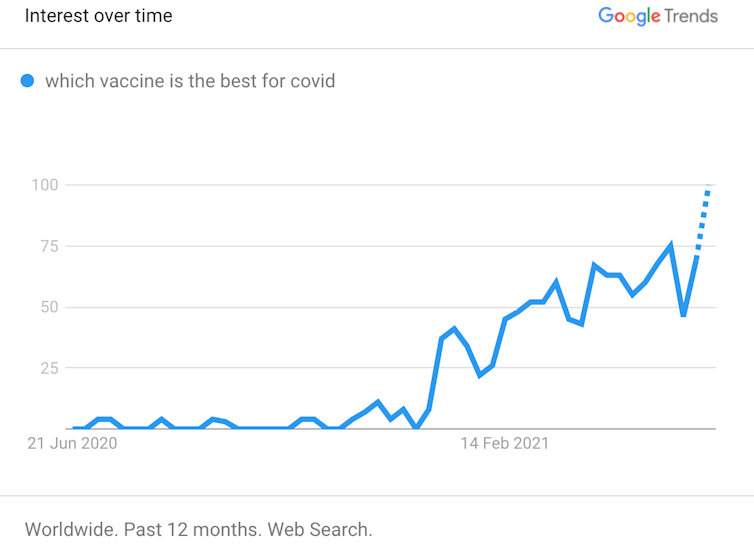
Corporate Democrats are scrambling to keep Nina Turner out of Congress

When Hillary Clinton endorsed Nina Turner’s main opponent recently, it was much more than just an attempt to boost a corporate Democrat. Clinton’s praise for candidate Shontel Brown was almost beside the point. Like other power brokers and the big-money PACs now trying to sway the special election for a vacant congressional seat in northeast Ohio, Clinton is doing what she can to keep the deeply progressive Turner out of Congress. (Rep. Marcia Fudge, who previously held the seat, resigned to become President Biden’s HUD secretary.)

Time is short. Polling shows Turner with a big lead, early voting begins in less than two weeks and Election Day is Aug. 3. What scares the political establishment is what energizes her supporters: Turner won’t back down when social justice is at stake.

That reality was clearly audible last Tuesday night during the first debate of the campaign, sponsored by the City Club of Cleveland. “I am running to be a voice for change, to uplift the downtrodden, including the poor, the working poor and the barely middle class,” Turner began. “You send me to Congress, I’m going to make sure that we tax the wealthy, make them pay their fair share, and to center the people who need it the most in this district.”

The contrast was sharp with Brown, who chairs the Democratic Party in Cuyahoga County, a major population center that includes the city of Cleveland. The discussion of health care was typical: Brown voiced a preference for a “public option,” while Turner strongly advocated Medicare for All while calling the current health care situation “absurd” and “asinine.” Brown sounded content to tinker with the status quo. Turner flatly declared: “The employer-based system, the commodification of health care, does not work in the United States of America. Almost 100 million people are either underinsured or uninsured right now.”

After Brown emphasized that “we have to be able to compromise so we can get some things done,” Turner closed with a jab at those eager to block the momentum of her campaign for Congress: “You need to have somebody that will lead this community, who does have a vision and understands being a partner does not mean being a puppet, that working with does not mean acquiescing to. … You will always know whose side I am on.”

That’s exactly the problem for the party establishment. Its backers know full well whose side Turner is on.

So the attacks are escalating from Brown’s campaign. It sent out a mailer — complete with an out-of-focus photo of Turner, made to look lurid — under the headline “Nina Turner Opposed President Biden and Worked Against Democrats.” A more accurate headline would have been: “Nina Turner Supported Sen. Sanders and Worked Against Neoliberal Democrats.” The Brown campaign’s first TV ad, which began airing last month, features her saying that she will “work with Joe Biden … that’s different than Nina Turner.”

A former editorial page editor of the Cleveland Plain Dealer, Brent Larkin, wrote: “Brown will be a well-financed candidate with deep-pocketed supporters who aren’t afraid to play rough. That’s because Turner can’t be beaten unless opponents plant seeds of doubt about her fitness, convincing voters her harsh criticisms of President Joe Biden would make it impossible for her to get things done for her community. The notion that Biden might punish a constituency important to him because Turner represents that constituency in Congress is far-fetched. During the 2020 campaign, Sen. Kamala Harris was bitterly critical of Biden’s civil rights record. Nevertheless, Biden chose her as his running mate, effectively rewarding her with the vice presidency.” 

Brown’s backers are eager to “play rough” because corporate power is at issue. It’s not only that Turner crisscrossed the nation, speaking eloquently in support of both of Bernie Sanders’ presidential campaigns, serving as a national co-chair during the last one. Powerful backers of the Democratic Party’s top leadership — cozy and enmeshed with corporate America and the military-industrial complex — realize that “Rep. Nina Turner, D-Ohio” would significantly increase the leverage of genuinely progressive members of the House. For the Clinton wing of the party, that would be a frigging nightmare. 

As the marquee anti-Turner candidate, Brown is leaving the more blatant smears to outfits like the “Protecting Our Vote PAC” (which spent $41,998 in the last cycle in an unsuccessful attempt to defeat now-Rep. Cori Bush in Missouri). That PAC has released a scurrilous attack ad through Facebook, not merely telling viewers to vote for Brown but claiming, among other things, that “Nina Turner is not a real Democrat, you can’t trust her,” and she “has no respect for anyone, not even our president,” and “Nina Turner is all about Nina, she doesn’t care about Ohio, she doesn’t care about getting things done, all she cares about is making noise.”

Though some may see Turner only as a firebrand speaker at political rallies, I was in dozens of meetings with her last year when her patient hard work was equally inspiring as she put in long hours with humility, compassion and dedication. I saw her as the real deal when we were colleagues for several months while she worked with RootsAction.org as a strategic delegate adviser for the 2020 Democratic National Convention.

Recalling how she works behind the scenes, I can understand even more why the party establishment is so anxious to block her entry to Congress. While Turner is a seasoned legislator — she served on the Cleveland City Council and in the Ohio State Senate for a total of nine years — she’s committed to the meticulous and sometimes tedious work of organizing and coalition-building that, in the long run, can make all the difference for progressive change. 

The day that Clinton made her endorsement of Brown, a tweet from Turner offered an apt retort. Saying that she was “proud to be running a campaign focused on the issues that matter most to working people,” Turner added: “My district knows all too well that the politics of yesterday are incapable of delivering the change we desperately need.” 

The next day, underscoring wide awareness that the corporate “politics of yesterday” must not be the politics of tomorrow, the Turner campaign announced that it raised six figures in donations in less than 24 hours; Clinton’s intervention had been a blessing. Overall, at last report, the Turner campaign has received donations from 54,000 different individuals, with contributions averaging $27.

Dollars pouring into Shontel Brown’s campaign are coming from a very different political and social universe. As the Daily Poster has reported, “business-friendly Democrats” and Washington lobbyists for huge corporations — including “Big Oil, Big Pharma, Fox News and Wall Street” — are providing big bucks to stop Nina Turner from becoming Congresswoman Turner.

Bernie Sanders described the situation clearly in a recent mass email: “The political establishment and their super PACs are lining up behind Nina’s opponent during the critical final weeks of this primary. And you can bet they will do and spend whatever it takes to try and defeat her.”

Wisconsin GOP leaders tell Trump he is “misinformed” on 2020 election

Almost eight months after now-President Joe Biden defeated Donald Trump in Wisconsin in the 2020 presidential election, the former president continues to falsely claim that he was the real winner in Wisconsin — and he is bashing the Wisconsin Republicans who refuse to join him in the Big Lie. In an article published by the Milwaukee Journal Sentinel on June 26, journalist Molly Beck takes a look at “divisions” among “Wisconsin Republicans over whether and how far to litigate the outcome of the 2020 presidential election.”

Those divisions, according to Beck, were evident during the Wisconsin GOP’s annual convention on June 26. A small group of delegates, Beck reports, want to oust Wisconsin Assembly Speaker Robin Vos, a Republican over the 2020 election. At the convention, Beck reports, Vos announced that he “was hiring, at taxpayer expense, a former conservative Supreme Court justice to oversee an investigation by retired police detectives into the election — the third such review Vos has called for.”

However, Trump has been railing against Vos for not doing more to promote the Big Lie.

Trump, Beck reports, “issued a statement seeking to turn the GOP faithful against Vos and the (Wisconsin) Legislature’s Republican leaders by accusing them of covering up election corruption because the review was not broad enough, in the former president’s view.”

In a statement on June 25, Trump said, “Wisconsin Republican leaders Robin Vos, Chris Kapenga, and Devin LeMahieu, are working hard to cover up election corruption, in Wisconsin. Don’t fall for their lies! These REPUBLICAN ‘leaders’ need to step up and support the people who elected them by providing them a full forensic investigation. If they don’t, I have little doubt that they will be primaried and quickly run out of office.”

Following Trump’s statement, a small group of delegates at the 2021 Wisconsin Republican Convention pushed a resolution to oust Vox, but the resolution failed.

Vos told the Sentinel, “When I saw the president’s statement, it surprised me because many on the left have been going after us harder than I have ever seen, because in Wisconsin, we have hired investigators. We have passed legislation, and we are doing a forensic audit already. So, I think this is one of those cases where the president was just misinformed by his staff, or he didn’t see the media reports.”

In other words, Vos wants to assure fellow Republicans that he is promoting the Big Lie — even though Trump is saying that he isn’t doing enough to promote it.

Senate President Kapenga is also jumping through hoops to assure the former president that he is still a supporter.

Kapenga, in a statement, said, “I write this as I am about to board a plane due to a family medical emergency. In addition to my Trump socks, I will pull up my Trump/Pence mask when I board the plane, as required by federal law. I figure, if the liberals are going to force me to wear a mask, I am going to make it as painful for them as possible.”

Meanwhile, Ben Wikler, chairman of the Wisconsin Democratic Party, views these events as a pathetic demonstration of the Republican Party’s intellectual bankruptcy and the power that Trump still has in the GOP even though he was voted out of office.

Wikler tweeted, “The Wisconsin GOP convention kicks off magnificently with a public battle between Trump and Robin Vos about whether they’re sufficiently loyal to the Big Lie, which is a great summary of what the Republican Party stands for in 2021.”

In the past, Wisconsin was a deep blue state. But Republicans gained a lot of ground in Wisconsin during the Obama years, and in 2016, Trump became the first Republican to win Wisconsin in a presidential election since Ronald Reagan in 1984. In 2020, however, Biden flipped Wisconsin — much to Trump’s Chagrin — along with four other states: Georgia, Arizona, Michigan and Pennsylvania.

Right-wing activist Charlie Kirk pushes conspiracy tying Florida condo collapse to terrorism

Its only been a few days since the building collapse in Surfside, Fla. and there are already conspiracy theories floating around. As local authorities continue their search for approximately 159 missing individuals, conservative commentators like Charlie Kirk are already raising speculation about the disaster being an act of “domestic terrorism,” reports Mediaite.

On Friday, June 25, Kirk tweeted about his alleged conversations with multiple architects who have raised speculation about the collapse.

“I have spoken to several architects who believe that the building collapse in Surfside was not an act of nature. Many are saying this was ‘domestic terrorism,'” he wrote.

Following the building collapse, The New York Times reported:

“The building had been about to undergo extensive repairs for rusted steel and damaged concreteKenneth S. Direktor, a lawyer involved in the project, said on Thursday. The repairs had been scheduled as part of a review and recertification process for 40-year-old buildings.”

“I have a feeling that something else is going to be discovered that happened that we can’t assume right off the bat,” Peter Zalewski, principal of Condo Vultures — a South Florida real estate market analysis company, also said of the collapse. “Forty-year-old buildings don’t just collapse, and there’s a whole series of them lining up and down the coast.”

Despite Kirk’s bizarre claims and the words from the architects he claims to have spoken with, no officials have said anything to suggest the building collapse was a result of terrorism.

Even Florida Gov. Ron DeSantis (R) admitted that the collapse is still being evaluated as authorities “”don’t want to get [it] wrong.”

“We don’t want to get [it] wrong, obviously, but at the same time I do think it’s important that it’s timely because you have a lot of families here, you have families that lost loved ones in this going collapse,” the Republican governor said on Friday. “You have other folks who were able to get out safely, but then lost their homes.”

10 facts about V.C. Andrews’s “Flowers in the Attic”

We don’t have any hard data on exactly how many tweens discovered too-old-for-them romance novels by stumbling upon the intriguing cutout cover of “Flowers in the Attic,” but surely it’s somewhere close to 100 percent. V.C. Andrews’s debut novel, published in 1979, was a Gothic gateway for many a young romance reader, while the numerous reviews that deemed the incestuous plot “scandalous” and “shocking” only enticed readers more.

“Flowers in the Attic” hasn’t lost any steam in the more than 40 years since its debut; it has sold more than 40 million copies and been translated into 25 languages. No matter how many times you’ve indulged in this guilty pleasure, here are a few facts you may not have known.

1. V.C. Andrews claimed to have written “Flowers in the Attic” in two weeks.

In 1983, Andrews told “Twilight Zone” magazine, “I wrote [the book] in two weeks. By that time, however, I had been writing for seven years and had written nine unpublished novels.” However, she also once claimed that she wrote it in a single night. “I like to amaze my editor and tell her that I wrote it in one night. I did. I plotted the whole thing in longhand — it was 18 pages. And then I typed it into 90.” So really, who knows what’s true.

2. V.C. Andrews’s payday for “Flowers in the Attic” was modest.

Andrews was paid just $7500 for her debut novel, but the numbers rose quickly. By the time the third book in the series, “If There Be Thorns,” was released in 1981, Andrews was pulling down a $75,000 advance. Given Andrews’s popularity, she found the amount unfair—and so when she started the Casteel series in the mid-1980s, she received a $2 million advance for a two-book deal and $3 million for another trio of novels.

3. The Dollanganger series is the only V.C. Andrews series actually written by V.C. Andrews.

Andrews died of breast cancer in 1986, after writing the first four books of the Dollanganger series (of which “Flowers in the Attic” was the first book), one book of the Casteel series, and the standalone “My Sweet Audrina.” Writer Andrew Neiderman, who shared an agent with Andrews, was tapped to take over the throne as her ghostwriter and has been churning out books as Andrews ever since, writing at a pace of about three novels per year. Fun fact: Neiderman also wrote “The Devil’s Advocate,” which was later adapted into the 1997 movie starring Al Pacino and Keanu Reeves.

4. V.C. Andrews drew on elements of her own life to create Cathy Dollanganger, who narrates “Flowers in the Attic.”

Andrews spent most of her life using a wheelchair after falling down the stairs at school as a young girl. “The doctors found that the twist had been very violent, and that it tore the membrane on my hip and started little bone spurs,” she once explained. The bone spur was ignored for years, throwing her spine out of alignment and eventually requiring many surgeries. According to Andrews, one doctor suffered a small stroke in the middle of operating and cut off the socket of her right hip. As a result, she lived with her mother for her entire life and relied heavily on her help to be able to function.

Andrews told writer Douglas E. Winter, “When I wrote “Flowers in the Attic,” all of Cathy’s feelings about being in prison were my feelings. So that, when I read them now, I cry.”

5. V.C. Andrews dedicated “Flowers in the Attic” to her mother.

While dedicating a bestselling book to your mother is a sweet gesture in most cases, the move was a little eyebrow-raising given the reprehensible actions of the mothers in the book.

6. In 1981, one of the Iran hostages who was returned to the U.S. claimed that “Flowers in the Attic” was the only book that got captivity right.

William Belk, one of the American hostages held captive in Iran for 444 days, read the novel four times and hailed it as a true representation of the emotions involved with extended confinement. “If you read that you can understand our plight a little better and what we felt like in Iran,” Belk said. Andrews was reportedly very pleased to hear this.

7. V.C. Andrews served her editor powdered sugared doughnuts.

The first time Andrews met her editor Ann Patty in person, sweet breakfast treats were on the menu. “Flowers in the Attic” fans will know that poisoned doughnuts play an important part in the book. Fortunately, Patty took Andrews’s dark humor in stride.

8. Wes Craven was once slated to direct an adaptation of “Flowers in the Attic.”

After a movie version was approved in the mid-’80s, horror legend Wes Craven wrote the original screenplay, which he planned to direct. As you might imagine, Craven’s screenplay was extremely graphic and violent. Because they were shooting for a PG-13 rating, Craven was replaced — although producers decided to keep Craven’s ending, which differed from the book’s.

9. V.C. Andrews had a cameo in the the “Flowers in the Attic” movie.

She played a maid and can be very briefly seen washing windows in the 1987 film starring Kristy Swanson as Cathy, Victoria Tennant as Corrine, and Louise Fletcher as the grandmother.

10. “Flowers in the Attic” may have been based in part on a true story.

According to editor Ann Patty, Andrews always told her that the core of the story had really happened to a doctor she had once had when she had been in the hospital for spinal surgery. “I’d guess that some aspects of it were true,” Patty said. “At least the aspect of kids being hidden away. Whether the twins were real, the sex, the time frame, probably not. I think it was just the concept of kids hidden in the attic so the mother could inherit a fortune.”

Joe Biden, a father’s love and the legacy of “daddy issues” among presidents

President Joe Biden often talks about the close relationship he had with his father and how this influenced him growing up as “the scrappy kid from Scranton,” Pennsylvania.

Biden was born into wealth, the son of a polo-playing yachtsman. But his father, Joe Biden Sr., lost his job after World War II and abused alcohol, struggling financially for years before getting back on his feet and finding middle-class work selling cars near Wilmington, Delaware.

Sunday, June 20, is Father’s Day. Biden’s relationship with his father contrasts with perhaps every president in the last four decades, who had either absent or distant fathers or abusive or alcoholic fathers or stepfathers.

https://www.instagram.com/p/Byxm0d6hTZu/

“The measure of a man is not how often he is knocked down,” Joe Biden Sr. told his son, “but how quickly he gets up.”

His father’s support boosted young Joe’s political career, and offered comfort when Joe Jr.’s wife and daughter were killed in a car crash.

On the 2020 presidential campaign trail, Biden remembered his late father’s belief that “there’s no higher calling for a woman or a man than to be a good mother or a good father.”

This will be my first Father’s Day without my own father, who died in August 2020 at age 95. He, too, believed in the calling of fatherhood. My father and mother were there for us. They encouraged us to follow our own dreams and not theirs.

This sort of supportive father-child relationship is common – except perhaps in politics.

Former congressional staffer and political journalist Barron YoungSmith once wrote an article for Slate with the headline, “Why Do So Many Politicians Have Daddy Issues?” “American politics,” he wrote, “is overflowing with stories of absent fathers, alcoholic fathers, neglectful fathers.”

Ford, Reagan, Clinton

Gerald Ford’s father, Leslie Lynch King Sr., was an abusive alcoholic. Ford’s mother left King 16 days after the future president was born, when her husband threatened her and her infant son with a butcher knife. Ford’s mother married Gerald Rudolff Ford. When he was 22, Ford changed his name from Leslie Lynch King Jr. to Gerald Rudolph Ford.

Jimmy Carter’s father, James Earl Carter Sr., was a high school dropout who encouraged his son to read, a hard worker who urged his son to work hard, and a devoted husband and father. He served in the Georgia Legislature but died during his first term of pancreatic cancer at age 58.

Unlike other presidents, Jimmy Carter did not have to search for his father, who never left. Carter’s upbringing stood in contrast to both Ford, the man who preceded him in the White House, and Reagan, the one who followed him.

YoungSmith wrote that Ronald Reagan remained haunted by the moment he found “his alcoholic father on the front porch … his hair filled with snow.” Reagan said his father was “drunk, dead to the world.” Reagan, who was then 11, had to drag his father into the house. He spent the rest of life trying to connect with a man who was not there for him.

Psychologist Robert E. Gilbert said Reagan can be properly understood only as the child of an alcoholic. “Alcoholic parents leave deep marks on their children’s lives; even after those children become adults,” Gilbert said, adding that Reagan was aloof and distant, living in a world of make-believe where he craved approval.

Bill Clinton’s biological father, William Jefferson Blythe Jr., died in a car accident before his son was born. Clinton was raised by a stepfather who was an abusive alcoholic and regularly beat his wife, Clinton’s mother. The beatings stopped after Clinton stood up to his stepfather.

The Bushes

George H.W. Bush experienced the burden of having a great man as a father. His father, Prescott, was a Wall Street investment banker who became a U.S. senator and an influential leader in the Republican Party.

George H.W. moved to Texas to escape his father’s shadow. He then relied on his father’s influential friends to make a fortune in oil before entering politics, where he served as a congressman, ambassador to the United Nations, director of the Central Intelligence Agency, vice president of the United States and then president.

G.H.W. Bush’s oldest son, George W., responded to the pressures of having a great man as a father by drinking too much before quitting drinking and using his father’s influence to help him become governor of Texas and then U.S. president. YoungSmith said that George W. “spent his entire life, including his presidency, careening between attempts to live up to H.W.’s impossible expectations and efforts to garishly repudiate them.”

Obama and Trump

George W. Bush’s failures as president contributed to the election of Barack Obama, the first Black president. Obama’s parents separated when he was two, when his father left Hawaii and returned to his home country of Kenya. The father-son relationship became the basis for his autobiography, “Dreams from My Father: A Story of Race and Inheritance,” where he wrote about the difficulty of not having a father around to help him navigate the issues of being a Black man in a white-dominated country.

“It hardly bears recounting that President Obama built his political persona around a search for his absent dad,” YoungSmith said.

Obama was succeeded as president by Donald Trump, who once said he was “so screwed up, because I had a father that pushed me pretty hard.”

Fred Trump Sr., a real estate magnate, bullied and intimidated one son – Fred Jr., who died of alcoholism when he was 42. Fred rejected another son, Donald, sending him off to military school when he was 12. When Donald returned, Fred taught his son to be a “killer” in business, that the ends justified the means and that empathy was a sign of weakness.

Freddy just wasn’t a killer,” Donald said of his brother.

Mary Trump, a clinical psychologist who was the daughter of Fred Trump Jr., said this lack of empathy prevented her uncle, Donald Trump, from acknowledging human suffering, including the widespread death associated with the coronavirus pandemic.

“Acknowledging the victims of COVID-19 would be to associate himself with their weakness, a trait his father taught him to despise,” Mary Trump wrote.

Biden, by contrast, talked openly on the 2020 campaign trial about his love for his father and about his own grieving over the death of his son, Beau, who died from brain cancer in 2015. In doing so, he made a very human and relatable connection between his own father, himself, and his own approach to fatherhood.

Chris Lamb, Professor of Journalism, IUPUI

This article is republished from The Conversation under a Creative Commons license.

You love your dog. Does your dog love you back?

Rick Allen is an obedience specialist who, perhaps unsurprisingly, identifies as a dog lover. But there is one moment in particular that stands out to him — a moment when, he believes, a dog subtly let him know that the love went both ways.

“I fell a few years back outside my house while with Jack, a five-year-old black and white ‘Heinz 57’ mix of a dog I adopted a couple of years ago,” Allen told Salon by email. Allen “busted up his ankle” while he was outside. Injured, he then waited in the driveway for his daughter to come help. 

“Jack sat by me with his paw draped over the same leg of the foot I hurt until she got there,” he said.

In soliciting interviews for this story, about whether or not dogs can feel “love” as we know it, numerous subjects described similar experiences — those mystical moments when, based on soulfulness in a dog’s eye or a similar paw-embrace, humans felt completely certain that their dogs loved them. 

Jean Alfieri, a self-described “dog fan,” is an award winning author who wrote a beloved canine tale, “Zuggy the Rescue Pug.” She recalled the moment she befriended Wyatt Wyatt, “a small dog who fills the room with his big, boisterous personality.” There is no doubt in her mind that Wyatt picked her.

“I had gone to the Humane Society looking for a specific breed — not his,” Alfieri told Salon by email. “Yet he sat proudly in the passenger seat next to me on our way home. A twenty-five-pound chunk of lovable pug! His tongue bobbed from his mouth. Eyes squinting as the cool A/C hit his face. Occasionally he would gaze out the window to take in the desert view. More frequently he looked at me, with an unmistakable admiration I knew was misplaced. It was the same look he’d given me while sitting in his kennel.”

It was the kennel moment when she and the pug connected through their eyes.

“When he turned those eyes on me, my heart melted,” Alfieri explained. “Forget that he was a ‘senior’ pup with a few health issues. For us, it was love at first sight.” Alfieri added that she and her husband adopt senior dogs “or vintage puppies, as we prefer to call them.”

Despite anecdotal experiences such as these, scientists have not always been so sure about whether dogs can feel love. The 17th-century French philosopher René Descartes infamously vivisected dogs because he believed only human beings could have souls. This prompted an eighteenth century French Enlightenment philosopher, Voltaire, to rejoin roughly a century later, “Answer me, you who believe that animals are only machines, has nature arranged for this animal to have all the machinery of feelings only in order for it not to have any at all?” 


Want more health and science stories in your inbox? Subscribe to Salon’s weekly newsletter The Vulgar Scientist.


The Descartes-Voltaire debate has bedeviled philosophers ever since. One might think that Descartes, taking the less idealistic view in this situation, would wind up being proved right by animal behaviorists in later centuries. As it turns out, though, science has wound up coming down on Voltaire’s side.

“Dogs get a rush of endorphins and serotonin when bonding and playing with us, and the same thing happens to us too,” Dr. Linda Simon, a veterinary surgeon and veterinary consultant‌, told Salon by email. “This strengthening of the relationship is mutually beneficial and leads to a strong connection.”

As Simon pointed out, dogs have co-evolved with humans for thousands of years, forming an alliance with us as we realized teaming up could yield benefits to both species — namely, food.

“Dogs are nobody’s fool and they long ago realized that it paid to be ‘man’s best friend,'” Simon wrote. “In return for scraps of meat and shelter, ancient dogs would protect us from predators, guard our livestock and offer companionship. This relationship had mutual benefits so was destined to succeed from the start. Naturally, over time, the bond between man and dog strengthened.”

She pointed to one example that scientists have noticed about the human-dog relationship: While most animals avoid eye contact with humans and flee from us when stressed, “our dogs seek out our eye contact and look to us for what to do when stressed.” Their trust and love for us, and vice versa, is embedded in our DNA — and theirs.

“Several neuro-imaging studies have confirmed that dogs are hard-wired to be attuned to us and our voices and feelings,” Simon explained. “In fact, an owner’s smell can trigger the ‘reward center’ of the dog’s brain, giving them a feeling of happiness and wellbeing.”

A contrarian might respond to all of this by arguing that the interactions above involve self-interest and entail chemical interactions. To the extent that this would be true for dogs, however, it would also encompass every living creature that is capable of affection. It would also fail to explain moments of canine compassion and selflessness. If “love” is indeed nothing more than a chemical cocktail, then it is for humans as well as for dogs.

Yet the emotional connection between dogs and humans extends to other emotions, too. A 2019 study found that “long-term” stress levels were “synchronized” between dogs and their owners. Researchers studied cortisol levels in dogs’ hair follicles and compared them with humans. 

“Human personality traits [like] neuroticism, conscientiousness, and openness significantly affected dog hair cortisol concentrations,” the researchers wrote in Scientific Reports. “Hence, we suggest that dogs, to a great extent, mirror the stress level of their owners.” 

The hormone oxytocin, often called the “love” hormone, helps reinforce bonds between humans and other humans, particularly family members. In 2015, Japanese researchers found that oxytocin increases when humans and their dogs interact, and especially when they gaze into each other’s eyes. The same effect was not observed in wolves, even when the wolves were raised by humans. That suggests that dogs evolved specifically to feel attached to us.

In other words: the feeling is mutual. 

So, we’re going to bars again — how do we act?

Welcome to How to Be Social Again: The No-Stress Guide to Returning to Society. In this mini-series, you’ll get a brush-up on everything from invitation etiquette to navigating bars again — plus, a drinks menu-planner for any party size and an ode the most underrated of gatherings, the coffee date.

* * *

I knew I wanted to go to Sharlene’s for my first drink inside a bar in over a year. The Flatbush Avenue mainstay has been my local spot for nearly a decade — a place where I’d spent a lot of good times, a few bad ones, and a handful of very odd moments. So when I walked in, I felt a mix of joy and trepidation. I was happy to be back, but I was also maskless. I’d received my second dose of Moderna three weeks earlier, but still, it felt strange. It also felt off since the bartender was wearing a mask and I’d taken mine off. I made sure to ask him if it was cool with me not wearing a mask. “Of course,” he said. “I got my vaccine. I’m just still wearing this for now.”

People are starting to go back to bars and it’s going to be weird. That’s really the only way to put it. We’re going to have to get used to being around people again, to seeing people with their masks off, and, most likely, watching people getting sloppy really fast because they haven’t sat drinking in a bar for over a year. Some things will go back to the way they were — people will talk, have awkward hookups, they’ll laugh, maybe cry, maybe both at the same time — but things will likely be different, at least for the next few months. We’re all trying to move past a terrible time, but for people in the service industry, it was especially tough.

“I think one of the most important things a guest can do is be cognizant of the trauma that is surrounding our industry and its professionals, which has been and will continue to be for a while,” says Jason Sorbet, beverage director at The Chloe in New Orleans.

When you walk into a bar, it’s likely the people working there saw their lives upended during the pandemic. As Sorbet points out, there “was a huge, dark cloud over a lot of our lives — myself included — where people lost their careers, support systems, businesses and life’s work,” because of COVID-19. That’s not to say it wasn’t tough for everybody, but people in the service industry likely faced one of two options over the last year: lose their income or put themselves in harm’s way in the days before a vaccine was available. You should always treat somebody making your cocktails with the same sort of respect you’d want to be treated with, but now you should do it with a heaping side of empathy.

Empathy and honesty. For one, if you don’t have your shot, you shouldn’t put other people in harm’s way. The problem with asking for proof of vaccination, as one bar owner told a New York Times editor about why very few establishments are doing so, is that “without mandatory enforcement, it’s too risky. We’re barely back on our feet.” If you’re not going to get the Johnson & Johnson, Pfizer, or Moderna, you probably shouldn’t be out ordering that Old-Fashioned.

And then there’s the financial side of things. People took a hit. Can you imagine not getting paid for a month, let alone over an entire year? It might not seem like much, but if a bartender pops open a beer for you, tip an extra buck. The same goes with the barista who makes your coffee or the people working in restaurants. Everybody starts to do that for the summer and maybe we can help a few hard-working folks get back on their feet and show them how much we appreciate what they do. If you can afford to tip a little more, then by all means you should.

How will all this affect your bar-going experience? That depends a lot on where you are, of course. Driving through Wisconsin last week, I noticed nothing had really changed at any of the bars I went to. Down towards Chicago, things were different. For one, some places were still keeping different hours than pre-pandemic times. While it’s true things are opening up and the CDC is saying those of us with vaccines shouldn’t worry too much about going inside, there is probably enough lingering doubt or just the fear of spending time around strangers again that means it will take a little time for bars to get up and working at a normal pace. Bars have already lost enough money that owners likely want to be careful. Give them time to adjust just like you probably need time to get used to things hopefully getting back to normal.

And then, back in Brooklyn this week, I stopped at Bearded Lady in Prospect Heights. After the bars were allowed to open back up in the middle of last year, Bearded Lady became my go-to spot. Today, I look at it as my barometer for how things are in the bar world. They re-introduced indoor seating, but it’s limited. For outdoor seating, you still pull up the menu with a QR code, a system bars across the country pivoted to during the pandemic. I wonder if any of these changes are permanent. Obviously, with space being expensive in a city like New York, the tables will eventually come back inside, but when? Will the QR codes stick around? Will we still be able to buy drinks from bars and walk around with them like we’ve been able to in some cities?

“Who knows anymore? It’s all so up in the air,” the server at Bearded Lady told me. Every bar person I ask basically says the same thing. Just like us, they’re trying to figure out what a post-pandemic future looks like while also trying to figure out how to cope and move on from the tough past year and a half.

“We learned in 2020 that it is a genuine privilege to be able to go out, sit down with friends and loved ones or strangers, rip through a bottle of great wine, share a family-style meal, and be able to lock in that memory to look back on,” Sorbet put it. “We almost lost that.”

Want to make your delivery pizza better? Reach for the honey

I want to tell you a story of two pizzas. The first, a Kroger hot honey pepperoni pie, is what I refer to as, lovingly, sh**ty supermarket pizza, the kind you can snag out of the freezer aisle for less than $5. The second is from my favorite local pizzeria, Pizza Lupo. They serve a Milk & Honey pizza — topped with cambozola, fresh mozzarella, a buttermilk ricotta sauce, basil and a drizzle of hot honey — that is honestly life-changing. 

Despite their difference in provenance, both pizzas are uncommonly good compared to other slices in their respective tiers and a big part of that is a shared key ingredient: honey. 

I know that condiments on pizza are a big point of contention; as Pizza Lupo’s owner, Max Balliet, actually once texted me, ranch dressing on pizza is considered “sacrilegious in serious pizza circles,” while barbecue sauce isn’t far behind. However, if you treat honey as an ingredient instead of an afterthought, the results are pretty stellar. 

Let’s break it down. What makes a good piece of pizza — much like what makes any good dish — is a spectrum of flavors and textures. Think about the acidity of the tomato sauce, the lactic creaminess of the cheese, the brightness of vegetables, the brininess of olives and the cured saltiness of pepperoni or sausage. 

While there is usually at least a little sugar present in the sauce, or perhaps a topping like sausage, sweetness isn’t typically a consideration when it comes to building the flavor profile of a pizza, though it should be. 

Honey is one of the best ways to do that. 

Much like when building a charcuterie board, good honey offers a couple distinct advantages when paired with other ingredients: it offers a little freshness to the bite, it enhances the flavor of the other ingredients and can offer some additional flavor, too. Depending on the variety, honey can be floral, spicy, tangy, nutty or buttery. 

And it’s been having a moment on pizza for a while. As Andrea Strong wrote in her TASTE piece “When Pizza Met Hot Honey: A Love Story,” Mike Kurtz, the founder of Mike’s Hot Honey, had the idea for his product when visiting a pizzeria in Brazil where the table condiment was a jar of spiced honey with whole chile peppers submerged inside. 

“I drizzled the honey on the pizza, and it was a revelation,” Kurtz told the publication. 

He went on to help develop the Hellboy Pie for Brooklyn pizzeria Paulie Gee’s. “The pizza features mozzarella, tomato, soppressata picante, Parmigiano-Reggiano, and a hefty drizzle of Mike’s Hot Honey, which is drizzled on the pie when it’s bubbly and fresh out of the oven,” wrote Song. 

Since then, pizzerias all across the country have taken to drizzling honey over their creations. There’s Emmy Squared’s Colony² with ezzo pepperoni, pickled jalapeños and honey; Criscito Pizza has their Honey Garlic pie; Pi-Pizza’s specialty pi has “white sauce, mozz, smashed scallion, goat cheese, mike’s hot honey.” 

In the ensuing years, the trend has trickled down the honeycomb to chain pizza places and supermarket shelves. Papa John’s had their Bee Sting pizza with spicy pepperoni, mozzarella, fresh green chilli, and a sweet wildflower honey drizzle. In 2020, Aldi released their Mama Cozzi’s Pizza Kitchen Hot Honey Pizza on a pretzel crust. Walmart has a Great Value brand Hot Honey Pepperoni Pizza, too. 

Part of this is, of course, the natural proliferation of trends from culinary tastemakers to the mass market. Part of it, though, is honey’s inherent versatility. It works pretty flawlessly with both white and red pies — and it’s also one of the simplest ways to make both the pizzas you make, bake or deliver at home instantly better. 

Here are some varieties to try: 

  • Buckwheat honey: Buckwheat honey has a deep, nutty flavor with an almost molasses-like sweetness. It stands up beautifully to stronger or aged cheeses like goat cheeses, aged Havarti or caramelized gorgonzola. 


  • Orange blossom honey: This honey is sweet with both floral and citrus undertones. That makes it an ideal pairing for a white pie piled high with fresh mozzarella and peppery arugula. 


  • Hot honey: Take a cue from pizzerias across the country and drizzle hot honey over your tomato-based pies, stacked high with parm and cured meats. If you’re feeling extra spicy, pickled peppers are a good addition, too. 

Read more Saucy

Cool down with no-bake vegan cheesecake packed with lemon, berries and coconut

Maria Hines: This is a decadent-tasting dessert that is also packed with nutrients. The silky texture and tangy taste create a nice balance of richness and brightness. You can make the cheesecakes and freeze them, so you can have them handy whenever your sweet tooth strikes. 

***

RECIPE: Vegan No-Bake Cashew Cheesecakes
Makes 16 miniature cheesecakes 

Filling
Note: You will need to soak the raw cashews in hot water for at least 15 minutes on the counter, before you intend to use them.

  • 3 cups raw cashews
  • 1/4 cup fresh lemon juice
  • 1 tablespoon lemon zest
  • 3/4 cup pure maple syrup or organic agave syrup
  • 1/2 cup organic coconut cream, unsweetened
  • 1 tablespoon pure vanilla extract
  • 1 teaspoon ground cinnamon
  • 400 milligrams full-spectrum CBD, or desired dosage
  • 1/8 teaspoon sea salt
  • 4 cups assorted fresh berries

Crust

  • 2 cups whole cashew nuts, roasted and unsalted
  • 8 fresh Medjool dates, pitted
  • 2 tablespoons coconut oil, melted, plus more for greasing
  • 1/8 teaspoon salt

1. To prepare the raw cashews (using the quick-soak method): Place the 3 cups raw cashews in a medium bowl. Fill the bowl with very hot water (just below a boil), making sure the cashews are completely submerged. Soak the cashews for at least 15 minutes. Drain, rinse, and set aside.

2. While the cashews are soaking, grease 16 muffin cups with coconut oil.

3. To make the crust: In the bowl of a food processor, add the roasted unsalted cashew nuts, dates, coconut oil, and salt and pulse until it partially binds together. The mixture will be chunky and paste-like. Set aside.

4. To make the cheesecakes: Place the prepared raw cashews into a blender. Add the lemon juice and zest, maple syrup, coconut cream, vanilla, cinnamon, CBD oil, and salt and process on high, scraping down the sides of the blender jar as needed, until very smooth, about 8 minutes, depending on the power of the blender.

5. Spoon approximately 2 tablespoons of the crust mixture into the bottom of 16 muffin cups, pressing down firmly and evenly with the bottom of a shot glass or your fingertips. Pour or spoon approximately 3 tablespoons of the filling over the top of each crust, filling the cups evenly. Tap the muffin pans on the counter a few times to flatten and smooth the tops. Cover the muffin pans with plastic wrap and place in the freezer until the cakes are shiny and firm to the touch, about 2 hours.

6. To unmold the cheesecakes, place the muffin pans into a shallow basin of hot water for 1 minute. Remove pans, then run a hot, thin, non-serrated knife around the edges of the muffin cups to loosen the cakes, and pop them out. Allow the cakes to thaw and soften at room temperature for about 10 minutes before serving. Top with fresh berries and serve. Leftover cheesecakes can be stored in the freezer for up to 2 months.


If you love this recipe as much as we do, pick up “The Art of Cooking with Cannabis: CBD and THC-Infused Recipes from Across America” by Tracey Medeiros.


We need to talk about “Kevin Can F**k Himself” and the lesson it teaches about joint accounts

If you’ve seen “Kevin Can F**k Himself” then you know that Allison McRoberts (played by “Schitt’s Creek” star Annie Murphy) has any number of reasons to detest her husband Kevin (Eric Petersen). He’s dumb, immature and endlessly selfish. Worse, he’s a manipulative liar.

The opening episode, “Living the Dream,” introduces the couple’s lopsided dynamic as Allison runs around their cramped, infested house, picking up Kevin’s empties and undies. When she isn’t organizing the snacks for the anniversary kegger Kevin wants instead of the intimate dinner she desires, she’s dreaming of a fresh start in a new house. The pair have a joint account, as many marrieds do, and Allison has been mentally tracking all the weekly deposits she’s made to their savings.

When she announces that it’s time for them to talk to a mortgage lender and finally move to a roach-free home, Kevin prevaricates before assuring his wife that “whatever Allison wants, Allison gets.”

But in a moment of frustration while Allison vents to her next-door neighbor Patty (Mary Hollis Inboden) and reassures herself by saying they’ll be in a better place, Patty breaks it to her that the savings account is empty.

“That’s not possible, because I was there when we opened the account,” Allison tells Patty.

Patty picks up her sentence: “. . . like 10 years ago, and then you let him keep track of the money.”

“Because I’m bad with money,” Allison says, to which Patty replies, “You think he’s better?”

In our world, we are now in wedding season, when relatives and friends rally around brides and grooms with advice about maintaining a happy marriage. Expect the classics: “Don’t go to bed angry.” “Kiss every day.” “Make each other laugh.”

But if you really want to do soon-to-be-wedding people a service, direct them to watch this episode and spell out the moral of the story. When it comes to finances, it’s wise to think in terms of his, hers and ours. To stay together, keep at least part of your finances separate.

This is not a popular opinion, in part due to entrenched cultural traditions. Joint accounts weren’t only a custom for married couples for much of the 20th century, they were standard until the passage of the Equal Credit Opportunity Act in 1974 enabled women to establish their own credit history and with it, increased financial autonomy.

Even now, however, financial experts I’ve read are divided over the matter. There are a number of non-scientific studies and opinion pieces like this one that support keeping separate bank accounts, and reportedly among Millennials, the practice is increasingly the norm.

Then there’s a frequently cited working paper  co-authored by University College of London’s Joe Gladstone, Notre Dame’s Emily Garbinsky and UCLA Anderson’s Cassie Mogilner Holmes that finds that committed couples who mingle all their money into a joint bank accounts are happier together and less likely to break up than pairs who keep some or all of their money separate.

“We find evidence that joint accounts increase feelings of financial togetherness —making purchases and financial goals feel shared — and this mediates the relationship between joint accounts and well-being,” the paper reads.

As such, if you’re at a shower where everyone’s keeping it cute, advising the bachelor or bachelorette to maintain separate stacks could turn the room against you.

But there are enough anecdotes and storylines, real and fictional, with scenes of the hard-working, long-suffering partner dropping by the bank to check on their joint account’s ledger for whatever reason only to discover that said savings is as vacant as a politician’s promise.

This advice doesn’t merely apply to brides, by the way. Rose Byrne’s self-loathing wife in Apple TV+’s “Physical” drained the joint account she shares with her husband to feed a secret disorder, and her urgency to hide that from her spouse leads her to do exploit others. Eventually she becomes an aerobics monster so, you know, silver linings.

Still, it all comes back to a matter of trust crashing with inevitably evolving personalities. Nobody remains unchanged over the years, which means the person you marry will not be the same human being a year later, or two years, or ten. One of you might lose your mind or get into serious debt or collect a secret family or develop an addiction.

This realization hit me long before I met my husband by way of watching “Dolores Claiborne” with my mother. It was repeat viewing for me but the first time for her, a woman who clawed her way through a grueling divorce that dragged out for years and cost her dearly.

There’s a scene in which a fed-up Dolores heads to the bank to discover her abusive alcoholic husband Joe had cleaned out their savings, basically trapping her. At that moment my mom excused herself from the family room and didn’t come back.

She’d been enjoying the movie up to that point, so when I found her and asked why she left, she explained that’s what happened her – to us, her five children. My dad was the main breadwinner, but he decided to finance his new life with the money my mother inherited from her relatives. He got a nice new apartment, and his estranged wife and kids got to contend with a foreclosure notice that my mother somehow fought off.

Eventually we finished the movie, but her shaken reaction to it stuck with me. Jump forward a few decades and I can attest to being in a happy, stable partnership where our money is his, hers and ours by way of a shared account and separate ones. If he wants to buy a pandemic mask that makes him look like Jason from “Friday the 13th,” I can’t say a thing about it. It’s his money. If I buy clothing in a pattern I love but he hates, too bad. If we need a new car, that’s what the house account is for. We’re transparent with one another about where everything stands, so it works.

Television is by no means a reliable teacher or advisor in most respects, but when financial precarity plotlines recur through different series it’s usually the wife that ends up holding the empty bag.

Sure, financial secrecy could lead to a completely different reveal, as Skyler White can attest once she starts laundering her meth-kingpin husband’s money on “Breaking Bad” but you might recall that union did not end happily or well.

Or you might be as committed as Carmela Soprano and trust your spouse that when they say you’ll be taken care of, they’re telling the truth. How that turned out in the end is still somewhat up for debate.

Allison, at least, is learning the hard way. In the same episode she recalls that Kevin persuaded her that she’s a bad driver, so he takes the car, leaving her to rely on him for rides or find her own way to her job. “But you know, I’ve been thinking. I’ve never been in an accident. And I can drive stick, I can parallel park, I can merge and, you know, I actually think that I actually used to enjoy driving,” she says.

She goes on to realize that Kevin has convinced her that the reason she never finished school is that she’s incapable of finishing anything. “But do I never finish things, or does he take them from me? Am I bad at driving, or does he want the car? As long as I had this thing – this, like, this image of what I, what we could be – I had something to hope for. But now, I try to picture anything good, and . . . like what the hell are you supposed to do if you can’t close your eyes and picture a future where everything’s okay?”

This is the epiphany at which Allison arrives on her 10th wedding anniversary.

So, brides and grooms-to-be, if you do not heed these words or take in these stories, at least consider the value of the parable within “Kevin” and other shows and movies. Nothing is certain in life, and these times of ours are pesky about reminding us there are no guarantees that everything’s going to be OK. The least you can do is take measures to make sure that when you close your eyes, you can at least picture a bank balance you know will be there when you need it. Also, don’t go to bed angry.

“Kevin Can F**k Himself” airs Sundays at 9 p.m.  on AMC and streams a week early on AMC+.